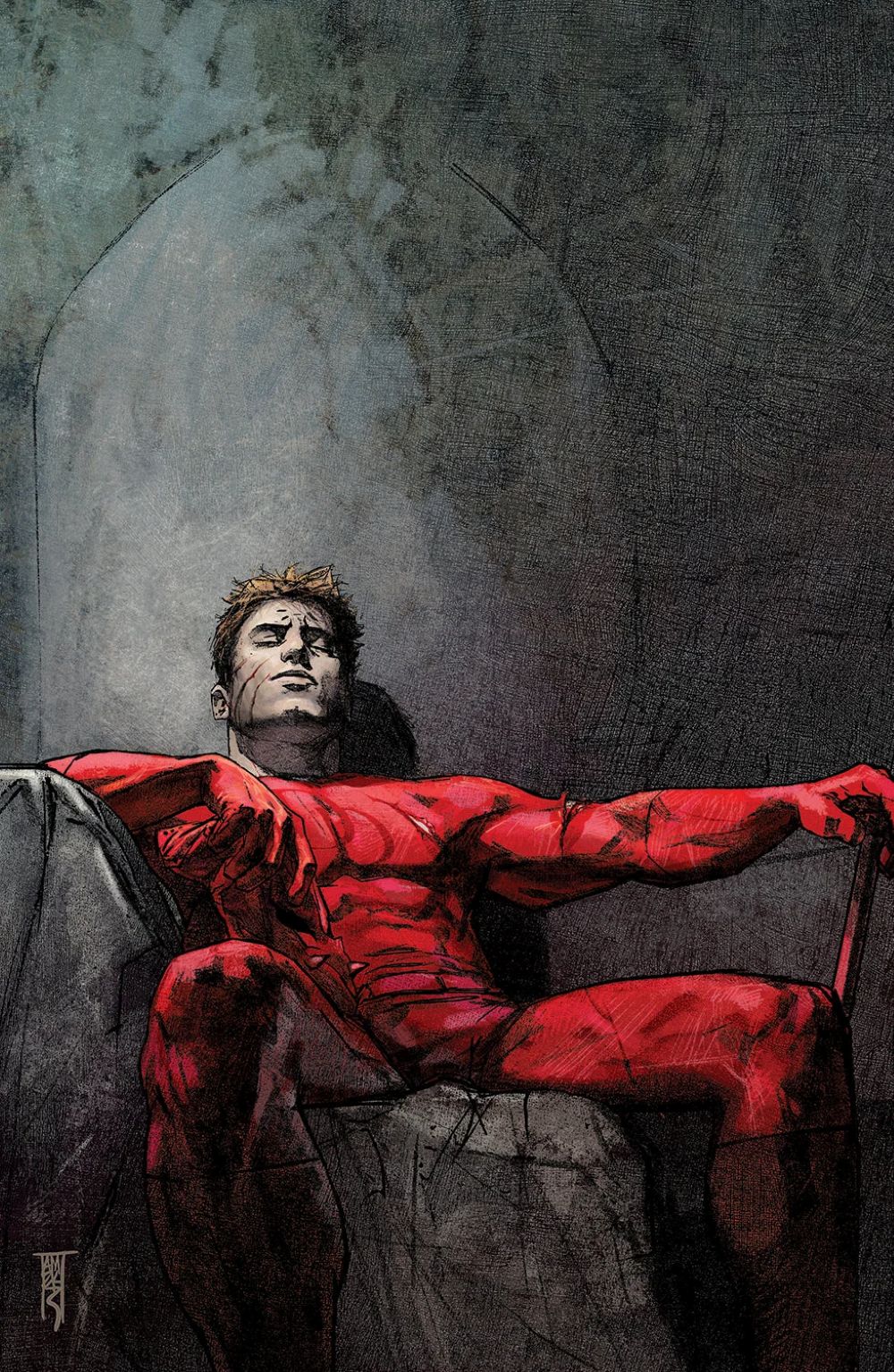
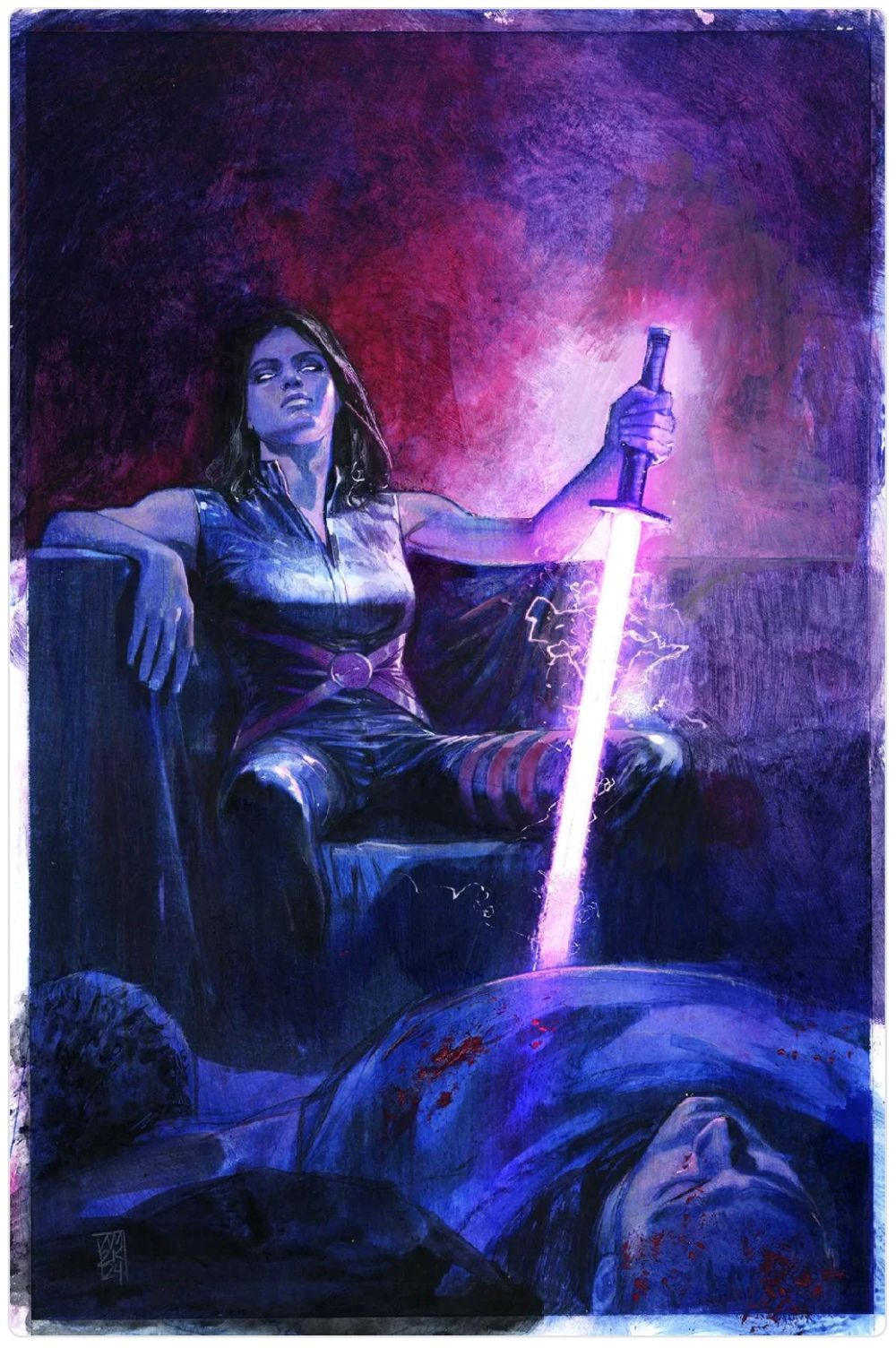
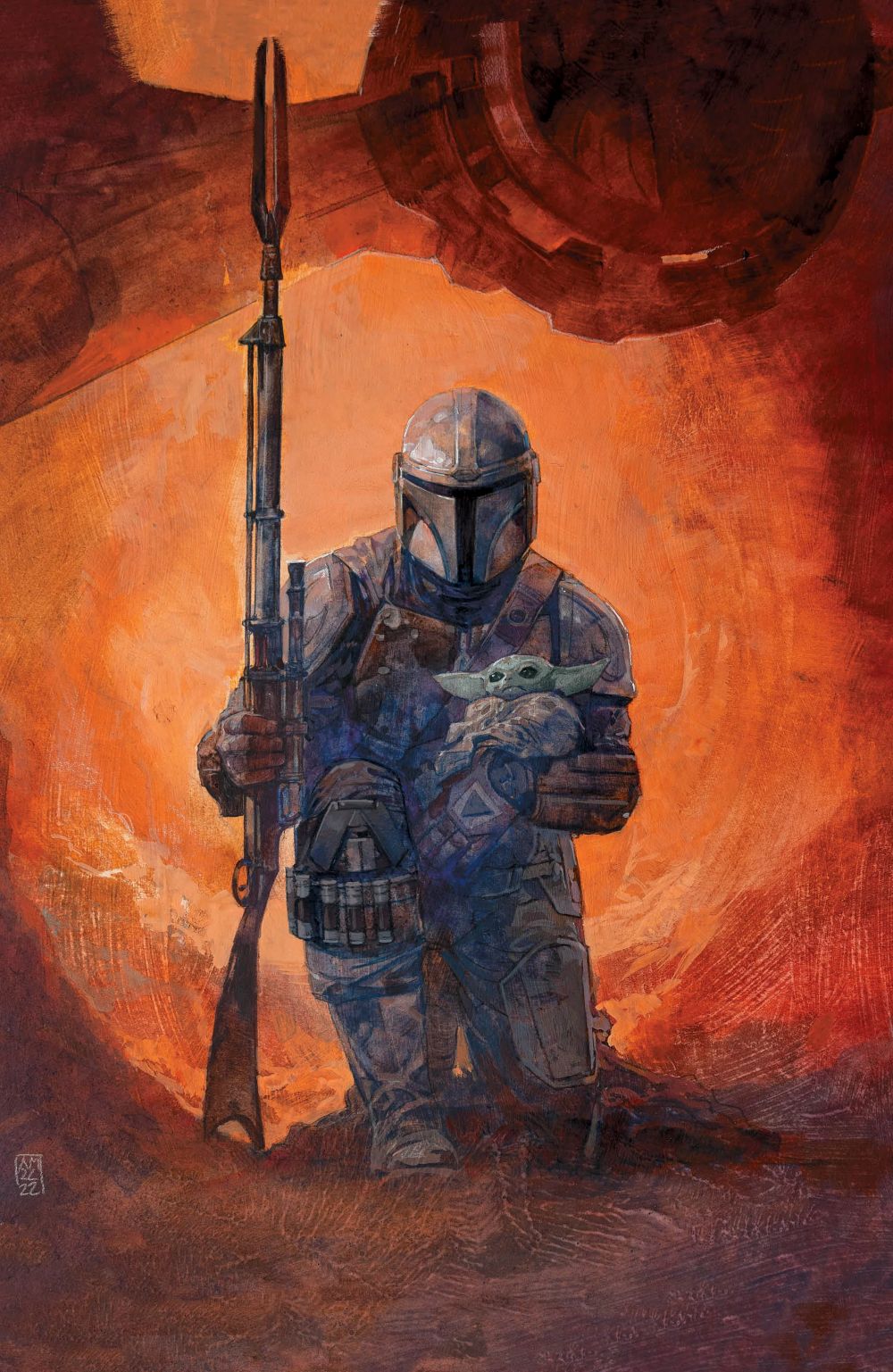
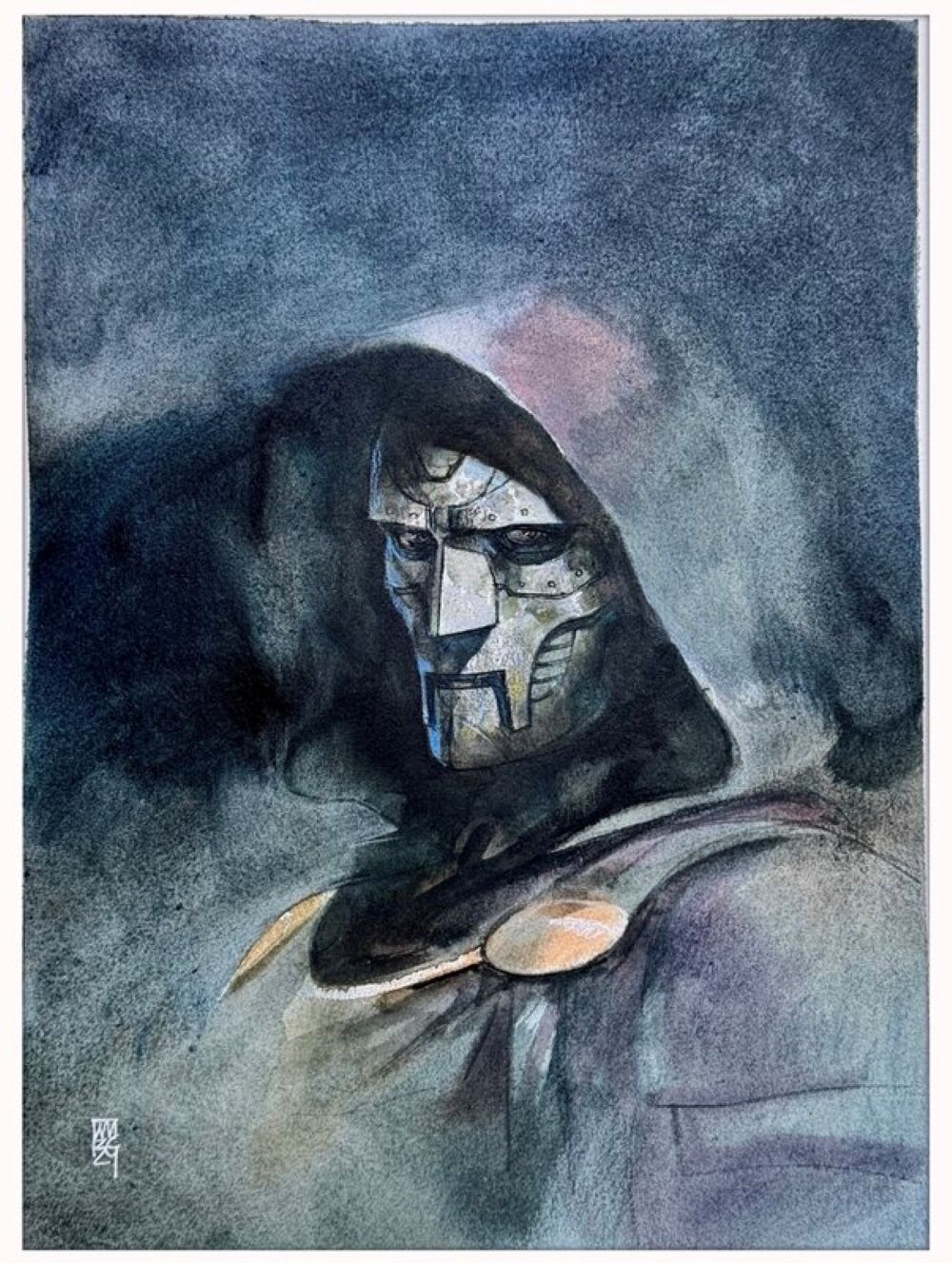
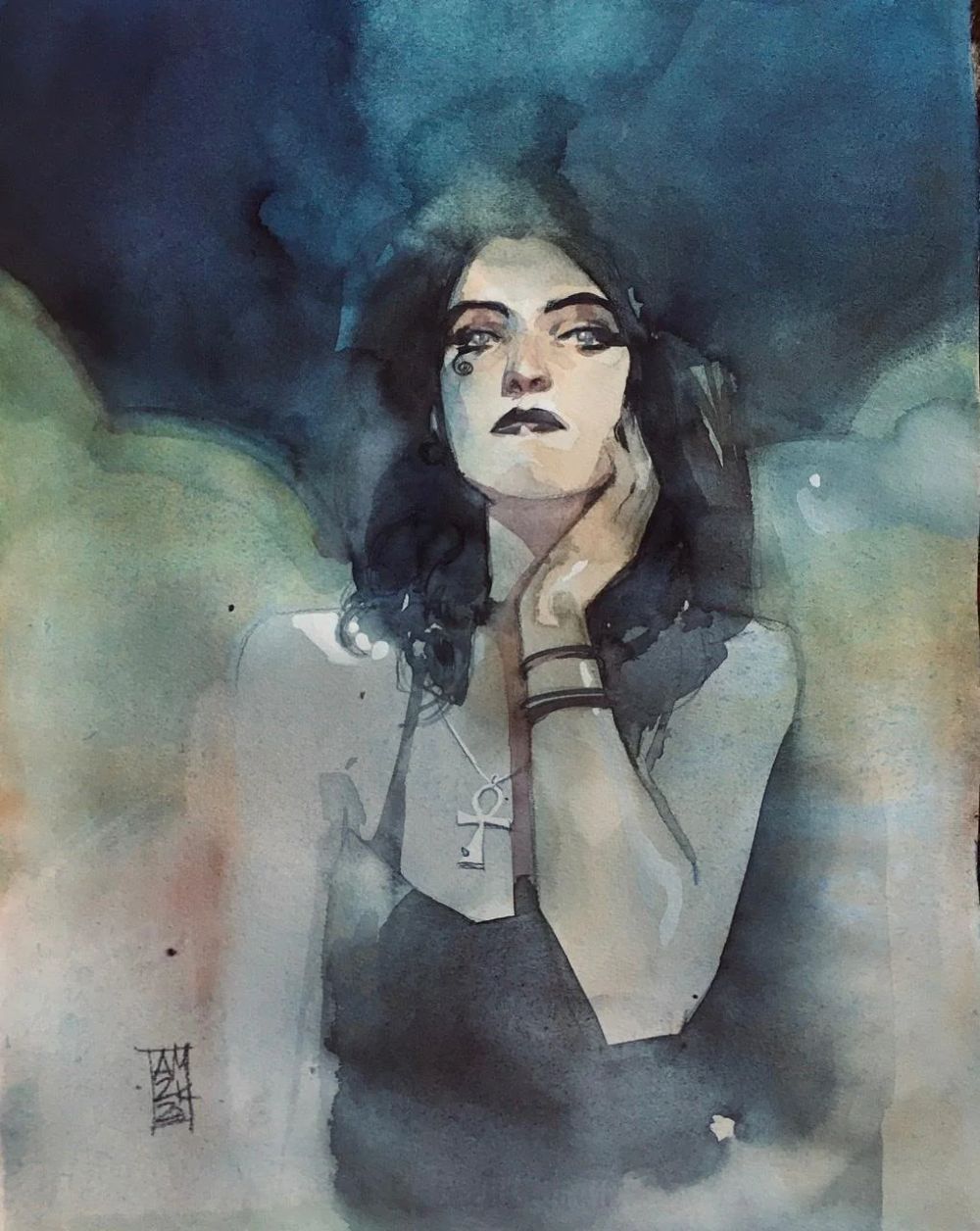
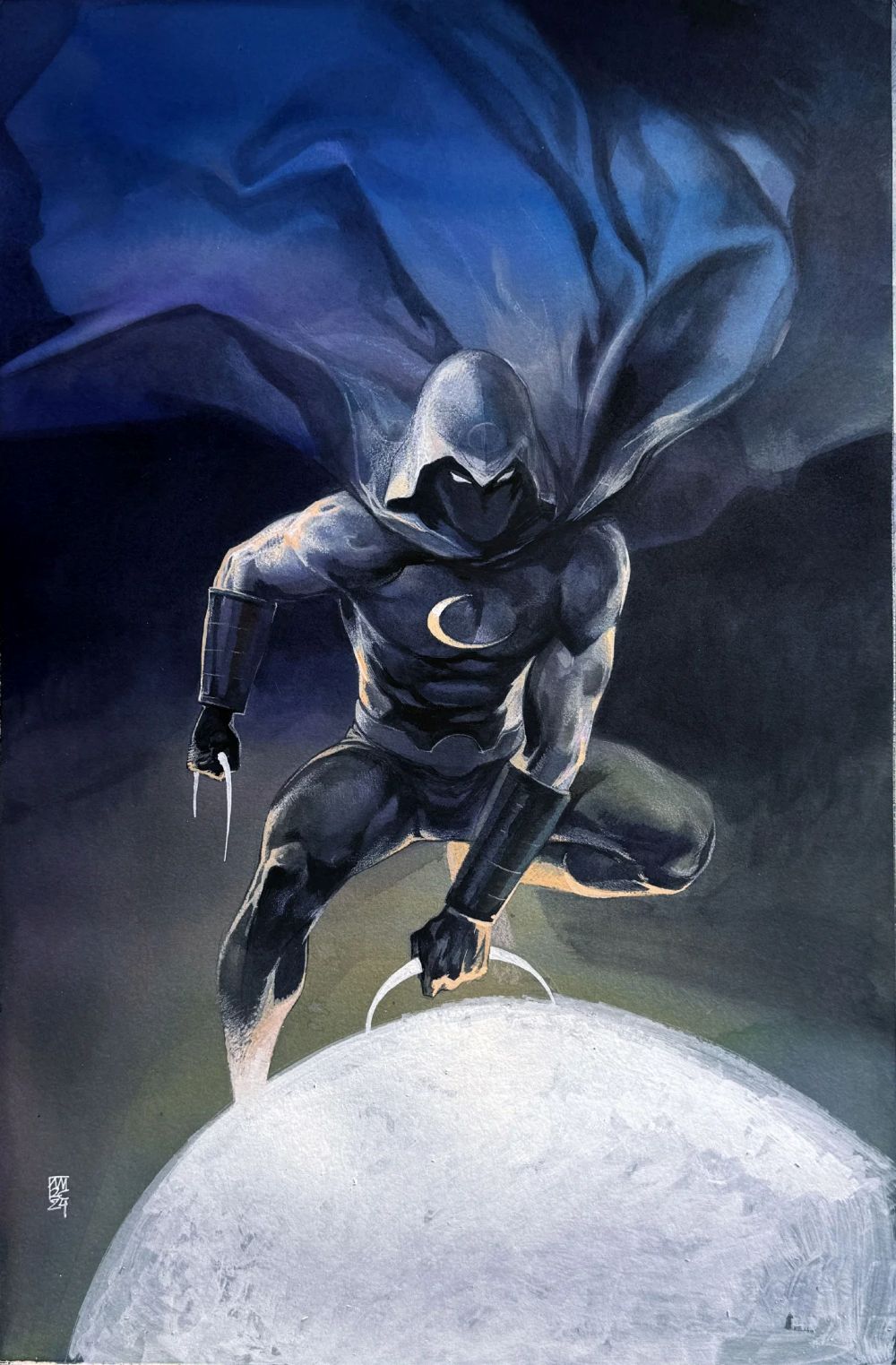
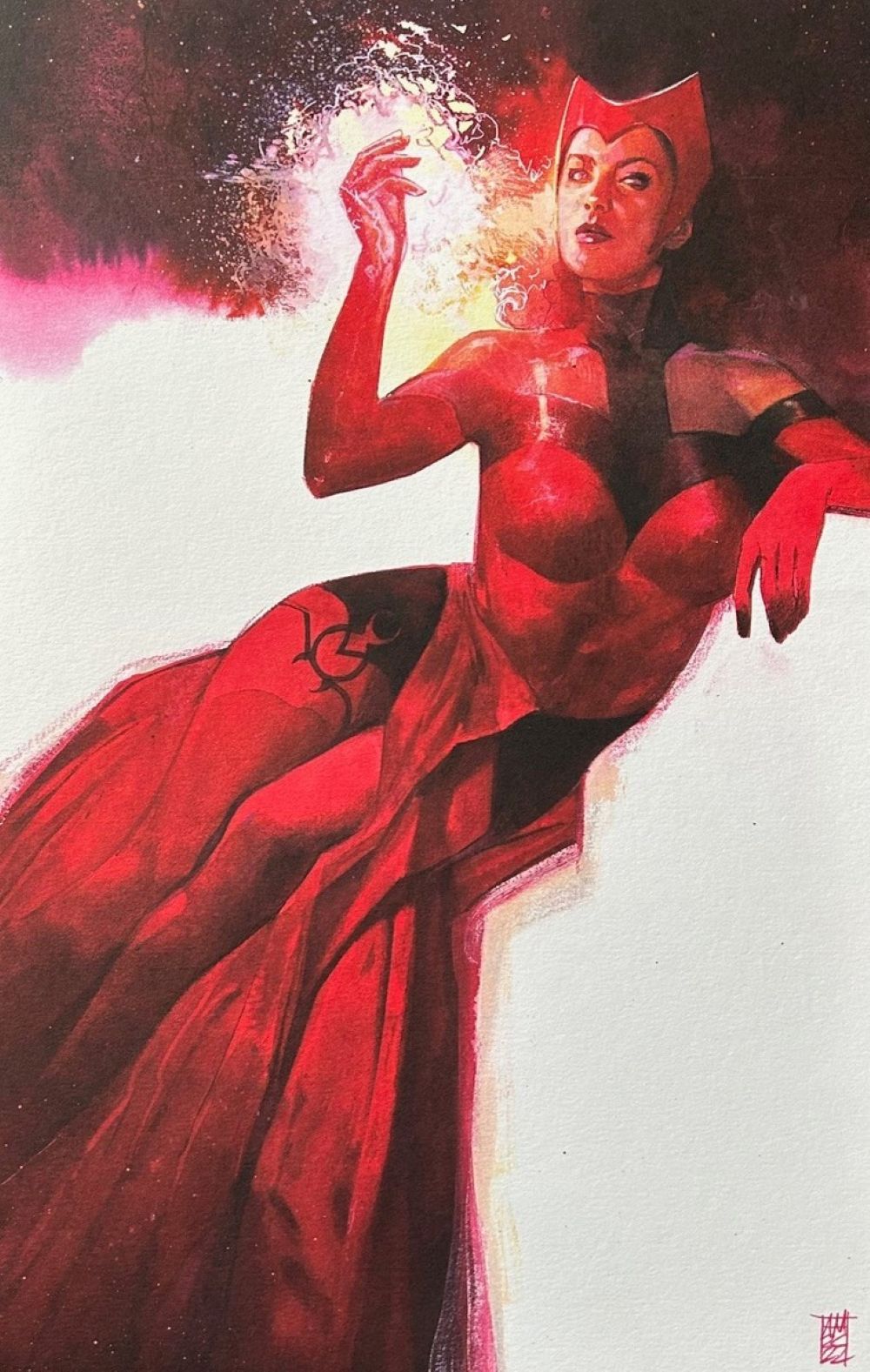
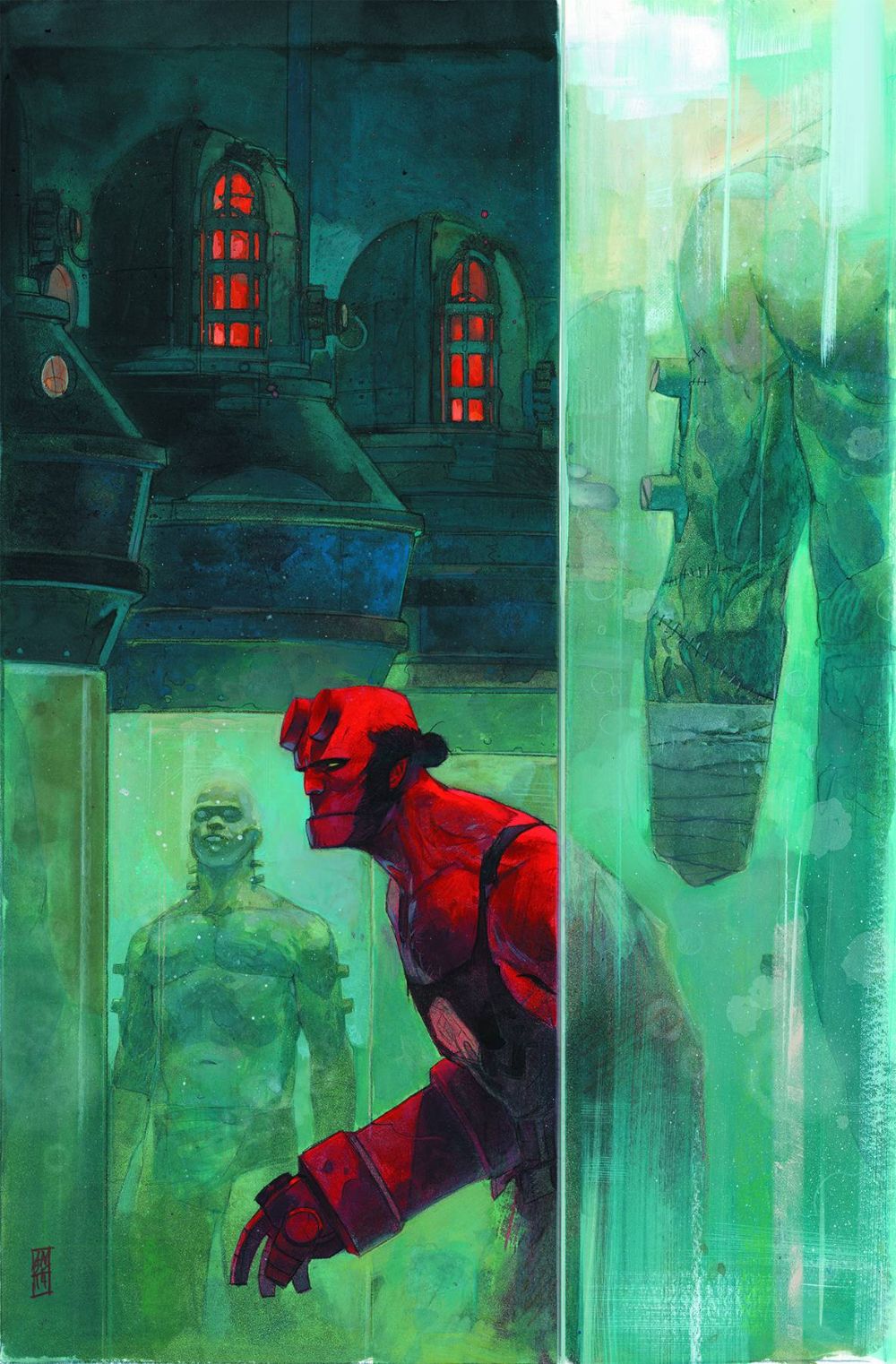
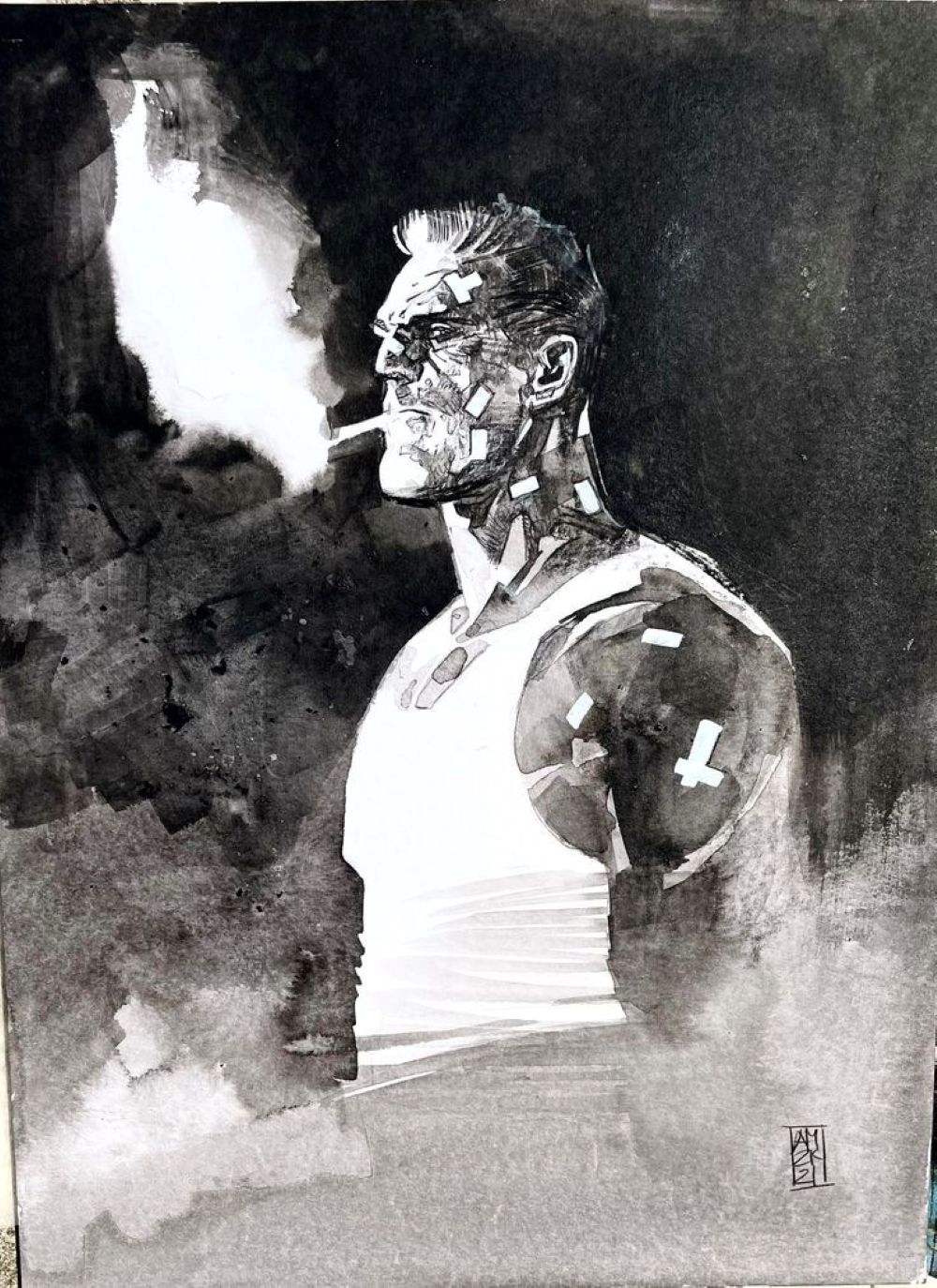
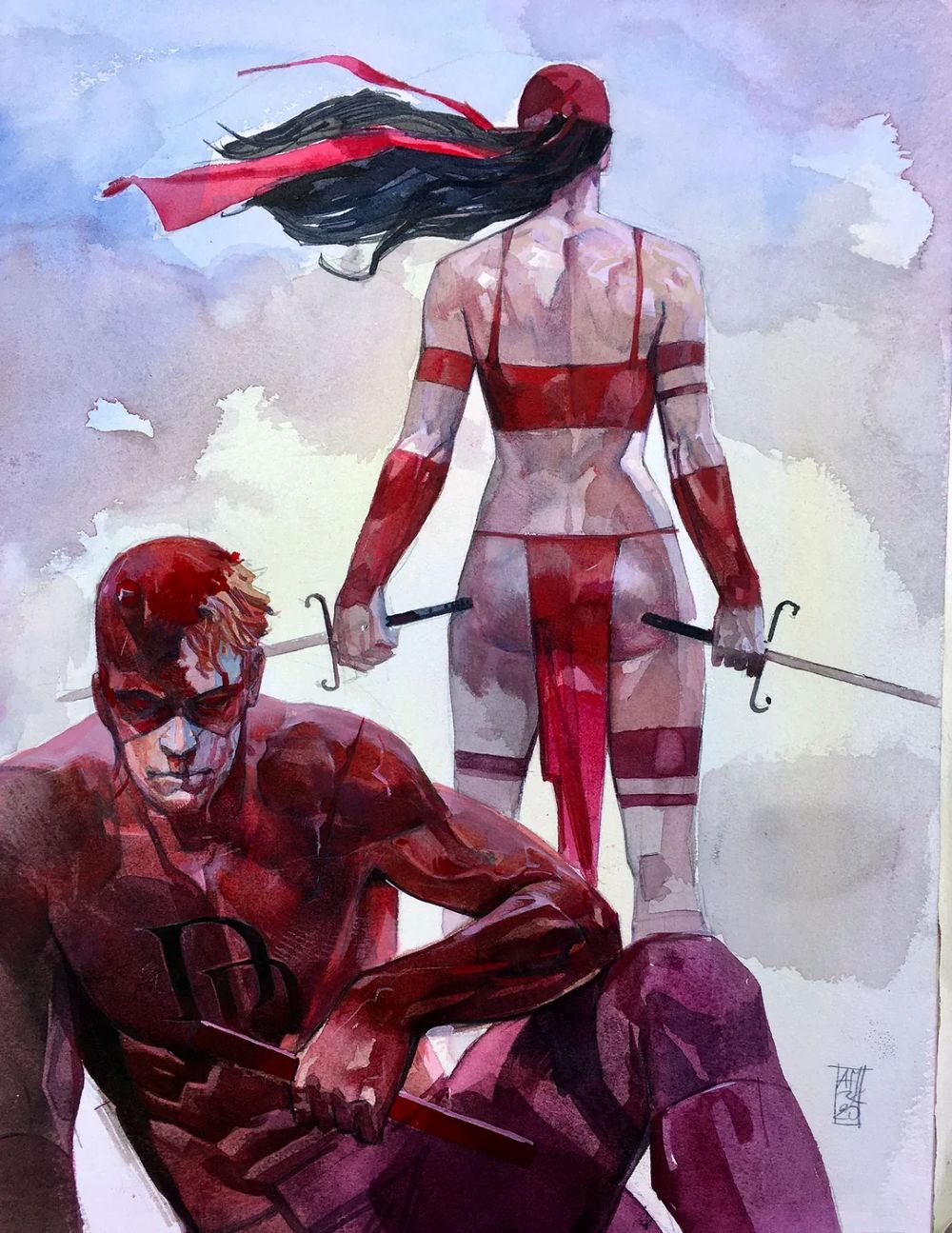
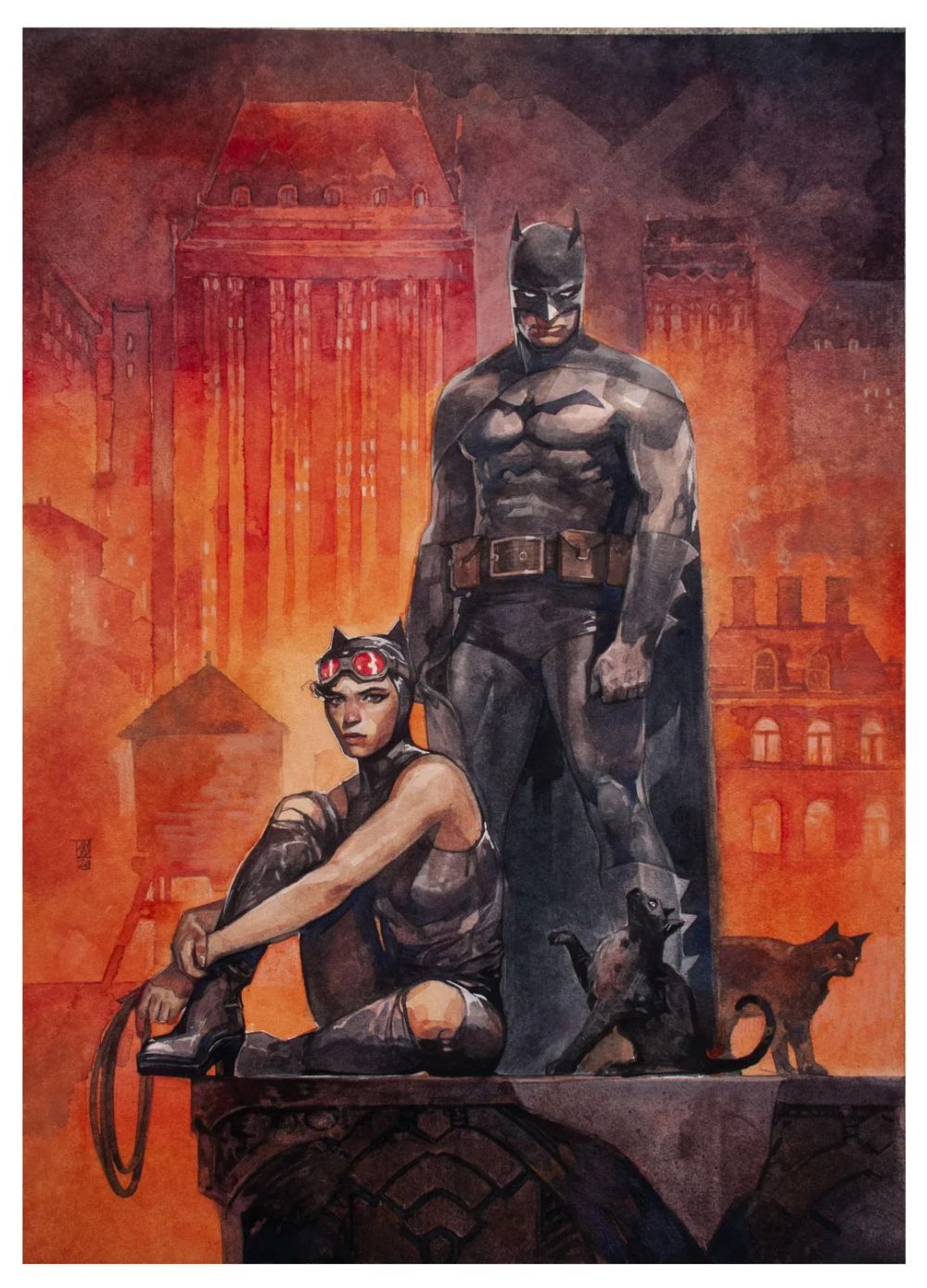
Alex Maleev’s work stands out because it makes superhero comics feel physically inhabited rather than merely illustrated. His figures are not polished icons frozen in clean, declarative poses; they look exhausted, wounded, watchful, and frighteningly close to the people one might pass on a city street. Through textured linework, severe shadows, photographic reference, digital manipulation, and painterly color, Maleev developed a noir-inflected visual language that lends even familiar Marvel characters a sense of emotional weather. The grime on a wall, the hard light on a face, or the oppressive darkness surrounding a figure can carry as much narrative force as dialogue. His approach favors mood, intimacy, and psychological pressure over conventional superhero spectacle, which is why his pages often feel closer to crime cinema or an urban thriller than to traditional four-color adventure comics.
That sensibility found its defining expression in his celebrated collaboration with writer Brian Michael Bendis on Daredevil. Maleev was not simply illustrating Matt Murdock’s stories; he helped redefine the character’s world as a bruised, morally unstable, and deeply personal version of Hell’s Kitchen. The Bendis–Maleev run brought a grounded visual credibility to Daredevil’s civilian life, legal battles, criminal enemies, and private anguish, making every close-up and every dimly lit room feel consequential. Their earlier work on Sam and Twitch, and subsequent collaborations including Spider-Woman, Moon Knight, Scarlet, New Avengers material, and Halo: Uprising, demonstrate how adaptable that partnership could be. Still, Daredevil remains the central achievement: an acclaimed run whose visual atmosphere helped establish the template for a darker, more adult, and more psychologically intimate kind of Marvel storytelling.
Maleev’s legacy is therefore not just that he produced memorable covers, faces, or grim cityscapes, but that he expanded what mainstream superhero art could communicate. At a time when the genre could easily default to glossy anatomy and kinetic bombast, he proved that visual discomfort, ugly realism, silence, and shadow could be as powerful as a splash page. His art also helped legitimize a more hybrid, mixed-media mode of comics illustration—one that uses painting, photography, design, and sequential storytelling without treating any of those tools as mutually exclusive. Emerging from Bulgaria’s comics scene before becoming a major American-comics figure, Maleev built a body of work that remains immediately recognizable: moody, tactile, cinematic, and relentlessly human.
“You don’t need a face to know who you are.” — Agent Graves
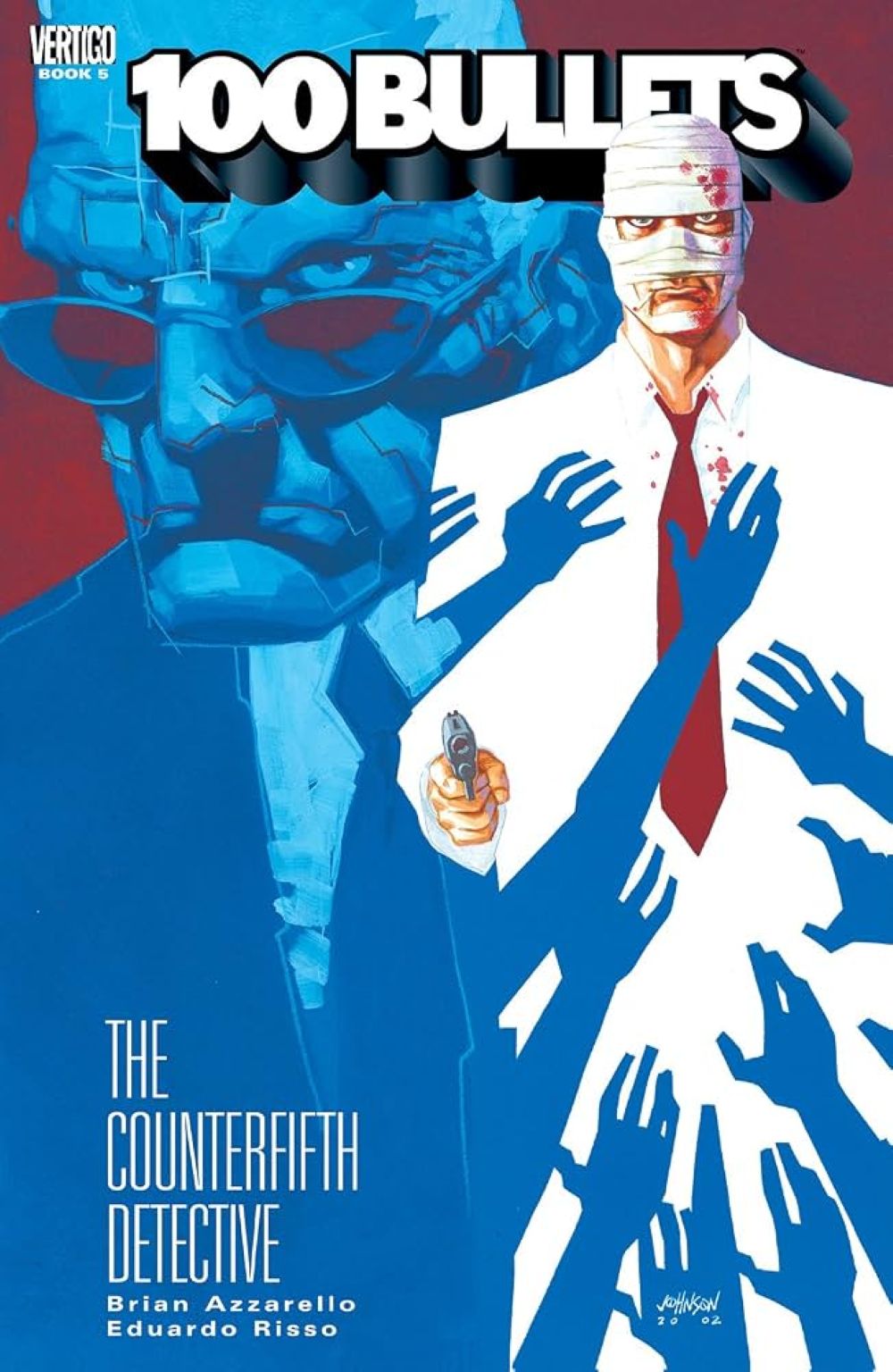
With The Counterfifth Detective, Brian Azzarello and Eduardo Risso pull 100 Bullets back toward the kind of hard-boiled detective story its title and visual style have been flirting with since the beginning. The series has spent four volumes building from Agent Graves’s deceptively simple revenge offer into a much wider conspiracy involving the Trust, the Minutemen, and a long list of people carrying old grudges, hidden loyalties, and enough baggage to sink a city block. This fifth collection does not exactly slow that larger story down, but it does give it a tighter, more focused mystery to work through.
The central character is Milo Garret, a Los Angeles private investigator who wakes up in a hospital after what appears to have been a very bad car accident. His face is wrapped in bandages, his memories are incomplete, and his life has somehow become even more miserable than the average 100 Bullets protagonist’s. Naturally, Agent Graves shows up at exactly the moment when Milo is vulnerable, angry, and looking for somebody to blame. Graves gives him the familiar attaché case containing a gun, proof, and one hundred untraceable bullets, then suggests that Milo’s accident may not have been accidental at all.
That setup brings the series back to its original premise, but there is an important difference this time. Milo is not merely an ordinary person presented with a chance to kill the person who ruined his life. He is a detective, or at least he very badly wants to be the kind of detective he has seen in old movies and read about in pulp novels. He drinks too much, gets knocked around constantly, talks like somebody trying to turn every conversation into a Bogart monologue, and keeps walking into dangerous situations because it is what he thinks a real private eye is supposed to do. It would be easy for that to become irritating, but Azzarello makes Milo’s self-conscious noir act part of what makes him interesting.
Milo is clearly performing an identity, even before the story begins questioning whether he really understands his own past. He treats the hard-drinking, wisecracking private detective routine like armor. With his face literally hidden beneath layers of bandages, he has even more reason to cling to the image of who he believes he is. That gives The Counterfifth Detective a stranger and more personal angle than the earlier revenge stories. Milo is not just trying to find out who hurt him. He is trying to find out what he has forgotten, why so many people seem to know more about him than he does, and whether the version of himself he believes in has ever been real.
The title itself is one of those Azzarello word games that sounds like nonsense until the book starts circling around identity, forgery, and false versions of the truth. Milo gets drawn into the search for a stolen painting, but the painting is not simply a MacGuffin to move the plot along. It becomes tied to memory, deception, and the larger secrets that have been buried around the Trust and the Minutemen. Like much of 100 Bullets, the plot does not always hand the reader clean explanations right away. People speak in half-truths, conversations seem to skip over the most important details, and every time Milo gets what looks like an answer, it creates two more questions.
That can make the volume feel deliberately tangled. Azzarello is not writing a traditional detective mystery where every clue fits neatly into place by the final chapter. This is a conspiracy story told from the point of view of a man who has been dropped into the middle of it with a damaged memory and a gun in his hand. Milo is confused because he should be confused. The reader is meant to feel that same instability as the people around him lie, betray each other, disappear, get beaten up, or turn up dead before they can explain what they know.
At the same time, this is one of the more accessible volumes since the early days of the series because Milo gives the story a strong point of view. A Foregone Tomorrow was important for expanding the scope of the Trust and making the Minutemen feel like a real part of the series rather than vague backstory, but it was also intentionally scattered. The Counterfifth Detective still feeds the larger mythology, yet it is built around one man trying to survive one increasingly ugly case. The result feels more focused, even when the actual plot becomes more complicated.
Agent Graves is especially effective here because his role has changed so much from the early volumes. He still presents himself as a man offering someone the tools to take revenge, but it is impossible to see him as a neutral facilitator anymore. Graves knows far more about Milo than Milo does. He is not just giving the detective a choice; he is guiding him toward a confrontation that has clear value in Graves’s wider war against the Trust. The attaché case remains a powerful symbol because it looks like freedom. It promises immunity, a weapon, and a chance to settle the score. But in this series, the case is never really freedom. It is an invitation into Graves’s game.
The presence of Lono also helps give the story some extra menace. Lono is one of the series’ most unnerving characters because he is not merely violent; he seems to enjoy making everybody else feel smaller, dirtier, and more helpless. Whenever he appears, the atmosphere immediately gets worse. He brings a kind of ugly unpredictability that contrasts nicely with Graves’s calm manipulation. Graves always seems like he has calculated the next ten moves. Lono feels like he might wreck the board just to hear the pieces crack.
Risso’s artwork continues to carry an enormous amount of the book’s personality. The bandaged Milo is a great visual creation because he looks both mysterious and ridiculous, like a cheap horror-movie monster trying to pass himself off as a tough guy. Risso finds the humor in that image without undercutting the danger around it. He is also excellent at making Los Angeles feel appropriately worn down and hostile. The city is not glamorous here. It is a place of cheap offices, dim bars, empty roads, battered cars, suspicious hotel rooms, and people who look like they have been awake for three days making terrible decisions.
His use of shadow remains one of the series’ biggest strengths. A room can be almost empty and still feel tense because of the angle of a lamp, the silhouette of somebody standing in a doorway, or the way a character’s face is half-covered by darkness. That visual approach suits a story about missing memories and hidden identities perfectly. Risso rarely needs to make a big flashy gesture to sell danger. Sometimes all it takes is someone sitting too calmly in the wrong place.
Azzarello’s dialogue is still sharp, vulgar, and often very funny in a nasty way. Not every line lands, and the characters can sometimes sound like they are competing to be the most quotable person in the room, but that heightened style has become part of the book’s identity. These are people who use tough talk as a weapon. They insult, threaten, flirt, and lie in the same breath because direct honesty would make them too vulnerable.
100 Bullets Vol. 5: The Counterfifth Detective is a strong installment because it combines the series’ expanding conspiracy with a satisfying noir setup. Milo Garret is not as immediately sympathetic as Dizzy Cordova or as tragically lost as Loop Hughes, but he is a memorable lead precisely because he is such an imperfect version of a classic private eye. He wants answers, revenge, and a sense of control, but the deeper he goes, the clearer it becomes that he may be chasing a life that was invented for him by somebody else.
This is not the cleanest or easiest 100 Bullets volume, and readers looking for every mystery to be fully explained may come away frustrated. But it is stylish, mean, funny, and packed with the kind of uneasy connections that make the larger series addictive. Azzarello keeps tightening the web around Agent Graves, the Trust, and the surviving Minutemen, while Risso makes every page look like it was pulled from the darkest corner of a crime film. By the end, Milo may have found some answers, but like everybody who accepts Graves’s offer, he has paid far more for them than he ever expected.
“The All-Father wove the skein of your life a long time ago. Go and hide in a hole if you wish, but you won’t live one instant longer. Your fate is fixed. Fear profits a man nothing.” — Herger the Joyous
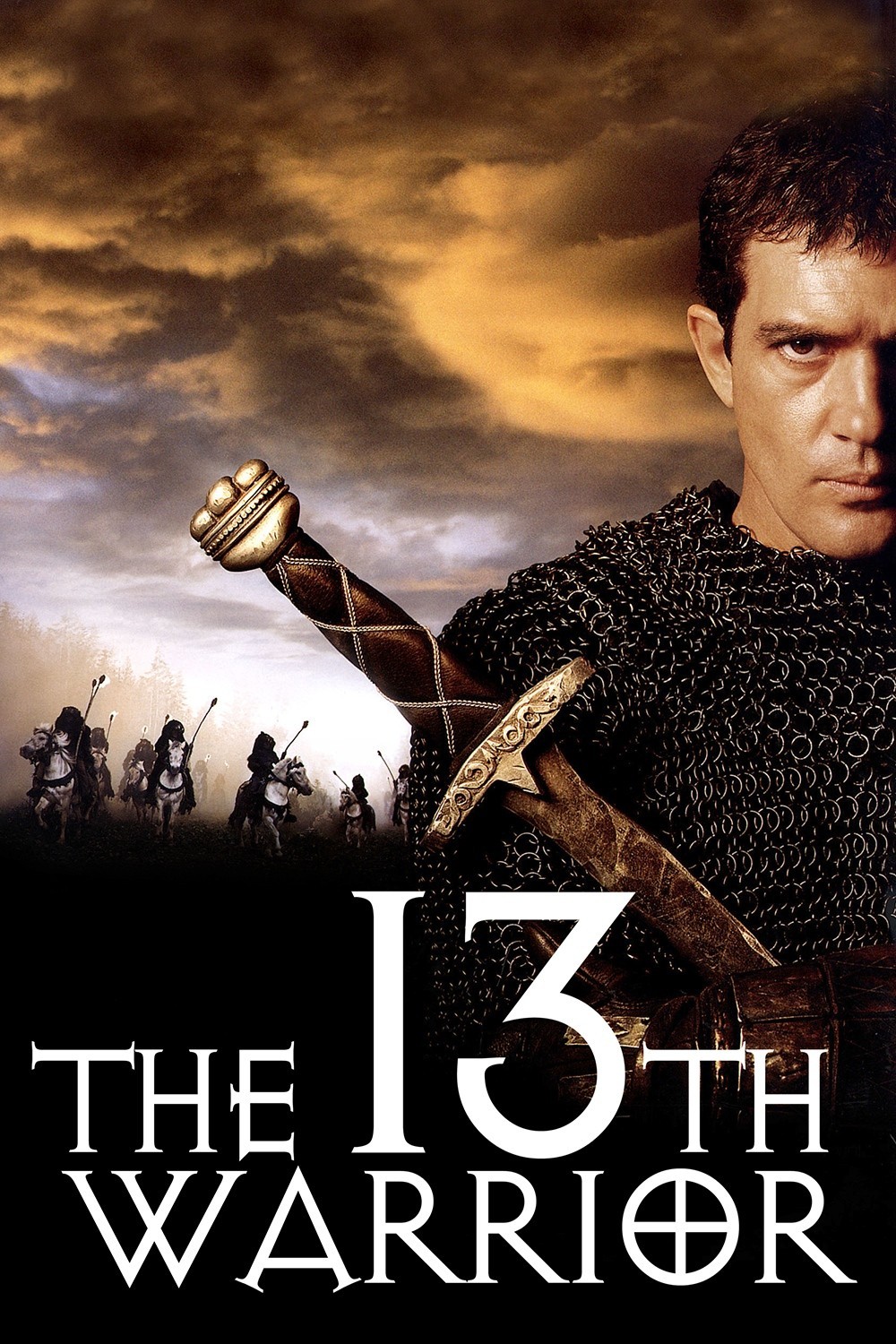
Few films wear the scars of a difficult production as visibly—and as entertainingly—as John McTiernan’s The 13th Warrior. It is messy, truncated, occasionally incoherent, and visibly caught between two competing creative visions. Yet it also has an atmosphere that many more polished historical adventures lack: wet forests, torchlit halls, thick fog, blackened skies, grim Norse rituals, and a band of warriors who look as though they have spent their entire lives sleeping in armor and drinking themselves toward an early grave. It is not a great film, but it is an undeniably entertaining one—and one of the more fascinating guilty pleasures of the late-1990s blockbuster era.
Loosely adapted from Michael Crichton’s novel Eaters of the Dead, which itself plays with the historical legend of Ahmad ibn Fadlan and folds it into a rough retelling of Beowulf, The 13th Warrior begins with Antonio Banderas as Ahmed ibn Fahdlan. Ahmed is an Arab court poet and diplomat banished from Baghdad after an indiscretion involving a powerful man’s wife. He is sent north as an ambassador, where his refined manners, education, and cultivated worldview put him in immediate contrast with the brutal, loud, heavily armed Norsemen he encounters. The movie gets a surprising amount of mileage out of that culture-clash premise. Ahmed is initially horrified by the Vikings’ hygiene, manners, food, and casual relationship with violence, while the Vikings regard him as an odd, under-equipped foreigner who seems far too elegant to be useful in a fight.
The story kicks into gear when a group of Norse warriors is summoned to aid a distant village terrorized by mysterious attackers known as the Wendol. According to prophecy, thirteen men must go—and the thirteenth cannot be a Northman. Ahmed, despite having no real desire to be involved in this nightmare expedition, becomes the required outsider. From there, the film turns into a lean survival-horror adventure: the warriors travel into an isolated northern settlement where people are being abducted and mutilated by enemies who seem to emerge from the darkness itself. The Wendol wear animal skulls, move through the night like ghosts, and are initially presented less as a human army than as something ancient and supernatural.
That eerie buildup is easily the best thing about The 13th Warrior. McTiernan, the director of Die Hard, Predator, and The Hunt for Red October, knew how to make hostile environments feel dangerous. The village is surrounded by dense woods and oppressive mountains, while the interiors are lit by fire, smoke, and shadows. The film often feels as if it is taking place at the edge of the known world. Even when the plot becomes shaky, the mood holds. There is a genuinely creepy quality to the Wendol’s first attacks, especially when horns sound in the distance and figures descend from the hills in the rain. The movie may never fully sell the mythology behind its villains, but it absolutely sells the fear they inspire.
Banderas is a somewhat unconventional choice for Ahmed, and his casting has always been one of the film’s stranger elements. He brings charisma and physical presence, but the accent situation is obviously all over the place. Still, he makes the character’s gradual transformation satisfying. Ahmed begins as a man who sees himself as superior to these crude northerners, only to discover that their apparent barbarism is paired with courage, loyalty, humor, and a practical intelligence he had underestimated. His evolution into a capable warrior is predictable, but it works because Banderas plays the early discomfort well. The famous moment when Ahmed learns the Norse language simply by listening around the campfire is absurdly accelerated, but it is also one of the movie’s most memorable scenes. It tells the audience, with no subtlety whatsoever, that he has crossed into their world.
The supporting cast gives the film much of its appeal. Vladimir Kulich’s Buliwyf is the quiet center of the group, a noble warrior king whose death is basically foretold from the moment he appears. Kulich has the right imposing, mythic presence for the role, and he makes Buliwyf feel like a living folk hero rather than just another stock Viking chief. Dennis Storhøi, Tony Curran, Richard Bremmer, and the rest of the warriors are not always given much individual development, but they create a convincing sense of companionship. Their banter, drinking, ritualized insults, and battle-ready camaraderie help the group feel like a unit with a history long before Ahmed arrived.
The action is another mixed but memorable part of the experience. McTiernan’s best films are often celebrated for their clarity of geography and movement, but The 13th Warrior is much murkier. Some of that is intentional: fights take place at night, in rain, amid smoke, fire, and chaos. But some of it also feels like a byproduct of an uneven post-production process. The movie is often too dark, too quickly edited, and too vague about what is happening from one beat to the next. Even so, there are flashes of real power. Ahmed forging a sword from a Viking weapon is a solid transformation moment, while the climactic infiltration of the Wendol cave has the pulpy appeal of an old adventure serial filtered through mud, blood, and 1990s studio excess.
The behind-the-scenes drama is arguably just as intriguing as the movie itself. The 13th Warrior became infamous for going significantly over budget and for the creative conflict between McTiernan and the studio. The reported disputes centered on the film’s tone, pacing, and specific scenes, with the studio evidently concerned that McTiernan’s version was too dark, too strange, and too inaccessible for a massive summer release. This was not a minor disagreement over a few trims. It became the kind of production struggle that leaves fingerprints all over the finished film. You can feel the tension between a moody, almost horror-driven historical fantasy and a more conventional action-adventure picture trying to break through the same material.
Michael Crichton, the author of Eaters of the Dead and a major force behind the project, eventually stepped in to oversee reshoots and re-editing. That fact alone makes The 13th Warrior unusually fascinating. It is not every day that the author of the source novel takes such a direct role in reshaping a film after its original director has already completed his work. Crichton reportedly pushed for a more straightforward, audience-friendly version, trimming and restructuring the movie in ways meant to clarify the story and increase its commercial appeal. The result is a film that often feels like two versions grafted together: one a grim, unnerving tale about outsiders confronting an almost prehistoric terror, the other a compressed heroic adventure about a reluctant man discovering his warrior spirit.
That conflict helps explain why the finished movie can feel so abrupt. Characters appear and disappear with little explanation, the Wendol mythology is only partially developed, and the final stretch rushes through material that could have supported a longer, more coherent climax. The film is barely over 100 minutes, yet it sometimes feels as though an entire half-hour of connective tissue vanished somewhere between the shoot and the theatrical cut. This is especially frustrating because there is clearly a richer movie buried inside the existing one. The setting, the central premise, the cultural collision, and the supernatural ambiguity all deserved more room to breathe.
Still, those flaws are part of why The 13th Warrior has endured as a cult favorite. It is easy to imagine a cleaner, more successful version, but it is also difficult to imagine that version being as peculiar or as memorable. The finished film has a strange, bruised personality. It carries the weight of a troubled production, but it also has enough great imagery, strong atmosphere, and old-fashioned adventure momentum to overcome its rough edges. It never reaches the level of McTiernan’s best work, and it is certainly not the definitive cinematic take on Beowulf. But as a cult, guilty-pleasure fantasy adventure, The 13th Warrior delivers more than its reputation might suggest.
“You see, in this world there’s two kinds of people, my friend: those with loaded guns and those who dig. You dig.” — Blondie
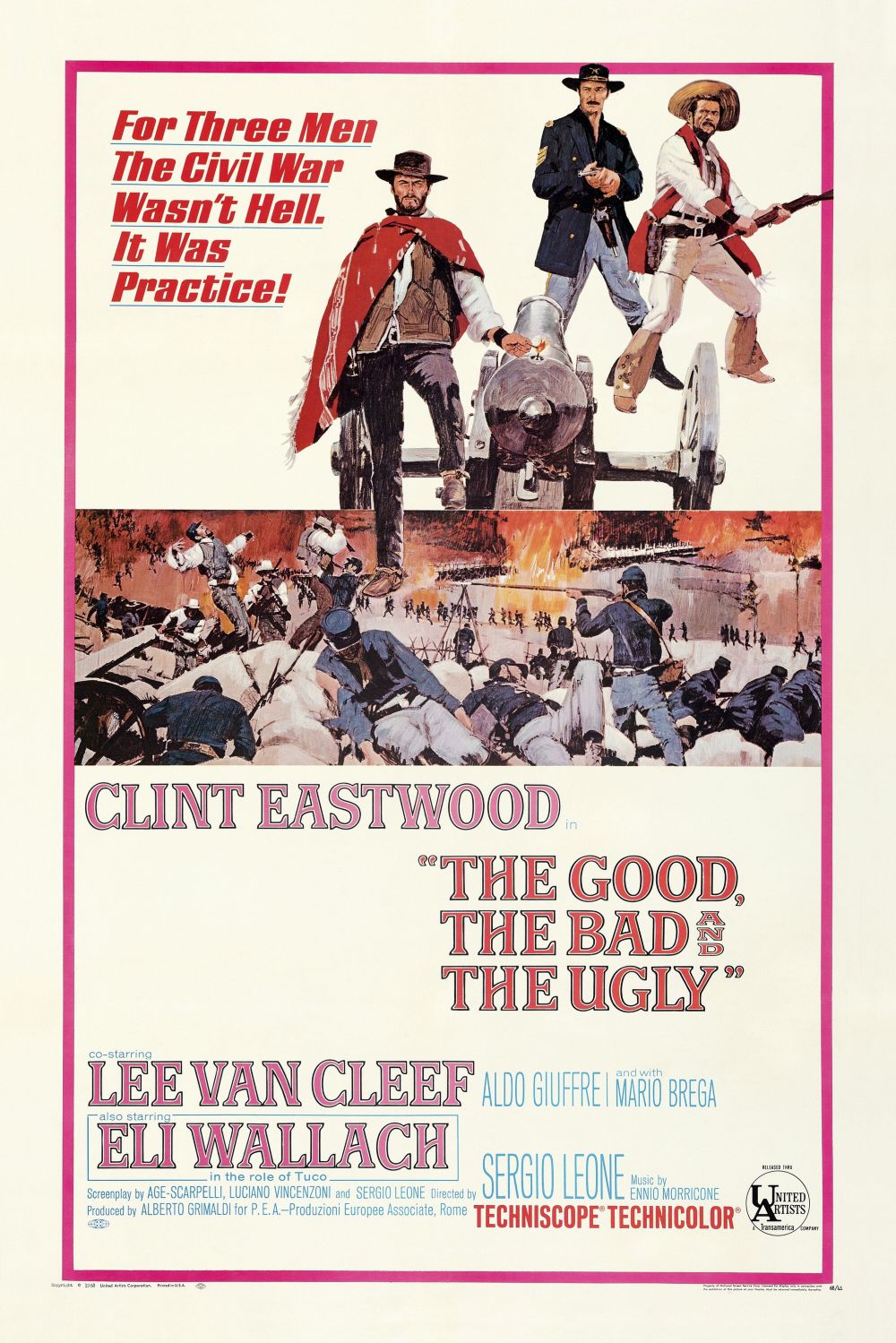
Sergio Leone’s The Good, the Bad and the Ugly is the kind of movie that feels so foundational that it can be easy to forget how strange, bold, funny, and downright operatic it still is. Released in 1966, it was the third and final leg of Leone’s “Dollar’s Trilogy,” following A Fistful of Dollars and For a Few Dollars More, and it takes the stripped-down antihero Western formula of those earlier films to its most grandiose extreme. It is bigger in scale, longer in runtime, more openly concerned with the Civil War, and more confident about lingering on faces, landscapes, corpses, explosions, and silences until they become almost mythic. It is also just an enormously entertaining movie: violent, cynical, hilarious, tense, and powered by one of the greatest scores ever written for film.
The title is simple, but the movie’s moral categories are deliberately slippery. Clint Eastwood plays Blondie, the “Good,” though he is not good in any conventional heroic sense. He is a mercenary drifter with a cool head, a quick draw, and a willingness to exploit the desperate when there is money involved. Lee Van Cleef is Angel Eyes, the “Bad,” a cold professional killer whose cruelty is more orderly and methodical than emotional. Eli Wallach, meanwhile, plays Tuco, the “Ugly,” a bandit, liar, survivor, and chaos agent who is arguably the most human person in the whole film. Leone uses those labels less as literal definitions than as a rough guide to the way each man moves through the world. Blondie may possess the closest thing the story has to a moral code, Angel Eyes is openly monstrous, and Tuco is shamelessly selfish, but all three are driven by greed and survival.
The plot begins with Blondie and Tuco running a scam across the frontier. Blondie collects bounties by turning Tuco in to authorities, then rescues him at the last possible moment before a hanging, allowing the two men to repeat the process elsewhere. Their partnership is profitable but unstable, especially because Blondie holds all the power. When he finally abandons Tuco in the desert after an argument, it sets the tone for the film’s shifting alliances and personal grudges. From there, the story expands into a hunt for buried Confederate gold, with Angel Eyes learning of the treasure independently and pursuing it with ruthless efficiency. The treasure hunt is the basic engine of the story, but the movie keeps finding detours that make it richer: prison camps, mistaken identities, Confederate soldiers, battlefield carnage, a destroyed bridge, family resentments, and a final trip to a cemetery that has become one of the most famous endings in cinema.
Leone’s great gift is making time itself feel dramatic. The movie is long, but it rarely feels aimless because the director understands how to stretch anticipation. He can hold a close-up for what seems like an eternity, cut between eyes and hands, let a character slowly realize they are trapped, and then release all that pressure in a flash of violence or a perfectly timed joke. The famous three-way standoff at Sad Hill Cemetery is the clearest example. It is not simply a gunfight. It is a miniature psychological war in which every glance matters, every hand movement becomes a potential death sentence, and Ennio Morricone’s music turns the scene into a kind of ritual. The sequence is so iconic because Leone earns it through buildup. He has spent nearly three hours teaching the audience that in this world, watching someone’s eyes can be more important than hearing what they say.
The direction is often described as stylized, but that undersells how carefully Leone balances visual exaggeration with emotional clarity. His close-ups are huge and intimate, showing cracked skin, sweat, stubble, narrowed eyes, and crooked grins in almost absurd detail. Then he will cut to an enormous wide shot in which a lone person barely registers against a desert, battlefield, or cemetery. That contrast makes the characters feel both larger than life and insignificant before the violence surrounding them. Leone’s West is not the clean, heroic frontier found in many older Hollywood Westerns. It is dusty, harsh, crowded with hungry people, and full of soldiers dying for causes that seem distant from their actual suffering. Even when the movie is funny, its world feels unforgiving.
The Civil War setting gives The Good, the Bad and the Ugly a weight that the earlier films in the trilogy do not have in quite the same way. Leone does not transform the picture into a historical drama, and the central story remains about three men chasing money, but he keeps placing their selfish adventure against the machinery of mass death. Blondie and Tuco witness prisoners being beaten, soldiers dying pointlessly, and whole military operations built around the destruction of a bridge. One of the film’s most memorable passages involves a Union captain who has become numb to the casualties under his command. His view of war is not glorious or triumphant; it is weary and sickened. That attitude makes Leone’s spectacle more complicated. The explosions are impressive, and the battle scenes are visually massive, but the movie never suggests that war is noble simply because it looks grand on screen.
Clint Eastwood’s performance is a major reason Blondie remains one of cinema’s defining gunslingers. Eastwood had already established the character type in the previous Leone films, but here he seems fully at ease with the role’s economy. He does not need much dialogue because his posture, timing, and faintly amused stare communicate almost everything. Blondie is always calculating. Even when he appears relaxed, he is noticing the exit, the weapon, the weakness in the other person’s plan. Eastwood makes him cool without making him hollow, and he wisely avoids trying to turn Blondie into a conventional saint. The character can be compassionate, especially compared with Angel Eyes, but he also enjoys having leverage over Tuco. Their relationship is not friendship in any easy sense. It is an ugly, funny bond forged out of mutual usefulness.
Lee Van Cleef is equally effective, though in a very different register. Angel Eyes is terrifying because he never seems hurried or uncertain. He treats murder as a job, and his calm politeness only makes him worse. There is a scene early in the movie where he murders a man after receiving information from him, and the point is immediately clear: Angel Eyes does not make promises he considers inconvenient, and he does not feel guilty about it. Van Cleef’s sharp features and measured delivery make him seem almost supernatural, like death walking around in a black hat. Yet he is not a cartoon. He is a predator with discipline, and the movie understands that competence can be frightening on its own.
Still, Eli Wallach is arguably the film’s secret weapon. Tuco is the character who gives the movie much of its energy, humor, and emotional unpredictability. He is loud where Eastwood is quiet, messy where Van Cleef is controlled, and constantly talking because silence would probably drive him crazy. Wallach gives a performance that could have become exhausting in lesser hands, but he makes Tuco vivid rather than merely obnoxious. You can see the intelligence beneath his impulsiveness. Tuco survives because he can adapt, plead, threaten, deceive, and explode into violence depending on what the moment requires. He also has flashes of pain that make him more than comic relief, particularly when the story briefly brings him face to face with his brother and the life he might have had. That scene gives the movie an unexpected emotional wrinkle without forcing Tuco into a redemption arc he does not deserve.
Morricone’s score deserves its legendary reputation because it does much more than decorate the action. The music creates the film’s atmosphere from the first seconds, with its coyote-like call, whistles, percussion, voices, and electric-guitar edge. It sounds ancient and modern at the same time, perfectly suited to Leone’s version of the West, which is less historical recreation than fever dream. Themes such as “The Ecstasy of Gold” and “The Trio” have become inseparable from the film, but they retain their power even outside their famous scenes. “The Ecstasy of Gold,” accompanying Tuco’s frantic run through the cemetery, is especially remarkable. The music turns what could have been a simple moment of greed into a spiritual experience. Tuco is not merely looking for a grave; he is racing through a landscape of death toward the possibility of salvation, wealth, and survival.
What makes the movie endure is that it never asks the audience to choose between pleasure and substance. It is a masterpiece of style, full of unforgettable faces, brilliant editing, enormous landscapes, and some of the sharpest visual storytelling in the genre. At the same time, it is funny in a dark, mean-spirited way, and it is skeptical about every institution around its characters. Governments send men to die. Criminals betray one another. Families fail to heal old wounds. Religion offers comfort but not necessarily rescue. Money remains the closest thing to a shared religion, and even that cannot guarantee anyone’s safety.
As the final installment of Leone’s “Dollar’s Trilogy,” The Good, the Bad and the Ugly feels like a culmination rather than just a sequel. It takes the mysterious Eastwood gunslinger, the tension between rival bounty hunters and criminals, and the morally barren frontier of the first two films, then expands them into something almost epic. The movie’s scale can make it feel less intimate than For a Few Dollars More, but that is part of its appeal. Leone is not trying to make a neat ending to a continuous story. He is making the biggest, loudest, most definitive statement he can with the ideas the trilogy has been building toward.
Even now, the film’s influence is everywhere: in action movies that use silence as suspense, in antiheroes whose morality is relative rather than pure, in directors who treat a showdown as choreography, and in scores that become characters in their own right. But influence is not the same as replacement. Plenty of movies have copied Leone’s close-ups, pacing, gunfighters, and musical bravado. Very few have matched the strange balance that makes The Good, the Bad and the Ugly feel so alive. It is simultaneously a Western adventure, a black comedy, a war movie, a fable about greed, and a giant cinematic performance piece. By the time the final duel arrives, the film has become exactly what the title promises: a collision between the good, the bad, and the ugly parts of human nature, staged with enough style to make it unforgettable.
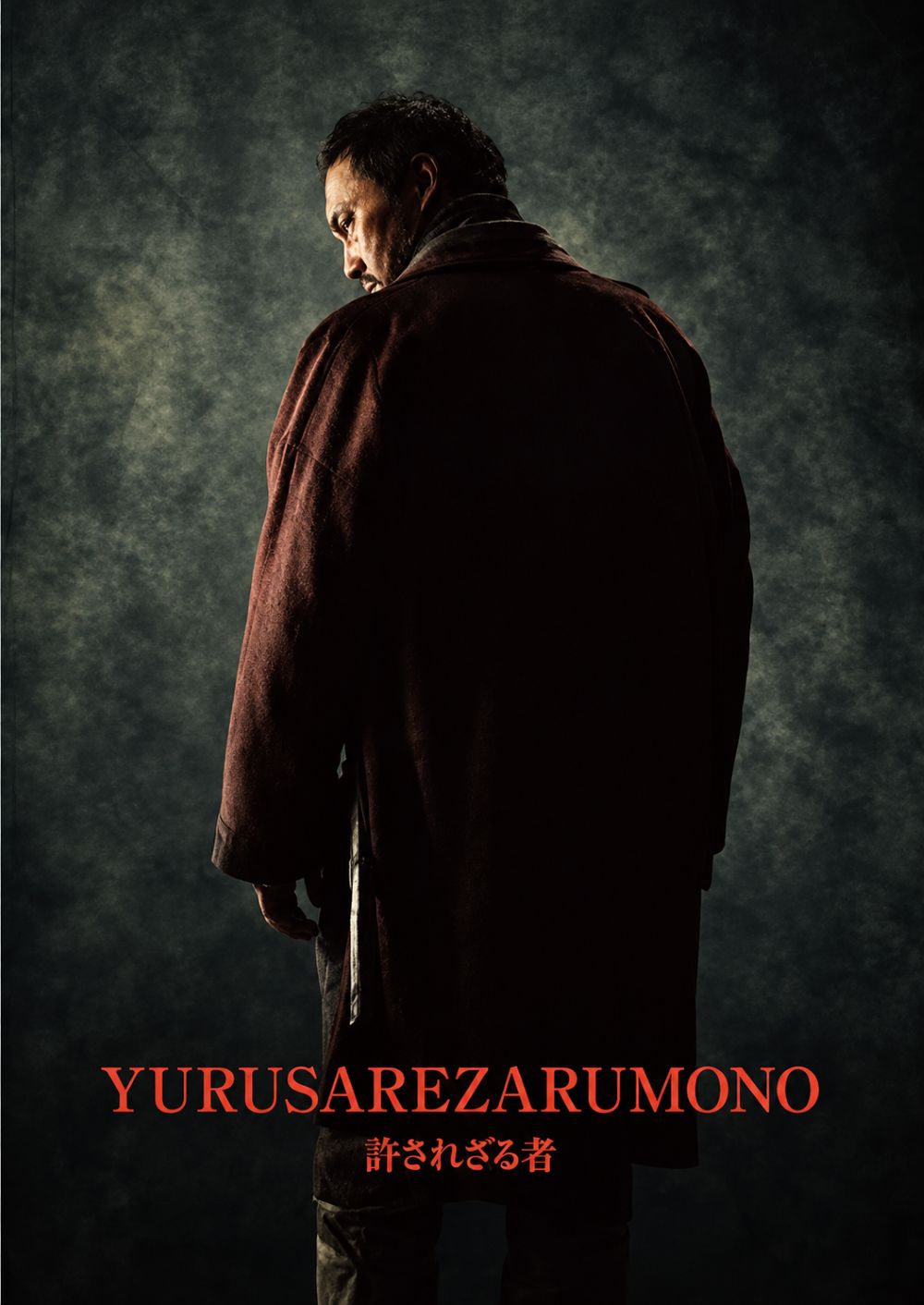
Unforgiven, released in Japan as Yurusarezaru Mono—literally “The Unforgiven” or “Unforgivable”—is the 2013 Japanese remake of Clint Eastwood’s 1992 revisionist Western. Rather than treating the original as a sacred object that cannot be touched, director Lee Sang-il and star Ken Watanabe prove that its central ideas can travel surprisingly well. The story moves from the fading American frontier to Hokkaido in the early Meiji era, when Japan was modernizing quickly and the samurai class was becoming a relic of a vanishing order. In that sense, the film finds the perfect Japanese equivalent to Eastwood’s aging gunslingers. Just as William Munny belongs to an Old West that is dying around him, Jubei Kamata belongs to a Japan that no longer has a clear place for men like him.
It also belongs to a much longer tradition in which samurai and Western gunslingers have become closely intertwined character types. Both are often portrayed as isolated men shaped by violence, reputation, personal codes, and the decline of the worlds that made them useful. Both can drift into a troubled town, become involved in someone else’s conflict, and turn into a larger-than-life figure whether they want to or not. The exchange between the genres has gone on for decades, most famously when Akira Kurosawa’s Yojimbo became the basis for Sergio Leone’s A Fistful of Dollars. Yurusarezaru Mono feels like an especially appropriate continuation of that conversation: a Japanese filmmaker takes an American Western that was itself deeply interested in dismantling the gunslinger myth and uses it to confront the equally romanticized myth of the samurai.
The original Unforgiven was already a film about stripping the glamour away from violence. Eastwood took the familiar image of the weathered gunfighter coming back for one final job and showed the ugliness underneath it. Violence is not clean, heroic, or especially skillful when it happens for real. It is frightening, clumsy, painful, and impossible to undo. Lee Sang-il keeps that moral core but finds a distinct cultural target. The Japanese version examines the idealized samurai image: the disciplined swordsman, the honorable warrior, the proud survivor of a more noble age. It asks whether any of those myths can survive when the man behind them has killed people, carries terrible memories, and no longer knows who he is without violence.
Ken Watanabe plays Jubei Kamata, a former samurai once feared as “Jubei the Killer.” He is the film’s William Munny equivalent, but Watanabe does not simply imitate Eastwood’s performance. Jubei is introduced as an exhausted farmer and widower raising two children in hard conditions. He is poor, physically worn down, and clearly ashamed of the person he used to be. Watanabe gives him an almost painful heaviness. Jubei is not merely an old warrior who wants peace; he is a man who has spent years trying to become someone else because he knows exactly what “Jubei the Killer” was capable of.
The early-Meiji setting gives that character arc a stronger historical charge. Jubei is not just retired from a bloody life. He is part of a fading warrior caste in a country remaking itself through new laws, new institutions, modernization, and expanding state power. The samurai may still exist in memory and in popular myth, but their old social role is slipping away. That mirrors the original film’s dying Old West perfectly. The gunslinger and the samurai are both figures from a violent past who have become obsolete, yet neither can completely escape the reputation that past gave them.
The plot begins after a prostitute is viciously assaulted and scarred by two men in a northern settlement. The town’s authorities treat the crime as an economic issue instead of an act of cruelty against a human being, so the women of the brothel raise a bounty for the attackers’ deaths. Kingo Baba, Jubei’s old companion, approaches him about the bounty and offers him a share of the reward. Jubei refuses at first because he has children, a failing farm, and a life he is trying to preserve. But poverty, desperation, and the lingering pull of his former identity eventually drag him back into violence.
The film’s real power is that it never turns this decision into a simple revenge fantasy. The men being hunted deserve condemnation for what they did, and the film does not soften that. Still, it never suggests that killing them will restore the woman they harmed or somehow balance the moral scale. Murder does not solve the original injustice; it only broadens the cycle of pain. Like Eastwood’s film, Yurusarezaru Mono constantly pushes against the audience’s instinct to treat revenge as satisfying or cleansing.
Jubei teams up with Kingo Baba, played by Akira Emoto, an old companion who fills the role of Ned Logan from the original. Their relationship is one of the remake’s best qualities. Emoto gives Kingo a tired, approachable decency, but he also makes clear that the man has lived long enough to understand the price of violence. He and Jubei do not need to explain their history in long speeches. Their shared past comes through in their guarded conversations, familiar irritation, and unspoken awareness that they are both far too old to be pretending this job will end cleanly.
Goro Sawada, played by Yuya Yagira, is just as important because he represents the fantasy of violence before reality destroys it. He wants a name. He wants to be feared. He wants stories about himself that will make him sound larger than life. But the film dismantles him in the same way Unforgiven dismantled the Schofield Kid. The first time he confronts the real consequences of killing, there is no rush of glory. There is only confusion, panic, and guilt. A legend is always easier to believe in when someone else has done the killing.
One of the Japanese remake’s most meaningful additions is its inclusion of the Ainu people, the Indigenous people of Hokkaido. The original film largely avoided directly engaging with the history of Native Americans in the American frontier, but Yurusarezaru Mono brings Indigenous displacement and discrimination into the story in a major way. Jubei’s late wife was Ainu, and his children therefore carry that heritage. Goro is also connected to the Ainu community and can speak the language. The film takes place during a period in which the Japanese state was expanding its control over Hokkaido, dispossessing and assimilating Ainu people while suppressing their culture and language.
That addition does not merely provide a local equivalent for the Western’s Native American history. It changes the emotional stakes of the entire story. Jubei is not only a former samurai made obsolete by Japan’s new order; he is tied by family to people being actively marginalized by that order. His farm, his children, and his dead wife become part of a larger historical wound. The film’s frontier is not empty land waiting for settlement. It is land already inhabited by people whose rights, identities, and futures are being threatened. By including the Ainu, the remake adds racial and colonial dimensions that the original’s story did not fully explore.
It also reframes Goro’s desire to prove himself. His hunger for reputation is not just youthful swagger. It comes from living in a society that treats people connected to the Ainu as inferior or disposable. He wants to be seen as somebody in a world eager to reduce him to less than that. Jubei understands this more deeply than he initially lets on. His eventual concern for Goro is shaped not only by friendship but by a recognition that the authorities could use Goro’s participation in the killings as an excuse to punish or target Ainu people more broadly.
Koichi Sato plays the local lawman, the Japanese counterpart to Gene Hackman’s Little Bill. He does not copy Hackman’s performance, which is a smart choice. Hackman’s Little Bill had a bluff, talkative confidence and an almost absurdly casual capacity for brutality. Sato’s version is colder and more calculating, with a distinctly bureaucratic edge. He sees himself as the defender of law and social order, but his version of order is built on intimidation, humiliation, and selective cruelty. He treats the abused woman as a problem, the prostitutes as a nuisance, and anyone outside his preferred hierarchy as someone to be controlled.
The emerging Meiji state may promise progress, but the film refuses to portray it as automatically enlightened. The samurai system’s decline does not erase injustice; it simply gives power a newer, more bureaucratic face. The lawman claims to hate disorder, yet he creates the kind of world where people can only pursue justice through murder because the law refuses to recognize their suffering. That makes him more than a simple villain. He is the embodiment of a new authority that insists it is civilized while using the same old cruelty to keep vulnerable people in their place.
The snowbound Hokkaido landscape gives the movie a visual identity that sets it apart from the dusty Wyoming imagery of the original. The cold, mud, wind, and vast stretches of white make the characters look even more vulnerable and lost. This is not the kind of samurai story built around beautiful duels and graceful swordplay. Lee Sang-il keeps the violence ugly and exhausting. When Jubei finally falls back into the terrifying persona of “Jubei the Killer,” it does not feel like he has rediscovered his true heroic self. It feels like a man surrendering to the worst part of himself because grief, anger, and desperation have burned away his restraint.
The ending closely follows the original in the way it brings Jubei’s buried reputation and frightening capacity for violence back to the surface. The climactic confrontation itself remains broadly faithful to Eastwood’s version, so the remake’s biggest distinction is not really in the setting or moment-to-moment mechanics of the final fight. The more meaningful change comes afterward, in what the film suggests about Jubei’s future once he has once again become “Jubei the Killer.”
Yurusarezaru Mono gives this question more weight through its focus on shame, guilt, and the possibility that some actions cannot be left behind simply because a man has spent years living differently. Jubei built a quieter life with his wife and children in the hope of becoming more than the killer he once was. But revisiting that past, even for reasons the audience can understand, forces him to confront whether he has truly escaped it—or whether he was only temporarily pretending it was gone. The remake’s final variation gives the story a sadder and more personally haunted edge, making Jubei’s past feel less like a legend he can reluctantly put back on and more like a moral burden that may have permanently separated him from the life he tried to build.
Those changes are important because they give Yurusarezaru Mono a distinct identity beyond simply being a Japanese version of a famous American film. The original Unforgiven ends with its own deliberately uneasy ambiguity. This remake reaches a similarly tragic, morally unsettled place, but it does so through the specific burdens of early-Meiji Hokkaido: the decline of the samurai, the oppression of the Ainu, and the false promise that modernization automatically means justice. The result is an ending that honors the emotional power of Eastwood’s film while still finding its own voice.
Ultimately, Yurusarezaru Mono works because it understands that Unforgiven was never only about the American West. It was about the myths societies build around violent men, the damage hidden by those myths, and the painful impossibility of separating a person from what he has done. By placing that story in early-Meiji Hokkaido, adding the history and oppression of the Ainu people, and revising key elements of the final act, Lee Sang-il’s film becomes more than a competent remake. It is a serious reinterpretation of a great Western through the lens of Japan’s own fading warrior mythology, colonial violence, and troubled modern identity.
“It’s a hell of a thing, killing a man. You take away all he’s got and all he’s ever gonna have.” — William Munny
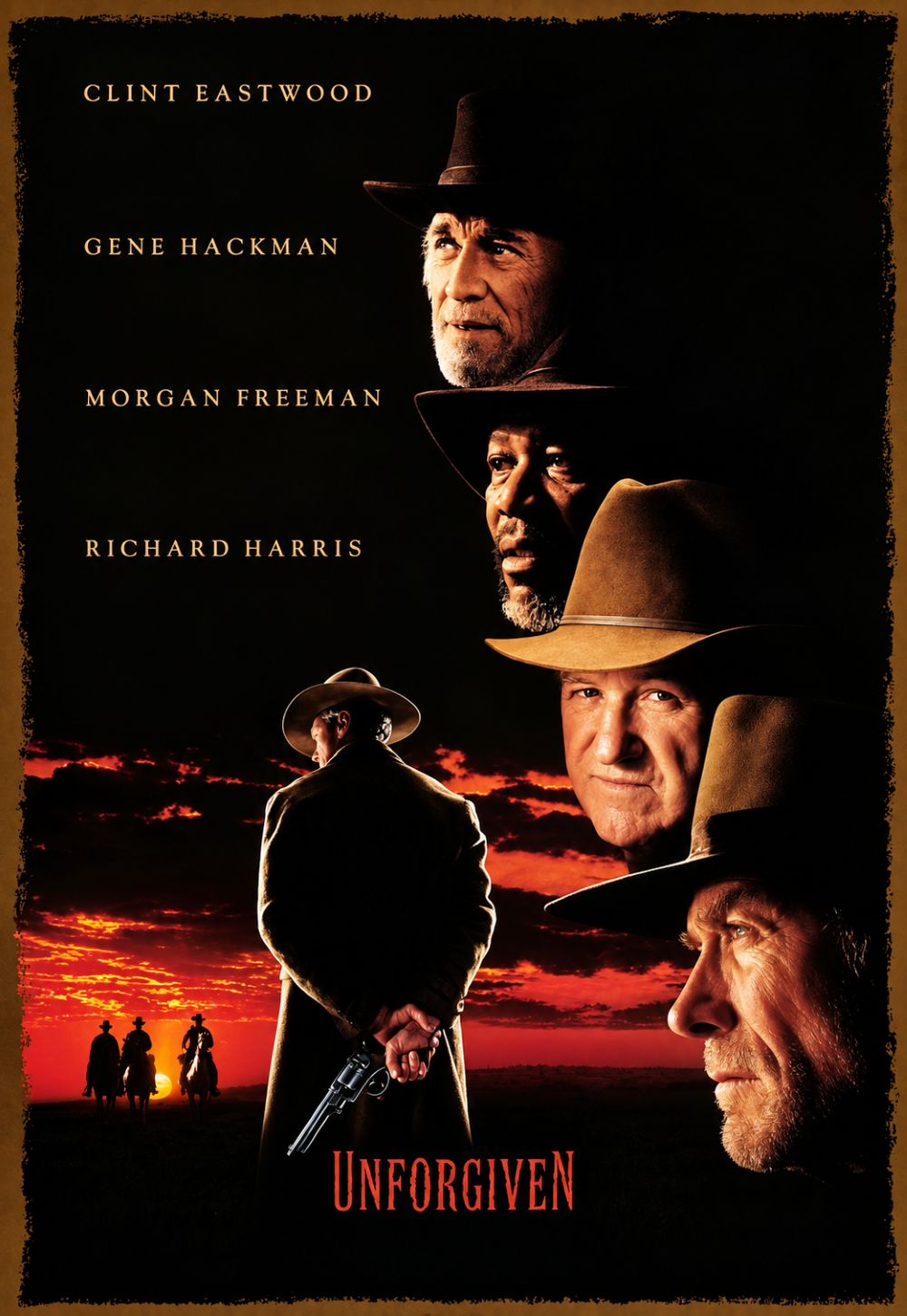
There is a point in Unforgiven when the familiar fantasy of the Western gunfighter finally collapses under the weight of what killing actually means. Clint Eastwood’s 1992 masterpiece is a revenge story, a character study, and an unusually merciless critique of the myths that turned killers into folk heroes. It takes nearly every image associated with the classic Western—the lone rider, the righteous bounty, the corrupt frontier town, the feared gunslinger, the climactic saloon showdown—and asks what those images would look like if the people involved had to suffer the consequences afterward. The answer is bleak, often grimly funny, and far more powerful than a simple “anti-Western” label suggests.
Eastwood stars as William Munny, a former outlaw and murderer trying to survive as a widowed pig farmer in Kansas. He has two young children, a failing farm, and little talent for the peaceful life he has supposedly embraced. At the beginning of the film, Munny is practically the opposite of the cool, razor-sharp gunfighters Eastwood played in his younger years. He falls into mud, cannot shoot straight, and looks exhausted before the real journey even begins. That physical decline matters because Eastwood wants the audience to see the distance between a Western legend and the actual, aging human being beneath it.
Munny’s chance to return to violence arrives when the Schofield Kid, an arrogant young would-be gunslinger, offers him a share of a bounty. In the town of Big Whiskey, Wyoming, two cowboys have viciously cut up a prostitute named Delilah Fitzgerald. The town’s sheriff, Little Bill Daggett, punishes them with a fine paid to the brothel owner rather than giving Delilah anything resembling justice. Furious, the other prostitutes gather money and put out a reward for the men responsible. Munny initially hesitates, but the bounty is enough to draw him out of retirement. He convinces his old partner Ned Logan to ride with him, and the three men head toward Big Whiskey.
On paper, that setup sounds like the start of a traditional revenge Western. The crime is vicious, the local law is corrupt, and armed men set out to punish the guilty. Unforgiven, though, immediately complicates every part of that formula. The women have every reason to be furious, but their bounty does not turn the mission into a clean act of justice. Munny and Ned may be targeting cruel men, but they are still going to kill them for money. The Schofield Kid talks about the bounty like it is an adventure, but he has no real idea what killing another person does to someone. The film keeps refusing the easy emotional release that a more conventional Western would offer.
Eastwood’s direction is particularly sharp whenever violence finally breaks out. There are no elegant shootouts designed to make the viewer cheer. Guns misfire, men miss, people panic, and the victims do not fall over conveniently after being hit. When Munny and Ned shoot one of the cowboys, the sequence is awkward, tense, and almost miserable to watch. The wounded man suffers for a long time, calling out for water while his companions are too frightened to help him. Munny does not suddenly look like an unbeatable hero. He looks like a man who has made a terrible choice and now has to stand there listening to the result.
That approach makes Unforgiven feel much harsher than most Westerns, but it also gives the film its emotional weight. It is not saying that violence is never understandable. The cowboys who attacked Delilah are not treated as innocent victims, and Little Bill’s indifference to her suffering is infuriating. What the movie understands is that a justified act can still be ugly, frightening, and spiritually damaging. Killing someone may solve a practical problem, but it does not automatically restore dignity or erase pain. The movie’s view of revenge is not that it never works; it is that it always costs more than the stories promise.
Eastwood’s performance is one of the reasons the film lands so hard. William Munny is clearly connected to the Eastwood screen persona audiences knew from earlier Westerns, but he is a far sadder and more frightening version of it. Munny’s past is revealed gradually through other characters’ stories. Before he married Claudia, he was drunk, violent, and seemingly capable of killing anyone who got in his way. Claudia helped turn him toward a better life, and after her death he has tried to honor that change. Yet the movie never suggests that redemption has erased who he was. It only suggests that he has managed to keep that part of himself under control.
As the story moves forward, Munny becomes increasingly sick, angry, and emotionally stripped down. His old skills come back, but the return is not triumphant. It is more like watching someone relapse into a destructive part of themselves. Eastwood plays this change with remarkable restraint. He does not overdo the anger or announce the transformation with long speeches. Instead, Munny’s face gets harder, his voice becomes flatter, and his decisions become more final. By the end, he has become the frightening killer people said he was, and the movie makes that feel tragic rather than exhilarating.
Gene Hackman gives one of the film’s best performances as Little Bill Daggett, the sheriff of Big Whiskey. Little Bill is cruel, blunt, and completely convinced that he is the only person keeping the town from falling apart. He sees himself as a realist. In his mind, the cowboys have paid for their crime, the prostitutes are causing unnecessary trouble, and every outside gunman is a threat to the peace he has built. But his “peace” depends on denying Delilah justice and beating anyone who challenges his authority. He is not a noble lawman protecting civilization from barbarism. He is a violent man with a badge who has decided that his version of order matters more than anyone else’s pain.
Hackman makes Little Bill compelling because he never plays him as a cartoon villain. The character can be funny, conversational, and even oddly charming when he is talking about building his house or explaining how a gunfight really works. Those ordinary details make his cruelty more believable. Little Bill is not a monster because he twirls his mustache or enjoys evil for its own sake. He is a monster because he has made violence routine. He can beat a man nearly to death, then return to discussing carpentry as if nothing meaningful has happened.
The movie’s fascination with mythmaking is another reason it remains so great. Unforgiven constantly contrasts what people say about gunfighters with what gunfighters are actually like. Richard Harris appears as English Bob, an aging outlaw who has turned himself into a storybook figure. He travels with W. W. Beauchamp, a writer who records exaggerated tales of duels, bravery, and glamorous frontier violence. English Bob wants to be remembered as the sort of man old Westerns love: a polished, fearless killer who can outdraw anyone in a fair fight.
Little Bill quickly destroys that image, humiliating English Bob and explaining that most gunfights are not won by the fastest hand or the bravest heart. They are won by whoever gets lucky, whoever fires first, or whoever is less scared at the right moment. That speech is one of the clearest examples of what Unforgiven is doing with the genre. It does not merely say that the old stories were exaggerated. It shows why people prefer exaggeration. The truth is messy, cowardly, and often too ugly to make a satisfying legend.
The Schofield Kid represents the danger of believing those legends too completely. He talks big about killing men, insists he is a famous gunfighter, and assumes the bounty will make him rich and important. But when the moment comes, he cannot handle the reality of what he has done. After taking a life, he drinks heavily and admits that he has never killed anyone before. His fantasy collapses almost instantly. Munny’s response is one of the film’s coldest and most honest moments: when you kill a man, you take away everything he has and everything he is ever going to have. There is no speech about courage, justice, or glory. There is only the permanent fact of death.
Morgan Freeman is excellent as Ned Logan, Munny’s old partner and closest friend. Ned has a quiet decency that does not erase his violent past but makes clear that he wants no part of it anymore. His scenes with Munny feel lived-in, as if the two men understand each other without needing to explain their history. Ned knows exactly what Munny used to be, and that knowledge makes him nervous about what his friend may become again. Freeman brings warmth and humor to the movie, which makes the eventual loss of that warmth feel devastating.
Ned is especially important because he shows that a person can decide not to keep living by old violent rules. He has a life with Sally Two Trees, and when the killing becomes real, he chooses to leave rather than continue. That choice separates him from Munny. Both men have done terrible things, but Ned recognizes that he has reached the point where he cannot go back. Munny, on the other hand, is eventually pulled all the way back into the identity he thought he had escaped.
Visually, Unforgiven is one of Eastwood’s most beautiful films, although “beautiful” may not be the first word that comes to mind while watching it. The landscapes are often gray, rainy, muddy, and lonely. Big Whiskey is not a romantic frontier town full of colorful saloons and grand main streets. It is wet, cramped, and miserable. The open country does not feel liberating either. It feels empty and dangerous, a place where a wounded man can die slowly because help is too far away. Cinematographer Jack N. Green gives the film a somber, dusk-like look that fits its mood perfectly.
The final confrontation in the saloon is one of the most famous scenes in Eastwood’s career because it briefly gives viewers the kind of gunfighter moment they have been waiting for. Munny walks into Big Whiskey through the rain, enters the saloon, and becomes the nightmare Little Bill and the others have feared. He kills with shocking speed and delivers lines that sound immediately iconic. For a few minutes, the old Eastwood myth appears to return in full. The silent killer is back, the bad men are terrified, and the audience can feel the raw force of the scene.
But Unforgiven refuses to turn that climax into a victory lap. Munny’s rampage is not heroic liberation. It is grief, rage, alcohol, and guilt exploding through a man who has lost the fragile stability he built after leaving violence behind. He is not reclaiming some glorious identity. He is becoming the worst version of himself again. The scene is undeniably thrilling in a purely cinematic sense, but Eastwood makes sure the thrill feels contaminated. We are watching a legend come alive, but the movie has spent two hours teaching us that legends are usually built on suffering.
That is why Unforgiven became Eastwood’s Western magnum opus. It is not just a great Western made by a star who knew the genre inside out; it is the film where he fully confronted the meaning of his own Western image. Eastwood began deconstructing that image with High Plains Drifter, where the mysterious stranger was less a traditional hero than a ghostly, cruel force of revenge. He continued the process in The Outlaw Josey Wales, a more expansive and emotional film that questioned authority and showed an outlaw finding a kind of community, even while preserving much of the old gunslinger charisma. With Unforgiven, Eastwood completes that deconstruction of the Western film genre.
In Unforgiven, there is no clean heroism left behind the gunfighter’s reputation. The lone rider is exhausted and morally compromised. The sheriff is a bully. The bounty is not justice in any simple sense. The famous gunfighter is often a fraud, a coward, or simply lucky. And the man who really is capable of becoming a legend is also capable of committing horrifying acts. Eastwood does not dismiss the Western’s power; if anything, he understands that power better than almost anyone. He knows why audiences respond to the image of a lone man walking into a saloon to face impossible odds.
What makes the film so enduring is that it asks viewers to look beyond that image. Who dies so the hero can become a legend? Who gets turned into a footnote in someone else’s story? What does the survivor carry afterward? Those questions give Unforgiven a moral weight that few Westerns, revisionist or otherwise, can match. It is a film about violence, but it is also about memory, regret, masculinity, and the lies people tell to make brutality seem noble. By its final fade-out, Unforgiven leaves the Western standing not as a celebration of violence, but as a haunted reckoning with everything violence destroys.
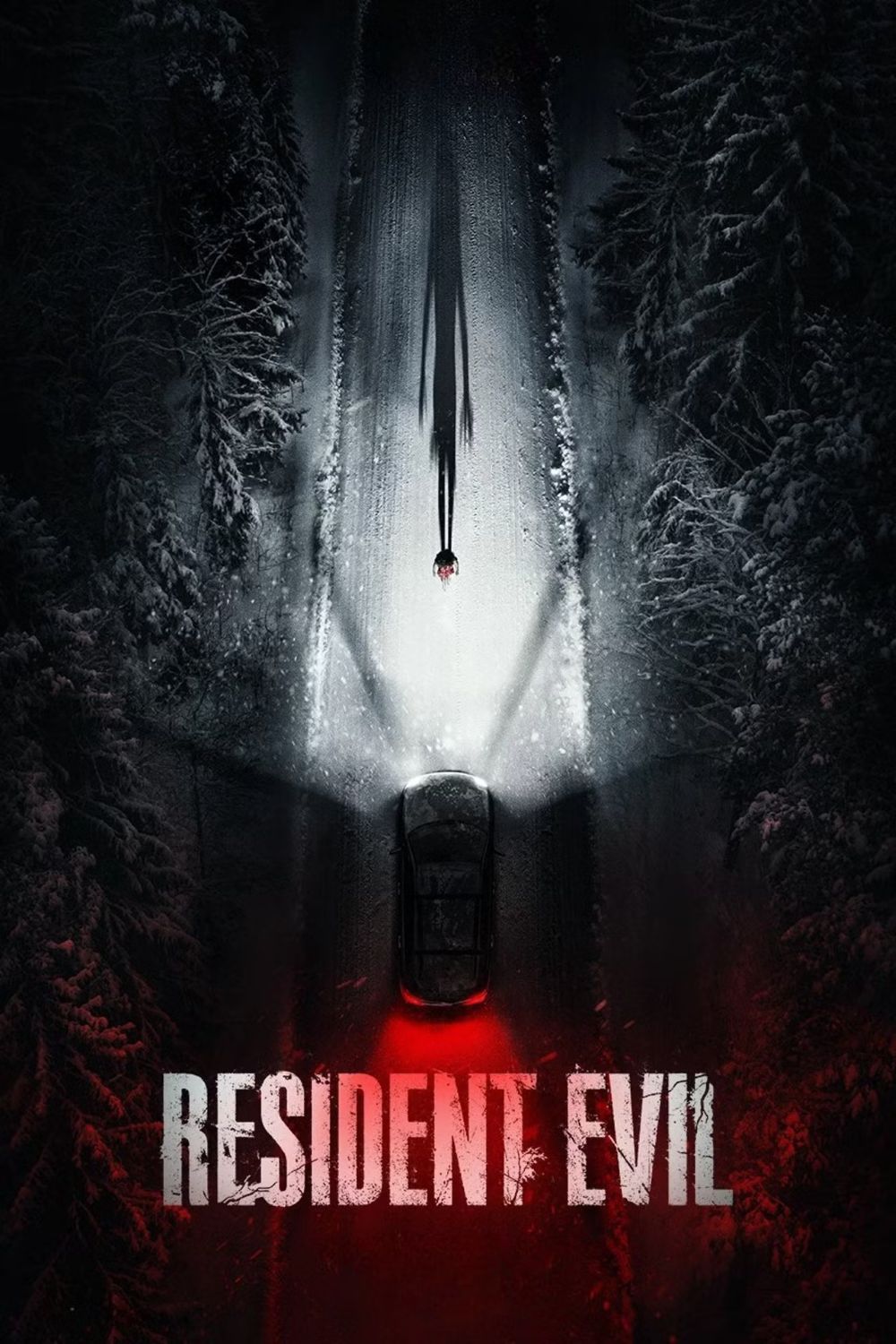
Resident Evil is a smart, tense, and surprisingly faithful reinvention of Capcom’s long-running survival-horror series—not because it tries to copy a single game beat for beat, but because it understands what makes the games unnerving in the first place. Written and directed by Zac Cregger, the film uses the world of Resident Evil as its foundation while telling a new story during the Raccoon City outbreak. Its main character is Bryan, played by Austin Abrams, an ordinary medical courier whose attempt to complete a delivery to Raccoon City General Hospital drops him into the early stages of a biological disaster. He is not a S.T.A.R.S. officer, a government agent, or a pre-established franchise hero. He is simply a guy trying to finish a job and survive a night that becomes more horrifying, chaotic, and impossible with every block he crosses.
That basic setup proves to be one of the movie’s smartest choices. Resident Evil has no shortage of iconic protagonists, from Chris Redfield and Jill Valentine to Leon S. Kennedy and Claire Redfield, but Bryan gives the film a fresh perspective on its apocalypse. He is not entering Raccoon City with a gun, years of training, or inside knowledge of Umbrella. He starts as someone who does not understand why parts of the city are suddenly locked down, why emergency rooms are overwhelmed, or why ordinary people are behaving with terrifying violence. That makes him a natural audience surrogate, but he is not just a blank stand-in. Austin Abrams gives Bryan a nervous, tightly wound energy that fits someone constantly trying to keep pace with a situation that has already moved beyond anyone’s control.
The decision to center an everyman is also a strong way of translating the vulnerability of the games. In a great Resident Evil game, the player might eventually find a shotgun, healing items, and enough ammunition to handle a dangerous enemy, but the first hours are defined by instability. There is never quite enough ammo. There is never a guarantee that the room ahead is safe. You learn the layout of a location because you have to, not because exploration is relaxed. Cregger’s movie cannot reproduce the exact tension of an inventory screen or the anxiety of deciding whether to use a green herb now or save it for later, but it captures the emotional logic behind those mechanics. Bryan makes choices with incomplete information, moves through increasingly hostile spaces, and keeps going even when every instinct tells him to turn around and run.
What makes the film especially interesting is that it does not adapt any one game in the series. This is not a straight retelling of the Spencer Mansion incident from Resident Evil, Leon and Claire’s first night in Resident Evil 2, or Jill’s escape from Nemesis in Resident Evil 3. Instead, Cregger uses the games as backdrop and inspiration for an original story set in the franchise’s universe. The film takes place alongside the Raccoon City outbreak associated with Resident Evil 2, but Bryan’s journey is separate from the established storylines that fans already know. That may disappoint viewers who want an exact cinematic recreation of every familiar character and location, but it is ultimately the movie’s greatest advantage.
A strict adaptation would have to navigate an almost impossible set of fan expectations. If the movie directly followed Resident Evil 2, viewers would be waiting for the exact arrival at the Raccoon City Police Department, the exact early meetings between Leon and Claire, the exact role of Ada Wong, the exact appearances of William Birkin and Mr. X, and the exact descent into Umbrella’s underground facilities. A direct version of the original Resident Evil would carry the same burden with the Spencer Mansion, the S.T.A.R.S. team, the laboratory, and the Tyrant. That approach can quickly make a movie feel less like a story and more like a checklist. Cregger avoids that trap by taking the series’ atmosphere, visual identity, rules, and mythology, then building a new nightmare around them.
That freedom restores a sense of uncertainty. Even viewers who know Resident Evil 2 inside and out cannot assume they know where Bryan’s route will take him, who can be trusted, or when the next threat will appear. The film can nod toward familiar Resident Evil concepts without making them feel like obligatory fan-service stops. A locked facility, an Umbrella insignia, a contaminated corridor, or the emergence of a more elaborate biological threat carries weight because it serves the story first. The pleasure comes from seeing the franchise’s DNA interpreted in a fresh way, not from watching the movie pause so the audience can recognize a collectible reference.
Umbrella is treated as much more than a logo or a few bits of background lore. The company remains the central force behind the horror, and that gives the film a more specific personality than a typical zombie outbreak story. Umbrella is terrifying because it represents private power with no moral limit: a corporation able to hide experiments, manipulate information, weaponize biology, and treat ordinary people as expendable collateral. Its infected victims and bio-organic weapons are not random monsters wandering into the story. They are products. Someone designed them, approved them, tested them, and determined that whatever potential value they offered was worth the risk. That is the darker edge of Resident Evil: the monsters are terrible, but the systems that created them are worse.
Cregger understands that this corporate horror needs to feel physical. A zombie is frightening because it is a person reduced to a violent, decaying shell. A more advanced creature is frightening because it reveals experimentation that has pushed life beyond recognizable limits. The body horror works best when it does not feel ornamental. It should make the audience imagine the research process behind the mutation, the human cost of the experimentation, and the awful combination of arrogance and indifference that allowed it to happen. Resident Evil does not need to constantly escalate into larger monsters merely for spectacle. Its creatures matter when they feel like increasingly disturbing evidence of what Umbrella has been building in secret.
Cregger’s background makes him an unusually strong fit for this material. Barbarian worked because it transformed a familiar location into a space of escalating dread. The house at the center of that film is not just a setting; it becomes a trap, a maze, and a place with its own buried history. Cregger knows how to make architecture feel dangerous. He understands that a corridor, a basement, an unlit stairwell, or a locked door can generate more tension than an explosion if the audience believes something might be waiting just outside the frame. That is basically the visual language of Resident Evil.
The games have always relied on locations that feel compromised. The Spencer Mansion in Resident Evil, the Raccoon City Police Department in Resident Evil 2, and the ruined streets in Resident Evil 3 turn places that should represent order, security, or civilization into traps. A police station becomes a fortress that cannot protect anyone. A hospital becomes a source of infection. A laboratory becomes proof that the disaster was not an accident. Cregger’s film channels that environmental fear well. Bryan’s path through Raccoon City is not just a string of monster encounters. It becomes a worsening descent through spaces that are failing one after another, with every new location offering a possible route forward while also revealing another level of the catastrophe.
The basic premise involving Bryan’s medical delivery gives the movie a focused sense of movement without spoiling the larger story. He has a practical objective, but each step toward completing it pushes him deeper into Raccoon City’s outbreak. The film lets the audience learn alongside him through half-understood warnings, panicked strangers, sealed-off areas, fragments of information, and signs that the official story does not add up. Cregger does not rush to explain every piece of Umbrella’s involvement immediately. He lets the mystery build around Bryan’s immediate need to survive, which is exactly how the strongest Resident Evil games turn scattered notes, hidden rooms, and locked pathways into part of their storytelling.
The influence of Weapons is especially clear in that willingness to let confusion and dread hang in the air. Cregger has shown an interest in narratives where the audience slowly pieces together a larger horror from incomplete perspectives and disturbing details. Resident Evil applies that instinct to a world built around secrecy. Umbrella does not announce itself with a complete explanation. Its presence is felt through the consequences: infected civilians, closed facilities, experiments that have slipped into the open, and the growing realization that Raccoon City’s crisis has roots much deeper than a random medical emergency. That approach turns exposition into suspense. The audience wants answers, but it also understands that every answer is likely to lead somewhere worse.
The film’s tone is another area where Cregger’s sensibility helps. Resident Evil should be scary, but it should not pretend that the series is grounded, ordinary horror. The franchise has always mixed genuine survival dread with B-movie science fiction, action-movie intensity, melodrama, and moments of pure, glorious weirdness. The same series that can make a player afraid of opening a narrow hallway door can also introduce giant mutant reptiles, insects, experimental super-soldiers, and outlandish biological mutations. Cregger seems comfortable operating in that space. Barbarian showed that he can move between dark humor, disgust, shock, and legitimate tension without flattening the experience into parody. That balance is crucial for Resident Evil, which should be intense without becoming embarrassed by its own pulp imagination.
The film is strongest when it lets the strange material land through the characters’ reactions rather than making a joke of it. Bryan does not become an instant action hero who dispatches monsters with effortless confidence. His fear, exhaustion, and disbelief help ground the increasingly bizarre developments around him. When the story introduces threats beyond the initial infected, those moments work because they feel like the next horrible stage of Umbrella’s hidden program rather than a required entry in a franchise encyclopedia. Cregger understands that a recognizable monster or concept only matters if it changes the stakes for the character in front of it.
There is also welcome restraint in the scale of the movie. Raccoon City’s outbreak is huge, but Resident Evil keeps the experience close to the ground. It is not mainly about elite military units, globe-spanning conspiracies, or invincible heroes fighting through armies of infected. It is about one man trying to get through a city that has become a death trap. A blocked street becomes a serious obstacle. A working car becomes a lifeline. A few infected people can be overwhelming when Bryan has limited ammunition, no clear escape route, and no way to know who has already turned. That survival focus lets the film preserve the essential question behind every good Resident Evil scenario: not “How can the hero kill everything?” but “How can the hero make it through the next room?”
Cregger’s narrative choices will probably alienate a certain segment of the fanbase, and that is understandable. Some viewers will want a movie built around Leon, Claire, Chris, Jill, or another established character. Others will want a cleaner adaptation of a specific game, with its canonical set pieces, key relationships, and familiar story beats intact. Those are reasonable desires, especially because Resident Evil has such an enormous cast of beloved characters and such a rich backlog of stories that have never been adapted faithfully. Cregger’s movie is taking a chance by prioritizing an original protagonist and a separate narrative over direct adaptation.
But that risk is also what makes the film work. Fans who go in with open expectations may be surprised by how naturally it fits inside the Resident Evil universe. It does not need to repeat every event from the games to understand their identity. The movie has the oppressive spaces, the escalating survival pressure, the corporate conspiracy, the infection-driven horror, and the feeling that any new revelation will only lead deeper into a nightmare. Bryan’s story feels like a side route through Raccoon City’s catastrophe—a story that could exist in the margins of the games without contradicting the dread, danger, and bizarre biohazard logic that define them. The film asks fans to accept that it is not trying to replace the games they love. It is trying to tell another story that could only happen in this universe.
Ultimately, Zac Cregger’s Resident Evil succeeds because it recognizes that the franchise’s appeal is not limited to familiar names, costumes, creatures, or Umbrella logos. It is about the sickening feeling of being trapped in a hostile place with too little information, too few resources, and no guarantee that the person beside you will still be alive—or human—by the next scene. By making Bryan an ordinary medical courier caught in an outbreak, Cregger gives the audience a vulnerable and compelling guide through Raccoon City. By using the games as inspiration instead of adapting a single title word for word, he gives the story space to surprise viewers who already know the series inside and out.
As a fan of the games, the film more than hits the mark of what a Resident Evil movie should feel like. It has the oppressive locations, slow-burn conspiracy, grotesque biological horror, corporate corruption, and sense of escalating hopelessness that define the series at its best. More importantly, it captures the survival-horror tension that has always been at the heart of the games: the dread of stepping into an unfamiliar room, the suspicion that supplies will not last, and the sinking realization that every answer leads deeper into Umbrella’s nightmare.
As a horror fan, Resident Evil also confirms that Zac Cregger is one of the best filmmakers currently working in the genre. After Barbarian and Weapons, this makes him three for three. Each film has its own identity, but all three display the same gifts: command of suspense, strikingly unsettling imagery, a feel for dark humor that never entirely breaks the danger, and the confidence to take an audience somewhere more disturbing than it expects. Resident Evil turns Raccoon City into a living maze of infection, secrecy, and panic, where every locked door feels like it might lead to an escape—or to the worst possible decision. It is not merely a strong video-game adaptation. It is another major win for Cregger, and a reminder that the right filmmaker can make even one of horror gaming’s most familiar worlds feel frighteningly new.
“Imagine the good this boy could do. I know what he is, what he might grow into, maybe even what he’s meant to be. But I also see what he can be. He just needs a little guidance and someone to set a proper example.” — Trevor Bruttenholm
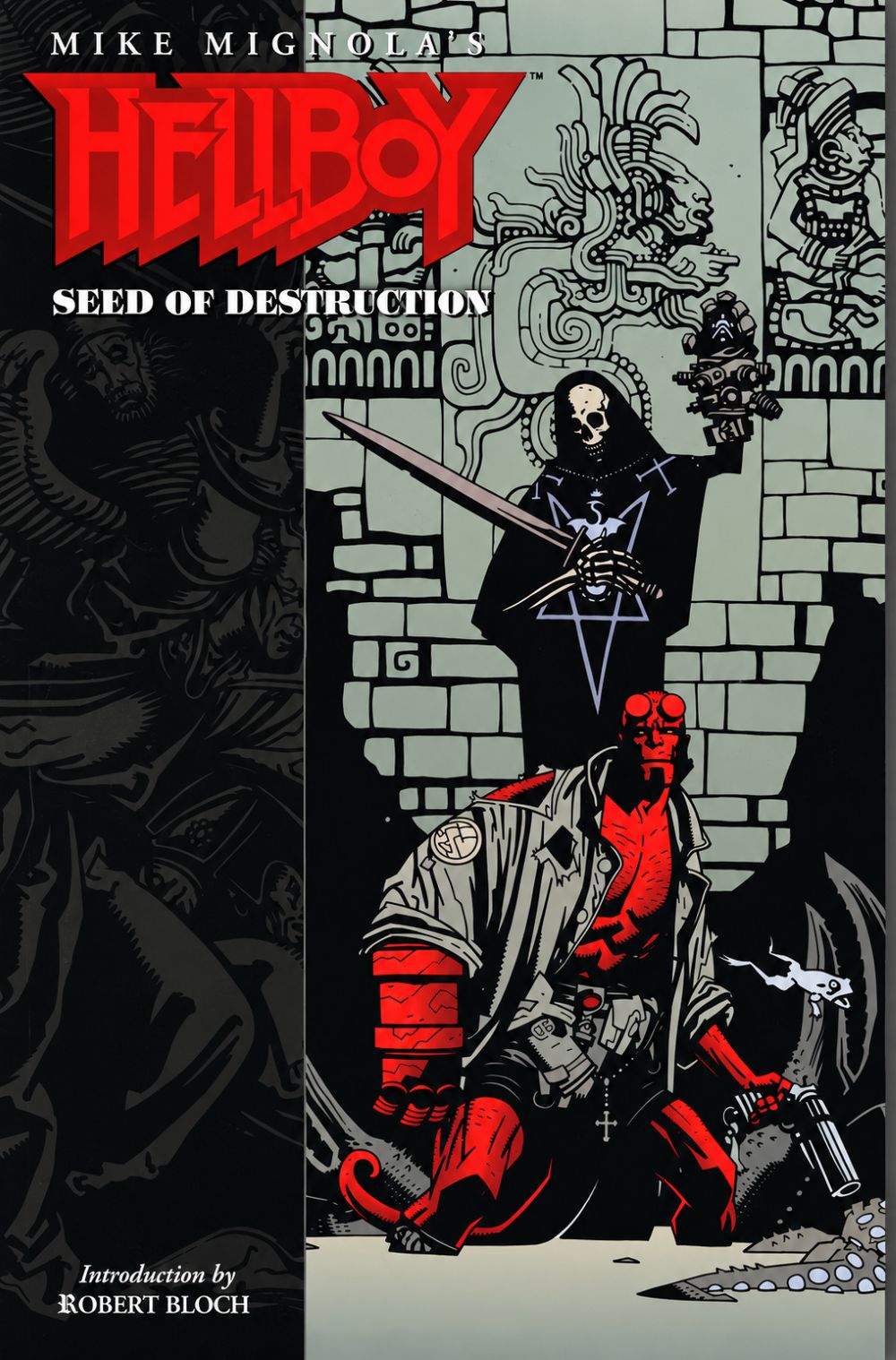
Mike Mignola’s Hellboy: Seed of Destruction is more than the opening chapter of a popular comic-book universe. It is a foundational work of supernatural adventure, combining pulpy monster fiction, wartime conspiracy, Gothic imagery, Lovecraftian apocalypse, and a surprisingly human story about identity and free will. First published as a four-issue miniseries in 1994 and co-plotted with John Byrne, the graphic novel introduces Hellboy with striking confidence. The mythology already feels vast, the visual identity is fully recognizable, and the title character arrives as one of the most distinctive heroes in modern comics: a cigar-smoking red demon with a stone right hand, a sarcastic sense of humor, and a stubborn refusal to become the monster everyone expects him to be.
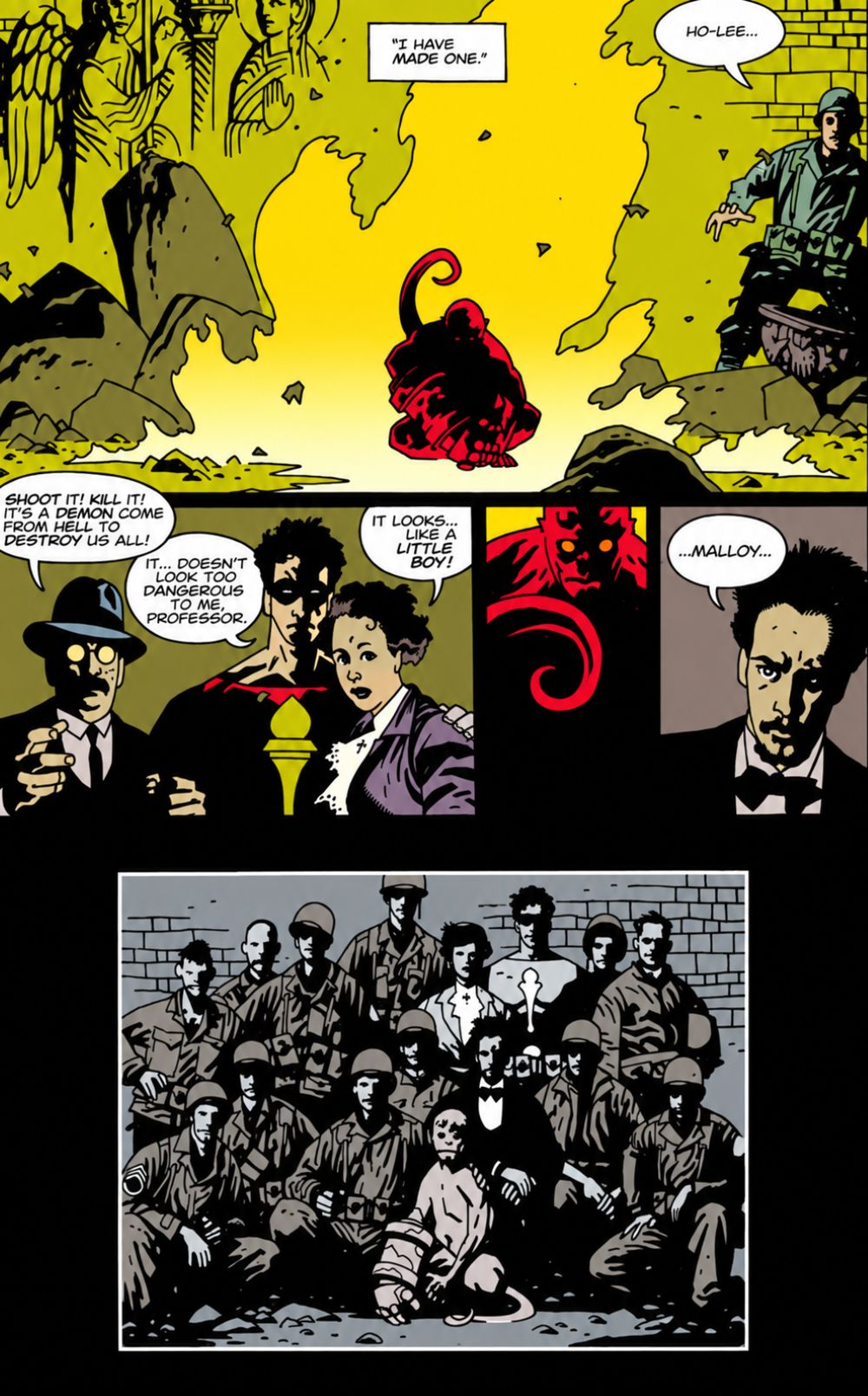
The premise is immediately compelling. In the final days of World War II, Nazi occultists conduct an elaborate ritual intended to summon a weapon powerful enough to alter the war’s outcome. The ceremony is overseen by Grigori Rasputin, who is reimagined here not simply as the notorious Russian mystic but as a servant of ancient, world-ending forces. Allied soldiers disrupt the ritual, but instead of the apocalypse the Nazis hoped to unleash, they discover a small red-skinned demon child transported to Earth. That child becomes Hellboy. He is taken in by Professor Trevor Bruttenholm, founder of the Bureau for Paranormal Research and Defense, and raised not as a weapon or scientific specimen, but as a son.
That decision gives Hellboy: Seed of Destruction its emotional center. Hellboy looks like the obvious villain of his own story. He has red skin, filed-down horns, a tail, cloven feet, and the massive stone right hand known as the Right Hand of Doom. He appears as though he should stand alongside Dracula, Frankenstein’s monster, or Satan himself. Yet Mignola’s central idea is that origin does not have to determine destiny. Hellboy may have entered the world through an act of evil, and powerful supernatural forces may expect him to fulfill an apocalyptic role, but he chooses another path. As an adult, he works for the B.P.R.D., investigating paranormal threats and protecting humanity from the very kinds of monsters he might be expected to join.
The main story takes place decades after Hellboy’s arrival and begins when a death close to him forces the past back into the present. The loss gives the investigation a personal urgency and propels Hellboy toward the hidden truth behind his own origins. As he follows the trail, he becomes entangled in a conspiracy involving Rasputin’s return, surviving Nazi occultists, forgotten rituals, buried secrets, and the terrifying possibility that Hellboy himself may have a role in an event far greater than any single monster attack. The plot steadily expands from a personal mystery into a threat with apocalyptic implications, but it never completely loses sight of Hellboy as a character caught between the person he has chosen to be and the fate others want to impose upon him.
Hellboy is joined by fellow B.P.R.D. agents Abe Sapien and Liz Sherman. Abe, an amphibious investigator with a calm, analytical nature, provides an effective contrast to Hellboy’s bluntness and impatience. Liz, a pyrokinetic woman whose connection to fire comes with emotional burdens of its own, brings a more vulnerable and tragic element to the team. In this first volume, they are not yet as richly developed as they would become in later stories, but their presence establishes the B.P.R.D. as something more interesting than an ordinary superhero team. These are not polished celebrity heroes in colorful costumes. They are unusual, damaged, and often isolated people employed to confront dangers that the public cannot know exist.
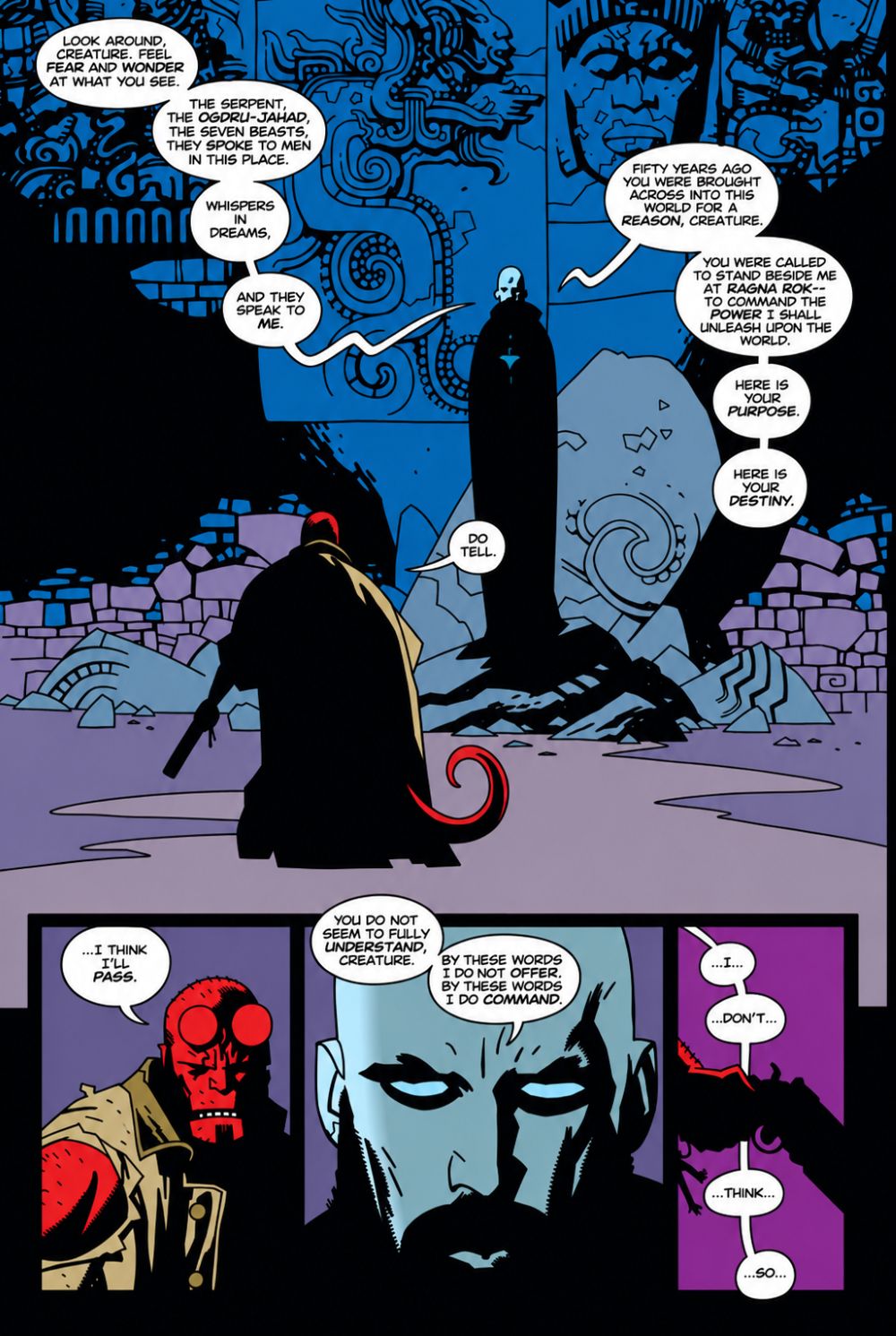
Mignola’s art is the graphic novel’s defining achievement. Even among the strongest comics of the 1990s, Hellboy: Seed of Destruction feels visually singular. At a time when much of mainstream superhero art emphasized intricate rendering, oversized muscles, and hyperactive action, Mignola worked through silhouette, shadow, stark design, and carefully controlled negative space. His figures are often blocky and stylized, but they are never lifeless. A few lines can convey fear, exhaustion, anger, or resignation. A large black shape can become a doorway, a corridor, an abyss, or a threat the reader cannot fully see.
Mignola does not use darkness merely to make the comic look moody. His shadows are active storytelling tools. Characters disappear into them, monsters emerge from them, and entire environments seem to exist only partially in the light. A seemingly empty room can become frightening because its far wall is swallowed by blackness. A frozen landscape can feel ominous because it leaves its characters exposed beneath an enormous blank sky. His layouts often evoke old pulp-horror illustrations, German Expressionist cinema, Gothic architecture, folklore engravings, and vintage monster movies. Rather than presenting a sleek modern superhero world, Mignola creates a universe that feels ancient, secretive, and half-buried under centuries of superstition.
The color work deepens that atmosphere. The pages use earthy browns, faded blues, icy whites, sickly greens, and vivid flashes of red to create a world that feels both dreamlike and decayed. Hellboy’s red skin makes him instantly recognizable within Mignola’s compositions, especially when he stands against a field of black shadow. He often resembles a burning ember in a world of darkness: visually connected to the supernatural realm around him, yet refusing to be extinguished by it. That visual contrast captures the character’s place in the story. Hellboy belongs to the darkness in a literal sense, but he continually chooses to stand against it.
The writing is more exposition-heavy than some later Hellboy stories, but it serves an understandable purpose. Hellboy: Seed of Destruction has to introduce Hellboy, the B.P.R.D., Rasputin, the Nazi occultist threat, the supernatural cosmology, and the significance of the Right Hand of Doom in a relatively short space. John Byrne’s scripting helps organize the material and gives the narrative forward momentum. Certain explanations have the recognizable rhythm of early-1990s genre comics, but the story’s atmosphere remains strong enough that the mythology rarely feels like a dry information dump. Mignola and Byrne create the impression that readers are seeing only a small piece of an immense occult history, one filled with ancient gods, forgotten disasters, and forces that have been waiting in darkness for centuries.
The pacing is deliberate rather than relentlessly action-driven. Mignola allows scenes to breathe, lingering over ruined architecture, old artifacts, empty corridors, haunted chambers, and moments of tense silence. The dread accumulates gradually. When action erupts, it tends to be sudden, heavy, and physical. Hellboy is not an acrobatic hero who glides through combat with effortless grace. He breaks through doors, trades blows with monsters, absorbs punishment, and keeps moving forward. His heroism has a blue-collar quality. He treats fighting the impossible as difficult, unpleasant work that nevertheless needs to be done.
That quality makes him especially effective within the story’s Lovecraftian framework. Traditional cosmic horror often centers on human helplessness in the face of forces too vast, ancient, and indifferent to comprehend. Hellboy: Seed of Destruction preserves that feeling, particularly in its suggestions of ancient beings and apocalyptic forces beyond normal understanding. However, it gives readers a protagonist willing to confront that terror rather than collapse before it. Hellboy cannot necessarily understand every supernatural threat, and he cannot erase the ominous circumstances of his birth, but he can refuse to cooperate with the fate laid out for him. His defiance is not naïve optimism. It is a hard-earned, practical moral stance: he will not let anyone turn him into a weapon, and he will not stand aside while innocent people are endangered.
The relationship between Hellboy and Bruttenholm gives that moral stance its weight. Bruttenholm represents the compassion that allowed Hellboy to become something other than an instrument of destruction. He does not deny Hellboy’s demonic origins, but he refuses to treat those origins as a permanent verdict. Their bond lends real emotion to the graphic novel without overwhelming it with melodrama. Mignola’s best moments of feeling are often restrained, expressed through silence, body language, or a brief line rather than a lengthy speech. This restraint suits Hellboy himself. He is not a character who easily verbalizes grief, fear, or tenderness, but those feelings are present beneath his rough exterior.
The graphic novel also has an important place in Hellboy’s larger cultural legacy because it served as the basis for Guillermo del Toro’s live-action film Hellboy. The adaptation draws from the comic’s wartime origin, B.P.R.D. framework, Rasputin-centered occult threat, and larger supernatural mythology, helping bring Mignola’s character and visual world to a wider audience. Even so, Hellboy: Seed of Destruction stands firmly on its own as the original expression of that world: darker, quieter, and more reliant on the power of shadow, silence, and graphic design than any adaptation could fully reproduce.
Hellboy: Seed of Destruction is not entirely flawless. The exposition can occasionally be dense, and Abe and Liz are not yet given the emotional complexity they receive in later Hellboy stories. The book also has the understandable burden of establishing a great deal of lore in a short opening arc. Yet those limitations are minor beside its achievements. Mignola creates a complete aesthetic universe from the beginning, one populated by ancient horrors, occult conspiracies, cryptic prophecies, and damaged people trying to do the right thing in a world that often seems hostile to human life.
Ultimately, Hellboy: Seed of Destruction remains a landmark graphic novel because it places mood, design, and character above conventional superhero spectacle. It is not simply about a demon punching monsters, even though it delivers that pleasure exceptionally well. It is about a creature born under the shadow of evil who insists on defining himself through his choices. Hellboy’s greatest strength is not his stone fist, supernatural durability, or ability to survive encounters with horrors beyond human comprehension. It is his refusal to become what he was made to be.
“You were never there for me, were you, Mother? You expected Mike and Carol Brady to raise me! I’m the bastard son of Claire Huxtable! I am a lost Cunningham! I learned the facts of life from watching The Facts of Life!” — Chip
Few 1990s studio comedies are as awkwardly fascinating—or as misunderstood on arrival—as The Cable Guy. Directed by Ben Stiller and built around one of Jim Carrey’s most deliberately uncomfortable performances, it arrived at a strange point in Carrey’s career: he had become a massive box-office draw through films such as Ace Ventura: Pet Detective, The Mask, Dumb and Dumber, Batman Forever, and Ace Ventura: When Nature Calls. Audiences associated him with rubber-faced chaos, exuberant catchphrases, and a kind of manic but fundamentally likable comic energy. The Cable Guy offers something much colder. Carrey is still loud, physical, and wildly committed, but the movie twists those familiar traits into a portrait of loneliness, obsession, and emotional menace. It is a dark comedy about a man who has absorbed television culture so completely that he cannot form a normal human relationship without treating it like an episode of a sitcom.
That basic idea remains clever and surprisingly ahead of its time. Carrey plays Chip Douglas, a cable installer who enters the life of Steven Kovacs, played by Matthew Broderick, after Steven moves into a new apartment following a breakup with his girlfriend Robin, played by Leslie Mann. Steven wants cable television installed; Chip wants a best friend. What begins as awkward friendliness becomes invasive dependence, as Chip worms his way into Steven’s social circle, his professional life, and eventually his relationship with Robin. Chip is not simply a pest or an eccentric service worker. He is a lonely, emotionally stunted man whose references to television, movies, commercials, and game shows have become his entire vocabulary for intimacy.
The most interesting thing about The Cable Guy is that it understands television as both comfort and damage. Chip’s childhood was clearly shaped by neglect, with television functioning as his guardian, teacher, and surrogate parent. The movie makes this point broadly, sometimes too broadly, but it also gives the character a sad logic. Chip does not understand friendship as mutual connection; he understands it as a package deal. You meet someone, quote the same shows, hang out constantly, become inseparable, and live out the happy ending promised by popular entertainment. When Steven resists that fantasy, Chip does not know how to process rejection. His behavior turns increasingly controlling and vindictive because, in his mind, Steven has violated the rules of the relationship genre they are supposed to be playing.
In that respect, the film was well ahead of its time. In 1996, the idea of television becoming an all-encompassing babysitter for a generation of children was recognizable, but it still played largely as exaggerated satire. Chip represents the extreme result of a childhood where adults failed to provide stability, affection, supervision, and basic emotional guidance, leaving television to fill every role instead. He learned how to talk, how to joke, how to flirt, how to fight, and how to imagine friendship from whatever appeared on the screen. The tragedy is that media gave him endless information and endless imitation, but no real understanding of boundaries, empathy, or reciprocity.
That concern feels much less hypothetical today. Television did not disappear; it expanded into streaming libraries, on-demand movies, YouTube, social media feeds, online games, short-form video, and the constantly available internet. More children now grow up surrounded by screens that are not confined to a living-room television set or a few scheduled hours of programming. The old guardrails of limited channels, parental supervision around a shared TV, and the simple fact that a show ended at a certain time have weakened or, in many homes, disappeared altogether. The Cable Guy obviously does not predict every aspect of the internet age, but it does anticipate the emotional danger of allowing media to become a substitute for parenting, companionship, and healthy social development.
The film is careful enough to suggest that media alone did not create Chip. He is the product of abandonment first and television second. That distinction matters, because the movie is not arguing that children who watch too much television will inevitably become unstable stalkers. Rather, it suggests that screens can become especially powerful when they are used to fill an emotional void that should be addressed by family, community, and genuine relationships. Chip’s many references are funny at first because they are recognizable, but they become sadder as the movie reveals that he is not simply quoting pop culture for fun. He is quoting it because he has little else to draw from.
That makes the film more ambitious than its reputation as “the weird Jim Carrey movie” might suggest. The screenplay, by Lou Holtz Jr., has fun with media saturation, consumer culture, male insecurity, and the way people use technology to avoid direct emotional communication. The title itself now feels almost quaint, because cable installation hardly seems threatening in an age of smartphones, streaming services, social media surveillance, and algorithmic recommendation systems. Yet Chip’s obsession has only become more recognizable. He is essentially a proto-internet stalker, a man who treats access as entitlement. Because he can enter Steven’s home to connect his television service, he assumes he deserves access to Steven’s private life. The film exaggerates that premise for comic effect, but the underlying discomfort has aged well.
At the same time, The Cable Guy has a major problem, and it is inseparable from the reason the film exists: Jim Carrey. Casting Carrey was a commercial gamble meant to make a very dark premise accessible to a mainstream audience. In theory, it is an inspired decision. His brand of elastic, outsized comedy gives Chip a strange unpredictability; you never know whether he is going to make a ridiculous movie reference, belt out a sentimental song, physically humiliate himself, or suddenly become frightening. Carrey’s comic instincts make Chip memorable in a way that a more restrained actor likely would not have been. His version of the character is like an abandoned cartoon character who has somehow wandered into a real person’s life.
But the same performance often works against the movie. Carrey’s penchant for excessive facial expressions, exaggerated voices, and physical escalation overwhelms the subtler and more unsettling possibilities in the script. The film wants to be a satirical dark comedy, but it repeatedly gives itself over to big Jim Carrey bits. Some are undeniably funny, especially because Carrey commits to them with fearless energy, but they can make Chip feel less like a damaged human being and more like a delivery system for gags. The movie keeps shifting between “this man is dangerously unstable” and “look at Jim Carrey doing something weird,” and that unevenness prevents it from fully landing as either a truly disturbing character piece or a consistently hilarious farce.
The medieval-themed restaurant sequence is probably the clearest example of both the movie’s strengths and weaknesses. When Chip and Steven engage in an extended jousting and sword-fighting routine at Medieval Times, it is funny because it transforms a casual social outing into a ridiculous, testosterone-heavy spectacle. It also exposes the warped nature of their friendship: Chip is trying to force Steven into a grand, cinematic bonding ritual. Yet the scene is so broad and so committed to the escalating stunt comedy that it can feel detached from the film’s more interesting emotional undercurrents. It is memorable, certainly, but it is also the kind of scene that makes it easy to see why contemporary audiences may have expected another straightforward Carrey comedy rather than a satire with genuine bitterness beneath the jokes.
Broderick is important here because he provides the film’s necessary straight-man perspective. Steven is not a particularly dynamic protagonist, and that is partly the point. He is an ordinary, mildly selfish guy trying to rebuild his life after a breakup, which makes Chip’s intrusion feel even more invasive. Still, Broderick’s deliberately subdued performance can make Steven seem passive compared with the hurricane of Carrey’s performance. The movie needs Steven to be bland enough for Chip to project his fantasies onto him, but that choice also leaves the film with an imbalance: Chip is by far the most vivid person on screen, even when the story is asking us to see him as a nightmare.
Leslie Mann brings warmth and patience to Robin, while Jack Black, in an early supporting role as Steven’s friend Rick, adds a welcome jolt of weird energy without taking over the movie. The supporting cast understands the heightened tone, but Stiller’s direction occasionally pushes the material toward sketch-comedy exaggeration. That is not always a flaw; The Cable Guy is frequently inventive in its visual jokes, its television parodies, and its depictions of Chip turning every situation into a warped pop-culture performance. Still, the film is at its best when Stiller lets the strangeness breathe rather than constantly underlining it.
The movie’s lackluster initial reception makes sense in context. Audiences had been trained to see Carrey as a wildly energetic hero of broad studio comedies, not as a creepy, needy antagonist whose jokes often curdle into discomfort. The promotional challenge was enormous: sell The Cable Guy as a Jim Carrey movie, and viewers might expect another crowd-pleasing laugh machine; sell it honestly as a dark satire about loneliness and media dependency, and it becomes a much harder commercial proposition. Many viewers at the time seemed to reject it not because it lacked ideas, but because it did not give them the version of Jim Carrey they thought they were buying a ticket to see.
In the years since, however, the film has developed a deservedly large cult following. Distance has helped. Modern audiences are more accustomed to comedians making darker career turns, and the themes of mediated identity, parasocial attachment, isolation, and invasive access now feel much more relevant than they did in the mid-1990s. Carrey’s performance, once seen by many as abrasive or miscalculated, can now be appreciated as a risky attempt to weaponize his own comic persona. Chip is funny precisely because he is desperate to be liked, but he is also disturbing because his idea of being liked involves total possession.
The Cable Guy is not a perfect dark comedy. Its tone wobbles, its protagonist can feel underwritten, and Carrey’s larger-than-life antics sometimes obscure the sharper satire hiding underneath. Yet those flaws are also part of what makes it fascinating. It is a studio movie willing to be unpleasant, odd, and commercially confusing at the height of a superstar’s popularity. Rather than simply giving Jim Carrey another vehicle for his most familiar tricks, it turns those tricks into symptoms of a damaged man’s inability to connect. The result is uneven, but it is far more interesting than a safer 1996 Jim Carrey comedy would have been—and its cult status feels earned.
“Trust me, Eisenhorn, if I ever thought you were, I’d shoot you myself.” — Godwyn Fischig
Hereticus is a strong, satisfying, and frequently brutal conclusion to Dan Abnett’s Eisenhorn trilogy, turning the moral compromises that have been building since Xenos and Malleus into consequences that Gregor Eisenhorn can no longer evade. It is part detective story, part occult-horror thriller, part tragic character study, and it shows why the Eisenhorn books remain such a good way to begin one’s journey into the massive fictional universe that is Warhammer 40,000.
Following the more investigative structure of Xenos and the increasingly supernatural, morally uncomfortable territory of Malleus, Hereticus feels like the point where every bad decision, personal loss, old rivalry, and forbidden shortcut finally comes due. The novel does not merely ask whether Eisenhorn can stop a dangerous conspiracy. It asks whether he has already become the kind of man he once set out to hunt. That is the real engine behind the book, and Abnett handles it with the right mixture of action, melancholy, and grim inevitability.
As discussed in my review of Xenos, the first Eisenhorn novel worked so well because it introduced Warhammer 40,000 through a mystery rather than simply tossing readers into a battlefield full of Space Marines, bolters, skulls, and incomprehensible proper nouns. It let the setting reveal itself through an Inquisitor’s work: secret cults, criminal underworlds, alien dangers, Imperial bureaucracy, psychic threats, and the everyday oppression of life under the Imperium. Malleus expanded that formula into darker territory, showing Eisenhorn’s growing willingness to consider Radical methods and the dangerous temptation of using Chaos-tainted tools against Chaos itself. Hereticus brings that arc to its most painful and compelling form. The question is no longer whether Eisenhorn might someday cross a line. He has crossed several, and now the Inquisition is beginning to notice.
That setup gives the novel an unusually personal stake from the beginning. Eisenhorn has always been a complicated protagonist, but earlier books allowed him enough authority, competence, and narrative control that readers could often accept his arguments for taking extreme measures. He was an Inquisitor confronting threats most ordinary people could not understand, much less defeat. In a galaxy where daemons can possess human beings, forbidden books can destroy souls, and alien relics can doom entire worlds, it is not hard to understand why someone might conclude that conventional rules are inadequate. Hereticus does not pretend that Eisenhorn’s choices were foolish or made without cause. In fact, one of Abnett’s great strengths is making those choices feel disturbingly rational.
The trouble is that rationality can be a dangerous thing in Warhammer 40,000. Chaos does not always arrive as a screaming monster bursting through a warp gate. Sometimes it arrives as an argument: this one terrible act will save thousands of lives; this forbidden weapon can be controlled; this sacrifice is necessary; this rule is too rigid for the reality of the situation. Eisenhorn has spent years convincing himself that he is strong enough, disciplined enough, and committed enough to use dangerous methods without being consumed by them. Hereticus forces him to confront the possibility that good intentions do not erase consequences, especially in a setting where corruption is not just a moral metaphor but a literal, predatory force.
The title itself carries a lot of weight. In the wider Warhammer 40,000 setting, “Hereticus” evokes the Inquisition’s struggle against internal human heresy, and the book makes that idea painfully relevant to Eisenhorn. He is not dealing only with an external enemy, an alien menace, or a distant daemonic conspiracy. He is being judged by the institution he has served for most of his life. The Inquisition’s authority has always been one of the most fascinating parts of the Eisenhorn series. It is an organization empowered to investigate almost anyone, demand resources from almost any Imperial authority, and commit horrifying acts in the name of humanity’s survival. But even an Inquisitor has limits, at least in theory. Eisenhorn has spent much of the trilogy acting as judge, jury, and executioner. In Hereticus, he begins to understand what it feels like to be on the other side of that power.
That reversal adds real tension to the story. Eisenhorn is still intelligent, resourceful, and capable of operating several moves ahead of many opponents, but he is no longer the untouchable figure who can simply arrive, announce his authority, and take control of a situation. He has enemies within the Inquisition, people who have watched his methods with growing alarm and who have every reason to believe that his use of forbidden powers is proof of Radical corruption. The Puritan-Radical conflict that was such an important undercurrent in Malleus now becomes intensely personal. Eisenhorn may still see himself as a loyal servant of humanity, but others see a man who has bound a daemonhost, embraced outlawed knowledge, and repeatedly decided that his own judgment matters more than Imperial doctrine.
The uncomfortable part is that the Puritans are not entirely wrong. This is what makes Hereticus more interesting than a simplistic “rigid establishment persecutes heroic rebel” story. Eisenhorn’s enemies can be self-righteous, politically motivated, and inflexible, but their fear of him is not baseless. He has genuinely moved beyond the boundaries that most Inquisitors would consider acceptable. He may not worship Chaos, seek personal power for its own sake, or want to destroy the Imperium, yet he has still convinced himself that he can master things that destroy other people. Abnett understands that this is how moral collapse often works: not through a single grand betrayal, but through an accumulation of exceptions.
Cherubael remains central to that idea. The daemonhost is one of the most memorable creations in the trilogy because he embodies the exact temptation Eisenhorn cannot fully reject. Cherubael is monstrous, dangerous, manipulative, and fundamentally opposed to everything the Imperium claims to defend. Yet he is also useful. He possesses knowledge and power that conventional Imperial resources simply cannot match. Every time Eisenhorn turns to him, the decision can be explained. Sometimes it may even be the only practical way to survive. But that usefulness is exactly the trap. The more valuable Cherubael becomes, the more Eisenhorn has to tell himself that he remains in control.
Abnett wisely avoids making this dynamic feel repetitive. Cherubael is not just a magical superweapon that appears whenever the plot needs a burst of daemonic violence. His presence changes the moral temperature of every scene around him. He is a reminder that Eisenhorn has become willing to use what he once would have condemned without hesitation. Even if Eisenhorn’s goals remain noble, the means he employs have become harder and harder to separate from the evil he fights. In a less effective novel, this might come across as obvious or heavy-handed. Here, it works because Abnett has spent two previous books earning the reader’s investment in Eisenhorn’s perspective. Readers understand why he thinks he needs Cherubael. That makes it much more troubling when he reaches for him again.
The novel also benefits from the emotional history Abnett has built around Eisenhorn’s inner circle. Aemos, Bequin, and the other figures who have survived Eisenhorn’s investigations are not merely backup characters brought in for action scenes or exposition. They represent the human cost of Eisenhorn’s life and work. He may be one of the most powerful individuals in the Imperium, but power has not spared him loneliness, grief, or guilt. If anything, it has magnified them. His authority means that people depend on him, follow him into danger, and sometimes die because of choices he makes from behind the badge of the Inquisition.
Bequin remains particularly important because she has always complicated Eisenhorn’s tendency to turn everything into duty, strategy, and necessity. Her relationship with him is not treated like an easy romantic subplot, and that is one of the trilogy’s better decisions. In the grim, paranoid, endlessly violent setting of Warhammer 40,000, affection cannot simply be separated from danger. Eisenhorn’s work stains everything around him. He cannot protect people without exposing them to threats, and he cannot build a normal life because his role requires secrecy, ruthlessness, and a constant readiness to sacrifice personal happiness for the mission. Hereticus understands that this is not just unfortunate background material. It is part of the tragedy of who Eisenhorn has become.
The plot itself is suitably large in scale, but Abnett keeps it grounded in the characters rather than losing the story in lore. There are conspiracies, dark rituals, dangerous enemies, political maneuvering, high-stakes action, and more of the strange Gothic science-fiction imagery that defines the setting. The Imperium remains a fascinatingly ugly backdrop: a galaxy-spanning empire built on religious fanaticism, vast bureaucracy, fear, poverty, military force, and a permanent sense that disaster is always one hidden cult away. Yet Abnett’s real gift is making this enormous universe feel inhabited. The places Eisenhorn visits have social structures, histories, class divisions, institutions, and ordinary people trying to survive in a civilization so large that most of its citizens will never understand the horrors being fought in secret above their heads.
That perspective continues to make the Eisenhorn trilogy unusually accessible. A newcomer does not need to have memorized every Space Marine Chapter, every alien faction, or every detail of the Horus Heresy to enjoy Hereticus. The novel assumes that the reader can follow a story rather than requiring them to pass a lore exam. Terms and concepts appear naturally through the characters’ experiences, and the emotional stakes remain clear even when the setting becomes strange. That is why the series is still one of the best entry points into Warhammer 40,000. It offers the darkness, religion, cosmic horror, military violence, and massive scale that fans expect from the franchise, but it filters all of it through a compelling human story.
If Xenos introduced Eisenhorn as a determined investigator and Malleus showed him becoming increasingly willing to compromise, Hereticus is the book that asks the unavoidable question: what does all of that make him? The answer is not neat. Eisenhorn is not secretly a villain in the simplistic sense, nor is he a spotless hero unfairly accused by lesser men. He is a capable, brave, damaged, and increasingly isolated man who has spent so long fighting monsters that he has begun to accept monstrous tools. That does not erase his courage or his desire to save lives. It simply means that the line between salvation and damnation has become far more difficult to see.
Abnett’s prose remains a major asset throughout. He writes action with momentum and clarity, but he is at his best when building dread. A tense conversation, an accusation from a former ally, the discovery of forbidden evidence, or the appearance of something that should not exist can be more unsettling than the book’s gunfights and confrontations. The Gothic quality of Warhammer 40,000 is present, but Abnett does not bury the story under purple prose. His writing is vivid without becoming exhausting, and that readability is a big reason these books have endured beyond the audience that initially came to them from the tabletop game.
There are moments when Hereticus feels crowded, especially because it has to bring together plot threads, characters, rivalries, and consequences from across the trilogy. Readers who prefer the tighter, pure mystery structure of Xenos may find this finale more sprawling. But that messiness also feels appropriate. Eisenhorn’s world has grown too complicated for a clean solution. His enemies are no longer isolated cultists or external threats that can be purged and forgotten. They are connected to his past, his choices, his friends, and his own self-image. The story has to feel larger and more tangled because Eisenhorn himself has created a life that cannot be easily sorted into right and wrong.
Ultimately, Hereticus is a powerful conclusion because it does not treat moral ambiguity as an empty excuse for darkness. It makes Eisenhorn’s compromises matter. It makes his losses hurt. It recognizes that in a universe as cruel as Warhammer 40,000, purity can become fatal rigidity, but pragmatism can become corruption just as easily. The novel’s real achievement is that it lets readers sympathize with Eisenhorn even while making them increasingly nervous about the person he is becoming.
For longtime fans, Hereticus delivers the kind of grim Inquisitorial intrigue, occult horror, action, and Imperial paranoia that the setting does exceptionally well. For newer readers, it confirms why the Eisenhorn trilogy is such a smart place to start. Beginning with Xenos, continuing through Malleus, and ending with Hereticus, the series offers a full and approachable tour through the vast fictional universe of Warhammer 40,000 without ever losing sight of its central character. Hereticus is not just an entertaining finale. It is the book that turns Gregor Eisenhorn’s story into a genuine tragedy—and makes the reader wonder whether the man trying to protect humanity has become one more thing humanity needs protection from.