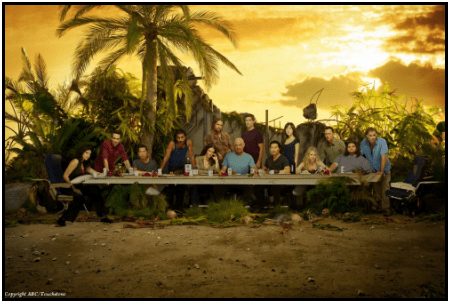
Lost Final Season: Sink or Swim?


February 2, 2010 marks the date which begins the final season of one of TV’s biggest pop culture phenomena of the past decade. I will begin by saying that I was never into Lost not because I didn’t like the show or even thought it was bad. I never got into it because I missed the entire first season. While I heard people gradually get into the show by the time season 2 rolled around and it had become the water-cooler show I knew I was too late.

Shows like Lost is the kind of show which is never easy to get behind even from the get-go with it’s over-encompassing mythological story arc not to mention several running subplots which bisects and even joins the main story. I knew that I couldn’t give the show it’s proper due  by rushing into watching the first season. It’s the same reason why I hesistate to recommend the best show on TV ever to people who never watched it from the beginning. I speak of HBO’s The Wire. These kinds of shows needs and requires an almost slavish like attention and loyalty from it’s early adopters.

While I may not have adopted and watched Lost I have bought all the DVD sets and will buy the 6th season as well. I do this so I can watch the show once it is done using my own timetable and also giving it the attention it deserve. Some would say that the show will have lost some of it’s mystery since people have been talking about it to me or I have read thing about it on the internet. To be honest I have a knack for tuning out such things if I have to. All I know about the show is that people on a plane crashed on an island with a polar bear and a smoke monster. So yeah, the show hasn’t been spoiled for me.

Now, with this 6th season about to begin I can see the anticipation building amongst people I know who literally love this show. It is all they can talk about. It is this kind of devotion I wish other shows whose run ended too soon would’ve gotten (Terminator: The Sarah Connor Chronicles, Dollhouse, Firefly, Jericho and many more). I haven’t seen this kind of devotion to a TV show by so many people since Chris Carter’s The X-Files. That was another show which gradually became a pop culture sensation after the first season and just kept building and building until it reached its final season.

I see many similarities between the two shows. Both have labyrinthine mythologies which comprise the bulk of its main story. Both shows have a small core of characters whose motivations are clear but everyone else around them steeped in mystery. Pop culturally both shows have ingrained themselves in the mass audience’s TV watching habits. Both shows have been well-written with some of the best characters on TV of the this generation.

With this final season of Lost I bring up one thing that may distinguish it from Carter’s long-running serialized show. J.J. Abram’s show has a chance to go out swimmingly. It has a chance to deliver on it’s legions of fan expectations. Many are already expecting this final season to be the best of the whole series and will want nothing less than a “big bang” of a series finale. While I think it would be great if Lost went out with a bang and not a whimper the way The X-Files did in its final season, I still caution people to temper their excitement and expectations. A show with this much hype throughout its time on TV almost seemed destined to underwhelm and disappoint a large portion of it’s fans. I use the series finale of Battlestar Galactica as a prime example.

That show from Ron D. Moore was another show which built a loyal and fanatical fanbase with its complex storyline which reached an almost religious myth level. When the finale finally aired there were equal amounts of satisfaction and major disappointment. The ending of that show, for some, just didn’t satisfy their expectations and certainly left questions unanswered.

Will Lost avoid this pitfall? Only the next couple months will answer that question and for Abrams’ and his team of writers they better hope that the ending they have for the show will not sink the series in the end, but let it swim into TV legend.

Hottie of the Day: Olivia Wilde


OLIVIA WILDE

Our latest hottie of the day is truly the only reason why one should even be watching House on the Fox network. Olivia Wilde’s character “Thirteen” is just stunning in every episode she is in. Her character being a promiscuous bisexal is just icing on the cake. But the medical procedural drama on Fox wasn’t the first time she’s been seen on TV. She was also the only good thing about the little-seen drama on NBC called The Black Donnellys.

Ms. Wilde is of Irish-American heritage and those eyes and skin tone belie her Emerald Isle genes. In addition to becoming a regular on House, she has also appeared in films such as The Girl Next Door, Alpha Dog, Turistas and the Jack Black/Michael Cera 2009 comedy, Year One. While her role as “Thirteen” on House has been her stand-out and breakthrough acting role the fact that she was strongly considered for the part of Vesper Lynd in the 2005 James Bond reboot, Casino Royale shows that she’s just not beautiful but has the acting chops to go far.

Site: Olivia Wilde Fan

Jay Leno on Oprah


I am definitely on Conan’s side of the recent NBC-Leno-Conan late-night debacle. I pretty much spent most of my post high school nights watching Conan’s late-night show. I never got into Leno, but I can understand why many people did. He’s a safe comedian whose reputation for treating guests with kid gloves made him a favorite for stars to drop by his show. Stars on the show make people watch Leno’s show.

Leno’s reputation has hit a major low during the last month as he’s become the punching bag for fans of Conan and Letterman. Even Jimmy Kimmel and his followers have jumped on the beat on the Chin bandwagon. Kimmel’s surprise appearance on Leno’s 10 @ 10 show a couple weeks ago was one of the best things to come on late-night in decades. To say that Kimmel emasculated Leno would be the understatement of this young decade.

It’s now been a week since Conan aired his final Tonight Show episode and during that week we saw Jay Leno try to repair his battered image and reputation by going on The Oprah Winfrey Show. Oprah’s daytime show has become the place to go to for people who either have been brought low by other people and need a place to find comfort and support or people who need to apologize about something bad they did. Leno’s appearance could’ve been the latter, but instead he tried to be the former. In choosing this path he might have damaged his image even more than he already has.

Leno doesn’t even make a serious attempt to place some of the blame on himself for what had occurred. Instead he tries to come off as being the biggest victim in the whole shenanigans of a debacle. While not mentioning Conan’s name he even takes a shot at “the other show” which he says was failing (despite numbers showing that after a slow and low ratings early on Conan’s show was steadily rising in ratings). Leno comes off even more fake and disingenious through the whole interview.  There were times as if he expected Oprah to be more supportive and throw him softball questions, but instead got something tougher and more probing. He even goes so far as to try and joke about the whole ordeal which just ends up looking awkward at best and pathetic at worst.

I hope Middle America who think Leno was the better host enjoy their bland, battered and bullshit of a Tonight Show host, because it definitely won’t be anything funny, engaging and surprising.

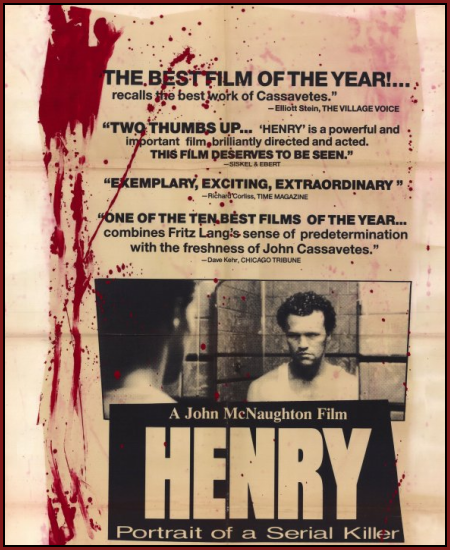
Review: Henry – Portrait of a Serial Killer (dir. by John McNaughton)


“It’s always the same… and it’s always different.” — Henry

John McNaughton’s directorial debut deserves its reputation as one of the most unsettling first features in American cinema. Working with a reported $125,000 budget, a committed cast and crew, and the premise of fictionalizing a week in the life of serial killer Henry Lee Lucas, McNaughton created something raw, unflinching, and difficult to shake. Completed in 1986 but held back from its eventual 1990 theatrical release by a prolonged ratings battle, Henry: Portrait of a Serial Killer challenges more than the audience’s tolerance for violence. It challenges the reassuring conventions through which movies usually make violence entertaining.

Loosely inspired by Lucas rather than functioning as a faithful biography, the film offers neither a comprehensive criminal history nor an explanation that makes its subject comfortably understandable. Its Henry exists in an American landscape of cheap apartments, anonymous streets, and seemingly endless highways. Roger Ebert described the film as “an unforgettable portrait of the pathology of a man for whom killing is not a crime but simply a way of passing time and relieving boredom.” That observation gets at its horror: murder has become part of the texture of Henry’s everyday existence.

The opening establishes that perspective with devastating economy. McNaughton presents bodies left behind in different locations, cutting between the aftermath of violence and Henry moving through ordinary surroundings. We encounter the results before we can impose a familiar dramatic structure on them. These deaths are not arranged as the satisfying conclusion to a chase or the payoff to an elaborate suspense sequence. They register as abandoned lives, their stillness made more disturbing by the suggestion that the man responsible has already moved on.

That approach gives the film its grim, almost documentary texture. Its power comes less from the quantity of blood than from the absence of comforting distance. There is little visual glamour to soften the ugliness, and little sense that the violence belongs to a separate, recognizably cinematic universe. The rooms are cramped, the conversations awkward, and the surroundings indifferent. McNaughton makes the extraordinary horror of murder coexist with the dullness of daily life. What unsettles us is not simply that Henry kills, but that killing seems to interrupt his routine so little.

Michael Rooker’s performance is essential to that effect. He does not announce Henry’s dangerousness through constant theatrical menace. Instead, he gives him a watchfulness and emotional opacity that make his quieter moments as troubling as his outbursts. Henry can appear withdrawn, practical, even momentarily considerate, without becoming someone we truly understand. Rooker refuses to turn him into either a charismatic monster or an easily diagnosed collection of symptoms. We keep looking for a stable personality beneath his behavior, only to discover how little reassurance that search provides.

Henry’s former cellmate and roommate, Otis, supplies a different kind of ugliness. Played with repellent enthusiasm by Tom Towles, he initially seems more buffoonish than threatening. That impression gradually collapses as Henry introduces him to murder. Where Henry often appears detached, Otis becomes excited by the possibilities. Violence gives him an outlet for impulses that were already present, and his growing enthusiasm makes their companionship increasingly sickening. Henry does not create Otis’s cruelty so much as offer it permission and a practical education.

[youtubhttps://www.youtube.com/watch?v=qxxZ8yspQyw]

Their relationship reaches its most disturbing expression in the videotaped home invasion. The sequence strips away whatever distance remains between violence as an event and violence as something consumed. When the recording becomes material for playback, Otis’s pleasure forces us to confront the relationship between perpetrator, spectator, and image. His desire to revisit the murders is repulsive, but the film makes that revulsion uncomfortable rather than easy. We, too, are watching images of people being brutalized, although our reasons for watching may be entirely different.

This is where Henry becomes more than an exercise in endurance. McNaughton raises a question about spectatorship without pretending that every audience member has the same response. Do we recoil, become numb, or continue watching because the film has made looking away feel like abandoning its argument? The sequence does not prove that watching fictional violence makes someone equivalent to Otis. Instead, it exposes how framing, repetition, and emotional distance can transform suffering into a consumable object. The distinction between his appetite and our attention remains crucial, but it is no longer comfortable.

Henry’s relative restraint beside Otis creates another trap. Because Otis expresses such obvious delight in degradation, Henry can begin to look like the lesser evil. His apparent detachment becomes something we are tempted to mistake for a boundary, perhaps even a surviving moral principle. Yet indifference is not mercy, and a lack of visible excitement does not diminish the suffering he causes. The film understands how desperately an audience will search for someone to identify with, then makes that instinct a source of dread.

Becky, Otis’s sister, gives that search its emotional weight. Tracy Arnold brings vulnerability to a character whose longing for affection makes Henry’s occasional gentleness seem meaningful. She wants to believe that escape is possible, and the audience wants to believe it with her. Their scenes allow the possibility of another kind of movie to emerge: one in which damaged people recognize each other and find some fragile way forward. McNaughton lets that possibility exist without promising that Henry can fulfill it.

The ending destroys that hope without turning the destruction into a conventional climax. As Henry and Becky leave together, their departure briefly resembles an escape from the ugliness that has surrounded them. We are ready to interpret movement as progress and tenderness as transformation. The final roadside image exposes how much we have supplied ourselves. Henry has not necessarily changed because someone loves him, nor has the story become redemptive because we need relief. What remains is the road, his mobility, and the terrible suggestion of repetition.

I consider Henry: Portrait of a Serial Killer a great work of American filmmaking because its severity serves a coherent purpose. Its ugliness will repel some viewers, and its methods deserve scrutiny rather than automatic praise for being uncompromising. But McNaughton does not use brutality merely to decorate a thin story. He builds a character study around the absence of the explanations and consolations we expect. The result is not entertainment in any reassuring sense. It is a confrontation with a man whose capacity for murder exists alongside an almost unbearable ordinariness—and a film that refuses to make that contradiction easier to live with.

Hottie of the Day: Anri Sugihara


ANRI SUGIHARA

Taking the mantle of hottie of the day from fellow Japanese Idol model Haruna Yabuki is Anri Sugihara of Hiroshima Prefecture. Ms. Sugihara is one of Japan’s most popular J-Idol and gravure models. She has graced the covers of many Japanese gravure photoshoot books. While her video work still has been only through footage of her photoshoots she has still gained fans both in and out of Japan. Ms. Sugihara combines both girl-next-door beauty with flawless skin and the long legs and curvaceous figure thats made her legions of followers throughout the internet. Here’s to hoping we continue to see more of Hiroshima Prefecture’s favorite daughter, Ms. Anri Sugihara.

Ten Bands You Ought to Experience Live


Having seen 263 different bands live, and a good many of those more than once, I offer you a top 10 list based on ample experience. Oh there might be better live bands out there, but mark my words, these guys are among the very best.


10. Sunn O)))
1 time: 20090917
Recommended album: Black One, or their collaboration with Boris: Altar
Sunn O))) is what happens when an ancient mystery cult encounters electricity. This is probably the closest you can get in this day and age to a true pagan spiritual experience. This is amplifier worship in the literal sense.


9. The Mountain Goats
1 time: 20061029
No Children off of Tallahassee
Recommended album: All Hail West Texas
A funny looking man picks up an acoustic guitar and starts singing you a story about two young lads named Jeff and Cyrus. As the painfully awkward lyrics inform you of their botched efforts to form a metal band, accusing society’s lack of tolerance for holding their dreams at bay, you really start to wonder whether you should cheer the guy on or steal his lunch money. Then the story reaches its conclusion with a chorus of “Hail Satan! Hail Satan tonight!”, everyone in the audience is singing along, and you at last realize that it doesn’t really matter whether you understand the guy or not. This is delightful. If you bother to dig around a little, read more of the lyrics, catch the references here and there, you’ll come to find that John Darnielle absolutely “gets it”. The joke was on you. But it was a clever innocent joke, because everything this guy writes is just as honest as it is intentionally comical. Show up, sing along, listen to his stories, walk away smiling.


8. Týr
2 times: 20080516, 20080517
Hail to the Hammer off of various albums
Recommended album: Eric the Red
“Viking metal” is as much an ethos as a musical style. Indeed, I hesitate to label any but the most undeniable bands “viking”, as opposed to “folk” or “pagan”. But in Týr we find the true third generation of the genre, following Bathory and Falkenbach, with whom they share little stylistically save a knack for writing anthemic heavy metal pagan hymns. I never got into Týr much until I saw them live, but was impressed by their great vocal harmonies, trance-like song progressions, and most notably the confidence with which they could hold the stage even when singing a cappella. By the end of the night I was making arrangements to drive three hours away to see them again.


7. Cracker
3 times: 20060614, 20071031, 20090527
St. Cajetan off of Cracker
Recommended album: Garage D’Or best of compilation
Cracker are the most underrated band of the last 20 years. I’ve been a fan since Teen Angst (What the World Needs Now) and Low were radio staples in the early 90s, but when I finally saw them live for the first time in 2006, I was blown away by their energetic stage presence. Johnny Hickman is a rock guitar guru, blending the established melodies with bluesy improvisations that at no point feel forced. David Lowery, nearly 50, rocks out harder than most younger musicians today. You’ll show up with limited hopes of tapping your feet to a few old familiar songs and discover a band that ranges from head-banging rock to slow tongue-in-cheek ballads to plodding blues-worship masterpieces.


6. Explosions in the Sky
1 time: 20070429
Your Hand in Mine off of The Earth is Not a Cold Dead Place
Recommended album: The Earth is Not a Cold Dead Place
The name says it all. Granted I saw them main stage at Coachella on a sound system set to support Rage Against the Machine’s first gig in nearly a decade, I have to imagine their music completely encompasses any venue. Explosions in the Sky write songs so compelling that you will completely forget you’re at a gig. The music penetrates everything in its vicinity and thrusts itself into you so forcefully that no amount of distractions will diminish the experience.


5. The Decemberists
4 times: 20040627, 20040628, 20061024, 20090814
excerpt from The Hazards of Love
Recommended album: The Crane Wife
The Decemberists have evolved from a thoroughly entertaining sideshow into a complex, operatic experience, without losing track of their original nature. Last time I saw them they performed the Hazards of Love rock opera in its hour long entirety without breaks, then returned for a good half hour of interactive fun. Audience participation is required, but hard to resist when they’re marching up and down the aisles in parade, awkwardly yanking people out of their seats to perform weird skits set to their older songs.


4. Boris
3 times: 20070316, 20071019, 20080629
Farewell off of Pink
Recommended album: Akuma No Uta
A youtube comment for this video described Farewell as “probably the greatest sludge ballad of all time”. Remember that feeling of disintegrating into the world that you got the first time you listened to Converge’s “Jane Doe” or Explosions in the Sky’s “The Birth and Death of Day”? A video of Boris can’t possibly do them justice. The shear volume of sound is their most distinguishable characteristic. On songs like “Farewell” it will disolve you. On songs like “My Neighbor Satan” it will implode you. On songs like “Naki Kyoku” it will chill you out in a mellow bliss.


3. GWAR
5 times: 20060723, 20061124, 20070707, 20071006, 20090923
Womb with a View off of War Party
Recommended album: Beyond Hell
Ever seen a man in a pig suit get a spear jammed up his ass and split out the top of his spine? Ever get soaked in the blood and puss launching forth from the gaping wound, while a monster with a three foot dick sings about raping your girlfriend and feeding her to bears? …What, that doesn’t sound fun? Everyone should see GWAR live at least once. You will either become a cult follower or start going to church more.


2. Dropkick Murphys
3 times: 20070913, 20080307, 20090629
Kiss Me, I’m Shitfaced off of Blackout
Recommended album: The Meanest of Times
If you’ve ever drank a beer and liked it, you are a Dropkick Murphys fan. Their gigs are more like giant parties… Well, parties with bagpipes and Guinness.


1. Blind Guardian
2 times: 20061210, 20061211
Mirror Mirror off of Nightfall in Middle-Earth
Recommended album: NiME or A Night at the Opera
Hansi Kursch is the King of the Nerds, and we must give our worthy sage the rightful placement he deserves. What happens when you combine Iron Maiden stage presence with the most epic melodies ever written and lyrics about the Dark Lord Sauron? Click and see my friend. Click and see.

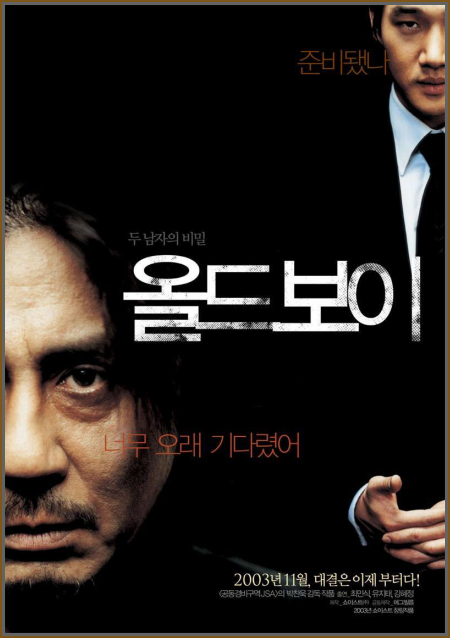
Review: Oldboy (dir. by Park Chan-wook)


2003 would go down as the year a master filmmaker emerged from the ranks of the independent circles to the forefront of elite directors. Park Chan-wook was already well-known amongst the indie circuit as an innovative director coming out of South Korea’s burgeoning film industry. He’d already released such well-received films as Joint Security Area and Sympathy for Mr. Vengeance. In fact, the film in question that’s propelled Mr. Park to the forefront would be the second part of a film trilogy dealing with the existential nature of vengeance and its effect on all involved. Oldboy follow’s Sympathy for Mr. Vengeance like a sonic boom and inproves on the first leg of the trilogy in every way.

Oldboy at its most basic is a revenge film. It is a film about a man wrongly and mysteriously imprisoned for reasons unknown to him and to the audience. We see Oh Dae-su — the man in question — through his 15 years of mysterious imprisonment and we see him change from the Average Joe from before his kidnapping to a taut, volatile and somewhat insane individual whose only goal in life is to find whoever did this to him and make him pay. Oh Dae-su’s imprisonment takes a good part in the telling and makes up the first third of the film’s tale. As the years go by we see him spiral down to the lowest depths a man can get to before sanity leaves him. There’s no evidence that he didn’t go insane during his imprisonment, but Park does show us scenes that Oh Dae-su’s singular focus to find out why he was imprisoned and to exact revenge on those involved might have just unhinged the poor man in the process.

The second part of the tale being told occurs the moment Oh Dae-su was suddenly — as mysteriously as his imprisonment — released. One moment he’s still in his prison where his only contact with the outside world is the TV in his room and then he’s on the rooftop of a building with new clothes on and a suitcase with more clothes and his notebooks where he’s listed all the names he thinks may have caused him this wrong. From here Dae-su goes on a whirlwind search to find clues and information on who may have imprisoned him. Along the way he meets the young sushi chef Mi-do who seem to have taken some interest in Oh Dae-su’s well-being and who slowly falls in love with him. It is their journey through the maze and labyrinth of false leads and trails that dominate the second third of this tale. It is also the part of the film where Oh Dae-su’s monster persona takes precedence as he wreaks havoc on anyone and everyone who may have the information he needs to solving the mystery of his imprisonment.

Many have already mentioned the wince inducing pliers scenes and the single-take corridor fight scene. But it is the lovemaking scene between Oh Dae-su and Mi-do that I consider the most pivotal scene of this part of the tale. With the two characters finally consummating their mutual attraction to each other we see the two as not separate entities but a singular one where both will reap whatever their search will sow in the end. Mi-do becomes less of a sidekick and more of an equal partner in Oh Dae-su’s search. She knows that the only way she and Dae-su would find true happiness together is if she helps him finish his quest even if it means finding the truth that may not be to their liking.

The third and final part of this tale finally puts to light just who exactly is the mastermind of all that has transpired. The clues picked up by Oh Dae-su starts to fall into place and the puzzle that opens up for him and the audience is nothing less than tragic and Shakespearean. This third part really hits the audience between the eyes about the nature of vengeance and how all-consumming it can be if allowed to simmer, grow and take root. We see how it has already driven Oh Dae-su to the brink of madness and how he teeters just beyond the point of no return. Then on the mastermind of the whole thing we see how one slip of the tongue in the distant past of all involved has consumed this individual to exacting a complex and appropriate plan of revenge on Oh Dae-su. As the tragic and heartwrenching final part of the tale weaves and continues to its conclusion no one ends up being the victor. All have become just the victim of the cycle of violence and vengeance thats taken hold of everyone.

Park Chan-wook’s direction was flawless and there’s not a wasted scene from beginning to end. Every scene was shot and edited with a sense of purpose to convey the mood and feel of the situation. It didn’t matter whether it was a a slower-paced scene where the actors conversed in intelligent dialogue or a scene full of frantic energy where burst of violence seemed both randomly shot but choreographed at the same time. The composition of the scenes and his judicious use of wide-angle and static shots with little editing helps convey the single-minded focus of Oh Dae-su and his main antagonist. Some of the scenes even show hints and clues to the audience that — as unlikely as it might seem — the whole film might be a figment of Oh Dae-su’s fractured mind as a consequence of his imprisonment. Park Chan-wook doesn’t answer whether it is a figment of Oh Dae-su’s imagination, but the theory is there for people to ponder over.

The screenplay written by Park from the original Japanese manga was excellent and doesn’t waste unnecessary exposition to distract the audience from the main tale being told. Everything said and acted on the screen ultimately leads to the shocking climax in the end. In fact, I would say that the climax of the film doesn’t happen until the very last second of the film before everything fades to black and the credits roll. That’s how tightly written and focused the screenplay was from beginning to end.

Then there’s the three main characters as played by Choi Min-sik , Yu Ji-tae , and Kang Hye-jeong. These three actors play their parts to perfection. Choi Min-sik as Dae-su Oh was a picture of focused madness. We invest in his quest for vengeance and as the final secret was unveiled we truly feel his shock, horror and anguish. Yu Ji-tae plays the mastermind of the whole thing with icy calculation. This was a man who had spent half his life working on, preparing and letting loose the events that would lead to him finally getting his revenge on Oh Dae-su. The two, though after the same goal of vengeance, are diametrically opposed in terms of look and personality. Then we have Kang Hye-jeong as Mi-do, the young sushi chef caught in the middle of this duelling vengeance tale. She was both endearing, innocent and the pure soul that keeps Oh Dae-su from spiralling into final madness. It truly becomes tragic that the final consequences of the vengeance wrought by both male principals impacts the female in the middle and in the end she remains oblivious to the truth and Kang Hye-jeong conveys this sincere, innocent naivete to sweet perfection.

There’s much more to say about Oldboy, but its really just more accolades to be heaped upon a near-perfect film. A film exploring the darker side of man’s inhumanity towards one another to satiate their self-righteous quest for so-called “justice” and retribution. Like Cronenberg’s A History of Violence, Park’s Oldboy also shows the unending cycle of vengeance heaped upon vengeance in addition to the violence it inherently breeds. Like Cronenberg’s 2005 film, Oldboy doesn’t fully answer this existential question but leaves it up to the viewer to make their own decision. Park Chan-wook’s Oldboy is a film that comes but once in an era and helps redefine an era of its place in film history. Oldboy also continues the vengeance trilogy with Sympathy for Lady Vengeance (shortened to just Lady Vengeance here in North America). Oldboy marks the true arrival of one of the new masters of film and he joins the fine company of such people as Scorcese, Cronenberg, and Kubrick. A near-perfect film all-around.

AMV of the Day: Azumanga Daioh Portal


My AMV for the Day is a combination of two things I adore in anime and gaming. On the anime side of the video it’s the high school slice-of-life series Azumanga Daioh with heavy emphasis on my favorite character in said series and that would be Chiyo-chan. On the gaming side which provides the music part of the music video it’s the song “Still Alive” as sang by GLaDOS in the end of Valve’s FPS-puzzler, Portal.

Separate the two are still quite awesome in their own realm, but when combined they just move up to a new level of awesomeness. Plus, the fact that Chiyo-chan was made to be sounding like GLaDOS was just too cute. This AMV continues to be on my favorite list on YouTube and usually gets a viewing by me at least once a week or more if I need to really get a pick me up. I hope you all like it as well.

Hottie of the Day: Haruna Yabuki


HARUNA YABUKI

Today marks the first entry of a Japanese Idol model to the Hottie of the Day. Let me introduce the very fine Harune Yabuki.

Ms. Haruna was discovered in Shibuya at the age of 15. The 22-year-old made a splash in 2004 as a swimsuit model for Parco, a department store chain out of the fashion district of Shibuya. The ads featured the slender bodied Haruna in giant posters that many Tokyo shoppers couldn’t easily forget. Combining a hard body with one of the most classically beautiful faces seen on a gravure model, Haruna become a star virtually overnight. In her last 3 years she has continued to make DVDs and photobooks and launched a music career with her first single in 2006 Let Me Love You.

Survival of the Dead gets release dates


The sixth living dead film from George A. Romero, Survival of the Dead, has finally been giving it’s release dates from it’s distributor Magnet Releasing (a genre-specific arm of Magnolia Pictures). This will come as great news for all manner of Romero fans who are always looking forward to one of his zombie films. While not all of them have been great as in the past they’re still widely-anticipated by his long-time fans who see him as the creator of the zombie subgenre as we know of it today.

First reported by Fangoria through it’s new blog, Romero’s latest zombie offering will have an initial release this April on VOD (Video On Demand) before getting released in the theaters the following month of May. While these release dates seem a tad peculiar it’s really the beginning of a trend for indepedently-financed and produced horror and genre films. The initial VOD release date would help gauge the audience’s reaction to the film. IF the buy in numbers for VOD are high enough then the theatrical release will get more screens. This way films can better make their money back without the distributor having to cut the film at the knees just because of bad reviews from the theatrical run. Either way I’m just glad the master is back and this spring I get to see another of his zombie films either on my HDTV or a theater nearby.

Source: Fangoria News Blog