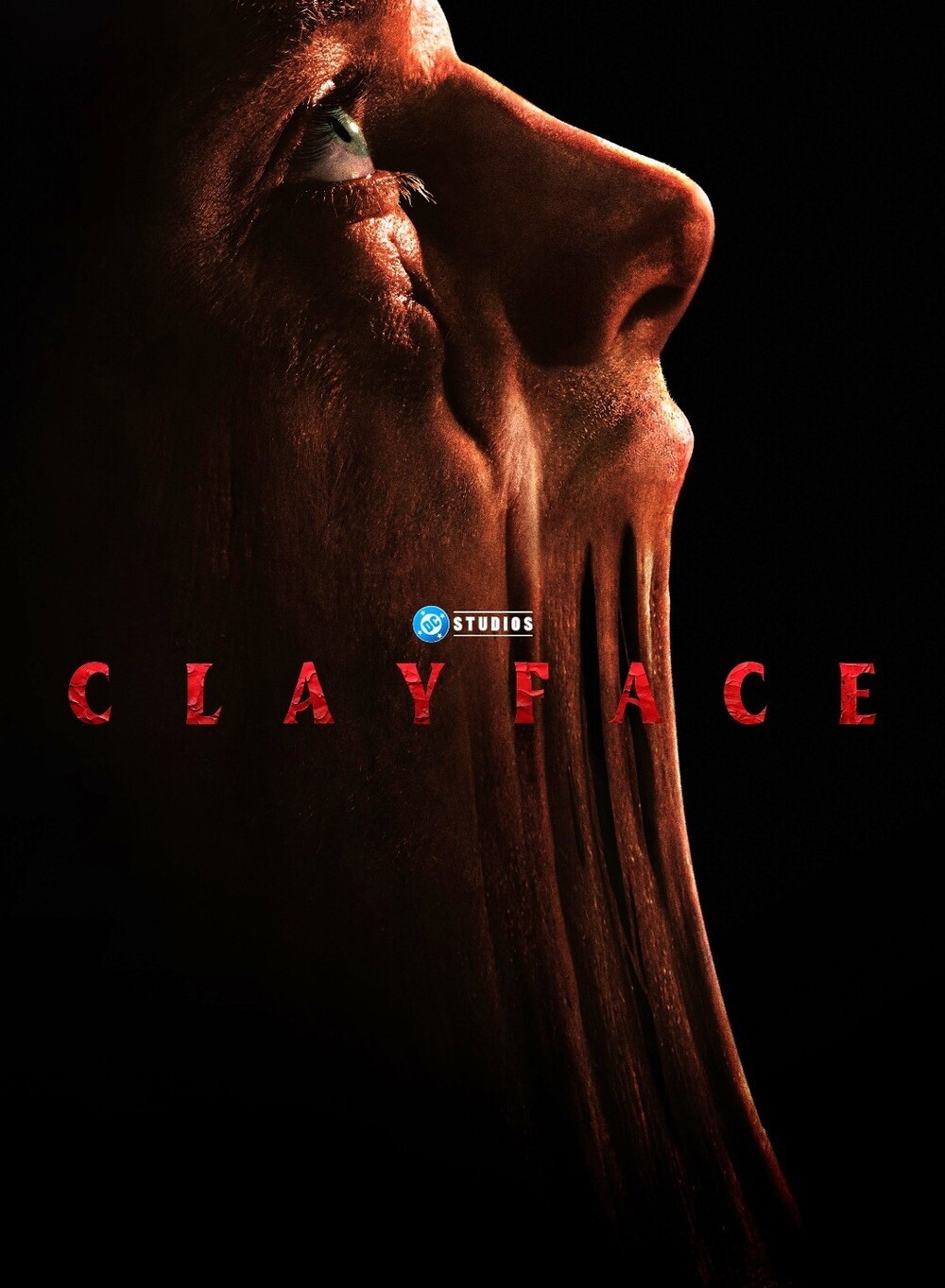
Horror Film Review: Clayface (dir. by James Watkins)


“Even if it kills me, I’ll be better off than I am now.” — Matt Hagen

The most unsettling thing about Clayface isn’t watching a man lose his face; it’s realizing how much of his life was built around having the right one. James Watkins’ take on the DC villain turns that insecurity into a nasty little body-horror tragedy, following someone who has confused being desirable with being worth something. Beneath the collapsing features and increasingly grotesque transformations is a recognizable fear: that losing the thing people admire about you means losing their interest altogether. The film doesn’t explore that idea as deeply as it could, but it gives the horror a compelling emotional foundation beyond the spectacle of a comic-book monster taking shape.

At the center is Matt Hagen, played by Tom Rhys Harries, an actor whose rising career is derailed by a disfiguring attack. His appearance has opened doors for him, and losing it threatens more than his next role. It destroys the version of himself he thought he could count on. Desperate for a way back, he turns to Dr. Caitlyn Corr, played by Naomi Ackie, whose experimental treatment promises to repair the damage. Naturally, the results come with complications. The interesting question isn’t whether the miracle will turn into a nightmare, but how much Matt is willing to overlook once he starts recognizing himself in the mirror again.

That desperation makes Matt more compelling than a character who simply gets powers and becomes dangerous. His problem begins before his body starts changing: he already depends on other people to tell him what he’s worth. That insecurity connects naturally to his profession. An actor who can physically become someone else sounds like a wish fulfilled, until transformation stops being a choice. There’s a cruel logic to giving someone obsessed with recovering his identity a body that won’t hold one. The screenplay occasionally spells things out too neatly, but the central idea gives the nastiness something to work with beyond its shock value.

Harries does a lot to keep that idea grounded. He makes Matt’s appeal believable without turning him into someone whose suffering automatically excuses everything he does. His desperation is understandable even when his choices become selfish or disturbing, and the performance handles that balance well. His humiliation doesn’t immediately become theatrical rage. It lingers, making him defensive, needy, and increasingly willing to justify himself. Even when the movie pushes him toward more recognizable villain territory, Harries preserves traces of the frightened person underneath. Matt doesn’t have to remain likable to remain interesting, and the performance understands the difference between earning sympathy and demanding it.

Ackie gives the film another human connection that it needs. Corr could have been little more than the scientist who introduces the treatment and explains why everybody should be worried. Instead, her warmth complicates a relationship already shaped by unequal needs. Matt wants his life back; she wants her work to succeed. Those desires overlap without being identical, making their connection more engaging than the mechanics of the experiment. The romantic element also gives their scenes a tragic-monster quality. Not every emotional beat lands with equal force, but the performances keep their relationship from feeling like a mandatory break between transformations.

Those transformations are where Watkins delivers the movie’s most immediate pleasures, assuming “pleasures” is the right word for watching somebody’s anatomy stop cooperating. The real discomfort comes from the instability. A face should stay recognizable even when everything else changes, and Clayface makes that familiarity feel temporary. The makeup and prosthetic work give Matt’s deterioration an unpleasant physical texture, encouraging a queasy fascination with damage that’s difficult to look at and harder to ignore. At its best, the body horror feels wet, awkward, and difficult to contain rather than polished into something comfortably spectacular. There’s enough physical nastiness here to give Matt’s desperation a genuinely disturbing shape.

Even without the DC Comics pedigree or the connection to Batman, Clayface would still be a compelling body-horror film. The recognizable name might get people interested, but Matt’s desperation, the disturbing effects, and the tragedy of losing control over his identity are what make it work. There’s no need to know where he fits into Gotham or who he might eventually fight. His story has enough emotional weight and gruesome imagination to stand on its own. The comic-book background adds another layer, but it isn’t holding the movie together. That independence makes it feel like an actual horror story rather than franchise homework dressed up with gore.

For an R-rated body-horror film, though, Clayface plays it surprisingly safe. That might sound odd given the grotesque imagery, but graphic violence and genuinely unsettling ideas aren’t the same thing. There are moments when Matt’s transformation seems ready to take the movie somewhere stranger, only for it to retreat toward familiar revenge-thriller territory. The issue isn’t simply that it needs more blood or more elaborate effects. A more Cronenbergian approach could have pushed further into how his changing body alters his desires, his relationships, and his understanding of himself. The film is willing to make Matt look monstrous, but more hesitant to explore what becoming something other than human might actually feel like.

That restraint becomes especially noticeable as Matt gains control over his abilities. Early on, his body feels like a threat he can’t escape. Later, it increasingly becomes a weapon. The shift makes sense for the story, but it changes the experience from watching someone endure a nightmare to watching him inflict one. There’s nasty fun in that, especially when the film embraces its lurid side, but his inability to trust his own body generates more unease than his ability to make other people afraid of it. As the confrontations become more conventional, the movie sacrifices some of the uncertainty that makes its earlier stretches so effective.

The comparisons with The Fly and Darkman are hard to avoid, from scientific possibility curdling into catastrophe to the disfigured man pursuing revenge. The relationship between appearance and personal value also invites comparisons with The Substance. Those connections help explain the film’s appeal, but they highlight what feels underdeveloped, too. Clayface has an industry full of people who judge surfaces and a protagonist whose surface becomes impossible to maintain. That’s fertile ground. Sometimes the movie digs into it; sometimes it settles for a familiar revenge beat with a more disgusting visual payoff. The latter can be entertaining without being quite as satisfying.

Even with those reservations, Clayface succeeds because enough humanity survives beneath the grotesquerie. Harries gives the film a wounded center, while Ackie helps keep its emotional stakes from disappearing into the effects work. Watkins delivers the gruesome spectacle, but the sadness underneath gives it staying power. The film doesn’t fully realize its strongest ideas, and its reluctance to follow them into truly uncomfortable territory keeps it from becoming something exceptional. Still, its best moments make physical transformation feel painfully personal. Matt can change his appearance, but finding a face he can live with turns out to be the harder problem.
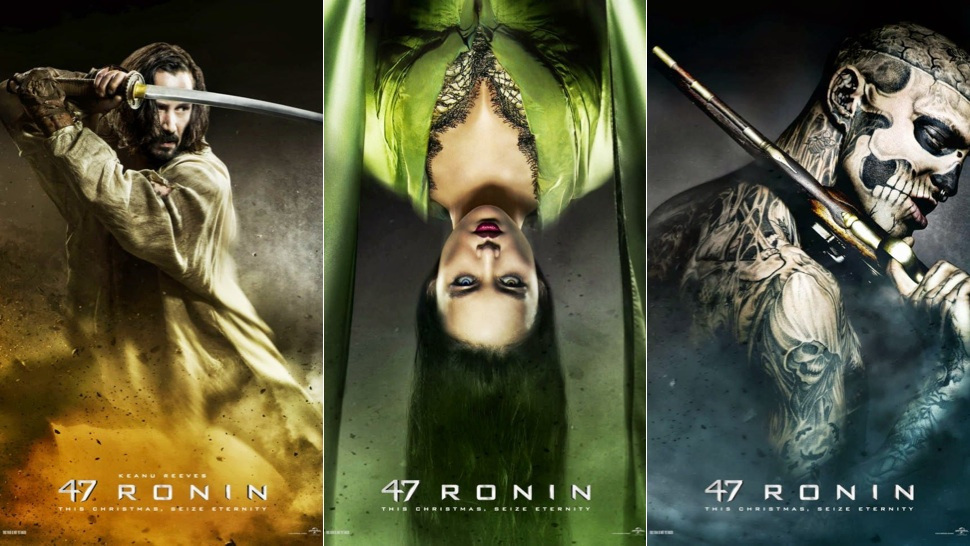
Trailer: 47 Ronin (Official)


47Ronin

So, we have Keanu Reeves playing against type in Man of Tai Chi now we have another Keanu extravaganza where he returns to the role he continues to be cast in. The role of the reluctant hero who also happens to be the only one who can save everyone.

47 Ronin, I will have to assume, is probably very loosely-based on the 18th-century real-life account of the forty-seven ronin (masterless samurai) who took on the rival lord of their former lord and master. Their legend grew upon the success of their mission when they presented themselves to the Shogun and were given the chance to commit seppuku (ritual suicide) to keep their honor instead of being executed like criminals for the murder of the rival lord.

This story continues to remain a popular one in Japan and for those in the West who know of it. The film looks to take the basic premise but adapt the story in a more fantasy-setting that makes this 47 Ronin look more like a live-action anime than a traditional jidaigeki film like the recent 13 Assassins. This film marks one of the first Western Chushingura (fictional accounts of the forty-seven ronin event).

47 Ronin is directed by Carl Erik Rinsch and is set for a Christmas 2013 release date.

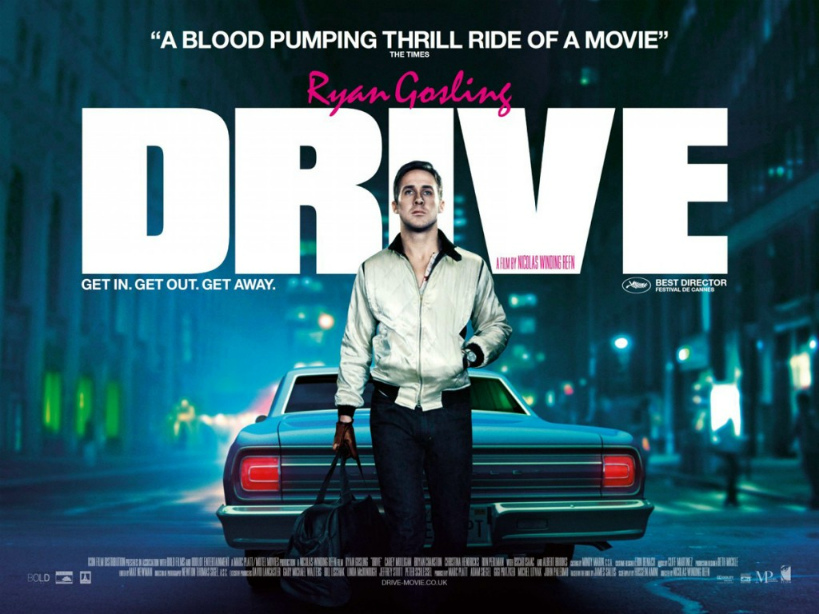
Review: Drive (dir. by Nicolas Winding Refn)


Danish filmmaker Nicolas Winding Refn has made just a handful of films with most staying under the radar of most of the general film-going public. He first caught the attention of indie film fans with his Pusher Trilogy over in Denmark, but he really caught the attention of these fans with his explosive collaboration with Tom Hardy on the Bronson biopic. He would follow that film with the violent existentialist Viking film Valhalla Rising. It would take another major collaboration with another rising star in Ryan Gosling for Winding Refn to finally have his major breakout film which has caught the attention of not just the indie film fans and cineaste crowd, but the general public at-large.

Drive was first screened over at this year’s 2011 Cannes Film Festival where it premiered “in competition” for the Palme d’Or. While the film didn’t win the top prize for best film at Cannes it didn’t garner Nicolas Winding Refn “Best Director” award and his work on this film more than merits such an accolade. The film would begin to screen at other major film festivals before landing at the Toronto International Film Festival before making it’s major public release in North America. Everywhere the film went the consensus reaction to the film has ranged from positive to calls for the film as one of 2011’s best.

So, it would seem most everyone has been quite positive with their reaction to Refn’s Drive. Is this film just another indie arthouse title which the elitist film fans have begun to hype up to levels that would border on cosmic? Or is this film actually as good as it has been talked up to be by such film fans and those of the general public who have seen it? I think the answer lies somewhere in-between.

Drive has been called an action-drama to crime-thriller to film noir and even an existentialist meditation of the film variety. Some have even called it a modern urban fairy tale from the many traditional tropes and themes inherent in fairy tales. The film actually seems to defy genre labels as it’s all those and even more. Nicolas Winding Refn has made a film with so much variety in its cinematic DNA from other classic films and storytelling styles that watching the film once is not enough to find them all.

The film makes a strong statement with it’s introduction of the character who remains nameless but could be called “The Driver” or “The Kid”. Ryan Gosling’s performance in this opening sequence will set the foundation for his character from beginning to end. His driver role is not much for chit-chat and unnecessary talking with those who have hired him to be their expert getaway driver. He’s meticulous with his equipment and intractable when it comes to the rules he has set down for his clients. He would be theirs for the five minutes they need him to drive them away from their criminal acts. Whatever they do before or after those five minutes doesn’t matter to him and he sticks to this rule explicitly. Another rule which he lays down is that he will not be carrying a firearm. These rules have had some audiences bring to mind Jason Statham’s Transporter character and they would not be totally wrong to say so. What Gosling’s driver has over Statham’s is the air of realism to the role. It’s a realism that borders on hyper-reality as the film moves on to it’s climactic conclusion, but real nonetheless. Gosling’s “driver” will not do extensive and elaborate fighting skills the way Statham’s would.

The film would move from it’s powerful introduction and into a much more calm and somewhat serene section as the nameless driver gradually gets to know his next door neighbor in the form of Irene as played by Carey Mulligan. Their relationship will form the core of the film’s narrative and it’s the driver’s growing affection not just for Irene but her young son that would dictate some of the decisions he would make right up to the end of the film. It’s a relationship built not on extensive dialogue banter but mostly on meaningful glances and silent understanding between two characters who seem to have found a kindred kinship between them. It’s this growing relationship between the two and Irene’s son which almost look like a familial unit forming until the return of Irene’s incarcerated and newly-released husband Standard. This is a character played by Oscar Isaac as a man desperate to take full advantage of his last chance at normalcy and redemption, but ultimately doomed to fail.

Standard doesn’t just become the only wrench in the happy life Gosling’s character seems to want to have with Irene and her son. Into the picture also happens to come in is his mentor and business partner Shannon (Bryan Cranston doing a great job as the good-natured, but opportunistic fool character many Shakespearean tragedies always seem to have) and Shannon’s even seedier acquaintances in Hollywood mogul-turned-mob boss Bernie Rose (Albert Brooks in a chilling performance) and his more boisterous, but not as smart partner in Nino (Ron Perlman).

The film seems to settle on the low gears for the first hour of the film, but it’s during a botched robbery attempt where the driver becomes embroiled in that Drive finally moves into the high gears and stays there until the very end. Refn’s decision to use the first hour to round out and build the characters in this film definitely pays off in the end. The audience becomes quite clear as to who the players are and what motivates them to do what they do the rest of the film. Even the most secondary and tertiary roles in this film has a part to play. Even Christina Hendricks in the role of a low-level moll to a gang of criminals gets to have her time to shine if just briefly.

Once the narrative shifts from character study to an almost Cronenbergian exercise in violence and brutality does the film finally able to hook in the last few audiences who may have still been iffy about Drive. Not to say that the final 45-minutes of the film was a non-stop action film, but it does move at a consistently higher gear pace than the first hour. We see the driver having to show to the audience that he’s not just an expert wheelman for Hollywood (stunt driver by day) and the criminal underground (getaway driver by night). It serves the film well that Gosling’s character has the barest minimum of lines of dialogue. We see all we need to know about this character through his behavior that brings to mind roles played by such past luminaries as Steve McQueen and Clint Eastwood.

Most likely it would be in the second half of the film that should satisfy the action junkies. While the action scenes are not of the Michael Bay-type they do show that Refn has a fine grasp of what makes an action scene thrilling. Whether the scene calls for some of the most well-done car chase on film since Frankenheimer showed everyone how to properly do it in Ronin or scenes of sudden brutal violence which calls to mind similar scenes from Cronenberg’s last two films (A History of Violence and Eastern Promises). Both types of action were done efficiently with little to no glamour to gloss over things. The burst of violence actually adds to the mystique of Gosling’s “Man With No Name” role. One particular scene in the apartment elevator where Gosling, Mulligan and a goon sent by the mob makes for one of the best scenes in the film and of 2011.

As much as these scenes of action and violence will be the ones to get the most attention from the general film-going public in the end it’s the excellent screenplay by Hossein Amini of the James Sallis’ novel of the same name which really holds everything together in conjunction with some top-notch performances from everyone involved. The film makes or breaks itself on Gosling’s performance as the driver and he delivers on all cylinders. His performance was quite reminiscent of past performances such as James Caan as Frank in Michael Mann’s Thief, Steve McQueen also as Frank in Bullitt, but in my opinion Gosling’s work in this film brings to mind young Clint Eastwood as “The Man With No Name” in Sergio Leone’s spaghetti western trilogy. Both characters were the type to let their actions speak for them and were both full of quiet confidence not to mention restrained violence which would erupt when needed.

Much has been said about Albert Brooks’ turn as the mob boss Bernie Rose. how the role was quite the 180-degrees from people’s perception of the actor who usually did comedic roles. I say that Albert Brooks always had a dark side to his comedic talent. I mean he was and is megamaniacal villain Hank Scorpio from The Simpsons. In all seriousness, Brooks’ as the mob boss was the other pillar which held all the other performances focused. In fact, Gosling’s character and Brook’s Bernie Rose could almost be considered mirror-images of each other. They were characters who had found their place in the world and the role they would play and didn’t struggle against it. Everyone else in the film struggled against their lot in life. It was also these characters who had the bulk of the film’s dialogue.

Drive has been hyped (for some overhyped) since it first premiered at this year’s Cannes Film Festival, but it’s one of those rare films which has more than earned and surpassed the hype which has preceded it’s general release to the general public. It’s a film which bucks traditional genre labels by combining the themes, ideas and foundations from many different film and storytelling genres. For fans of action there’s enough thrilling action to sate them. For those who are fans of film noir this film definitely carries within it the DNA set down by the film noir of the 40’s, 50’s and 60’s. For some who wish to watch a film which explore existential themes then Refn’s film has that too. In the end, Drive manages to be a film which caters to so many different audiences without ever pandering to them or dumbing the story down. It’s a film made by a filmmaker who continues to impress and who has made his best film to date.

Drive is a film that is not for everyone, but it’s also a film that everyone should see and experience at least once. It is also one of the year’s best films and, so far, my top film of 2011.

SDCC 2011: Drive (dir. Nicolas Winding Refn) Red Band Trailer


One of the films I’ve really been following since last year and can’t wait to see this September is the latest film from Danish filmmaker Nicolas Winding Refn. I’ve loved his work since I first got introduced to his Pusher Trilogy and saw his two most recent work with Bronson and Valhalla Rising. He is following up the latter with what I could only describe as his own take on the neo-noir genre film, Drive.

At San Diego Comic-Con 2011, the latest trailer for Drive was introduced during the FilmDistrict panel which also had Guillermo Del Toro and his upcoming produced horror film, Don’t Be Afraid of the Dark. This latest trailer for Refn’s Drive is of the red band variety but from what I could tell from the trailer it shouldn’t be NSFW.

The trailer really doesn’t delve too much into all the plot points of the film. It does give a sense that the film has been influenced by past genre crime films and some of the classic grindhouse chase films of the 70’s. One thing I’m sure of is that this film’s cast looks to be one of the best for any film being released in 2011: Ryan Gosling, Carey Mulligan, Ron Perlman, Oscar Isaac, Albert Brooks, Bryan Cranston and Christina Hendricks just to name a few.

Drive is set for a September 16, 2011 release here in the United States.

Source: IGN