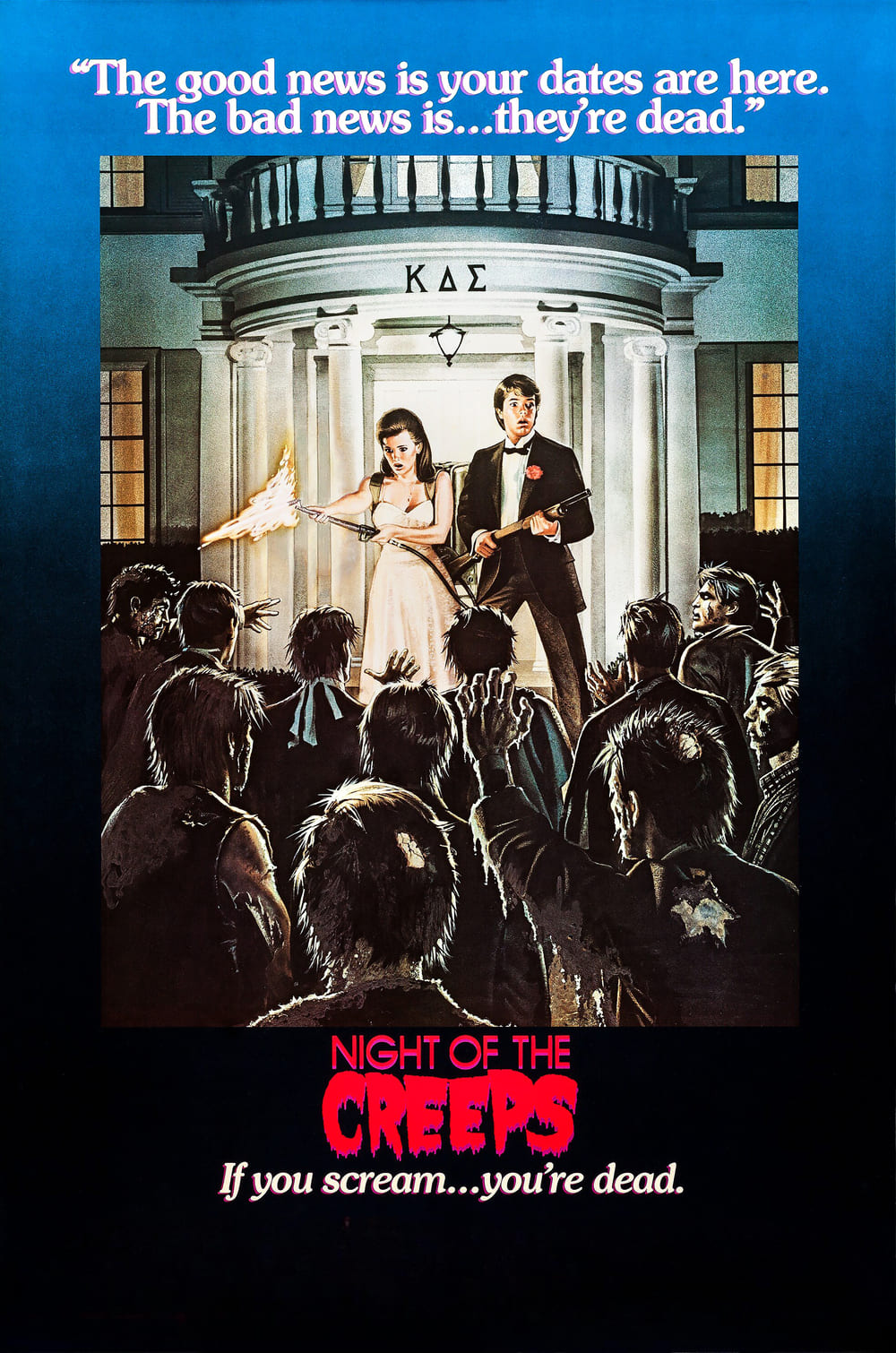
Horror Film Review: Night of the Creeps (dir. by Fred Dekker)


“Zombies, exploding heads, creepy-crawlies… and a date for the formal. This is classic, Spanky.” — Detective Ray Cameron

College is supposed to be a time for making questionable choices, but accidentally helping alien parasites invade campus probably falls outside the usual learning experience. That’s the basic joke behind Night of the Creeps, and Fred Dekker gets an impressive amount of mileage out of it. His 1986 horror comedy mixes the social embarrassment of a campus movie with the bodily violations of a creature feature, then throws in a detective who looks like he hasn’t enjoyed either company or daylight in years. The ingredients are familiar, but the combination has real personality. It’s messy, funny, occasionally touching, and much more interested in entertaining you than looking respectable.

Before the college kids get their chance to make everything worse, Dekker establishes that trouble has been brewing for decades. An opening aboard an alien spacecraft leads into a black-and-white stretch set in 1959, where young love runs into both an escaped axe murderer and an extraterrestrial experiment. It’s a wonderfully excessive introduction, almost daring you to question whether one movie needs all these threats. Somehow, the pieces fit. The opening establishes a history that will eventually catch up with the present, making the later outbreak feel like the continuation of a very bad night rather than a completely random disaster.

In 1986, Chris Romero, played by Jason Lively, has more ordinary concerns. He’s interested in Cynthia Cronenberg, played by Jill Whitlow, and figures pledging a fraternity might improve his romantic prospects. His best friend J.C., played by Steve Marshall, accompanies him on an initiation assignment to steal a corpse. This is, unsurprisingly, not a great plan. Their search brings them to a preserved body, and disturbing it helps unleash the alien slugs that drive the rest of the story. Dekker makes the escalation amusingly direct: Chris wants a more exciting social life, and the universe supplies one with considerably more decomposing flesh than he probably imagined.

The campus setting gives the movie an enjoyable contrast between petty problems and catastrophic ones. Fraternity status and romantic competition seem important until people start becoming breeding grounds for something from outer space. Still, the college-comedy material is also where the film feels most routine. The fraternity antagonists are obnoxious in predictable ways, and Chris spends a fair amount of time being the awkward underdog you’ve seen before. Lively keeps him sympathetic, but the character could use more spark. Cynthia is similarly likable without being especially developed. Whitlow gives her warmth, though the romance never becomes as engaging as the friendships surrounding it.

J.C. is a big reason those friendships work. Marshall brings a loose, teasing energy that makes his exchanges with Chris feel comfortable rather than written purely to deliver information. He can recognize that his friend is being ridiculous without making his affection seem conditional. That gives their relationship some substance beneath the jokes. In a lesser version of this movie, J.C. would exist only to encourage the romance and provide sarcastic commentary. Here, he becomes its emotional anchor. When the danger reaches him, the film briefly stops feeling like a harmless parade of genre references, and that change carries a genuine sting.

Tom Atkins gives the movie a different kind of personality as Detective Ray Cameron. He’s gruff, sarcastic, and seemingly irritated that another day has required his participation. Atkins knows exactly how to sell the dialogue, making “Thrill me” sound like the natural greeting of someone who expects disappointment and would appreciate being surprised. But Cameron isn’t just a collection of quotable lines. His connection to the events of 1959 gives his bitterness a history. Atkins lets that sadness sit beneath the swagger, which makes the character entertaining without reducing him to a tough-guy impersonation. He’s easily the strongest presence whenever he enters a scene.

Dekker deserves credit for allowing those feelings to coexist with the ridiculousness. Night of the Creeps has an obvious sense of humor about itself, but it doesn’t treat caring about its characters as another joke. The actors generally play the danger straight, leaving the comedy to emerge from their reactions and the increasingly unreasonable situation. That approach gives the darker moments room to land. The movie has heart, not because it pauses to insist on its importance, but because friendship and regret remain meaningful even when someone’s head might become a delivery system for space slugs.

The practical effects make that threat suitably unpleasant. There’s something especially nasty about creatures that don’t need to overpower you so much as find an opening, and the slugs turn an exposed mouth into a source of tension. The walking corpses have a grubby physicality that suits the film’s scrappy atmosphere. You can enjoy the craftsmanship while still appreciating how disgusting the result looks. The pacing isn’t quite as dependable: a few stretches of campus business delay the monster action, and the shifts between broad comedy and distress occasionally feel abrupt. Once the outbreak builds toward the formal dance, though, the movie finds the momentum it needs.

What ultimately makes Night of the Creeps work is that its foolish decisions have consequences worth caring about. Chris’s attempt to improve his college experience opens the door to a grotesque disaster, but Dekker doesn’t leave the story at “look what these idiots did.” He gives the characters reasons to stand by one another when their ordinary concerns become irrelevant. That makes the finale more satisfying than a simple procession of creature effects. The movie delivers its share of slime, corpses, and deadpan jokes, then leaves behind a surprisingly warm impression. For a story about things crawling inside people, it’s remarkably good company.
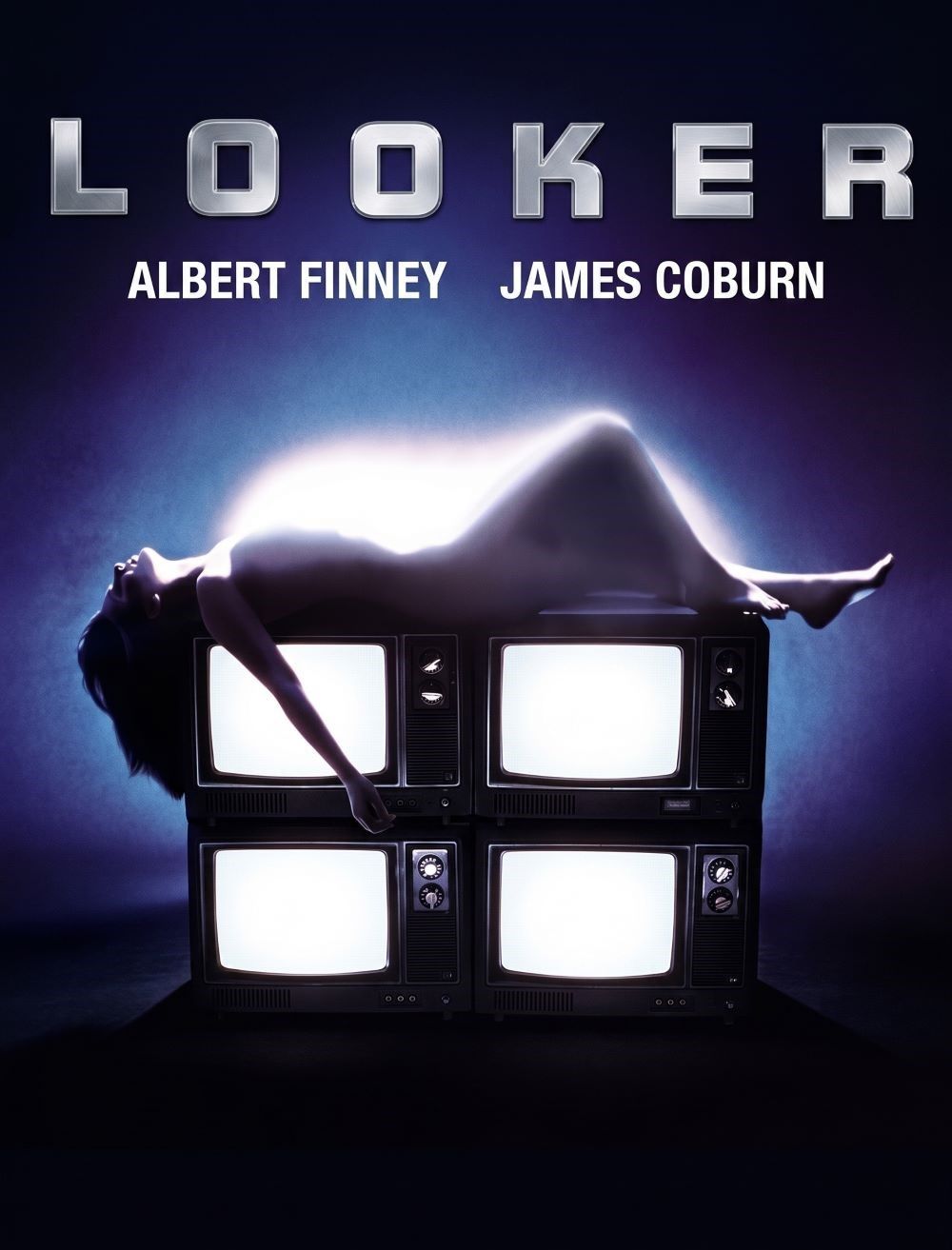
Icarus File No. 28: Looker (dir. by Michael Crichton)


“Hi, I’m Cindy. I’m the perfect female type: 18 to 25. I’m here to sell for you.” — Cindy Fairmont

Looker is one of those 1981 films that, when it first came out, probably felt more like a goofy, slightly overwrought tech‑paranoia thriller than a serious prediction about the future. On paper, the premise—plastic‑surgery‑obsessed models being turned into digital clones for hyper‑tuned TV ads—sounds like a pulpy B‑movie gimmick. But viewed through the lens of right now, with Instagram influencers, AI‑generated content, and algorithm‑driven aesthetics shaping how we think about beauty and success, Looker starts to feel like a strangely accurate, almost eerie forecast. For a movie that was easy to write off as a minor, tonally wobbly Michael Crichton artifact, it does a surprisingly sharp job of outlining the emotional and cultural landscape we’re living in four decades later.

At the center of that landscape is Digital Matrix, the film’s antagonist in the form of a sleek, forward‑looking tech company that positions itself as a clean, rational, and indispensable partner to the advertising world. The company promises to revolutionize marketing by replacing messy, unreliable human models with perfectly calibrated digital avatars optimized to trigger maximum viewer response. That framing—as a neutral, even benevolent innovator—makes it all the more unsettling when its plans take on a distinctly murderous slant. To protect its “LOOKER” system and its vision of a world where perception can be mathematically controlled, Digital Matrix is willing to silence anyone who gets too close to the truth, from test‑subject models to inquisitive doctors. The bodies start piling up just off‑screen, treated as collateral damage in the pursuit of a more efficient, more profitable media ecosystem.

Seen from today’s vantage, Digital Matrix feels like a rough, bluntly drawn prototype of the big tech giants we now live with: polished, data‑driven, media‑centric, and profoundly invested in shaping what we see, buy, and believe. The difference, of course, is that modern tech behemoths are a lot better at hiding the bodies. In the real world, the “harm” is rarely as literal as Looker portrays it; instead, it shows up as algorithm‑driven addictions, mental health erosion, privacy carve‑ups, and the quiet erosion of trust in shared reality. People don’t get zapped by a sinister beam of light in a corporate lab; they get nudged into polarization, over‑consumption, or self‑images so warped that they resemble the film’s surgically obsessed models. The film exaggerates the physical violence, but its broader point—that when a tech company decides it can engineer human behavior at scale, ethical lines start to blur—still rings uncomfortably true.

Crichton’s version of this is less about organic social‑media culture and more about a centralized, corporate‑run system, but the emotional texture is similar. The models in Looker are under pressure to conform to a narrow, algorithmically derived standard of beauty, and the film doesn’t shy away from the toll that takes. They’re not just selling products; they’re being sold as products, their bodies and faces reduced to data points that can be adjusted, duplicated, and replaced. The idea that a person can be scanned, stored, and then endlessly repurposed as a digital avatar also anticipates contemporary debates about deepfakes, AI‑generated influencers, and the fear that real actors, musicians, and creators might be replaced by synthetic versions once their likeness and behavior are sufficiently “trained.” In that sense, Looker reads like an early, slightly clunky draft of the same anxieties we’re only now starting to grapple with at scale.

Where Looker falls short, at least in its day, is in fully articulating what all of this means for the idea of truth. The technology of 1981—not just the film’s budget and effects, but the broader cultural imagination—still assumed that truth was something largely fixed, something you could point to and defend if you had the right facts on your side. The movie flirts with the idea that perception can be manufactured, but it doesn’t really have the tools yet to show how completely that can destabilize the very concept of objective reality. The “LOOKER” system is treated as a kind of brainwashing gadget, a one‑off sci‑fi device rather than the logical endpoint of an entire infrastructure built to measure, model, and manipulate human behavior. The film wants to ask who controls the image, but in the early ’80s that question still felt contained, almost theatrical.

Now, in a world where truth is less about who has the facts in their corner and more about who controls the data, it’s clear how undercooked that idea really was in Looker. Today, truth is less a question of evidence and more a question of access: who has the biggest data centers, who owns the most comprehensive behavioral datasets, who runs the most sophisticated algorithmic matrices for shaping what people see, hear, and believe. Social‑media platforms, search engines, and ad networks don’t just reflect reality; they actively construct it by deciding which voices get amplified, which images get pushed, and which narratives get repeated until they feel like consensus. The company with the most money to build and refine those systems doesn’t just sell products; it sells versions of reality, packaged as personalized feeds, auto‑generated content, and AI‑driven narratives that feel increasingly indistinguishable from the “real” world.

Looker doesn’t fail because the ideas themselves are weak; in fact, the film actually does a fairly solid job of letting those ideas breathe and collide with each other. The problem is that those ideas sounded quite ludicrous within the context of 1981. A company digitally scanning and cloning models to engineer perfect ads, then using a device to subtly manipulate viewers’ minds, felt closer to paranoid pulp fantasy than plausible near‑future speculation. That gap between the film’s ambition and its audience’s willingness to buy into it gives the movie a slightly awkward tone, as if the world around it hasn’t yet caught up to the reality Crichton is trying to describe. The concepts are ahead of their time, which is exactly what makes them feel so prescient now, but back then, that same forward‑thinking quality made them easier to dismiss as silly or overreaching.

That disconnect is compounded by a cast that never quite seems to have fully bought into the film’s themes and narrative, even though several of them are game within the limits of the material. Albert Finney brings his usual grounded, slightly skeptical energy to Dr. Larry Roberts, lending the story a believable human center as the reluctant investigator pulled into Digital Matrix’s orbit. There’s a lived‑in quality to his performance that makes the ethical unease feel real, even when the plot veers into goofy sci‑fi mechanics. James Coburn, meanwhile, chews the scenery with a smarmy, charming conviction that suits Reston perfectly; he plays the corporate tech visionary as someone who genuinely believes in his own rhetoric, which makes his moral bankruptcy feel all the more unsettling. But around them, the rest of the ensemble often feels like it’s treating the premise more as a glossy thriller window dressing than a full‑blown social‑tech critique. The models and executives sometimes land their lines with a kind of detached professionalism that undercuts the deeper anxieties the film is trying to tap into.

As a piece of cultural legacy, Looker works less as a perfectly executed prediction and more as an early, slightly wobbly harbinger of the digital age we’re now fully immersed in. The film’s version of Digital Matrix may look clunky by our standards, but its logic—optimize attention, manufacture desire, and treat people as data to be extracted and reused—has become the default operating system of much of the digital world. The anxiety about who controls the image, who owns the algorithm, and who ultimately shapes what we see as “real” is no longer a speculative sci‑fi concern; it’s baked into the daily experience of social media, deepfake content, and AI‑driven feeds. Looker doesn’t need to be taken as a perfectly accurate prediction; it’s more powerful as a mood piece about the anxieties Crichton saw simmering beneath the surface of media, technology, and consumer culture. And in the way it casts a cutting‑edge tech company as the film’s real antagonist—a corporation whose “progressive” vision of the future quietly slides into murder and control—it feels uncomfortably close to the darker side of today’s Silicon Valley logic, minus the obvious body count but packed with a different kind of damage—one that’s less about visible corpses and more about the quiet erosion of what we can trust to be true.

Looker doesn’t so much fly too high to the sun and then crash‑burn under the weight of its ambition as it does peer through a cracked, slightly distorted future‑looking glass and just keeps staring in the wrong direction until the future finally catches up to it. It’s a film that doesn’t quite hold together as a flawless sci‑fi masterpiece, but it also never fully collapses under its own loftiness the way so many overly serious ’80s tech‑paranoia pictures do. Instead, it lurches forward with a rough, uneven energy that somehow makes its prescience feel more honest than polished. The movie doesn’t provide clean answers or tidy resolutions; it just lays out a set of ideas—about media, authenticity, beauty standards, and corporate control over perception—and then lets them sit in the air long after the credits roll.

Previous Icarus Files:

  1. Cloud Atlas
  2. Maximum Overdrive
  3. Glass
  4. Captive State
  5. Mother!
  6. The Man Who Killed Don Quixote
  7. Last Days
  8. Plan 9 From Outer Space
  9. The Last Movie
  10. 88
  11. The Bonfire of the Vanities
  12. Birdemic
  13. Birdemic 2: The Resurrection 
  14. Last Exit To Brooklyn
  15. Glen or Glenda
  16. The Assassination of Trotsky
  17. Che!
  18. Brewster McCloud
  19. American Traitor: The Trial of Axis Sally
  20. Tough Guys Don’t Dance
  21. Reach Me
  22. Revolution
  23. The Last Tycoon
  24. Express to Terror 
  25. 1941
  26. The Teheran Incident
  27. Con Man