Several states voted on Tuesday. Everyone was able to quickly count their votes …. except for California. Poor Spencer Pratt. I would have voted for him but it doesn’t look like he’s going to be the next mayor of Los Angeles. With each new update, he’s falling behind and it looks like the whiny commie no one took seriously will be in the run-off instead. It’s funny how this always happens in the state that takes over a month to count the votes. That said, it could also be argued that the results coming out of Los Angeles are a reminder that getting attention online doesn’t necessarily translate into votes on the ground. There’s a lesson there for us all.
The Facts of Life (Tubi)
I was having a panic attack on Wednesday night so I calmed myself down by watching random episodes of this slightly cringey 80s comedy. I ended up getting the theme song stuck in my head. If you hear them from your brother, better clear them with your mother….
The Hillside Strangler (HBOMax)
Yet another serial killer documentary. Cousins Kenneth Bianchi and Angelo Buono killed a still undetermined number of women in Los Angeles in the 1970s. Bianchi claimed that he had a second personality that was responsible for the murders. Fortunately, the jury did not believe him and he is currently serving a life sentence. Buono died in prison. Good riddance.
Impact x Nightline (Hulu)
This week, I watched an episode about the heart-breaking Kristen Smart case. Though Paul Flores has (after 20+ years) finally been convinced of murdering Smart, her body has yet to be recovered. I cannot imagine the pain that Smart’s family has been put through. This is actually a case that I’ve been following for a while, even before it became the subject of podcasts. It’s not just that Paul Flores murdered Kristen. It’s that he was so damn cocky about it. He really thought he would get away with it.
Susan Smith: Sex Behind Bars (Reelz)
This short documentary about Susan Smith, a young mother who drowned her children and then tried to blame it on an imaginary black carjacker, and the sexual affairs that she had with two correctional officers in prison was exploitive and icky. And yet, I watched it. So, shame on me.
The Cleveland Indians (yeah, I said it) are finally in the race for the pennant and, as a result, they get to star in their very own credit card commercial. The main reason that I love this scene is because, even when appearing in a commercial, each member of the the team still has their own personality and style.
From Major League, one of the greatest baseball films ever made:
In August of 2022, Netflix premiered a three-part documentary about Woodstock ’99.
Trainwreck: Woodstock ’99 took a look at how the third Woodstock musical festival went from being the most highly anticipated event of the summer of 1999 to being a total disaster. I started watching the documentary the week that it premiered. I was halfway through the first episode when I realized that I needed to make sure that my car insurance had been renewed. I stopped the program, hopped online, made sure that my payment had been received and then….
Well, I don’t exactly remember what I did but I do know that I did not return to Woodstock ’99. Indeed, I kind of forgot about Woodstock ’99. It wasn’t until last night, when Jeff and I were looking for something to watch on Netflix, that I saw Trainwreck: Woodstock ’99 listed under “continue watching.” I did the math. I decided that, given that it had been nearly four years since I watched the opening 30 minutes of the first episode, it was perhaps to finally see what Woodstock ’99 was all about.
The three-part documentary features archival footage from the concert and also interviews with the people behind Woodstock ’99, a few people who attended, and some of the artists who performed. To be honest, I wish that more of the performers had been interviewed. Considering that one of the festival’s organizers literally blamed Fred Durst for the rioting, it’s a shame that Durst didn’t share his side of the story. I’m not a huge fan of Fred Durst but the decision to blame him for the crowd getting out of control has always seem to be a bit too convenient to me. As the documentary shows (sometimes unintentionally), people had reason to be angry long before Fred Durst stepped out on stage and told them to “break shit.” As a once popular performer who has since come to be seen as a bit of a self-parody, Durst makes for an easy scapegoat.
For all the talk about what Woodstock has represented throughout the years, all three of the festivals were ultimately about making money for the organizers. Michael Lang may have been a hippie who said the first Woodstock was about ending the war in Vietnam and that the third Woodstock was about promoting gun control but he was also a businessman. The first Woodstock only made money because of the success of the famous documentary. Woodstock ’94 lost money because the fence surrounding the festival was torn down and people were able to get in without buying tickets. Woodstock ’99 was designed to be secure and impenetrable. Instead of being held in a field, it was held on a deserted air force base where the asphalt made the summer heat unbearable and where the empty hangars helped to create a dystopian atmosphere. Woodstock ’99 was designed to be village. Unfortunately, it turned out to be a village where bottled water eventually ended up costing $14.00 and the toilets ended up overflowing. (One interviewee discusses waking up on the third day and discovering that she was suffering from something called “trench mouth.” Even the name sounds terrifying.)
The documentary features a few people who rightly point out that the festival’s organizers created a situation where the third night’s riot was almost inevitable. Michael Lang apparently had not listened to any new music since the 70s and, hence, didn’t understand that there was a world of difference between the mellow hippies of 1969 and the fans of Korn, Limp Bizkit, and Kid Rock. Amazingly, Lang thought it would be a good idea to hand out candles so that the festival could end with a candlelight vigil against gun violence. The candles were instead used to start fires. As the festival grounds burned, the fence was finally torn down, a sound tower was pulled to the ground, and eventually the national guard showed up. The organizers of the Festival, including Lang, put the blame on almost everyone but themselves.
I’ve often said that movie and documentaries made between 2019 and 2024 often feel as if they are artifacts from a different age. That’s how quickly the culture shifted after the election of 2024. That’s the case with Trainwreck: Woodstock ’99. The final thirty minutes of the documentary are spent classifying Woodstock ’99 as being an example of white privilege and it seems a little performative today but that was pretty much the prism through which everything was viewed and discussed in 2022. The truth of the matter is that there were a lot of reasons why Woodstock ’99 was a disaster and almost all of them come down to the greed at the heart of the enterprise. It was greed that led to festival being held in the worst possible location. It was greed that led to cutting corners when it came to security and the hiring of the half-assed “Peace Patrol,” a group of amateur security guards who failed to protect the most vulnerable people at the festival. (At least five rapes and numerous other sexual assaults occurred a the concert.) And it was ultimately Michael Lang’s desire to pretend that the concert was about something other than greed that led to a bunch of angry, tired, and intoxicated people being handed candles.
This documentary shows why Woodstock ’99 was the final Woodstock. (There was an attempt to put together a 50th anniversary festival in 2019 but, perhaps thankfully, it fell apart.) It’s a shame that Woodstock ended the way it did. It could have been a great American tradition. Instead, the festival of peace and love ended with fire and destruction.
Welcome to Late Night Retro Television Reviews, a feature where we review some of our favorite and least favorite shows of the past! On Sunday, I will be reviewing the Canadian series, Degrassi: The Next Generation, which aired from 2001 to 2015! The series can be streamed on YouTube and Tubi.
Oh no, Emma’s got a cause!
Episode 2.19 “Fight For Your Right”
(Dir by Chris Deacon, originally aired on February 2nd, 2003)
This episode is a good example of Emma being the worst.
Emma and Ashley approach Principal Raditch and tell him that they don’t want genetically modified foods in the cafeteria. Raditch tells them to buzz off, which is the right response when you consider that Raditch is probably just following the orders of the school board. Emma responds by standing outside the school and handing out flyers that announce that Sheila the lunch lady is “poisoning” the students with the food she’s serving.
Now, to me, this is the moment that Emma goes from being a young idealist to being arrogant brat. Sheila works for the school. She’s a lunch lady. I doubt she lives in a nice big house like Emma. Sheila probably needs the job. Emma is accusing Sheila of poisoning people. When Ellie sensibly points out that saving money with GM food — as opposed to the expensive organic crap that Emma wants the school to serve — allows Degrassi to give free meals to poor students, Emma accuses Ellie of not caring about the fact that the students might get cancer in 20 years. Principal Raditch finally comes out and tells Emma that she’s not allowed distribute “propaganda” on school property.
And again, it seems to me that Radtich is within his rights. Number one, why isn’t Emma in class? Number two, Emma is accusing a school employee of being a potential murderer. Number three, Emma is causing a disruption on school property.
The show disagrees with me. The show wants me to say, “Yay, Emma!” Even when Emma goes into the cafeteria and accidentally starts a food fight by knocking Toby and JT’s lunch on Jimmy, we are meant to be on Emma’s side. When Emma gets offended at Raditch’s insistence that she apologize to Sheila, we’re meant to be on her side. One thing that we don’t see is who gets stuck cleaning up the cafeteria after the food fight. I’m going to assume that it was probably the same Sheila that Emma accused of poisoning the students.
Emma is suspended for the day so she stands across the street and holds a sign, claiming that her right to free speech has been violated. Raditch tells Emma that if she doesn’t apologize on the next day’s video announcement, she’ll be suspended for a week.
At home, Emma asks Snake what she should do. Snake encourages her to …. NOT APOLOGIZE! Well, he doesn’t directly say that but he doesn’t say that she should apologize either. Snake, in case you had forgotten, is not only Emma’s teacher but also her stepfather. Spike is on a trip so he’s the only parent at home. Snake, at this point, should be saying, “This is a dumb protest and you should at least apologize to Sheila. No matter what else happens, you’re not getting your organic food in the cafeteria so there’s nothing to be accomplished with any of this.”
Instead, the next morning, Snake just sits there with a big dumbass grin on his face when Emma goes on the video announcements and refuses to apologize. Okay, Snake, do you think it’s cool that a school employee has been accused of poisoning the students? Oh, and Snake — are you the one who is going to call Spike to tell her that you got her daughter suspended from school for a week? Spike, who had to fight so hard for the right to go to school when she was pregnant with Emma, will certainly appreciate hearing that!
Seriously, Emma is the worst! But the only she’s the worst is because this show was convinced that she was the best. One gets the feeling that Emma’s character was a case wish-fulfillment for the show’s writers. Imagine a world where you can be obnoxious and self-righteous and everyone loves you for it!
There is a B-plot and, to be honest, it probably should have been the A-plot. Spinner, jealous that Jimmy’s parents buy him everything, steals Jimmy’s CD player and attempts to sell it. When Jimmy finds out, he overturns a trash can. Spinner takes a job at the cafeteria to earn money and gives Jimmy back the CD player.
“You are my best friend!” Spinner says.
“Was,” Jimmy replies.
Oh my God! Spinner and Jimmy, no! Actually, Spinner and Jimmy were always ending their friendship and then eventually restoring it. They’ll be fine. Still, their storyline was a lot more interesting than Emma’s latest crusade.
When in doubt, always focus on Spinner. That’s a lesson the writers should have taken to heart.
Welcome to Retro Television Reviews, a feature where we review some of our favorite and least favorite shows of the past! On Sundays, I will be reviewing Homicide: Life On The Street, which aired from 1993 to 1999, on NBC! It can be viewed on Peacock.
This week, Kellerman finally clears his name and Bayliss takes the job too personally …. again!
Episode 5.12 “Betrayal”
(Dir by Clark Johnson, originally aired on January 1oth, 1997)
It’s finally time for Detective Kellerman to testify in front of the Grand Jury. At first, Kellerman is thinking of taking the Fifth so that he won’t have to testify about what any of the other members of the Aron squad may or may not have done. However, when Kellerman realizes that another member of the squad has named him in order to try to make a deal with the prosecutor, Kellerman changes his mind. He says that he will testify. He will throw his career away. He’ll do it because he’s not going to let anyone think that he’s a dirty cop. The prosecutor (Rebecca Boyd) is so moved that she allows Kellerman to testify that he never took a bribe but then declines to ask any follow-up questions. Kellerman is cleared.
This, of course, is something that would never happen in real life. A prosecutor declining to ask follow-up questions because she respects the witness? Seriously? That said, if it means the bribery storyline is finally wrapped up and Kellerman can return to active duty, I’m happy.
Meanwhile, Pembleton and Bayliss investigate the death of a teenage girl who was found abandoned on the side of the road. When it’s revealed that the victim was horribly abused, Bayliss — of course — takes the case personally. For Pembleton, it’s just another case. It’s what he does for a living and he knows better than to get personally involved. For Bayliss, it’s a crusade. At the end of the episode, Bayliss reveals that he was abused as a child. He also says that he no longer wants to be Pembleton’s partner.
WHAT!?
Dammit, Bayliss, we just got Pembleton back and now you don’t want to work with him!?
Don’t get me wrong. This was a good episode but it did leave me feeling a bit frustrated. Hopefully, Bayliss and Pembleton will make up soon. The Kellerman bribery subplot went on forever. Here’s hoping the same doesn’t happen with Bayliss and Pembleton’s divorce.
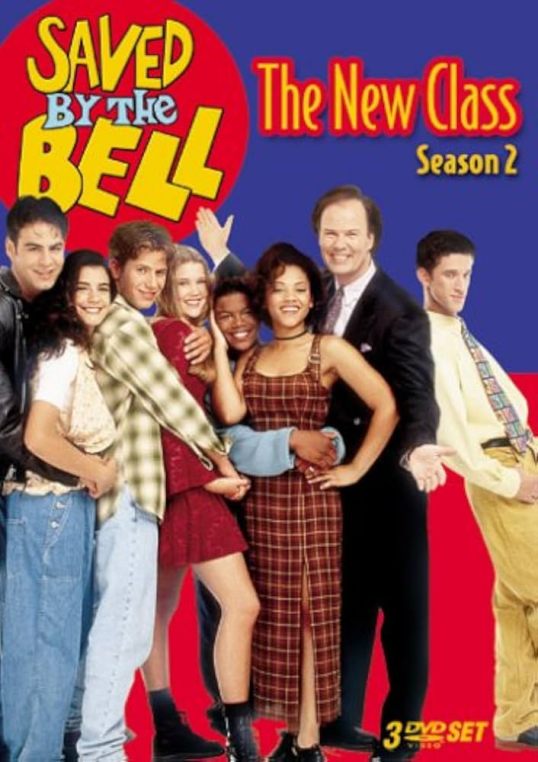
Welcome to Late Night Retro Television Reviews, a feature where we review some of our favorite and least favorite shows of the past! On Saturdays, I will be reviewing Saved By The Bell, which ran on NBC from 1989 to 1993. The entire show is currently streaming on Tubi!
This week, Screech’s parents are gone. It’s time to party like Elvis!
Episode 2.5 “House Party”
(Dir by Don Barnhart, originally aired on October 6th, 1990)
Mrs. Powers (Ruth Buzzi) and her husband go to Graceland for their anniversary, leaving Screech alone for a few days. It’s time to have the boys over so that they can lip-sync to the Beach Boys! Unfortunately, when the girls come over to laugh at the boys, a bust of Elvis is shattered. It’ll cost $250 to replace! Despite the fact that all of the main characters — with the exception of Kelly and Slater — come from wealthy families, everyone claims to not have any money. You know who does have money? Max Nerdstrom (Jeff Asch)! Max also has a girlfriend named Violet (Tori Spelling), who has a crush on Screech. (Or Samuel, as she calls him.)
This is an important episode in the history of Saved By The Bell, in that it not only introduces us to Violet Bickerstaff but it also establishes that Tori Spelling was bad actress even before she was cast on 90210. (If anything, Spelling is actually better-cast as Violet than as Donna Martin because Violet was at least supposed to be awkward and cringey.) This episode also introduced us to Max Nerdstrom, a great character who only appeared once but who should have been a regular member of the cast. That said, it’s also obvious that the only reason this episode was made was so Slater, Screech, and Zack could do the Barbara Ann scene. It’s all pretty obviously ripped off from Risky Business, just without the prostitutes and Tangerine Dream soundtrack.
How to raise the money to replace the statue? Zack challenged Max to a poker game and ends up losing not only another $250 but also the Powers family dog. If Zack had $250 to lose in a poker game, how come he didn’t have it to buy a new Elvis? Seriously, don’t try to follow Bayside logic. Jessie has to go on a date with Max in order to get the dog bac and Zack throws a party to raise money for the new statue. Mrs. Powers arrives home early and announces that she told Screech that he wasn’t allowed to throw any parties. Zack announces that it’s a surprise anniversary party for Mrs. Powers and her husband (who is apparently just sitting out in the car while all this is going on). Why would a bunch of teenagers throw an anniversary party for a 50-something Elvis fan?
Kimberly developed Bulimia but it only took her one episode to both kick the habit and recover her health.
Election Day Coverage (Tuesday Night)
It was interesting to watch the results from the Texas run-off election on Tuesday night. I was happy to see that my former Congressman Colin Allred defeated my current Congressperson Julie Johnson in a totally different district from the one in which I currently live. When he was my congressman, Allred was a bit liberal for me but he was still tried to take care of his district. Julie, meanwhile, just spent all of her time cursing on television.
George Gently (YouTube)
I watched another depressing episode of this UK cop show on Tuesday.
Good Times (Tubi)
Damn! Damn! Damn! James, the patriarch of the family, died in a car accident. And then Florida remarried an atheist and moved with him to Arizona because he had cancer. She left her children behind in Chicago. For some reason, the kids kept talking about how they had to get out of “the ghetto” and I was like, “Well, why didn’t you go to Arizona with your mom!?” Then Florida returned home without the atheist (I guess he died) and her daughter married a crippled football player and JJ ended up as a numbers runner. I watched a few random Good Times episodes this week.
Indianapolis 500 (Sunday Afternoon)
There’s nothing more gloriously American.
Ken and Barbie Killers: The Lost Murder Tapes (HBOMax)
This was another documentary about the Canadian serial killers, Paul Bernardo and Karla Homolka. You really can’t hate these two enough. Bernardo is in prison. Homolka, on the other hand, is free and living somewhere in Canada.
Kyōryū Sentai Zyuranger (Shout Factory TV)
I watched three episodes of this weird Japanese series on Saturday morning. Monsters were everywhere but luckily, so were some people who were apparently descended from dinosaurs. I really couldn’t follow the plot but the saber-tooth tiger was cute.
Muscles and Mayhem: The Untold Story of American Gladiators (Hulu)
American Gladiators is a show that I never watched but I still found this documentary to be an interesting look at the intersection of pop culture and steroid abuse.
Night Flight (Night Flight+)
I watched two episodes on Friday night, one about afrobeat music and one about heavy metal.
Seinfeld (Netflix)
So, George like totally murdered his fiancée.
Untold: The Liver King (Netflix)
The freakish star of countless twitter ads got his own documentary about how he was essentially a fraud. He didn’t seem to have many regrets about it. He was kind of annoying, to be honest.
Welcome to Retro Television Reviews, a feature where we review some of our favorite and least favorite shows of the past! On Saturdays, I will be reviewing Baywatch, which ran on NBC and then in syndication from 1989 to 2001. The entire show can be viewed on Tubi.
This week, Eddie tries to change a young man’s life.
Episode 2.6 “Point Attack”
(Dir by Alan Myerson, originally aired on October 21st, 1991)
Cort returns!
When the syndicated version of Baywatch first aired, John D. Cort (John Allen Nelson) was among the first season cast members who were no longer on the beach. His absence was not addressed. With this episode, we learn that he’s been in either South America, Kuwait, or Asia. No one’s sure. To me, it sounds like Cort’s a drug smugler.
Anyway, Cort shows up on the beach, just in time to help Eddie break up a gang fight! Eddie, remembering his own tough past in Philadelphia, arranges for the gang members to become a part of W.A.T.A.R., a lifeguard-run program for troubled youths. This the second episode of Baywatch’s second season to feature a gang subplot. It’s hard not to notice that whenever anyone who isn’t white shows up on this show, they’re always portrayed as being 1) poor and 2) affiliated with a gang.
Eddie hopes that he can convince gang leader Memo (Richard Coca) to change his ways. Unfortunately, Memo’s father (Danny Trejo) wants his son to follow in his footsteps as a gang member.
When told that Memo is facing jail, his father says that’s no big deal and adds, “I did time!”
“So did I,” Eddie replies.
Eddie — do you really want to challenge Danny Trejo on the subject of prison?
On the one hand, it’s always good to see Danny Trejo and there’s a definite authenticity to his performance that the rest of this episode lacks. At the same time, having Trejo around makes it all the more clear just how miscast Billy Warlock was a former juvenile delinquent-turned-lifeguard. Watching this episode, I could buy Billy Warlock as someone who could save me if I was drowning. (Thanks, Billy!) But seeing him a graduate of the hard streets of Philadelphia? That was a step too far.
As for the rest of this episode, Cort is far less of a rogue in this episode and he even helps out with the W.A.T.A.R. program. (If anything John Allen Nelson seems to get all the lines that would usually have gone to David Hasselhoff, who is barely in this episode.) When Eddie catches Memo trying to steal from the locker room, there’s a chase scene that goes on for so long that I was literally wondering if Eddie and Memo were eventually going to end up back at Baywatch Headquarters. I’m all for a good action scene but this chase went on for so long that it verged on parody and left me wondering if maybe the show’s director realized, at the last minute, that the episode needed padding.
Unfortunately, Danny Trejo and David Hasselhoff don’t share any scenes in this episode. As mentioned earlier, the Hoff is barely in it! That seems like a missed opportunity to me.
Welcome to Late Night Retro Television Reviews, a feature where we review some of our favorite and least favorite shows of the past! On Fridays, I will be reviewing Freddy’s Nightmares, a horror anthology show which ran in syndication from 1988 to 1990. The entire series can be found on Tubi!
This week, it’s flesh-eating time!
Episode 2.15 “Prime Cut”
(Dir by David Calloway, originally aired on January 21st, 1990)
Tony Dow plays a hiker who worries that his guide (Sandal Bergman) might actually be a vampire. Every few minutes, Dow either spots Bergman drinking blood or preparing to drink blood but then, just as suddenly, he wakes up. Finally, he wakes up one final time and discovers that he’s actually been having feverish visions because he was in a plane crash and is now stranded in the wilderness. He and Bergman are the only survivors of the crash and they’ve resorted to eating bodies of the other passengers. Dow’s wife (Amy Lyndon) eventually stumbles on the two during her own abortive attempt to provide a rescue. Uh-oh, will she now have to eat human flesh as well?
Ugh, this episode. Both storylines had potential but they really didn’t go anywhere. This was one of those episodes where, every few minutes, something weird would happen and then we would immediately cut to someone waking up. While I understand that the dreams were a part of the show’s trademark, the episode still overused them. It was far more dull than any show featuring Tony Down and Sandahl Bergman as cannibals had any right to be.