These predictions are still too early to be taken seriously. The year is getting off to a slow start as far as the Oscars are concerned. That said, here are my predictions for June!
Check out my predictions for March and April and May!
Best Picture
The Adventures of Cliff Booth
Digger
Dune Part Three
Fatherland
Fjord
I Play Rocky
Primetime
Project Hail Mary
The Social Reckoning
Wild Horse Nine
Best Director
David Fincher for The Adventures of Cliff Booth
Phil Lord and Christopher Miller for Project Hail Mary
“Don’t you leave him, Samwise Gamgee. And I don’t mean to.” — Samwise Gamgee
Samwise Gamgee stands as one of the most compelling and deeply human characters in J.R.R. Tolkien’s The Lord of the Rings, a figure whose quiet strength and unwavering loyalty redefine the very notion of heroism. Unlike the noble Aragorn or the wise Gandalf, Sam is an ordinary hobbit—grounded, humble, and devoid of grand ambitions. His heroism does not stem from swordplay or sorcery, but from his steadfast devotion to Frodo Baggins and the simple, unshakable belief that even the smallest person can change the course of the future. Tolkien uses Sam to illustrate that true courage is not the absence of fear, but the resolve to act despite it, a theme that resonates throughout the epic narrative of The Lord of the Rings.
Traditional fantasy heroes are often defined by their extraordinary abilities or grand destinies, but Sam’s greatness is rooted entirely in his profound normalcy. He is not driven by a prophetic calling or a desire for glory; rather, his initial motivation is simply the fear of losing his master and friend, Frodo Baggins. Tolkien uses Sam to demonstrate that heroism is not the absence of fear, but the choice to push forward in spite of it. When Sam is forced to temporarily take up the burden of the One Ring in The Return of the King, his inherent simplicity becomes his greatest weapon. Unlike the great lords of Men, Sam lacks the ambition and desire for power that the Ring exploits, allowing him to willingly surrender it back to Frodo—a testament to the incorruptible nature of the common folk.
At the heart of Samwise’s character is an unparalleled loyalty that elevates him from a mere sidekick to the true savior of the quest. As Frodo is progressively broken down by the physical and psychological toll of the journey to Mordor, it is Sam who serves as the emotional anchor preventing his total collapse. Sam’s devotion reaches its zenith on the slopes of Mount Doom, where his refusal to let Frodo fail results in one of literature’s most iconic declarations: “I can’t carry it for you, but I can carry you.” In this moment, Sam embodies the purest form of love and sacrifice. He does not save Middle-earth by striking down a dark lord, but by literally carrying the weight of his friend’s despair when Frodo can no longer stand.
Furthermore, Sam provides a vital, grounded perspective that prevents the narrative from becoming lost in its own high-fantasy majesty. His deep connection to the Shire, to the soil, and to the simple joys of life—like a good meal or a smoke—acts as a tether to goodness in a world being consumed by shadow. This “salt of the earth” wisdom allows Sam to perceive the true horror of Mordor and the Ring not in abstract, philosophical terms, but as a direct threat to the innocent, everyday life he holds dear. By viewing the apocalyptic conflict through the eyes of a gardener, Tolkien makes the stakes feel remarkably intimate, reminding the reader that the ultimate goal of the quest is not to establish a new empire, but to preserve the quiet beauty of the natural world.
Ultimately, Samwise Gamgee endures as one of literature’s greatest heroes because he represents the best of what ordinary people can achieve under extraordinary circumstances. He begins the story as a timid, provincial hobbit terrified of leaving his hometown, yet he ends it as a resilient warrior, a loving husband, and a civic leader. Tolkien, a veteran of the brutal trenches of World War I, understood that the world is often saved not by brilliant generals or chosen ones, but by the quiet courage of everyday people doing their duty. Through Sam, The Lord of the Rings delivers a timeless and deeply moving message: that in the face of insurmountable darkness, the most powerful force in the world is a stubborn, unassuming love.
Last night, the Rangers beat the Guardians 6-3 and, dare I say it, they’re finally starting to look like a playoff team to me!
Again, I’m trying not to jinx them by getting too excited. Whenever I get too excited or too confident, it seems like they always end hitting a bad streak. I am trying to trick the Baseball Gods into thinking that I’m “Comfortably Blasé,” as my sister puts it. But it’s not easy to stay calm when your team has a good night!
I love this. I my Rangers. I love America. And I love the great American pastime.
GO RANGERS!
(By the way, in the video below, ignore the annoucners when they try to dismiss the American League. Everyone knows that baseball media is biased in favor of the National League.)
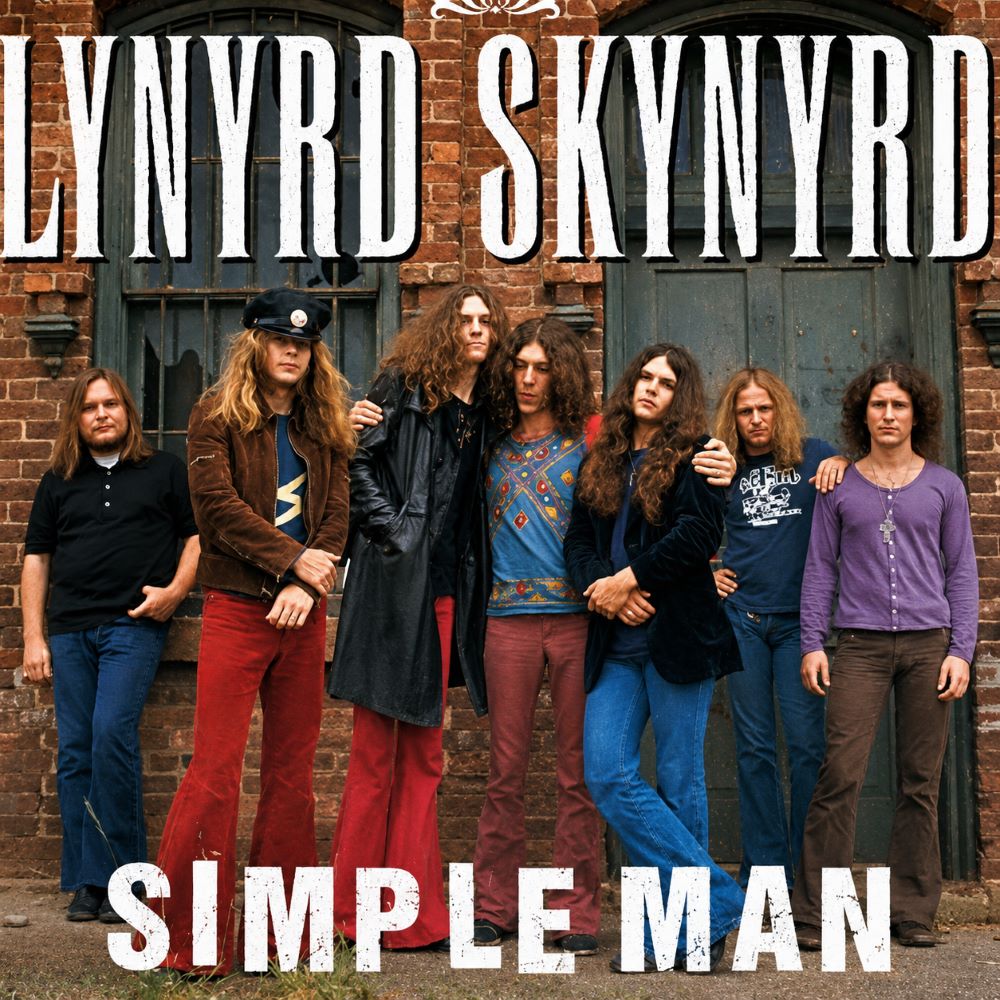
Alright, let’s talk about Simple Man by Lynyrd Skynyrd. I’m telling you right now, if you’ve never given this song a proper listen, you are missing out on one of the most genuine, heartfelt pieces of music ever put to tape. It’s got this almost hypnotic, slow-burning groove that just pulls you in from the very first note. This isn’t just a song; it’s a conversation with your own soul, or maybe with a wiser voice you wish you’d listened to more often. I’m convinced this tune is a masterpiece, and I’m gonna tell you why you need to stop what you’re doing and really hear it.
So the secret sauce behind it all? The story. Ronnie Van Zant wrote this song based on the wisdom his own grandmother and Gary Rossington’s mother passed on, and man, does that authenticity shine through. It’s the most honest “mama’s advice” song you’ll ever hear—like your mom sat you down and told you, “Take your time, don’t live too fast,” and “Forget your lust for the rich man’s gold.” It cuts straight through all the noise and modern BS and gets right to the core of what actually matters: being satisfied with who you are and what you love. It’s a simple message, sure, but that’s the whole point. It’s the kind of wisdom that feels like a warm hug, and even if you think you’re too cool for that kind of stuff, I bet my last dollar it’ll hit you right in the chest.
And then there’s the guitar solo. The whole band is locked in, building this beautiful tension, and when that moment hits, it is pure magic. The solo is played by the incredible Gary Rossington (RIP to a true legend), and it starts around the 3:37 mark. It’s not about shredding a million notes a second; it’s about pure, raw emotion. It’s like the guitar is crying out all the feelings the words can’t quite capture. It soars, it wails, and it takes you on this perfect journey before gently landing you back into the final, heartfelt verses. Honestly, the song’s whole structure just sets you up perfectly for this release—it’s one of the most satisfying moments in classic rock history.
Look, I know a lot of people are all about the big anthems like Free Bird or Sweet Home Alabama, and those are great in their own right. But Simple Man is different. It’s the song that shows you Skynyrd’s beating heart. It’s the quiet, introspective masterpiece in a catalog full of rowdy bangers. So do yourself a favor: put on some headphones, find a quiet spot, and let Simple Man wash over you from start to finish. You can thank me later, because this isn’t just a tune you hear—it’s a feeling you experience.
Simple Man
Mama told me when I was young “Come sit beside me, my only son And listen closely to what I say And if you do this it’ll help you some sunny day”
“Oh, take your time, don’t live too fast Troubles will come and they will pass You’ll find a woman and you’ll find love And don’t forget, son, there is someone up above”
“And be a simple kind of man Oh, be something you love and understand Baby be a simple kind of man Oh, won’t you do this for me, son, if you can”
“Forget your lust for the rich man’s gold All that you need is in your soul And you can do this, oh baby, if you try All that I want for you, my son, is to be satisfied”
“And be a simple kind of man Oh, be something you love and understand Baby be a simple kind of man Oh, won’t you do this for me, son, if you can”
Oh yes, I will
[guitar solo @3:37]
“Boy, don’t you worry, you’ll find yourself Follow your heart and nothing else And you can do this, oh baby, if you try All that I want for you, my son, is to be satisfied”
“And be a simple kind of man Oh, be something you love and understand Baby be a simple kind of man Oh, won’t you do this for me, son, if you can”
Baby, be a simple, be a simple man Oh, be something you love and understand Baby, be a simple kind of man+
Today’s scene that I love from 1969’s They Shoot Horses, Don’t They? After all the drama and all the tragedy and all the sadness, the dance continues without end.
4 Or More Shots From 4 Or More Films is just what it says it is, 4 shots from 4 of our favorite films. As opposed to the reviews and recaps that we usually post, 4 Shots From 4 Films lets the visuals do the talking!
Tomorrow would have been Sydney Pollack’s 91st birthday.
Sydney Pollack was born in Indiana. Though Pollack got his start as an actor, he soon moved into directing and was one of the key television directors of the 1960s. He eventually branched out into film, making a name for himself as a director of intelligent and sensitive comedies and dramas. Though he only directed 21 films over the course of his career, his films received a total of 48 Oscar nominations and 11 wins. 1982’s Tootsie and 1985’s Out of Africa were both nominated for Best Picture. Out of Africa won. Pollack also returned to acting in the 90s, making a name for himself as a skilled character actor. I’ll always remember him from Eyes Wide Shut, intimidating Tom Cruise while playing pool.
In memory of Sydney Pollack, here are….
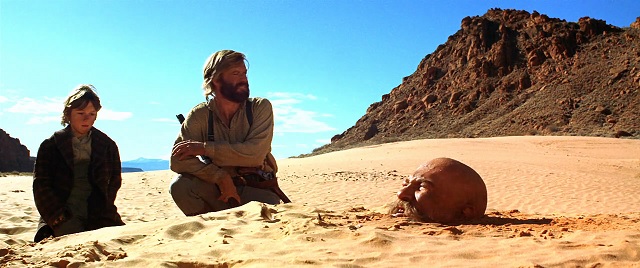
4 Shots From 4 Sydney Pollack Films
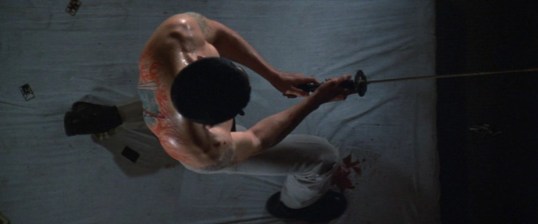
Jeremiah Johnson (1972, dir by Sydney Pollack, DP: Duke Callaghan)
The Yakuza (1974, dir by Sydney Pollack, DP: Duke Callaghan and Kozo Okazaki)
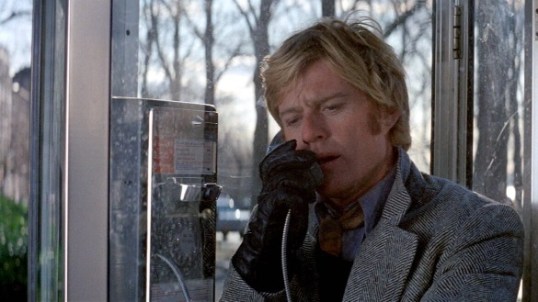
Three Days of Condor (1975, dir by Sydney Pollack, DP: Owen Roizman)
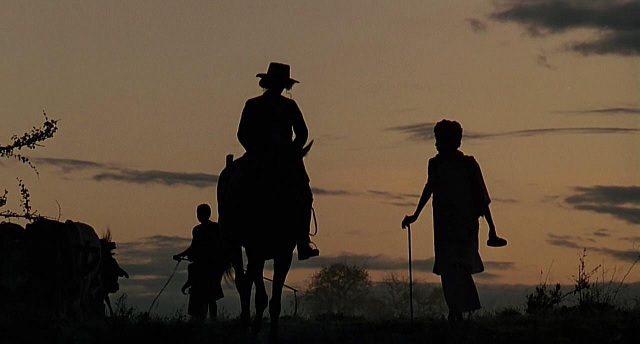
Out of Africa (1985, dir by Sydney Pollack, DP: David Watkins)
With this music video, ZZ Top show that they were about more than just legs and fast cars. This video and song sees the band putting their own spin on the blues.
Director Tim Newman directed most of ZZ Top’s best-known videos. He also worked with Lou Reed, Huey Lewis & The News, and a several other bands of the 80s.
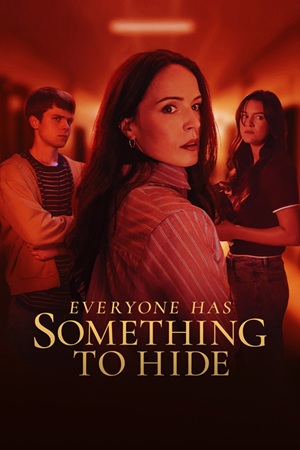
Years ago, Kathy Waters (Emily Alatalo) escaped from her abusive husband, taking her young son Noah with her. Now, Noah (Sam Ashe Arnold) is a senior in high school and a talented composer. The school band even plays one of his compositions at a football game and everyone in the stands applaud. It reminded of those old episodes of Degrassi where Marco would write some overwrought performance piece and all the students would respond by going, “Yeah, Marco!”
Unfortunately, Kathy and Noah are not getting along as well as they used to. They’re fighting and arguing constantly. Kathy is overprotective. Noah is …. well, Noah’s kind of a creep. Noah is always complaining about how his former best friend Ethan is now more popular than he is. (Ethan plays football. Noah …. composes orchestrual music. You do the math.) Ethan is mad because Noah is now going out with Ethan’s ex-girlfriend, Maddie (Tori Barban). At one point, Tori has to duck into a bathroom so she can throw up. This is a Lifetime film and that means you don’t throw up unless you’re pregnant and trying to keep it a secret.
Kathy is a real estate agent. That’s not a surprise as selling houses is right up there with owning a bakery or being a mommy vlogger as far as careers in Lifetime movies are concerned. One morning, she gets a notification that someone has entered one of the empty houses that she’s selling. Going to the house, she discovers the remains of a wild party. She also finds Ethan dead in a nearby shed.
Noah becomes the number one suspect. Soon, someone is spray-painting “MURDERER” across the front door of Kathy’s house. Kathy’s friends are refusing to talk to her. Detective Summers (Puja Uppal) is asking questions. Noah claims that he’s innocent but even Kathy begins to have her doubts after she discovers just how angry Noah can get. Noah’s father was abusivie. Did Noah inherit the violence gene?
As I mentioned earlier, Noah is kind of a creep and it is easy to imagine circumstances in which he could be guilty. The fact that Lifetime has lately featured several films featuring violent teenage boys also might lead one to suspect that Noah’s the killer. Well, fear not. This is a traditional Lifetime film and that means that Noah is not the murderer. Instead, he’s just an obnoxious teenager who needs to treat his mom with more respect. I will not spoil the movie by revealing the identity of the killer. That said, you should be able to guess who it is because there’s not that many people in the movie.
“Everyone Has Something To Hide!” the title announces and, as far as this film is concerned, I guess that’s true. Considering that Noah’s a musician, they could have made just a few adjustments to the script and called this movie While My Guitar Gently Weeps. As for the film itself, it suffers from a lack of likable characters. (When I say that Noah’s a creep, I mean he is really a creep!) But the film does deserve credit for fully embracing the melodrama. The film has it’s flaws but it still held my attention for 88 minutes.