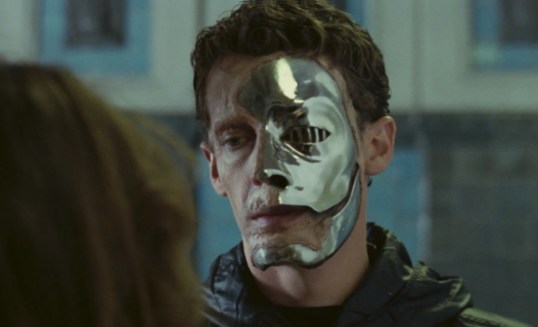
As a group, Animotion is destined to be most remembered for Obsession but they did record other songs. I Want You appeared on Animotion’s second studio album and was one of the first single releases from it. Despite a good beat and a video that was very MTV-friendly, it only reached the 84th position on the U.S. charts. It was, however, considerably more popular in Germany, reaching the 24th position.
Nick Morris, the prolific director of this video, also did videos for Big Country, Cliff Richard, Europe, Cheap Trick, and Mister Mister. He also directed a production of The Toxic Avenger: The Musical, which was released in 2018.
I’ve always liked this song, perhaps even more so than The Wallflowers’s best known song, One Headlight. Jakob Dylan (who certainly has the talent necessary to be worthy of being known as something more than just “Bob’s son”) was inspired to write this song by a homeless man who he used to see on 6th Avenue. One day, the homeless man was gone but all of his possessions were still sitting on the sidewalk. As the days passed, the man’s possessions disappeared one-by-one. Jakob considers this to be the first true song that he ever wrote.
This music video was directed by David Fincher, who you may have heard of.
In 1988, evangelical preacher-turned-comedian Sam Kinison had a hit with his cover of Wild Thing. For the music video, he not only recruited a host of 80s rockers, he also cast Jessica Hahn, who was at the center of the scandal that took down two other evangelical preachers, Jim and Tammy Faye Bakker.
For completists, here is who can be seen in this video, backing up Sam and Jessica: Joe Perry and Steven Tyler (Aerosmith), Steve Adler and Slah (Guns ‘n Roses), Sebastian Bach (Skid Row), Jon Bon Jovi, Alec John Such, and Richie Sambora (Bon Jovi), Jonathan Cain and Deen Castronovo (Journey), Robbin Crossby and Warren DeMartini (Ratt), C.C. Deville (Poison), Tommy Lee (Motley Crue), Rudy Sarzo (Quiet Riot), Billy Idol, and Dweezil Zappa.
In 1980, Bauhaus covered Mac Bolan’s tribute to his drug dealer, TelegamSam. Of course, they added their own unique spin to the song. The music video finds them apparently locked away in a boiler room. While the band plays, Peter Murphy dances through the room while dressed up as the contortionist from The Cabinet of Dr. Caligari. Hopefully, Telegram Sam will get everyone out in time to record the first Love & Records album.
The Black Sabbath YouTube channel lists this as being the official music video for Rock ‘N’ Roll Heaven and the IMDb says that the video was released in 1976 so that’s what I’m going with. I’m going to assume that this video was filmed at one of the American stops during the first part of the Technical Ecstasy Tour.
Like most 70s music videos, this is a pretty basic performance clip, one that lets the band do the talking.
This video was shot in downtown Los Angeles, near Pershing Square and its popularity on MTV helped to push the song to the top of the US charts. The song was inspired by Waite’s feelings while he was working and away from his wife. Myself, I’ll always think about it as being the song playing on the radio while I was driving a white Cadillac across the beach in Vice City. Unfortunately, I got so into the song that I drove the car straight into the ocean. That was when I discovered that Tommy Vercetti couldn’t swim.
“I think I finally figured out my new song, ‘Los Angeles’, this morning. They got one in South Patagonia, they got another Los Angeles in Mexico, they got so many Los Angeleses. Bangkok has a Los Angeles, I read recently. I imagine there’s a lot of places in the world named City Of Angels. I wrote about a futuristic one too: ‘They got one in 2525, where it’s just like a beehive.’ I mean that kind of Los Angeles you might see in a film like Blade Runner.”
— Frank Black in VOX, Issue 30, March 1993
In 1993, after the Pixies broke up for the first time, lead singer Black Francis renamed himself Frank Black and embarked on a solo career. Los Angeles was the first single to be released off of Black’s first solo album, Frank Black. According to Black, the song was meant to take place in a futuristic version of Los Angeles, much like the one seen in Blade Runner. The first time I ever heard the song, I misheard nearly every lyric and I thought it was about a man who Black met, a good man who worked as an insurance agent. (For some reason, my mind always heard “sailing and shoring” as “selling insurance.”)
The video makes it clear that Los Angeles is meant to take place in some sort of future, with Black riding a hovercraft through the desert and looking like an extra from a Mad Max movie. I’m not sure who directed this video. Some sources hint that the video was directed by Black himself but I haven’t been able to find any definite confirmation.
After releasing two solo albums, Black went on to front Frank Black and The Catholics before reuniting with the Pixies and eventually changing his name back to Black Francis.
The music video for King Nothing was shot in Park City, Utah in December of 1996. It was directed by photographer Matt Mahurin. Mahurin directed his first music video in 1986 and he’s been churning them out ever since. Among the artists that Mahurin has worked with: Disturbed, Goo Goo Dolls, Marilyn Manson, Tom Waits, Alice in Chains, Queensryche, R.E.M., Tracy Chapman, and U2.
Here’s a music video for anyone who is working hard on Labor Day.
In a 1984 interview, Dire Straits guitarist Mark Knopfler had this to say about the song that would not only become the band’s biggest hit but also one of the best known videos from the early years of MTV:
The lead character in “Money for Nothing” is a guy who works in the hardware department in a television/custom kitchen/refrigerator/microwave appliance store. He’s singing the song. I wrote the song when I was actually in the store. I borrowed a bit of paper and started to write the song down in the store. I wanted to use a lot of the language that the real guy actually used when I heard him, because it was more real….
According to Knopfler, he was in a New York appliance store when he heard a man who worked there complaining about all of the TVs in the shop being tuned to MTV. (Urban legend has it that the man was watching a Motley Crue video.) Knopfler wrote down the man’s exact words, which included the famous line about “money for nothing and chicks for free,” and later set them to music. (Knopfler also included the man’s controversial description of a rock star as being “that little faggot with the earring and the makeup.” In 2011, 26 years after the song’s initial release, that line would lead to the Canadian Broadcast Standards Council banning the song from being played on Canadian radio stations.) After hearing the band’s initial recording of the song, Sting suggested the “I want my MTV” line and was rewarded with a co-writer credit.
The ground-breaking music video was one of the first to feature computer animation. Under the direction of Steve Barron, Ian Pearson and Gavin Blair (who later founded Rainmaker Studios) created the animation using a Bosch FGS-4000 CGI system and a Quantel Paintbox system.
Money for Nothing spent 3 weeks as the number one single in the United States and the video was named Video of the Year at the 3rd Annual MTV Music Awards.