Horror Film Review: The Legend of Hell House (dir. by John Hough)


“Hell House doesn’t mind a guest or two. What it doesn’t like is people who come snooping around.” — Benjamin Franklin Fischer

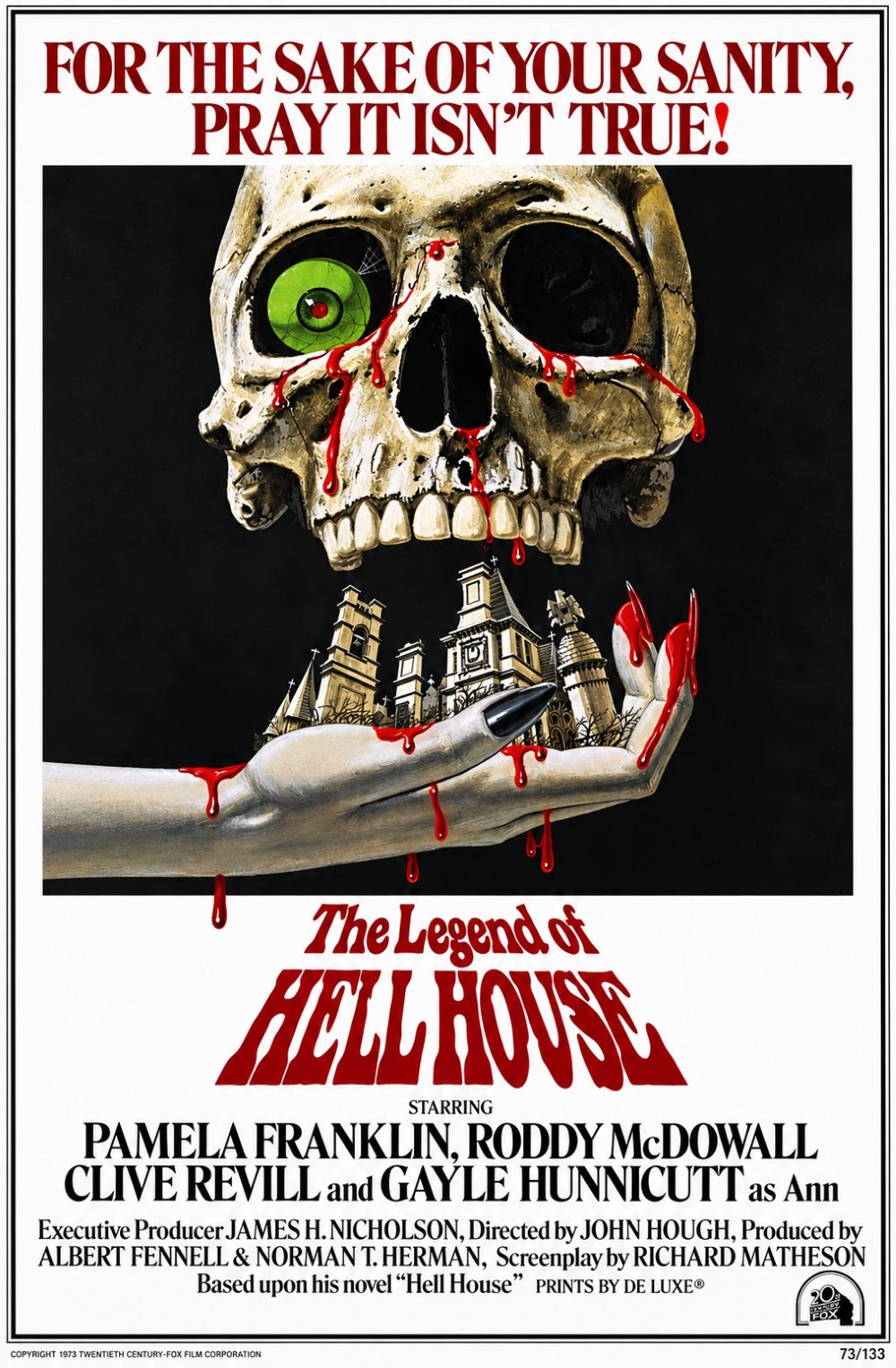
There is something deeply unpleasant about The Legend of Hell House, and that is exactly what makes it so effective. Directed by John Hough and adapted by Richard Matheson from his own 1971 novel Hell House, the film takes a fairly simple haunted-mansion premise and turns it into something mean, claustrophobic, and surprisingly adult. It is not the most visually elaborate ghost story ever made, nor the most frightening in a conventional jump-scare sense, but it has a cold, nasty atmosphere that lingers. This is a haunted-house movie where the house does not just contain evil; it seems designed to degrade everyone who steps inside.

The setup is strong because it puts several opposing viewpoints under the same roof. A wealthy man hires physicist Dr. Lionel Barrett, played by Clive Revill, to investigate the notorious Belasco House and settle the question of whether life after death exists. Barrett brings along his wife Ann, played by Gayle Hunnicutt, and the couple joins two people with far more personal connections to the place: Florence Tanner, a deeply spiritual medium played by Pamela Franklin, and Benjamin Franklin Fischer, played by Roddy McDowall, the sole survivor of an earlier investigation. The job has a deadline, a large payday, and an obvious catch: every previous expedition into the house ended in death, insanity, or both.

It is the kind of premise that could have easily become an old-fashioned “wait for the next victim” thriller, but Matheson’s script gives it more bite than that. Every character arrives with a different theory of the supernatural, and those theories become personal weapons. Barrett is the hard-line rationalist, convinced that any haunting can be explained through physical energy. Florence believes in trapped souls and approaches the house with a nearly religious determination. Fischer knows better than anyone that Belasco House does not care what people believe, while Ann becomes the emotional pressure point between all those men and their supposedly superior ideas. The ghost story works because the haunting pushes directly on each character’s vulnerabilities instead of merely making lights flicker and doors slam.

Clive Revill makes Barrett an interesting kind of horror-movie skeptic. He is not simply smug or foolish, although he can be both. He has the conviction of a man who thinks he is on the verge of solving the biggest mystery in human history with engineering equipment and enough confidence. That makes him a perfect target. Revill plays the character with a blunt, almost comically forceful seriousness that fits the film’s style. Barrett is a man who keeps insisting that the house is a machine, even as it starts treating him like a piece of disposable machinery.

Roddy McDowall is arguably the film’s secret weapon. Fischer could have been a standard nervous survivor whose only job is to warn the newcomers not to go into the basement. Instead, McDowall gives him a sly, guarded, intermittently hostile energy. He knows the house, he has seen what it does, and he has built a personality around refusing to be emotionally open about any of it. His sunglasses, dry delivery, and generally strange behavior make Fischer seem a little ridiculous at first, but that awkwardness becomes part of the performance’s appeal. By the time the film gets into the mystery of Emeric Belasco, the wealthy sadist who once ruled the estate, Fischer’s trauma feels like the one thing in the movie that cannot be explained away by a machine.

Pamela Franklin is also excellent as Florence Tanner, particularly because the film lets her be forceful rather than purely fragile. Florence is sympathetic, but she is not passive. She believes in her gifts enough to challenge Barrett head-on, and her desire to help the lost spirits of Hell House gives the story some genuine emotional stakes. The movie can be pretty ruthless with her, especially in the way it explores sexual humiliation, possession, and psychic assault, but Franklin never plays Florence as merely victimized. Her scenes with McDowall have an uneasy charge because they represent two different forms of faith: Florence sees the dead as people worth saving, while Fischer treats the dead as weapons that must be avoided.

That unpleasant streak is really what separates The Legend of Hell House from a lot of cleaner, more comforting haunted-house films. The Belasco House is not merely spooky; it is aggressively cruel, with a history rooted in sexual degradation, murder, and the grotesque whims of its former owner. Matheson’s novel was more explicit than the movie, and the screenplay softens some of its more graphic sexual and violent material. Even so, the film remains unusually frank for a mainstream early-1970s supernatural thriller. Its horror is not just that ghosts exist. It is that a dead man’s perversions can keep poisoning the living decades later.

John Hough handles all this with a remarkably physical visual style. The camera prowls through corridors, peers around corners, tilts at unnerving angles, and uses wide lenses to make the mansion feel warped and hostile. The movie’s low, wide-angle shots give the characters an exposed, trapped quality, as if the building is staring down at them. The direction is not subtle in the same manner as Robert Wise’s The Haunting, but that is not a flaw. Hough makes Hell House feel less like an unknowable mystery and more like a spiritual pressure cooker.

The film does have limitations. Its effects are sometimes modest, and a few of its shock moments are more abrupt than scary. The climax gives the haunting a concrete answer, which makes the story’s blend of supernatural Gothic horror and strange pseudo-scientific logic feel even more pulpy and distinctive. It may not carry the elusive ambiguity of The Haunting, but The Legend of Hell House is not trying to be that kind of ghost story. It wants the audience to feel trapped in a hostile space with people whose certainty, fear, and private weaknesses are being exposed one ugly piece at a time. Even when its mechanics are a little dated, that sense of contamination remains powerful.

It also benefits from being lean. At around 90 minutes, The Legend of Hell House wastes little time building out the haunted-house situation, escalating the attacks, and forcing its investigators to choose between their competing explanations. That economy makes it feel more vicious than many later possession or paranormal movies that inflate a similar premise into two-hour lore marathons. There is no elaborate mythology to memorize. There is a bad house, a horrible dead man, four damaged people, and a deadline. That is enough.

As for influence, the film has clear roots in The Haunting and Henry James-style psychological ghost stories, but it also left traces of its own. Its combination of paranormal investigation, supposedly scientific equipment, skeptical experts, psychic mediums, and a house that manipulates people’s sexuality and emotional weaknesses can be felt in many later haunted-house stories. The direct influence is most explicitly documented in Edgar Wright’s fake trailer Don’t, made for Grindhouse: Wright and Simon Pegg riffed on Hell House’s fog-shrouded mansion imagery and echoed Roddy McDowall’s distinctive 1970s look. It also features one of the earlier cinematic depictions of sexual assault by an unseen supernatural force, a disturbing concept later revisited much more brutally in The Entity.

It would be a stretch to claim that every modern “ghost hunters enter a cursed house” movie comes directly from The Legend of Hell House, but its DNA is easy to spot. The procedural side of paranormal investigation, the conflict between technical explanation and spiritual belief, and the sense that a house preserves human evil like an infection all became familiar horror tools. Its visual atmosphere has also invited comparisons to The Shining, especially in its use of ominous spatial compositions and its fixation on the house’s ability to reshape the mental state of its occupants. The connection should not be overstated—Stanley Kubrick’s film is its own colossal thing—but they are clearly kindred haunted-house nightmares.

Ultimately, The Legend of Hell House is a rougher, nastier, more aggressively lurid cousin to The Haunting. It does not have that earlier film’s sublime ambiguity, but it has its own grimy personality: a mixture of British Gothic atmosphere, American genre bluntness, psychic melodrama, and just enough 1970s sleaze to make the mansion feel truly diseased. It is best approached not as a polished prestige classic, but as a smart, compact supernatural shocker with a nasty sense of humor and an unusually strong cast. Hell House may not be the most famous haunted mansion in horror, but once you have spent an hour and a half inside it, you can understand why nobody should want to go back.
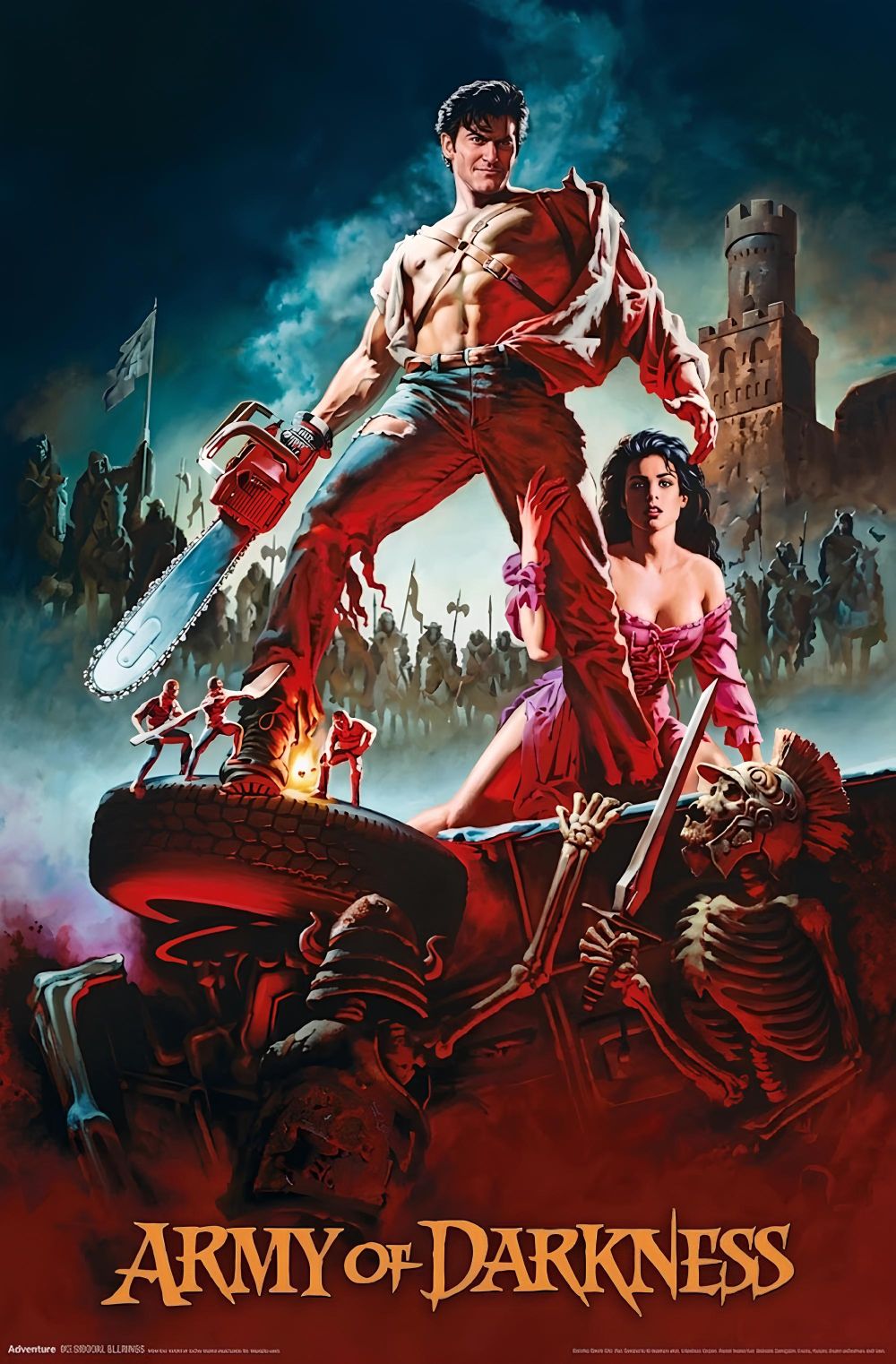
Horror Film Review: Army of Darkness (dir. by Sam Raimi)


“Well hello, Mister Fancypants. Well, I’ve got news for you, pal: you ain’t leadin’ but two things right now: Jack and shit… and Jack just left town.” — Ash Williams

Few cult movies embrace their own insanity as joyfully as Sam Raimi’s Army of Darkness. Directed by Raimi and released in 1992, the third chapter in the Evil Dead series takes Ash Williams out of the isolated-cabin horror setting of The Evil Dead and Evil Dead II and drops him into a sword-and-sorcery adventure full of skeleton armies, haunted forests, miniature doppelgängers, exploding Deadites, and more quotable one-liners than most action comedies manage in an entire franchise. It is still technically a horror movie, but calling it just a horror movie misses the point. This is a slapstick fantasy-action comedy with monsters, and its ridiculousness is exactly why it has endured as a cult favorite.

The story picks up almost immediately after the end of Evil Dead II, with Ash getting sucked through a portal and landing in medieval England. Rather than being welcomed as some prophesied savior, he is immediately treated like a suspicious outsider and thrown into a pit with a Deadite. That opening alone tells you what kind of movie this will be. Ash is no longer simply a terrified everyman trying to survive an impossible nightmare. He is now a chainsaw-handed loudmouth who shoots first, insults everyone around him, and somehow carries himself like the greatest warrior in history despite constantly making situations worse through his own arrogance.

Bruce Campbell is the entire engine of Army of Darkness. Ash has become a full-blown cartoon hero by this point, halfway between a B-movie John Wayne, a professional wrestler cutting a promo, and a smug department-store employee who has somehow convinced himself he is a legendary warrior. Campbell plays the role with total commitment, which is the key to why the comedy works. He never acts embarrassed by the dialogue or tries to make Ash seem cooler than he is. The character is funny because he is deeply incompetent beneath all the bravado. Ash talks like a conquering hero, but his victories usually involve panic, luck, explosives, and a lot of property damage.

The familiar “Groovy” attitude from Evil Dead II gets pushed even further here. Ash is not meant to be a noble fantasy protagonist. He is selfish, crude, lazy, and usually more interested in returning to modern life than helping the people trapped in a medieval war. That makes him a funny fit for the genre. In a normal fantasy film, the chosen hero would humbly accept his destiny, train with a sword, and unite the kingdoms. Ash complains about the inconvenience, makes demands, insults the locals, and uses his knowledge of basic mechanics to become a magical figure in their eyes. His improvised metal hand, shotgun, chainsaw, and homemade weapons make him look like a mad scientist dropped into an old Ray Harryhausen movie.

Raimi’s direction is as energetic as ever, even if Army of Darkness is noticeably cleaner and more studio-sized than the first two films. The early Evil Dead movies had a grimy, do-it-yourself quality that made their horror feel unusually mean and immediate. This one has a broader, more polished adventure-movie look. There are castles, battlefields, elaborate costumes, large-scale miniature work, and a full army of stop-motion skeletons. It is still cheap-looking in places, but that is part of its charm. The effects do not need to be seamless because the movie’s entire personality is built around heightened artifice. When skeletons leap around in exaggerated stop-motion or a tiny Ash attacks the full-sized Ash in a windmill, the film feels like a live-action cartoon with blood, dirt, and medieval armor.

The windmill sequence is probably the purest expression of what makes the movie special. Ash enters a windmill to escape danger and ends up trapped with miniature versions of himself, eventually swallowing one by accident. It has almost nothing to do with the larger plot in any serious sense, yet it is hilarious because Raimi keeps escalating the gag. Instead of treating the tiny Ash as a brief visual joke, the movie turns him into a recurring problem that literally grows into Evil Ash, Ash’s undead double and the leader of the titular army. That progression makes perfect cartoon logic: a small annoyance becomes a full-scale apocalypse because Ash was too careless to deal with it properly.

The horror elements are lighter than they were in the first two films, and that will probably be the biggest dividing line for viewers. Anyone expecting the nasty isolation, body horror, and relentless dread of The Evil Dead may be surprised by how openly silly this installment is. The Deadites are still grotesque enough to keep the supernatural threat alive, especially in the opening pit fight and the later siege, but they are no longer as frightening as they are funny. Raimi is much more interested in visual gags, wild camera movement, and action-movie momentum than scares.

That tonal change does not make Army of Darkness a lesser movie; it just makes it a very different one. In fact, it may be the most accessible entry in the original trilogy for people who do not normally enjoy horror. You can watch it without being especially invested in the mythology, because the plot is basically a delivery system for set pieces. Ash needs the Necronomicon to get home. He says the magic words wrong. Evil Ash rises. A skeleton army attacks. Ash helps defend the castle. The movie keeps moving, rarely pauses to explain itself, and never tries to make its fantasy world feel more serious than necessary.

The final battle is a great example of Raimi getting the maximum entertainment out of a relatively limited toolbox. Ash turns medieval villagers into a makeshift modern army, complete with explosives, contraptions, and a vehicle that feels hilariously out of place in the period setting. The action is messy, noisy, and deliberately overblown, with exploding skeletons and clashing armies staged more like a rowdy theme-park spectacle than a conventional epic. Raimi understands that the point is not realism. The point is seeing Ash yell at an undead army while wielding a chainsaw and acting like he personally invented warfare.

The movie’s dialogue is another major reason it remains so beloved. “This is my boomstick” has become the obvious classic, but Army of Darkness is packed with lines that sound like they were designed to be repeated by friends after midnight screenings. Campbell’s delivery turns even the dumbest insult into something memorable. The movie knows Ash is absurd, but it also understands that he needs to be just cool enough for the audience to enjoy watching him survive. He is a lovable jerk because he is never actually in control for long. The universe keeps humiliating him, and Campbell makes every humiliation feel like another opportunity for a louder comeback.

Army of Darkness is not the scariest Evil Dead movie, the most atmospheric, or even necessarily the best constructed. It is uneven, shamelessly goofy, and occasionally held together by pure momentum. But it has a distinct personality that most franchise sequels would kill for. Raimi and Campbell take a low-budget horror premise and stretch it into a medieval monster comedy without losing the series’ manic spirit. It feels handmade even when it is big, silly even when it is violent, and weirdly triumphant despite Ash being one of the least heroic heroes in fantasy cinema. For fans of practical effects, stop-motion creatures, quotable cult movies, and Sam Raimi operating with absolutely no interest in restraint, Army of Darkness remains a blast.

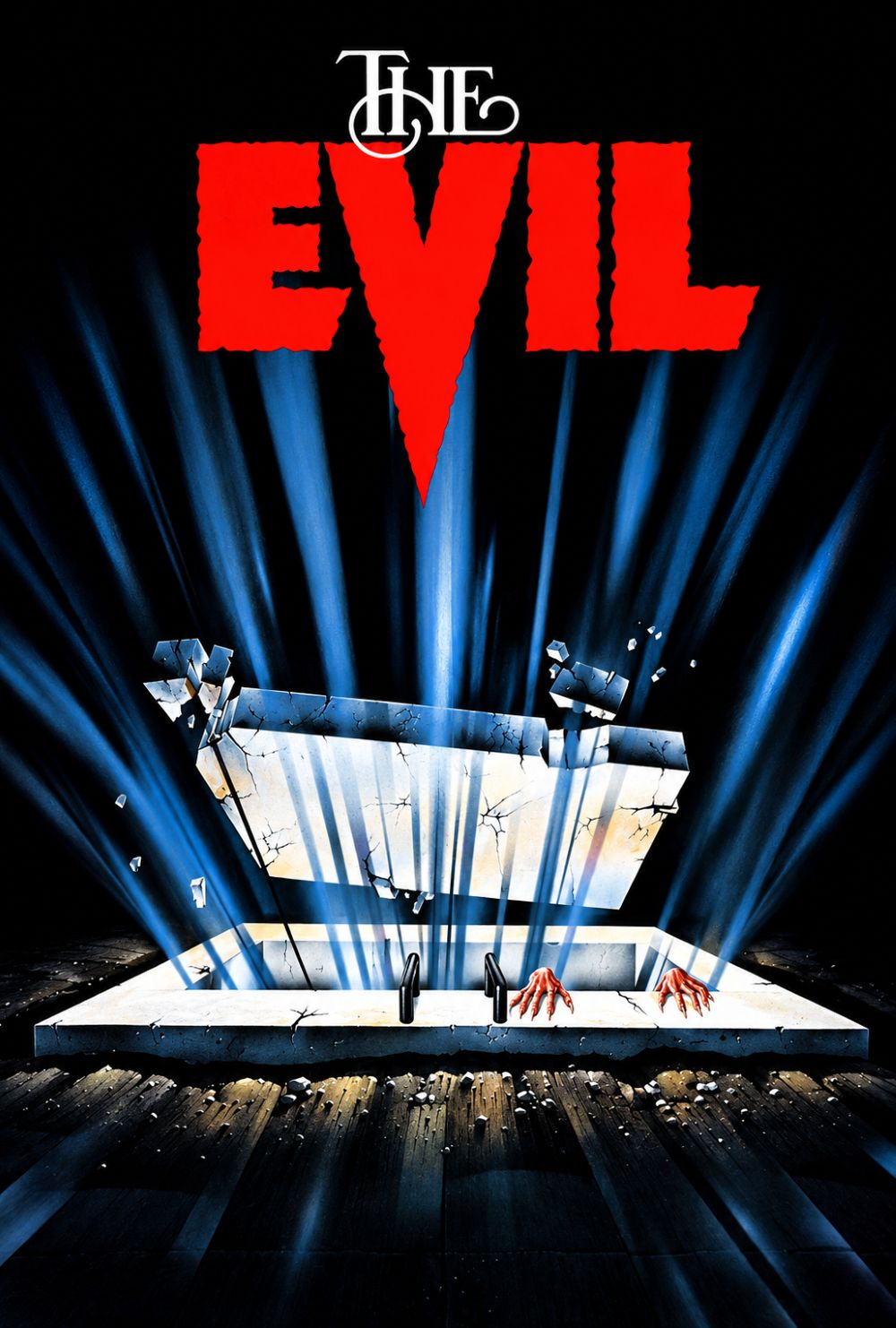
Horror Film Review: The Evil (dir. by Gus Trikonis)


“When am I gonna make you see? It’s something inside the dog!” — Dr. Caroline Arnold

On paper, The Evil has no business being as entertaining as it is. It has a familiar haunted-mansion setup, a group of characters making predictably bad decisions, a handful of effects that are more enthusiastic than convincing, and a story that often feels like it was assembled from supernatural-horror leftovers. Yet Gus Trikonis’s 1978 film somehow makes that combination work. It is a scrappy, surprisingly lively late-1970s chiller that keeps finding ways to turn its limitations into part of the fun. The movie may not have the elegance of The Haunting or the full-scale dread of The Omen, but it has momentum, personality, and just enough weirdness to make it stick in the mind.

Richard Crenna plays Dr. C.J. Arnold, a well-meaning physician who buys the old Vargas mansion with plans to turn it into a rehabilitation center. He brings his wife Caroline, played by Joanna Pettet, along with a small group of friends and workers, to spend time cleaning up the place and preparing it for renovation. It is the kind of horror-movie premise where viewers can tell within seconds that nobody should be spending the night there. The mansion is enormous, decaying, isolated, and full of the sort of dark hallways that seem specifically designed for people to wander into alone. Still, C.J. sees a building with potential rather than a nightmare waiting to happen, and the movie gets a lot of mileage out of that mistake.

Before long, the house starts acting up in all the expected ways. Doors move on their own, strange noises echo through the corridors, flames appear where they should not, and the guests begin to realize that the mansion’s history is more sinister than they were led to believe. None of this is particularly groundbreaking, even for 1978, but The Evil understands the usefulness of a clean, direct setup. It does not waste a huge amount of time pretending the house is safe. The film gets its characters into trouble, gives them an increasingly hostile environment, and lets the tension build through a series of practical, often mean-spirited scares.

The movie came out during a period when horror was especially interested in demonic forces, cursed places, possession, and spiritual danger. You can feel the shadow of films such as The Exorcist, The Omen, Burnt Offerings, The Sentinel, and The Legend of Hell House hovering over it. The Evil is clearly playing in that same sandbox, mixing the isolated-house horror formula with the era’s fascination with the Devil and the supernatural. What keeps it from disappearing completely into the crowd is not originality so much as commitment. The film believes in its own nonsense, and that sincerity goes a long way.

Gus Trikonis directs the material with a briskness that suits it. At around 85 minutes, The Evil moves quickly enough that it rarely gives viewers much time to dwell on its thinner character work or its occasionally awkward plotting. The mansion itself does a lot of the heavy lifting. It has the faded, neglected grandeur that every good haunted-house movie needs, with dark rooms, winding staircases, sealed-off spaces, and enough shadowy corners to make even a simple walk down a hallway feel questionable. The location gives the movie a genuine sense of place, which is important because much of the film depends on the audience accepting the house as an active threat rather than just a backdrop.

There is a very specific low-budget 1970s flavor to the production that adds to its charm. The movie is not sleek or refined, and that works in its favor. The roughness of the camerawork, the muted colors, the occasionally dated sound design, and the practical effects all give it a handmade quality. The Evil never looks expensive, but it often looks tangible. When the house lashes out, the effects may not always be flawless, but they have physical weight. A lot of modern horror relies on digital polish to sell its scares; this film has to make do with tricks happening in front of the camera, and that gives the best moments an immediate, almost old-fashioned punch.

The movie is at its strongest when it keeps things simple. A character hears something in another room. Someone gets separated from the group. A familiar household object or feature of the mansion suddenly becomes dangerous. These are basic horror devices, but Trikonis uses them efficiently. He knows that the fear of walking into an empty room is sometimes more useful than a long explanation of why the room is dangerous. The Evil is not a slow-burn ghost story in the style of The Innocents. It is more interested in delivering jolts and keeping the body count moving. That can make it feel mechanical at times, but it also makes the movie easy to enjoy as a late-night scare picture.

Richard Crenna gives the film more credibility than it probably deserves. He plays C.J. as a rational, decent man who believes he can bring order and purpose to a place everyone else would wisely avoid. His growing inability to explain what is happening gives the movie an anchor. Crenna does not act embarrassed by the material or play it with a knowing wink. He treats the situation seriously, which makes the supernatural chaos around him feel more convincing. He is the kind of sturdy, professional lead who can sell even the film’s more ridiculous turns simply by looking genuinely alarmed.

Joanna Pettet also helps keep the human side of the movie from getting completely lost. Caroline is more willing than C.J. to recognize that something is wrong with the mansion, and that divide gives their relationship a modest but effective tension. The rest of the cast, including Andrew Prine, Cassie Yates, Mary Louise Weller, and Lynne Moody, is more variable. They serve the story well enough, though most of them are defined more by the danger they face than by particularly deep characterization. The film does not spend much time building rich backstories, but the actors keep the group dynamic watchable.

The middle section is where The Evil shows its limitations most clearly. The structure can become repetitive: something strange happens, someone investigates alone, the house responds, and the survivors become more desperate. The mythology behind the mansion is also not always developed with much precision. But again, the movie gets away with more than it should because it keeps pushing forward. It has the energy of a film that knows it cannot afford to be boring. Even when the story is familiar, there is usually another strange image, creepy sound, or sudden danger waiting around the corner.

The final stretch is best left mostly unspoiled, because the movie takes a turn that is much stranger and more ambitious than its early scenes might lead you to expect. It broadens the scope of the story without abandoning the slightly tacky, practical-effects character that defines the rest of the film. Some viewers will probably find the shift abrupt, especially if they are expecting a straightforward haunted-house ending. Others will enjoy the fact that The Evil refuses to settle for the safest possible conclusion. It is a movie that starts with a familiar premise and gradually gets more unhinged, and that unpredictability is a real asset.

Ultimately, The Evil is not a lost classic, but it is a lot more fun than its reputation and basic setup might suggest. It has no right to work as well as it does. The premise is familiar, the characters are not deeply written, the effects are uneven, and the story occasionally runs on pure genre momentum. Yet that momentum is exactly what makes it enjoyable. Trikonis delivers a lean, energetic little horror movie with a great old mansion, a convincingly serious Richard Crenna, a few solid practical scares, and enough late-game insanity to make the experience memorable. If you enjoy the rougher, more obscure side of 1970s supernatural horror, The Evil is the kind of movie that can catch you off guard: imperfect, sometimes goofy, but much more entertaining than it has any right to be.

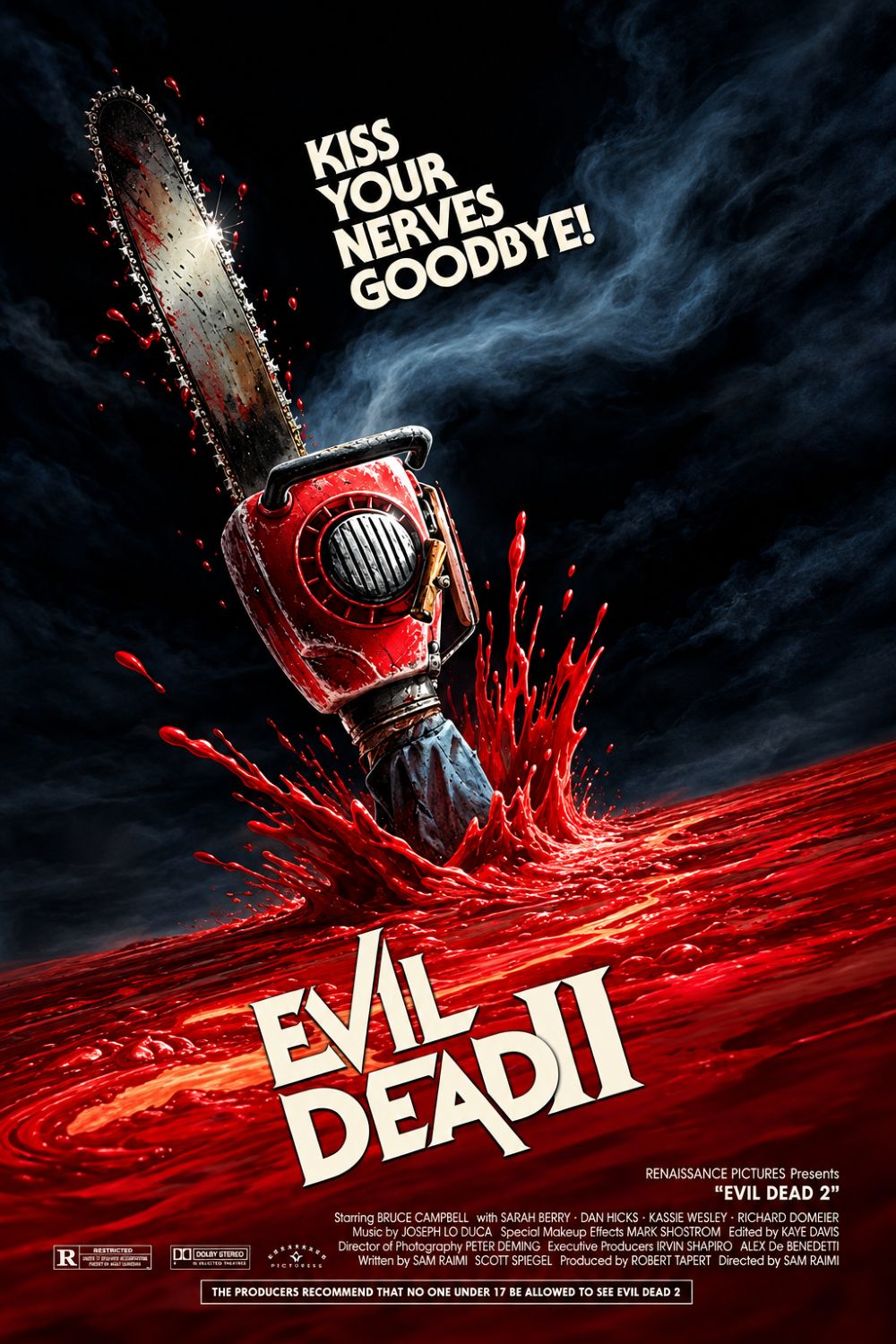
Horror Film Review: Evil Dead II (dir. by Sam Raimi)


“Swallow this.” — Ash Williams

With Evil Dead II, Sam Raimi took the basic cabin-in-the-woods nightmare of The Evil Dead and turned it into a frantic horror-comedy fever dream. Released in 1987, the film occupies a strange and wonderful place between a genuine continuation of The Evil Dead and a wildly exaggerated reimagining of it. It is nastier, funnier, more technically ambitious, and considerably more confident than its predecessor, yet it retains the homemade, anything-can-happen energy that made the original such a cult landmark. If The Evil Dead was a lean, rough-edged cabin-in-the-woods nightmare made by young filmmakers determined to prove themselves, Evil Dead II is Raimi and star Bruce Campbell returning with more resources, sharper instincts, and a total willingness to push every idea until it becomes cartoonishly grotesque.

The film begins with Ash Williams and his girlfriend Linda arriving at the infamous isolated cabin in the woods. It does not take long for them to stumble across the Necronomicon, the ancient book responsible for awakening flesh-hungry Deadites. What follows is an escalating barrage of possession, bodily mutilation, flying blood, demonic laughter, severed limbs, possessed household objects, and increasingly deranged attempts by Ash to survive the night. On a basic story level, it is familiar material. A group of people trapped in a remote location awaken evil forces and become possessed one by one. Raimi’s great achievement is that he never treats the formula as a limitation. Instead, he turns it into a delivery system for visual invention, slapstick timing, and creative violence.

The question of whether Evil Dead II is a sequel, a remake, or both has followed the movie for decades, and the honest answer is that it is effectively a sequel with a condensed remake-style opening. Raimi could not simply reuse footage from The Evil Dead, so the beginning retells the essential premise of the first film with Ash and Linda as the only characters at the cabin. That recap changes details, leaves out the original group of friends, and presents a shortened version of Ash’s first encounter with the Deadites. Once Ash survives the opening stretch and the evil returns, the movie continues beyond the events of The Evil Dead, making it a genuine sequel. Still, because the first act recreates so much of the original’s setup in a more polished and heightened form, it understandably feels like a remake before it becomes a continuation.

Bruce Campbell is the center of everything, and his performance is a huge part of why the film remains so beloved. Ash begins as an ordinary, frightened guy in over his head, but Campbell slowly transforms him into the character audiences recognize today: bruised, filthy, angry, absurdly resilient, and just arrogant enough to make his suffering hilarious. One of the movie’s most impressive qualities is how long Campbell can hold the screen almost entirely by himself. For substantial stretches, Ash has no real human companion to play off. He is acting opposite fake hands, props, stop-motion creatures, splattering fluids, camera movements, and the hostile architecture of the cabin. Campbell has to sell physical terror while also land jokes with the precision of a silent-film comedian.

The famous scene in which Ash’s possessed hand attacks him is probably the clearest example of what makes Evil Dead II special. In another horror movie, a man losing control of his hand might be played as disturbing body horror. Raimi turns it into a manic live-action cartoon. Ash battles his own hand with plates, books, a mousetrap, and anything else within reach, while Campbell throws himself around the room with astonishing commitment. The scene is funny because it is so excessive, but it never entirely stops being gruesome. Ash is still bleeding, suffering, and increasingly losing his mind. That balance is essential to the movie. Raimi does not abandon horror for comedy; he makes the comedy emerge from the intensity of the horror.

The cabin itself becomes one of the film’s great characters. In The Evil Dead, the location feels claustrophobic and decayed, a believable place that happens to become a site of supernatural violence. In Evil Dead II, it becomes something closer to a haunted funhouse. The walls seem alive, furniture appears to mock Ash, mounted animal heads laugh at him, and the entire building seems to participate in his breakdown. The sequence where Ash starts laughing alongside the room’s objects is especially memorable because it captures the film’s unstable tone. It is visually ridiculous, but there is genuine unease underneath it. Ash may be seeing a supernatural manifestation, losing his sanity, or both. Raimi keeps the audience off-balance by making laughter and fear feel almost inseparable.

Raimi’s direction is ferocious. The camera is constantly moving, rushing through forests, crashing into rooms, swooping toward characters, and creating the impression that the evil itself is an invisible force with a point of view. The “demon-cam” technique, in which the camera races through the woods toward its victims, returns from the first film but feels even more aggressive here. It gives the Deadites a strange presence despite the fact that they are often unseen. You do not merely hear something approaching; you feel the camera barreling toward Ash as if the movie has become possessed.

The practical effects remain a major reason to watch the film. They are intentionally messy, tactile, and sometimes obviously artificial, but that artificiality is part of the charm. The Deadites look like diseased puppets dragged out of a nightmare, their faces stretching into exaggerated masks of rot and rage. Blood does not behave like blood; it sprays in impossible volumes and bizarre colors. Bodies deform, heads spin, limbs detach, and tiny monsters swarm the frame. Rather than striving for realism, the effects aim for maximum impact. They create a world where physical rules have broken down, which suits a story about ancient evil invading the ordinary world.

The film’s humor also deserves credit for never making Ash too cool too early. Later installments, especially Army of Darkness, would lean more heavily into the swaggering, wisecracking version of the character. In Evil Dead II, he earns every bit of confidence through suffering. He is not a superhero with a chainsaw hand; he is a man forced to improvise a grotesque solution because he has no better option. When he straps the chainsaw onto his stump and prepares for battle, it is triumphant, but it is also the result of one of the most painful and grotesque scenes in the movie. The iconic image works because Raimi lets the audience experience the desperation behind it.

The supporting cast arrives later than expected, including Annie Knowby, daughter of the archaeologist connected to the Necronomicon, along with several others whose involvement predictably goes terribly wrong. They are not developed with the same attention as Ash, but that is not really the point. Their function is to give the Deadites fresh bodies to possess, create new complications, and help move the story toward its gleefully chaotic finale. Sarah Berry gives Annie an appealing mix of intelligence and panic, while Ted Raimi’s Henrietta becomes one of the movie’s most monstrous creations. The cellar scenes involving Henrietta are nasty, darkly funny, and among the strongest reminders that Raimi still knows how to make the audience uncomfortable even amid all the comedy.

By the time the film reaches its ending, Evil Dead II has become larger than its cabin setting. Its final twist sends Ash somewhere no viewer could reasonably have expected, turning what began as a contained survival-horror story into the launching point for the more openly fantasy-driven Army of Darkness. Yet the ending works precisely because the entire film has trained us to expect escalation. Every scene somehow finds a way to become more exaggerated than the last. A possessed girlfriend becomes a dancing corpse. A severed hand becomes a homicidal creature. A cabin becomes a carnival of insanity. A man with a chainsaw becomes an accidental hero.

More than three decades later, Evil Dead II still feels alive because it has a personality that no polished studio production could replicate. Its effects are physical, its performances are fearless, and its direction is so energetic that the movie seems ready to burst through the screen. It is gross, loud, silly, inventive, and sincerely scary in flashes. Raimi understands that horror can be horrifying and hilarious without weakening either quality. Evil Dead II is not merely a cult classic because people quote Ash or remember the chainsaw. It is a cult classic because it transforms limitations, madness, and handmade craftsmanship into a one-of-a-kind cinematic experience.

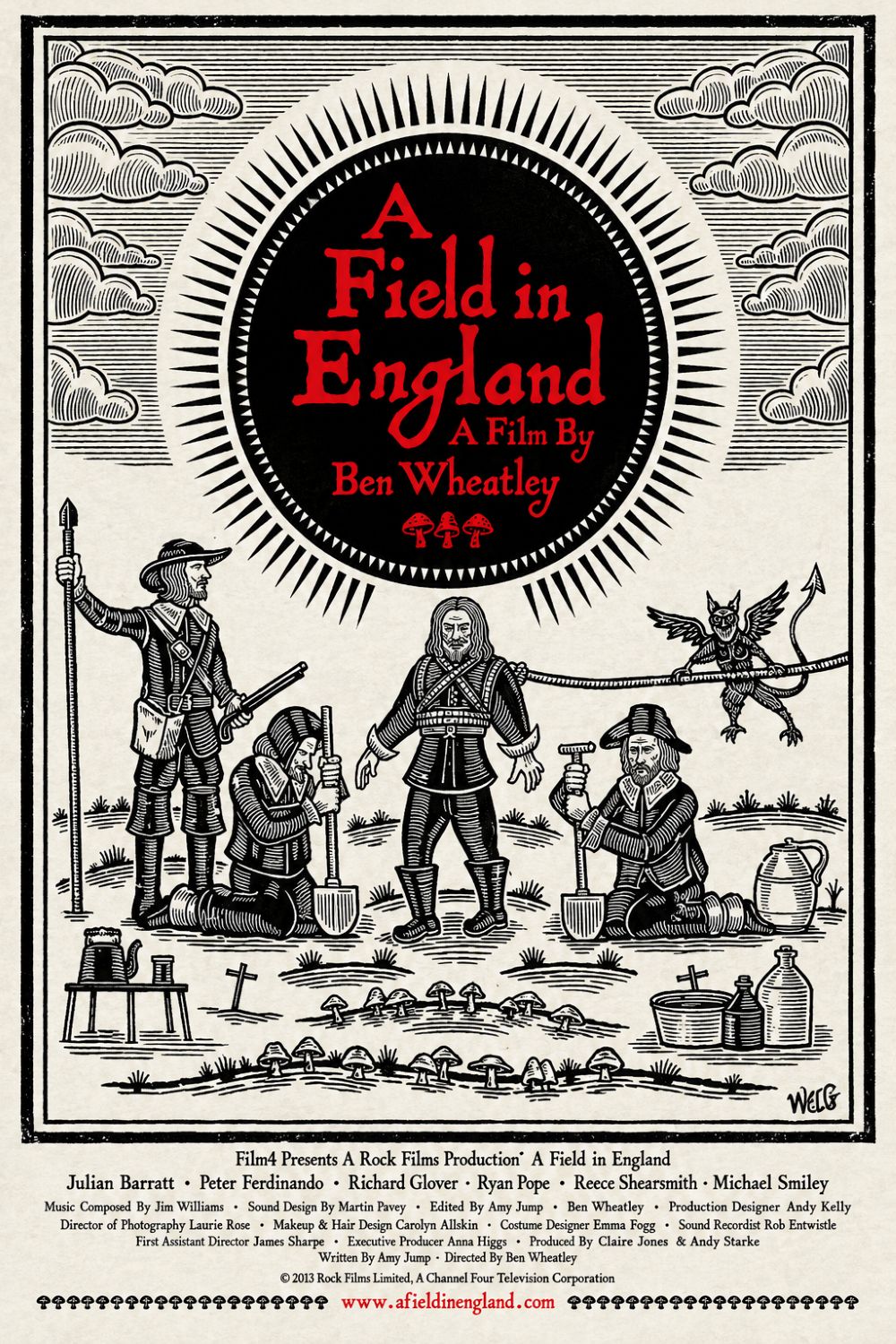
Horror Film Review: A Field in England (dir. by Ben Wheatley)


“It does not surprise me that the Devil is an Irishman. Though I thought perhaps he might be a bit taller.” — Friend

There is something deeply unsettling about a horror film that takes place almost entirely in broad daylight, and A Field in England uses that unease to devastating effect. Ben Wheatley’s 2014 release is a black-and-white nightmare about deserters, mushrooms, occult power, buried treasure, and men slowly losing whatever grip they had on reality. It is cryptic, abrasive, occasionally funny, deliberately repetitive, and sometimes so visually and sonically intense that it feels less like watching a film than being trapped inside a bad trip with several deeply unpleasant Englishmen.

Set during the English Civil War, A Field in England begins with Whitehead, played by Reece Shearsmith, fleeing an unseen battle. He is an educated man and an apprentice to an alchemist, although he is not particularly brave, heroic, or prepared for the chaos around him. Whitehead soon falls in with a small group of deserters: the blunt Cutler, the nervous Friend, and the worldly Trower. Their immediate goal is basic survival. They want food, ale, somewhere safe to rest, and preferably no more involvement in the war. Naturally, things do not work out that way.

The group crosses an enormous field and encounters O’Neill, played with unnerving authority by Michael Smiley. O’Neill is an alchemist, a manipulator, and possibly something more supernatural. He claims there is treasure buried in the field and forces the men into helping him dig for it. From there, the story gets progressively stranger, particularly after the men consume mushrooms that may or may not be supernatural in origin. The film’s central question is never simply whether the characters are hallucinating. Wheatley keeps pushing the viewer toward a more uncomfortable possibility: what if the hallucinations are revealing something real?

That ambiguity is the movie’s greatest strength and its biggest obstacle. A Field in England gives the audience fragments rather than firm answers. There are references to stolen papers, alchemical knowledge, magical control, a rival master, buried riches, and rituals that may have been going on long before these men stumbled into the field. But Wheatley and screenwriter Amy Jump never stop to explain the rules. The field seems both ordinary and impossible. It is a place where history, warfare, class resentment, religious anxiety, superstition, and psychedelic terror all collapse into one ugly patch of grass.

The setting is especially impressive because it is so limited. Much of the film takes place in one open field, but Wheatley makes that restriction feel like a trap rather than a budgetary compromise. The wide, empty landscape should offer freedom, yet it becomes increasingly claustrophobic. There is nowhere to hide, no landmark to guide anyone out, and no real sense that walking away would accomplish anything. The field becomes a purgatory, a prison, and an altered state of mind all at once. The characters are technically outdoors the whole time, but they might as well be locked in a dungeon.

Laurie Rose’s black-and-white cinematography is essential to that effect. The movie is beautiful in a harsh, unfriendly way. The high-contrast images turn grass, clouds, trees, faces, and dirt into something almost mythic. Instead of giving the Civil War setting a polished historical-drama look, the monochrome photography makes it feel ancient and unstable, like a series of damaged photographs or illustrations pulled from a cursed old book. The lack of color also helps detach the film from realism. Blood, mud, sweat, and the field itself lose their normal visual identity, making everything feel one step removed from the world the audience recognizes.

The film’s most famous stylistic choices arrive during its hallucinatory stretches. Wheatley uses strobing images, freeze frames, abrupt flashes, distorted sound, overlapping dialogue, and violently fractured editing to turn the characters’ mushroom-induced breakdowns into sensory assaults. These sequences are not designed to be pleasant or even easily readable. At times, they are exhausting. That is clearly the point. The men are losing control of time, memory, language, and physical space, and the film wants the viewer to feel that disorientation rather than observe it safely from a distance.

This can make A Field in England a demanding watch. There are stretches where the characters repeat themselves, argue in circles, dig holes, pull ropes, or speak in riddles that do not immediately add up. Some viewers will probably find this fascinating, while others will feel that Wheatley is testing their patience for the sake of being weird. Both reactions are fair. The film occasionally comes close to mistaking opacity for depth. Not every bizarre image carries the same force, and the narrative sometimes feels like it is daring the audience to keep watching rather than drawing them in naturally.

Still, the performances keep the movie from floating completely away into abstraction. Shearsmith is especially good as Whitehead, whose intelligence does not save him from terror or humiliation. He plays the character as someone who desperately wants to understand the occult forces surrounding him but may be too frightened and compromised to confront them. There is something deeply sad about Whitehead’s weakness. He is not a clean-cut innocent, but he is also clearly outmatched by O’Neill.

Michael Smiley, meanwhile, is fantastic as O’Neill. He does not play the role as a standard screaming madman. That would be too easy. Instead, he is controlled, smug, and almost conversational, which makes him much more threatening. O’Neill treats cruelty like an intellectual exercise. He speaks as though he is always several steps ahead, and his certainty becomes frightening because nobody else in the film can confidently say whether he is a fraud, a sorcerer, or a man who has simply learned how to exploit frightened people. Smiley gives the character the exact kind of ugly charisma needed for a villain who may be entirely human but feels almost demonic.

The supporting cast also deserves credit. Peter Ferdinando, Richard Glover, and Ryan Pope give the film its rougher, more grounded energy. Their banter provides an odd kind of dark humor, especially early on, before the nightmare fully takes over. Wheatley has always had a talent for making people sound casually vicious and absurd at the same time, and A Field in England contains that familiar bite. These are not noble historical figures delivering grand speeches. They are exhausted, hungry, crude men trying to survive a war they barely understand.

What makes the movie linger is how it turns that survival instinct into something ugly. The field strips away the characters’ supposed identities. Religion, social rank, education, loyalty, and military allegiance all become flimsy protections. Whitehead may be literate and knowledgeable; O’Neill may possess real occult power; Cutler may be physically capable; Trower may seem more practical than the others. None of it guarantees safety. Everyone is vulnerable to fear, manipulation, and the possibility that they have walked into a place where ordinary rules no longer apply.

As horror, A Field in England is less interested in jump scares than spiritual contamination. It is about the horror of not knowing whether you are seeing reality, madness, divine punishment, or the Devil at work. Wheatley uses the English countryside not as a comforting pastoral image, but as something ancient, indifferent, and possibly hostile. The movie shares some DNA with folk horror, but it is rougher and less traditionally structured than something like The Wicker Man. It also has the psychedelic aggression of a 1960s or 1970s experimental film, filtered through Wheatley’s mean streak and dark sense of humor.

Ultimately, A Field in England is not an easy movie to love, but it is difficult to dismiss. It is too committed to its mood, too visually striking, and too full of uneasy ideas to be written off as empty weirdness. Wheatley makes the viewer work, and sometimes he pushes that demand to the point of frustration. But when the film locks into its nightmare rhythm, it is genuinely haunting. The sound design rattles around in your head, the images feel burned into your memory, and the field itself starts to seem like the kind of place you would never want to wander into alone.

For viewers who want a straightforward historical horror movie, A Field in England may feel like a punishing experience. For anyone willing to follow Ben Wheatley into a muddy, surreal, pitch-black vision of war, magic, and madness, it is one of the strangest British horror films of its era. It does not explain itself, it does not comfort the audience, and it definitely does not care whether everyone comes out of it satisfied. That stubbornness is exactly what makes it memorable.

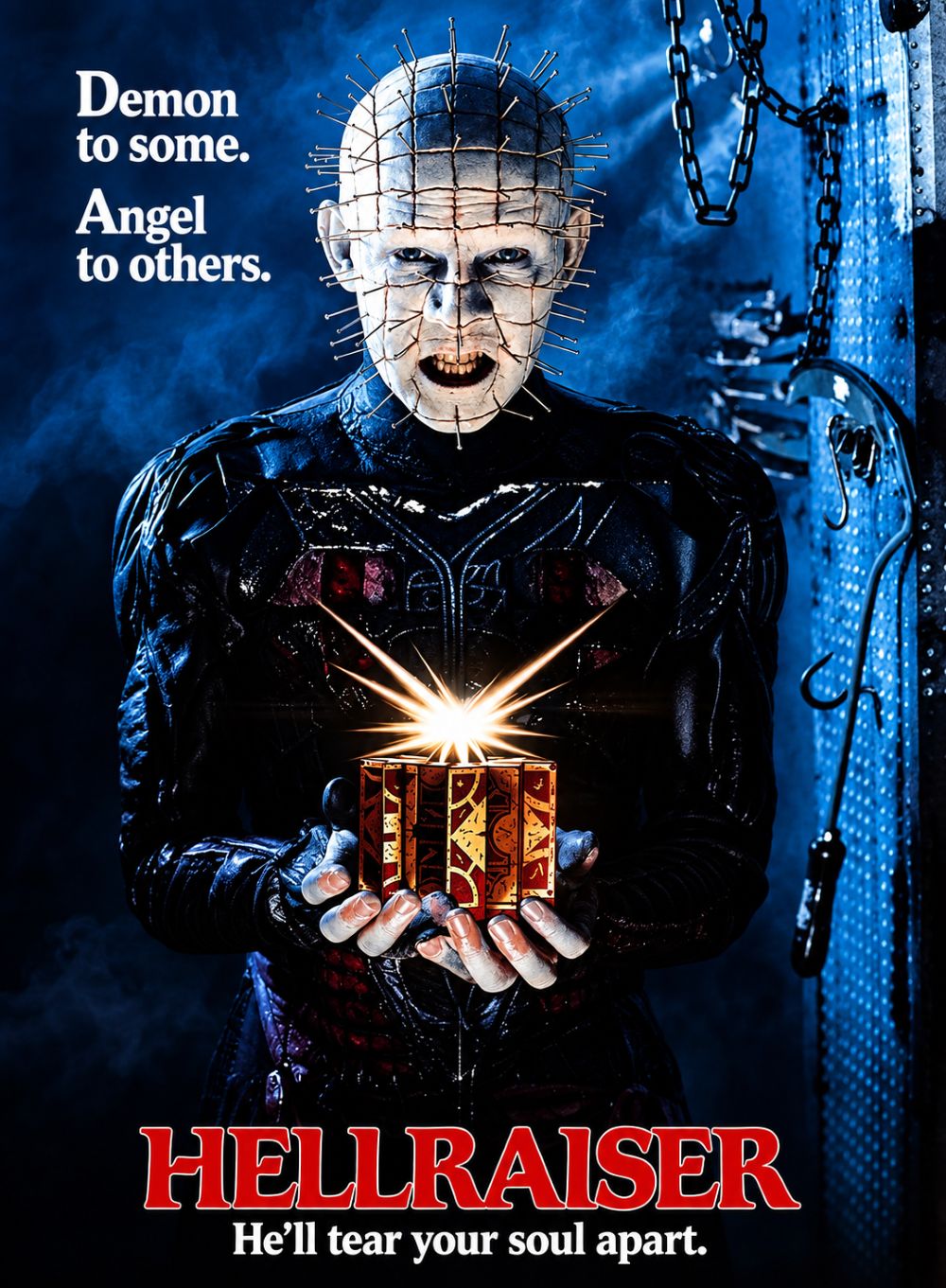
Horror Film Review: Hellraiser (dir. by Clive Barker)


“No tears, please. It’s a waste of good suffering.” — Pinhead

Hellraiser does not ease viewers into its nightmare; it drags them straight into a world where desire, suffering, and obsession have become impossible to separate. Written and directed by Clive Barker from his own novella The Hellbound Heart, the film is bloody, unsettling, weirdly intimate, and much more serious than its pop-culture reputation might suggest. Yes, it is the movie that introduced Pinhead and the Cenobites, but the first Hellraiser is not really a Pinhead showcase in the way later sequels became. It is a rotten little domestic nightmare about lust, betrayal, obsession, and the kind of desire that keeps going long after it should have destroyed a person.

Barker’s big strength is that he does not treat horror as something separate from human craving. In Hellraiser, pain and pleasure are tangled together from the opening scene. Frank Cotton is not some innocent fool who accidentally opens a cursed puzzle box. He actively seeks it out because normal pleasures no longer satisfy him. He wants sensation pushed past every limit, and the Lament Configuration gives him exactly that—just not in the way he expected. The Cenobites arrive with their chains, hooks, leather, scars, and ritualistic calm, offering a version of experience so extreme that it turns the body into something almost unrecognizable. That premise is memorable on its own, but Barker makes it work because Frank is already spiritually disgusting before hell ever gets involved.

The movie’s real surprise is Julia Cotton, played brilliantly by Clare Higgins. Julia could have been a standard unfaithful wife character, someone introduced merely to create tension inside the Cotton family. Instead, she becomes the dark heart of the film. Her attraction to Frank is not romantic in any healthy or even conventionally sensual sense. It is tied to resentment, boredom, humiliation, and a kind of violent need to feel alive. When Frank returns in his skinless, barely human state and needs blood to regenerate, Julia does not hesitate for long before becoming his accomplice. The scenes in which she lures men back to the abandoned house are among the movie’s most disturbing moments precisely because they are played with such cold purpose. She does not seem possessed. She is making a choice.

That decision gives Hellraiser a nasty emotional edge. Frank is obviously monstrous, but Julia is arguably scarier because she begins as an ordinary person trapped in a miserable life and willingly walks into atrocity. Higgins gives the role a detached, almost aristocratic chill. Her face barely needs to change for the audience to understand that something terrible is happening behind her eyes. The film’s central house becomes an extension of her inner life: dusty, decayed, closed off, and hiding a nightmare in the upstairs room. There is something grimly effective about the fact that the gateway to hell is not in an ancient castle or a faraway cemetery. It is in a family home where people are supposed to start over.

Andrew Robinson also deserves credit as Larry, Julia’s decent but oblivious husband. He is not the most dynamic protagonist in horror history, but that works for the story. Larry is a fundamentally ordinary man who cannot imagine the depths of corruption already moving around him. His blindness is frustrating, but it also reinforces the movie’s worldview. In Hellraiser, the people closest to us may carry desires we cannot see, and the house itself may preserve the damage left behind by old secrets. Ashley Laurence, as Larry’s daughter Kirsty, gradually becomes the film’s moral center. She is not an especially flashy final girl at first, yet Laurence gives Kirsty intelligence and genuine fear. Once she learns what the box can do, her panic feels grounded because she understands she has stumbled into something far beyond a killer with a knife.

Then there are the Cenobites, who remain some of the most striking horror creations of the decade. Doug Bradley’s Pinhead is the obvious standout, but the film wisely uses him sparingly. Pinhead is not a slasher villain who runs around collecting bodies. He is more like a supernatural official, a priest of pain carrying out a horrifying contract. Bradley’s measured voice and theatrical stillness make the character far more unsettling than a louder performance would have. The famous line, “We have such sights to show you,” works because it is delivered with calm conviction rather than rage. Pinhead is not trying to scare Kirsty for fun. He genuinely believes that torment and ecstasy are parts of the same revelation.

The other Cenobites matter too. Butterball, the Chatterer, and the Female Cenobite create the feeling that Pinhead belongs to a larger order rather than simply functioning as a lone monster. Their designs are grotesque but carefully composed, full of exposed flesh, surgical markings, and fetishistic costume details. They do not look like demons from a traditional Christian image of hell. They look like beings who have remade themselves according to an alien set of desires. That is where Barker’s imagination really separates Hellraiser from more conventional monster movies. The Cenobites are not just evil creatures. They are explorers of sensation who have gone so far beyond humanity that morality barely applies to them anymore.

The practical effects are still a major reason the film holds up. Frank’s gradual reconstruction from blood-soaked remains into a mutilated human body is disgusting in the best possible way. It has a tactile quality that CGI rarely captures. You can see the slime, the tissue, the half-formed muscles, and the painful labor involved in putting a body back together. Even when some of the effects show their age, they retain a handmade ugliness that fits the movie’s atmosphere. Nothing in Hellraiser is clean or sleek. The supernatural realm looks damp, industrial, and biological, as if hell were built out of meat, rust, chains, and bad memories.

Christopher Young’s score also does a lot of heavy lifting. It gives the movie a gothic grandeur that makes the story feel larger than its limited locations and modest budget. The film is mostly confined to a house, a hospital, a few streets, and the Cenobites’ shadowy realm, yet the music makes it feel like a grand tragedy unfolding behind the walls. That contrast is one of the movie’s best tricks. Hellraiser can be intimate and theatrical at the same time. It is essentially a chamber piece about a broken family, but it plays like a myth about forbidden knowledge.

If the film has a weakness, it is that its final stretch gets a little messy. The confrontation with Frank has some excellent makeup work and gruesome imagery, but the pacing becomes more conventional once Kirsty is forced into full survival mode. The ending also feels slightly rushed considering how carefully Barker establishes the family tension earlier on. Still, the movie earns enough goodwill through its atmosphere, performances, and imagination that these flaws do not do much damage. If anything, the roughness adds to its charm. Hellraiser feels like a filmmaker throwing every dark idea he has onto the screen and trusting the audience to follow him into the abyss.

What makes Hellraiser endure is not simply the gore, the puzzle box, or Pinhead’s instantly recognizable appearance. It lasts because it understands that horror is often rooted in the things people want but are ashamed to admit they want. Frank wants infinite sensation. Julia wants escape and emotional intensity. Kirsty wants to save her family but must confront how little of that family was worth saving. The Cenobites offer no easy moral lesson; they are simply waiting for someone foolish or desperate enough to open the door.

Casual viewers looking for a straightforward slasher might find Hellraiser slower and stranger than expected, especially if they only know the character of Pinhead through sequels, posters, and parody. But for anyone willing to meet it on its own grim terms, it remains one of the most original supernatural horror films of its era. It is gross, stylish, perverse, tragic, and surprisingly sad beneath all the blood. Barker did not just create monsters. He created a nightmare universe where desire becomes a trap—and where opening a small box can ruin everything.

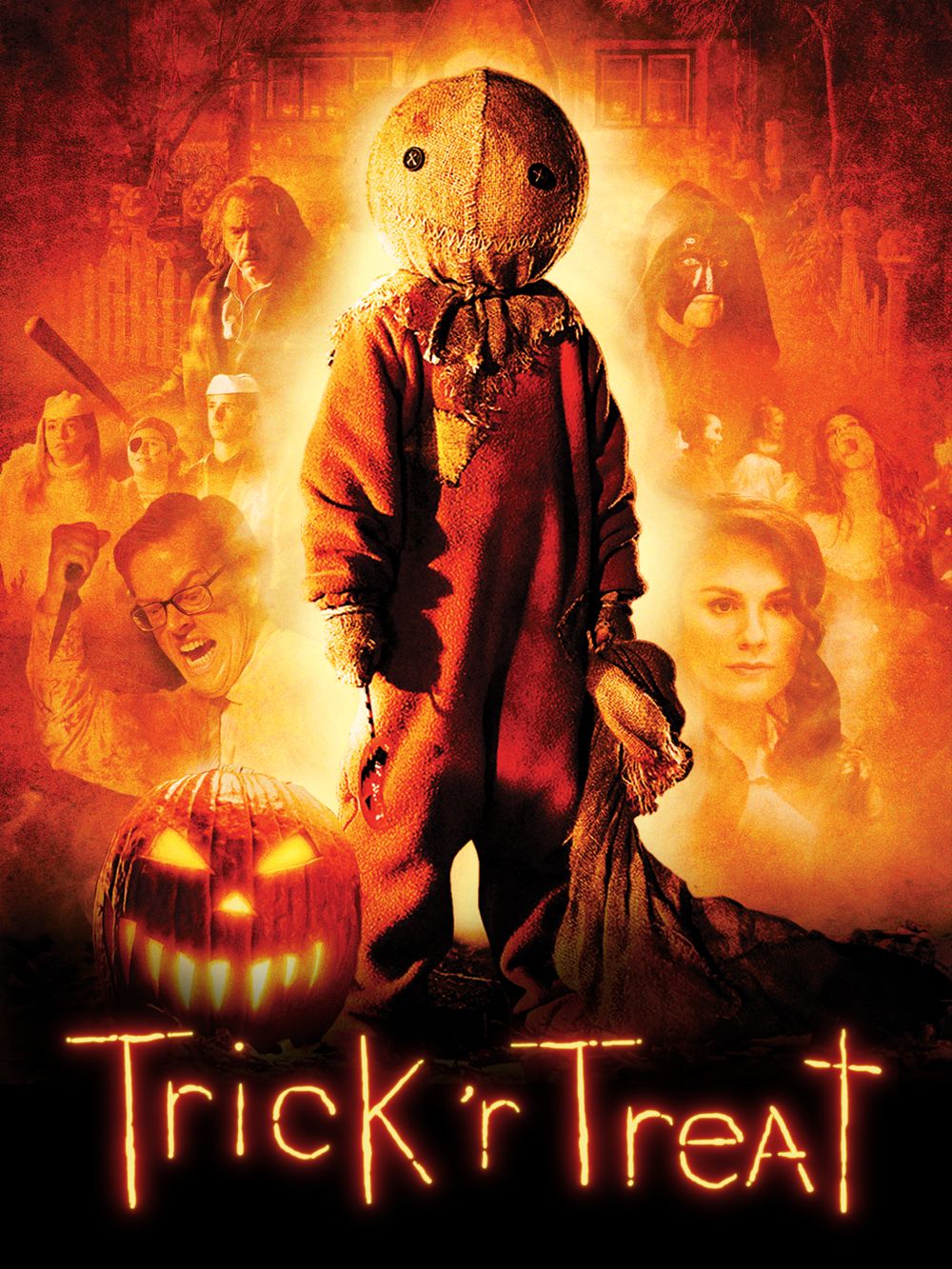
Horror Review: Trick ‘r Treat (dir. by Michael Dougherty)


“All these traditions, jack-o’-lanterns, putting on costumes, handing out treats, they were started to protect us, but nowadays… no one really cares.” — Principal Steven Wilkins

What better and more fun way is there to celebrate the full month of scares and horror that October has become than with Michael Dougherty’s 2007 film Trick ’r Treat? It is the kind of Halloween movie that feels less like it was merely set on the holiday and more like it was built out of everything people love about it. Trick ’r Treat has jack-o’-lanterns glowing on porches, costumes ranging from charming to grotesque, chilly nighttime streets, old local legends, candy bowls, haunted-school-bus stories, werewolves, serial killers, and that ever-present feeling that something is watching from behind a tree. It is funny, nasty, creepy, and strangely cozy at the same time. More than almost any modern horror film, it understands Halloween as a whole atmosphere rather than a collection of familiar props.

At first glance, the movie looks like an anthology film. It is divided into several distinct stories with their own central characters, premises, and horror styles. One segment involves a principal with a murderous secret, another follows a group of kids investigating a grim local legend, another centers on young women looking for dates at a costume party, and another focuses on a bitter old man dealing with a small but persistent visitor. Each story could almost function as its own short horror movie. Dougherty clearly enjoys shifting tones, moving from slasher material to ghost-story melancholy, then into monster-movie lunacy and dark comedy. But the key difference is that Trick ’r Treat is not simply an anthology stitched together by a host or a framing device. Every story told in the film ties into an overarching story unfolding across one night of Halloween.

That structure is one of the movie’s smartest features. Characters drift in and out of one another’s narratives, sometimes briefly and sometimes in ways that completely change the audience’s understanding of what they have already seen. A person who seems like a background extra in one sequence becomes the focus of another. A strange sound, a distant scream, a passing school bus, or a visual detail in one story can gain much more meaning when it reappears elsewhere. The movie plays with chronology too, allowing events to overlap and occasionally revealing that scenes which seemed straightforward were occurring at a different point in the night than viewers assumed. It rewards attention without becoming confusing for the sake of being clever.

Dougherty handles those connections smoothly because the film never stops feeling like one continuous Halloween night. The transitions are playful rather than showy. The camera may follow a character down a street, past a decorated yard, into another group’s story, and suddenly the audience has entered a different kind of nightmare. That makes the town itself feel like a character. It is not a generic horror-movie setting where bad things happen because the script requires them to. It feels like a community with traditions, buried crimes, local myths, annual rituals, and plenty of people who are either hiding something or about to discover something unpleasant.

The town’s Halloween obsession is also what gives the film its personality. Trick ’r Treat treats Halloween rules almost like ancient laws: wear a costume, hand out candy, never blow out a jack-o’-lantern before midnight, and always respect the dead. Breaking those rules does not guarantee immediate punishment in a simple moralistic way, but it certainly puts people at risk. The film’s central icon, Sam, embodies that idea. Wearing orange pajamas, a burlap sack mask, and carrying a lollipop that can become a weapon, Sam is one of the great modern horror mascots because he is both adorable and deeply unsettling. He is not presented as a typical slasher villain with a detailed backstory or a conventional motivation. He feels more like the living spirit of Halloween itself: mischievous, ceremonial, cruel when necessary, and completely devoted to the holiday’s traditions.

Sam’s presence gives the movie a connective thread beyond plot mechanics. He appears in the background, watches over events, and eventually takes center stage in a way that is both amusing and genuinely tense. There is something almost storybook-like about him. He resembles a child going door to door for candy, but his behavior suggests an old supernatural force enforcing rules everyone else has forgotten. The movie wisely never overexplains him. Horror icons often become less interesting once every mystery is reduced to lore, family trees, and exposition. Sam works because Dougherty lets him remain partly unknowable.

The cast is another reason the film holds together so well. Dylan Baker is excellent as Steven Wilkins, the seemingly mild suburban principal whose cheerful politeness becomes much more disturbing once the movie reveals what he is doing after dark. Baker has a talent for making every smile look just slightly too controlled. His storyline is especially effective because it mixes grotesque humor with an unsettling domestic quality. He is not stalking victims through a foggy forest or living in an abandoned asylum. He is cleaning up a mess in his backyard while trying to maintain a normal family routine. That contrast makes his scenes nastier and funnier.

Brian Cox brings real weight to Mr. Kreeg, the grumpy old man at the center of the film’s most memorable Sam-focused material. Cox could have played him as a broad caricature, but he gives the character enough fear, frustration, and hidden sadness to make the confrontation feel more substantial than a simple old-man-versus-monster sequence. The movie’s final act uses his house almost like a haunted maze, with the warm, cluttered interior gradually becoming a battlefield. The tone remains playful, yet there is a real sense of danger whenever Sam drops the cute disguise and shows what he can do.

Anna Paquin also stands out in the segment involving Laurie and her friends. At first, it seems like the film is setting up a familiar vulnerability narrative: young women in costumes, a dark forest, strange men, and the possibility of a predatory attacker. Then Trick ’r Treat gleefully twists expectations. The reveal is not subtle, but it is staged with enough energy and confidence that it lands as a crowd-pleasing monster-movie moment. Dougherty knows that horror does not always need to be grim to be effective. Sometimes the best reaction is an audience laughing in surprise right before a scene turns bloodier than expected.

The school-bus story is probably the film’s creepiest material. The idea of children killed by adults and returning as drowned, decayed figures could have been handled in a cheap or overly cruel way, but the movie gives it a sad, mythic edge. The ghosts are frightening, but the story is also about guilt, buried history, and a town that has allowed its ugliest secret to become a campfire legend. The children may be supernatural monsters by the time they reappear, but the adults who wronged them are even more horrifying. That is a recurring theme throughout Trick ’r Treat: Halloween monsters are dangerous, but human selfishness, cowardice, and cruelty tend to create the worst consequences.

Visually, the film has aged remarkably well because it does not chase a slick, overly polished look. It has a rich autumnal color palette full of oranges, blacks, deep reds, and warm porch-light yellows. The night scenes are dark enough to feel threatening but clear enough that viewers can appreciate the costumes, decorations, and production design. Every street seems covered in leaves, every house has candles or carved pumpkins, and every shadow seems capable of hiding a creature. It feels like a heightened version of childhood Halloween memories, except those memories have been invaded by murderers, werewolves, demons, and ghosts.

The practical effects and creature work add a lot to that charm. The movie uses CGI when needed, but it does not depend on weightless digital spectacle. Sam’s physicality, the werewolf transformations, the decayed school-bus children, and the various masks and props all have a tactile quality. They look like things that belong in a haunted attraction, a particularly elaborate costume shop, or an old EC Comics-style horror story. That handmade texture fits the film perfectly. Trick ’r Treat is polished, but it never feels sterile.

What makes the movie so rewatchable is how comfortably it moves between tones. It can be goofy without becoming stupid, gruesome without becoming exhausting, and sentimental about Halloween without turning saccharine. It embraces the holiday’s childish excitement while acknowledging the darker folklore underneath it. There is candy, costumes, and neighborhood fun, but there are also old grudges, punished sinners, restless dead, and things that hunt after midnight. Dougherty understands that those two sides belong together. Halloween is fun partly because it lets people play with fear in a safe, communal way, and Trick ’r Treat captures that balance better than most horror movies.

The film’s anthology-like design gives it variety, while its overlapping characters, recurring events, and shared setting make it feel like one cohesive story rather than a disconnected collection of shorts. Its lasting popularity has also made the lack of a sequel feel increasingly strange. Fans have been clamoring for another trip through Sam’s Halloween night for years, and Dougherty has repeatedly hinted that he has ideas for where a follow-up could go. He has discussed multiple script drafts, storyboards, concept art, and the possibility of giving Sam a new adversary, but the project still has not received an official greenlight.

That uncertainty is frustrating, especially because Trick ’r Treat feels like a world with plenty more stories left to tell. At the same time, it is probably better that Dougherty has not rushed out a sequel just to cash in on the film’s cult status. The original works because it feels carefully constructed, visually specific, and completely committed to its Halloween setting; any follow-up would need to preserve that same mix of horror, comedy, folklore, and interconnected storytelling. For now, Trick ’r Treat remains an annual October rewatch because it honors Halloween’s old traditions while creating its own: a funny, spooky, blood-soaked celebration of costumes, candy, campfire legends, and the things that come out once the porch lights go dark.

Horror Review: The Long Walk (dir. by Francis Lawrence)


“In this Walk, it’s not about winning. It’s about refusing to be forgotten while the world watches us fade away.” — Peter McVries

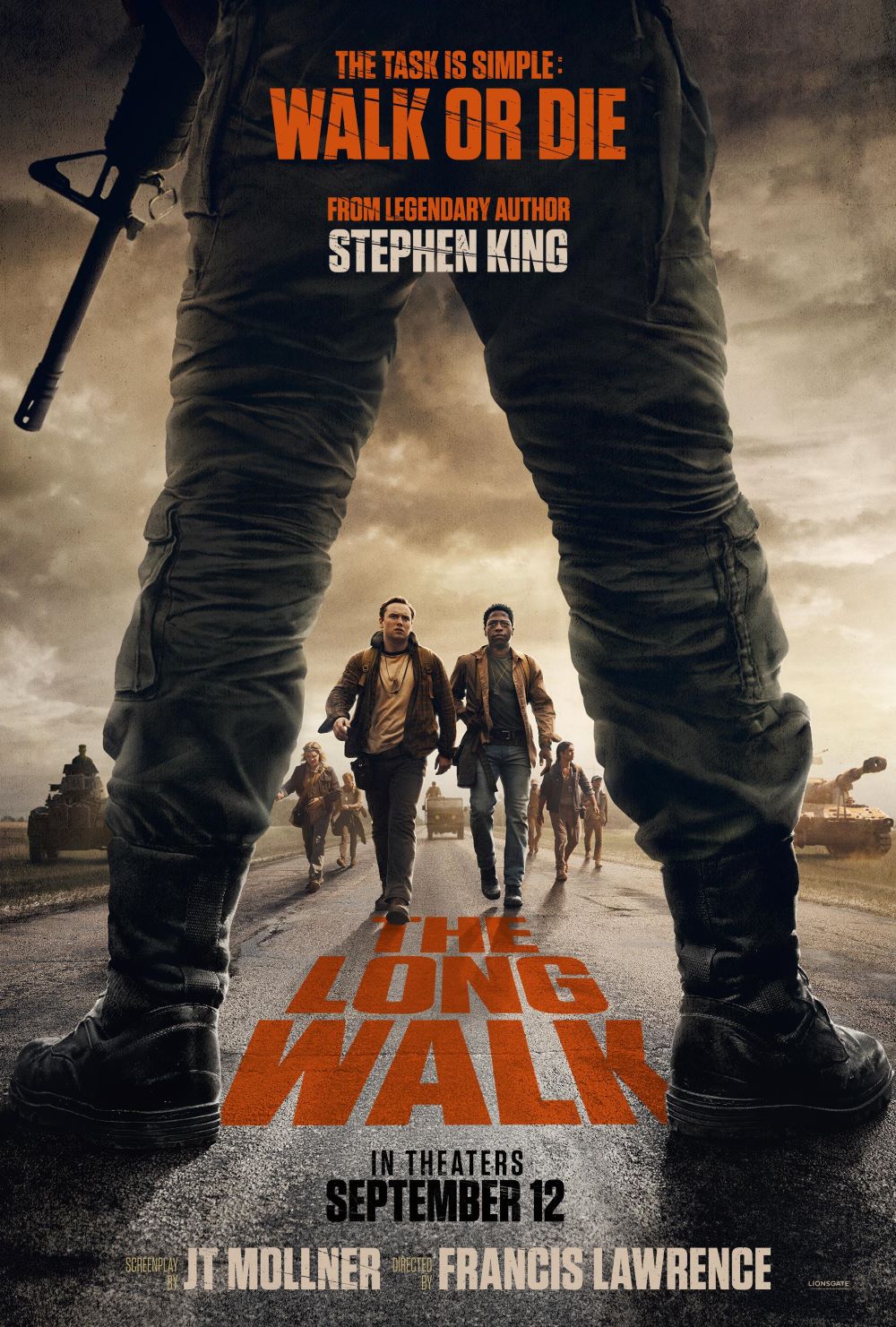
Francis Lawrence’s The Long Walk (2025) delivers a relentlessly brutal and unyielding vision of dystopian horror that explores survival, authoritarian control, and the devastating loss of innocence. The film immerses viewers in a grim spectacle: fifty teenage boys forced to participate in an annual, televised event known as the Long Walk. To survive, each participant must maintain a constant pace, never falling below a minimum speed, or else face immediate execution.

At the heart of this bleak narrative is Raymond Garraty, played with earnest vulnerability by Cooper Hoffman. Garraty’s backstory, marked by the tragic execution of his father for political dissent, sets a somber tone from the outset. As the Walk drags on, Garraty forges fragile bonds with fellow contestants, particularly Peter McVries (David Jonsson), whose camaraderie and quiet resilience inject moments of hope and humanity into the harrowing journey. These relationships become the emotional core, grounding the film’s relentless physical and psychological torment in deeply human experiences.

The setting enhances this oppressive atmosphere. The time and place remain deliberately ambiguous, with evident signs that the United States has recently suffered a second Civil War. The aftermath is a landscape ruled by a harsh, authoritarian military regime overseeing a nation economically and politically in decline. Though visual cues evoke a retro, 1970s aesthetic—reflected in military hardware and daily life—the film resists pinning itself to an exact year. This timelessness amplifies its allegorical power, emphasizing ongoing societal collapse and authoritarianism without tying the story to one era specifically. The dystopian backdrop is populated by broken communities and a pervasive sense of hopelessness that mirrors the characters’ internal struggles.

Visually, The Long Walk employs stark, gritty cinematography that traps viewers in the monotonous expanse of endless roads and bleak environments. Lawrence’s direction is unflinching and unrelenting, echoing the merciless march to death and the broader commentary on institutionalized brutality. The atmospheric score complements this oppressive tone, underscoring the emotional and physical exhaustion pacing the narrative.

Performances elevate the film’s emotional stakes significantly. Hoffman’s portrayal of Garraty captures the youth’s evolving vulnerability and determination, while Jonsson’s McVries adds a poignant emotional depth with his steady, hopeful presence. Supporting actors such as Garrett Wareing’s enigmatic Billy Stebbins and Charlie Plummer’s self-destructive Barkovitch bring vital complexity and urgency. Stebbins remains a figure whose allegiance is ambiguous, adding layered mystery to the group dynamics. Judy Greer’s limited screentime as Ginny Garraty, Ray’s mother, stands out powerfully despite its brevity. Each of her appearances is heartbreaking, bringing a wrenching emotional weight to the film. Her panicked, anguished attempts to hold onto her son before he embarks on the deadly Walk amplify the human cost of the dystopian spectacle, leaving a lasting impression of maternal agony amid the surrounding brutality.

Mark Hamill’s role as The Major is a significant supporting presence, embodying the authoritarian face of the regime. The Major oversees the brutal enforcement of the Walk’s rules, commanding lethal squads who execute those who falter. Hamill brings a grim and chilling force to the character, whose cold charisma and unwavering commitment to the ruthless system make him a menacing figure. Despite relatively limited screen time compared to the young participants, The Major’s presence looms large over the story, symbolizing the chilling machinery of power and control that governs the dystopian world.

Yet, the film is stark in its depiction of violence. The executions and suffering are raw and often grotesquely explicit, serving as a damning critique of authoritarian cruelty and the voyeuristic nature of state violence televised as entertainment. This unfiltered brutality can, however, become numbing and exhausting as it piles on relentlessly, occasionally undercutting emotional resonance. The narrative embraces nihilism fully, underscoring the dehumanization and futility within the dystopian world it portrays.

The film’s overall pacing and structure reflect this bleakness but at times suffer from monotony. The heavy focus on walking and survival mechanics leads to a lack of narrative variation, testing the audience’s endurance much like the characters’. There is likewise a noticeable stretch of physical realism—the contestants endure near-impossible physical feats without adequate signs of weariness or injury, which can strain believability.

Character development is another area where the film falters slightly. While Garraty and McVries are well-drawn and immunize emotional investment, other characters tend toward archetypical roles—bullies, outsiders, or generic competitors—diminishing the impact of many deaths or interactions. Similarly, the repetitiveness of the setting and cinematography, relying mostly on basic shots following the walkers, misses opportunities for more creative visual storytelling that might heighten tension or spotlight key emotional beats.

The film’s conclusion, stark and abrupt, offers no real catharsis or closure, reinforcing the overarching theme of unyielding despair. While this resonates with the film’s nihilistic motif, it may alienate those seeking narrative resolution or hope. The visceral shock and bleak tone permeate to the end, leaving the viewer with a lasting impression of relentless suffering and sacrifice.

This demanding yet visually striking and emotionally intense film challenges viewers with its unrelenting bleakness and brutal thematic content. It critiques societal violence, media spectacle, and authoritarianism through starkly powerful performances and an oppressive, immersive atmosphere. Though it excels in evoking emotional rawness in key moments and maintaining thematic consistency, it struggles with pacing, character depth beyond the leads, and occasional narrative monotony. Its ambiguous setting in a post-second Civil War America ruled by a declining authoritarian regime adds a timeless, allegorical layer to its exploration of human endurance and societal collapse.

Ultimately, this film is best suited for viewers prepared for an uncompromising, intense vision of dystopia. It stands as a compelling, if bleak, meditation on youth, survival, and the human spirit under extreme duress, showcasing Francis Lawrence’s aptitude for crafting thought-provoking, provocative horror.

Horror Review: Day of the Dead (dir. by George A. Romero)


“You want to put some kind of explanation down here before you leave? Here’s one as good as any you’re likely to find. We’re bein’ punished by the Creator…” — John “Flyboy”

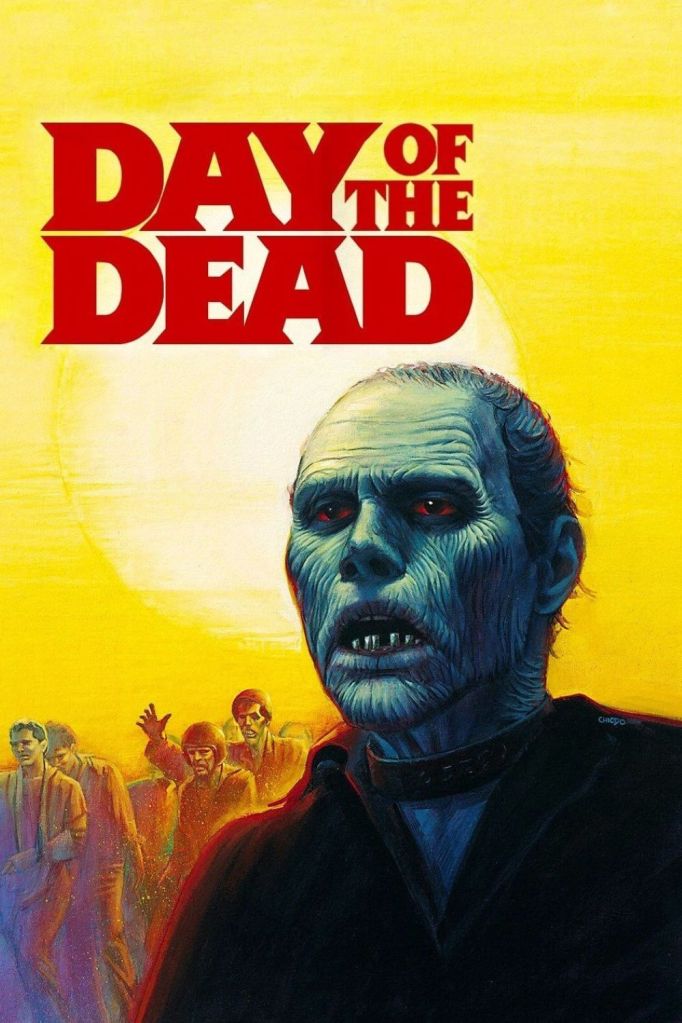
George A. Romero’s 1985 film Day of the Dead stands as an unflinching and deeply cynical meditation on the collapse of society amid a relentless zombie apocalypse, intensifying thematic and narrative complexities first introduced in Night of the Living Dead (1968) and Dawn of the Dead (1978).

Originally, Romero envisioned the film as an epic, describing it as “the Gone with the Wind of zombie films.” His screenplay featured above-ground scenes and a more expansive narrative, but budget cuts halved the original $7 million budget to $3.5 million, forcing a drastic paredown. While much grandiosity was lost, the trimming resulted in a tighter narrative and heightened the nihilistic tone, deepening the film’s focused exploration of humanity’s darkest aspects during apocalypse.

Set after civilization has collapsed, Day of the Dead places viewers in the suffocating confines of a missile silo bunker in Florida, where scientists and soldiers struggle for survival and solutions amid encroaching undead hordes. The claustrophobic atmosphere—born partly from the abandonment of Romero’s broader original sequences—intensifies the tension between the hopeful scientific pursuit of salvation and the harsh pragmatism of military authority. These competing ideologies escalate into authoritarian violence, embodying the fractured microcosm of a dying society.

Within this claustrophobic world, a third group—composed of characters Flyboy and McDermott—emerges as a stand-in for the rest of humanity. They observe the scientists and soldiers—institutions historically symbols of security and innovation—but witness how these deeply entrenched ways of thinking only exacerbate problems instead of solving them. This third faction characterizes humanity caught between rigid orders and doomed pursuits, reflecting Romero’s broader commentary on societal stagnation and fragmentation.

Central to this conflict are Dr. Logan, or “Frankenstein,” a scientist obsessed with controlling the undead through experimentation, and Captain Rhodes, the hardened soldier who believes survival demands ruthless control.

Logan’s controversial research seeks to domesticate and condition zombies, notably through his most celebrated subject, Bub—the undead zombie capable of rudimentary recognition and emotion—challenging assumptions about humanity and monstrosity.

Here the film benefits greatly from the extraordinary practical effects work of Tom Savini, whose contributions on Day of the Dead are widely considered his magnum opus. Savini’s makeup and gore effects remain unsurpassed in zombie cinema, continually influencing horror visuals to this day. Drawing from his experience as a combat photographer in Vietnam, Savini brought visceral realism to every decomposed corpse and violent injury. The close-quarters zombie encounters showcase meticulous practical work—detailed wounds, biting, and dismemberment—rendered with stunning anatomical authenticity that predates CGI dominance.

Bub, also a masterclass in makeup and animatronics, embodies this fusion of horror and humanity with lifelike textures and movements that blur the line between corpse and creature, rendering the undead terrifyingly believable.

The film captures the growing paranoia and cruelty as resources dwindle—food, ammunition, and medical supplies—and the fragile social order begins to shatter. The characters’ mounting desperation illustrates Romero’s thesis that humanity’s real enemy may be its own incapacity for cooperation.

The moral and social decay is vividly portrayed through characters like Miguel, whose mental breakdown sets destructive events in motion, and Rhodes, whose authoritarian survivalism fractures alliances and moral compass alike. Logan’s cold detachment and experiments push ethical boundaries in a world on the brink.

Romero’s direction combines claustrophobic dread with stark psychological terror, further amplified by Savini’s effects. The cinematography’s low lighting and tight framing create an oppressive environment, while graphic violence underscores a world irrevocably broken. The unsettling sound design—moans, silences, sudden outbreaks—immerses viewers in a relentless atmosphere of decay and fear.

Romero described Day of the Dead as a tragedy about how lack of human communication causes chaos and collapse even in this small slice of society. The dysfunction—soldiers and scientists talking past each other, eroding trust, spirals of paranoia—serves as a bleak allegory for 1980s America’s political and cultural fragmentation. Failed teamwork, mental health crises, and fatal miscommunication thrive as the bunker metaphorically becomes a prison of fractured humanity.

Though not as commercially successful as its predecessors, Day of the Dead remains the bleakest and most nihilistic entry in Romero’s Dead series. Its overall grim tone, combined with mostly unlikable characters, establishes it as the most desolate and truly apocalyptic film of the series. The characters often appear fractured, neurotic, and unable to escape their own destructive tendencies, making the story’s world feel even more hopeless and devastating.

Far beyond a simple gore fest, Day of the Dead serves as a profound social critique infused with psychological depth. It explores fear, isolation, authority abuse, and the ethical limits of science, reflecting enduring anxieties about society and survival. The film’s unsettling portrayal of humanity’s failings, embodied in broken relationships and moral decay, presents a harsh reckoning with what it means to be human when humanity itself is the ultimate threat to its own existence. This thematic complexity, combined with Romero’s unyielding vision and Savini’s unparalleled effects, crafts a chilling and unforgettable cinematic experience.

Horror Review: The Void (dir. by Steven Kostanski & Jeremy Gillespie)


“It’s not just the darkness out there… it’s the darkness in here.” — Sheriff Daniel Carter

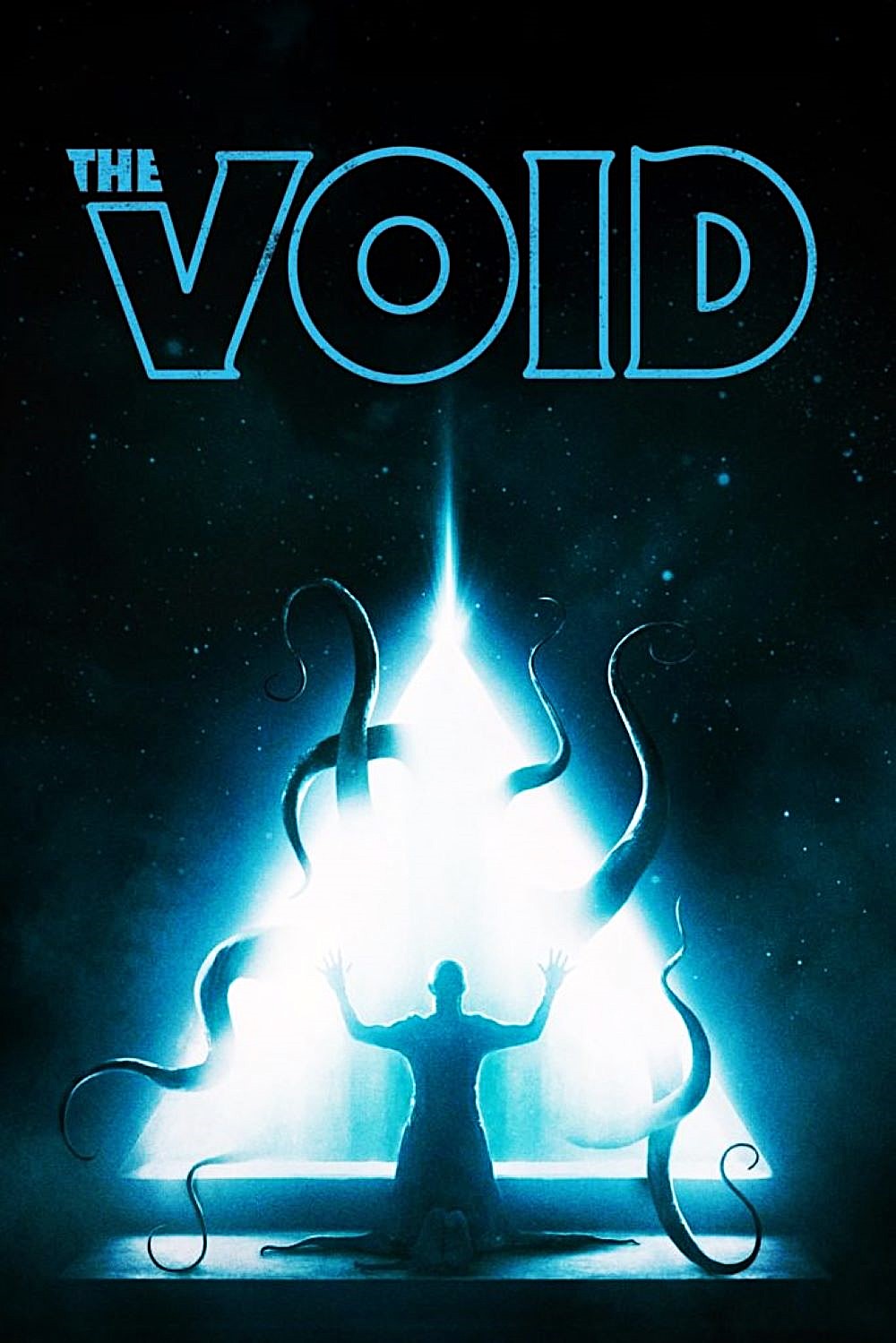
Steven Kostanski and Jeremy Gillespie’s The Void is a grisly, atmospheric plunge into Lovecraftian cosmic horror and John Carpenter-inspired body horror, set within a nearly abandoned rural hospital shrouded in eerie blue light and creeping shadows. The film expertly conjures anxiety and dread, as fragile boundaries between dimensions begin to dissolve, threatening to swallow all inside.

At the heart of the story is Deputy Sheriff Daniel Carter (Aaron Poole), whose weighty grief and fractured relationships drive his reluctant heroism. He stumbles upon a bloodied man and brings him to the hospital staffed by his estranged wife, Allison Fraser (Kathleen Munroe), a focused nurse haunted by their broken family. Dr. Richard Powell (Kenneth Welsh) looms as the villainous architect of the unfolding nightmare, his obsession with conquering death fueled by personal tragedy, twisting him into a leader of occult horrors.

The supporting characters—Vincent and Simon, survivors hardened by trauma; Maggie, a pregnant woman caught in the web of cosmic corruption; and Kim, a vulnerable young intern—saturate the siege narrative with survival-driven urgency. Though less developed than the leads, they embody the raw desperation and existential threat pervading the hospital.

The Void wears its influences on its sleeve, drawing heavily from the siege tension of John Carpenter’s Assault on Precinct 13 alongside the paranoia and isolation of The Thing. These classic Carpenter motifs—claustrophobic settings, unrelenting external threat, and mistrust among survivors—penetrate the film’s fabric, amplified by a synthesizer-driven score nodding to Carpenter’s sonic signature. The nightmarish body horror, occult elements, and grotesque practical effects owe much to Stuart Gordon’s work adapting Lovecraft’s stories, blending visceral horror with cosmic dread.

Yet, while the homage is clear and affectionate, the film sometimes falters by blending these iconic elements into a decoction that resists full cohesion. Instead of synthesizing the inspirations into an innovative whole, it assembles a patchwork—rich in style and atmosphere but struggling to commit to a coherent, fresh narrative. The mixture of Carpenter’s claustrophobic siege, Gordon’s visceral mythos, and the cultist horror trope occasionally feels like pastiche rather than a confident new voice.

The technical craftsmanship shines throughout. Practical effects—from mutated creatures to grotesque body transformations—are lovingly crafted and tactile, restoring a physicality often lost in digital horror. The cinematography and lighting accentuate the oppressive mood, favoring muted colors punctuated by blood-red and luminous blues, thinking as much about shadows as solid objects.

However, the film’s narrative and character work often leave something to be desired. While Carter’s arc of guilt and reluctant heroism is thematically resonant, key emotional beats suffer from underdevelopment, with his relationships, particularly with Allison, only superficially explored. Dialogue oscillates between exposition-heavy and clipped, hindering audience connection with the cast amid the unrelenting terror. The supporting characters serve primarily functional roles, their deeper motivations and backstories sacrificed for the sake of grim spectacle and escalating horror.

The climax descends into surreal, fragmented sequences that evoke fever dreams more than narrative resolution. This abstract finale, while visually striking, challenges viewers seeking clarity and can be polarizing: some will appreciate the cosmic horror tradition of unsolvable mysteries, while others may experience frustration with the loose plotting and ambiguity. Pacing reflects these shifts—building steadily in the opening act before devolving into frenetic, disjointed bursts that occasionally undermine tension.

Despite these narrative and pacing flaws, The Void remains a memorable experience for lovers of practical effects and cosmic horror texture. It’s a film rich with unsettling imagery and mood, capturing a form of existential terror that goes beyond cheap scares. The filmmakers’ love for classic horror runs deep, even if the resulting fusion occasionally feels like homage without full reinvention.

Ultimately, The Void is a dark, unsettling trip into the unknowable—a sonic and visual descent into a hellish siege where logic unravels and time shatters. It’s a film that prizes atmosphere and physical monstrosity over smooth storytelling, inviting viewers to surrender to dread rather than demand explanation. For fans of Carpenter’s minimalist tension, Gordon’s visceral adaptations, and the tactile nightmares of 80s horror, The Void offers a rewarding, though imperfect, journey into the cosmic abyss—an evocative invocation of terror where humanity is both survivor and prey.