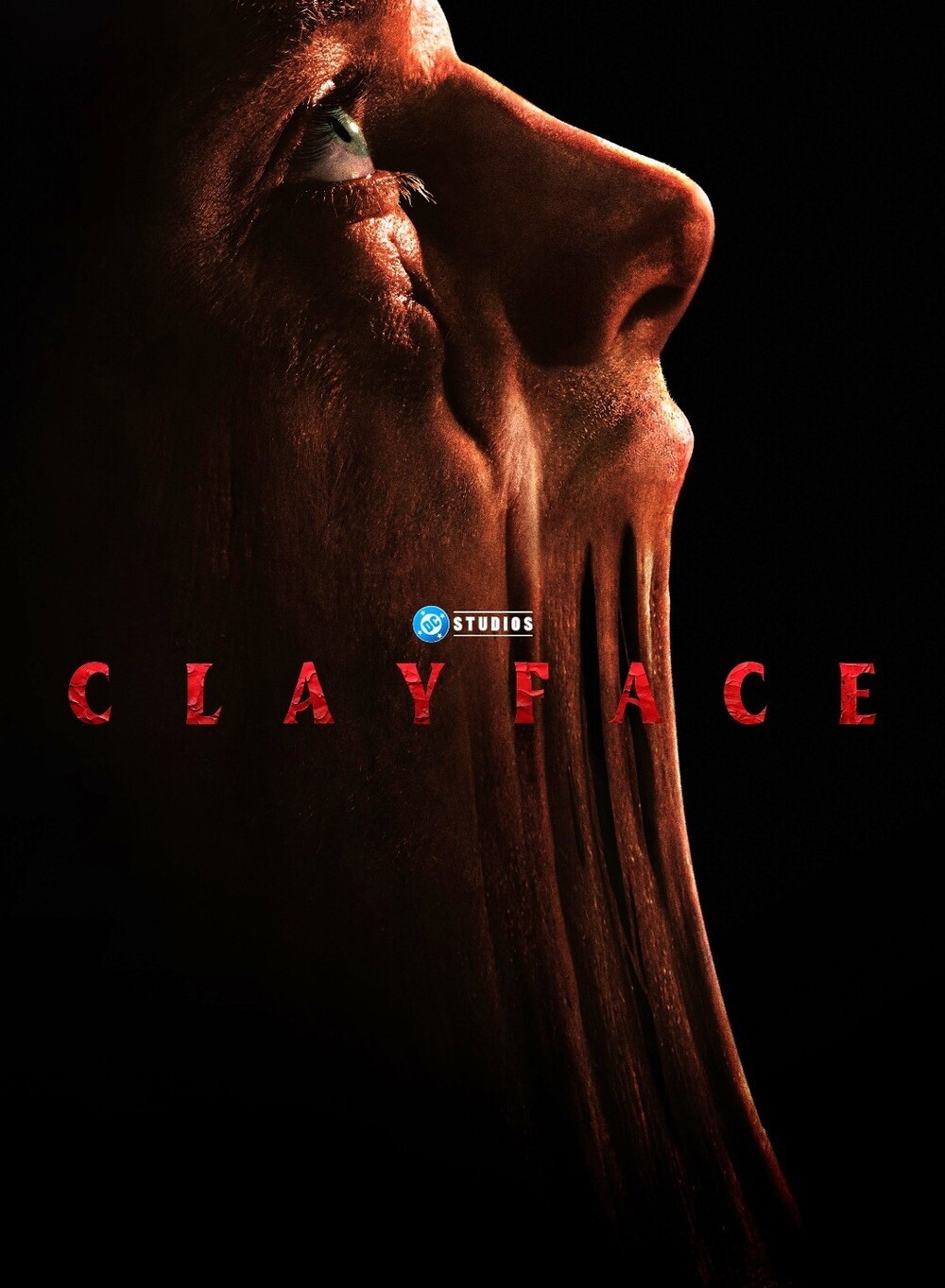
Horror Film Review: Clayface (dir. by James Watkins)


“Even if it kills me, I’ll be better off than I am now.” — Matt Hagen

The most unsettling thing about Clayface isn’t watching a man lose his face; it’s realizing how much of his life was built around having the right one. James Watkins’ take on the DC villain turns that insecurity into a nasty little body-horror tragedy, following someone who has confused being desirable with being worth something. Beneath the collapsing features and increasingly grotesque transformations is a recognizable fear: that losing the thing people admire about you means losing their interest altogether. The film doesn’t explore that idea as deeply as it could, but it gives the horror a compelling emotional foundation beyond the spectacle of a comic-book monster taking shape.

At the center is Matt Hagen, played by Tom Rhys Harries, an actor whose rising career is derailed by a disfiguring attack. His appearance has opened doors for him, and losing it threatens more than his next role. It destroys the version of himself he thought he could count on. Desperate for a way back, he turns to Dr. Caitlyn Corr, played by Naomi Ackie, whose experimental treatment promises to repair the damage. Naturally, the results come with complications. The interesting question isn’t whether the miracle will turn into a nightmare, but how much Matt is willing to overlook once he starts recognizing himself in the mirror again.

That desperation makes Matt more compelling than a character who simply gets powers and becomes dangerous. His problem begins before his body starts changing: he already depends on other people to tell him what he’s worth. That insecurity connects naturally to his profession. An actor who can physically become someone else sounds like a wish fulfilled, until transformation stops being a choice. There’s a cruel logic to giving someone obsessed with recovering his identity a body that won’t hold one. The screenplay occasionally spells things out too neatly, but the central idea gives the nastiness something to work with beyond its shock value.

Harries does a lot to keep that idea grounded. He makes Matt’s appeal believable without turning him into someone whose suffering automatically excuses everything he does. His desperation is understandable even when his choices become selfish or disturbing, and the performance handles that balance well. His humiliation doesn’t immediately become theatrical rage. It lingers, making him defensive, needy, and increasingly willing to justify himself. Even when the movie pushes him toward more recognizable villain territory, Harries preserves traces of the frightened person underneath. Matt doesn’t have to remain likable to remain interesting, and the performance understands the difference between earning sympathy and demanding it.

Ackie gives the film another human connection that it needs. Corr could have been little more than the scientist who introduces the treatment and explains why everybody should be worried. Instead, her warmth complicates a relationship already shaped by unequal needs. Matt wants his life back; she wants her work to succeed. Those desires overlap without being identical, making their connection more engaging than the mechanics of the experiment. The romantic element also gives their scenes a tragic-monster quality. Not every emotional beat lands with equal force, but the performances keep their relationship from feeling like a mandatory break between transformations.

Those transformations are where Watkins delivers the movie’s most immediate pleasures, assuming “pleasures” is the right word for watching somebody’s anatomy stop cooperating. The real discomfort comes from the instability. A face should stay recognizable even when everything else changes, and Clayface makes that familiarity feel temporary. The makeup and prosthetic work give Matt’s deterioration an unpleasant physical texture, encouraging a queasy fascination with damage that’s difficult to look at and harder to ignore. At its best, the body horror feels wet, awkward, and difficult to contain rather than polished into something comfortably spectacular. There’s enough physical nastiness here to give Matt’s desperation a genuinely disturbing shape.

Even without the DC Comics pedigree or the connection to Batman, Clayface would still be a compelling body-horror film. The recognizable name might get people interested, but Matt’s desperation, the disturbing effects, and the tragedy of losing control over his identity are what make it work. There’s no need to know where he fits into Gotham or who he might eventually fight. His story has enough emotional weight and gruesome imagination to stand on its own. The comic-book background adds another layer, but it isn’t holding the movie together. That independence makes it feel like an actual horror story rather than franchise homework dressed up with gore.

For an R-rated body-horror film, though, Clayface plays it surprisingly safe. That might sound odd given the grotesque imagery, but graphic violence and genuinely unsettling ideas aren’t the same thing. There are moments when Matt’s transformation seems ready to take the movie somewhere stranger, only for it to retreat toward familiar revenge-thriller territory. The issue isn’t simply that it needs more blood or more elaborate effects. A more Cronenbergian approach could have pushed further into how his changing body alters his desires, his relationships, and his understanding of himself. The film is willing to make Matt look monstrous, but more hesitant to explore what becoming something other than human might actually feel like.

That restraint becomes especially noticeable as Matt gains control over his abilities. Early on, his body feels like a threat he can’t escape. Later, it increasingly becomes a weapon. The shift makes sense for the story, but it changes the experience from watching someone endure a nightmare to watching him inflict one. There’s nasty fun in that, especially when the film embraces its lurid side, but his inability to trust his own body generates more unease than his ability to make other people afraid of it. As the confrontations become more conventional, the movie sacrifices some of the uncertainty that makes its earlier stretches so effective.

The comparisons with The Fly and Darkman are hard to avoid, from scientific possibility curdling into catastrophe to the disfigured man pursuing revenge. The relationship between appearance and personal value also invites comparisons with The Substance. Those connections help explain the film’s appeal, but they highlight what feels underdeveloped, too. Clayface has an industry full of people who judge surfaces and a protagonist whose surface becomes impossible to maintain. That’s fertile ground. Sometimes the movie digs into it; sometimes it settles for a familiar revenge beat with a more disgusting visual payoff. The latter can be entertaining without being quite as satisfying.

Even with those reservations, Clayface succeeds because enough humanity survives beneath the grotesquerie. Harries gives the film a wounded center, while Ackie helps keep its emotional stakes from disappearing into the effects work. Watkins delivers the gruesome spectacle, but the sadness underneath gives it staying power. The film doesn’t fully realize its strongest ideas, and its reluctance to follow them into truly uncomfortable territory keeps it from becoming something exceptional. Still, its best moments make physical transformation feel painfully personal. Matt can change his appearance, but finding a face he can live with turns out to be the harder problem.
Retro Television Review: Homicide: Life On The Street 6.8 “All is Bright”


Welcome to Retro Television Reviews, a feature where we review some of our favorite and least favorite shows of the past!  On Sundays, I will be reviewing Homicide: Life On The Street, which aired from 1993 to 1999, on NBC!  It  can be viewed on Peacock.

It’s Christmas in Baltimore.

Episode 6.8 “All Is Bright”

(Dir by Matt Reeves, originally aired on December 12th, 1997)

It’s the holidays!  Falsone (ugh) is still talking about suing to get custody of his kids.  (Seriously, Falsone — either do it or shut up about it.  We already had to go through this crap with Felton a few seasons ago.)  Lewis and Kellerman are worrying about whether or not Georgia Rae has footage of Kellerman executing Luther Mahoney.  Bayliss is suddenly making out with Cox at the Christmas party.  Well, why shouldn’t he?  It’s impossible to go in a bar or even a shop in Baltimore without running into Dr. Cox.

Meanwhile, Gharty and Ballard are investigating the murder of man in a laundromat.  Someone beat him to death and poured bleach down his throat.  It turns out that the man was HIV+ and he infected a woman named Rita (the great Kathryne Erbe).  Rita is now visibly sick and dying while the man who infected her wasn’t showing any signs of being sick at all.  Rita’s guilt is never really in question.  The issue is that Ballard feels sorry for Rita and understands her anger while the older and more-traditionally minded Gharty sees her as just being another murderer.  It’s a pretty simple story but Callie Thorne and Peter Gerety sold it.  The fact that Gharty is obviously in love with Ballard adds a whole other level of meaning to their scenes together.

Speaking of love, Munch’s ex-wife Gwen (Carol Kane) showed up at the bar and recruited Munch to help with her mother’s funeral.  Only real-life author Peter Maas showed up for the ceremony.  Munch, of course, asked Gwen about Lennie Briscoe.  Belzer and Kane were a great team.  I’m a bit disappointed that there was apparently never a Munch/Gwen spin-off.

Watching Gharty and Ballard provided a needed relief from all of the Falsone-centered episodes that I’ve had to sit through recently.  This was a simple episode but a good one.

4 Shots From Horror Films: 2010s Part One


This October, I’m going to be doing something a little bit different with my contribution to 4 Shots From 4 Films.  I’m going to be taking a little chronological tour of the history of horror cinema, moving from decade to decade.

Today, we begin the 2010s!

4 Shots From 4 Horror Films

The Wolfman (2010, dir by Joe Johnston)

The Wolfman (2010, dir by Joe Johnston)

Insidious (2010, dir by James Wan)

Insidious (2010, dir by James Wan)

Let Me In (2011, dir by Matt Reeves)

Let Me In (2011, dir by Matt Reeves)

The Cabin In The Woods (2012, dir by Drew Goddard)

The Cabin In The Woods (2012, dir by Drew Goddard)

4 Shots From 4 Horror Films: 2000s Part Two


This October, I’m going to be doing something a little bit different with my contribution to 4 Shots From 4 Films.  I’m going to be taking a little chronological tour of the history of horror cinema, moving from decade to decade.

Today, we complete to the aughts!

4 Shots From 4 Horror Films

Halloween (2007, dir by Rob Zombie)

Halloween (2007, dir by Rob Zombie)

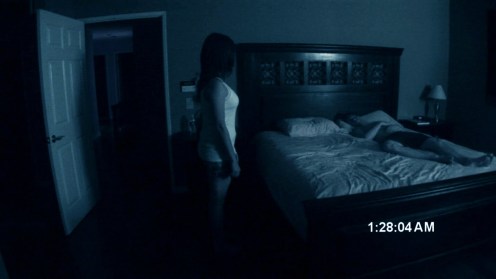
Paranormal Activity (2007, dir by Oren Peli)

Paranormal Activity (2007, dir by Oren Peli)

Cloverfield (2008, dir by Matt Reeves)

Cloverfield (2008, dir by Matt Reeves)

The House of the Devil (2009, dir by Ti West)

The House of the Devil (2009, dir by Ti West)

Guilty Pleasure No.66: Cloverfield (dir Matt Reeves)


Let’s just be honest, here.  In many ways, 2008’s Cloverfield is a remarkably stupid film.

I mean, don’t get me wrong.  It’s an entertaining film.  It’s a fun film.  It’s a film that I’ve seen a few times and I usually enjoy it whenever I see it.  But it’s still a film about someone who refuses to stop filming, even in the middle of an alien invasion.  It makes sense, of course, that Hud Platt (T.J. Miller) would want to film the going away party that’s being held for his friend Rob (Michael Stahl-David).  But why would Hud keep holding onto that camcorder even after the aliens invade and New York starts to explode all around him?  There are several moments in the film where it’s obvious that the camera is slowing Hud and his friends down.  The easiest thing to do would be to drop the camcorder and run to safety.  I mean, it’s not like the destruction of New York by aliens is going to be lost to history if Hud doesn’t film it.  But instead, Hud not only keeps filming but, for all the shaky cam effects and the heaving breathing of people running for their lives, Hud still somehow manages to capture every important event on camera.

In many ways, the film epitomizes everything that tends to drive people crazy about the found footage genre but Cloverfield is an undeniably fun movie.  I mean, there’s a scene where the head of the Statue of Liberty is literally tossed into the middle of the street.  It’s such an over-the-top moment that it’s impossible not to love it and, to be honest, the fact that Hud manages to hold the camera still enough to perfectly capture the image of Lady Liberty’s head crashing to the ground is kind of cool.  The film follows a group of friends as they try to make their way across New York City to try to rescue Rob’s girlfriend Beth (Odette Yustman) before then evacuating the city and there’s something rather exciting about the sight of this small group of people continually moving in the opposite direction of the crowd around them.  While everyone else  runs away from danger, our heroes move straight into it, even though none of them are exactly action heroes.  They’re nerdy hipsters on a mission and, even though you know from the start that they’re all doomed, it’s hard not to kind of love them.  The film’s final moments carry more an emotional punch than you might normally expect from a found footage alien invasion film.

That said, if the aliens do come and they are literally tearing apart the Statue of Liberty before your very eyes, there’s no shame in putting down the camera and running.  In fact, if there’s any lesson to be learned from Cloverfield, it’s that sometimes, it’s best just to run for it.

Previous Guilty Pleasures

  1. Half-Baked
  2. Save The Last Dance
  3. Every Rose Has Its Thorns
  4. The Jeremy Kyle Show
  5. Invasion USA
  6. The Golden Child
  7. Final Destination 2
  8. Paparazzi
  9. The Principal
  10. The Substitute
  11. Terror In The Family
  12. Pandorum
  13. Lambada
  14. Fear
  15. Cocktail
  16. Keep Off The Grass
  17. Girls, Girls, Girls
  18. Class
  19. Tart
  20. King Kong vs. Godzilla
  21. Hawk the Slayer
  22. Battle Beyond the Stars
  23. Meridian
  24. Walk of Shame
  25. From Justin To Kelly
  26. Project Greenlight
  27. Sex Decoy: Love Stings
  28. Swimfan
  29. On the Line
  30. Wolfen
  31. Hail Caesar!
  32. It’s So Cold In The D
  33. In the Mix
  34. Healed By Grace
  35. Valley of the Dolls
  36. The Legend of Billie Jean
  37. Death Wish
  38. Shipping Wars
  39. Ghost Whisperer
  40. Parking Wars
  41. The Dead Are After Me
  42. Harper’s Island
  43. The Resurrection of Gavin Stone
  44. Paranormal State
  45. Utopia
  46. Bar Rescue
  47. The Powers of Matthew Star
  48. Spiker
  49. Heavenly Bodies
  50. Maid in Manhattan
  51. Rage and Honor
  52. Saved By The Bell 3. 21 “No Hope With Dope”
  53. Happy Gilmore
  54. Solarbabies
  55. The Dawn of Correction
  56. Once You Understand
  57. The Voyeurs 
  58. Robot Jox
  59. Teen Wolf
  60. The Running Man
  61. Double Dragon
  62. Backtrack
  63. Julie and Jack
  64. Karate Warrior
  65. Invaders From Mars

2022 In Review: Lisa Marie’s Top 30 Films of 2022


Without further ado, here are my top 30 films of 2022!

(Why 30?  Because Lisa doesn’t do odd numbers!  Also, be sure to check out my picks for 2010, 2011, 2012, 2013, 2014, 2015, 2016, 2017, 2018, 2019, 2020, and 2021!  Wow, I’ve been doing this for a while!)

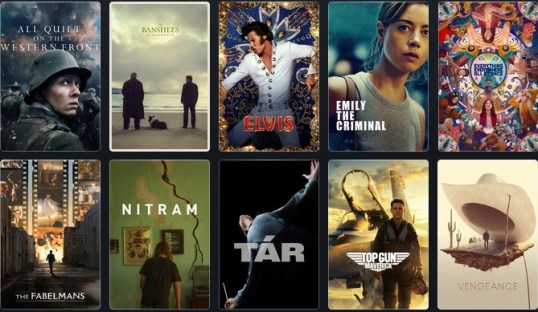
30. Marcel The Shell With Shoes On (dir by Dean Fleischer Camp)

An animated film with heart, Marcel The Shell With Shoes On would probably be ranked higher if Marcel’s favorite news show had been something other than 60 Minutes.  Still, questionable viewing habits aside, Marcel and Nana Connie and all the other shells were amazing characters and the end of the movie brought tears to my mismatched eyes.  With this film and I Want You Back, Jenny Slate had quite a year.

29. Ted K (dir by Tony Stone)

Released in February of this year, this film about Ted Kaczyski and his descent into madness was unfairly overlooked. Sharlto Copley was perfectly cast as Ted K.  This is a film that probably won’t make Ted’s supporters happy but, at the same time, it also avoids painting him as just being a straight-out madman.  It’s refusal to simplify makes the film far more than just another true crime biopic.

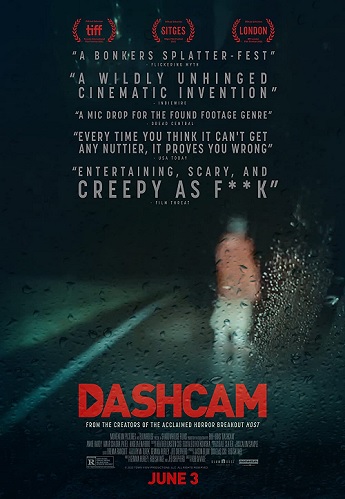
28. Dashcam (dir by Rob Savage)

Starring Annie Hardy as herself, this low-budget horror film is a scathing satire of life during the age of COVID and performative “wokeness.”  After the past few years, there’s something rather cathartic about Hardy’s refusal to obey.

27. The Batman (dir by Matt Reeves)

At this point, I’m fairly cynical about comic book movies in general and Batman films in specific.  I mean, how many Batmen have we had over the past ten years?  (Actually, I think only four but it feels like a lot more!)  That said, I enjoyed The Batman, for both its noirish atmosphere and it’s willingness to embrace the melodrama.  You have to love the fact that the villain was basically a nerdy podcaster.

26. Operation Mincemeat (dir by John Madden)

Based on a true story, this film was a throwback to the earnest World War II films of the past.  Colin Firth, Kelly MacDonald, Matthew McFayden, and Johnny Flynn were all well-cast and did their part to bring this moment of WWII history to life.

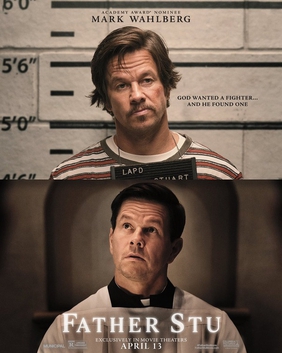
25. Father Stu (dir by Rosalind Ross)

You don’t have to be from a Catholic background to appreciate Father Stu but it probably helps.  This was one of those roles that only Mark Wahlberg could have pulled off.

24. See How They Run (dir by Tom George)

This stylized murder mystery was terrifically entertaining and witty.  Sam Rockwell and Saoirse Ronan are both treasures.

23. I Want You Back (dir by Jason Orley)

Two friends conspire to win back their respective romantic partners and end up falling in love with each other instead.  This was an enjoyable comedy, one that was blessed with an outstanding cast that included Jenny Slate, Charlie Day, Scott Eastwood, and Gina Rodriguez.  The scene in which Jenny Slate sings Suddenly Seymour is a classic.

22. Ambulance (dir by Michael Bay)

This was the film that Michael Bay was born to direct.  For once, Bay’s hyperkinetic style was perfectly matched by the story being told.  It also helped that the ambulance was a real ambulance and not a robot pretending to be an ambulance.

21.Send Me (dir by Nick Palmisciano)

This is a heart-breaking documentary about the efforts of 12 veterans to evacuate as many allies as they could during the disastrous withdraw from Afghanistan.  This film deserved more attention than it got.

20. The Bombardment (dir by Ole Bornedal)

Based on a true story, this Danish film deals with the accidental bombing of a school during World War II.  It’s been overshadowed a bit by All Quiet On The Western Front but, in its quieter way, The Bombardment is also a strong look at the horrors of war.

19. Goodnight Oppy (dir by Ryan White)

This is a poignant documentary about Opportunity, the NASA exploration rover that spent 15 years exploring Mars.  This movie proves that a robot can make you cry.

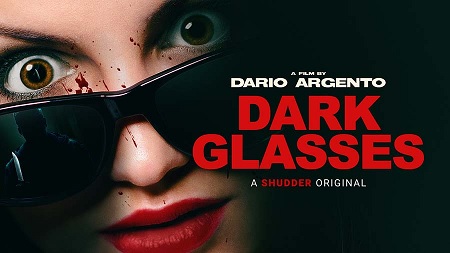
18. Dark Glasses (dir by Dario Argento)

Don’t listen to the critics.  This enjoyably over-the-top giallo was an entertaining return-to-form for Dario Argento.

17. Wildcat (dir by Melissa Lesh and Trevor Fost)

This poignant documentary follows a depressed veteran as he finds purpose helping to raise a baby ocelot in Peru.  Be prepared to cry.

16. Apollo 10 1/2 (dir by Richard Linklater)

Richard Linklater’s animated film was well-received by critics but it’s still hard not to feel that it’s been a bit overlooked.  Narrated by Jack Black, the film details the 1969 moon landing from the perspective of a child with a very active imagination.  Nostalgic, sweet-natured, and ultimately rather moving, Apollo 10 1/2 is a film that celebrates life.

15. Three Minutes: A Lengthening (dir by Bianca Stigner)

This haunting and moving documentary, which is narrated by Helena Bonham Cater, examines a three-minute snippet of 16mm film that was shot in a Jewish town in Poland in 1938, shortly before the Nazis invaded.  By examining every aspect of those three minutes, this documentary becomes both a memorial for the inhabitants of that town and a much-needed reminder of the horrors and reality of the Holocaust.  With anti-Semitism and Holocaust denial on the rise, this is an important documentary.

14. The Northman (dir by Robert Eggers)

The Northman is occasionally thrilling and occasionally ludicrous but it’s always watchable.  Robert Eggers finds moments of humor and odd beauty in this Viking epic.  Nicole Kidman embraces the melodrama and goes all out.  I just hope Valhalla was actually worth all the trouble.

13. Puss In Boots: The Last Wish (dir by Joel Crawford)

Yeah, you knew this film was going to show up on my list.  To be honest, the film could have been about just about anything.  I’d watch Puss In Boots read the phone book as long as Antonio Banderas returned to do his voice.  The fact that the film itself was cute and even touching was an added bonus.

12. Guillermo del Toro’s Pinocchio (dir by Guillermo del Toro and Mark Gustafson)

Yes, a puppet can make you cry.

11. Babylon (dir by Damien Chazelle)

Was it flawed?  You bet.  Did it run a little bit too long?  Yes, it did.  Could I have done without the scene with the elephant?  You better believe it.  That said, this film was so gloriously excessive and over-the-top that it was easy for me to forgive its flaws.  The critics may not have liked it but Babylon is a film that will be rediscovered.

10. The Fabelmans (dir by Steven Spielberg)

I went back and forth over whether to put The Fabelmans or Babylon in the number ten spot.  In a way, they’re kind of similar in that they have their flaws but they’re both saved by their director’s obvious love of cinema.  In the end, David Lynch’s role as John Ford moved The Fabelmans into the 10th spot.

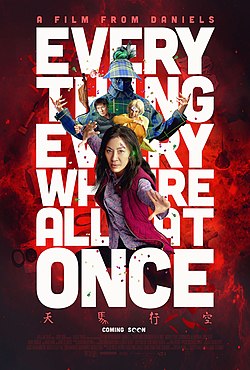
9. Everything Everywhere All At Once (dir by the Daniels)

To be honest, I think some people are going a little bit overboard in their praise for this film.  Yes, it’s one of the year’s best but 2022 wasn’t that strong of a year and Everything is one of those probable Best Picture winners that, like Nomadland and CODA, will probably not be quite as celebrated after it actually wins.  That said, Michelle Yeoh and especially Ke Huy Quan deserve all the praise that they’ve received and I appreciated that the film featured the destruction of an IRS office.  It’s not as perfect as some say but, due largely to the cast, it still deserves to be in my top ten.

8. Nitram (dir by Justin Kurzel)

This is another unfairly overlooked film, this time from Australia.  Caleb Landry Jones gives a powerful and disturbing performance as a troubled young man named Nitram who commits an act of shocking violence.  Anthony LaPaglia and Judy Davis play Nitram’s parents, who are both troubled in their own individual ways.  Essie Davis plays the older woman who falls in love with Nitram, despite the fact that Nitram is incapable of loving anyone.

7. Emily the Criminal (dir by John Patton Ford)

Aubrey Plaza plays Emily, who discovers that not only does crime pay but, in the gig economy, it’s one of those few ways to get ahead.  Part thriller and part satire, Emily the Criminal reminds us that Plaza is one of the most interesting actresses working today.

6. All Quiet On The Western Front (dir by Edward Berger)

This German anti-war epic stays true to the themes of its source material while updating the plot for the modern era.  The contrast between the generals and the diplomats planning battles and the soldiers dying in them is a powerful one.

5. Elvis (dir by Baz Luhrmann)

This wonderfully excessive biopic features good music, a great performance from Austin Butler, and a wonderfully eccentric one from Tom Hanks.  Luhrmann is hardly a subtle director but Butler’s performance keeps the film from spiraling out of control.

4. Vengeance (dir by B.J. Novak)

This whip-smart satire of both true crime podcasts and the red state/blue state divide deserved far more attention than it received.  Ashton Kutcher has actually become a surprisingly dependable character actor.  Director and screenwriter Novak tells the story with sensitivity and a sharp eye for the absurd.

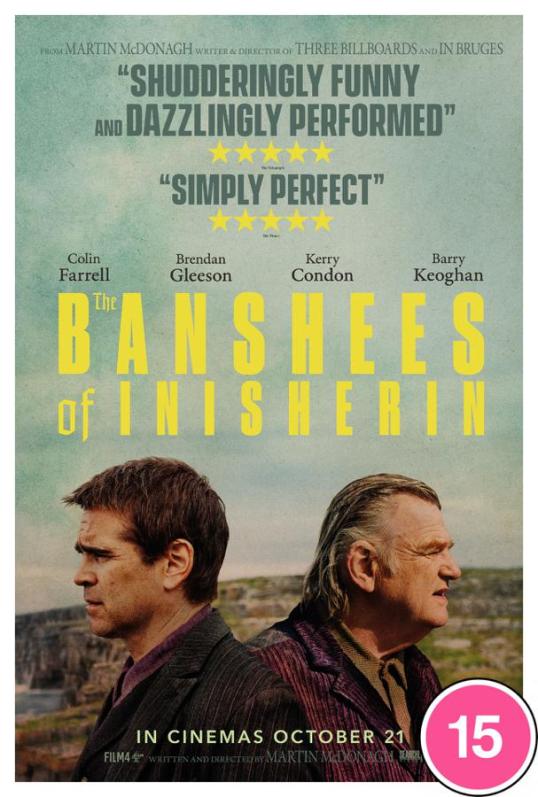
3. The Banshees of Inisherin (dir by Martin McDonagh)

In his best film yet, Martin McDonagh examines friendship, art, violence, and anger in Ireland.  Brendan Gleeson no longer wants to be Colin Farrell’s friend.  Farrell’s attempts to discover why leads to all sorts of surprising and macabre developments.  Gleeson and Farrell have never been better.  Kerry Condon and Barry Keoghan offer up poignant support.

2. Tar (dir by Todd Field)

Lydia Tar is a brilliant artist.  Does it matter that she also might be a terrible human being?  Todd Field’s return to filmmaking meditates on the meaning of art, morality, and the consequences of hubris.  Cate Blanchett is perfectly cast.  The scene where Tar talks to a student who objects to playing music by a white male is a real litmus test.  Do you think Tar is a bully or do you think the student is being too sensitive?  For all the talk about how Lydia dismisses the student’s claims, many also fail to note that the student is the one who calls her a “bitch” and runs out of the room.  Much as in Field’s previous film, no one is as perfect or as justified or as blameless as they may believe.

And, finally, my top film of 2022 is….

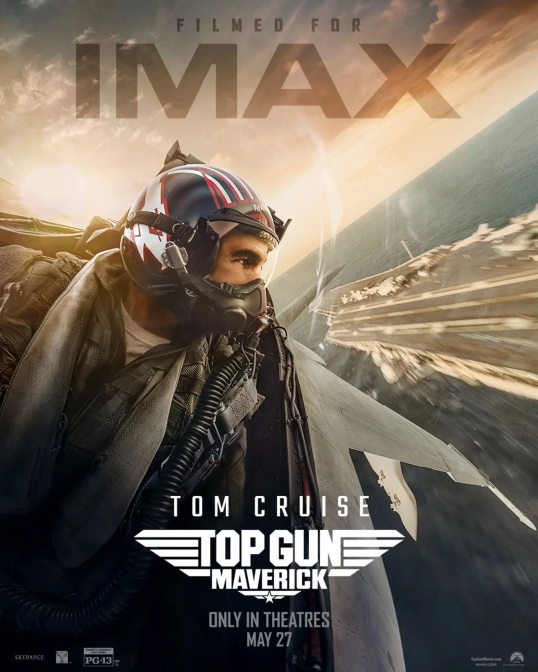
  1. Top Gun: Maverick (dir by Joseph Kosinski)

After 2 years of lockdowns and pessimism, Top Gun: Maverick was finally released and it reminded audiences of what they loved about movies in the first place.  Top Gun: Maverick was the movie that we needed in 2022.

Well, that concludes my late look back at 2022!  Now, let’s focus on 2023!

Lisa Marie’s 2022 In Review:

  1. 16 Worst Movies
  2. 10 Favorite Songs
  3. 10 Top Non-Fiction Books
  4. Lisa Marie’s Favorite Novels
  5. The Best of Lifetime
  6. 10 Good Things I Saw On Television

The Batman (dir. by Matt Reeves)


I slept on it before writing this, to let the euphoria pass.

Matt Reeves’ The Batman surprised me in a number of ways, some of which can’t be mentioned without throwing spoilers. I’ll perhaps write a second piece on this, but for now, understand that this film has effectively pushed The Dark Knight to the side as my favorite live-action Batman film (The Lego Batman Movie stands on a pedestal all it’s own above all the rest). My favorite Batman stories are the detective tales. Gotham by Gaslight. The Long Halloween. Hush.

On film, the Caped Crusader has moments of investigation, but they often took a backseat either to the action or the resolution came as quickly as a Batcomputer search. For me, The Batman had closer ties to films like David Fincher’s Seven, Alan J. Pakula’s Klute, Bruce Malmuth’s Nighthawks, and even Shane Black’s The Nice Guys to some degree. It does all this legwork while finding a way to avoid giving us the same clip of the Monarch Shooting of the Waynes. That alone is worth it for me. This is Batman. After more than 9 films, you’d be hard pressed to find anyone on the planet younger than maybe six who doesn’t know how he got that way.

Living in NYC, I can relate to Gotham City. On the surface, it’s beautiful. For those who can afford it, there are tons of amenities available to its citizens. Peel back that layer, though, and you’ll always have Crime in a city holding 9 million people. It’s a constant as rain. Gotham City is on the verge of breakdown. Looking at the torn poster filled streets and I was reminded of a cross between Walter Hill’s Streets of Fire and Alex Proyas’ The Crow .and the way most of Manhattan looks now with it’s closed down stores. The city almost serves as a character itself in The Batman. It’s a throwback to some of the classic black and white detective movies my parents grew up on like 1947’s Kiss of Death. For all his gadgets and resources, there’s an argument suggesting the Batman can never really save his beloved city, though we love his efforts.

“Forget it, Bruce. It’s Gotham.” one might as well say.

Visually, the movie is a little dark, but that makes sense given the tone of the film. Cinematographer Greig Fraser (Dune, Zero Dark Thirty) is somewhat new to me, but I’m liking his work, which felt a little like Janusz Kaminski’s Lost Souls. It wasn’t dark to the point where I couldn’t make out elements (and I was sitting in the front row, far left side in my theatre), I’ll say that much. I’ll keep an eye on him in the future.

The Batman takes place in our hero’s second to third year, according to an early narration (much like Blade Runner). Batman has a good rapport with Lt. James Gordon (Jeffrey Wright, No Time to Die) and his butler, Alfred (Andy Serkis, reuniting with Reeves since Dawn of the Planet of the Apes), for the most part, there are some results. Criminals flee when the bat symbol shines in the night sky, because no one really knows where The Dark Knight will strike. A new murder brings both Gordon and the Batman into play, as his opponent leaves various riddles for them to solve. The mystery brings Batman into various circles, including those of Selina Kyle (Zoe Kravitz, Kimi), crime boss Carmine Falcone (John Turturro, The Big Lebowski) and Oz (Colin Farrell, The Gentlemen). They all bring in great performances, including Peter Sarsgaard (Green Lantern), but it’s Paul Dano (Ruby Sparks, There Will Be Blood) who really runs away with things as The Riddler. I’ve never considered The Riddler to be a creepy villain, but this was quite dark, even for DC’s standards. I can’t imagine how it would have turned out if this was a Rated R film. I’m really curious to know.

Lt. James Gordon (Jeffrey Wright) and The Batman (Robert Pattinson) do some Detective work in Matt Reeves’ The Batman

Bruce Wayne has never been an easy character to handle on screen.

There are whole books written on the Psychology of the Batman. Here you have an individual who witnessed his parents being murdered as a kid and grows up in a near empty mansion with butlers and maids. The individual decides to dedicate his life (and vast resources) to studying criminal investigation techniques, martial arts and even Ninjitsu for a singular focus: To rid Gotham City of Crime. Add to this the concept of instilling fear in one’s enemies, and dressing up like a Bat to pummel thugs with fists and gadgets just adds to Wayne’s madness. Pattinson honed in on this and turns Bruce Wayne into a pretty isolated and brooding individual. For someone with nearly unlimited resources, he doesn’t seem happy with any of it at all. At least Keaton pretended to party and Clooney’s Wayne truly did party. Bale’s Wayne let Fox focus on research and development. Hell, even Affleck’s Wayne recognized he was rich and flaunted it like a superpower all its own. Pattinson’s Batman is lean and really looks like the kind of guy you might find stepping out of the shadows just past Wall Street late at night. No offense to Affleck’s Batman, who for some is the pinnacle of what the character should be, but I’ve always associated that look with the older, fresh out of retirement Batman of Frank Miller’s The Dark Knight Returns.

Together, Pattinson and Kravitz’ chemistry was really nice on screen. I’ll admit, I enjoyed the romance between the two. Both characters accept tha they’re Creatures of the Night, and there’s this sweet give and take between the two as they nudge each other. Selina doesn’t have to do crime, and Batman doesn’t have to be the spirit of Vengeance, but they’re caught up in what works best for them. I enjoyed that aspect.

At first listen (about a week ago), I thought Michael Giacchino’s theme needed something outside of the four note motif it had. Hearing the music with the movie is a different beast, and I have to say, it works really well here. In some places, it’s as minimalistic as Hans Zimmer’s Nolan scores.

Now, a little Devil’s Advocate. The main problem I had with The Batman was the same I had with Spider-Man: No Way Home. I understand DC & Warner Bros. want to draw people into the theatre, but in this age where every element of a trailer is scanned and studied, I’d argue that 40% of the action you watched on screen were already somewhat spoiled by the trailer (or trailers, if you watched every one the Warners released). I’m not saying one should refrain from watching trailers – I only watched the teaser and the main trailer – but I would have liked if they held some scenes back. One might also argue The Batman was lighter on action than the other films, but it’s the detective work and the character performances that make up for it.

There’s also a lot of rain. Almost too much. Remember the sequence in Jurassic Park with the first appearance of the T-Rex? I would say that most of The Batman is set under somewhat similar conditions. It felt like it either just rained, was about to, or you were in the middle of a downpour. Then again, so did The Crow. Perhaps that’s just a nitpick on my part.

Also, clocking in at 2 hours and 56 minutes, it’s a long film. You might not really notice it, but I’d go so far to say that the time didn’t feel wasted. I noticed 3 or 4 people who left for the restroom in my showing, if that’s any indication.

Overall, The Batman was a wonderful surprise from the DC side of things, and I’m liking the direction it’s going. It might not be a completely connected universe like Marvel’s lineup, but they’re proving they can still weave some amazing stories with the characters they have.

4 Shots From Horror History: The Wolfman, Insidious, Let Me In, The Cabin In The Woods


This October, I’m going to be doing something a little bit different with my contribution to 4 Shots From 4 Films.  I’m going to be taking a little chronological tour of the history of horror cinema, moving from decade to decade.

Today, we begin our current decade!

4 Shots From 4 Films

The Wolfman (2010, dir by Joe Johnston)

The Wolfman (2010, dir by Joe Johnston)

Insidious (2010, dir by James Wan)

Insidious (2010, dir by James Wan)

Let Me In (2011, dir by Matt Reeves)

Let Me In (2011, dir by Matt Reeves)

The Cabin In The Woods (2012, dir by Drew Goddard)

The Cabin In The Woods (2012, dir by Drew Goddard)

4 Shots From Horror History: Halloween, Paranormal Activity, Colverfield, The House of the Devil


This October, I’m going to be doing something a little bit different with my contribution to 4 Shots From 4 Films.  I’m going to be taking a little chronological tour of the history of horror cinema, moving from decade to decade.

Today, we complete to the aughts!

4 Shots From 4 Films

Halloween (2007, dir by Rob Zombie)

Halloween (2007, dir by Rob Zombie)

Paranormal Activity (2007, dir by Oren Peli)

Paranormal Activity (2007, dir by Oren Peli)

Cloverfield (2008, dir by Matt Reeves)

Cloverfield (2008, dir by Matt Reeves)

The House of the Devil (2009, dir by Ti West)

The House of the Devil (2009, dir by Ti West)

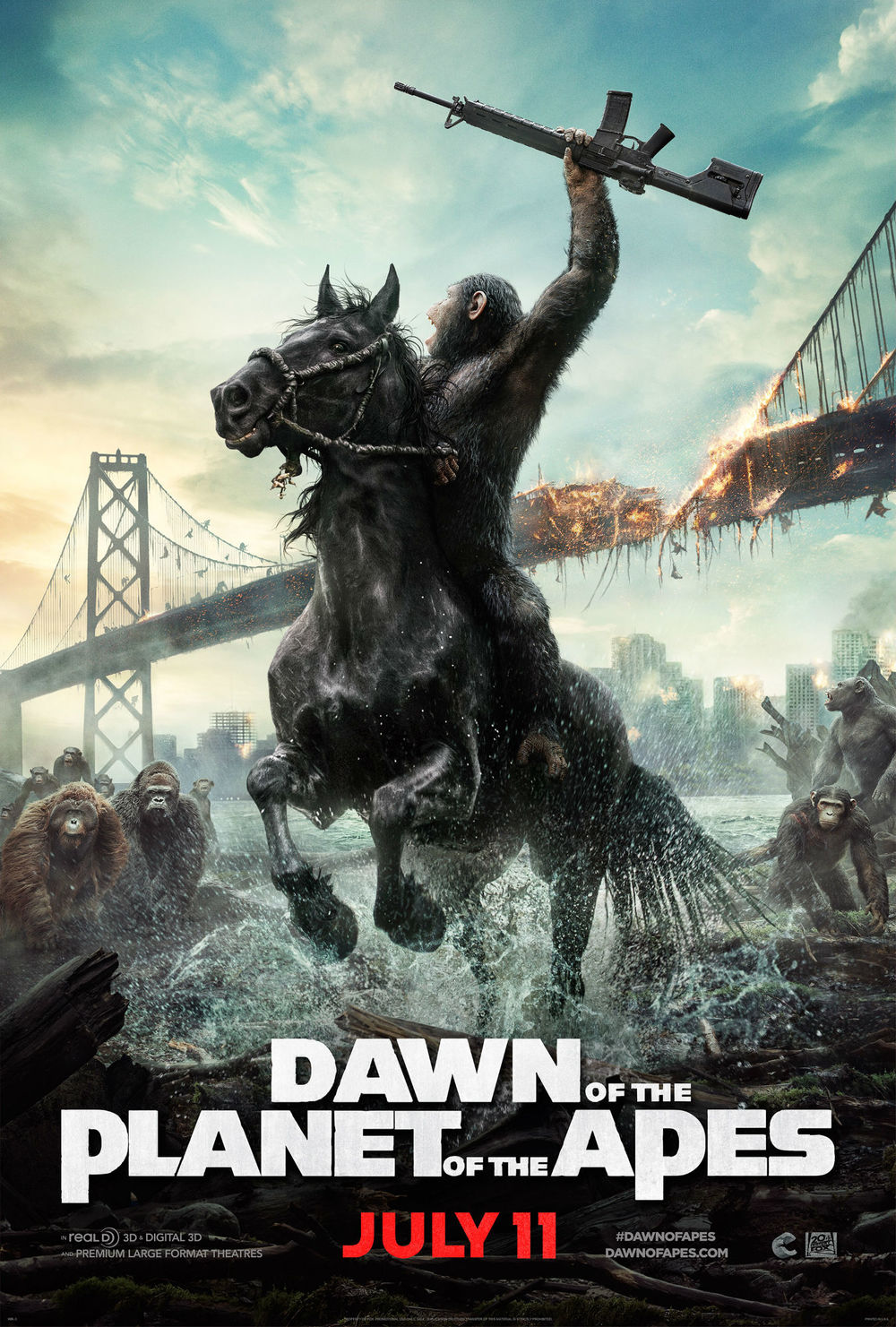
Trash Film Guru Vs. The Summer Blockbusters : “Dawn Of The Planet Of The Apes”


download

This is gonna be one easy review to write because it all boils down to this : you really can believe all the hype, Dawn Of The Planet Of The Apes is flat-out fucking awesome, and you need to go out and see this flick immediately.

My job is done, I’m finished, goodnight.

But I guess I do have at least a little bit more to say —

Screen-Shot-2014-05-08-at-8.56.21-AM-620x400

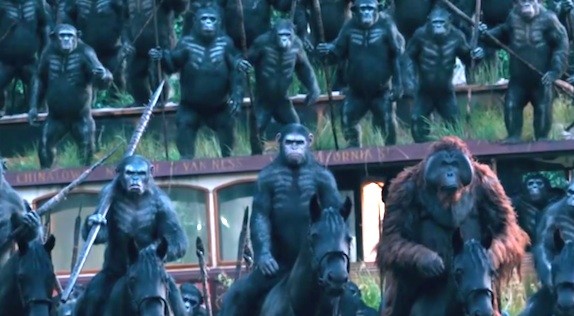
I wasn’t a big fan of Cloverfield by any means, but I’m turning into a big fan of Matt Reeves. I know it’s heresy to some, but I thought that Let Me In was every bit as good as its Swedish progenitor, and with this latest — and, frankly, best — installment in the venerable Apes franchise,  Reeves has shown himself to be a director who is fully hitting his stride. The bigger and bolder the project, the more he seems to rise to the occasion. I frankly don’t even know how you go about eliciting good performances from actors who are only there for the purpose of having a bunch of hair overlaid onto their faces via computer, but he did it here. Andy Serkis, as ape leader Caesar, and Toby Kebbell, as his primary (and creepily duplicitous) rival, Koba, both turn in Oscar-caliber work on the basis of their facial expressions alone. They’re gonna wow you, folks, no lie.

As for the human actors playing — well, human parts, Jason Clarke is solid as stand-up guy Malcolm, apparent real-life asshole in the extreme Gary Oldman does typically competent (if, to be perfectly fair, unspectacular) work as survivalist head honcho Dreyfus, and Kodi Smit-McPhee is extremely convincing as Malcolm’s teenage son, Alexander (plus, he can be seen reading Charles Burns’ Black Hole, so bonus points for that). About the only weak link comes by way of nominal love interest Keri Russell, whose “concerned as shit” look at all times begins to grate pretty early on. But when you consider the fact that all these people spent pretty much the entire time in front of a blue (or maybe it was green) screen, getting only one subpar performance from the bunch is pretty good. And who knows? Maybe Russell simply can’t help coming off as worried 24/7.

PoA_THUMB

My only other minor quibble here is with the title — when a film called Rise Of The Planet Of The Apes is followed by one called Dawn Of The Planet Of The Apes, you gotta wonder when the buildup is going to stop and we’re finally gonna get down to the shit. Or maybe we’re looking at a 20-part story here and we’ve still got plenty of stage-setting to go, in which case we’ll be treated to Prelude To The Planet Of The Apes and We’re Still Getting To The Planet Of The Apes next.

Hey, I did say it was a minor quibble, did I not?

Dawn-Of-The-Planet-Of-The-Apes3-e1396236946120

Apart from that, this has everything you’d want in a big-budget summer blockbuster, and quite a bit more than you’d honestly expect : there’s pathos, melodrama, palace (if your palace is a tree) intrigue, cheap scares, high-octane thrills, elaborately-staged battle sequences, and a genuine sense of urgency to the proceedings. Events — and tension — gradually build to the point of inevitability, and the film’s third act actually delivers in terms of its promised payoff.  And for those of you who are tired of James Franco’s ever-evolving shtick — whatever it is — rest assured that he doesn’t even pop up in a flashback sequence.

Ya know what? Let’s not even do Dawn Of The Planet Of The Apes the disservice of comparing it to other summer popcorn flicks — this leaves typical blockbuster fare like The Avengers or Star Trek so far back in the dust it’s not even funny. What Reeves has made here is one of the very best films you’ll see all year, even if big-budget sci-fi grandiosity is not your thing. This is eloquent, spectacular, undeniably powerful drama of the highest order. It’s everything and the kitchen sink plus one of those nifty fancy programmable faucets all attached to a fancy-ass 300-pound granite countertop.

Okay, I’m finished with the italics, promise. If you don’t like this, you don’t like movies. My job here really is done.