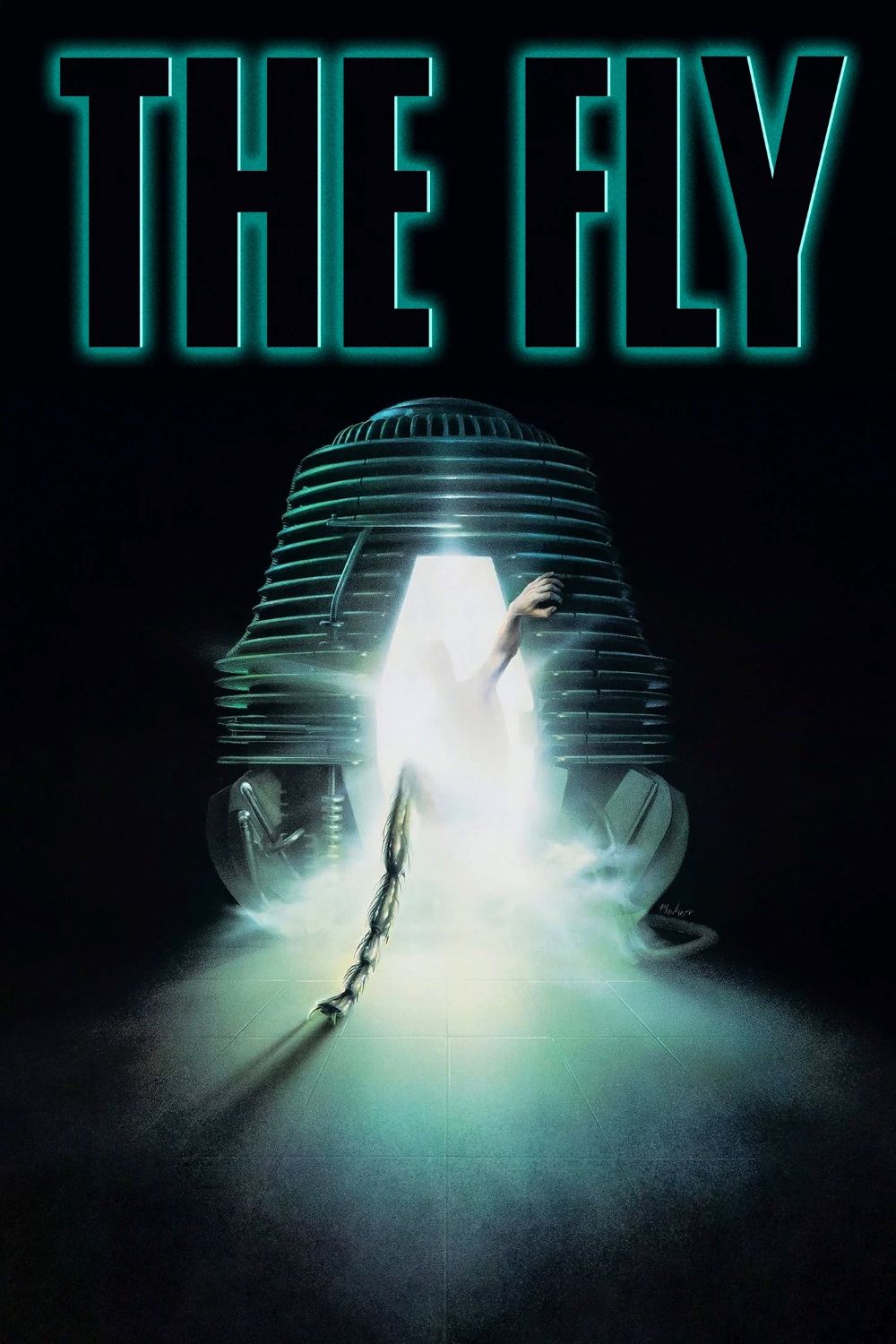
Horror Film Review: The Fly (dir. by David Cronenberg)


“I’m saying… I’m saying I – I’m an insect who dreamt he was a man and loved it. But now the dream is over… and the insect is awake.” – Seth Brundle

There’s a cruel little stretch in David Cronenberg’s The Fly (1986) when its central experiment seems to have worked out beautifully. Seth Brundle feels stronger, his confidence skyrockets, and the future looks wide open. Of course, we know better. The movie’s title alone tells us this isn’t heading anywhere pleasant. What makes the film so effective is how badly it makes us want to be wrong. Beneath the slime, broken flesh, and increasingly alarming eating habits is a romance worth caring about. Cronenberg gets us invested in a life just before showing us how horribly it can unravel.

A remake of the 1958 film of the same name, The Fly also draws from the original 1957 short story by French-British writer George Langelaan. Cronenberg takes considerable liberties with the plot, but his film really leans into the story’s darker themes and tone. Scientific curiosity leads to bodily catastrophe, and love becomes inseparable from the suffering it cannot prevent. Those ideas give the remake something substantial to build on. Cronenberg then adds his own fascination with unstable flesh and the loss of bodily control, creating a version that feels less like a retelling than a deeply personal reinvention.

For me, that combination makes it levels better than the original. The 1958 film remains an entertaining science-fiction nightmare, but Cronenberg makes the premise more emotionally involving by changing how the disaster unfolds. Instead of making the scientist’s altered appearance the central revelation, he turns transformation into a drawn-out process. We watch the damage develop alongside the characters, who keep trying to understand it, explain it, and bargain with it. The suspense isn’t simply about what Seth will look like next. It’s about how much of his old life will remain when the next change arrives.

Jeff Goldblum plays Seth as a brilliant scientist whose social skills haven’t quite caught up with his intellect. When journalist Veronica Quaife, played by Geena Davis, becomes interested in his teleportation research, their professional connection develops into something warmer. The attraction gives Seth’s otherwise isolated existence a welcome sense of possibility. Unfortunately, jealousy and alcohol eventually push him into testing the machine on himself. An unnoticed housefly enters the pod with him, and the resulting genetic fusion begins rewriting his body. His breakthrough works, just not in any way he intended.

Goldblum is terrific because he makes Seth’s awkwardness appealing without sanding down his less attractive qualities. His strange rhythms and sudden bursts of enthusiasm suggest someone who spends most of his time following thoughts other people haven’t caught up with. You can see why Veronica would find him fascinating, but you can also see the arrogance underneath his excitement. Once the transformation begins, Goldblum doesn’t abandon that characterization. He twists it. Curiosity becomes fixation, confidence becomes aggression, and Seth’s desire to share his discovery becomes a demand that someone else validate it.

Davis makes Veronica much more than the person standing nearby when the next horrible thing happens. She gives the relationship an emotional credibility that the entire movie depends on. Her affection for Seth feels genuine, as does her growing uncertainty about staying close to him. The film never pretends those feelings are mutually exclusive. She can love him and fear him, want to help him and recognize that she’s in danger. Davis handles those contradictions without making them feel like dramatic switches. They accumulate, leaving Veronica increasingly trapped between what she remembers and what she sees.

That tension becomes sharper because Seth initially welcomes his altered condition. His new strength and energy seem to confirm everything he wants to believe about his invention. He hasn’t damaged himself; he has supposedly improved himself. Cronenberg lets that delusion become seductive before exposing its ugliness. Seth’s denial isn’t just a convenient way to delay the inevitable. It grows naturally from his pride and the sheer awfulness of the alternative. Accepting the truth would mean admitting that the achievement meant to transform his life has instead made that life impossible.

Then the effects start making denial difficult for everybody. Chris Walas and his team give the transformation a wonderfully unpleasant physicality. Seth doesn’t simply sprout insect features and become a conventional movie creature. His body deteriorates, sheds pieces of itself, and develops functions he can barely comprehend. The makeup is remarkable, but its real achievement is how closely it works with Goldblum’s performance. Changes in posture, movement, and speech keep the effects attached to a recognizable person. We aren’t admiring an elaborate monster design from a safe distance. We’re watching someone struggle to inhabit his own skin.

Considering its 1986 release, the film can definitely be seen as an analogy for the AIDS crisis of the era. Seth’s deterioration and Veronica’s anguish as she watches someone she loves waste away give that reading real weight. Cronenberg originally understood the material as an analogy for disease more generally, rather than one specific illness. That broader intention doesn’t weaken the AIDS interpretation; it leaves room for it. The film captures the helplessness surrounding serious illness without requiring every detail to correspond to a single diagnosis. What matters is the frightening gap between recognizing that a body is failing and being able to do anything about it.

That’s also why the relationship becomes more upsetting as the creature effects become more extreme. The physical horror never replaces the human situation; it tightens its grip on it. Seth wants to survive, but his desperation increasingly threatens Veronica’s safety and autonomy. Her compassion cannot solve that conflict, and the film refuses to pretend otherwise. Cronenberg finds something genuinely tragic in the persistence of affection after the possibility of rescue has nearly disappeared. By the climax, we can be horrified by Seth’s actions without forgetting the frightened person behind them. Neither response cancels out the other, which makes the final stretch devastating.

The real achievement of The Fly is that its most outrageous images never overwhelm its simplest emotional truth: watching someone suffer can mean discovering how little power love actually gives you. Cronenberg turns a familiar monster-movie setup into something grotesque, intimate, and painfully sad without losing its dark humor or entertainment value. The original premise supplies the accident, but this remake makes every consequence matter. Long after the shock of the effects settles, what remains is the distance between the future Seth and Veronica briefly imagined and the ending neither could escape. That’s a far nastier thing to leave an audience with than a jump scare.
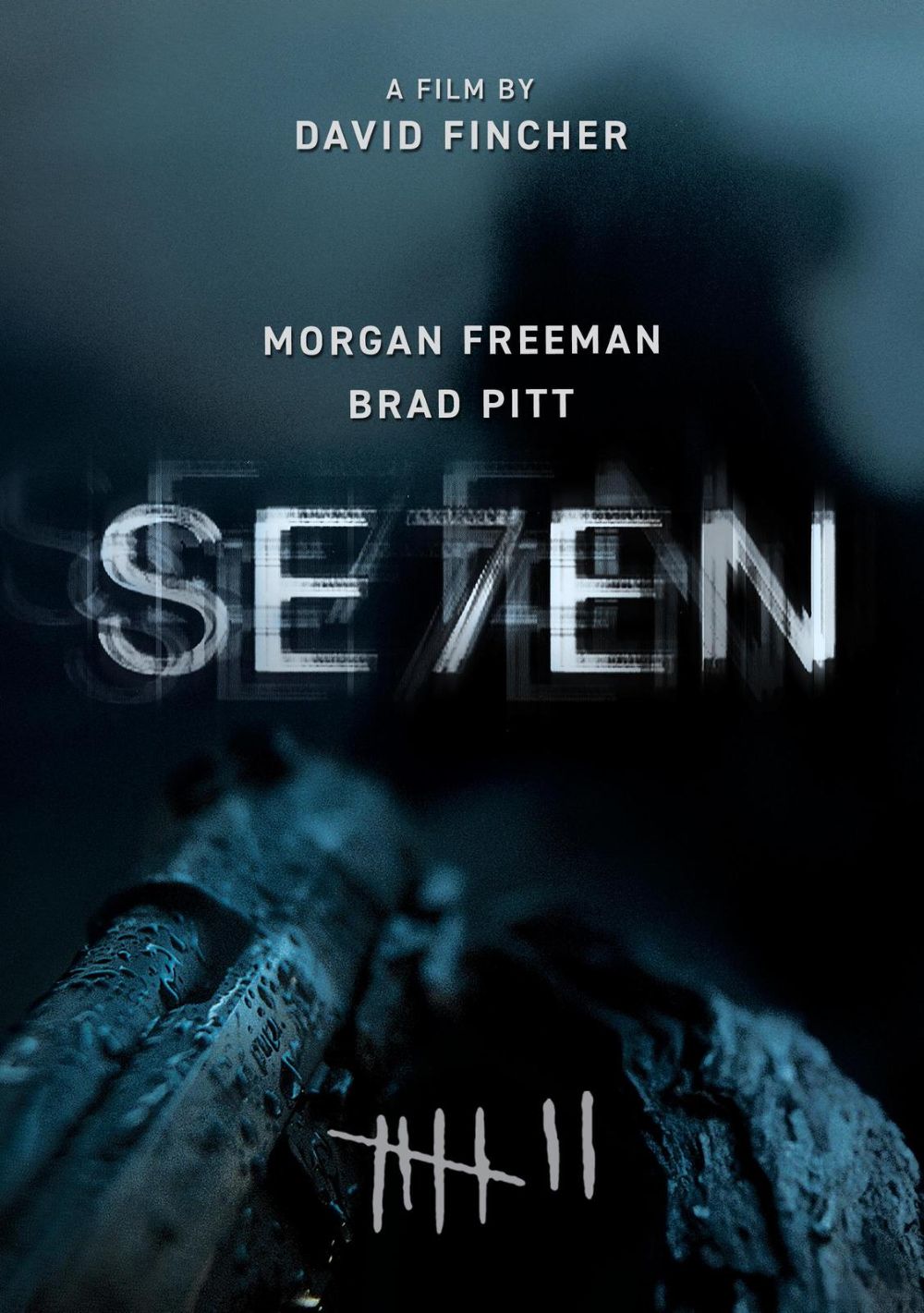
Horror Film Review: Se7en (dir. by David Fincher)


“I just don’t think I can continue to live in a place that embraces and nurtures apathy as if it was virtue.” — William Somerset

The nastiest thing about David Fincher’s Se7en is how quickly its horrors start to feel like part of the landscape. A gruesome murder should bring the world to a halt, but here it’s another room to enter, another report to write, another terrible thing happening while the rain keeps falling. Released in 1995, the film takes a serial-killer investigation and builds an atmosphere so oppressive that simply spending time in its unnamed city becomes uncomfortable. Yet the ugliness never feels entirely like an exercise in shock. Underneath it is a troubling question: what happens when people get used to looking away?

Morgan Freeman’s William Somerset has spent a career fighting that impulse, and he’s tired. Days away from retirement, he gets paired with Brad Pitt’s David Mills, a younger detective whose enthusiasm comes with a generous helping of impatience. Their investigation centers on a murderer arranging killings around the seven deadly sins. It’s a strong hook, but the movie doesn’t coast on the ingenuity of its crimes. Andrew Kevin Walker’s screenplay makes the detectives’ reactions just as important as the evidence. They’re looking at the same awful things while drawing very different conclusions about what their work can accomplish.

Freeman is terrific at suggesting how much effort Somerset’s composure requires. His quietness isn’t an absence of feeling; it’s a way of keeping feeling manageable. He asks questions carefully, studies details other people dismiss, and seems painfully aware of how easily a victim can become an inconvenience to everyone else. The familiar retiring-cop setup could have made him predictable, but Freeman gives his weariness a personal texture. Somerset still cares enough to be hurt by the job. Leaving is less a triumphant escape than an admission that he no longer knows how to keep doing it.

Pitt gives Mills an emotional openness that both challenges Somerset and exposes his own limitations. He’s cocky, easily irritated, and eager to interpret caution as defeatism. Sometimes he’s right to push back; sometimes he clearly needs to stop talking and listen. Pitt lets both sides exist without turning Mills into either a lovable hothead or a complete fool. His belief that police work should make a difference feels genuine. The tension comes from watching that belief encounter situations it can’t easily absorb. Together, the actors make a familiar mismatched partnership feel like an ongoing argument rather than a screenwriting obligation.

Fincher surrounds that argument with a city that seems to encourage surrender. The rain, clutter, cramped rooms, and dirty light create a place where basic comfort feels unavailable. Even spaces that should provide privacy seem invaded by noise or unease. What matters isn’t simply that everything looks miserable. It’s that people move through this misery as though it barely registers anymore. The setting gives Somerset’s exhaustion a believable source while making Mills’s confidence seem increasingly precarious. Neither man is investigating from a position of safety; they’re already living inside the atmosphere the killer exploits.

That’s also why the horror works beyond the immediate disgust of the crime scenes. Se7en often makes us confront what happened after the fact, with the detectives trying to reconstruct suffering from its remains. Fincher understands how disturbing a delayed realization can be. A room initially presents one terrible image, then a detail or explanation makes it worse. The film doesn’t need to show every act of violence because the aftermath supplies enough information for the imagination to take over. The dread comes from knowing that looking more closely will probably reveal something you would rather not understand.

Despite that relentless mood, the investigation stays engaging. There’s satisfaction in watching Somerset and Mills read, argue, follow leads, and gradually assemble a clearer picture. The library sequence is especially effective because it changes the film’s texture without breaking its spell. Somerset finds a measure of calm among books and music, using thought rather than momentum to approach the case. It’s a small reminder that the world contains more than brutality. Those quieter passages also make the shocks hit harder. Fincher knows that an audience needs time to anticipate the next discovery, not just recover from the last one.

Gwyneth Paltrow’s Tracy provides another necessary interruption. As Mills’s wife, she has a different relationship with the city: she isn’t trying to solve it, just work out whether she can live there. Her scenes bring out the personal cost of the detectives’ opposing attitudes. The dinner sequence allows some awkward humor, while her private conversation with Somerset reveals tenderness beneath his guarded manner. Paltrow makes Tracy feel vulnerable without making her helpless. Still, the screenplay gives her less independence than she deserves. She’s emotionally important, but the film is more curious about what she means to its men than about her own life.

John Doe takes that tendency to reduce people to their usefulness and pushes it into monstrous territory. To him, human beings are props in a moral demonstration. His certainty is chilling, but it isn’t the same as wisdom, and the movie works best when that distinction remains clear. There are moments when his elaborate planning feels almost too convenient, as though the screenplay needs him to possess whatever advantage the next development requires. Even so, his vanity keeps him from becoming merely an all-knowing villain. Beneath the preaching is someone desperate to force the world to acknowledge his importance.

Without detailing the final revelations, the closing stretch brings the film’s ideas into brutally personal focus. The shift into daylight feels wrong in a way that’s difficult to shake. After so many shadowy interiors, open space should offer relief, yet there’s nowhere emotionally safe to stand. The suspense becomes less about discovering another clue than watching people recognize what is happening and struggle to respond. That distinction gives the ending its force. Knowledge doesn’t automatically create control, and professional experience doesn’t make anyone immune to being overwhelmed. The case stops being something the detectives can hold at a distance.

What lingers after Se7en isn’t just the memory of its worst images. It’s the uncomfortable distance between noticing suffering and knowing what to do about it. Somerset has experience without much hope; Mills has conviction without enough restraint. Neither can offer a complete answer, but their struggle gives the film something more substantial than stylish despair. Fincher makes looking away seem tempting, even sensible, before leaving us with the cost of that choice. This is a grim, occasionally contrived, remarkably controlled thriller whose deepest horror is also its most recognizable: the fear that the world can wear down our willingness to care.

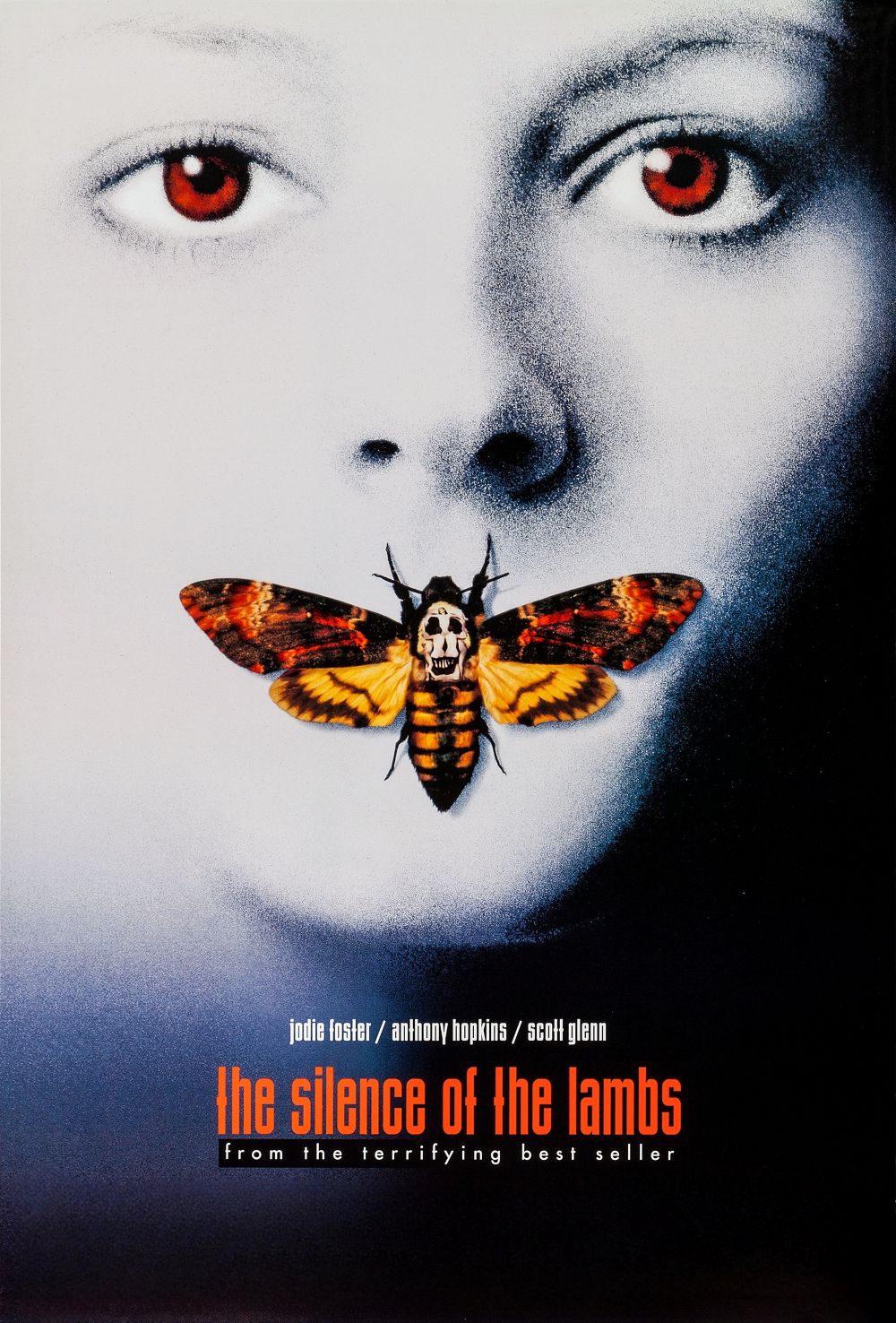
Horror Film Review: The Silence of the Lambs (dir. by Jonathan Demme)


“Believe me, you don’t want Hannibal Lecter inside your head.” — Jack Crawford

Some thrillers get louder as they become more frightening. The Silence of the Lambs often goes the other way, drawing its power from a lowered voice, a held stare, or the uncomfortable silence before someone answers a question. Jonathan Demme understands that an audience will lean into a scene when the actors give them something worth watching. His 1991 film has plenty of gruesome material, but its finest effects come from the precision of the performances and the intimacy of the camera. It is a horror movie that can make two people talking feel more dangerous than an outright attack.

Adapted by Ted Tally from Thomas Harris’s novel, the story follows FBI trainee Clarice Starling as she helps investigate Buffalo Bill, a serial killer targeting women. She seeks information from imprisoned psychiatrist and cannibal Hannibal Lecter, who demands personal disclosures in exchange for his insight. That premise creates an ideal setting for actors: professional conversations keep slipping into confrontations neither participant experiences in quite the same way. Clarice needs answers, while Lecter wants access to the person asking the questions. Demme builds the film around that imbalance without letting the investigation overwhelm the people involved.

Jodie Foster gives Clarice a mixture of determination and discomfort that makes her compelling well before the danger becomes immediate. Her performance is carefully modulated, especially in the contrast between her formal speech and the emotions passing across her face. She wants to project competence, but Foster lets us notice when that projection requires work. A tightened expression or a slight hesitation suggests someone evaluating how much of herself she can safely reveal. Those details make Clarice feel inexperienced without making her seem incapable. She has the intelligence for the job; what she lacks is the luxury of feeling secure in it.

Foster is particularly impressive when Clarice encounters something painful and has to continue functioning. She allows the reaction to register, then shows the effort of turning it into concentration. It is a subtle distinction, but an important one: Clarice’s professionalism does not depend on suppressing every trace of feeling. Her compassion often seems to make her more attentive. Foster also avoids the opposite trap of constantly advertising sensitivity. She can be brisk, guarded, or visibly irritated. The result is a character whose emotional responses feel specific to each encounter rather than arranged to remind us that she is sympathetic.

Anthony Hopkins approaches Lecter with a much more conspicuous sense of presentation. His speech is precise, his gaze sustained, and his pauses carefully placed. The performance has theatrical flair, but Lecter himself is theatrical, enjoying the opportunity to arrange an encounter around his preferences. Hopkins makes restraint the source of his menace. Because he gives so little away physically, the smallest change becomes noticeable. A slight movement forward can feel like an intrusion. Even his courtesy has an aggressive quality, as though good manners are another standard by which everyone around him is certain to disappoint.

What makes Foster and Hopkins so effective together is the difference in how they occupy a scene. Hopkins invites us to study the performance Lecter is giving, while Foster draws us toward the reactions Clarice would prefer to conceal. Their exchanges develop through that contrast. She does not merely receive his provocations; she assesses them, resists them, and sometimes challenges his assumptions. His interest in her can look like respect, but neither actor lets that resemblance become comforting. There is an unsettling intimacy in the attention they give each other, with Foster continually reminding us that attention can also be a form of pressure.

Demme photographs those exchanges with an intimacy that makes the viewer feel implicated. Faces often turn almost directly toward the lens, putting us close to the position of the person being addressed. The effect is especially uncomfortable when Clarice is being examined, patronized, or challenged. Rather than watching someone endure scrutiny from a convenient distance, we experience something of its force ourselves. Demme also gives reactions time to develop. He understands that a face listening can be as expressive as a face speaking, and he rarely seems impatient to interrupt an actor’s thought with unnecessary visual decoration.

Tak Fujimoto’s cinematography gives that approach a strong physical foundation. Close-ups matter partly because the surrounding spaces are so clearly established: offices, corridors, examination rooms, and cells all have their own arrangements of authority and confinement. Clarice frequently appears exposed within environments that supposedly represent order. The compositions make us aware of who occupies the space comfortably and who must negotiate a place within it. Fujimoto does not need to make every room look sinister. The ordinary institutional surfaces are convincing enough that an intrusive face or an ominous stretch of corridor can disturb their apparent neutrality.

The supporting performances help maintain that tension without duplicating the central pairing. Scott Glenn gives Jack Crawford a subdued authority that can feel supportive and calculating at once. Anthony Heald makes Dr. Chilton’s vanity unpleasantly recognizable, finding irritation in the way he presents himself as indispensable. Brooke Smith gives Catherine Martin a forceful combination of fear, anger, and practical determination. Ted Levine takes Buffalo Bill in a more volatile direction, creating a disturbing contrast with Lecter’s composed self-display. Together, these actors give the film different social temperatures; Clarice cannot approach every person with the same defenses.

The film’s treatment of Bill remains its most troubling element. Although the dialogue distinguishes him from transgender people, its imagery still associates gender nonconformity with disgust and danger. The qualification cannot entirely undo the visual impression, especially in a film this skilled at making images stick. Elsewhere, the craftsmanship is remarkably cohesive. Howard Shore’s score supplies a mournful undertow, while the editing allows conversations to breathe before tightening our experience of danger. In the climactic passages, restricted visibility becomes frightening because Demme has already taught us how much depends on looking, reading expressions, and understanding the space around a person.

The lasting achievement of The Silence of the Lambs is how completely its style serves its actors. Demme and Fujimoto bring us close enough to catch Foster’s fleeting uncertainty and Hopkins’s smallest calculated gesture, then trust those details to do the work. The film can be shocking, but it is rarely more gripping than when someone is simply deciding what to say next. That is what keeps it from becoming a museum of familiar lines and notorious images. Beneath all the cultural baggage, the performances still feel alive, and the camera still knows how to make us uneasy about watching them.

Horror Song of the Day: Ed Wood by Howard Shore


As we already mentioned, today would have been the 102nd birthday of the pioneering indie director, Edward D. Wood, Jr!

Today’s song of the day is the theme from Tim Burton’s 1994 biopic of the director.  In my opinion, this remains Burton’s finest film.  Burton also directed the musical video below while the great Toni Basil choreographed.  And, best of all, the dancer is named Lisa Marie!

Horror Song of the Day: Ed Wood by Howard Shore


Today would have been the 101st birthday of the pioneering indie director, Edward D. Wood, Jr!

Today’s song of the day is the theme from Tim Burton’s 1994 biopic of the director.  In my opinion, this remains Burton’s first film.  Burton also directed the musical video below while the great Toni Basil choreographed.  And, best of all, the dancer is named Lisa Marie!

Song of the Day: Ed Wood by Howard Shore


Today is the 100th birthday of the pioneering indie director, Edward D. Wood, Jr!

Today’s song of the day is the theme from Tim Burton’s 1994 biopic of the director.  In my opinion, this remains Burton’s first film.  Burton also directed the musical video below while the great Toni Basil choreographed.  And, best of all, the dancer is named Lisa Marie!

Happy birthday, Ed, wherever you may be.

Scenes I Love: Lighting the Beacons in Return of the King


We just received word that the Texas Branch is still currently down. It’s been six full days without power. I can’t even begin to imagine the impact, but we’re hoping that they back up and running soon. Case and I are keeping the fires lit here, but it also reminds us of Lisa Marie’s John Wick levels of legendary speed, sheer will, creative output and literary fortitude. We miss the Bowmans, and are rooting for their quick return.

In the meantime, we’re sharing some of our favorite scenes and films. It seems fitting that the Lighting of the Beacons sequence of The Return of the King is our focus here. With the city of Gondor under attack, the steward Denathor (John Noble) doesn’t wish to call for any help. With Pippin’s (Billy Boyd) help, Gandalf (Ian McKellan) gets word out to Rohan in a most spectactular fashion. Howard Shore’s score amplifies the sequence to epic levels.

Enjoy!

Here Are The Winners of 2020 Hollywood Music In Medi Awards


The winners are listed in bold!

ORIGINAL SCORE – FEATURE FILM
DA 5 BLOODS (Netflix) – Terence Blanchard
THE LIFE AHEAD (LA VITA DAVANTI A SE) (Netflix) – Gabriel Yared
MA RAINEY’S BLACK BOTTOM (Netflix) – Branford Marsalis
MANK (Netflix) – Trent Reznor, Atticus Ross
THE MIDNIGHT SKY (Netflix) – Alexandre Desplat
NEWS OF THE WORLD (Universal Pictures / Netflix) – James Newton Howard
PIECES OF A WOMAN (Netflix) – Howard Shore
THE TRIAL OF THE CHICAGO 7 (Netflix) – Daniel Pemberton

ORIGINAL SCORE – INDEPENDENT FILM
THE 24TH (Vertical Entertainment) – Alex Heffes
AMMONITE (Neon) – Dustin O’Halloran, Volker Bertelmann
THE GLORIAS (LD Entertainment / Roadside Attractions) – Elliot Goldenthal
MINARI (A24) – Emile Mosseri
SHIRLEY (Neon) – Tamar-kali
WILD MOUNTAIN THYME (Bleecker Street Media) – Amelia Warner

ORIGINAL SCORE – ANIMATED FILM
THE CROODS: A NEW AGE (Universal Pictures) – Mark Mothersbaugh
ONWARD (Walt Disney Studios) – Mychael Danna, Jeff Danna
SHAUN THE SHEEP: FARMAGEDDON (Netflix) – Tom Howe
SOUL (Walt Disney Studios) – Trent Reznor, Atticus Ross, Jon Batiste
WOLFWALKERS (Apple TV+) – Bruno Coulais

ORIGINAL SCORE – SCI-FI/FANTASY
THE NEW MUTANTS (Walt Disney Studios Motion Pictures / Disney+) – Mark Snow
THE OLD GUARD (Netflix) – Volker Bertelmann, Dustin O’Halloran
PALM SPRINGS (Neon) – Matthew Compton
TENET (Warner Bros. / HBO Max) – Ludwig Görannson
WONDER WOMAN 1984 (Warner Bros. / HBO Max) – Hans Zimmer

ORIGINAL SCORE – HORROR FILM
ANTEBELLUM (Lionsgate Films) – Nate Wonder, Roman GianArthur
THE DARK AND THE WICKED (RLJE Films / Shudder) – Tom Schraeder
THE EMPTY MAN (Walt Disney Studios) – Christopher Young, Lustmord
THE INVISIBLE MAN (Universal Pictures) – Benjamin Wallfisch
SWALLOW (IFC Films) – Nathan Halpern

ORIGINAL SCORE – DOCUMENTARY
ATHLETE A (Netflix) – Jeff Beal
CRIP CAMP (Netflix) – Bear McCreary
DAVID ATTENBOROUGH: A LIFE ON OUR PLANET (Netflix) – Steven Price
JOHN LEWIS: GOOD TROUBLE (Magnolia Pictures / Participant) – Tamar-kali
RISING PHOENIX (Netflix) – Daniel Pemberton

ORIGINAL SONG – FEATURE FILM
“Fight for You” from JUDAS AND THE BLACK MESSIAH – Written by H.E.R., Dernst Emile II, Tiara Thomas. Performed by H.E.R. (Warner Bros. / HBO Max)
“Hear My Voice” from THE TRIAL OF THE CHICAGO 7 – Written by Daniel Pemberton, Celeste. Performed by Celeste (Netflix)
“Húsavík (Hometown)” from EUROVISION SONG CONTEST: THE STORY OF FIRE SAGA – Written by Savan Kotecha, Rickard Göransson, Fat Max Gsus. Performed by Will Ferrell, Rachel McAdams, Molly Sandén (Netflix)
“The Plan” from TENET – Written by Jacques Webster II, Ebony Naomi Oshunrinde, Ludwig Göransson. Performed by Travis Scott (Warner Bros. Home Entertainment / HBO Max)
“Poverty Porn” from THE FORTY-YEAR-OLD VERSION – Written by Radha Blank, Khrysis. Performed by RadhaMUSPrime (Netflix)
“Seen (lo Sì)” from THE LIFE AHEAD (LA VITA DAVANTI A SE) – Written by Diane Warren, Laura Pausini, Niccolò Agliardi. Performed by Laura Pausini (Netflix)
“Speak Now” from ONE NIGHT IN MIAMI – Written by Leslie Odom Jr., Sam Ashworth. Performed by Leslie Odom Jr. (Amazon Studios)
“Tigress & Tweed” from THE UNITED STATES VS. BILLIE HOLIDAY – Written by Raphael Saadiq, Andra Day. Performed by Andra Day (Hulu)

ORIGINAL SONG – INDEPENDENT FILM
“Everybody Cries” from THE OUTPOST – Written by Rod Lurie, Larry Groupé, Rita Wilson. Performed by Rita Wilson (Screen Media Films)
“I’ll Be Singing” from WILD MOUNTAIN THYME – Written by Amelia Warner, John Patrick Shanley. Performed by Sinéad O’Connor (Bleecker Street Media)
“Rain Song” from MINARI – Written by Emile Mosseri, Stefanie Hong. Performed by Yeri Han (A24)
“Staring At A Mountain” from NEVER RARELY SOMETIMES ALWAYS – Written by Sharon Van Etten. Performed by Sharon Van Etten (Focus Features / HBO Max)

ORIGINAL SONG – ANIMATED FILM
“Carried Me With You” from ONWARD – Written by Brandi Carlile, Phil Hanseroth, Tim Hanseroth. Performed by Brandi Carlile (Walt Disney Studios Motion Pictures / Disney+)
“Feel the Thunder” from THE CROODS: A NEW AGE – Written by Alana Haim, Danielle Haim, Este Haim and Ariel Rechtshaid. Performed by HAIM (Universal Pictures)
“Free” from THE ONE AND ONLY IVAN – Written by Diane Warren. Performed by Charlie Puth (Walt Disney Studios Motion Pictures / Disney+)
“Just Sing” from TROLLS WORLD TOUR – Written by Max Martin, Justin Timberlake, Ludwig Göransson, Sarah Aarons (Universal Studios)
“Rocket to the Moon” from OVER THE MOON – Written by Christopher Curtis, Marjorie Duffield, Helen Park. Performed by Cathy Ang (Netflix)
“Stand for Hope – When I Stand with You” from TWO BY TWO: OVERBOARD! – Written by Eímear Noone. Performed by Sibéal (Entertainment One)

ORIGINAL SONG – DOCUMENTARY
“The Future” from THE WAY I SEE IT – Written by Aloe Blacc. Performed by Aloe Blacc (Focus Features)
“How Can I Tell You?” From NASRIN – Written by Lynn Ahrens, Stephen Flaherty. Performed by Angelique Kidjo (Virgil Films & Entertainment)
“Never Break” from GIVING VOICE – Written by John Legend, Nasri Atweh, Benjamin Hudson McIldowie, Greg Wells, John Stephens. Performed by John Legend (Netflix)
“Only The Young” from MISS AMERICANA – Written by Taylor Swift, Joel Little. Performed by Taylor Swift (Netflix)
“See What You’ve Done” from BELLY OF THE BEAST – Written by Mary J. Blige, Nova Wav, DJ Camper. Performed by Mary J. Blige (PBS)
“Turntables” from ALL IN: THE FIGHT FOR DEMOCRACY – Written by Janelle Monáe. Performed by Janelle Monáe (Amazon)

ORIGINAL SCORE – INDEPENDENT FILM (FOREIGN LANGUAGE)
ALL AGAINST ALL (Fivia) – Kristian Sensini
BLACK BEACH (eOne Films Spain) – Arturo Cardelus
BLIZZARD OF SOULS (DVĒSEĻU PUTENIS) (Access – A / Pandastorm) – Lolita Ritmanis
SUMMER KNIGHT (China Film Administration) – Min He
ZERØ (Nemesis Media) – Ricardo Curto

OUTSTANDING MUSIC SUPERVISION – FILM
Angela Leus – TROLLS WORLD TOUR (Universal Studios)
Bonnie Greenberg – THE LIFE AHEAD (LA VITA DAVANTI A SE) (Netflix)
Guy C. Routte – THE FORTY-YEAR-OLD VERSION (Netflix)
Linda Cohen – THE HIGH NOTE (Focus Features)
Lynn Fainchtein – THE UNITED STATES VS. BILLIE HOLIDAY (Hulu)
Sue Jacobs – PROMISING YOUNG WOMAN (Focus Features)
Tom MacDougall – SOUL (Walt Disney Studios)

SOUNDTRACK ALBUM
ASSASSIN’S CREED VALHALLA (Lakeshore Records)
BILL & TED: FACE THE MUSIC (Lakeshore Records)
JINGLE JANGLE: A CHRISTMAS JOURNEY (Atlantic Records)
ONWARD (Walt Disney Records)
PROMISING YOUNG WOMAN (Capitol Records)
SOUL (Walt Disney Records)
THE EDDY (Sony Classical)

Here Are The 2020 Nominations of Hollywood Music In Media Awards!


For those of you who are still struggling to make your predictions as to which which films will be in the hunt for the Best Score and Best Song Oscars, the Hollywood Music In Media Awards are here to help out!  They released their nominations yesterday.  Below, you’ll find the nominees for the best in film.  If you want to see their TV and video game nominations, click here!

The main thing I like about the nominations below is that there’s a lot of them.  I support anything that adds a little more chaos and variety to awards season.  Keep everyone guessing!

Here are the film nominations:

ORIGINAL SCORE – FEATURE FILM
DA 5 BLOODS (Netflix) – Terence Blanchard
THE LIFE AHEAD (LA VITA DAVANTI A SE) (Netflix) – Gabriel Yared
MA RAINEY’S BLACK BOTTOM (Netflix) – Branford Marsalis
MANK (Netflix) – Trent Reznor, Atticus Ross
THE MIDNIGHT SKY (Netflix) – Alexandre Desplat
NEWS OF THE WORLD (Universal Pictures / Netflix) – James Newton Howard
PIECES OF A WOMAN (Netflix) – Howard Shore
THE TRIAL OF THE CHICAGO 7 (Netflix) – Daniel Pemberton

ORIGINAL SCORE – INDEPENDENT FILM
THE 24TH (Vertical Entertainment) – Alex Heffes
AMMONITE (Neon) – Dustin O’Halloran, Volker Bertelmann
THE GLORIAS (LD Entertainment / Roadside Attractions) – Elliot Goldenthal
MINARI (A24) – Emile Mosseri
SHIRLEY (Neon) – Tamar-kali
WILD MOUNTAIN THYME (Bleecker Street Media) – Amelia Warner

ORIGINAL SCORE – ANIMATED FILM
THE CROODS: A NEW AGE (Universal Pictures) – Mark Mothersbaugh
ONWARD (Walt Disney Studios) – Mychael Danna, Jeff Danna
SHAUN THE SHEEP: FARMAGEDDON (Netflix) – Tom Howe
SOUL (Walt Disney Studios) – Trent Reznor, Atticus Ross, Jon Batiste
WOLFWALKERS (Apple TV+) – Bruno Coulais

ORIGINAL SCORE – SCI-FI/FANTASY
THE NEW MUTANTS (Walt Disney Studios Motion Pictures / Disney+) – Mark Snow
THE OLD GUARD (Netflix) – Volker Bertelmann, Dustin O’Halloran
PALM SPRINGS (Neon) – Matthew Compton
TENET (Warner Bros. / HBO Max) – Ludwig Görannson
WONDER WOMAN 1984 (Warner Bros. / HBO Max) – Hans Zimmer

ORIGINAL SCORE – HORROR FILM
ANTEBELLUM (Lionsgate Films) – Nate Wonder, Roman GianArthur
THE DARK AND THE WICKED (RLJE Films / Shudder) – Tom Schraeder
THE EMPTY MAN (Walt Disney Studios) – Christopher Young, Lustmord
THE INVISIBLE MAN (Universal Pictures) – Benjamin Wallfisch
SWALLOW (IFC Films) – Nathan Halpern

ORIGINAL SCORE – DOCUMENTARY
ATHLETE A (Netflix) – Jeff Beal
CRIP CAMP (Netflix) – Bear McCreary
DAVID ATTENBOROUGH: A LIFE ON OUR PLANET (Netflix) – Steven Price
JOHN LEWIS: GOOD TROUBLE (Magnolia Pictures / Participant) – Tamar-kali
RISING PHOENIX (Netflix) – Daniel Pemberton

ORIGINAL SONG – FEATURE FILM
“Fight for You” from JUDAS AND THE BLACK MESSIAH – Written by H.E.R., Dernst Emile II, Tiara Thomas. Performed by H.E.R. (Warner Bros. / HBO Max)
“Hear My Voice” from THE TRIAL OF THE CHICAGO 7 – Written by Daniel Pemberton, Celeste. Performed by Celeste (Netflix)
“Húsavík (Hometown)” from EUROVISION SONG CONTEST: THE STORY OF FIRE SAGA – Written by Savan Kotecha, Rickard Göransson, Fat Max Gsus. Performed by Will Ferrell, Rachel McAdams, Molly Sandén (Netflix)
“The Plan” from TENET – Written by Jacques Webster II, Ebony Naomi Oshunrinde, Ludwig Göransson. Performed by Travis Scott (Warner Bros. Home Entertainment / HBO Max)
“Poverty Porn” from THE FORTY-YEAR-OLD VERSION – Written by Radha Blank, Khrysis. Performed by RadhaMUSPrime (Netflix)
“Seen (lo Sì)” from THE LIFE AHEAD (LA VITA DAVANTI A SE) – Written by Diane Warren, Laura Pausini, Niccolò Agliardi. Performed by Laura Pausini (Netflix)
“Speak Now” from ONE NIGHT IN MIAMI – Written by Leslie Odom Jr., Sam Ashworth. Performed by Leslie Odom Jr. (Amazon Studios)
“Tigress & Tweed” from THE UNITED STATES VS. BILLIE HOLIDAY – Written by Raphael Saadiq, Andra Day. Performed by Andra Day (Hulu)

ORIGINAL SONG – INDEPENDENT FILM
“Everybody Cries” from THE OUTPOST – Written by Rod Lurie, Larry Groupé, Rita Wilson. Performed by Rita Wilson (Screen Media Films)
“I’ll Be Singing” from WILD MOUNTAIN THYME – Written by Amelia Warner, John Patrick Shanley. Performed by Sinéad O’Connor (Bleecker Street Media)
“Rain Song” from MINARI – Written by Emile Mosseri, Stefanie Hong. Performed by Yeri Han (A24)
“Staring At A Mountain” from NEVER RARELY SOMETIMES ALWAYS – Written by Sharon Van Etten. Performed by Sharon Van Etten (Focus Features / HBO Max)

ORIGINAL SONG – ANIMATED FILM
“Carried Me With You” from ONWARD – Written by Brandi Carlile, Phil Hanseroth, Tim Hanseroth. Performed by Brandi Carlile (Walt Disney Studios Motion Pictures / Disney+)
“Feel the Thunder” from THE CROODS: A NEW AGE – Written by Alana Haim, Danielle Haim, Este Haim and Ariel Rechtshaid. Performed by HAIM (Universal Pictures)
“Free” from THE ONE AND ONLY IVAN – Written by Diane Warren. Performed by Charlie Puth (Walt Disney Studios Motion Pictures / Disney+)
“Just Sing” from TROLLS WORLD TOUR – Written by Max Martin, Justin Timberlake, Ludwig Göransson, Sarah Aarons (Universal Studios)
“Rocket to the Moon” from OVER THE MOON – Written by Christopher Curtis, Marjorie Duffield, Helen Park. Performed by Cathy Ang (Netflix)
“Stand for Hope – When I Stand with You” from TWO BY TWO: OVERBOARD! – Written by Eímear Noone. Performed by Sibéal (Entertainment One)

ORIGINAL SONG – DOCUMENTARY
“The Future” from THE WAY I SEE IT – Written by Aloe Blacc. Performed by Aloe Blacc (Focus Features)
“How Can I Tell You?” From NASRIN – Written by Lynn Ahrens, Stephen Flaherty. Performed by Angelique Kidjo (Virgil Films & Entertainment)
“Never Break” from GIVING VOICE – Written by John Legend, Nasri Atweh, Benjamin Hudson McIldowie, Greg Wells, John Stephens. Performed by John Legend (Netflix)
“Only The Young” from MISS AMERICANA – Written by Taylor Swift, Joel Little. Performed by Taylor Swift (Netflix)
“See What You’ve Done” from BELLY OF THE BEAST – Written by Mary J. Blige, Nova Wav, DJ Camper. Performed by Mary J. Blige (PBS)
“Turntables” from ALL IN: THE FIGHT FOR DEMOCRACY – Written by Janelle Monáe. Performed by Janelle Monáe (Amazon)

ORIGINAL SCORE – INDEPENDENT FILM (FOREIGN LANGUAGE)
ALL AGAINST ALL (Fivia) – Kristian Sensini
BLACK BEACH (eOne Films Spain) – Arturo Cardelus
BLIZZARD OF SOULS (DVĒSEĻU PUTENIS) (Access – A / Pandastorm) – Lolita Ritmanis
SUMMER KNIGHT (China Film Administration) – Min He
ZERØ (Nemesis Media) – Ricardo Curto

OUTSTANDING MUSIC SUPERVISION – FILM
Angela Leus – TROLLS WORLD TOUR (Universal Studios)
Bonnie Greenberg – THE LIFE AHEAD (LA VITA DAVANTI A SE) (Netflix)
Guy C. Routte – THE FORTY-YEAR-OLD VERSION (Netflix)
Linda Cohen – THE HIGH NOTE (Focus Features)
Lynn Fainchtein – THE UNITED STATES VS. BILLIE HOLIDAY (Hulu)
Sue Jacobs – PROMISING YOUNG WOMAN (Focus Features)
Tom MacDougall – SOUL (Walt Disney Studios)

SOUNDTRACK ALBUM
ASSASSIN’S CREED VALHALLA (Lakeshore Records)
BILL & TED: FACE THE MUSIC (Lakeshore Records)
JINGLE JANGLE: A CHRISTMAS JOURNEY (Atlantic Records)
ONWARD (Walt Disney Records)
PROMISING YOUNG WOMAN (Capitol Records)
SOUL (Walt Disney Records)
THE EDDY (Sony Classical)

Music Video of the Day: Ed Wood by Howard Shore (1994, dir by Tim Burton and Toni Basil)


Hi, everyone!  Lisa here, filling in for Val.

In 1994, Tim Burton released Ed Wood, a film that I consider to be his best.  (In fact, it’s one of the few Tim Burton films that I feel actually improves with repeat viewings.  Don’t start yelling at me about Beetlejuice.)  The score, which so evocative of Wood’s style of filmmaking, was composed by Howard Shore.  This video features the actress Lisa Marie (who played Vampira in Ed Wood) dancing to Shore’s theme music.

Before anyone says it, I did not pick this video just because it features a dancer named Lisa Marie.  I’m not the egocentric … well, actually, I am.  In fact, I’m so egocentric that I’m shocked that I have yet to dedicate an entire post to just listing words that rhyme with Lisa.  (Sadly, there’s not many.  Visa is a good one.)  But still, I did have other reasons for picking this video than just the fact that I am also named Lisa Marie and I also enjoy dancing in cemeteries.  Those reasons will hopefully become obvious as the day develops here on the Shattered Lens.

Anyway, both Tim Burton and Toni Basil are credited with directing this video.  I’m going to assume that Burton’s directorial credit is largely due to all of the scene of Ed Wood that are spliced into the footage of Lisa Marie dancing.  Toni Basil, who also did the choreographed this video, is one of our favorite people here at the Shattered Lens.  Just check out my review of Head and Val’s review of Slaughterhouse Rock.

Enjoy!