This is a song that Claudio Simonetti composed for Dario Argento’s 1985 film, Opera.
Compared to the film, the video for this song is decidedly low-key but it’s still a lovely piece of music.
This is a song that Claudio Simonetti composed for Dario Argento’s 1985 film, Opera.
Compared to the film, the video for this song is decidedly low-key but it’s still a lovely piece of music.
Today’s song of the day is this 1984 classic from Ray Parker, Jr. Have you busted a ghost today?
In memory of Bela Lugosi on his birthday, here is today’s song of the day.
Today’s horror song of the day really needs no introduction.
From 1960, here is the main theme from Alfred Hitchcok’s Psycho, composed by Bernard Herrmann.
Today’s song comes the hypnotic soundtrack of Paul Schrader’s Cat People. This song was so good that it later showed up and was used to equally strong effect in Quentin Tarantino’s Inglourious Basterds.
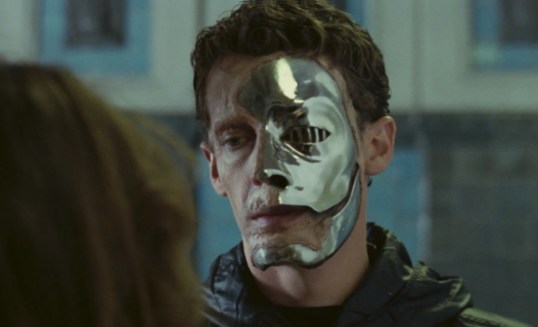
Demons (1985, dir by Lamberto Bava)
For today’s horror song of the day, we have Demon, a track from the soundtrack for the 1985 film, Demons. This song was composed and performed by Claudio Simonetti, who is best known as the keyboardist of Goblin.
The music video, incidentally, was directed by Michele Soavi, who also appeared in Demons as the mysterious masked man handing out free movie tickets.
Today’s horror song of the day comes from Dario Argento’s Deep Red!
Deep Red features the first collaboration between Argento and Goblin and the score remains a classic and one that I listen to every October.
Here’s Goblin performing Profondo Rosso on Italian television in 1975.
If you’ve ever watched The Horror of Party Beach, you’ll definitely remember this song, which was performed by a Patterson, New Jersey band called The Del-Aires!
Everybody’s doing the zombie stomp!
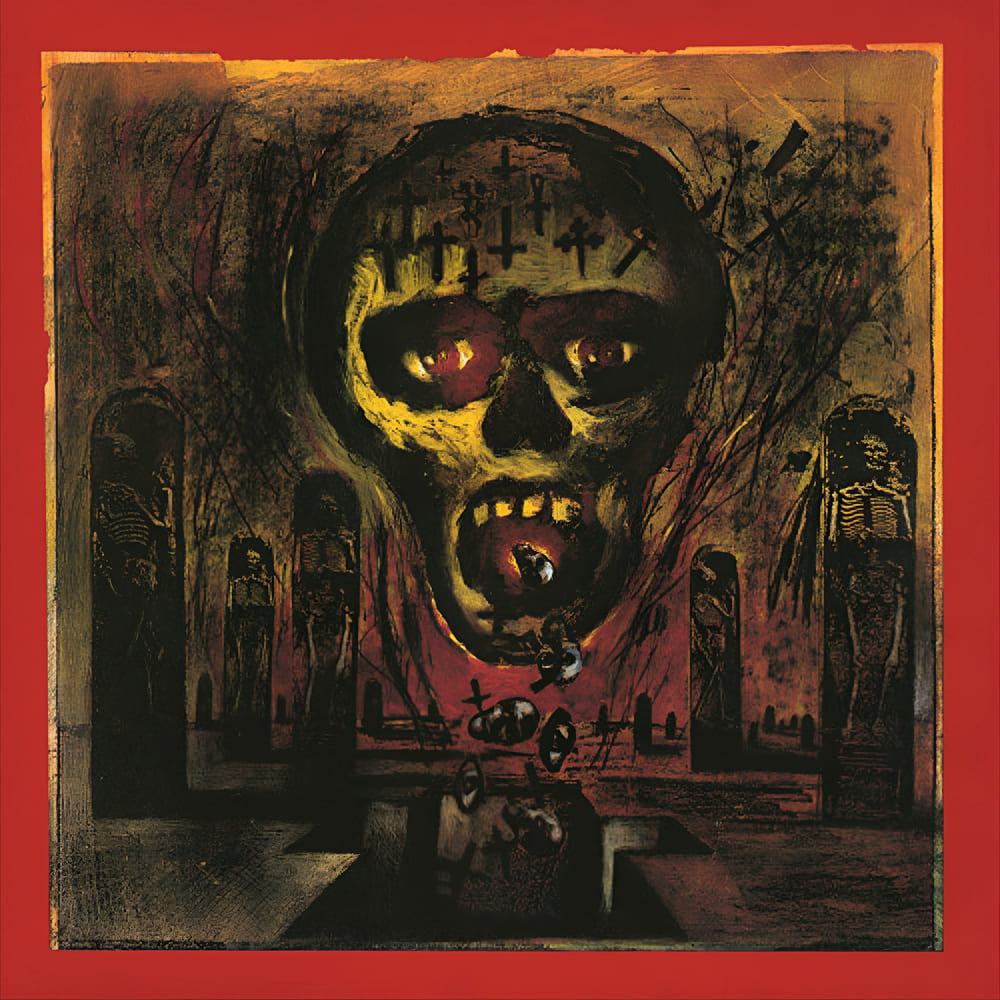
“Dead Skin Mask” is one of Slayer’s creepiest and most effective songs, and it’s easy to see why it has become a Halloween-season staple. It comes from the band’s 1990 studio album Seasons in the Abyss, and instead of going full blast from the first second, it slowly builds this cold, uneasy atmosphere before the riffs start hitting hard. It’s classic Slayer, but with a more haunting, horror-movie kind of menace.
The song is written from the viewpoint of Ed Gein, the infamous Wisconsin killer, grave robber, and necrophile whose crimes inspired characters in films like Psycho and The Texas Chain Saw Massacre. Slayer doesn’t just name-drop him; the lyrics put you inside his twisted head, with Gein speaking to a victim as if he’s welcoming her into his home. That first-person approach is what makes the song so unsettling—it’s not just about a monster, it’s about being trapped in the same room as one.
On the studio version, the guitar solo after the second verse is a great example of why the Kerry King/Jeff Hanneman partnership worked so well. King kicks off the solo section with his fast, aggressive, almost chaotic lead playing, and Hanneman answers with his own darker, more melodic lines. They trade leads back and forth, and the whole thing feels like the musical equivalent of a horror scene spiraling out of control.
What really sells the song is the mood. The opening clean guitar part is eerie, Tom Araya’s vocals sound genuinely disturbed, and the final moments—where a childlike voice pleads with “Mr. Gein”—are absolutely chilling. It’s one of those metal songs that understands horror is often more effective when it’s slow and creepy rather than loud and constant.
That’s why “Dead Skin Mask” is perfect for October. Whether you’re putting together a Halloween playlist, watching slasher movies, or just want something appropriately grim for a dark autumn night, this track fits right in. It’s heavy, unsettling, historically inspired, and packed with that classic Slayer sense of dread—basically spooky-season metal at its finest.
Dead Skin Mask
[Intro]
How I’ve waited for you to come
I’ve been here all alone
Now that you’ve arrived
Please stay awhile
And I promise I won’t keep you long
I’ll keep you forever…forever…forever…
[Verse 1]
Graze the skin with my fingertips
The brush of dead cold flesh appease the means
Provoking images delicate features so smooth
A pleasant fragrance in the light of the moon
[Chorus]
Dance with the dead in my dreams
Listen to their hallowed screams
The dead have taken my soul
Temptation’s lost all control
[Verse 2]
Simple smiles elude psychotic eyes
Lose all mind control, rationale declines
Empty eyes enslave the creations
Of placid faces and lifeless pageants!
In the depths of a mind insane
Fantasy and reality are the same!
[Solo @2:19]
[Verse 3]
Graze the skin with my fingertips
The brush of dead warm flesh pacifies the means
Incised members ornaments on my being
Adulating the skin before me
[Verse 2]
Simple smiles elude psychotic eyes
Lose all mind control, rationale declines
Empty eyes enslave the creations
Of placid faces and lifeless pageants!
[Chorus]
Dance with the dead in my dreams
Listen to their hallowed screams
The dead have taken my soul
Temptation’s lost all control
Dance with the dead in my dreams
Listen to their hallowed screams
The dead have taken my soul
Temptation’s lost all control
[Outro (young woman’s voice)]
Hello?
Hello Mr. Gein?
Mr. Gein?
Let me outta here Mr. Gein
Mr. Gein?
I don’t wanna play anymore Mr. Gein
Mr. Gein this isn’t fun anymore I don’t wanna play anymore Mr. Gein
Mr. Gein?
I want out of here Mr. Gein!
Let me out now
Great Guitar Solos Series
Since we are now almost halfway through October, it only seems appropriate to share what may be the most famous (and perhaps the most covered) song about witchcraft, Donavon’s Season of the Witch!
This song was originally recorded in 1966 and it’s gone on to become a Halloween mainstay. One fan of the song was future director Martin Scorsese, who originally planned to borrow the song’s title for one of his own films. However, George Romero beat Scorsese out the gate with a film called Season of the Witch and Scorsese ended up renaming his film, Mean Streets.

