Every year, for one night, former rock star Devon (Richard Grieco) dines at his favorite restaurant. He reserves and pays for every table so that he’ll be the only diner. The staff stays until he leaves. If he leaves early, they leave early. If he leaves late, they leave late. Devon demands that everything in the restaurant remain identical to the last time he ate there. If the restaurant has recently changed anything, it changes back for that one night. Devon always orders the same thing and, despite the fact that he’s alone, he always orders two meals: one for him and the other for his wife if she were still alive. Ever since she died, Devon has been living like a recluse, unable to perform his music or move on.
On the latest night, something unexpected happens. It rains, which it hasn’t done before. A mysterious woman shows up and delivers a cake to Devon. At first, Devon is paranoid, but soon he starts to drop his defenses. He talks to his waitress. He talks to the bartender. The conversation turns to death and the loneliness of being a survivor. Soon, they come up with an idea about how to comfort those who have recently lost a loved one.
The Wonder Bar, which was released earlier today, is an interesting film. It was directed by the film’s star, Richard Grieco, and the first half of the film takes place at the Wonder Bar Steakhouse in Clarksburg, West Virginia. It’s a lovely restaurant, and Grieco frames the scenes with the care of someone who truly seems to love the location. (Judging from this film and Clinton Road, Grieco appears to be a director with a surprisingly good eye for locations and an understanding of why it’s important to set your story in the exact right place.) The scenes at the steakhouse feel very much like a play, with the characters discussing the type of issues that we all think about but rarely discuss. The first half of the film feels very assured and, despite the inherent staginess of the concept, I found myself sincerely interested in both the characters and the location. The second half of the film, which moves the story out of the steakhouse, isn’t quite as strong because it actually deals with how the characters put their thoughts into action and, as we all know, it’s always easier to talk about our thoughts than to act on them. I didn’t completely buy the second half of the film, nor did I necessarily believe that everyone who interacted with Devon and his newfound friends would have quite the same positive reaction to them that they have in the film. That’s about as much as I can say without totally spoiling the plot.
That said, the first half of the film was nicely done and had a quiet power to it. It made me think about how I’ve been reacting to death over the past few years. And, of course, the restaurant was lovely.
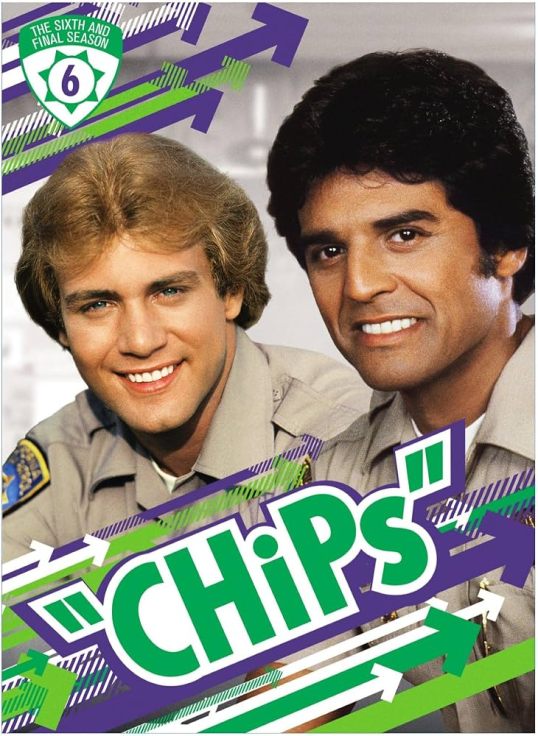
Welcome to Late Night Retro Television Reviews, a feature where we review some of our favorite and least favorite shows of the past! On Mondays, I will be reviewing CHiPs, which ran on NBC from 1977 to 1983. The entire show is currently streaming on Prime!
This week, CHiPs goes country!
Episode 6.14 “Country Action”
(Dir by Charles Bail, originally aired on January 23rd, 1983)
Skip Miller (Tom Engleman) is a cowboy who owns a orangutang. He’s been hired to transport cattle but, after he’s injured in a highway accident, it’s revealed that the people who hired him were actually cattle rustlers! Ponch and Bobby go undercover as cattle buyers. Ponch also takes care of the orangutang, who may not be able to speak and who has terrible dental hygiene but who can identify the men who hired Skip.
How you react to this episode of CHiPs will depend on how much tolerance you have for country music and orangutangs. The orangutang is played by Manis, who also co-starred in Every Which Way But Loose and Any Which Way You Can with Clint Eastwood. Watch as Manis walks around CHP headquarters! Thrill as Manis takes off on a motorcycle! Try not to freak out every time Manis shows off her rotting teeth! As for the country music, there’s a lot of it. Every time Ponch and Bobby go to the local country-western bar, we have to hear at least one song.
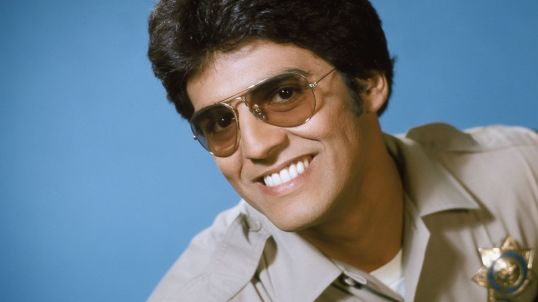
Larry Wilcox probably would have been a good fit for this episode. Officer Jon Baker grew up on a ranch and love animals. As it is, Erik Estrada seems to resent having to share screentime with Mavis and Tom Reilly is as spacey as ever. The folks behind the scenes were really running out of ideas.
Tonight, the Brewers really did look unstoppable. I may be an American League girl but I have to congratulate them. They came in determined to win.
The Brewers are now just one game away from winning their first World Series! As a Rangers fan, I know how exciting it is when your team finally wins its first World Series. I also know how much it can hurt when they lose their first World Series. I’m excited for Milwaukee but I’m sad for Tampa Bay. The good thing, for the Rays, is that this is baseball and nothing is over until it’s over. Never celebrate early because you never know what might happen in the next game. The World Series isn’t over until one team has won four games and the Brewers haven’t done that yet. They’re awfully close, though.
So, we all know that the Grinch once tried to steal to Christmas and then his heart grew a few sizes but did you know that apparently, the Grinch also tried to steal Halloween?
Until about 10 or 12 years ago, I did not. I was going through YouTube, searching for horror films that I could share here on the Shattered Lens, and guess what I came across?
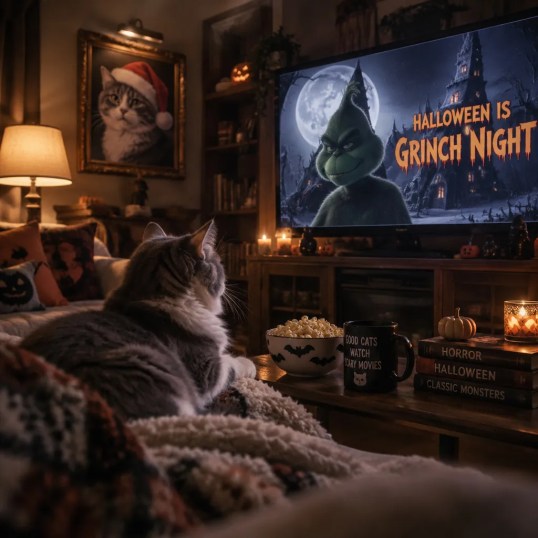
A TV special from 1977 entitled Halloween is Grinch Night!
Unlike How The Grinch Stole Christmas, Halloween is Grinch Night apparently never became a holiday classic. Perhaps that’s because Halloween is Grinch Night is not exactly the most heart-warming of holiday specials. Whereas How The Grinch Stole Christmas tells us about how the Grinch learned the true meaning of Christmas, Halloween is Grinch Night gives us a Grinch who has no redeeming features. There is no hope for this Grinch. This Grinch will steal your soul and probably drink your blood. This Grinch is pure Grinchy evil.
This is the Grinch of our nightmares.
Check out Halloween is Grinch Night below and hope the Grinch doesn’t capture you this Halloween….
1998’s Psycho tells the story of real estate secretary Marion Crane (Anne Heche). Marion is in love with Sam Loomis (Viggo Mortensen), but Sam feels that they can’t get married because he doesn’t have much money and he has to send a monthly alimony payment to his ex-wife. Sam says he doesn’t want Marion to have to spend her married life “licking the stamps.” “I’ll lick the stamps,” Marion replies in a tone that suggests she has no intention of ever licking a stamp.
Marion steals some money from work and goes on the run. While she drives around the Southwest with a blank expression on her face, she thinks about how everyone will react to the theft. She imagines what people are saying about her. She has a scary experience with a highway patrolman (James Remar). She imagines her sister (Julianne Moore) looking for her. Eventually, when it starts to rain, she pulls into an isolated motel for the night and she meets a nervous man named Norman Bates (Vince Vaughn).
Fresh from the success of Good Will Hunting, director Gus Van Sant decided that it was time to pursue a dream project. He remade Alfred Hitchcock’s Psycho. That in itself was a pretty dumb idea. The first film is one of the few films that almost everyone seems to agree is perfectly made. There was no great need to remake it and, after several sequels, there was probably not great demand for it either. Van Sant also decided that he would remake the film by using the exact same script (with just a few minor updates to reflect changing times) and that he would recreate Hitchcock’s film shot-for-shot.
Now, I know what you may be thinking. If Van Sant used the same script and the exact same shot list from the first film, why did he even bother to remake the movie in the first place? My personal theory is that remaking Psycho was probably something that Van Sant first thought of doing while he was a film student. It’s probably something that he came up with and he carried with him for years. Because no one ever thought it would actually happen, his friends humored him and didn’t tell him what a pointless idea it was. Then Van Sant became a success and, once you’re a success, no one’s going to tell you no. Making an Oscar-friendly box office hit like Good Will Hunting temporarily gave Van Sant the opportunity to do whatever he wanted and what he wanted to do was remake Psycho without changing the script or any of the shots.
Despite all of that, there are a few differences. This version of Psycho is shot in color and is full of tacky wallpaper and garish colors. Marion wears some of the ugliest outfits that I’ve ever seen. Of course, the cast is entirely new. The instantly relatable Janet Leigh is replaced by the dull and androgynous Anne Heche. Viggo Mortensen is equally dull as Sam. Julianne Moore is much more take-charge as Lila but, physically, is in no way believable as being related to Anne Heche. (Vera Miles and Janet Leigh, on the other hand, very much seemed like sisters even if they didn’t share any scenes together.) Martin Balsam’s wiseguy private eye is replaced by William H. Macy’s nerdy detective. The biggest change is that Anthony Perkins has been replaced by a totally miscast Vince Vaughn. Norman Bates is someone who has spent the last ten years of his life isolated from the world, living like a hermit. Vince Vaughn, an actor who I usually like, comes across like he can’t wait to get down to the local bar and order everyone a beer.
You don’t hear much about Gus Van Sant’s Psycho anymore. Everyone pretends like it doesn’t exist and that’s probably for the best. If anything, it’s a reminder that almost every director has at least one bad idea that he’s waiting to spring on the world once he becomes successful enough. For Gus Van Sant, the idea was Psycho.
1986’s The Groundhog’s Day Massacre takes place in Ohio. Someone who is apparently known as Baggyface is obsessed with saws and killing people. He does indeed wear a bag over his face and he goes around with an electrical saw, though I’m not really sure how he keeps it running. Maybe he has a really long extension cord. Despite the danger of Baggyface, a couple still decide to have a nice romantic picnic outside. They eat, they frolic, and they toss around a frisbee. Eventually, Baggyface shows up.
The Groundhog’s Day Massacre is only 26 minutes long. About twenty minutes into the action, the screen is suddenly filled with static and we hear someone off-camera saying, “Technical difficulties.” The static goes on for about three minutes and then we get back to what passes as the action. I have to admit that I actually did smile when the static started and that “technical difficulties” line made me laugh. It’s film nerd humor and, more specifically, it’s horror nerd humor. Any true horror fan has seen countless low-budget films that suffered from at least one technical difficulty. (If you don’t know what I’m talking about, I can only assume you’re one of those “I love American Horror Story” snobs.) Tossing it into the middle of this film is a reminder that we’re not meant to take any of this seriously.
Shot on video, The Groundhog’s Day Massacre is semi-legendary amongst SOV fans, both because of its “so bad it’s good” reputation and the fact that, for years, it wasn’t easy to find. (It’s on YouTube now.) The title was obviously meant to poke fun at the slasher habit of trying to co-opt popular holidays. The footage is grainy, there’s next to zero dialogue, and three cast members were clearly amateurs. Heavy metal music drones in the background. Watching two people play frisbee is not made any more exciting by playing an 80s hair band.
(One thing that people forget about the early days of the Internet is that people would beg you to check out their “extreme sports” videos and then it would inevitably turn out to be just like twelve minutes of some douchebag with a manbun trying to steer a unicycle while Pantera played in the background. That’s what the frisbee scenes reminded me of.)
The Groundhog’s Day Massacre is not very good, but I imagine the people who made the film would probably agree with me on that. It does have a certain charm that comes from watching it and knowing that, one weekend, four or five people got together and filmed it and now, 40 years later, it can still be viewed on YouTube. The man and the woman who get chased by Baggyface are probably in their 60s now! I wonder if they know people are watching them on YouTube? That said, The Groundhog’s Day Massacre is only 26 minutes long and it really makes you feel every one of those 26 minutes. There were plenty of technical difficulties with The Groundhog’s Day Massacre and I certainly don’t plan on watching it again.
And yet, I’m still glad it was made. I’m glad that it’s still being watched. I’m glad people are still laughing at the moments that they were meant to laugh at. I’m happy for the people who made this movie, wherever they may now be.
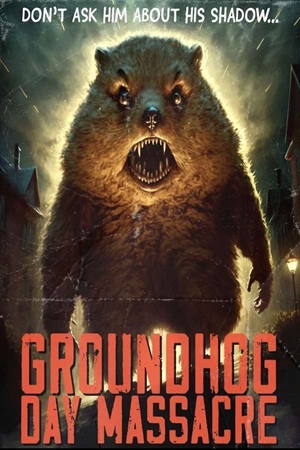
This poster, which I got off of Letterboxd, has nothing to do with the movie and I imagine it was probably made years after the film’s initial release. You’ll notice that they corrected the name of the movie. As someone who still cringes at the typos in her 2010n reviews, I understand.
1972’s Sisters begins by introducing us to a likable ad executive named Philip Woode (Lisle Wilson). Woode is the victim of a prank show and, for his trouble, he wins dinner for two at a nice Manhattan restaurant. Daniele Breton (Margot Kidder), the model/actress who set him up for the show, agrees to be his date. They have a lovely night that ends at Daniele’s apartment. In the morning, Daniele explains that it’s not only her birthday but also the birthday of her twin, Dominique. Philip, being a nice guy, goes not only to refill Daniele’s prescription but also to pick up a birthday cake. He then comes back to the apartment and, in true Psycho fashion, is promptly stabbed to death by one of the sisters.
Across the street, journalist Grace Collier (Jennifer Salt) looks out her window just in time to see Philip getting stabbed and then using his own blood to write “help” on the apartment window. Director Brian De Palma makes good use of his trademark split-screen technique. On one side of the screen, we watch Philip dying. On the other side, we explore Grace’s apartment and see that, in the past, she’s written an editorial headlined “Why We Call Them Pigs.” We know that Grace is the only person who has witnessed Philip’s murder, and we also know why the police are not going to be inclined to believe her.
And indeed, by the time the police arrive, Daniele and her creepy ex-husband, Emil (William Finley), have already hidden Philip’s body in a couch. With the police proving to be of no help, Grace hires a private detective named Joseph Larch (Charles Durning) to break into Daniele’s apartment and search for clues. Durning doesn’t have a huge role in Sisters, but he definitely makes an impression as he proceeds to follow that couch across the country. De Palma’s dark sense of humor is evident as the couch eventually ends up in the wilds of Canada, where Durning uses his binoculars to keep an eye on it.
Sisters was an early De Palma film, one that gives him a chance to show off both his ability to generate suspense and the style that would become his trademark. It’s an effective film, one that has a plot that is full of twists but which can still easily be followed by the audience. Indeed, I doubt anyone will be shocked to discover the truth about Daniele and Dominique, but Margot Kidder gives such a good performance and De Palma directs with such confidence that the story still holds your attention. As for Jennifer Salt, she’s playing the type of radical journalist who probably would have identified with the politics of Greetings and Hi, Mom! while ultimately rejecting both films for their casual misogyny. It undoubtedly says something about De Palma’s worldview that, while he obviously sympathized with Grace’s politics, he still ultimately portrayed her as being an ineffectual investigator.
In the end, Grace is as much of a sister to Daniele as Dominique is. They’ve found themselves being manipulated by the same society, and they’ve both been forced to the fringes—Daniele by her past and Grace by her politics. In typical De Palma fashion, this film ends with the audience knowing more than the majority of the characters. We know what happened but, for everyone else, the truth is still hidden in a couch that’s sitting in the middle of nowhere.
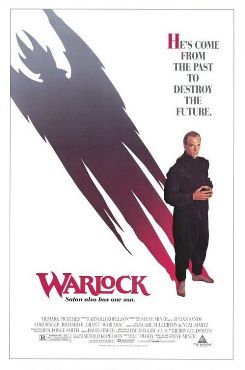
Before he can be executed in the late 17th century, an unnamed warlock (Julian Sands) is propelled through time by Satan. He ends up in 20th-century Los Angeles, where he seeks the three pieces of the Grand Grimoire, a legendary spellbook that, when reassembled, can undo creation. The Warlock is pursued by Giles Redferne (Richard E. Grant), a witch hunter whose wife was previously killed by the Warlock and who manages to make it through the Warlock’s time portal. Helping Giles navigate the modern world is Kassandra (Lori Singer), a woman who made the mistake of taking the Warlock in and got hit by an aging spell for her trouble. Giles and Kassandra pursue Warlock across the the country as he searches from the three pieces of the book. It’s a quest that takes them from Los Angeles to a Mennonite community and finally to modern-day Massachusetts where the final piece of the Grimoire turns out to be in a very unexpected location.
Warlock definitely benefits from David Twohy’s clever script and Steve Miner’s no-nonsense, energetic direction, but the real secret of its success was the performance of Julian Sands as the Warlock. If you were of a certain age in 1991, Julian Sands will always primarily be the Warlock to you. With his coldly self-amused manner and his unapologetic cruelty, Sands was the epitome of cool evil. The first time I saw Warlock, I was surprised at just how far the film’s villain was willing to go in his quest. Warlock is one of those films where the characters who usually survive do not. No one is safe from the warlock.
The film also benefits from Richard E. Grant taking his role seriously. As for Lori Singer, she’s stuck with a lot of bad old-age makeup and delivers her lines with a lack of enthusiasm. Her performance, though, still doesn’t distract from this surprisingly entertaining film. When I recently rewatched, I recognized Mary Woronov in the role of a psychic. As always when it comes to Mary Woronov, I wished her role had been larger.
Warlock was released in Europe and Australia in 1989 but, because of the financial difficulties of New World Pictures, it didn’t get an American release until 1991. The film did moderately well at the box office and went on to become, for a while, a mainstay on HBO and Cinemax. Julian Sands, who had mostly played young romantic up until that point, was subsequently typecast as a cool, Continental villain. It was followed by two sequels.
“Believe me, you don’t want Hannibal Lecter inside your head.” — Jack Crawford
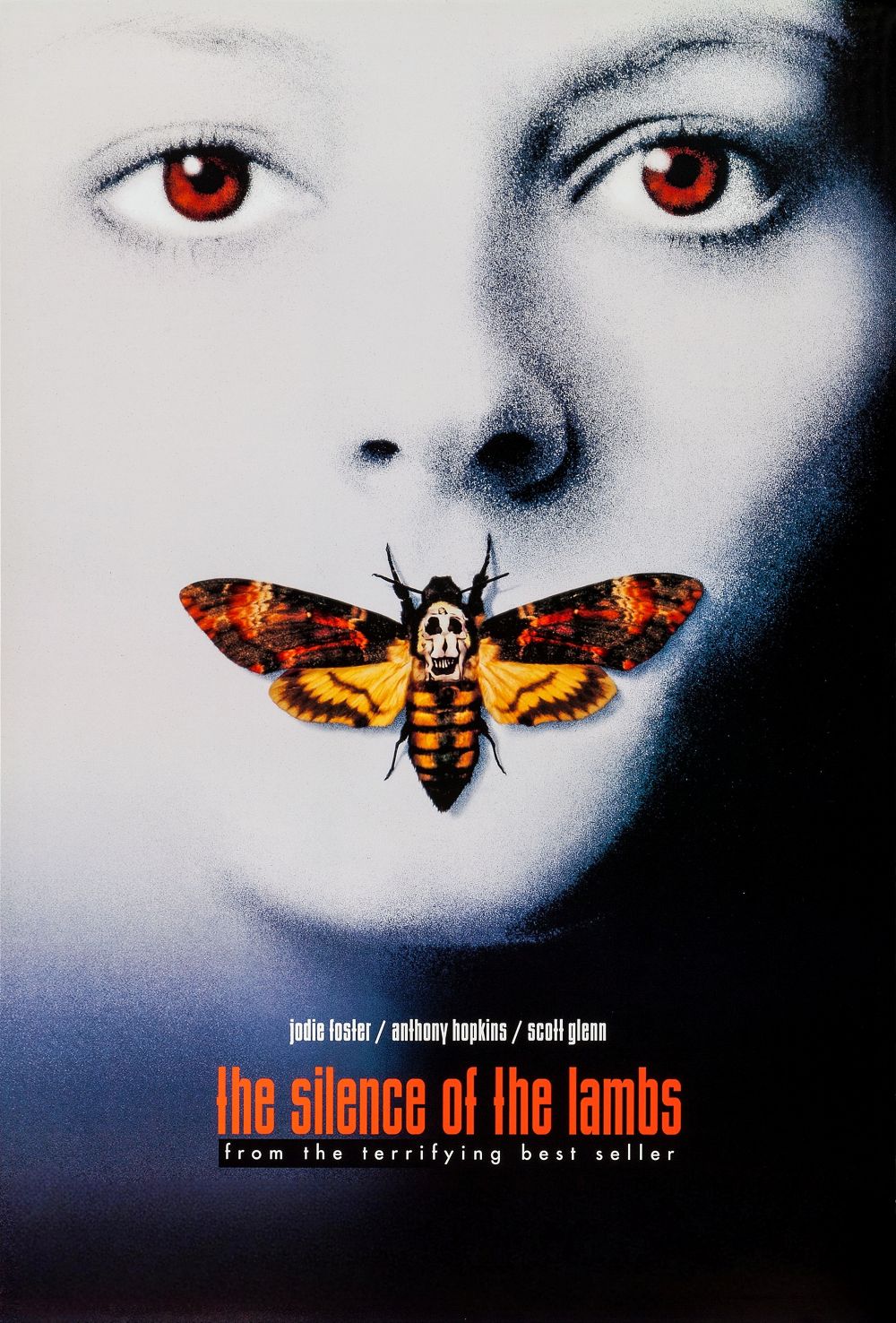
Some thrillers get louder as they become more frightening. The Silence of the Lambs often goes the other way, drawing its power from a lowered voice, a held stare, or the uncomfortable silence before someone answers a question. Jonathan Demme understands that an audience will lean into a scene when the actors give them something worth watching. His 1991 film has plenty of gruesome material, but its finest effects come from the precision of the performances and the intimacy of the camera. It is a horror movie that can make two people talking feel more dangerous than an outright attack.
Adapted by Ted Tally from Thomas Harris’s novel, the story follows FBI trainee Clarice Starling as she helps investigate Buffalo Bill, a serial killer targeting women. She seeks information from imprisoned psychiatrist and cannibal Hannibal Lecter, who demands personal disclosures in exchange for his insight. That premise creates an ideal setting for actors: professional conversations keep slipping into confrontations neither participant experiences in quite the same way. Clarice needs answers, while Lecter wants access to the person asking the questions. Demme builds the film around that imbalance without letting the investigation overwhelm the people involved.
Jodie Foster gives Clarice a mixture of determination and discomfort that makes her compelling well before the danger becomes immediate. Her performance is carefully modulated, especially in the contrast between her formal speech and the emotions passing across her face. She wants to project competence, but Foster lets us notice when that projection requires work. A tightened expression or a slight hesitation suggests someone evaluating how much of herself she can safely reveal. Those details make Clarice feel inexperienced without making her seem incapable. She has the intelligence for the job; what she lacks is the luxury of feeling secure in it.
Foster is particularly impressive when Clarice encounters something painful and has to continue functioning. She allows the reaction to register, then shows the effort of turning it into concentration. It is a subtle distinction, but an important one: Clarice’s professionalism does not depend on suppressing every trace of feeling. Her compassion often seems to make her more attentive. Foster also avoids the opposite trap of constantly advertising sensitivity. She can be brisk, guarded, or visibly irritated. The result is a character whose emotional responses feel specific to each encounter rather than arranged to remind us that she is sympathetic.
Anthony Hopkins approaches Lecter with a much more conspicuous sense of presentation. His speech is precise, his gaze sustained, and his pauses carefully placed. The performance has theatrical flair, but Lecter himself is theatrical, enjoying the opportunity to arrange an encounter around his preferences. Hopkins makes restraint the source of his menace. Because he gives so little away physically, the smallest change becomes noticeable. A slight movement forward can feel like an intrusion. Even his courtesy has an aggressive quality, as though good manners are another standard by which everyone around him is certain to disappoint.
What makes Foster and Hopkins so effective together is the difference in how they occupy a scene. Hopkins invites us to study the performance Lecter is giving, while Foster draws us toward the reactions Clarice would prefer to conceal. Their exchanges develop through that contrast. She does not merely receive his provocations; she assesses them, resists them, and sometimes challenges his assumptions. His interest in her can look like respect, but neither actor lets that resemblance become comforting. There is an unsettling intimacy in the attention they give each other, with Foster continually reminding us that attention can also be a form of pressure.
Demme photographs those exchanges with an intimacy that makes the viewer feel implicated. Faces often turn almost directly toward the lens, putting us close to the position of the person being addressed. The effect is especially uncomfortable when Clarice is being examined, patronized, or challenged. Rather than watching someone endure scrutiny from a convenient distance, we experience something of its force ourselves. Demme also gives reactions time to develop. He understands that a face listening can be as expressive as a face speaking, and he rarely seems impatient to interrupt an actor’s thought with unnecessary visual decoration.
Tak Fujimoto’s cinematography gives that approach a strong physical foundation. Close-ups matter partly because the surrounding spaces are so clearly established: offices, corridors, examination rooms, and cells all have their own arrangements of authority and confinement. Clarice frequently appears exposed within environments that supposedly represent order. The compositions make us aware of who occupies the space comfortably and who must negotiate a place within it. Fujimoto does not need to make every room look sinister. The ordinary institutional surfaces are convincing enough that an intrusive face or an ominous stretch of corridor can disturb their apparent neutrality.
The supporting performances help maintain that tension without duplicating the central pairing. Scott Glenn gives Jack Crawford a subdued authority that can feel supportive and calculating at once. Anthony Heald makes Dr. Chilton’s vanity unpleasantly recognizable, finding irritation in the way he presents himself as indispensable. Brooke Smith gives Catherine Martin a forceful combination of fear, anger, and practical determination. Ted Levine takes Buffalo Bill in a more volatile direction, creating a disturbing contrast with Lecter’s composed self-display. Together, these actors give the film different social temperatures; Clarice cannot approach every person with the same defenses.
The film’s treatment of Bill remains its most troubling element. Although the dialogue distinguishes him from transgender people, its imagery still associates gender nonconformity with disgust and danger. The qualification cannot entirely undo the visual impression, especially in a film this skilled at making images stick. Elsewhere, the craftsmanship is remarkably cohesive. Howard Shore’s score supplies a mournful undertow, while the editing allows conversations to breathe before tightening our experience of danger. In the climactic passages, restricted visibility becomes frightening because Demme has already taught us how much depends on looking, reading expressions, and understanding the space around a person.
The lasting achievement of The Silence of the Lambs is how completely its style serves its actors. Demme and Fujimoto bring us close enough to catch Foster’s fleeting uncertainty and Hopkins’s smallest calculated gesture, then trust those details to do the work. The film can be shocking, but it is rarely more gripping than when someone is simply deciding what to say next. That is what keeps it from becoming a museum of familiar lines and notorious images. Beneath all the cultural baggage, the performances still feel alive, and the camera still knows how to make us uneasy about watching them.
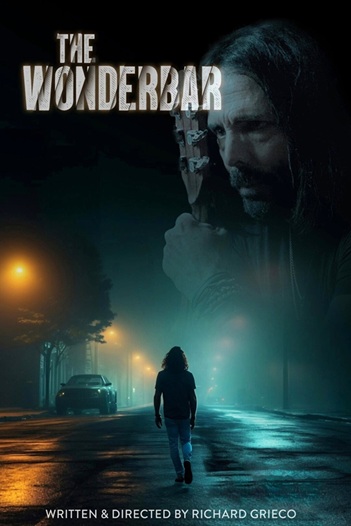 Every year, for one night, former rock star Devon (Richard Grieco) dines at his favorite restaurant. He reserves and pays for every table so that he’ll be the only diner. The staff stays until he leaves. If he leaves early, they leave early. If he leaves late, they leave late. Devon demands that everything in the restaurant remain identical to the last time he ate there. If the restaurant has recently changed anything, it changes back for that one night. Devon always orders the same thing and, despite the fact that he’s alone, he always orders two meals: one for him and the other for his wife if she were still alive. Ever since she died, Devon has been living like a recluse, unable to perform his music or move on.