“He who fights with monsters should look to it that he himself does not become a monster.” — Friedrich Nietzsche, Beyond Good and Evil
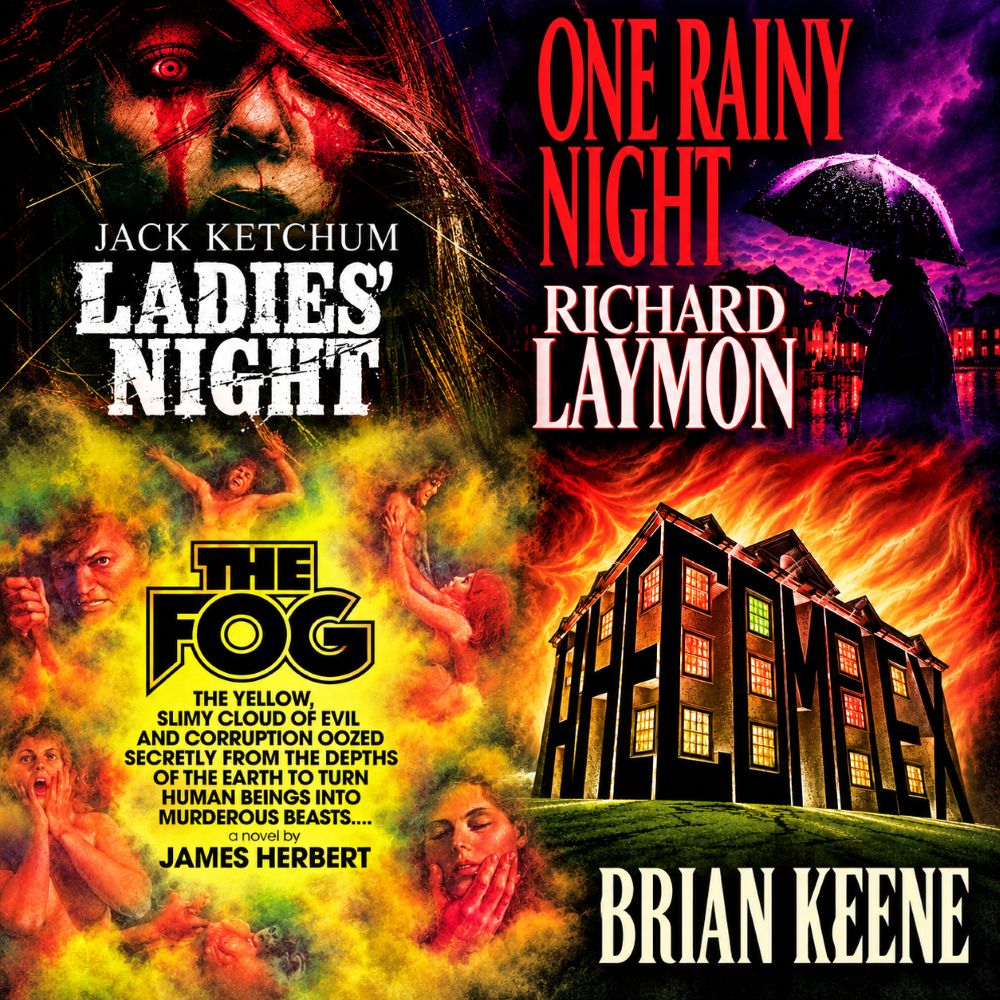
Survival becomes a moral problem when staying alive threatens to destroy the reasons for living together. That dilemma gives siege horror its enduring power. Characters must confront not only an external threat but also the possibility that fear will turn protection into exclusion, cooperation into domination, and necessary violence into cruelty. James Herbert’s The Fog, Jack Ketchum’s Ladies’ Night, Richard Laymon’s One Rainy Night, and Brian Keene’s The Complex explore this pressure through outbreaks of human brutality. Their attackers are disturbing because they retain recognizable bodies while violating the expectations that make human contact possible.
A siege need not confine its victims to one building or require them to defend a fixed position. Its boundaries can encompass a town, a city, or an entire country where danger lurks around every corner. Characters may remain free to move while having nowhere reliably safe to go. Streets become hazardous corridors, shelters offer uncertain protection, and escaping one confrontation exposes them to another. The defining condition is entrapment: the inability to leave the field of danger behind.
Across these novels, that condition tests civilization as much as physical endurance. Social order can restrain violence, conceal it, or help manufacture it. Catastrophe likewise produces more than selfishness: it can create obligations between people who previously felt little responsibility for one another. The question is not simply whether humanity becomes primal under pressure, but which human capacities the struggle to survive encourages—and which it threatens to extinguish.
James Herbert’s The Fog: A Siege Without a Secure Perimeter
In The Fog, an earthquake opens a fissure beneath an English village, releasing a substance that drives exposed people into destructive madness. Environmental investigator John Holman survives the initial catastrophe and becomes central to efforts to stop the spreading threat. Herbert alternates his continuing narrative with episodes depicting the fog’s effects elsewhere, expanding the disaster beyond any single survivor or refuge.
This structure makes survival a problem individual toughness cannot solve. The threat moves through the atmosphere, turning the environment itself into an unstable boundary between safety and exposure. Characters can travel, but movement does not necessarily mean escape. The siege follows the spreading contamination rather than remaining organized around one defensible location.
Herbert’s scattered episodes transform ordinary life into a succession of violated expectations. Familiar people occupy recognizable settings while abandoning the behavior that previously made those settings intelligible. The world remains physically familiar while ceasing to operate according to recognizable social rules.
The fog’s man-made origins sharpen the contradiction. Its connection to military experimentation implicates organized authority in the destruction of the society it supposedly protects. Technical sophistication does not stand apart from barbarism; it creates the means through which barbarism spreads. Civilization becomes dangerous because its capabilities have become detached from responsibility.
Nevertheless, contamination is not straightforward proof of an authentic savage self. The exposed have been altered against their will. They become perpetrators while remaining victims, and their conduct cannot establish what they secretly desired beforehand. Holman’s recovery makes that uncertainty central: the defender has crossed the boundary separating ordinary humanity from destructive madness.
Survival consequently requires understanding as well as resistance. Eliminating dangerous individuals cannot resolve the catastrophe. Herbert exposes institutional failure while preserving the necessity of coordinated action, suggesting that civilization must answer for its abuses without becoming something humanity can simply discard.
Jack Ketchum’s Ladies’ Night: Intimacy as Enemy Territory
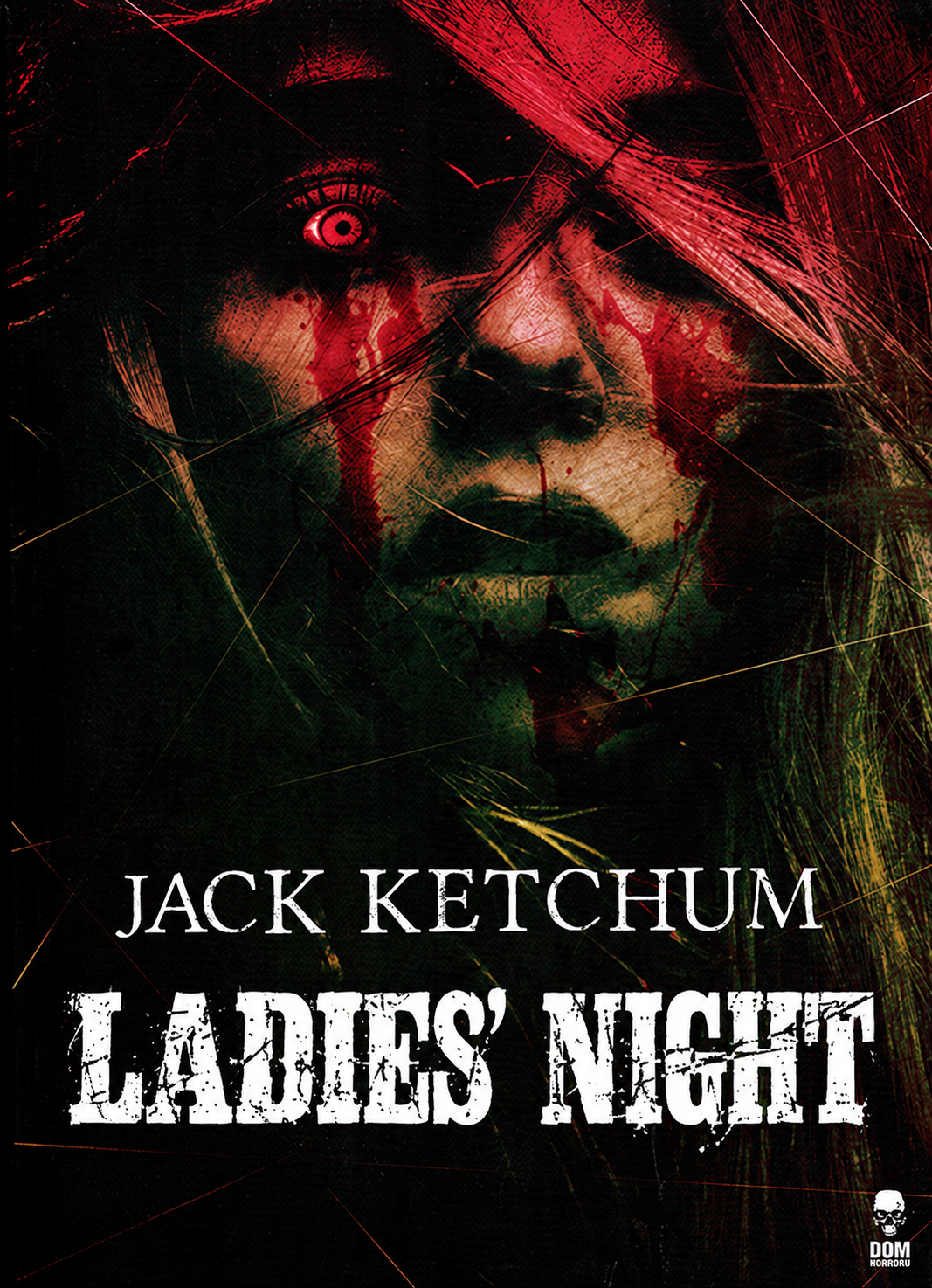
Ladies’ Night concentrates its crisis within relationships. A chemical spill causes exposed women to become violently predatory, turning the antagonism suggested by the phrase “battle of the sexes” into a grotesquely literal nightmare.
Where Herbert destabilizes the wider environment, Ketchum attacks the assumptions permitting physical closeness. Familiarity and attraction ordinarily encourage people to lower their defenses. Here, that access becomes dangerous. The siege is intimate as much as architectural: its boundaries run through trust, desire, and bodily proximity.
Its scattered encounters also make clear why leaving one location cannot necessarily end a siege. When danger is distributed throughout the surrounding community, the next street or doorway may offer another confrontation rather than refuge. Movement becomes a negotiation with uncertainty.
Defending oneself may require recoiling from someone previously associated with affection or pleasure. The transformed person remains recognizable, yet recognition no longer reassures. Ketchum makes the destruction of intimacy inseparable from the threat of bodily injury.
The premise is forceful but ethically troubling. Men become vulnerable to people they may have underestimated or treated carelessly. The attention to insensitive and unfaithful husbands gives some attacks an uncomfortable connection to existing grievances. Yet chemical compulsion prevents the violence from functioning as freely chosen resistance or coherent justice. The women’s agency has been destroyed, not liberated.
Like Herbert, Ketchum complicates the claim that contamination reveals an underlying truth. Imposed murderous behavior does not prove the earlier personality was fraudulent. His gendered division also exposes a danger in survival thinking: immediate threats encourage rapid judgments that can harden into collective suspicion.
Compared with Keene’s improvised solidarity, Ketchum makes mutual recognition painfully difficult. His novel’s power lies in turning intimacy against its characters; its limitation lies in the risk that women become interchangeable embodiments of male fear. That tension belongs at the center of its moral examination.
Richard Laymon’s One Rainy Night: A Town Already Compromised
In One Rainy Night, black rain falls on Bixby, California, turning those it touches into violent attackers. Laymon follows several threatened groups, including a babysitter protecting a child, adults trapped in a restaurant, and a police officer attempting to safeguard others. The immediate objective is clear: remain dry and prevent the transformed population from entering shelter.
Laymon combines localized defenses with a town-wide siege. Roofs, doors, windows, and exposed ground acquire urgent significance, but individual shelters exist within a larger hostile environment. Leaving a threatened building may mean exchanging one danger for another. The town becomes a network of temporary refuges separated by hazardous spaces.
The attackers’ ability to cooperate increases that pressure. They are not simply an obstacle to be avoided; they can actively threaten the structures protecting those who remain unaffected. Shelter postpones confrontation without necessarily resolving it.
Yet Bixby’s violence does not begin with the storm. Maxwell Chidi, a Black teenager, has already been murdered, his tortured body burned on a school football field. This atrocity prevents the town’s earlier normality from becoming an image of innocence. Extreme cruelty exists before the rain makes brutality pervasive.
Laymon thus challenges the idea that civilization reliably suppresses primal behavior. The community possesses institutions and routines, but these have not prevented racist murder. The storm does not introduce savagery into a humane environment. It magnifies a capacity already present.
Survival cannot therefore mean restoring the previous order and declaring victory. Bixby’s earlier condition already demands scrutiny. Preserving a community is not the same as proving everything about it deserves preservation.
The protective relationships nevertheless resist universal cynicism. Caring for a child or accepting responsibility for another person makes compassion an active survival practice. Laymon’s extreme physicality distinguishes violence as domination from violence as protection. Both can be brutal, but their purposes differ. Bodies are not merely opportunities for spectacular injury; they are vulnerable lives someone may choose to defend.
Brian Keene’s The Complex: Surviving Through Other People
The Complex gives the siege its most concentrated residential setting. Naked, armed killers descend on the Pine Village Apartment Complex, forcing neighbors who barely know one another into collective resistance. Its ensemble includes a depressed writer, a Vietnam veteran, an elderly woman, a young trans woman, a mother and child, and a serial killer known as The Exit. Initially unexplained violence leaves little time for understanding before action becomes necessary.
The apartment setting distinguishes proximity from community. Its residents share space, but that does not mean they share trust or obligation. The attack forces them to discover whether neighbors can become more than strangers separated by walls.
Keene also complicates the apparent security of familiar geography. The complex contains separate residences and spaces through which the characters must navigate. Knowing the setting does not mean controlling it. A familiar route can become dangerous, and a private refuge can prove inadequate.
Where contamination destroys established bonds in the other novels, Keene’s siege creates relationships that previously did not exist. People understood through superficial impressions become potential rescuers. Survival depends partly on revising assumptions through which the residents have judged one another.
Social respectability does not reliably predict competence or compassion, while marginalization does not determine weakness. Yet emergency does not make everyone good. Cooperation requires incomplete knowledge, dangerous compromises, and dependence on people whose motives remain uncertain.
The Exit embodies that discomfort. A serial killer’s abilities may become useful during an assault, but usefulness does not establish virtue. His presence separates the capacity for violence from the purposes giving violence its ethical meaning. Necessary cooperation does not make its participants morally equivalent.
Compared with Herbert’s institutional catastrophe, Ketchum’s destroyed intimacy, and Laymon’s compromised town, Keene emphasizes civilization as something actively constructed. It exists through shared danger, mutual recognition, and the refusal to regard vulnerability as expendability. Survival requires other people without making trust easy or uncomplicated.
Shared Foundations and a Continuing Legacy
These novels share siege and survival DNA with other forms of horror. Romero’s Dead films make external attack and internal disagreement inseparable, while Carpenter’s Assault on Precinct 13 forces unlikely allies to defend an isolated refuge. Slasher series such as Friday the 13th and Scream concentrate similar pressure in pursuing killers. Different threats create narrowing options: escape becomes difficult, assistance unreliable, and resistance unavoidable.
Their relationship to later extreme horror involves thematic kinship as well as contribution, rather than a simple chain of direct influence. Keene’s The Rising contributed to the modern literary zombie resurgence through intelligent, possessed undead capable of turning human knowledge against survivors. The Complex concentrates related anxieties within a smaller setting.
Comparable concerns animate the Rage-infected of Danny Boyle and Alex Garland’s 28 Days Later and their return to that world in 28 Years Later. These films extend entrapment across a national landscape: the ability to travel does not guarantee an exit from danger. Rob Jabbaz’s The Sadness, influenced by Garth Ennis’s controversial comic Crossed, pushes recognizable humanity toward deliberate sadism.
Such connections underline the continuing relevance of the four novels. Extreme horror becomes most unsettling not simply through graphic injury, but through the separation of intelligence, intimacy, and imagination from compassion. Those capacities can sustain solidarity—or make cruelty more inventive.
What Survival Preserves
The four novels offer different accounts of what threatens coexistence. Herbert exposes protective institutions producing catastrophe. Ketchum makes intimacy inaccessible. Laymon reveals atrocity beneath communal normality. Keene examines solidarity among people who lack reassuring reasons to trust one another.
Whether the enclosure is an apartment building, a town, or an expanding contaminated landscape, survival does not settle the moral argument. Remaining unaffected does not guarantee goodness, and resisting an attacker does not justify every action taken in self-defense.
The deepest question is what staying alive preserves. If survival requires treating every vulnerable person as a burden and every stranger as expendable, the survivors risk reproducing the world their attackers embody. Civilization endures when they resist that logic—when protecting life still includes recognizing why another person’s life matters.