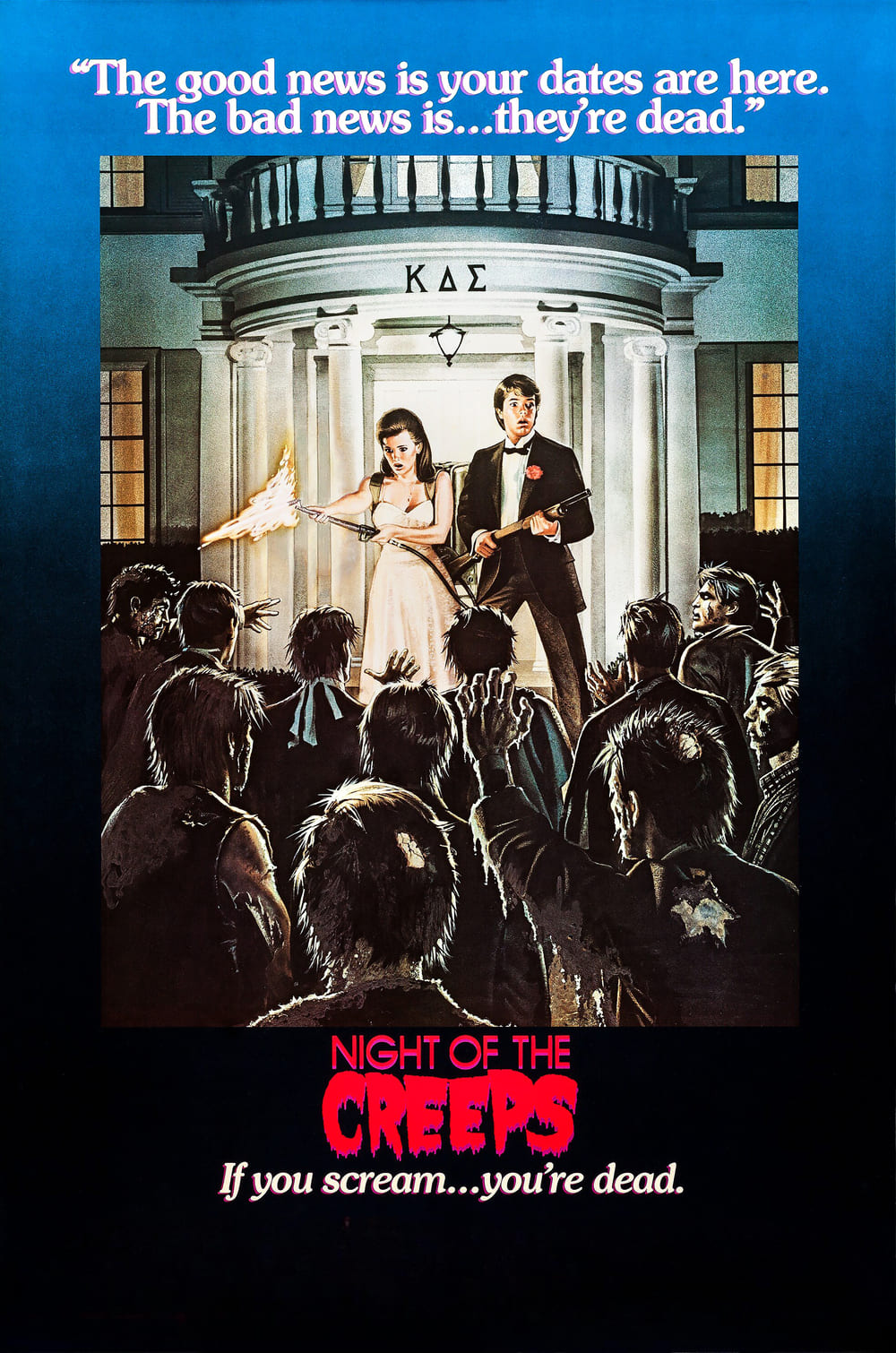
Horror Film Review: Night of the Creeps (dir. by Fred Dekker)


“Zombies, exploding heads, creepy-crawlies… and a date for the formal. This is classic, Spanky.” — Detective Ray Cameron

College is supposed to be a time for making questionable choices, but accidentally helping alien parasites invade campus probably falls outside the usual learning experience. That’s the basic joke behind Night of the Creeps, and Fred Dekker gets an impressive amount of mileage out of it. His 1986 horror comedy mixes the social embarrassment of a campus movie with the bodily violations of a creature feature, then throws in a detective who looks like he hasn’t enjoyed either company or daylight in years. The ingredients are familiar, but the combination has real personality. It’s messy, funny, occasionally touching, and much more interested in entertaining you than looking respectable.

Before the college kids get their chance to make everything worse, Dekker establishes that trouble has been brewing for decades. An opening aboard an alien spacecraft leads into a black-and-white stretch set in 1959, where young love runs into both an escaped axe murderer and an extraterrestrial experiment. It’s a wonderfully excessive introduction, almost daring you to question whether one movie needs all these threats. Somehow, the pieces fit. The opening establishes a history that will eventually catch up with the present, making the later outbreak feel like the continuation of a very bad night rather than a completely random disaster.

In 1986, Chris Romero, played by Jason Lively, has more ordinary concerns. He’s interested in Cynthia Cronenberg, played by Jill Whitlow, and figures pledging a fraternity might improve his romantic prospects. His best friend J.C., played by Steve Marshall, accompanies him on an initiation assignment to steal a corpse. This is, unsurprisingly, not a great plan. Their search brings them to a preserved body, and disturbing it helps unleash the alien slugs that drive the rest of the story. Dekker makes the escalation amusingly direct: Chris wants a more exciting social life, and the universe supplies one with considerably more decomposing flesh than he probably imagined.

The campus setting gives the movie an enjoyable contrast between petty problems and catastrophic ones. Fraternity status and romantic competition seem important until people start becoming breeding grounds for something from outer space. Still, the college-comedy material is also where the film feels most routine. The fraternity antagonists are obnoxious in predictable ways, and Chris spends a fair amount of time being the awkward underdog you’ve seen before. Lively keeps him sympathetic, but the character could use more spark. Cynthia is similarly likable without being especially developed. Whitlow gives her warmth, though the romance never becomes as engaging as the friendships surrounding it.

J.C. is a big reason those friendships work. Marshall brings a loose, teasing energy that makes his exchanges with Chris feel comfortable rather than written purely to deliver information. He can recognize that his friend is being ridiculous without making his affection seem conditional. That gives their relationship some substance beneath the jokes. In a lesser version of this movie, J.C. would exist only to encourage the romance and provide sarcastic commentary. Here, he becomes its emotional anchor. When the danger reaches him, the film briefly stops feeling like a harmless parade of genre references, and that change carries a genuine sting.

Tom Atkins gives the movie a different kind of personality as Detective Ray Cameron. He’s gruff, sarcastic, and seemingly irritated that another day has required his participation. Atkins knows exactly how to sell the dialogue, making “Thrill me” sound like the natural greeting of someone who expects disappointment and would appreciate being surprised. But Cameron isn’t just a collection of quotable lines. His connection to the events of 1959 gives his bitterness a history. Atkins lets that sadness sit beneath the swagger, which makes the character entertaining without reducing him to a tough-guy impersonation. He’s easily the strongest presence whenever he enters a scene.

Dekker deserves credit for allowing those feelings to coexist with the ridiculousness. Night of the Creeps has an obvious sense of humor about itself, but it doesn’t treat caring about its characters as another joke. The actors generally play the danger straight, leaving the comedy to emerge from their reactions and the increasingly unreasonable situation. That approach gives the darker moments room to land. The movie has heart, not because it pauses to insist on its importance, but because friendship and regret remain meaningful even when someone’s head might become a delivery system for space slugs.

The practical effects make that threat suitably unpleasant. There’s something especially nasty about creatures that don’t need to overpower you so much as find an opening, and the slugs turn an exposed mouth into a source of tension. The walking corpses have a grubby physicality that suits the film’s scrappy atmosphere. You can enjoy the craftsmanship while still appreciating how disgusting the result looks. The pacing isn’t quite as dependable: a few stretches of campus business delay the monster action, and the shifts between broad comedy and distress occasionally feel abrupt. Once the outbreak builds toward the formal dance, though, the movie finds the momentum it needs.

What ultimately makes Night of the Creeps work is that its foolish decisions have consequences worth caring about. Chris’s attempt to improve his college experience opens the door to a grotesque disaster, but Dekker doesn’t leave the story at “look what these idiots did.” He gives the characters reasons to stand by one another when their ordinary concerns become irrelevant. That makes the finale more satisfying than a simple procession of creature effects. The movie delivers its share of slime, corpses, and deadpan jokes, then leaves behind a surprisingly warm impression. For a story about things crawling inside people, it’s remarkably good company.
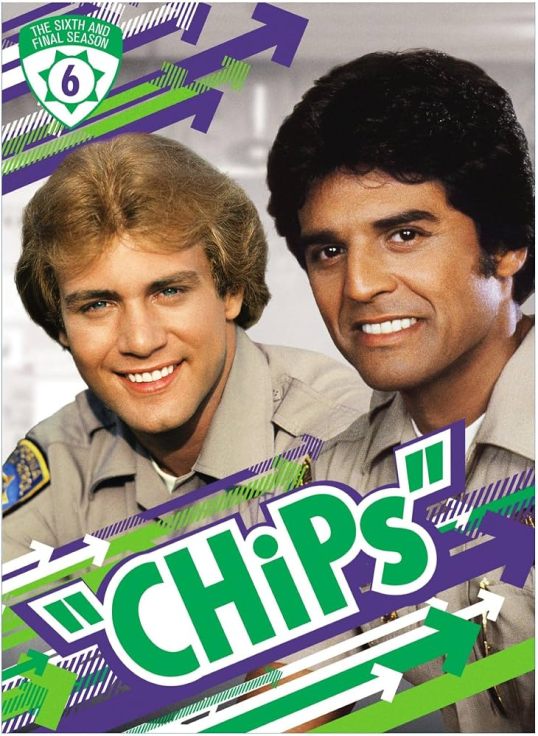
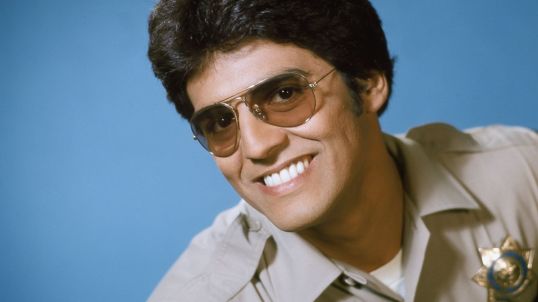
Late Night Retro Television Review: CHiPs 6.13 “High Times”


Welcome to Late Night Retro Television Reviews, a feature where we review some of our favorite and least favorite shows of the past!  On Mondays, I will be reviewing CHiPs, which ran on NBC from 1977 to 1983.  The entire show is currently streaming on Prime!

This week, Bruce goes to back to high school.

Episode 6.13 “High Times”

(Dir by Phil Bondelli, originally aired at January 16th, 1983)

The Highway Patrol is investigating a series of car thefts.  At the scene of the latest theft, they discover several video games token that can only be used at an arcade that sits near a private school.  The auto shop teacher at the school is John Casey (Jim Brown), a former car thief-gone-straight.  Ponch and Bobby decide to have Bruce go undercover as a new student.

Not surprisingly, this makes no sense.  First off, Bruce is just a cadet.  He hasn’t graduated from the Police Academy yet.  So, really, it’s debatable whether or not he would even be allowed to do undercover work.  Secondly, it was established during his first appearance that Bruce is something of celebrity.  He’s the national speedway champion.  When he won the championship, his picture was on the front page of the paper, along with an announcement that he planned on becoming a cop.  When Bruce shows up at the school, he’s riding his motorcycle and he does a bunch of tricks in the parking lot.  It’s as if he wants his cover to be blown!

This was a weird episode.  Danny Bonaduce shows up as a student but he doesn’t have anything to do with the car theft plot.  (Apparently, he’s not playing the gang leader that he twice played during the previous seasons.)  Instead, he just dances in the hallway and is elected king of the Grease Hop.  (That’s a school dance where everyone dresses like a character from Grease.)  The rest of the student body rolls around on roller skates.  As for the thieves, they’re pretty easy to identify.  Benny (Andrew J. Lederer) wears glasses and is in debt to some gamblers and is constantly dropping tokens all over the place.  Matt (Jon Caliri) is the tough guy who doesn’t see why the tokens are so important to Benny.  They’re working not for Mr. Casey but instead for Coach Hutton (Bruce Bauer).

This was a strangely insubstantial episode, even by the standards of CHiPs.  So much time was spent on Bonaduce and his friends acting silly in the halls that one got the feeling that the production team was fantasizing about doing any show other than another episode of CHiPs.

Probably the most surprising thing about this episode is that Bruce went undercover as a high school student instead of Ponch.

Retro Television Review: Homicide: Life On The Street 4.13 “I’ve Got A Secret”


Welcome to Retro Television Reviews, a feature where we review some of our favorite and least favorite shows of the past!  On Sundays, I will be reviewing Homicide: Life On The Street, which aired from 1993 to 1999, on NBC!  It  can be viewed on Peacock.

Ring ring.  “Homicide.”

Episode 4.13 “I’ve Got A Secret”

(Dir by Gwen Arner, originally aired on February 2nd, 1996)

This week, almost everyone has a secret.

For example, when Pembleton and Bayliss are called in about a man found dead in his car, they discover that, earlier in the day, he went to a local ER after being shot.  The gunshot wound, which was accidental, didn’t kill him.  Instead, it was the internal bleeding that the doctor either missed or intentionally ignored.  Dr. Kate Wystan (Mimi Kennedy) may come across as being a selfless doctor who has dedicated her life to helping the residents of Baltimore’s most crime-ridden neighborhood but Pembleton and eventually Bayliss come to suspect that her secret is that, because the victim was black and a known criminal, she didn’t give him the same standard of care that she gives to her other patients.  Pembleton considers this to be murder, though it sounds more like a case of malpractice than anything else.

Munch spots Kay kissing a man outside of police headquarters and he becomes obsessed with trying to figure out who the man is.  He’s always believed that Kay is happy being single and alone.  (Uhm, hello?  Munch?  Remember when she dated Ed Danvers?)  Kay’s secret is that apparently she has a life outside of Homicide.

Finally, Lewis and Kellerman spend the entre episode chasing a burly man who is wanted for killing both of his parents.  At first, this entire storyline feels almost like a parody of NBC’s request that the series start featuring more action.  Lewis and Kellerman spend the entire first half of the episode chasing this guy through allies and pool halls and every time, they fail to catch him.  There’s none of the badass heroics that we’ve come to expect from cop shows.  Eventually, Lewis reveals that his brother is in a mental institution.  When Lewis tries to visit his brother, he’s just turned away.  Lewis’s secret is that he actually cares about his brother.

This was an okay episode.  By this point in the series, Homicide had reached the point where it could do an episode where the true enjoyment came less from the storyline and more from just listening to the characters talk to each other.  I really didn’t care much about the crimes that they were investigating.  Instead, I just enjoyed listening to Pembleton and Bayliss talk and bounce ideas off of each other.  They’ve come along way since the day that Bayliss objected to Pembleton’s interrogation technique and Pembleton shouted that he would never have a partner.  By the same token, Kellerman and Lewis have their own unique chemistry that is fun to experience.  They’re like the sensitive frat cops.  As for Munch and Kay, they should just hook up already.  It’s obvious to everyone that they’re in love!

Maybe that’s their secret?

Movie a Day #110: Femme Fatale (1991, directed by Andre R. Guttfreund)


Joseph Price (Colin Firth) was once a painter but now he is the world’s least likely park ranger.  One day, he meets the beautiful and mysterious Cynthia (Lisa Zane).  Within days, Joe and Cynthia are married but one morning, Joe wakes up to discover that Cynthia is gone and she has only left behind a brief note.  Searching for his wife, Joe goes to Los Angeles and discovers how little he knew about Cynthia.  Joe’s search eventually leads him into the world of porn, drugs, S&M, and performance art.

This month, every entry in Movie A Day has had a least one Twin Peaks connection.  Femme Fatale has two.  Joe’s best friend, a laid back artist who is usually seen painting a topless woman who sometimes wears a brown bag over her head, is played by Billy Zane, who appeared as John Justice Wheeler during the second season of Twin Peaks.  Also, Catherine Coulson (the show’s famous Log Lady) appears as a nun who provides an important clue to Cynthia’s past.

Femme Fatale used to show up on HBO in the 1990s and it is currently on YouTube.  It may not be a great film but it does have a good cast.  Along with Billy Zane and Coulson, Femme Fatale also features Scott Wilson as a shady psychologist, Lisa Blount as an actress who used to work with Cynthia, and Pat Skipper and John Lavachielli as two talkative thugs named Ed and Ted.  Both Carmine Caridi and the great Danny Trejo show up in small roles.  It may seem strange to cast the very British Colin Firth as a park ranger but it works.  As for Lisa Zane, who is Billy’s older sister, Cynthia was probably her best role.

Predictable though the movie may be, Femme Fatale is enjoyably stupid if you are in the right mood.  There should always be a time and place for the old neo noirs of 1990s.

Back to School Part II #25: The Night Before (dir by Thom Eberhardt)


cover_of_the_night_before

For the past two and a half weeks, I’ve been taking a chronological look at some of the best and worst films made about teenagers, high school, and even college!  We are 25-reviews into the 56-review series and we are quickly approaching the 1990s.  However, before we enter the final decade of the 20th Century, let’s take a look at one last film from the 80s.

Released in 1988, The Night Before (which should not be mistaken for the recent HBO series or the Seth Rogen Christmas comedy that nobody saw) opens with 17 year-old Winston Connelly (Keanu Reeves) waking up in an alley.  Winston isn’t the type that you would expect to find in an alley.  For that matter, he’s also not the type who you would usually expect to be played by Keanu Reeves.  He’s the president of his school’s astronomy club, a nice but socially awkward kid.  Even stranger than the fact that he’s waking up in an alley is the fact that he’s waking up in an alley while wearing a tuxedo!

How did Winston end up in that alley?  Well, it turns out that he was on the way to prom.  His date was Tara Mitchell (Lori Loughlin), a popular cheerleader who only asked Winston to the prom because she lost a bet with one of her friends.  (In a revealing bit of character development, Winston doesn’t care that she only asked him because she had to.  He’s just happy to have a date!)  When Winston was driving her to the prom, he took a wrong turn and he ended up in the bad side of town.  Then his car broke down and, as we see in several flashbacks, he and Tara stepped into a nearby bar and asked for help…

And the rest is the blur.  All Winston knows is that, upon waking up, his car has been stolen and Tara has disappeared.  And a pimp named Tito (Trinidad Silva) wants to kill him!

Uh-oh!

Will Winston be able to find his car, Tara, and discover what happened during his blackout?  You’ll have to watch the film to find out!

And, actually, I liked The Night Before.  It was a well-directed and energetically acted movie.  It takes a while to get used to Keanu Reeves playing such an innocent character but he actually gives a really likable and genuinely funny performance.  The film was directed by Thom Eberhardt, who also did Night of the Comet and Sole Survivor, and he keeps the action moving a nice pace.  The movie won’t win any points for originality — the debt to Adventures In Babysitting is especially obvious — but it’s still an entertaining 80s teen comedy.

Add to that, Keanu Reeves and Lori Louglin made a super cute couple!  I wonder if they spent their time on set sharing memories of making Brotherhood of Justice together?

I sure hope they did!

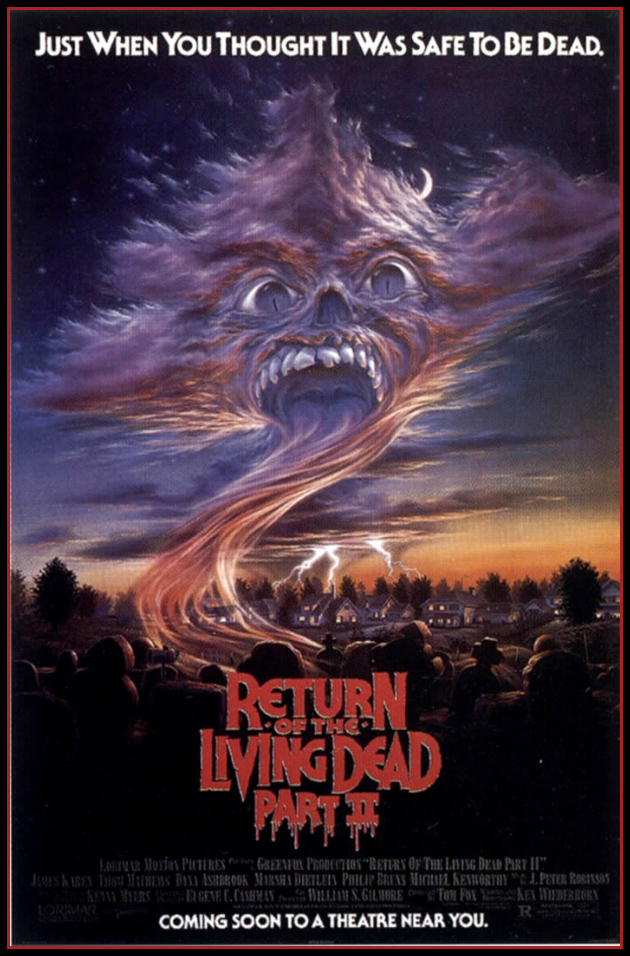
Quickie Review: Return of the Living Dead Part II (dir. by Ken Weiderhorn)


1988 saw the release of Return of the Living Dead Part II. This film is a sort of sequel/reboot of the first film in that the story and even some of the characters bear too much of a similarity to the original film. Ken Weiderhorn both writes and directs this “sequel” and it shows. The film reuses alot of what made the first film a cult-classic amongst horror fans. Weiderhorn seems to be of the philosophy that if something ain’t broke then don’t fix it. What this does is make the film feel like a deja vu and maybe that was his intent since two of the main characters in the film say pretty much the same thing. Despite all this the film itself is pretty good and stays true to the original, albeit with abit more humor and better effects work.

Reprising similar roles they had in the first film are James Karen as Ed and Thom Mathews as Joey. Both work as in the post-burial industry and moonlight stealing valuables from the privates crypts and mausoleum in the cemetery they’re working in. Their characters act and almost have similar lines from Karen and Mathews’ characters of Frank and Freddy in the first film. Karen as Ed goes over-the-top once the 2-4-5 Trioxin gas is let loose and the dead bodies in the cemetery begin to come back to life seeking live brains. It’s these two characters who really keep the film from spiraling down to awful status. Even though their characters are similar to the original film, Karen and Mathews still bring a dose of great comedic timing and horror to the situation.

This time around the town has been safely evacuated by the military except for a few people who lived on the newly-built suburban housing area in the outskirt of town. It’s these survivors who must try and find a way to defeat the zombies and at the same time convince the military blockading the town that they’re not infected. There’s more action and comedy in this sequel. I think the comedy part of the film got way too much attention, but as I said earlier, Weiderhorn seems to think that if it worked in the original then it should work with more in this film. The effects work looks a bit better and probably due to an increase in the budget.

In the end, Return of the Living Dead Part II never brought anything new to the original it was following-up. The film pretty much reuses the same characters and situations. Weiderhorn does this to good effect and the finished product was an entertaining enough horror-comedy. Who knows how this sequel would’ve turned out if Russo had written it and O’Bannon back directing.