Guilty Pleasure No. 116: Girl Series (by Kevin J. Taylor)


Girl by Kevin J. Taylor: Taboo Erotica That’s Pure ’90s Id

As a collector of comics of all kinds during the ’90s and early aughts, Girl was one of those titles relegated to the adult section of the comic book store—I can attest that many teens eyed that area with reverence and anticipation for the guilty pleasures awaiting them. Most would be disappointed with the stuff on those shelves, but Taylor’s comic series was not one of them; for good or ill, it drew people in like a magnet. The comic gained a wider audience when released by NBM Publishing in 1999, but comic fans knew of this series much earlier when it had been self-published by Taylor during the early ’90s.

It stars “Girl,” this busty dancer-turned-witch who kicks off the fun at the Cloven Hoof occult shop and her gig at the Kat Kat club, where her moves accidentally unleash horny hellspawn. Across its run, the project is made up of two volumes of the mainline Girl title and several spin-offs and related books, including Rule of Darkness, Co-Ed Diaries, Body Heat, Kama Sutra, and others, which together expanded the series into a larger adult-comics universe. Across these volumes, it’s all lust-fueled peril, and yeah, this review’s diving into why some see it as liberating pulp heaven while others call it a hot mess of outdated tropes.

Girl’s deal is simple but addictive: she’s slinging spells and poles, calling up demons for kinky romps that go sideways fast. Early books like the debut hit hard with quick chaos, then you get Body Heat packing erection-themed shorts, Rule of Darkness going full occult gloom, and the Second Coming trilogy ramping up to orgy-apocalypses. It’s got that Tales from the Crypt meets Penthouse vibe—grimy city nights bleeding into fiery underworld hookups—keeping things pulpy without pretending to be deep lore.

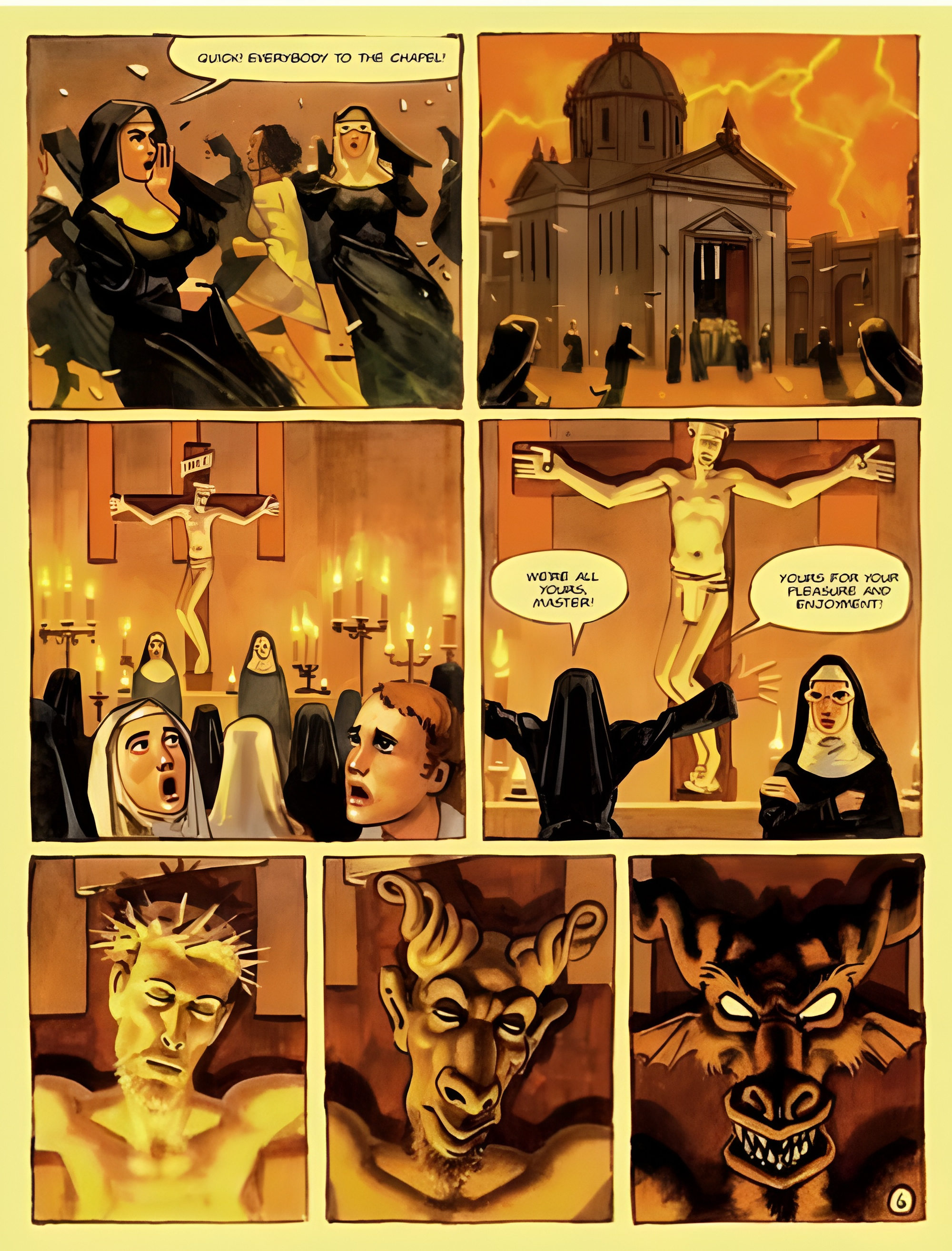
On the “artistic freedom” side, Taylor just lets it rip, with Prince emerging as a huge influence on the character designs—the artist himself channels a deep fascination with the musician, using his sleek likeness and glam swagger as the base for many male characters, while Girl struts as an avid Prince fan herself. Girl’s no victim; she starts the pacts, outsmarts devils, and owns her body like a boss, which felt super rebellious back when comics were getting all sanitized. The black-and-white art? Killer—curvy shadows, dynamic spreads of tentacle tangles and mid-air ecstasy that scream Frazetta pin-ups with a naughty twist. The series was mostly in black-and-white art in the first 10-15 years but soon transitioned to full color in the 2000s. Fans ate it up as a no-holds-barred fantasy zone, where exaggerated boobs and bad puns (“demonically delicious!”) were just part of the campy fun, echoing Heavy Metal‘s glory days.

But flip the coin, and it’s not just leaning into what critics see as perpetuating racial and sexual stereotypes—it’s also pushing the sort of extreme pornography that had American suburbia up in arms, with the series causing further controversy due to its treatment of organized religion which only fed the outrage from that crowd. The sexual stuff cranks stripper tropes to eleven, with Girl and sidekicks like Jill (Part-Time Lover) as walking wet dreams, consent blurring in demon romps that mix peril with nonstop explicit action.

Demons often play the exotic, hulking “other” with dark skins and primal urges chasing pale flesh, hitting cringey colonial fetish notes alongside graphic tentacle play and orgies that made PTA moms freak—think full-frontal infernal excess way beyond tame T&A, all while mocking holy symbols, clergy, and sacred rituals in ways that had church groups seeing red. Not outright hateful, but that combo of lazy shorthand, boundary-smashing smut, and anti-religious jabs made it feel regressive instead of edgy, sparking real backlash in the buttoned-up ’90s heartland.

Taylor’s visuals carry the load, no doubt. Rule of Darkness nails shadowy ritual vibes with flames licking curves, Body Heat‘s shorts flex his anatomy game without going full cartoon, and Second Coming ties it into bigger stakes. Monochrome keeps it intimate and gritty, though the hyper-proportions can tip into caricature, and repetition sets in by later volumes like Body Heat 2.

Girl stands as a vivid ’90s time capsule, capturing an era of unrestrained excess before cultural sensitivities tightened. Advocates for artistic freedom argue that its stereotypes and provocative content serve as exaggerated satire, offering an unfiltered outlet for taboo fantasies; critics counter that it reinforces harmful tropes while thrusting shocking imagery into the face of mainstream discomfort. Taylor’s independent spirit is evident throughout, influencing contemporary erotic webcomics, though the series ultimately compels readers to weigh its bold expression against its problematic elements.

The series itself, which began as a backroom, self-published adult comic and then gained a wider audience during the late ’90s and early aughts, has returned to its early roots as Taylor has resumed self-publishing via online crowdfunding. Pros: raw, unfiltered energy and drool-worthy art. Cons: shallow plots, iffy ethics, and those dated vibes. Girl is guilty-pleasure nitro—dive in if you’re game, but don’t say I didn’t warn ya about the demons.

Previous Guilty Pleasures

  1. Half-Baked
  2. Save The Last Dance
  3. Every Rose Has Its Thorns
  4. The Jeremy Kyle Show
  5. Invasion USA
  6. The Golden Child
  7. Final Destination 2
  8. Paparazzi
  9. The Principal
  10. The Substitute
  11. Terror In The Family
  12. Pandorum
  13. Lambada
  14. Fear
  15. Cocktail
  16. Keep Off The Grass
  17. Girls, Girls, Girls
  18. Class
  19. Tart
  20. King Kong vs. Godzilla
  21. Hawk the Slayer
  22. Battle Beyond the Stars
  23. Meridian
  24. Walk of Shame
  25. From Justin To Kelly
  26. Project Greenlight
  27. Sex Decoy: Love Stings
  28. Swimfan
  29. On the Line
  30. Wolfen
  31. Hail Caesar!
  32. It’s So Cold In The D
  33. In the Mix
  34. Healed By Grace
  35. Valley of the Dolls
  36. The Legend of Billie Jean
  37. Death Wish
  38. Shipping Wars
  39. Ghost Whisperer
  40. Parking Wars
  41. The Dead Are After Me
  42. Harper’s Island
  43. The Resurrection of Gavin Stone
  44. Paranormal State
  45. Utopia
  46. Bar Rescue
  47. The Powers of Matthew Star
  48. Spiker
  49. Heavenly Bodies
  50. Maid in Manhattan
  51. Rage and Honor
  52. Saved By The Bell 3. 21 “No Hope With Dope”
  53. Happy Gilmore
  54. Solarbabies
  55. The Dawn of Correction
  56. Once You Understand
  57. The Voyeurs 
  58. Robot Jox
  59. Teen Wolf
  60. The Running Man
  61. Double Dragon
  62. Backtrack
  63. Julie and Jack
  64. Karate Warrior
  65. Invaders From Mars
  66. Cloverfield
  67. Aerobicide 
  68. Blood Harvest
  69. Shocking Dark
  70. Face The Truth
  71. Submerged
  72. The Canyons
  73. Days of Thunder
  74. Van Helsing
  75. The Night Comes for Us
  76. Code of Silence
  77. Captain Ron
  78. Armageddon
  79. Kate’s Secret
  80. Point Break
  81. The Replacements
  82. The Shadow
  83. Meteor
  84. Last Action Hero
  85. Attack of the Killer Tomatoes
  86. The Horror at 37,000 Feet
  87. The ‘Burbs
  88. Lifeforce
  89. Highschool of the Dead
  90. Ice Station Zebra
  91. No One Lives
  92. Brewster’s Millions
  93. Porky’s
  94. Revenge of the Nerds
  95. The Delta Force
  96. The Hidden
  97. Roller Boogie
  98. Raw Deal
  99. Death Merchant Series
  100. Ski Patrol
  101. The Executioner Series
  102. The Destroyer Series
  103. Private Teacher
  104. The Parker Series
  105. Ramba
  106. The Troubles of Janice
  107. Ironwood
  108. Interspecies Reviewers
  109. SST — Death Flight
  110. Undercover Brother
  111. Out for Justice
  112. Food Wars!
  113. Cherry
  114. Death Race
  115. The Beast Within

Guilty Pleasure No. 113: Cherry (by Larry Welz)


In the sprawling, often grimy landscape of underground comics, few characters have managed to carve out as distinct—or as controversial—a niche as Cherry, the perpetually eighteen-year-old protagonist born from the mind of cartoonist Larry Welz. Originally debuting in 1971 under the moniker Cherry Poptart, the character became a fixture of counter-culture erotica, eventually settling into a self-titled series that would span decades. Welz’s work was instrumental in helping to usher in the vibrant, anarchic underground comics movement in San Francisco during the tumultuous social and political landscape of the 1960s and 1970s. Engaging with Cherry today is an exercise in complex appreciation; it is the definition of a “guilty pleasure,” a work that exists at the intersection of satirical wit, overt hedonism, and a stylistic homage to the quintessential American comic book aesthetic.

At the core of the series’ appeal is the striking contrast between its visual presentation and its mature, often raunchy subject matter. Welz famously adopted an art style that directly mirrored the work of Dan DeCarlo, the legendary artist who defined the iconic look of the Archie comics. By utilizing the clean, “happy teenager” lines of mid-century Americana—often associated with the wholesome, classic adventures of Riverdale—and infusing them with unrestrained, sex-positive, and frequently explicit content, Welz created a powerful visual dichotomy. This deliberate juxtaposition of a quintessential teen comic aesthetic with an adults-only narrative creates a jarring, transgressive experience that makes the work particularly effective as a guilty pleasure. There is an undeniable, subversive thrill in seeing character designs that evoke the innocent charm of Betty or Veronica placed in scenarios that would have sent the strict mid-century Comics Code Authority into a tailspin.

The character of Cherry herself is a fascinating, if problematic, focal point. Defined by her insatiable curiosity, liberal attitude, and complete lack of inhibitions, she is less of a traditional narrative character and more of an agent of chaos who wanders through various high-school-adjacent tropes. Because she remains eighteen, the series avoids the weight of traditional character growth, opting instead for an episodic format where the pleasure is derived entirely from the immediate situation—be it a pop-culture parody, a bizarre social commentary, or a sexual escapade. While the series is categorized as erotica, to dismiss it solely as such is to overlook the sharp satirical edge that occasionally pokes through the panels. Fans of the underground and transgressive culture scene often point out that Cherry frequently served as a vehicle for Welz to comment on the broader socio-political zeitgeist of the era. By utilizing the “anything goes” freedom of the underground press, the series tackled issues and social norms that mainstream comics dared not touch, masking biting critiques within its provocative and irreverent framing.

This thematic depth, however, exists in tension with the repetitive nature of the stories. As a guilty pleasure, the series relies on a specific cadence: the setup of a conventional trope, the predictable introduction of sexual absurdity, and the punchline. For the dedicated reader, this repetition is comforting and familiar, but it is also the source of the series’ main weakness. There are moments where the narrative feels like it is running on fumes, and the reliance on sexual shock value can feel stagnant compared to more modern or structurally daring indie comics. Furthermore, admitting to enjoying Cherry in a contemporary landscape is complicated by how the series has—or hasn’t—aged. Much of the humor and the treatment of gender dynamics feel firmly rooted in the specific, often male-gaze-dominated world of mid-century underground comix.

Consequently, it is a work that requires a reader to compartmentalize; one can admire the historical significance of Welz’s contribution to erotic art and the audacity of his stylistic parody while simultaneously acknowledging that the execution of certain themes feels archaic. This is why Cherry remains a quintessential guilty pleasure. It does not aim for the lofty aspirations of a graphic novel masterpiece, nor does it try to serve as a beacon of progressive morality. Instead, it succeeds as a piece of “low-brow” entertainment that is proud of its own transgression. The inclusion of guest work, such as a rare script by Neil Gaiman in Cherry Deluxe, highlights that the series was often respected within its own subculture as a legitimate, if edgy, playground for creative expression.

Looking back, the series acts as a testament to the “anything goes” ethos of the underground press era. While there are certainly other adult-oriented comics that might offer more robust character arcs or sophisticated storytelling, few manage to balance the specific blend of nostalgia, irreverence, and raw, unapologetic hedonism that defines the Cherry universe. It is a series that invites the reader to lean into the discomfort and find humor in the sheer absurdity of the scenarios. For those who enjoy exploring the fringes of comic history, Cherry remains a vital, if occasionally flawed, artifact. It represents a time when comics were a battlefield for free speech and a canvas for uninhibited adult fantasy. As a guilty pleasure, it holds up because it never pretends to be anything other than what it is: a fun, slightly reckless, and undeniably bold experiment in the possibilities of the medium.

Previous Guilty Pleasures

  1. Half-Baked
  2. Save The Last Dance
  3. Every Rose Has Its Thorns
  4. The Jeremy Kyle Show
  5. Invasion USA
  6. The Golden Child
  7. Final Destination 2
  8. Paparazzi
  9. The Principal
  10. The Substitute
  11. Terror In The Family
  12. Pandorum
  13. Lambada
  14. Fear
  15. Cocktail
  16. Keep Off The Grass
  17. Girls, Girls, Girls
  18. Class
  19. Tart
  20. King Kong vs. Godzilla
  21. Hawk the Slayer
  22. Battle Beyond the Stars
  23. Meridian
  24. Walk of Shame
  25. From Justin To Kelly
  26. Project Greenlight
  27. Sex Decoy: Love Stings
  28. Swimfan
  29. On the Line
  30. Wolfen
  31. Hail Caesar!
  32. It’s So Cold In The D
  33. In the Mix
  34. Healed By Grace
  35. Valley of the Dolls
  36. The Legend of Billie Jean
  37. Death Wish
  38. Shipping Wars
  39. Ghost Whisperer
  40. Parking Wars
  41. The Dead Are After Me
  42. Harper’s Island
  43. The Resurrection of Gavin Stone
  44. Paranormal State
  45. Utopia
  46. Bar Rescue
  47. The Powers of Matthew Star
  48. Spiker
  49. Heavenly Bodies
  50. Maid in Manhattan
  51. Rage and Honor
  52. Saved By The Bell 3. 21 “No Hope With Dope”
  53. Happy Gilmore
  54. Solarbabies
  55. The Dawn of Correction
  56. Once You Understand
  57. The Voyeurs 
  58. Robot Jox
  59. Teen Wolf
  60. The Running Man
  61. Double Dragon
  62. Backtrack
  63. Julie and Jack
  64. Karate Warrior
  65. Invaders From Mars
  66. Cloverfield
  67. Aerobicide 
  68. Blood Harvest
  69. Shocking Dark
  70. Face The Truth
  71. Submerged
  72. The Canyons
  73. Days of Thunder
  74. Van Helsing
  75. The Night Comes for Us
  76. Code of Silence
  77. Captain Ron
  78. Armageddon
  79. Kate’s Secret
  80. Point Break
  81. The Replacements
  82. The Shadow
  83. Meteor
  84. Last Action Hero
  85. Attack of the Killer Tomatoes
  86. The Horror at 37,000 Feet
  87. The ‘Burbs
  88. Lifeforce
  89. Highschool of the Dead
  90. Ice Station Zebra
  91. No One Lives
  92. Brewster’s Millions
  93. Porky’s
  94. Revenge of the Nerds
  95. The Delta Force
  96. The Hidden
  97. Roller Boogie
  98. Raw Deal
  99. Death Merchant Series
  100. Ski Patrol
  101. The Executioner Series
  102. The Destroyer Series
  103. Private Teacher
  104. The Parker Series
  105. Ramba
  106. The Troubles of Janice
  107. Ironwood
  108. Interspecies Reviewers
  109. SST — Death Flight
  110. Undercover Brother
  111. Out for Justice
  112. Food Wars!

Guilty Pleasure No. 107: Ironwood (by Bill Willingham)


Bill Willingham’s Ironwood is the sort of graphic novel that lives in the uneasy space between bawdy escapism and unexpectedly thoughtful worldbuilding, making it a quintessential guilty pleasure that some readers insist on treating as near–high art. It is at once shamelessly pornographic and surprisingly committed to telling a coherent sword‑and‑sorcery story, which means your mileage will depend heavily on whether you can accept explicit sex as an integral—often dominant—part of the narrative rather than a tacked‑on indulgence.

Published by Eros Comix in the early 1990s, Ironwood ran for eleven issues and was later collected into two trade paperbacks that have acquired a minor cult status among fans of erotic fantasy comics. The premise follows Dave Dragovon, a juvenile dragon who appears entirely human because he has not yet matured into his full draconic form, as he is hired by the beautiful and cursed Pandora Breedlswight to seek out the wizard Gnaric and break the spell on her. It is a familiar quest hook—hero, sorcerer, cursed damsel—but Willingham uses it as a loose scaffold on which to hang an almost nonstop parade of sexual encounters, bawdy gags, and bursts of fantastical incident.

As a narrative, Ironwood is better than its reputation as “porn with plot” might suggest, though that label is not entirely unfair. The story is consciously serialized in the classic fantasy‑adventure mode: Dave and Pandora move from one locale to another, encountering wizards, monsters, political schemes, and rival factions, all while the central quest to undo Pandora’s curse gives a sense of forward momentum. Various readers have pointed out that there is genuine political intrigue and thought given to motivations, and you can see Willingham testing out the sort of layered plotting and character dynamics he would later refine in Fables, even if here they are wrapped around mandatory explicit scenes. There are moments when the story is engaging enough that the sex almost feels like an interruption, a dynamic Willingham himself has reportedly acknowledged when noting that fitting in each issue’s required sex scene could break the flow.

Tonally, the book leans heavily into adult humor, but it is not mean‑spirited. The jokes range from clever wordplay and situational comedy to unabashedly adolescent gags, the sort that make you groan even as you recognize they fit this world of oversexed dragons, lecherous wizards, and magically enhanced perversions. In this regard, Ironwood is very much a product of its era: a 1990s underground/alt sensibility that treats fantasy tropes and sexual taboos with the same irreverent shrug. When the humor lands, it gives the book a disarming charm, but when it doesn’t, the dialogue can feel like an overlong dirty joke that mistakes sheer explicitness for wit. Still, there is a lightness here—especially in Dave’s reactions and the deadpan absurdity of certain magical mishaps—that keeps the series from tipping into grim or exploitative darkness, despite its plentiful kinks.

Visually, Willingham’s art is the most persuasive argument for why some readers champion Ironwood as something more than disposable smut. His linework is clean and expressive, with a confident sense of anatomy, staging, and page composition that gives both the action and the erotic scenes a fluid, readable rhythm. The fantasy settings are detailed without being cluttered; taverns, towers, and mystical landscapes all feel like lived‑in spaces rather than generic backdrops for sex scenes. The character designs, especially Pandora and the various magical oddballs, show a cartoonist relishing the chance to exaggerate physicality and personality in equal measure, which goes a long way toward making these figures feel like characters rather than mere bodies.

That said, the erotic content is not merely frequent—it is foundational, and that is where Ironwood becomes a textbook guilty pleasure. This is an unabashedly hardcore series: explicit sex acts, imaginative uses of magic for sexual purposes, and sequences that leave nothing to implication. Devices like a hydra‑head spell repurposed so a character can pleasure multiple partners at once are emblematic of the book’s gleeful “power perversion potential,” embracing the logic of a sex‑obsessed Dungeons & Dragons campaign. For readers comfortable with that premise, there is an undeniable energy in the way Willingham integrates erotic spectacle into battles, spells, and negotiations; for others, the same material will read as juvenile, repetitive, or simply exhausting.

Reception among those who have sought out the collected volumes tends to be surprisingly positive, with many praising Ironwood as one of the rare “sex comics” where the story can stand on its own, even if stripped of the explicit content. Fans often note the balance between story, humor, and eroticism, arguing that the plot is engaging enough that the sex becomes a bonus rather than the sole reason to read. This is where the “high art” argument creeps in: within certain circles of fantasy and underground comics readers, Ironwood is celebrated as an early sign of Willingham’s strengths as a writer and artist, and as an example of how erotic comics can pursue worldbuilding and character arcs rather than simple vignettes. Yet that enthusiasm coexists with acknowledgment that, without the sex, this would largely be a light, sometimes flimsy adventure—a fun romp, but not a lost masterpiece of the medium.

In a broader context, Ironwood sits at an interesting crossroads in Willingham’s career and in the evolution of adult comics. Knowing his later mainstream success, you can see how this early project let him experiment with long‑form storytelling, recurring cast chemistry, and a blend of mythic and mundane concerns, all while operating in a corner of the market that gave him almost total creative freedom. That creative freedom is both the book’s greatest strength and its biggest barrier to entry: it delivers exactly the kind of unfiltered fantasy‑erotica hybrid it promises, but that same purity of purpose locks it firmly into the realm of niche appetite.

Ultimately, Ironwood is best approached with clear expectations and a sense of humor. As a graphic novel, it is technically accomplished, often funny, and occasionally more narratively ambitious than its reputation suggests, which explains why some fans will defend it as a minor classic of erotic fantasy comics. At the same time, its relentless explicitness, adolescent impulses, and lightweight core plot mark it firmly as a guilty pleasure—one that knows exactly what it is and never pretends otherwise, even as a devoted subset of readers insists on elevating it to the status of “high art.”

Previous Guilty Pleasures

  1. Half-Baked
  2. Save The Last Dance
  3. Every Rose Has Its Thorns
  4. The Jeremy Kyle Show
  5. Invasion USA
  6. The Golden Child
  7. Final Destination 2
  8. Paparazzi
  9. The Principal
  10. The Substitute
  11. Terror In The Family
  12. Pandorum
  13. Lambada
  14. Fear
  15. Cocktail
  16. Keep Off The Grass
  17. Girls, Girls, Girls
  18. Class
  19. Tart
  20. King Kong vs. Godzilla
  21. Hawk the Slayer
  22. Battle Beyond the Stars
  23. Meridian
  24. Walk of Shame
  25. From Justin To Kelly
  26. Project Greenlight
  27. Sex Decoy: Love Stings
  28. Swimfan
  29. On the Line
  30. Wolfen
  31. Hail Caesar!
  32. It’s So Cold In The D
  33. In the Mix
  34. Healed By Grace
  35. Valley of the Dolls
  36. The Legend of Billie Jean
  37. Death Wish
  38. Shipping Wars
  39. Ghost Whisperer
  40. Parking Wars
  41. The Dead Are After Me
  42. Harper’s Island
  43. The Resurrection of Gavin Stone
  44. Paranormal State
  45. Utopia
  46. Bar Rescue
  47. The Powers of Matthew Star
  48. Spiker
  49. Heavenly Bodies
  50. Maid in Manhattan
  51. Rage and Honor
  52. Saved By The Bell 3. 21 “No Hope With Dope”
  53. Happy Gilmore
  54. Solarbabies
  55. The Dawn of Correction
  56. Once You Understand
  57. The Voyeurs 
  58. Robot Jox
  59. Teen Wolf
  60. The Running Man
  61. Double Dragon
  62. Backtrack
  63. Julie and Jack
  64. Karate Warrior
  65. Invaders From Mars
  66. Cloverfield
  67. Aerobicide 
  68. Blood Harvest
  69. Shocking Dark
  70. Face The Truth
  71. Submerged
  72. The Canyons
  73. Days of Thunder
  74. Van Helsing
  75. The Night Comes for Us
  76. Code of Silence
  77. Captain Ron
  78. Armageddon
  79. Kate’s Secret
  80. Point Break
  81. The Replacements
  82. The Shadow
  83. Meteor
  84. Last Action Hero
  85. Attack of the Killer Tomatoes
  86. The Horror at 37,000 Feet
  87. The ‘Burbs
  88. Lifeforce
  89. Highschool of the Dead
  90. Ice Station Zebra
  91. No One Lives
  92. Brewster’s Millions
  93. Porky’s
  94. Revenge of the Nerds
  95. The Delta Force
  96. The Hidden
  97. Roller Boogie
  98. Raw Deal
  99. Death Merchant Series
  100. Ski Patrol
  101. The Executioner Series
  102. The Destroyer Series
  103. Private Teacher
  104. The Parker Series
  105. Ramba
  106. The Troubles of Janice

Guilty Pleasure No. 106: The Troubles of Janice (by Erich von Götha)


The Troubles of Janice by Erich von Götha remains one of the most infamous works in erotic comics, a multi-volume series spanning 1987 to 1996 that draws readers into a vivid world of sadomasochistic intrigue amid the lavish decay of 18th-century England. Janice McCormick, a curvaceous young woman released from Newgate Prison, soon finds herself ensnared by the sadistic Duke Viscount Vauxhall of Nether Wallop, whose experiments in female discipline propel her through a cascade of blackmail, assassinations, and sensual escapades—from the clandestine Hellfire Club to the shimmering waterways of Venice. Serialized initially in French magazines and later compiled into albums such as Parts 1 through 4, the narrative echoes the spirit of the Marquis de Sade’s Philosophy in the Bedroom, pitting innocence against unbridled authority in panels brimming with exaggerated forms and explicit encounters that straddle the edge of terror and desire.

This series thrives squarely in guilty pleasure territory, offering a procession of BDSM scenarios tailored for indulgent, after-hours reading—Janice bound and enduring floggings, group violations, and ceremonial degradations at the hands of depraved aristocrats, clergy, and a imposing black servant named Horace, whose prominence marks the early chapters. The artwork begins with a raw, straightforward style, its stark lines accentuating phallic prominence and voluptuous contours, but evolves across the run into more refined techniques, incorporating nuanced shading, occasional full-color pages, and fluid compositions that convey genuine motion. Under the pseudonym of British artist Robin Ray, von Götha refined his craft from earlier projects like the sporadic Torrid comic of the 1980s, achieving here a theatrical intensity that elevates rote erotica into something akin to a decadent opera. Janice’s subjugation under Vauxhall builds to extravagant bacchanals, her figure a stage for boundless transgression, sustained by slender plotlines: a doomed union with Lord Mitchcombe, clerical extortion of her fortune, and a desperate flight to Venice. It delivers unvarnished pornographic fantasy, where non-consent heightens the illicit allure, interwoven with dated racism, sexism, and brutality that clash with contemporary standards.

Nevertheless, amid its sensationalism, The Troubles of Janice carries a sly undercurrent that resonates as guilty pleasure, while dedicated admirers in specialized erotica and Sadean circles regard it as elevated art for its bold dissection of dominance and moral corruption. Enthusiasts praise von Götha’s fidelity to historical particulars—powdered periwigs, flickering chambers, and rigid social strata—which grounds the excess in authenticity, recasting Janice’s sufferings as a pictorial meditation on control and yielding. The work’s longevity, evidenced by deluxe reprints into 2008 via publishers like Dynamite and Priaprism/Last Gasp, underscores this devoted following, as initial stark visuals mature into polished depictions of perspiration, anguish, and rapture rendered with technical finesse. Partnership with writer Bernard Joubert lends philosophical weight reminiscent of Sade’s justifications for indulgence, complemented by von Götha’s advertising and design heritage, which infuses each frame with compelling, voyeuristic magnetism.

The episodic structure fosters escalating drama without pause: Janice’s journey from captive to bereaved inheritor to elusive temptress parallels gothic archetypes, her physique weathering not only corporal trials but subtle emotional fissures that suggest deeper psyche amid the torment. Venetian interludes in subsequent volumes add worldly elegance, with Janice alluring period luminaries amid carnivalesque revels and canal rendezvous, a momentary reprieve prior to recapture. Visually, the shift from monochrome austerity to vivid palettes enlivens flesh tones and intensifies ominous depths. Fair assessment reveals shortcomings, however: proportions veer toward the grotesque, recurring motifs dull the initial impact, and pervasive misogyny, though fitting the fantastical milieu, borders on excess even for 1980s sensibilities. Stereotypes such as Horace’s portrayal jar in modern light, affirming its roots in London’s pre-PC erotic underbelly.

Within insular communities, such elements paradoxically enhance its stature—collectors and forums acclaim von Götha as a virtuoso of restraint, his standalone prints and mythic illustrations perpetuating the legacy, bolstered by exhibitions in Bologna and Paris that confer artistic validity. To the broader audience, it embodies quintessential guilty pleasure—discreetly concealed material that fulfills taboo yearnings sans apology. The Troubles of Janice persists by unflinchingly engaging the subconscious, compelling confrontation with shadowed impulses through line and shade. Whether approached for its carnality or its Sadean resonances, The Troubles of Janice endures as a divisive masterpiece, ideally encountered with caution.

Previous Guilty Pleasures

  1. Half-Baked
  2. Save The Last Dance
  3. Every Rose Has Its Thorns
  4. The Jeremy Kyle Show
  5. Invasion USA
  6. The Golden Child
  7. Final Destination 2
  8. Paparazzi
  9. The Principal
  10. The Substitute
  11. Terror In The Family
  12. Pandorum
  13. Lambada
  14. Fear
  15. Cocktail
  16. Keep Off The Grass
  17. Girls, Girls, Girls
  18. Class
  19. Tart
  20. King Kong vs. Godzilla
  21. Hawk the Slayer
  22. Battle Beyond the Stars
  23. Meridian
  24. Walk of Shame
  25. From Justin To Kelly
  26. Project Greenlight
  27. Sex Decoy: Love Stings
  28. Swimfan
  29. On the Line
  30. Wolfen
  31. Hail Caesar!
  32. It’s So Cold In The D
  33. In the Mix
  34. Healed By Grace
  35. Valley of the Dolls
  36. The Legend of Billie Jean
  37. Death Wish
  38. Shipping Wars
  39. Ghost Whisperer
  40. Parking Wars
  41. The Dead Are After Me
  42. Harper’s Island
  43. The Resurrection of Gavin Stone
  44. Paranormal State
  45. Utopia
  46. Bar Rescue
  47. The Powers of Matthew Star
  48. Spiker
  49. Heavenly Bodies
  50. Maid in Manhattan
  51. Rage and Honor
  52. Saved By The Bell 3. 21 “No Hope With Dope”
  53. Happy Gilmore
  54. Solarbabies
  55. The Dawn of Correction
  56. Once You Understand
  57. The Voyeurs 
  58. Robot Jox
  59. Teen Wolf
  60. The Running Man
  61. Double Dragon
  62. Backtrack
  63. Julie and Jack
  64. Karate Warrior
  65. Invaders From Mars
  66. Cloverfield
  67. Aerobicide 
  68. Blood Harvest
  69. Shocking Dark
  70. Face The Truth
  71. Submerged
  72. The Canyons
  73. Days of Thunder
  74. Van Helsing
  75. The Night Comes for Us
  76. Code of Silence
  77. Captain Ron
  78. Armageddon
  79. Kate’s Secret
  80. Point Break
  81. The Replacements
  82. The Shadow
  83. Meteor
  84. Last Action Hero
  85. Attack of the Killer Tomatoes
  86. The Horror at 37,000 Feet
  87. The ‘Burbs
  88. Lifeforce
  89. Highschool of the Dead
  90. Ice Station Zebra
  91. No One Lives
  92. Brewster’s Millions
  93. Porky’s
  94. Revenge of the Nerds
  95. The Delta Force
  96. The Hidden
  97. Roller Boogie
  98. Raw Deal
  99. Death Merchant Series
  100. Ski Patrol
  101. The Executioner Series
  102. The Destroyer Series
  103. Private Teacher
  104. The Parker Series
  105. Ramba

Guilty Pleasure No. 105: Ramba (by Rossano Rossi & Marco Bianchini)


Ramba is one of those books you probably don’t proudly display on the coffee table, but you also don’t quite forget once you’ve read it. On the surface it’s an Italian erotic comic about a hyper-sexualized hitwoman, yet under all the sweat, sleaze, and gun smoke there’s a surprisingly solid crime engine humming along, which is what makes it feel like such an unapologetic guilty pleasure.

Created by Rossano Rossi and collaborators and published in English by Eros Comix in the 1990s, Ramba follows its titular assassin—loosely inspired by Italian porn star Ramba/Ileana Carisio—as she takes on murder-for-hire jobs that inevitably twist into elaborate scenarios of sex and violence. Every assignment is essentially built on a three-part rhythm: seduction, escalation, execution. Ramba beds clients, enemies, bystanders, women, men, and sometimes even corpses, and that’s not an exaggeration; necrophilia, watersports, and a running thread of sadomasochistic games are part of the fabric here. That whirl of anything-goes content is where the series earns its notoriety, but it’s also where a lot of readers will tap out, because Ramba never pretends to be tasteful or restrained.

What keeps the book from collapsing into pure shock-for-shock’s-sake is that it does, in fact, function as a crime comic in the European erotica tradition. Rossi structures most chapters as compact revenge or hit-job dramas, the kind of tight little potboilers you might see in a hardboiled anthology if you stripped out the explicit content—or, in this case, added a lot more of it. There is an internal logic to the way jobs are set up, double-crosses emerge, and Ramba problem-solves her way out of bad situations, even as she pauses mid-escape for a quick tryst in a stairwell. That constant cross-cutting between sex and violence, between carnal excess and professional precision, gives the series a strangely propulsive energy; you may not approve of what it’s doing, but it’s rarely dull.

Still, you can’t talk about Ramba without acknowledging just how aggressively transgressive it is. The book happily checks off an entire “so wrong it’s right” playbook: everybody seems perpetually horny, gender is more a preference slider than a barrier, and taboos are treated as toys to be scattered across the floor. Ramba herself will “try anything that moves,” to borrow the fandom shorthand, and the comic keeps pushing her into situations that blur consent, pain, humiliation, and pleasure to a degree that many readers will reasonably find grotesque. Some sequences—like the infamous scene where she urinates into a dying man’s mouth and then exploits his post-mortem arousal—are deliberately pitched to provoke, and they succeed perhaps a little too well.

That blend of sex and brutality is the core ethical sticking point. The series clearly wants to critique brutality against women—Ramba cannot stand seeing other women victimized and often redirects violence back at abusers—but at the same time it eroticizes that very violence, staging assaults and torture in a way that’s unavoidably titillating for its target audience. The result is an uneasy tension: on one page, Ramba is a feminist avenger cutting down misogynists, and on the next she’s participating in a scenario that looks uncomfortably like torture porn. Whether you see this as frank, messy exploration of dark fantasies or just sleaze wrapped in a wafer-thin moral fig leaf will depend entirely on your own threshold and politics.

Visually, Ramba lands much closer to craftsmanship than throwaway smut. Artists Marco Delizia and Fabio Valdambrini give the series a sharply observed, high-contrast look that elevates it beyond bargain-bin erotica. Delizia’s pages are dense with black ink, detailed anatomy, and an almost fetishistic focus on physical textures—leather, sweat, shadowed skin—which reinforces the grittier, urban crime vibe. Valdambrini, by contrast, leans into an older adventure-strip style with looser figures and more traditional shading, evoking 1940s newspaper serials updated with NC-17 sensibilities. That stylistic tug-of-war, between pulp sophistication and outright porn, mirrors the writing: the art insists on giving this material a veneer of legitimacy even when the content is at its most extreme.

Narratively, the book occasionally steps outside its grounded crime lane into fully pulp territory, dabbling in supernatural elements such as a black magic coven and demons in stories like “Vendetta From Hell.” These arcs introduce “hunting humans as sport” riffs and occult enemies that feel, frankly, like a different series wandered in from the next shelf over. On one hand, they add variety and show Ramba operating in wildly different contexts; on the other, they dilute the gritty hitwoman angle that is easily the comic’s strongest hook. When Ramba stays focused on mob bosses, crooked cops, and revenge killings, it feels like a filthy cousin to Euro-crime cinema; when it veers into demon-summoning cults, it plays more like an anything-goes anthology that happened to keep the same lead character.

For all the shock value, there is a certain honesty to how Ramba approaches sexual fantasy. It doesn’t posture as an art-house deconstruction or wrap its extremes in academic language; it stands there, naked and grinning, saying: this is what some people fantasize about when no one is looking. That directness can be disarming. You get the sense the creators understand that erotic fantasy often lives in a space that’s not meant to be aspirational or “healthy,” and they lean into that forbidden-zone appeal. If you’ve ever rolled your eyes at glossy, sanitized “sexy” comics that pretend to be above the id, Ramba feels like the brazen counterargument, all id with just enough structure to hold it together.

Of course, that’s also what makes it so specifically a guilty pleasure, even for readers who might be predisposed to like transgressive material. It is possible to admire the storytelling economy, the craftsmanship of the art, and the boldness of its content while simultaneously feeling that some sequences cross into outright mean-spirited nastiness. The books have been praised in some circles as a kind of high watermark of explicit sex comics in English—highly competent, unabashedly filthy, and influential in their niche—but that gold comes smudged with plenty of grime. If you’re not prepared to wade through the muck, you’re better off steering clear.

Ultimately, Ramba is best approached with clear eyes and a strong stomach. If you’re curious about the boundaries of 1990s European-style erotic comics, the series offers a vivid snapshot of what could be done when an imprint like Eros Comix let creators run wild, combining solid noir plotting with maximalist sexual excess. It’s exploitative, sometimes disturbingly so, but it’s also more thoughtfully constructed and visually ambitious than its lurid premise suggests. For some, it will be a hard pass; for others, it will sit firmly in that private, slightly embarrassing corner of the collection where guilty pleasures live, dusted off once in a while with a mix of discomfort and undeniable fascination.

Previous Guilty Pleasures

  1. Half-Baked
  2. Save The Last Dance
  3. Every Rose Has Its Thorns
  4. The Jeremy Kyle Show
  5. Invasion USA
  6. The Golden Child
  7. Final Destination 2
  8. Paparazzi
  9. The Principal
  10. The Substitute
  11. Terror In The Family
  12. Pandorum
  13. Lambada
  14. Fear
  15. Cocktail
  16. Keep Off The Grass
  17. Girls, Girls, Girls
  18. Class
  19. Tart
  20. King Kong vs. Godzilla
  21. Hawk the Slayer
  22. Battle Beyond the Stars
  23. Meridian
  24. Walk of Shame
  25. From Justin To Kelly
  26. Project Greenlight
  27. Sex Decoy: Love Stings
  28. Swimfan
  29. On the Line
  30. Wolfen
  31. Hail Caesar!
  32. It’s So Cold In The D
  33. In the Mix
  34. Healed By Grace
  35. Valley of the Dolls
  36. The Legend of Billie Jean
  37. Death Wish
  38. Shipping Wars
  39. Ghost Whisperer
  40. Parking Wars
  41. The Dead Are After Me
  42. Harper’s Island
  43. The Resurrection of Gavin Stone
  44. Paranormal State
  45. Utopia
  46. Bar Rescue
  47. The Powers of Matthew Star
  48. Spiker
  49. Heavenly Bodies
  50. Maid in Manhattan
  51. Rage and Honor
  52. Saved By The Bell 3. 21 “No Hope With Dope”
  53. Happy Gilmore
  54. Solarbabies
  55. The Dawn of Correction
  56. Once You Understand
  57. The Voyeurs 
  58. Robot Jox
  59. Teen Wolf
  60. The Running Man
  61. Double Dragon
  62. Backtrack
  63. Julie and Jack
  64. Karate Warrior
  65. Invaders From Mars
  66. Cloverfield
  67. Aerobicide 
  68. Blood Harvest
  69. Shocking Dark
  70. Face The Truth
  71. Submerged
  72. The Canyons
  73. Days of Thunder
  74. Van Helsing
  75. The Night Comes for Us
  76. Code of Silence
  77. Captain Ron
  78. Armageddon
  79. Kate’s Secret
  80. Point Break
  81. The Replacements
  82. The Shadow
  83. Meteor
  84. Last Action Hero
  85. Attack of the Killer Tomatoes
  86. The Horror at 37,000 Feet
  87. The ‘Burbs
  88. Lifeforce
  89. Highschool of the Dead
  90. Ice Station Zebra
  91. No One Lives
  92. Brewster’s Millions
  93. Porky’s
  94. Revenge of the Nerds
  95. The Delta Force
  96. The Hidden
  97. Roller Boogie
  98. Raw Deal
  99. Death Merchant Series
  100. Ski Patrol
  101. The Executioner Series
  102. The Destroyer Series
  103. Private Teacher
  104. The Parker Series

It’s Love, Part 12


Every year, I like to share some of my favorite romance comic books!

Starting in the late 1940s, many comic book companies tried to broaden their audience by publishing romance comic books.  These comics told dramatic love stories in which young women had to deal with issues of cheating, divorce, jealousy, heartache, and the search for the one.

It’s Love!


What is the lesson that we can take from these vintage comic books?  I think the main thing we can learn is that love is never easy.

But, even if he is a member of the establishment or has long hair, it’s totally worth it.  Right, Nicky?

They sure do look happy!  Happy Valentine’s Day!

Great Moments In Comic Book History #44: The Amazing Spider-Man #33


On what would have been Steve Ditko’s 98th birthday, let’s remember his greatest moment as the artist who first truly brought Spider-Man to life.

From The Amazing Spider-Man #33:

Previous Great Moments In Comic Book History:

  1. Winchester Before Winchester: Swamp Thing Vol. 2 #45 “Ghost Dance” 
  2. The Avengers Appear on David Letterman
  3. Crisis on Campus
  4. “Even in Death”
  5. The Debut of Man-Wolf in Amazing Spider-Man
  6. Spider-Man Meets The Monster Maker
  7. Conan The Barbarian Visits Times Square
  8. Dracula Joins The Marvel Universe
  9. The Death of Dr. Druid
  10. To All A Good Night
  11. Zombie!
  12. The First Appearance of Ghost Rider
  13. The First Appearance of Werewolf By Night
  14. Captain America Punches Hitler
  15. Spider-Man No More!
  16. Alex Ross Captures Galactus
  17. Spider-Man And The Dallas Cowboys Battle The Circus of Crime
  18. Goliath Towers Over New York
  19. NFL SuperPro is Here!
  20. Kickers Inc. Comes To The World Outside Your Window
  21. Captain America For President
  22. Alex Ross Captures Spider-Man
  23. J. Jonah Jameson Is Elected Mayor of New York City
  24. Captain America Quits
  25. Spider-Man Meets The Fantastic Four
  26. Spider-Man Teams Up With Batman For The Last Time
  27. The Skrulls Are Here
  28. Iron Man Meets Thanos and Drax The Destroyer
  29. A Vampire Stalks The Night
  30. Swamp Thing Makes His First Cover Appearance
  31. Tomb of Dracula #43
  32. The Hulk Makes His Debut
  33. Iron Man #182
  34. Tawky Tawny Makes His First Appearance
  35. Tomb of Dracula #49
  36. Marvel Publishes Star Wars #1
  37. MAD Magazine Plays Both Sides
  38. The Cover of Green Lantern/Green Arrow #85
  39. LBJ Stands Up For The Hulk
  40. Chamber of Chills #2
  41. Tomb of Dracula #41
  42. Tomb of Dracula #27
  43. X-Men Meet Frankenstein’s Monster

The Killing Joke, Book Review by Case Wright


This was a hard book to review. I had avoided reading it for years because there’s an SA, but also- A CLOWN! Look, clowns are out to murder you! I mean for real they are clowns – see below

Why would you think these creatures would not want to murder your face?! Yes, they have balloon animals, but that that’s just to lure you into for their feeding!
“The Killing Joke” is a Joker origin story and how he was born out of one bad day. We begin with Joker as a struggling comedian with a child on the way. He is desperate for cash and decides to participate in a heist to get out of poverty. The crooks that he teamed up with to do the heist target the Joker’s former job at a chemical plant had always planned on making him the fall guy for the heist. His wife dies by a product malfunction, sending Joker spiraling. Technically, Joker is not born until after he falls into the chemicals, but we see his name pre-Joker; so, maybe he was always Joker? I’m not sure.

The origin story is interwoven with the Joker shooting and SAing Commissioner Gordan’s daughter and generally driving him insane. There is also A LOT of nudity that I wasn’t prepared for with a fair amount of leather. Joker kidnaps Gordan, strips him nude, puts some leather on him, and then makes him look at horrify images of the SA. Honestly, why not just kill Joker? Of course, we would. We’d shoot him on sight as a terrorist. Instead of doing the normal choice and having Joker killed, Gordan wants him taken alive. WHY? Really, why? What more does he have to do? They make a point that Joker wants to show that anyone could be driven insane by one bad day, but the real insanity is not shooting all of these super villains on sight!

The book ends with a joke with the symbolism that life itself and all of the evil he committed was also a joke. It was purposefully ambiguous, but it did scare me- BECAUSE CLOWNS!


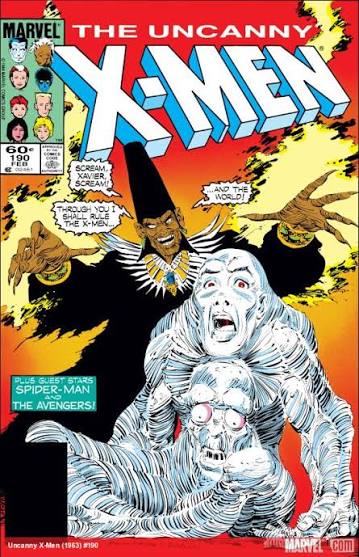
Great Moments In Comic Book History #43: The X-Men Meet Frankenstein’s Monster


Back in the early days of the X-Men, before Wolverine and Nightcrawler and Storm, when the comic book was an acclaimed but perennial low seller, the X-Men celebrated 1967’s Halloween by meeting Frankenstein’s Monster!

He wasn’t actually the Monster.  He was a robot who looked like the film version of the Monster and he was destroyed by the end of X-Men #40.  Still, this was the first reference to Frankenstein in the Marvel Universe.  The “real” Monster would officially join the Marvel Universe a few years later.

Cover art by George Tuska, Marie Severin and Sam Rosen

Previous Great Moments In Comic Book History:

  1. Winchester Before Winchester: Swamp Thing Vol. 2 #45 “Ghost Dance” 
  2. The Avengers Appear on David Letterman
  3. Crisis on Campus
  4. “Even in Death”
  5. The Debut of Man-Wolf in Amazing Spider-Man
  6. Spider-Man Meets The Monster Maker
  7. Conan The Barbarian Visits Times Square
  8. Dracula Joins The Marvel Universe
  9. The Death of Dr. Druid
  10. To All A Good Night
  11. Zombie!
  12. The First Appearance of Ghost Rider
  13. The First Appearance of Werewolf By Night
  14. Captain America Punches Hitler
  15. Spider-Man No More!
  16. Alex Ross Captures Galactus
  17. Spider-Man And The Dallas Cowboys Battle The Circus of Crime
  18. Goliath Towers Over New York
  19. NFL SuperPro is Here!
  20. Kickers Inc. Comes To The World Outside Your Window
  21. Captain America For President
  22. Alex Ross Captures Spider-Man
  23. J. Jonah Jameson Is Elected Mayor of New York City
  24. Captain America Quits
  25. Spider-Man Meets The Fantastic Four
  26. Spider-Man Teams Up With Batman For The Last Time
  27. The Skrulls Are Here
  28. Iron Man Meets Thanos and Drax The Destroyer
  29. A Vampire Stalks The Night
  30. Swamp Thing Makes His First Cover Appearance
  31. Tomb of Dracula #43
  32. The Hulk Makes His Debut
  33. Iron Man #182
  34. Tawky Tawny Makes His First Appearance
  35. Tomb of Dracula #49
  36. Marvel Publishes Star Wars #1
  37. MAD Magazine Plays Both Sides
  38. The Cover of Green Lantern/Green Arrow #85
  39. LBJ Stands Up For The Hulk
  40. Chamber of Chills #2
  41. Tomb of Dracula #41
  42. Tomb of Dracula #27

Great Moments In Comic Book History #42: Tomb of Dracula #27


Of all the Marvel horror comics that were published in the 70s, Tomb of Dracula was the best.  Not only did it have the best stories, the best villain, and the best supporting cast (Blade, Hannibal King, Rachel van Helsing, Doctor Sun, and many others) but it also had the best covers.

Tomb of Dracula #27 (first released on September 3rd, 1974) is one of my favorites.  Gil Kane’s cover features Dracula, fire, a beautiful woman, a beast in the moon, and a melodramatic tag line.  What more could a comic boom reader ask for?

Previous Great Moments In Comic Book History:

  1. Winchester Before Winchester: Swamp Thing Vol. 2 #45 “Ghost Dance” 
  2. The Avengers Appear on David Letterman
  3. Crisis on Campus
  4. “Even in Death”
  5. The Debut of Man-Wolf in Amazing Spider-Man
  6. Spider-Man Meets The Monster Maker
  7. Conan The Barbarian Visits Times Square
  8. Dracula Joins The Marvel Universe
  9. The Death of Dr. Druid
  10. To All A Good Night
  11. Zombie!
  12. The First Appearance of Ghost Rider
  13. The First Appearance of Werewolf By Night
  14. Captain America Punches Hitler
  15. Spider-Man No More!
  16. Alex Ross Captures Galactus
  17. Spider-Man And The Dallas Cowboys Battle The Circus of Crime
  18. Goliath Towers Over New York
  19. NFL SuperPro is Here!
  20. Kickers Inc. Comes To The World Outside Your Window
  21. Captain America For President
  22. Alex Ross Captures Spider-Man
  23. J. Jonah Jameson Is Elected Mayor of New York City
  24. Captain America Quits
  25. Spider-Man Meets The Fantastic Four
  26. Spider-Man Teams Up With Batman For The Last Time
  27. The Skrulls Are Here
  28. Iron Man Meets Thanos and Drax The Destroyer
  29. A Vampire Stalks The Night
  30. Swamp Thing Makes His First Cover Appearance
  31. Tomb of Dracula #43
  32. The Hulk Makes His Debut
  33. Iron Man #182
  34. Tawky Tawny Makes His First Appearance
  35. Tomb of Dracula #49
  36. Marvel Publishes Star Wars #1
  37. MAD Magazine Plays Both Sides
  38. The Cover of Green Lantern/Green Arrow #85
  39. LBJ Stands Up For The Hulk
  40. Chamber of Chills #2
  41. Tomb of Dracula #41