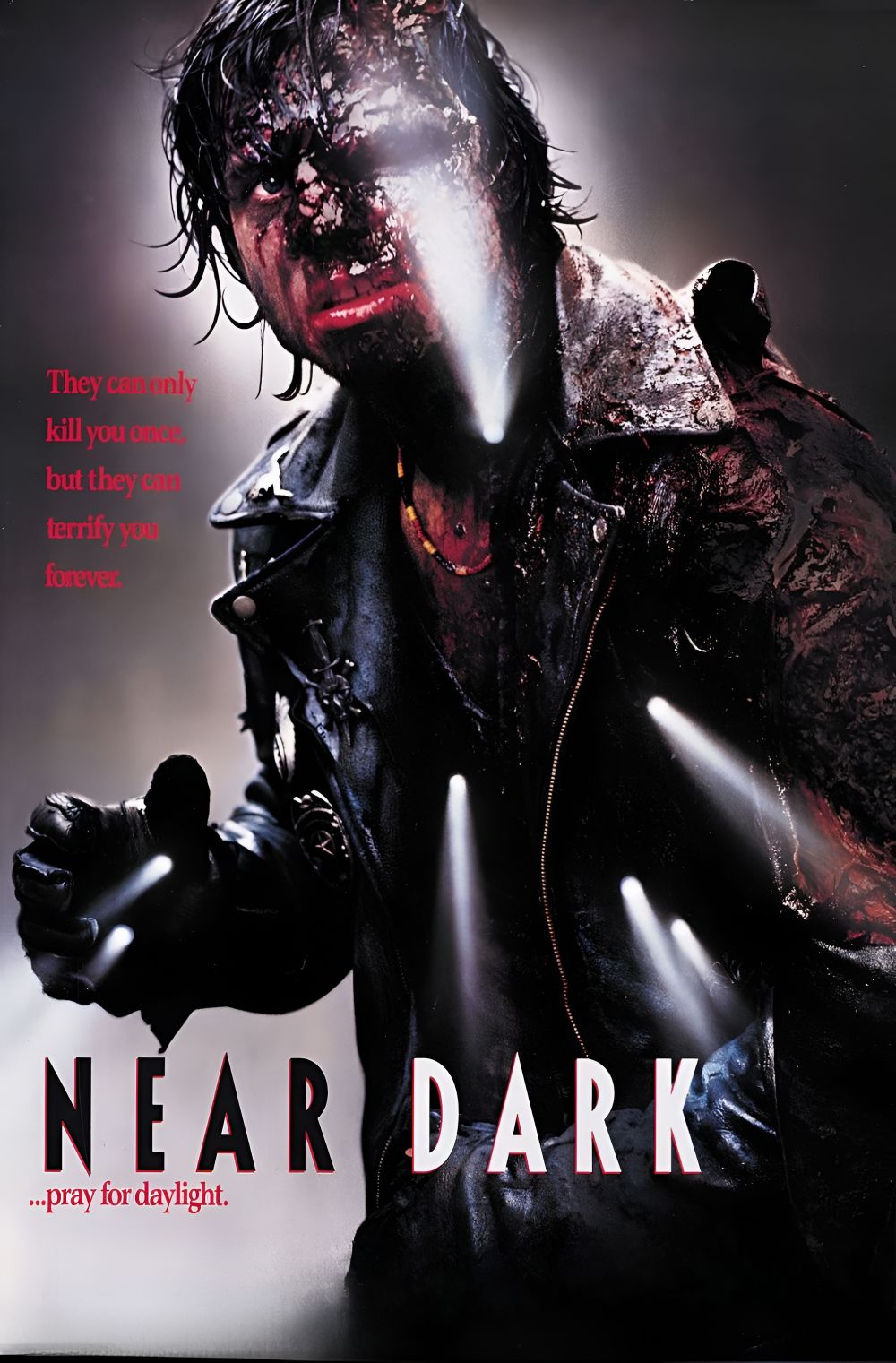
Horror Film Review: Near Dark (dir. by Kathryn Bigelow)


“Let’s put it this way: I fought for the South.” — Jesse

Most vampire movies make you wonder what it would feel like to live forever. Near Dark makes you wonder who you’d be stuck living forever with. In Kathryn Bigelow’s 1987 western-horror film, becoming a creature of the night means joining a small, volatile group whose affection comes with conditions and whose idea of a good evening could leave a roomful of people dead. There’s romance in this world, but very little comfort. Bigelow builds the movie around the uncomfortable possibility that finding people who understand you might be almost as dangerous as having nowhere to belong. It’s a scruffy, seductive horror film that knows how exciting bad company can seem before the bill arrives.

Caleb, played by Adrian Pasdar, doesn’t go looking for immortality. He’s a country boy looking for a little excitement when he meets Mae, played by Jenny Wright. Their early flirtation has the familiar awkwardness of two strangers trying to figure each other out, except one of them has a much better reason to worry about sunrise. A bite changes Caleb’s circumstances before he understands what he has gotten into. Soon he’s traveling with Mae’s vampire companions, who regard him less as a welcome addition than a problem she has brought home. He needs their help, but needing these particular people is its own kind of nightmare.

That dependence gives the story more tension than a simple battle between humans and monsters would offer. Caleb can’t just walk away and resume his old life, yet accepting the group means accepting what they do. The vampires aren’t interested in allowing him a long adjustment period. They expect him to feed, contribute, and stop making his confusion everyone else’s problem. There’s a darkly funny clash of perspectives here: Caleb is enduring an existential crisis, while his new companions are dealing with an irritating passenger. Bigelow makes their impatience recognizable without suggesting that their demands are reasonable.

The western elements give that conflict a natural shape. These vampires behave like an outlaw gang, traveling through an American landscape where staying mobile offers both freedom and protection. Their loyalty matters, but it exists within a closed circle. Anyone outside it is a potential resource, obstacle, or victim. That makes the genre combination feel purposeful rather than decorative. Westerns often find excitement in people who live beyond ordinary rules, and vampire stories have their own attraction to seductive outsiders. Near Dark brings those traditions together, then asks what their freedom looks like from the perspective of someone they decide to hurt.

Bigelow also understands how to make open space feel threatening. Roads and empty horizons usually suggest escape, but they provide little shelter when daylight arrives. The farther these characters get from civilization, the fewer places they have to hide. A miserable room can become more valuable than miles of beautiful countryside. That reversal gives the landscape an active role in the suspense. The vampires may dominate an encounter after dark, but their power comes with a deadline. No amount of swagger can change the time of sunrise, and the movie gets considerable mileage out of watching dangerous people suddenly become desperate.

The physical texture makes that desperation convincing. Clothes look worn, temporary accommodations feel uncomfortable, and traveling together seems like something everyone has done for too long. Immortality hasn’t brought these people luxury or even much convenience. They still have to find transport, secure shelter, and manage one another’s moods. Bigelow doesn’t stop the story to explain their routines, but the strain is visible. This is a particularly effective way of grounding the supernatural: the characters may have extraordinary abilities, yet their existence remains full of practical annoyances. Escaping ordinary human life has left them with a different set of exhausting obligations.

At the same time, the film never becomes so grimy that you lose sight of its appeal. Bigelow finds beauty in nighttime spaces, especially when Caleb and Mae are briefly alone. Darkness offers them privacy and the possibility of closeness, even as it connects them to everything threatening around them. Tangerine Dream’s electronic score helps sustain that contradiction. Its drifting, dreamlike sound creates an emotional distance from the rough surroundings without making them disappear. The music can make a moment feel tender and suspended, then leave the violence to shatter it. That push between attraction and alarm gives the film much of its distinctive atmosphere.

Bill Paxton embodies the alarming side as Severen, a vampire who seems thrilled that survival provides so many opportunities for bad behavior. He plays the role with outrageous confidence, making Severen funny without making him safe. The danger lies in how much pleasure he takes in every confrontation. He isn’t merely prepared to hurt someone if necessary; he appears disappointed when an evening doesn’t require it. Paxton makes that appetite entertaining enough to put the viewer in an awkward position. You look forward to seeing what Severen will do next while understanding that anyone actually standing beside him should be looking for an exit.

Lance Henriksen’s Jesse works through restraint rather than constant provocation. As the group’s leader, he has an authority that doesn’t need much advertising. Henriksen suggests long experience in the way Jesse watches people and decides how much patience they deserve. His steadiness makes the gang feel sustainable, at least on its own ugly terms. These aren’t simply predators who happen to be in the same vehicle. They have a structure, and Jesse helps hold it together. That structure gives Caleb’s possible acceptance real weight. He’s being offered a place in something established, not just permission to tag along until the next disaster.

The film’s strongest idea is that belonging can involve affection and coercion at the same time. The vampires’ attachments don’t have to be fake for their influence to be destructive. They can care about their own people while expecting those people to commit terrible acts. For Caleb, that makes the choice harder than rejecting an obviously empty promise. The group understands what he is becoming in a way his former world cannot. Their companionship answers a real need, but it also demands that he abandon the hesitation keeping him connected to his humanity. Acceptance is available, provided he becomes someone capable of earning it.

Mae gives that conflict its emotional center. Wright makes her vulnerable without turning her into a blameless observer of the gang’s behavior. She belongs to this life, and her attraction to Caleb doesn’t magically separate her from it. Their romance works best when it acknowledges that difficulty. She can offer tenderness without offering safety, and he can care about her without being able to live as she does. Pasdar is less immediately magnetic than the actors playing his traveling companions, but his relative ordinariness serves a purpose. Caleb still has recognizable limits, which gives the audience a way to measure how far the others expect him to go.

The roadhouse sequence makes those expectations impossible to avoid. As the gang terrorizes a bar, the movie strips away any comfortable distinction between their charisma and their cruelty. Bigelow allows the scene to be outrageous and darkly funny, particularly through Paxton, while keeping the vulnerability of the other people in view. It’s exciting filmmaking, but the excitement catches in your throat. For Caleb, the encounter is more than another demonstration of how dangerous his companions are. It’s a test of whether he can participate. He can’t remain indefinitely on the edge of their world, enjoying its romance while refusing its central activity.

That willingness to make the monsters compelling without excusing them is one of the film’s best qualities. Their humor, loyalty, and individuality matter, but none of those things makes their victims disposable. The movie holds both sides of that equation together better than it handles its eventual resolution. Without spelling out the mechanics, the route toward normality feels too convenient after Caleb’s predicament has become so physically and morally tangled. The emotional desire behind the ending is understandable; the storytelling shortcuts are less satisfying. A film so good at establishing the cost of this existence could have used a more difficult reckoning with escape.

Even so, Near Dark earns its place in the memory through the uneasy life it creates between attacks. The worn-out spaces, shifting loyalties, fleeting tenderness, and approaching daylight make the gang feel like more than a collection of horror characters. You can imagine them continuing down another road, having the same arguments and finding new strangers to consume. That’s what makes Caleb’s dilemma linger. The real threat isn’t simply that these people might kill him. It’s that he might become comfortable with them. Bigelow’s film is at its sharpest when the night looks beautiful, the company almost feels welcoming, and you remember exactly what staying would require.
Horror Film Review: The Frighteners (dir. by Peter Jackson)


“Give it up, Frank! Death ain’t no way to make a living!” — The Judge

The best thing about The Frighteners is that its ghosts seem easier to live with than most of its people. Peter Jackson’s 1996 horror comedy builds a lively supernatural world around that idea, filling it with deadbeat spirits, suspicious neighbors, damaged investigators, and a paranormal con man who would rather make a quick buck than save anybody. It’s a funny, nasty, occasionally uneven movie that keeps finding something entertaining beneath its clutter. Even when the comedy and horror pull in different directions, Jackson’s enthusiasm makes the whole thing feel like an invitation to enjoy the chaos rather than question its manners.

At the center is Frank Bannister, played by Michael J. Fox with a mixture of nervous charm and emotional exhaustion. Following the accident that killed his wife, Frank can see and communicate with ghosts. Naturally, he turns this extraordinary ability into a questionable business opportunity. His dead associates haunt local homes, and he conveniently arrives to clear them out for a fee. It’s a wonderfully crooked arrangement because Frank really can do what he advertises; he just happens to be responsible for creating the problem. Things become considerably less manageable when unexplained deaths suggest that another supernatural presence is operating without his relatively harmless motives.

Fox gives the movie the grounding it needs. Frank has the quick wit and comic frustration associated with many of his performances, but the character feels more withdrawn and defeated. His scams aren’t simply evidence of greed. They’re part of a life that has stalled, leaving him more comfortable dealing with the dead than maintaining relationships with the living. Fox allows that grief to emerge without making every scene announce it. Consequently, Frank’s eventual willingness to risk himself for someone else feels like a genuine change rather than an obligation imposed by the screenplay. The wisecracks work because there’s somebody hurting underneath them.

His ghostly partners make the fraudulent haunting business look like a workplace comedy with unusually flexible rules about physical boundaries. Chi McBride’s Cyrus and Jim Fyfe’s Stuart bicker, complain, and carry out their assignments with personalities that death apparently did nothing to improve. John Astin’s deteriorating Judge pushes the humor into more grotesque territory, while R. Lee Ermey brings familiar drill-sergeant hostility to his cemetery patrol. These characters make the supernatural seem oddly mundane. Passing into the next world hasn’t erased anyone’s ego or annoying habits; it has merely removed some practical limitations on how those habits can bother everybody else.

Jackson clearly enjoys that comic freedom, sometimes a little too much. Certain jokes linger past their natural stopping point, and the supporting cast occasionally competes to see who can make the biggest impression. Still, the early silliness establishes an important distinction between Frank’s ghostly companions and the hooded killer moving through town. One group treats haunting as a hustle; the other turns death into a terrifying certainty. When that figure begins bending surfaces and pursuing victims, the movie briefly makes its own playful supernatural rules feel dangerous. Suddenly, walking through walls isn’t a funny trick. It means there may be nowhere safe to hide.

The transition from ghost comedy to serial-killer mystery gives The Frighteners its edge, although it also creates its biggest problems. Jackson and co-writer Fran Walsh gradually connect the present-day deaths to an earlier killing spree, introducing a nastier atmosphere than the opening antics suggest. That darkness gives the stakes weight, but the shifts can be abrupt. A cartoonish gag might sit beside an ugly revelation, with neither getting enough room to establish its intended mood. Sometimes the collision is exciting because the film becomes difficult to predict. Other times, it feels as though Jackson is enjoying every possibility too much to choose between them.

The performances embrace that excess. Jeffrey Combs makes FBI agent Milton Dammers a spectacular collection of twitches, strained reactions, and barely contained dysfunction. He’s entertainingly bizarre, although his scenes sometimes seem to belong to a separate, even stranger movie. Jake Busey brings an obnoxious, grinning confidence to Johnny Bartlett that makes the character’s cruelty especially unpleasant. Dee Wallace adds a more unsettling human dimension to the darker material, helping prevent the horror from becoming nothing more than an effects demonstration. These aren’t restrained performances, but restraint would probably look out of place in a film this committed to pushing its characters toward the grotesque.

Trini Alvarado provides a useful contrast as Lucy Lynskey. Her comparatively grounded presence gives Frank someone to connect with outside his circle of supernatural accomplices and hostile acquaintances. Their developing relationship isn’t the movie’s most fully realized element, but it supports his emotional recovery without overwhelming the story. Visually, meanwhile, Jackson rarely slows down. Ghosts slide through objects, bodies distort, and ordinary rooms become unstable territory. Some digital effects show their age, particularly when translucent figures interact with physical surroundings. Yet the imagery remains expressive, using exaggeration to sell jokes and scares rather than relying entirely on realism. The effects have personality, which helps them survive their technical limitations.

That ambition also makes The Frighteners an important bridge in Jackson’s career. His mostly low-budget New Zealand splatter-comedy roots in Bad Taste, Meet the Feebles, and Braindead remain visible in its grotesque humor and cheerful bad taste. Heavenly Creatures had already demonstrated his dramatic range, but this Robert Zemeckis-backed production gave him a larger Hollywood canvas while allowing him to keep working in New Zealand. Its extensive effects demands helped expand Wētā’s capabilities, building toward the filmmaking infrastructure that would become essential to The Lord of the Rings trilogy. The scale changed, but the filmmaker’s mischievous instincts clearly came along for the ride.

For all its importance as a stepping stone, the movie works best when appreciated as its own unruly creation. The plotting gets crowded, the climax occasionally substitutes activity for suspense, and the tonal balancing act never becomes effortless. But Fox gives the spectacle a heart, and Jackson gives it enough imagination to make its imperfections forgivable. There’s genuine affection for the misfits underneath the grotesque imagery, even as the story finds ugliness among people who should know better. By the end, The Frighteners makes a convincing case that being dead is less of a character flaw than being a jerk.

Brad reviews UNDER SIEGE (1992), starring Steven Seagal! 


I’ve always liked UNDER SIEGE. After his sudden emergence with a series of brutal action films in the late 80’s and early 90’s, like ABOVE THE LAW and OUT FOR JUSTICE, Steven Seagal entered the world of high concept action filmmaking when he starred in this “Die Hard on a Battleship.” Seagal would not be the underdog cop taking on drug dealers, coked up mafia hitmen, or crooked cops here. Rather, he emerges as a full blown movie star in a big budget studio action film. Directed by Andrew Davis, whose credits include Chuck Norris’ best movie CODE OF SILENCE (1985), Seagal’s debut ABOVE THE LAW (1988) and the next year’s global smash THE FUGITIVE (1993), this is the movie where everything came together for Seagal. I watched UNDER SIEGE at the movie theater myself in 1992 and had a great time with it. I didn’t realize at the time that this would be his career peak, with a global box office of over $156 million. No other film would really even come close. 

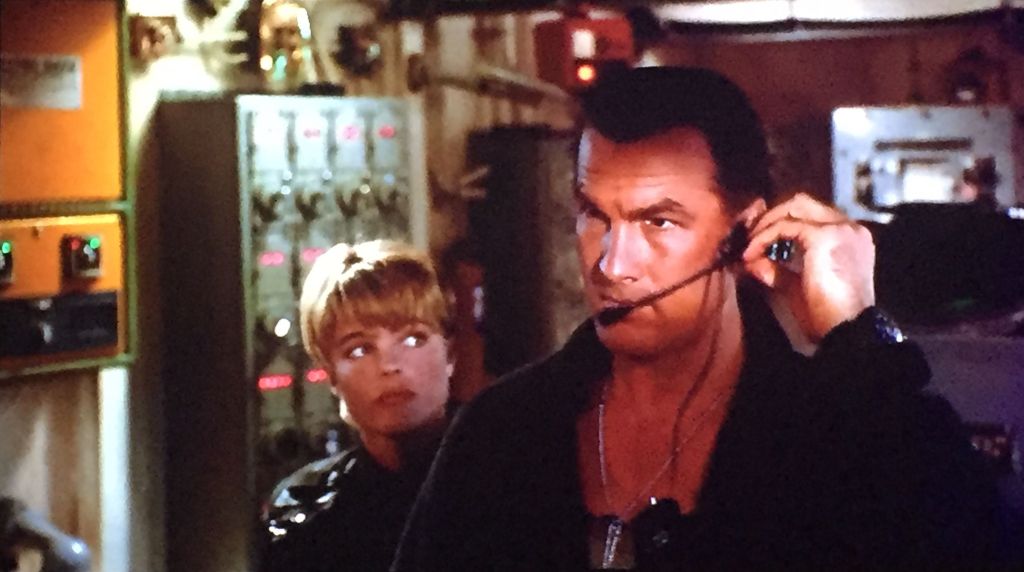
Casey Ryback (Seagal) is a “cook” aboard the USS Missouri, a battleship that is scheduled to be decommissioned. He’s also a former badass Navy SEAL who was demoted after punching out his commanding officer when a mission in Panama had gone wrong. When a group of mercenaries led by ex–CIA operative William Strannix (Tommy Lee Jones) seize control of the ship under the guise of a birthday celebration, they overlook Ryback. In classic John McClane style, Ryback goes on to become a fly in their ointment, a monkey in their wrench, and a big-time pain in their asses! Moving through the narrow corridors of the ship, and with the assistance of Playboy Playmate Jordan Tate (Erika Eleniak), Ryback begins taking out mercenaries one by one. But will he be able to stop Strannix and his partner Krill (Gary Busey) from stealing the ship’s nuclear Tomahawks and preserve the safety and security of the world? I’ll give you one guess!

First and foremost, UNDER SIEGE is a damn good action movie. It definitely helps that a director as talented as Andrew Davis is calling the shots. His film delivers on the entertainment front, with lots of well staged shootouts, violent scenes of close quarter, hand-to-hand combat, and a cake emergence sequence that still makes my head spin! I think the battleship makes for a great “movie” setting for this type of action. With its concoction of narrow hallways, engine rooms, and mess halls, there’s all kinds of interesting places for fighting and killing. Back in 2007, I was lucky enough to take a tour of the USS Alabama battleship, the primary filming location for UNDER SIEGE, which only enhances my appreciation for the work done here. On the heels of his confident and charismatic performance in the prior year’s OUT FOR JUSTICE, this is Steven Seagal at his most watchable. He’s in peak physical condition, so he can believably kick all the ass that’s necessary for this kind of film, and he’s also likable in his role as the underestimated “cook.” He will never be mistaken for Bruce Willis, but Seagal is good here.

Great action movies will usually have great villains, and UNDER SIEGE is especially blessed in this area. Tommy Lee Jones goes way over-the-top, chewing on scenery like he’s at a Golden Corral buffet, turning Strannix into the type of irrational lunatic that I love in my early 90’s action movies. And looking back now, Gary Busey seems to do what he does best. His traitorous Commander Krill comes off as goofy, disgusting, and unstable. In other words, he’s perfect. Even though Seagal does smile more in this film, Jones and Busey do bring an energy to the movie that balances out Seagal’s more stoic character, providing the type of spark not often found in the star’s movies. 

At the end of the day, I rank UNDER SIEGE as my second favorite Steven Seagal film, slightly below my preference for the more down and dirty OUT FOR JUSTICE. What it lacks in grit is more than made up with entertainment value, strong performances, and action on a scale that the star’s future films would never rise to again. If I were put in a position where I could only recommend one Steven Seagal film to a person who’d never seen one of his movies before, I’d probably go with this one. It’s an excellent, mainstream 90’s action movie. 

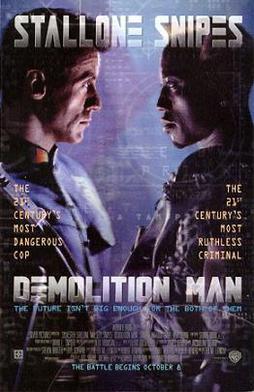
Demolition Man (1993, directed by Marco Brambilla)


File written by Adobe Photoshop¨ 4.0

In the near future, law-breakers and other destructive types are not put in prison but are instead cryogenically frozen and left in suspended animation until they’ve served out their sentences.  The most fearsome criminal in the world, Simon Phoenix (Wesley Snipes) has been frozen but so has his nemesis, Detective John Spartan (Sylvester Stallone).

In the far future, Los Angeles is a part of a megalopolis named San Angeles.  Envisioned and watched over by a seemingly benign dictator named Cocteau (Nigel Hawthorne), San Angeles is a wannabe utopia where cursing leads to an automatic fine and all of the restaurants are Taco Bell.  When he’s thawed out for a parole hearing, the suddenly super-powered Phoenix makes his escape.  The police, no longer knowing how to deal with violence, make the reluctant decision to thaw out John Spartan.  Assigned to work with the enthusiastic Lenina Huxley (Sandra Bullock), Spartan must navigate this strange future to defeat Phoenix.

For some reason, Demolition Man never seems to get the respect that it deserves.  Made at a time when both the Rambo and the Rocky franchises appeared to be over, Demolition Man features one of Stallone’s most appealing performances as he deals with a society where just saying a bad word can cause a scandal.  Just as Spartan proves that his brand of destructive police work still has its place in the future, Stallone proved that he could still carry an action movie in 1993.  There’s a lot of knowing humor to Stallone’s performance.  After a series of failed comedies in the 80s, Demolition Man was the movie that proved that Stallone could be intentionally funny.  Stallone is also surrounded by one of his strongest supporting casts.  Wesley Snipes attacks his villainous role with gusto while Denis Leary breaks out his stand-up routine as Edgar Friendly, the leader of San Angeles’s rebels.  This is also the film that led to Sandra Bullock getting cast in Speed and she’s so incredibly adorable here that even Stallone breaks out into a smile while acting opposite her

(In 1993, you couldn’t turn on television without seeing Sandra Bullock saying, “All restaurants are Taco Bell.”)

Demolition Man is an action film and it lives up to its name, with all the demolition that a viewer could want.  Even more so, It’s also a satire, of both Stallone’s previous films and what was then known as “political correctness.”  Demolition Man’s portrayal of a sterile society where everyone had been programmed to be docile and inoffensive wasn’t that far off from what a lot of politicians were then promoting for America at large.  Luckily, John Spartan was around to put an end to that.  The end result is one of Sylvester Stallone’s most memorable films.

The Films of 2024: He Went That Way (dir by Jeffrey Darling)


The year is 1964.  Kennedy is dead and Johnson is president.  American troops are in Vietnam but the American public is not yet concerned with that conflict.  Instead, it’s the British Invasion that has intrigued the youth of America.  People know that times are changing but they have no idea just how much change is waiting for them in the future.

Jim Goodwin (Zachary Quninto) is a meek animal trainer who is driving across the country with his chimpanzee, Spanky.  At one time, Spanky was a celebrity.  He ice skated with the stars.  He appeared on the Ed Sullivan Show.  Everyone loved Spanky but now, it appears that his time has passed.  People are more interested in Beatles than chimps.  With Spanky no longer in demand, Jim’s marriage is failing and he’s struggling to pay the bills.

At a Nevada gas station, Jim sees a young man named Bobby Falls (Jacob Elordi) trying to hitch a ride.  Assuming that Bobby is a college student and wanting someone to talk to during the long drive to Chicago, Jim offers him a ride.  Bobby is reluctant at first and demands to know if Jim has some sort of sinister motive for picking him up.  After Jim promises that he doesn’t, Bobby gets in the truck with him.

What Jim doesn’t know, but eventually learns, is that Bobby is a criminal.  Using a derringer, Bobby has been robbing gas stations and executing the gas station attendants.  Their journey becomes a rather macabre road trip, with Jim and Bobby bonding despite the fact that Jim is scared of Bobby and Bobby always seems to be one step away from snapping.  Bobby encourages Jim to stop being such a wimp and Jim encourages Bobby to maybe not be such a violent sociopath.  Though Bobby and Jim come from different worlds, they both have one thing in common.  They really like the chimpanzee.

I have to admit that I liked the chimpanzee as well.  Bobby’s a killer so it’s impossible for me to like him.  Jim is a wimp who fails to take advantage of several opportunities to escape so it’s impossible for me to respect him.  But Spanky is an innocent animal who likes to eat apples and who sincerely cares about both his owner and the hitchhiker who keeps losing his temper.  I watched the film dreading that something bad would happen to Spanky.  In fact, the only reason I stuck with the film for its entire running time was because I wanted to make sure Spanky survived. 

(SPOILER ALERT: He did.  Whatever other flaws this film may have, there is no deliberate animal cruelty.)

I have to admit that I have mixed feelings about this movie.  There was a lot that I didn’t like about the film.  I never bought the relationship between the two main characters (though I should also acknowledge that the film is loosely based on a true story and ends with an interview with the real life model for Jim).  The performances felt a bit one-note.  And, to be honest, I’m a bit bored with movies about people who spend the majority of their time killing other people.  At the same time, the film looked great.  Visually, it really captured the arid beauty of the American desert.  And the film’s final twist was just bizarre enough to make me smile.  Tragically, director Jeffrey Darling died shortly after completing production of this film.  (It was his feature directorial debut.)  And while I didn’t care much for the film, there were moments where I could see the talent of the director peeking through.  I would have liked to have seen what Darling’s second film would have been.

As for He Went That Way, it’s not a disastrous film but it’s also not one that I will probably ever feel like rewatching.


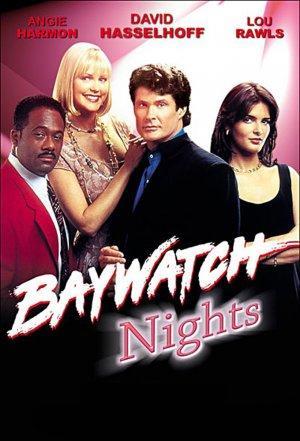
Late Night Retro Television Reviews: Baywatch Nights 1.8 “Balancing Act”


Welcome to Late Night Retro Television Reviews, a feature where we review some of our favorite and least favorite shows of the past!  On Tuesdays, I will be reviewing Baywatch Nights, an detective show that ran in Syndication from 1995 to 1997.  The entire show is currently streaming on Youtube!

This week, we discover how it all began!

Episode 1.8 “Balancing Act”

(Dir by Gus Trikonis, originally aired on November 18th, 1995)

The eighth episode of Baywatch Nights opens with Ryan and Garner on a stakeout.  It’s the middle of the day and they’re waiting for someone carrying an envelope full of evidence.  Mitch is nowhere to be seen, which actually makes sense.  I mean, Mitch is still working as a lifeguard.  Over the past seven episodes, I’ve often wondered how Mitch can work full-time as both a detective and a lifeguard captain.  This episode finally acknowledges that Mitch actually does have another job.

Garner and Ryan start talking about the first that they met and how they came to be partners in a detective firm.  It’s flashback time!  The flashbacks are to the show’s previously unaired pilot.  What’s funny is that, even though Garner is the one who is telling the story, the flashbacks are all narrated by Mitch.  I know that Garner and Mitch were extremely close friends during the early seasons of Baywatch but I didn’t realize they could actually hear each other’s thoughts.

Flashback Mitch explains that both he and Garner were wondering if there was anything more to life than their jobs.  Garner wanted to be more than just a beach cop.  Mitch was wondering if maybe there was something more out there than just being a lifeguard.  One day, when Mitch on vacation from his lifeguarding job, Mitch decided to accompany Garner to investigate a mysterious boat that had been showing up around the marina.  It was during the investigation that Mitch and Garner first met Ryan.  Ryan had paid $25,000 for a private detective agency in California, just to discover that the agency was not the high class operation that the previous owner, Nicky Pine (Philip Bruns), claimed it was.  However, before Ryan could confront him, Nicky was apparently killed by a group of criminals who wanted a valuable bracelet that Nicky owned.  Except the bracelet, which he gave to Ryan, was actually a fake and Nicky wasn’t actually dead and….

Ugh, this is complicated.  Seriously. I hate to admit that I couldn’t follow the plot of an episode of Baywatch Nights but this plot had so many nonsensical twists and turns that I pretty much gave up on trying to make sense of it all.  The important thing is that Garner got fed up with the police and quit, Mitch realized that he wanted to be a private eye, and Ryan got to be totally awesome as usual.  At one point, Ryan explained to Mitch that she was tough because she was from Dallas.  Woo hoo!  You tell him, Ryan!

Because this was a pilot, there were a few examples of early installment weirdness.  Troy Evans showed up as a police detective and one got the feeling that he was originally envisioned as being a recurring character.  Lisa Stahl’s Destiny was nowhere to be seen but there was a character named Andy (Linda Hoffman) was acted quite similarly to Destiny.  Even Nicky and his girlfriend, Rose (Jeanette O’Connor), seemed to be set up to become semi-regular characters.  Obviously, there was some retooling done after this pilot was produced.

Anyway, this episode’s plot is impossible to follow but the California scenery is lovely, which I think is the most that anyone could realistically demand from any show from the Baywatch universe.  Having now watched the pilot, I’m glad that the show went forward with just Mitch, Garner, and Ryan as regulars.  They’re a good team.

Late Night Retro Television Reviews: Gun 1.5 “The Hole”


Welcome to Late Night Retro Television Reviews, a feature where we review some of our favorite and least favorite shows of the past!  On Tuesdays, I will be reviewing Gun, an anthology series that ran on ABC for six week in 1997.  The entire show is currently streaming on Tubi!

This week, the gun ends up at the bottom of a swimmin’ hole!

Episode 1.5 “The Hole”

(Dir by Ted Demme, originally aired on May 24th, 1997)

Yep, this episode of Gun centers around an old country swimming hole.  Every day, teenage Sondra (Kirsten Dunst) and her younger brothers, Brendan (Drake Bell) and Tad (Joe Pichler), head down to the Hole.  For Sondra, swimming in the Hole is a chance to escape from her life of living in a trailer park with her trashy mother (Carrie Fisher) and her pervy stepfather (Cliff Bemis).  For Brendan and Tad, going to the Hole is a chance to look for the treasure that they are convinced is at the bottom of the water.  It is true that there is something shiny in the Hole.  Sondra thinks that it might be the diamonds that she could use to finance an escape from the trailer park and a one-way trip down to Florida.  Actually, it’s the pearl-handled gun that’s been at the center of every episode of Gun.

(In this episode, it’s suggested that the gun has been at the bottom of the hole for over a year.  So, how did it end up in that town in the first place?  Is this episode taking place before or after the previous episodes?  I guess the simple solution is that it’s not the same gun as the gun seen in the previous episodes but the part of me that loves continuity is having a hard time accepting that.)

The gun belonged to James Munday (Johnny Whitworth), who has only recently been released from prison.  He was convicted of murdering his girlfriend and only the fact that he was a minor at the time kept him from being given a life sentence.  James claims that his girlfriend died as a part of a failed suicide pact and he’s convinced that the gun in the Hole can prove his innocence.

When James and Sondra meet, it doesn’t take long for them to fall for each other.  Sondra remains James of his dead girlfriend and Sondra, like of all of us, is attracted to brooding rebels.  However, when the rest of the town hears that James has been going to the Hole, a lynch mob is formed.  Dick Sproule (Max Gail), the father of the girl that James was convicted of killing, is soon at the Hole with a rifle in his hands.  Can James prove his innocence and will the town even care?

This episode was extremely overwrought and it featured every flaw that tends to turn me off of anthology shows in general.  All of the characters were broadly drawn.  The dialogue was way overwritten.  Director Ted Demme told the story with a heavy-hand and used slow motion as if he was under the impression that he was the first director to ever consider heightening the drama by slowing things down.  The whole thing just felt like a bad creative writing assignment.  Out of the cast, only Kirsten Dunst was able to really create a character who felt as if she had a life outside of the demands of the story.  Everyone else seemed to be a caricature.  In the end, James may have been a hot, brooding rebel but he was also kind of whiny.  That got old pretty quickly.

*Sigh*  Well, that’s another disappointing episode of Gun for you!  Next week, I’ll be reviewing the series finale.  Hopefully, this show will at least end on a worthwhile note.

Horror Film Review: The Lawnmower Man (dir by Brett Leonard)


The 1992 horror/sci-fi hybrid, The Lawnmower Man, tells the story of two men.

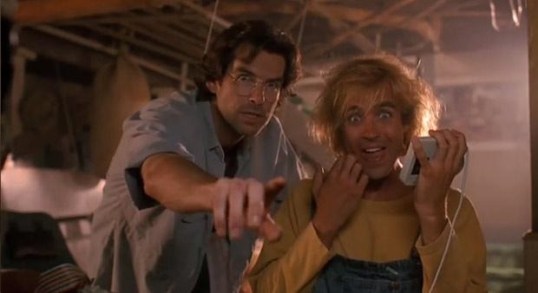
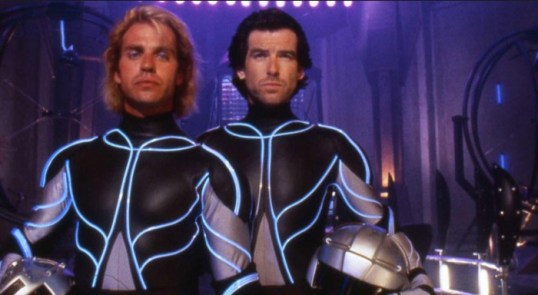
Dr. Lawrence Angelo (played by Pierce Brosnan) is a scientist who is experimenting with ways to make less intellectually inclined people smarter. Dr. Angelo is kind of a burn out. You can tell he has issues because he needs to shave, he’s always sitting in the dark, and he’s never without a cigarette. You look at Dr. Angelo and you just imagine that he smells like smoke, bourbon, and lost dreams.

Jobe (Jeff Fahey) is the kind-hearted but intellectually disabled man who lives in a shack and spends his time mowing everyone’s lawn. Hence, he’s known as the …. wait for it …. THE LAWNMOWER MAN!

Together, Dr. Angelo and Jobe solve crimes!

No, not really. Instead, Dr. Angelo decides to experiment on Jobe. This leads to Jobe not only becoming smarter but also quicker to anger. Soon, Jobe is developing psychic abilities. He can move things with his mind. He can magically set people on fire. Basically, he can do whatever the script needs for him to do at the moment. Jobe is soon tormenting everyone who once bullied him. Father McKeen, the pervy priest, gets set on fire. Jake, the gas station attendant, is put into a catatonic state. An abusive father get run over by a lawnmower.

Dr. Angelo knows that Jobe is out-of-control and that the experiment has to be reversed. However, the sinister group behind Angelo’s research wants to use Jobe as a weapon because …. well, because they’re evil and that’s what evil people did back in 1992. Jobe, however, has other plans. He wants to become pure energy so that he can rule over a virtual world….

Or something like that. To be honest, it’s kind of difficult to really figure out what’s going on in The Lawnmower Man. The movie shares its name with a Stephen King short story but it has so little in common with its source material that King reportedly sued to get his name taken out of the credits. (Considering some of the films that King has allowed himself to be associated with, this is kind of amazing.) The film tries to be a satire, a slasher film, a conspiracy film, and a technology-gone-crazy film all in one and the end result is one big mess.

Along with all of that, The Lawnmower Man is also a time capsule of when it was made. A good deal of the film takes place in Jobe’s virtual reality universe, which looks a lot like a mix of Doom and Second Life. I imagine the film’s special effects may have seen impressive way back in the 20th Century but, seen today, they’re rather cartoonish, if occasionally charmingly retro.

On the plus side, the film does have an interesting cast. Pierce Brosnan is never convincing as burn-out but he tries so hard that he’s still fun to watch. Underrated actors like Jenny Wright, Geoffrey Lewis, Dean Norris, and Troy Evans all get a chance to show what they can do in minor roles. Finally, you’ve got the great Jeff Fahey, giving a far better performance than the script perhaps deserves. Though the film may be a mess, there’s something undeniably fun watching Jeff Fahey’s Jobe go from being meek to being a megalomaniac.

It’s a silly film and not one that’s meant to be watched alone. This is a film that has to be watched with a group of your snarkiest friends. Watch it the next time you’re looking for an excuse to avoid doing the yard work.

Horror Film Review: Near Dark (dir by Kathryn Bigelow)


The 1987 film Near Dark is the story of two American families.

The Coltons are a family of ranchers living Oklahoma.  Loy Colton (Tim Thomerson) is the patriarch, keeping a watchful eye on his children, Caleb (Adrian Pasdar) and Sarah (Marcie Leeds).  Caleb is a cowboy and a nice guy, even if he does seem to be a little bit too naive for his own good.  After Caleb disappears one night, Loy and Sarah start their own search, traveling across the back roads of the Southwest.

The other family may not share any biological relation to one another but they definitely share blood.  They’re a group of outcasts who have found each other and now spend their nights searching for people who can satisfy their hunger.  They’re vampires, even though that’s not a word that they tend to use.  (In fact, for all the blood-sucking that goes on throughout the film, the term “vampire” is never actually heard.)  At night, they’re all-powerful but during the day, even the slightly exposure to the sun can set them on fire.

The patriarch of this family is Jesse Hooker (Lance Henriksen), a scarred war veteran.  Jesse will do anything to protect the members of his family but he expects each of them to pull their weight.  At one point, when Jesse is asked how old he is, he says that he fought for the South and that the South lost.

Jesse’s girlfriend is Diamondback (Jenette Goldstein), who is just as ruthless as Jesse.  Filling the role of oldest son is Severen (Bill Paxton), a cocky gunslinger with a quick smile and cruel sense of humor.  Homer (Joshua Miller) appears to be a 12 year-old boy but he’s actually one of the older and more violent members of the family.  And then there’s Mae (Jenny Wright), the rebellious daughter.

Mae is the one who first met and bit Caleb.  She’s the one who turned Caleb into one of them, though it takes Caleb a while to not only discover but also understand what he’s become.  When Caleb tries to escape from Mae and his new family, he becomes violently ill.  He can no longer eat human food but, at the same time, he can’t bring himself to hunt.  Instead, he’s forced to drink whatever blood Mae can provide for him.  Even when Jesse’s group attacks a redneck bar, one cowboy manages to escape, specifically because Caleb cannot bring himself to kill him.

What is Caleb to do?  He can’t return to his old family, as much as he may want to.  (It doesn’t help that Homer has developed an obsession with Caleb’s sister, Sarah.)  At the same time, his new family says that they’re going to kill him unless he starts hunting for blood.  They only thing keeping Caleb alive is the fact that Mae likes him and even she’s telling him that he’s going to have to hunt.

Meanwhile, Loy continues his own hunt, the hunt for his son….

Long before she became the first female director to win an Oscar for The Hurt Locker, Kathryn Bigelow directed this stylish vampire film.  Visually, Bigelow emphasizes the emptiness of the Southwestern plains.  Looking at the desolate landscape, it’s easy to believe that Jesse and his family could use them to successfully hide from the rest of the world.  It’s also just as easy to believe that a well-meaning but not particularly bright young man like Caleb could get lost and not be able to find his way home.  Bigelow turns the vampire family into a group of modern-day outlaws, crossing the land in their sun-proofed vehicles and trying to stay one step ahead of modern-day posses made up by concerned families and law enforcement officers who don’t know what they’re getting into.

Even if not for Bigelow’s stylish direction, the film would be a classic for just the cast alone.  Henriksen, Paxton, and Goldstein all previously appeared in James Cameron’s Aliens and they have a camaraderie that feels real.  In fact, the vampires work so well together that it’s impossible not to kind of admire them.  They’ve got it together and, even when faced with an army of police officers determined to make them step out into the sunlight, they don’t lose their sardonic sense of humor.  The much missed Bill Paxton’s performance is a hyperactive marvel, both menacing and sexy at the same time.  Meanwhile, Jenny Wright and Adrian Pasdar have a likable chemistry as Mae and Caleb while Tim Thomerson makes Loy’s love and concern for his son feel so real that adds an unexpected emotional depth to the overall movie.  The script, written by Eric Red and Bigelow, is full of quotable dialogue and the cast takes full advantage of it.

Near Dark is vampire classic and definitely one to watch this Halloween season.

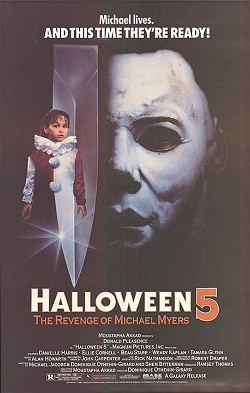
Horror Film Review: Halloween 5: The Revenge of Michael Myers (dir by Dominique Othenin-Girard)


Oh … dammit.

Hi everyone!  We are currently in the process of our annual horrorthon here at the Shattered Lens so I thought it would be a good idea if me and some of my fellow writers reviewed all of the Halloween films!  Arleigh already reviewed the original Halloween back in 2010 and I took a look at the first sequel in 2012.  So, it just made perfect sense to me that we go ahead and take a look at the rest of the films in the series!

Yesterday, Case reviewed Halloween 4 and, later, he’ll be taking a look at Resurrection and H20.  Jedadiah Leland is taking look at Halloween 6 tomorrow.  So, that leaves me with … *sigh* Halloween 5.

BLEH!

Before we dive into the crapfest that was Halloween 5, let’s take a look at the trailer!  It’ll be fun!

The trailer’s actually fairly effective.  I have to wonder how many people, way back in 1989, were fooled into seeing this film as a result of this trailer?  I imagine probably more than who are willing to admit it.  Paying money to see Halloween 5 doesn’t seem like something anyone would want to brag about.

Halloween 5 is the one that has the dumb cops.  Now, I know that every Halloween film seems to feature at least a few dumb cops but the ones in Halloween 5 are really dumb.  And they get their own theme music!  That’s right — whenever these two dumb cops show up on screen, comedic circus music plays.  Needless to say, it’s woefully out of place in a horror movie.  I read that this was apparently meant to be an homage to the dumb cops from the original Last House On the Left.  This despite the fact that … EVERYONE HATED THE DUMB COPS IN LAST HOUSE ON THE LEFT!!!  Even Wes Craven later said that the dumb cops were a mistake!  If you’re going to rip off (or pay homage) to another movie, don’t pay homage to the part that sucked!

Anyway, you may remember that Halloween 4 ended with Jamie (Danielle Harris) attacking her mother and holding a knife.  Uh-oh, looks like Jamie’s going to be a murderer!  Well, no — that would have been too interesting.  Halloween 5 finds Jamie being committed to a mental hospital for a year while Michael Myers (Don Shanks) is in a coma.  Michael eventually comes out of his coma and starts stalking Jamie all over again.

Once again, Dr. Loomis (a depressingly frail Donald Pleasence) is one of the few people who realizes that Michael is still alive and once again, nobody is willing to listen to him.  Here’s the thing: Dr. Loomis may be kinda crazy and yes, all the scars are kinda disturbing but he’s been right every single freaking time in the past.  I understand that the people of Haddonfield are kind of in denial about Michael but this is just getting ridiculous.

Rachel Carrathurs (Ellie Cornell) returns for this movie but she gets killed early on.  Apparently, she was killed so that the audience would know that anyone could be killed and that nobody was safe but Rachel was such a strong character and Ellie Cornell did such a good job playing her in the previous film that you really feel her absence in Halloween 5.  Her death leaves a void that the film fails to adequately fill.  Add to that, if you insist on killing a kickass character like Rachel, at least give her a memorable death scene.  Don’t just have her blithely wandering around the house half-naked until she suddenly gets stabbed, as if she was just some generic slasher victim and not the lead of the previous movie.

With Rachel dead, it now falls to her amazingly annoying best friend, Tina (Wendy Kaplan), to serve as Jamie’s protector.  Tina is hyperactive and talkative and quirky and blah blah blah.  Basically, she’s like that person who is really annoying but since you’ve known her since the third grade, you feel obligated to hang out with her.

It all leads to another big Halloween party and few rather bloodless deaths.  It’s all pretty boring, to be honest.  There is one good scene where Michael chases Jamie in a car (the headlights cutting through the darkness create a wonderfully eerie effect) but, otherwise, it’s depressingly generic.

In the end, Michael is captured and put in a jail cell.  Fortunately, a mysterious man in black shows up and breaks him out.  Gee, I wonder what that’s about?

Halloween 5 is undoubtedly the worst of the Halloween films.

Bleh!

halloween5poster