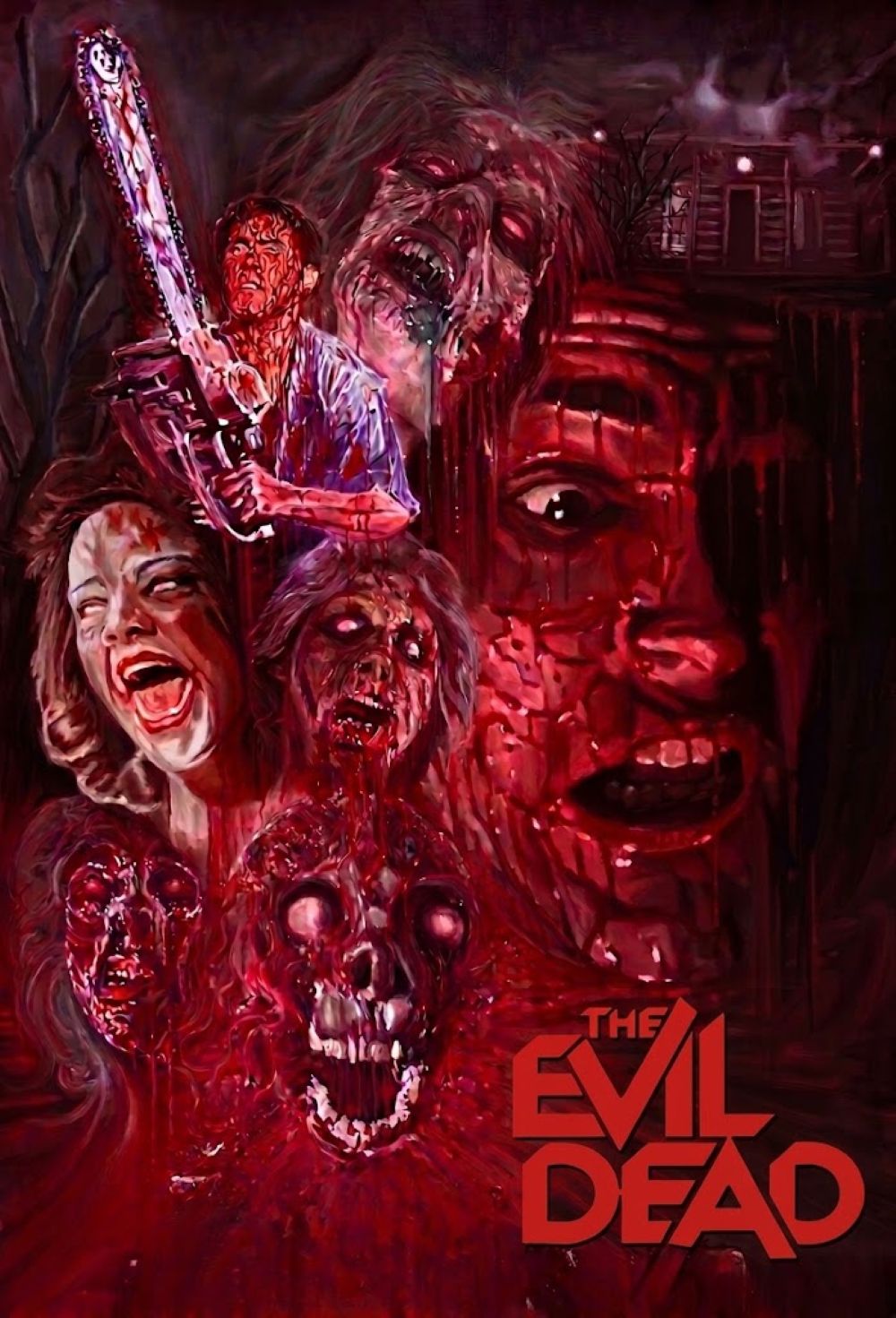
Horror Film Review: The Evil Dead (dir. by Sam Raimi)


“I fear that the only way to stop those possessed by the spirits of the book is through the act of… bodily dismemberment.” — Professor Knowby

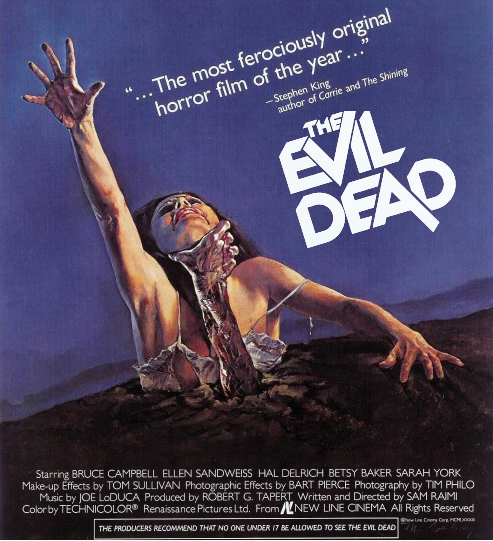
The Evil Dead is the kind of movie that feels like it should not have become a classic, at least not by conventional standards. It was made cheaply, filmed under brutal conditions, packed with unknown actors, and built around an extremely simple premise: five college friends head to an isolated cabin in the woods, unwittingly awaken an ancient evil, and spend the rest of the night being torn apart by demonic forces. Yet more than four decades later, Sam Raimi’s 1981 horror debut remains one of the most energetic, inventive, and genuinely nasty independent films ever made. It is rough around the edges in ways that are impossible to ignore, but those rough edges are a major part of its appeal. The Evil Dead feels handmade, hungry, and a little bit unhinged.

The story starts with Ash Williams, his girlfriend Linda, Ash’s sister Cheryl, and their friends Scotty and Shelly arriving at a remote Tennessee cabin for what is supposed to be a relaxing getaway. It is one of the most familiar setups in horror history now, but Raimi and his collaborators made it feel threatening before the real violence even begins. The cabin is decrepit, damp, and isolated to an almost absurd degree. There is no real sense of civilization nearby. The forest itself seems hostile, with tangled trees, strange sounds, and an atmosphere that makes the woods feel less like a location and more like a living organism surrounding the characters.

The group soon discovers a cellar beneath the cabin, where they find an ancient book bound in flesh, a dagger, and a tape recording left by an archaeologist. The recording describes the Necronomicon, a book of demonic incantations, and naturally the characters make the worst possible decision by playing the tape aloud. That act releases the evil presence that has been lurking in the forest, and the movie moves quickly from creepy cabin story to all-out supernatural nightmare. The concept is simple, but it gives Raimi room to focus on mood, visual invention, and escalation rather than complicated mythology.

What makes The Evil Dead special is how aggressively Raimi directs it. Even in his first feature, he had a style that was impossible to mistake for anyone else’s. The camera is constantly moving, lunging through the woods, creeping around corners, tilting at unnatural angles, and racing toward people as if the audience has become the demon’s point of view. The famous “demon-cam” shots are still startling because of how physical they feel. The camera does not glide elegantly. It charges. It crashes through the environment. It feels like something has broken loose and is hunting the characters.

That restless filmmaking gives the movie a personality far larger than its budget. Raimi turns limitations into an advantage. The cabin becomes a maze of shadows, floorboards, trap doors, windows, and hidden spaces. A cheap-looking hallway can suddenly become terrifying because the editing, sound design, and camera movement make it feel unstable. Raimi understands that horror does not always come from seeing a monster clearly. Sometimes it comes from the sense that the camera itself has stopped behaving normally, that the space around the characters is warping, and that even the trees outside are watching them.

The special effects are another major reason the film still has such a devoted following. They are obviously practical, often messy, and occasionally so exaggerated that they cross into dark comedy, but they have a tactile quality that modern digital effects often lack. The possessed characters look genuinely diseased and wrong: pale skin, dead eyes, rotting makeup, distorted faces, and unnatural movements. When the deadites attack, they do not simply become generic zombies. They taunt their friends, laugh at them, imitate their voices, and enjoy causing emotional pain. That cruel playfulness makes them more disturbing than ordinary monsters.

The makeup work on the possessed Cheryl, Shelly, and Linda remains especially effective because it turns familiar faces into grotesque masks. Ellen Sandweiss, Betsy Baker, and Theresa Tilly bring an unsettling intensity to those transformations, switching from frightened victims to shrieking, mocking demons. The performances are broad and theatrical, but that is exactly what the material needs. Nothing in The Evil Dead is subtle for very long. The film keeps pushing the characters past the point of normal human behavior until they are laughing, screaming, convulsing, and bleeding all over the cabin.

Bruce Campbell’s Ash is interesting because he is not yet the wisecracking, chainsaw-handed cult hero he would become in the sequels. In The Evil Dead, Ash is mostly an ordinary young man who slowly realizes he is trapped in a situation beyond comprehension. Campbell is still charismatic, and there are flashes of the physical comedy and wild-eyed determination that would define the character later, but this version of Ash is more vulnerable. He panics, hesitates, and suffers. By the end, he looks exhausted in a way that feels earned, covered in sweat, dirt, blood, and trauma.

That difference gives the original movie its own identity within the larger Evil Dead series. Evil Dead II would remake and expand many of the first film’s ideas with more money, more comedy, and a much more overtly cartoonish sensibility. Army of Darkness would take Ash into full fantasy-adventure mode. Those later films are arguably more polished and more immediately entertaining, especially for viewers who love Campbell’s comedic performance. But The Evil Dead has a rawness that the sequels never tried to reproduce. It is a horror movie first, even when its excesses become funny.

The film’s tonal shifts are one of its most fascinating qualities. Raimi clearly understands that grotesque violence can become absurd if it is pushed far enough, and the movie occasionally seems aware of its own madness. A possessed hand reaches through a window. A character gets stabbed with a pencil in one of the film’s most infamous scenes. Bodies erupt in streams of colored goo rather than realistic blood. The final destruction of the deadites is so elaborate that it feels like Raimi and his effects team were determined to empty every container of slime they had available. It is disgusting, but it is also gleefully imaginative.

At the same time, The Evil Dead can be more unpleasant than people remember. Its treatment of Cheryl in the woods is difficult to watch and remains one of the film’s most controversial moments. The scene is meant to establish the cruelty and violation associated with the demonic force, but it is not necessary to enjoy the movie, and it has aged badly compared with the more comic-book brutality of later entries. Raimi himself would move away from that kind of material in the sequels. It is worth acknowledging because the scene changes the tone of the film and may be a deal-breaker for some viewers.

The sound design helps make the movie feel more oppressive than its modest production would suggest. The woods groan, doors bang, voices echo from impossible places, and the demonic chants on the tape recording create a sense that something ancient has been invited into the cabin. Joseph LoDuca’s score adds another layer of unease, using shrill strings and harsh musical stabs to make even quiet scenes feel unstable. The soundtrack is not trying to be elegant. It is trying to make the viewer tense up, and it succeeds.

There is also something inspiring about the movie’s independent spirit. Raimi, Campbell, producer Robert Tapert, and their crew famously made the film through determination, ingenuity, and a willingness to endure conditions that sound miserable in retrospect. You can feel that effort on screen. Every strange camera angle, handmade prop, and splattering effect carries the energy of filmmakers trying to prove they can do something bigger than their resources should allow. The Evil Dead does not hide its budget. It turns that budget into part of its legend.

For horror fans, the movie is essential not because it is flawless, but because it is so alive. It captures the feeling of discovering a forbidden VHS tape or stumbling into a midnight screening where the audience is laughing, cringing, and yelling at the screen. It is scary in places, silly in others, and relentlessly committed to its own bizarre nightmare logic. Raimi would go on to make superhero movies, westerns, thrillers, and studio blockbusters, but the wild visual imagination that defined his career is already fully visible here.

The Evil Dead is a scrappy, blood-soaked supernatural horror movie that earns its reputation through pure filmmaking nerve. Its story may be basic, its acting may be uneven, and some of its material has not aged gracefully, but the movie’s pace, practical effects, demonic imagery, and manic camerawork remain unforgettable. It feels less like a carefully manufactured horror product than a curse someone managed to put on film. That is why it still works: Raimi and his team did not just make a movie about evil invading a cabin. They made the entire movie feel possessed.
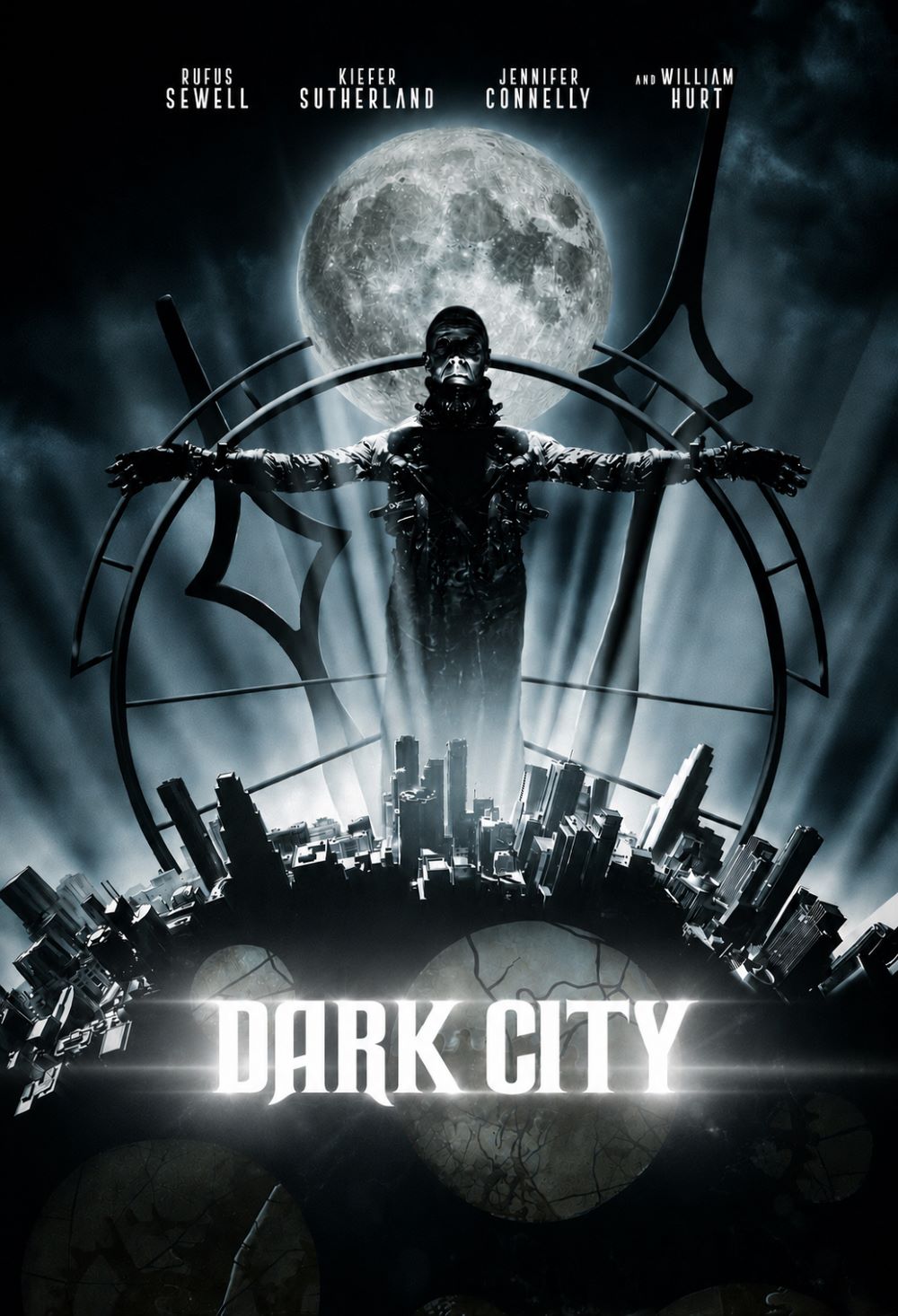
Review: Dark City (dir. by Alex Proyas)


“First there was darkness. Then came the strangers.” — Dr. Schreber

Dark City opens like a half-remembered nightmare, and that’s exactly the kind of vibe the movie sustains from start to finish. Alex Proyas builds a world that feels trapped between a detective story, a fever dream, and a sci-fi conspiracy, and the result is one of the most atmospheric films of the late ’90s.

What makes Dark City so distinctive is the way it treats its setting like an active force rather than a backdrop. The city itself feels oppressive and unstable, all sharp angles, heavy shadows, looming buildings, and damp streets that seem permanently stuck in the middle of the night. That visual approach owes a lot to German expressionism, with its warped architecture and unnatural spaces, and Proyas uses that legacy to make the city feel psychologically trapped and visually wrong in the best way. You can see the noir influence too, especially in the low-key lighting, the sense of fatalism, and the way the whole film feels like a detective story pushed through a nightmare filter.

The sci-fi side of the film is just as memorable because it doesn’t rely on shiny futurism. Instead, it leans into mystery, memory loss, and identity breakdown, which gives it a more unsettling and human quality. That’s part of why the film works so well: the weirdness is not just decorative, it’s built into the story’s central questions. The result is a movie that feels cerebral without becoming cold, and atmospheric without losing narrative momentum. Even when the film is being highly stylized, it still moves with purpose, and that keeps the viewer locked in.

The performances help sell all of that, especially Rufus Sewell as John Murdoch. He has to carry the audience through confusion, paranoia, and growing dread, and he does it with a mix of physical vulnerability and stubborn intensity. William Hurt gives the film a weary, grounded presence, while Kiefer Sutherland turns Dr. Schreber into one of those slippery, unforgettable supporting characters who always seems one step ahead of the audience. Jennifer Connelly brings warmth and melancholy to the film, which matters a lot because her character gives the story a human anchor amid all the conceptual chaos. The cast doesn’t play the material like it’s just an exercise in style; they commit to the oddness while keeping the emotional stakes legible.

What’s especially impressive is how the acting matches the movie’s visual language. A lesser cast could have made this feel overcooked or self-conscious, but here the heightened performances fit the artificial, dreamlike quality of the world. The characters are somewhat archetypal, yet that works because the film is so interested in identity as something constructed, remembered, and manipulated. In that sense, the performances aren’t just good in isolation; they’re part of the movie’s design, helping it feel like a living puzzle instead of a hollow aesthetic showcase.

The film’s influence on later sci-fi thrillers is hard to miss. A lot of movies after Dark City seem to borrow its basic flavor: the paranoid atmosphere, the reality-questioning premise, the noir-scifi crossover, and the feeling that the world itself is a conspiracy. Films like The Matrix, Memento, Minority Report, Equilibrium, and even Sin City all exist in a creative space that Dark City helped sharpen or popularize, whether directly or indirectly. It didn’t always get the mainstream recognition of some of those titles, but in terms of tone and visual influence, it was incredibly important.

Part of that legacy comes from the way Dark City captured a very specific late-’90s anxiety: the fear that memory, identity, and reality could all be manufactured. That idea became a major engine for sci-fi thrillers moving forward, especially films that wanted to combine philosophical unease with stylized action or mystery. Even the movie’s look, with its blend of noir shadows and surreal production design, became a kind of template for how to make sci-fi feel adult, moody, and psychologically unstable. It helped prove that science fiction didn’t need clean lines and sterile futures to feel intelligent; it could be dirty, haunted, and expressionist.

Dark City remains such a strong film because it understands that style and theme should feed each other. The shadows, the tilted buildings, the endless night, and the fractured sense of self all point in the same direction, creating a unified experience that feels deliberately unsteady. That’s why it lingers: not just because it looks incredible, but because it turns visual design into emotional pressure. It’s a smart, strange, and beautifully murky piece of sci-fi noir that helped clear the way for a whole wave of thrillers that wanted to feel just as paranoid and disorienting.

In the end, Dark City is the kind of movie that rewards both first-time viewers and people revisiting it years later. The plot twists are memorable, but the real achievement is the atmosphere, which is so complete it almost becomes the main character. Proyas made a film that feels like it came from the crossroads of German expressionism, classic noir, and modern sci-fi anxiety, and the result is a cult landmark that still casts a long shadow over the genre.

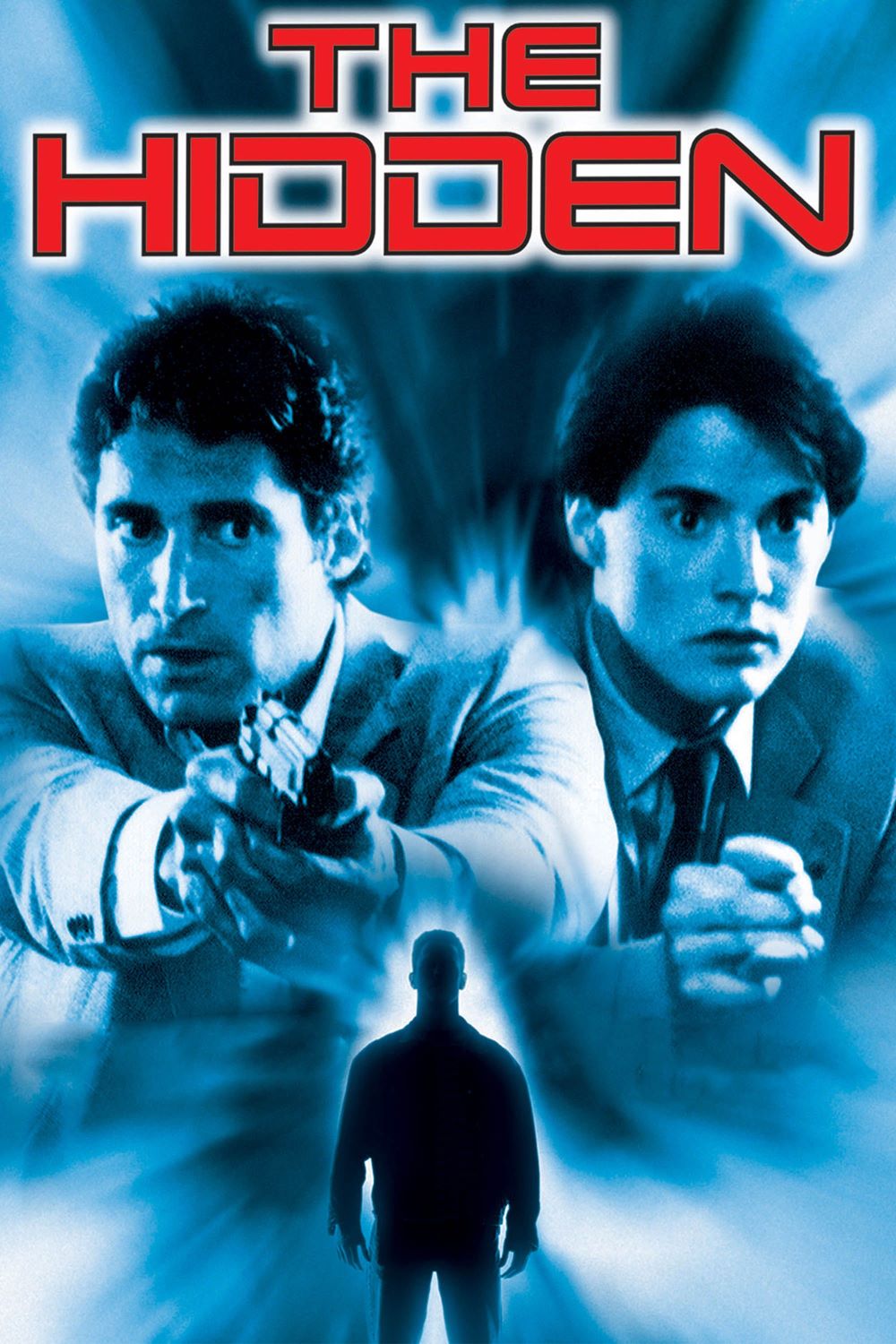
Guilty Pleasure No. 96: The Hidden (dir. by Jack Sholder)


The Hidden is a guilty pleasure from 1987, a sci-fi action romp that barrels into B-movie territory with zero brakes and maximum glee. It’s the kind of flick you stash away for those late-night binges when no one’s judging.​

Right from the explosive opener, a squeaky-clean bank clerk named Jack DeVries flips the script. He storms a Wells Fargo branch like a one-man apocalypse, gunning down guards and peeling out in a stolen Ferrari for a high-octane chase that leaves LAPD scrambling. Cops riddle him with bullets in a spectacular crash, but as he flatlines in the hospital, out slithers a pulsating alien parasite—a glowing, tentacled slug that prizes luxury cars, blaring rock anthems, and indiscriminate slaughter above all else.​

It wastes no time hopping into fresh meat, turning an arms dealer into a walking arsenal, then a sultry stripper who turns deadly seduction into a bloodbath. Cue Detective Tom Beck, Michael Nouri’s world-weary LAPD vet with divorce papers and a pint-sized daughter sharpening his edges. He teams up with the enigmatic FBI agent Lloyd Gallagher, Kyle MacLachlan dialing up the eerie charm like he’s fresh off Blue Velvet. Gallagher’s no standard G-man—he skips the coffee, eyes suspects like prey, and knows way too much about this interstellar joykiller. Beck’s gut screams “weirdo,” but with bodies piling up, he’s along for the parasitic ride. Their mismatched partnership becomes the beating heart of this wild chase.​

Diving deeper into why The Hidden earns its guilty pleasure crown, it’s all about that unapologetic mash-up of genres. Think Lethal Weapon‘s buddy-cop fireworks fused with The Thing‘s body-horror paranoia, wrapped in a low-budget package that punches way above its weight.​

The alien doesn’t just possess—it corrupts with cartoonish vice. It blasts Metallica’s Master of Puppets while mowing down traffic, guzzles ice cream cones mid-rampage, and even puppeteers a German Shepherd into a jogger-shredding beast. Hosts shrug off shotgun blasts, car wrecks, and point-blank headshots, laughing through the pain like invincible demons. This cranks the tension during chases from neon-lit strip joints to posh art auctions gone haywire.​

Picture Brenda Lee, played with fierce allure by Claudia Christian, grinding on a mark before ventilating him and trading bullets with highway patrol—it’s equal parts sexy, scary, and stupid fun. Then there’s the mannequin factory showdown, a claustrophobic bullet ballet with plastic dummies exploding in slow-mo glory. Director Jack Sholder, hot off A Nightmare on Elm Street Part 2, keeps the pedal floored across 98 taut minutes. He blends practical effects that ooze tangible grossness—no lazy CGI, just squelching tentacles and slime trails that still unsettle on modern screens. The creature’s big reveal, bursting from a gut in a hospital bed? Pure visceral nightmare fuel that lingers like bad takeout.

​

But let’s talk about the real magic: Nouri and MacLachlan’s chemistry, which transforms potential cheese into something oddly heartfelt. Beck is the everyman anchor—tough exterior hiding a soft spot for his ex and kid. She clocks Gallagher’s off vibes immediately, hiding behind Dad during their first meet-cute awkwardness. Gallagher’s the alien hunter in human skin, pursuing his nemesis from the galaxy’s edge to Earth. MacLachlan nails the wide-eyed alien tourist act: fumbling forks at pizza joints, blanking on human etiquette, yet unleashing a phaser-like zapper with cold precision.​

Their dialogue zings with natural friction—Beck barking “What the hell are you?” while Gallagher parries with vague cosmic lore. It builds to warehouse confessions amid flying lead. It’s 48 Hrs. with extraterrestrials, punctuated by hilarious side beats: Beck’s partner Cliff Willis (Ed O’Ross) biting the dust early, precinct captain Ed Malvane (Clarence Felder) getting briefly slimed into a foul-mouthed tyrant, even a senator’s rally turning into invasion bait. The supporting roster shines without stealing thunder—Christian’s tragic dancer, Richard Brooks’ scumbag john. They all flesh out LA’s underbelly as the perfect playground for alien anarchy.​

Layer on the sly socio-satire, and The Hidden reveals sneaky smarts beneath the schlock. This parasite’s a yuppie id unleashed, embodying Reagan-era ’80s gluttony: crashing Porsches, bankrolling hooker sprees, amassing arsenals. All while plotting to hijack presidential hopeful Senator Holt for an Oval Office coup that’d summon its mothership armada. It’s a gleeful middle finger to excess, with the slug reveling in what humans suppress—pure hedonistic rampage from Malibu beaches to political podiums. Sholder doesn’t belabor the point; he lets the absurdity sell it. Like the arms dealer’s arsenal haul or the dog’s park massacre underscoring unchecked impulses.​

Sound design throbs with synth-wave synths and guitar riffs that propel every stunt. Michael Convertino’s score swells dramatically for emotional beats. Dialogue veers from pulpy gold (“Pain? What’s that?”) to poignant, especially Gallagher schooling Beck on alien resilience versus human spirit.​

Flaws? Sure—the third act rushes to a flamethrower climax and bittersweet farewell. Some effects betray the budget in brighter scenes, and plot holes gape if you squint (how’d the slug learn English so fast?). Yet it owns every imperfection, turning cheese into charm.​

Ultimately, The Hidden endures as peak cult guilty pleasure, outshining flashier ’80s peers by blending brains, brawn, and balls-to-the-wall entertainment. It foreshadows Men in Black‘s fish-out-of-water agents and Venom‘s symbiote chaos. All while delivering practical FX wizardry that CGI eras envy. Nouri’s magnetic lead turn should’ve rocketed him higher; MacLachlan’s proto-Lynchian quirkiness fits like a glove. Stream it on whatever dusty platform hosts it, or snag a VHS for authenticity—pair with beer and zero expectations for two hours of adrenaline-spiked joy.​

The finale’s sacrificial gut-punch lands because you’ve bonded with these oddballs, capped by Beck’s wry nod to humanity’s messy soul. It’s dumb when it wants, deep when it surprises, always a rush. Slug-slinging sci-fi doesn’t get guiltier or greater. Dive in, emerge grinning, no regrets.

Previous Guilty Pleasures

  1. Half-Baked
  2. Save The Last Dance
  3. Every Rose Has Its Thorns
  4. The Jeremy Kyle Show
  5. Invasion USA
  6. The Golden Child
  7. Final Destination 2
  8. Paparazzi
  9. The Principal
  10. The Substitute
  11. Terror In The Family
  12. Pandorum
  13. Lambada
  14. Fear
  15. Cocktail
  16. Keep Off The Grass
  17. Girls, Girls, Girls
  18. Class
  19. Tart
  20. King Kong vs. Godzilla
  21. Hawk the Slayer
  22. Battle Beyond the Stars
  23. Meridian
  24. Walk of Shame
  25. From Justin To Kelly
  26. Project Greenlight
  27. Sex Decoy: Love Stings
  28. Swimfan
  29. On the Line
  30. Wolfen
  31. Hail Caesar!
  32. It’s So Cold In The D
  33. In the Mix
  34. Healed By Grace
  35. Valley of the Dolls
  36. The Legend of Billie Jean
  37. Death Wish
  38. Shipping Wars
  39. Ghost Whisperer
  40. Parking Wars
  41. The Dead Are After Me
  42. Harper’s Island
  43. The Resurrection of Gavin Stone
  44. Paranormal State
  45. Utopia
  46. Bar Rescue
  47. The Powers of Matthew Star
  48. Spiker
  49. Heavenly Bodies
  50. Maid in Manhattan
  51. Rage and Honor
  52. Saved By The Bell 3. 21 “No Hope With Dope”
  53. Happy Gilmore
  54. Solarbabies
  55. The Dawn of Correction
  56. Once You Understand
  57. The Voyeurs 
  58. Robot Jox
  59. Teen Wolf
  60. The Running Man
  61. Double Dragon
  62. Backtrack
  63. Julie and Jack
  64. Karate Warrior
  65. Invaders From Mars
  66. Cloverfield
  67. Aerobicide 
  68. Blood Harvest
  69. Shocking Dark
  70. Face The Truth
  71. Submerged
  72. The Canyons
  73. Days of Thunder
  74. Van Helsing
  75. The Night Comes for Us
  76. Code of Silence
  77. Captain Ron
  78. Armageddon
  79. Kate’s Secret
  80. Point Break
  81. The Replacements
  82. The Shadow
  83. Meteor
  84. Last Action Hero
  85. Attack of the Killer Tomatoes
  86. The Horror at 37,000 Feet
  87. The ‘Burbs
  88. Lifeforce
  89. Highschool of the Dead
  90. Ice Station Zebra
  91. No One Lives
  92. Brewster’s Millions
  93. Porky’s
  94. Revenge of the Nerds
  95. The Delta Force

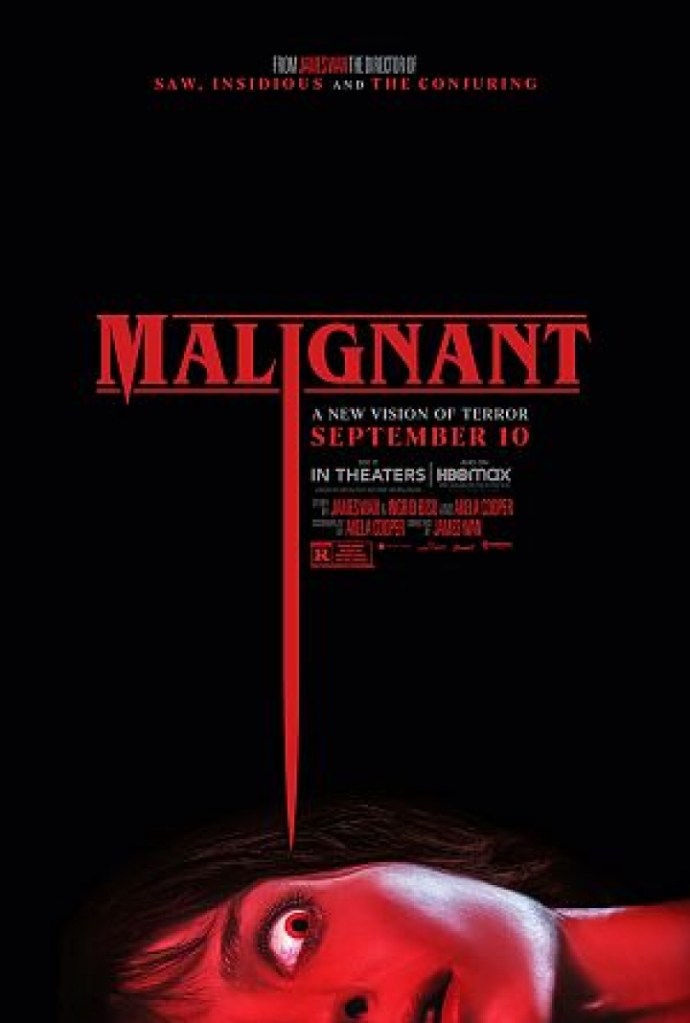
Quick Review: Malignant (dir. by James Wan)


James Wan’s newest horror film, Malignant is something that really needs to be seen without any prior input on it. If there’s any way you can watch it – whether you see it in theatres or on HBO Max up until October 10th – It’s definitely worth it. Right after watching it, I contacted my cousin and begged her to watch it without moviepooping it. She never watches a movie without already knowing the outcome – who lives, who dies. If she doesn’t, the anxiety that hits her is great. She twitches in her chair, covers her face, screams and gives every reaction you to hope to experience in a movie theatre. She agreed to do so, and I can’t wait to hear her thoughts on this. I’m almost compelled to head out to a theatre, sit in the back and watch the audience.

You’re better off not reading this and just coming back later, after you’ve seen it. I’ll try not to give too much away.

When I think of popular couples in horror, the first one that comes to mind is Mike Flanagan and Kate Siegel. James Wan & his wife, Ingrid Bisu may be joining that group. Along with screenwriter Akela Cooper (The 100), the three writers provide Malignant with enough jumps and mouth covers for me to enjoy the ride. Is it perfect? No. It might actually be offensive and/or triggering to a few people, depending on what they’re going through in life, but every movie has the capacity to do that without realizing it.

When mother to be Madison (Annabelle Wallis, Annabelle) suffers an injury, she begins to have visions of a figure causing murders. Much like Neil Jordan’s In Dreams, Madison visions give her a tie to the killer, who may be someone from her past. With the police involved in the form of Agent Kekoa Shaw (George Young, Containment) and his partner, Regina Moss (Michole Briana White, She Hate Me), they work with Annabelle to pursue the killer.

Malignant has it’s share of great shots. There’s one wonderful overhead sequence that takes place which reminded me a little of Minority Report, along with Wan’s usual work with lights and shadow. Smoky alleyways and barely lit hallways just add to Malignant’s creepiness. All of this is anchored by both Wallis’ performance, a mix of quiet tension and wide eyed horror, and by Maddie Hasson (Underdogs), who plays her sister Sidney. Sidney is the source of Malignant‘s more comedic quips, along with Ingrid Bisu, who plays the Forensic Investigator. The movie strikes a good balance there, I felt.

From a writing standpoint, there’s enough misdirection to keep the audience guessing, but it doesn’t do in a way that lies to them. On my 2nd viewing (I’m on my 3rd while writing this), the elements that seemed strange really do make sense. There’s also tidbits of humor placed throughout the movie. It doesn’t make it a comedy by any means, but it’s nice to be to chuckle once in a while. It does make one huge mistake (for me, anyway) that almost completely lost me early on, a conversation between sisters that made me wonder why such information wasn’t already known between them over all the time they knew each other. You’ll probably be able to recognize it when it occurs.

Malignant is a tight 1 hour and 51 minutes, but it’s paced so well that the film feels like it’s almost over before you know it. As much as I enjoyed it, that was one of the other problems I had with the film. Not a terrible thing in any way. It hooks you from the start, gives you some great jumps and reveals through the middle. The 2nd half of the movie kind of pushes the pedal to the floor and guns it. I can think of at least two films that Malignant references, but I’ll maybe write about them some other time.

Overall, Malignant is a great Halloween treat, with James Wan & Co. showing everyone how it’s done. It gets strange, but when all’s said and done, you’ll be thankful for the ride. Just go in blind, turn off all the lights, take it for what it is and enjoy.

A Dollar and a Dream: THE EVIL DEAD (New Line Cinema 1981)


gary loggins's avatarcracked rear viewer

In 1981, the inspirational British sports drama CHARIOTS OF FIRE edged out Warren Beatty’s sweeping socialist epic REDS for Best Picture at the 54th annual Academy Awards. Bah. I’m here to say THE EVIL DEAD is a better movie than either of them! At the very least, it’s a helluva lot more fun! It features a stunning debut for writer/director Sam Raimi, who, though he had far less money to work with than Beatty or CHARIOTS director Hugh Hudson, demonstrates some mega talent on a mini budget.

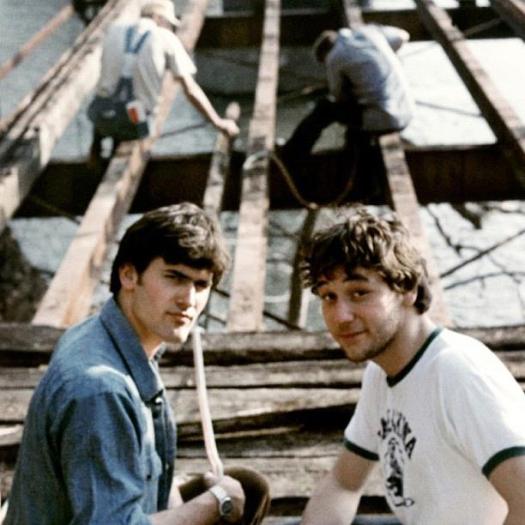
Sam Raimi (r) and Bruce Campbell, 1981

Raimi was a movie mad kid from the suburbs of Detroit who experimented with making Super-8 shorts as a teen with his friends, including EVIL DEAD star and cult icon Bruce Campbell . They put together a 1978 supernatural slasher called WITHIN THE WOODS, hoping to attract attention and make it into a feature. Raimi managed…

View original post 470 more words

Horror Trailer: The Curse of La Llorona


The Curse of La Llorona

Every culture has it’s own folktales and scary stories to tell around the campfire in the dark. Coming from the Philippines I know of many scary folk stories and monsters that’s unique to my culture. As the world has become more modern these dark tales have morphed into urban legends new and old.

What all these dark folk tales and urban legends have in common is the theme of death and suffering. One such urban legend, or a dark folk story among the Latino community, is the tale of “La Llorona” or the Weeping Woman.

This April 2019, James Wan of The Conjuring fame will bring to the bigscreen an adaptation of the tale of the “La Llorona.” This should be of much interest not just to me but to fellow co-founder of the site, Lisa Marie, who has such a huge interest in the subject of the Weeping Woman.

The Curse of La Llorona arrives with its first official poster as seen above and it’s first trailer below.

Danger Is Their Business: STUNTS (New Line Cinema 1977)


gary loggins's avatarcracked rear viewer

stunts1

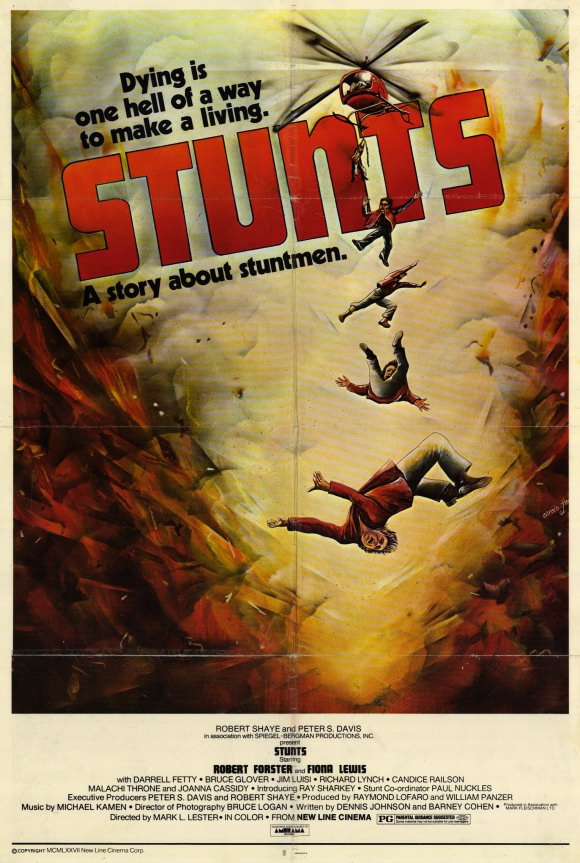
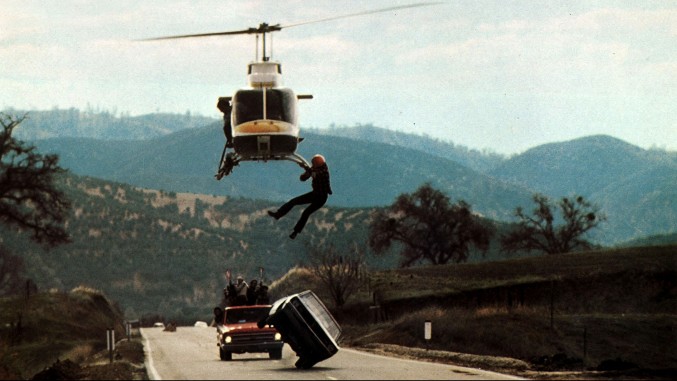
With the success of films like WHITE LIGHTING, CANNONBALL, DEATH RACE 2000, and SMOKEY AND THE BANDIT (not to mention the continuing fascination with Evel Knenevel), movies revolving around stunts and stuntmen were big box office in the 1970’s. New Line Cinema took note and produced STUNTS, a murder mystery about stuntmen being killed off that gives us a behind-the-scenes look at low-budget filmmaking in addition to a good cast and well-staged action.

stunts2

When stuntman Greg Wilson’s hanging from a helicopter gag goes horribly awry, resulting in him plummeting to his death, his brother Glen arrives on the set determined to do the stunt himself and investigate Greg’s demise. Along the way he picks up B.J. Parswell, an attractive reporter doing a story on stuntmen. Glen’s fellow stuntmen start getting picked off one by one in gruesome “accidents”, and he must find the killer before he becomes next.

stunts3

This basic variation on “Ten…

View original post 338 more words

Vacation Shows That Chris Hemsworth Is Quite Mighty (Red Band)


Vacation2015

Any kid growing up during the 1980’s remembers having seen the original Chevy Chase comedy classic National Lampoon’s Vacation. While subsequent sequels weren’t as memorable as the first film it didn’t diminish just how fun that original one was.

It’s been many, many years since the last Vacation film but now it looks like we have a new one set to release this year. Chevy Chase returns, though it would seem it might be more of a cameo. This latest film in the series looks to focus on Clark Griswold’s oldest son, Rusty, who now yearns to relive the happiest time of his life as a child: the road trip to Wally World,

The trailer looks to up return the raunch in the series with some help from Thor himself, Chris Hemsworth. From looking at the trailer’s payoff it looks like Hemsworth is quite mighty indeed.

Vacation is set to release this July, 31, 2015.

San Andreas Once Again Takes Out the Golden State


San Andreas Banner

With all the rocking and rolling and metal headbanging the site has been on of late it’s just appropriate that we  take a quick intermission with a different sort of rocking and rolling.

The Rock aka Dwayne Johnson will take on the Big One and only one will come out victorious.

San Andreas is set for a May 29, 2015 release date.

Trailer: The Hobbit: The Battle of the Five Armies (Teaser)


TheHobbit5Armies


It hasn’t been received as well as Jackson’s own The Lord of The Rings trilogy, but The Hobbit did hit it’s stride with 2013’s The Hobbit: The Desolation of Smaug. People still haven’t bought into Jackson’s decision to film the prequel trilogy in the 48-frame rate format which gives the films an ultra-definition look that anyone with an HDTV will recognize when watching with the anti-judder effect on.

Yet, this is The Hobbit and any flaws and ill-timed decisions made still hasn’t diminished it’s hold on those who have read the book and on those who were pulled into the cinematic world adapted by Jackson. We now see the final film in the Middle-Earth cinematic universe about to come down on audiences this 2014 Holiday. This weekend at the Comic-Con saw the first teaser trailer air at Hall H to the delight of those in attendance.

Warner Brothers has seen fit to release a shorter version of the teaser shown at Hall H, but it still shows that all the set-up and slog through the first film will have an epic pay-off with the final leg of this trilogy: The Battle of the Five Armies.