Review: Justified (by Graham Yost)


“You do a good job of hiding it. And I suppose most folks don’t see it. But honestly? You’re the angriest man I have ever known.” — Winona Hawkins (describing Raylan Givens)

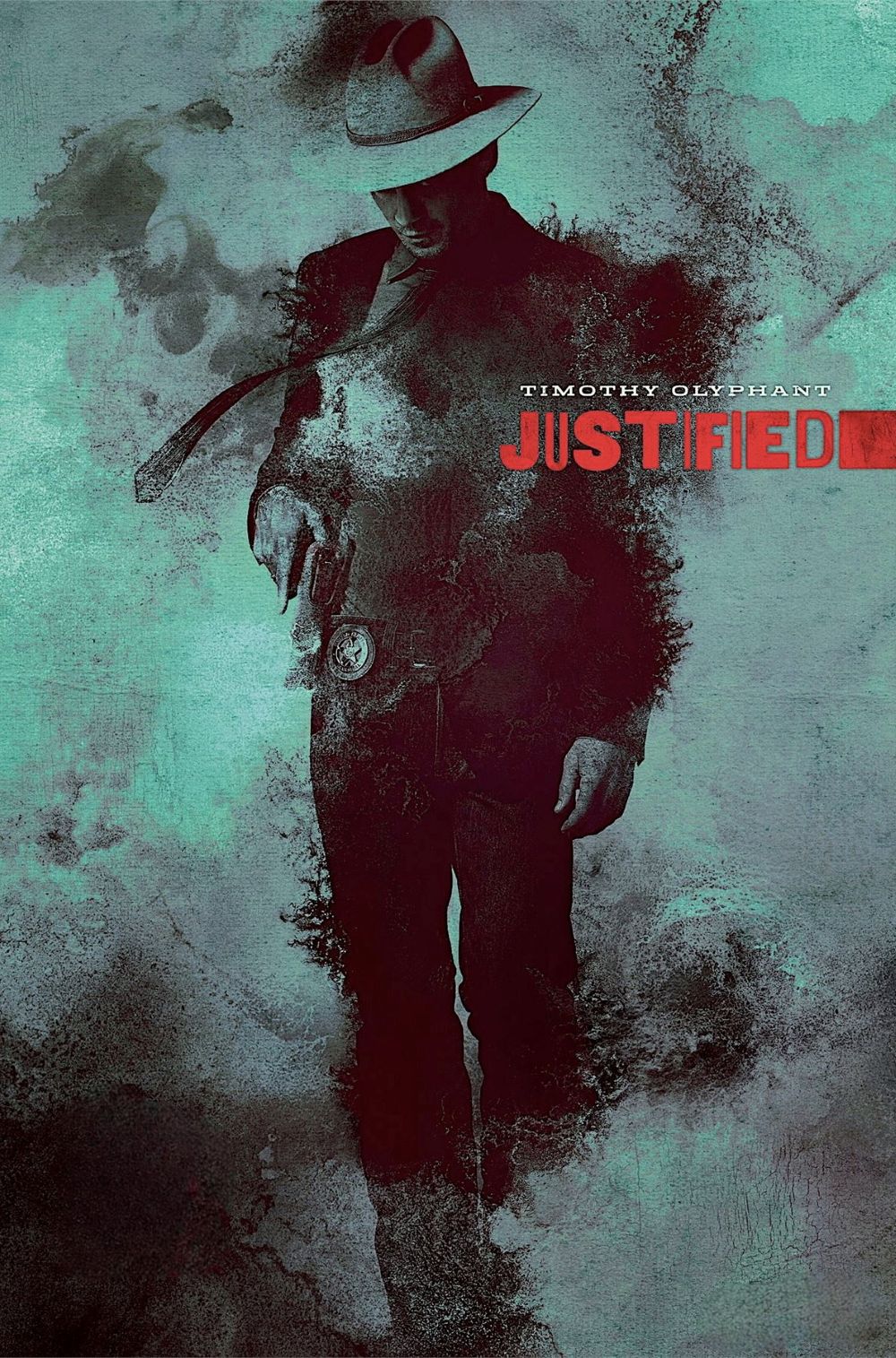
Justified is one of those rare TV shows that feels like a perfectly aged whiskey—smooth, rich, and with a kick that lingers long after you’ve finished a glass. Adapted from Elmore Leonard’s stories featuring the sharp-shooting, quick-witted U.S. Marshal Raylan Givens, the FX series is a masterclass in character-driven storytelling, sharp dialogue, and the kind of moral ambiguity that makes you question who you’re really rooting for. At the heart of it all is Timothy Olyphant as Raylan, a man who carries the weight of his past like a well-worn leather jacket, and Walton Goggins as Boyd Crowder, the charismatic, Bible-quoting criminal who might just be the most compelling villain—or antihero—you’ve ever seen on screen.

What makes Justified stand out in a sea of crime dramas is its refusal to take itself too seriously, even when the stakes are life-or-death. The show thrives on its dialogue, which crackles with the kind of wit and rhythm you’d expect from Leonard’s work. Raylan’s dry, understated humor is a constant delight, whether he’s trading barbs with a suspect, outsmarting a room full of criminals, or just trying to keep his cool in the face of his own family’s dysfunction. Olyphant delivers every line with a mix of charm and menace, making Raylan feel like a man who’s seen it all but hasn’t lost his sense of humor—or his moral compass, however bent it might be. There’s a scene early in the series where Raylan gives a criminal 24 hours to leave town, and the way Olyphant sells the quiet intensity of that moment is a testament to his ability to command the screen without raising his voice. He’s the kind of hero who doesn’t need to shout to be heard.

But as good as Olyphant is, Justified might just belong to Walton Goggins as Boyd Crowder. Boyd is the kind of character who could’ve been a cartoonish villain in lesser hands, but Goggins turns him into something far more fascinating. A former coal miner turned criminal mastermind, Boyd is equal parts philosopher, showman, and cold-blooded killer. He quotes the Bible one minute and pulls a trigger the next, all while delivering monologues that somehow make his twisted logic sound almost reasonable. Goggins’ performance is electric, and his chemistry with Olyphant is the kind of alchemy that elevates the entire series. Their dynamic is a dance—sometimes a waltz, sometimes a knife fight—where neither man is entirely sure who’s leading. Boyd isn’t just a thorn in Raylan’s side; he’s a dark reflection of him, a man who also grew up in the same rough-and-tumble world of Harlan County, Kentucky, but chose a different path. Their rivalry is the backbone of the show, and every scene they share is a masterclass in tension and subtext.

Then there’s Ava Crowder, Boyd’s sister-in-law and a force of nature in her own right, portrayed with fierce intelligence by Joelle Carter. Ava’s relationship with Boyd is a rollercoaster of love, hate, and everything in between. Their dynamic is just as compelling as the one between Raylan and Boyd, filled with a volatile mix of loyalty, betrayal, and an undeniable connection that neither can fully shake. Ava’s journey from a woman trying to escape her family’s criminal past to a power player in her own right is one of the show’s most compelling arcs. She’s tough, resourceful, and just as morally complex as the men around her, and her interactions with Boyd crackle with the same energy and tension as his showdowns with Raylan. Whether they’re working together, scheming against each other, or caught in some messy in-between, their relationship adds another layer of depth to the show’s already rich tapestry of characters.

The supporting cast is just as strong, filled with characters who feel like they’ve been lifted straight out of a Leonard novel. There’s Art Mullen, Raylan’s boss and the closest thing he has to a father figure, played with gruff warmth by Nick Searcy. And let’s not forget the various criminals, informants, and eccentric locals who populate Harlan County, each one memorable in their own right. Whether it’s the hilariously unhinged Dickie Bennett or the stoic, loyal Limehouse, the show’s roster of side characters ensures that every episode is packed with personality.

What’s so refreshing about Justified is that it never feels the need to over-explain itself. The dialogue is sharp and efficient, often delivering character development and plot twists in the same breath. The show trusts its audience to keep up, and it rewards that trust with some of the most satisfying writing on television. The banter isn’t just clever—it’s purposeful, revealing layers of the characters and their relationships without ever feeling like exposition. And the action? It’s as tight and precise as Raylan’s aim. The shootouts are sudden and brutal, but they’re never gratuitous. Every pull of the trigger feels earned, and the tension leading up to those moments is often as gripping as the violence itself.

The setting of Harlan County is almost a character in itself. The show paints a vivid picture of a place where the law is more of a suggestion than a rule, and where family loyalty often trumps justice. The rugged, coal-dusted landscape mirrors the moral grayness of the stories being told. This isn’t a world of clear-cut heroes and villains; it’s a world where everyone has their own code, and where the line between right and wrong is as blurry as the smoke from a freshly fired revolver. Raylan himself is a product of this environment, and his struggle to reconcile his past with his present is one of the show’s most compelling threads. He’s a man who left Harlan to become a marshal, but Harlan—and its ghosts—never really left him.

One of the show’s greatest strengths is its ability to balance humor and darkness. Even in its grimmest moments, Justified never loses its sense of fun. The writers have a knack for undercutting tension with a well-placed joke or a bit of absurdity, and the result is a show that’s as entertaining as it is thought-provoking. Whether it’s Raylan’s deadpan reactions to the chaos around him or Boyd’s theatrical antics, there’s always a moment to lighten the mood, even when the stakes are at their highest. This balance keeps the show from ever feeling too heavy, and it makes the darker moments hit even harder when they do arrive.

If there’s one thing Justified doesn’t get enough credit for, it’s its consistency. Over six seasons, the show rarely misfires. The writing remains sharp, the performances stay top-notch, and the stories continue to surprise. Even when it dips into more serialized storytelling in its later seasons, it never loses sight of what makes it special: the characters and their relationships. And when the series finally reaches its conclusion, it does so in a way that feels both satisfying and true to everything that came before. There are no easy answers in Justified, no neat bows tied around its themes. Instead, it leaves you with the sense that life—and justice—is messy, complicated, and often unfair.

At its core, Justified is a show about men and women shaped by their pasts, trying to carve out a future in a world that doesn’t always make it easy. Raylan Givens is a hero, but he’s not a saint. Boyd Crowder is a villain, but he’s not without his own twisted sense of honor. Ava Crowder is a survivor, navigating a world where loyalty is a currency and trust is a luxury. The beauty of the show is that it lets these characters exist in all their complexity, never forcing them into boxes they don’t fit into. And with dialogue that snaps like a twig underfoot and performances that bring every word to life, it’s a series that’s as rewarding to revisit as it is to experience for the first time. If you’re a fan of stories where the characters are as rich as the plot, and where every line of dialogue feels like it’s been polished to a shine, then Justified is the kind of show you’ll want to savor. It’s a modern classic, plain and simple.
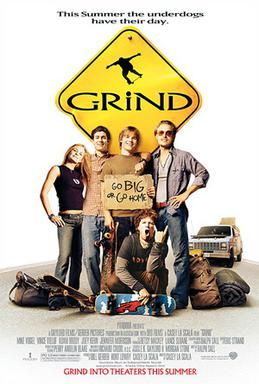
So, I Watched Grind (2003, Dir. by Casey La Scala)


Grind is about four annoying skaters who are obsessed with bodily functions and who want to get sponsored so they travel across the country and try to con their way into competing in events.  Adam Brody plays the skater who lets them use his college fund to pay for their road trip, which was really stupid of him to do.  They got sponsored but not because they’re any good.  They just happen to meet a skater named Jamie (Jennifer Morrison) who knows their hero (Jason London) and helps them out because she’s nice.  I’m nice too but I wouldn’t have helped out those chuckleheads.  I guess the lesson here is that you should just stand around and eventually, someone will give you some money.

When I started Grind, I thought it seemed familiar but I could have sworn that I have never seen it before.  Then Matt (Vince Vieluf), one of the most disgusting character to ever appear in a movie, told a woman that he was a representative of the “Release Them Twins Foundation,” and I remembered that, when this movie came out, MTV used to show the commercial for it a hundred times a day. I remembered thinking, at the time, that it looked like the dumbest movie ever made and it turns out I was right.

If I had to choose between rewatching Grind or watching two hours of projectile vomit, it wouldn’t be a choice because they’re pretty much the same thing.

14 Days of Paranoia #2: Extreme Justice (dir by Mark L. Lester)


What type of justice?

Extreme justice, y’all!

In this 1993 film, Lou Diamond Phillips stars as Jeff Powers.  Who is Jeff Powers?  He’s a cop!  He wants to keep the street safe!  Sometimes, he knows that you have to be willing to break the rules!  He’s a cop who does things his way!

Okay, is that enough exclamation points?  I’m not just using them to be obnoxious.  The film is pretty much just one big exclamation point.  The action is hyperintense and the film is full of characters who always seem like they’re just one step away from exploding.  No one in this film is particularly calm or laid back.  From the start, everything is dialed to eleven and it just keeps going higher and higher.

After Jeff is put on probation for roughing up a suspect, he receives an invitation to join an elite squad of detective.  Led by the charismatic Detective Dan Vaughn (Scott Glenn, giving a performance that is so over-the-top that he yells straight at the camera at one point), the Special Investigative Section is the best of the bed.  Upon joining, Jeff finds himself a member of a sacred fraternity of law enforcers.  Working with men like the always amused Detective Larson (Yaphet Kotto) and the somewhat paranoid Angel (Andrew Divoff), Jeff finds himself tracking some of the biggest criminals in the city.

What Jeff also discovers is that SIS does more than just arrest criminals.  The SIS has been given an unofficial license to kill and they end up executing as many people as they take to jail.  Often times, Vaughn will tells the men to allow a crime to be committed so that they can then dispense their own brand of justice.  In the film’s most disturbing scene, the members of SIS wait until after a woman has been raped in an alley before they move to neutralize her attackers.  When Jeff finally decides that he can’t be a part of all this and tries to reveal what’s going on, he discovers that the SIS has some support in some very high places.  Who cares if the SIS is allowing crimes to be committed or if an innocent person occasionally gets caught in the crossfire?  At least they’re taking care of the criminals!

Extreme Justice is a crude and energetic film and one that is based on some of the stories that spread about the LAPD’s RAMPART division in the 90s.  That the film works is a testament to the performances of Phillips, Kotto, and Glenn and also the direction of Mark L. Lester.  An exploitation vet who occassionally made big studio action films as well, Lester keeps the pace moving at breakneck speed and, even more importantly, he allows both sides to have their say.  While Jeff is upset about SIS’s methods, Detective Vaughn is correct when he says that his unit is targeting the worst of the worst.  It makes for an unusually intelligent exploitation film, one that leaves the audience with a lot to consider.  How far would you go to keep your neighborhood safe?

Previous entries in 2025’s 14 Days Of Paranoia:

  1. The Fourth Wall (1969)

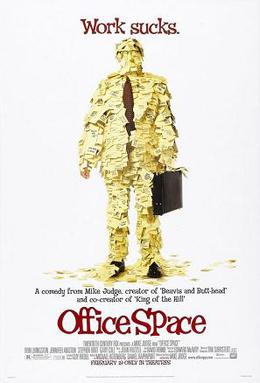
The Unnominated: Office Space (dir by Mike Judge)


Though the Academy of Motion Picture Arts and Sciences claim that the Oscars honor the best of the year, we all know that there are always worthy films and performances that end up getting overlooked.  Sometimes, it’s because the competition too fierce.  Sometimes, it’s because the film itself was too controversial.  Often, it’s just a case of a film’s quality not being fully recognized until years after its initial released.  This series of reviews takes a look at the films and performances that should have been nominated but were, for whatever reason, overlooked.  These are the Unnominated.

The other night, Erin and I started a new Labor Day weekend tradition of watching the 1999 comedy, Office Space.

As we watched Mike Judge’s first live-action film, it occurred to me that Office Space is a film that unites all of my friends.  It doesn’t matter whether they work in an office like Peter (Ron Livingston), Samir (Ajay Naidu), or Michael Bolton (David Herman) or if they work in a restaurant like Joanna (Jennifer Aniston) or even if they’re an independent contractor like Peter’s loud neighbor, Lawrence (Diedrich Bader).  It doesn’t matter if they would rather be fishing like Peter or watching reruns of Kung Fu like Joanna.  Everyone that I know has said that they can relate to Office Space.  Everyone has had to deal with a passive-aggressive jerk of a boss like Bill Lumbergh (Gary Cole).  Everyone has known a crazy co-worker like the red stapler-obsessed Milton (Stephen Root).  Everyone dreads the arrival of consultants like the Bobs (John C. McGinely and Paul Willson).  Everyone resents being told that doing the bare minimum is not enough, whether it’s just sitting in your cubicle or wearing 15 pieces of flair.  Everyone dreams of sleeping late and not stressing about TPS reports.  Everyone dreams of screwing over their company in a way that’s so clever that they’ll never be caught.  (And I think everyone secretly knows that they would screw it up by putting a decimal point in the wrong place.)  Everyone wants to destroy the oldest and least reliable piece of equipment at work.  Everyone wants to feel like they can just announce that they’re going to quit and spend the rest of their life doing what they would do if they had a million dollars.

Considering the fact that the film has now become universally beloved, it’s interesting that Office Space opened to mixed reviews and middling box office.  The studio wasn’t sure how to sell a live action film from the director of Beavis and Butt-Head and King of the Hill and many critics focused on the film’s rather loosely-constructed, episodic narrative and overlooked the fact that the film captured all of the small details that drive people crazy about their work.  Audiences, though, discovered the film on video and undoubtedly enjoyed watching it after a long day of dealing with their own annoying boss.  The film’s star, Ron Livingston, has said that many people have approached him and told him that he inspired them quit their jobs.  “That’s kind of a heavy-load to carry.”

For a film that centers around office workers updating data so that computer systems don’t cash in 2000, Office Space has aged remarkably well.  Ron Livingston, David Herman, and Ajay Naidu are an instantly sympathetic and likable trio of nerdy heroes.  Stephen Root’s panic as he realizes that he will be the only employee not to get a piece of cake remains both poignant and funny.  Gary Cole is still the boss from Hell.  I still laugh at John C. McGinley’s rage when his praise of Peter as a “straight-shooter with upper management potential” is dismissed by Peter’s boss.  We can all relate to Jennifer Aniston’s dislike of flair and her hatred for Brian (Todd Duffey).  The jump to conclusion mat would probably be even more popular today than back in 1999.

Of course, Office Space was not nominated for any Oscars.  That’s not really a shock.  It’s an episodic comedy that was directed by a Texas filmmaker who was, at the time, best-known for a cartoon about two brain-dead teenagers.  Obviously, it wasn’t going to be nominated for anything, even though I think more people have probably watched Office Space over the past few days than have watched American Beauty.  Oscars aren’t everything, though.  Office Space remains both a great work film and a great Texas film.

Previous entries in The Unnominated:

  1. Auto Focus 
  2. Star 80
  3. Monty Python and The Holy Grail
  4. Johnny Got His Gun
  5. Saint Jack

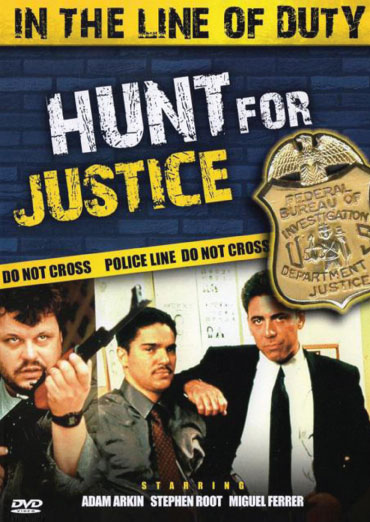
In the Line of Duty: Hunt For Justice (1994, directed by Dick Lowry)


When New Jersey State Trooper Philip Lomonaco (Dan Lauria) pulls over a car for having mud on its license plate, he doesn’t know that the car is being driven by two members of the United Freedom Front, a group of left-wing revolutionaries.  While Lomonaco talks to Tom Manning (Miguel Ferrer), Dickie Williams (Dell Yount) opens fire.  Lomanaco is killed and Tom and Dickie flee to their safehouse in New England.  While the United Freedom Front plots their next series of bombings and bank robberies, Lomonaco’s ex-partner (Nicholas Turturro) teams up with an FBI agent (Adam Arkin) to track down the terrorists and get justice for his fallen friend.

Hunt For Justice was the ninth of NBC’s In The Line of Duty films.  The previous films featured religious cults, anti-tax protestors, drug lords, and mobsters.  In this one, the antagonists are all former 60s radicals who are still trying to overthrow the system.  The FBI views the United Freedom Front as being a threat to national security while Lomonaco’s partner just wants to make sure that Lomonaco’s death won’t go unpunished.  Dan Lauria was actually a mainstay of the In The Line of Duty films, appearing previously in A Cop for the Killing and and Ambush in Waco.  (Nicholas Turturro was previously featured, on the other side of the law, in Mob Justice.)  Since most people who watch this film will probably remember Lauria as being Kevin Arnold’s father in The Wonder Years, everyone will want his killers to be brought to justice.

As with the previous In The Line of Duty movies, the action is evenly divided between law enforcement and the criminals that they’re pursuing.  At first, Miguel Ferrer seems like odd-casting as a leftist who admires Che Guevara but he gives a good performance as someone who regrets some of the decisions that he made in the past but who knows that he can’t change them now.  Melissa Leo is also very good as his wife.  Stephen Root and Dean Norris, two other actors who you would not necessarily expect to see playing left-wing revolutionaries, are cast as the other members of the United Freedom Front and Hunt For Justice does a good job of contrasting their middle class lifestyles with their revolutionary rhetoric.  One of the ironies of the film is that the revolutionaries are leading much more comfortable and financially-stable lives than the men who are trying to hunt them down.  In fact, the main problem with the movie is that the revolutionaries are so interesting that it’s always a letdown when the action shifts over to Turturro and Arkin, whose characters are far less interesting.  Arkin and Turturro go through the expected paces.  The FBI doesn’t like it when local cops try to interfere with their investigations.  Who knew?

Hunt for Justice is a pretty standard In The Line of Duty movie but no movie featuring Miguel Ferrer, Melissa Leo, and Stephen Root is ever going to be a total loss.  The cast is the best thing that Hunt For Justice has going for it.

Film Review: Robocop 3 (dir by Fred Dekker)


“Oh wow, Robocop can fly!”

An odd film, Robocop 3. Released in 1993, this was the third and final film in the original Robocop franchise. While the action is still set in Detroit and Robocop is back (albeit now played by Robert John Burke) and Nancy Allen shows up long enough to get killed off, Robocop 3 feels strangely separate from the previous two Robocop films. If the first two Robocop films were dark, satirical, and over-the-top in their violence, the third film is a family friendly adventure film that reimagines Robocop as being some sort of fair housing activist.

And, on top of all that, Robocop can fly now. Admittedly, that’s because Robocop gets fitted for a jetpack that he didn’t have in the previous films but he still looks incredibly ludicrous flying through the streets of Detroit. Since the Robocop armor has always looked very bulky and very heavy, it’s hard to believe that he could fly as quickly and as smoothly as he does in this film.

There’s a new set of villains too. Rip Torn has replaced Dan O’Herilhy as the CEO. And listen, I like Rip Torn. He will always be a hero to me because he bit Norman Mailer’s ear off. But Torn is far too obviously evil in the role of the CEO. O’Herlihy smartly played the Old Man as being avuncular and amoral. You could look at him and understand how he rose to his position of prominence. Torn’s performance is a bit more cartoonish but then again, Robocop 3 is the most cartoonish of the series.

The CEO wants to tear down Old Detroit so the residents of Old Detroit are fighting back. Leading the CEO’s forces — called the Rehabbers — is Paul McDagget (John Castle), who is a complete and total madman but who, at the same time, is never quite as memorable as Kurtwood Smith or Tom Noonan. He’s really just another generic militaristic bad guy. Normally, you would expect Robocop to be on the side of the company and the police but he’s been reprogrammed by an 8 year-old hacker named Nikko (Remy Ryan). Robocop is now working with the rebels. One of the rebels is played by Stephen Root, proving once again that you never know where Stephen Root might pop up.

Robocop 3 has none of the satiric bite of the first two movies. Instead of being a symbol of authoritarianism gone beserk, Robocop becomes a generic do-gooder. The violence is toned down and, with the addition of a kid sidekick, it’s obvious that this Robocop was meant to be a safer version of the character. Unfortunately, a safe Robocop equals a boring Robocop. You watch this movie and you wonder what happened to the Robocop who shot Ronny Cox out of a window.

“My friend’s call me Murphy,” he says towards the end of the film, “You can call me Robocop.” That seemed to indicate that Robocop had quite a future ahead of him of doing the right thing and standing up to big evil corporations but Robocop 3 was such a bomb at the box office that Robocop’s further adventures would only be seen on TV. The franchise was rebooted back in 2014, in a film that my friend Mark called “Rubber Cop.” After Rubber Cop fell flat, it was announced that Robocop would be rebooted for a second time, this time with a movie that would serve as a direct sequel to the first Robocop and which would ignore the sequels and the first reboot. Personally, I think it might be time to let Robocop retire. He had a good run.

What If Lisa Had All The Power: 2019 Emmy Nominations Edition


In a few hours, the 2019 Emmy nominations will be announced!

Since I love awards and I love making lists, it’s an annual tradition that I list who and what would be nominated if I had all the power.  Keep in mind that what you’re seeing below are not necessarily my predictions of what or who will actually be nominated.  Many of the shows listed below will probably be ignored tomorrow morning.  Instead, this is a list of the nominees and winners if I was the one who was solely responsible for picking them.

Because I got off to a late start this year, I’m only listing the major categories below.  I may go back and do a full, 100-category list sometime tomorrow.  Who knows?  I do love making lists.

Anyway, here’s what would be nominated and what would win if I had all the power!  (Winners are listed in bold.)

(Want to see who and what was nominated for Emmy consideration this year?  Click here!)

(Want to see my picks for last year?  Click here!)

(Want to see my picks for 2012?  I know, that’s kinda random.  Anyway, click here!)

Programming

Outstanding Comedy Series

Barry

Brooklyn Nine-Nine

GLOW

It’s Always Sunny In Philadelphia

The Marvelous Mrs. Maisel

One Day At A Time

Veep

Vida

Outstanding Drama Series

Better Call Saul

Dynasty

Flack

Game of Thrones

The Magicians

My Brilliant Friend

Ozark

You

Outstanding Limited Series

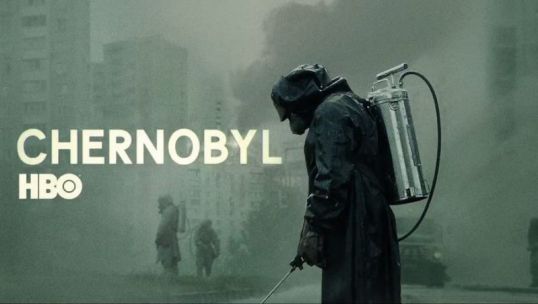
Chernobyl

Fosse/Verdon

The Haunting of Hill House

I Am The Night

Maniac

Sharp Objects

True Detective

A Very English Scandal

Outstanding Television Movie

The Bad Seed

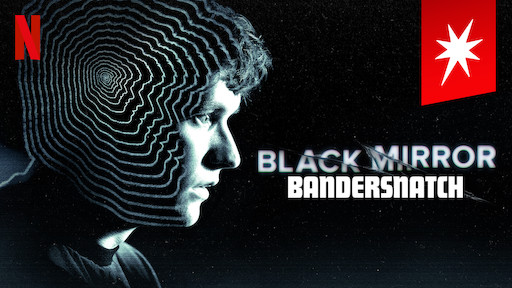
Bandersnatch (Black Mirror)

Brexit

Deadwood

King Lear

Native Son

No One Would Tell

O.G.

Performer

Outstanding Lead Actor in a Comedy Series

Iain Armitage in Young Sheldon

Ted Danson in The Good Place

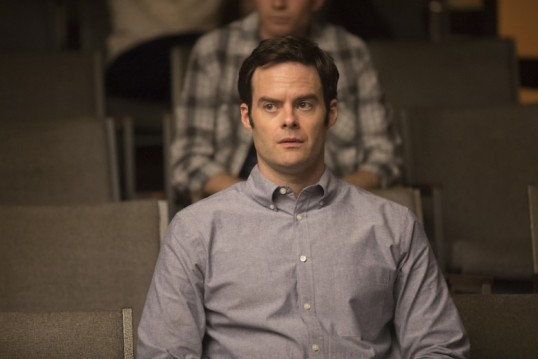
Bill Hader in Barry

Pete Holmes in Crashing

Glenn Howerton in A.P. Bio

Andy Samberg in Brooklyn Nine Nine

Outstanding Lead Actor in a Drama Series

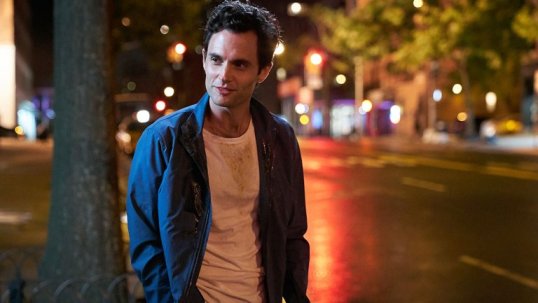
Penn Badgley in You

Jason Bateman in Ozark

James Franco in The Deuce

John Krasinski in Tom Clancy’s Jack Ryan

Bob Odenkirk in Better Call Saul

Dominic West in The Affair

Outstanding Lead Actor In a Limited Series

Hugh Grant in A Very English Scandal

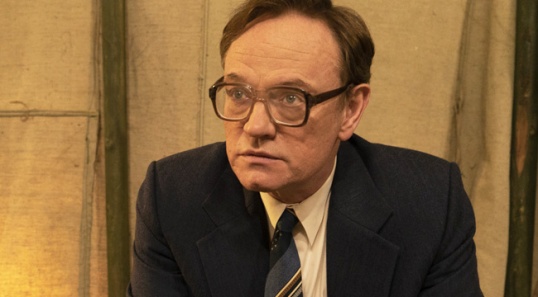
Jared Harris in Chernobyl

Jonah Hill in Maniac

Chris Pine in I Am The Night

Sam Rockwell in Fosse/Verdon

Henry Thomas in The Haunting of Hill House

Outstanding Lead Actor In An Original Movie

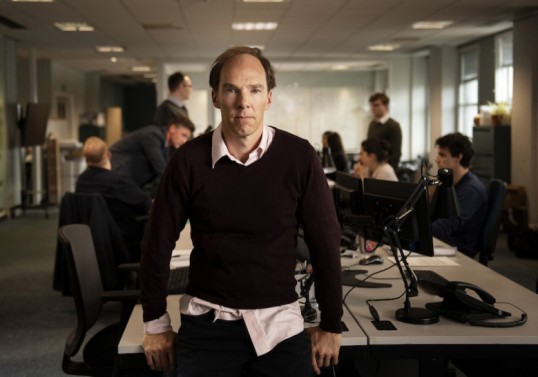
Benedict Cumberbatch in Brexit

Anthony Hopkins in King Lear

Rob Lowe in The Bad Seed

Ian McShane in Deadwood

Timothy Olyphant in Deadwood

Jeffrey Wright in O.G.

Outstanding Lead Actress In A Comedy Series

Melissa Barrera in Vida

Kristen Bell in The Good Place

Alison Brie in GLOW

Rachel Brosnahan in The Marvelous Mrs. Maisel

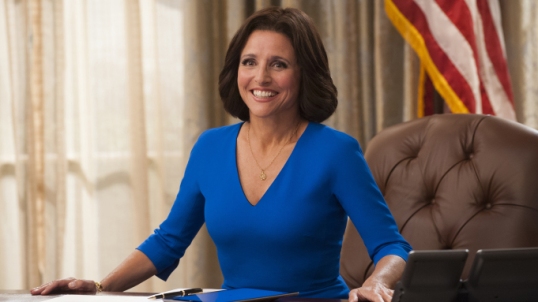
Julia Louis-Dreyfus in Veep

Zoe Perry in Young Sheldon

Outstanding Lead Actress in A Drama Series

Emilia Clarke in Game of Thrones

Gaia Girace in My Brilliant Friend

Maggie Gyllenhaal in The Deuce

Laura Linney in Ozark

Margherita Mazzucco in My Brilliant Friend

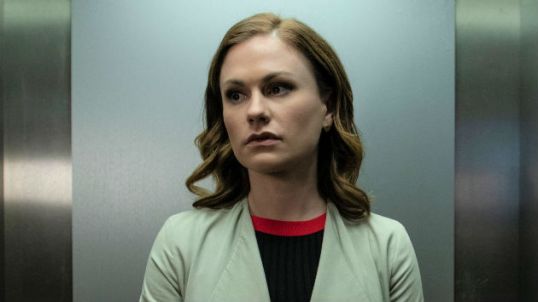
Anna Paquin in Flack

Outstanding Lead Actress in a Limited Series

Amy Adams in Sharp Objects

India Eisley in I Am The Night

Carla Gugino in The Haunting of Hill House

Charlotte Hope in The Spanish Princess

Emma Stone in Maniac

Michelle Williams in Fosse/Verdon

Outstanding Lead Actress in an Original Movie

Shannen Doherty in No One Would Tell

Chelsea Frei in Victoria Gotti: My Father’s Daughter

McKenna Grace in The Bad Seed

Paula Malcolmson in Deadwood

Molly Parker in Deadwood

Christina Ricci in Escaping The Madhouse: The Nellie Bly Story

Outstanding Supporting Actor In A Comedy Series

Fred Armisen in Documentary Now!

Andre Braugher in Brooklyn Nine Nine

Anthony Carrigan in Barry

Tony Hale in Veep

Sam Richardson in Veep

Stephen Root in Barry

Outstanding Supporting Actor In A Drama Series

Jonathan Banks in Better Call Saul

Nikolaj Coster-Waldau in Game of Thrones

Peter Dinklage in Game of Thrones

Giancarlo Esposito in Better Call Saul

Peter Mullan in Ozark

Luca Padovan in You

Outstanding Supporting Actor In A Limited Series

Stephen Dorff in True Detective

Timothy Hutton in The Haunting of Hill House

Chris Messina in Sharp Objects

Stellan Skarsgard in Chernobyl

Justin Thereoux in Maniac

Ben Whishaw in A Very English Scandal

Outstanding Supporting Actor In An Original Movie

Jim Broadbent in King Lear

Bill Camp in Native Son

Theothus Carter in O.G.

Rory Kinnear in Brexit

Gerald McRaney in Deadwood

Will Poulter in Bandersnatch (Black Mirror)

Outstanding Supporting Actress in A Comedy Series

Caroline Aaron in The Marvelous Mrs. Maisel

Alex Borstein in The Marvelous Mrs. Maisel

Anna Chlumsky in Veep

Sarah Goldberg in Barry

Rita Moreno in One Day At A Time

Sarah Sutherland in Veep

Outstanding Supporting Actress In A Drama Series

Summer Bishil in The Magicians

Elisa Del Genio in My Brilliant Friend

Julia Garner in Ozark

Lena Headey in Game of Thrones

Elizabeth Lail in You

Shay Mitchell in You

Outstanding Supporting Actress In A Limited Series

Jessie Buckley in Chernobyl

Patricia Clarkson in Sharp Objects

Sally Field in Maniac

Patricia Hodge in A Very English Scandal

Connie Nielsen in I Am The Night

Emily Watson in Chernobyl

Outstanding Supporting Actress In An Original Movie

Kim Dickens in Deadwood

Florence Pugh in King Lear

Margaret Qualley in Favorite Son

Emma Thompson in King Lear

Emily Watson in King Lear

Robin Weigert in Deadwood


2018 in Review: 10 Good Things That I Saw On Television


Moving right along with my look back at 2018, here are 10 good things that I saw on television.

Please note, I did not say that these were the ten “best” things on television in 2018.  Instead, these are ten things that I enjoyed enough that, in January of 2019, they still pop to my mind whenever I ask myself, “What did I enjoy last year?”  As always, this is just my opinion and you’re free to agree or disagree.

Got it?  Okay, let’s go!

  1. Showtime reran Twin Peaks: The Return

Okay, so maybe I’m cheating a little here.  Twin Peaks: The Return originally aired in 2017.  You may remember that, for about 6 months, the Shattered Lens essentially became a Twin Peaks fan site.  Still, I can’t begin to describe how excited I was to discover that, over the course of a weekend, Showtime would be reairing the entire series.  I binged every episode and I discovered that, even with the benefit of hindsight, it’s still one of the greatest shows of all time.  Unfortunately, the Emmy voters did not agree.  Bastards.

2. The Alienist 

It took me a little while to really get into The Alienist but, once I did, I found myself growing obsessed with not only the sets and the costumes but the mystery as well!  Daniel Bruhl, Luke Evans, and Dakota Fanning all did excellent work and I can’t wait for the sequel!

3. Jesus Christ Superstar Live

I was skeptical.  I had my doubts.  I thought I’d spend the entire two and a half hours rolling my eyes.  Jesus Christ Superstar proved me wrong.

4. The Americans

One of the best shows on television went out on a high note.

5. Barry

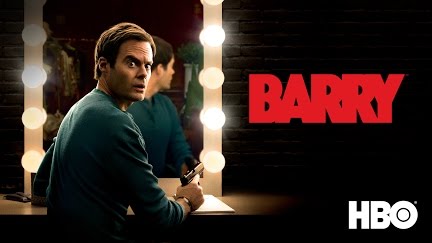
Barry premiered on HBO and it quickly became a favorite of mine.  While I agree that Bill Hader and Henry Winkler deserve all of the attention that they’ve received, I’d also say that Stephen Root continues to prove himself to be one of our greatest character actors.

6. Big Brother

The reality show that so many love to hate finally had another good season.  Since I get paid to write about the show for another site, that made me happy.  Seriously, some of the previous seasons were painful to watch so Big Brother 20 was a huge relief.  (Plus, BB 20 inspired everyone’s favorite twitter game: “Will Julie Chen Moonves show up tonight?”)

7. Maniac

As much fun as it is to complain about Netflix, occasionally they justify the price of their existence by giving us something like Maniac.

8. You

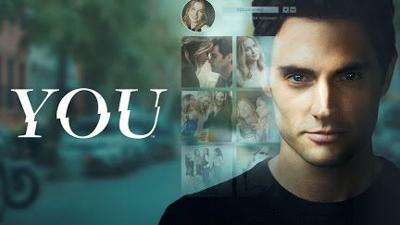
Sometimes, I loved this show.  Sometimes, I absolutely hated it.  However, I was always intrigued and never bored.  I can’t wait to see what happens during season 2.

9. Trust

For all the attention that was given to The Assassination of Gianni Versace, Trust was the best FX true crime series of 2018.  Along with an intriguing story, it also featured great performances from Donald Sutherland, Hillary Swank, and Brendan Fraser.  (Yes, Brendan Fraser.)

10. Westworld

I know a lot of people didn’t care much for the latest season of Westworld.  I loved it and, in the end, isn’t that what really matters?

That’s it for television!  Coming up next, it’s the entry in Lisa’s look back at 2018 that we’ve all been waiting for, my picks for the best 26 films of the year!

Lisa Looks Back At 2018

  1. Ten Worst Films of 2018
  2. Best of Lifetime
  3. Best of Syfy
  4. 10 Favorite Novels
  5. 12 Favorite Non-Fiction Books
  6. 10 Favorite Songs


Horror Film Review: Buffy the Vampire Slayer (dir by Fran Rubel Kuzui)


Watching this movie was such a strange experience.

Now, of course, I say that as someone who grew up watching and loving the television version of Buffy the Vampire Slayer.  Back when Buffy was on TV, I was always aware that the character had first been introduced in a movie but every thing I read about Buffy said that the movie wasn’t worth watching.  It was a part of the official Buffy mythology that Joss Whedon was so unhappy with what was done to his original script that he pretty much ignored the film when he created the show.

So, yes, the 1992 movie version of Buffy the Vampire Slayer showed how Buffy first learned that she was a slayer, how she fought a bunch of vampires in Los Angeles, and how her first watcher met his end.  But still, Joss Whedon was always quick to say that the film should not be considered canonical.  Whenever anyone on the TV show mentioned anything from Buffy’s past, they were referencing Joss Whedon’s original script as opposed to the film that was eventually adapted from that script.  (For instance, on the tv series, everyone knew that Buffy’s previous school burned down.  That was from Whedon’s script.  However, 20th Century Fox balked at making a film about a cheerleader who burns down her school so, at the end of the film version, the school is still standing and romance is in the air.)  In short, the film existed but it really didn’t matter.  In fact, to be honest, it almost felt like watching the movie would somehow be a betrayal of everything that made the televisions series special.

Myself, I didn’t bother to watch the film version of Buffy the Vampire Slayer until several years after the television series was canceled and, as I said at the start of the review, it was a strange experience.  The movie is full of hints of what would make the television series so memorable but none of them are really explored.  Yes, Buffy (played here by Kristy Swanson) has to balance being a teenager with being a vampire slayer but, in the film, it turns out to be surprisingly easy to do.  Buffy is just as happy to be a vampire slayer as she is to be a cheerleader.  In fact, one of the strange things about the film is just how quickly and easily Buffy accepts the idea that there are vampires feeding on her classmates and that it’s her duty to destroy them.  Buffy’s watcher is played by Donald Sutherland and the main vampire is played by Rutger Hauer, two veteran actors who could have played these roles in their sleep and who appear to do so for much of the film.  As for Buffy’s love interest, he’s a sensitive rebel named Oliver Pike (Luke Perry).  On the one hand, it’s fun to see the reversal of traditional gender roles, with Oliver frequently helpless and needing to be saved by Buffy.  On the other hand, Perry and Swanson have next to no chemistry so it’s a bit difficult to really get wrapped up in their relationship.

I know I keep coming back to this but watching the movie version of Buffy is a strange experience.  It’s not bad but it’s just not Buffy.  It’s like some sort of weird, mirror universe version of Buffy, where Buffy starts her slaying career as a senior in high school and she never really has to deal with being an outcast or anything like that.  (One gets the feeling that the movie’s Buffy wouldn’t have much to do with the Scooby Gang.  Nor would she have ever have fallen for Angel.)  Kristy Swanson gives a good performance as the film version of Buffy, though the character is not allowed to display any of the nuance or the quick wit that made the television version a role model for us all.  Again it’s not that Buffy the movie is terrible or anything like that.  It’s just not our Buffy!

Film Review: Finding Dory (dir by Andrew Stanton)


finding_dory

Finding Dory, the latest film from Pixar, tells the story of Dory (Ellen DeGeneres), a regal blue tang (for our readers in Vermont, that’s a fish) who suffers from short-term memory loss.  You may remember her from Pixar’s previous movie about fish, Finding Nemo.  In that movie, she helped a clownfish named Marlin (Albert Brooks) find his son, Nemo (voiced, in Finding Dory, by Hayden Rolence).  In the sequel, it’s Marlin and Nemo who are now helping Dory to find her parents.

Dory has spent years searching for her parents.  Of course, it would be easier if she didn’t suffer from short-term memory loss.  It seems that every time she sets out to track her parents down, she ends up getting distracted and forgets what she was doing.  However, while helping to teach a class about migration, Dory has a sudden flashback to her parents (voiced, quite charmingly, by Eugene Levy and Diane Keaton).  She sets out once again, determined to find her parents.  This time, Marlin and Nemo are accompanying her.  As Dory continually frets, she’s can’t do it alone because she can’t remember directions.

Though her memories are fuzzy and her flighty nature leads to some conflict with Marlin (who is just as cautious and overprotective of Nemo as he was in the first film), Dory eventually finds her way to where her parents were last seen.  And, in doing so, Dory discovers that she and her parents originally lived at a water park, the California Marine Life Institute.

(One of my favorite parts of the film is that apparently, Sigourney Weaver recorded several greetings and other messages that are played continuously over the Institute’s PA system.  “Hello, I’m Sigourney Weaver and welcome to the Marine Life Institute.”  Dory becomes convinced that Sigourney Weaver is some sort of God-like being who is leaving personal messages for her.  At one point, Dory exclaims, “A friend of mine, her name’s Sigourney, once told me that all it takes is three simple steps: rescue, rehabilitation, and um… one other thing?”)

Since this is a Pixar movie, Dory meets the usual collection of oddball and outcast sealife at the Institute, all of whom help her out while overcoming their own insecurities, providing properly snarky commentary, and hopefully bringing a tear or two to the eyes of even the most jaded of viewers.  Finding Dory is full of familiar voices, everyone from Idris Elba to Bill Hader to Kate McKinnon.  But, for me, the most memorable of all the voices (with the exception of Ellen DeGeneres herself) was Ed O’Neill’s.  O’Neill brought Hank, the bitter but ultimately good-hearted seven-legged octopus, to poignant life.  I imagine that, should there be another sequel, it will be called Finding Hank.

Finding Dory continues the annual tradition of Pixar films making me cry.  Finding Dory is an incredibly sweet and truly heartfelt movie but, at the same time, it’s also an extremely witty comedy.  This is one of those Pixar films where the joy comes not only from looking at the amazing animation but also from listening to truly clever dialogue being delivered by some of the best voice actors around.  DeGeneres does such a great job bringing Dory to life that, as the movie ended, my first instinct was to run out and buy a regal blue tang of my very own.  But then I read an article on Wikipedia, which explained why I shouldn’t do that.

(Basically, blue tangs may look cute but they have big, scary spikes that can cut up your hand.  As well, they don’t do well in captivity.  So, if you’re planning on getting a Dory of your very own, you might be better off just rewatching this movie…)

It’ll make you laugh.  It’ll make you cry.  Finding Dory is another great film from Pixar.