In 1989’s Teen Witch, Robyn Lively plays Louise Miller, a 15-year-old who is not particularly popular in high school. While all of the popular girls sing a song called “I Like Boys” and perform an impromptu dance number in the locker room, Louise can only watch and wish she had the courage to ask her crush, Brad Powell (Dan Gauthier), to prom. Later, after Brad nearly runs over Louise in his car, Louise stumbles into the home of palm reader Madame Serena (Zelda Rubinstein). Serena reveals that Louise is a witch who will be gaining her powers as soon as she turns sixteen. Hey, Louise’s birthday is only a few days away!
Suddenly, Louise has the power to make her wishes come true! She turns her brother (Joshua Miller) into a dog! She gets Brad to break up with his girlfriend! She gets the locker room girls to argue! She helps her friend Polly (Mandy Ingber) win a rap battle against Rhet (Noah Blake). “Look how funky he is!” Polly says about Rhet. Well, Rhet may be funky, but soon Louise is the most popular girl at school. She’s so popular that Polly starts to feel left out. Why didn’t Louise wish for Polly to be popular? I mean, the solution was right there.
It’s difficult to put into words just how weird and tonally mixed-up Teen Witch is. There’s the “Top That” rap battle between Polly and Rhet. There’s the “I Like Boys” production number. There’s Zelda Rubinstein sitting on Robyn Lively’s lap and both of them laughing at how awkward it all is. There’s Joshua Miller, playing Louise’s younger brother in much the same way that he played the vampire kid in Near Dark. There’s Dick Sargent and Caren Kaye as Louise’s parents, Marcia Wallace as her teacher, and there’s also the fact that Brad turns out to be a nice guy even though he nearly ran over Louise. There’s the scene where Louise tells the star of the school play to “break a leg” and you can guess what happens. Louise spends the movie worrying about accidentally hurting someone with her powers and then uses a voodoo doll to torment a teacher. Reportedly, the film’s producer added some scenes after production initially wrapped. That explains why Louise abruptly goes from being innocent and naive to being a music video vixen and back again.
It’s a silly mix of tones and style that makes no sense and that’s why it’s the perfect film about being a teenager. There’s a sweetness in the center of Teen Witch’s chaos and it makes for an enjoyably weird film to which almost everyone can relate. Who hasn’t wanted to have magical powers? Who hasn’t looked at three guys dancing in the middle of the street and said, “I will never be hip.” And, in the end, what’s important is that Louise ultimately learns that she doesn’t need the magic to get the cute boy and to star in the school play. She just has to be herself.
Seriously, I’ll take Teen Witch over this new version of Carrieany day.
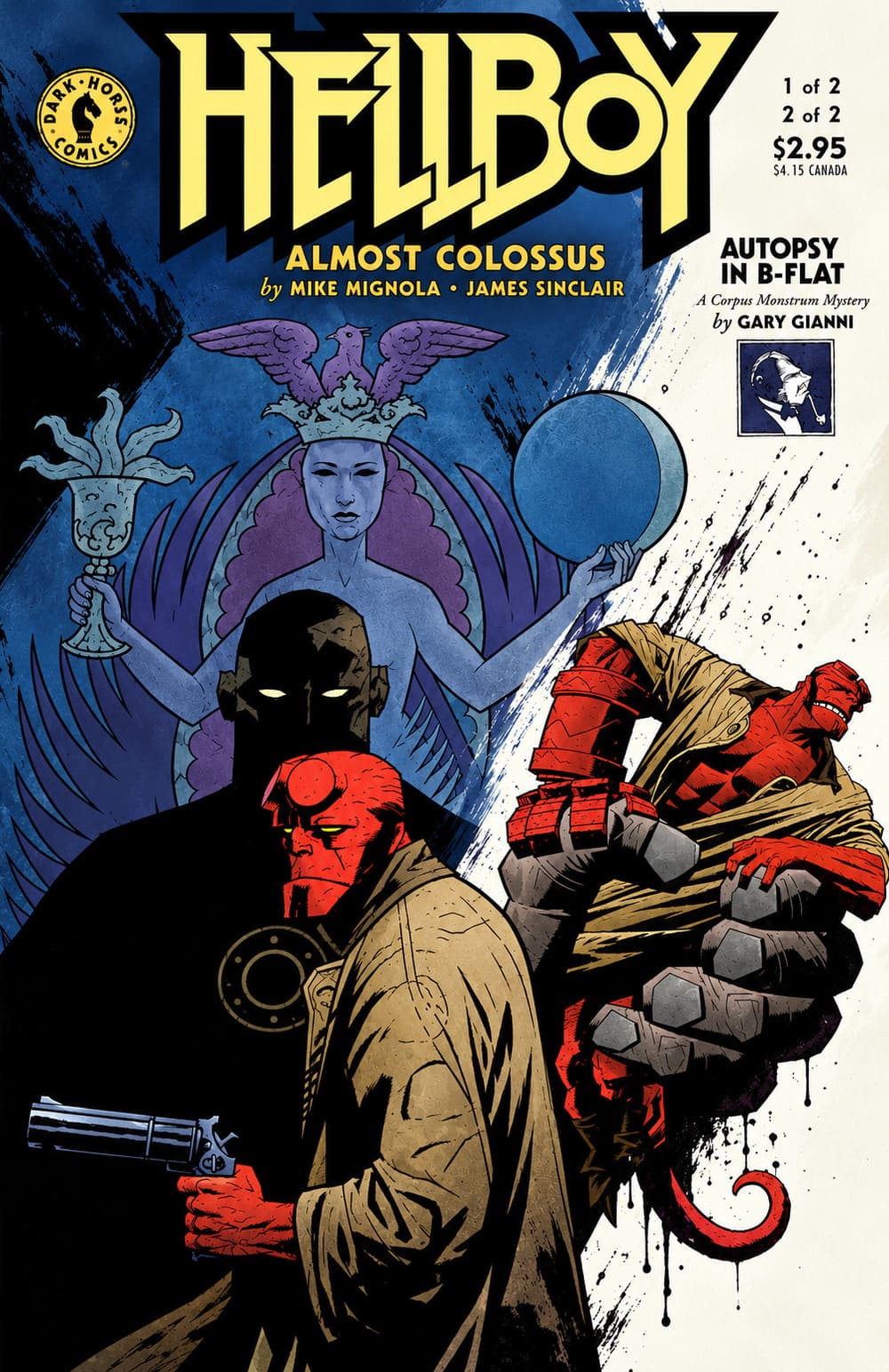
Mike Mignola’s Hellboy: Almost Colossus gets its best mileage out of a simple question: what makes someone a monster once you look past the body they were born—or built—into? This two-issue miniseries takes the unfinished business of Hellboy: Wake the Devil and turns it into a compact Gothic adventure with a surprisingly tender center. There are disturbed graves, shadowy ruins, unnatural bodies, and a villain whose ambitions are considerably bigger than his conscience. But underneath that familiar horror setup is a story about two artificial beings who respond to their existence in very different ways. One wants to make the world suffer. The other barely knows how to face it.
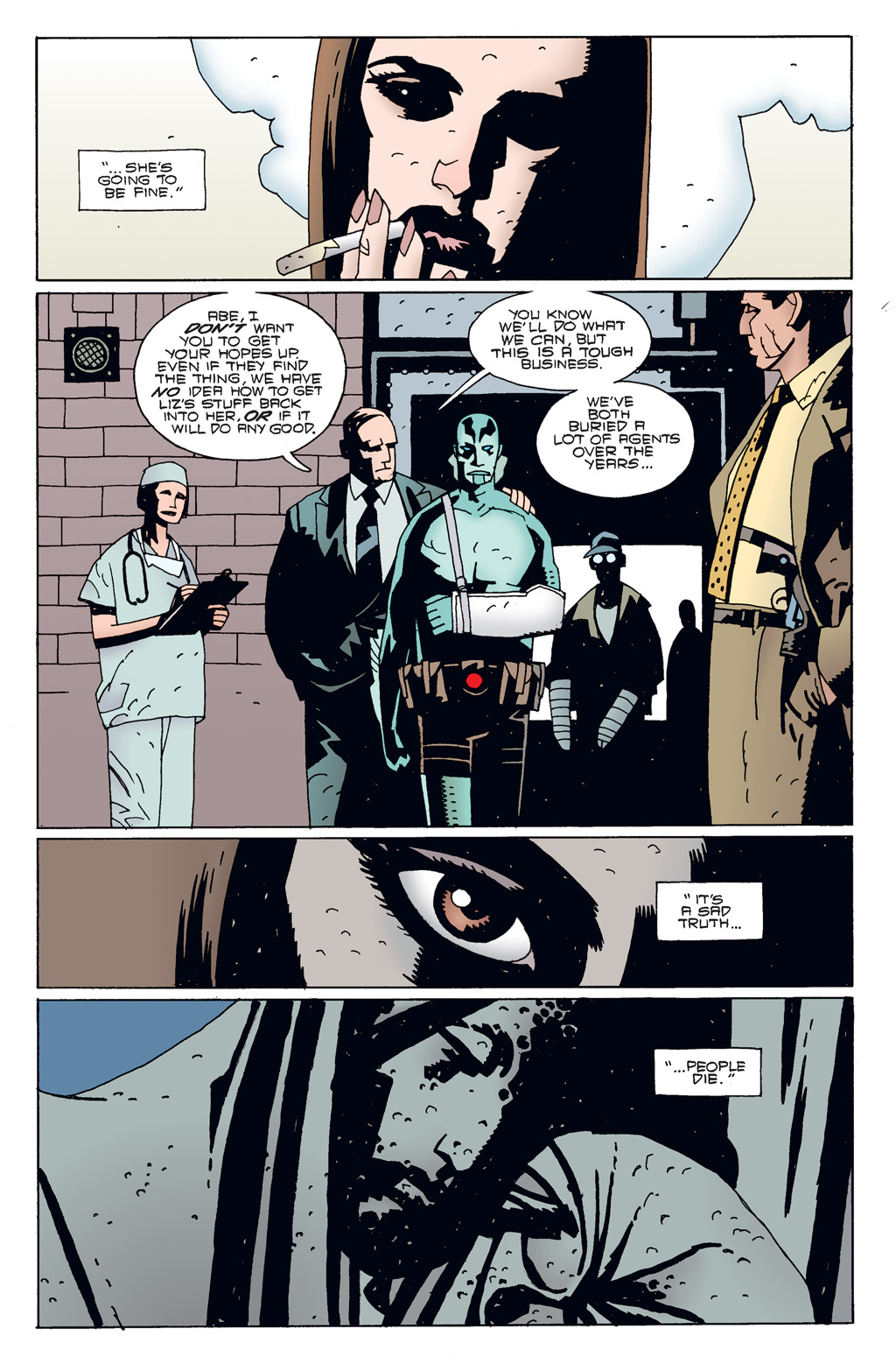
The immediate problem is Liz Sherman’s deteriorating condition. During Hellboy: Wake the Devil, her fire brought an ancient homunculus to life, but the transfer left her without the powers that had sustained her. Now Hellboy and Kate Corrigan need to find the creature and discover whether that process can be reversed. It is a clean, urgent premise that gives the story direction without requiring another elaborate explanation of Hellboy’s destiny. The stakes are personal rather than cosmic. Liz is dying, and Hellboy is not about to stand around waiting for someone else to fix it.
That smaller scale is one of the comic’s biggest strengths. Hellboy: Wake the Devil has the pleasure of watching several supernatural threats overlap, but Hellboy: Almost Colossus benefits from having less to juggle. Mignola takes an incident that could have remained a disturbing subplot and follows its consequences. Liz’s awakening of the homunculus was not just another strange encounter in a haunted castle. It created a life while endangering another, and the people involved now have to deal with that imbalance. The supernatural events feel consequential because they leave emotional damage behind.
The homunculus, Roger, is the heart of the story. His physical appearance initially places him within the familiar territory of the lumbering artificial monster, but Mignola quickly complicates that impression. Roger is not thrilled to be alive. He is frightened, confused, and overwhelmed by guilt over the suffering connected to his awakening. His desire for death gives the story an unsettling sadness. Life has arrived before understanding, and he has no idea what to do with either. Rather than making him immediately lovable, Mignola allows his distress to remain awkward and uncomfortable, which makes his eventual choices more affecting.
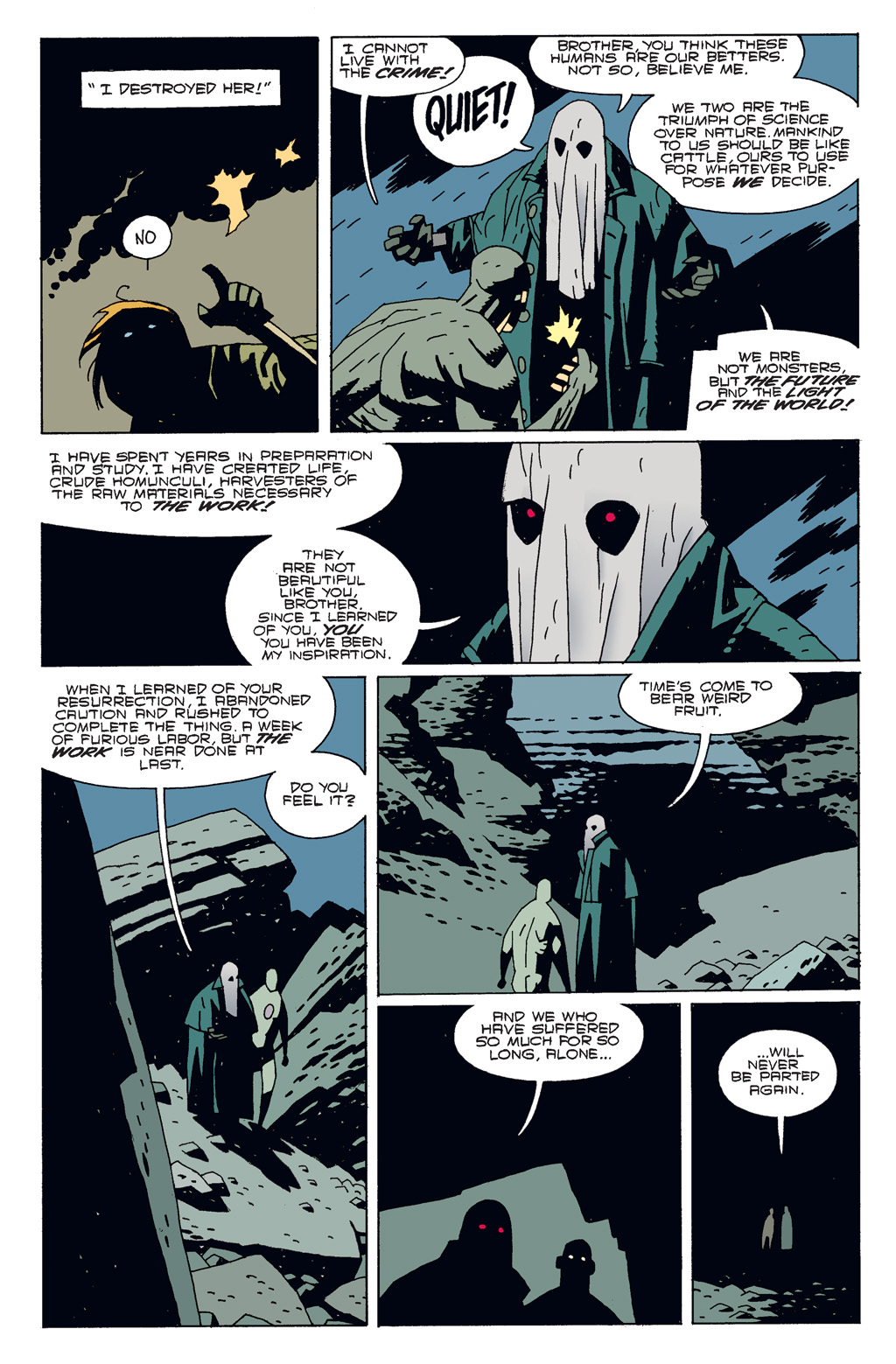
Roger’s older brother provides the nasty counterpoint. Another homunculus created through alchemy, he has responded to his origins with resentment and grandiosity. His solution to feeling wronged is to build himself into something powerful enough to dominate everyone else. Other bodies become material for his ambitions, and other lives become expendable. He is grotesque not simply because of what he is, but because of how casually he reduces people to things. The contrast with Roger is sharp: one brother is horrified by the possibility of causing harm, while the other treats harm as a necessary step toward greatness.
That distinction gives the comic its moral backbone. Mignola does not suggest that unnatural creation automatically produces evil, nor does he make suffering an excuse for cruelty. Both brothers have reasons to feel alienated, but they still make different decisions. Roger’s brother converts his grievances into a claim of superiority. Roger must learn that guilt does not have to end in surrender or self-destruction. It can become responsibility. That is a substantial idea for such a short adventure, and the story makes it tangible through the brothers’ behavior rather than stopping to explain its own message.
The Frankenstein influence is easy to recognize, particularly in the loneliness and resentment surrounding manufactured life. What makes this more than a familiar variation is how naturally those concerns fit Hellboy himself. His appearance suggests danger, and his origins carry implications he refuses to accept as instructions. Roger’s predicament echoes that larger conflict without turning the miniseries into another extended discussion of prophecy. Hellboy becomes an example of the difference between what someone looks like and what someone chooses to do. He is not delivering inspirational speeches, either. He is simply trying to save a friend.
His blunt attitude helps keep the material from becoming too mournful. Hellboy can move through an ancient horror as though it is an especially irritating assignment, and that practical impatience gives the comic some welcome personality. The humor does not erase the danger; it makes his concern feel less theatrical. Kate also helps ground the investigation. Her presence supplies a human perspective beside Hellboy’s familiarity with the bizarre, and her vulnerability gives the confrontation immediate stakes beyond the brothers’ argument. Their partnership makes the supernatural setting feel inhabited rather than merely arranged for atmosphere.
Visually, Mignola makes the ruins and artificial bodies feel like parts of the same uneasy world. His heavy blacks and simplified forms give stonework a looming presence, while the homunculi look assembled, weighty, and uncomfortable in their own shapes. The pages do not need elaborate detail to suggest history. A dark opening or a fragment of architecture can imply whole rooms of forgotten experiments. James Sinclair’s coloring supports that starkness, allowing the drawing’s silhouettes and shadows to carry the mood. The result feels closer to a grim illustrated folktale than a glossy superhero adventure.
The two-issue format does leave some limitations. Liz functions mainly as the reason for the mission, and the older brother’s ambitions could have supported more development. Reading Hellboy: Wake the Devil first also gives the opening greater emotional weight. Still, the brevity keeps the story from diluting its strongest material. The climax matters because Roger has to decide what kind of being he will become, not simply because something enormous needs to be punched. Hellboy: Almost Colossus delivers the Gothic spectacle, but its real achievement is making compassion feel like an active choice. The most human figure in the story may be the one who has the least idea how to be human.
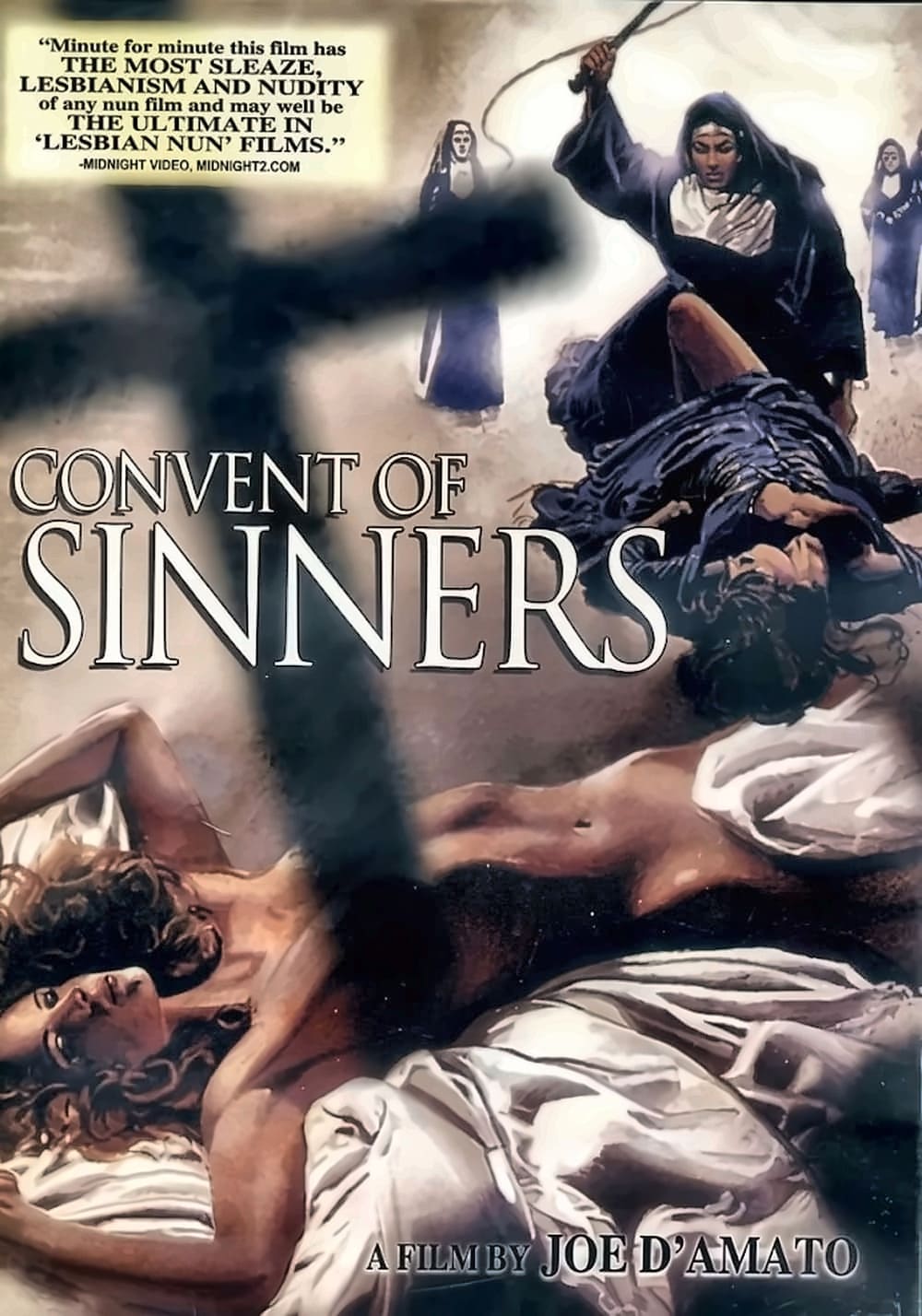
Convent of Sinners (1986) wants to expose the corruption behind convent walls, but Joe D’Amato keeps getting distracted by what he can undress inside them. That tension defines this erotic nunsploitation horror film, an atmospheric guilty pleasure with enough religious hypocrisy and malicious intrigue to suggest a sharper movie buried beneath the sleaze. D’Amato recognizes the dramatic possibilities of an institution where frustrated desire disguises itself as moral authority. He also leans so heavily on sexual titillation that his criticism struggles to compete with his exploitation instincts. The result is entertainingly disreputable, occasionally disturbing, and considerably less insightful than its premise promises.
Susanna, played by Eva Grimaldi, enters the convent after suffering sexual abuse at home, only to discover that her supposed sanctuary contains another collection of people determined to control her. The Mother Superior develops an attachment to her, a priest offers forbidden affection, and Sister Teresa resents the attention she receives. Loosely adapted from Denis Diderot’s La Religieuse, the story follows a vulnerable woman whose needs remain secondary to the desires of those claiming to protect her. Susanna becomes the object of affection, suspicion, and punishment without gaining much say in any of it. Escape from one abusive environment simply delivers her into another.
There is a strong foundation here for a bitter examination of institutional corruption. The convent’s inhabitants cannot acknowledge their feelings honestly, so attraction becomes favoritism, jealousy becomes accusation, and cruelty becomes spiritual correction. Susanna exposes tensions that already exist, but blaming her allows everyone else to avoid examining themselves. Religious authority gives ordinary resentment extraordinary reach. Someone who merely dislikes you can make life unpleasant; someone who claims your suffering serves God can make resistance look like further evidence against you. The film understands that distinction, even if it does not consistently develop it beyond another opportunity for humiliation.
Its place within the nunsploitation tradition makes that limitation especially noticeable. Ken Russell’s The Devils combines sexual obsession, religious hysteria, and institutional violence with a larger examination of political power. D’Amato uses related ingredients without approaching Russell’s ambition or furious visual imagination. Convent of Sinners concentrates on private jealousies and forbidden attachments, which could have supported a more intimate account of how authority becomes abusive. Instead, its serious implications repeatedly compete with scenes designed primarily to provoke or titillate. The comparison is useful because it demonstrates that lurid material and meaningful criticism can coexist, provided the filmmaking gives both a purpose.
Bruno Mattei’s The Other Hell offers the trashier comparison, turning a convent into a breeding ground for sinister secrets, violence, and supernatural horror. Both films exploit the reversal of sacred refuge into dangerous confinement, but Mattei foregrounds the horror-show possibilities while D’Amato emphasizes erotic melodrama. Convent of Sinners builds on this established genre territory through its mixture of religious imagery, repressed appetites, and punitive authority. Yet its reliance on sexual spectacle makes the corruption feel less like something being investigated than something supplying the next scandalous situation. The convent is an effective setting, but D’Amato does not always look beyond its exploitation value.
Karin Well’s Sister Teresa gives the persecution a concrete emotional motive. She resents the Mother Superior’s interest in Susanna, and her wounded pride feeds her vindictiveness. Underneath the religious vocabulary is someone furious about losing influence. The institution lets her disguise retaliation as moral responsibility, making her more dangerous than an openly spiteful rival. These dynamics provide some of the film’s strongest material because they reveal how easily a hierarchy can accommodate personal grudges. Teresa does not need to confess her jealousy when she can insist that Susanna is the problem. Her authority supplies the explanation her conscience ought to question.
Grimaldi gives Susanna a sympathetic presence, but the screenplay is far more interested in what happens to her than in who she is. Her longing for tenderness is understandable, and apparent affection offers a believable temptation in such an oppressive environment. Unfortunately, every refuge becomes another trap, and the repeated victimization eventually starts to flatten her character. D’Amato leans way too heavily on the sexual titillation and lurid exploitation of Susanna, weighing down whatever commentary he is attempting about religious hypocrisy and institutional corruption. Her suffering becomes an attraction in itself. The film wants us to condemn those treating her as an object while rarely resisting that temptation itself.
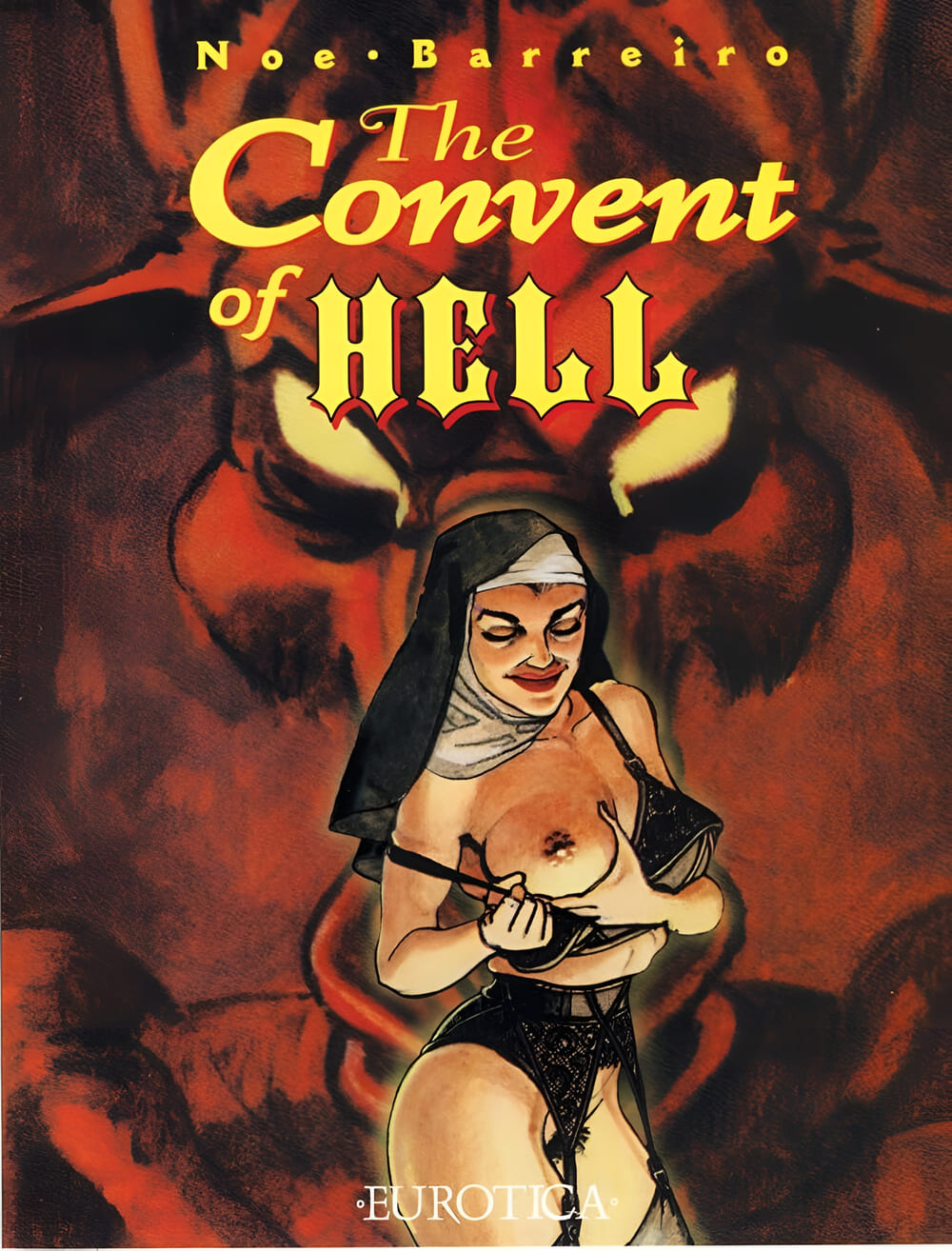
That mixture also connects it to The Convent of Hell, the erotic graphic novel written by Ricardo Barreiro and illustrated by Ignacio Noé. Its forbidden appetites, convent confinement, cruelty, and supernatural grotesquerie belong to the same imaginative tradition. Whether or not its creators would acknowledge these particular predecessors, the family resemblance to The Devils, The Other Hell, and Convent of Sinners is persuasive. This is a critical reading of their shared sensibility rather than a documented claim of direct influence from every film. Still, the progression makes sense: sacred imagery becomes a framework for escalating erotic excess, sometimes overshadowing whatever criticism accompanies it.
Ultimately, Convent of Sinners works better as an uneven guilty pleasure than as a convincing indictment of religious abuse. Its period atmosphere and enclosed setting lend weight to the melodrama, while its malicious characters keep the intrigue moving even when the pacing sags. There is enough solemn hypocrisy and shameless sleaze to satisfy a taste for Italian exploitation, but Susanna’s treatment grows repetitive and uncomfortable. D’Amato has found a subject with genuine dramatic bite; he simply keeps sacrificing that bite to another dose of titillation. The film peers behind the convent’s respectable façade, then becomes so absorbed in the scandal that it neglects the corruption it originally promised to expose.
The Convent of Hell is the kind of guilty pleasure that makes you admire the artwork while hoping nobody walks in and asks what you’re reading. Written by Ricardo Barreiro and illustrated by Ignacio Noé, it feels like what would happen if European exploitation films of the 1970s collectively decided they weren’t being exploitative or extreme enough. Whatever restraint those movies occasionally exercised gets thrown out the convent window, leaving a delirious collision of religious imagery, explicit adult material, and grotesque supernatural horror. It is definitely not safe for work, and that warning covers considerably more than nudity. Still, beneath the shock tactics sits an impressive piece of visual storytelling, presented with more artistic conviction than its premise might suggest.
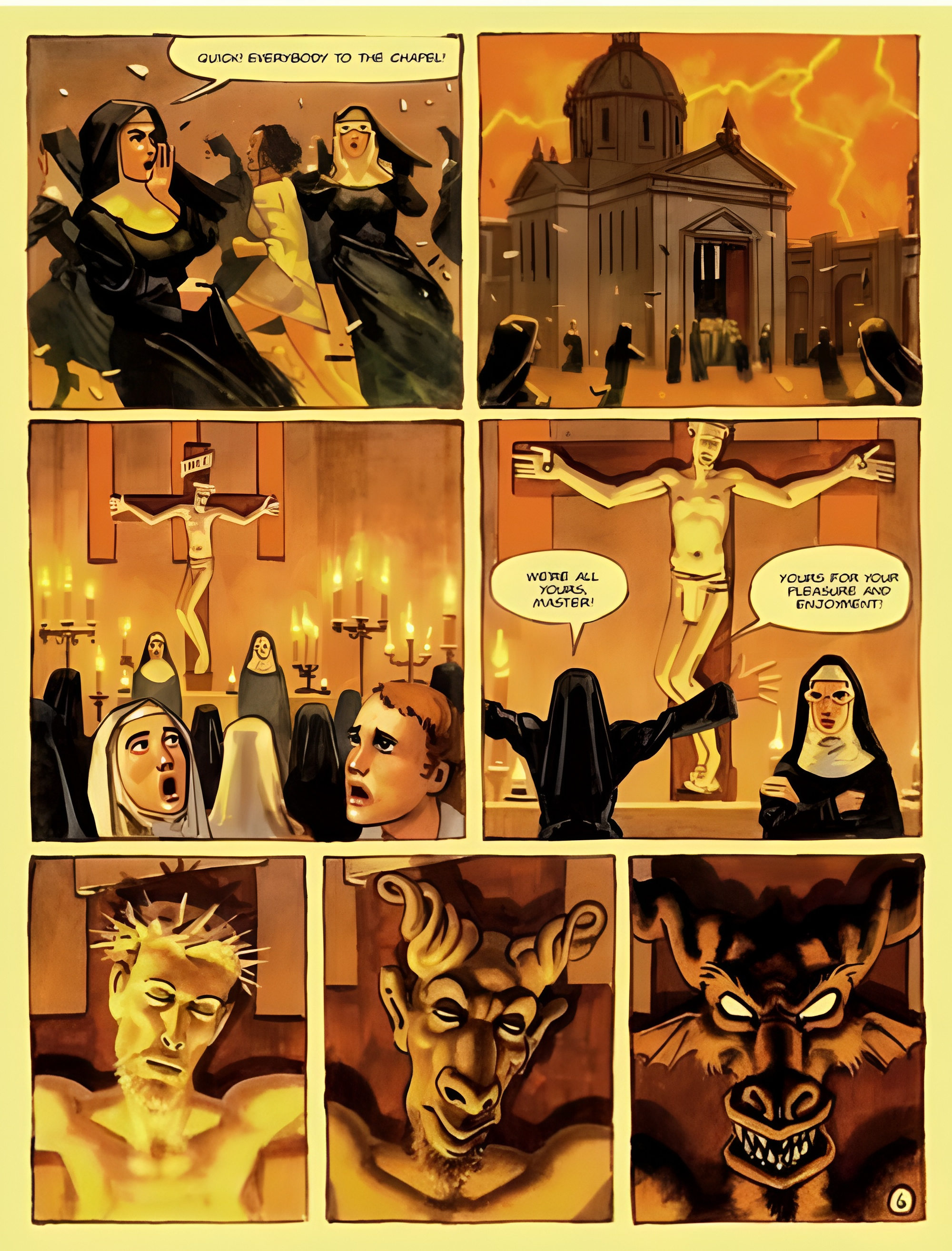
The setup is wonderfully suited to this kind of lurid entertainment. An isolated Spanish convent conceals a mysterious door in its basement, and investigating what lies behind it proves spectacularly unwise. Religious discipline already exists alongside cruelty, repression, and compromised authority before the supernatural threat fully emerges. That matters because the horror does not simply invade an otherwise innocent sanctuary. It finds an institution with weaknesses already built into its foundations. The Mother Superior’s fascination with the forbidden doorway turns curiosity into catastrophe, giving the story a clear dramatic engine even when its increasingly outrageous content threatens to take over completely. You know opening that door is a terrible idea, but watching the inevitable disaster unfold is part of the appeal.
Noé’s artwork is the biggest reason the book rises above being a disposable exercise in provocation. His painted imagery gives the convent a physical presence that makes its corruption feel unusually tangible. The building looks oppressive rather than comforting, with an atmosphere of isolation that establishes unease before the demonic spectacle arrives. There is a strong contrast between the solidity of the setting and the impossible things that eventually occupy it. Instead of treating the backgrounds as empty space between bodies, Noé uses the environment to sustain the mood. The result is a comic whose visual atmosphere remains compelling even when the narrative is operating at its most ridiculous. You can question the taste involved while still admiring the craftsmanship.
That craftsmanship also helps the horror retain some genuine ugliness. The demonic presence is not simply a glamorous fantasy figure with a few sinister accessories. Its animalistic design and exaggerated scale make it feel invasive, alien, and fundamentally wrong within the convent’s enclosed world. This is important because the book constantly moves between erotic spectacle and disgust, sometimes refusing to give the reader a comfortable distinction between them. Noé makes that collision visually forceful. The imagery can be excessive, but it rarely feels timid or accidentally awkward. Whether a particular page fascinates or repels you, there is usually little doubt that the artist knows exactly what kind of reaction he is trying to provoke.
Barreiro’s writing deserves some credit for giving the excess a framework. The discovery of the door, the growing mystery surrounding it, and the escalation into outright supernatural disaster create a recognizable progression rather than a completely shapeless collection of adult scenes. There is anticipation, a threshold being crossed, and a widening sense of consequences. The opening stretch gives the setting time to acquire some menace, which makes the later chaos feel like a release of pressure rather than an arbitrary change of subject. That does not mean the book becomes a deeply layered psychological drama. It simply means its exploitation elements benefit from actual pacing, and pacing makes a considerable difference when the premise is this aggressively overblown.
The characters are less convincing as complicated individuals than as participants in a nightmare about repression and corrupted power. The Mother Superior is the most important figure because her authority and transgression become inseparable, but the book is not especially interested in patiently exploring everyone’s interior life. Its religious imagery supplies an immediate vocabulary of purity, temptation, punishment, and desecration, then twists those ideas into spectacle. There is potential for a sharper critique of institutional hypocrisy here, yet the comic generally prefers another outrageous escalation to a sustained argument. That limitation is worth acknowledging. A reader looking for an insightful examination of faith or convent life will probably find the book much thinner than its elaborate artwork initially promises.
The biggest obstacle, however, is not the thin characterization. It is the sexual violence. Calling this a cheeky naughty-nuns comic would badly undersell how cruel and confrontational parts of it become. Its explicit content includes nonconsensual acts, so the guilty-pleasure label needs a serious qualification: the pleasure comes from the feverish horror, visual skill, and sheer audacity, not from pretending the disturbing material is harmless. For some readers, that combination will be an immediate dealbreaker, and understandably so. Even readers comfortable with extreme horror may find the balance between eroticism and brutality unpleasant rather than entertaining. This is a book whose content warnings are genuinely useful, not merely promotional shorthand for something mildly scandalous.
What ultimately makes The Convent of Hell memorable is the mismatch between its disreputable subject matter and its committed execution. It has the instincts of a midnight exploitation feature, but Noé gives those instincts a richly realized visual identity, while Barreiro supplies enough structure to keep the descent into chaos moving. It is excessive, uncomfortable, occasionally absurd, and unmistakably adults-only. As a guilty pleasure for readers who can tolerate its extreme content, it delivers a distinctive collision of supernatural horror and sacrilegious spectacle. As a recommendation for the average graphic-novel reader, it comes with enormous reservations. The artistry is real; so are the reasons to leave it on the shelf.
This is movie should be called- Thank Goodness, my friends are all dead!
I don’t always hope for the death of comrades, but when I do I drink… well, it’s Pellegrino…
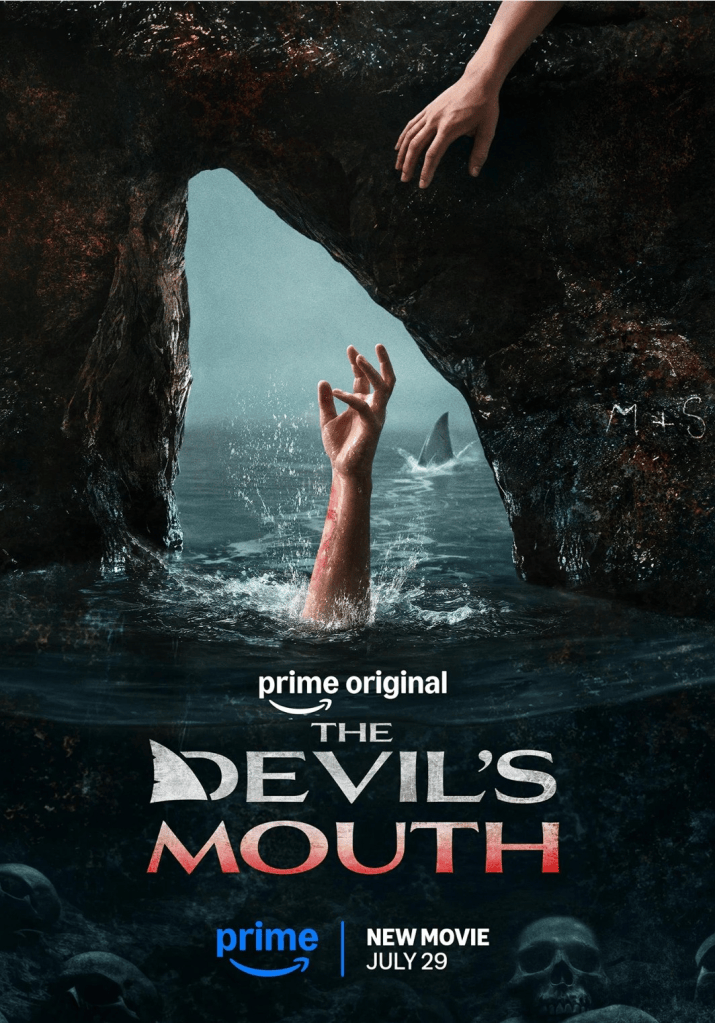
“The Devil’s Mouth” is a movie that looks more expensive that it is and that is actually a signature of the producer/director Jeff Wadlow. He budgets his films to have nothing left at the end; so, it looks like a studio film, but it was only 3.5MM.
If you’re trying become a filmmaker on a budget, watch an interview with Jeff Wadlow below.
This was a great way to begin my Horrorthon because I got to start it with Lisa. My regular readers know that Horrorthon films are a mixed bag, AT BEST. There are movies that don’t take themselves seriously and just have fun, there are short films that are masterworks, and there are Alex Magana films that strain my belief in humanity’s ability for redemption.
“The Devil’s Mouth” takes place in Thailand and Sara McKenna (Kathryn Newton) is on an caving trip with her MANY toxic friends. Five minutes into the film and the friends are all snorkeling; unfortunately, Sara decides to snorkel too, but her terrible friends mix themselves up and boat off and leave her behind “47 Meters Down” style. Then, she gets attacked by jellyfish and gets actual wounds. Her most toxic friend Max (Lana Condor) doesn’t even apologize. Max’s main personality trait is that she bosses people around the whole movie (badly) and gets most of the group killed.
Sara needs a tough love friend or dad to say, “Look, you’re comin home or I’ll meet you there. Leave that trash behind!”
Also, why are these 20 somethings going caving in the first place and not wanting to just drink and sleep around…ON LAND?! You’re in Thailand! You all should be trying create some souped up version of HPV.
Sara and her terrible friends go to this cave system that was flooded with salt water and it looks super creepy and Max demands the group ignore the guide and go in the evil cave system. It is really amazing that Max and her friends have lived as long as they have. They can barely swim, they have claustrophobia, relationship issues, and Max, the toxic garbage person, leading them.
Because the cave was flooded with salt water, bull sharks have come into the cave system and start eating them all. Unfortunately, Max stubbornly continues to live until the final 15 minutes. Sara valiantly fights of sharks and risks her life to try to keep the body count down, but the sharks just want it more!
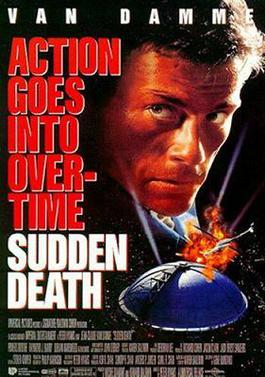
At first glance, 1995’s Sudden Death appears to just be another “Die Hard in a—” type of film. The final game of the Stanley Cup Final is being played in Pittsburgh. The Vice President (Raymond J. Barry) will be attending. Security’s tight, but not tight enough to stop rogue Secret Service agent Joshua Foss (Powers Boothe) and his band of quirky mercenaries. The hockey players continue to fight on the ice. The fans in the stadium continue to cheer every punch thrown and tooth knocked out. None of them know they are currently being held hostage as part of Foss’s plot to extort the government out of several billion dollars.
Fireman Darren McCord (Jean-Claude Van Damme) is at the game with his son and his daughter. He just wants a good bonding experience with his children. Instead, in true John McClane fashion, he finds himself sneaking around the arena, trying to defuse the bombs Foss has set and also trying to rescue the Vice President. It’s not easy, even for someone like Jean-Claude Van Damme.
As I said, this film was obviously inspired by Die Hard. But not even Bruce Willis ever found himself fighting for his life against a terrorist wearing a big penguin costume. Van Damme not only defuses bombs but also finds time to put on a goalie’s costume and hit the ice. He manages to block the puck, then looks up at the stands and gives his son a meaningful look. Even with the mask covering his face, his son recognizes him. Meanwhile, up in the VIP box, Powers Boothe appears to be having a wonderful time chewing the scenery. Even though he’s playing the bad guy in a Die Hard rip-off, Boothe doesn’t make the mistake of trying to imitate the great Alan Rickman. Instead, Boothe brings his own rugged style to the role of Joshua Foss. It’s hard not to appreciate a villain who can casually threaten to blow up a stadium without breaking a sweat. When someone sensibly points out that Foss would probably die in the explosion as well, he merely shrugs as if to say, “Let’s do it and be legends.”
And I haven’t even gotten to the bit with the helicopter yet….
Sudden Death is a big, ludicrous, and wonderful movie. It’s the type of action film that could only have starred Van Damme. Sylvester Stallone and Bruce Willis may have been better actors, but Stallone would have taken the project too seriously and Willis’s wiseass persona would have sabotaged the film’s more earnest moments. Arnold Schwarzenegger may have been bigger, but there’s no suspense to watching Schwarzenegger beat up someone in a penguin costume. Steven Seagal would have made you root for the penguin. Only Van Damme could have played Darren McCord and made you cheer for him whether he was fighting terrorists or trying to impress his children. Director Peter Hyams directs with an anything-goes sort of energy. The same genius that somehow made me cry when Elliott Gould and James Brolin ran through the cemetery in Capricorn One is present in Sudden Death’s best scenes.
Sudden Death is a true pleasure. No need to feel too guilty about this one!
“The All-Father wove the skein of your life a long time ago. Go and hide in a hole if you wish, but you won’t live one instant longer. Your fate is fixed. Fear profits a man nothing.” — Herger the Joyous
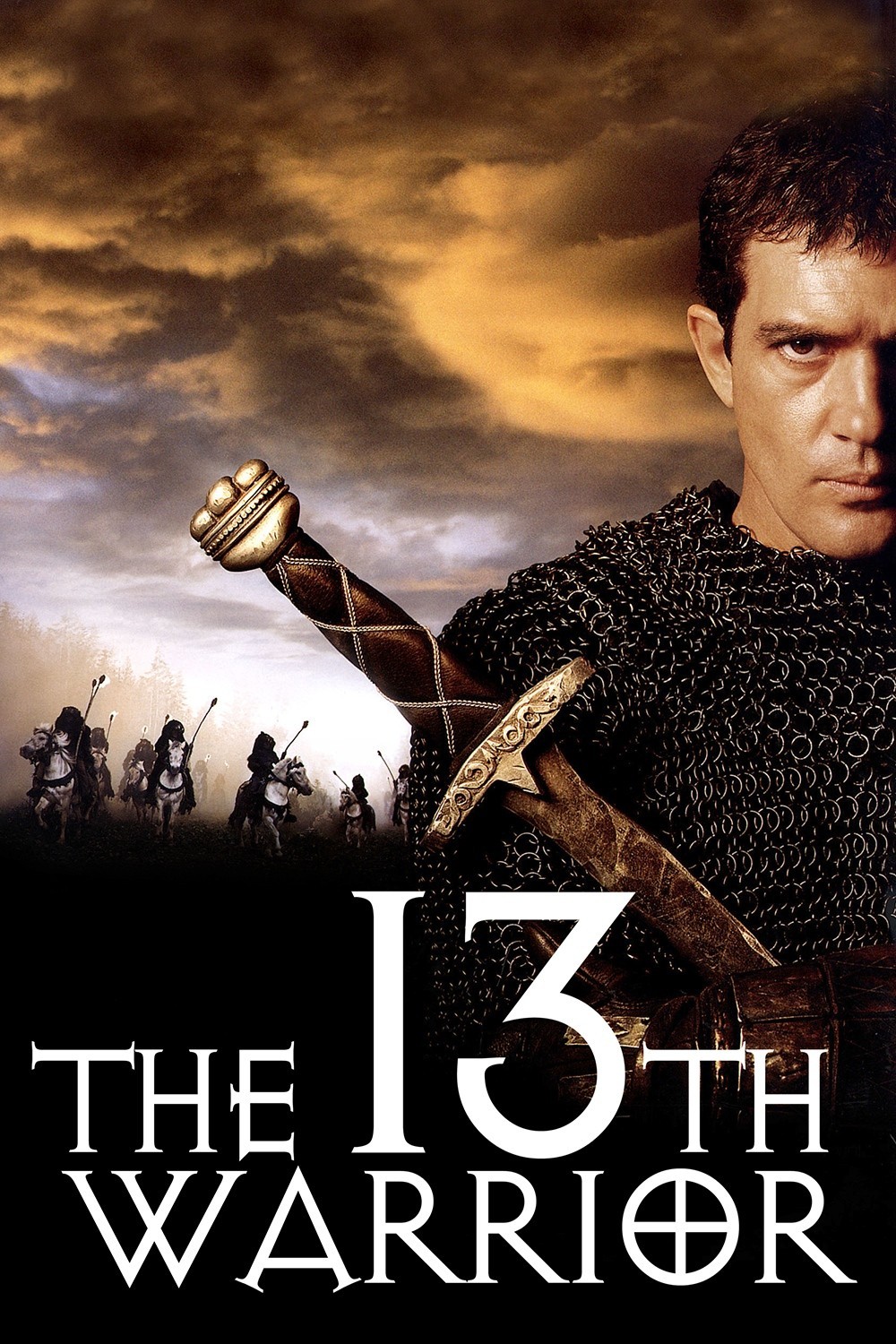
Few films wear the scars of a difficult production as visibly—and as entertainingly—as John McTiernan’s The 13th Warrior. It is messy, truncated, occasionally incoherent, and visibly caught between two competing creative visions. Yet it also has an atmosphere that many more polished historical adventures lack: wet forests, torchlit halls, thick fog, blackened skies, grim Norse rituals, and a band of warriors who look as though they have spent their entire lives sleeping in armor and drinking themselves toward an early grave. It is not a great film, but it is an undeniably entertaining one—and one of the more fascinating guilty pleasures of the late-1990s blockbuster era.
Loosely adapted from Michael Crichton’s novel Eaters of the Dead, which itself plays with the historical legend of Ahmad ibn Fadlan and folds it into a rough retelling of Beowulf, The 13th Warrior begins with Antonio Banderas as Ahmed ibn Fahdlan. Ahmed is an Arab court poet and diplomat banished from Baghdad after an indiscretion involving a powerful man’s wife. He is sent north as an ambassador, where his refined manners, education, and cultivated worldview put him in immediate contrast with the brutal, loud, heavily armed Norsemen he encounters. The movie gets a surprising amount of mileage out of that culture-clash premise. Ahmed is initially horrified by the Vikings’ hygiene, manners, food, and casual relationship with violence, while the Vikings regard him as an odd, under-equipped foreigner who seems far too elegant to be useful in a fight.
The story kicks into gear when a group of Norse warriors is summoned to aid a distant village terrorized by mysterious attackers known as the Wendol. According to prophecy, thirteen men must go—and the thirteenth cannot be a Northman. Ahmed, despite having no real desire to be involved in this nightmare expedition, becomes the required outsider. From there, the film turns into a lean survival-horror adventure: the warriors travel into an isolated northern settlement where people are being abducted and mutilated by enemies who seem to emerge from the darkness itself. The Wendol wear animal skulls, move through the night like ghosts, and are initially presented less as a human army than as something ancient and supernatural.
That eerie buildup is easily the best thing about The 13th Warrior. McTiernan, the director of Die Hard, Predator, and The Hunt for Red October, knew how to make hostile environments feel dangerous. The village is surrounded by dense woods and oppressive mountains, while the interiors are lit by fire, smoke, and shadows. The film often feels as if it is taking place at the edge of the known world. Even when the plot becomes shaky, the mood holds. There is a genuinely creepy quality to the Wendol’s first attacks, especially when horns sound in the distance and figures descend from the hills in the rain. The movie may never fully sell the mythology behind its villains, but it absolutely sells the fear they inspire.
Banderas is a somewhat unconventional choice for Ahmed, and his casting has always been one of the film’s stranger elements. He brings charisma and physical presence, but the accent situation is obviously all over the place. Still, he makes the character’s gradual transformation satisfying. Ahmed begins as a man who sees himself as superior to these crude northerners, only to discover that their apparent barbarism is paired with courage, loyalty, humor, and a practical intelligence he had underestimated. His evolution into a capable warrior is predictable, but it works because Banderas plays the early discomfort well. The famous moment when Ahmed learns the Norse language simply by listening around the campfire is absurdly accelerated, but it is also one of the movie’s most memorable scenes. It tells the audience, with no subtlety whatsoever, that he has crossed into their world.
The supporting cast gives the film much of its appeal. Vladimir Kulich’s Buliwyf is the quiet center of the group, a noble warrior king whose death is basically foretold from the moment he appears. Kulich has the right imposing, mythic presence for the role, and he makes Buliwyf feel like a living folk hero rather than just another stock Viking chief. Dennis Storhøi, Tony Curran, Richard Bremmer, and the rest of the warriors are not always given much individual development, but they create a convincing sense of companionship. Their banter, drinking, ritualized insults, and battle-ready camaraderie help the group feel like a unit with a history long before Ahmed arrived.
The action is another mixed but memorable part of the experience. McTiernan’s best films are often celebrated for their clarity of geography and movement, but The 13th Warrior is much murkier. Some of that is intentional: fights take place at night, in rain, amid smoke, fire, and chaos. But some of it also feels like a byproduct of an uneven post-production process. The movie is often too dark, too quickly edited, and too vague about what is happening from one beat to the next. Even so, there are flashes of real power. Ahmed forging a sword from a Viking weapon is a solid transformation moment, while the climactic infiltration of the Wendol cave has the pulpy appeal of an old adventure serial filtered through mud, blood, and 1990s studio excess.
The behind-the-scenes drama is arguably just as intriguing as the movie itself. The 13th Warrior became infamous for going significantly over budget and for the creative conflict between McTiernan and the studio. The reported disputes centered on the film’s tone, pacing, and specific scenes, with the studio evidently concerned that McTiernan’s version was too dark, too strange, and too inaccessible for a massive summer release. This was not a minor disagreement over a few trims. It became the kind of production struggle that leaves fingerprints all over the finished film. You can feel the tension between a moody, almost horror-driven historical fantasy and a more conventional action-adventure picture trying to break through the same material.
Michael Crichton, the author of Eaters of the Dead and a major force behind the project, eventually stepped in to oversee reshoots and re-editing. That fact alone makes The 13th Warrior unusually fascinating. It is not every day that the author of the source novel takes such a direct role in reshaping a film after its original director has already completed his work. Crichton reportedly pushed for a more straightforward, audience-friendly version, trimming and restructuring the movie in ways meant to clarify the story and increase its commercial appeal. The result is a film that often feels like two versions grafted together: one a grim, unnerving tale about outsiders confronting an almost prehistoric terror, the other a compressed heroic adventure about a reluctant man discovering his warrior spirit.
That conflict helps explain why the finished movie can feel so abrupt. Characters appear and disappear with little explanation, the Wendol mythology is only partially developed, and the final stretch rushes through material that could have supported a longer, more coherent climax. The film is barely over 100 minutes, yet it sometimes feels as though an entire half-hour of connective tissue vanished somewhere between the shoot and the theatrical cut. This is especially frustrating because there is clearly a richer movie buried inside the existing one. The setting, the central premise, the cultural collision, and the supernatural ambiguity all deserved more room to breathe.
Still, those flaws are part of why The 13th Warrior has endured as a cult favorite. It is easy to imagine a cleaner, more successful version, but it is also difficult to imagine that version being as peculiar or as memorable. The finished film has a strange, bruised personality. It carries the weight of a troubled production, but it also has enough great imagery, strong atmosphere, and old-fashioned adventure momentum to overcome its rough edges. It never reaches the level of McTiernan’s best work, and it is certainly not the definitive cinematic take on Beowulf. But as a cult, guilty-pleasure fantasy adventure, The 13th Warrior delivers more than its reputation might suggest.
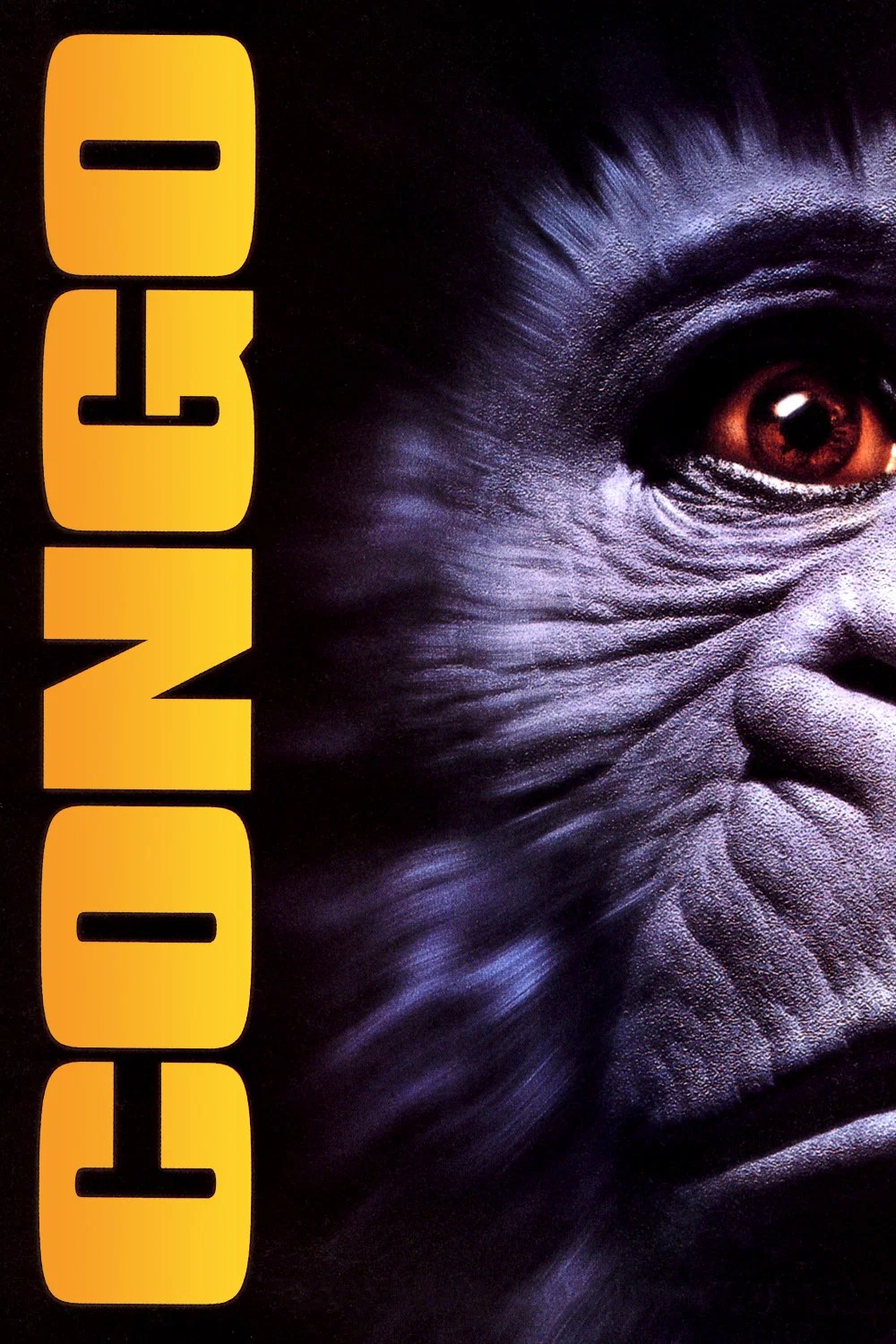
Congo is the kind of movie that makes perfect sense as a guilty pleasure because it is always hovering just above the level of complete nonsense, yet it has enough energy and conviction to remain enormously watchable. Directed by Frank Marshall, the 1995 film turns Michael Crichton’s jungle-thriller premise into a sprawling mixture of monster movie, treasure hunt, corporate conspiracy, technological anxiety, and old-fashioned adventure serial. It is loud, messy, often ridiculous, and loaded with moments that should not work at all. But that is the pleasure of Congo: it commits so completely to its bizarre material that the movie becomes difficult to dislike.
The setup is wonderfully overstuffed. A corporate expedition disappears while searching for a legendary diamond mine in the Congo, apparently after encountering some mysterious, deadly force. At the same time, primatologist Peter Elliot is preparing to return Amy, a gorilla he has raised and taught sign language, to the wild. Amy has recurring dreams—or perhaps memories—of a strange jungle city, and she communicates through a glove that translates her signs into a robotic voice. Before long, Peter, Amy, corporate representative Karen Ross, Romanian explorer Herkermer Homolka, and a mercenary guide named Captain Munro Kelly are all headed toward the same lost city, where diamonds, ancient ruins, and murderous white gorillas await.
That synopsis alone explains why Congo has developed such a devoted guilty-pleasure reputation. It is a movie where satellites, laser weapons, genetically engineered guard apes, corporate greed, sign-language research, volcanoes, and ancient African mythology all exist in the same story without anyone pausing to question the sheer overload of it. The movie treats every development with sincere urgency, even when the audience is watching Amy the gorilla say “Amy good gorilla” through a computerized voice device. It is impossible not to admire the confidence. Congo never winks at the audience, never admits that its premise is wild, and never cuts itself down to a more manageable size. It simply keeps adding more adventure-movie ingredients until the whole thing becomes strangely hypnotic.
Laura Linney’s Karen Ross and Dylan Walsh’s Peter Elliot are meant to anchor all of that craziness, but they are also among the film’s blandest elements. Linney is a talented actress, and she brings a professional focus to Karen’s corporate mission, but the character is written in such functional terms that she rarely feels like more than the person carrying the plot’s technological and business-related exposition. Karen is competent, determined, and occasionally vulnerable, but she never develops a particularly distinctive personality. Linney plays her with a seriousness that fits the film’s overall tone, yet that seriousness can make her feel oddly distant. She is there to make sure the satellite plot, the diamond plot, and the rescue plot keep moving, rather than to provide much spark on her own.
Walsh has an even tougher assignment as Peter. He is essentially the emotional center of Amy’s story, and the film needs the audience to believe in his paternal, almost codependent relationship with her. But Peter is such a mild, generic protagonist that he often gets swallowed by the movie’s more eccentric ideas. Walsh is not bad, exactly; he is simply too subdued for a film filled with volcanic eruptions, killer gorillas, and Tim Curry speaking every line as though he is announcing the end of civilization. His performance has a sincere gentleness that helps the scenes with Amy, but it also makes him feel like he wandered in from a quieter, more conventional family adventure. When the movie becomes bigger and stranger, Peter’s personality does not expand with it.
That blandness becomes especially noticeable because Ernie Hudson and Tim Curry are having such an obviously fantastic time in their roles. Hudson plays Captain Munro Kelly with the relaxed confidence of someone who knows he is the coolest person in the room. Munro is a professional guide, a fighter, a pilot, and a survivor, but Hudson does not turn him into a grim action-movie cliché. He gives the character humor, charisma, and a reassuring calm under pressure. Whenever the group faces another disaster—whether it is hostile terrain, dangerous animals, mercenaries, or the increasingly unhinged situation inside the lost city—Hudson makes Munro feel like the one person who might actually know what he is doing.
Hudson’s performance also gives Congo a sense of fun that the central characters sometimes lack. He has an easy screen presence, and he seems to understand that the film works best when it leans into the pleasures of a grand, pulpy adventure. Munro is not a particularly deep character, but Hudson makes him memorable through timing, attitude, and sheer likability. The movie becomes livelier whenever he takes charge, whether he is negotiating with people in the field or calmly reacting to another completely absurd revelation. If Karen and Peter are the story’s functional leads, Munro is the character who gives the audience someone to enjoy following.
Then there is Tim Curry as Herkermer Homolka, who delivers what can only be described as a masterclass in hammy, scenery-chewing entertainment. Curry does not merely play Homolka; he devours the role with a kind of operatic enthusiasm. Every line is delivered in his grand Romanian accent with the force of a proclamation, and every gesture suggests that Homolka believes he is the hero of the greatest expedition in history. Curry appears to be enjoying himself so much that it becomes infectious. He is not interested in realism, restraint, or subtle characterization. He is there to make every scene larger, louder, and more theatrical.
Homolka is already a ridiculous figure on the page: a pompous explorer with a famous family name, an exaggerated ego, and a dramatic flair that makes him seem less like a real adventurer than a flamboyant villain from a lost serial. Curry recognizes that the only correct way to play him is at maximum volume. His performance turns every bit of dialogue into an event. He gives the impression that he has spent years preparing speeches for this exact jungle expedition, waiting for the chance to announce his discoveries to the world. Even when Homolka is making selfish or foolish decisions, Curry makes him too entertaining to hate.
The contrast between Curry and the more restrained leads is one of the reasons Congo feels so odd. Linney and Walsh approach the material with a level of seriousness that suggests they are trying to preserve some emotional credibility. Hudson and Curry, by contrast, seem to recognize that credibility is not really the point. Hudson brings a cool, knowing charm, while Curry turns the movie into a one-man theatrical spectacle whenever he appears. Neither approach is necessarily wrong, but the difference creates a tonal imbalance. The film’s heroes feel flat because its supporting players are so much more alive.
The killer gorillas, of course, are another major source of the film’s guilty-pleasure appeal. These are not normal gorillas defending their territory. They are pale, vicious creatures bred to protect the diamond city of Zinj, and they attack with the exaggerated menace of monsters in a haunted-house ride. The effects have not aged gracefully. The suits and animatronics are visible, the movements can be stiff, and the creatures are often more amusing than frightening. Yet they remain memorable because the movie gives them a distinct, nightmarish look: white fur, glowing eyes, sharp teeth, and sudden appearances from dark corridors or jungle fog.
Frank Marshall directs the action with enough pace and polish to keep Congo from collapsing under the weight of its own silliness. The jungle setting, the ruined city, the expedition equipment, the satellite imagery, and the volcanic finale all give the movie a bigger sense of scale than its reputation might suggest. It feels like a genuine studio blockbuster from a time when Hollywood would spend serious money on an unapologetically strange idea. The film is not elegant, and it is certainly not believable, but it is never boring for long.
As a conventional adventure movie, Congo is uneven. Its African setting is often treated as a vague, dangerous backdrop, and its plot is overloaded with enough corporate jargon and techno-babble to distract from the more entertaining monster-movie material. But as a guilty pleasure, it is hard to beat. The movie is too bizarre to be generic and too sincere to feel cynical. Laura Linney and Dylan Walsh may be stuck playing bland characters at the center of the chaos, but Ernie Hudson and especially Tim Curry make the journey worth taking. Curry’s performance alone is a treasure: a joyous, magnificent display of overacting that turns Congo from a merely strange blockbuster into something genuinely unforgettable.
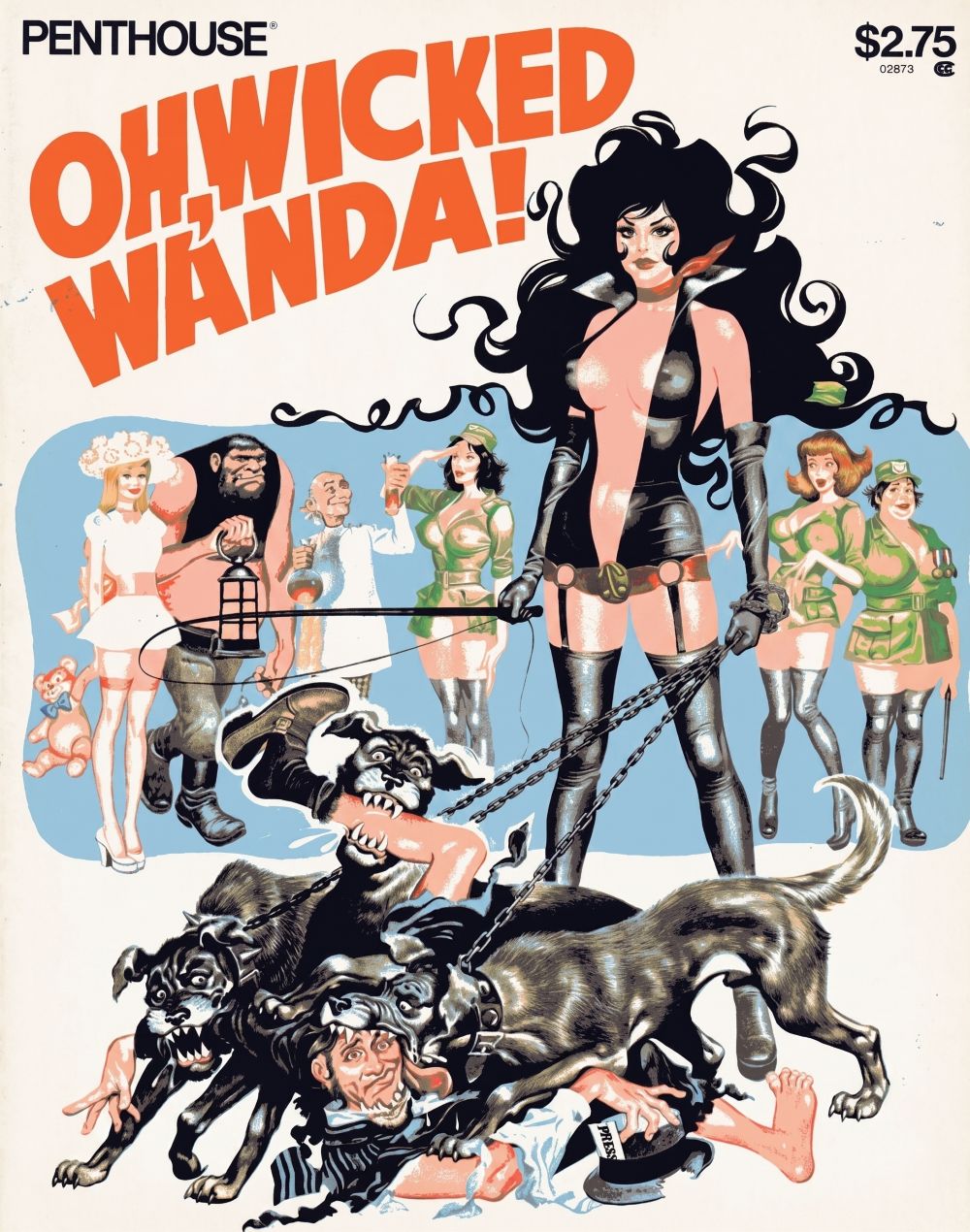
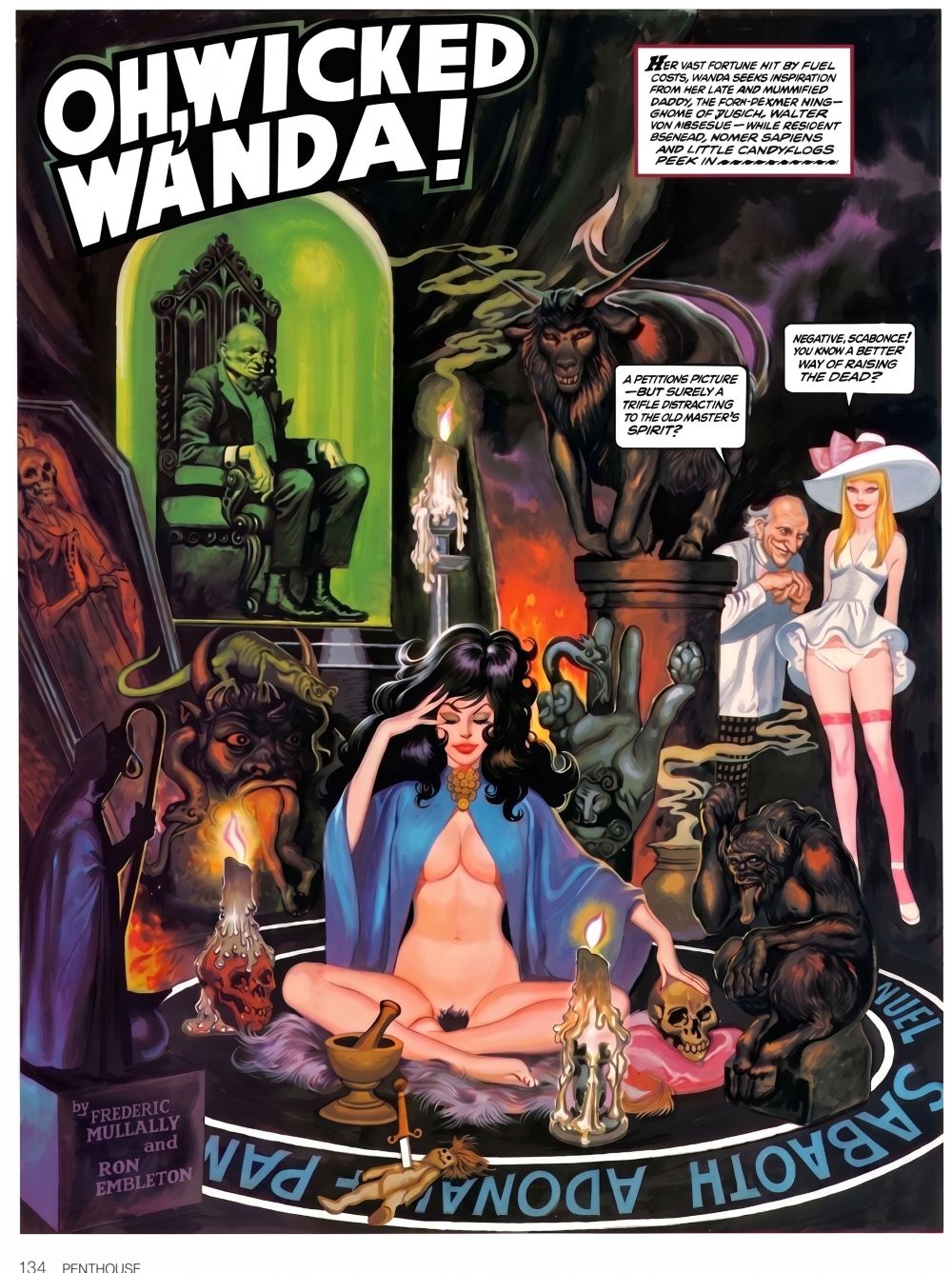
Oh, Wicked Wanda!—later shortened to Wicked Wanda—was Penthouse’s bold, lavish, and often deranged answer to Playboy’s Little Annie Fanny: an adult comic strip that met its competitor’s sexual satire with more cruelty, more eccentricity, more political bite, and startlingly beautiful painted art. Running as a full-color comic from 1973 to 1980, it paired novelist and journalist Frederic Mullally’s caustic scripts with Ron Embleton’s rich watercolor imagery, transforming a prior prose feature into one of the strangest recurring fixtures in 1970s men’s magazines.
Bob Guccione’s reaction to Playboy’s Little Annie Fanny was not merely to imitate it. He wanted Penthouse to have an equivalent feature—and, characteristically, something he considered superior. Playboy’s strip had been a signature showcase for Harvey Kurtzman and Will Elder: a highly polished, densely gagged satire built around the sexually guileless Annie, who repeatedly stumbled into an absurd succession of social fads, political caricatures, pop-cultural parodies, and erotic situations. Guccione saw the commercial and cultural value in such a feature and commissioned Mullally to develop Penthouse’s alternative, ultimately bringing in Embleton, an accomplished British comics artist and painter, to give the strip an unusually lush visual identity.
The crucial difference lies in what each strip thinks its heroine represents. Little Annie Fanny is fundamentally a comic of naïveté. Annie is constantly exploited, ogled, misled, commodified, or swept along by the lunacy of a world more foolish than she is. Kurtzman and Elder’s satire is crowded, busy, and democratic in its ridicule: everyone from hypocrites to celebrities to institutions becomes part of the page’s manic visual clutter. Wicked Wanda, by contrast, has no innocence at its center. Wanda Von Kreesus is a fabulously wealthy, sexually assertive, openly malicious heiress who does not drift helplessly through corruption; she thrives within it. She does not discover the depravity of society. She engineers it, enjoys it, or conquers it.
That shift makes Wicked Wanda feel less like a naughty comic romp and more like a grotesque aristocratic fantasy. Wanda is essentially an erotic supervillain, living in a gothic schloss with a bizarre supporting cast that includes her young companion Candyfloss, a brutish servant, a mad scientist, and an all-female private army. The strip’s premise gives Mullally considerable freedom: a Wanda episode can become a spy spoof, a mad-science horror story, a political satire, a time-travel farce, or simply a malicious practical joke played at the expense of a man, a public institution, or a recognizable cultural icon. This is a world in which immense wealth removes moral restraint rather than imposing responsibility.
Mullally’s writing is the source of the feature’s bitter flavor. Its comedy is not merely sexual; it is aggressively satirical, often directed at power, vanity, social respectability, consumerism, and masculine pomposity. Wanda’s money and immunity make her the perfect vehicle for exposing a world already ruled by appetite and status. The joke is frequently that society’s supposedly serious figures are no less ridiculous or depraved than Wanda herself. Rather than giving readers a conventional virtuous point of identification, the strip invites them into complicity with its amoral protagonist. That is a riskier, stranger comic strategy than the more buoyant misadventures of Annie Fanny.
The tone also benefits from the Britishness of Mullally’s sensibility. Wicked Wanda has the acidic air of a satire that distrusts authority at every level, but it is not solemn about that distrust. It is flamboyant, frequently silly, and happy to push a premise toward outright surrealism. Its plots can be crude, and its sexual politics can be distinctly uncomfortable to a contemporary reader, especially in the way the material handles power, coercion, and age. But that ugliness is partly inseparable from the strip’s chosen landscape: Wicked Wanda is a comic about people with too much power and too little conscience. Its excesses are rarely incidental; they are the point.
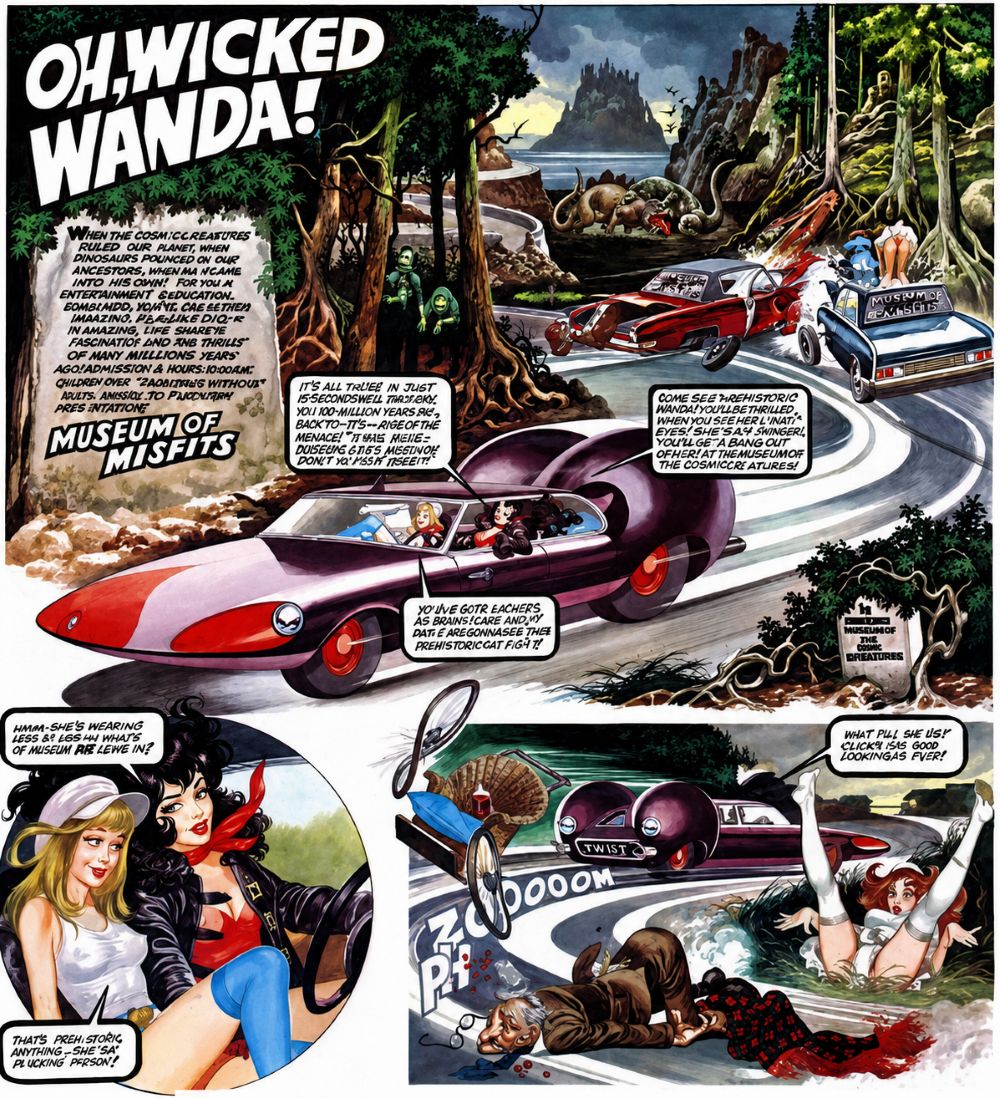
Embleton’s contribution is what elevates the feature beyond an interesting magazine curio. Unlike the deliberately cartoonish line work associated with Kurtzman and Elder’s Little Annie Fanny, Embleton approached Wicked Wanda with painted realism. He used watercolor for the comic’s panels, giving faces, fabrics, bodies, castles, machinery, landscapes, and elaborate costumes a level of sensual texture unusual for a periodical gag strip. The effect is fascinating because the visual surface is so much more refined than the situations it depicts. A scene may involve broad farce, bondage-inflected spectacle, grotesque parody, or a ridiculous villainous scheme, yet Embleton renders it with the seriousness of a lavish adventure illustration.
That tension is the strip’s great aesthetic achievement. Wicked Wanda looks expensive, almost prestigious, even when it is being juvenile, vulgar, or gleefully tasteless. Embleton’s polished craft does not sanitize Mullally’s material, but it gives the comic an eerie grandeur. Wanda herself becomes more than a pin-up figure because she is rendered as a commanding, almost mythic presence: elegant, dangerous, detached, and perfectly at home in worlds of luxury and nightmare. The visual vocabulary borrows from horror films, decadent European adventure comics, fashion illustration, and pulp fantasy, helping the strip build an identity that is far more distinctive than its origins as a competitive response to Playboy might suggest.
Its relationship to Little Annie Fanny is made explicit in early jokes that parody Playboy’s heroine, including gags involving artificial breasts or buttocks that deflate when punctured. These are hardly subtle gestures, but their lack of subtlety is revealing. Penthouse was not quietly borrowing Playboy’s format; it was declaring war on it. Where Little Annie Fanny offered a glamorous but comparatively benign sexual farce, Wicked Wanda presented itself as nastier, more confrontational, and more willing to make sex, class, and media fantasy look ludicrous.
Yet Wicked Wanda is not simply “better” than Little Annie Fanny in any universal sense. Kurtzman and Elder’s strip remains the more formally intricate comedic machine, with Elder’s pages packed with visual jokes that reward slow reading. Wicked Wanda is more uneven, more dependent on its period references, and more likely to mistake extremity for wit. But its best material possesses a singular personality. It is an adult comic that does not settle for supplying erotic ornament to a joke; it makes eroticism part of an entire system of domination, fantasy, absurdity, and satirical venom.
When Penthouse ended Wicked Wanda in 1980, it replaced the strip with Sweet Chastity, again illustrated by Embleton and associated with Guccione’s own creative direction. That succession underscores how important the format had become to Penthouse’s editorial identity. Still, Wicked Wanda remains the more memorable artifact: a decadent, politically irreverent, visually sumptuous comic whose villainous heroine gave Penthouse a genuinely different counterpoint to Playboy’s comic-strip institution. It began as Guccione’s competitive answer to Little Annie Fanny, but at its strongest it became something more peculiar and more enduring—a feverish fantasy of wealth, sex, cruelty, and satire painted with astonishing conviction.
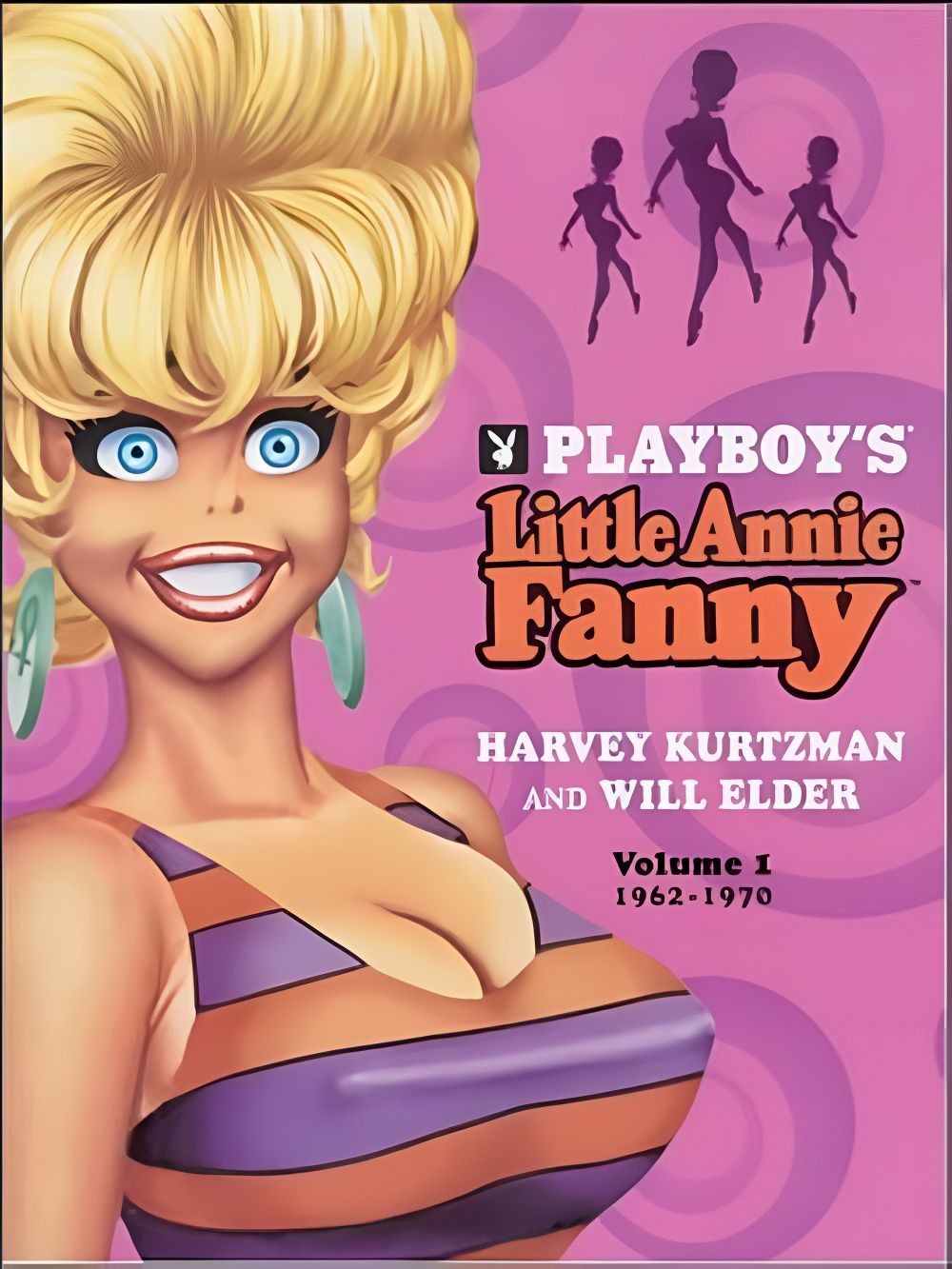
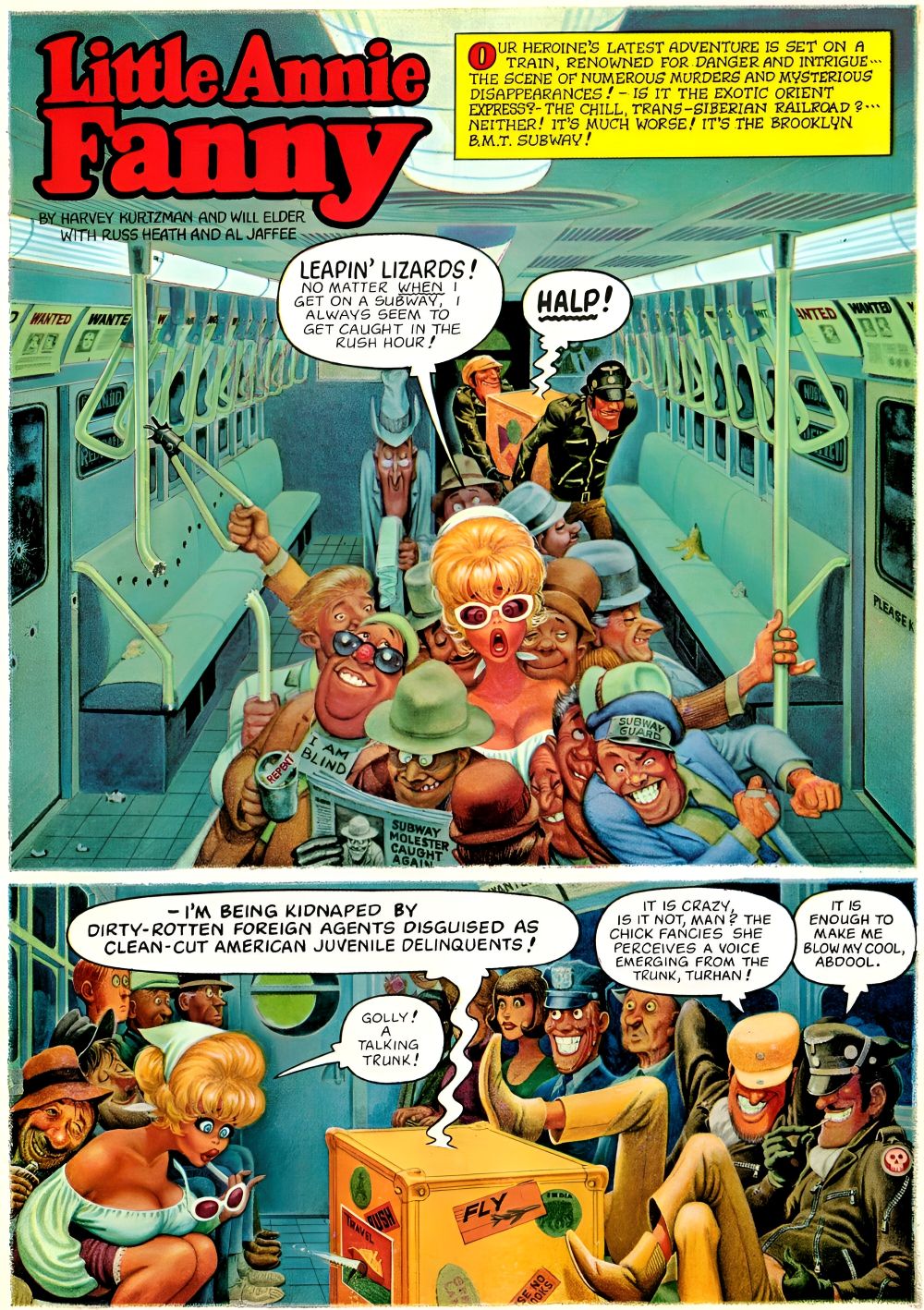
Harvey Kurtzman and Will Elder’s Little Annie Fanny is one of the strangest, most technically dazzling, and culturally revealing comic series ever to run in a mainstream American magazine. Published in Playboy from 1962 to 1988, its basic premise was deceptively simple: Annie Fanny, a gorgeous and spectacularly underdressed young woman, wanders into the social fashions, political anxieties, entertainment crazes, and sexual hypocrisies of the modern United States. Each installment then turns into a lavish full-color farce—part pinup, part Mad-style parody, part period satire, and part frantic visual scavenger hunt.
At a glance, it is easy to dismiss Little Annie Fanny as upscale smut for the Hugh Hefner readership: a glossy excuse to place a naked blonde in absurdly elaborate situations. And, to be fair, nudity was indisputably the commercial engine. Annie’s body is constantly on display, and the series depends on a recognizably male-gaze-centered Playboy sensibility. But that description alone misses why the strip endured for 26 years, or why the names Kurtzman and Elder matter. This was not merely an illustrated centerfold with punch lines. It was a sustained comic chronicle of postwar American fantasy, packaged in airbrushed color and crowded with some of the busiest, funniest, most viciously observant artwork in magazine comics.
Kurtzman had already helped create the language of modern American satire through Mad, while Elder was one of the great comic illustrators: capable of drawing beautiful people, grotesques, slapstick chaos, fake advertising, background gags, and social types all in the same image without losing the picture’s momentum. Their collaboration gives Little Annie Fanny a peculiar tension. The comic invites readers to look at Annie as an object of desire, then surrounds her with a world so ridiculous that the reader’s own desire becomes part of the joke. Annie may be the apparent target of everyone’s attention, but the real targets are the industries, subcultures, politicians, celebrity machines, and self-important movements that use sex, youth, rebellion, or status as branding tools.
The central comic mechanism comes directly from the Kurtzman/Elder school of satire: take a recognizable cultural phenomenon, exaggerate it just enough, and fill every inch of the panel with visual evidence that the whole thing is already absurd. An Annie story is rarely about plot in the conventional sense. Instead, it is a comic demolition derby of styles and attitudes.
One issue might send Annie into a parody of Hollywood, another toward fashionable psychology, youth culture, television, advertising, political campaigning, or a new spiritual fad. The stories often treat Annie as an innocent visitor entering a supposedly sophisticated environment. She is not exactly naïve—she is too adaptable and too knowingly glamorous for that—but she functions as a blank surface onto which the era projects its competing fantasies. Everybody wants Annie to be something: liberated woman, celebrity accessory, corporate mascot, hippie goddess, suburban temptation, political prop, or consumer-product spokesperson.
That flexibility was the strip’s key strength. The character did not need a rigid continuity because Annie was really a cultural barometer. Her changing hairstyles, outfits, settings, and social circles told the reader what America was obsessed with at any given moment. In that sense, Little Annie Fanny was less like a daily newspaper comic and more like a monthly satirical illustrated essay.
Elder’s art is especially essential to that effect. Even when the writing takes a broad, obvious swing at a target, the images add layers of parody. You can linger over a panel and find corrupt executives, ridiculous brand knockoffs, celebrity caricatures, awkward spectators, and small visual jokes functioning at the margins. The comic’s surfaces are glossy, but its worldview is densely cluttered. America in Little Annie Fanny is a carnival of people selling things, performing identities, chasing erotic freedom, and discovering that every supposedly spontaneous cultural movement somehow has merchandise attached to it.
The strip arrived at a perfect moment for Playboy. The early 1960s were still shaped by Cold War respectability, corporate conformity, suburban aspirations, and an increasingly polished mass-media culture. Yet beneath that surface, sexual attitudes, youth identity, popular music, civil rights activism, antiwar politics, and drug culture were transforming the country. Little Annie Fanny made all of this grist for its satirical mill.
Its version of the counterculture is not reverent. Kurtzman was too suspicious of slogans and Elder too alert to visual pretension for that. Hippies, gurus, psychedelic entrepreneurs, radicals, and bohemians appear as part of a world that wants to overthrow the establishment while rapidly developing its own uniforms, poses, and commercial opportunities. The series understood something many period commentators missed: rebellion could be sincere, necessary, theatrical, and exploitable at the same time.
Annie herself could be read as a conflicted symbol of the sexual revolution. On one level, she embodies Playboy’s ideal of sexual availability: glamorous, cheerful, and perpetually presented for heterosexual male consumption. On another, she moves with a freedom that was still startling in American popular culture. She has agency in the loose, comic-strip sense—she travels, experiments, participates, adapts, and refuses to remain confined to the domestic roles older mainstream media had assigned women. The problem is that this “freedom” is filtered through a magazine created largely for men.
That contradiction is one reason the strip is more interesting now than it may have seemed to its original audience. Little Annie Fanny does not stand outside the culture it mocks. It is deeply implicated in it. Its satire of commodified sex runs inside one of the country’s most famous commercial sex-and-lifestyle brands. The comic can laugh at male vanity and consumer lust while simultaneously feeding both. Rather than invalidating the series, that tension makes it an unusually revealing artifact of the era’s confused ideas about liberation.
By the 1970s, the national mood had changed. Vietnam, Watergate, inflation, oil shocks, institutional distrust, and general exhaustion had eroded the breezier confidence of the previous decade. Little Annie Fanny was well suited to this shift because Kurtzman’s comedy had always assumed that authority was partly a performance and that institutions were vulnerable to humiliation.
The 1970s version of the strip feels less enchanted by the promise of social change and more aware of bureaucracy, cynicism, fad culture, and the collapse of public trust. Government becomes an especially ripe target: not a grand moral force, but a machine full of evasive officials, empty rhetoric, paperwork, and people trying to turn scandal into public relations. In a country where political credibility had become a punch line, Annie’s comics could make officialdom look exactly as ridiculous as it felt.
The old counterculture also becomes a target of nostalgia, burnout, and commercialization. What once looked revolutionary now risks becoming a costume, a self-help brand, or an aging generation’s memory of its own glamour. This is where the series’ cynical streak becomes sharper. Kurtzman and Elder do not suggest that the establishment was redeemed; they suggest that American culture has an extraordinary capacity to absorb, neutralize, and resell its critics.
The final stretch of Little Annie Fanny lands in the Reagan 1980s, a decade that practically begs for Elder’s luxuriant visual excess. The cultural vocabulary had shifted again: wealth was louder, celebrity became more aggressively marketable, image management intensified, and the language of success increasingly revolved around luxury, ambition, consumption, and personal branding.
Annie fits naturally into this world because she had always been a glossy fantasy figure. But now the world around her starts to resemble an expanded version of the fantasy: power suits, high-end indulgence, media spectacle, fitness crazes, corporate opportunism, and a renewed confidence in money as a public identity. The strip’s satire becomes less about the dream of breaking free from conformity and more about what happens when conformity itself becomes glamorous, expensive, and aspirational.
There is something almost elegiac about the series ending in 1988. By then, the comic’s foundational ingredients—sexual satire, celebrity parody, consumer mockery, political caricature—were no longer unusual. Television, stand-up, magazines, and eventually the internet would make those modes ubiquitous. Yet few later works matched the tactile labor and visual density of Kurtzman and Elder’s pages. They made satire that looked expensive because it was expensive in attention, craft, and accumulated detail.
Little Annie Fanny remains messy, dated, funny, exploitative, sophisticated, and often astonishing to look at. It is not a cleanly progressive artifact, nor is it simply a relic of old-school Playboy sexism. It is both an expression of its magazine’s fantasies and a critique of the larger culture that produced them. Its real legacy lies in that contradiction: it captured America’s changing self-image from the optimistic, libidinal 1960s through the disillusioned 1970s and into the gold-plated theatricality of the Reagan era—always with Annie at the center, and always with the joke spreading outward until it included nearly everyone.