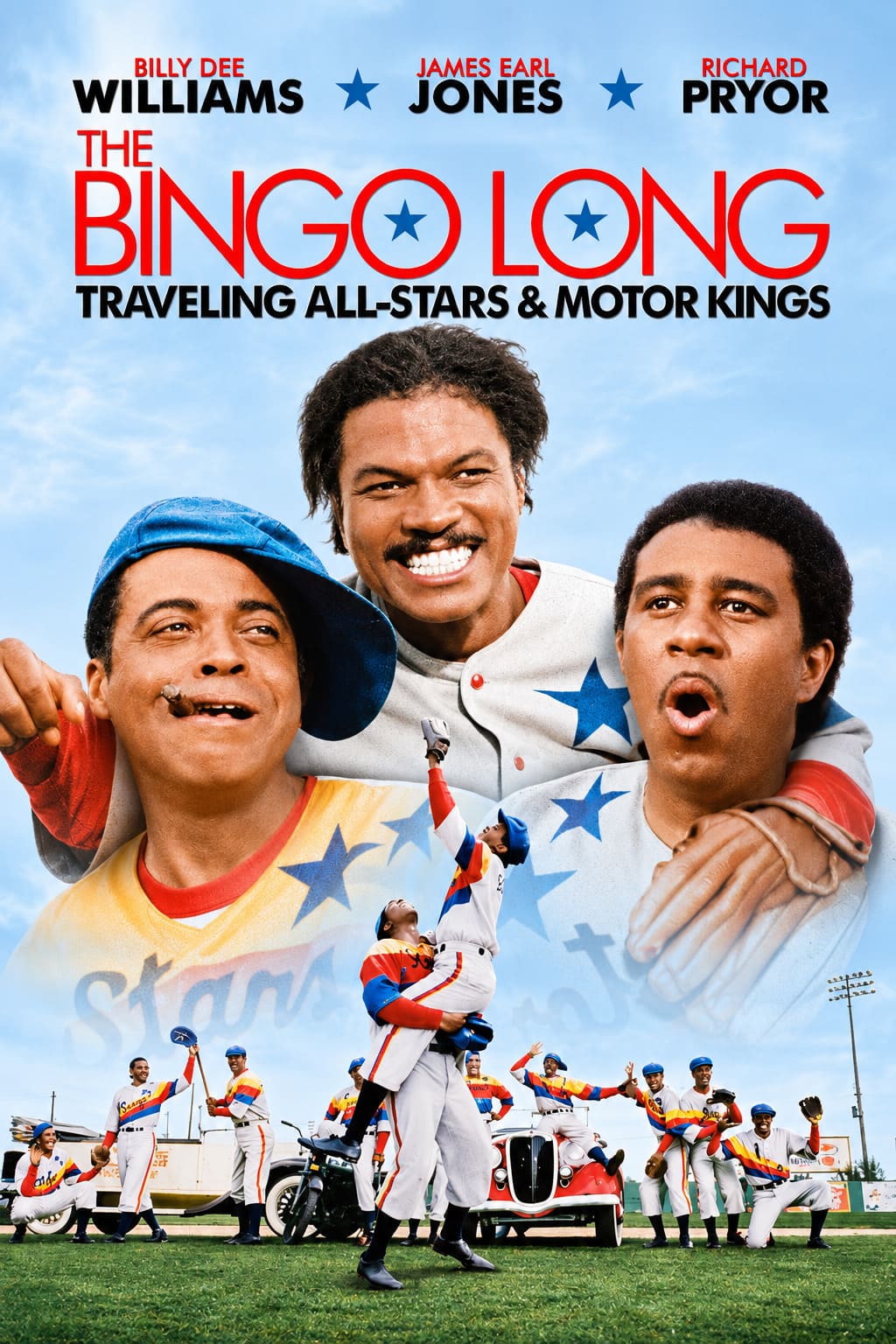
“You put it in the plate, I put it on the fence.” — Leon Carter
The Bingo Long Traveling All-Stars & Motor Kings (1976), directed by John Badham, is a breezy baseball comedy with more on its mind than winning games. Set in the world of 1930s Negro League baseball, it follows star pitcher Bingo Long as he breaks away from an exploitative owner and builds a traveling club. Billy Dee Williams gives Bingo an easy confidence, James Earl Jones brings warmth to slugger Leon Carter, and Richard Pryor adds comic mischief as Charlie Snow. Together, they make this a lively underdog story about talented Black players trying to take control of their working lives.
The setup leaves room for the personalities to take over. Bingo is tired of making money for someone who treats him as replaceable, so he recruits other players to form an independent team. Their plan sounds appealing: travel, play ball, attract crowds, and split the proceeds. Making it work is another matter. Their former employers don’t want to lose their stars, and freedom comes with financial headaches. The story gives its familiar sports-movie premise a twist by making the players’ struggle about who benefits from their abilities, not simply who wins the next game.
The film’s look at the Negro Leagues is central to that struggle. This isn’t a comprehensive history, and its fictional team shouldn’t be mistaken for a documentary portrait. Instead, the movie presents a baseball world filled with skilled players, colorful personalities, demanding owners, and enthusiastic spectators. It treats Black baseball as a sporting culture with its own attractions and tensions, rather than merely a waiting room for acceptance into white professional baseball. That perspective gives the players’ work value on its own terms, even as segregation restricts their opportunities.
Just as importantly, the players aren’t reduced to noble victims. They’re ambitious, funny, proud, argumentative, and sometimes reckless. Their athletic ability is only one part of what makes them interesting. They also have to entertain crowds, negotiate bad arrangements, and figure out how to make a living in circumstances stacked against them. The movie’s affection for these men comes through in their banter and disagreements. It recognizes that surviving this baseball world requires more than a strong arm or a powerful swing; it also takes ingenuity, persistence, and people willing to stick together.
Williams makes Bingo a leader worth following without turning him into a flawless hero. His smile and swagger suggest a man who can sell an idea before he has settled every practical detail. That confidence gets the team moving, but it also creates problems when his instincts run ahead of everyone else’s concerns. He enjoys the spotlight, and Williams makes that vanity part of his appeal rather than an irritating distraction. Bingo’s desire for independence feels personal and believable, especially because he isn’t always certain what independence will require.
Jones provides an excellent counterweight as Leon. His steadier presence gives the film emotional weight without slowing its playful rhythm. Where Bingo gravitates toward spectacle and individual initiative, Leon is more concerned with the group and what the players owe one another. Their differences give the story something to explore beyond whether the team can beat its opponents. Both men want dignity and a fair return for their talent, but they don’t always agree about how to get there. The performances make those disagreements feel like conversations between teammates, not speeches inserted to explain a theme.
Pryor supplies a more mischievous energy as Charlie, whose attempts to maneuver around baseball’s racial barriers produce some of the broadest comedy. There’s a sting beneath the joke: being talented doesn’t mean he can simply present himself and expect a fair chance. Pryor keeps the material moving through his timing and restless confidence. The humor occasionally feels stretched, but Charlie’s schemes also underline how absurd the restrictions are. He’s another player forced to think beyond the game itself, looking for a way through doors that his ability should already have opened.
Badham makes the baseball entertaining without requiring viewers to know every rule. The team’s showmanship turns games into public performances, with crowd reactions and comic timing becoming almost as important as the score. This suits a story about players who must persuade people to pay attention wherever they stop. The on-field antics also let the movie celebrate their skill without becoming overly reverent. These men can be impressive athletes and shameless entertainers at the same time. The film is especially enjoyable when their confidence, coordination, and competitive instincts all come together.
The loose road-movie structure has drawbacks. Some stops are funnier than others, and the cheerful mood occasionally softens the economic exploitation and racial exclusion shaping the players’ lives. Anyone looking for a detailed examination of the Negro Leagues may find that the film raises more questions than it investigates. Still, its warmth is earned by the cast and its interest in the men beneath the uniforms. The Bingo Long Traveling All-Stars & Motor Kingssucceeds as an easygoing sports comedy whose real stakes extend beyond the scoreboard. Winning matters, but getting to decide how to live and work matters more.

