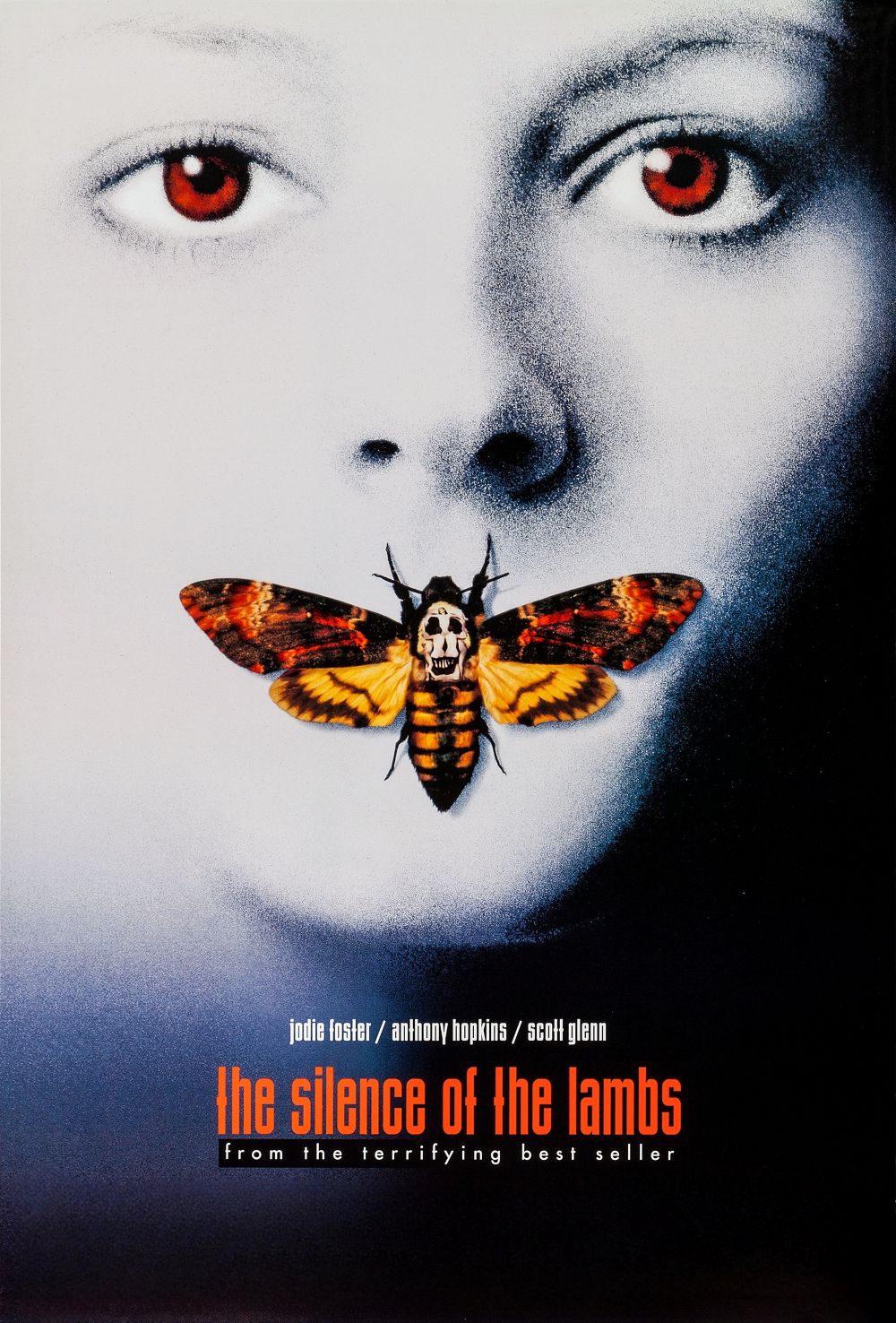
Horror Film Review: The Silence of the Lambs (dir. by Jonathan Demme)


“Believe me, you don’t want Hannibal Lecter inside your head.” — Jack Crawford

Some thrillers get louder as they become more frightening. The Silence of the Lambs often goes the other way, drawing its power from a lowered voice, a held stare, or the uncomfortable silence before someone answers a question. Jonathan Demme understands that an audience will lean into a scene when the actors give them something worth watching. His 1991 film has plenty of gruesome material, but its finest effects come from the precision of the performances and the intimacy of the camera. It is a horror movie that can make two people talking feel more dangerous than an outright attack.

Adapted by Ted Tally from Thomas Harris’s novel, the story follows FBI trainee Clarice Starling as she helps investigate Buffalo Bill, a serial killer targeting women. She seeks information from imprisoned psychiatrist and cannibal Hannibal Lecter, who demands personal disclosures in exchange for his insight. That premise creates an ideal setting for actors: professional conversations keep slipping into confrontations neither participant experiences in quite the same way. Clarice needs answers, while Lecter wants access to the person asking the questions. Demme builds the film around that imbalance without letting the investigation overwhelm the people involved.

Jodie Foster gives Clarice a mixture of determination and discomfort that makes her compelling well before the danger becomes immediate. Her performance is carefully modulated, especially in the contrast between her formal speech and the emotions passing across her face. She wants to project competence, but Foster lets us notice when that projection requires work. A tightened expression or a slight hesitation suggests someone evaluating how much of herself she can safely reveal. Those details make Clarice feel inexperienced without making her seem incapable. She has the intelligence for the job; what she lacks is the luxury of feeling secure in it.

Foster is particularly impressive when Clarice encounters something painful and has to continue functioning. She allows the reaction to register, then shows the effort of turning it into concentration. It is a subtle distinction, but an important one: Clarice’s professionalism does not depend on suppressing every trace of feeling. Her compassion often seems to make her more attentive. Foster also avoids the opposite trap of constantly advertising sensitivity. She can be brisk, guarded, or visibly irritated. The result is a character whose emotional responses feel specific to each encounter rather than arranged to remind us that she is sympathetic.

Anthony Hopkins approaches Lecter with a much more conspicuous sense of presentation. His speech is precise, his gaze sustained, and his pauses carefully placed. The performance has theatrical flair, but Lecter himself is theatrical, enjoying the opportunity to arrange an encounter around his preferences. Hopkins makes restraint the source of his menace. Because he gives so little away physically, the smallest change becomes noticeable. A slight movement forward can feel like an intrusion. Even his courtesy has an aggressive quality, as though good manners are another standard by which everyone around him is certain to disappoint.

What makes Foster and Hopkins so effective together is the difference in how they occupy a scene. Hopkins invites us to study the performance Lecter is giving, while Foster draws us toward the reactions Clarice would prefer to conceal. Their exchanges develop through that contrast. She does not merely receive his provocations; she assesses them, resists them, and sometimes challenges his assumptions. His interest in her can look like respect, but neither actor lets that resemblance become comforting. There is an unsettling intimacy in the attention they give each other, with Foster continually reminding us that attention can also be a form of pressure.

Demme photographs those exchanges with an intimacy that makes the viewer feel implicated. Faces often turn almost directly toward the lens, putting us close to the position of the person being addressed. The effect is especially uncomfortable when Clarice is being examined, patronized, or challenged. Rather than watching someone endure scrutiny from a convenient distance, we experience something of its force ourselves. Demme also gives reactions time to develop. He understands that a face listening can be as expressive as a face speaking, and he rarely seems impatient to interrupt an actor’s thought with unnecessary visual decoration.

Tak Fujimoto’s cinematography gives that approach a strong physical foundation. Close-ups matter partly because the surrounding spaces are so clearly established: offices, corridors, examination rooms, and cells all have their own arrangements of authority and confinement. Clarice frequently appears exposed within environments that supposedly represent order. The compositions make us aware of who occupies the space comfortably and who must negotiate a place within it. Fujimoto does not need to make every room look sinister. The ordinary institutional surfaces are convincing enough that an intrusive face or an ominous stretch of corridor can disturb their apparent neutrality.

The supporting performances help maintain that tension without duplicating the central pairing. Scott Glenn gives Jack Crawford a subdued authority that can feel supportive and calculating at once. Anthony Heald makes Dr. Chilton’s vanity unpleasantly recognizable, finding irritation in the way he presents himself as indispensable. Brooke Smith gives Catherine Martin a forceful combination of fear, anger, and practical determination. Ted Levine takes Buffalo Bill in a more volatile direction, creating a disturbing contrast with Lecter’s composed self-display. Together, these actors give the film different social temperatures; Clarice cannot approach every person with the same defenses.

The film’s treatment of Bill remains its most troubling element. Although the dialogue distinguishes him from transgender people, its imagery still associates gender nonconformity with disgust and danger. The qualification cannot entirely undo the visual impression, especially in a film this skilled at making images stick. Elsewhere, the craftsmanship is remarkably cohesive. Howard Shore’s score supplies a mournful undertow, while the editing allows conversations to breathe before tightening our experience of danger. In the climactic passages, restricted visibility becomes frightening because Demme has already taught us how much depends on looking, reading expressions, and understanding the space around a person.

The lasting achievement of The Silence of the Lambs is how completely its style serves its actors. Demme and Fujimoto bring us close enough to catch Foster’s fleeting uncertainty and Hopkins’s smallest calculated gesture, then trust those details to do the work. The film can be shocking, but it is rarely more gripping than when someone is simply deciding what to say next. That is what keeps it from becoming a museum of familiar lines and notorious images. Beneath all the cultural baggage, the performances still feel alive, and the camera still knows how to make us uneasy about watching them.

6 Shots From 6 Films: Special Chow Yun-Fat Birthday Edition!


Chow Yun-Fat is one of the great international movie stars, and he’s my favorite living actor. Today is his 71st birthday, and I’ve been watching and reviewing his movies like crazy this month. I’ve had a ball. I’ll have new reviews to share soon, but today I’m sharing six fun screen images featuring the Hong Kong legend!

John Woo’s ONCE A THIEF (1991), laughing with Cherie Chung & Leslie Cheung!
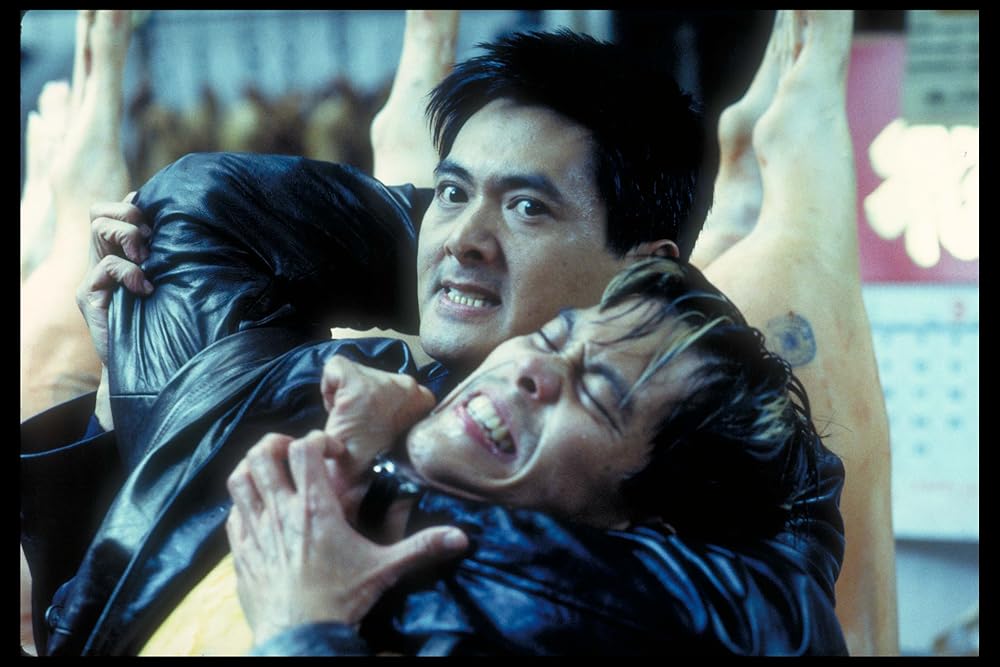
THE CORRUPTOR (1998), with a chokehold on Byron Mann!
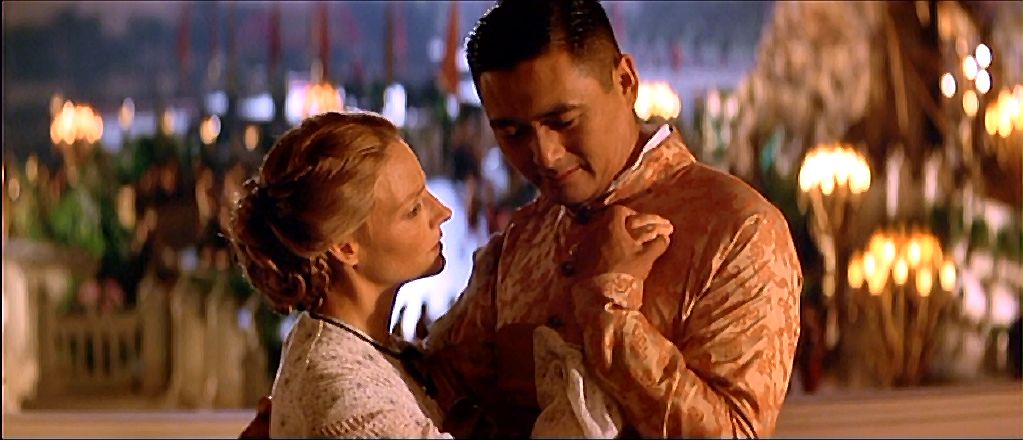
ANNA AND THE KING (1999), dancing with Jodie Foster!
CURSE OF THE GOLDEN FLOWER (2006), in a toxic relationship with Gong Li!
Letting the Bullets Fly in LET THE BULLETS FLY (2010)!
Looking debonair in Johnnie To’s OFFICE (2015)!

Brad’s “Scene of the Day” – Chow Yun-Fat dances with Jodie Foster!


Chow Yun-Fat is one of the most charismatic men on earth. I’ve always enjoyed his performance in ANNA AND THE KING (1999) with Jodie Foster. He’s wonderful in this big budget American film, and he doesn’t even have to fire two guns! I know several women here in Arkansas who don’t know the first thing about Hong Kong movies, but they still love Chow based on this one film. On a side note, ANNA AND THE KING made over $113 Million at the worldwide box office, which means quite a few people in this world appreciate a more romantic Chow.

Enjoy this scene where the King of Siam surprises Foster’s English schoolteacher, and breaks all kinds of cultural norms, when he asks her to dance. It’s quite a charmer.

The Unnominated #14: Kansas City Bomber (dir by Jerrold Freedman)


Though the Academy of Motion Picture Arts and Sciences claim that the Oscars honor the best of the year, we all know that there are always worthy films and performances that end up getting overlooked.  Sometimes, it’s because the competition too fierce.  Sometimes, it’s because the film itself was too controversial.  Often, it’s just a case of a film’s quality not being fully recognized until years after its initial released.  This series of reviews takes a look at the films and performances that should have been nominated but were, for whatever reason, overlooked.  These are the Unnominated.

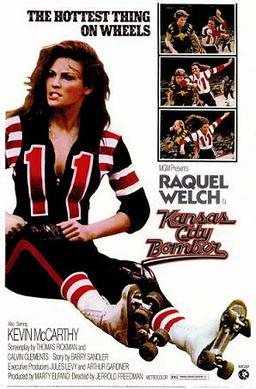
In 1972’s Kansas City Bomber, Raquel Welch stars as KC Carr.

KC. is a star on the roller derby circuit, a tough fighter who is loved by the audience and who shows no fear when it comes to skating around the track and getting into brawls with the other team.  The audience especially loves it when she fights Jackie Burdette (Helena Kallianiotes), madly cheering over every punch landed and every elbow thrown and every strand of hair pulled.  It’s not glamorous work but KC loves the adulation of the crowds and the comradery of her team.  She’s a single mother and putting on roller skates and getting bruised in fights allows her to support her daughter, Rita (a pre-Taxi Driver Jodie Foster).

But then KC is traded to another team, the Portland Loggers.  It takes KC a while to fit in with her new team.  She’s viewed with suspicion, especially when she starts to date the owner of the team, Burt Henry (Kevin McCarthy).  Burt may seem charming but KC soon discovers that he has a jealous side.  When KC spends too much time with her best friend and roommate, Burt trades her to another team.  When a male skater named “Horrible” Hank (Norman Alden) reveals that he has a rather obvious crush on KC, Burt goes out of his way to humiliate Hank.  Burt wants to start a new team in Chicago and he’s promised to make KC a star.  Will KC give up her own freedom to be Burt’s well-compensated star or will she stand up for herself and show that she doesn’t belong to anyone?

You already know the answer.  The wonderful thing about Raquel Welch is that she was tough.  She didn’t let people push her around and, if that resulted in people in Hollywood whispering that she was difficult, so be it.  Like KC Carr, Raquel Welch didn’t make any apologies.  Kansas City Bomber is one of the few of Welch’s early 70s films to celebrate and show how just how tough she was.  For once, Welch is given an actual character to play and she proves herself to be a strong and fierce actress.  It’s fun and more than a little empowering to watch her performance here.  Everyone underestimates KC Carr, just as everyone underestimated Raquel Welch.  In both cases, the doubters are proven wrong.

Kansas City Bomber is not a great film.  (The pacing is totally off and the supporting characters are not quite as memorable as either Welch or Kevin McCarthy.)  But Raquel Welch gave a great performance.  That Welch was never Oscar-nominated isn’t really a surprise.  She didn’t appear in the type of movies that received Oscar attention and she was often cast in roles that didn’t give her much of an opportunity to show off what she could do.  She definitely deserved a nomination for Kansas City Bomber.  

Previous entries in The Unnominated:

  1. Auto Focus 
  2. Star 80
  3. Monty Python and The Holy Grail
  4. Johnny Got His Gun
  5. Saint Jack
  6. Office Space
  7. Play Misty For Me
  8. The Long Riders
  9. Mean Streets
  10. The Long Goodbye
  11. The General
  12. Tombstone
  13. Heat

A Blast From The Past: Rookie of the Year (dir by Larry Elikann)


TSL’s review of Highway to Heaven will not be posted tonight so that we may bring you this special presentation….

My retro television reviews will return next week but until then, enjoy this blast from the past.  1973’s Rookie of the Year stars 11 year-old Jodie Foster as Sharon Lee, who causes some controversy when she joins her brother’s little league team.  I picked out this program specifically for my sister, Erin, who loves baseball the way that I love movies!

It’s strange to think, while watching this, that Jodie Foster was just three years away from creating even more controversy with her Oscar-nominated role in Martin Scorsese’s Taxi Driver.

And now, here is Rookie of the Year….

So, I Watched Stealing Home (1988, dir. by William Porter and Steven Kampmann)


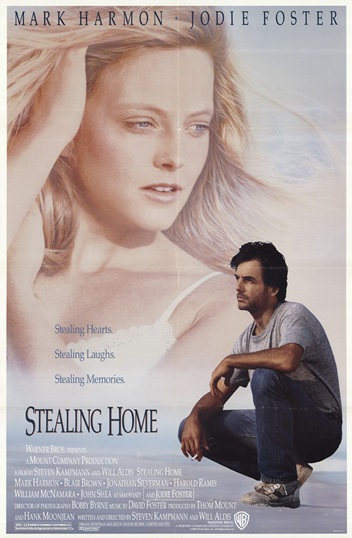
Back in December, Lisa agreed to watch a baseball movie with me to make up for making me watch The Catcher in 2023.  The one we picked was Stealing Home, because it starred Mark Harmon and Jodie Foster and it looked like it would be a sweet movie.

Stealing Home opens with Billy Wyatt (Mark Harmon), a minor league baseball player who is getting ready to take the field and who is standing for the National Anthem.  I immediately liked Billy because he was standing for the Anthem and not taking a knee.  I also like aging minor leaguers because they’re still playing the game even though they know they’ve probably missed their window to move up to the majors.  Billy Wyatt loves both the game and his country.

As Billy waits to play ball, he thinks about another type of love, the love that he had for Katie Chandler (Jodie Foster).  Katie was six years older than him and encouraged him to always pursue his dreams, whether it was in baseball or love.  The movie flashes back to Billy living in a motel with a cocktail waitress and getting a phone call from his mother who tells him that Katie has committed suicide and she wants Billy to spread her ashes at a special place.  Billy then flashes back to his childhood and his teen years, in which he’s played by William McNamara who does not look like he could ever grow up to be Mark Harmon.  Billy’s best friend is Alan Appleby, who is played as a teenager by Jonathan Silverman and as an adult by Harold Ramis.  Jonathan Silverman growing up to be Harold Ramis seems even more unlikely than William McNamara becoming Mark Harmon.  Billy remembers losing his virginity to Appleby’s prom date, losing his dad to a car wreck, and a Fourth of July weekend that he spent on the beach with Katie and his mom (Blair Brown).

Only Jodie Foster plays Katie Chandler and we only see Katie thorough Billy’s eyes.  Jodie Foster gives a lively performance as Katie but she always more of a plot device than a fully rounded character.  We never find out why Katie killed herself.  Her father says that Katie was unhappy during her adult life but why?  Even after Billy gets her ashes and tries to figure out where she wanted him to spread them, he never thinks about why she killed herself.  In fact, he hadn’t even talked to her for years.  That really bothered me.

The movie ends with Billy stealing home during a game and proving that he’s still got it as far as baseball goes.  I love baseball but I still felt like Katie’s untold story was probably more interesting than Billy’s.  I liked Mark Harmon’s performance and I really wanted to like Stealing Home more than I did.  I wish the movie had been more about who Katie was instead of being about who Billy thought Katie was.

Here Are The 2024 AARP Movies For Grown-Ups Nominations


The awards precursor season is getting started …. kinda.

The AARP Movies For Grown-Ups Nominations were announced last week, on the 20th.  I’m only now getting around to sharing them because I’m not a member of AARP and therefore, I had no idea these nominations had even been announced.  It seems a bit earlier than usual, for them.  Then again, you know how retired folks are about getting up early.

How influential are the AARP nominations?  Not very.  These nominations were not made being film critics or people who work in the industry.  They were made by the editors of AARP’s magazine.  That said, it’s always good to get mentioned somewhere.  If nothing else, this list might indicate which films are resonating with the over-5o set.

Or maybe I just like long lists.

Anyway, here are the nominations!  The winners will be announced on January 11th, during the Denny’s breakfast special.

Best Picture/Best Movie for Grownups
A Complete Unknown
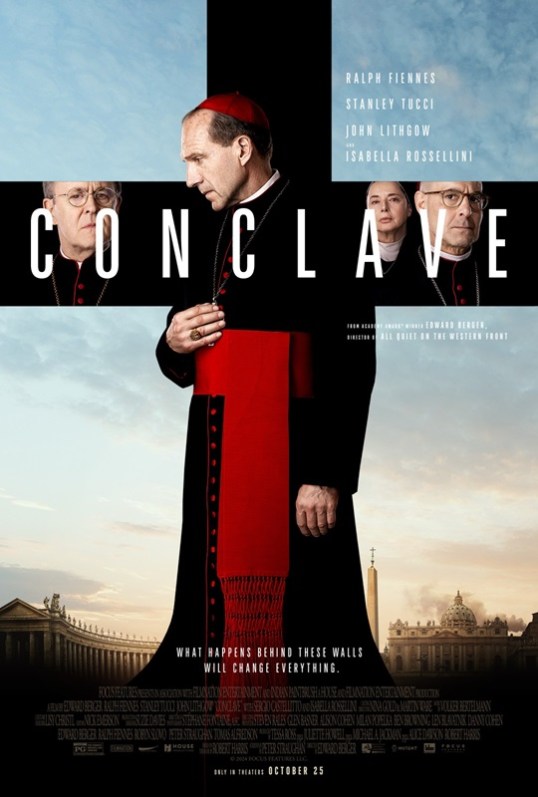
Conclave
Emilia Pérez
Gladiator II
September 5

Best Actress
Pamela Anderson (The Last Showgirl)
Marianne Jean-Baptiste (Hard Truths)
Nicole Kidman (Babygirl)
Demi Moore (The Substance)
June Squibb (Thelma)

Best Actor
Adrien Brody (The Brutalist)
Daniel Craig (Queer)
Colman Domingo (Sing Sing)
Ralph Fiennes (Conclave)
Jude Law (The Order)

Best Supporting Actress
Joan Chen (Didi)
Aunjanue Ellis-Taylor (Nickel Boys)
Lesley Manville (Queer)
Connie Nielsen (Gladiator II)
Isabella Rossellini (Conclave)

Best Supporting Actor
Clarence Maclin (Sing Sing)
Guy Pearce (The Brutalist)
Peter Sarsgaard (September 5)
Stanley Tucci (Conclave)
Denzel Washington (Gladiator II)

Best Director
Pedro Almodóvar (The Room Next Door)
Jacques Audiard (Emilia Pérez)
Edward Berger (Conclave)
James Mangold (A Complete Unknown)
Ridley Scott (Gladiator II)

Best Screenwriter
Jacques Audiard, Thomas Bidegain, Nicolas Livecchi (Emilia Pérez)
Jay Cocks and James Mangold (A Complete Unknown)
Winnie Holzman (Wicked)
Peter Straughan (Conclave)
Denis Villeneuve and Jon Spaihts (Dune: Part Two)

Best Ensemble
A Complete Unknown
Beetlejuice Beetlejuice
His Three Daughters
September 5
Sing Sing

Best Actress (TV)
Jennifer Aniston (The Morning Show)
Jodie Foster (True Detective: Night Country)
Jean Smart (Hacks)
Meryl Streep (Only Murders in the Building)
Sofia Vergara (Griselda)

Best Actor (TV)
Billy Crudup (The Morning Show)
Idris Elba (Hijack)
Jon Hamm (Fargo)
Gary Oldman (Slow Horses)
Hiroyuki Sanada (Shōgun)

Best TV Series or Limited Series
The Crown
Hacks
Palm Royale
Shōgun
Slow Horses

Best Intergenerational Film
Didi
Here
His Three Daughters
The Piano Lesson
Thelma

Best Time Capsule
A Complete Unknown
The Brutalist
Here
Maria
September 5

Best Documentary
I Am: Celine Dion
Luther: Never Too Much
Piece by Piece
Super/Man: The Christopher Reeve Story
Will & Harper

Lisa Marie’s Oscar Nomination Predictions


The Oscar nominations are due to be announced in a few more hours.  I’m still struggling to get caught up with all of the movies that I need to see before I can post my personal Oscar nominations (expect to see them and all of my “best of 2023 lists” at the end of this month) but I have been following the precursor season and I feel confident about predicting what will be nominated in the major categories.

We’ll find out how correct I am in just a few more hours!

Best Picture

American Fiction

Barbie

The Color Purple

The Holdovers

Killers of the Flower Moon

Oppenheimer

Past Lives

Poor Things

The Zone of Interest

Best Director

Greta Gerwig for Barbie

Yorgos Lanthimos for Poor Things

Christopher Nolan for Oppenheimer

Alexander Payne for The Holdovers

Martin Scorsese for Killers of the Flower Moon

Best Actor

Bradley Cooper in Maestro

Colman Domingo in Rustin

Paul Giamatti in The Holdover

Cillian Murphy in Oppenheimer

Jeffrey Wright in American Fiction

Best Actress

Lily Gladstone in Killers of the Flower Moon

Sandra Huller in Anatomy of a Fall

Greta Lee in Past Lives

Carey Mulligan in Maestro

Emma Stone in Poor Things

Best Supporting Actor

Willem DaFoe in Poor Things

Robert De Niro in Killers of the Flower Moon

Robert Downey, Jr. in Oppenheimer

Ryan Gosling in Barbie

Dominic Sessa in The Holdovers

Best Supporting Actress

Emily Blunt in Oppenheimer

Danielle Brooks in The Color Purple

Penelope Cruz in Ferrari

Jodie Foster in Nyad

Da’Vine Joy Randolph in The Holdovers

Catching Up With The Films of 2023: Nyad (Dir by Elizabeth Chai Vasarhelyi and Jimmy Chin)


64 year-old swimmer Diana Nyad swimming all the way from Cuba to Florida (and making it on her fifth attempt) is one of those inspiring stories that I totally missed when it happened.  I can’t remember for sure exactly what was going on in my life in 2013 but paying attention to inspirational sports stories was apparently not high on the agenda.

Fortunately, any amazing true story will eventually be turned into a film and that film will eventually premiere on Netflix in time for Oscar consideration.  That’s certainly the case with Nyad, which stars Annette Bening as the title character and Jodie Foster as her best friend and coach, Bonnie Stoll.  The film follows Nyad as she spends four years of her life trying to make it from Cuba and Florida and prove the naysayers wrong.  Along the way, she learns about humility, she learns to value her friends, and she also starts to deal with the various traumas of her youth.

It’s not a bad film.  It may sound like a traditional sports biopic and, in many ways, it is.  The directors are documentarians making their feature debut and they do have a tendency to rely a bit too much on archival footage of network news reporters announcing that Nyad will be making another attempt to make the swim.  The film (and the characters) unquestioning love for Cuba can be a bit hard to take, considering that the story takes place at a time when Raoul Castro was still ruling the country.  (The amount of “Visit Cuba” shirts felt more than a little excessive.  Don’t visit Cuba as long as Jose Daniel Ferrer is being detained.)  That said, the cinematography is gorgeous and the film does a wonderful job of showing just how physically and mentally exhausting Nyad’s accomplishment was.  It’s not just that Diana is physically drained from the experience.  She also occasionally suffers hallucinations as a result of exhaustion and exposure and, often times, she’s unaware of how far along she is in her journey.  While Diana swims, Bonnie and the rest of her team steer her, trying to keep her moving with the unpredictable current.  This is a film that will leave you respecting professional swimmers and their support teams.

The film’s cast does a great job bringing the story to life.  As portrayed in the film, Diana Nyad can be a bit of a pain to deal with and, to her credit, Annette Bening doesn’t try to soften any of the character’s rough edges.  Nyad is a egotistical, grandiose, impractical, demanding, and frequently self-centered and it says a lot of about Bening’s performance that the audience still ends up sympathizing with her and her desire to not be dismissed as obsolete at the age of 60.  That said, the film truly belongs to Jodie Foster and Rhys Ifans, playing Nyad’s coach and her navigator.  While Nyad rails against age and insists that her destiny is to successfully make the swim,  it falls to the characters played by Foster and Ifans to just keep Diana alive.  Foster is the film’s heart, playing Bonnie as a tough but caring coach who understands that, even though they drive each other crazy, she and Nyad are meant to make the journey together.  While the film portrays Nyad’s accomplishment, what it truly celebrates is her friendship with Bonnie.  We should all be so lucky to have a friend and supporter like Bonnie in our lives.

It may not break any new cinematic ground but Nyad still does a good job of telling a worthy story.

Lisa Marie’s Oscar Predictions For December


Here they are!  These are my final Oscar predictions for 2023.  The critics groups have certainly helped to show us which films are major contenders.  That said, the Guilds are even more important so I can’t wait to see who they nominate and honor in January.

Below are my predictions for December.  Be sure to also check out my predictions for March and April and May and June and July and August and September and October and November!

Best Picture 

American Fiction

Barbie

Godzilla Minus One

The Holdovers

Killers of the Flower Moon

Maestro

Oppenheimer

Past Lives

Poor Things

The Zone of Interest

(Before anyone gives me a hard time about Godzilla Minus One, I always toss in one critically acclaimed long shot so that I can brag — or perhaps even gloat — if it actually happens.  Plus, everyone knows that having Godzilla at the Oscars would be entertainment gold.)

Best Director

Greta Gerwig for Barbie

Yorgos Lanthimos for Poor Things

Christopher Nolan for Oppenheimer

Alexander Payne for The Holdovers

Martin Scorsese for Killers of the Flower Moon

Best Actor

Bradley Cooper in Maestro

Colman Domingo in Rustin

Paul Giamatti in The Holdovers

Cillian Murphy in Oppenheimer

Jeffrey Wright in American Fiction

Best Actress

Lily Gladstone in Killers of the Flower Moon

Sandra Huller in Anatomy of a Fall

Greta Lee in Past Lives

Carey Mulligan in Maestro

Emma Stone in Poor Things

Best Supporting Actor

Robert De Niro in Killers of the Flower Moon

Robert Downey, Jr. in Oppenheimer

Ryan Gosling in Barbie

Charles Melton in May/December

Mark Ruffalo in Poor Things

Best Supporting Actress

Emily Blunt in Oppenheimer

Danielle Brooks in The Color Purple

Jodie Foster in Nyad

Rachel McAdams in Are You There God?  It’s Me, Margaret.

Da’Vine Joy Randolph in The Holdovers