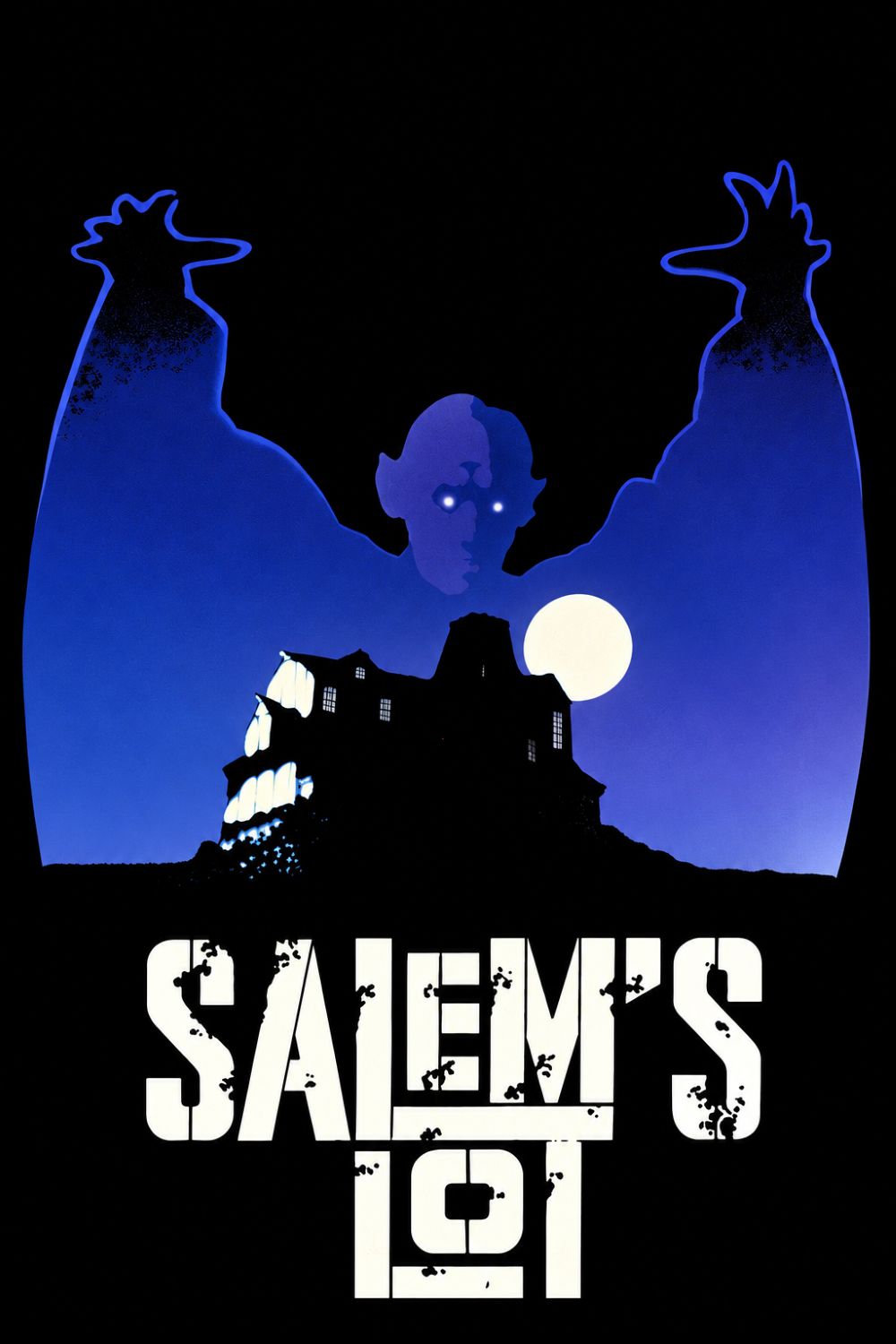
Horror Series Review: Salem’s Lot (by Tobe Hooper & Paul Monash)


“Open the window, Mark.” — Danny Glick

A town doesn’t have to look sinister to be hiding something rotten. That idea gives Tobe Hooper’s 1979 Salem’s Lot much of its staying power. Sure, there’s a creepy old house overlooking the neighborhood, but the real trouble settles into places that should feel reassuring: bedrooms, family homes, and familiar streets. Adapted from Stephen King’s novel, the miniseries turns an ordinary community into a feeding ground without losing sight of what made it ordinary in the first place. It’s uneven, occasionally stiff, and unmistakably a television production, yet its best moments deliver the sort of unease that expensive effects can’t guarantee.

The story begins with novelist Ben Mears, played by David Soul, returning to Jerusalem’s Lot, Maine. He’s drawn back partly by disturbing memories of the Marsten House, a property that seems to concentrate the town’s darkness. Unfortunately, antiques dealer Richard Straker and his mysterious partner, Kurt Barlow, have taken an interest in the place, too. Their arrival coincides with disappearances, illnesses, and deaths that suggest something worse than local bad luck. It’s familiar vampire territory, but familiarity works in its favor. We recognize the warning signs while the characters struggle to explain them away, creating tension between what the audience suspects and what the town will believe.

Hooper takes his time getting everyone into position, which is both a strength and a frustration. The early stretches contain plenty of conversation and everyday business before the supernatural threat becomes impossible to ignore. Some scenes could move faster, and a few supporting characters seem more interesting in principle than in practice. Still, the buildup matters. King’s novel isn’t simply about a vampire turning up; it’s about an entire town becoming vulnerable to him. The miniseries cannot reproduce the book’s full social landscape, but it establishes enough relationships and routines to make the destruction feel like more than a body count.

The town also isn’t an innocent paradise suddenly spoiled by an outside monster. Secrets, resentments, and unpleasant impulses already exist beneath its respectable surface. The vampires don’t invent those weaknesses so much as exploit them. This is an important part of King’s novel to preserve, and the adaptation gets the idea across even when individual subplots feel abbreviated. The Marsten House may be the obvious symbol of evil, but it doesn’t exist in isolation. Its presence above the town suggests a darkness everyone can see and would rather leave alone. That indifference makes the setting more interesting than a collection of unsuspecting victims.

Soul provides a steady center as Ben, even if his restrained performance sometimes borders on flatness. He’s convincing as a man returning to unfinished emotional business, and his seriousness keeps the increasingly bizarre events grounded. There’s little danger of him making the material feel campy. His reserve occasionally creates distance, though, especially when the story needs a stronger emotional response. Ben works best as an observer forced into action, someone whose interest in haunted history becomes considerably less comfortable once it stops behaving like material for a book. Soul conveys that shift more effectively than the warmer aspects of the character.

The romance with Susan Norton, played by Bonnie Bedelia, is less satisfying. Their relationship offers a glimpse of the life Ben might build in town, giving him something to move toward rather than simply something to investigate. That’s useful, but the scenes don’t always generate enough warmth to make the possibility compelling. Bedelia brings an appealing directness to Susan, yet the relationship can feel emotionally hurried even when the surrounding story moves slowly. You understand why it belongs without becoming invested in every exchange. A stronger connection would have given the supernatural threat a more painful personal dimension.

Lance Kerwin makes a livelier impression as Mark Petrie, a horror-loving kid whose interests become unexpectedly practical. Mark could have been a convenient walking instruction manual, but Kerwin gives him enough vulnerability to avoid that trap. He recognizes the danger without becoming immune to it. There’s also something satisfying about a character who takes the evidence seriously rather than endlessly refusing to accept it. His imagination helps him understand the situation, but it doesn’t make everything manageable. That distinction captures something essential about King’s treatment of childhood: knowing what the monster is can help you survive, but it won’t stop you from being terrified.

James Mason is the cast’s great weapon. As Straker, he brings such controlled unpleasantness that a polite conversation can feel like a threat. His calm suggests someone completely comfortable with things everyone else would find horrifying. Is he being dismissive, quietly amused, or openly contemptuous? Often, the answer seems to be all three. Mason gives the production authority whenever he appears, making civilized behavior look like something a predator has learned to imitate. He’s particularly effective because he doesn’t strain for menace. The performance lets us sense the cruelty beneath the manners without constantly dragging it into view.

That elegance becomes especially important because Barlow departs sharply from the novel. King’s vampire can speak, manipulate, and present a recognizable personality. Hooper and actor Reggie Nalder instead give us a largely silent creature, leaving Straker to handle the smooth conversation. Readers who miss the original Barlow have a fair argument: something is lost when an articulate villain becomes primarily a physical menace. Onscreen, though, the decision pays off. With his bald head, pointed ears, and jutting teeth, this Barlow recalls Nosferatu rather than a charming drawing-room vampire. He looks fundamentally unwelcome, and Hooper limits his appearances enough to keep that impression potent.

Even so, Barlow isn’t responsible for the miniseries’ most haunting imagery. That honor belongs to the children floating outside bedroom windows. These sequences create a nasty collision of recognition and wrongness: the face is familiar, but its position, movement, and expression are not. The glass offers protection, yet the request to be let inside makes that protection uncertain. Hooper turns the instinct to welcome someone you know into something dangerous. The possibility that affection might defeat caution makes these scenes more troubling than a straightforward attack. They threaten not only physical safety but the trust that makes a home feel secure.

The windows themselves are wonderfully simple horror devices. They let the characters see the danger while leaving them exposed to its attention. A wall would conceal it; an open doorway would admit it. The glass suspends the scene between those possibilities, stretching out the question of whether the barrier will hold. Mist and unnatural movement complete the effect without requiring elaborate explanations. Almost everyone understands the feeling of being awake in a dark room, looking toward a window and wishing something more substantial separated inside from outside. Hooper takes that common vulnerability and gives it a face.

Moments like these make the television restrictions feel less like a handicap than a challenge Hooper knows how to use. Without relying on graphic violence, he builds horror through faces, shadows, sound, and timing. The production doesn’t always escape its limitations: some exchanges feel conventional, transitions can be abrupt, and the pacing occasionally stalls. But the ordinary interiors also help establish the world being invaded. These look like rooms where people eat dinner, argue, and sleep. The adaptation sacrifices some of the novel’s complexity, thinning supporting characters and narrowing the town’s communal collapse, yet preserves the frightening contrast between everyday surroundings and impossible events.

What finally makes Salem’s Lot worth returning to isn’t perfect fidelity or flawless pacing. It’s the way Hooper understands what the vampires take away before they take anyone’s life: the ability to trust familiar surroundings and familiar faces. King explores that collapse more deeply, but the miniseries preserves its central nightmare with remarkable force. Its quieter stretches give the horror somewhere recognizable to live, and its strongest images make that recognition uncomfortable. By the end, the town’s comforting routines have become part of the trap. For a production working within network television’s boundaries, that’s an impressive achievement—and a more lasting scare than extra blood would have provided.
Horror Icarus File No. 36: Mindhunter (by Joe Penhall)


“Butchering people is hard work. Physically and mentally.” — Ed Kemper

The scariest thing in Mindhunter isn’t a crime scene. It’s how quickly a conversation with a murderer can start to feel normal. Someone makes a joke, offers an observation, or answers a question with surprising thoughtfulness, and for a moment you settle into the exchange. Then comes a detail that makes your stomach turn, delivered in exactly the same conversational tone. Across its two seasons, the Netflix series repeatedly catches you making that adjustment. You become comfortable listening to people whose actions should make comfort impossible. That’s where the show finds its particular kind of horror: not in making monsters seem alien, but in showing how easily they can sound like anyone else.

Created by Joe Penhall, with David Fincher serving as an executive producer and a defining directorial presence, Mindhunter draws from John E. Douglas and Mark Olshaker’s book Mindhunter: Inside the FBI’s Elite Serial Crime Unit. It follows the early development of criminal-profiling research within the FBI’s Behavioral Science Unit through agents Holden Ford and Bill Tench and psychologist Wendy Carr. We’ve watched countless investigators study killers and connect behavioral patterns, but what feels different here is the uncertainty. These characters aren’t applying an established formula. They’re trying to determine whether their questions can produce anything useful at all.

That gives the procedural material an unusual texture. Holden and Bill travel, negotiate access, conduct interviews, and deal with colleagues who don’t necessarily see the value in their work. Wendy wants to turn their encounters into research rather than a collection of gruesome anecdotes. The process can be repetitive, awkward, and bureaucratic, which makes it convincing. Instead of treating profiling as a supernatural gift possessed by the smartest person in the room, Mindhunter presents it as a developing discipline shaped by observation, disagreement, and mistakes. Getting someone to talk is only the beginning. Knowing what to do with the answers is another problem entirely.

Unlike Se7en, Mindhunter doesn’t surround its characters with a grimy, nihilistic atmosphere that makes the entire world feel rotten. Nor is its main driving force the obsessive, cat-and-mouse pursuit that consumes the investigators in Zodiac. Its horror comes from somewhere quieter: the suggestion that beneath everyday normalcy lurks a darker, much darker world. Ed Kemper, Dennis Rader—the BTK killer—Wayne Williams, and Charles Manson weren’t inventions designed to populate a nightmare. They existed and walked among the masses. Their histories aren’t interchangeable, but their presence throughout the series punctures the comforting idea that dangerous people must somehow announce themselves as dangerous.

Calling Mindhunter a crime thriller or police procedural, then, only gets you so far. It has horror in its DNA and both feet firmly planted in the genre. That isn’t simply because it deals with murder and sexual violence. It makes normalcy itself feel unreliable. A calm voice, a familiar routine, or an apparently reasonable explanation tells you remarkably little about the person behind it. These people occupied ordinary spaces, held conversations, and participated in a world that didn’t always recognize what they were. There’s no supernatural threat to identify and no reassuring boundary separating their world from ours.

The use of the killers’ own recorded words makes that realization harder to shake. Although Mindhunter dramatizes its encounters rather than reconstructing them as a documentary, portions of its interview dialogue draw from actual statements. You aren’t simply hearing a screenwriter invent something horrible for a villain to say. There’s a real person behind the language, someone who found ways to describe, explain, or rationalize appalling acts. The matter-of-fact presentation makes it worse. The show rarely needs to insist that you be disturbed. It simply gives you enough time to understand what you’ve just heard.

Cameron Britton’s Ed Kemper is the clearest expression of that approach. He’s articulate, conversational, and seemingly pleased that someone wants to listen. Britton doesn’t play every exchange as a warning that violence is about to erupt. He lets Kemper be engaging, which creates a more uncomfortable response than constant menace would. You understand Holden’s fascination even while recognizing the danger in it. Kemper’s willingness to talk doesn’t mean he has surrendered control. Sometimes it means he has found another way to exercise it. Britton makes the difference between access and understanding frighteningly easy to miss.

Fincher’s influence is apparent in how patiently these encounters unfold. The controlled framing, subdued interiors, and measured pacing encourage you to notice small changes: a pause, a look, a shift in posture. A room can remain physically unchanged while the balance of power inside it moves somewhere unpleasant. These are horror sequences built around conversation. Nobody needs to jump out of the shadows. The tension comes from proximity and the possibility that the investigators have become more exposed than they realize. They can leave the room, but that doesn’t mean everything they heard stays behind.

Jonathan Groff makes Holden’s confidence both understandable and irritating. His curiosity opens doors, but he starts confusing his ability to provoke a response with an ability to control the encounter. Groff preserves the earnestness beneath that arrogance. Holden wants the work to matter, but he also wants to be right. His frightening encounter with Kemper exposes how little professional enthusiasm can do when intellectual curiosity becomes physical vulnerability. Understanding danger isn’t the same thing as feeling another person take control of your safety.

Holt McCallany’s Bill Tench supplies the weary perspective Holden lacks. He’s practical, skeptical, and more aware that a useful interview can still leave damage behind. His dry humor keeps the series from becoming suffocatingly solemn, but exhaustion always feels close to the surface. The second-season situation involving his adopted son and a toddler’s death brings his professional anxieties home. The parallel sometimes feels overly arranged, yet McCallany grounds it in a father’s helplessness. Anna Torv’s Wendy provides another necessary counterweight, insisting on methods and conclusions that can withstand scrutiny. Her personal story integrates less smoothly, but her presence keeps the project from becoming a celebration of Holden’s instincts.

The Atlanta child-murder investigation pushes those instincts against a reality that refuses to accommodate them. Behavioral patterns collide with racial distrust, political pressure, institutional priorities, and families whose grief cannot be answered by an interesting theory. Holden’s certainty becomes harder to admire when the stakes extend beyond proving his approach works. Meanwhile, the glimpses of BTK quietly undermine any comforting sense of progress. Whatever knowledge the team acquires, other lives continue beyond its awareness. Understanding some offenders doesn’t mean the investigators can recognize or stop them all.

The lack of a third season makes that expanding scope especially frustrating. Fincher has declared Mindhunter finished, citing the difficulty of justifying its production costs against its audience. Instead of reaching a deliberate conclusion, the series stops with important threads still hanging. The recurring glimpses of BTK suggest a longer game that never gets played out, while the futures of Holden, Bill, Wendy, and their developing work remain unresolved. For fans and critics who championed the series, that’s more than the disappointment of losing a favorite show. It’s the frustration of watching something grow more ambitious only to have its possibilities cut short. There’s a difference between deliberately withholding easy answers and losing the opportunity to continue asking the questions.

Still, its unfinished state doesn’t erase what those two seasons accomplished. You can admire the performances, the filmmaking, and the intelligence of its procedural detail, but its lasting effect is less comfortable than admiration. It leaves you thinking about pleasant exchanges and ordinary faces that gave nothing away. Other crime shows let the solution create distance between us and the horror. Mindhunter keeps taking that distance back. By the end, the troubling question isn’t how anyone could sit across from these men and listen. It’s how many people sat across from them before anyone knew what they had done.

Previous Icarus Files:

  1. Cloud Atlas
  2. Maximum Overdrive
  3. Glass
  4. Captive State
  5. Mother!
  6. The Man Who Killed Don Quixote
  7. Last Days
  8. Plan 9 From Outer Space
  9. The Last Movie
  10. 88
  11. The Bonfire of the Vanities
  12. Birdemic
  13. Birdemic 2: The Resurrection
  14. Last Exit To Brooklyn
  15. Glen or Glenda
  16. The Assassination of Trotsky
  17. Che!
  18. Brewster McCloud
  19. American Traitor: The Trial of Axis Sally
  20. Tough Guys Don’t Dance
  21. Reach Me
  22. Revolution
  23. The Last Tycoon
  24. Express to Terror
  25. 1941
  26. The Teheran Incident
  27. Con Man
  28. Looker
  29. 1776
  30. Here
  31. The Adventures of Brisco County, Jr.
  32. The Cable Guy
  33. A Chorus Line
  34. Carrie
  35. Millenium

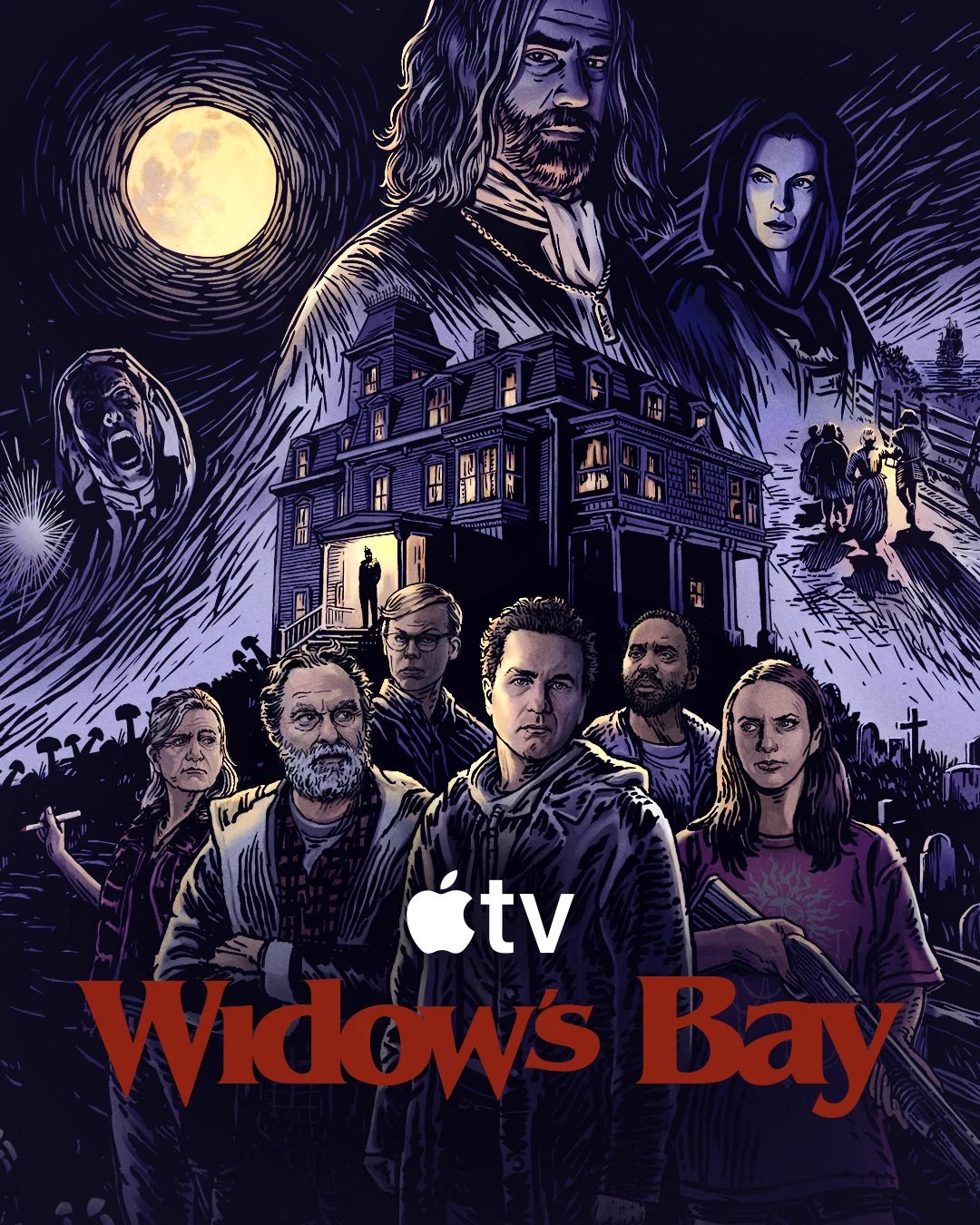
Horror Series Review: Widow’s Bay (by Katie Dippold)


“I didn’t realize it was a haunt. I’m sorry. Could you remind me again? A haunt is worse than a spook, but not as bad as a fright? Oh, oh, equal to a scare, right?” — Tom Loftis

Most horror stories would be a lot shorter if people could admit that something was wrong. Widow’s Bay turns that familiar frustration into the foundation of a very funny, genuinely creepy series about a community with plenty of reasons to avoid the truth. Created by Katie Dippold for Apple TV, the 2026 horror comedy understands that denial isn’t just a convenient way to keep characters in danger. Sometimes it’s a survival strategy, a family tradition, or practically a requirement for holding public office. That gives the show something more interesting to work with than another cursed town full of people making terrible decisions.

At the center of that denial is Tom Loftis, played by Matthew Rhys, the mayor of an isolated New England island he wants to turn into a thriving tourist destination. It’s an understandable ambition, except that his hometown’s atmosphere is less relaxing coastal getaway and more place where someone’s grandmother knows exactly why you shouldn’t go outside tonight. The residents believe the island is cursed, while Tom sees their superstitions as obstacles to progress. Their competing interpretations give the series its central tension: how do you convince people that their future can improve when their past apparently refuses to stay buried?

Rhys makes Tom’s refusal to acknowledge the obvious both entertaining and revealing. He’s not simply playing the clueless authority figure who exists so viewers can yell at the screen. There’s anxiety beneath his confidence, and his determination to control the island’s future overlaps with his worries about his increasingly independent son. He wants to believe that being responsible and working hard will eventually make everything manageable. Watching that belief collide with circumstances beyond his control provides some of the show’s best comedy. More importantly, it makes his stubbornness feel like a character flaw rather than a screenwriting shortcut.

Dippold does an excellent job of weaving comedy into the horror without making either side feel like an obligation. The jokes aren’t constantly elbowing the audience, pointing out how silly supernatural stories can be. Instead, they emerge from people trying to preserve their dignity, defend their authority, or get through an awkward conversation while something deeply unsettling happens around them. There’s a wonderful absurdity to treating a potentially cursed community as a branding problem. Yet the show never loses sight of the fact that these characters have to live with the consequences once the promotional optimism wears off.

That approach also gives familiar horror tropes some welcome personality. The series draws on recognizable territory, including haunted spaces, slasher scenarios, ominous warnings, and communities with disturbing histories. There are echoes of The Fog, The Shining, Halloween, and The Witch, but recognition isn’t the whole joke. Dippold uses those familiar shapes to explore how these particular people respond to fear. Sometimes they panic, sometimes they argue, and sometimes they behave as though acknowledging a supernatural threat would be more embarrassing than getting killed by it. The humor comes from their reactions, not from suggesting that the danger doesn’t matter.

The New England coastal setting gives that danger a distinct character. Widow’s Bay understands the appeal of a picturesque place where the local stories gradually make the scenery feel less inviting. Its folklore and mythology aren’t just decorative details sprinkled over a generic haunted-town premise. They influence how residents understand their surroundings and what they consider normal. Stories about church bells, mushrooms, and the consequences of leaving the island suggest a community organized around inherited warnings. There’s something especially creepy about rules everyone repeats but nobody can fully explain, particularly when ignoring them might carry consequences.

That uncertainty connects the show’s supernatural mythology to its interest in generational trauma. The island’s history isn’t something its residents can simply remember, regret, and move beyond. It has become part of their behavior, their relationships, and their expectations. The curse works as more than an explanation for frightening events; it also becomes a way of thinking about damage passed down through families and communities. The show’s attention to buried history and Puritan-era origins reinforces the sense that the present rests on foundations nobody has properly examined. Tom’s desire for a fresh start clashes with everything that a fresh coat of paint cannot fix.

What keeps this material from becoming heavy-handed is the show’s willingness to let pain and absurdity occupy the same scene. People don’t stop being petty, awkward, or unintentionally funny because they’re dealing with inherited suffering. Sometimes those habits are precisely how they avoid confronting it. Widow’s Bay finds humor in those defenses without treating the underlying hurt as a punch line. That distinction matters. The series can laugh at the ways people cope while still recognizing why they developed those responses. Its comedy makes the emotional material feel more human, rather than providing an escape hatch whenever things become uncomfortable.

The supporting cast helps make that balance convincing. Kate O’Flynn’s Patricia and Stephen Root’s Wyck contribute more than colorful reactions to the latest strange occurrence. Patricia’s loneliness and need for connection, along with Wyck’s regrets, give the island’s troubles an emotional dimension beyond the immediate business of staying alive. Their eccentricities might get the initial laugh, but the vulnerabilities underneath keep them interesting. The community works because it feels populated by people with unfinished lives, not just convenient victims. As those lives become entangled with the supernatural, the danger gains weight without requiring everyone to become suddenly solemn.

The season’s episodic variety is another strength, allowing individual supernatural stories to develop while the larger mystery continues taking shape. That structure gives different characters and different kinds of fear room to breathe. It also prevents the series from leaning too heavily on Tom’s skepticism as its only comic engine. Some horror imagery does make its influences obvious, and viewers looking for completely unfamiliar genre territory may recognize certain setups early. Still, the show usually finds its freshness in character and tone. Predicting the general direction of a scare doesn’t necessarily mean predicting the uncomfortable, funny, or revealing response that follows.

What makes Widow’s Bay worth spending time with is how comfortably it lets you laugh and feel uneasy without forcing a choice between the two. Dippold gives the island’s strange traditions, inherited wounds, and supernatural threats room to feed into one another, while the cast keeps everything grounded in recognizable human behavior. Not every familiar horror setup feels entirely fresh, but the people caught inside those situations make the difference. You’re laughing at their stubbornness one minute and worrying about them the next. That’s a tricky balance to sustain, and the show makes it look deceptively easy.