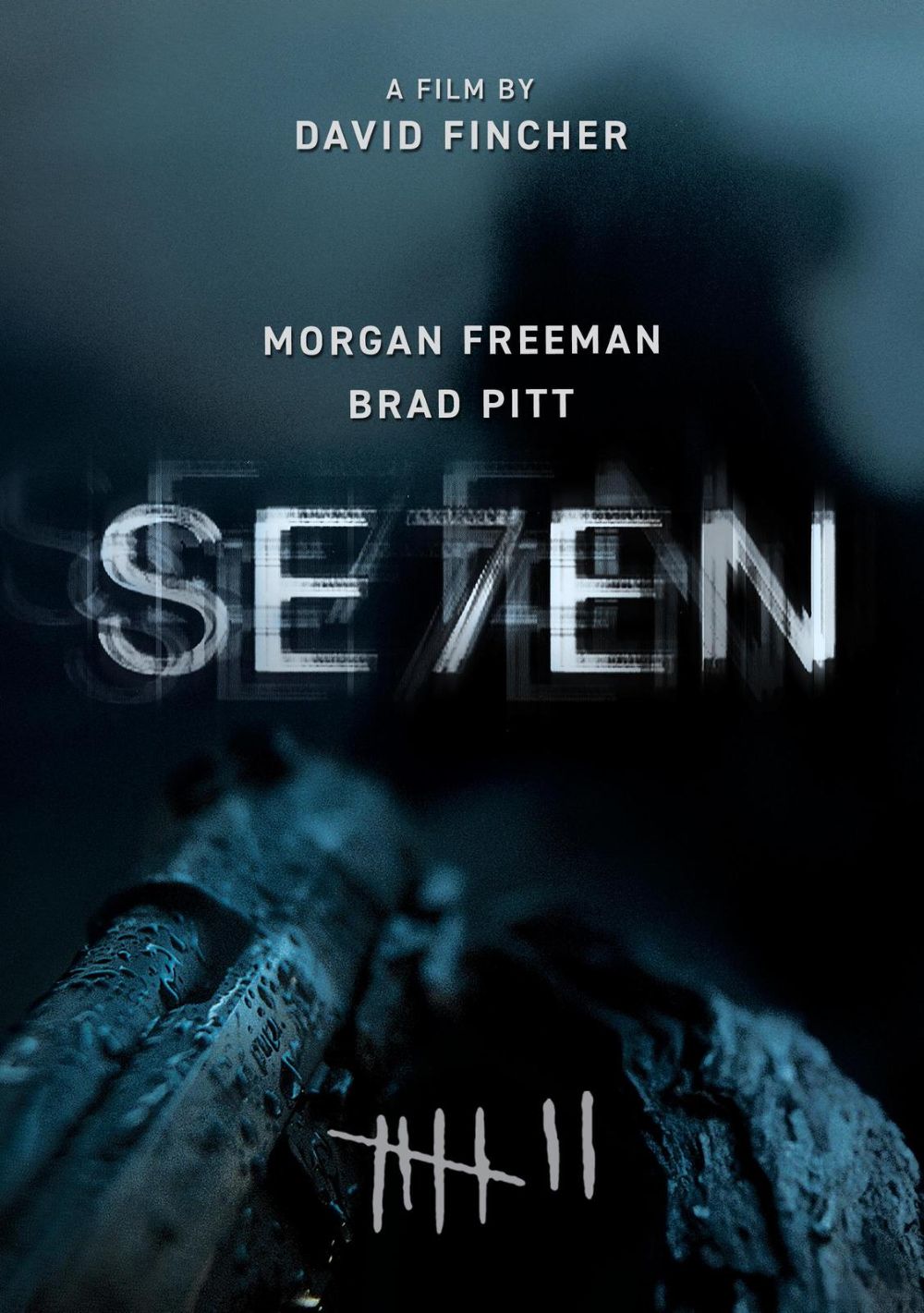
Horror Film Review: Se7en (dir. by David Fincher)


“I just don’t think I can continue to live in a place that embraces and nurtures apathy as if it was virtue.” — William Somerset

The nastiest thing about David Fincher’s Se7en is how quickly its horrors start to feel like part of the landscape. A gruesome murder should bring the world to a halt, but here it’s another room to enter, another report to write, another terrible thing happening while the rain keeps falling. Released in 1995, the film takes a serial-killer investigation and builds an atmosphere so oppressive that simply spending time in its unnamed city becomes uncomfortable. Yet the ugliness never feels entirely like an exercise in shock. Underneath it is a troubling question: what happens when people get used to looking away?

Morgan Freeman’s William Somerset has spent a career fighting that impulse, and he’s tired. Days away from retirement, he gets paired with Brad Pitt’s David Mills, a younger detective whose enthusiasm comes with a generous helping of impatience. Their investigation centers on a murderer arranging killings around the seven deadly sins. It’s a strong hook, but the movie doesn’t coast on the ingenuity of its crimes. Andrew Kevin Walker’s screenplay makes the detectives’ reactions just as important as the evidence. They’re looking at the same awful things while drawing very different conclusions about what their work can accomplish.

Freeman is terrific at suggesting how much effort Somerset’s composure requires. His quietness isn’t an absence of feeling; it’s a way of keeping feeling manageable. He asks questions carefully, studies details other people dismiss, and seems painfully aware of how easily a victim can become an inconvenience to everyone else. The familiar retiring-cop setup could have made him predictable, but Freeman gives his weariness a personal texture. Somerset still cares enough to be hurt by the job. Leaving is less a triumphant escape than an admission that he no longer knows how to keep doing it.

Pitt gives Mills an emotional openness that both challenges Somerset and exposes his own limitations. He’s cocky, easily irritated, and eager to interpret caution as defeatism. Sometimes he’s right to push back; sometimes he clearly needs to stop talking and listen. Pitt lets both sides exist without turning Mills into either a lovable hothead or a complete fool. His belief that police work should make a difference feels genuine. The tension comes from watching that belief encounter situations it can’t easily absorb. Together, the actors make a familiar mismatched partnership feel like an ongoing argument rather than a screenwriting obligation.

Fincher surrounds that argument with a city that seems to encourage surrender. The rain, clutter, cramped rooms, and dirty light create a place where basic comfort feels unavailable. Even spaces that should provide privacy seem invaded by noise or unease. What matters isn’t simply that everything looks miserable. It’s that people move through this misery as though it barely registers anymore. The setting gives Somerset’s exhaustion a believable source while making Mills’s confidence seem increasingly precarious. Neither man is investigating from a position of safety; they’re already living inside the atmosphere the killer exploits.

That’s also why the horror works beyond the immediate disgust of the crime scenes. Se7en often makes us confront what happened after the fact, with the detectives trying to reconstruct suffering from its remains. Fincher understands how disturbing a delayed realization can be. A room initially presents one terrible image, then a detail or explanation makes it worse. The film doesn’t need to show every act of violence because the aftermath supplies enough information for the imagination to take over. The dread comes from knowing that looking more closely will probably reveal something you would rather not understand.

Despite that relentless mood, the investigation stays engaging. There’s satisfaction in watching Somerset and Mills read, argue, follow leads, and gradually assemble a clearer picture. The library sequence is especially effective because it changes the film’s texture without breaking its spell. Somerset finds a measure of calm among books and music, using thought rather than momentum to approach the case. It’s a small reminder that the world contains more than brutality. Those quieter passages also make the shocks hit harder. Fincher knows that an audience needs time to anticipate the next discovery, not just recover from the last one.

Gwyneth Paltrow’s Tracy provides another necessary interruption. As Mills’s wife, she has a different relationship with the city: she isn’t trying to solve it, just work out whether she can live there. Her scenes bring out the personal cost of the detectives’ opposing attitudes. The dinner sequence allows some awkward humor, while her private conversation with Somerset reveals tenderness beneath his guarded manner. Paltrow makes Tracy feel vulnerable without making her helpless. Still, the screenplay gives her less independence than she deserves. She’s emotionally important, but the film is more curious about what she means to its men than about her own life.

John Doe takes that tendency to reduce people to their usefulness and pushes it into monstrous territory. To him, human beings are props in a moral demonstration. His certainty is chilling, but it isn’t the same as wisdom, and the movie works best when that distinction remains clear. There are moments when his elaborate planning feels almost too convenient, as though the screenplay needs him to possess whatever advantage the next development requires. Even so, his vanity keeps him from becoming merely an all-knowing villain. Beneath the preaching is someone desperate to force the world to acknowledge his importance.

Without detailing the final revelations, the closing stretch brings the film’s ideas into brutally personal focus. The shift into daylight feels wrong in a way that’s difficult to shake. After so many shadowy interiors, open space should offer relief, yet there’s nowhere emotionally safe to stand. The suspense becomes less about discovering another clue than watching people recognize what is happening and struggle to respond. That distinction gives the ending its force. Knowledge doesn’t automatically create control, and professional experience doesn’t make anyone immune to being overwhelmed. The case stops being something the detectives can hold at a distance.

What lingers after Se7en isn’t just the memory of its worst images. It’s the uncomfortable distance between noticing suffering and knowing what to do about it. Somerset has experience without much hope; Mills has conviction without enough restraint. Neither can offer a complete answer, but their struggle gives the film something more substantial than stylish despair. Fincher makes looking away seem tempting, even sensible, before leaving us with the cost of that choice. This is a grim, occasionally contrived, remarkably controlled thriller whose deepest horror is also its most recognizable: the fear that the world can wear down our willingness to care.
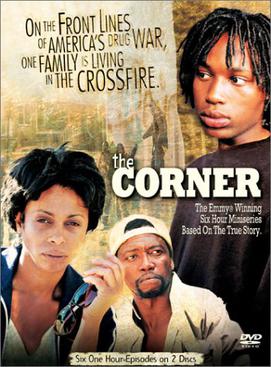
Miniseries Review: The Corner (dir by Charles S. Dutton)


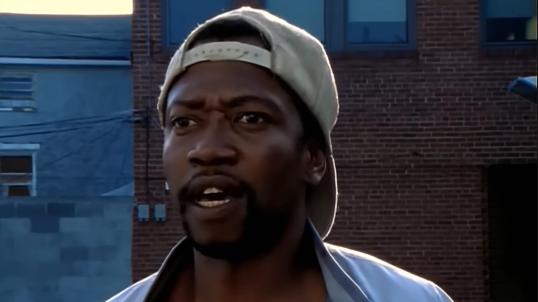
Actor T.K. Carter died on January 9th.  He was 69 years old and his passing really didn’t get the notice that he deserved.

T.K. Carter may not have been a household name but I imagine that most people would recognize him if they saw him.  He appeared on a lot of television shows.  He did his share of movies.  He was usually cast in comedic roles, often playing the best friend who would inevitably provide some sort of gentle commentary on the problems of his friends or coworkers.  I just recently finished reviewing Good Morning, Miss Bliss, which featured Carter as Milo.  I’m not really sure what Milo did at John F. Kennedy Junior High but he was certainly more likable than Miss Bliss.

Carter appeared in some films as well.  Ironically, his two best-known films were not comedic at all.  He plays Nauls in John Carpenter’s The Thing, a film that pretty much ends with Kurt Russell and Keith David freezing to death while wondering whether or not one of them is actually a killer alien.  And he also played Cribbs, a pot-smoking member of the National Guard who finds himself lost in the Louisiana bayou in Walter Hill’s Southern Comfort.  I have to admit that, after having watched both of those films more than once, it was a bit strange to see Carter exchanging jokes with Hayley Mills and Dennis Haskins on Good Morning Miss Bliss.

That said, if I had to pick Carter’s best performance, I would probably go with his work in the 2000 HBO miniseries, The Corner.  Based on a nonfiction book by David Simon, The Corner follows several characters over the course of one year in Baltimore.  Almost all of the characters are involved in the drug trade in some way or another.  DeAndre McCullough (Sean Nelson) is a fifteen year-old drug dealer who, despite his obvious intelligence, seems to be destined to become yet another statistic.  DeAndre’s parents are Fran (Khandi Alexander) and Gary (T.K. Carter).  At the start of the miniseries, both Fran and Gary are drug addicts and both of them make the effort to get clean.  Both have moments where their lives appear to be improving.  They both have moments where they relapse and have to start all over again.  Tragedy follows both of them.

The Corner is often described as being a forerunner to The Wire and indeed, there are definite similarities.  Like The Wire, The Corner was shot on location in Baltimore.  Like The Wire, The Corner emphasizes that futility of trying to wage a war on drugs.  As well, several members of The Corner‘s cast also appeared on The Wire.  Clarke Peters, Lance Reddick, Reg E. Cathey, Corey Parker Robinson, Delaney Williams, and Robert F. Chew are among the many Wire actors who appear in The Corner.  Interestingly enough, many of The Wire‘s cops and politicians appear as addicts in The Corner.  Clarke Peters and Reg E. Cathey play two long-time drug addicts who serve as a bit of a chorus for the neighborhood.  Lane Reddick appears as a recovering addict who tries to take advantage of Fran.

That said, The Corner doesn’t trust its audience in the same way that The Wire did.  That’s largely because The Corner was directed by Charles S. Dutton, who has never been a particularly subtle actor or director.  Dutton does a good job capturing the grit of Baltimore but he also includes “interviews” with various characters in which he asks questions while off-camera.  It feels a bit too on-the-nose, as if each episode of The Wire opened with a dramatic monologue from McNulty or Stringer Bell.  We don’t need the characters to look straight at the camera and tell us that things are bad.  We can see that for ourselves.

The entire cast does a good job but the best performance undoubtedly comes from T.K. Carter, who plays Gary as being an intelligent man, a good man, a hopeful man, but also a man who cannot escape his addiction.  With his gentle smile, his pleading eyes, and the almost shy way that he asks people to help him when he needs a fix, Carter gives a heart-breaking performance and one that shows that Gary truly is a prisoner of his addiction.  He doesn’t want to be an addict.  He wants to get clean.  But he also lives in a world where drugs are not only everywhere but they’re also the only escape that he and so many other people have from their oppressive existence.  With the government and the police treating the drug crisis as a war as opposed to a public health emergency, Gary’s two options really are either prison or the basement of his mother’s home.  The police view Gary as being nothing more than an criminal as opposed to someone with a sickness.  The dealers, meanwhile, view Gary as being a marketing opportunity.  T.K. Carter captures both Gary’s desperation and his sadness.  It’s a great performance and one that deserves to be remembered.  As played by T.K. Carter, Gary is the battered heart of The Corner.

T.K. Carter, RIP.


Lisa Marie Reviews An Oscar Nominee: Born On The Fourth of July (dir by Oliver Stone)


In 1989, having already won an Oscar for recreating his Vietnam experiences in Platoon, director Oliver Stone returned to the war with Born On The Fourth Of July.

Based on the memoir of anti-war activist Ron Kovic, Born on the Fourth of July stars Tom Cruise as Kovic.  When we first meet Kovic, he’s growing up on Long Island in the 50s and 60s.  He’s a clean-cut kid from a nice family.  He’s on the school wrestling team and he’s got a lot of friends.  When he was just 15, he heard John F. Kennedy telling people to ask what they can do for their country and he was inspired.  He decided he wanted to join the Marines, despite the fact that his father (Raymond J. Barry) was still haunted by the combat that he saw in World War II.  (In one of the film’s better scenes, a young Kovic notices that the elderly veterans marching in the Independence Day parade still flinch whenever they hear a firecracker.)  He enlists in the Marines after listening to a patriotic speech from a recruiter (played by Tom Berenger).  Ron runs through the rain to attend his prom and has one dance with Donna (Kyra Sedgwick), on whom he’s always had a crush.  There’s nothing subtle about the way that Stone portrays Kovic’s childhood.  In fact, one might argue that it’s a bit too idealized.  But Stone knows what he’s doing.  The wholesomenss of Kovic’s childhood leaves neither him nor the viewer prepared for what’s going to happen in Vietnam.

Vietnam turns out not to be the grand and patriotic adventure that Kovic thought it would be.  After Sgt. Kovic accidentally shoots one of his own men in a firefight, he is ordered to keep quiet about the incident.  After he is wounded and paralyzed in another firefight, Kovic ends up in a Hellish VA hospital, surrounded by men who will never fully recover from their mental and physical wounds.  Kovic is eventually returns home in wheelchair.  The film then follows Kovic as he goes from defending the war in Vietnam to eventually turning against both the war and the government.  At one point, he ends up with a group of disabled vets in Mexico and there’s a memorable scene where he and another paraplegic (Willem Dafoe) attempt to fight despite having fallen out of their chairs.  Eventually, Kovic returns to America and turns his anger into activism.

There’s nothing subtle about Born On The Fourth Of July.  It’s a loud and angry film and Oliver Stone directs with a heavy-hand.  Like a lot of Stone’s films, it overwhelms the viewer on a first viewing and it’s only during subsequent viewings that one becomes aware of just how manipulative the film is.  Tom Cruise gives a good performance as Ron Kovic but his transformation into a long-haired, profane drunk still feels as if it happens a bit too abruptly.  A good deal of the film centers on Kovic’s guilt about accidentally killing one of his men but the scene where he goes to the soldier’s family and asks them for forgiveness didn’t quite work for me.  If anything, Kovic came across as being rather self-centered as he robs the man’s mother and father of the belief that their son had at least died heroically in combat as opposed to having been shot by his own sergeant.  Did Kovic’s need to absolve himself really give him the right to cause this family more pain?  Born on the Fourth Of July is an effective work of agitprop.  On the first viewing, you’ll want to join Kovic in denouncing the military and demanding peace.  On the second viewing, you’ll still sympathize with Kovic while also realizing that he really owes both his mother and father an apology for taking out his anger on them.  By the third viewing, you’ll be kind of like, “Wow, I feel bad for this guy but he’s still kind of a jerk.”  That said, when it comes to making an effective political film, Adam McKay could definitely take some lessons from Oliver Stone.  Born On The Fourth of July is at its best when it simply captures the feeling of living in turmoil and discovering that the world is not as simple a place as you once believed.  As idealized as the film’s presentation of Kovic’s childhood may be, anyone who has ever felt nostalgia for an earlier and simpler world will be able to relate.

Oliver Stone won his second Best Director Oscar for Born On The Fourth Of July.  The film itself lost Best Picture to far more genteel version of the past, Driving Miss Daisy.


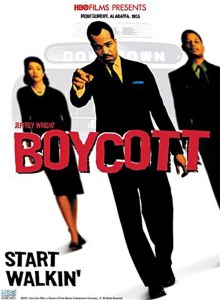
A Movie A Day #16: Boycott (2001, directed by Clark Johnson)


boycott

Originally made for HBO, Boycott is one of the best and, unfortunately, least-known films made about the life of Martin Luther King, Jr.  Boycott tells the story of the Montgomery Bus Boycott, starting with the arrest of Rosa Parks for refusing to sit in the back of the bus to the eventual integration of the Montgomery public transportation system.  Clark Johnson directs Boycott in a semi-documentary, handheld style, which adds an immediacy to the oft-told story.

Boycott focuses on the role that 24 year-old Martin Luther King, Jr. (played by Jeffrey Wright) played as the leader of the Montgomery Bus Boycott and how the boycott’s success turned King into a national figure.  Jeffrey Wright does a great job playing the young King and it’s interesting to watch as the initially uncertain King finds both his voice and his strength as a leader.  Boycott works as a good companion piece to Selma, not the least because Carmen Ejogo plays Coretta Scott King in both of them.

Also giving a noteworthy performances are Terrence Howard as King’s second-in-command, Ralph Abernathy and Erik Dellums in the role of Bayard Rustin, who was one of King’s closest confidants but, because he was gay, was often left outside of the movement’s inner circle.  Before they worked together on Boycott, Dellums, the son of former U.S. Rep. Ron Dellums, co-starred with Clark Johnson on Homicide: Life on the Street.

Boycott is a tribute to not just Martin Luther King but also the entire civil rights movement.

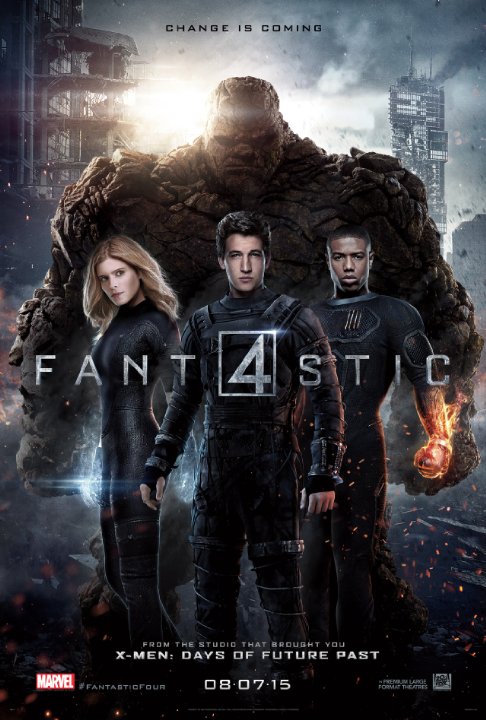
Face Front, True Believers! The New Fantastic Four Is As Bad As The Old Fantastic Four!


FFFace front, true believers!

This is the one you’ve been waiting for!  There’s a new Fantastic Four movie out, looking to cash in on this cozy crazy comic book fad!  It’s been getting terrifyingly terrible reviews and the ravenous reviewers at Rotten Tomatoes have given it a scintillating score of 9%.  But don’t let my manic misplaced modifiers put you off, pilgrim!  The ancient prophecy is true!  Fantastic Four is as boldly bad as everyone says!  Not even the merriest members of the Merry Marvel Marching Society will find much to marvel at here!

This is the latest attempt to start a Fantastic Four film franchise.  This time Reed Richards (Miles Teller) and Ben Grimm (Jamie Bell) are both unlikely teenagers.  Dr. Franklin Storm (Reg E. Cathey) recruits Reed to help work on a “Quantum Gate” that will transport explorers to the Negative Zone.  Instead of being transformed by gamma rays, Reed and his friends become super human as a result of going to Planet Zero and getting splashed by green goo.  Reed has the power to stretch.  Ben develops a rock-like hide.  Dr. Storm’s son, Johnny (Michael B. Jordan), becomes a human torch while his adopted daughter, Sue (Kate Mara), is given the power of invisibility.

Doctor-DoomIt takes over an hour for Reed and friends to become fantastic and, even after they do, there’s no sense of wonder or excitement to Fantastic Four.  It’s obvious that a lot of money was spent on special effects but there is not a single scene that can match the power or imagination of a Jack Kirby illustration.  Worst of all is what is done to Dr. Doom (Toby Kebbell).  One of Marvel’s most complex and iconic characters is reduced to being just another vaguely motivated movie bad guy.  Fantastic Four feels like a throwback to the worst comic book movies of the 90s.  Nuff said?

This version of Fantastic Four was directed by Josh Trank, who previously directed the excellent Chronicle.  Fantastic Four is so joyless and rudimentary in its approach that it feels like the anti-Chronicle.  After the initial negative reviews came out, Trank tweeted, “A year ago I had a fantastic version of this. And it would’ve received great reviews. You’ll probably never see it. That’s reality though.”  (He later deleted the tweet.)  Perhaps studio interference explains why Fantastic Four feels so disjointed.  It seems to be missing key scenes.  For instance, do you remember all of those cool moments from the trailer?  Most of them are not in the actual movie.

fant_fourIf you count the never released Roger Corman-produced 1994 film, this is the fourth attempt to reboot The Fantastic Four.  When I was growing up and reading comics, I never really cared about The Fantastic Four.  The only time I ever read Fantastic Four was if they were doing a crossover with the X-Men or Spider-man.  I knew they were important to the history of the Marvel Universe but they also seemed old-fashioned and almost corny.  It’s hard to take seriously a scientific genius who can not come up with a better name than Mr. Fantastic.  As characters, the Thing, the Human Torch, the Invisible Woman, and Mr. Fantastic all feel like they still belong in 1961 and maybe that is why all the recent film adaptations of The Fantastic Four have failed.   Perhaps the fifth attempt should take a retro approach and set the story in the 1960s.

Perhaps then the flashy, fulsome, and far-out Fantastic Four will get the marvelous movie masterpiece that they deserve!

Excelsior!

031611_ff