When the Familiar Turns Savage: Siege Horror and the Fragility of Civilization


“He who fights with monsters should look to it that he himself does not become a monster.” — Friedrich Nietzsche, Beyond Good and Evil

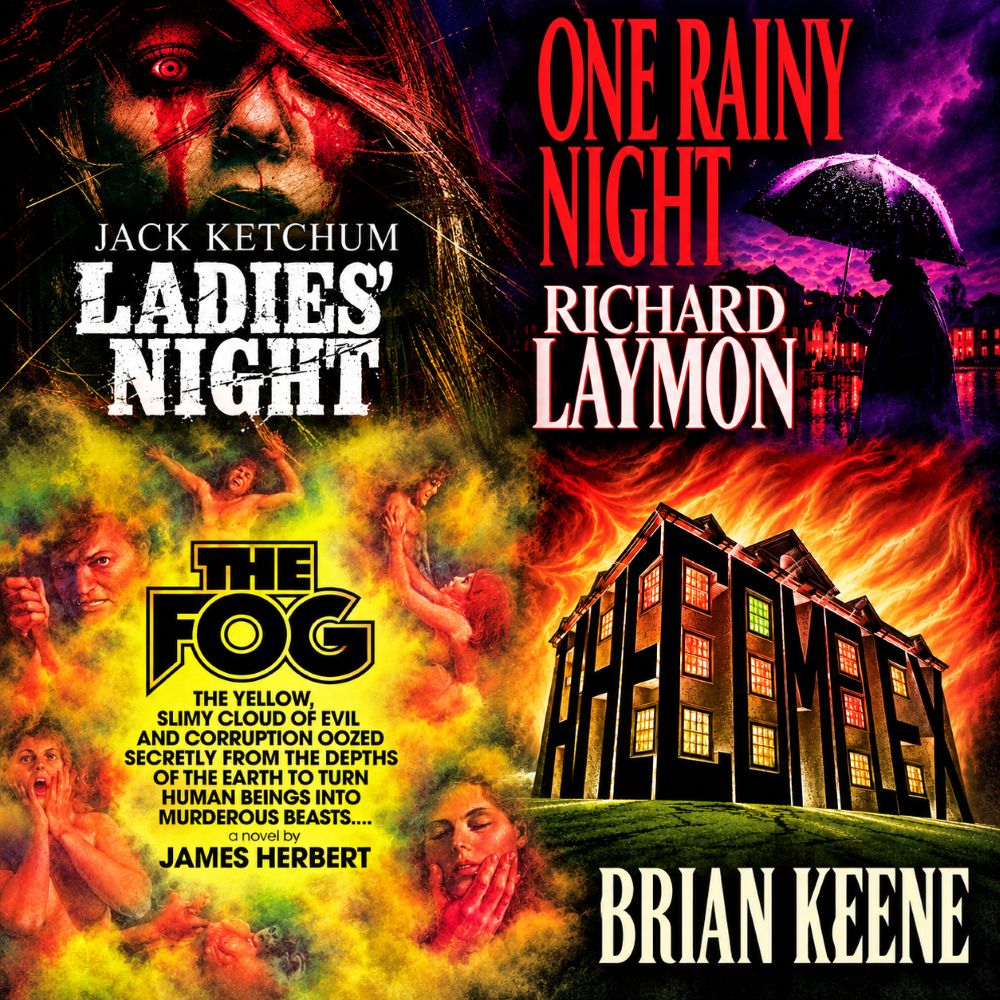
Survival becomes a moral problem when staying alive threatens to destroy the reasons for living together. That dilemma gives siege horror its enduring power. Characters must confront not only an external threat but also the possibility that fear will turn protection into exclusion, cooperation into domination, and necessary violence into cruelty. James Herbert’s The Fog, Jack Ketchum’s Ladies’ Night, Richard Laymon’s One Rainy Night, and Brian Keene’s The Complex explore this pressure through outbreaks of human brutality. Their attackers are disturbing because they retain recognizable bodies while violating the expectations that make human contact possible.

A siege need not confine its victims to one building or require them to defend a fixed position. Its boundaries can encompass a town, a city, or an entire country where danger lurks around every corner. Characters may remain free to move while having nowhere reliably safe to go. Streets become hazardous corridors, shelters offer uncertain protection, and escaping one confrontation exposes them to another. The defining condition is entrapment: the inability to leave the field of danger behind.

Across these novels, that condition tests civilization as much as physical endurance. Social order can restrain violence, conceal it, or help manufacture it. Catastrophe likewise produces more than selfishness: it can create obligations between people who previously felt little responsibility for one another. The question is not simply whether humanity becomes primal under pressure, but which human capacities the struggle to survive encourages—and which it threatens to extinguish.

James Herbert’s The Fog: A Siege Without a Secure Perimeter

In The Fog, an earthquake opens a fissure beneath an English village, releasing a substance that drives exposed people into destructive madness. Environmental investigator John Holman survives the initial catastrophe and becomes central to efforts to stop the spreading threat. Herbert alternates his continuing narrative with episodes depicting the fog’s effects elsewhere, expanding the disaster beyond any single survivor or refuge.

This structure makes survival a problem individual toughness cannot solve. The threat moves through the atmosphere, turning the environment itself into an unstable boundary between safety and exposure. Characters can travel, but movement does not necessarily mean escape. The siege follows the spreading contamination rather than remaining organized around one defensible location.

Herbert’s scattered episodes transform ordinary life into a succession of violated expectations. Familiar people occupy recognizable settings while abandoning the behavior that previously made those settings intelligible. The world remains physically familiar while ceasing to operate according to recognizable social rules.

The fog’s man-made origins sharpen the contradiction. Its connection to military experimentation implicates organized authority in the destruction of the society it supposedly protects. Technical sophistication does not stand apart from barbarism; it creates the means through which barbarism spreads. Civilization becomes dangerous because its capabilities have become detached from responsibility.

Nevertheless, contamination is not straightforward proof of an authentic savage self. The exposed have been altered against their will. They become perpetrators while remaining victims, and their conduct cannot establish what they secretly desired beforehand. Holman’s recovery makes that uncertainty central: the defender has crossed the boundary separating ordinary humanity from destructive madness.

Survival consequently requires understanding as well as resistance. Eliminating dangerous individuals cannot resolve the catastrophe. Herbert exposes institutional failure while preserving the necessity of coordinated action, suggesting that civilization must answer for its abuses without becoming something humanity can simply discard.

Jack Ketchum’s Ladies’ Night: Intimacy as Enemy Territory

Ladies’ Night concentrates its crisis within relationships. A chemical spill causes exposed women to become violently predatory, turning the antagonism suggested by the phrase “battle of the sexes” into a grotesquely literal nightmare.

Where Herbert destabilizes the wider environment, Ketchum attacks the assumptions permitting physical closeness. Familiarity and attraction ordinarily encourage people to lower their defenses. Here, that access becomes dangerous. The siege is intimate as much as architectural: its boundaries run through trust, desire, and bodily proximity.

Its scattered encounters also make clear why leaving one location cannot necessarily end a siege. When danger is distributed throughout the surrounding community, the next street or doorway may offer another confrontation rather than refuge. Movement becomes a negotiation with uncertainty.

Defending oneself may require recoiling from someone previously associated with affection or pleasure. The transformed person remains recognizable, yet recognition no longer reassures. Ketchum makes the destruction of intimacy inseparable from the threat of bodily injury.

The premise is forceful but ethically troubling. Men become vulnerable to people they may have underestimated or treated carelessly. The attention to insensitive and unfaithful husbands gives some attacks an uncomfortable connection to existing grievances. Yet chemical compulsion prevents the violence from functioning as freely chosen resistance or coherent justice. The women’s agency has been destroyed, not liberated.

Like Herbert, Ketchum complicates the claim that contamination reveals an underlying truth. Imposed murderous behavior does not prove the earlier personality was fraudulent. His gendered division also exposes a danger in survival thinking: immediate threats encourage rapid judgments that can harden into collective suspicion.

Compared with Keene’s improvised solidarity, Ketchum makes mutual recognition painfully difficult. His novel’s power lies in turning intimacy against its characters; its limitation lies in the risk that women become interchangeable embodiments of male fear. That tension belongs at the center of its moral examination.

Richard Laymon’s One Rainy Night: A Town Already Compromised

In One Rainy Night, black rain falls on Bixby, California, turning those it touches into violent attackers. Laymon follows several threatened groups, including a babysitter protecting a child, adults trapped in a restaurant, and a police officer attempting to safeguard others. The immediate objective is clear: remain dry and prevent the transformed population from entering shelter.

Laymon combines localized defenses with a town-wide siege. Roofs, doors, windows, and exposed ground acquire urgent significance, but individual shelters exist within a larger hostile environment. Leaving a threatened building may mean exchanging one danger for another. The town becomes a network of temporary refuges separated by hazardous spaces.

The attackers’ ability to cooperate increases that pressure. They are not simply an obstacle to be avoided; they can actively threaten the structures protecting those who remain unaffected. Shelter postpones confrontation without necessarily resolving it.

Yet Bixby’s violence does not begin with the storm. Maxwell Chidi, a Black teenager, has already been murdered, his tortured body burned on a school football field. This atrocity prevents the town’s earlier normality from becoming an image of innocence. Extreme cruelty exists before the rain makes brutality pervasive.

Laymon thus challenges the idea that civilization reliably suppresses primal behavior. The community possesses institutions and routines, but these have not prevented racist murder. The storm does not introduce savagery into a humane environment. It magnifies a capacity already present.

Survival cannot therefore mean restoring the previous order and declaring victory. Bixby’s earlier condition already demands scrutiny. Preserving a community is not the same as proving everything about it deserves preservation.

The protective relationships nevertheless resist universal cynicism. Caring for a child or accepting responsibility for another person makes compassion an active survival practice. Laymon’s extreme physicality distinguishes violence as domination from violence as protection. Both can be brutal, but their purposes differ. Bodies are not merely opportunities for spectacular injury; they are vulnerable lives someone may choose to defend.

Brian Keene’s The Complex: Surviving Through Other People

The Complex gives the siege its most concentrated residential setting. Naked, armed killers descend on the Pine Village Apartment Complex, forcing neighbors who barely know one another into collective resistance. Its ensemble includes a depressed writer, a Vietnam veteran, an elderly woman, a young trans woman, a mother and child, and a serial killer known as The Exit. Initially unexplained violence leaves little time for understanding before action becomes necessary.

The apartment setting distinguishes proximity from community. Its residents share space, but that does not mean they share trust or obligation. The attack forces them to discover whether neighbors can become more than strangers separated by walls.

Keene also complicates the apparent security of familiar geography. The complex contains separate residences and spaces through which the characters must navigate. Knowing the setting does not mean controlling it. A familiar route can become dangerous, and a private refuge can prove inadequate.

Where contamination destroys established bonds in the other novels, Keene’s siege creates relationships that previously did not exist. People understood through superficial impressions become potential rescuers. Survival depends partly on revising assumptions through which the residents have judged one another.

Social respectability does not reliably predict competence or compassion, while marginalization does not determine weakness. Yet emergency does not make everyone good. Cooperation requires incomplete knowledge, dangerous compromises, and dependence on people whose motives remain uncertain.

The Exit embodies that discomfort. A serial killer’s abilities may become useful during an assault, but usefulness does not establish virtue. His presence separates the capacity for violence from the purposes giving violence its ethical meaning. Necessary cooperation does not make its participants morally equivalent.

Compared with Herbert’s institutional catastrophe, Ketchum’s destroyed intimacy, and Laymon’s compromised town, Keene emphasizes civilization as something actively constructed. It exists through shared danger, mutual recognition, and the refusal to regard vulnerability as expendability. Survival requires other people without making trust easy or uncomplicated.

Shared Foundations and a Continuing Legacy

These novels share siege and survival DNA with other forms of horror. Romero’s Dead films make external attack and internal disagreement inseparable, while Carpenter’s Assault on Precinct 13 forces unlikely allies to defend an isolated refuge. Slasher series such as Friday the 13th and Scream concentrate similar pressure in pursuing killers. Different threats create narrowing options: escape becomes difficult, assistance unreliable, and resistance unavoidable.

Their relationship to later extreme horror involves thematic kinship as well as contribution, rather than a simple chain of direct influence. Keene’s The Rising contributed to the modern literary zombie resurgence through intelligent, possessed undead capable of turning human knowledge against survivors. The Complex concentrates related anxieties within a smaller setting.

Comparable concerns animate the Rage-infected of Danny Boyle and Alex Garland’s 28 Days Later and their return to that world in 28 Years Later. These films extend entrapment across a national landscape: the ability to travel does not guarantee an exit from danger. Rob Jabbaz’s The Sadness, influenced by Garth Ennis’s controversial comic Crossed, pushes recognizable humanity toward deliberate sadism.

Such connections underline the continuing relevance of the four novels. Extreme horror becomes most unsettling not simply through graphic injury, but through the separation of intelligence, intimacy, and imagination from compassion. Those capacities can sustain solidarity—or make cruelty more inventive.

What Survival Preserves

The four novels offer different accounts of what threatens coexistence. Herbert exposes protective institutions producing catastrophe. Ketchum makes intimacy inaccessible. Laymon reveals atrocity beneath communal normality. Keene examines solidarity among people who lack reassuring reasons to trust one another.

Whether the enclosure is an apartment building, a town, or an expanding contaminated landscape, survival does not settle the moral argument. Remaining unaffected does not guarantee goodness, and resisting an attacker does not justify every action taken in self-defense.

The deepest question is what staying alive preserves. If survival requires treating every vulnerable person as a burden and every stranger as expendable, the survivors risk reproducing the world their attackers embody. Civilization endures when they resist that logic—when protecting life still includes recognizing why another person’s life matters.
Horror Book Review: The Fog (by James Herbert)


“You’re waiting for something else to happen, aren’t you?” — John Holman

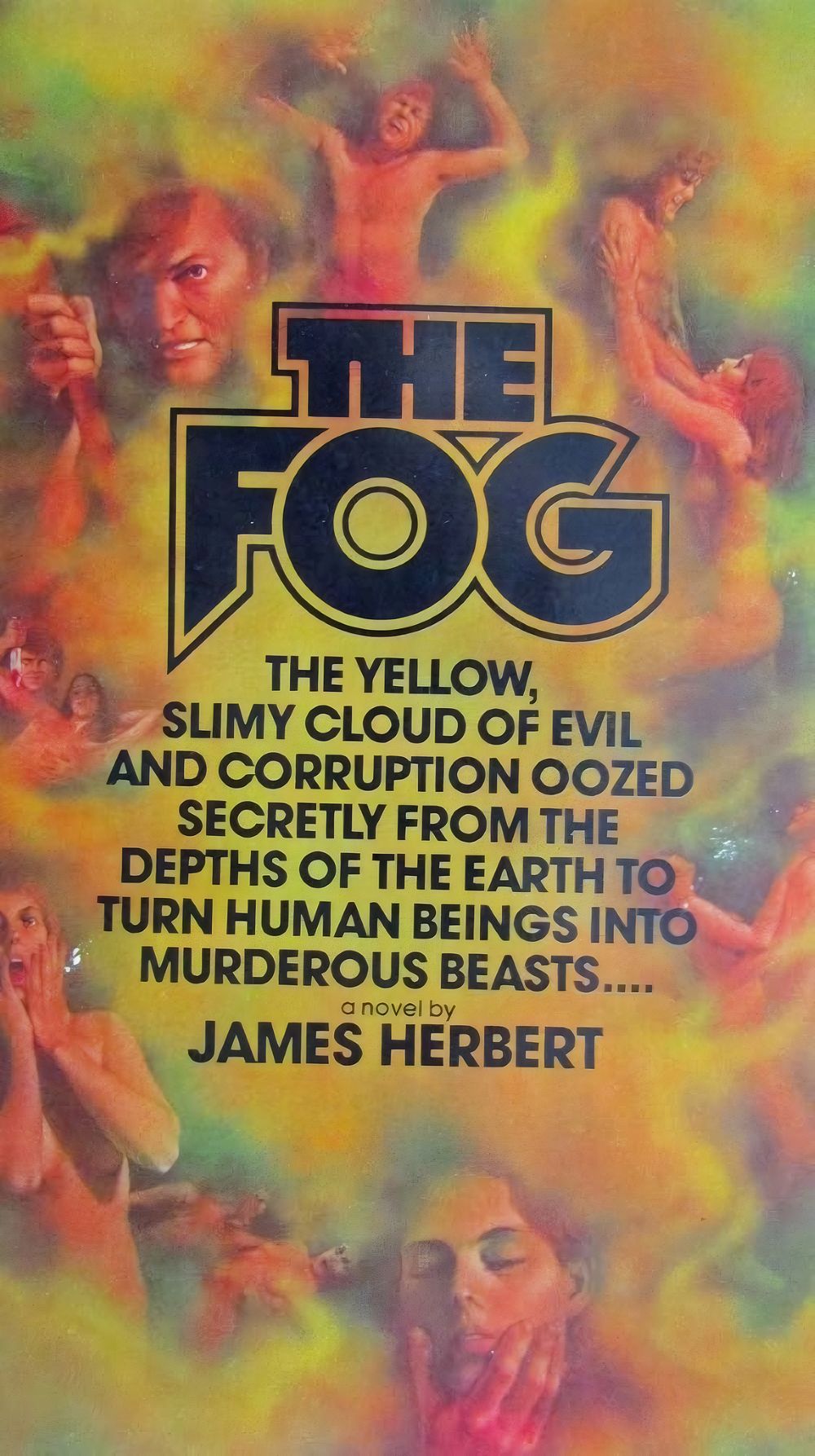
James Herbert’s The Fog treats civilization like something that can come apart in a single bad afternoon. That’s what gives this 1975 horror novel its kick: the sense that ordinary life, with all its routines and reassurances, is much less sturdy than people would like to believe. Release something poisonous into the air, strip away the usual restraints, and suddenly familiar places become killing grounds. Herbert isn’t subtle about any of this, but subtlety isn’t really the attraction. The book works by taking a straightforward nightmare and following it into increasingly ugly territory, until a local catastrophe starts looking like the beginning of a much larger collapse.

The story opens with an earthquake tearing through an English village and releasing a strange fog from underground. John Holman, an investigator for the Department of the Environment, survives exposure and eventually recovers, making him unusually valuable once the authorities begin investigating. The fog drives people toward madness and extreme violence, and it doesn’t remain conveniently confined to the place where it first appeared. As it moves across the countryside, Holman becomes involved in the effort to understand and stop it. Herbert gets the essentials moving quickly, establishing both the immediate danger and the uncomfortable possibility that nobody is equipped to handle it.

What makes the premise effective is how easily it turns the everyday world against itself. The threat isn’t simply a mysterious cloud you need to avoid. It’s the person who has already walked through it, carrying violence into a setting that seemed perfectly ordinary moments earlier. The distinction between danger and safety becomes harder to maintain when people themselves are the instruments of destruction. Herbert repeatedly returns to that instability. Homes, workplaces, and public spaces offer little protection once the behavior everyone takes for granted disappears. The familiar surroundings don’t soften the horror; they make its arrival feel more invasive.

The episodic structure is particularly good at showing that breakdown. Herbert regularly leaves the main investigation to introduce people whose lives are about to collide with the spreading disaster. Some receive only a brief sketch before things go wrong, but that quickness can be an advantage. You recognize enough of their circumstances to understand what’s being destroyed without needing a lengthy backstory. Before long, every new introduction carries an unpleasant little question: what’s going to happen to this person? Herbert turns that expectation into a reliable source of tension, even if the pattern eventually becomes easy to recognize.

Naturally, the answer is often something horrible. The notorious school sequence demonstrates how readily Herbert turns an institution associated with order into a scene of grotesque disorder. The shock comes from the violence, but also from seeing familiar roles and expectations completely overturned. Still, this approach has its limits. There are passages where sexual violence and extreme cruelty feel less like necessary developments than attempts to raise the stakes through sheer offensiveness. Herbert can make the collapse of restraint terrifying, but sometimes he seems a little too eager to show just how far he’s willing to go.

The expanding scope helps distinguish The Fog from later novels working with similar ideas, particularly Jack Ketchum’s Ladies’ Night and Richard Laymon’s One Rainy Night. Ketchum uses a chemical spill in New York to unleash murderous violence, while Laymon subjects a town to strange black rain that turns people into killers. Both keep their principal action relatively localized, emphasizing survival within a particular area. Herbert lets his threat travel. Instead of remaining one community’s nightmare, the disaster spreads into something increasingly apocalyptic. Getting out of one place isn’t much comfort when the next place could soon become just as dangerous.

That difference matters because it removes the reassuring possibility of a safe world somewhere outside the story’s boundaries. Those boundaries keep expanding. Individual atrocities become signs of a broader emergency, and the authorities’ struggle to respond suggests how quickly events could overtake them. Herbert also varies how he presents the destruction. Reports, discoveries, and glimpses of aftermath imply horrors beyond the scenes he directly dramatizes. That’s important in a novel this graphic. Relentless explicit violence could become numbing, but uncertainty allows the reader’s imagination to do some of the work and makes the larger catastrophe feel harder to measure.

Holman gives all this destruction a necessary center, although he’s more convincing as someone enduring an awful assignment than as a particularly layered character. His recovery makes him useful without making him invulnerable, which preserves some tension around his involvement. The more personal material is less successful. His relationship with Casey gives him something to care about beyond the immediate emergency, but it rarely feels as vivid as the surrounding horror. Herbert can make a stranger’s brief encounter with the fog memorable, yet the central relationship sometimes feels like an obligation the story pauses to acknowledge before returning to its stronger material.

The prose is similarly uneven. Herbert’s direct style works well when something terrible is happening, keeping the action clear and the pace brisk. He doesn’t spend pages decorating a scene when a sharp reversal will do the job. The weaknesses become more noticeable during conversations, explanations, and quieter emotional moments. Some dialogue sounds like characters exchanging the information required to get everyone into position. Scientific discussion and official briefings are useful to the plot, but they can flatten the atmosphere. You feel the difference between being caught inside a nightmare and sitting through a meeting about how the nightmare operates.

Those passages gradually pull The Fog toward the disaster thriller. Government secrecy, institutional responsibility, and attempts at containment give the narrative a practical direction, but they also reduce some of the threat’s mystery. Early on, the horror feels unpredictable and almost impossible to grasp. Later, it becomes something people can investigate, discuss, and potentially overcome. That shift isn’t inherently a problem, though Herbert handles the immediate terror more confidently than the explanations. The book is strongest when control is slipping away, not when people are describing how they might get it back.

Ultimately, The Fog is a rough-edged but effective horror novel whose momentum and vicious imagination outweigh its thinner characterization and awkward stretches. Not every atrocity earns its place, and the emotional material doesn’t always match the intensity of the disaster. But Herbert understands how to make ordinary life feel suddenly precarious. The widening threat gives his nastiest scenes consequences beyond their immediate shock value, suggesting that the damage might not stop with the people currently suffering. Civilization doesn’t collapse here because some grand force defeats it in battle. It starts coming apart because the people holding it together can no longer be trusted to do so.

Anthology: Movie Themes 1974-1998 (by John Carpenter) Review


John Carpenter’s Anthology: Movie Themes 1974-1998 is an absolute gem of a compilation, breathing new life into 13 of his most unforgettable film themes with a killer mix of synth menace and live-band muscle that feels both nostalgic and freshly electrifying. Released in 2017 on the indie powerhouse Sacred Bones Records, this project pulls straight from Carpenter’s golden era of directing, spanning the lo-fi space oddities of Dark Star in 1974 all the way to the blood-soaked Western vibes of Vampires in 1998. Here, the master himself teams up with his son Cody Carpenter handling keyboards and his godson Daniel Davies ripping on guitar, delivering rerecorded versions that aren’t just facsimiles of the originals but revitalized beasts with modern production muscle. Clocking in at a tight 42 minutes, the album strikes that sweet spot between crystalline clarity and the warm, gritty analog fuzz of vintage synths, making it an essential spin for horror fans, synthwave enthusiasts, or anyone craving pure cinematic chills without firing up the projector. It’s the kind of record that turns your living room into a foggy, neon-lit nightmare factory, proving Carpenter’s scores were never mere background noise—they’re standalone monsters.

Right out of the gate, the album spotlights three absolute titans as its major standouts: the themes from The Thing, Halloween, and Escape from New York. These aren’t just tracks; they’re the sonic DNA of horror and sci-fi tension, retooled here to hit even harder with the benefit of hindsight and better gear. Take the Halloween theme—it’s the undisputed king of the collection, that iconic, haunting piano riff slicing through stabbing synth accents and a relentless, mechanical beat that creates this perfect off-kilter unease. It mirrors Michael Myers’ unstoppable, shambling lurch so viscerally that you can practically hear the Shape breathing down your neck; the simplicity is its genius—repetitive enough to burrow into your skull like a parasite, yet layered just right with those eerie high-end whistles and a pulse that never lets up. In this rerecord, the piano feels more intimate and ominous, the synths sharper, turning what was already a cultural earworm into something that demands volume cranked to 11.

Then there’s Escape from New York, which cranks everything up to gritty, dystopian overdrive with its crunchy guitar riff chewing through swelling synth waves and pounding, no-nonsense drums. It evokes Snake Plissken’s lone-wolf crawl through a prison-island Manhattan like a bluesy battle cry—mid-tempo swagger that’s tailor-made for high-stakes heists, shadowy escapes, and that pure ’80s anti-hero cool. Fans often mix it up with his Big Trouble in Little China groove because of the shared tough-guy energy, but here the rerecord leans harder into the guitar’s snarl and the synths’ ominous undercurrent, making it feel tougher, meaner, and ready for a modern apocalypse playlist. And don’t sleep on The Thing—it grabs Ennio Morricone’s frosty original cue and mutates it into peak Carpenter dread: deep, throbbing synth pulses underpin eerie, isolated stabs and desolate windswept effects that build a suffocating frozen isolation. This one’s all about the paranoia of shape-shifting aliens in an Antarctic hellscape—slow-burn horror that creeps under your skin, rewarding patient listeners with layers of tension that unfold over multiple spins. Critics might tuck it behind the flashier hits, but its subtlety makes it a powerhouse, especially in this version where the low-end rumble feels like cracking ice underfoot.

While those three rightfully dominate every conversation about the album (and they should, as they’re the heart-pounding peaks that define Carpenter’s sound), two deeply underrated gems absolutely deserve way more shine: the Christine theme and “Santiago (Vampires).” Christine sneaks up on you, opening with these foggy, ambient synth washes that evoke a quiet garage at midnight before exploding into full-on rock fury—fuzzy guitars screech, driving rhythms kick in, and it all nails the possessed Plymouth Fury’s vengeful, supernatural roar. It’s often overlooked amid the bigger icons, but this rerecord injects fresh menace, highlighting its dynamic arc from subtle creep to all-out chaos; imagine the car’s headlights flickering to life as the music revs up—pure possessed-machine terror that lingers like burnt rubber. “Santiago (Vampires)” is the other hidden firecracker, completely ditching the synth-heavy storm for sparse acoustic strums and reverb-drenched electric guitar in a sun-baked, dusty groove that screams Southwestern vampire hunt. It’s a total mood shifter—breezy yet tense, like a standoff in a ghost town at high noon—and criminally underappreciated next to the heavier hitters; the modal twang and open spaces give it a unique flavor that breaks up the album’s darker pulse beautifully, begging for more road-trip spins.

The rest of the tracklist does a stellar job setting up and framing these peaks without ever overshadowing them. “Assault on Precinct 13” barrels in early with its oppressive synth riff and militaristic pounding, hammering home that raw siege-mentality dread—still a total banger, but it takes a slight backseat to The Thing‘s more nuanced chill. “In the Mouth of Madness” dives from aggressive guitar riffs into vast ambient drifts, perfectly suiting the film’s reality-warping madness. “The Fog” floats delicate piano over misty, reverb-soaked swells that build a supernatural haze, like fog horns calling from the deep. “Prince of Darkness” broods heavy with slow, echoing riffs and a sense of gathering evil, feeding right into the album’s cohesive horror heartbeat. “Porkchop Express (Big Trouble in Little China)” grooves with that infectious trucker-rock energy, echoing Escape‘s swagger but with brighter, adventure-ready lifts for Kurt Russell’s wild ride. “They Live” layers in bluesy harmonica and slide guitar for a laconic, consumerist snarl, while “Starman” blooms into warm, romantic synth-orchestral bliss—think soaring melodies and rolling timpani for heartfelt ’80s alien love. The ultra-brief “Dark Star” blasts a proto-synth drone in under 90 seconds, more historical sketch than full banger, but it nods to Carpenter’s early experiments. All these solid supporting players keep the energy flowing, ensuring the majors land with maximum impact.

What ties it all together is Carpenter’s effortlessly cool style: deep, pulsating synth bass locks in with fuzzy, overdriven guitars and tight, hypnotic drumming to create grooves that build tension like a jump scare coiled to spring. The production is a standout—crisp and punchy, with Cody owning the rumbling low end while Davies carves sharp midrange bite, sidestepping the muffled haze of some vintage OST pressings. These themes thrive completely standalone now, untethered from their films but still evoking every shadowy corner. Yeah, there’s a touch of repetition in the fuzzy guitar tones and mid-tempo plods that can make straight-through listens feel a bit samey—it’s more killer playlist than wildly eclectic LP—but that’s a tiny nitpick when the big guns (The Thing, Halloween, Escape from New York, plus the slept-on Christine and Vampires) deliver one haymaker after another.

This collection doesn’t just compile; it cements Carpenter’s legacy as a shoestring-budget genius who scored generational nightmares with a handful of synths, guitars, and sheer instinct, directly inspiring synthwave legions like Perturbator, Carpenter Brut, and beyond. Don’t sleep on it; these tracks don’t just play—they haunt, they pump, and they endure for life, turning everyday moments into edge-of-your-seat thrills.

6 Shots From 6 Films: Special John Carpenter Edition


4 Or More Shots From 4 Or More Films is just what it says it is, 4 shots from 4 of our favorite films. As opposed to the reviews and recaps that we usually post, 4 Shots From 4 Films lets the visuals do the talking!

Today, the Shattered Lens wishes a happy 78th birthday to one of this site’s favorite filmmakers and a patron saint of the independent spirit, the great John Carpenter!

In honor of the man and his legacy, here are….

6 Shots From 6 John Carpenter Films

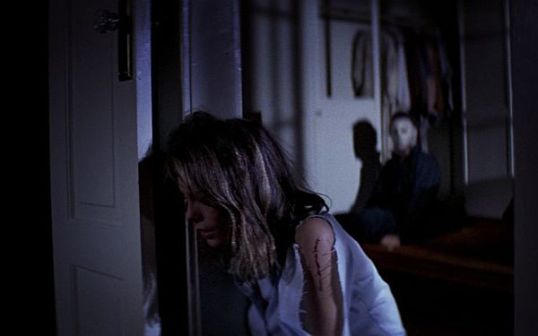
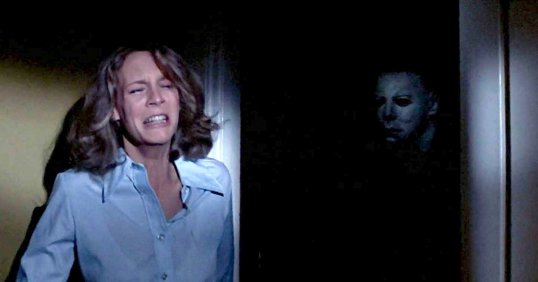
Halloween (1978, dir by John Carpenter. DP: Dean Cundey)

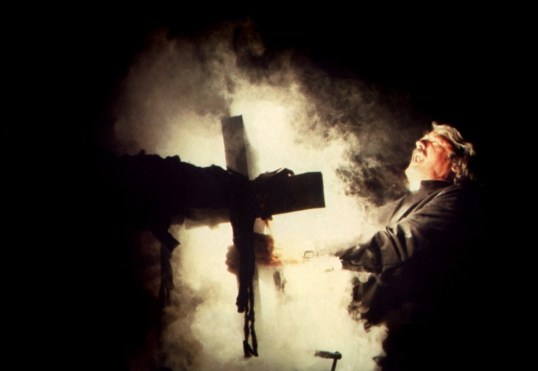
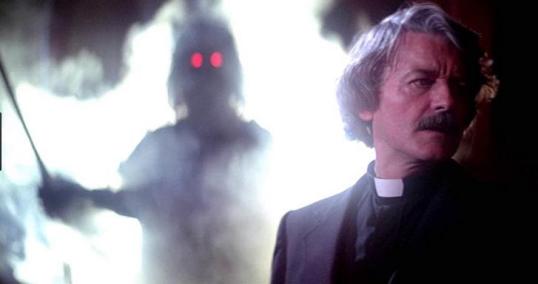
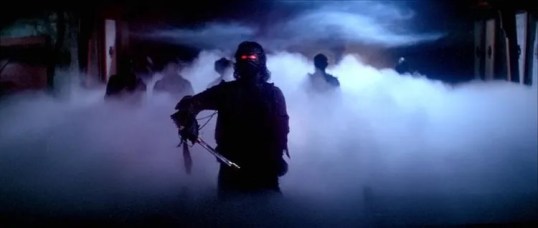
The Fog (1980, dir by John Carpenter, DP: Dean Cundey)

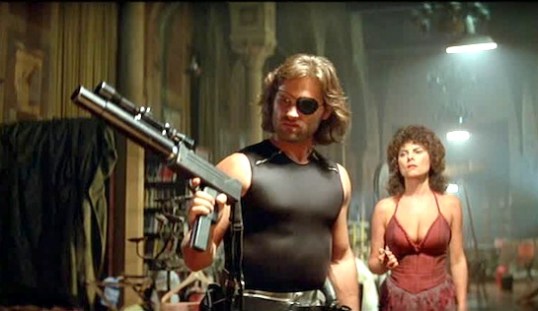
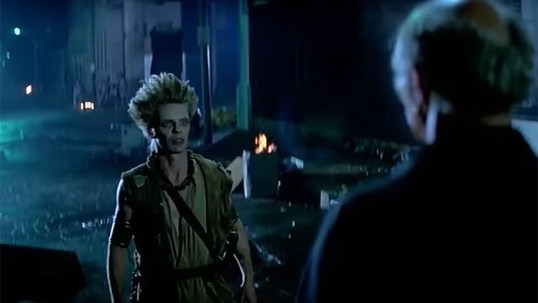
Escape From New York (1981, dir by John Carpenter, DP: Dean Cundey)

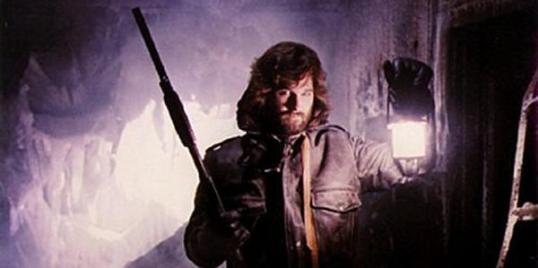
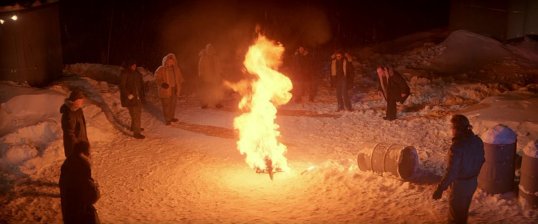
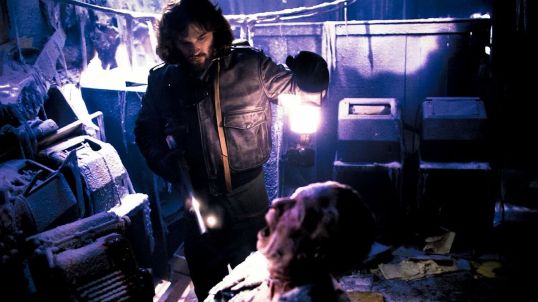
The Thing (1982, dir by John Carpenter, DP: Dean Cundey)

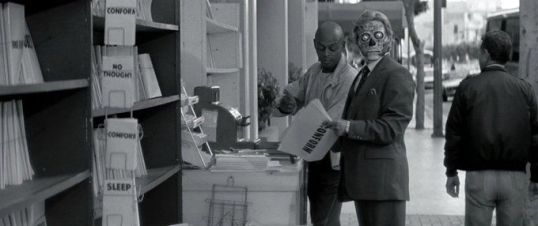
They Live (1988, dir by John Carpenter, DP: Gary B. Kibbe)

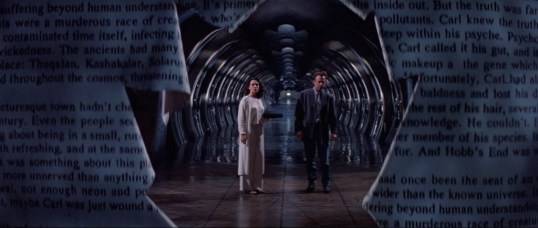
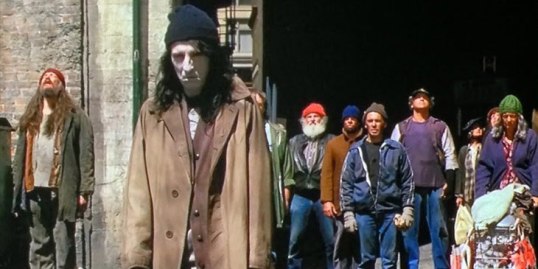
In The Mouth of Madness (1994, dir by John Carpenter, DP: Gary B. Kibbe)

Horror Scenes That I Love: John Houseman in The Fog


“Enough time for one more story…..”

Hi, everyone!  Well, as you can tell by looking around the site today, it’s October and it’s also the start of our annual Horrorthon here at the Shattered Lens!  This is my favorite time of year and one of the things that truly makes it special is that it provides me with an excuse to write about some of my favorite horror films.  When it comes to Horrorthon, there’s always time for one more story.

Today’s Horror Scene of the Day is the opening of John Carpenter’s 1980 classic, The Fog.  When John Houseman says that there’s time for one more ghost story, you know you better listen.

6 Shots From 6 Films: Special John Carpenter Edition


4 Or More Shots From 4 Or More Films is just what it says it is, 4 shots from 4 of our favorite films. As opposed to the reviews and recaps that we usually post, 4 Shots From 4 Films lets the visuals do the talking!

Today, the Shattered Lens wishes a happy 77th birthday to one of this site’s favorite filmmakers and a patron saint of the independent spirit, the great John Carpenter!

In honor of the man and his legacy, here are….

6 Shots From 6 John Carpenter Films

Halloween (1978, dir by John Carpenter, DP: Dean Cudney)

The Fog (1980, dir by John Carpenter, DP: Dean Cudney)

Escape From New York (1981, dir by John Carpenter, DP: Dean Cundey)

The Thing (1982, dir by John Carpenter, DP: Dean Cundey)

Prince of Darkness (1987, dir by John Carpenter, DP: Gary B. Kibbe)

They Live (1988, dir by John Carpenter, DP: Gary B. Kibbe)

Horror Song Of The Day: Theme From The Fog by John Carpenter


Today’s horror song of the day comes to us from John Carpenter.  Best-known as a director, Carpenter is also an accomplished musician and composer who is responsible for some of the most iconic horror themes of all time.  Today, we offer you the main theme from his 1980 film, The Fog.

As I’m sure you have guessed, there will be more Carpenter songs in the days ahead.

6 Trailers For October 29, 2023


As we reach the conclusion of our annual Horrorthon, how about another edition of Lisa Marie’s Favorite Grindhouse and Exploitation Film trailers?  Today, we pay tribute to the godfather of Halloween, Mr. John Carpenter!

  1. Halloween (1978)

Obviously, I was going to have to share the trailer for the original Halloween eventually.  This is still the best of the franchise.  In fact, all of the attempts by other directors to “improve” on it just serves to remind us of the fact that John Carpenter said everything that needed to be said in the first film.

2. Assault on Precinct 13 (1976)

How did Carpenter get the chance to direct Halloween?  Well, the producers were impressed with his previous film, Assault on Precinct 13.  Also impressed by this film was Angela Pleasence, who subsequently convinced her father, Donald, to read Carpenter’s script for Halloween.

3. The Fog (1980)

Carpenter followed up Halloween with The Fog, which featured several cast members of both Halloween and Carpenter’s next film, Escape From New York.

4. The Thing (1982)

Incredibly underappreciated when it was first released, Carpenter’s remake of The Thing has gone on to become one of his most popular and influential films.

5. Prince of Darkness (1987)

Speaking of underappreciated, it would also be several years before Carpenter’s Prince of Darkness started to receive the attention that it really deserved.

6. John Carpenter’s Vampires (1998)

Finally, with Vampires, Carpenter mixed the horror genre with the western genre and came up with a hybrid that continues to be influential to this day.

4 Shots From 4 Films: Special John Carpenter Edition


4 Shots From 4 Films is just what it says it is, 4 shots from 4 of our favorite films. As opposed to the reviews and recaps that we usually post, 4 Shots From 4 Films is all about letting the visuals do the talking.

This October, I am going to be using our 4 Shots From 4 Films feature to pay tribute to some of my favorite horror directors, in alphabetical order!  That’s right, we’re going from Argento to Zombie in one month!

Today’s director is the man who put Halloween on the map and a personal favorite of everyone here at TSL, John Carpenter!

4 Shots From 4 John Carpenter Films

Halloween (1978, dir by John Carpenter, DP: Dean Cundey)

The Fog (1980, dir by John Carpenter, DP: Dean Cundey)

The Thing (1982, dir by John Carpenter, DP: Dean Cundey)

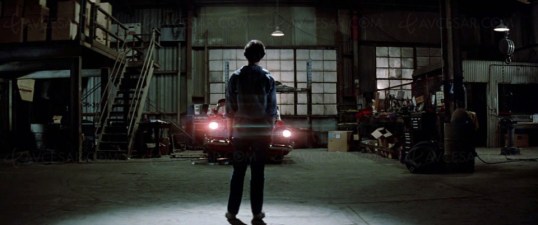
Christine (1983, dir by John Carpenter, DP: Donald M. Morgan)