Horror Guilty Pleasure No. 135: Critters (dir. by Stephen Herek)


Some movie monsters want to conquer the planet. The creatures in Stephen Herek’s Critters seem perfectly happy eating their way through whatever happens to be standing on it. There is something refreshing about villains with such uncomplicated priorities, especially when they look like the contents of a clogged vacuum cleaner fitted with shark teeth. This is the sort of movie where the appeal is right there in the premise: nasty little aliens descend on rural America, and a perfectly ordinary family has to survive the visit. As an ’80s genre guilty pleasure, it delivers the goods with an appealing lack of pretension.

The story gets moving when a group of carnivorous aliens escapes from an extraterrestrial prison facility and makes its way to Earth. Their arrival puts the Brown family’s Kansas farm directly in the path of a feeding frenzy, while two shape-shifting bounty hunters follow close behind. Unfortunately, these heavily armed visitors are not especially concerned about keeping the peace or leaving buildings intact. Between the hungry fugitives and their destructive pursuers, an otherwise quiet community gets more excitement than it could possibly need. The setup is ridiculous, but Herek understands that explaining it too much would only spoil the fun.

What gives Critters some substance beneath the silliness is its interest in the people whose evening gets ruined. The Browns are not especially complicated characters, but their everyday disagreements and familiar household routines make them feel like a family rather than a collection of future victims. Spending time with them before the attack also gives the farmhouse a sense of normality worth protecting. The monsters are not simply invading a convenient horror-movie location; they are barging into somebody’s home. That modest distinction helps the film generate more audience investment than its toothy little troublemakers might initially suggest.

Scott Grimes makes Brad an easy young hero to root for. He has enough mischievous energy to seem capable of causing problems before the aliens ever arrive, but he never becomes so obnoxious that his survival feels like an obligation. His resourcefulness grows naturally out of that personality, giving the movie a kid protagonist who can participate in the action without seeming completely detached from his surroundings. There is a pleasing wish-fulfillment element to watching an underestimated youngster step up when things go wrong. Grimes sells that without turning Brad into an impossibly polished miniature action star.

Dee Wallace provides another important source of credibility as Brad’s mother, Helen. She brings warmth and urgency to situations that, described out loud, sound almost impossible to play straight. That commitment helps establish the film’s balance: the audience can laugh at the monsters without feeling that the characters are merely participating in a comedy routine. The family’s fear and concern remain sincere even when the surrounding action gets goofy. Critters does not require powerhouse dramatic performances, but it benefits enormously from actors willing to treat an attack by murderous furballs as an actual emergency.

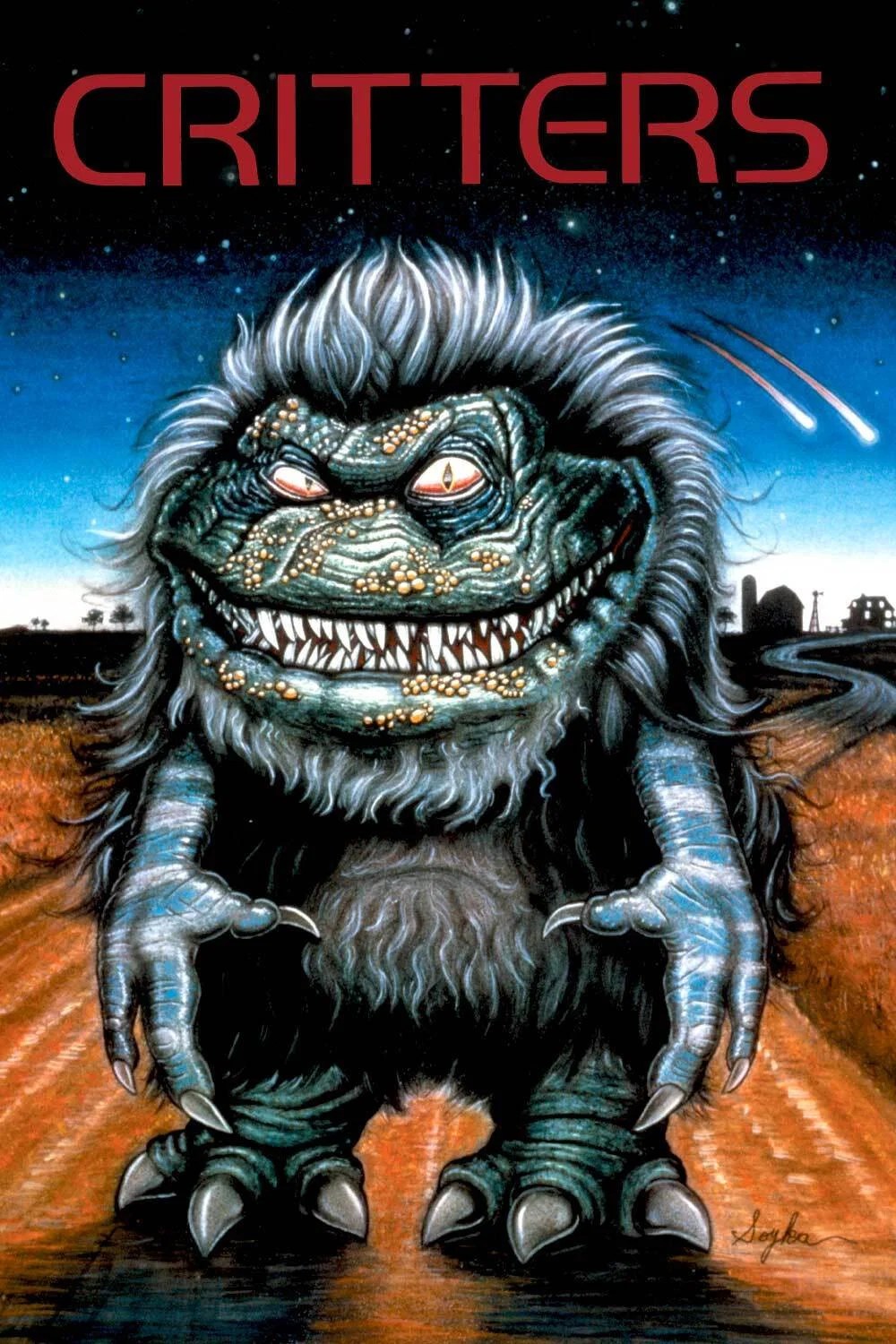
Naturally, the furballs themselves are the main attraction. They look like what would happen if the Tribbles from Star Trek suddenly decided to stop being cute and start being mean and really, really hungry. Their dark hair, glowing eyes, enormous mouths, and projectile quills turn an otherwise cuddly shape into something you would desperately want off your lap. The fun comes from their rotten personalities as much as their physical design. These are greedy, bad-tempered little creatures whose curiosity usually leads directly to destruction. Their appetite drives the action, but their attitude gives it flavor, making them entertaining even when they are doing little more than looking for their next meal.

The practical effects contribute plenty of charm, although they do not always maintain the illusion. Some movements are stiff, and certain shots make the creatures look exactly like the puppets they are. Still, their physical presence gives the mayhem a satisfying texture. They seem to belong in the same messy environment as the furniture, debris, and frightened actors around them. The movie also benefits from not making them too adorable. They can be funny without losing that unpleasant suggestion of something that might bite straight through your hand. Their limitations are visible, but so is the craftsmanship behind their grotesque little faces.

The bounty hunters bring a broader, more cartoonish kind of entertainment. Terrence Mann plays Ug, who adopts the appearance of rock star Johnny Steele, while his partner Lee cycles through human identities played by Ethan Phillips, Jeremy Lawrence, and Don Keith Opper. Mann does most of the pair’s comedic heavy lifting, giving Ug a wonderfully straight-faced intensity that makes his rock-star appearance and excessive firepower even funnier. Their destructive pursuit suggests that Earth’s rescuers might require almost as much cleanup as its invaders. These scenes provide some welcome absurdity, although they also contribute to uneven pacing. Whenever the film moves away from the farmhouse, the pressure surrounding the Browns tends to ease. The hunters are amusing, particularly Mann, but their antics are not always as engaging as the central siege.

The resemblance to Gremlins is difficult to ignore, but Critters works best when it is not treated as a contest. It offers a smaller, scrappier variation on miniature-monster chaos, with a straightforward survival story holding everything together. The scares are limited, the plotting is thin, and the effects occasionally wobble, yet the movie remains likable because it commits to its own ridiculous appeal. There is no need to pretend it is a neglected masterpiece to appreciate its pleasures. Sometimes a decent creature feature only needs an appealing cast, a little suspense, and some ugly space pests making a spectacular nuisance of themselves. Critters understands the assignment.

Previous Guilty Pleasures

  1. Half-Baked
  2. Save The Last Dance
  3. Every Rose Has Its Thorns
  4. The Jeremy Kyle Show
  5. Invasion USA
  6. The Golden Child
  7. Final Destination 2
  8. Paparazzi
  9. The Principal
  10. The Substitute
  11. Terror In The Family
  12. Pandorum
  13. Lambada
  14. Fear
  15. Cocktail
  16. Keep Off The Grass
  17. Girls, Girls, Girls
  18. Class
  19. Tart
  20. King Kong vs. Godzilla
  21. Hawk the Slayer
  22. Battle Beyond the Stars
  23. Meridian
  24. Walk of Shame
  25. From Justin To Kelly
  26. Project Greenlight
  27. Sex Decoy: Love Stings
  28. Swimfan
  29. On the Line
  30. Wolfen
  31. Hail Caesar!
  32. It’s So Cold In The D
  33. In the Mix
  34. Healed By Grace
  35. Valley of the Dolls
  36. The Legend of Billie Jean
  37. Death Wish
  38. Shipping Wars
  39. Ghost Whisperer
  40. Parking Wars
  41. The Dead Are After Me
  42. Harper’s Island
  43. The Resurrection of Gavin Stone
  44. Paranormal State
  45. Utopia
  46. Bar Rescue
  47. The Powers of Matthew Star
  48. Spiker
  49. Heavenly Bodies
  50. Maid in Manhattan
  51. Rage and Honor
  52. Saved By The Bell 3. 21 “No Hope With Dope”
  53. Happy Gilmore
  54. Solarbabies
  55. The Dawn of Correction
  56. Once You Understand
  57. The Voyeurs
  58. Robot Jox
  59. Teen Wolf
  60. The Running Man
  61. Double Dragon
  62. Backtrack
  63. Julie and Jack
  64. Karate Warrior
  65. Invaders From Mars
  66. Cloverfield
  67. Aerobicide
  68. Blood Harvest
  69. Shocking Dark
  70. Face The Truth
  71. Submerged
  72. The Canyons
  73. Days of Thunder
  74. Van Helsing
  75. The Night Comes for Us
  76. Code of Silence
  77. Captain Ron
  78. Armageddon
  79. Kate’s Secret
  80. Point Break
  81. The Replacements
  82. The Shadow
  83. Meteor
  84. Last Action Hero
  85. Attack of the Killer Tomatoes
  86. The Horror at 37,000 Feet
  87. The ‘Burbs
  88. Lifeforce
  89. Highschool of the Dead
  90. Ice Station Zebra
  91. No One Lives
  92. Brewster’s Millions
  93. Porky’s
  94. Revenge of the Nerds
  95. The Delta Force
  96. The Hidden
  97. Roller Boogie
  98. Raw Deal
  99. Death Merchant Series
  100. Ski Patrol
  101. The Executioner Series
  102. The Destroyer Series
  103. Private Teacher
  104. The Parker Series
  105. Ramba
  106. The Troubles of Janice
  107. Ironwood
  108. Interspecies Reviewers
  109. SST — Death Flight
  110. Undercover Brother
  111. Out for Justice
  112. Food Wars!
  113. Cherry
  114. Death Race
  115. The Beast Within
  116. Girl Series
  117. Gone in 60 Seconds
  118. Swordfish
  119. Marked For Death
  120. The Internship
  121. The Angry Red Planet
  122. 2012
  123. Old School
  124. No Escape
  125. In Death Series
  126. Alligator
  127. Little Annie Fanny
  128. Wicked Wanda
  129. Congo
  130. The 13th Warrior
  131. Sudden Death
  132. The Convent of Hell
  133. Covent of Sinners
  134. Teen Witch

Review: Band of Brothers


“A lot of those [German] soldiers, I’ve thought about this often, that man and I might’ve been good friends. We might’ve had a lot in common. We might’ve liked to fish, you know, he might’ve liked to hunt. You never know. You know. Of course, they were doin’ what they were supposed to do, and I was tryin’ to do what I was supposed to do. But, under different circumstances we might’ve been good friends.” — Darrell “Shifty” Powers

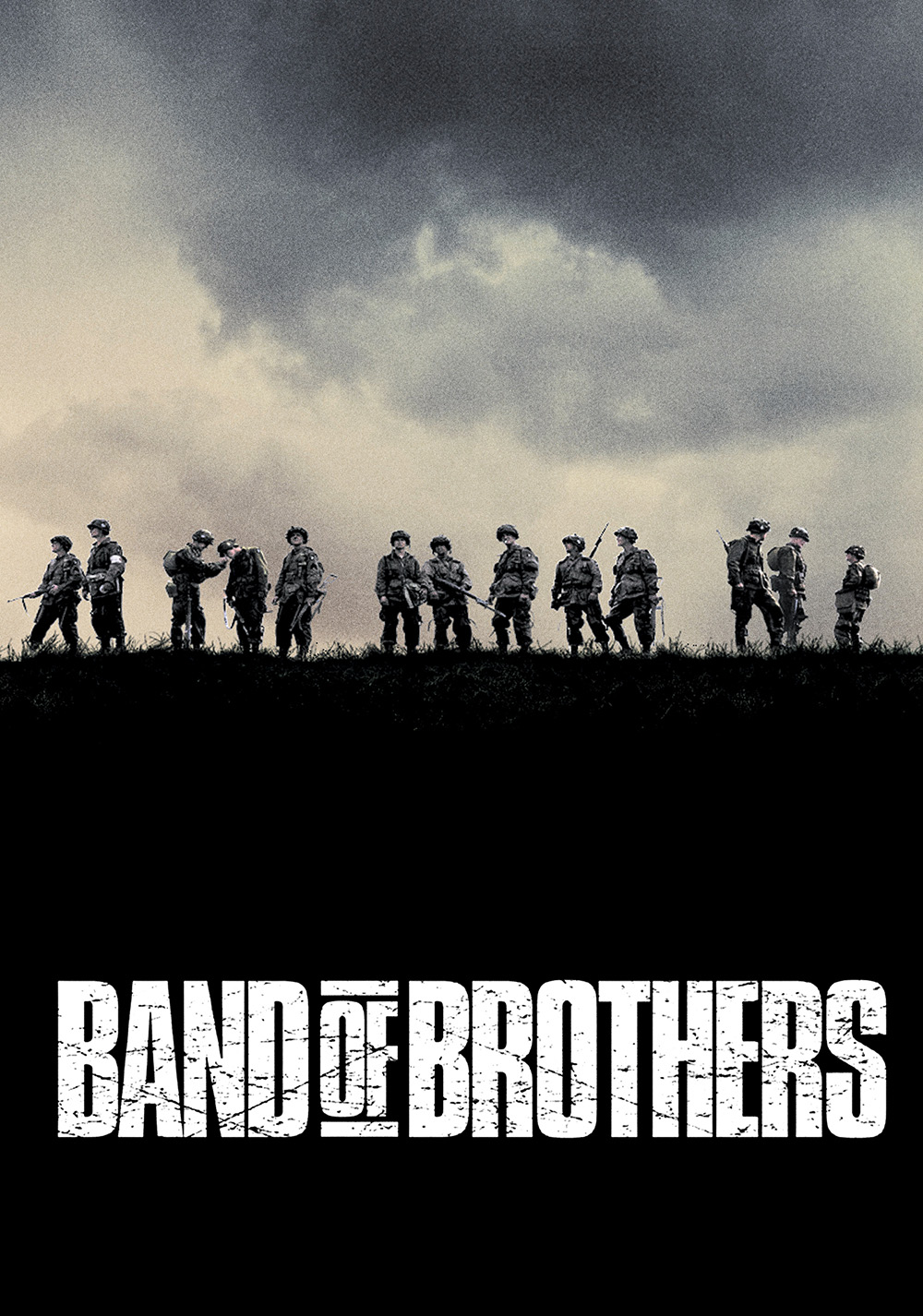
When we look back at the landscape of modern television, it is easy to take the concept of cinematic TV for granted. We live in an era where massive budgets, sweeping orchestral scores, and A-list Hollywood talent are regularly deployed on the small screen. But if you trace this golden lineage back to its true modern genesis, all roads inevitably lead to a singular, towering achievement: the 2001 HBO mini-series Band of Brothers. Produced by Tom Hanks and Steven Spielberg, this ten-part masterpiece did not just recount the harrowing journey of Easy Company, 506th Parachute Infantry Regiment, 101st Airborne Division during World War II; it fundamentally altered the DNA of television storytelling. Watching it today, a quarter-century after its initial broadcast, the series remains as potent, heartbreaking, and visually stunning as it was when it first shocked audiences. It exists as a perfect bridge between the classical Hollywood war epics of old and the uncompromising, gritty realism of twenty-first-century media. By committing to an unprecedented budget and an absolute refusal to sanitize the psychological horrors of combat, Band of Brothers set a high-water mark that few series have ever managed to touch, let alone surpass.

To understand the visual language and visceral power of Band of Brothers, one must first look at the cinematic earthquake that preceded it three years earlier: Steven Spielberg’s 1998 masterpiece Saving Private Ryan. That film rewrote the rules of how cinema captures warfare, abandoning the steady, heroic, brightly lit panoramas of mid-century studio pictures in favor of a terrifyingly immersive, chaotic style. Spielberg utilized desaturated colors, shutter-angle manipulation to create a jittery, hyper-real sense of motion, and handheld cameras that made the audience feel like they were ducking bullets in the surf of Omaha Beach. When Hanks and Spielberg pivoted to television to adapt Stephen E. Ambrose’s non-fiction book Band of Brothers, they brought this exact aesthetic blueprint with them. The impact of Saving Private Ryan on the mini-series cannot be overstated; it acts as the structural and aesthetic godfather of the entire project. Directors like Phil Alden Robinson, Richard Loncraine, and David Nutter utilized the same bleach-bypass film processing techniques to strip away vibrant primaries, leaving a color palette dominated by icy blues, muddy browns, and sickly olive drabs. This was not just a stylistic gimmick; it was a psychological tool that pulled the viewer out of the comfort of their living rooms and dropped them into the frozen, unforgiving forests of Bastogne or the smoke-choked ruins of Carentan. The camera became a participant in the war, getting splattered with mud, shaking violently during artillery barrages, and refusing to look away from the gruesome reality of what high-explosive shrapnel does to human flesh.

Yet, while it shared a visual vocabulary with Saving Private Ryan, Band of Brothers achieved something that a two-and-a-half-hour feature film simply never could, owing entirely to the expansive canvas of the mini-series format. A film must ultimately compress its narrative arc, often relying on archetypes and rapid pacing to reach a resolution. Over the course of ten hours, Band of Brothers allows its characters to breathe, change, harden, and break. Crucially, some of the show’s most powerful, lasting stories have absolutely nothing to do with active battles, but rather unfold in the quieter moments between the chaos. We do not just see these men in the heat of a firefight; we watch them suffer through the mundane, soul-crushing basic training regime of Camp Toccoa under the tyrannical eye of Captain Sobel, played with a brilliant, tragic insecurity by David Schwimmer. We sit with them in the agonizing, silent darkness of C-47 transport planes, listening to the vomit hitting the floorboards and watching the sheer, unadulterated dread on their faces before the jump over Normandy. We freeze with them in foxholes during the long, static winter in the forests of Bastogne, sharing the psychological numbness of isolation and the simple, desperate human desire for a dry pair of socks or a warm cup of coffee. This structural patience transforms the viewing experience from simple passive entertainment into an emotional marathon. We have known these men through their triumphs and their absolute lowest points, making their losses hit with the weight of personal bereavement.

While these quiet stretches build a deep, slow-burning empathy, the absolute biggest gut punch of the entire series arrives in Episode 9, titled Why We Fight. Throughout their march across Europe, the men of Easy Company—and by extension, the audience—have become somewhat cynical and battle-weary, numbly pushing forward simply to survive and get the job done. That numbness is completely shattered when a patrol stumbles across an sub-camp in the woods near Landsberg, which itself was part of the larger Dachau concentration camp complex. Up until this point, the war had been about geopolitical strategies, territory, and survival; suddenly, the men are brought face-to-face with the industrial scale of Nazi atrocities. The direction in this sequence is devastatingly restrained. There are no swelling orchestrations or heroic monologues, only the bewildered horror of soldiers looking at skeletal survivors wandering the camp in striped uniforms. Watching tough, battle-hardened paratroopers like Captain Nixon and Major Winters reduced to breathless, disbelieving silence as they uncover the truth of the Holocaust anchors the narrative in an entirely different tier of tragedy. It is an episode that completely recontextualizes the title of the series, showing that their ultimate purpose transcended military victory; they were liberating humanity from an unimaginable nightmare.

The casting of the series is another stroke of absolute genius that looks even more miraculous in hindsight. The producers deliberately avoided casting massive, distracting superstars for the main roles, opting instead for relatively unknown British and American theater and character actors. This decision was crucial for maintaining the show’s documentary-like authenticity; if Tom Cruise or Brad Pitt had been jumping out of those planes, the illusion would have been instantly shattered. Instead, we got Damian Lewis as Major Richard Winters, delivering a performance of quiet, stoic, and deeply principled leadership that serves as the moral anchor of the entire narrative. Alongside him was Ron Livingston as Captain Lewis Nixon, embodying the weary, cynical, and battle-fatigued intellect of a man seeking refuge from the horrors of war in a bottle of Vat 69. The ensemble is a treasure trove of talent, featuring early-career appearances from actors who would go on to become household names, including Tom Hardy, Michael Fassbender, James McAvoy, Simon Pegg, and Michael Cudlitz. Because the show focuses on an entire company, the perspective shifts naturally from episode to episode. One week we are viewing the war through the eyes of a terrified replacement medic in Bastogne, and the next we are embedded with the cynical, battle-hardened sergeant Carwood Lipton in The Breaking Point. This shifting focus ensures that the series never feels like a traditional Hollywood star vehicle, but rather a collective portrait of brotherhood where the company itself is the true protagonist.

The emotional resonance of Band of Brothers is amplified tenfold by the brilliant inclusion of interviews with the actual surviving veterans of Easy Company at the beginning of each episode. Kept anonymous until the very final moments of the series, these elderly men sit in simple chairs against dark backgrounds, their voices trembling and eyes misting over as they recall events that occurred more than half a century prior. There is a heartbreaking disconnect between the frail, weathered men on screen and the vibrant, muscular young actors portraying them in the dramatization. These interviews ground the cinematic spectacle in an undeniable, sobering reality. They serve as a constant reminder that the explosions, the blood, and the impossible acts of bravery we are witnessing were not the inventions of a Hollywood writers’ room, but the actual lived experiences of ordinary boys who were plucked from small-town America and dropped into the middle of the apocalypse. When the real-life winter veteran Dick Winters quotes his friend’s letter at the end of the series—saying, “Grandpa, were you a hero in the war? And Grandpa said no, but I served in a company of heroes”—it is impossible not to be moved to tears. It is a rare instance where a piece of media successfully honors historical figures without falling into the trap of cheap, unearned sentimentality or jingoistic propaganda.

Beyond its historical and emotional triumphs, the legacy of Band of Brothers is woven directly into the fabric of what we now refer to as prestige television. Before 2001, television was largely viewed as cinema’s lesser sibling—a medium defined by low budgets, procedural structures, and compromised production values meant to fit the square dimensions of old cathode-ray tube television sets. HBO had already begun to challenge this status quo with groundbreaking dramas like The Sopranos and Oz, but Band of Brothers was the project that proved television could match, and perhaps even exceed, the scale and artistic ambition of Hollywood blockbusters. With a staggering budget of over one hundred and twenty million dollars, it was the most expensive television miniseries ever produced at the time. The immense financial gamble paid off spectacularly, demonstrating to network executives and creators alike that audiences were hungry for complex, serialized, and visually uncompromising narratives that demanded to be treated as high art. The success of the show cleared the path for future cinematic television epics, directly inspiring sister projects like The Pacific and Masters of the Air, while setting the production standards that would later allow shows like Game of Thrones, Chernobyl, and Succession to flourish. It proved that the small screen was capable of housing massive, global historical narratives without losing the intimate character dynamics that make long-form storytelling so uniquely compelling.

Ultimately, Band of Brothers stands as a definitive milestone because it perfectly balanced the macro-scale horror of global warfare with the micro-scale beauty of human connection. It stripped away the romanticized myths of World War II to expose the sheer, terrifying randomness of survival, while simultaneously validating the profound love and loyalty that can only be forged in the crucible of shared suffering. It did not glamorize combat; instead, it illuminated the heavy, permanent psychological toll extracted from those who survived it. Through its hyper-realistic visual language inherited from Saving Private Ryan, its impeccable ensemble casting, and its revolutionary impact on the medium of television, the series achieved a timeless quality. It remains a definitive piece of cultural touchstone media that demands annual rewatches from millions of viewers around the globe. It is not just a historical chronicle, nor is it merely a well-executed piece of premium television; it is a monument to the human spirit, an artistic triumph that continues to remind us of the immense sacrifices made by an ordinary generation of heroes who stood together when the world was falling apart.

Retro Television Review: The Night They Saved Christmas (dir by Jackie Cooper)


Welcome to Retro Television Reviews, a feature where we review some of our favorite and least favorite shows of the past!  On Sundays, I will be reviewing the made-for-television movies that used to be a primetime mainstay.  Today’s film is 1984’s The Night They Saved Christmas!  It  can be viewed on Tubi and YouTube.

The Night They Saved Christmas argues that there are two types of people in the world.

There are people who still believe in Santa Claus and all that he represents and then there are the people who gave up their belief a long time ago.  Those who believe in Santa Claus are still full of the Christmas spirit and, under the right circumstances, they might even get to meet the elves and the jolly old man himself.  Those who do not believe are destined to waste their holiday on focusing on material things that aren’t really important.

Petroleum engineer Michael Baldwin (Paul Le Mat) doesn’t believe in Santa Claus and that’s why he had no trouble moving his entire family to the North Pole so that they could freeze while he headed up an oil exploration project.  Michael and his boss, billionaire Sumner Murdock (Mason Adams), are determined to find oil and they’ve got an endless supply of dynamite with which to search for it.

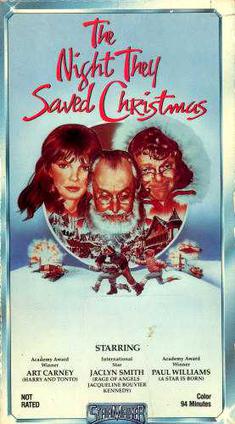
Michael’s wife, Claudia (Jaclyn Smith), still believes in the spirit of Santa and she encourages their children to believe as well.  For that reason, Ed the Elf (played by singer Paul Williams), is willing to take Claudia and the kids to North Pole City.  They get to meet Santa (Art Carney) and they even learn how Santa uses satellite technology to deliver presents all over the world.  The city is really quite impressive, with the movie making good use of matte paintings and miniatures to create the impression of a magical metropolis.  And Santa turns out to be a pretty nice guy, even if he does tell the elves that he’s sick of them singing Jingle Bells.

Unfortunately, North Pole City is in danger!  Every day, the oil company’s dynamite causes a mini-earthquake.  With the dynamiting getting closer and closer to North Pole City, Santa and the elves worry that they might be on the verge of getting blown up!  Can Claudia and the kids convince Michael to stop blowing up huge chunks of the North Pole before Christmas is ruined!?

Well, listen — I don’t think it’s a spoiler for me to tell you that Christmas is not ruined.  It would be pretty cynical for the movie to end with Michael blowing up Santa Claus and cynical is one thing that The Night They Saved Christmas is not.  This is a very earnest film, full of cheery elves, a paternal Santa, and lots of Christmas music.  Even greedy old Mr. Murdock turns out to be not that bad of a guy.  In the end, this film says that Santa and the spirit of Christmas is for everyone and that’s certainly not a bad message.  It’s a likeable movie for the holiday season and Art Carney is a perfect Santa Claus, even if he does appear to be a little underweight for the role.  As played by Carney, Santa is welcoming, good-humored, and still enthusiastic about his job, even after centuries of doing it.  He’s exactly the way you would want Santa to be.  This is a film that earns the right to wish everyone a merry Christmas!