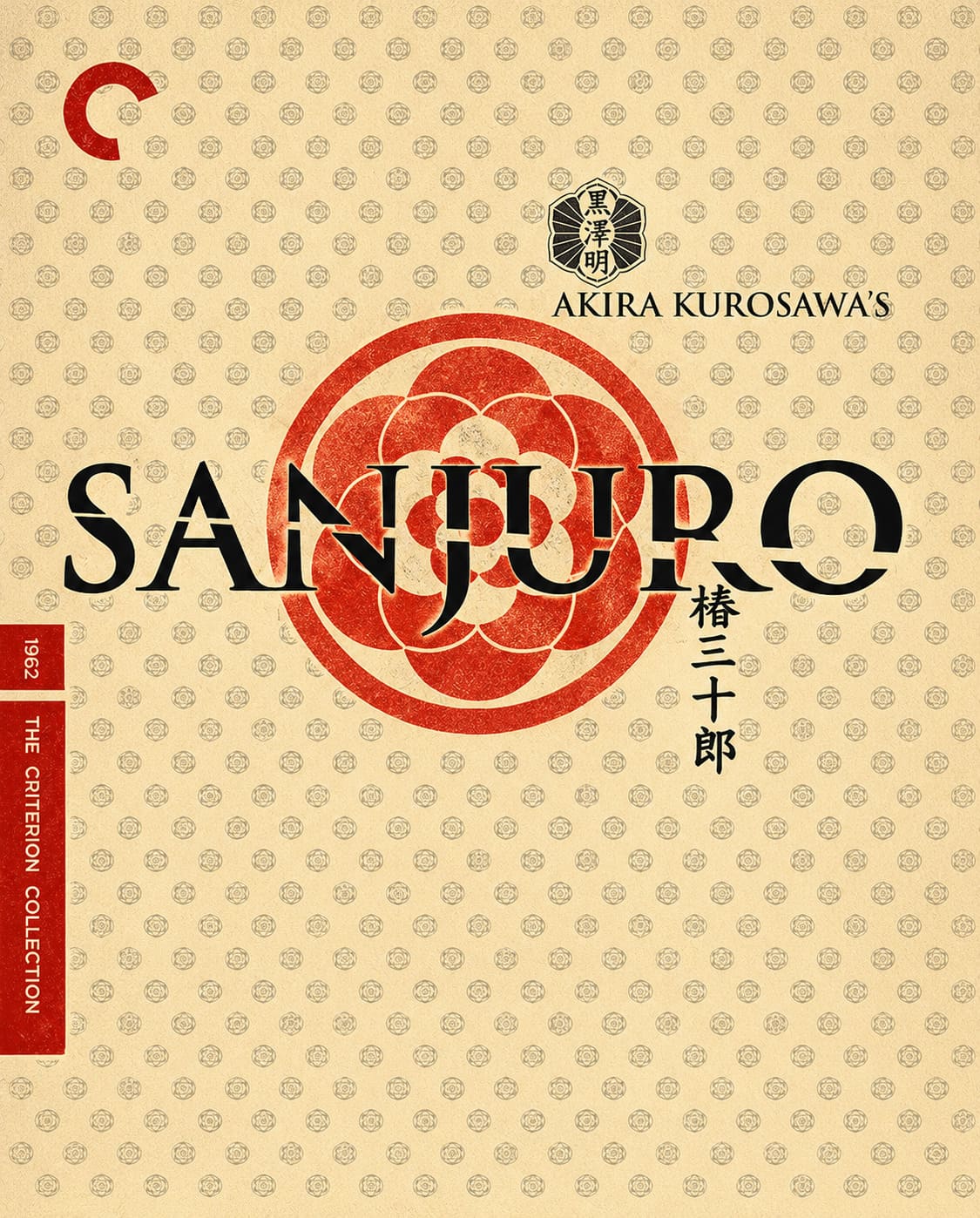
Film Review: Sanjuro (dir. by Akira Kurosawa)


“The best sword is kept in its sheath.” — chamberlain’s wife

Toshiro Mifune spends much of Sanjuro looking like the last person you’d ask to set an example. He slouches, scratches himself, and talks to nine young samurai as though their company were a nuisance he’d been too polite to avoid. Actually, he’s not even that polite. Naturally, they start looking up to him. This turns out to be a mixed blessing, and it’s the joke that gives Akira Kurosawa’s 1962 film its shape. Sanjuro is exactly the man these young samurai need in a crisis, but the more impressed they are by what he can do, the easier it is for them to miss what he knows. The fun of the movie is that we’re right there with them. Who wouldn’t want to be that sure of themselves, at least for an afternoon?

Sanjuro was one of Kurosawa’s rare productions to follow up an earlier film. It brings back Mifune’s wandering, masterless samurai from 1961’s Yojimbo, though the story stands on its own. The project began as an adaptation of a Shūgorō Yamamoto story and was reworked for the returning character after Yojimbo’s success. That history helps explain why the sequel doesn’t feel like a second helping. In Yojimbo, Sanjuro figures out what two rival gangs want and lets their self-interest do much of his work for him. Here, the people he has the most trouble managing are on his side. A crook looking out for himself is predictable. Nine decent men who want to prove they’re useful can talk themselves into just about anything.

We see the problem at the young men’s secret meeting about corruption in their clan. They’ve agreed on who looks guilty and which official seems trustworthy, and Sanjuro, listening from the next room, tells them they’ve read it backward. Mifune doesn’t play it as a grand entrance. He sounds like somebody who’d rather have minded his own business but can’t listen to another minute of this. Better still is the way he shifts from irritation to alertness without straightening up. You notice how closely he’s been listening only when he decides to speak. The young men are judging people by how convincingly they carry themselves. The first person to give them good advice looks as though he couldn’t be bothered to pass their test.

Kurosawa makes their inexperience visible without asking all nine actors to play nine different kinds of fool. Their heads turn together. They crowd into spaces already too small for them. They look ready to move before anyone has settled on a direction. Mifune gets laughs by staying where he is, but the other actors deserve some credit: their earnestness gives his stillness something to play against. In the wide frame, you can watch an idea spread through the group before anybody has stopped to consider whether it’s any good. The downside is that most of the nine don’t make much of an impression individually. I mind that less than the early tangle of officials and allegiances, which takes a while to sort out even when Kurosawa’s staging tells you exactly where to look.

Once rescuing the kidnapped chamberlain becomes the immediate goal, the comedy grows more affectionate. The young men’s mistakes are funnier because the consequences are clearer, but also because their impulse to help is plainly sincere. Sanjuro can tell them to hold back; he can’t make holding back feel honorable to men eager to prove themselves. The camellia signal is a lovely answer to that problem. Instead of having someone charge into the next scene, Kurosawa lets a bunch of flowers carry the message downstream. He gives us time to watch the blossoms move rather than cutting straight to their arrival. You catch yourself wanting them to hurry up, which is a ridiculous thing to want from flowers and not far off what Sanjuro has been dealing with all along.

The chamberlain’s wife, played by Takako Irie, is the one person who can make Sanjuro look as impatient as his pupils. She suggests that the finest sword is the one that stays in its sheath, and there’s a small comic pleasure in how little he has to say back. Irie’s composure keeps the moment from feeling like a lecture. She talks to him as though he’s perfectly capable of understanding her, which is more disarming than treating him as either a savior or a brute. Mifune doesn’t give us an emphatic pause or a look that says he’s a changed man. He just lets her finish. For a film that gets so much pleasure out of watching its hero be right, it gets a surprising amount out of watching him listen.

What keeps her advice interesting is that the movie gives us plenty of reasons to be glad Sanjuro can draw his sword. People need rescuing, and patience doesn’t always get him the whole way there. But it’s one thing to be grateful for that skill and another to make it the measure of a man. Mifune makes the distinction harder by being such good company when he takes charge. Even his habitual grumbling makes a kind of promise: whatever the others have gotten wrong, he’s already spotted it. There’s real comfort in that, especially after a stretch of plot in which nobody seems to know whom to trust. It’s easy to carry that trust a step too far and assume that whatever he does next must be right because he does it better than anyone else.

Tatsuya Nakadai’s Hanbei Muroto is the rare person who can look at Sanjuro without either underrating him or wanting to be him. Nakadai has a watchfulness that pairs beautifully with Mifune’s apparent indifference. With the nine samurai, Sanjuro can see a mistake coming and practically wait for it to arrive. With Muroto, he has to pay attention to a man who’s paying just as much attention back. That makes their scenes satisfying in a way that has little to do with who might win a fight. You get the sense that each enjoys being spared the usual work of explaining himself. By the time they face each other with swords, I’d almost rather hear what they could say to one another than see what they can do. Almost.

Kurosawa holds them in silence long enough that you start to crave movement, and the fight is over practically before you register that it has begun. The burst of blood is startling, but the pause beforehand gives it its bite. Kurosawa has used this kind of timing to get laughs: let the young men tense up, give Mifune an extra beat, then let him puncture their seriousness. The duel uses that timing without offering the same relief. What makes the shift convincing is that Mifune hasn’t suddenly made Sanjuro sinister. The efficiency we’ve been enjoying is still there. This time there’s no rescue to make it feel good, just an opponent who understood him unusually well and a group of young men watching to see what he’ll do.

I still prefer the nasty little town in Yojimbo to the clan intrigue in Sanjuro, but I prefer what this film asks of Mifune. He has to be magnetic enough that nine young men would want to follow him and honest enough to tell them what a poor ambition that is. If I could check in on those nine later, I wouldn’t especially want to see them draw a sword as fast as he can. I’d rather see one of them interrupt a meeting where everyone agrees too quickly, or recognize good advice from somebody who doesn’t look the part. Neither would make much of a story to tell afterward. But it would mean they’d been watching something besides his hands.

Kurosawa-Mifune Collaborations
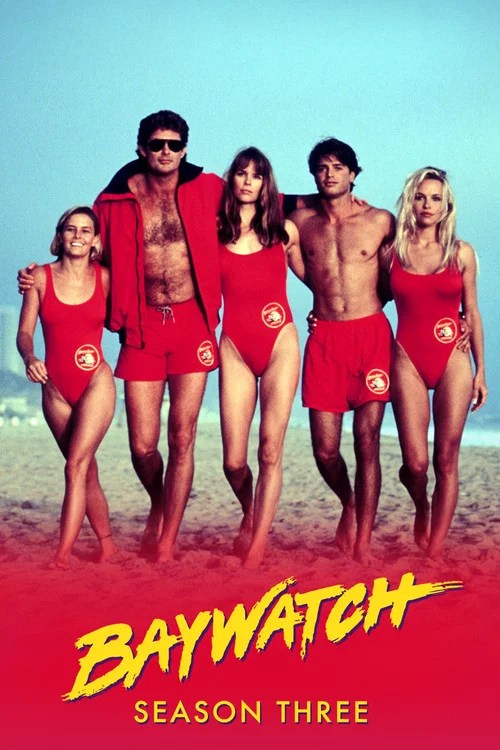
Retro Television Review: Baywatch 3.7 “Point of Doom”


Welcome to Retro Television Reviews, a feature where we review some of our favorite and least favorite shows of the past!  On Saturdays, I will be reviewing Baywatch, which ran on NBC and then in syndication from 1989 to 2001.  The entire show can be viewed on Tubi.

It’s competition time!

Episode 3.7 “Point Doom”

(Dir by Gregory J. Bonnan, originally aired on October 26th, 1992)

Brody meets the mysterious Jessie (Jennifer Campbell), a woman who drives around the country on her father’s motorcycle and who challenges other bikers to race for their pink slips. When evil biker Hudson (Michael A. Nickles) cheats during his race and Jessie ends up nearly drowning, Brody is determined to get revenge. Mitch warns Brody against racing around a stretch of mountain road called Point Doom. But Brody is a good-lookin’ rebel who does what he wants.

Meanwhile, Mitch and Stephanie are both training for a race to determine which one of them is faster. What Mitch doesn’t know is that everyone is involved in an elaborate prank to make him feel like he’s getting old and slow. Mitch nearly has a nervous breakdown before everyone shouts, “Gotcha!”

This was one of those episodes of Baywatch where both the A-plot and the B-plot were so simple that they each really only needed about 15 minutes of screen time. The rest of the episode is padded out with musical montages. We spend a lot of time watching Mitch train for his race. The beach scenery was nice, and any episode that allows David Charvet to do his whole rebel without a cause thing is amusing, but nothing in this episode really added up to much.

This episode did feature Stephanie standing up to Mitch’s old-fashioned sexism by beating him in a race. But it turned out that the only reason she “won” was because everyone lied to Mitch about his time. So, really, Stephanie didn’t win. I’m not really sure what the point of this episode was.

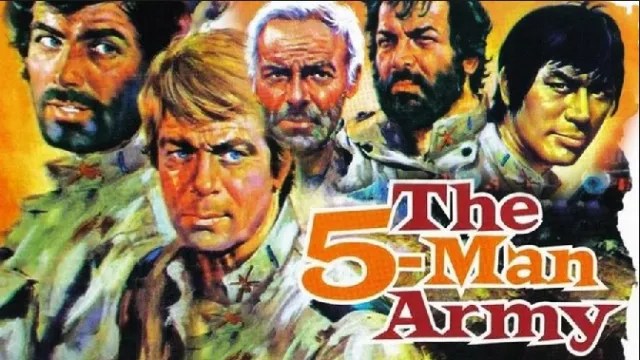
Brad takes on THE 5-MAN ARMY (1969), starring Peter Graves & Bud Spencer!


I remember when I first heard about the Warner Archive collection. It was 2009, and it seemed to be my mission in life to own every movie in existence on physical media. They were releasing so many awesome movies on DVD that had never really been available to me in that format before, especially movies like DRUM BEAT (1954) and RUN OF THE ARROW (1957), featuring a young Charles Bronson. Now these were “manufactured on demand” DVDs, so they weren’t the highest possible quality, but at that time I was just so happy to finally be able to add them to my collection! I would browse their catalog and buy pretty much everything that looked interesting to me. That’s how I discovered THE 5-MAN ARMY, by just looking at every movie they had made available. I bought it on a whim, and now, roughly 15 years later, I finally decided to watch it.

The story takes place during the Mexican Revolution and revolves around a plan to rob a train that’s carrying half a million dollars worth of gold and being guarded by heavily armed soldiers. The mastermind behind this impossible mission is the Dutchman (Peter Graves), who puts together a team of men, each bringing a particular set of skills to the table. There’s Mesito (Bud Spencer), the giant who loves to eat even more than he loves kicking ass. There’s Luis (Nino Castelnuovo), the acrobatic thief who seems hard to trust. There’s Augustus (James Daly), the veteran explosives expert who believes they’re on a suicide mission and decides to go anyway. And then there’s Samurai (Tetsuro Tamba), the quiet man who’s deadly with knives and swords. As awesome as these guys are, it’s going to be a tough job to pull off, and some of the characters just may have a few tricks up their sleeves to boot.

I had a fun time with this one, especially because of the cast. Considering that he was playing Jim Phelps on the TV series MISSION: IMPOSSIBLE at the same time he filmed this, Peter Graves seemed like the perfect choice to play the Dutchman, the mastermind of this crazy plan. And when I was a kid, I loved the “TRINITY” westerns starring Terence Hill and Bud Spencer. Even though this isn’t a comedy like those films, when Spencer bashes a soldier on top of the head, and then picks up and throws another one, I’ll admit to having a big smile on my face. And as a lover of samurai cinema and movies like THREE OUTLAW SAMURAI, I also enjoyed it when Tetsuro Tamba would pull out his sword and slice and dice. In other words, a big part of the fun for me was seeing actors that I’ve enjoyed for many years and in many movies bringing their history into this film.

There were a couple of very noticeable things when the opening credits started. First was the music. To be completely honest, I didn’t realize going in that the legendary Ennio Morricone provided the film score, but his stamp is unmistakable from the very beginning. I enjoyed it every time the music would ramp up with the action. And then I noticed that the screenplay was co-written by Dario Argento, which he had also done for the prior year’s western classic ONCE UPON A TIME IN THE WEST. He may have gone on to become a world-renowned maestro of horror, but Argento also contributed quite a bit to the spaghetti western genre.

As much fun as I had with THE 5-MAN ARMY, it’s not a classic in the same vein as some of the other films I’ve mentioned above. At just under two hours, it probably runs a little long, and there are parts of the plan that certainly strain credibility. However, I’m still glad I finally took the time to watch it as it brought to mind so much that I enjoy about movies. In some ways, I’m kind of surprised that this movie wasn’t named something like THE FABULOUS FIVE, because it definitely borrows from classics like THE MAGNIFICENT SEVEN, which of course itself is a remake of SEVEN SAMURAI. This film doesn’t come close to those heights, but for me the callbacks were fun rather than disappointing.

If you have a couple of hours to spare, and you want a spaghetti western that has plenty of action, a good sense of humor, and a fun collection of characters on a mission, you could do a lot worse than THE 5-MAN ARMY.

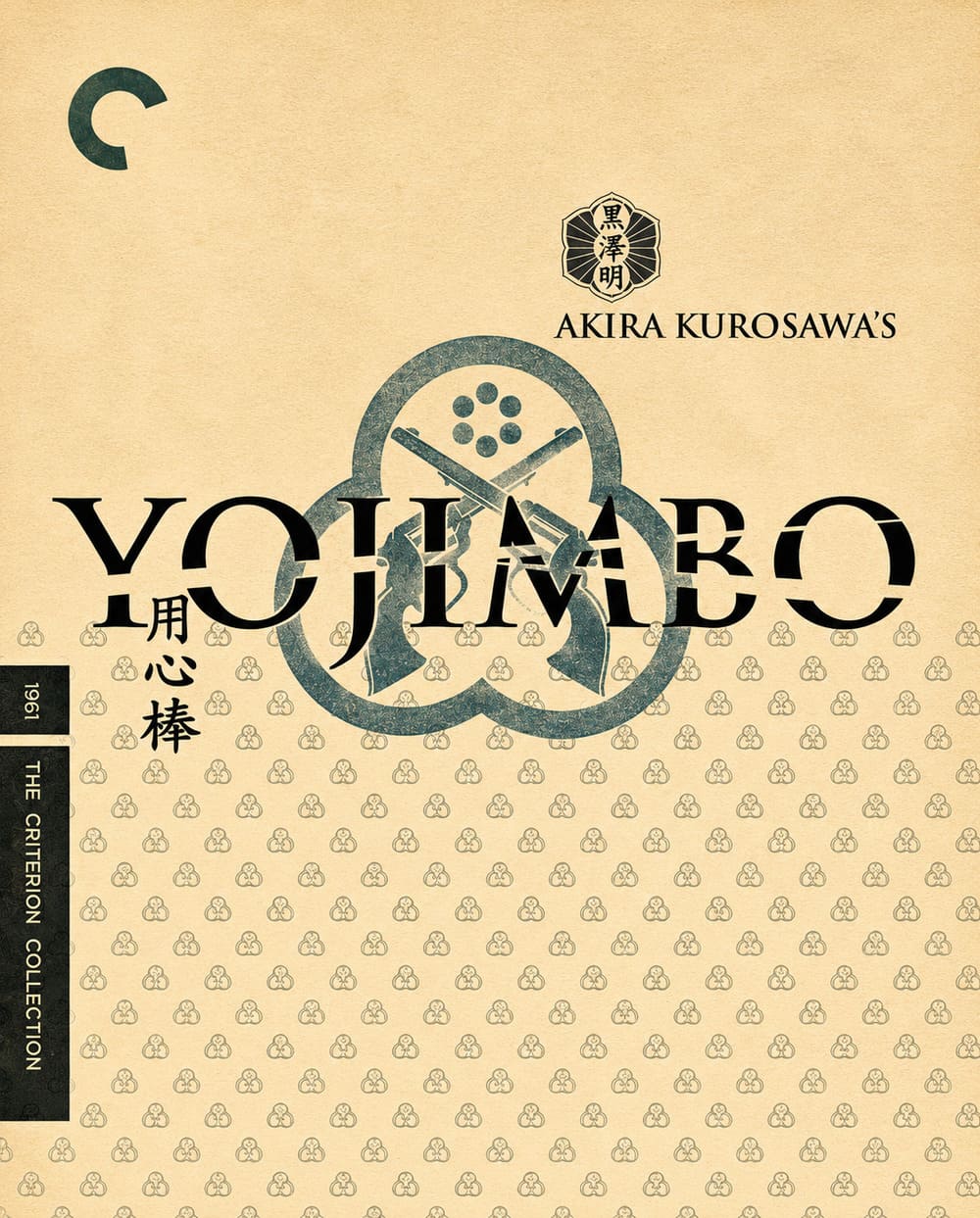
Film Review: Yojimbo (dir. by Akira Kurosawa)


“I’ll get paid for killing, and this town is full of people who deserve to die.” — Sanjuro

The title Yojimbo means “bodyguard,” which is a funny label for a man who spends most of the movie protecting nobody. Kurosawa’s hero is a hired sword who sells his services to two sides at once, and the job he’s really doing is far more mischievous than guarding anyone. That gap between the title and the behavior sets the tone for one of the slyest, most influential movies ever made about a man with a sword.

The setup is clean and nasty. A masterless samurai wanders into a wind-blown town divided between two gangs, one led by a silk merchant and the other by a sake brewer. Everyone else is hiding indoors, and the only man with a thriving business is the coffin-maker. The samurai gives his name as Sanjuro after glancing out a window at a mulberry field, which tells you right away that it’s invented. He sizes up the situation and decides to turn it to his advantage. He takes work from one boss, then the other, and starts feeding each side exactly the wrong information at the right moment.

What makes this more than a simple revenge or rescue plot is how patient the film lets him be. Sanjuro doesn’t charge into the fray. He plants a rumor, lets a negotiation fall apart, watches a rival’s men stumble into an ambush, and only then steps in to collect. The plot is basically a long con, and Kurosawa understands that the pleasure lies in watching a clever person work. You aren’t waiting for the hero to win so much as waiting to see which domino he’ll nudge next, and the answer is usually more outrageous than you expected.

Toshiro Mifune is the engine that makes all of this work. He takes the stiff, dignified image of the samurai and turns it into something rumpled and feline. He scratches his neck, shrugs his shoulders, and rolls his arms inside a dirty kimono as if the whole world were a mild inconvenience. It’s a physical performance built from tiny, lazy gestures, and those gestures tell you everything about the man: he’s tired, he’s bored, and he’s far more dangerous than he looks. The slouch is a kind of disguise, and the film keeps reminding you that it’s one.

Then, when it’s time to fight, Mifune snaps into focus with frightening speed. The swordplay is short and sharp, and the sound design gives every cut a heavy thud. Because the fights end almost before you register them, the violence feels casual, and the casualness is exactly what makes it a little shocking. There’s no long, ceremonial duel to prepare you. A man is standing there, then he isn’t. The comedy and the brutality keep feeding each other, and the film never lets either cancel the other out, which is a tricky balance that few movies manage.

Kurosawa’s visual style does as much work as the performance does. He loves long lenses and deep, crowded frames, so you often see several layers of action at once: Sanjuro watching from a tower with his feet up, thugs scheming in the middle distance, a stray dog trotting by with a severed hand in its mouth. The main street becomes a stage, dusty and exposed, and the camera arranges the extras like pieces on a board. It feels sealed off from everything else, which makes the gangs’ obsession with one another seem both ridiculous and doomed. It’s a great example of how composition alone can land a joke without a single line of dialogue.

That sense of a closed world also explains why the film is so good at comedy of escalation. Each side believes it’s one clever move away from winning, and every move feeds the other side’s paranoia. The gang bosses are not stupid in any simple way; they’re just ordinary men caught in a feud that has grown bigger than any of them, and Sanjuro’s gift is recognizing that. He doesn’t create the hatred in the town. He simply gives it a shove and then settles back to watch it roll.

The film’s pedigree adds an extra layer of fun. Kurosawa has pointed to The Glass Key, a noir adapted from Dashiell Hammett, as a source, and plenty of critics see the plot as even closer to Hammett’s novel Red Harvest. Whatever the exact debt, the notion of a cynical outsider cleaning up a rotten town by turning the crooks on each other fits American hardboiled fiction like a glove, and Kurosawa dropped it into the Edo period without a hiccup. It’s also a good reminder that cinematic borrowing moves in circles. Japan borrowed from American crime writing, and then Italy and Hollywood borrowed straight back.

This is where the film’s central achievement comes into focus: the antihero. Sanjuro is no noble knight. He’s a mercenary and a manipulator who takes money from everyone and lies to nearly everybody, and he doesn’t pretend otherwise. Set him beside the classic Hollywood gunfighter, like the title character in Shane, who rides in to protect decent people with a clear conscience, and he looks like another species altogether. Heroes like that arrive with a purpose. Sanjuro arrives with an appetite, and the audience is invited to find that refreshing.

Yet Kurosawa slips a conscience in sideways, and this is the detail that keeps the character from becoming a mere trickster. Sanjuro helps free a family from the gangs, pays for their escape, then barks at them to leave and never look back. He can’t stand cruelty, but he won’t admit it, and he covers the impulse with gruffness and irritation. That crack in the cynical armor is what makes him so appealing. He’s a bad man who does a good thing and then acts annoyed about it, and the embarrassment he feels about his own decency is, oddly, what makes us trust him.

You can see how portable that character turned out to be. The shape is simple enough to fit on a napkin: a wandering loner arrives in a town with two warring factions and plays them against each other. The film’s own follow-up, Sanjuro, arrived in 1962 and brought Mifune’s character back, so Kurosawa clearly knew he had something audiences wanted. After that, the template spread far beyond Japan, and it kept finding new settings. It turns out that nearly every culture has a town it would like to see burned to the ground by a stranger with good aim.

The most famous descendant is Sergio Leone’s A Fistful of Dollars, from 1964, which moves the story to a border town in the American West and puts Clint Eastwood in the lead as the Man With No Name. It follows the bones of Yojimbo so closely, down to the rival families, the coffin-maker, and the rescued mother and child, that the lack of authorization became a scandal and led to legal trouble. Even so, Leone made it feel like his own film. He slowed everything down, stretched the silences, and turned faces into landscapes with operatic close-ups, while Ennio Morricone’s whip-cracking score gave the whole thing a swagger of its own.

The difference in temperament is worth noticing. Eastwood’s stranger is stoic and almost mythic, a figure who barely speaks. Mifune’s Sanjuro is chatty, twitchy, and openly amused by the mess around him. Eastwood’s squint doesn’t owe much to Mifune’s shrug, but the attitude underneath is the same: a stranger in a bad town who’s smarter than everyone around him. If Kurosawa made the antihero a comedian, Leone made him a legend, and both versions have proved remarkably durable.

Walter Hill’s Last Man Standing, from 1996, takes another run at the story, setting it in a Texas town during Prohibition with rival bootleg gangs and Bruce Willis in the lead. Hill credited Kurosawa openly, and the film is a competent, moody gangster picture with a dusty, washed-out palette. What it lacks is Mifune’s mischief. Willis plays the character as a cold killer, which makes him less fun to watch and a lot less surprising. When the hero has no sense of humor about his own scheme, the audience loses its invitation to enjoy it.

Still, putting the three films together offers a neat lesson in how much of a story can survive a change of costume. Swords become six-shooters, which become Tommy guns, and the structure holds without trouble. That durability says something about how well Kurosawa built the thing. A good premise can move from era to era because it isn’t really about the weapons or the clothing; it’s about a cynical outsider, a divided community, and the uncomfortable truth that violence can be profitable for the person smart enough to manage it.

Beyond the direct remakes, Yojimbo belongs to a larger family of Kurosawa films, along with Seven Samurai, that helped shape how filmmakers around the world imagined the lone hero and the hired gun. You can trace echoes through the Spaghetti Westerns and the hardboiled action pictures that followed. Fans sometimes connect Kurosawa’s wider body of work to Star Wars as well, though that’s more a feeling of lineage than a clean borrowing from this particular movie. The more dependable throughline is the drifter who rides into town, plays both sides, and leaves with his hands only slightly cleaner than when he arrived.

The supporting cast keeps all this lively. Tatsuya Nakadai steals scenes as a pistol-carrying younger brother in a scarf, smirking like he’s the only person who has read the script, and he makes a great foil for Mifune. His weapon of choice is itself a statement: the old world of swords is about to be outpaced by something newer and more efficient. The finale pits sword against gun, and the film knows exactly how silly and thrilling that matchup is. Kurosawa also refuses to let the humor soften the bleakness. By the end, the town has all but destroyed itself, and nothing the hero has done feels especially heroic, just necessary.

Which is why, in the end, the most telling winner of the whole affair is the coffin-maker. Gangs rise and fall, swords flash, and the so-called bodyguard strolls away without a backward glance, but the one man who profits from every round of bloodshed is the guy selling the boxes. That’s the film’s cruelest joke, and it’s aimed at every tough-guy fantasy that came after it. Yojimbo is funny, savage and gorgeously shot, and more than six decades on, it still makes the genre’s heroes look a little foolish by comparison.

Kurosawa-Mifune Collaborations

Live Tweet Alert: Join #ScarySocial For Rats: Night of Terror!


As some of our regular readers undoubtedly know, I am involved in a few weekly live tweets on Twitter and Mastodon.  I host #FridayNightFlix every Friday, I co-host #ScarySocial on Saturday, and I am one of the five hosts of #MondayActionMovie!  Every week, we get together.  We watch a movie.  We tweet our way through it.

Tonight, at 10 pm et, #ScarySocial presents Rats: Night of Terror!

If you want to join us this Saturday, just hop onto twitter, start the movie at 10 pm et, and use the #ScarySocial hashtag!  It’s a friendly group and welcoming of newcomers so don’t be shy.

Rats: Night of Terror is available on Prime!  See you there!

Scenes That I Love: Who Really Was “The Man Who Shot Liberty Valance?”


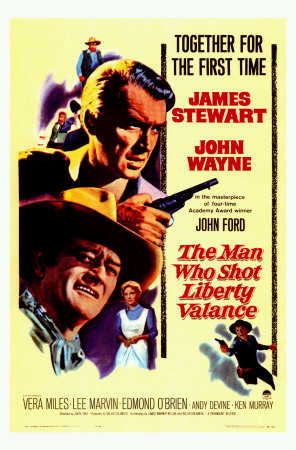
In 1962’s The Man Who Shot Liberty Valance, frontier lawyer Ransom Stoddard (James Stewart) comes to political prominence due to his notoriety for being the man who, in self-defense, gunned down notorious outlaw Liberty Valance (Lee Marvin).  Stoddard, an intellectual who opposes violence, is not happy about this.  When Stoddard considers refusing to be a delegate to the upcoming statehood convention, he is reprimanded by Tom Doniphon (John Wayne).  Stoddard and Doniphon are friends but they’re also romantic rivals, both being in love with Hallie (Vera Miles).  In this scene, Doniphon reveals the truth about who shot Liberty Valance.

4 Shots From 4 Films: Special Vacation Edition


4 Shots From 4 Films is just what it says it is, 4 shots from 4 of our favorite films.  As opposed to the reviews and recaps that we usually post, 4 Shots From 4 Films is all about letting the visuals do the talking.

Today we honor the great American tradition of getting away from it all!

4 Shots From 4 Vacation Films

Race With The Devil (1975, dir by Jack Starrett)

Hitch-Hike (1977, dir by Pasquale Festa Campanile)

The Last Shark (1981, dir by Enzo G. Castellari)

The Impossible (2012, dir by J. A. Bayona)


Music Video of the Day: How You Like Me Now? by The Heavy (2009, dir by ????)


I’ve always liked this song.  Whether it’s a car commercial or a David O. Russell film, this song provides the perfect score for just about anything.  This is a song that inspires you to walk into a room and take over.  It’s a song that inspires you to never settle for getting stuck in a traffic.  This is a song that makes you want to move and the video captures that feeling perfectly.

I assume the video is a play on the Little Red Riding Hood story.  I like the cartoon skeletons.

Enjoy!