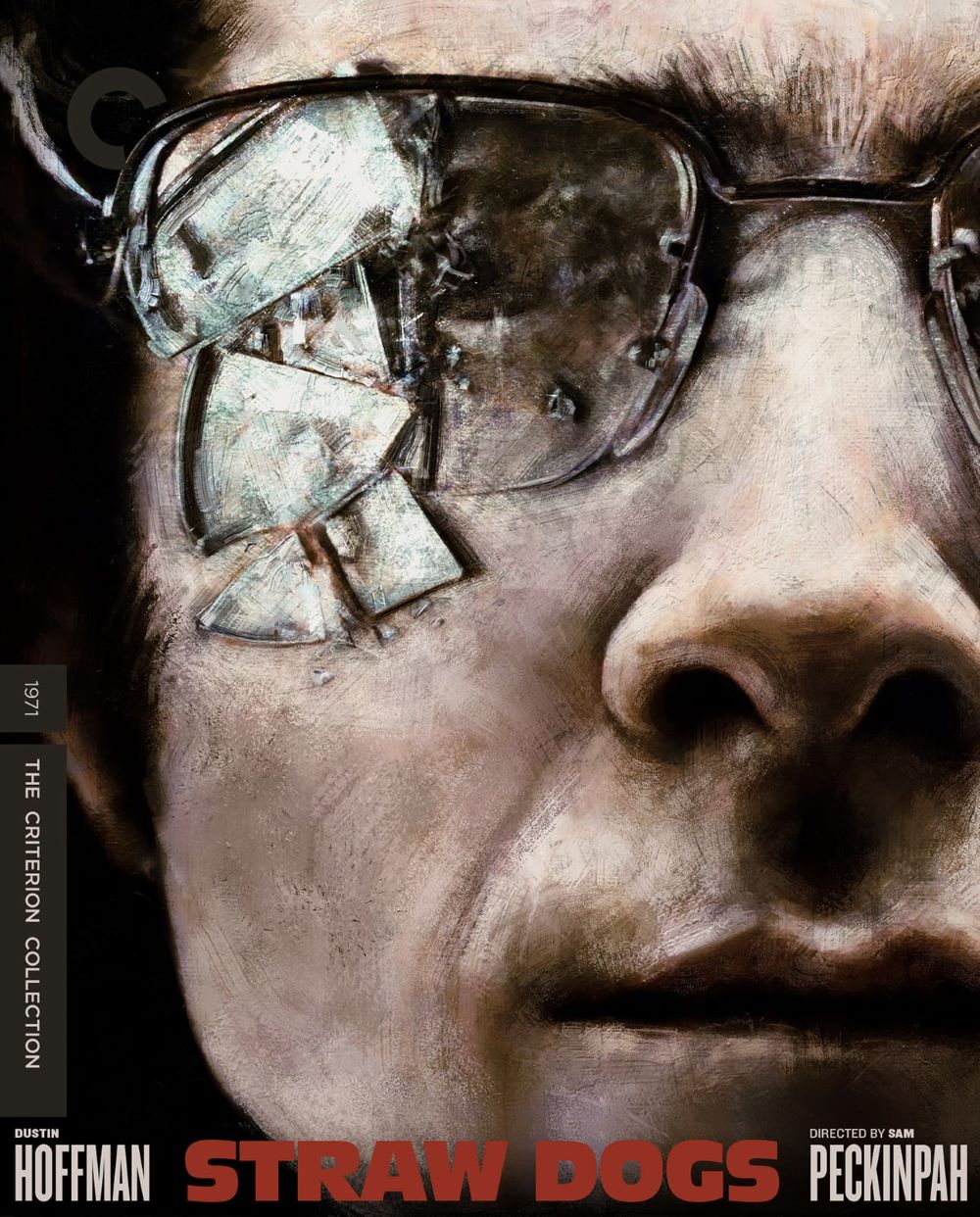
Review: Straw Dogs (dir. by Sam Peckinpah)


“Violence can be the only answer sometimes.” — David Sumner

Sam Peckinpah’s Straw Dogs is a raw, compelling dive into the breakdown of civility and the primal instincts bubbling underneath. The story follows David Sumner, a mild-mannered American mathematician, who moves with his wife Amy to her rural English hometown. The couple’s plan for a quiet life takes a sharp turn when tensions with the locals spiral out of control, resulting in a violent showdown. At its core, the film examines how far a person can be pushed before the veneer of civilization peels away, revealing something much wilder underneath.

The tension starts subtly, as David’s intellectual and pacifist nature clashes with the rough, territorial mindset of the local men. This brewing conflict isn’t just about cultural difference but taps into deeper themes around masculinity, power, and identity. Straw Dogs asks difficult questions about what it means to be a man, exploring how fragile male identity can be when confronted with real or perceived threats. David’s journey is less about heroism and more about the psychological and emotional transformation forced upon a man who initially seems ill-equipped for the violence unleashed around him. The whole film operates as a kind of symbolic stage where primal instincts and societal expectations collide, forcing each character to confront their own limits.

Amy’s role in the film is both pivotal and deeply complex. Her experience of assault, handled with subtle but unflinching attention, adds emotional and thematic weight without dominating the narrative. The film portrays her trauma through its impact on her and the shifting dynamics in her relationship with David, inviting reflection on resilience and struggle for control. Amy is depicted not merely as a victim but as a layered character navigating vulnerability and strength amid the hostile environment. This approach challenges viewers to consider the nuanced and often contradictory responses to trauma, avoiding simplistic victim narratives while emphasizing its profound consequences.

The rural setting of Straw Dogs is more than just a backdrop; it becomes a character in its own right. The close-knit, insular community embodies a microcosm where social order teeters and violence hides just beneath the surface. Law enforcement and authority figures seem ineffective or indifferent, which heightens the sense of isolation and lawlessness. The hostility from some village locals, including Amy’s ex-boyfriend Charlie, feeds into a toxic masculinity that sees David as weak and out of place. Peckinpah carefully stages this clash, using tension and silence as expertly as physical violence, making viewers feel the pressure ramping up until it finally snaps.

Dustin Hoffman’s portrayal of David is quietly brilliant in its subtlety. He plays David as a man trapped between worlds—intellectual and physical, passivity and aggression—with a restrained but deeply affecting performance. Hoffman’s ability to convey complex emotions beneath a calm exterior makes David’s eventual transformation all the more gripping. Susan George delivers an equally powerful performance as Amy, capturing the mixture of fear, defiance, and heartbreak her character endures. Their dynamic feels authentic and layered, making the viewer invested in their peril. The supporting cast, including actors like Peter Vaughan, add a layer of authentic menace, embodying the grim rural antagonists with convincing grit and intensity. The performances overall ground the film’s explosive themes in believable, relatable humans.

Themes in Straw Dogs extend beyond just personal violence to address ideas about identity and societal breakdown. The film explores the notion of the “symbolic order”—how individuals fit into and negotiate the rules and roles imposed by society. David’s identity crisis and his uneasy place within the village spotlight questions of power, emasculation, and rebirth. Peckinpah uses psycho-sexual imagery—such as symbols of emasculation and phallic power—to deepen the psychological stakes of David’s journey. The film conveys how deeply fragile human identity is and how violence can act as a brutal yet transformative force pushing individuals to redefine themselves. At the same time, the portrayal of Amy complicates these themes by challenging traditional gender roles, making the film as much about female agency as male dominance.

The film’s violence is famously brutal and unsettling. Peckinpah does not shy away from showing the full consequences of escalating conflict, culminating in an intense and chaotic finale where the line between victim and aggressor blurs. This isn’t violence for spectacle but a narrative and thematic necessity that Peckinpah uses to strip away pretenses and reveal the raw human instincts beneath. It’s this uncompromising depiction that both shocked audiences at the time and continues to provoke discussion about the nature of power and survival. The film is also notable for its innovative editing, with Peckinpah’s use of jump cuts and slow-motion heightening the emotional intensity and pacing the violence with a rhythmic, almost visceral punch.

Ultimately, Straw Dogs is a challenging film that forces viewers to confront disturbing truths about human nature, relationships, and societal order. Its exploration of violence and masculinity is complex and often uncomfortable, presenting no easy answers. The film remains a significant piece of cinema for its bold themes, outstanding performances, and the way it captures the frailty and ferocity of its characters. Peckinpah’s direction melds tension, psychological drama, and physical action into a gripping, unforgettable experience. Though controversial for its content, Straw Dogs endures as a powerful work that asks what truly happens when the thin line between civilization and savagery breaks down.
Horror Trailer: Send Help


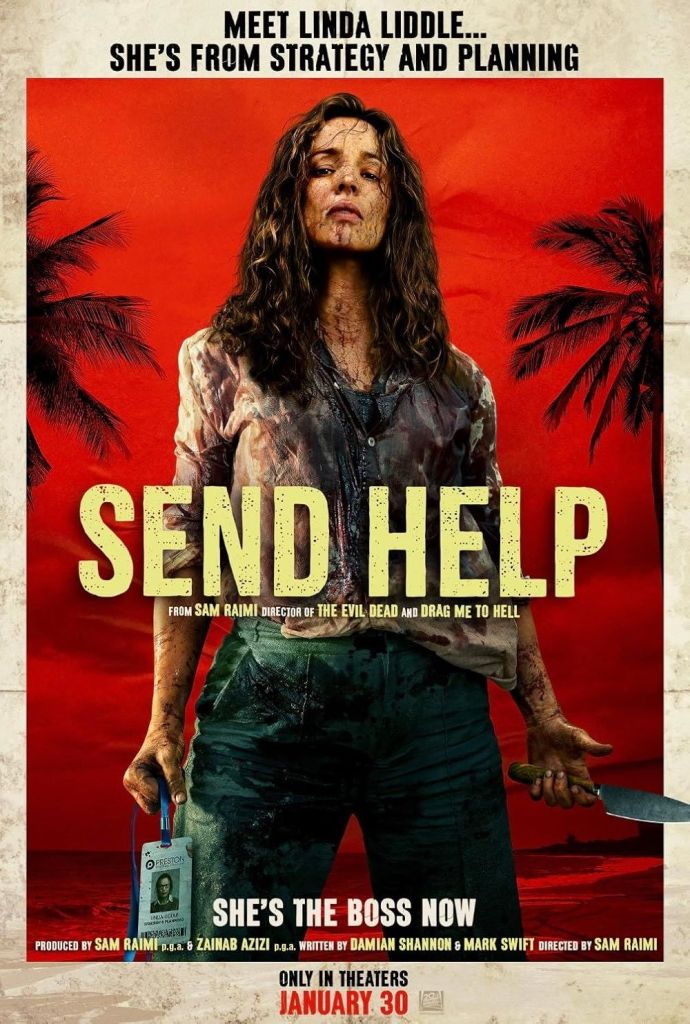
Send Help is a darkly comedic psychological thriller directed by Sam Raimi. The film centers on two coworkers, Linda Liddle and Bradley Preston, who are the only survivors of a plane crash that leaves them stranded on a deserted island. Two people who shouldn’t be together in the same room must now collaborate to survive. The film looks to play on the two characters darkly comedic battle of wills and wits to what looks like survival of the fittest. The film is a mix of survival drama, sharp psychological tension, and Raimi’s signature style, blending horror and black comedy elements.

The film stars Rachel McAdams as Linda Liddle and Dylan O’Brien as Bradley Preston, with a supporting cast including Edyll Ismail, Dennis Haysbert, Xavier Samuel, Chris Pang, Thaneth Warakulnukroh, and Emma Raimi. Send Help is produced by Sam Raimi and Zainab Azizi, with a screenplay by Damian Shannon and Mark Swift, and features music by frequent collaborator, Danny Elfman. It is scheduled for theatrical release nationwide on January 30, 2026, distributed by 20th Century Studios.

Anime You Should Be Watching (Horror Edition): Shiki (dir. by Tetsurō Amino)


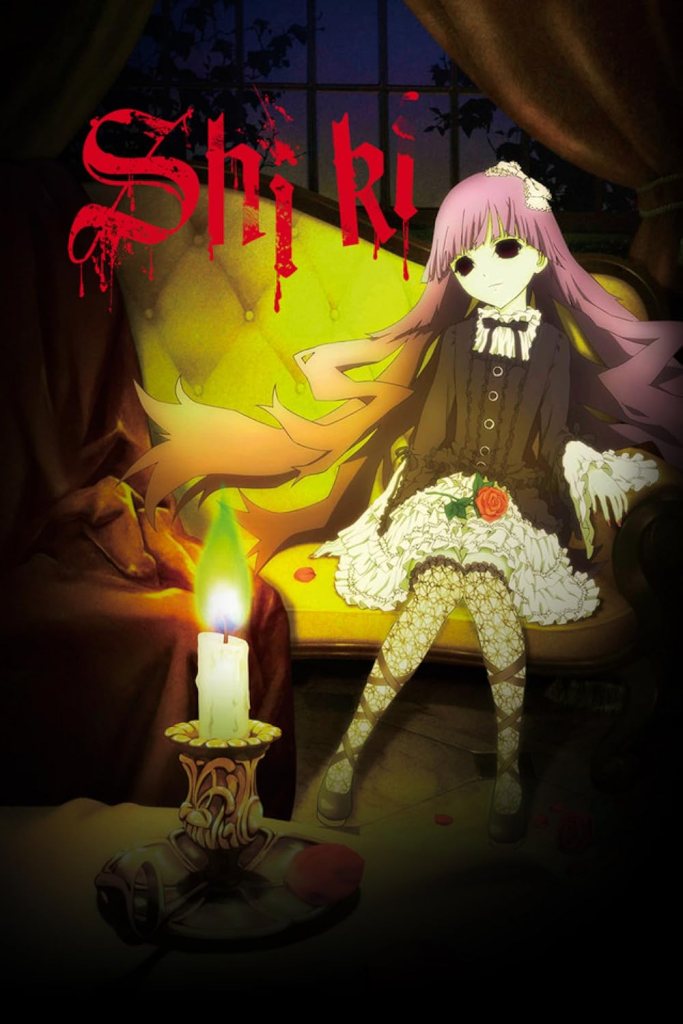
The anime adaptation of Shiki, based on Fuyumi Ono’s acclaimed horror novel and directed by Tetsurō Amino, stands as a rare specimen in the horror genre. Rather than relying on quick shocks, excessive gore, or typical jump scares, Shiki unsettles its audience through atmosphere, moral erosion, and the slow, relentless unraveling of human conscience. Premiering in 2010, the series unfolds at a measured, almost meditative pace, transforming what could have been a simple vampire tale into a profound meditation on survival, faith, fear, and the delicate boundary between life and death when everything is pushed to the brink.

The story is set in Sotoba, a small, isolated village nestled precariously near a larger modern metropolis. The residents of Sotoba live tightly woven lives, their routines and social bonds preserved with careful attention over generations. This fragile peace shatters when a mysterious wave of deaths begins sweeping through the population. At first, these fatalities are dismissed as consequences of the harsh local climate—heatstroke, seasonal illnesses, and the inevitable toll of old age. Yet, as the body count rises, the truth reveals itself to be much darker: the deceased are rising as vampires, known locally as “shiki” or “corpse demons,” creatures that survive by feeding on the living.

What distinguishes Shiki from many other vampire narratives is its refusal to paint the conflict in stark black-and-white terms of good versus evil. The shiki are portrayed not as mindless monsters but as tormented souls, burdened by memories, emotions, and guilt over what they have become and the horrors they must commit to survive. Conversely, the human villagers—once caring and close-knit neighbors—succumb to suspicion, fear, and eventually cold-hearted survival instincts. The real horror emerges as morality frays and the line between human and monster becomes irrevocably blurred.

Unlike classic horror tales set in small towns—such as Stephen King’s ’Salem’s Lot, where a seemingly idyllic village hides sinister supernatural forces—Shiki offers a nuanced inward gaze. For instance, the novel They Thirst situates vampirism within a sprawling urban landscape, where anonymity accelerates chaos and alienation. In contrast, Shiki uses the microcosm of Sotoba to emphasize intimate, communal decay. The focus is not just on the physical threat, but on the erosion of social bonds and moral fabric, revealing how fragile human civility truly is under stress.

While ’Salem’s Lot depicts vampires as a pure evil contaminating a tight-knit community—highlighting themes of moral corruption and contamination—Shiki explores moral ambiguity with far greater depth. The vampires, including the enigmatic Sunako Kirishiki, retain their memories, emotions, and even remorse. Both vampires and humans carry guilt and anguish, complicating simplistic notions of villainy. The villagers—their friends, family, and neighbors—begin to see the suffering of the vampires while realizing their own brutal deeds. The narrative challenges viewers to question whether survival excuses the loss of morality or if it is possible to retain one’s spirit even amid brutal chaos.

At the heart of the series are characters who embody competing moral philosophies. Natsuno Yuki, a cynical teenager newly transplanted to Sotoba from the city, provides both an insider and outsider’s perspective. His disillusioned view highlights how fear, suspicion, and grief can unravel even the most intimate relationships. Natsuno serves as a rational voice within a community unraveling into paranoia and despair, offering a reflection of the audience’s own struggle to comprehend the incomprehensible.

Dr. Toshio Ozaki exemplifies the desperate human desire for order amid chaos. Initially, he seeks to explain away the deaths with rational, scientific explanations grounded in medicine. However, when superstition and supernatural realities intrude, Ozaki is compelled to confront truths beyond his understanding. His leadership in trying to save Sotoba begins with scientific resolve but soon descends into moral compromise. As hysteria spreads, the villagers’ collective violence explodes into ruthless slaughter, justified as necessary to preserve survival. Ozaki’s internal conflict—balancing ethical convictions against brutal necessity—reflects the series’ central question: at what point does the will to survive erode the soul?

Set against this turmoil is Sunako Kirishiki, the quiet yet profoundly troubled leader among the shiki. Though she has lived for centuries and suffers deeply from a sense of divine rejection—believing God has forsaken her—Sunako retains a core spirituality that anchors her sense of morality. Even as she is forced to kill in order to survive, she wrestles with guilt and her faltering faith. Her belief that divine rejection is not synonymous with divine abandonment acts as a form of moral defiance, preserving her fragile humanity amid brutal circumstances.

This spiritual resilience is deepened through her relationship with Seishin Muroi, a local junior monk and published author. Muroi, gentle and introspective, offers a unique perspective on the tragedy unfolding in Sotoba. His dual roles as a religious figure and a thoughtful writer allow him to interpret the crisis with spiritual depth and philosophical insight. His literary works—admired by the Kirishiki family, especially Sunako—explore mortality, suffering, and the search for meaning beyond pain. As a monk, Muroi embodies faith and compassion; as an author, he grapples with existential ambiguities, granting him a rare wisdom in navigating the village’s descent.

Muroi’s role makes him both observer and actor in Sotoba’s unraveling. His spiritual duties compel him to provide comfort and guidance, while his writings deepen his understanding of human and supernatural suffering. This duality shapes his interactions with Sunako and others, serving as a pathway for faith and empathy to endure amid horror and despair.

Sunako’s friendship with Muroi becomes central to her moral endurance. In contrast to Tatsumi, the Kirishiki family’s pragmatic and ruthless jinrō guardian who views survival through a cold, utilitarian lens, Muroi offers a moral counterpoint grounded in mercy and hope. Through his compassionate presence and reflective insights, Sunako finds a way to renew her faith. Although she feels forsaken, Muroi’s influence rekindles the fragile spark of belief in her that prevents her humanity from being swallowed by despair.

The thematic contrast between Muroi and Tatsumi becomes a fulcrum for Shiki: survival devoid of soul versus survival with spirit. Muroi’s continuing faith—soft, tentative, but persistent—demonstrates that even in the bleakest conditions, moral conviction need not fade entirely. His dual lens as monk and author enriches the narrative, bridging theology and philosophy while threading through the story’s core existential dilemmas.

Amino’s direction amplifies these themes through patient pacing and subtle storytelling. The mounting tension grows slowly through quiet, contemplative moments and lingering visuals—the hum of cicadas, shifting light through leaves, the barely audible footsteps in the dark. Ryu Fujisaki’s stylized character designs convey unease with elongated features and a surreal sheen, while Yasuharu Takanashi’s sparse, mournful score melds choral lamentations with haunting silences. Together, these elements create an immersive atmosphere steeped in dread and melancholy.

By the series’ climax, the distinction between human and shiki dissolves into near indistinguishability. Both sides bear the scars of survival—physical, psychological, and spiritual. The violence ceases, but the damage lingers, leaving survivors hollow, burdened by guilt and loss. Yet amidst the ruins of a shattered community, Sunako’s renewed faith, forged under Muroi’s guidance, flickers faintly—an emblem of hope that refuses to be extinguished.

The final scene distills this weighty truth without grandiosity or closure. There are no victors, no absolutes—only profound loneliness in survival. The living bear wounds deeper than any inflicted by fang or bullet. But in this quiet aftermath, Sunako’s fragile faith, buoyed by Muroi’s steadfast compassion, pulses as the last vestige of what it means to remain human: choosing faith and empathy even when everything else seems lost.

Shiki closes not with resolution but with a haunting reminder: survival is incomplete without humanity, and faith—however delicate—is the courage to hold onto that humanity when all else has fallen away.

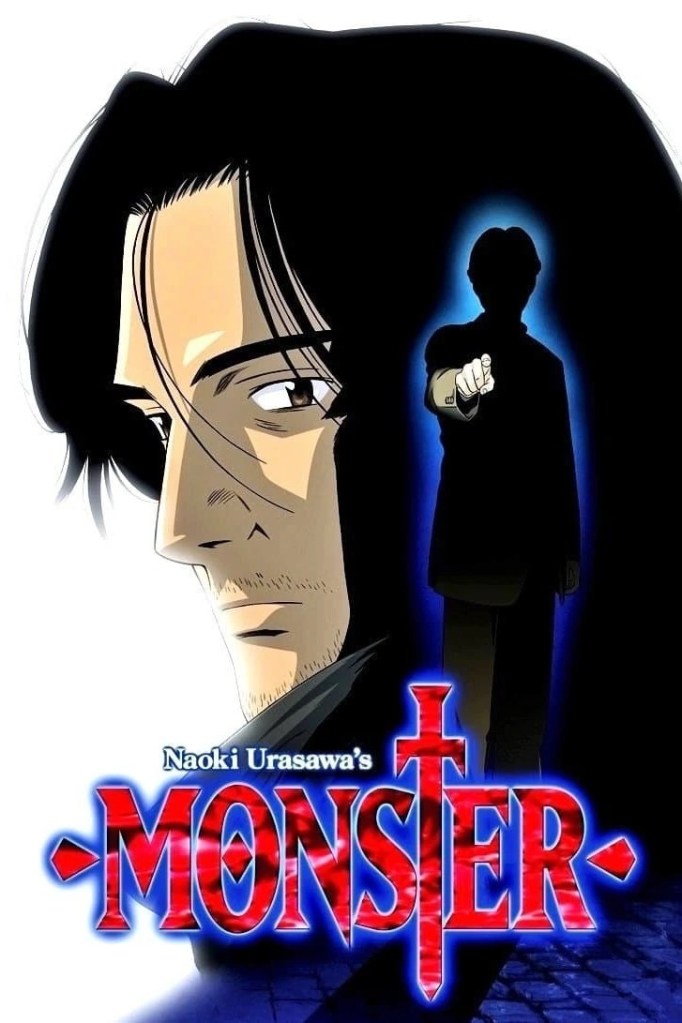
Anime You Should Be Watching: MONSTER


“For you, all lives are created equal. That’s why I came back to life. But you’ve finally come to realize it now, haven’t you? Only one thing is equal for all, and that is death.” — Johan Liebert

Naoki Urasawa’s MONSTER stands as one of the most accomplished psychological thrillers not just in manga, but in modern storytelling as a whole. Widely regarded as one of the greatest mangaka, Urasawa has built a reputation for crafting deeply human narratives that transcend genre boundaries. While his works span science fiction (20th Century Boys), sports (Happy!), and beyond, MONSTER represents perhaps his most fully realized exploration of morality, identity, and the fragile line between good and evil. Both the original manga (1998–2001) and its anime adaptation (2004–2005) serve as masterclasses in long-form storytelling, though each medium offers a slightly different experience in how these themes are conveyed.

At its core, MONSTER is a story about moral responsibility and the consequences of choice. Dr. Kenzo Tenma’s fateful decision to save the life of a young boy—who would grow up to become the enigmatic and terrifying Johan Liebert—forms the backbone of the narrative. What begins as an ethical stand against institutional corruption evolves into a haunting question: can a single act of good inadvertently unleash unimaginable evil? Urasawa refuses to offer easy answers. Instead, he constructs a world where morality is rarely absolute, and where even the most well-intentioned actions can ripple outward in unforeseen ways.

Johan himself is less a conventional antagonist and more an embodiment of philosophical dread. He represents the void—the idea that human identity can be hollowed out, shaped, or even erased entirely. Throughout the series, Urasawa interrogates whether evil is innate or constructed. Is Johan born a “monster,” or is he the product of trauma, manipulation, and systemic failure? This ambiguity is central to the story’s power. Unlike many thrillers that seek to explain or rationalize their villains, MONSTER leans into discomfort, suggesting that some truths may be fundamentally unknowable.

Another key theme is the search for identity, particularly in the aftermath of trauma. Characters across the narrative grapple with fractured pasts, false names, and reconstructed selves. Nina Fortner (Anna Liebert) serves as a compelling counterpoint to Johan—someone who has endured similar horrors but struggles toward healing rather than destruction. Through her and others, Urasawa presents identity not as something fixed, but as something constantly negotiated. Memory, in this context, becomes both a burden and a battleground. To remember is to risk pain; to forget is to risk losing oneself entirely.

The manga’s strength lies in how patiently and meticulously it develops these ideas. Urasawa’s paneling, pacing, and use of silence create a reading experience that feels almost surgical in its precision. He allows tension to build gradually, often dedicating entire chapters to side characters whose lives intersect with the central narrative in unexpected ways. These detours are not distractions but essential threads that reinforce the story’s thematic tapestry. They emphasize that MONSTER is not just about Tenma and Johan, but about a broader human landscape shaped by fear, ideology, and history—particularly the lingering shadows of post-Cold War Europe.

When Madhouse adapted MONSTER into an anime, the primary challenge was translating this deliberate pacing and narrative density into a different medium without losing its essence. Many adaptations of complex manga falter by condensing material or prioritizing spectacle over substance. MONSTER, however, takes the opposite approach. Spanning 74 episodes, the anime commits itself to a remarkably faithful retelling, often recreating scenes from the manga with near shot-for-shot accuracy.

This fidelity is both the anime’s greatest strength and, depending on the viewer, a potential limitation. On one hand, it preserves the integrity of Urasawa’s storytelling. The slow-burn pacing remains intact, allowing tension and atmosphere to develop organically. The anime resists the temptation to sensationalize its material, maintaining the grounded, almost clinical tone that defines the manga. On the other hand, this adherence means that the anime inherits the same demands it places on its audience. It requires patience, attention, and a willingness to sit with ambiguity—qualities that are increasingly rare in more fast-paced, contemporary anime.

Where the anime distinguishes itself is in its use of audiovisual elements to enhance the story’s emotional and psychological impact. The soundtrack, composed by Kuniaki Haishima, is particularly effective in reinforcing the series’ eerie, unsettling tone. Subtle musical cues and ambient sound design heighten tension in ways that static panels cannot. Silence, too, is used masterfully—moments of quiet often feel heavier and more oppressive when experienced in real time.

Voice acting further deepens character portrayal, especially in Johan’s case. His calm, almost hypnotic delivery adds an additional layer of menace that complements the manga’s more interpretive presentation. Similarly, Tenma’s internal conflict becomes more immediate and visceral when expressed through performance rather than internal monologue. These elements collectively make the anime a more immersive sensory experience, even as it mirrors the manga’s narrative structure.

Visually, the adaptation remains grounded and realistic, avoiding the exaggerated stylistic flourishes common in other anime. This restraint works in its favor, reinforcing the story’s mature tone. The European settings are depicted with care and authenticity, contributing to a sense of place that is crucial to the narrative. While the animation itself may not be as dynamic or visually striking as other series, it is consistently purposeful, prioritizing mood and clarity over spectacle.

In comparing the two, it becomes clear that the manga and anime function less as competing versions and more as complementary experiences. The manga offers a slightly more intimate engagement, allowing readers to control pacing and linger on specific panels or moments. Its visual storytelling invites interpretation, particularly in how it frames Johan’s presence—or absence—within a scene. The anime, by contrast, provides a more guided experience, using sound, timing, and performance to shape the viewer’s emotional response.

Ultimately, the success of the MONSTER anime lies in its restraint. Rather than attempting to reinterpret or modernize the source material, it recognizes the strength of Urasawa’s original vision and commits to preserving it. This makes it one of the rare adaptations that can stand alongside its source as an equal, rather than merely a derivative work.

MONSTER endures because it refuses to offer comfort. It challenges its audience to confront unsettling questions about human nature, morality, and the structures that shape our lives. Whether experienced through the manga or the anime, it remains a deeply affecting work—one that lingers long after its final moments. The anime may not surpass the manga in every respect, but it honors it with a level of care and seriousness that is all too rare, solidifying MONSTER as a benchmark for what adaptations can and should strive to be.

Her Name Is Jessica Jones


Jessica Jones

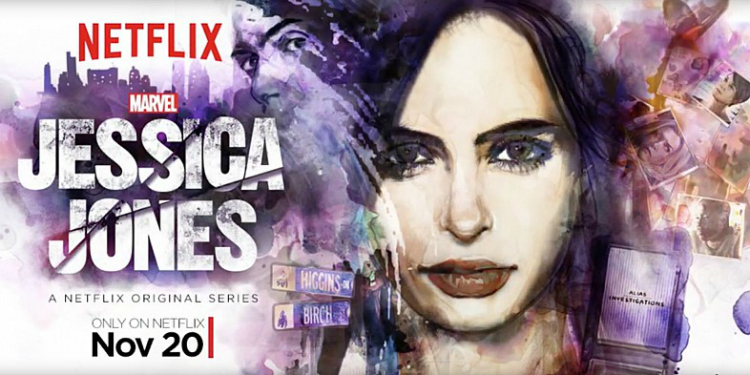
The Daredevil series on Netflix was a hit with both critics and audiences. It helped lay the foundation in the street-level corner of the Marvel Cinematic Universe. Now, we have the second of four planned original series with the upcoming Jessica Jones which looks to continue the mature themes and tone of Daredevil.

The series will star Krysten Ritter in the title role with Mike Colter appearing for the first time as the Marvel superhero Luke Cage aka Power Man. It also stars David Tennant in the role of main antagonist and just all-around creepy villain Zebediah Kilgrave aka The Purple Man.

Where Daredevil only scratched the surface of superpowers in the more down-to-earth, street-level part of the MCU, it looks like Jessica Jones will introduce a wider variety of abilities (superhuman strength and endurance, unbreakable skin, mind-control just to name a few) and an even more mature series than Daredevil with it’s depiction of psychological damage and trauma to it’s treatment of Jessica Jones’ sexuality throughout the series.

While the Avengers fight gods, alien invasions, sentient killer A.I. and terrorist groups bent on world-domination, the Matt Murdock’s and Jessica Jones’ look to keep the street-level safe for the people of Hell’s Kitchen.

Jessica Jones is set to premiere and release all 13-episodes on Netflix this November 20, 2015. Time to set that date for another Netflix binge watch.

Horror Scenes I Love: Alan Wake


AlanWake

SPOILER ALERT

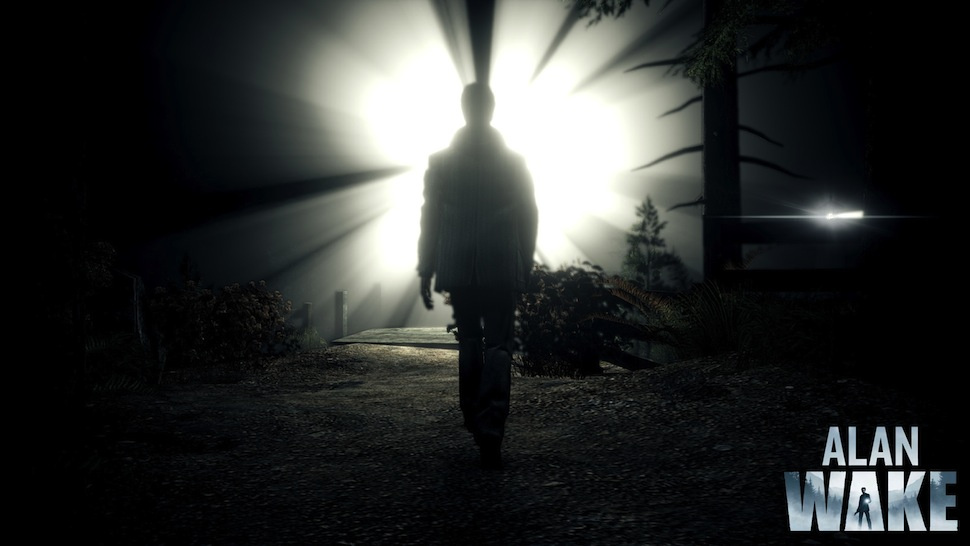
For those who have played the Xbox 360 exclusive game Alan Wake should remember this scene I have chosen. It comes right at the end of the game where the title character has finally figured out the secret of what happened to his missing wife and how to save her from the game’s main antagonist.

This antagonist is not some psycho killer or monomaniacal villain. It’s a villain that’s more akin to an evil entity. In fact, we learn throughout the game that the villain, known as the Dark Presence, is like something out of a Lovecraft story. It’s an evil intelligence that has spanned eons and yearns to free itself from it’s watery prison.

Alan Wake realizes that the only way to save his wife was to take her place and fight the Dark Presence from within and this is where the brief scene begins. It’s a scene that starts creepy enough until the very end when the real payoff arrives.

Funimation to license The Future Diary (Mirai Nikki) for US release


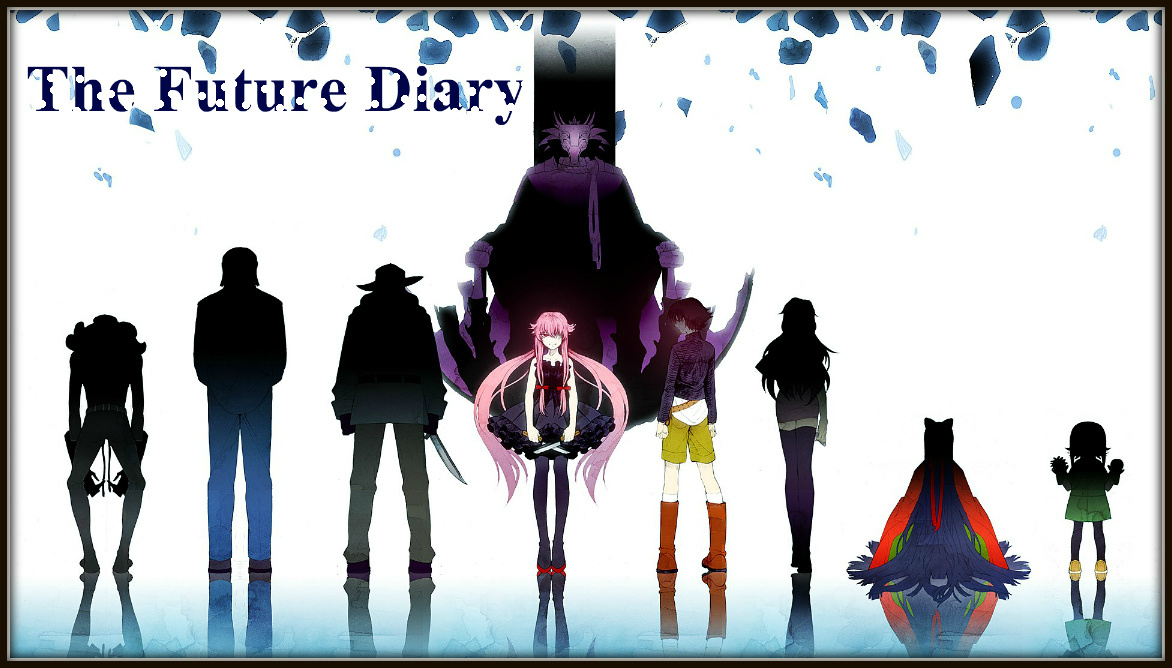
For anime fans there’s some very good news coming out of Anime Boston this weekend. Funimation has secured the home video rights for the anime series The Future Diary (Mirai Nikki). The series will get a US release through Funimation in addition to the further simulcast airings of any new episode of the 26-episode series which began airing this past October 2011.

The series has been a hit since it’s airing in Japan and it’s plot summary gives enough tantalizing details why such a series would appeal to anime fans…

“Yukiteru Amano (Yuki) is a loner who never really interact with people and prefers writing a diary on his cell phone with his only companion being an imaginary friend named Deus Ex Machina, the God of Time and Space. However, Yuki soon learns that Deus is not a figment of his imagination but real when Deus makes him a participant in a battle royale with eleven others. Within this “Diary Game”, the contestants are given special diaries that can predict the future with each diary having unique features that gives them both advantages and disadvantages.”

It’s not your typical magical girl or mecha series. It’s not slice-of-life drama or comedy. It’s not even of the fan-service variety. It’s a series that’s more rooted in some of the more mature and darker-themed anime that goes heavy on the psychological and the thriller aspect of the story. It is also a series with one of it’s main characters playing the role of yandere (def. a Japanese term for a person who is initially very loving and gentle to someone before their devotion becomes destructive in nature, often through violence.) almost to a perfect pitch.

So far, there’s no set release date for the home video (DVD/Blu-Ray) release of The Future Diary from Funimation.

Source: Anime News Network

Trailer: Alan Wake’s American Nightmare


One of my favorite video game titles of 2010 was the Remedy Entertainment and Microsoft Studios psychological thriller game Alan Wake. This title was a psychological thriller mashed up with survival horror that was influenced by Stephen King stories and David Lynch’s eccentric tv series, Twin Peaks. It was one of the few games which put a major scare to me whenever I played it which was usually at night. While the game didn’t sell copies in the Modern Warfare 3 level it did sell enough that it gained quite a huge fan following who clamored for more of Alan Wake and his fight against the malevolent Dark Presence. (Lisa Marie’s been trying the gaming thing lately and I must admit that Alan Wake is right up her dark sensibilities). Fans ended up getting two DLC chapters with “The Signal” and “The Writer”.

There had been rumors and talks about a proper sequel in the works within Remedy Entertainment, but such things continued to be unsubstantiated. While a rumor of sequel continued to persist the developers finally announced that there will be a new Alan Wake game, but it wasn’t going to be a sequel. It was to be a stand-alone Xbox Live Arcade title that should keep fans of the franchise happy while a sequel was being bandied about within the studio (I believe a sequel is already in development but still unconfirmed). This latest title was to be called Alan Wake’s American Nightmare.

The trailer for this title first premiered at Spike TV’s VGA 2011 and the game has tentative release date sometime around the Q1 of 2012.

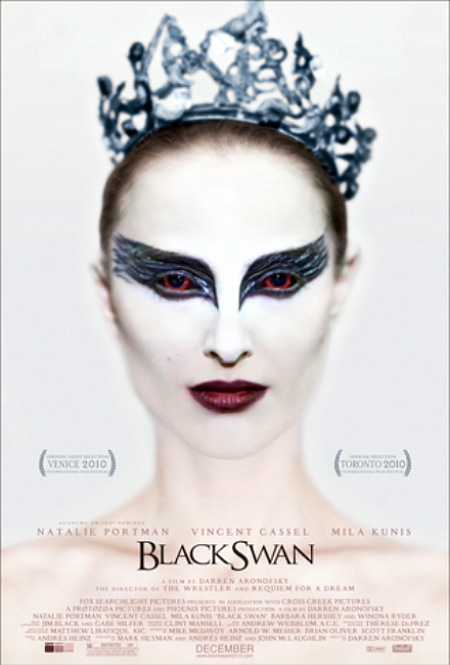
Black Swan Teaser Trailer (dir. Darren Aronofsky)


The first official trailer for Darren Aronofsky’s next film has been released.

Black Swan stars Natalie Portman, Mila Kunis, Vincent Cassel, Barbara Hershey and Winona Ryder. It’s a psychological thriller based on the script by Mark Heyman and sets the film in the competitive world of ballet. The film will have its premiere at the 67th Venice Film Festival this coming September 2010 with another screening soon after in the same month at the 35th Toronto International Film Festival. The film will open to limited release in early December to qualify it for the award season for 2010.

The trailer definitely has been getting much buzz since it’s release on August 17th, 2010. Some have called it Fight Club for women just from the series of clips and images which made up the teaser trailer. While I won’t say that these individuals are right or wrong, to try and determine what the film is about in just a 2-minute trailer is idiotic. The film definitely plays on the psychological aspect of the story with Natalie Portman’s character the main focus of all the happenings going on around her.

Ms. Portman’s career should get another boost from this role as she continues to move away from her half a decade spent on the Star Wars universe. She has definitely made a concerted effort to pick roles as diverse as possible to avoid being typecase in any one particular role. Already an Oscar nominee for her work in Closer there’s a good chance that she may get another for her work on Black Swan. We will see if the buzz on that rumor will have weight come September 2010 when the film premieres n the Fall Film Festival season.