Retro Television Review: Crime Story 1.13 “Strange Bedfellows”


Welcome to Retro Television Reviews, a feature where we review some of our favorite and least favorite shows of the past!  On Mondays, I will be reviewing Crime Story, which ran on NBC from 1986 to 1988.  The entire show can be found on Tubi!
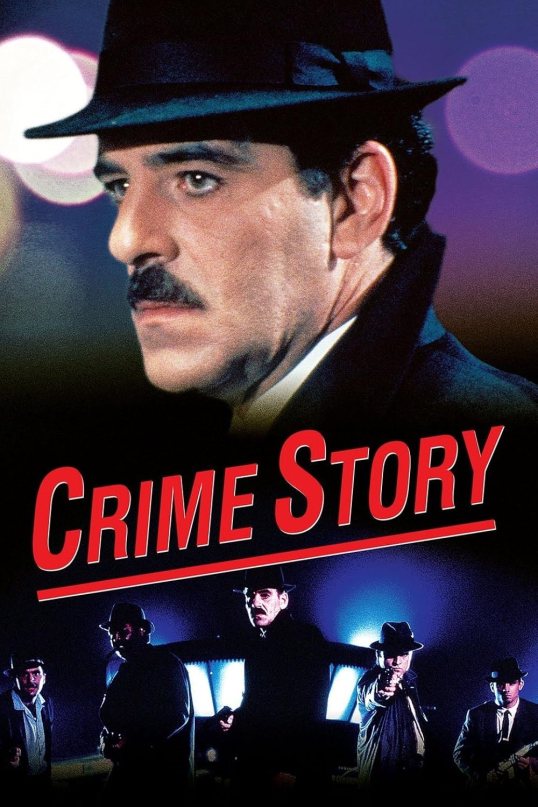
This week, Homan sings.

Episode 1.13 “Strange Bedfellows”

(Dir by Francis Delia, originally aired on December 26th, 1986)

Homan is in federal custody and he’s telling Breitel all that he knows about Luca and Bartoli.  He’s also making up a story about Torello taking a bribe.  Even though Homan’s Torello story is pretty shaky, Breitel is looking forward to taking down a crooked cop and launching his political career off of of the publicity.

Bartoli is not amused when he learns that he’s being indicted.  However, Luca is able to convince Manny Weisbord to provide him with a top-level defense attorney.  Manny also makes it clear that Luca no longer works for Phil.  Instead, Luca works with Phil.  Lucas has another reason to be happy.  When he runs into David Abrams at a bar, he gets some free legal advice.  Luca explains that Homan is lying about Torello.  Abrams tells Luca that, if they can prove that Homan is lying about Torello, it will be easier to convince a jury that Homan is lying about Luca and Bartoli as well.

Torello, meanwhile, responds to his upcoming indictment by going to Las Vegas and playing some golf.  He’s in a great mood until he sees that his indictment is one the front page of the newspaper.

Not much really happened in this episode of Crime Story.  That’s not really a complaint.  If anything, it was a bit of a nice change-of-pace.  We got to watch the characters just be themselves.  Luca, who rarely shows emotion, actually smiles when he hears that Torello is about to be indicted along with “his favorite people.”  Luca actually has a sense of humor and an appreciation for irony.  Who would have guessed?  Meanwhile, Torello continues to be just a bit too intense for his own good.  Even on vacation, he seems like he’s just one frustration away from snapping.

Will Torello snap next week?  We’ll find out!

Retro Television Review: Crime Story 1.12 “Hide and Go Thief”


Welcome to Retro Television Reviews, a feature where we review some of our favorite and least favorite shows of the past!  On Mondays, I will be reviewing Crime Story, which ran on NBC from 1986 to 1988.  The entire show can be found on Tubi!

This week, Torello finally tracks down Homan.

Episode 1.12 “Hide and Go Thief”

(Dir by Francis Delia, originally aired on December 12th, 1986)

In Chicago, an unnamed gunman (Paul Guilfoyle) has taken a woman (Lorraine Bracco) hostage and has barricaded himself in a hotel room.  He wants to get on television and he figures that holding a hostage and firing a machine gun out the window is the best way to do it.  The members of the Major Crimes Unit are in the street, ducking behind squad cars whenever the gunman starts firing on them.

It’s definitely a major situation but Torello is more interested in going to Gary, Indiana than exchanging gunfire in Chicago.  Frank Homan (Ted Levine), a former member of Luca’s crew, has been discovered  working as a cook in a Gary diner.  Everyone in Gary knows Frank as “Mike Torello.”  The real Torello is determined to arrest Frank and hopefully use him to take down Luca.  Torello abandons the hostage situation, drives down to Gary, and captures Homan at work.

Finally, some good news for the real Mike Torello, right?  Well, not quite.  After Homan is arrested, U.S. Attorney Harry Brietel (Ray Sharkey) takes custody of him.  Brietel has political ambitions and taking down gangster Manny Weisbord would be a good way for him to make a name for himself.  When Homan is interrogated by Brietel, Homan lies.  He says that he’s never heard of Manny Weisbord.  But, Homan says, he has information that will take down Luca, Phil Bartoli, and a crooked cop.  In exchange for a light sentence and entry into the witness protection program, Homan is willing to testify that Mike Torello is on the take.  Brietel is intrigued.  Fighting police corruption is guaranteed to generate even better press than taking down an actual mobster.

Meanwhile, back in Chicago, Torello rejoins the MCU at the hostage situation.  (Apparently, the gunman has been awake and firing out of his hotel window for two and a half days straight.  One gets the feeling that perhaps it’s wise not to give too much thought to the logistics of this episode’s timeline.)  In a well-shot, slow-motion scene, Torello and his men storm the hotel room and shoot the gunman dead.  The hostage survives.

Significantly, neither the gunman nor the hostage are given names in this episode.  Indeed, Paul Guilfoyle is credited as playing “Deranged Gunman.”  That’s because the gunman and the hostage are really only there to show just how obsessed Torello has become with Luca.  When it comes to destroying Luca and his fledgling criminal empire, all else can wait, even saving an innocent woman from an armed lunatic.

I usually don’t enjoy watching anything that involves a hostage situation because it always seems to lead to the same predictable narrative beats.  Fortunately, this episode avoided most of the usual cliches by making the gunman a total nutcase who never stopped firing his weapon.  The scene where Torello and his men storm the hotel room was stylish enough to verge on being surreal.  As for the Homan plotline, both Ted Levine and Ray Sharkey provided strong performances and I’m looking forward to seeing how Luca and Torello react to being betrayed by the same guy.

All in all, this was a good episode.

Retro Television Review: Crime Story 1.7 “Pursuit of a Wanted Felon”


Welcome to Retro Television Reviews, a feature where we review some of our favorite and least favorite shows of the past!  On Mondays, I will be reviewing Crime Story, which ran on NBC from 1986 to 1988.  The entire show can be found on Tubi!

This week, the Torello marriage falls apart.

Episode 1.7 “Pursuit of a Wanted Felon”

(Dir by Aaron Lipstadt, originally aired on October 28th, 1986)

Last week, a recently acquitted man named Hector (Ving Rhames) was arrested after murdering his landlord.  Torello, Danny, and David Abrams were all upset.

This week, they’ve all moved on.  Sorry, Ving Rhames, you were only a one-episode guest star.

David is pursuing his relationship with Suzanne Terry (Pam Grier).  At a cocktail party, Detective Walter Clemmons (Paul Butler), the black member of the Crime Squad, approaches Suzanne and warns her that she shouldn’t be pursuing a relationship with “that white boy.”  Seriously, this is the first time that Walter’s gotten any real dialogue since the show began and it’s basically to tell Suzanne not to pursue an interracial relationship.  “We’re only seven years out from integration,” Clemmons says, an awkward piece of dialogue that is meant to remind viewers that this show takes place in 1963.  The show actually deserves some credit for being realistic about how many people would have viewed David and Suzanne’s budding romance in 1963.  I just find it interesting that the show’s only regular black character is the one who is shown objecting while all of the white Chicago cops don’t have a problem with it.  Who knew the Chicago police force was so progressive in the early 60s?

(I really want to like Stephen Lang’s performance as David but something feels off about it.  It’s not a bad performance.  I stand by my earlier praise.  It’s just that David is such a caricature of an early 60s liberal that it is sometimes hard for me to tell if his character is supposed to be satirical or not.  In episodes like this, where David is portrayed as being a cool hipster, Lang can seem a bit stiff and miscast.  He’s much better when he’s giving an emotional speech in court.)

Luca continues to prove himself indispensable to Manny Weisbrod.  In this episode, he blows up a union leader who doesn’t want to take orders from the mob.

Finally, Mike and Julia Torello split up in this episode.  It’s not really a shock.  Mike Torello is extremely intense and obsessed with his job.  He’s tightly wound, to the point where he seems like he might just randomly shoot someone at any given moment.  An attempt to take a relaxing vacation with Julie is a disaster.  (The motel is tacky.  The service is mediocre.  Mike spends the entire time threatening the staff and complaining.)  As soon as Torello returns to Chicago, he hops on a plane for Cleveland in an unsuccessful attempt to capture Frank Holman.  When Torello returns home, he finds that Julie is preparing to go out with another man.

“You are not going to watch my TV,” Torello says, before grabbing the TV and leaving the apartment with it.

Does that scene sounds familiar?  That’s probably because Michael Mann later reused the scene, almost word-for-word, in Heat.  It’s a good scene.  It’s certainly the most memorable moment in this episode.

Otherwise, this episode felt a bit bland.  Torello’s doomed marriage isn’t really that interesting and I actually kind of got annoyed with David and Suzanne going to a cocktail party when they really should have been trying to get Hector out of prison.  I laughed at Torello’s irritation at the hotel and his line about the TV.  Those were the highlights.  The rest of this installment was forgettable.

Retro Television Review: Crime Story 1.5 “The War”


Welcome to Retro Television Reviews, a feature where we review some of our favorite and least favorite shows of the past!  On Mondays, I will be reviewing Crime Story, which ran on NBC from 1986 to 1988.  The entire show can be found on Tubi!

This week, Luca has to prove himself.

Episode 1.5 “The War”

(Dir by Leon Ichaso, originally aired on October 7th, 1986)

Luca is in trouble.

Last week’s episode ended with Max Goldman on the receiving end of a beating from Noah Ganz’s goons.  Goldman survives and returns with a message.  Ganz is not happy that Luca tried to steal his book.  Bartoli, Weisbord, and Fosse all inform Luca will have to resolve the Ganz situation on his own.

Luca tries to get public defender David Abrams (Stephen Lang) to act as a negotiator for him but David doesn’t want to get involved in the mobster lifestyle that made his father rich.  David just wants to defend the poor and play sax in a jazz club.  When Luca is attacked while driving in Chicago, he realizes that negotiating with Ganz is a dead end.

Instead, he just kills Ganz.  In a bravura sequence, Luca shows up at a hotel and, with the help of sniper, takes down Ganz’s bodyguards.  Then he uses a bomb to take out Ganz while the latter is holding court in an elevator.  A plume of white smoke puffs out of the hotel’s exhaust vent.

Having taken care of the issue, Luca is welcomed back into the family.  Weisbord says, “Call me Mac.”  Fosse (played by Michael Madsen) nods and slowly smokes a cigarette.

Meanwhile, Torello’s wife miscarries.  This is the episode that features the clip of Torello walking down a lonely Chicago street on a rainy night.  (The clip is prominently featured during the show’s opening credits.)  In fact, both Torello and Luca end up spending a good deal of time walking around at night while David Abrams plays his saxophone.  It’s a scene that is so overstylized that it shouldn’t work but somehow, it does.  If nothing else, it reminds us that Crime Story of two dangerously obsessed men on a collision course.

This was a good episode, if just because it showed that Luca can be a clever criminal when he needs to be.  Before this episode, Luca seemed to be clearly outmatched by Torello.  With this episode, Luca proved himself to be Torello’s equal.

Retro Television Review: Crime Story 1.4 “St. Louis Book of Blues”


Welcome to Retro Television Reviews, a feature where we review some of our favorite and least favorite shows of the past!  On Mondays, I will be reviewing Crime Story, which ran on NBC from 1986 to 1988.  The entire show can be found on Tubi!

This week, everyone’s going to Missouri.  Can you blame them?

Episode 1,4 “St. Louis Book of Blues”

(Dir by Leon Ichaso, originally aired on September 30th, 1986)

After Ray Luca discovers that his henchman, Frank Holman (Ted Levine), has been compromised by Torello, he decides to deal with the situation by sending Holman down to St. Louis.  A gangster named Ganz (Raymond Serra) has a home in St. Louis and, according to Ganz’s associate Johnny Fosse (Michael Madsen, doing his slow-talking, cigarette-smoking Madsen thing), there is a book in Ganz’s shelf that contains the name of every bookie, coach, and sports-fixer in America.  Ray, who is hoping to start up his own nationwide gambling syndicate, wants that book.

Far be it for me to question Ray Luca’s strategy but it does seem strange that his response to one of his people screwing up is to give that person an even more important job to do.  I get that Ray is trying to be a manager now and, as a result, he no longer personally robs anyone but Frank really does seem like the last person he should trust to pull this off.

And, to no one’s surprise, Frank doesn’t pull it off.  Torello and his men follow him all the way to St. Louis.  They not only arrest him but they also get their hands on Ganz’s book.  They do this despite the operation nearly being ruined by an ambitious and publicity-hungry sheriff named Hartman (Allen Swfit).

Unfortunately, when Frank offers to inform on the entire “St. Louis mob,” Hartman releases him from jail.  Frank promptly flees town.  When he calls Ray, Ray orders him to stay out of Chicago and instead to go to Cleveland.  Frank replies that if he has to choose between Hell or Cleveland …. he’ll go to Cleveland.  Good thinking, Frank!

(Actually, I’ve never been to Cleveland so I don’t know if it’s really good thinking.  Wasn’t Dennis Kucinich from Cleveland?)

As this episode ends, Ganz is ready to declare war on Luca and it appears that Max Goldman might be the first victim.  The funny thing about Max is that he’s played by a young Andrew Dice Clay and, in every scene in which he appears, Clay’s facial expressions are totally and completely over-the-top, as if Clay was determined to make sure that no one forgot he was in the scene.  I hope that Max survives, just for the sake of entertainment,

This episode returned to the idea of Torelllo being dangerously and tightly wound.  Before he followed Frank to St. Louis, he nearly firebombed a furniture store because the owner hadn’t delivered the table that he had ordered.  Torello was talked out of doing so by his fellow cops but the store owner still got the message.  The table arrived at Torello’s apartment.  Of course, it was the wrong table.  That made me laugh.  People have no idea how close Torello is to snapping and killing everyone around him.

This was a good episode.  It was interesting to see a young Ted Levine, not to mention a young Michael Madsen as well.  The corrupt and incompetent sheriff was identified as being a Democrat. I appreciated that.  I’m looking forward to seeing where this show is going.


Retro Television Review: Crime Story 1.3 “Shadow Dancer”


Welcome to Retro Television Reviews, a feature where we review some of our favorite and least favorite shows of the past!  On Mondays, I will be reviewing Crime Story, which ran on NBC from 1986 to 1988.  The entire show can be found on Tubi!

This week, Torello’s war on Luca continues!

Episode 1.3 “Shadow Dancer”

(Dir by Leon Ichaso, originally aired on September 26th, 1986)

With the frequency killer now dead, Torello and his men are once again free to focus on trying to bust Ray Luca. The sooner they do it, the better. For one thing, Torello is becoming so obsessed that, even though his wife is pregnant, Torello’s dreams are still dominated by Luca taunting him. Also, Luca’s latest robbery has resulted in a death. Vincent Noonan (Michael Kemmerling), a former cellmate of Frank Holman’s (Ted Levine,) lost it during their latest home invasion and beat to death Mrs. Novak (Nancy Sheeber).

(Noonan, it turns out, has a history of losing control. It probably wasn’t a good idea to hire him in the first place but, with Luca no refusing to personally take part in robberies, the crew had to find a third man and quickly. Holman recommended Noonan because of how loyal Noonan was to him in prison)

Eager to solve the case and take down Luca, the Major Case Unit starts to put pressure on Luca’s boss, Phil Bartoli (Jon Polito). After his weekly craps game is broken up by Danny Krychek, Bartoli tells Luca that he has to do something to get the police to back off. Bartoli orders him to turn Noonan over to the police. Luca, who no longer handles dirty work himself, tells Holman to take care of it. Holman sends Noonan on a job and then tips off Torello. Despite Danny telling him that Noonan would die before turning into a rat, Torello is convinced that, if he takes Noonan alive, he’ll be able to get Noonan to give up Luca. (What Torello doesn’t realize is that Noonan has never actually met Luca. To quote Willy Cicci, “The family had lots of buffers.”)

It’s all for naught, though. Torello and the cops chase Noonan all over the streets of Chicago and, in the end, Noonan dies while trying to escape. Much like Homicide’s Luther Mahoney, Luca appears to be untouchable …. for now.

This episode worked best as a character study. After last week’s somewhat over-the-top villain, this episode reminded us that Luca and Torello are two tightly-wound men who struggle with emotion. Beyond his own self-absorption, Luca lacks the emotions necessary to truly understand his fellow humans. Torello, meanwhile, gets too emotional. Whether he’s pursuing Ray Luca or snapping at a condescending salesman, Torello is a self-styled crusader who appears to be going slowly but surely insane. This wasn’t a particularly complex episode but it felt important. It was a reminder of what this show is all about.

Retro Television Review: Crime Story 1.2 “Final Transmission”


Welcome to Retro Television Reviews, a feature where we review some of our favorite and least favorite shows of the past!  On Mondays, I will be reviewing Crime Story, which ran on NBC from 1986 to 1988.  The entire show can be found on Tubi!

This week, Torello and company search Chicago for a serial killer.

Episode 1.2 “Final Transmission”

(Dir by Leon Ichaso, originally aired on September 19th, 1986)

Mike Torello and the members of the MCU would really like to go after Luca and his crew but, unfortunately, there’s a serial killer on the loose in Chicago.  Realizing that the MCU is going to be tied up trying to track down Ray Pernell (John Snyder) before he kills again, Luca orders his crew to commit even more robberies.  Luca explains to a crestfallen Paulie that Luca will no longer be taking part in the robberies.  Luca is the boss and the boss doesn’t get his hands dirty.  Instead, Luca spends most of this episode meeting with Murray Weisbord’s man in Chicago, Max Goldman (Andrew Dice Clay).

This was an odd episode.  On the one hand, the show went out of its way to recreate Chicago in the early 60s.  The soundtrack was early rock and roll.  The cars all had tailfins.  The suits, the cigarettes, Luca’s haircut, all of the details screamed 1960s.  But then the episode revolved around a serial killer who thought his mother was addressing him through the television and who looked and dressed like a late 70s punk rocker.  I assume that Ray Pernell was based on Richard Speck, the notorious Chicago serial killer who, in 1966, murdered 8 student nurses.  Like Speck, Pernell had an identifying tattoo and both men were traced through the National Maritime Union.  That said, Pernell just seemed so out-of-place, with his sleeveless shirt and his punkish haircut that he just didn’t seem to belong in the world of Crime Story.

That said, I will give this episode some credit.  In the pilot, Luca often seemed like a clueless punk.  In this episode, he quickly realized that the MCU would be too busy hunting for Pernell to devote much time to him and he took advantage of that fact.  Luca’s not quite as dumb as he sometimes seems.  This episode also showed that he was capable of thinking ahead.  When he suspects that someone is listening in on his conversation with Goldman, he resists the temptation to burst into the room next door with his gun drawn.  (If he had, he would have run straight into Torello and Danny.)  This episode shows that Luca is learning and growing.  He not the buffoonish hothead that Torello originally assumed him to be.  In fact, he’s even more dangerous.

This episode ends with Pernell somehow (it’s not really clear how) taking an entire television news broadcast hostage.  Torello takes him down as the cameras roll and the entire city of Chicago watches.  It’s not a bad ending but it just doesn’t feel right for the show.  It’s a Miami Vice ending.  This is Crime Story!

Retro Television Review: Crime Story 1.1 “Pilot”


Welcome to Retro Television Reviews, a feature where we review some of our favorite and least favorite shows of the past!  On Mondays, I will be reviewing Crime Story, which ran on NBC from 1986 to 1988.  The entire show can be found on Tubi!

In 1986, riding high on the success of Miami Vice, Michael Mann signed on as executive producer of Crime Story, a cop show that Mann imagined would run for five seasons and which would follow a group of cops and gangsters from 1960s Chicago to 1980s Las Vegas.  The show was co-created by former Chicago cop Chuck Adamson and it starred another former Chicago cop, Dennis Farina.

Though generally well-received by critics, Crime Story struggled in the ratings.  The show’s highly serialized-nature made it difficult for audiences to follow.  (This was in the pre-streaming age, when viewers couldn’t just get online and catch up with what they may have missed.)  Crime Story only lasted for two seasons but it has since developed a strong cult following and is now regularly listed as one of the best cop shows ever made.

I’m going to find out if that’s true over the next few months.  Two weeks ago, I finished up Miami Vice.  Now, it’s time for Crime Story.

Episode 1.1 “Pilot”

(Dir by Abel Ferrara, originally aired on September 18th, 1986)

In Chicago, on a rainy night in the early 1960s, a group of masked robbers hold up a fancy restaurant and then try to escape with a group of terrified hostages.  On the scene is the Major Crimes Unit, led by the grim Lt. Torello (Dennis Farina, a former real-life cop).  The end result is that all of the robbers end up dead, the hostages end up traumatized, and one of Torello’s men, the obviously doomed Wes Connelly (William Russ), appears to be losing his mind over the violence that he has to deal with every day.

The plot of the pilot is actually pretty simple.  A gang of thieves is holding up restaurants, banks, and stores in Chicago.  Torello believes that an ambitious gangster named Ray Luca (Tony Denison) is behind the robberies and Torello is correct.  The cool and sociopathic Ray is working with Johnny O’Donnel (David Caruso).  O’Donnel may be a childhood friend of Luca’s but his parents are friends with Torello.  When gangster Phil Bartoli (Jon Polito) orders Luca to kill O’Donnel after the latter robs one of Bartoli’s jewelry stores, it’s personal all-around.

Plot-wise, it’s pure Michael Mann.  The cops and the gangsters are both obsessive.  Luca will kill anyone to get ahead in the underworld.  Oddly, his only real loyalty seems to be to his dumbest henchman, Pauli Taglia (John Santucci, a real-life former jewel thief who was once arrested by Dennis Farina).  Torello may be fighting on the side of the law but he’s often just as quick to resort to violence as Luca.  Director Abel Ferrara’s style can be seen in a scene where Torello is visited by the ghost of the recently murdered Wes Connelly.  Torello is burned out and paranoid, flying into a rage when he sees his wife, Julie (Darlanne Fluegel), dancing with another man at a wedding.  (The man in question turns out to be Torello’s cousin, whom Torello didn’t even recognize because he apparently doesn’t have much of a connection to anyone outside of the police force.)  Towards the end of the episode, there’s a shoot-out in a department store and it’s hard not to notice that neither the crooks nor the cops seem to be all that concerned with the innocent bystanders trying to not get caught in the crossfire.

The pilot is dark, gritty, and, in its way, as stylized as any episode of Miami Vice.  It never seems to stop raining and, even during the day, the skies are permanently gray and dark.  The early 60s are recreated like a fever dream of pop culture, with rock and roll on the soundtrack, cars with tail fins screeching down the street, and Bartoli living in a house that looks more like a tacky diner then a true home.  Torello and his men wear their dark suits and trenchcoats the way that soldiers wear their uniforms.

It’s an effective pilot, though we don’t really get to know much about the men working with Torello at the Major Crimes Unit.  Bill Smitrovich, in the role Detective Danny Krycheck, establishes himself as being Torello’s second-in-command but that’s about it.  Stephen Lang appears in a handful of scenes as David Abrams, a liberal public defender who is the son of a prominent gangster.  Both Luca and Torello seem to want to make David into an alley and the episode hints that he will eventually have to make a choice.  The episode ends with Luca in sunny Florida, meeting with veteran gangster Manny Weisbord (Joseph Wiseman).  Torello, meanwhile, remains in dark Chicago.

The Crime Story pilot was deemed good enough to be released as a feature film in Europe.  It also led to a series on NBC, which I will be reviewing here, every Monday!  On the basis of the pilot, I’m looking forward to it.

Brad reviews NOWHERE TO RUN (1993), starring Jean-Claude Van Damme!


In NOWHERE TO RUN, Jean-Claude Van Damme plays Sam Gillen, a recently escaped convict who finds himself hiding on the outer edges of a rural farm owned by widowed mother Clydie Anderson (Rosanna Arquette) and her two children, Mookie and Bree (Kieran Culkin and Tiffany Taubman). Through a variety of circumstances, Sam learns that a ruthless developer, Franklin Hale (Joss Ackland), and his enforcer Mr. Dunston (Ted Levine), are trying to force all of the farmers to sell their land, using violence if necessary. When bad guys show up one night and threaten Clydie and her kids, Sam emerges from the woods and kicks their asses. Soon Sam finds himself fighting off more of Hale’s goons, romancing the beautiful widow and becoming more emotionally connected to the kids. With his past closing in, Sam decides to do whatever it takes to protect Clydie and her kids, even if that costs him his freedom.

The late 80’s and early 90’s saw the emergence of two new action stars… Steven Seagal and Jean-Claude Van Damme. As a constant patron of our local video stores, I was there at the beginning of their careers and rented each of their new movies as they became available. Van Damme would establish himself in hit films like BLOODSPORT (1988), KICKBOXER (1989), DEATH WARRANT (1990) and UNIVERSAL SOLDIER (1992). As a big fan, I found myself in a movie theater in January of 1993 to watch his latest film, NOWHERE TO RUN. 

With a plot that resembles an old western… a man corrupted by wealth tries to force a widow off her land until a kind-hearted drifter steps in… NOWHERE TO RUN isn’t trying to reinvent the action genre, but it does give Van Damme a different kind of role. His Sam Gillen isn’t a wisecracking action hero or an unstoppable martial artist. Rather, he’s a flawed man with a particular set of skills who’s looking for redemption. I think Van Damme plays that soulful weariness better than most would give him credit for. Rosanna Arquette brings a credible presence to this genre film that helps sell the relationship between her and Van Damme, and the presence of her kids, also amps up the stakes and gives the story a genuine sense of vulnerability. When Sam decides to fight back, it’s not to protect himself, but to protect people worth standing up for. That motivation helps make the film more engaging than you might normally expect from an early 90’s action film. 

Speaking of action, NOWHERE TO RUN doesn’t feature a ton of action, but what it does have is effective. The early sequence where Van Damme’s character initially steps in to help the terrorized family is especially strong. There are several additional fight sequences and a prolonged motorcycle chase to provide some entertainment, but don’t expect wall-to-wall action or you could be disappointed. Joss Ackland (LETHAL WEAPON 2) and Ted Levine (THE SILENCE OF THE LAMBS) are suitably nasty villains so we definitely want to see them get their comeuppances, and the film effectively obliges. I also like the fact that NOWHERE TO RUN is set out on a rural farm. This setting enhances its “western” feel, and I certainly appreciate that unique element for an action film of this era. 

At the end of the day, I enjoyed NOWHERE TO RUN when I watched it in the movie theater back in 1993, and I enjoyed it again today. It’s certainly not flashy and action packed like HARD TARGET or TIMECOP, but it is a solid, and surprisingly emotional Van Damme film. I recommend it. 

The Unnominated #13: Heat (dir by Michael Mann)


Though the Academy of Motion Picture Arts and Sciences claim that the Oscars honor the best of the year, we all know that there are always worthy films and performances that end up getting overlooked.  Sometimes, it’s because the competition too fierce.  Sometimes, it’s because the film itself was too controversial.  Often, it’s just a case of a film’s quality not being fully recognized until years after its initial released.  This series of reviews takes a look at the films and performances that should have been nominated but were, for whatever reason, overlooked.  These are the Unnominated.

First released in 1995, Heat is one of the most influential and best-known films of the past 30 years.  It also received absolutely zero Oscar nominations.

Maybe we shouldn’t be too surprised that Academy — especially the Academy of the 1990s — didn’t shower the film with nominations.  For all of its many strengths, Heat is still a genre piece, an epic three-hour crime film from director Michael Mann.  It’s a film about obsessive cops and tightly-wound crooks and it’s based on a made-for-TV movie that Mann directed in the late 80s.  While the Academy had given a best picture nomination to The Fugitive just two years before, it still hadn’t fully come around to honoring genre films.

And yet one would think that the film could have at least picked up a nomination for its editing or maybe the sound design that helps to make the film’s signature 8-minute gun battle so unforgettable.  (Heat is a film that leaves you feeling as if you’re trapped in the middle of its gunfights, running for cover while the cops and the crooks fire on each other.)  The screenplay, featuring the scene where Al Pacino’s intense detective sits down for coffee with Robert De Niro’s career crook, also went unnominated.

Al Pacino was not nominated for playing Vincent Hanna and maybe we shouldn’t be too surprised at that.  Pacino yells a lot in this movie.  When people talk about Pacino having a reputation for bellowing his lines like a madman, they’re usually thinking about the scene where he confronts a weaselly executive (Hank Azaria) about the affair that he’s having with Charlene (Ashley Judd), the wife of criminal Chris Shiherlis (Val Kilmer).  And yet, I think that Pacino’s performance works in the context of the film and it’s often forgotten that Pacino has quite scenes in Heat as well.  Pacino’s intensity provides a contrast to Robert De Niro’s tightly controlled career criminal, Neil McCauley.  McCauley has done time in prison and he has no intention of ever going back.  But, as he admits during the famous diner scene, being a criminal is the only thing that he knows how to do and it’s also the only thing that he wants to do.  (“The action is the juice,” Tom Sizemore says in another scene.)  If any two actors deserved a joint Oscar nomination it was Pacino and De Niro.  In Heat, they’re the perfect team.  Pacino’s flamboyance and De Niro’s tightly-controlled emotions come together to form the heart of the picture.

No one from the film’s supporting cast was nominated either, despite there being a wealth of riches to choose from.  Ashley Judd and Val Kilmer come to mind as obvious contenders.  Kilmer is amazing in the shoot-out that occurs two hours into the film.  Ashley Judd has a killer scene where she helps her husband escape from the police.  Beyond Judd and Kilmer, I like the quiet menace of Tom Sizemore’s Michael Cheritto.  (Just check out the look he gives to an onlooker who is getting a little bit too curious.)  Kevin Gage’s sociopathic Waingro is one of the most loathsome characters to ever show up in a movie.  William Fichtner, Jon Voight, Danny Trejo, and Tom Noonan all make a definite impression and add to Michael Mann’s portrait of the Los Angeles underworld.  In an early role, Natalie Portman plays Hanna’s neglected stepdaughter and even Amy Brenneman has some good moments as Neil’s unsuspecting girlfriend, the one who Neil claims to be prepared to abandon if he sees “the heat coming.”

I have to mention the performance of Dennis Haysbert as Don Breedan, a man who has just been released from prison and who finds himself working as a cook in a diner.  (The owner of the diner is played by Bud Cort.)  Haysbert doesn’t have many scenes but he gives a poignant performance as a man struggling not to fall back into his old life of crime and what eventually happens to him still packs an emotional punch.  For much of the film’s running time, he’s on the fringes of the story.  It’s only by chance that he finds himself suddenly and briefly thrown into the middle of the action.

Heat is the ultimate Michael Mann film, a 3-hour crime epic that is full of amazing action sequences, powerful performances, and a moody atmosphere that leaves the viewer with no doubt that the film is actually about a lot more than just a bunch of crooks and the cops who try to stop them.  Hanna and McCauley both live by their own code and are equally obsessed with their work.  Their showdown is inevitable and, as directed by Michael Mann, it takes on almost mythological grandeur.  The film is a portrait of uncertainty and fear in Los Angeles but it’s also a portrait of two men destined to confront each other.  They’re both the best at what they do and, as a result, only one can remain alive at the end of the film.

I rewatched Heat yesterday and I was amazed at how well the film holds up.  It’s one of the best-paced three-hour films that I’ve ever seen and that epic gunfight is still powerful and frightening to watch.  Like Martin Scorsese’s Casino, it was a 1995 film that deserved more Oscar attention than it received.

Heat (1995, dir by Michael Mann, DP: Dante Spinotti)

Previous entries in The Unnominated:

  1. Auto Focus 
  2. Star 80
  3. Monty Python and The Holy Grail
  4. Johnny Got His Gun
  5. Saint Jack
  6. Office Space
  7. Play Misty For Me
  8. The Long Riders
  9. Mean Streets
  10. The Long Goodbye
  11. The General
  12. Tombstone