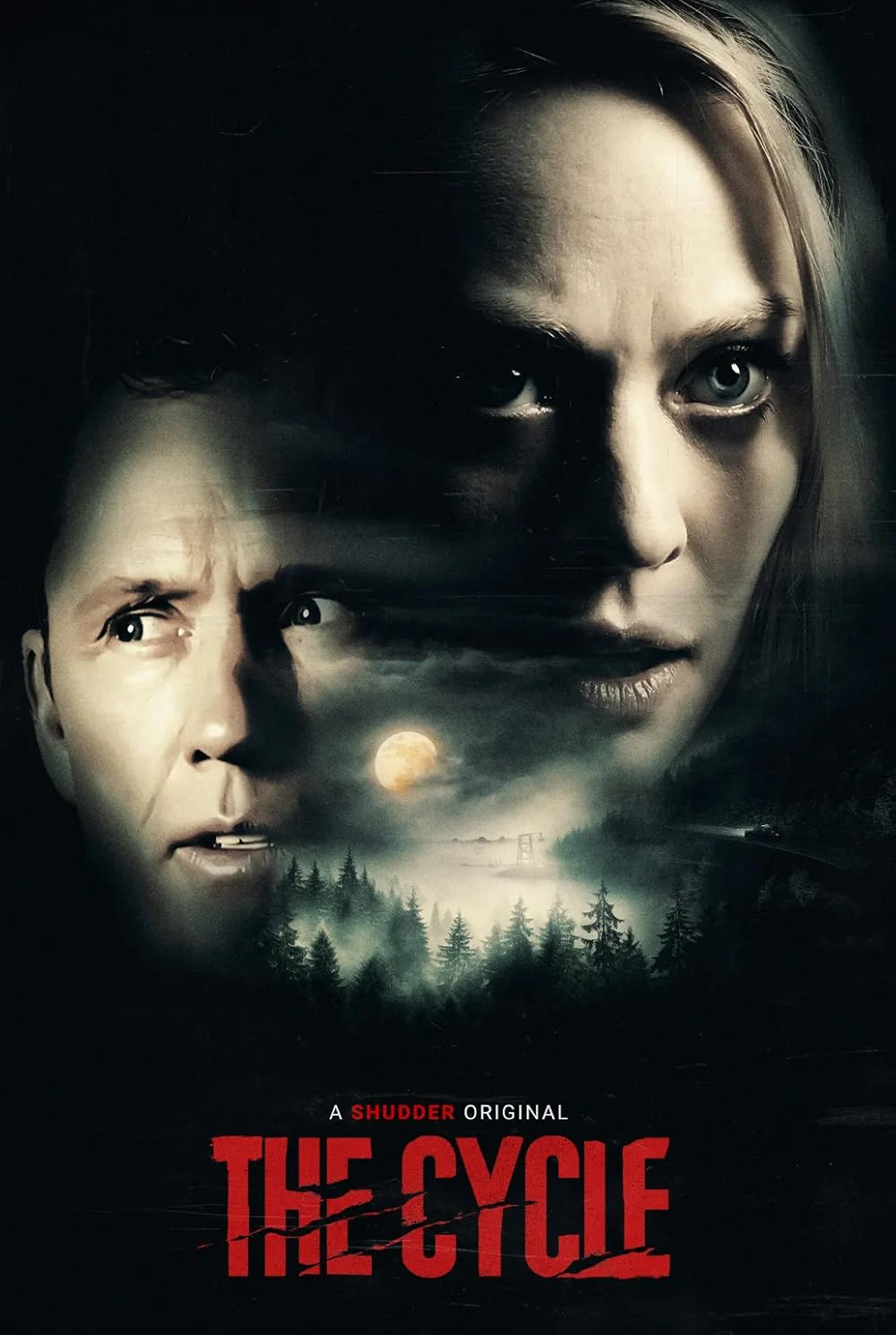
Horror Film Review: The Cycle (dir. by Jordan Downey)


“Your father abandoned us.” — Joni

A good monster can make a horror movie entertaining. A monster tangled up in somebody’s family history can make it personal. Jordan Downey’s The Cycle works best when it understands that difference, using a disturbing investigation to pick apart the story its main character has told herself about her father. There is grisly forensic work, a creeping sense of wrongness, and eventually the sort of creature-feature nastiness that rewards patient horror fans. But underneath all that is a more uncomfortable question: what happens when someone you thought had abandoned you turns out to have left behind a much stranger explanation?

Deborah Ann Woll plays Dr. Meg Garland, a forensic anthropologist whose latest assignment quickly becomes more than another difficult day at work. The brutal murders of a mother and daughter lead investigators to another body, one with abnormalities that resist a straightforward explanation. Then Meg discovers that the dead man is her father, who disappeared when she was a child. It is an effective complication because it immediately changes her relationship with the evidence. She can approach the remains as a scientist, but she cannot pretend they belong to someone whose life means nothing to her.

That collision between professional distance and personal involvement gives The Cycle its strongest material. Meg has built a career around examining what people leave behind, yet she has never had a satisfying explanation for her father’s absence. Now the answers are physically in front of her, and they are considerably harder to process than she might have imagined. The film gets something right about unresolved family history: sometimes the explanation you resent becomes part of how you understand yourself. Finding out that it might be incomplete does not automatically make anything easier.

Woll keeps that emotional conflict from becoming too heavy-handed. Her performance gives Meg enough composure to feel credible in her work without making her seem untouched by what she discovers. The character’s discomfort matters more because it has to fight its way through habits of observation and control. She is someone who wants to understand a problem before reacting to it, which makes her a useful anchor as the investigation becomes increasingly bizarre. Without that steadiness, the film’s movement from crime story to monster movie could feel like two separate ideas awkwardly sharing the same running time.

Downey and cinematographer Kevin Stewart build the first part around a chilly, oppressive atmosphere. The drained colors and forensic imagery place the film firmly in familiar crime-thriller territory, where every room seems to carry the residue of something unpleasant. That familiarity is both useful and limiting. It establishes the seriousness of the investigation, but it also means the early scenes do not always feel especially distinctive. What makes the approach worthwhile is its connection to Meg’s perspective. This is a world she should know how to navigate, which gives the inexplicable details more power to unsettle her.

The trouble is that the film sometimes mistakes staying in that atmosphere for developing it. A slow investigation can be gripping when each discovery sharpens the mystery or changes the stakes. Here, some passages feel as though they are maintaining the same level of unease rather than pushing it further. The personal connection helps, but it cannot generate momentum on its own. There are moments when the story seems ready to move forward and then settles back into another stretch of explanation. Viewers who enjoy deliberate horror may be comfortable with that rhythm; others will probably feel the drag.

Once The Cycle leans into its physical horror, the appeal becomes much more immediate. Its commitment to practicality gives the effects a welcome sense of substance. Special effects supervisor Patrick Magee’s creature and makeup work suits a story built around bodies that refuse to provide reassuring answers. The grotesque material does not feel entirely separate from the investigation; it is an extension of it. What begins as something to study becomes something to fear. That progression gives the nastiness a purpose beyond simply proving that the movie can deliver an unpleasant image when it wants to.

The frustrating part is that the action does not always show off those effects as effectively as it could. Tight framing and shaky camerawork can turn moments of danger into a struggle to follow what is happening. Keeping a creature partly hidden is a perfectly reasonable choice, but there still needs to be a clear sense of space and threat. Otherwise, suspense gets replaced by confusion. With such tangible effects available, the film could afford to trust them a little more. Sometimes letting the audience properly see something horrible is more effective than cutting around it.

The supporting cast helps give the procedural material some texture. Jeffrey Donovan and Will Hochman play a father-and-son police pairing, adding another family relationship to a story already preoccupied with the things parents pass down or leave unresolved. Jeb Berrier’s coroner contributes to the investigative side, while Nick Soole’s score maintains an undercurrent of unease. These elements help the movie feel populated rather than built solely around Meg’s discoveries. They also make its unevenness more noticeable: there are enough solid ingredients here that the stretches of repetition feel like missed opportunities rather than unavoidable limitations.

For all its rough edges, The Cycle has the right instinct about where its horror belongs. The gruesome effects supply the immediate discomfort, but Meg’s relationship with her father gives that discomfort somewhere to settle. Its best idea is that uncovering the truth can disturb an old wound instead of closing it. The pacing could be tighter, and the creature scenes could use a clearer eye, yet the film offers more than a mystery with a monster attached. It makes the investigation personal enough that solving the case and making peace with the past become two very different things.
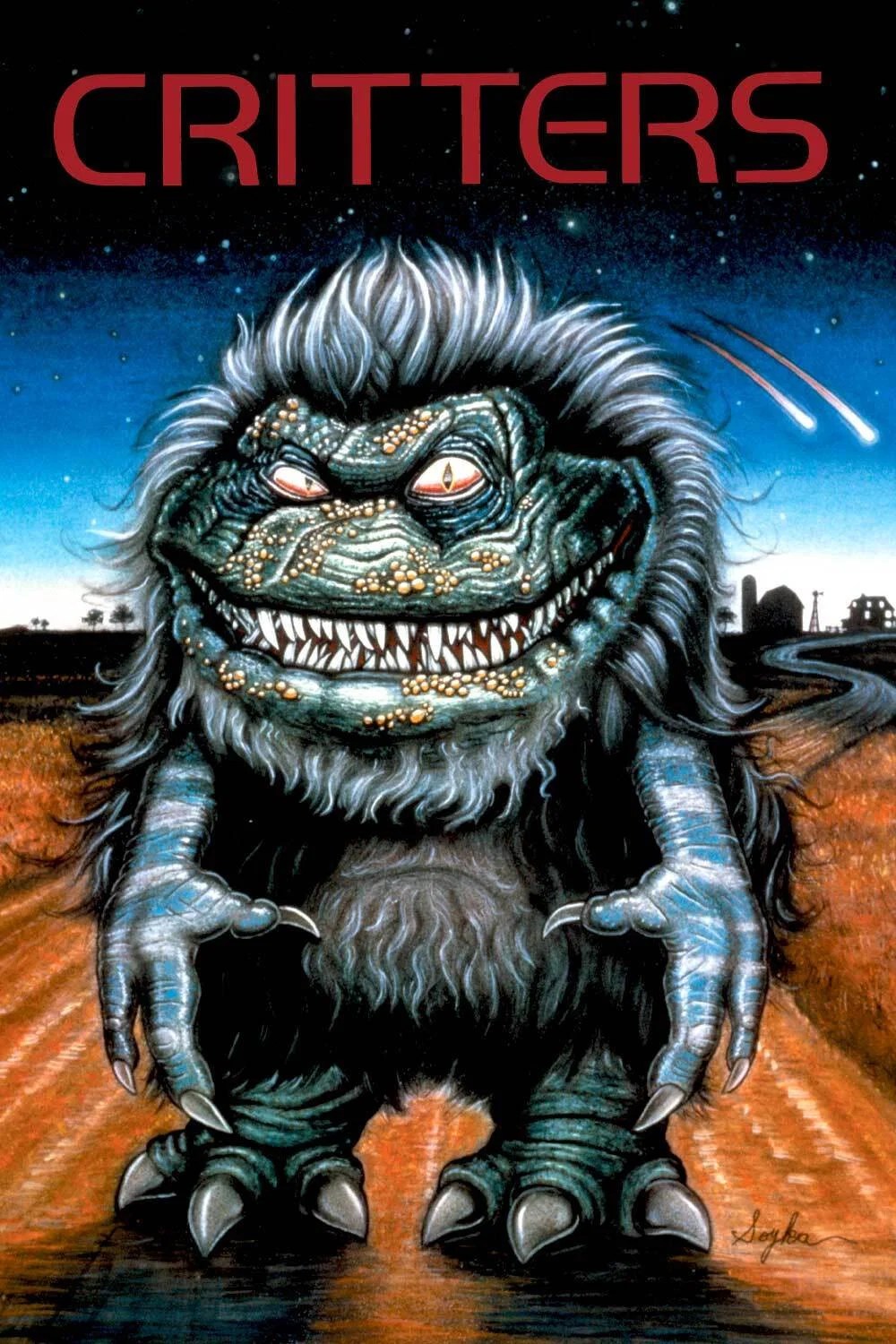
Horror Guilty Pleasure No. 135: Critters (dir. by Stephen Herek)


Some movie monsters want to conquer the planet. The creatures in Stephen Herek’s Critters seem perfectly happy eating their way through whatever happens to be standing on it. There is something refreshing about villains with such uncomplicated priorities, especially when they look like the contents of a clogged vacuum cleaner fitted with shark teeth. This is the sort of movie where the appeal is right there in the premise: nasty little aliens descend on rural America, and a perfectly ordinary family has to survive the visit. As an ’80s genre guilty pleasure, it delivers the goods with an appealing lack of pretension.

The story gets moving when a group of carnivorous aliens escapes from an extraterrestrial prison facility and makes its way to Earth. Their arrival puts the Brown family’s Kansas farm directly in the path of a feeding frenzy, while two shape-shifting bounty hunters follow close behind. Unfortunately, these heavily armed visitors are not especially concerned about keeping the peace or leaving buildings intact. Between the hungry fugitives and their destructive pursuers, an otherwise quiet community gets more excitement than it could possibly need. The setup is ridiculous, but Herek understands that explaining it too much would only spoil the fun.

What gives Critters some substance beneath the silliness is its interest in the people whose evening gets ruined. The Browns are not especially complicated characters, but their everyday disagreements and familiar household routines make them feel like a family rather than a collection of future victims. Spending time with them before the attack also gives the farmhouse a sense of normality worth protecting. The monsters are not simply invading a convenient horror-movie location; they are barging into somebody’s home. That modest distinction helps the film generate more audience investment than its toothy little troublemakers might initially suggest.

Scott Grimes makes Brad an easy young hero to root for. He has enough mischievous energy to seem capable of causing problems before the aliens ever arrive, but he never becomes so obnoxious that his survival feels like an obligation. His resourcefulness grows naturally out of that personality, giving the movie a kid protagonist who can participate in the action without seeming completely detached from his surroundings. There is a pleasing wish-fulfillment element to watching an underestimated youngster step up when things go wrong. Grimes sells that without turning Brad into an impossibly polished miniature action star.

Dee Wallace provides another important source of credibility as Brad’s mother, Helen. She brings warmth and urgency to situations that, described out loud, sound almost impossible to play straight. That commitment helps establish the film’s balance: the audience can laugh at the monsters without feeling that the characters are merely participating in a comedy routine. The family’s fear and concern remain sincere even when the surrounding action gets goofy. Critters does not require powerhouse dramatic performances, but it benefits enormously from actors willing to treat an attack by murderous furballs as an actual emergency.

Naturally, the furballs themselves are the main attraction. They look like what would happen if the Tribbles from Star Trek suddenly decided to stop being cute and start being mean and really, really hungry. Their dark hair, glowing eyes, enormous mouths, and projectile quills turn an otherwise cuddly shape into something you would desperately want off your lap. The fun comes from their rotten personalities as much as their physical design. These are greedy, bad-tempered little creatures whose curiosity usually leads directly to destruction. Their appetite drives the action, but their attitude gives it flavor, making them entertaining even when they are doing little more than looking for their next meal.

The practical effects contribute plenty of charm, although they do not always maintain the illusion. Some movements are stiff, and certain shots make the creatures look exactly like the puppets they are. Still, their physical presence gives the mayhem a satisfying texture. They seem to belong in the same messy environment as the furniture, debris, and frightened actors around them. The movie also benefits from not making them too adorable. They can be funny without losing that unpleasant suggestion of something that might bite straight through your hand. Their limitations are visible, but so is the craftsmanship behind their grotesque little faces.

The bounty hunters bring a broader, more cartoonish kind of entertainment. Terrence Mann plays Ug, who adopts the appearance of rock star Johnny Steele, while his partner Lee cycles through human identities played by Ethan Phillips, Jeremy Lawrence, and Don Keith Opper. Mann does most of the pair’s comedic heavy lifting, giving Ug a wonderfully straight-faced intensity that makes his rock-star appearance and excessive firepower even funnier. Their destructive pursuit suggests that Earth’s rescuers might require almost as much cleanup as its invaders. These scenes provide some welcome absurdity, although they also contribute to uneven pacing. Whenever the film moves away from the farmhouse, the pressure surrounding the Browns tends to ease. The hunters are amusing, particularly Mann, but their antics are not always as engaging as the central siege.

The resemblance to Gremlins is difficult to ignore, but Critters works best when it is not treated as a contest. It offers a smaller, scrappier variation on miniature-monster chaos, with a straightforward survival story holding everything together. The scares are limited, the plotting is thin, and the effects occasionally wobble, yet the movie remains likable because it commits to its own ridiculous appeal. There is no need to pretend it is a neglected masterpiece to appreciate its pleasures. Sometimes a decent creature feature only needs an appealing cast, a little suspense, and some ugly space pests making a spectacular nuisance of themselves. Critters understands the assignment.

Previous Guilty Pleasures

  1. Half-Baked
  2. Save The Last Dance
  3. Every Rose Has Its Thorns
  4. The Jeremy Kyle Show
  5. Invasion USA
  6. The Golden Child
  7. Final Destination 2
  8. Paparazzi
  9. The Principal
  10. The Substitute
  11. Terror In The Family
  12. Pandorum
  13. Lambada
  14. Fear
  15. Cocktail
  16. Keep Off The Grass
  17. Girls, Girls, Girls
  18. Class
  19. Tart
  20. King Kong vs. Godzilla
  21. Hawk the Slayer
  22. Battle Beyond the Stars
  23. Meridian
  24. Walk of Shame
  25. From Justin To Kelly
  26. Project Greenlight
  27. Sex Decoy: Love Stings
  28. Swimfan
  29. On the Line
  30. Wolfen
  31. Hail Caesar!
  32. It’s So Cold In The D
  33. In the Mix
  34. Healed By Grace
  35. Valley of the Dolls
  36. The Legend of Billie Jean
  37. Death Wish
  38. Shipping Wars
  39. Ghost Whisperer
  40. Parking Wars
  41. The Dead Are After Me
  42. Harper’s Island
  43. The Resurrection of Gavin Stone
  44. Paranormal State
  45. Utopia
  46. Bar Rescue
  47. The Powers of Matthew Star
  48. Spiker
  49. Heavenly Bodies
  50. Maid in Manhattan
  51. Rage and Honor
  52. Saved By The Bell 3. 21 “No Hope With Dope”
  53. Happy Gilmore
  54. Solarbabies
  55. The Dawn of Correction
  56. Once You Understand
  57. The Voyeurs
  58. Robot Jox
  59. Teen Wolf
  60. The Running Man
  61. Double Dragon
  62. Backtrack
  63. Julie and Jack
  64. Karate Warrior
  65. Invaders From Mars
  66. Cloverfield
  67. Aerobicide
  68. Blood Harvest
  69. Shocking Dark
  70. Face The Truth
  71. Submerged
  72. The Canyons
  73. Days of Thunder
  74. Van Helsing
  75. The Night Comes for Us
  76. Code of Silence
  77. Captain Ron
  78. Armageddon
  79. Kate’s Secret
  80. Point Break
  81. The Replacements
  82. The Shadow
  83. Meteor
  84. Last Action Hero
  85. Attack of the Killer Tomatoes
  86. The Horror at 37,000 Feet
  87. The ‘Burbs
  88. Lifeforce
  89. Highschool of the Dead
  90. Ice Station Zebra
  91. No One Lives
  92. Brewster’s Millions
  93. Porky’s
  94. Revenge of the Nerds
  95. The Delta Force
  96. The Hidden
  97. Roller Boogie
  98. Raw Deal
  99. Death Merchant Series
  100. Ski Patrol
  101. The Executioner Series
  102. The Destroyer Series
  103. Private Teacher
  104. The Parker Series
  105. Ramba
  106. The Troubles of Janice
  107. Ironwood
  108. Interspecies Reviewers
  109. SST — Death Flight
  110. Undercover Brother
  111. Out for Justice
  112. Food Wars!
  113. Cherry
  114. Death Race
  115. The Beast Within
  116. Girl Series
  117. Gone in 60 Seconds
  118. Swordfish
  119. Marked For Death
  120. The Internship
  121. The Angry Red Planet
  122. 2012
  123. Old School
  124. No Escape
  125. In Death Series
  126. Alligator
  127. Little Annie Fanny
  128. Wicked Wanda
  129. Congo
  130. The 13th Warrior
  131. Sudden Death
  132. The Convent of Hell
  133. Covent of Sinners
  134. Teen Witch

Retro Television Review: Miami Vice 4.21 “Deliver Us From Evil”


Welcome to Retro Television Reviews, a feature where we review some of our favorite and least favorite shows of the past!  On Mondays, I will be reviewing Miami Vice, which ran on NBC from 1984 to 1989.  The entire show can be purchased on Prime!

This week, Caitlin makes a fateful return to Miami, an old enemy emerges from the shadows, and Crockett crosses a line that he never thought he would cross.  Will he ever be able to come back?

Episode 4.21 “Deliver Us From Evil”

(Dir by George Mendeluk, originally aired on April 29th, 1989)

At the end of this week’s episode, Crockett executes a man in cold blood!

Whoa!

Now, I should note that the guy that Crockett killed was really, really bad.  Frank Hackman (Guy Boyd) was a hitman who was previously on Death Row for killing one of Crockett’s former partners.  Hackman, who was pretending to be born again and seeking redemption, tricked Crockett into “proving” his innocence and getting his conviction overturned.  Only as Frank left the prison did he smirk at Crockett and reveal that all of the “new” evidence was faked.  It was one of Miami Vice’s darkest episodes.

Frank went back to his old ways, committing crimes and killing families.  Crockett made it his mission to take down Frank but, during a shootout with Frank’s gang, Frank’s wife was caught in the crossfire.  Crockett blamed himself, even though the bullet that killed her came from Frank’s gun.  Frank also blamed Crockett and, while Crockett was struggling with whether or not he wanted to remain a member of the Vice Squd, Frank plotted his revenge.

Caitlin Davies, Crockett’s wife, returned from her European tour.  Unfortunately, her homecoming concert was abruptly ended when she was shot by a sniper.  She died in Crockett’s arms, bringing to an end a marriage that never really made much sense to begin with.

Crockett spent a few days drinking on his boat and then rejoined the Vice Squad, determined to track down Frank.  Castillo did that thing where he narrowed his eyes and looked vaguely concerned but he still allowed Crockett to work the case.  After Crockett and Tubbs learned that Frank was living on a nearby island, Crockett confronted him alone.

“You wouldn’t shoot an unarmed man,” Frank said, smiling while lounging by the pool.

BANG!

Frank was wrong.

It was a powerful moment but one that was diminished by one final shot that showed Frank had been holding a gun in his hand when he was shot.  From what I’ve been able to uncover online, this was apparently added at the insistence of the network, who did not want Crockett to become a cold-blooded killer.  I doubt that would be an issue for the networks today.

Season 4 has been pretty uneven but this was a powerful episode.  As it ended, it definitely seemed as if Crockett had crossed  a line and that he would never again be the same.  Who knows what that might mean for next week’s season finale?

We’ll find out!