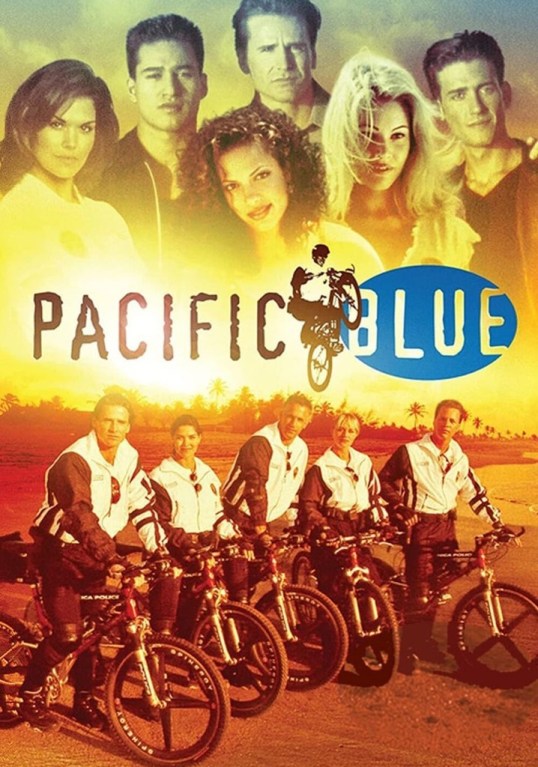
Welcome to Late Night Retro Television Reviews, a feature where we review some of our favorite and least favorite shows of the past! On Tuesdays, I will be reviewing Pacific Blue, a cop show that aired from 1996 to 2000 on the USA Network! It’s currently streaming everywhere, though I’m watching it on Tubi.
This week, everyone’s going undercover!
Episode 5.2 “The Naked Truth”
(Dir by Sara Rose, originally aired on July 25th, 1999)
When a wealthy sorority girl is found dead on the beach with her head caved in, it falls to the bicycle patrol to solve the case. Where are the Homicide detectives? We know that the Santa Monica PD has a homicide division because Chris keeps talking about transferring there. I know I bring this up every episode but it simply doesn’t make sense for the bike cops to be the ones investigating all of these crimes. I mean, essentially, they’re traffic cops. In the real world, they’re job would be to secure the crime scene and wait for the real detectives to show up.
Anyway, when Monica sees that the dead girl was wearing a sequined bikini, she immediately deduces that she was working as a stripper. (I’m not sure that logic would hold hope in court but whatever.) Why would a rich sorority girl be working at a strip club? Monica and Chris go undercover to find out. Chris is the new housemother at the sorority house. Monica is a new pledge. It turns out that working at the strip club started as a hazing ritual but now, all of the girls are being blackmailed (via email, we’re specifically told) into doing it.
Who is the blackmailer? That mystery is solved when Chris catches the local handyman going through her underwear. The handyman explains that he’s not a murderer, he’s just a pervert. He also says that all of the girls have expensive underwear except for one who owns “K-mart panties.” Because that girl is poor and a computer science major, Monica and Chris decide that she’s the blackmailer. (Again, I’m not sure that logic would hope up in court but whatever. I’m too tired to argue with this stupid show.) I guess the lesson here is to spend money on quality panties. Well, don’t worry, Pacific Blue! I buy and wear only the best!
As for the murderer, it turns out to be a cowboy with a country accent who is always hanging out at the strip club and requesting a private dance. It really wasn’t that much of a shock.
Pacific Blue always talks a big game about how women shouldn’t be objectified but then every episode opens with random bikini shots and this episode looked for every possible excuse to put Monica in a school girl outfit. I’d have more respect for Pacific Blue if it was just honest about what it is was doing as opposed to having the characters constantly spouting a lot of cliches about empowerment that the show itself doesn’t seem to take all that seriously.
The good thing about this episode is that it ends with Chris telling TC that they need some time apart. I agree! You can do better, Chris!
If a man wakes up in the woods and no one cares, did a film even happen? Well sadly, this film was made because we don’t have quality control over whom gets to use the iPhone video camera app. We really need some punishment, if you make a film like this. I’m NOT saying beatings…BUT what if we don’t break the skin?
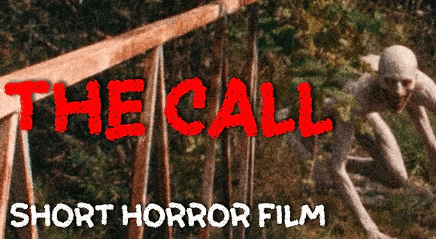
A man wakes up in the woods and monster who mimics human voices chases him. I understand that some of you are thinking Appalachian horror, but you can’t because you will only encourage him and filmmakers like him. We can’t let this become a trend. Just, NO! We already have Alex Magana; he exists- AMONG US! If we get together, we could devise a plan to hide this man’s phone: PROBLEM SOLVED!
When I watched this short, not only was I entertained, I was uplifted. The short reminded me of the positivity films Lisa reviews.
The short opens with a large husband, beautiful wife, and the husband finding a positive pregnancy test on his counter. I was waiting for the traditional revenge or betrayal story, but I got something totally different.
The wife says that the pregnancy test is her sister’s, but that he said that he was ok with not having kids. He feels disappointed that he won’t ever be dad and goes to his “car” to run errands. The husband goes to his electric car (ughhhh) and sees a “The Ring” like ghost in his rear camera. The man and the ghost take on a father/daughter relationship and it is … really sweet. If you’re looking for a reason to have kids, this hits that spot.
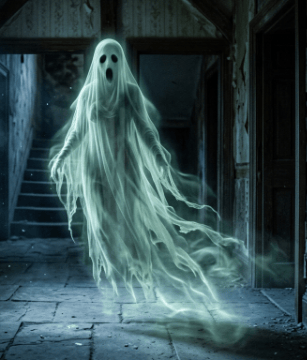
The youtuber didn’t have a title card; so, I made a scary ghost. I hope that it didn’t scare you too much! This is a parody of “It Follows”, the horror movie based on an STD that follows the next person and kills them. I always liked “It Follows” because if you were a child of the 90s, AIDS always the big warning that if you had sex, you would die. I would always ask; “why can’t I just use a condom?” and the response was always the same- “You’d risk your life for sex?” and me being me, I would respond with – “I thought that I already established that?” and they would pearl clutch.
In this short, the protagonist is a virgin who no one wants; so, he befriends the “It Follows” puritanical evil spirit and does ride-alongs with it as it explodes its victims. I thought it was fairly funny. There were some actual stars in the films and it appeared to have an actual budget, which gave me some nepobaby vibes. The films were ok, but I couldn’t understand how the budget would be this big, but then I saw that the channel has 1 million subscribers and 1 million views even for this short; so, I guess people have low standards.
I mean, it’s not horrible- just aggressively mediocre. If you’re a wonder bread as a burger bun kind of guy, this is for you.
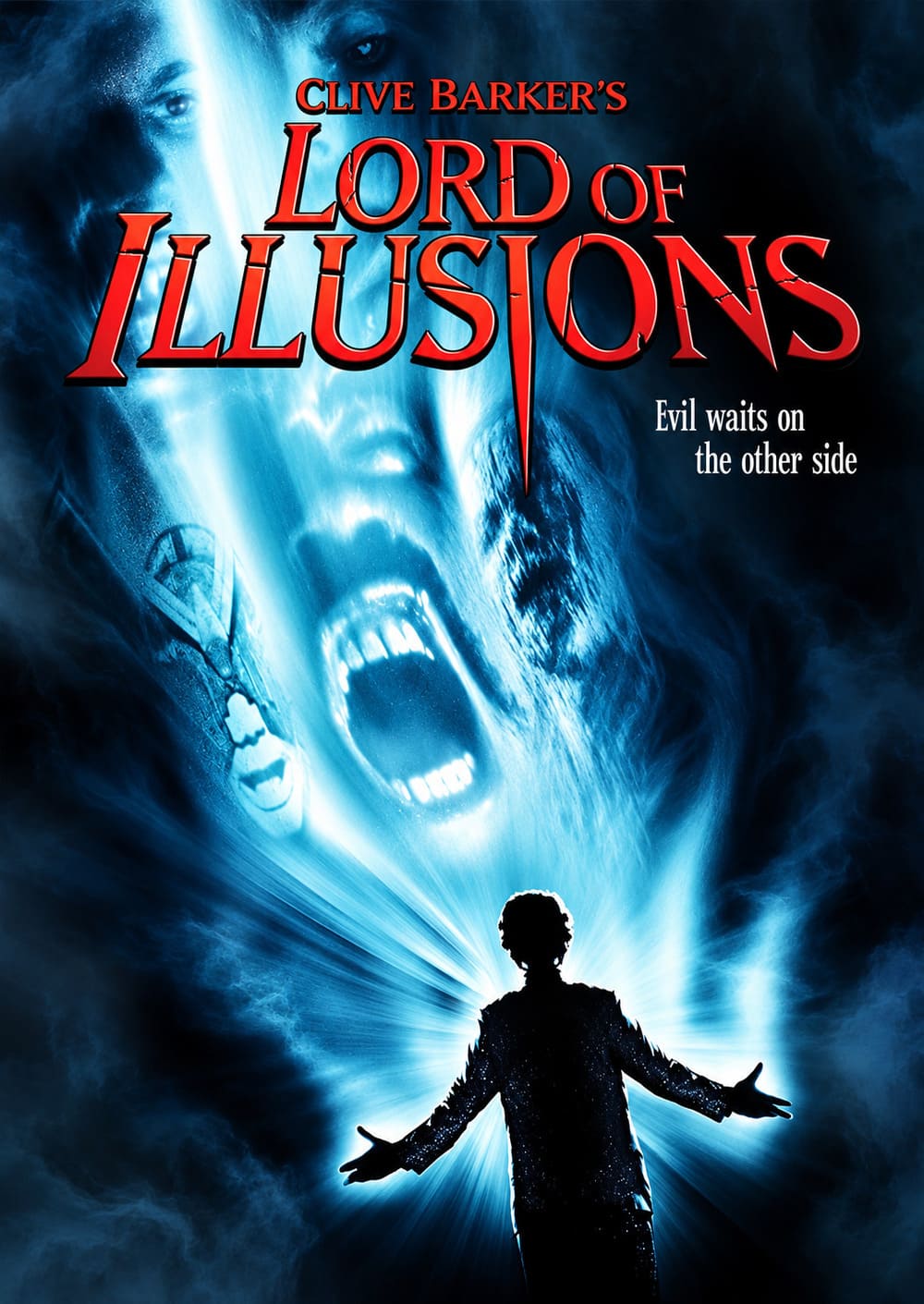
There’s a version of Lord of Illusions that exists only in Clive Barker’s head, and it’s probably a masterpiece. The version that actually made it to theaters in 1995 is something else entirely: a fascinating, frustrating, occasionally brilliant mess of a movie that tries to fuse film noir with cosmic horror and only partially succeeds. Barker wrote and directed the film based on his own 1985 short story The Last Illusion, and while he clearly understands the material better than anyone else could, his direction is surprisingly by the numbers, playing it safe when the source material practically begs for supernatural insanity.
The plot, such as it is, kicks off with a prologue in 1982 at a Mojave Desert cult compound run by a genuinely terrifying figure named William Nix, played with unsettling intensity by Daniel Von Bargen. Nix calls himself “The Puritan,” which is a nice bit of irony given that he’s basically Charles Manson with actual supernatural powers, and he’s about to sacrifice a young girl when a group of his own followers, led by a man named Philip Swann, stage a violent coup. They shoot Nix, screw an iron mask onto his face, and bury him in the desert, assuming that’s the end of it. It’s a strong opening, full of the kind of visceral, apocalyptic imagery that Barker does better than almost anyone, and it sets up a genuinely intriguing mystery about what happened to this cult and why its members turned on their leader.
Thirteen years later, we meet Harry D’Amour, a New York private detective played by Scott Bakula, who has a habit of stumbling into the supernatural the way other noir detectives stumble into dames with secrets. Harry gets pulled into a case in Los Angeles that leads him to Swann, now a world-famous illusionist, and his wife Dorothea, played by Famke Janssen, who seems to know more about the danger lurking around her husband than she’s letting on. When Swann dies on stage in a spectacularly grisly accident involving suspended swords, Harry finds himself drawn deeper into a world where the line between stage magic and genuine sorcery has been blurred past the point of no return. The investigation takes him through a strange subculture of professional magicians, each with their own secrets and rivalries, and gradually reveals that Swann’s death was not an accident but the opening move in a larger, darker game.
What works best about Lord of Illusions is its atmosphere. Barker has always had an eye for the grotesque and the baroque, and here he leans hard into the noir trappings to ground the supernatural stuff in something that feels almost noir-ish in its fatalism. Harry D’Amour is a classic archetype, a rumpled, world-weary guy who’s seen too much but keeps going anyway, and Bakula plays him with a likable, low-key charm that keeps the film from drowning in its own self-seriousness. The Los Angeles setting is used well, too, with the stark contrast between the sun-drenched surface and the darkness lurking beneath feeling very much in line with classic noir like Chinatown or The Long Goodbye. The film’s visual palette is appropriately moody, all shadows and neon and rain-slicked streets, and there are moments where it genuinely feels like it could be a lost noir from the 1940s, just with more blood and occult symbolism.
The thing is, though, Barker’s directing here is quite by the numbers. He knows the material inside and out, obviously, since he wrote the short story and the screenplay, but as a director he plays it safe instead of leaning into the supernatural insanity of the source material. There’s nothing wrong with the film on a technical level, but there’s also nothing that really grabs you by the throat the way Barker’s best work does. It’s competent, it’s professional, and it’s ultimately a little bit forgettable in a way that a Clive Barker movie really shouldn’t be. For a filmmaker whose whole reputation is built on pushing boundaries and going places other horror directors won’t, Lord of Illusions feels oddly restrained, like Barker was holding something back.
And that’s what makes the film so bewildering. Barker definitely knows how to direct a film that matches the over-the-top imagery and narrative of his source material. If his work on Hellraiser is any indication, he’s more than capable of translating his own literary excesses to the screen with style and confidence. Hellraiser is a film that fully commits to its own weirdness, that doesn’t apologize for its cenobites or its flesh-and-blood aesthetics or its genuinely transgressive themes. It’s a movie that knows exactly what it is and leans into it with everything it’s got. So why does Lord of Illusions, which comes from a story that’s every bit as strange and ambitious as The Hellbound Heart, feel so much more pedestrian? It’s not a question of budget or resources, because Lord of Illusions actually had a bigger budget than Hellraiser. It’s not a question of experience, because Barker had already directed one genuinely great film by this point. It’s a question of nerve, and for whatever reason, Barker just doesn’t seem to have the same nerve here that he did with Hellraiser.
Would leaning harder into the weirdness have made the film better? Maybe, maybe not. But here’s the thing: like most of Barker’s stories, Lord of Illusions works best when it goes over the top. Barker’s whole deal as an artist is excess. His best work, whether it’s The Hellbound Heart or Weaveworld or The Great and Secret Show, is unapologetically maximalist, throwing ideas at the wall with reckless abandon and trusting that the sheer force of imagination will carry the reader through. The short story The Last Illusion is no exception. It’s a wild, hallucinatory piece of work, full of reality-bending weirdness that feels like it could have been a genuinely unhinged horror film in the right hands. The movie version sands off a lot of those rough edges in favor of something more conventional, and while that makes the film more accessible, it also makes it less memorable.
The film’s biggest problem, and it’s a substantial one, is its pacing and structure. Barker has always been a writer with more ideas than he knows what to do with, and Lord of Illusions is stuffed to the gills with concepts and imagery that never quite cohere. The theatrical cut, which runs about 109 minutes, is notoriously choppy, jumping from scene to scene with a kind of frantic energy that leaves the audience scrambling to keep up. Characters appear and disappear without much explanation, plot threads are introduced and abandoned, and the whole thing has a rushed, unfinished quality that makes it feel like a much longer film that was hacked down in the editing room. There’s a director’s cut that runs about 121 minutes and restores a lot of the character development and thematic material, and while it doesn’t magically turn the film into a masterpiece, it does make it feel considerably more coherent. If you’re going to watch Lord of Illusions, do yourself a favor and track down the director’s cut. It won’t fix all the film’s problems, but it at least gives you a better sense of what Barker was going for.
The performances are a mixed bag in a way that’s almost charming. Bakula is genuinely good as Harry, bringing a kind of earnest decency to a role that could easily have been a Bogart impression. He’s not the most hard-boiled guy in the world, but that’s part of the point; Harry D’Amour is a detective who keeps finding himself in supernatural situations not because he’s special but because he’s unlucky, and Bakula sells that beautifully. He’s the kind of guy you’d want on your side in a crisis, even if he’s not entirely sure what he’s doing half the time, and that makes him a surprisingly effective audience surrogate for a film this strange.
Famke Janssen, in one of her earliest major roles, is somewhat underused as Dorothea, but she has a presence that makes you wish the film had given her more to do. She’s got the kind of old-Hollywood glamour that fits the noir aesthetic perfectly, and there are hints of a much more interesting character buried in there somewhere. Kevin J. O’Connor as Swann is the weak link; he’s supposed to be a charismatic showman hiding a dark secret, but he mostly comes across as twitchy and unfocused, which undercuts the tragedy of his character. The real standout among the supporting cast is Barry Del Sherman as Butterfield, one of Nix’s acolytes, who brings a genuinely unsettling energy to every scene he’s in. He’s the kind of henchman who seems like he’s enjoying himself a little too much, and that makes him far more memorable than the film’s actual villain.
Then there’s Nix himself. Barker has said that he deliberately made Nix uncharismatic, wanting to subvert the expectation of the magnetic cult leader by making him genuinely pathetic and repellent. The intention, clearly, was to evoke the real-world evil of figures like Jim Jones and Charles Manson, those charismatic monsters whose power came from their ability to bend other people’s wills to their own. It’s an interesting idea in theory, a deliberate rejection of the idea that evil has to be seductive to be dangerous.
But here’s the thing: it doesn’t really work. Nix is meant to be a Jim Jones or Charlie Manson type of evil, a man whose sheer force of personality could convince people to hand over their lives and their sanity, but he comes off as uninspired instead. Von Bargen is a fine actor and he does what he can with the role, but the character as written lacks the magnetic pull that made those real-life figures so terrifying. He’s not a seducer, he’s not a manipulator, he’s just a guy in a mask shouting about being a god. The film tells us he had followers, tells us he was dangerous, but it never really shows us why anyone would have followed him in the first place. And that’s a problem, because if you’re going to build a horror movie around a cult leader, the one thing you absolutely have to nail is the cult leader’s charisma. Nix should be the kind of villain who makes your skin crawl because you can almost understand why people fell under his spell. Instead, he’s just a snarling figurehead.
The film’s climax, where Nix is resurrected and goes on a rampage, is where the movie loses a lot of its goodwill. The special effects, which were probably decent for 1995, have not aged well, and the sequence where Nix buries his followers in the desert via a torrential downpour is more silly than scary. The famous “Origami Man” chase sequence, where Harry is pursued by a creature made of folding paper and a dog made of fire, is similarly unconvincing, looking more like a mid-90s CD-ROM cutscene than anything genuinely threatening. It’s the kind of scene that probably looked great on paper but just doesn’t work in execution, and it ends up undermining the film’s attempts at genuine dread.
And yet, despite all its flaws, I can’t bring myself to dismiss Lord of Illusions. There’s something genuinely compelling about a film that tries this hard to be something different, to blend genres in a way that studio horror almost never does. Barker’s vision, even when it’s undercut by dated effects or its own uneven execution, is always interesting. The film’s central idea, that the difference between a magician and a sorcerer is the difference between someone who entertains and someone who actually traffics with dark forces, is a genuinely good one, and the way it plays out through Swann’s character arc is the film’s strongest thematic thread. Swann, who possesses real power but chooses to use it for fame and fortune, is a more interesting figure than the film sometimes knows what to do with. His decision to hide his abilities behind the veneer of stage magic feels like a commentary on something, maybe on the compromises artists make, maybe on the way we all hide the parts of ourselves that are too dangerous or too strange for polite society.
The first two-thirds of the film, with Harry navigating the strange world of professional magicians and slowly uncovering the truth about Swann and Dorothea’s past, is genuinely engaging. It’s when the film shifts into full-on horror mode that it loses its footing, trading atmosphere for spectacle in a way that feels like a concession to the genre’s demands rather than a natural progression of the story. That’s a shame, because the noir elements are what make Lord of Illusions feel unique. There are plenty of horror films about cults and demons and dark magic, but there aren’t many that approach those subjects through the lens of a hard-boiled detective story, and the tension between those two modes is what gives the film its distinctive flavor.
In the end, Lord of Illusions is entertaining enough for what it is, but it’s hindered by a filmmaker well-known for swinging for the fences who, for some reason, holds himself back here when the source material, one he himself wrote, pretty much begs for it. This isn’t a movie that swings and misses; it’s one that never really swings at all, settling for competent when it could have been fearless.
This short was really well done. It had some scary moments and great comedy. This filmmaker has some real talent.
A woman gets a cursed painting from old woman and the painting houses an evil spirit who likes to mock the main character. I highly recommend this short. It is so rare to be able to do this genre well that I’m going to see their other work. This is a must see!
“I don’t know if you’ve noticed this, but nothing has been fine. And everything’s been getting worse every second.” — Eric
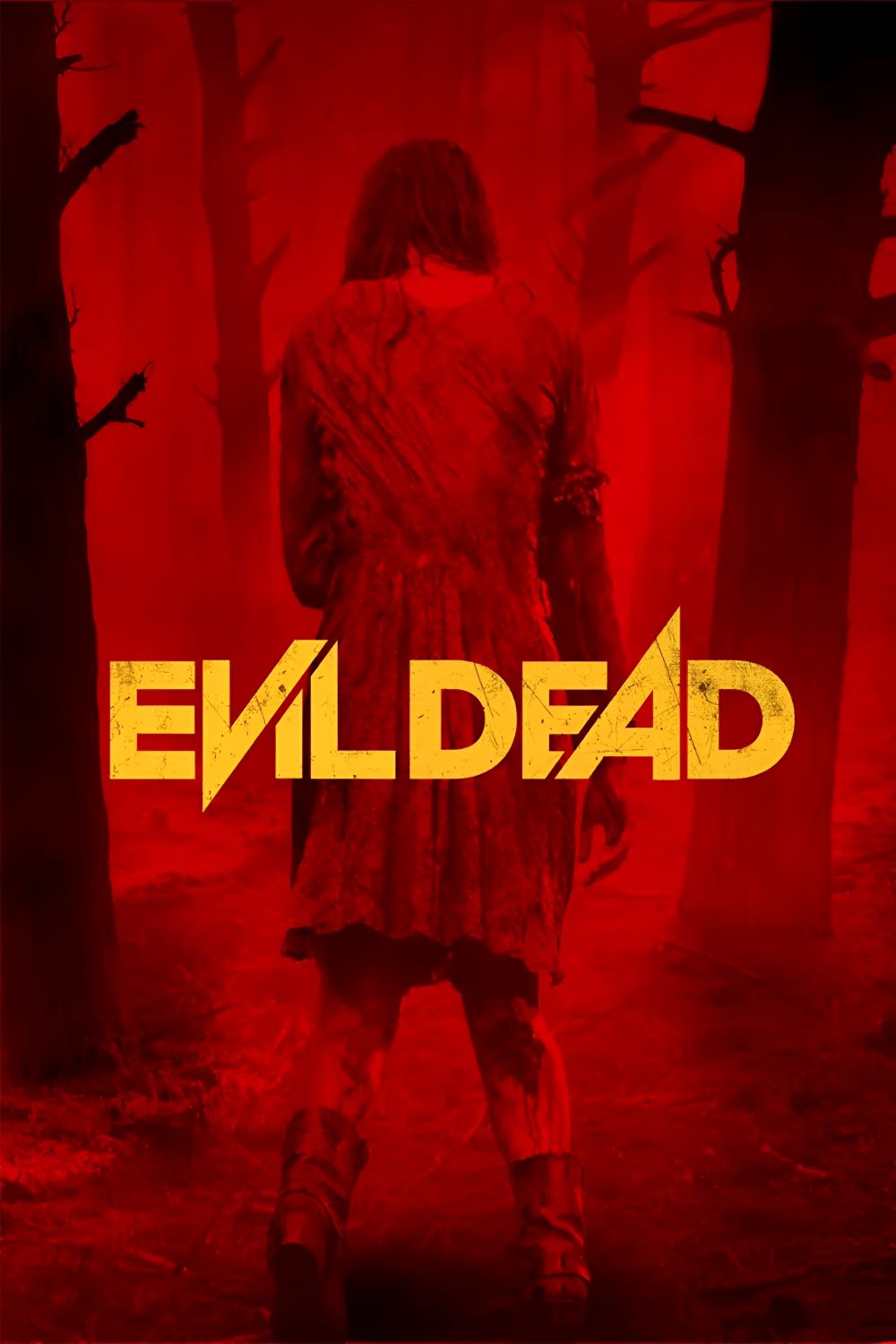
Evil Dead does not tiptoe around its legacy; it kicks the cabin door open, grabs the Necronomicon, and buries the audience under gallons of blood. Fede Alvarez’s 2013 soft reboot faced the nearly impossible task of revisiting Sam Raimi’s The Evil Dead, a cult horror landmark so tied to its handmade weirdness, manic energy, and eventual dark-comedy sensibility that a straight duplicate would have been pointless. Alvarez wisely does not try to replace the original. Instead, he takes its basic framework—the isolated cabin, the Book of the Dead, a group of doomed young people, and an escalating demonic outbreak—and reshapes it into something more polished, more punishing, and much more relentlessly nasty.
The major difference is tone. Raimi’s original had a rough, handmade quality that made every improvised effect, wild camera move, and strange performance feel like part of its identity. It was scary, but it was also energized by a kind of reckless invention. Alvarez’s Evil Dead goes in another direction. It is slicker, more controlled, and deeply mean-spirited in a way that makes the cabin feel less like a creepy vacation spot and more like a rotting death trap. This is not a winking horror-comedy, at least not until the violence becomes so excessive that it starts circling back around into stunned laughter. For most of its running time, the movie plays things brutally straight. It wants the audience to feel trapped in that filthy cabin right alongside the characters, watching every injury worsen and every possible escape route close off.
That seriousness is actually one of the film’s smartest choices. The cabin trip is no longer just a random weekend getaway that turns into hell. Mia, played by Jane Levy, is being brought to the family cabin by her brother David and a few friends so she can detox from heroin. It is a grim premise, but it gives the story a real emotional spine. Mia’s friends and family are not merely there to be picked off one by one; they are trying, however imperfectly, to help her survive something terrifying before any supernatural force enters the picture. When Mia starts seeing horrific things, the others initially assume she is suffering withdrawal symptoms or trying to manipulate them into letting her leave. That adds a nasty layer of uncertainty to the setup. The audience knows something evil is happening, but the people around Mia have a believable reason not to trust her.
Jane Levy carries a huge amount of the movie. Mia has to move through several different modes: vulnerable, furious, terrified, possessed, exhausted, and eventually almost mythic in her determination to survive. It would have been easy for the movie to turn her into either a helpless victim or a standard final girl, but Levy gives her enough rawness that she feels like a person fighting two battles at once. She is struggling with addiction, family resentment, and an actual demonic infection spreading through the cabin. Her performance gets more intense as the movie goes on, and by the final act she has become one of the more memorable protagonists in the franchise.
The supporting cast is less developed, though that is partly by design. David, played by Shiloh Fernandez, is Mia’s estranged brother and the closest thing the film has to a traditional lead for much of the first half. Lou Taylor Pucci’s Eric is the unfortunate idiot who reads from the Necronomicon despite the book being wrapped in barbed wire, marked with warnings, and seemingly designed to scream “do not open this.” Still, the movie at least gives him more guilt than the average horror-movie fool. Once he realizes what he has unleashed, Eric spends much of the film trying to help Mia and clean up his mistake. Olivia and Natalie are thinner characters, but the film uses them effectively as different stages of the Deadite infection and as delivery systems for some especially vile set pieces.
And that is where Evil Dead really earns its reputation. The film’s violence is not merely bloody; it is aggressive, tactile, and determined to make the audience squirm. Needles, glass, nail guns, electric carving knives, box cutters, hot water, exposed nerves, severed limbs—Alvarez and co-writer Rodo Sayagues treat the cabin like a giant torture chamber filled with household objects waiting to become weapons. The gore is so over-the-top that it becomes almost operatic. There is a clear effort to make every major injury feel specific rather than generic. This is not just people getting slashed in dark rooms. The movie wants viewers to remember exactly what happened, which is why several scenes are difficult to shake even after the credits roll.
What makes the carnage work is the heavy use of practical effects. The film has digital touch-ups here and there, but it mostly wants blood, makeup, prosthetics, and physical messiness in the frame. That choice connects it directly to the old-school horror tradition that made the original The Evil Dead so memorable. Alvarez has a cleaner visual style than Raimi, but he does not make the mistake of turning the Deadites into sleek CGI monsters. They look diseased, swollen, burned, cut open, and horribly physical. The cabin itself is just as important. It is damp, dark, decaying, and full of corners that seem infected before anyone even opens the book.
The film also knows how to use the iconography of the series without becoming trapped by it. The Book of the Dead is immediately recognizable, but it is presented as a more grotesque object than ever: bound in human skin, wrapped in barbed wire, and full of disturbing images and warnings that practically dare someone to ignore them. There are nods to Raimi’s films, including a familiar yellow Oldsmobile and the expected cabin imagery, but Alvarez avoids simply repeating Ash Williams’s story. Bruce Campbell’s Ash is such a distinct character that trying to replace him outright would have been a disaster. Instead, Evil Dead makes Mia its own survivor and lets her final confrontation stand apart from the earlier movies.
The biggest criticism of Alvarez’s film is also a fair one: it can feel almost too grim. The original movies had a wild punk-rock sense of fun—raw, fast, messy, inventive, and powered by the kind of reckless confidence that turns limitations into personality. Alvarez’s soft reboot abandons that punk-rock attitude almost entirely. If Raimi’s The Evil Dead feels like a sweaty, chaotic garage band ripping through a horror song at maximum volume, Alvarez’s Evil Dead is the Norwegian black-metal version: colder, uglier, more nihilistic, and committed to burying the audience under mud, blood, grief, and cruelty. It is still extreme, but it is extreme in a much more punishing key.
That is not automatically a flaw, even if it may leave fans of the original’s humor missing the unhinged fun. Alvarez is not trying to make a Raimi imitation. He makes a full-blooded, punishing horror film that takes the mythology seriously while still delivering the series’ essential pleasures: demonic possessions, a cursed cabin, practical gross-out effects, and enough blood to drown a small town. The dialogue is occasionally stiff, some of the supporting characters never become much more than targets, and the addiction metaphor can be a little blunt, but those weaknesses do not erase the film’s commitment or craft.
The climax is where the movie finally fully embraces the outrageousness that defines the franchise. Mia’s fight against the Abomination during a literal rain of blood is ridiculous in the best possible way. It is gruesome, excessive, and visually unforgettable. The movie has spent so long tightening the screws that this ending feels like an explosion of all the pent-up insanity it had been holding back. It is not as funny as Evil Dead II or Army of Darkness, but it absolutely understands that an Evil Dead finale should be bigger, wetter, louder, and more deranged than logic permits.
Ultimately, Evil Dead works because it treats the source material with respect without treating it like museum property. It is nastier than the original, more emotionally grounded, and less playful, but it is still recognizably part of the same cursed family tree. Alvarez’s version may not have the handmade chaos or goofy charm of Raimi’s The Evil Dead, but it has its own savage identity. More importantly, it proved the franchise could move forward without simply repeating Ash Williams’s story. Its grimy, practical-effects-heavy, emotionally brutal approach became the blueprint for the modern Evil Dead films that followed, including Evil Dead Rise and Evil Dead Burn, even as each one found a new setting, cast, and nightmare to unleash. Evil Dead Rise moved the carnage from the cabin into a cramped apartment building, while Evil Dead Burn carried that modern branch of the series forward with another standalone story connected to the same larger Deadite universe.
For viewers who want horror movies to go all the way—who want the blood to spray, the limbs to fly, and the final girl to earn every second of her survival—it remains one of the strongest horror remakes of its era.
I know that AI films aren’t for everyone, but I’m convinced now that they are the future. To my actor, writer, director, and producer friends, you need to get on board or be left behind. Yes, they are aggressively mediocre today, but they didn’t even exist three years ago. Three years from now, there will be feature films written and self-distributed in a weekend. AI film is evolving and will soon surpass current film. The difference between the films I reviewed last year to this year is a quantum leap.
“Don’t Go to Wolf 1069” is actually pretty good. It has a beginning, middle, and an end. It has a clear story with distinct characters and, most importantly, suspense. Worth noting, Wolf 1069 is an actual star that likely has an planet in the habitable zone. Also, I actually cared that the protagonists were in peril- that is new for an AI film.
“Don’t Go to Wolf 1069” has an “Alien” vibe. It’s a group of surveyors going to an alien planet to find minerals for corporations to exploit and they discover murderous creatures. Okay, that is the exact plot of “Alien”, but this is a little different because the aliens are …. wait for it…. HUMANS… sorta. I give credit to the writer because using an actual star and planet helps anchor the story with some realism. The film is flawed- the characters don’t use each others names enough and there isn’t a lot of character development, but that could be resolved if it were a feature length film. The leader, Xu, is the only character with a clear personality and the only other memorable character who has a personality, in that he is horny and English, goes missing almost immediately.
Back to the plot. the group goes around the alien planet and finds evidence of cities, roads, and worship sites. They get separated and the remaining crew investigate the ruins, but discover that the bones are human-lite. They are, in fact, Neanderthals’ who we are to believe 1) ate us (not true), 2) were more advanced (unlikely), and 3) fled earth ages ago using their awesome spaceships (really?). The crew searches for their lost horny comrade and finds him – well, what’s left of him. His flesh was ripped from his bones and the remains were crucified; so, that’s bad. Therefore, the crew decides to flee for their lives and hopefully not lead the Neanderthals’ back to Earth.
With some work, this could be a feature length film. Producers need to figure out how to co-opt this creativity or they will be obsolete.
“It doesn’t feel wrong. They’re bad people. They deserve to suffer.” — Jay
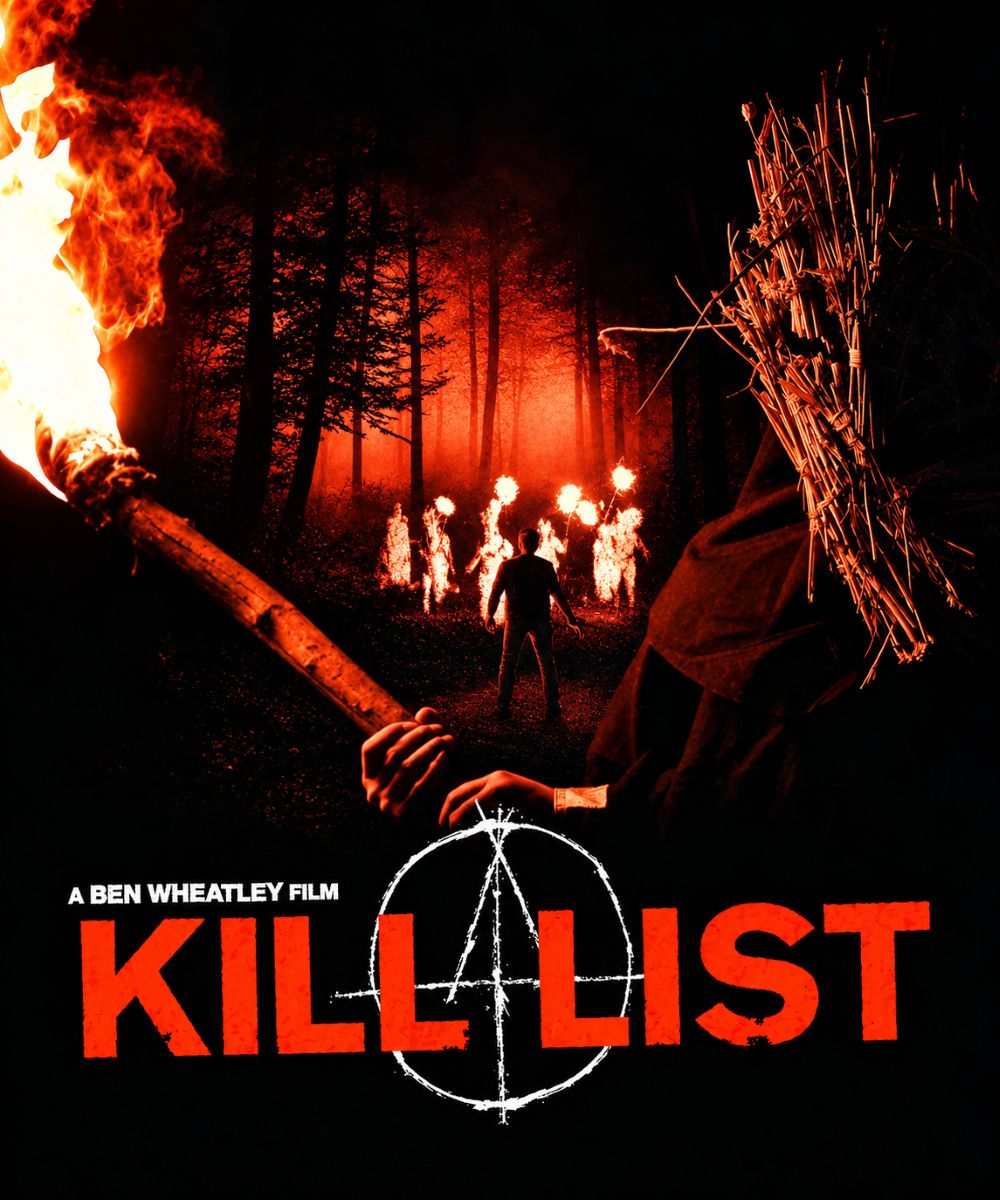
There is something especially unsettling about a horror film that refuses to let you know it is a horror film until you are already trapped inside it. Ben Wheatley’s Kill List begins in the familiar, grimy territory of a British crime thriller, but its slow, deliberate transformation into full-blown cosmic and folk horror makes it one of the most unnerving films of the 2010s.
Jay, a former soldier turned contract killer, has been out of work for months after a botched assignment in Kyiv. His wife Shel is fed up with his anger, his drinking, and his lack of direction. Their marriage is strained, their finances are collapsing, and their home feels less like a place of comfort than a pressure cooker waiting to explode. Rather than starting with a monster, a murder, or a flashy supernatural hook, Kill List starts with domestic tension. It places the audience in a home where every conversation feels like it could become a screaming match, and every small complaint seems connected to a much larger emotional wound.
That grounded, unpleasant realism is a huge part of why Kill List works so well. Wheatley does not rush to tell the audience what kind of movie they are watching. For a while, it plays almost like a rough, deeply uncomfortable British domestic drama, with the sort of bickering and passive-aggressive resentment that feels overheard rather than scripted. Jay and Shel’s arguments are messy, mean, and often funny in a dark way, while Jay’s friendship with his old colleague Gal has a lived-in quality. These are not glamorous movie hitmen trading cool one-liners. They are middle-aged men with bills to pay, bad tempers, old wounds, and a job they would probably rather not be doing if they had any other viable option.
Jay’s decision to accept a new killing contract with Gal initially pushes Kill List further into thriller territory. The assignment comes from a wealthy, unsettling client who hires them to eliminate three targets: a priest, a librarian, and a member of Parliament. That setup sounds straightforward enough, and Wheatley lets the film function for a time like a grimy, morally rotten crime thriller. Jay and Gal investigate their targets, plan their attacks, and move through a world of rural estates, anonymous offices, abandoned buildings, and shadowy back rooms. There is tension, but it is the tension of men entering dangerous situations without knowing whether they are being watched or manipulated.
What makes the film increasingly unnerving is that every target seems to know more than Jay and Gal do. The victims do not merely fear death. In some cases, they appear grateful for it. They refer to Jay as though he has been expected, almost as if he has been chosen for a role he does not understand. The priest calls him “the harbinger,” while the librarian thanks him after being killed. These details are not explained in a neat, comforting way. Wheatley plants them casually, allowing confusion to gather in the background while Jay becomes more violent, unstable, and paranoid.
That gradual descent is what makes Kill List so effective. It starts off more like a thriller, or even a bleak crime drama, but slowly makes its way into full-blown horror by the time the end credits begin rolling. The film does not suddenly flip a switch and announce that it has become a supernatural nightmare. Instead, it lets the atmosphere become stranger one scene at a time. A symbol appears carved into a mirror. A strange man silently watches from the woods. A dinner party turns from awkward to deeply hostile. A pair of masked figures emerge at the edge of a field. By the time the movie reaches its final stretch, the feeling is no longer one of criminal danger but of being trapped inside a ritual that began long before Jay understood he was involved.
Wheatley’s direction is crucial here. Kill List has a raw, handheld, low-budget immediacy that makes the violence feel especially ugly. There is very little stylization separating the audience from what is happening. The film is not interested in making murder look slick, cathartic, or exciting. When Jay attacks someone, it feels brutal, chaotic, and emotionally damaging. The violence is often sudden, but it is never casual. It leaves a stain on the scene, on the characters, and on the viewer. Jay’s behavior becomes increasingly alarming because his anger is not framed as toughness. It is framed as a dangerous loss of control.
Neil Maskell gives an excellent performance as Jay, a man whose emotional state is always sitting somewhere between numbness and eruption. He is not an easy protagonist to like, and that is part of the point. Jay can be cruel, childish, frightening, and self-destructive. Yet Maskell also makes him feel recognizably human, especially in the quieter moments with his son, Sam. Those scenes matter because they give the final act its real emotional weight. Jay is not just a professional killer being targeted by an unknown force; he is a husband and father whose damaged life is about to be pulled into something far worse than a failed job.
Michael Smiley is equally strong as Gal, who initially comes across as the more stable, reasonable half of the duo. He is calmer than Jay, more socially functional, and less openly volatile. But the movie gradually reveals that Gal has his own weaknesses and blind spots. Their friendship feels genuine, even when it is poisoned by secrecy, resentment, and the increasingly bizarre circumstances surrounding the contract. MyAnna Buring also deserves credit as Shel. She could have easily been reduced to the stereotypical nagging wife in a lesser film, but Buring makes her sharp, vulnerable, manipulative at times, and visibly exhausted by the life she shares with Jay.
The horror in Kill List becomes especially potent because it draws from both cosmic and folk-horror traditions without fully settling into either one. The cult imagery, hidden rituals, strange symbols, rural landscapes, and anonymous masked figures all give the film a folk-horror texture. There is a distinctly British unease to the countryside in the final act: fields that should feel open instead feel isolating, and a rural community becomes a place where ancient, secretive violence can exist just out of sight. At the same time, the movie’s cosmic-horror side comes from the sense that Jay has stumbled into a system too vast and unknowable for him to comprehend. He thinks he is taking a contract. In reality, he may be participating in a process that has been designed around him from the beginning.
That sense of predestination is one of the film’s most disturbing qualities. Kill List never overexplains the cult, its beliefs, or exactly how much control it has over the characters’ lives. Some viewers may find that frustrating, especially because the ending refuses to provide a clean mythology or a tidy resolution. But that ambiguity is also why the film lingers. The cult is scary not because the audience receives a detailed rulebook, but because its reach appears to be everywhere. It can infiltrate a job, a social gathering, a family home, and even the choices Jay believes he is making freely.
The ending is famously shocking, but it is not shocking only because of its cruelty. It works because the movie has carefully built Jay into a man who responds to fear with rage and violence. The final revelation turns that trait against him in the most devastating possible way. It is bleak, tragic, and almost mythic in its nastiness. The final image does not feel like a twist for the sake of a twist. It feels like the horrifying completion of a ritual that the audience has been watching take shape without fully recognizing it.
Kill List is not a comfortable watch, and it is not a horror movie that tries to please the audience with easy scares or a reassuring explanation. Its slow burn can feel deliberately abrasive, especially in the early domestic scenes, but that patience pays off. Wheatley takes a grim thriller about two hitmen and gradually transforms it into a nightmare of conspiracy, fate, cult ritual, cosmic dread, and folk-horror menace. By the end, the film has moved so far from its seemingly familiar premise that it feels like the ground has disappeared beneath it. That is what makes Kill List so memorable: it does not simply become horrifying. It reveals that horror was there all along, hiding inside every uneasy conversation, every unexplained symbol, and every choice Jay thought was his own.