“Give it up, Frank! Death ain’t no way to make a living!” — The Judge
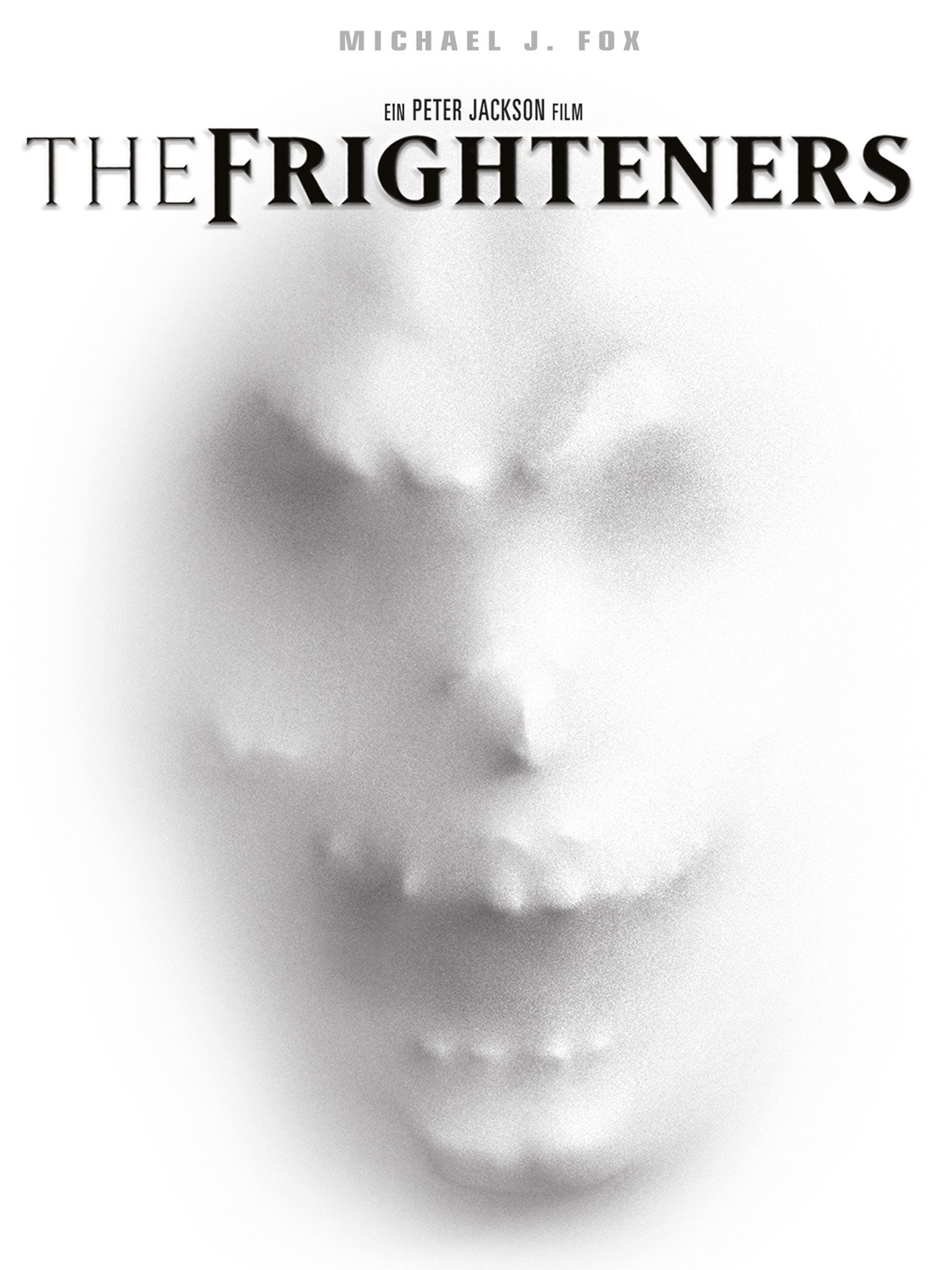
The best thing about The Frighteners is that its ghosts seem easier to live with than most of its people. Peter Jackson’s 1996 horror comedy builds a lively supernatural world around that idea, filling it with deadbeat spirits, suspicious neighbors, damaged investigators, and a paranormal con man who would rather make a quick buck than save anybody. It’s a funny, nasty, occasionally uneven movie that keeps finding something entertaining beneath its clutter. Even when the comedy and horror pull in different directions, Jackson’s enthusiasm makes the whole thing feel like an invitation to enjoy the chaos rather than question its manners.
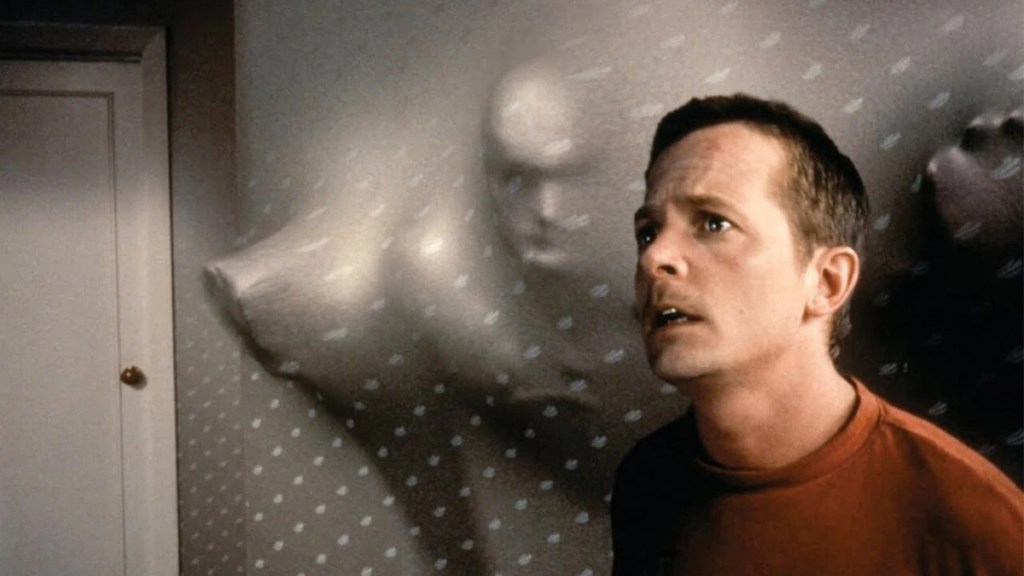
At the center is Frank Bannister, played by Michael J. Fox with a mixture of nervous charm and emotional exhaustion. Following the accident that killed his wife, Frank can see and communicate with ghosts. Naturally, he turns this extraordinary ability into a questionable business opportunity. His dead associates haunt local homes, and he conveniently arrives to clear them out for a fee. It’s a wonderfully crooked arrangement because Frank really can do what he advertises; he just happens to be responsible for creating the problem. Things become considerably less manageable when unexplained deaths suggest that another supernatural presence is operating without his relatively harmless motives.
Fox gives the movie the grounding it needs. Frank has the quick wit and comic frustration associated with many of his performances, but the character feels more withdrawn and defeated. His scams aren’t simply evidence of greed. They’re part of a life that has stalled, leaving him more comfortable dealing with the dead than maintaining relationships with the living. Fox allows that grief to emerge without making every scene announce it. Consequently, Frank’s eventual willingness to risk himself for someone else feels like a genuine change rather than an obligation imposed by the screenplay. The wisecracks work because there’s somebody hurting underneath them.
His ghostly partners make the fraudulent haunting business look like a workplace comedy with unusually flexible rules about physical boundaries. Chi McBride’s Cyrus and Jim Fyfe’s Stuart bicker, complain, and carry out their assignments with personalities that death apparently did nothing to improve. John Astin’s deteriorating Judge pushes the humor into more grotesque territory, while R. Lee Ermey brings familiar drill-sergeant hostility to his cemetery patrol. These characters make the supernatural seem oddly mundane. Passing into the next world hasn’t erased anyone’s ego or annoying habits; it has merely removed some practical limitations on how those habits can bother everybody else.
Jackson clearly enjoys that comic freedom, sometimes a little too much. Certain jokes linger past their natural stopping point, and the supporting cast occasionally competes to see who can make the biggest impression. Still, the early silliness establishes an important distinction between Frank’s ghostly companions and the hooded killer moving through town. One group treats haunting as a hustle; the other turns death into a terrifying certainty. When that figure begins bending surfaces and pursuing victims, the movie briefly makes its own playful supernatural rules feel dangerous. Suddenly, walking through walls isn’t a funny trick. It means there may be nowhere safe to hide.
The transition from ghost comedy to serial-killer mystery gives The Frighteners its edge, although it also creates its biggest problems. Jackson and co-writer Fran Walsh gradually connect the present-day deaths to an earlier killing spree, introducing a nastier atmosphere than the opening antics suggest. That darkness gives the stakes weight, but the shifts can be abrupt. A cartoonish gag might sit beside an ugly revelation, with neither getting enough room to establish its intended mood. Sometimes the collision is exciting because the film becomes difficult to predict. Other times, it feels as though Jackson is enjoying every possibility too much to choose between them.
The performances embrace that excess. Jeffrey Combs makes FBI agent Milton Dammers a spectacular collection of twitches, strained reactions, and barely contained dysfunction. He’s entertainingly bizarre, although his scenes sometimes seem to belong to a separate, even stranger movie. Jake Busey brings an obnoxious, grinning confidence to Johnny Bartlett that makes the character’s cruelty especially unpleasant. Dee Wallace adds a more unsettling human dimension to the darker material, helping prevent the horror from becoming nothing more than an effects demonstration. These aren’t restrained performances, but restraint would probably look out of place in a film this committed to pushing its characters toward the grotesque.
Trini Alvarado provides a useful contrast as Lucy Lynskey. Her comparatively grounded presence gives Frank someone to connect with outside his circle of supernatural accomplices and hostile acquaintances. Their developing relationship isn’t the movie’s most fully realized element, but it supports his emotional recovery without overwhelming the story. Visually, meanwhile, Jackson rarely slows down. Ghosts slide through objects, bodies distort, and ordinary rooms become unstable territory. Some digital effects show their age, particularly when translucent figures interact with physical surroundings. Yet the imagery remains expressive, using exaggeration to sell jokes and scares rather than relying entirely on realism. The effects have personality, which helps them survive their technical limitations.
That ambition also makes The Frighteners an important bridge in Jackson’s career. His mostly low-budget New Zealand splatter-comedy roots in Bad Taste, Meet the Feebles, and Braindead remain visible in its grotesque humor and cheerful bad taste. Heavenly Creatures had already demonstrated his dramatic range, but this Robert Zemeckis-backed production gave him a larger Hollywood canvas while allowing him to keep working in New Zealand. Its extensive effects demands helped expand Wētā’s capabilities, building toward the filmmaking infrastructure that would become essential to The Lord of the Rings trilogy. The scale changed, but the filmmaker’s mischievous instincts clearly came along for the ride.
For all its importance as a stepping stone, the movie works best when appreciated as its own unruly creation. The plotting gets crowded, the climax occasionally substitutes activity for suspense, and the tonal balancing act never becomes effortless. But Fox gives the spectacle a heart, and Jackson gives it enough imagination to make its imperfections forgivable. There’s genuine affection for the misfits underneath the grotesque imagery, even as the story finds ugliness among people who should know better. By the end, The Frighteners makes a convincing case that being dead is less of a character flaw than being a jerk.
Just as the world seems to be finally on the verge of accepting mutants, industrialist Warren Worthington II (Michael Murphy) announces that he has developed a shot that will suppress the X-gene, therefore “curing” mutants of their mutation. Magneto (Ian McKellen), Mystique (Rebecca Romijn), and a host of other mutants break out of prison to try to stop Worthington from offering up his cure. Meanwhile, at Charles Xavier’s school, Rogue (Anna Paquin) wonders if maybe she should take the shot and become a “normal” person.
Professor Xavier (Patrick Stewart) and Logan (Hugh Jackman) have an even bigger concern than Magneto and the cure. Jean Grey (Famke Janssen), thought to have died at the end of the previous movie, has returned but has given in to her dark side, the so-called Phoenix. She’s already destroyed Scott (James Marsden), and it doesn’t take her long to disintegrate Professor X. Can Logan and the Beast (Kelsey Grammer) rally what’s left of the X-Men to defeat both Magneto and the Dark Phoenix?
I can still remember seeing X-Men: The Last Stand on the day that it was first released. As an X-Men fan, I was excited to see how the Dark Phoenix storyline would be adapted for the big screen. It’s difficult to put into words how disappointed I was when Jean killed Scott. That one scene told me that X-Men: The Last Stand was not going to do the story justice. In the comic books, Jean and Scott’s relationship was the heart of the X-Men. When Jean became the Dark Phoenix, she proved herself capable of destroying an entire planet, but she couldn’t bring herself to kill Scott. She chose to destroy herself rather than him. (Marvel being Marvel, Jean was resurrected a few years later.) The X-Men films never really knew what to do with the characters of Scott and Jean. They weren’t as flamboyant as Logan or even Rogue, but fans of the comic knew who Scott and Jean were and understood their importance to the series, and having Jean destroy Scott showed that, unlike the previous two films, the third X-Men film was not being made for the fans.
A large part of the problem was that director Brett Ratner didn’t seem to be interested in the characters. X-Men: The Last Stand is a collection of action scenes with none of the small character moments that made the first two films memorable. Kelsey Grammer is a welcome addition to the cast as the Beast. (The Beast always was basically Frasier Crane with blue fur.) Otherwise, this is the most forgettable of all the X-Men films.
Even though the Dark Phoenix saga is one of the key X-Men storylines, it’s never really been given its due onscreen. A second attempt to tell the story, in Dark Phoenix, also failed to capture the drama and emotion of Jean’s transformation. The X-Men are now officially a part of the MCU, so I imagine the story will probably be told again. Maybe the third time will be the charm.
“I’m looking for the coming thing.” — Brisco County, Jr.
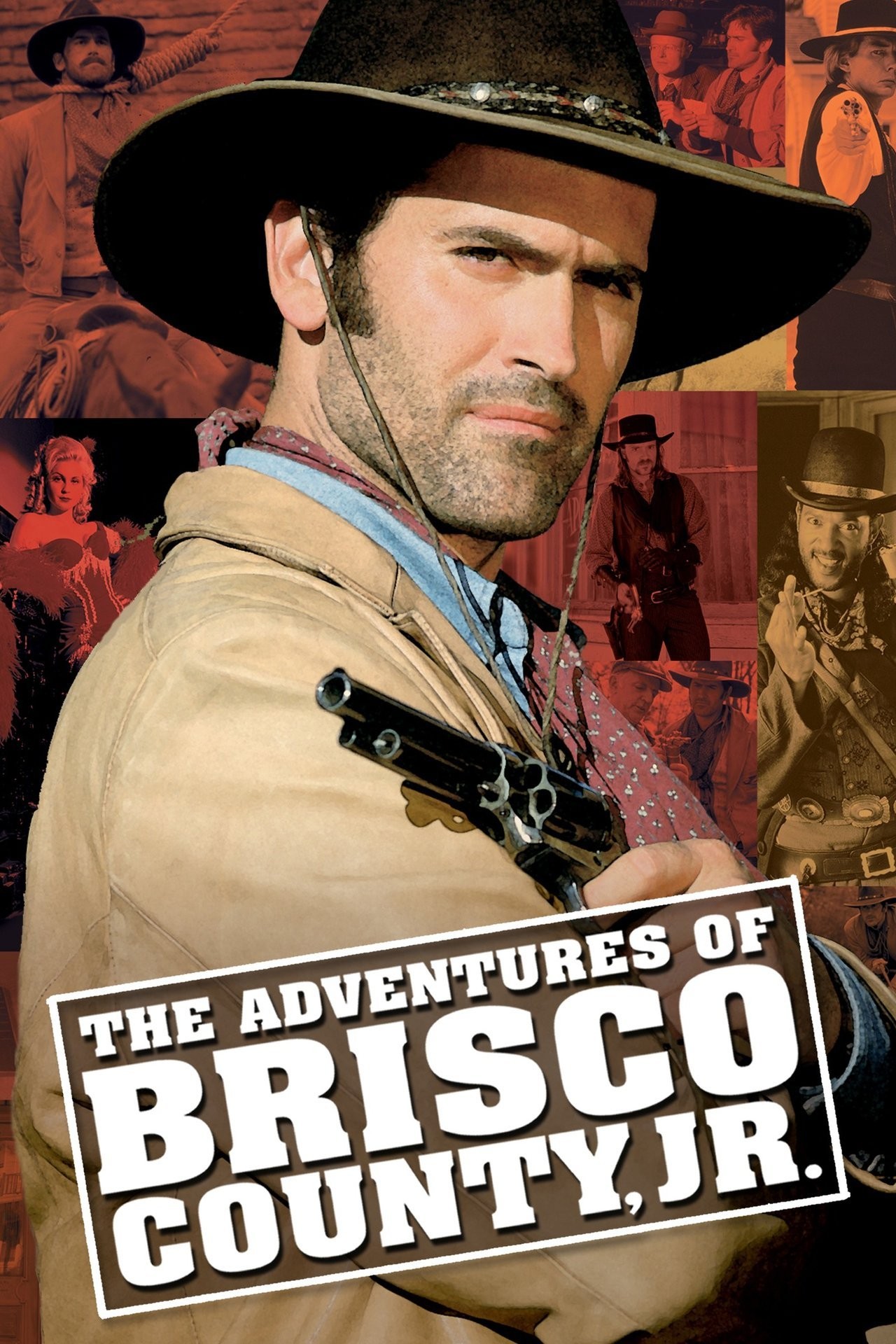
Few television series embrace their own oddness as joyfully as The Adventures of Brisco County, Jr.. Blending frontier shootouts, pulp-serial adventure, broad comedy, sci-fi weirdness, and old-fashioned heroics into one deliberately unruly package, the short-lived Bruce Campbell vehicle has only grown more distinctive with time. It ran for a single season between 1993 and 1994, produced 27 episodes, and then vanished from network television before it had the chance to fully grow into the strange, funny, action-packed cult institution it deserved to be. That short life is part of its legend now. The show remains a wonderfully odd hybrid: a Western, an adventure serial, a sci-fi mystery, a screwball comedy, a buddy show, and a loving parody of old-fashioned television heroics. It was never content to simply be one thing, and that creative restlessness is exactly why it was so distinctive.
Bruce Campbell stars as Brisco County, Jr., a Harvard-educated lawyer who becomes a bounty hunter after the murder of his father, legendary lawman Brisco County, Sr. At first glance, that setup sounds like the foundation for a hard-edged revenge Western. Brisco is hired by a group of wealthy robber barons to track down John Bly, a charismatic outlaw who escaped after killing Brisco’s father. The show does not ignore that emotional hook, either. Campbell gives Brisco just enough sincerity that the character’s grief and desire to live up to his father’s reputation land when they need to. But the series almost immediately makes clear that it has no interest in being grim prestige television before prestige television was even a common phrase. Brisco may be motivated by vengeance, but he is also a cheerful idiot at times, an inventor’s dream customer, a romantic disaster, and a man genuinely enthusiastic about the future.
That optimism is one of the show’s most charming qualities. Brisco lives in 1893, but he is obsessed with modernity: bicycles, early automobiles, telephones, scientific gadgets, anything that might make the Old West feel less old. He repeatedly calls these new inventions “the coming thing,” often with the confidence of someone who knows history is on his side even when the technology in front of him is barely functional. It is a funny recurring bit, but it also gives the series an unusual personality. Brisco is not a traditional Western hero longing for a disappearing frontier. He is a cowboy-lawyer-adventurer who wants to survive the frontier and help drag it toward the twentieth century.
Campbell is the ideal actor for that balancing act. He had already built a devoted following through the Evil Dead films, where he proved he could sell broad physical comedy, cartoonish bravado, and genuine intensity all at once. The Adventures of Brisco County, Jr. puts those qualities to excellent use. Campbell looks like the square-jawed hero of a classic matinee serial, but he plays Brisco with a sly awareness of how ridiculous the genre can be. He can throw a punch, ride a horse, fire a gun, and deliver a tough-guy line, then immediately get tangled in a rope, outsmarted by a con artist, or humiliated by one of his own overconfident schemes. The show never treats him as incompetent exactly; Brisco is clever, brave, and unusually resourceful. But it understands that a hero is more entertaining when the universe keeps refusing to cooperate.
The early arc involving John Bly gives the show a memorable villain and a sense of forward momentum. Billy Drago, a genre veteran with one of the most instantly sinister faces and voices in film and television, plays Bly as a quietly unnerving outlaw rather than a loud, swaggering gunslinger. Drago had already become familiar to audiences through roles in crime thrillers, Westerns, horror, and action stories, and his presence adds serious genre street credibility to the series. He is particularly good at making Bly feel unpredictable. The character is intelligent, dangerous, and often strangely philosophical, with Drago giving even a casual line enough menace to make it sound like a threat. His addition helps sell the idea that, beneath the jokes and gadget-driven chaos, Brisco really is moving through a world populated by lethal people.
The show’s supporting cast is equally important to its success. Julius Carry’s Lord Bowler is the real secret weapon. Initially a rival bounty hunter with a powerful need to claim rewards before Brisco does, Bowler evolves into Brisco’s closest partner and one of the series’ most dependable sources of cool. Carry plays him with perfect deadpan timing, making Bowler’s irritation at Brisco’s eccentricities endlessly funny. Their chemistry is the foundation of the series. Brisco talks too much, overthinks everything, and barrels into trouble; Bowler observes, grumbles, and then saves the day when necessary. Their partnership has the rhythm of a classic buddy-action pairing, except it exists in a world where a frontier saloon might contain a mad inventor, an escaped criminal mastermind, and a mysterious glowing orb all in the same episode.
That orb is one of the show’s boldest ideas. Known as the Orb, it becomes the central sci-fi element in a series already packed with anachronistic comedy and pulp adventure. It possesses strange powers, influences human behavior, and hints at a much bigger mythology than the show ever had time to fully explain. The Orb plotline is not always the cleanest element of the series, but it matters because it shows how willing the creators were to push beyond ordinary Western storytelling. One week, Brisco might be hunting a gang of outlaws; the next, he might be dealing with supernatural powers, secret conspiracies, bizarre inventions, or stories that feel pulled from a 1930s adventure comic. The result is a show that can feel like The Wild Wild West, Indiana Jones, and a Saturday-morning serial filtered through a 1990s sitcom sensibility.
In that sense, The Adventures of Brisco County, Jr. was ahead of its time in the way it fused different genres into one coherent theme and narrative. The series never treated its Western setting, science-fiction mythology, slapstick humor, action serial influences, and detective-story plotting as separate gimmicks awkwardly stapled together. All of those elements were filtered through Brisco himself: a hero caught between an old frontier world and the uncertain promise of the future. His fascination with progress, invention, and “the coming thing” gave the show a thematic center strong enough to make even its strangest detours feel like part of the same larger adventure. What might have looked like a mess on paper usually plays as a deliberate expression of the show’s central idea: the Old West was changing, and Brisco was exactly the kind of eccentric hero built to stumble, joke, and fight his way into that change.
That same genre blending, however, likely confused audiences when the series first aired. In 1993, viewers and network marketers generally had a much easier time selling a show that could be described in one clean sentence. A Western was a Western. A sitcom was a sitcom. A science-fiction series was a science-fiction series. Brisco was all of those things at once, sometimes within the same episode. Its tonal shifts were part of the fun for viewers who connected with it, but they may have made it difficult for casual audiences to know what kind of show they were committing to every week. It was too playful and surreal for people expecting a straight Western, but its period setting could also make it seem less accessible to viewers looking for a more conventional action-comedy or sci-fi series.
Critics largely recognized how clever this mixture was. The show earned praise for its humor, its self-aware but affectionate approach to genre material, its charismatic cast, and its willingness to combine Western action with science fiction and absurdist comedy. Yet those very strengths also help explain why it was so short-lived. The Adventures of Brisco County, Jr. was difficult to market in the conventional network-TV landscape. Its placement did not help, either. The show aired on Fox during a period when the network was still building an identity and competing for viewers against much more established broadcasters. It arrived alongside other ambitious but unconventional Fox programming, including The X-Files, but Brisco did not become the breakout hit that its better-known network sibling did.
There is a strong argument that the series would have found a much bigger audience at the turn of the century, or even later. By the late 1990s and early 2000s, audiences had become increasingly comfortable with shows that mixed tones, genres, mythology, comedy, and serialized storytelling. Viewers were more willing to follow eccentric high-concept series whose worlds did not fit neatly into one category, especially as cable television, DVD collections, online fandom, and eventually streaming made it easier to discover a show outside its original broadcast slot. Brisco could have benefited enormously from that environment. Its episodic adventures would have made it easy to casually enjoy, while the larger mysteries around John Bly and the Orb would have rewarded devoted viewers. It is easy to imagine the show building a far larger fanbase through word of mouth, repeat viewing, and a culture more eager to embrace unapologetically nerdy genre experimentation.
That mismatch between quality and ratings is why the show became such a cult fan favorite. Fans who found it did not merely enjoy it; they tended to become attached to its specific flavor. The series offers a version of television adventure that feels generous rather than cynical. It wants to entertain first. Its jokes are broad but rarely mean-spirited, its action is energetic without becoming joyless, and its heroes are allowed to be capable, kind, foolish, and enthusiastic at the same time. Campbell’s performance became central to his larger cult-TV identity, while Carry’s Bowler remains one of the great underrated sidekicks in genre television. Even the show’s oddities—the Orb, the outlandish gadgets, the deliberately pulpy villains, the historical inaccuracies played for laughs—are not flaws to fans. They are the reason the series has lasted in memory.
Ultimately, The Adventures of Brisco County, Jr. is a lovable one-season wonder because it refuses to fit neatly into a box. It is a Western that looks toward the future, an action series that enjoys making its hero the punchline, and a sci-fi adventure that never loses sight of the human fun of two bounty hunters bickering their way across the frontier. Its cancellation remains disappointing because there was clearly more territory to explore, especially with Brisco, Bowler, Bly, and the Orb mythology. But the short run also preserves the show’s charm. It never had time to become routine. It remains a fast, funny, deeply peculiar burst of television imagination—and a reminder that sometimes the most enduring cult shows are the ones too weird, too ambitious, and too specific to become ordinary hits.
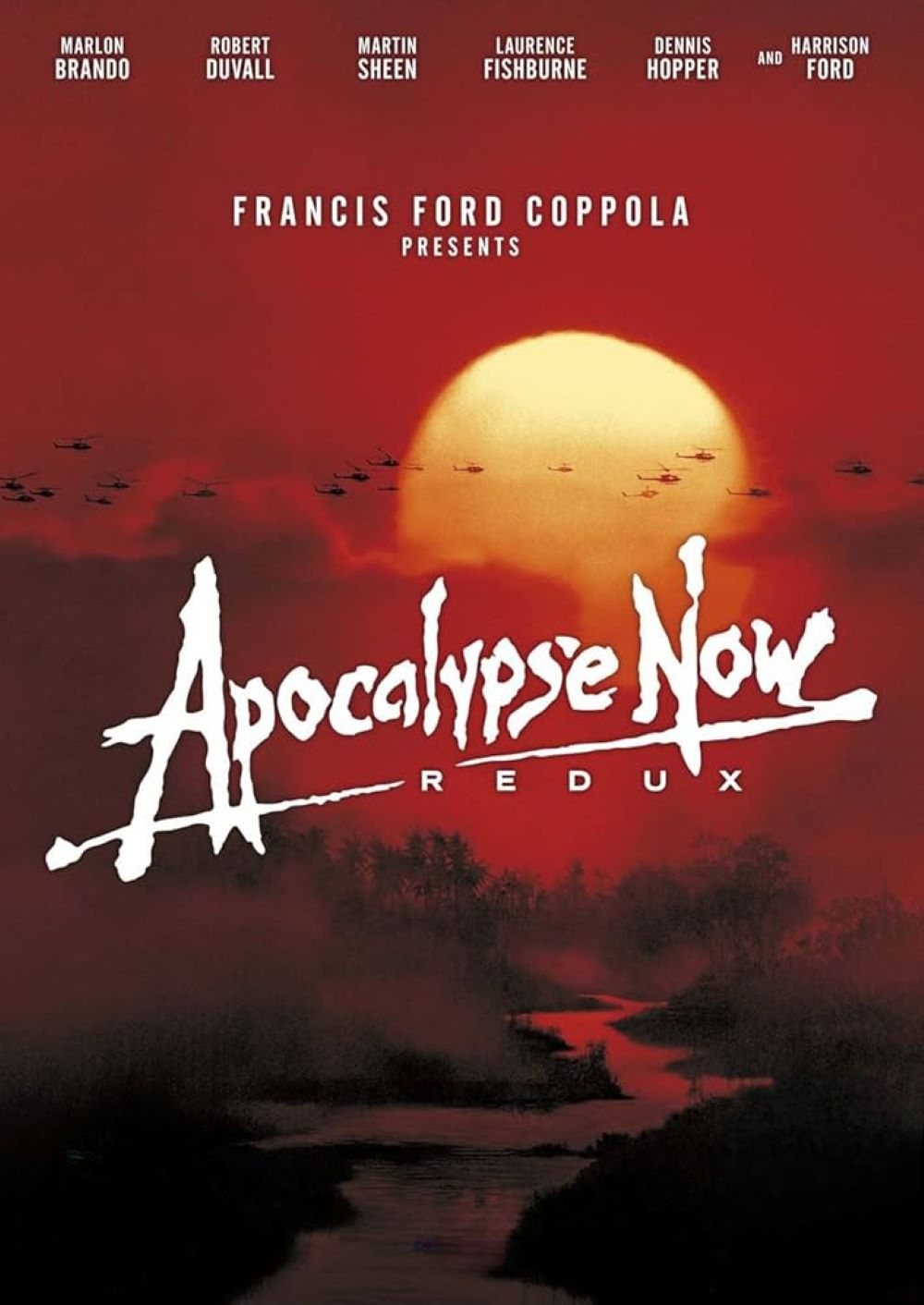
There is a specific kind of cinematic fever dream that only war, isolation, and a touch of madness can produce, and Francis Ford Coppola’s Apocalypse Now remains its gold standard. Co-written by Coppola and John Milius (the latter a colorful, larger-than-life figure in 1970s Hollywood), the film’s screenplay originally leaned harder into Milius’s romantic vision of martial will before Coppola reshaped it into something more hallucinatory and morally ambiguous. When we talk about the Redux version, released in 2001, twenty-two years after the original, we are not just revisiting that fever dream; we are plunging back into an even more hallucinatory, bloated, and revealing cut of the material.
At over three hours and twenty minutes, Apocalypse Now Redux is both a gift and a test of endurance. For those who only know the theatrical cut, this version feels less like a director’s tweak and more like unearthing a lost, more indulgent diary entry from Coppola’s own heart of darkness. The core remains the same: Captain Benjamin Willard (Martin Sheen), a morally hollowed-out assassin, is sent upriver during the Vietnam War to terminate Colonel Walter Kurtz (Marlon Brando), a once-brilliant Green Beret who has gone rogue and set himself up as a demi-god in the Cambodian jungle. The structure is a loose but unmistakable adaptation of Joseph Conrad’s classic 1899 novella Heart of Darkness, transposing Conrad’s grim critique of Belgian colonialism onto America’s own imperial overreach in Southeast Asia. Conrad’s journey up the Congo River becomes the Navy patrol boat’s crawl up the Nùng River, with each stop revealing a new layer of absurdity, violence, and spiritual decay.
The most immediate thing to address is what Redux adds, because those additions fundamentally alter the rhythm of the film. The theatrical cut is a lean, relentless descent. Redux is a meandering, hypnotic, and sometimes frustratingly pensive journey. Several major extended sequences distinguish this cut from the original. The first involves the Playboy Playmates. In the theatrical cut, we see them briefly at a chaotic USO show. In Redux, we get an extended sequence where Willard’s crew trades a canister of fuel for two hours with the stranded bunnies after their helicopter runs low on fuel. Later comes the brutal, psychedelic chaos of the Do Lung Bridge, which is extended in Redux to emphasize the utter breakdown of command and reality. And finally, deep in the journey, after surviving a tiger attack, Willard and the crew stumble upon the French rubber plantation, where a family of colonial planters refuses to leave their dying world. Each of these sequences grinds the forward momentum in different ways—the bunnies through desperate transaction, the bridge through absurd chaos, the plantation through nostalgic rot.
But to truly appreciate what Coppola is doing in Redux, you have to stop thinking of the Nùng River as a simple journey and start seeing it as a vertical descent—a layered, infernal funnel where each stop corresponds to a different circle of moral decay, much like the structure of Dante Alighieri’s Inferno, the first part of his epic narrative poem The Divine Comedy. The patrol boat is not just transport; it is a cramped, filthy ferry crossing the River Styx, and the further Willard and his crew go, the thinner the veil between civilization and savagery becomes. The Redux version, with its extended sequences, actually sharpens this Dantesque geometry rather than diluting it, because each added stop becomes another hellish layer, another specific flavor of corruption rotting under the jungle canopy. And importantly, the order of these stops tells a specific story of descent. Willard first encounters raw, commodified desire at the USO show, then plunges into the absurd mechanical chaos of the Do Lung Bridge, and finally drifts into the refined, decaying nostalgia of the French plantation—each circle deeper, stranger, and more spiritually corrosive than the last.
Consider the first major stop after leaving the relative order of the Delta: the extended Playboy Playmate sequence. In Dante’s Inferno, the early circles punish the lustful and the gluttonous—sins of appetite and passion that still acknowledge desire, however distorted. This stop is the hell of commodified desire, and it functions as the upper circle of Redux’s inferno. The bunnies are not seductresses; they are air-dropped promises of home, stranded and forced to barter their presence for fuel. The crew’s transaction—a canister of gas for two hours of the bunnies’ company—is transactional depravity laid bare. There is nothing refined here. The soldiers who swarm the boat are not conquering heroes; they are starving ghosts pawing at a mirage of femininity. The corruption is the commodification of intimacy, the way the war machine grinds up even fantasy into a trade good. In Dante’s Inferno, the lustful are eternally swept by winds, never at rest. Here, the winds are helicopter rotors, and no one finds peace. This stop still has energy, still has motion—it is desperate, ugly, and pathetic, but not yet defeated. It is the first circle: sin as transaction.
Further upriver, deeper into the jungle, you hit the second major stop in Redux’s order: the Do Lung Bridge. In Dante’s structure, the middle and lower circles punish the violent, the fraudulent, and the sowers of discord—those whose sins actively tear apart the fabric of order. The bridge is a sustained vision of the eighth circle—the Malebolge, the evil ditches of the fraudulent. This is the hell of absurd, endless combat, and it sits far below the bunnies’ desperate lust because it has abandoned desire altogether. The bridge is supposed to be a strategic point, but no one in command knows who is fighting whom or even which side holds which trench. Soldiers fire blindly into the dark; engineers build and rebuild sections of bridge that are destroyed every night by an invisible enemy. The wounded groan, a psychedelic light show of flares and tracers turns the sky into a flickering carnival of death, and a dazed soldier informs Willard that this place has been “crazy” for days. There is no front line, no objective, only endless, repetitive, pointless construction and destruction. The corruption here is systemic: the war has become an autopilot nightmare where violence generates nothing but more violence. Unlike the bunnies, who still want something, the soldiers at the bridge don’t even know what they are doing anymore. They simply perform the same broken task for eternity. Willard’s only reaction is a numb observation that he should inform his superiors, but he never will. The bridge is the point where any remaining belief in order or purpose dissolves into white noise. It is the second circle: sin as automation.
Then, after the bridge’s chaos, the crew drifts into the third major stop: the French rubber plantation. In Dante’s Inferno, the deepest circles before the frozen center punish heresy and treachery—sins of the intellect and will, where belief becomes a cage. The plantation functions exactly like this. It is the hell of nostalgia and colonial rot, a step deeper than the bridge’s chaos because it has calcified into ideology. After the raw transaction of the bunnies and the absurd violence of the bridge, the crew stumbles upon a walled pocket of denial. Here, the French family sips wine, argues geopolitics, and pretends the war is a tragic inconvenience rather than a total collapse. This is the hell of the static dead—people who refuse to acknowledge that their world has already ended. The rubber trees themselves, planted in neat, tyrannical rows, symbolize extractive cruelty made mundane. Willard sleeps with a widowed French woman, a moment of hollow lust that feels more like a funeral rite than passion. The corruption here is polite, intellectual, and almost seductive—but it is still decay wearing a starched shirt. Unlike the bunnies’ squalid desperation, the plantation has manners. Unlike the bridge’s chaotic noise, the plantation has quiet arguments. That makes it more insidious, and therefore deeper in the infernal funnel. This is the third circle: sin as denial.
By the time Willard finally reaches Kurtz’s compound, he has descended past all these preparatory circles into the ninth and final circle of Dante’s Inferno—Cocytus, the frozen lake of treachery, where Satan himself is trapped in ice. Kurtz is no longer a man but a fixed point of absolute darkness. His compound is a Cambodian nightmare of severed heads, pagan rituals, and whispered monologues. Unlike the bunnies’ desperate transaction, the bridge’s absurd chaos, or the plantation’s nostalgic denial, Kurtz’s hell is complete stillness. He has murdered and been worshipped for it. He has rejected every prior layer—commerce, command, colonialism—and arrived at a nihilistic truth: that horror is the only moral absolute. Willard’s task is not to understand Kurtz but to kill him, and in doing so, to become him. That is the final descent: not into fire, but into the ice of total moral withdrawal. The Redux version emphasizes this by making Kurtz more verbose but also more inert. He is trapped not by chains, but by his own unbearable clarity. The three stops before him—the bunnies, the bridge, the plantation—are all failed attempts to build meaning in the jungle. Kurtz is the place where meaning dies entirely.
What remains unchanged, across both cuts, is the technical majesty. Vittorio Storaro’s cinematography still haunts the soul. The opening shot—a napalm-blasted jungle dissolving into the slow rotation of a ceiling fan in a Saigon hotel room, with The Doors’ “The End” whispering over the soundtrack—is one of the great tone-setters in cinema history. The Redux cut luxuriates in these images even longer, letting the heat and humidity seep through the screen. The attack on a Vietnamese sampan, where an innocent family is slaughtered in a burst of trigger-happy panic, remains devastating. Laurence Fishburne’s young, wide-eyed Clean, Dennis Hopper’s jittery, sycophantic photojournalist (a role that feels like pure id), and Robert Duvall’s iconic Lieutenant Colonel Kilgore, who loves the smell of napalm in the morning, all deliver performances that feel less like acting and more like channeling. Duvall’s surf-obsessed madman is even more absurdly perfect in Redux because the added length makes his brief screentime feel like a welcome blast of cold air before the suffocating final act.
Which brings us back to Marlon Brando as Kurtz. Here is where Redux both helps and hurts. The theatrical cut gives Kurtz a mythic, almost abstract presence—shadowy, whispering, half-sculpted. Brando showed up overweight and unprepared, so Coppola shot him mostly in shadow. In Redux, those shadows remain, but the added material includes a longer, more discursive monologue where Kurtz reads from a Time magazine article about the war and rambles about the horror of administering lethal injections to polio-stricken villagers. It is more Brando, which is never nothing, but it also demystifies the monster. The terror of Kurtz in the original cut is that he is an idea, a reflection of Willard’s own potential. In Redux, he becomes a sweaty, slightly boring philosopher. The famous “the horror, the horror” death scene still lands, but getting there feels like you have already been swimming in his rhetoric for too long. The added footage makes Kurtz more human but less terrifying, which may or may not be an improvement depending on your tolerance for Brando’s mumbling.
The casual viewer might find Redux interminable. Let’s be honest: three and a half hours of madness, helicopters, and nihilism is a lot. There are stretches in the plantation sequence where you might check your phone. The pacing is deliberately, almost arrogantly slow. Coppola is not trying to entertain you; he is trying to drown you. And in those moments of slog—when the French family drones on about geopolitics, when the bunnies’ desperation overstays its welcome, when the bridge’s chaos becomes repetitive rather than shocking—you might be tempted to declare the whole Redux experiment a failure. But here is the uncomfortable truth that separates Apocalypse Now Redux from mere indulgent director’s cuts: the film’s occasional sluggishness, its bloated digressions, its refusal to maintain a clean narrative spine, are not flaws so much as they are the correct representation of the very thing the film’s themes and narrative ideas were trying to explore. This is a movie about a journey into moral rot, about the collapse of linear purpose into circular nightmare, about men who have stared too long into the abyss and lost the ability to tell a clean story. Why should the film itself be clean? The theatrical cut is a masterpiece of compression, yes—but compression is an act of control, and Apocalypse Now is ultimately about the loss of control. The Redux version, for all its unevenness, is the more honest artifact because it refuses to polish the madness into neat dramatic beats. The original film is a nightmare you cannot wake from; Redux is the insomnia that precedes it, the sweaty, bored, terrifying awareness that there is no ending, only more jungle.
This is why, despite its longer running time and the areas where the pacing sometimes slogs through, the film overall succeeds as not just a fever dream of the filmmaker, writers, and actors who survived its legendary production—the typhoons, the heart attacks, Brando’s chaos, Sheen’s breakdown—but as the correct representation of the very thing the film’s themes and narrative ideas were trying to explore. Apocalypse Now is about the impossibility of remaining sane in an insane environment. The Redux cut, by refusing to be efficiently sane, becomes a more immersive simulation of that condition. The theatrical cut tells you about the horror; the Redux cut makes you live inside its tedious, exhausting, occasionally boring reality. And boredom is part of horror, too—the long stretches between atrocities, the waiting, the pointless arguments, the nights that won’t end. Coppola, Milius, Sheen, Brando, and everyone else who survived the Philippines shoot did not emerge with a clean story. They emerged with scars, footage, and a kind of shell-shocked awe. The Redux version honors that survival by refusing to pretend the experience was anything other than a mess. It is the director’s cut as wound, not as polish.
For the obsessive, for those who want to see the entire messy, unfinished vision behind one of the great artistic catastrophes (the documentary Hearts of Darkness is essential companion viewing), Redux is invaluable. It reveals that the original 1979 cut was a miracle of editing—a salvage job that turned a troubled production into a masterpiece. Redux is the rough draft of that miracle. It has a bloated, novelistic quality, more concerned with atmosphere than narrative efficiency. As a loose adaptation of Heart of Darkness, it is oddly more faithful than the original cut—because Conrad’s novella is also meandering, digressive, and filled with colonial asides that do not advance the plot. But faithfulness is not the same as greatness.
The Redux version is a flawed, overstuffed, hypnotic masterpiece that sometimes trips over its own ambition. It earns its runtime not through tight storytelling, but through sheer, oppressive mood. And in the end, that is the point. You are not supposed to leave Apocalypse Now feeling satisfied. You are supposed to leave feeling like you have stared into something ancient and ugly. The Redux version just makes you stare longer, dragging you down through each Dantesque circle—from the desperate, transactional depravity of the Playboy bunnies, through the absurd, autopilot chaos of the Do Lung Bridge, past the polite, rotting nostalgia of the French plantation, and finally into the frozen stillness of Kurtz’s compound—until there is nothing left but the ice and the horror. And in those moments when the film slows to a crawl, when you check your watch and wonder why we are still at the plantation, that is not a failure of art. That is the art itself, reminding you that hell is not a nonstop carnival of screams. Hell is also a long, boring dinner with people who refuse to die. Whether that is luxury or punishment is for you to decide. But Apocalypse Now Redux succeeds precisely because it trusts you to sit with that discomfort and recognize it for what it is: the truth.
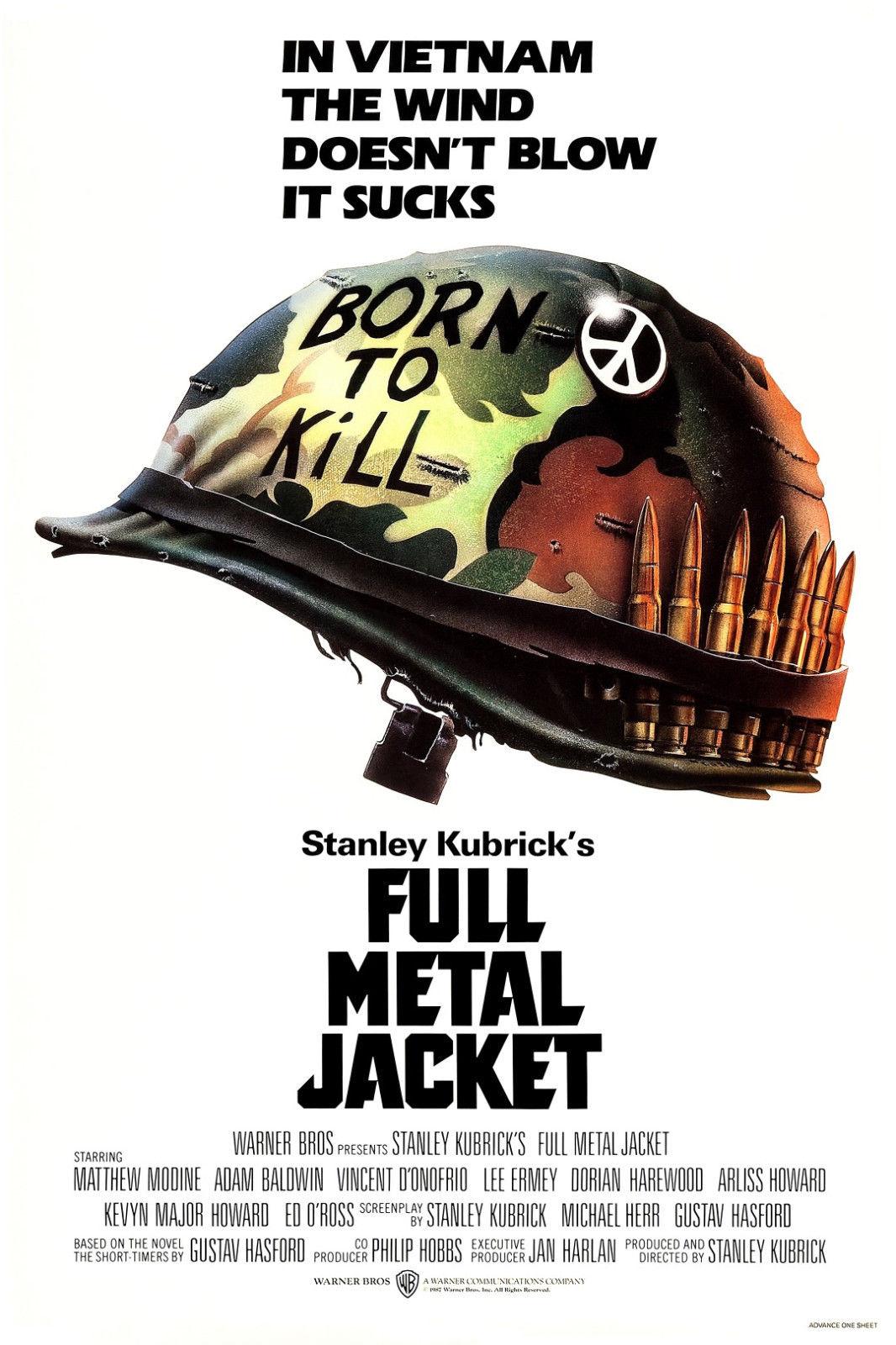
“You write ‘Born to Kill’ on your helmet and you wear a peace button. What’s that supposed to be, some kind of sick joke?” — Colonel
Full Metal Jacket is the kind of war movie that sticks in your craw like old metal shavings. It’s 1987, Stanley Kubrick’s last film released in his lifetime, and it plays less like a traditional Vietnam War saga and more like a taunt packed into two very different acts. One half is a barracks horror show about how the military turns boys into killers; the other is a grubby, almost casual descent into the chaos of combat. Together, they make a movie that feels intentionally disjointed so it can drill down on the same idea from two angles: war doesn’t just brutalize your body, it reshapes your mind into something barely human.
The film follows Private J.T. “Joker” Davis, played by Matthew Modine in one of those quietly watchful performances that’s easy to underestimate. Joker starts as a kind of archetypal smart‑mouth recruit, the guy who thinks he’s above the hysteria until he realizes he isn’t. Around him swirls a platoon of young Marines going through basic training at Parris Island under the merciless Gunnery Sergeant Hartman, played with shark‑like relish by R. Lee Ermey, who was actually a real‑life Marine drill instructor. Hartman’s whole job is to obliterate softness and replace it with drilled‑in aggression, and Kubrick lingers on every insult, every barked command, until the abuse stops feeling like a setup for a war movie and starts feeling like the main event.
The first half of Full Metal Jacket is basically a single, sustained initiation ritual. The camera stays tight, almost claustrophobic, trapping you in the barracks with the recruits, so you feel the same sensory overload they do. The lighting is harsh, the colors washed out, and the camera often locks in on Hartman’s face mid‑rant, making you uncomfortably intimate with his cruelty. This isn’t training so much as a manufactured psychological war waged on the platoon’s collective brain. The recruits are constantly degraded, mocked, and forced into grotesque rituals of humiliation, and the film never lets you forget that this is the system’s idea of “making Marines.” Kubrick doesn’t fake the perverse appeal of this process either; there’s a weird, ugly thrill in how effective it is, in how the boys start enjoying the brutality once they’re inside it.
The standout character in this section is Leonard “Gomer Pyle” Lawrence, played by Vincent D’Onofrio in a performance that’s almost physically uncomfortable to watch. D’Onofrio’s Pyle is this thick‑set, awkward kid who can’t keep up, and the movie doesn’t soften his edges to make him likable. He’s genuinely bad at the routine, slow, clumsy, but he’s also clearly just trying to survive. The film lets you watch, in a very matter‑of‑fact way, how the system turns his inadequacy into a target. The other recruits are instructed to punish him, and soon everyone starts in. The film doesn’t moralize about it; it just shows that this kind of group cruelty is baked into the structure. The infamous scene where the platoon holds Leonard down with piled‑on bed sheets while whacking him with a bar of soap wrapped in a towel is less about a single act of violence than about what it means to normalize dehumanization before you ever see combat.
What’s so unsettling about Full Metal Jacket is that it never pretends Hartman is some rogue sadist. He’s not an outlier; he’s the product of the system, and he’s also the system’s avatar. In that sense, the first half of the film functions like a kind of industrial horror. The Marines are being processed like defective parts on a factory line, streamed through a machine designed to break them and then rebuild them as compliant killers. The film toys with the idea that the military doesn’t want robots so much as creatures that hunger for violence on command. The line about “we don’t want robots, we want men” is repeated with a kind of grim irony because what the film actually shows is the production of something in between: not quite human, not quite machine, but something that can pull a trigger without hesitating.
Jumping from Parris Island to the streets of Huế during the Tet Offensive, the second half of Full Metal Jacket feels like a different movie in tone but the same one in thesis. Joker, now a combat correspondent with a Stars and Stripes hat and a “Born to Kill” slogan on his helmet, is literally split down the middle between observer and participant. He carries a camera and a rifle; he’s supposed to report, but he also has to fight. The film doesn’t resolve that tension the way a more sentimental war movie would. Instead, it lets Joker drift in that gray zone where war is equal parts absurdity and atrocity. The Vietnamese civilians are largely faceless, and the war itself is shown as a series of loosely connected vignettes—raids, ambushes, random firefights—rather than a grand narrative of heroism or tragedy.
Kubrick’s Vietnam is less a country and more a ruined theater set. The cityscapes are wide, desolate, and oddly beautiful in their destruction, as if the war has turned everything into a series of bleak tableaux. The camera doesn’t linger on gore for shock value; it lingers to make the war feel like a permanent, almost aesthetic state of ruin. Individual soldiers pop in and out: Animal Mother, the violently unhinged Marine played by Adam Baldwin; Cowboy, the earnest, almost naive replacement; and the rest of the squad, who oscillate between fear, boredom, and bursts of casual cruelty. None of them are given the kind of tragic backstories that usually make you emotionally invested in a war film. Instead, they’re presented as fragments of a larger machine, each one another cog in the same indifferent system.
The film’s most famous structural trick is its way of keeping politics at arm’s length while still radiating a deeply skeptical view of the war. It doesn’t really bother telling you who’s right or wrong, or why the Marines are there. It just shows what they become and what they do. The movie doesn’t ask you to sympathize with the Marines in the way some war films do; it asks you to recognize the mirror. The famous ending, where the Marines march through flaming ruins to the tune of Mickey Mouse, is pure Kubrick dark surrealism. The cheerful cartoon theme clashes violently with the apocalyptic imagery, and the soldiers chant along with a kind of manic innocence that feels like the last vestige of humanity being cannibalized by the war itself. It’s hard to tell whether the moment is tragic, absurd, or both, and that’s the point.
Full Metal Jacket is also a film about storytelling and the way narratives are weaponized. Joker, as a reporter, is supposed to package the war for a distant audience. He’s there to turn chaos into digestible stories, but the movie quietly undermines that idea by showing how unreliable those narratives are. The soldiers’ own stories are laced with jokes, bravado, misogyny, and casual racism, and the film doesn’t clean them up. It lets you sit with the ugliness, even when it’s delivered with a laugh. The film doesn’t romanticize the Marines’ camaraderie or soften their cruelty; it just lets you watch them behave like ordinary guys who happen to be doing something extraordinary and monstrous.
The cinematography in Full Metal Jacket is cold and precise, which is exactly what the material needs. The camera behaves like a reluctant witness, framing the Marines in symmetrical, almost clinical compositions that make their brutality look routine rather than spectacular. The score is minimal, and the film often relies on diegetic sound—machine‑gun fire, jeep engines, distant explosions, Hartman’s voice echoing off concrete walls—to ground you in the sensory overload of military life. Even the few moments of levity feel like concessions to show business more than true relief. The soldiers’ jokes are rarely funny in a wholesome way; they’re the kind of gallows humor that keeps you from noticing how broken you’ve become.
What ultimately makes Full Metal Jacket endure is that it refuses to offer catharsis. By the time the film ends, nothing has been “resolved” in the way Hollywood usually expects. Joker survives, but the war doesn’t; it just keeps going, and the Marines keep marching, chanting, and killing. The film doesn’t build toward a big speech about the futility of war or a tear‑jerker about fallen comrades. It just suggests, quietly and persistently, that the process outlined in the boot‑camp half is drafted, again, in the streets of Vietnam. You go in as a boy, you’re molded into something sharper and meaner, and then you’re sent out into a world that rewards that sharpness. The movie doesn’t need to say this out loud; it just shows it happening in scene after scene.
In that sense, Full Metal Jacket is one of the most honest anti‑war films precisely because it doesn’t pretend to be a plea for peace. It’s a portrait of a machine that feeds on itself, and of the people who get caught in its gears. It’s funny, disturbing, infuriating, and occasionally mesmerizing, sometimes all at once. It’s not a movie that wants to hold your hand or make you feel better about the human race. It wants you to stare at the gleam on that full metal jacket bullet and wonder what it took to make someone pull the trigger. That’s the real power of Full Metal Jacket: it doesn’t try to redeem the war, the soldiers, or the audience. It just makes sure you can’t look away.
1979’s Apocalypse Now reimagines the Vietnam War as pop art.
Jim Morrison sings The End in the background as slow-motion helicopters pass in front of a lush jungle. The jungle erupts into flame while in a dingy hotel room, Captain Benjamin Willard (Martin Sheen) gets drunks, practices his karate moves, and smashes a mirror before collapsing to the floor in tears. The next morning, the hung-over and bandaged Willard ends up at a U.S. military base where he has a nice lunch with Lt. General Corman (G.D. Spradlin) and Col. Lucas (Harrison Ford) and a nearly silent man wearing an undone tie. Willard is asked if it’s true that he assassinated an enemy colonel. Willard replies that he did not and that the operation was classified, proving that he can both lie and follow military protocol. Willard is told that a Col. Walter Kurtz (Marlon Brando) has gone rogue and his mission is to go into Cambodia and terminate his command with “extreme” prejudice. It’s a famous scene that features G.D. Spradlin delivering a brilliant monologue about good and evil and yet it’s often missed that Willard is getting his orders from Roger Corman and George Lucas.
(Roger Corman was the mentor of director Francis Ford Coppola while the pre-Star Wars George Lucas was Coppola’s business partner. Indeed, Apocalypse Now was originally somewhat improbably planned to be a George Lucas film.)
Up the river, Willard heads on a patrol boat that is populated with characters who could have come out of an old World War II service drama. Chief (Albert Hall) is tough and no-nonsense. Lance (Sam Bottoms) is the goofy comic relief who likes to surf. Clean (Laurence Fishburne) is the kid who is obviously doomed from the minute we first see him. Chef (Fredric Forrest) is the overage, tightly-wound soldier who just wants to find mangoes in the jungle and who worries that, if he dies in a bad place, his soul won’t be able to find Heaven. The Rolling Stones are heard on the boat’s radio. Soldiers on the other patrol boats moon the boat and toss incendiary devices on the roof. It’s like a frat prank war in the middle of a war.
Colonel Bill Kilgore (Robert Duvall) is a badass calvary officer whose helicopter raids are legendary amongst the enemy and a dedicated surfer who tries to turn every night into the equivalent of an AIP Beach Party film. He’s a brilliant warrior who speaks with Malibu accent (“Charlie don’t surf!”) and who doesn’t flinch when a bomb goes off near him. “I love the smell a napalm in the morning,” he says and, for a few moments, you really wish the film would just abandon Willard so we could spend more time with Kilgore. “Some day this war is going to end,” he says with a reassuring nod, showing a non-neurotic attitude that is the opposite of Kurtz’s. Willard says that he could tell Kilgore was going to get through the war without even a scratch and it’s true. Kilgore doesn’t try to rationalize or understand things. He just accepts the reality and adjusts. He’s a true surfer.
The film grows progressively more surreal the closer the boat heads up the river and gets closer to Cambodia. A USO show turns violent as soldiers go crazy at the sight of the Playboy Bunnies, dressed in denim outfits and cowboy hats and twirling cap guns like the love interest in a John Wayne western. A visit to a bridge that is built every day and blown up every night is a neon-lit, beautiful nightmare. Who’s the commanding officer? No one knows and no one cares.
The closer Willard gets to Kurtz, the stranger the world gets. Fog covers the jungles. A tiger leaps out of nowhere. Dennis Hopper shows up as a photojournalist who rambles as if Billy from Easy Rider headed over to Vietnam instead of going to Mardi Gras. Scott Glenn stands silently in front of a temple, surrounded by dead bodies that feel as if they could have been brought over from an Italian cannibal film. Kurtz, when he shows up, is an overweight, bald behemoth who talks in riddles and who hardly seem to be the fearsome warrior that he’s been described as being. “The horror, the horror,” he says at one point in one of the few moments that links Apocalypse Now to its inspiration, Joseph Conrad’s Heart of Darkness.
Directed by near-communist Francis Ford Coppola and written by the unapologetically right-wing John Milius, Apocalypse Now is actually less about the reality of Vietnam and more about how the images of the war shaped pop culture the world over. It’s a reminder that Vietnam was known for being the first television war and that counterculture was not just made up of dropouts but also of writers, actors, and directors. Kurtz may say that Willard’s been sent by grocery store clerks but actually, he’s been sent by the B-movie producers who first employed and mentored the directors and the actors who would eventually become the mainstays of the New Hollywood. The film subverts many classic war film cliches but, at the same time, it stays true to others. Clean dying while listening to a tape recording of his mother telling him not to get shot and to come home safe is the type of manipulative, heart-tugging moment that could have appeared in any number of World War II-era films. And while Coppola has always said the film was meant to be anti-war, Col. Kilgore remains the most compelling character. Most viewers would probably happily ride along with Kilgore while he flies over Vietnam and plays Wagner. The striking images of Vietnam — the jungle, the explosions, the helicopters flying through the air — stay in the mind far more than the piles of dead bodies that appear in the background.
It’s a big, messy, and ultimately overwhelming film and, while watching it, it’s hard not to get the feeling that Coppola wasn’t totally sure what he was really trying to say. It’s a glorious mess, full of stunning visuals, haunting music, and perhaps the best performance of Robert Duvall’s legendary career. The film is too touched with genius to not be watchable but how one reacts overall to the film will probably depend on which version you see.
The original version, which was released in 1979 and was nominated for Best Picture, is relentless with its emphasis on getting up the river and finding Kurtz. Willard obsesses on Kurtz and really doesn’t have much to do with the other people on the boat. It gives the story some much-needed narrative momentum but it also makes Kurtz into such a legendary badass that it’s hard not to be disappointed when Willard actually meets him. You’re left to wonder how, if Kurtz has been living in the jungle and fighting a brutal and never-ending guerilla war against the communists, he’s managed to gain so much weight. Brando, who reportedly showed up on set unprepared and spent days improvising dialogue, gives a bizarre performance and it’s hard to view the Kurtz we meet as being the Kurtz we’ve heard about. As strong as the film is, it’s hard not to be let down by who Kurtz ultimately turns out to be.
In 2001 and 2019, Coppola released two more versions of the film, Redux and The Final Cut. These versions re-inserted a good deal of footage that was edited out of the original cut. Most of that footage deals with Willard dealing with the crew on the boat and it’s easy to see why it was cut. The scenes of Willard bonding with the crew feel out of character for both Willard and the rest of the crew. A scene where Willard arranges for Clean, Lance, and Chef to spend time with the Playboy bunnies seems to go on forever and features some truly unfortunate acting. Worst of all, Redux totally ruins Kilgore’s “I love the smell of napalm in the morning” monologue by having Willard suddenly steal his surf board. Again, it’s out of character for Willard and it actually feels a bit disrespectful to Duvall’s performance to suddenly turn Kilgore into a buffoon.
But then there are moments that do work. I actually like the lengthy French Plantation scene. By the time Willard, Lance, and Chef stumble into the plantation, the journey upriver has gotten so surreal that it makes a strange sort of sense that they would run into a large French family arguing politics while a clown tries to keep everyone distracted. The new versions of the film are undeniably disjointed but they also shift the focus off of finding Kurtz and place it more on Willard discovering how weird things are getting in Vietnam. As such, it’s less of a disappointment when Kurtz actually shows up. Much as with the French Plantation scene, the journey has become so weird that Kurtz being overweight and pretentious feels somehow appropriate.
What all the versions of the film have in common is that they’re all essentially a neon-lit dream of pop cultural horror. Is Apocalypse Now a horror film? Critic Kim Newman argued that it owed a lot to the genre. Certainly, that’s the case when Willard reaches the temple and finds himself surrounded by corpses and and detached heads. Even before that, though, there are elements of horror. The enemy is always unseen in the jungle and, when they attack, they do so quickly and without mercy. In a scene that could almost have come from a Herzog film, the boat is attacked with toy arrows until suddenly, out of nowhere, someone throws a very real spear. Until he’s revealed, Kurtz is a ghostly figure and Willard is the witch hunter, sent to root him out of his lair and set his followers on fire. If the post-60s American horror genre was shaped by the images coming out of Vietnam then Apocalypse Now definitely deserves to be considered, at the very least, horror-adjacent.
Apocalypse Now was controversial when it was released. (It’s troubled production had been the talk of Hollywood for years before Coppola finally finished his film.) It was nominated for Best Picture but lost to the far more conventional Kramer vs Kramer. Robert Duvall was the film’s sole acting nominee but he lost the award to Melvyn Douglas’s turn in Being There. Douglas was very good in Being There and I imagine giving him the Oscar was also seen as a way of honoring his entire career. That said, Duvall’s performance was amazing. In his relatively brief screen time, Duvall somehow managed to take over and ground one of the most unruly films ever made. The Oscar definitely should have gone to him.
As for the film itself, all three versions, flaws and all, are classics. It’s a film that proves that genius can be found in even the messiest of productions.
Welcome to Retro Television Reviews, a feature where we review some of our favorite and least favorite shows of the past! On Mondays, I will be reviewing Miami Vice, which ran on NBC from 1984 to 1989. The entire show can be purchased on Prime!
This week, the Yakuza invades Miami.
Episode 4.9 “The Rising Sun of Death”
(Dir by Leon Ichaso, originally aired on May 27th, 1988)
Castillo is concerned. The murder of an American businessman leads him to suspect that the Yakuza has come to Miami and it turns out that he’s right. Riochi Tanaka (James Hong), a World War II war criminal-turned-mobster, is trying to take over the Miami underworld. While corrupt Homicide Detective Haskell (R. Lee Ermey) tries to convince everyone that the Yakuza is just a myth, Castillo teams up with Japanese detective Kenji Fujitsu (Cary-Hiroyuki Tagawa) to takes down Tanaka and his right-hand man, Agawa (Danny Kamekoa). Needless to say, this leads to a fight with samurai swords, a lot of talk of honor, and a seppuku to close the case.
This episode hit every Yakuza cliche and the plot itself felt as if it had been put together at the last minute. (This is one of those episodes where every plot hole is dismissed as being a cultural difference.) We’re expected to believe that Tanaka could outsmart the Allies during World War II but he couldn’t outsmart the Miami Vice Squad. As well, of the major Japanese characters, only one was played by Japanese actor. Danny Kamekoa is a Hawaiian while James Hong is of Chinese descent.
That said, this episode was shot and filmed with a lot of style and it found an excuse to play Billy Idol’s FleshForFantasy during one of the early scenes. There’s something to be said for that. Neither Crockett nor Tubbs really did much in this episode but we did get to see Crockett house hunting with Cailtin. It’s mentioned that everyone thinks that Caitlin’s new husband is named Sonny Burnett instead of Sonny Cockett. That’s fine …. except for the fact that Sonny Crockett has previously been established as a bit of a minor celebrity, a college football star who would have gone on to the NFL if he hadn’t injured his knee. Every time this show tries to convince me that Crockett has fooled everyone into thinking he’s Sonny Burnett, it just further convinces me that there’s no way Crockett and Tubbs should still be doing undercover assignments.
This episode was stylish but empty but, considering some of the other episodes that have aired during this season, at least it was entertaining.
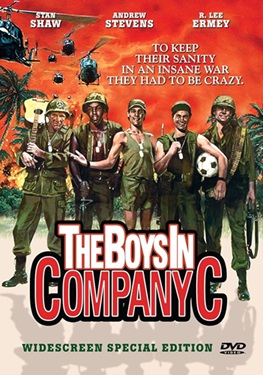
In 1967, a group of young men arrive at the Marie Corp. Recruit Depot in San Diego. Tyrone Washington (Stan Shaw) is a drug dealer from Chicago who tells everyone not to mess with him and who soon emerges as a natural born leader. Dave Brisbee (Craig Wasson) is a long-haired hippie who tried to feel to Canada and who shows up for induction in handcuffs. Vinny Fazio (Michael Lembeck) is a cocky and streetwise kid from Brooklyn. Billy Ray Pike (Andrew Stevens) is a country boy from Texas. Alvin Foster (James Canning) is an aspiring writer who keeps a journal of his experiences. Sgt. Loyce (R. Lee Ermey, making his film debut) molds them into a combat unit before they leave for Vietnam, where they discover that all of their training hasn’t prepared them for the reality of Vietnam.
TheBoysInCompanyC has the same basic structure as Stanley Kubrick’s Full Metal Jacket, right down to R. Lee Ermey playing the tough drill sergeant. The sharp discipline of basic training is compared to the chaos of Vietnam. Ermey always said that he was playing a bad drill sergeant in FullMetalJacket because he tore down the recruits but never bothered to build them back up. In TheBoysInCompanyC, Ermey plays a good drill sergeant, one who is tough but fair and who helps Washington reach his potential. It doesn’t make any difference once the company arrives in Vietnam, though. Both The Boys In Company C and FullMetalJacket present the war in Vietnam as being run by a collection of incompetent officer who have no idea what it’s like for the soldiers who are expected to carry out their orders.
Of course, TheBoysInCompanyC is nowhere near as good as Full Metal Jacket. Full MetalJacket was directed by Stanley Kubrick and it’s a chilling and relentless look at the horrors of combat. TheBoysInCompanyC was directed by Sidney J. Furie, a journeyman director who made a lot of movies without ever developing a signature style. The basic training scenes are when the film is at its strongest. When the company arrives in Vietnam, Furie struggles with the story’s episodic structure and it can sometimes be difficult to keep track of the large ensemble cast. The Vietnam sequences are at their best when the emphasis is on the soldiers grumbling and bitching as their officers send them on one pointless mission after another. The soccer game finale tries to duplicate the satire of the football game that ended Robert Altman’s M*A*S*H but it does so with middling results. TheBoysinCompanyC is a collection of strong moments that never manage to come together as a cohesive whole.
The movie is still important as one of the first major films to be made about the war in Vietnam. However, it’s since been overshadowed by The Deer Hunter, Apocalypse Now, Platoon, and, of course, Full Metal Jacket.
In the 1980’s I was a huge fan of Michael J. Fox. Alex P. Keaton was my hero, and BACK TO THE FUTURE and TEEN WOLF are two of my favorite 80’s movies. In the early 2000’s I became a huge fan of Director Peter Jackson due to his LORD OF THE RINGS trilogy. Made in 1996, THE FRIGHTENERS is the only Peter Jackson film I had seen prior to the LORD OF THE RINGS trilogy. I saw THE FRIGHTENERS at the movie theater in 1996, and I loved it. It was different than I was expecting going in, but it has one hell of cast. I had not seen any of Jeffrey Combs’ work prior to this movie, and he totally cracked me up. Throw in a ghostly Chi McBride whose character even references Charles Bronson* at one point, and I’m hooked. Peter Jackson directing Michael J. Fox. Now that’s a match made in heaven!
*BONUS – Chi McBride as Cyrus :
“All right, man, this is it. We gotta be hard. No mercy. We’re going in like professionals, like Charles Bronson. We don’t stop till the screaming starts, you dig?”
1988’s Mississippi Burning opens on a lonely Mississippi backroad in 1964. A car is pulled over by the police. Inside the car are three young men, one black and two white. Judging from their nervous expressions and the sound of the people who stopped them and the fact that they’re in Mississippi during the 60s, we can guess what is about to happen to the people in the car.
With the three men, who were civil rights activists who were involved in voter registration efforts, officially considered to be missing, the FBI sends down two agents to find out what happened. The two agents are Alan Ward (Willem DaFoe) and Rupert Anderson (Gene Hackman). Ward is a Northerner who does things by the book and who resents having to deal with lax Southern law enforcement. He is serious-minded and, just in case we need a reminder of how serious he is, he wears bar-rimmed glasses that make him look like the world’s most fearsome IRS agent. Anderson is from Mississippi. He’s a talkative good ol’ boy who was a sheriff before he joined the FBI. “You know what has four eyes but can’t see?” Anderson asks, “Mississippi.” It’s a tense partnership, as Ward sometimes disapproves of Anderson’s methods and Anderson thinks that Ward doesn’t understand how things work in Mississippi.
From the first minute we meet local law enforcement, we know that they’re the killers. Just the fact that one of them are played by Brad Dourif is evidence enough. However, no one in town is willing to say a word against the police or their cronies. The white citizens are either too intimidated or they agree with what happened to the three civil rights workers. (The three men are often referred to as being “outside agitators.”) The black townspeople live in fear of the Klan and have no reason to trust the word of white FBI agents like Ward and Anderson.
Ward and Anderson investigate the case, hoping that they can find some bit of evidence that will prove the guilt of Sheriff Stuckey (Gailard Sartain), Deputy Pell (Brad Dourif), KKK leader Clayton Townley (Stephen Tobolowsky), and maybe even the town’s mayor (R. Lee Ermey). One advantage that the FBI has is that the murderers are incredibly stupid. Another is that Deputy Pell’s abused wife (Frances McDormand, giving the film’s best performance) might be persuaded to testify against her husband.
Mississippi Burning is an example of both powerful filmmaking and problematic history. Like Ridley Scott, director Alan Parker got his start making commercials and he brought the same sensibility to his movies. He knew what audiences wanted to see and he made sure to give it to them. Mississippi Burning looks fantastic and is full of memorable performances. (Both McDormand and Hackman received Oscar nominations). The action moves quickly and the villains are so hateful that watching them end up getting humiliated really does bring about a sort of emotional release.
At the same time, this is a film about the Civil Rights era that presents the FBI as being the heroes. And while it’s true that the FBI did investigate the real-life murders that inspired this film, Mississippi Burning leaves out the fact that the FBI was just a rigorous in harassing and wire tapping Martin Luther King as they were in keeping an eye on the leaders of the Klan. It’s a film about racism in which the heroes are as white as the villains. Gene Hackman gives a good performance as Rupert Anderson but the film never really delves all that deeply into Anderson’s feelings about racism in the South. We’re told that he was a sheriff in Mississippi but we never learn much about what type of sheriff Anderson was. He’s opposed to the Klan but, historically, the same can be said of many segregationists in the 60s, many of whom felt the Klan’s activities brought unwanted federal attention to what was happening in their home states. By not delving into Anderson’s own history as a member of Mississippi law enforcement or the FBI’s own more problematic history when it comes to the civil rights movement, the film provides viewers with the escape of viewing the bad guys as being aberrations as opposed to being the norm in 1964. In the end, Mississippi Burning is an effective thriller with strong heroes and hateful villains. Just don’t watch it for historical accuracy.
Mississippi Burning was nominated for Best Picture but it lost to Rain Man.