Tuesday’s election coverage was boring. Only Colorado voted this week and who cares?
Family Ties (Paramount Plus)
I watched an episode of this old 80s sitcom on Saturday morning. Michael J. Fox dreamt that he had to help Thomas Jefferson write the Declaration of Independence.
Full House (Disney+)
I watched four episodes of this infamous 90s sitcom on Saturday. In one episode, Jesse was fired from his band and replaced by Barry Williams. (That was actually funny.) In another episode, Stephanie was tempted to start smoking. Then, I watched an episode in which Uncle Jesse was revealed to be a high school drop out. (Loser!) And finally, I watched a truly terrible episode in which Jesse dressed his baby sons up as Elvis so that they could win a Cutest Twins contest. Seriously, this was a terrible show but I have a feeling I’m going to end up watching a few more episodes tomorrow. It’s strangely addictive.
It’s Always Sunny In Philadelphia (Hulu)
I watched four episodes on Saturday. The Gang went on Family Fight. The Gang went to the water park. Wolf Cola turned into a marketing disaster. And, Mac and Dennis battled the recession by giving out totally worthless Paddy Dollars. I still crack up at the idea of Frank selling knives door-to-door.
King of the Hill (Hulu)
There aren’t many classic 4th of July episodes out there. Back in the day of traditional network schedules, most TV shows were on hiatus during the summer and, as a result, Independence Day never got as much attention in TV Land as Halloween, Thanksgiving, and Christmas. That said, there are a few good episodes out there. On Saturday, I watched the “Born Again On The 4th Of July” episode of King of the Hill. From the show’s 13th season, it featured Bobby going through a religious phase and trying to stop the Independence Day rivalry between Hank and his neighbors. It wasn’t the strongest episode of King of The Hill — for one thing, Bobby had already gone through a religious phase a few seasons earlier — but no matter. Even the weaker episodes of King of the Hill are better than the best episodes of many sitcoms.
The Office (Peacock)
The Client, an episode from the second season, is not a 4th of July episode. It’s the episode where Michael and Jan have a lunch meeting with a client that ends up going late into the night. Meanwhile, at the office, Pam discover Michael’s screenplay for Threat Level Midnight and Jim organizes a dramatic reading. Dwight announces that he has some left-over fireworks, which he and Kevin proceed to set off outside of the office. That was enough for me to justify watching it on July 3rd.
Portlandia (Netflix)
This morning, I watched the 4th of July BBQs episode of Portlandia. The Mayor had to find fireworks for the city’s celebration. A couple tried to cycle through every barbecue in town. A punk rock barbecue led to chaos. I enjoyed it! It was nice to see Kyle MacLachlan as the mayor.
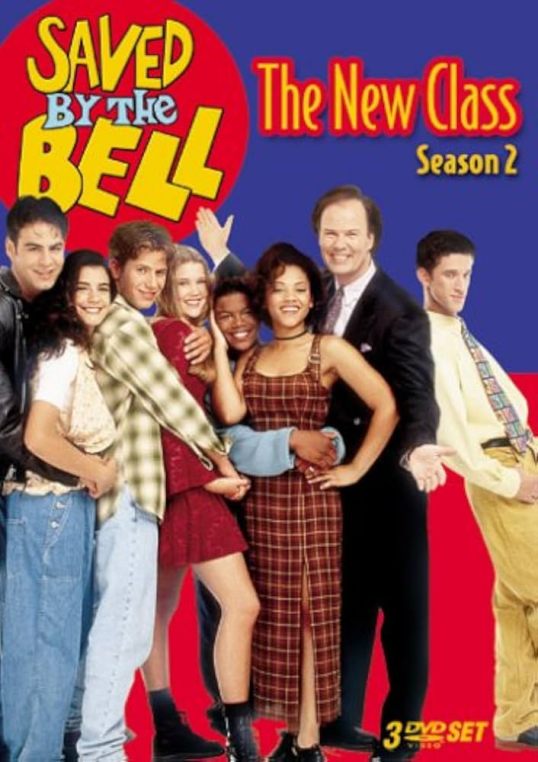
Saved By The Bell (Tubi)
On Saturday morning, I watched the 4th of July “Miss Liberty” episode. (There really aren’t that many good 4th of July episodes out there.) The Malibu Sands episodes are always strange to me. Why would Zack work a summer job? Zack’s rich!
What I Like About You (Tubi)
Tubi has the first two seasons of What I Like About You! The only problem is that they’ve replaced the cover of What I Like About You that originally played over the opening credits with his blandly generic, early aughts, girl group pop song. Bleh. The only reason I ever watched that show was because I liked that cover of What I Like About You. Anyway, I watched an episode where Amanda Bynes wanted to have a party at the loft and Jennie Garth didn’t want her to. All of the squeaky voices hurt my ears.
While on a routine scouting patrol, Starbuck (Dirk Benedict) and Apollo (Richard Hatch) are captured, not by Cylons but instead by the crew of the Battlestar Pegasus. The Pegasus and its legendary commander, Cain (Lloyd Bridges), were assumed to have been lost during the Cylon sneak attack but instead, Cain survived and the Pegasus has been in deep space ever since, waging his own war against the Cylons. At first, both Cain and Adama (Lorne Greene) are both happy to discover that the other is still alive. But it turns out that Adama and Cain both have very different plans and visions for the future. Adama wants to steal fuel from a nearby Cylon base so that he and his fleet can continue their journey to Earth. Cain wants to launch a full-out attack on the Cylons and he expects the Galactica to help him. Though they both share the same enemy, the crews of the Galactica and Pegasus find themselves divided over which commander to follow. Is it better to go down fighting or to survive to find a new home?
Sold overseas as a sequel to the first Battlestar Galactica feature film (which itself was just an edited version of the show’s pilot), Mission Galactica was cobbled together from three episodes of the television series. Because the TV show was expensive to produce and not the ratings hit that NBC was expecting, the show’s producer, Glen Larson, was asked to edit several episodes together so that they could be released as movies in Europe and Asia. Larson took a two-part episode featuring Commander Cain and added some scenes from an unrelated episode that featured an injured Apollo undergoing surgery while a fire raged in the Galactica. All things considered, Larson did a good job of cleanly assembling the movie without making it too obvious that it was stitched together out of three episodes, though some of the best parts of Cain’s storyline did get left on the cutting room floor.
How does Mission Galactica work as a movie? Even though it opens with a voice-over narration explaining the Cylon attack and the Galactica’s mission to find Earth, I imagine that someone watching this with no previous knowledge of the show would be lost. As well, it’s obvious that the special effects were designed with the small screen of television in mind. However, Lloyd Bridges transcends the script’s limitations as the charismatic but obsessive Command Cain. This is actually one of Bridges’s best performances and his scenes with Lorne Greene work surprisingly well. They’re both believable as two proud commanders who are both convinced that they’re doing the right thing. The rest of the cast is adequate. I’ve always liked Dirk Benedict’s performance as Starbuck, even if he was essentially just playing a variation on Han Solo. For all of its flaws as a series, Battlestar Galactica usually did a good job of capturing the vastness of space and the epic scope of Galactica’s journey and that’s the case here. Mission Galactica doesn’t escape its television origins but, for fans of the series, it’s an enjoyable space opera.
In the end, I recommend watching the original episodes that were used for this movie — Parts One and Two of The Living Legend and Fire In Space.The Living Legend was the original Battlestar Galactica at its best.
In a distant galaxy, the humans and the robotic Cylons have been at war for a thousand years. Due to the diplomacy of Count Baltar (John Colicos), it appears that a peace agreement has finally been reached. On their homeworld, President Adar (Lew Ayres) and the leaders of humanity prepare to welcome to the Cylons to a signing ceremony. Amongst the commanders of the fleet of ships that orbit and defend the homeworld, only Commander Adama (Lorne Greene) fears that the Cylons may be plotting a sneak attack.
Adama turns out to be correct. Baldar betrays humanity and the Cylons launch a sudden attack, wiping out the human leadership and almost the entire fleet of Battlestars. Only Adama’s Galactica survives. After picking up the refugees who survived the attack, the Galactica sets out to find a legendary planet that might be home to more humans. With the Cylons pursuing and brave men like Starbuck (Dirk Benedict) and Adama’s son, Apollo (Richard Hatch), fighting to protect the last of the human refugees, the Galactica searches for Earth.
With Star Wars still a cultural phenomenon in 1978, it made sense that a television network like ABC would greenlight a science fiction series. When producer Glen A. Larson pitched the idea for Battlestar Galactica, ABC was eager to move forward with it. However, when the pilot cost $8,000,000 to produce (which was then a record-setting amount for a television show), ABC decided to recoup their costs by releasing an edited version of the pilot in theaters. In Canada and the United States, the “film” hit theaters before it was subsequently aired on television. The film was then later released in Europe, where it was a huge hit.
In fact, it was such a hit that 20th Century Fox sued Universal Studios, claiming that Battlestar Galactica stole the majority of its ideas from Star Wars. Universal responded by filing a countersuit, claiming that Star Wars stole the majority of its ideas from Flash Gordon. The case was eventually settled in 1983, long after the original Battlestar Galactica television series had been canceled.
And while that is all very interesting, it doesn’t answer the question that is probably on your mind right now. Is the edited theatrical release of the Battlestar Galactica pilot any good?
Yes and no. The first part of the movie, which deals with the Cylon sneak attack and Starbuck and Apollo rescuing the human refugees is an excellent work of science fiction, a space opera that can stand up with the best of them. Even after all this time, the special effects are still effective as is Lorne Greene’s authoritative performance as Adama. Richard Hatch and Dirk Benedict are also strong as the two main fighter pilots, even if both of them are obviously meant to be television versions of Luke Skywalker and Han Solo. (Benedict’s Starbuck was the coolest character on Battlestar Galactica. He was the best pilot, he was the best poker player, and he even smoked a cigar.) The Cylons are chilling victims and the pilot even features some effective human drama along with all of the space battles. After the Cylon attack, the story follows the Galactica as it makes a stop on a planet that’s also a casino that’s being run by untrustworthy space insects. That part betrays the film’s television origins and feels like one of those episodes of Dr. Who that people try to forget. The pilot features everything that made Battlestar Galactica work but, unfortunately, it also features everything that didn’t work.
Watching it today, though, it’s impossible not to feel the welcome pull of nostalgia. In a time of cynicism, the pure idealism of Battlestar Galactica and its quest for Earth provides a nice and needed relief. To quote Commander Adama:
“Fleeing from the Cylon tyranny, the last battlestar, Galactica, leads a ragtag fugitive fleet on a lonely quest… a shining planet known as Earth.”
“Good cop and bad cop have left for the day. I’m a different kind of cop.” — Vic Mackey
From the moment he shot a fellow detective in the face in the pilot episode, Vic Mackey of The Shield redefined the television antihero, establishing himself as one of the most mesmerizing and morally complex villains ever to grace the small screen. Unlike the charming mobsters or conflicted drug dealers that populated the era’s prestige dramas, Mackey was a cop—a figure sworn to uphold the very laws he so casually and brutally shattered. This foundational transgression was the show’s masterstroke, forcing the audience into a complicity that would only deepen over seven seasons, as they rooted for a man who was, by any conventional measure, a monster. His character wasn’t just a villain; he was a challenge to the very concept of heroism in a “gray time,” as actor Michael Chiklis aptly described it.
The bedrock of Vic Mackey’s charisma lies in his unwavering, almost terrifying, conviction in his own moral code. He is the ultimate “ends justify the means” pragmatist, operating in a world he sees as too dangerous for the niceties of due process. Mackey views his brutality and corruption as necessary tools to fight a greater evil, a twisted sense of duty that makes him simultaneously repulsive and indispensable. As the show’s creator, Shawn Ryan, noted, the audience was shown a man who was “a protector” in a frightening world, and that primal allure is potent. He steals from drug dealers, beats suspects, and burns a man’s face on a stove, yet all of this is framed as a means to keep the streets of Farmington safe—a justification that, for many viewers, became tragically persuasive.
This duality is what makes him so compelling; Vic Mackey is not a one-dimensional sociopath but a man of fierce, contradictory loyalties. He is a devoted, if deeply flawed, father who steals to pay for his autistic children’s medical bills, and a protector of the vulnerable, like the prostitute Connie and the young victims of a child pornography ring. Walton Goggins, who played his partner Shane Vendrell, suggested that the character’s core was “compartmentalization.” This allowed Mackey to show genuine compassion in one breath and coldly blackmail a fellow officer for being gay in the next, using that knowledge as a tool for control. He is an “Even Evil Has Loved Ones” archetype, but pushed to such an extreme that his love for his family becomes yet another justification for his escalating sins. This constant oscillation between good and evil creates a magnetic dissonance, making him impossible to dismiss as a simple monster.
The show’s genius was in ensuring that this dissonance was a source of agonizing tension for the audience. Creator Shawn Ryan was genuinely surprised to find that viewers overwhelmingly rooted for Mackey against a “clean” Internal Affairs investigator, proving that Chiklis’s performance had woven an almost unbreakable spell. To watch The Shield is to engage in a constant, uncomfortable negotiation with one’s own morality. The show sparked intense debate about whether Vic deserved punishment or absolution, a testament to the complexity of the character. The show’s narrative, as Goggins put it, is a “morality tale” where “you reap what you’ve sown,” but the path to that reckoning is paved with so many justifications and compelling moments of “good” that the audience is left hoping against hope for his redemption, even as his sins pile up.
Ultimately, Vic Mackey’s mesmerizing villainy lies in his chillingly relatable humanity. He is not a cackling antagonist or a far-removed tyrant; he is a man who, when presented with a choice between his survival and his soul, consistently chooses the former with an unnerving lack of remorse. The show’s iconic final scene, where he is trapped in a bureaucratic purgatory at an ICE desk, is a perfect, ironic punishment for a man who lived for action and control. It’s a fate that feels both just and heartbreaking. Vic Mackey remains a towering figure in television history because he forces us to confront a disturbing question: if a man who commits such evil can still command our sympathy and allegiance, what does that say about us, and what are we willing to forgive?
“So, we cause a triple murder before breakfast, start a race war before dinner – that’s uh, that’s a pretty good day.” — Shane Vendrell
If you want to talk about the history of television, you basically have to divide the timeline into two distinct eras: before The Shield and after The Shield. When creator Shawn Ryan launched this gritty FX crime drama in 2002, the television landscape was a very different place. Sure, The Sopranos had already kicked down the door for premium cable, proving that audiences were hungry for complex, morally ambiguous anti-heroes. But basic cable was still largely seen as a graveyard for sanitized, formulaic network rejects. Then came The Shield, swaggering onto the screen with a chaotic energy that immediately changed the rules of the game. Running for seven intense seasons until 2008, the show didn’t just push the envelope; it set the envelope on fire and danced around the ashes. Looking back at it now, it remains a staggering achievement in storytelling that completely redefined what a cop show could be, sending shockwaves through basic cable, premium cable, and even Hollywood films.
The premise of the show sounds almost simple on paper, but its execution was anything but. The series follows the Strike Team, an elite anti-gang unit operating out of a rundown, overcrowded police station in the fictional Farmington district of Los Angeles. Leading this crew is Detective Vic Mackey, played with terrifying charisma by Michael Chiklis. Vic is not your typical television cop. He is not a flawed but ultimately noble hero who bends the rules to get the bad guys. Vic Mackey is, flat out, a criminal who happens to wear a badge. The show announces this immediately in the legendary opening scene of the pilot, where Vic murders a fellow police officer who is about to expose his corruption. It was a gut punch that served as a warning to the audience: you are not in Kansas anymore. From that moment on, you are complicit in Vic’s crimes because you are rooting for him to get away with them.
What made The Shield so brilliant was how it surrounded this monstrous central character with an incredibly rich ensemble cast that represented every facet of law enforcement. You had Shane Vendrell, Vic’s deeply insecure and ultimately tragic right-hand man, brought to life with jaw-dropping nuance by Walton Goggins. You had Claudette Wyms, the fiercely intelligent detective played by CCH Pounder, who spent the entire series fighting against the systemic rot embodied by Vic. And then there was Dutch Wagenbach, the deeply awkward, brilliantly analytical detective who provided a stark contrast to the Strike Team’s brute force approach. The show used these characters to explore the sheer exhaustion of police work. The Barn, as their station house was known, felt like a pressure cooker. It was a place where idealism went to die, crushed under the weight of endless caseloads, bureaucratic nonsense, and the depressing reality that the justice system is often deeply broken.
Visually and tonally, The Shield felt like a punch to the face. Ryan and his team utilized handheld cameras, harsh lighting, and a documentary-style grit that made the show feel dangerously real. There was no glossy cinematography or sweeping orchestral scores. The soundtrack was often just the ambient noise of the city, punctuated by sudden, shocking bursts of violence. This aesthetic choice was crucial because it stripped away the Hollywood glamour usually associated with police work. When Vic and the Strike Team kicked down a door, it didn’t look like an action movie; it looked like a chaotic, terrifying intrusion that left you feeling uneasy. This raw approach forced the audience to confront the physical and emotional toll of the job without any safety net.
When we talk about how The Shield redefined basic cable, it is hard to overstate its importance. Before this show, basic cable networks like FX were terrified of alienating advertisers. The Shield blew that hesitation out of the water by introducing unprecedented levels of profanity, nudity, and violence to non-premium television. But it wasn’t just about shock value; it was about authenticity. The criminals in Farmington talked like actual criminals, and the cops talked like actual cops who were fed up with the system. By proving that audiences would tune in in massive numbers to watch a show that didn’t hold their hand, FX essentially built its entire brand identity around The Shield. It paved the way for everything from Sons of Anarchy to American Horror Story, proving that basic cable could rival the creative freedom of HBO.
Interestingly, the success of The Shield also had a massive trickle-up effect on premium cable. HBO had been sitting comfortably as the king of prestige television, but suddenly a basic cable show was matching them punch for punch in terms of narrative complexity and character depth. Shows like The Wire and Breaking Bad (which debuted later on basic cable) owe a massive debt to the path Shawn Ryan blazed. The Shield proved that you didn’t need a massive HBO budget to create high art; you just needed a sharp script, fearless actors, and a network willing to take a risk. It forced premium cable to stop resting on its laurels and realize that the competition was no longer just the broadcast networks, but the upstarts on basic cable who were hungry for prestige.
The show’s influence even bled into the film industry, fundamentally altering the cop genre on the big screen. Before The Shield, the standard cop movie usually followed a fairly strict moral compass, or if it did feature a corrupt cop, like in Training Day, it was contained within a neat two-hour narrative arc. The Shield introduced the concept of the serialized corrupt cop. It showed audiences that the psychological unraveling of a dirty officer is much better suited to a long-form television format, where you can spend years peeling back the layers of their justification and paranoia. After The Shield, Hollywood started realizing that the simple “good guy versus bad guy” cop movie felt outdated. Films had to get darker, more ambiguous, and more willing to dwell in the gray areas of morality just to keep up with what was happening on television.
At the core of the series is a really fascinating, easy-to-understand analysis of utilitarianism versus deontology. In simple terms, Vic Mackey operates on the belief that the ends justify the means. He robs drug dealers, beats confessions out of suspects, and ruins innocent lives, but he argues that he is keeping the streets of Farmington safe. The show constantly challenges the audience to wrestle with this uncomfortable philosophy. Is a neighborhood actually safer if the people protecting it are worse than the criminals they are locking up? The Shield refuses to give you a tidy answer, which is what makes it so rewatchable. It presents a system where doing things the “right” way often lets the bad guys walk, while doing things the “wrong” way gets results but destroys the souls of everyone involved.
As the series moved into its later seasons, the narrative tension became almost unbearable. You cannot build a house on a foundation of lies and expect it to stand forever, and Vic’s world inevitably begins to collapse. The introduction of internal affairs, the escalating violence with the Mexican cartels, and the fracturing of the brotherhood between Vic and Shane created a tragic downward spiral that was riveting to watch. Walton Goggins’s portrayal of Shane’s descent into desperate paranoia is some of the best acting in television history. The show stopped being just about police corruption and turned into a Shakespearean tragedy about loyalty, betrayal, and the inescapable consequences of one’s actions.
The series finale of The Shield remains one of the greatest and most satisfying endings in television history. Without spoiling every detail, it manages to perfectly punish Vic for his lifetime of sins in a way that is far more cruel and poetic than simply sending him to prison or killing him. It is a masterclass in writing, wrapping up seven seasons of tangled plotlines and emotional baggage into a devastating final image. Vic Mackey gets exactly what he wanted, but he loses absolutely everything that made his life worth living in the process. It is bleak, brilliant, and completely uncompromising.
Ultimately, The Shield is a show that changed the DNA of television. It took the cop drama, stripped away all the nostalgia and hero-worship, and replaced it with a brutal, unflinching look at the cost of authority. Shawn Ryan and his incredible cast created a universe where the line between good and evil wasn’t just blurred; it was completely erased. It proved that audiences were smart enough to handle deeply flawed protagonists and narrative structures that refused to offer easy absolution. Whether you are looking at the rise of prestige basic cable, the evolution of the anti-hero on premium networks, or the dark turn that cop films took in the 2000s, you can trace the lineage right back to a rundown police station in Los Angeles. The Shield didn’t just redefine a genre; it helped build the modern era of television as we know it today, and for that alone, it demands to be remembered as an all-time great.
Welcome to Late Night Retro Television Reviews, a feature where we review some of our favorite and least favorite shows of the past! On Sunday, I will be reviewing the Canadian series, Degrassi: The Next Generation, which aired from 2001 to 2015! The series can be streamed on YouTube and Tubi.
This week, the second season comes to an end.
Episode 2.22 “Tears Are Not Enough: Part Two”
(Dir by Philip Earnshaw, originally aired on February 23rd, 2003)
As would become a tradition on Degrassi, the season ends with a dance and a character having a breakdown.
In this case, the dance is Hawaiian-themed. And Craig is the one who has the breakdown, shortly after he and Ashley are named the King and Queen of Degrassi. When he thinks he spots his dead father in the back of the gym, Craig tries to talk to him. Unfortunately, the man turns out to just be a teacher and not the ghost of Craig’s abusive dad. Soon, Craig is ripping down streamers. Finally, Terri talks to Craig. She lost her mother so she understands what he’s going through. So, if nothing else, at least Terri finally got to do something this season.
Meanwhile, Spinner and Jimmy finally get over being mad at each other. They bond over getting defeated by Craig. Paige and Hazel are also dissappointed about not winning Queen of the Dance. The lesson here is that the sympathy vote rules and everyone felt sorry for Craig. Ashley was just along for the ride.
For a Degrassi season finale, this was something of a low-key affair. I get that the season began with Craig so it also had to end with him but it’s still hard not to feel a bit underwhelmed by the whole thing. Craig spends this episode going from one extreme to another. First, he acts like he doesn’t care that his father is dead. Then, he starts to laugh like a maniac at his father’s funeral. And then he ends up begging a stranger for his approval. Jake Epstein got a chance to show off what a good actor he is but still, it didn’t reveal much that we didn’t already know about Craig. Fortunately, us Degrassi fans know what’s waiting for everyone during seasons 3 and 4. We’re about to start peak Degrassi!
I’m taking next week off for the 4th of July so we will start on season 3 of Degrassi on July 12th.
Welcome to Retro Television Reviews, a feature where we review some of our favorite and least favorite shows of the past! On Sundays, I will be reviewing Homicide: Life On The Street, which aired from 1993 to 1999, on NBC! It can be viewed on Peacock.
This week, the guest stars take over.
Episode 5.15 “Wu’s On First?”
(Dir by Tim McCann, originally aired on Feberuary 7th, 1997)
When a cop is shot and killed, the new Baltimore Sun crime reporter, Elizabeth Wu (Joan Chen), writes up a story about what a great guy the cop was. She is soon contacted by an informant who reveals that the cop was shot while buying drugs. Eventually, the informant reveals that he was the one who shot the cop but he claims it was self-defense. Wu gives up her informant to the police and when Col. Barnfather (who was embarrassed by the revelation that the victim was a dirty cop and who wants to get Wu off of the crime beat) makes a point of thanking her at the press conference, it leads to Wu being exiled from Baltimore and sent to cover the news in “the sticks.”
Meanwhile, Kellerman’s obnoxious brothers (Eric Stoltz and Tate Donovan) show up and try to convince him to move to Miami with them. Kellerman is tempted but, when it turns out that his brothers have stolen Babe Ruth’s uniform, Kellerman remembers why he left home in the first place. This episode features Kellerman getting arrested, though Lewis and Dr. Cox both show up to bail him out of jail. (And don’t worry about his brothers. They eventually get freed as well.) In the end, Kellerman stays in Baltimore. He does, however, give his brothers $155 to help them set things up in Miami.
This episode suffered from the guest star syndrome. The regulars are all present but, for the most part, they take a back seat to Elizabeth Wu and Kellerman’s brothers. Joan Chen, Eric Stoltz, and Tate Donovan are all talented but they’re not the reason why anyone would want to watch Homicide. In Elizabeth Wu’s case, the story really does feel like fan fiction. A new character shows up out of nowhere, all of the characters talk about how talented she is, and Giardello takes a liking to her. This episode was co-written by David Simon (who, of course, wrote the book that the entire series was based on) and, much like the final season of The Wire, it makes the mistake of thinking that everyone else would be as interested in Simon settling old scores with The Baltimore Sun as Simon obviously was.
As I watched this episode, I wondered if maybe it was meant to be a backdoor pilot. Actually, I guess it would count as two backdoor pilots in one. It’s easy to imagine a show about Elizabeth Wu covering the news in small town Maryland. It’s also easy to imagine a show about Kellerman’s brothers getting into trouble in Florida.
As it is, this episode doesn’t really feel like Homicide. It’s a rare misfire.
Welcome to Late Night Retro Television Reviews, a feature where we review some of our favorite and least favorite shows of the past! On Saturdays, I will be reviewing Saved By The Bell, which ran on NBC from 1989 to 1993. The entire show is currently streaming on Tubi!
This week, Screech is a pawn yet again.
Episode 2.8 “Miss Bayside”
(Dir by Don Barnhart, originally aired on October 27th, 1990)
It’s time for the annnual Miss Bayside pageant!
Jessie considers Miss Bayside to be sexist and she tries to organize a boycott. Lisa says “No way.” She wants to be Miss Bayside. Lisa enters and so does Kelly because Kelly’s family is poor and she could really use the extra money that comes from being a beauty queen. Finally, Jessie goes against her pledge not to compete and enters because she wants to teach everyone about inner beauty.
Zack bets Slater that he can make anyone into the next Miss Bayside. Slater takes the bet on the condition that he get to pick the person. And, of course, Slater picks Screech….
Oh, this episode. When I talk about Dustin Diamond being too young to be on this show, this is the sort of epiosde that I’m talking about. While Lisa, Jessie, Kelly, and eventually Slater all come across as being confident and happy while competing for the title of Miss Bayside, Screech looks awkward, embarrassed, and almost troll-like. I’m not even a Screech fan (or a Dustin Diamond fan for that matter, God rest his soul) but even I felt bad for him when he walked out on stage in a 1920s-style bathing suit. While everyone else on the episode was obviously closer to adulthood than childhood (i.e. Mark-Paul Gosselaar and Tiffani Thiessen were both 16, and Elizabeth Berkley and Mario Lopez were both 17), Dustin Diamond was 13 and looked even younger. That gives this entire episode a bit of an icky feel.
Screech does win the pageant. He wins because his robot, Kevin, accidentally gives him a black eye and Zack tells everyone that Slater did it. Screech gets the sympathy vote. Sorry, Lisa. Your dreams don’t matter. Sorry, Kelly. I guess you’re never going to be able to afford college. The importnat thing is that Screech won something that is definitely not going to lead to him being taunted later in life.
Other than Screech’s victory, this episode is remembered for two things. First, Slater absolutely kills it when he plays the drums during the talent competition. Secondly, Mr. Belding sings the Miss Bayside song. Isn’t she he lovely/not even a girl…. It must be said that, judging from this episode, Belding has a terrible singing voice but at least he tries.
Slater should have been Miss Bayside. We all know it.
On Friday night, I watched a performance by the band Pacifica. They were okay. I prefer louder music.
Bring Me The Beauties: The Model Cult (HBOMax)
I watched this 3-part docuseries on Monday. It was yet another cult documentary. This time, only good-looking people could join the cult. That actually made sense to me. If you’re a cult leader, why would you want to be surrounded by ugly people?
Degrassi: The Next Generation (Tubi)
My review of this week’s episode will drop tomorrow.
Election Coverage
I watched this latest primary results on Tuesday. Ugh, the DSA in New York. Never has a group of activist been both so charmless and so successful at the same time. A lot of people are panicking about that but, honestly, if the DSA was going to win anywhere, it was going to be in New York. I imagine they’ll do well in Denver next week as well. DSA appeals to gentrifiers. (I also remember that the DSA insurgency was declared dead after the primaries in Illinois so perhaps we should be careful about reading too much into any one night.) It seems like after every “wave election,” there’s a few new congresspeople (and even senators) who end up self-destructing during their first or second term, people like Katie Hill, George Santos, Madison Cawthorn, Cori Bush, and Jamaal Bowman. This year, I’m putting my money on Dairaliza Avila Chevalier and, if he wins, Graham Platner as being the most likely to fall apart as soon as they arrive in Washington.
Homicide: Life On The Street (Peacock)
My review of this week’s episode will drop tomorrow.
Saved By The Bell (Tubi)
My review of this weeks episode will drop later tonight.