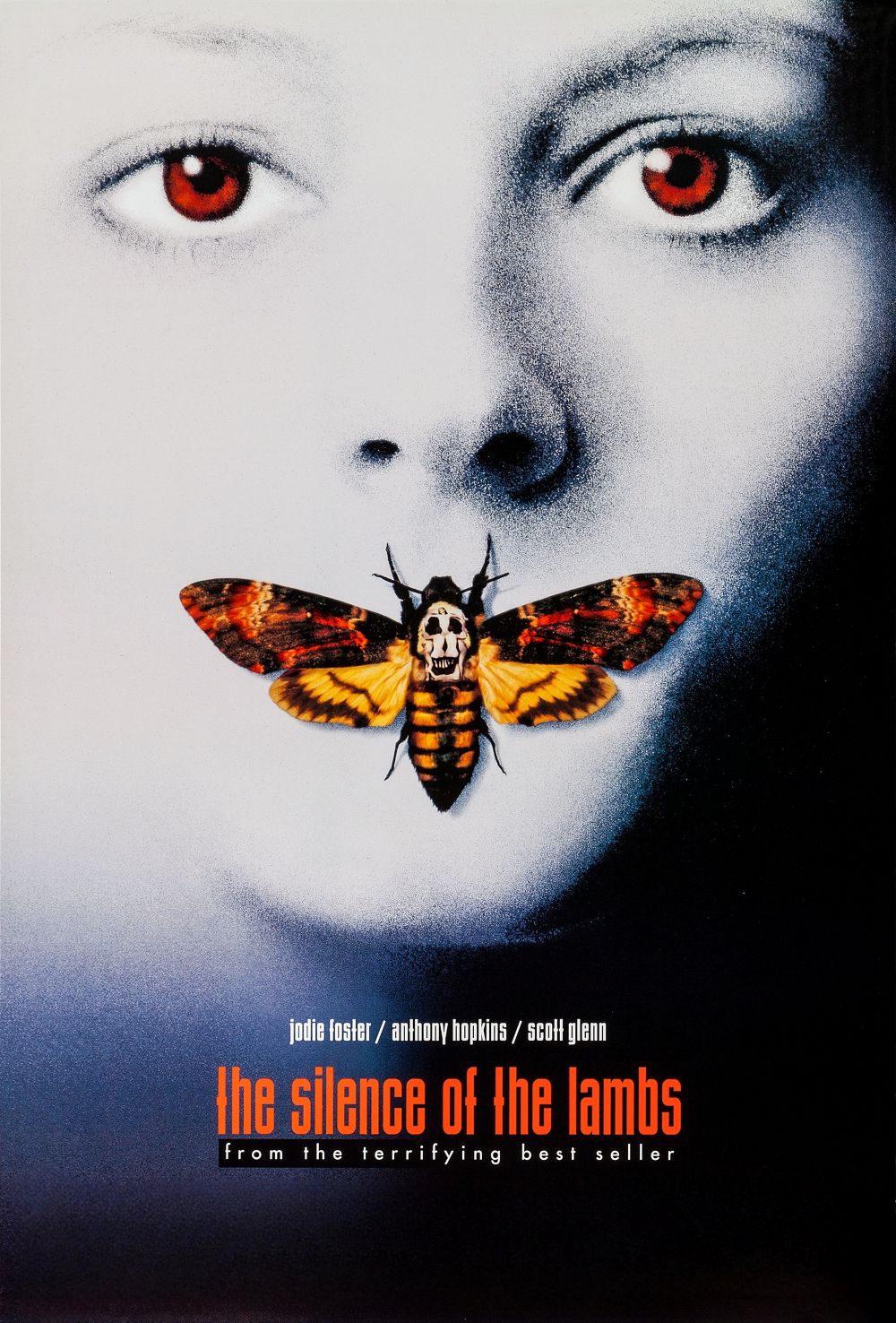
Horror Film Review: The Silence of the Lambs (dir. by Jonathan Demme)


“Believe me, you don’t want Hannibal Lecter inside your head.” — Jack Crawford

Some thrillers get louder as they become more frightening. The Silence of the Lambs often goes the other way, drawing its power from a lowered voice, a held stare, or the uncomfortable silence before someone answers a question. Jonathan Demme understands that an audience will lean into a scene when the actors give them something worth watching. His 1991 film has plenty of gruesome material, but its finest effects come from the precision of the performances and the intimacy of the camera. It is a horror movie that can make two people talking feel more dangerous than an outright attack.

Adapted by Ted Tally from Thomas Harris’s novel, the story follows FBI trainee Clarice Starling as she helps investigate Buffalo Bill, a serial killer targeting women. She seeks information from imprisoned psychiatrist and cannibal Hannibal Lecter, who demands personal disclosures in exchange for his insight. That premise creates an ideal setting for actors: professional conversations keep slipping into confrontations neither participant experiences in quite the same way. Clarice needs answers, while Lecter wants access to the person asking the questions. Demme builds the film around that imbalance without letting the investigation overwhelm the people involved.

Jodie Foster gives Clarice a mixture of determination and discomfort that makes her compelling well before the danger becomes immediate. Her performance is carefully modulated, especially in the contrast between her formal speech and the emotions passing across her face. She wants to project competence, but Foster lets us notice when that projection requires work. A tightened expression or a slight hesitation suggests someone evaluating how much of herself she can safely reveal. Those details make Clarice feel inexperienced without making her seem incapable. She has the intelligence for the job; what she lacks is the luxury of feeling secure in it.

Foster is particularly impressive when Clarice encounters something painful and has to continue functioning. She allows the reaction to register, then shows the effort of turning it into concentration. It is a subtle distinction, but an important one: Clarice’s professionalism does not depend on suppressing every trace of feeling. Her compassion often seems to make her more attentive. Foster also avoids the opposite trap of constantly advertising sensitivity. She can be brisk, guarded, or visibly irritated. The result is a character whose emotional responses feel specific to each encounter rather than arranged to remind us that she is sympathetic.

Anthony Hopkins approaches Lecter with a much more conspicuous sense of presentation. His speech is precise, his gaze sustained, and his pauses carefully placed. The performance has theatrical flair, but Lecter himself is theatrical, enjoying the opportunity to arrange an encounter around his preferences. Hopkins makes restraint the source of his menace. Because he gives so little away physically, the smallest change becomes noticeable. A slight movement forward can feel like an intrusion. Even his courtesy has an aggressive quality, as though good manners are another standard by which everyone around him is certain to disappoint.

What makes Foster and Hopkins so effective together is the difference in how they occupy a scene. Hopkins invites us to study the performance Lecter is giving, while Foster draws us toward the reactions Clarice would prefer to conceal. Their exchanges develop through that contrast. She does not merely receive his provocations; she assesses them, resists them, and sometimes challenges his assumptions. His interest in her can look like respect, but neither actor lets that resemblance become comforting. There is an unsettling intimacy in the attention they give each other, with Foster continually reminding us that attention can also be a form of pressure.

Demme photographs those exchanges with an intimacy that makes the viewer feel implicated. Faces often turn almost directly toward the lens, putting us close to the position of the person being addressed. The effect is especially uncomfortable when Clarice is being examined, patronized, or challenged. Rather than watching someone endure scrutiny from a convenient distance, we experience something of its force ourselves. Demme also gives reactions time to develop. He understands that a face listening can be as expressive as a face speaking, and he rarely seems impatient to interrupt an actor’s thought with unnecessary visual decoration.

Tak Fujimoto’s cinematography gives that approach a strong physical foundation. Close-ups matter partly because the surrounding spaces are so clearly established: offices, corridors, examination rooms, and cells all have their own arrangements of authority and confinement. Clarice frequently appears exposed within environments that supposedly represent order. The compositions make us aware of who occupies the space comfortably and who must negotiate a place within it. Fujimoto does not need to make every room look sinister. The ordinary institutional surfaces are convincing enough that an intrusive face or an ominous stretch of corridor can disturb their apparent neutrality.

The supporting performances help maintain that tension without duplicating the central pairing. Scott Glenn gives Jack Crawford a subdued authority that can feel supportive and calculating at once. Anthony Heald makes Dr. Chilton’s vanity unpleasantly recognizable, finding irritation in the way he presents himself as indispensable. Brooke Smith gives Catherine Martin a forceful combination of fear, anger, and practical determination. Ted Levine takes Buffalo Bill in a more volatile direction, creating a disturbing contrast with Lecter’s composed self-display. Together, these actors give the film different social temperatures; Clarice cannot approach every person with the same defenses.

The film’s treatment of Bill remains its most troubling element. Although the dialogue distinguishes him from transgender people, its imagery still associates gender nonconformity with disgust and danger. The qualification cannot entirely undo the visual impression, especially in a film this skilled at making images stick. Elsewhere, the craftsmanship is remarkably cohesive. Howard Shore’s score supplies a mournful undertow, while the editing allows conversations to breathe before tightening our experience of danger. In the climactic passages, restricted visibility becomes frightening because Demme has already taught us how much depends on looking, reading expressions, and understanding the space around a person.

The lasting achievement of The Silence of the Lambs is how completely its style serves its actors. Demme and Fujimoto bring us close enough to catch Foster’s fleeting uncertainty and Hopkins’s smallest calculated gesture, then trust those details to do the work. The film can be shocking, but it is rarely more gripping than when someone is simply deciding what to say next. That is what keeps it from becoming a museum of familiar lines and notorious images. Beneath all the cultural baggage, the performances still feel alive, and the camera still knows how to make us uneasy about watching them.
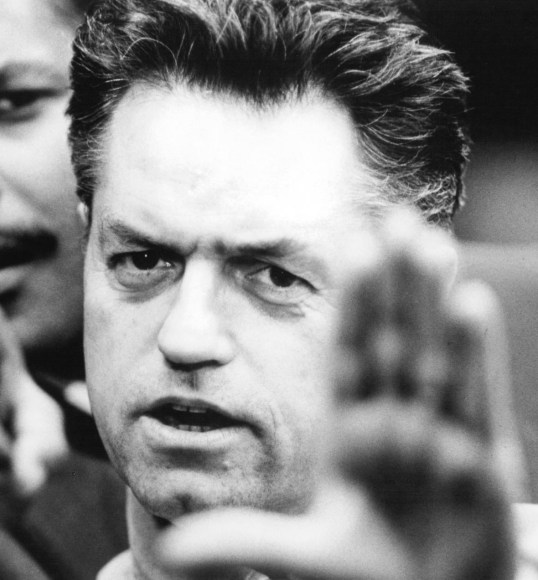
4 Shots From 4 Films: Special Jonathan Demme Edition


4 Shots From 4 Films is just what it says it is, 4 shots from 4 of our favorite films. As opposed to the reviews and recaps that we usually post, 4 Shots From 4 Films lets the visuals do the talking!

The late, great director Jonathan Demme was born 82 years ago today.  It’s time for….

4 Shots From 4 Jonathan Demme Films

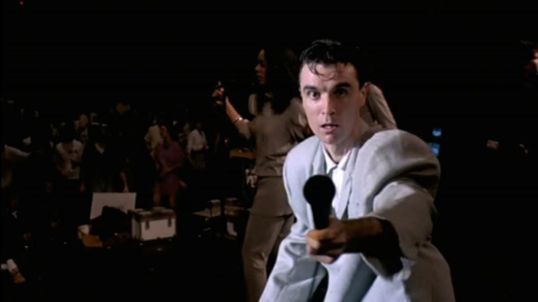
Stop Making Sense (1984, dir by Jonathan Demme, DP: Jordan Cronenweth)

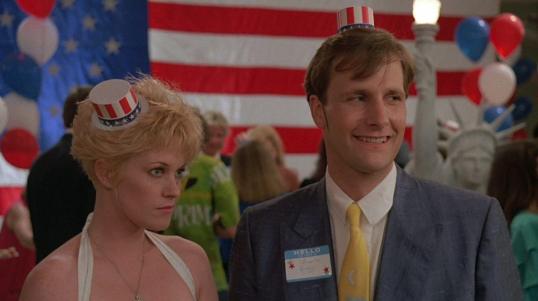
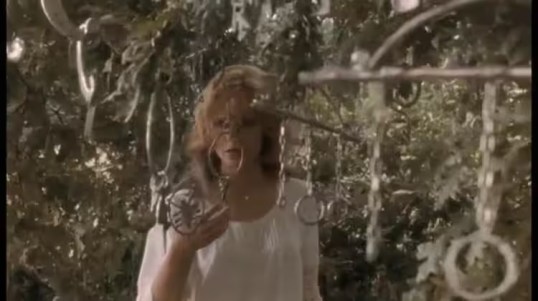
Something Wild (1986, dir by Jonathan Demme, DP: Tak Fujimoto)

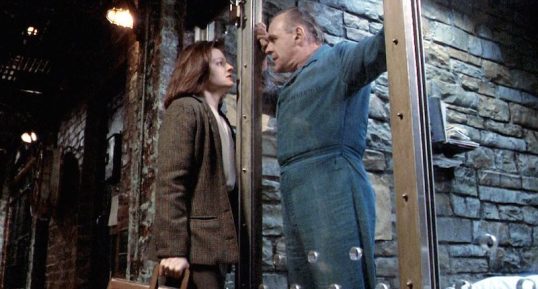
The Silence Of The Lambs (1991, dir by Jonathan Demme, DP: Tak Fujimoto)

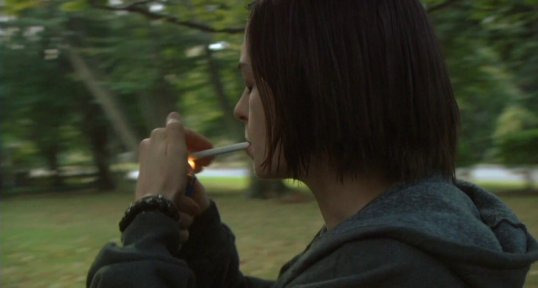
Rachel Getting Married (2008, dir by Jonathan Demme, DP: Declan Quinn)

4 Shots From 4 Films: Special 1991 Edition


4 Or More Shots From 4 Or More Films is just what it says it is, 4 shots from 4 of our favorite films. As opposed to the reviews and recaps that we usually post, 4 Shots From 4 Films lets the visuals do the talking!

Today, we pay tribute to the year 1991!  It’s time for….

4 Shots From 4 1991 Films

The Silence Of The Lambs (1991, dir by Jonathan Demme, DP: Tak Fujimoto)

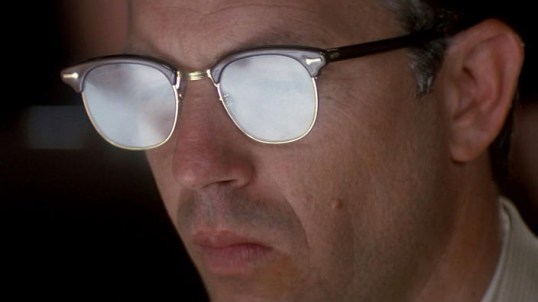
JFK (1991, dir by Oliver Stone, DP: Robert Richardson)

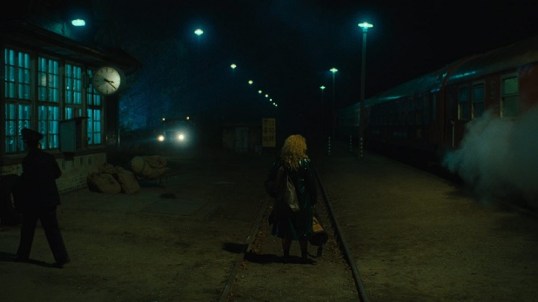
Until the End of the World (1991, dir by Wim Wenders, DP: Robby Muller)

The Sect (1991, dir by Michele Soavi, DP: Franco Fraticelli)

4 Shots From 4 Films: Special Jonathan Demme Edition


4 Shots From 4 Films is just what it says it is, 4 shots from 4 of our favorite films. As opposed to the reviews and recaps that we usually post, 4 Shots From 4 Films lets the visuals do the talking!

The late, great director Jonathan Demme was born 81 years ago today.  It’s time for….

4 Shots From 4 Jonathan Demme Films

Stop Making Sense (1984, dir by Jonathan Demme, DP: Jordan Cronenweth)

Something Wild (1986, dir by Jonathan Demme, DP: Tak Fujimoto)

The Silence Of The Lambs (1991, dir by Jonathan Demme, DP: Tak Fujimoto)

Rachel Getting Married (2008, dir by Jonathan Demme, DP: Declan Quinn)

4 Shots From 4 Best Picture Winners: The 1990s


4 Shots From 4 Films is just what it says it is, 4 shots from 4 of our favorite films. As opposed to the reviews and recaps that we usually post, 4 Shots From 4 Films lets the visuals do the talking!

Today, I’m using this feature to take a look at the history of the Academy Award for Best Picture.  Decade by decade, I’m going to highlight my picks for best of the winning films.  To start with, here are 4 shots from 4 Films that won Best Picture during the 1990s!  Here are….

4 Shots From 4 Best Picture Winners: The 1990s

The Silence Of The Lambs (1991, dir by Jonathan Demme, DP: Tak Fujimoto)

Unforgiven (1992, dir by Clint Eastwood, DP: Jack N. Green)

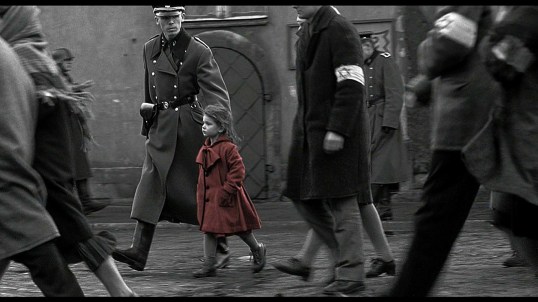
Schindler’s List (1993, dir by Steven Spielberg, DP: Janusz Kamiński)

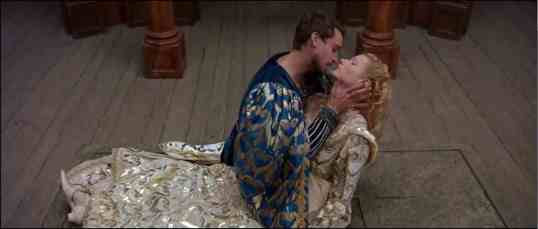
Shakespeare In Love (1998, dir by John Madden, DP: Richard Greatrex)

Lisa Reviews An Oscar Winner: The Silence of the Lambs (dir by Jonathan Demme)


Oh, The Silence of the Lambs, I have such mixed feelings about you.

On the one hand, I’m a horror fan and Silence of the Lambs is a very important film in the history of horror.  Back in 1992, it was the first horror film to win the Academy Award for Best Picture!  It even made history by winning all of the big “five” awards — Picture, Director, Actor, Actress, and Adapted Screenplay!  It was the first film since One Flew Over The Cuckoo’s Nest and It Happened One Night to pull that off!

Beyond that, it’s one of the most influential films ever made.  Every erudite serial killer owes a debt to Anthony Hopkins’s performance as Hannibal Lecter.  Every competent but untested and unappreciated female FBI agent owes a debt to Jodie Foster’s performance as Clarice Starling.  Even though the whole criminal profiler craze probably owes more to Manhunter (a film to which Silence of the Lambs is a sequel, though that often seems to go unacknowledged) than to anything else, this Oscar winner still definitely played a part.  I mean, how many people watched Manhunter for the first time, specifically because Lecter mentioned the events in that earlier film in Silence of the Lambs?

Plus, this won an Oscar for Jonathan Demme, one of my favorite directors!  And while I’m sure Jodie Foster would have gone on to have a strong career regardless of whether she had played Clarice Starling or not, it’s generally acknowledged that Silence of the Lambs revitalized the career of Anthony Hopkins.  So for that, we should all be thankful.

And yet, it can be strange to watch Silence of the Lambs today.  All of the imitations (not to mention some ill-thought sequels and prequels) have lessened its bite.  I can only imagine how it must have freaked out audiences when it was first released but I have to admit that I was slightly disappointed the first time that I watched the film.  Looking back, I can see that disappointment was due to having been told that it were one of the scariest movies of all time but, because, I had seen a countless number of imitations, parodies, and homages, I felt as if I had already watched the film.  So, I wasn’t shocked when Lecter turned out to be ruthlessly manipulative and dangerously charismatic.  Nor was I shocked when he managed to escape and poor Charles Napier ended up strung up in that cage.  I’m sure that audiences in 1991 were freaked out, though.

Actually, as good as Foster and Hopkins and Scott Glenn are, I think the best performance in the film comes from Ted Levine, playing Buffalo Bill.  Seriously, Levine’s performance still freaks me out.  It’s the voice and the way he says, “Precious.”  Levine’s performance, I found to be a hundred times more frightening than Anthony Hopkins’s and I think it’s due to the fact that Hannibal Lecter was clearly an author’s invention while Levin’s Buffalo Bill came across like he might very will be hiding in an alley somewhere, waiting for one of your friends to walk by. (Interestingly enough, I had the same reaction when I first saw Manhunter.  Brian Cox did a good job as Lecter but he still came across as a bit cartoonish.  Meanwhile, Tom Noonan was absolutely terrifying.)  Levine has subsequently gone on to play a lot of nice guy roles.  He was a detective on Monk, for instance.  Good for him.  I’m glad to see he was able to escape being typecast.  Admittedly, I do kinda wonder how many serial killer roles he had to turn down immediately after the release of The Silence Of The Lambs.

Still, it’s a good film.  Time may have lessened it’s power but The Silence of the Lambs is still an effective and well-directed thriller.  It’s impossible not to cheer for Clarice.  It’s impossible not to smile at the fun that Anthony Hopkins seems to be having in the role of Lecter.  Jonathan Demme creates a world of shadows and darkness and still adds enough little quirks to keep things interesting.  (I especially liked Lecter watching a stand-up special in his cell.)  It’s the little details that makes the world of The Silence of the Lambs feel lived in, like Clarice’s nervous laugh as she gives a civilian instructions on what to do in case she accidentally gets trapped in a storage locker.  Even the film’s final one liner will make you smile, even though it’s the type of thing that every film seemed to feel the need to do nowadays.  It’s still a good movie, even if it no longer feels as fresh as it once may have.

6 Trailers For Halloween, Part 3


Hi there and welcome to the 3rd and final part of this special Halloween edition of Lisa Marie’s Favorite Grindhouse and Exploitation Film Trailers!

For this final edition, we take a look at horror films that were nominated for Oscars.  Because of their Oscar pedigree, these films are rarely referred to as being exploitation films.   However, have no doubt — at heart, these films all belong in the grindhouse.

1) The Exorcist (1973)

Among other nominations, The Exorcist was the first horror film to ever receive a nomination for best picture of the year.  The Exorcist, however, lost the Oscar to The Sting.

2) Jaws (1975)

Jaws was nominated for best picture in 1975 but lost to One Flew Over The Cuckoo’s Nest.

3) The Silence of the Lambs (1991)

The Silence of the Lambs was the first horror movie to win best picture.

4) The Sixth Sense (1999)

The Sixth Sense was nominated for best picture but lost to American Beauty.

5) Rosemary’s Baby (1968)

Ruth Gordon won the Oscar for best supporting actress for her performance in this film.

6) Shadow of the Vampire (2000)

Willem DaFoe was nominated for best supporting actor but lost to Benicio Del Toro in Traffic.

What do you think, Trailer Kitties?

Trailer Kitties