The Odyssey (dir. by Christopher Nolan)


(Editor’s Note – With Christopher Nolan’s The Odyssey being an Event Level film, this probably won’t be the only post/opinion on it. Expect multiple viewpoints to come over time and enjoy!)

It’s been a long time since I read anything on Homer’s The Odyssey. Perhaps sometime in Junior High or High School. I only remember bits and pieces, but earlier this year, I watched the 1997 2-Part Miniseries with Armand Assante(who can do no wrong, despite how some may feel about 1993’s Fatal Instinct) to refresh my memory. That is also a great miniseries, which I recommend. Theoretically, there’s nothing to spoil here, but I’ll try to say little. 

2026 has been somewhat amazing when it comes to film. We’ve seen fresh young filmmakers like Mark Fischbach and Kane Parsons take what little resources they had and make some magic in Iron Lung and Backrooms, respectively. Of course, Corey Barker’s little indie/Inde film, Obsession, continues to amaze and break records thanks to Navarette’s and the rest of the cast’s unforgettable performances. It’s a great sight to behold. On the other end of the filmmaking spectrum, we have big pitch films like Project Hail Mary and Christopher Nolan’s version of The Odyssey, showcasing what we can pull off with the advancments in film technology or just great writing.

Most IMAX movies have that label stating “Filmed with IMAX cameras”, which usually means that key scenes were recorded in the format. My first IMAX experience was back in 2003 with The Matrix Revolutions in the AMC Lincoln Center IMAX (which is still by far the best NYC hotspot for a classic big screen experience), but that was remastered to fit the screen. Most of Nolan’s works were filmed with IMAX cameras for key scenes as of 2008’s The Dark Knight. It’s commonplace now to see a film shift from the old square 4:3 (1.33:1) ratio to a 2:35:1 letterboxed widescreen. The intro to Richard Donner’s Superman is one of my favorite examples of it. 2001’s Moulin Rouge! did something similar, though the boarders weren’t exactly visible. If you watch a movie on Disney Plus or HBO Max filmed with IMAX cameras, you can often see the change in aspect ratio, either abrupt or with a smooth transition. Large Format Screenings aren’t anything extremely new. My Dad once drove the family out to Long Island to see a 70 MM showing of The Empire Strikes Back.

What makes The Odyssey so amazing is that Nolan filmed it entirely with IMAX cameras. There are tons of documentaries shot this way, but it’s rare for a feature film to do so. According to an interview with ABC News, Nolan and the crew went through 2 million feet of IMAX film, shot in 3 minute intervals because the cameras would use up the roll in that amount of time. Imagine setting up a shot, getting everyone on their marks and then letting them know you’ve 3 minutes for the actors to get to where they need to be in the scene and nail it. Academy Award Winning Cinematographer Hoyte Van Hoytema, who worked with Nolan since Dunkirk, captures some beautiful vistas and landscape shots that are just majestic regardless of the format you choose to watch the film in. If you can catch the film in the IMAX 70MM, you’re getting the best possible picture, though the Regal RPX I watched wasn’t a slouch by any means. I’m hoping I can catch it in IMAX before the run ends. 

The film acknowledges that that the setting is in an age of magic, and as such, some things may be a little beyond the pale. I have to wonder how Ray Harryhausen and Stan Winston would feel about some of the visual effect choices in The Odyssey. There are some pretty wild elements of horror here, which is surprising coming from Nolan. They’re still practical, everyday things, but I had a few whispered “Wow” or “Oh crap!” moments. 

The Odyssey is the story of Odysseus (Matt Damon, Interstellar, Oppenheimer), King of Ithaca and loyal servant to King Agememnon (Benny Safdie, Oppenheimer, The Smashing Machine). set on a quest to claim the city of Troy. The film jumps between Odysseus in various phases of his journey. Through his actions, he defies the gods and is sent (along with his men) far from Ithaca. Back home, his wife, Penelope (Anne Hathaway, The Dark Knight Rises, Interstellar) observes Zeus Law of hospitality to strangers. This, however, has brought many suitors who overstay their welcome and wish the claim both her hand and the throne in Odysseus’ absence, among them being the scheming Antinous (Robert Pattinson, TenetThe Drama) and Polybus (Corey Hawkins, The Last Voyage of the Demeter). Her son, Telemachus (Tom Holland, the upcoming Spider-Man: Brand New Day) believes his father is still out there, but knows little of him. Can Odysseus find redemption? Can he and his men make their way back to Ithaca?

The casting for The Odyssey is really good, but for as stacked as it is both with friends and new talent, not everyone gets to shine as much as one would think. They all have a role to play in this and surprisingly, the strongest performances are more from the supporting cast than the main ones. Damon is just fine here. He’s reliable when I’ve watched him in films like The Martian and The Bourne Films. He fits Odysseus okay, there’s really nothing wrong with him at all in this. The character is mentally tortured in some ways and he just wants to get home. I’m just not entirely sure I felt the whole weight of the character with Damon’s performance. This isn’t to say he dials it in, far from it. Again, that’s more me coming off of watching Assante do his thing in the 90s and then uncontrollably comparing. Hathaway, on the other hand, I suppose anyone who watched Troy (a film I don’t really remember, other than for Brian Cox’s screaming) may make similar comparisons to different elements of this film. 

Hathaway and Holland do more in their roles to carry the story along. Penelope pines for her love and Telemachus knowledge of his father, and that both showcase the emotions that go with that well. I’m used to Holland playing younger characters. This may be one of the first few times where he seemed more like an adult, which he handles well. On the supporting cast side, both John Leguizamo (John Wick) as the family’s servant and Himesh Patel (Tenet) as one of Odysseus’ main soldiers really stood out with their roles. For the smaller parts, Elliot Page’s (Inception) Sinon, Samantha Morton’s (Minority Report) Circe make the best of their scenes. Safdie’s Agamemnon in particular doesn’t have to say a word. His mere presence was enough. Pattinson could have been a bit stronger or darker in nature, but I felt he carried his character well. Jon Bernthal (The Accountant 2) and Lupita Nyong’o(A Quiet Place: Day One) don’t have particularly large roles, but are important to the tale. Zendaya and Charlize Theron are kind of regulated to just a little expositional assistance here and there. They, along with Mia Goth (Guillermo Del Toro’s Frankenstein) could have easily received a “guest starring” credit and no one would have known the difference. 

I only have 2 issues with the movie. The first is that there are some elements in the overall story that never come into play(such as the Adverse Winds). Granted, you’re condensing a major text down to just 3 hours, so they had to pick and choose what they were going to work with. Still, I would have like to have seen some of those elements. For a film about gods and monsters, The Odyssey felt like it really veered more towards the monsters than anything else. Again, that’s just me coming off classic films like Jason and the Argonauts and Clash of the Titans. The gods here feel mostly like advisors, if nothing else. Again, not terrible, just different from my expectation. The other problem (or tic, nitpick, maybe) is that you may or may not find yourself chuckling a little and thinking of Monty Python’s The Holy Grail during some sequences that involve running. Maybe it was just me, but seeing everyone go from one adventure to the next just had me expecting a killer rabbit to be somewhere on the list of enemies. no matter how serious the film was. 

Musically, Ludwig Goransson hasn’t slowed down since winning an Oscar for Sinners last year. His score for Star Wars: The Mandalorian and Grogu was easily the best part of that film. For The Odyssey, Gorannson was asked to use Peter Gabriel’s Passion (the soundtrack for Martin Scorsese’s The Last Temptation of Christ and one of my favorite sources for background writing music) as inspiration for his own score. Working with classic instruments, he did very well here. I’m listening to it now as I’m working on this piece. While I’m still trying to recall what sound went where, it’s a solid score overall. 

Overall, I absolutely enjoyed The Odyssey. I’m not sure how it’ll fare come Awards Season, but I do hope it finds itself in the mix, at least from a Cinematography standpoint. 

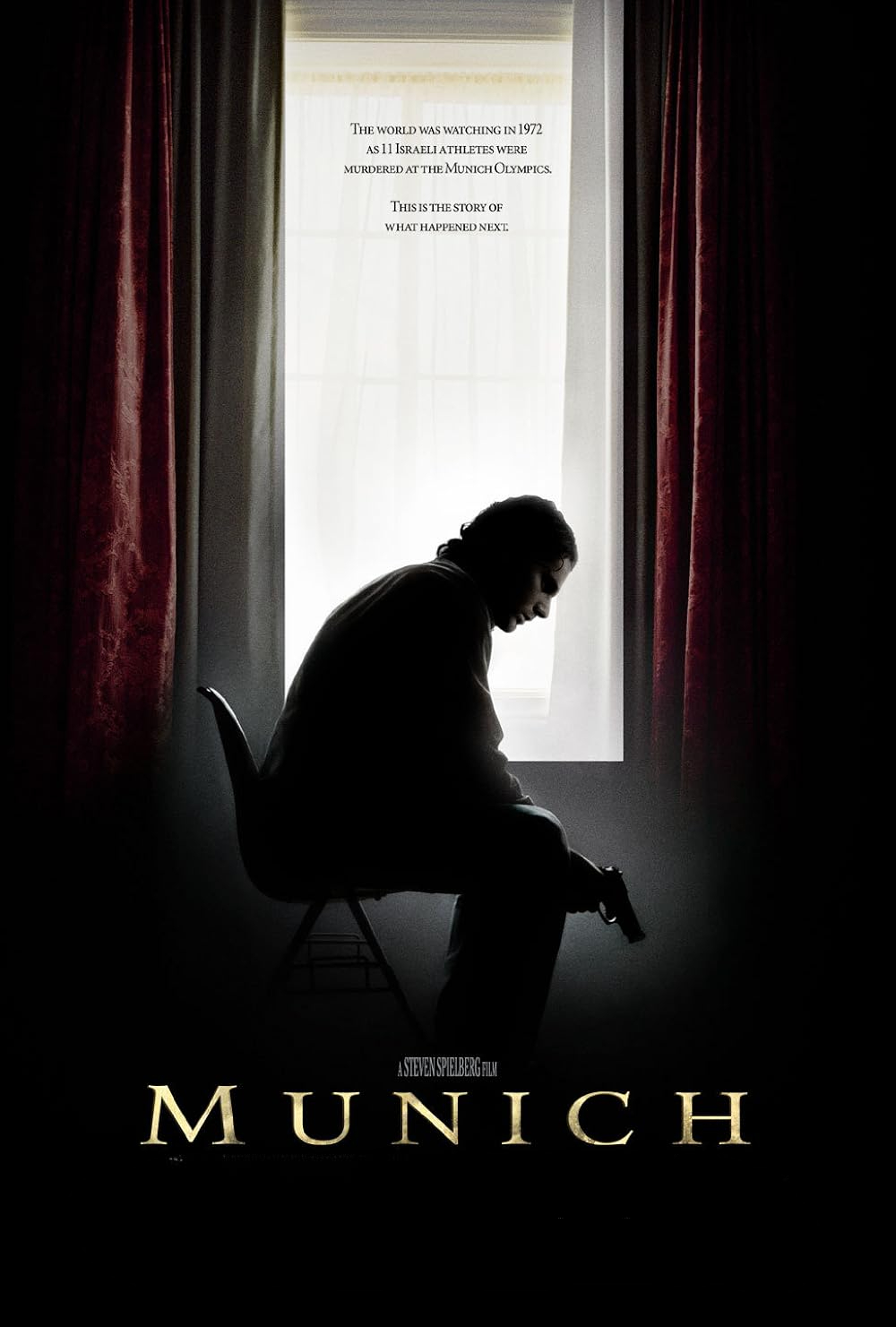
Review: Munich (dir. by Steven Spielberg)


If you’re looking for a comfortable, easily digestible thriller with clear-cut heroes and villains, Munich is going to be a tough sit. This 2005 film, now two decades old, finds Steven Spielberg operating at a peak level of craft, but it’s a cold and angry kind of mastery. It’s a dense, paranoid, and deeply unsettling historical drama that feels less like a movie and more like a wound that’s been picked at for years. Based on the book Vengeance, the film dramatizes the secret Israeli mission, “Operation Wrath of God,” to hunt down and assassinate the Palestinian militants responsible for the massacre of 11 Israeli athletes at the 1972 Munich Olympics. But here’s the kicker: this isn’t an action movie about a bunch of spies getting revenge and feeling good about it. Spielberg isn’t making a war film about who is right and who is wrong. Munich is a film about the ugly, corrosive nature of state-sponsored violence and the way it eats away at the soul of everyone involved. It’s a thriller, sure, but the tension isn’t built around whether the team will succeed, but around the psychological and moral cost of their success. There’s no triumph here, no victory lap—just the sinking realization that for every target they eliminate, the wound in the world only seems to get deeper.

The movie is anchored by a phenomenal performance from Eric Bana as Avner, the team’s leader. He’s a man of deep patriotism, handpicked for this mission by Prime Minister Golda Meir (Lynn Cohen) herself, but he’s completely unprepared for the psychological toll the job will take. He’s joined by a fantastic ensemble that includes Daniel Craig as a brutal and cold-blooded South African operative, and Mathieu Kassovitz as a toymaker turned reluctant bomb expert. They’re a tight, desperate group, and as they move from one European capital to the next, meticulously planning and executing assassinations, the initial sense of righteous duty slowly curdles into paranoia, guilt, and nihilism. The film doesn’t shy away from the violent acts, but it presents them not as a cause for celebration, but as messy, brutal affairs that often have unintended, horrific consequences—like a scene where a bombing intended for a target gets dangerously close to an innocent child. You can feel the weight of every decision pressing down on these men, and Spielberg makes sure you sit with that discomfort rather than brushing past it for the sake of pacing.

One of the most crucial—and still controversial—aspects of Munich is its willingness to humanize the Palestinian perspective. This isn’t a film that paints the Black September terrorists as caricatures of evil. In one of the film’s most powerful scenes, Avner and a PLO member named Ali (Omar Metwally) engage in a tense, philosophical debate about their respective claims to the land. Avner warns that the world will see the Palestinians as “animals” for their actions, to which Ali chillingly replies, “Yes, but then the world will see how they’ve made us into animals. They’ll start to ask questions about the conditions in our cages.” The film doesn’t excuse the terrorism, but it forces the audience to understand the desperation and statelessness that fuels it, presenting a horrifying symmetry where both sides see themselves as victims fighting for survival. It’s a gutsy move for a mainstream Hollywood director, especially in the mid-2000s, and it’s precisely that moral even-handedness that made the film so divisive upon release—and still makes it so damn compelling today.

And that’s where this film connects to a larger, darker moment in Spielberg’s career. Munich was released at the tail end of what some critics have rightly called his “Post-9/11 triptych,” alongside Minority Report (2002) and War of the Worlds (2005). These aren’t just three random films. They are all steeped in a profound sense of paranoia and fear of the outsider that was so prevalent in America after 9/11. Minority Report imagines a society where you’re arrested for a crime before you commit it; War of the Worlds literalizes the fear of a sudden, devastating attack on American soil; and Munich transposes those anxieties onto the Israeli-Palestinian conflict. Spielberg used this triptych to explore the American psyche’s newfound sense of vulnerability and its willingness to embrace extreme, morally ambiguous measures—like torture and preemptive strikes—in the name of security. It was a director grappling with a changed world, and Munich, with its focus on a secret, government-approved assassination squad, feels like his most potent and cynical entry in the series. You can almost hear the echo of post-9/11 rhetoric in every scene, as if Spielberg was holding up a dark mirror to his own country’s creeping acceptance of extrajudicial killing.

But the bleakest part of Munich is how it transcends even that specific historical and political moment. The film relentlessly returns to the theme of the “violence loop.” The team assassinates one target, and he is immediately replaced by someone even more radical. They get a hit, and there’s a retaliatory bombing. It’s a terrifyingly accurate depiction of what has continued to happen for decades after the film’s events. Avner realizes that their entire operation, the endless cycle of state-sponsored revenge, is ultimately pointless for achieving peace. It’s a desperate, bloody game of whack-a-mole that only ensures the conflict continues in perpetuity, a cycle of vengeance that simply feeds on itself. As the film shows, and as is still plain to see today, the violence doesn’t end when the “list” is completed; it just regenerates. The final scenes, where Avner finds himself unable to even sleep in his own bed, watching his young daughter with a haunted look, drive home that the real casualty of state-approved assassination isn’t just the targets—it’s the humanity of the people pulling the trigger. He’s won the tactical war, but he’s lost every single battle that actually mattered.

Ultimately, Munich is a masterclass in filmmaking that offers no easy answers, and watching it today, with the current geopolitical landscape looking more fractured than ever, its relevance hasn’t faded one bit—if anything, it’s sharper and more painful now than it was in 2005. The same arguments, the same grievances, the same bloody score-settling between Israel, the Palestinians, and their Arab allies are still playing out in real time, with no end in sight. And yet, for all its brutal honesty, the film also exposes a tragic truth: this movie, like so much of the discourse surrounding the conflict, will probably only deepen the divide between the two groups watching it, as each side can point to it and say, “See? That’s what they do to us. That’s our pain validated.” It becomes another piece of ammunition in an endless argument rather than a bridge toward understanding. The brilliant cinematography from Janusz Kaminski and the chilling, minimalist score from John Williams only add to that oppressive, paranoid atmosphere, making it not a film that will make you feel good about anything, but one that will make you think—and perhaps that’s exactly why it remains so damn relevant decades later.

So what’s the way out? The film doesn’t give you a manual, but it does whisper a desperate question between its frames: can either side actually step back from the brink long enough to see the loop they’re both trapped in? Because the violence loop isn’t a natural disaster—it’s a human creation, and what humans build, humans can theoretically unbuild. But that would require something infinitely harder than pulling a trigger or planting a bomb—it would require acknowledging that your own righteous suffering doesn’t cancel out the other side’s legitimate pain, it would require looking at the face of your enemy and seeing not a monster but a person who also loves their children and believes they’re fighting for survival. The film dares to suggest that the only real break in the cycle might come from exhaustion, from the sheer soul-crushing fatigue of burying one more generation, or from a moment of radical, almost insane empathy that makes someone say “enough” before the next retaliation.

Spielberg doesn’t offer that moment in the movie, because he knows it hasn’t happened yet in real life—Munich isn’t a prescription; it’s an autopsy. Every few years, when the news cycle inevitably rolls around to another flare-up in that tortured corner of the world, this movie comes back to mind not as a prophecy, but as a painfully accurate diagnosis. It’s a powerful, haunting reminder that the echo of old violence is never truly silent, and that in the long run, vengeance is often a debt that can never be repaid. If you go in expecting a straightforward revenge fantasy, you’ll walk out exhausted and conflicted. But if you go in ready to wrestle with some of the ugliest questions about justice, morality, and state power, then Munich will stick with you like a splinter you just can’t dig out—and maybe, just maybe, that splinter is the first tiny crack in the loop that someone, someday, will have the courage to break.

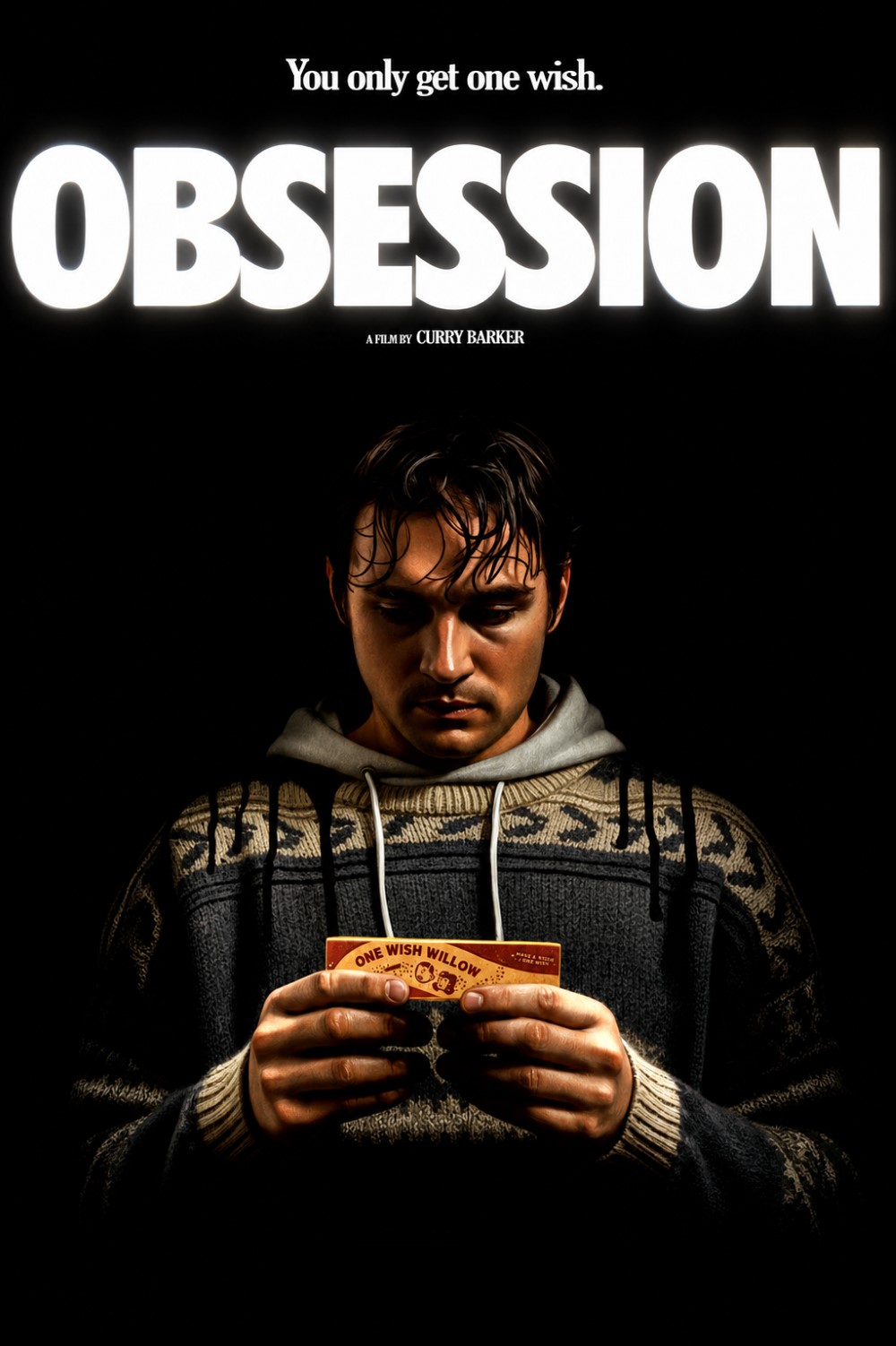
Review: Obsession (dir. by Curry Barker)


“Just because you chose this for her doesn’t make it less real.” — Phone Operator

There is something especially unsettling about horror films that begin with a simple emotional truth. Obsession, written and directed by Curry Barker, starts with a feeling most people understand: wanting someone to love you back. Barker takes that universal desire and twists it into something ugly, tragic, and terrifying. The result is a horror film that works both as a supernatural nightmare and as an uncomfortable examination of loneliness, entitlement, and emotional dependency.

The premise sounds deceptively simple. Bear, played by Michael Johnston, is a socially awkward young man hopelessly in love with his longtime friend Nikki, played by Inde Navarrette. Bear convinces himself that if circumstances were just slightly different, Nikki would finally realize he is the right person for her. When he discovers a supernatural object known as the “One Wish Willow,” he makes the disastrous decision to wish that Nikki would love him completely. Naturally, the wish mutates into something horrific, transforming Nikki’s affection into a violent and all-consuming obsession.

At its core, Obsession feels like an old-fashioned monkey’s paw story updated for the modern age. Barker takes the familiar “be careful what you wish for” premise and dials the nastiness up to 11. The film fully commits to the emotional ugliness of its concept, giving the well-worn trope a vicious bite that makes the movie far better than it has any reason to be. Instead of treating the supernatural element like a gimmick, Barker roots the horror in emotional selfishness and the terrifying consequences of trying to control another person’s feelings.

What makes the film work so well is that Barker avoids turning the story into a heavy-handed moral lecture. The script trusts the audience to understand the disturbing reality underneath Bear’s actions. Bear is not portrayed as a cartoon villain. He is insecure, lonely, emotionally immature, and quietly resentful. That complexity makes him far more unsettling because he feels recognizable. The film taps into a very modern type of “nice guy” entitlement, where affection is viewed less as mutual connection and more as something owed or deserved.

Michael Johnston gives an impressively layered performance as Bear. He never plays the character as openly monstrous right away. Instead, Johnston leans into Bear’s passivity and self-pity, making him seem like someone convinced life has unfairly denied him happiness. Even as events spiral out of control, Bear continues rationalizing his decisions instead of fully confronting the damage he has caused. Johnston manages to make the character pathetic, frustrating, and disturbing all at once.

Inde Navarrette delivers the film’s strongest performance as Nikki. Once the wish begins taking hold, Navarrette shifts between affection, emotional collapse, desperation, and outright menace with remarkable control. What makes her performance especially effective is that Nikki never stops feeling human beneath the horror. There is a lingering sadness to the character because the film makes it clear she is losing her autonomy piece by piece. That loss of agency becomes one of the movie’s most disturbing ideas.

More than anything, Obsession is about the horror of emotional suffocation. Barker exaggerates toxic relationship dynamics into supernatural horror, but the emotions underneath everything feel believable enough to sting. The film understands how frightening dependency can become when love starts turning into possession. In many ways, the supernatural curse almost feels secondary to the emotional damage unfolding between the characters.

One of the film’s biggest surprises is how confidently Barker handles tone. Considering his background in online comedy and internet content, it would have been easy for the movie to lean too heavily into irony or self-awareness. Instead, Obsession balances dark humor and psychological dread remarkably well. There are genuinely funny moments throughout the film, often rooted in painfully awkward social interactions, but the comedy never weakens the horror. If anything, it makes scenes more uncomfortable because the characters and situations feel recognizable.

Visually, the film punches far above its apparent budget. Barker and cinematographer Taylor Clemons create an atmosphere that feels claustrophobic and emotionally oppressive. The framing often leaves characters isolated within empty spaces, subtly reinforcing the loneliness and discomfort driving the story. The lighting also deserves praise, frequently bathing scenes in dim yellows, reds, and shadows that gradually make ordinary environments feel increasingly hostile.

The sound design is equally effective. Barker wisely avoids relying only on loud jump scares. Instead, the film builds tension through silence, distant noises, and subtle audio distortions that make scenes feel emotionally wrong before anything overtly frightening even happens. Combined with Rock Burwell’s unsettling score, the movie maintains a lingering sense of dread that hangs over nearly every scene.

When the horror finally erupts into violence, Barker shows admirable restraint. The graphic moments land hard because the emotional groundwork has already been carefully established. Some scenes are genuinely difficult to watch not simply because they are bloody, but because the violence feels directly tied to desperation, obsession, and loss of control. The film understands that emotional discomfort can often be more disturbing than gore itself.

If the movie has weaknesses, they mostly stem from Barker occasionally pushing the central metaphor a little too hard. Some later scenes become slightly obvious in their symbolism, and a few supporting characters feel underdeveloped compared to the leads. Still, those flaws never seriously damage the film because the central performances and atmosphere remain compelling throughout.

What ultimately makes Obsession stand out from many modern horror films is how emotionally specific it feels. Rather than chasing broad social commentary, Barker narrows his focus onto a very particular kind of emotional dysfunction. The film is less interested in making sweeping statements about relationships and more interested in examining the terrifying consequences of confusing love with ownership.

In that sense, the “One Wish Willow” works less as a magical object and more as a representation of selfish fantasy. Bear wants love without vulnerability, rejection, or reciprocity. He wants an easy shortcut to emotional fulfillment. The horror comes from realizing that genuine love cannot exist without freedom.

There are traces of earlier psychological horror films throughout Obsession. The movie occasionally recalls the obsessive fixation of Misery and the emotional body horror of Possession, though Barker filters those influences through a distinctly modern lens shaped by internet-age loneliness and social isolation. Yet despite those influences, the film never feels derivative. Barker’s voice as a filmmaker comes through clearly in both the emotional discomfort and escalating supernatural chaos.

Perhaps the most impressive thing about Obsession is how assured it feels for a filmmaker still early in his career. Barker directs with confidence, gradually tightening the emotional pressure until the movie becomes almost suffocating by its final act. By the end, the film reaches a level of tragic inevitability that feels earned rather than forced.

Obsession succeeds because it recognizes how frightening loneliness and emotional dependency can become when mixed with entitlement and fantasy. Beneath the supernatural premise is a painfully human story about people confusing obsession with love. Curry Barker turns that idea into a disturbing, darkly funny, emotionally bruising horror film that lingers long after the credits roll.

For a filmmaker making such an ambitious leap into feature-length horror, Barker delivers something remarkably confident and emotionally sharp. Obsession is creepy, uncomfortable, tragic, and surprisingly insightful. More importantly, it feels like the arrival of a filmmaker who understands how modern horror can reflect real emotional anxieties while still delivering an entertaining and deeply unsettling experience. In many ways, Barker joins the recent wave of younger horror filmmakers like Oz Perkins and Zach Cregger who have proven that horror, dread, and dark comedy do not have to work against each other. Like those directors, Barker understands how to blend discomfort, absurdity, and genuine emotional tension into a cohesive whole, creating a film that is as unsettling as it is unexpectedly funny.

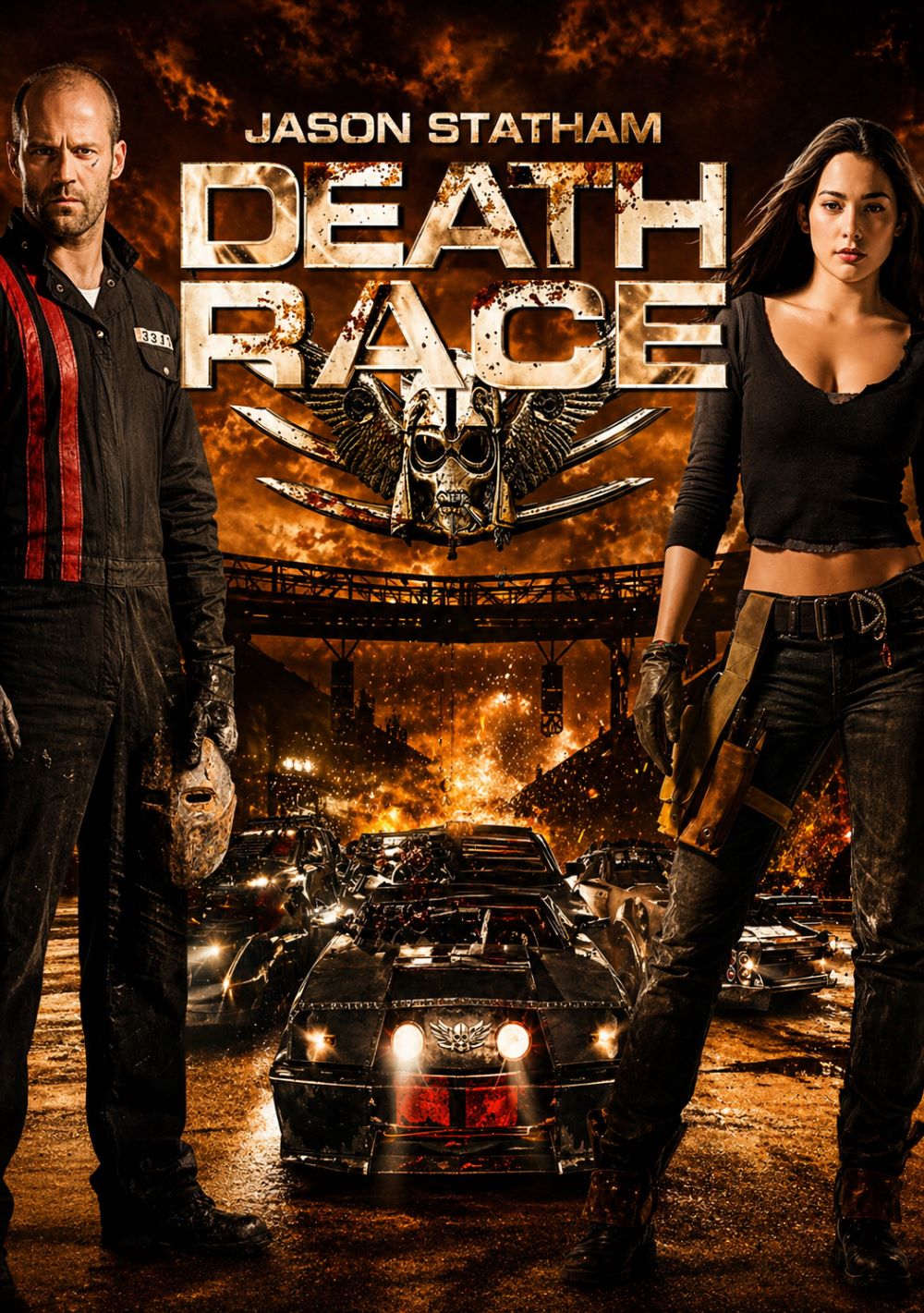
Guilty Pleasure No. 114: Death Race (dir. by Paul W.S. Anderson)


Death Race (2008) is the kind of movie that feels like it was engineered in a lab specifically to test how much nonsense an audience will tolerate as long as things explode every ten minutes. Directed by Paul W.S. Anderson, a filmmaker whose entire career seems built on the philosophy of “style over literally anything else,” the film doesn’t so much tell a story as it barrels through one at full speed, flipping off logic, subtlety, and occasionally even coherence along the way. And yet—this is the annoying part—it works. Not in a “this is a good film” sense, but in that grimy, late-night cable, “I probably shouldn’t be enjoying this as much as I am” way.

The premise is pure pulp: in a dystopian future where the economy has collapsed (because of course it has), prisons have turned into profit-generating entertainment hubs. The main attraction is the Death Race, a gladiatorial car battle where inmates drive weaponized vehicles and murder each other for the amusement of a bloodthirsty audience. Jason Statham plays Jensen Ames, a wrongfully convicted ex-racer forced to step into the role of a masked legend named Frankenstein. It’s as blunt and ridiculous as it sounds, and the movie never once tries to elevate it beyond that. There’s no pretense of social commentary that isn’t immediately undercut by another machine gun turret popping out of a car hood.

Anderson directs the whole thing like he’s permanently hopped up on energy drinks and early 2000s music video aesthetics. The camera is constantly moving, cutting, shaking, and occasionally losing track of what’s happening entirely. Action scenes are edited within an inch of their life, creating a sense of chaotic momentum that’s exciting in the moment but completely disposable five seconds later. It’s visual junk food—greasy, loud, and weirdly satisfying even when you know it’s terrible for you.

A huge part of why Death Race remains watchable—arguably the biggest reason—is the decision to cast Jason Statham in the lead. This is exactly the kind of role his entire screen persona was built for, and the film leans on that heavily. Statham doesn’t bring depth or complexity, but he brings something more valuable here: credibility. You believe he can survive this world. You believe he can drive, fight, and endure the endless barrage of chaos being thrown at him. In a movie this dumb, that kind of grounding goes a long way. Swap him out for a less naturally commanding actor, and the whole thing probably collapses under its own stupidity.

That’s not to say he’s delivering some kind of nuanced performance. He isn’t. He operates in that familiar Statham mode—minimal dialogue, maximum scowl, and a constant sense that he’s two seconds away from breaking someone’s arm. But that simplicity works in the film’s favor. He becomes the one stable element in an otherwise unhinged movie, a human anchor that keeps the madness from drifting into outright parody. The choice to center the film around him is one of the few decisions here that feels genuinely smart, even if everything surrounding it is chaos.

Then you’ve got Joan Allen, who plays the prison warden with a level of icy commitment that almost tricks you into thinking the movie has something deeper going on. She treats the Death Race like high art, which is both hilarious and oddly effective. There’s a strange tension between her seriousness and the film’s inherent stupidity that gives Death Race a bit more texture than it probably deserves. She’s acting in a better movie that doesn’t exist, and somehow that makes this one more watchable.

But let’s not kid ourselves—this is not a good film. The characters are paper-thin, the dialogue is aggressively functional, and the plot moves forward with the grace of a sledgehammer. Emotional beats land with a dull thud, and any attempt at stakes is drowned out by the next explosion or metal-on-metal collision. It’s the kind of movie where you can predict every major turn five minutes in advance and still not care because you’re too busy watching a car fire a missile at another car.

What makes Death Race oddly compelling, though, is how completely it commits to its own stupidity. There’s no wink to the audience, no self-aware humor trying to soften the edges. It plays everything straight, which paradoxically makes it feel more honest than a lot of “so bad it’s good” movies. It’s not trying to be clever or subversive—it just wants to show you armored cars smashing into each other while people scream and things explode. And on that level, it absolutely delivers.

There’s also something weirdly nostalgic about it. It feels like a relic of a very specific era of action filmmaking, where grit meant desaturated colors, shaky cameras, and protagonists who communicated exclusively through clenched jaws and short sentences. It’s pre-Mad Max: Fury Road, pre-the current wave of more thoughtfully constructed action cinema. Death Race exists in that awkward middle ground where filmmakers had access to bigger budgets and better effects but hadn’t quite figured out how to use them with any real finesse.

And yet, despite all its flaws—or maybe because of them—it’s entertaining. Not in a “this is a masterpiece” way, but in that guilty pleasure sense where you’re fully aware of how dumb it is and still having a good time. It’s a film that succeeds almost accidentally, powered by sheer momentum and a refusal to slow down long enough for you to think too hard about what you’re watching.

In the end, Death Race is a mess. A loud, clunky, overedited mess with delusions of intensity and a complete disregard for nuance. But it’s also a perfect example of a movie that’s entertaining despite itself. It shouldn’t work, and on paper, it really doesn’t. But between the explosions, the ridiculous premise, and—crucially—Statham’s perfectly calibrated presence, it finds a groove and sticks to it. You don’t respect it, you don’t admire it—but you kind of enjoy the hell out of it anyway.

Previous Guilty Pleasures

  1. Half-Baked
  2. Save The Last Dance
  3. Every Rose Has Its Thorns
  4. The Jeremy Kyle Show
  5. Invasion USA
  6. The Golden Child
  7. Final Destination 2
  8. Paparazzi
  9. The Principal
  10. The Substitute
  11. Terror In The Family
  12. Pandorum
  13. Lambada
  14. Fear
  15. Cocktail
  16. Keep Off The Grass
  17. Girls, Girls, Girls
  18. Class
  19. Tart
  20. King Kong vs. Godzilla
  21. Hawk the Slayer
  22. Battle Beyond the Stars
  23. Meridian
  24. Walk of Shame
  25. From Justin To Kelly
  26. Project Greenlight
  27. Sex Decoy: Love Stings
  28. Swimfan
  29. On the Line
  30. Wolfen
  31. Hail Caesar!
  32. It’s So Cold In The D
  33. In the Mix
  34. Healed By Grace
  35. Valley of the Dolls
  36. The Legend of Billie Jean
  37. Death Wish
  38. Shipping Wars
  39. Ghost Whisperer
  40. Parking Wars
  41. The Dead Are After Me
  42. Harper’s Island
  43. The Resurrection of Gavin Stone
  44. Paranormal State
  45. Utopia
  46. Bar Rescue
  47. The Powers of Matthew Star
  48. Spiker
  49. Heavenly Bodies
  50. Maid in Manhattan
  51. Rage and Honor
  52. Saved By The Bell 3. 21 “No Hope With Dope”
  53. Happy Gilmore
  54. Solarbabies
  55. The Dawn of Correction
  56. Once You Understand
  57. The Voyeurs 
  58. Robot Jox
  59. Teen Wolf
  60. The Running Man
  61. Double Dragon
  62. Backtrack
  63. Julie and Jack
  64. Karate Warrior
  65. Invaders From Mars
  66. Cloverfield
  67. Aerobicide 
  68. Blood Harvest
  69. Shocking Dark
  70. Face The Truth
  71. Submerged
  72. The Canyons
  73. Days of Thunder
  74. Van Helsing
  75. The Night Comes for Us
  76. Code of Silence
  77. Captain Ron
  78. Armageddon
  79. Kate’s Secret
  80. Point Break
  81. The Replacements
  82. The Shadow
  83. Meteor
  84. Last Action Hero
  85. Attack of the Killer Tomatoes
  86. The Horror at 37,000 Feet
  87. The ‘Burbs
  88. Lifeforce
  89. Highschool of the Dead
  90. Ice Station Zebra
  91. No One Lives
  92. Brewster’s Millions
  93. Porky’s
  94. Revenge of the Nerds
  95. The Delta Force
  96. The Hidden
  97. Roller Boogie
  98. Raw Deal
  99. Death Merchant Series
  100. Ski Patrol
  101. The Executioner Series
  102. The Destroyer Series
  103. Private Teacher
  104. The Parker Series
  105. Ramba
  106. The Troubles of Janice
  107. Ironwood
  108. Interspecies Reviewers
  109. SST — Death Flight
  110. Undercover Brother
  111. Out for Justice
  112. Food Wars!
  113. Cherry

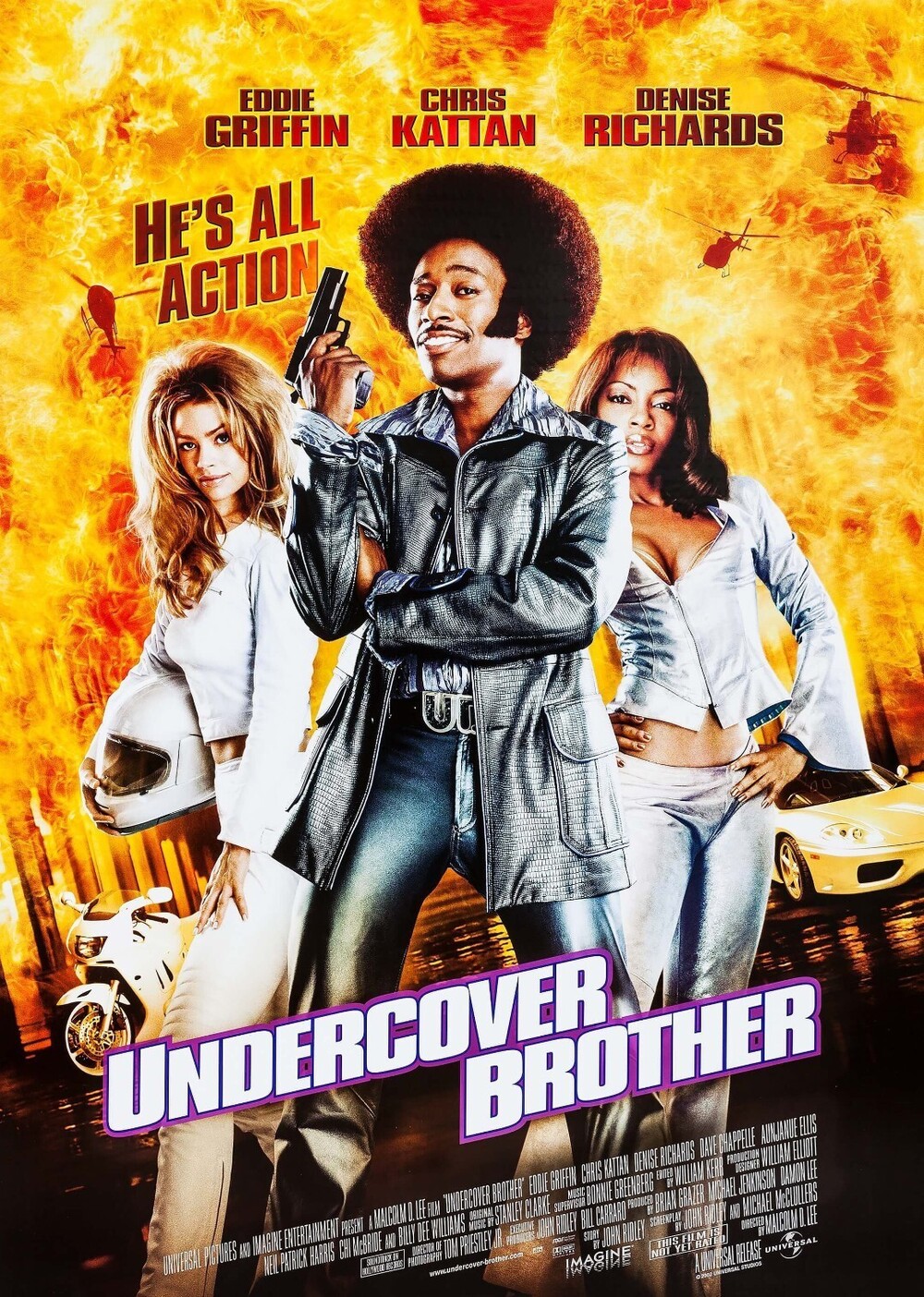
Guilty Pleasure No. 110: Undercover Brother (dir. by Malcolm D. Lee)


Undercover Brother is exactly the kind of movie that earns the phrase “guilty pleasure.” It is messy, broad, and often ridiculous, but it is also packed with enough energy, attitude, and sharp-enough satire to make its flaws feel like part of the joke rather than dealbreakers. The result is a comedy that may not always land cleanly, but it absolutely understands its own vibe and commits to it hard.

At the center of it all is Eddie Griffin, who gives the title character a big, swaggering, old-school cool that carries the movie through its shaggier patches. He plays Undercover Brother as a throwback spy hero with a giant Afro, loud fashion sense, and nonstop confidence, and that exaggerated persona is a big reason the film works as well as it does. Griffin’s performance is not subtle, but subtlety is not really the point here; he sells the movie’s cartoonish energy without making it feel lazy.

What makes Undercover Brother more than just a random parody is how committed it is to poking at both blaxploitation iconography and mainstream spy-movie clichés. The film was directed by Malcolm D. Lee and written from material based on John Ridley’s earlier animated series, and it leans into that satirical roots-and-gadgets formula with a lot of style. It clearly wants to be playful, but it also wants to say something about race, image, and the way Black identity gets packaged or watered down in pop culture.

That said, the movie is not exactly a model of precision. Some of the jokes are sharp and immediate, while others feel like they are still revving the engine long after the punchline should have arrived. The plot is basically an excuse to move from one set piece to another, and the film knows it, which helps, but it also means the whole thing can feel more like a high-speed sketch comedy than a fully shaped story. If you go in expecting airtight narrative logic, you will probably be annoyed; if you go in wanting a fast, funky send-up, you will have a much better time.

The supporting cast gives the movie a lot of its flavor. Dave Chappelle, Aunjanue Ellis, Billy Dee Williams, Chris Kattan, Denise Richards, and Neil Patrick Harris all add to the film’s chaotic mix, and the casting itself becomes part of the joke. Billy Dee Williams especially feels perfectly placed in a movie that is constantly riffing on cool, style, and old-school charisma, while Denise Richards gets a knowingly exaggerated role that plays into the film’s cartoonish battle between seduction and resistance.

What helps Undercover Brother age a little better than some early-2000s comedies is that it is not just throwing random nonsense at the screen for cheap laughs. There is a genuine satirical target here, and even when the movie gets clumsy, it still feels like it has a point of view. The movie clearly aims to be both goofy and observant, and even when the balance is uneven, it is hard not to appreciate the effort.

The best thing about Undercover Brother is its attitude. It moves like a movie that wants to be loud, stylish, and a little bit too much, and that confidence gives it a strange charm. The humor is often broad, sometimes cartoonish, and occasionally uneven, but the film’s willingness to fully commit to its bit makes it easy to forgive a lot. Even when the satire is more enthusiastic than elegant, the movie keeps its foot on the gas, and that momentum is a big part of its appeal.

Its biggest weakness is also the thing that makes it memorable: the movie can feel overstuffed with ideas, references, and gags, some of which work better than others. A few jokes feel a little dated now, and the film’s style of satire is not always as clean or as clever as it seems to think it is. Still, the movie has enough bite, personality, and goofy confidence that those rough edges become part of its charm instead of sinking it. That is the hallmark of a true guilty pleasure: you can see the flaws clearly, but you keep smiling anyway.

So Undercover Brother is not a perfect comedy, and it is not trying to be one. It is loud, silly, politically aware in a very pop-movie way, and shamelessly committed to its own funk. If you want polish, you will find plenty to criticize; if you want a movie with attitude, quotable energy, and the kind of swagger that makes its imperfections oddly lovable, this one delivers. It is a flawed satire, sure, but it is also a genuinely fun one, and that is why it still plays like a guilty pleasure worth revisiting.

Previous Guilty Pleasures

  1. Half-Baked
  2. Save The Last Dance
  3. Every Rose Has Its Thorns
  4. The Jeremy Kyle Show
  5. Invasion USA
  6. The Golden Child
  7. Final Destination 2
  8. Paparazzi
  9. The Principal
  10. The Substitute
  11. Terror In The Family
  12. Pandorum
  13. Lambada
  14. Fear
  15. Cocktail
  16. Keep Off The Grass
  17. Girls, Girls, Girls
  18. Class
  19. Tart
  20. King Kong vs. Godzilla
  21. Hawk the Slayer
  22. Battle Beyond the Stars
  23. Meridian
  24. Walk of Shame
  25. From Justin To Kelly
  26. Project Greenlight
  27. Sex Decoy: Love Stings
  28. Swimfan
  29. On the Line
  30. Wolfen
  31. Hail Caesar!
  32. It’s So Cold In The D
  33. In the Mix
  34. Healed By Grace
  35. Valley of the Dolls
  36. The Legend of Billie Jean
  37. Death Wish
  38. Shipping Wars
  39. Ghost Whisperer
  40. Parking Wars
  41. The Dead Are After Me
  42. Harper’s Island
  43. The Resurrection of Gavin Stone
  44. Paranormal State
  45. Utopia
  46. Bar Rescue
  47. The Powers of Matthew Star
  48. Spiker
  49. Heavenly Bodies
  50. Maid in Manhattan
  51. Rage and Honor
  52. Saved By The Bell 3. 21 “No Hope With Dope”
  53. Happy Gilmore
  54. Solarbabies
  55. The Dawn of Correction
  56. Once You Understand
  57. The Voyeurs 
  58. Robot Jox
  59. Teen Wolf
  60. The Running Man
  61. Double Dragon
  62. Backtrack
  63. Julie and Jack
  64. Karate Warrior
  65. Invaders From Mars
  66. Cloverfield
  67. Aerobicide 
  68. Blood Harvest
  69. Shocking Dark
  70. Face The Truth
  71. Submerged
  72. The Canyons
  73. Days of Thunder
  74. Van Helsing
  75. The Night Comes for Us
  76. Code of Silence
  77. Captain Ron
  78. Armageddon
  79. Kate’s Secret
  80. Point Break
  81. The Replacements
  82. The Shadow
  83. Meteor
  84. Last Action Hero
  85. Attack of the Killer Tomatoes
  86. The Horror at 37,000 Feet
  87. The ‘Burbs
  88. Lifeforce
  89. Highschool of the Dead
  90. Ice Station Zebra
  91. No One Lives
  92. Brewster’s Millions
  93. Porky’s
  94. Revenge of the Nerds
  95. The Delta Force
  96. The Hidden
  97. Roller Boogie
  98. Raw Deal
  99. Death Merchant Series
  100. Ski Patrol
  101. The Executioner Series
  102. The Destroyer Series
  103. Private Teacher
  104. The Parker Series
  105. Ramba
  106. The Troubles of Janice
  107. Ironwood
  108. Interspecies Reviewers
  109. SST — Death Flight

Review: Tank (dir. by Marvin J. Chomsky)


“There comes a time when a man has to stand up and be counted.” — Zack Carey

The 1984 action‑drama Tank is a small‑town parable dressed up as a military gimmick picture: an aging Army sergeant major, a battered old Sherman tank, and a corrupt sheriff. At its best, the film leans into James Garner’s quiet charisma and the absurdly specific “one man versus a whole county” premise; at its worst, it staggers under inconsistent tone and a plot that veers between heartfelt family‑drama and almost cartoonish vigilantism. Taken as a product of the early‑mid‑1980s, however, Tank holds up as a reasonably entertaining, if not especially deep, genre hybrid that works more through Gardner’s presence and a few solid set pieces than through psychological complexity or formal ambition.

James Garner plays Zack Carey, an Army sergeant major who moves his family to a small Georgia town near a training base, where he has acquired a battle‑worn M4A3 Sherman tank as a personal hobby and morale project. The setup is already a little out of the ordinary: an enlisted man whose side hustle is maintaining a World War II relic, while his wife LaDonna (played by Shirley Jones) quietly pushes back against the constraints of Army life and small‑town politics. The film’s opening stretches the believability of that scenario thin, but Garner’s easygoing authority and dry humor sell the idea that Zack is exactly the kind of practical, no‑nonsense soldier who would grow attached to a tank and treat it like a second family member. The script uses this setup to position the vehicle not just as hardware, but as a symbol of the character’s livelihood, dignity, and sense of duty.

The trigger for the conflict is an incident at a local bar, where Zack intervenes when a local deputy, who also moonlights as a pimp, roughs up a teenage prostitute named Sarah. The sheriff, Eugene Buelton (played with oily menace by C. Thomas Howell), is deeply corrupt and runs the town like a fiefdom, using his deputies to intimidate anyone who crosses him. When Zack’s teenage son, Billy, is later framed for a crime and thrown into a primitive prison camp, the fuse is lit. The film’s moral map is deliberately simple: Buelton is cartoonishly evil, Buelton’s deputies are unreliable tools of his will, and the Careys are painted as upright, essentially decent people caught in an unjust system. That simplicity works in Garner’s favor, because it lets the film focus on emotional stakes—father‑son loyalty, a wife’s fear for her family—rather than intricate political nuance.

What gives Tank much of its energy is the moment Zack decides to fight back with the only weapon he truly controls: his Sherman. The image of a lone, aging non‑commissioned officer rolling down country roads in a clanking World War II tank is inherently cinematic, and director Marvin J. Chomsky milks it for both action and symbolism. The scenes where Zack smashes through the sheriff’s office, disrupts the local jail, and later drives straight into the work farm to free Billy are played with a pulpy, almost comic‑strip bravado. The tank becomes a rolling moral absolutist: clumsy, loud, and impossible to ignore, cutting through the town’s layers of bureaucracy and intimidation in a way that mirrors Zack’s own frustration with a justice system that refuses to protect his son. The film’s action sequences are not particularly innovative by modern standards, but they benefit from the authenticity of the M4A3 and the straightforward choreography that lets the vehicle feel like a physical presence rather than a CGI abstraction.

Where Tank runs into trouble is in its fluctuating tone and some of its secondary choices. The subplot involving Sarah, the teenage prostitute, is handled with mixed success. On one hand, it adds a layer of social commentary about exploitation and small‑town complicity; on the other, it sometimes feels tacked on, introduced more as a narrative convenience than a fully developed character arc. The film wants to position her as a sympathetic victim who finds a kind of makeshift family inside the tank, but the material doesn’t dive deep into her background or inner life, leaving her more of a device than a rounded personality. This uneven handling reflects a broader issue: the movie vacillates between being a gritty crime drama, a family‑centric tearjerker, and a lighthearted action‑comedy. At times it feels like a made‑for‑television movie with a slightly bigger budget, hit by the same kind of tonal indecision that often plagued mid‑tier 1980s genre pictures.

Garner’s performance is the single element that keeps Tank consistently watchable. His Zack Carey is neither a cartoon hero nor a brooding anti‑hero; he’s a working‑class soldier approaching the end of his career, tired of compromise and willing to push back when pushed too far. Garner underplays the action‑hero theatrics, relying instead on quiet resolve, a dry sense of humor, and a lived‑in weariness that makes Zack feel like someone you might have actually met in an Army post or small town. Shirley Jones, as his wife, brings a grounded warmth to the domestic scenes, and the dynamic between Zack and his son Billy feels occasionally sentimental but never entirely false. The relationship between father and son anchors the film’s more outlandish elements, turning the tank chase into a visible metaphor for a father’s desperation to protect his child in a system that treats both as expendable.

Visually, Tank is workmanlike rather than stylish. The Georgia countryside is shot in broad daylight, with an emphasis on wide shots that showcase the tank moving through fields, back roads, and small towns. The tank itself is the film’s most vivid visual motif, a hulking, almost anachronistic machine that looks slightly out of place in a 1980s setting, yet somehow believable as the relic of a bygone era carried forward by a man who still believes in clear‑cut notions of right and wrong. The production favors practical effects and real locations over glossy stylization, which gives the material a modest, sometimes cheap‑looking quality but also lends it a concrete, lived‑in feel. The score, composed by Lalo Schifrin, adds a number of flavors—military marches, light jazz, and even a faintly disco‑tinged theme—further underscoring the film’s genre‑mixing instincts without always achieving cohesion.

Thematically, Tank leans heavily on the idea of individual resistance against corrupt authority. The sheriff’s abuse of power, the rigged legal process, and the near‑absence of any higher‑level oversight all feed into a classic American underdog narrative: one man, one tank, and a small band of allies taking on a system that has long since stopped pretending to be fair. The film stops short of overtly political commentary, but it clearly sympathizes with the notion that ordinary people sometimes have to go outside official channels when those channels are rigged against them. At the same time, the movie softens its edges with a crowd‑pleasing finale that reframes Zack and his allies as folk heroes, welcomed by a gathering of onlookers at the Tennessee border. This turn toward feel‑good spectacle undercuts some of the grittier implications of the earlier material, but it also fits the early‑1980s appetite for triumphant, crowd‑friendly resolutions.

As a time capsule of 1980s genre filmmaking, Tank is more interesting than it is groundbreaking. It is neither a forgotten masterpiece nor a laughably bad curio; it sits somewhere in the middle, powered by James Garner’s steady presence and the appealingly simple conceit of a World War II tank as a one‑man war machine. The film’s weaknesses—a schematic morality play, uneven tone, and underdeveloped secondary characters—are real, but they don’t completely erase its modest strengths. If viewed as a straightforward, mid‑tier action‑drama with a strong central performance and a memorable mechanical co‑star, Tank emerges as a fair, unpretentious, and occasionally rousing piece of 1980s entertainment.

Review: Dune (dir. by David Lynch)


“The sleeper has awakened.” — Paul “Muad’Dib” Atreides

David Lynch’s Dune is one of those movies that somehow manages to be both a spectacular failure and a strangely hypnotic piece of cinema at the same time. It feels like a film willed into existence through pure creative tension: on one side, Frank Herbert’s dense, political, and spiritual sci‑fi novel; on the other, David Lynch’s surreal, psychological, dream‑logic sensibility. The result is a singular oddity—visually bold, dramatically uneven, and endlessly fascinating if you’re in the mood for something that feels more like a hallucination than a conventional space opera.

To call the adaptation ambitious is underselling it. After the collapse of Alejandro Jodorowsky’s infamous attempt to adapt Dune, the project eventually landed at Universal with producer Dino De Laurentiis, and Lynch—fresh off The Elephant Man—was brought in to turn Herbert’s galaxy‑spanning book into a two‑hour‑ish feature. On paper, it seems like inspired casting: Lynch had the visual imagination and emotional intensity to do something memorable with the material. But he was never a natural fit for streamlined blockbuster storytelling. His instincts live in mood, subconscious imagery, and uneasy psychological textures rather than clean plot mechanics. You can feel that clash all over the final film, and it’s part of what makes it so weirdly compelling.

Right from the opening, Dune doesn’t hold your hand. Princess Irulan’s floating head lays out a massive info‑dump about spice, the Imperium, and Arrakis that plays like someone reading you the glossary at the back of a sci‑fi novel. It’s dense, awkward, and kind of charming in its sincerity. The movie takes Herbert’s universe extremely seriously—no wink, no irony, no attempt to sand off the stranger edges. The Bene Gesserit, mentats, feudal houses, and prophecies are all presented straight, as if the audience will either keep up or be left behind. There’s something almost punk about that level of commitment.

Kyle MacLachlan, in his debut as Paul Atreides, is perfectly cast for Lynch’s take on the character. He’s got this earnest, slightly naive presence that gradually hardens as the story pushes him toward messiah status. Instead of leaning into a swashbuckling hero archetype, Lynch frames Paul’s evolution as something interior and dreamlike, almost like a spiritual awakening happening inside a hostile universe. Paul’s visions aren’t giant, crystal‑clear CGI prophecy sequences; they’re fragmented, flickering images, whispers, and flashes of desert and blood. You can feel Lynch trying to drag the sci‑fi epic into his own subconscious, even if the narrative doesn’t always keep up.

The supporting cast is packed with strong, sometimes delightfully bizarre performances. Francesca Annis gives Lady Jessica a sensual, haunted calm that fits the Bene Gesserit’s mix of discipline and manipulation. Jurgen Prochnow’s Duke Leto radiates dignified doom; he feels like a man who knows he’s walking into a trap but can’t step off the path. Then you get to the Harkonnens, where Lynch just lets his freak flag fly. Kenneth McMillan’s Baron is a grotesque comic‑book monster, oozing, cackling, floating on anti‑grav tech, and reveling in cruelty. It’s not subtle, but it is unforgettable. And of course Sting as Feyd‑Rautha, stalking around in barely‑there outfits and sneering like a rock star beamed in from another film entirely, just adds to the movie’s fever‑dream energy.

Visually, Dune is a feast and sometimes a bit of a choke. The production design leans into a kind of retro‑futurist baroque: cavernous sets, ornate technology, and spaces that feel less like functional environments and more like places out of a dark fantasy. Lynch and cinematographer Freddie Francis infuse everything with shadow, smoke, and texture, so even the quiet scenes feel heavy and loaded. The sandworms are huge, tactile, and worshipful in scale; the way they burst from the desert feels more like a religious manifestation than a monster attack. Even if you’re lost in the plot, the images stick with you—daggers, stillsuits, weirding whispers, blood on sand.

The sound and music do a ton of work in giving the film its identity. The score, primarily by Toto with contributions from Brian Eno, is this fusion of 80s rock sensibility and orchestral grandeur. It shouldn’t work, but it does; the main theme swells with tragic heroism, while other cues veer into eerie, synthy territory that matches Lynch’s off‑kilter tone. The sound design around the “weirding” abilities, the internal monologues, and the roar of the sandworms all help sell the world even when the script is sprinting past exposition. It’s one of those films where you might not fully grasp every detail, but the combined force of image and sound makes you feel like you’ve visited a real, deeply strange place.

The big structural problem, and the thing that most clearly separates Lynch’s adaptation from Denis Villeneuve’s two‑part version, is time and emphasis. Lynch is trying to cram the entire arc of Dune into a single film, and that means the plotting goes from methodical to breakneck halfway through. The first half lingers on the setup—Caladan, the move to Arrakis, the betrayal—while the second half rockets through Paul’s Fremen transformation, the guerrilla war, the sandworm riding, and the final confrontation. Subplots are hinted at and dropped, character arcs feel truncated, and the voiceover is forever trying to patch gaps the edits created. Themes like ecological transformation, the manipulation behind religious prophecy, and the long‑term horror of Paul’s rise are mostly reduced to gestures.

The best way to see Dune in Lynch’s version is actually through the extended cut, which adds a bit more context to certain scenes and lets the film breathe slightly more than the theatrical release. The theatrical cut is so aggressively compressed that pieces of motivation and setup just vanish, leaving the story feeling even more disjointed. The extended version restores some of the connective tissue—especially around Paul’s early time with the Fremen, the political maneuvering in the lead‑up to the final act, and the way certain characters orient themselves in the larger conflict. It doesn’t magically fix the studio‑driven structure or the inherent weirdness of Lynch’s choices, but it does make the film feel a little more complete, a little closer to the director’s original vision. It’s still messy, but less like a rushed homework assignment and more like a genuinely eccentric, if compromised, longform take on Herbert’s world.

Tonally, Lynch and Villeneuve are almost mirror images. Lynch’s film is cramped, loud in its weirdness, and often grotesque, playing like a baroque horror‑opera about destiny. Villeneuve’s is stately, slow‑burn, and solemn, more interested in the weight of empire, colonialism, and religious manipulation. Even their takes on Paul are distinct. In Lynch’s film, Paul ultimately plays more like a triumphant chosen one; whatever ambiguity is there gets overshadowed by the climactic victory and the literal act of making it rain as a grand, almost celebratory miracle. Villeneuve leans harder into the darker implications: Paul is framed as a potentially dangerous figure whose rise may unleash something terrible, and his two‑part arc emphasizes the holy war and fanaticism coalescing around him instead of treating his ascension as a clean win. Where Lynch’s ending lands somewhere between pulp myth and studio‑mandated uplift, Villeneuve’s execution feels closer to a tragedy about messianic power.

Knowing all that, Lynch’s Dune ends up feeling like a relic from an era when studios occasionally handed gigantic, unwieldy properties to filmmakers with intensely personal styles and just hoped for the best. It doesn’t “work” in a conventional plot sense, and if you’re coming to it after the sleek coherence of Villeneuve’s films, it can feel like a chaotic, cluttered alternate‑universe version of the same story. But that alternate universe has its own power. There’s a raw, handmade intensity to Lynch’s take—a sense that he’s trying to turn Dune into a waking dream about destiny, decay, and the seduction of power, even as the studio scissors are hacking away at his vision.

In the end, David Lynch’s Dune is a beautifully broken thing: a movie that fails as a straightforward adaptation but succeeds as a cinematic experience you can’t quite shake. Villeneuve gives you a clearer, more faithful, and philosophically aligned Dune, the one that explains itself and lets you sit with its implications. Lynch gives you the nightmare version, messy and compromised, but pulsing with strange life. If Villeneuve’s two‑part saga is the definitive modern telling, Lynch’s film—especially the extended cut—remains the haunting alternate path, a vision of Arrakis filtered through a very particular mind, sandblasted, grotesque, and unforgettable.

Review: Sneakers (dir. by Phil Alden Robinson)


“The world isn’t run by weapons anymore, or energy, or money. It’s run by little ones and zeroes, little bits of data. It’s all just electrons.” — Cosmo

Sneakers is one of those early-’90s studio thrillers that feels oddly cozy for a movie about global surveillance and information control. It plays like a hangout movie that just happens to revolve around a world-breaking black box, and whether that balance works for you will pretty much decide how much you click with it.

Set in San Francisco, Sneakers follows Martin Bishop (Robert Redford), a one-time radical hacker now leading a boutique team that gets paid to break into banks and corporations to test their security. When a pair of supposed NSA agents lean on him about a skeleton in his past, they strong-arm him into stealing a mysterious “black box” from a mathematician, which turns out to be a codebreaker capable of cracking pretty much any system on Earth. From there, the crew gets pulled into a bigger conspiracy involving shady figures and high stakes, with Martin confronting echoes from his activist days.

The first thing that jumps out about Sneakers is the cast, which is frankly stacked even by modern standards. Redford brings an easy, weathered charm to Bishop; there’s a low-key joke baked into the movie that this legendary leading man is now playing a guy who looks like he spends more time worrying about his back pain than saving the world, and it works. He’s surrounded by a motley crew: Sidney Poitier’s ex-CIA operative Crease, Dan Aykroyd’s conspiracy-addled tech nut Mother, David Strathairn’s blind audio savant Whistler, and River Phoenix’s eager young hacker Carl. Mary McDonnell rounds things out as Liz, Martin’s ex, who gets roped back into his orbit and ends up doing some of the film’s most memorable social-engineering work.

What makes this lineup click—and really shine—is how effortlessly the ensemble works together, especially with Robert Redford and Sidney Poitier anchoring it as the team’s leaders. Redford’s Bishop is the steady, pragmatic brain, always one step ahead but grounded by his regrets, while Poitier’s Crease brings that sharp-edged authority from his CIA days, barking orders with a mix of gruffness and loyalty that keeps everyone in line. Their dynamic is electric: you get these moments where Bishop’s quiet scheming bounces off Crease’s no-nonsense intensity, like when they’re coordinating a break-in and trading barbs mid-scheme, and it sells the years of trust they’ve built. It elevates the whole group, giving the younger or quirkier members—Mother’s wild theories, Whistler’s uncanny ears, Carl’s fresh energy—a solid foundation to riff off, turning what could be chaos into a tight, believable unit. Phil Alden Robinson directs the film almost like an ensemble comedy interrupted by bursts of espionage, so the banter and the little grace notes between jobs end up being as memorable as the heists themselves. There’s a looseness to the way the team bickers, teases, and riffs on each other that sells the idea they’ve been doing this for years, long before the plot kicked in. You feel that especially in scenes where they’re all huddled around some piece of tech or puzzling out a clue; the script allows them to overlap, crack side jokes, and be fallible instead of treating them like slick super-spies who never misstep.

Tonally, the movie walks an interesting line. On one hand, this is very much a tech thriller about the power of information, with the ominous “Setec Astronomy” anagram (“too many secrets”) tying it all together. On the other, this is a film where an extended sequence revolves around tricking a socially awkward engineer on a date so they can steal his voice patterns and credentials, and the whole thing plays like a romantic caper more than anything. Robinson leans hard into suspense in key stretches—most notably toward the end, where tension builds through clever set pieces involving motion sensors, improvised skills, and closing threats—but even then the movie never loses its sense of mischief.

That playfulness can be both a strength and a limitation. The upside is obvious: Sneakers is fun. It’s easy to watch, easy to rewatch, and it rarely drowns you in jargon for the sake of sounding smart. Instead, it abstracts the tech into clear stakes—this box breaks codes, this system controls money and power—so you always understand the “why” behind every scheme even if you don’t follow every “how.” The downside is that, for a movie nominally about the terrifying implications of a universal decryption key, it doesn’t dig as deeply into the horror of that idea as it could. It gestures at themes of privacy, state overreach, and the weaponization of data, but it’s more interested in using those ideas as a playground than as something to rigorously interrogate.

Viewed from 2026, the tech is obviously dated—landlines, old terminals, magnetic cards—but that almost works in the film’s favor now. There’s a retro-futurist charm to seeing characters talk about “ones and zeroes” and the power of information as if they’re whispering forbidden knowledge, when today that conversation is basically the nightly news. At the time, the film was praised for being ahead of the curve on the idea that whoever controls data controls everything, and you can still feel that prescience. The irony is that what was once cutting-edge has softened into a kind of warm nostalgia, which might be why the movie has quietly settled into cult-favorite status rather than staying in the mainstream conversation.

On a craft level, the movie is sturdy across the board. John Lindley’s cinematography keeps things bright and clean rather than shadow-saturated, which reinforces that lighter tone; San Francisco looks lived-in and slightly mundane, not like a glossy cyber-noir playground. James Horner’s score is a big asset: a jazz-inflected, airy sound that gives scenes a sense of cool rather than danger, which again nudges things toward caper more than hard thriller. It’s the kind of soundtrack that sneaks into your head and quietly sets the mood without demanding too much attention, and a lot of fans single it out as one of his more underappreciated efforts.

If there’s a major weak spot, it’s probably in how the film handles its big ideas and antagonists. The central conflict draws on ideological clashes from the characters’ pasts, but it mostly serves as a charismatic foil rather than a fully fleshed-out debate. The story doesn’t push too hard on challenging cautious pragmatism versus radical change, or probe deeply into who benefits from the status quo. For a tale built on “too many secrets,” the moral landing feels predictable rather than revelatory.

The film also shows its age in how it uses certain characters, especially Liz and Carl. McDonnell gets moments to shine—her date with Werner Brandes is a highlight—but Liz is often pushed to the side once the plot machinery gets going, which is a shame given the sparks between her and Redford. River Phoenix’s Carl is similarly underused; he’s the young blood in a team of older pros, and you can see hints of a more emotionally grounded arc there, but the film keeps him mostly in comic-relief mode. It doesn’t derail the movie, but it does contribute to the sense that Sneakers is more interested in being a breezy ensemble hang than in fully developing everyone it introduces.

Still, it’s hard to deny the movie’s overall charm. The central heist beats are cleanly staged, the reversals are satisfying without being overcomplicated, and the script gives almost every member of the team at least one clutch contribution so it feels like a true group effort. The later stretches cleverly tie together the tech setup and character dynamics, ending on a light coda that underscores the film’s affection for its quirky crew over global intrigue.

As for how it holds up, Sneakers isn’t an untouchable classic, but it’s a very easy film to recommend if you have any affection for ’90s thrillers, ensemble casts, or tech-adjacent stories that don’t drown you in circuitry diagrams. Some of its politics feel glib, some of its gadgets are charmingly antique, and its big questions about Information Age ethics are more backdrop than deep dive. But the film’s mix of laid-back humor, light suspense, and grounded, slightly rumpled characters gives it a distinct flavor that a lot of modern, hyper-slick hacker movies lack.

If you go in wanting a serious, hard-edged exploration of cyber-warfare and state power, Sneakers will probably feel like it’s only skimming the surface. If you’re in the mood for a smart, lightly twisty caper that lets you spend two hours with a killer cast tossing around clever dialogue amid escalating capers, it’s still a very satisfying watch.

Review: Strange Days (dir. by Kathryn Bigelow)


“Memories are meant to fade, Lenny. They’re designed that way for a reason.” — Lornette “Mace” Mason

Kathryn Bigelow’s Strange Days plunges into a gritty, near-future Los Angeles teetering on the edge of the millennium, where illegal “SQUID” technology lets people hijack others’ sensory experiences, fueling a black-market addiction to raw thrills. Released in 1995 with a screenplay by James Cameron and Jay Cocks, the film stars Ralph Fiennes as Lenny Nero, a shady ex-cop dealing these clips amid escalating racial tensions and urban chaos. At over two hours, it mixes cyberpunk visuals with thriller tension, crafting an immersive world that pulses with sensory overload and moral ambiguity.

The story opens with a heart-pounding sequence—a robber’s point-of-view heist captured in one seamless, breathless shot that drops you right into the adrenaline-fueled action, setting a template for the film’s signature subjective dives into chaos. Lenny navigates this underworld, peddling clips of highs and dangers to escape his own regrets, especially over a past love, singer Faith Justin, brought to life by Juliette Lewis with vulnerable intensity that captures the pull of faded dreams. He pulls in his loyal bodyguard Mace, Angela Bassett delivering a fierce, grounded performance, as a mysterious clip hints at deeper corruption involving cops and power players in the city, drawing them into a web of intrigue that tests loyalties amid the neon haze. Bigelow leans into the tech’s seductive pull, where users feel every rush or rush of emotion, blurring lines between observer and participant in uncomfortably real ways that linger long after the credits roll.

Visually, the film explodes off the screen, with cinematographer Matthew Leonetti’s dynamic camera and Bigelow’s high-octane style painting L.A. as a neon-drenched maze of helicopters, crowds, and holographic distractions that feel alive and oppressive. That kinetic opening blends POV chaos with slick editing that amps the disorientation, making every frame pulse with urgency. The world feels authentically grimy and multicultural, alive with New Year’s Eve energy in clubs and streets, evoking millennial anxiety through thumping sound design and distorted audio bleeds that heighten the sensory assault. Bigelow channels her action roots into visceral set pieces that turn the future into something tangible and tense, rewarding close attention to the details that build immersion, from flickering holograms to rain-slicked streets buzzing with tension.

Fiennes captures Lenny’s sleazy charisma perfectly—a sweaty, chain-smoking hustler whose charm masks desperation, keeping him oddly relatable even as his flaws pile up in moments of quiet vulnerability. Bassett dominates as Mace, a tough wheelwoman with unshakeable integrity, her presence anchoring the frenzy and elevating every exchange with quiet strength that cuts through the chaos like a blade. Lewis adds raw edge to Faith, trapped in a web of influence and ambition, her scenes crackling with desperation and fire. Tom Sizemore brings twitchy noir flavor as Max, Lenny’s private investigator buddy who adds layers of unreliable grit to their partnership, his manic energy bouncing off Fiennes in tense, believable banter. The cast meshes well in the overload, though some peripheral figures lean into cyberpunk stereotypes like street dealers and digital oddities, occasionally stretching the vibe thin without fully fleshing out their roles amid the relentless pace.

At its core, Strange Days digs into tech’s grip on empathy in a numb world, where SQUID clips turn voyeurism into full-body complicity, raising tough questions about detachment, consent, and the thrill of borrowed lives. Lenny’s habit of replaying personal moments underscores the addictive pull of reliving the past, turning memory into a dangerous escape that erodes real connections. Bigelow threads in sharp commentary on racism and authority, drawing from real ’90s unrest, with Mace pushing for truth amid systemic shadows in ways that feel urgent and unflinching, her moral compass a steady force against the moral rot. The infamous rape scene stands out as a gut-wrenching pinnacle of this approach, forcing viewers into the perpetrator’s twisted perspective via SQUID playback, amplifying the victim’s terror and the assailant’s depravity to confront voyeuristic horror and power imbalances head-on without pulling punches or easy outs—its raw intensity is jarring, deliberately so, to expose the ethical rot at the tech’s heart. The female-led perspective highlights abuses thoughtfully, adding layers to the spectacle and giving the film a distinctive edge that balances exploitation with unflinching critique.

That said, the film isn’t without bumps, as the plot weaves a tangled web of alliances and betrayals that can feel convoluted under the sensory barrage, occasionally losing focus amid the noise and demanding sharper clarity to match its ambition. Its 145-minute runtime sags midway with Lenny’s brooding and repetitive demos, testing patience before ramping up to its feverish peaks, where the editing could trim some fat for tighter momentum. The climax aims for catharsis amid riots and revelations but lands unevenly, with a hopeful turn that feels rushed or tidy in spots, underplaying certain social threads post-buildup and diluting their harder-hitting potential just when they build to a roar. Some effects show their age, like glitchy clip transitions that disrupt rather than enhance the immersion at times.

Still, these rough edges can’t overshadow the film’s bold highs. Bigelow’s direction thrives on discomfort, using the SQUID concept to mirror how media desensitizes us, making every clip a window into ethical quicksand. The sound design deserves special mention—bass-heavy tracks and visceral screams that bleed from headsets create a claustrophobic intensity, amplifying the tech’s invasive allure. Action beats, from high-speed chases to brutal confrontations, showcase Bigelow’s knack for kinetic choreography, with Bassett’s physicality in the driver’s seat stealing the show. Lenny’s arc, flawed as it is, lands with pathos, his hustler’s denial cracking under pressure to reveal flickers of redemption tied to loyalty and loss.

Strange Days delivers highs that exhilarate and lows that challenge, mirroring its own addictive clips—a raw, uneven ride pulsing with Bigelow’s bold vision that thrives on discomfort and connection. Mace’s decency offers human spark amid the dystopia, balancing provocation with heart in a way that elevates the whole, her bond with Lenny grounding the spectacle in something real. It’s provocative cyberpunk for those craving immersion with bite, a film that doesn’t just show a future but makes you live it, flaws and all, leaving you wired and wary. Fire it up if you’re ready to jack in and feel the rush—just brace for the crash.

Guilty Pleasure No. 92: Brewster’s Millions (dir. by Walter Hill)


Walter Hill’s Brewster’s Millions (1985) isn’t a perfect movie by any stretch, but it’s the kind of film that sneaks up on you. It may not be sharp enough to qualify as great satire or consistent enough to hit every comedic note, but it has an undeniable charm that pulls you in regardless. It’s loud, uneven, and often ridiculous, yet few comedies from the 1980s are as weirdly entertaining when they’re firing on all cylinders. For many movie fans, it’s that quintessential “guilty pleasure”—a film you know has problems, but that somehow feels impossible to turn off once it starts. And in many ways, that’s exactly where Brewster’s Millions finds its lasting appeal.

The setup alone is too fun to resist. Richard Pryor stars as Montgomery Brewster, a minor league baseball pitcher who unexpectedly inherits the opportunity of a lifetime—to claim a $300 million fortune from a distant relative. The catch? Before he can get it, he has to spend $30 million in 30 days under a bizarre set of conditions that make financial ruin easier said than done. He can’t give the money away, can’t destroy it, can’t buy assets or investments that retain value, and can’t tell anyone why he’s doing it. Fail, and he gets nothing. Succeed, and he becomes one of the richest men alive. It’s the sort of gleefully absurd premise that could only have come from Hollywood in the 1980s, and it’s immediately clear that the film wants audiences to sit back, grab some popcorn, and watch Pryor tear through cash in increasingly funny and desperate ways.

Richard Pryor is, without doubt, the heart and soul of the movie. He imbues Montgomery Brewster with equal parts manic energy and human frustration, giving the character a real emotional arc beneath all the comic spectacle. Pryor’s talent for blending humor with exasperation makes Brewster’s predicament believable, even when it’s insane. Watching him scramble to lose money while the world keeps rewarding him is strangely satisfying. Pryor understood how to play ordinary men caught in extraordinary circumstances, and that quality grounds the film when it could have easily spiraled into total silliness. In scenes where he loses his patience with accountants, schemes wild spending sprees, or watches his good intentions backfire, Pryor’s comic timing keeps the chaos enjoyable.

John Candy adds another layer of charm as Brewster’s best friend and teammate, Spike Nolan. Candy brings warmth, loyalty, and that unmistakable good-heartedness that made him one of the decade’s most beloved comedic actors. The chemistry between Pryor and Candy keeps the film buoyant even through its weaker stretches. Their friendship defines the film’s tone—it’s loose, goofy, and full of bro-ish camaraderie. Without Candy’s infectious energy, the movie’s more hollow comedic beats might have hit the floor with a thud. Together, they create a dynamic that feels real, even inside a premise that’s totally absurd.

As a director, Walter Hill feels like an odd fit for this kind of broad comedy, but that’s part of what makes Brewster’s Millions interesting. Hill, better known for tough, kinetic action films like The Warriors and 48 Hrs., approaches this farce with a surprising amount of structure and visual precision. The film looks slicker and sharper than most comedies of its kind, which gives the excess on-screen an unintentionally epic flair. Hill’s direction keeps the story moving, and though he’s not naturally a comedic filmmaker, his grounded style adds a peculiar edge to all the craziness. It’s chaos with discipline—an aesthetic that somehow works in the movie’s favor.

Still, Brewster’s Millions can’t quite escape its shortcomings. The pacing is uneven, especially in the middle, where the film loses some steam as Brewster cycles through increasingly repetitive spending gimmicks. The story flirts with satire but rarely commits, brushing up against deeper commentary on wealth, politics, and capitalism before retreating to the comfort of broad comedy. The “Vote None of the Above” subplot, where Brewster’s money-wasting political campaign taps into voter cynicism, is one of the smartest parts of the film—but it’s introduced and resolved too quickly to leave a mark. And while the movie is full of lively energy, not every gag lands; a few supporting performances veer into caricature, and some jokes feel very much of their time.

Yet these flaws are partly what make Brewster’s Millions such a delightful guilty pleasure. It’s the cinematic equivalent of junk food—high on calories, low on nutritional value, but deeply enjoyable all the same. Pryor’s constant exasperation, the sheer absurdity of trying to “waste” money legally, and the exaggerated set pieces (like the overblown parties or his failed attempts to lose at gambling) make for irresistible entertainment. Even when the humor dips into predictable territory, the concept keeps pulling you back in. There’s a giddy satisfaction in watching Brewster try—and fail—to lose money, especially because the universe just won’t let him.

The romance subplot with Lonette McKee’s character, Angela Drake, adds just enough heart to balance the absurdity. McKee gives a grounded, intelligent performance that prevents the love story from feeling tacked on, even if it never fully takes center stage. Her presence keeps Brewster tethered to some kind of reality, and the moral through-line—learning that not everything valuable can be bought—lands gently rather than preachily. It’s not profound, but it fits the breezy tone perfectly.

As a comedy of excess, Brewster’s Millions is very much a product of its time. The slick suits, the gaudy parties, the blind faith in wealth, and the Reagan-era optimism about money’s moral neutrality all ooze from every frame. That time-capsule quality is part of its modern appeal. Watching it today, you can’t help but smile at how on-the-nose it feels—a movie from the “greed is good” decade that accidentally ends up mocking the very mindset it sprang from. It’s self-aware only in flashes, but those flashes are enough to make you recognize the movie’s satirical edge hiding beneath its loud surface.

In the end, that’s what makes Brewster’s Millions endure as a lovable guilty pleasure. It has flaws you can’t ignore—uneven pacing, scattershot tone, underdeveloped ideas—but none of them outweigh its charm. Pryor’s comic genius makes even the weakest joke land better than it should. Candy’s warmth keeps the film light. And Hill’s straightforward direction infuses the lunacy with just enough realism to make it believable. The result is a movie that’s too silly to take seriously but too fun to dismiss. You watch it, laugh at its audacity, shake your head at the logic gaps, and yet somehow come away smiling.

Brewster’s Millions may not be a comedy classic, but it’s easy to see why people keep revisiting it. It’s comfort food cinema—lighthearted, clumsy, and endlessly watchable. And like all the best guilty pleasures, it doesn’t need to be perfect to make you happy. Sometimes, seeing Richard Pryor outsmart the meaning of money for two hours is more than enough.

Previous Guilty Pleasures

  1. Half-Baked
  2. Save The Last Dance
  3. Every Rose Has Its Thorns
  4. The Jeremy Kyle Show
  5. Invasion USA
  6. The Golden Child
  7. Final Destination 2
  8. Paparazzi
  9. The Principal
  10. The Substitute
  11. Terror In The Family
  12. Pandorum
  13. Lambada
  14. Fear
  15. Cocktail
  16. Keep Off The Grass
  17. Girls, Girls, Girls
  18. Class
  19. Tart
  20. King Kong vs. Godzilla
  21. Hawk the Slayer
  22. Battle Beyond the Stars
  23. Meridian
  24. Walk of Shame
  25. From Justin To Kelly
  26. Project Greenlight
  27. Sex Decoy: Love Stings
  28. Swimfan
  29. On the Line
  30. Wolfen
  31. Hail Caesar!
  32. It’s So Cold In The D
  33. In the Mix
  34. Healed By Grace
  35. Valley of the Dolls
  36. The Legend of Billie Jean
  37. Death Wish
  38. Shipping Wars
  39. Ghost Whisperer
  40. Parking Wars
  41. The Dead Are After Me
  42. Harper’s Island
  43. The Resurrection of Gavin Stone
  44. Paranormal State
  45. Utopia
  46. Bar Rescue
  47. The Powers of Matthew Star
  48. Spiker
  49. Heavenly Bodies
  50. Maid in Manhattan
  51. Rage and Honor
  52. Saved By The Bell 3. 21 “No Hope With Dope”
  53. Happy Gilmore
  54. Solarbabies
  55. The Dawn of Correction
  56. Once You Understand
  57. The Voyeurs 
  58. Robot Jox
  59. Teen Wolf
  60. The Running Man
  61. Double Dragon
  62. Backtrack
  63. Julie and Jack
  64. Karate Warrior
  65. Invaders From Mars
  66. Cloverfield
  67. Aerobicide 
  68. Blood Harvest
  69. Shocking Dark
  70. Face The Truth
  71. Submerged
  72. The Canyons
  73. Days of Thunder
  74. Van Helsing
  75. The Night Comes for Us
  76. Code of Silence
  77. Captain Ron
  78. Armageddon
  79. Kate’s Secret
  80. Point Break
  81. The Replacements
  82. The Shadow
  83. Meteor
  84. Last Action Hero
  85. Attack of the Killer Tomatoes
  86. The Horror at 37,000 Feet
  87. The ‘Burbs
  88. Lifeforce
  89. Highschool of the Dead
  90. Ice Station Zebra
  91. No One Lives