“I didn’t realize it was a haunt. I’m sorry. Could you remind me again? A haunt is worse than a spook, but not as bad as a fright? Oh, oh, equal to a scare, right?” — Tom Loftis
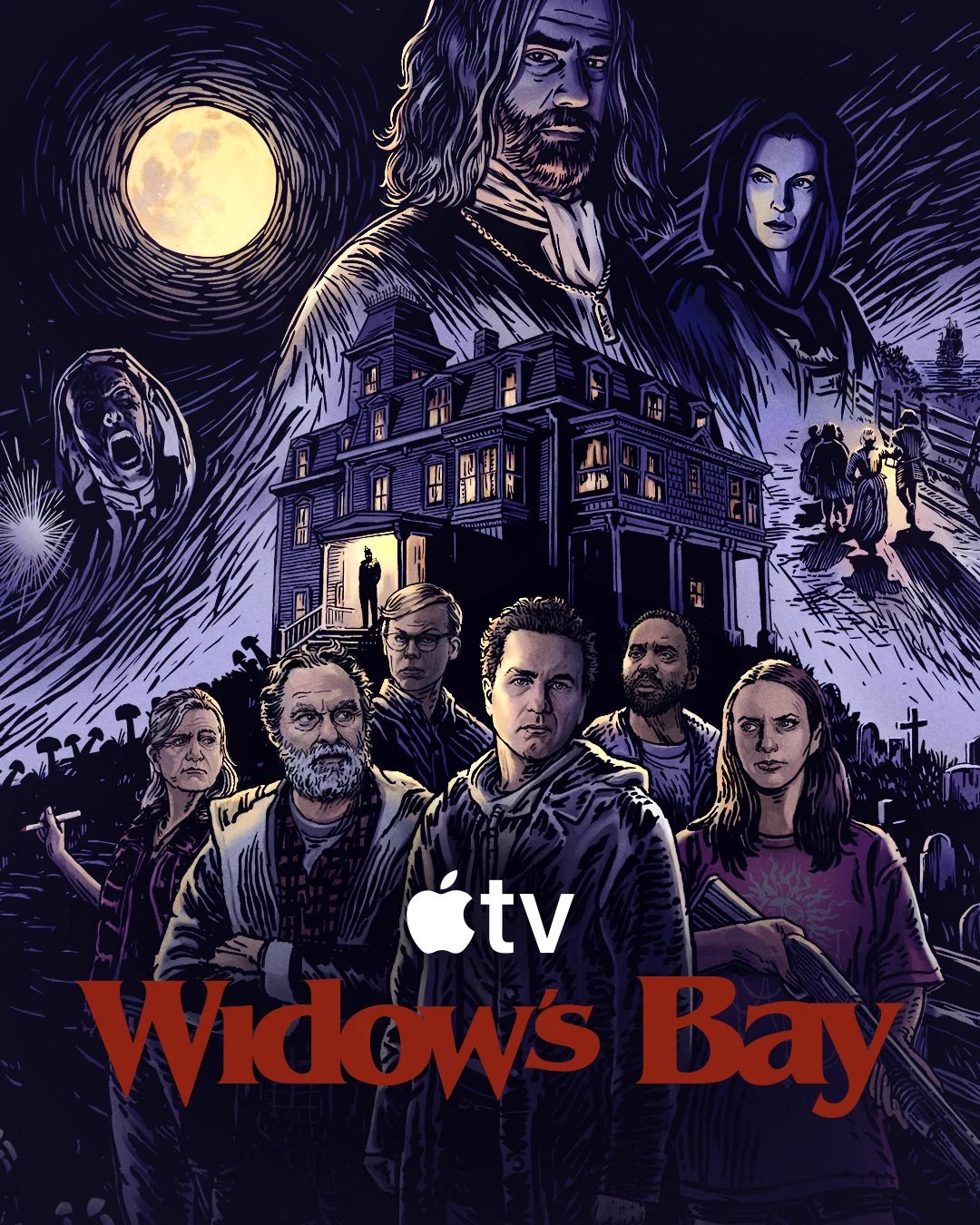
Most horror stories would be a lot shorter if people could admit that something was wrong. Widow’s Bay turns that familiar frustration into the foundation of a very funny, genuinely creepy series about a community with plenty of reasons to avoid the truth. Created by Katie Dippold for Apple TV, the 2026 horror comedy understands that denial isn’t just a convenient way to keep characters in danger. Sometimes it’s a survival strategy, a family tradition, or practically a requirement for holding public office. That gives the show something more interesting to work with than another cursed town full of people making terrible decisions.
At the center of that denial is Tom Loftis, played by Matthew Rhys, the mayor of an isolated New England island he wants to turn into a thriving tourist destination. It’s an understandable ambition, except that his hometown’s atmosphere is less relaxing coastal getaway and more place where someone’s grandmother knows exactly why you shouldn’t go outside tonight. The residents believe the island is cursed, while Tom sees their superstitions as obstacles to progress. Their competing interpretations give the series its central tension: how do you convince people that their future can improve when their past apparently refuses to stay buried?
Rhys makes Tom’s refusal to acknowledge the obvious both entertaining and revealing. He’s not simply playing the clueless authority figure who exists so viewers can yell at the screen. There’s anxiety beneath his confidence, and his determination to control the island’s future overlaps with his worries about his increasingly independent son. He wants to believe that being responsible and working hard will eventually make everything manageable. Watching that belief collide with circumstances beyond his control provides some of the show’s best comedy. More importantly, it makes his stubbornness feel like a character flaw rather than a screenwriting shortcut.
Dippold does an excellent job of weaving comedy into the horror without making either side feel like an obligation. The jokes aren’t constantly elbowing the audience, pointing out how silly supernatural stories can be. Instead, they emerge from people trying to preserve their dignity, defend their authority, or get through an awkward conversation while something deeply unsettling happens around them. There’s a wonderful absurdity to treating a potentially cursed community as a branding problem. Yet the show never loses sight of the fact that these characters have to live with the consequences once the promotional optimism wears off.
That approach also gives familiar horror tropes some welcome personality. The series draws on recognizable territory, including haunted spaces, slasher scenarios, ominous warnings, and communities with disturbing histories. There are echoes of The Fog, The Shining, Halloween, and The Witch, but recognition isn’t the whole joke. Dippold uses those familiar shapes to explore how these particular people respond to fear. Sometimes they panic, sometimes they argue, and sometimes they behave as though acknowledging a supernatural threat would be more embarrassing than getting killed by it. The humor comes from their reactions, not from suggesting that the danger doesn’t matter.
The New England coastal setting gives that danger a distinct character. Widow’s Bay understands the appeal of a picturesque place where the local stories gradually make the scenery feel less inviting. Its folklore and mythology aren’t just decorative details sprinkled over a generic haunted-town premise. They influence how residents understand their surroundings and what they consider normal. Stories about church bells, mushrooms, and the consequences of leaving the island suggest a community organized around inherited warnings. There’s something especially creepy about rules everyone repeats but nobody can fully explain, particularly when ignoring them might carry consequences.
That uncertainty connects the show’s supernatural mythology to its interest in generational trauma. The island’s history isn’t something its residents can simply remember, regret, and move beyond. It has become part of their behavior, their relationships, and their expectations. The curse works as more than an explanation for frightening events; it also becomes a way of thinking about damage passed down through families and communities. The show’s attention to buried history and Puritan-era origins reinforces the sense that the present rests on foundations nobody has properly examined. Tom’s desire for a fresh start clashes with everything that a fresh coat of paint cannot fix.
What keeps this material from becoming heavy-handed is the show’s willingness to let pain and absurdity occupy the same scene. People don’t stop being petty, awkward, or unintentionally funny because they’re dealing with inherited suffering. Sometimes those habits are precisely how they avoid confronting it. Widow’s Bay finds humor in those defenses without treating the underlying hurt as a punch line. That distinction matters. The series can laugh at the ways people cope while still recognizing why they developed those responses. Its comedy makes the emotional material feel more human, rather than providing an escape hatch whenever things become uncomfortable.
The supporting cast helps make that balance convincing. Kate O’Flynn’s Patricia and Stephen Root’s Wyck contribute more than colorful reactions to the latest strange occurrence. Patricia’s loneliness and need for connection, along with Wyck’s regrets, give the island’s troubles an emotional dimension beyond the immediate business of staying alive. Their eccentricities might get the initial laugh, but the vulnerabilities underneath keep them interesting. The community works because it feels populated by people with unfinished lives, not just convenient victims. As those lives become entangled with the supernatural, the danger gains weight without requiring everyone to become suddenly solemn.
The season’s episodic variety is another strength, allowing individual supernatural stories to develop while the larger mystery continues taking shape. That structure gives different characters and different kinds of fear room to breathe. It also prevents the series from leaning too heavily on Tom’s skepticism as its only comic engine. Some horror imagery does make its influences obvious, and viewers looking for completely unfamiliar genre territory may recognize certain setups early. Still, the show usually finds its freshness in character and tone. Predicting the general direction of a scare doesn’t necessarily mean predicting the uncomfortable, funny, or revealing response that follows.
What makes Widow’s Bay worth spending time with is how comfortably it lets you laugh and feel uneasy without forcing a choice between the two. Dippold gives the island’s strange traditions, inherited wounds, and supernatural threats room to feed into one another, while the cast keeps everything grounded in recognizable human behavior. Not every familiar horror setup feels entirely fresh, but the people caught inside those situations make the difference. You’re laughing at their stubbornness one minute and worrying about them the next. That’s a tricky balance to sustain, and the show makes it look deceptively easy.

