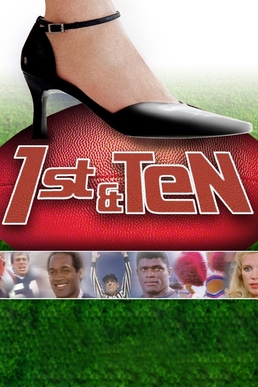
Welcome to Late Night Retro Television Reviews, a feature where we review some of our favorite and least favorite shows of the past! On Wednesdays, I will be reviewing 1st and Ten, which aired in syndication from 1984 to 1991. The entire series is streaming on Tubi.
This week, OJ Simpson is stalked by an abhorrent admirer!
Episode 5.3 “Fale Start”
(Dir by Stan Lathan, originally aired on October 25th, 1989)
Johnny Gunn, the new quarterback, is injured while leading the Bulls to victory in their latest game. Westwood, who has an unexplained dislike for Gunn, convinces the drugged quarterback to sign away his power of attorney and then has Gunn undergo a risky surgery. When Gunn realizes what has happened, he goes to the construction site of Westwood’s new house and knocks a few things over. The lesson? When your quarterback has just finished spending several years in prison for manslaughter, don’t upset him.
Dr. Death is stunned to discover that the highest bidder in the “Win a Day With Dr. Death” auction was not Heather Locklear but instead Carlyle Trent (Vince Edwards), a motorcycle-riding millionaire who happens to be gay. (Trent was obviously based on publisher Malcolm Forbes Sr.) Trent thinks that Dr. Death might be gay too. Oh, the hilarity, I guess. Actually, this storyline wasn’t as homophobic as one might expect from 1st & Ten. One of cool things about Dr. Death is that, despite his fearsome image, he’s usually the most open-minded and least prejudiced of all of the Bulls.
Finally, TD Parker (OJ Simpson) finds himself being stalked by a woman named Lisa (Laura Alavarez). Hey, that’s my name! Anyway, what starts as a one night stand ends with OJ having to talk Lisa out of shooting him and Kristy. Wow, OJ Simpson getting stalked by a homicidal maniac. Who would have guessed?
This episode tried to cram three big storylines into just 24 minute and, as a result, everything ended up feeling a bit half-baked. Last season, for all of its flaws, did seem to have a definite destination in mind, The Bulls were finally going to win the Championship Game. This season, on the other hand, has been all over the place.
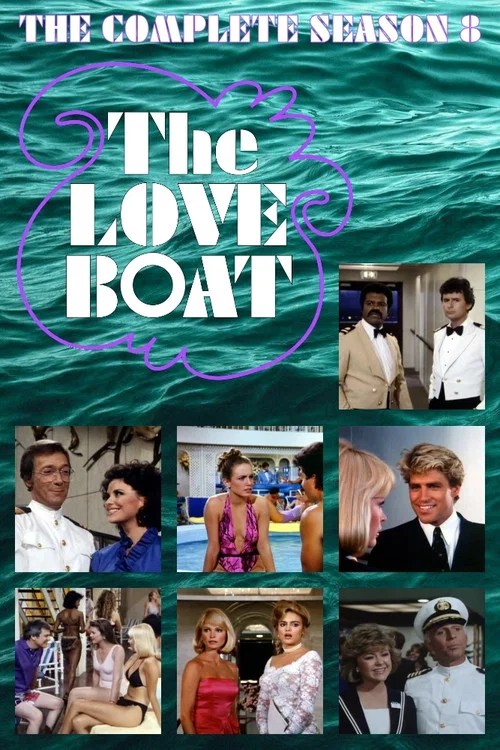
Welcome to Retro Television Reviews, a feature where we review some of our favorite and least favorite shows of the past! On Wednesdays, I will be reviewing the original Love Boat, which aired on ABC from 1977 to 1986! The series can be streamed on Paramount Plus!
Is your mind on a new romance? Are you ready to set sail for adventure?
Episode 8.11 “My Mother, My Chaperone/The Present/The Death and Life of Sir Albert Demerest/Welcome Aboard”
(Dir by Richard Kinon, originally aired on November 24th, 1984)
Your Love Boat crew is sailing to London!
This is another one of those two-hour episodes that was shot on location. I always enjoy these episodes, even if they are mostly just extended travelogues. This one actually has a few good storylines to go along with the scenes of the crew walking around London and France.
For instance, Marc Singer plays John Neary, Judy’s ex-husband who boards the cruise in an attempt to win her back. This was the first storyline to really feature Judy as someone other than just the perky replacement for Julie. We saw how happy she was at the prospect of getting together with John but we also saw how John consumed her life to the extent that she started screwing up at work. When John suggested that Judy’s job really wasn’t that important to begin with, we saw why their marriage failed in the first place. This was the first episode in which Judy really felt like a member of the group.
Colleen Dewhurst played Maud Correll (Colleen Dewhurst), a former actress who is sailing to London with her son, Byron (Peter Barton). On the cruise, Maud tells Byron that his father is actually the distinguished actor, Sir Albert Demerest (Trevor Howard). In London, Maud and Sir Albert meet and, in a wonderfully acted scene, Sir Albert says he isn’t sure that he wants to meet the son that he previously didn’t know he had. “It’s been 20, 21 years,” Sir Albert says, “it’s too late.” Still, Byron wants to be an actor and he visits Sir Albert at work. Albert is filming a commercial and he keeps flubbing his lines. At first, Byron is upset that his father would sell out his talents but eventually, he comes to understand that, sometimes, an actor doesn’t have a choice. The bills have to be paid.
This story was surprisingly good. Dewhurst, Howard, and Barton all gave heartfelt performances. Howard was obviously not in the best of health when he appeared on The Love Boat but his fragile appearance only adds to the poignance of the story.
Speaking of good performances, the great German actress Lili Palmer plays novelist Lily Marlowe. Lily is a cynic about love and she’s concerned when she sees that her virginal daughter, Samantha (Anna-Alicia), is falling for Roger Wembly (Morgan Stewart). And when Samantha runs into Roger’s wife in London, it appears that Lily is right. However, Roger then takes over Speakers’ Corner and gives a speech about how much he loves Samantha and how he and his wife are getting divorced. He wins over both Samantha and Lily. While the story might have been a standard Love Boat melodrama (and how convenient was that divorce?), the scenes of Lily, Samantha, and Roger in London were nice to look at. (Rainy, misty London was lovely.) And the use of Speakers’ Corner was a reminder of what the UK used to be.
Finally, Kathy Ross (Loretta Swit) decides to test the fidelity of her husband, Leonard (Dennis Holahan), by hiring a prostitute to seduce him. The prostitute, Monika (Catherine Oxenberg), hopes to get her hands on Leonard’s money by lying and breaking up his marriage with Kathy. But, after seeing how terrible Leonard feels after Kathy leaves him, Monika has a change of heart and tells the truth. This was the weakest of the episode’s stories but Catherine Oxenberg did have a few funny lines.
All in all, this was a great cruise! London brought out the best of The Love Boat.
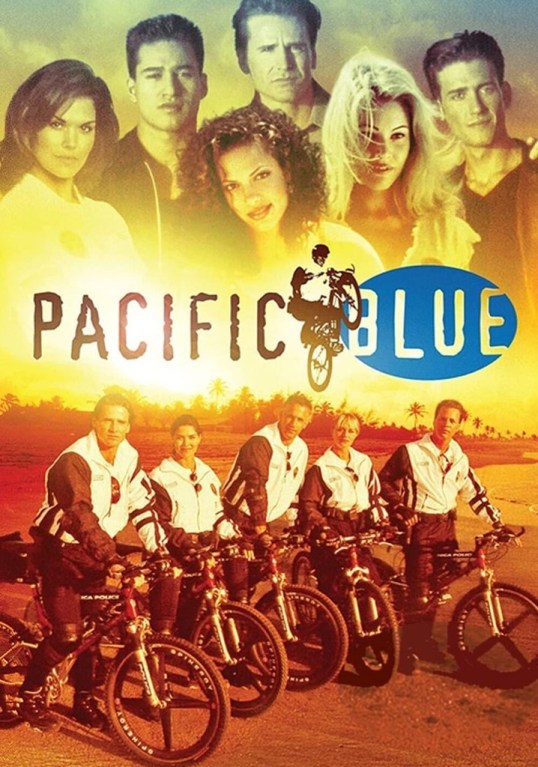
Welcome to Late Night Retro Television Reviews, a feature where we review some of our favorite and least favorite shows of the past! On Tuesdays, I will be reviewing Pacific Blue, a cop show that aired from 1996 to 2000 on the USA Network! It’s currently streaming everywhere, though I’m watching it on Tubi.
This week’s episode is stupid even for Pacific Blue.
Episode 4.19 “Near Death”
(Dir by Gary Winter, originally aired on April 4th, 1999)
Before I say anything else about this episode, allow me to say this: Ugh.
Okay, so check this out. A group of home invaders, led by Claire (Monica Louwerens) and her husband Milo (Matt Borlenghi), are in a van, fleeing from their latest robbery. TC, Chris, Cory, and Bobby are all chasing after them on their bikes. The van takes a sharp turn, the passenger-side door flies open, and Claire falls out. TC swerves to avoid Claire and is thrown straight into an electrical junction box. TC gets electrocuted.
Cory, Chris, and Bobby all arrive and immediately run over to TC. TC isn’t breathing. There’s no heartbeat. Cory and Bobby perform CPR. TC, meanwhile, is having a near-death experience, which means that we get a montage of old clips. They manage to bring TC back to life, but no one bothers to check on Claire. Claire ends up in a coma and subsequently dies at the hospital. Milo blames the cops for ignoring his wife while all of them gathered around TC.
…and Milo is absolutely right. Don’t get me wrong. It makes sense that Cory, Bobby, and especially Chris would be worried about TC. But it doesn’t change the fact that they basically just left another gravely injured person on the street while they gathered around TC. This is not the first time that something like this happened on Pacific Blue, and it’s yet another example of our heroes being rather selfish people.
Later, Cory announces to all the other bicycle cops that their first priority is to track down Milo and his gang because “this one is personal.” In other words, don’t worry about any of the other crimes that might be happening in Santa Monica because those crimes don’t directly involve any of the show’s stars. As is often the case with this show, it’s never really explained why the case apparently only belongs to the bicycle patrol. We don’t see any burglary detectives investigating the home invasions or anything like that. I guess the bike patrol has jurisdiction over everything.
As for TC, he reacts to his near-death experience by becoming more philosophical. He’s determined to always tell the truth. Over the course of the episode, he insults all four of the rookies: Granger, Cruz, Jamie, and Monica. Later, once TC starts to return to normal, he apologizes to Granger, Cruz, and Jamie but smirks when Monica asks if TC has anything he wants to say to her. “Nope,” he says. It’s kind of weird how this show wants its audience to hate Monica despite the fact that Monica is usually the only one of the cops who can be depended upon to do her job.
This episode really annoyed me. There was just something really annoying about a show about bicycle cops attempting to impart some sort of philosophical message about life. Did no one consider that TC is nowhere near a deep enough character to be believable as someone who worries about the larger questions of existence? Did no one consider that Jim Davidson’s limited range made him exactly the wrong actor for this type of story? In the past, TC was always dull but reliable. In this episode, he’s condescending. Since Chris and Cory were already condescending and have been for several seasons, TC joining them pushed this episode to new heights of unearned smugness.
This was an annoying episode. At least no one went undercover.
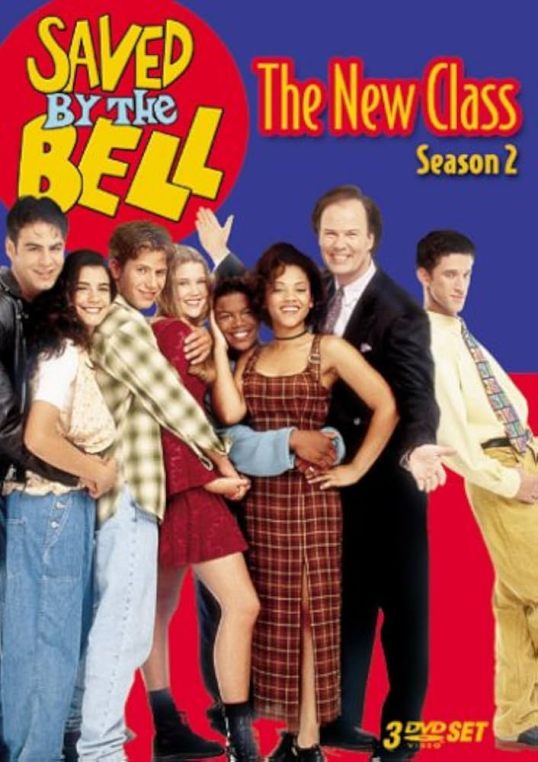
Welcome to Retro Television Reviews, a feature where we review some of our favorite and least favorite shows of the past! On Tuesdays, I will be reviewing Saved By The Bell: The New Class, which ran on NBC from 1993 to 2o00. The show is currently on Prime.
It’s Tommy D’s birthday!
Episode 2.18 “Breaking Up”
(Dir by Don Barnhart, originally aired on November 12th, 1994)
Lindsay wants to buy Tommy a great birthday present but, unfortunately, she’s broke. All of her friends are broke. It looks like they’re going to have to cancel Tommy’s birthday this year. But then Brian comes up with a plan. What if they convince Belding to let Brian and Bobby be in charge of the video yearbook and then the use the camera to shoot a birthday video Tommy while, at the same time, screwing over all of the students who actually want a yearbook?
It’s a great idea! Bobby films Linsday talking about how much she dislikes everything that Tommy is really into, like cars. Bobby also films Tommy growing close to Katie Keller (Kim Baranof), Brian’s never before-mentioned sister who does not appear to be from Switzerland. (In all fairness, she could be a stepsister. The show has never really made it clear just why exactly Brian left Switzerland for Bayside so maybe his mother married an American or something.) Katie likes cars and videogames, just like Tommy!
Realizing that Tommy and Lindsay’s relationship is in trouble, Brian pays off a lot of other students to tell Tommy that Katie’s been coming onto them. Wow, way to slutshame you own sister, Brian. What a jerk. Anyway, Tommy puts the kibosh on his growing attraction to Katie but, at his birthday party, Lindsay learns about how Brian spread rumors about Katie to save Lindsay’s relationship with Tommy. Lindsay and Tommy admit to not having much in common and Saved By The Bell: The New Class’s longest relationship comes to an end….
And that’s not really a good thing for either Lindsay or Tommy D. This isn’t like when Slater and Jessie used to break up. Slater and Jessie actually had personalities that went beyond who they were dating. The same can’t really be said about Tommy and Lindsay. It’s not the fault of the actors, as Jonathan Angel and Natalia Cigliuti were actually two of the more likable members of the ensemble. It’s just that Saved By The Bell: The New Class was never about complex characters.
It’s also not about continuity. Lindsay and Tommy D are still dating in the country club episodes. Because all of the members of the Gang already knew Screech in the country club episodes, that means that they had to have taken place in the summer after the school episodes. Plus, in this episode, Brian is not dating Rachel and that again means that the country club episodes had to happen after this episode. So, Lindsay and Tommy D are either going to get back together or the show’s writers just didn’t care.
Welcome to Late Night Retro Television Reviews, a feature where we review some of our favorite and least favorite shows of the past! On Mondays, I will be reviewing CHiPs, which ran on NBC from 1977 to 1983. The entire show is currently streaming on Prime!
This week, Ponch falls in love.
Episode 6.8 “Head Over Heels”
(Dir by Richard Irving, originally aired on December 5th, 1982)
Ponch falls in love.
Well, of course he does.
Listen, it’s not like Bobby is going to be allowed to fall in love. Bruce isn’t going to fall in love. Grossman? He’s been on this show since the beginning and he’s still struggling to even get a date. Nope, if anyone on CHiPs was going to fall in love, it was going to be Ponch. Watching this episode and taking the last few seasons into account, I wouldn’t be surprised if that was specifically written into Erik Estrada’s contract.
We all know what we’re watching.
Ponch falls for Vanessa (Beverly Adams), a teacher who he meets while speaking at a Mothers Against Drunk Driving meeting. It’s a whirlwind romance. Sure, they have their problems. Vanessa isn’t sure that she can handle falling in love with a “street cop” who puts his life in danger every day. Ponch gets mad when he sees Vanessa talking to her ex (Dennis Holahan). But eventually, Vanessa realizes that Ponch will always be a cop and Ponch is informed that talking does not necessarily equal cheating. Ponch asks Vanessa to marry him. He gives her a “space puppy” that he buys from a kid on a street corner. (“He’s not really from space,” the kid says. Hey, kid, we saw Ponch battle a UFO a few weeks ago.) Everything is perfect….
And then, during a big picnic to celebrate the engagement, Vanessa gets run over by a drunk driver. Vanessa dies with Ponch holding her. It should have been a big dramatic and emotional moment and perhaps it would have been if the show had let the scene play out as opposed to dropping in a montage of flashbacks to scenes that we had just watched ten minutes ago. Perhaps if the episode had been scored to the unnerving silence that comes with most tragedies, it would have brought tears to my eyes in a way that the adult contemporary romantic ballad did not. We get the full Erik Estrada experience as Vanessa dies, with Erik trying so hard to force us to cry that the performance runs the risk of having the opposite effect. Ponch is distraught but Estrada still makes sure that the camera gets his good side.
I’ll say this. I appreciate that the show’s anti-drunk driving message. (Rumor has it that this episode was specifically made in an attempt to turn down the heat after Tom Reilly was arrested for driving under the influence and the real Highway Patrol threatened to pull their sponsorship as a result.) Imagine the episode’s impact if the victim had been someone we actually knew as opposed to a one-off character who was so obviously being set up to tragically die that she might as well have had “Doomed” stamped onto her forehead. As it is, Vanessa ends up feeling more like a plot device than an actual human.
That said, don’t drink and drive. It’s not worth it.
Welcome to Retro Television Reviews, a feature where we review some of our favorite and least favorite shows of the past! On Mondays, I will be reviewing Crime Story, which ran on NBC from 1986 to 1988. The entire show can be found on Tubi!
This week, things get dark.
Episode 1.19 “The Pinncale”
(Dir by John Nicolella, originally aired on February 27th, 1987)
When an earnest businessman named Pete Bauer (Bob Stupak) decides to open up a casino with Luca’s help, he has no idea what he’s getting himself into. Pete’s vision is a fun tourist destination where a chicken plays tic-tac-toe and the biggest loser at a table is still given $5,000 for being a good sport. Luca’s vision is to drive Pete out of business by skimming all of his profits, fixing his slot machines so that they always pay off, and sending Pauli, Holman, and Jack Claymore over to make sure everything goes off as planned.
As we learned last week, Jack is an FBI agent working undercover. Being sent over to Pete’s casino gives Jack a chance to see how Luca and his people rip off others. One night, when Pauli has a date with a showgirl, Jack is the one who gets to take the envelope containing the cash over to Luca. Jack hands it over. Luca gives him a $500 tip, little realizing that he’s also given Jack enough evidence to take back to Torello and Abrams.
Unfortunately, Pete is forced to sell his casino to Luca before Jack’s next meeting with Torello and Abrams. Pauli and Holman decide to celebrate. They stop off at Jack’s apartment complex to pick him up. Unfortunately, they arrive just in time to catch Jack in a phone booth leaving a message for Torello. They beat up Jack and then drag him off to a deserted construction site, where he’s tied crucifixion-style to a casino sign.
When Luca finds out, he leaves a meeting with Manny Weisbord so that he can personally shoot Jack in the back of the head. As Luca explains to Steve Kordo, there are some things that he simply has to do himself. Even though Luca may be recreating himself as a businessman in Las Vegas, he’s still a Chicago gangster at heart.
When Abrams and Torello find Jack’s body, Abrams says that whatever chance they had to arrest Luca was just blown out of Jack’s head. Yikes! That’s a graphic way to put it, but Abrams isn’t wrong.
This episode was a case of tonal whiplash, starting out as a comedy but ending in tragedy. For the first 30 minutes, it was hard not to be amused by how efficiently Luca and his men ruined Pete’s business. (Holman even convinced Pete to book a polka band.) However, the final few minutes reminded us that Luca, Holman, and even Pauli are all ruthless murderers. It doesn’t matter if you were a likable character like Jack Claymore. If you betray Luca, you’ll regret it.
As for Torello, this is the second cop he’s lost in his pursuit of Luca. His entire obsession with taking down Luca started with the murder of Detective Wes Connelly in the pilot. How will he react now that he’s seeking justice not just for Wes but for Jack as well?
Welcome to Late Night Retro Television Reviews, a feature where we review some of our favorite and least favorite shows of the past! On Sunday, I will be reviewing the Canadian series, Degrassi: The Next Generation, which aired from 2001 to 2015! The series can be streamed on YouTube and Tubi.
This week, Terri has a boyfriend!
Episode 3.10 “Never Gonna Give You Up”
(Dir by John Bell, originally aired on November 19th, 2003)
The truth is that Rick is controlling, arrogant, and easily offended. In private, he loses his temper fast. In Ms. Kwan’s scene-study class, he’s in a group with Jimmy, Hazel, and Terri, assigned to bring to life a one-act written by budding playwright and actor Marco. Rick wants to direct. When Jimmy takes that job, Rick agrees to be stage manager. That’s right, folks! Rick is one of those people who likes to work crew. Anyone who ever did theater in high school knows how annoying those people were. (Seriously, you’d come offstage glowing because you’d just given the best performance of your life and some lighting-crew dork would go, “You nearly missed your mark.” Like, seriously, just shut up and stay out of my way, you weirdo.)
Marco takes the lead male role. Jimmy gives the nurse to Hazel and then announces that Terri will be the female lead. Terri is stunned and excited. Rick is immediately defensive, telling her it’s obvious Jimmy “has a thing for you. Why else would he give you the female lead?” (I think it may have had something to do with Terri being the last person left.)
This episode follows a pattern that will be painfully familiar to anyone who has ever been in an abusive relationship. Rick gives Terri a pile of overly technical acting notes that make her look stupid onstage. When she gets upset, he grabs her wrist and leaves a bruise. Then he buys her flowers and apologizes. When Terri says she’s having a girls’ night with Paige and Hazel and Rick can’t come because “it’s just for girls,” he backhands her and leaves her with a swollen lip. (Hazel sees the lip and immediately knows Terri is lying about a cold sore.) When Terri says she needs time to herself and that Rick is suffocating her, he shoves her against a wall. Terri announces that she’s done with him.
Unfortunately, every Degrassi watcher knows that isn’t true. This episode may end with Terri throwing away the flower Rick left at her locker, but we know he’ll be back in a few episodes. We also know Season 4 is basically the season of Rick Murray’s revenge.
It’s an episode with a commendable message and a good performance from Ephraim Ellis. That said, as I rewatched it, I found myself obsessing over just how bad Marco’s little scene was. Marco played Ray, a dying man, and spoke in an exaggerated Italian accent. Hazel was the nurse who told Terri (playing Ray’s mother) that Ray was not going to live. In the episode, Terri takes the blame for everyone laughing at the play’s big dramatic beat, but I think the real culprit was Marco’s writing. “We do not always get what we want .… or want what we get.” I’ve always assumed the play was meant as a parody of bad teenage dramatics. At least, I hope it was.
The B-plot is an amusing little prank war between Spinner and J.T. Spinner is sick of J.T. hanging around Paige, so among other things he plasters the inside of J.T.’s locker with glamour photos of Mr. Raditch and slips a romantic poem under Raditch’s office door. J.T. responds by showing up at The Dot and being such an obnoxious customer that Spinner, waiting tables, loses his temper. Spinner gets in trouble with his boss and is demoted to — get this– “dish pig.” Is that an actual job? I mean, I guess he’s washing dishes, but “dish pig” is a really vivid way to put it. It’s certainly better than anything Marco ever wrote. J.T. and Spinner call a truce, but not before Ms. Kwan gets a love poem from “Spinner.”
This week’s episode was classic Degrassi. I liked that the ultra-dark Rick Murray storyline was balanced with JT and Spinner acting like idiots. That’s high school for you.
Welcome to Retro Television Reviews, a feature where we review some of our favorite and least favorite shows of the past! On Sundays, I will be reviewing Homicide: Life On The Street, which aired from 1993 to 1999, on NBC! It can be viewed on Peacock.
This week, the Wilson case is finally resolved.
Episode 6.3 “Blood Ties, Part 3”
(Dir by Mark Pellington, originally aired on October 31st, 1997)
“Yo, Frank!” Detective Ballard yells at Pembleton at the start of this episode and I have to admit that I immediately cringed at the sound of it. The man’s name is “Detective Pembleton.” Ballard has done nothing so far to give her the right to address Homicide’s best character as “Yo, Frank!”
Of course, the main theme of this episode seemed to be all the detective who have been with the show since the beginning suck and that the new arrivals can do no wrong.
Take Falsone, for instance! After a drug dealer is murdered, Falsone proves himself to be the only one who can talk to the dealer’s traumatized child. Lewis is a buffoon in this episode, gloating over the dead dealer and traumatizing the kid while trying to lead him through the police station. But Falsone? He knows exactly what to say and, with his gentle prodding, the kid identifies the murderer of his parent as being a narcotics detective who is on the Mahoney payroll. When Lewis asks Falsone why he’s so awesome, Falsone explains that he’s divorced and he misses his own kids….
OH MY GOD! He’s a young detective who gets results and he’s divorced! For a show that previously avoided stereotypes, Homicide is going out of his way to promote a big one in the form of Detective Falsone.
Meanwhile, the Wilson case is resolved. It turns out that Ballard was totally correct and Pembleton was totally wrong. Melia was killed by a member of the Wilson family and, to the surprise of absolutely no, the murderer turns out to be Hal Wilson (Jeffrey Wright, giving perhaps the worst performance of his distinguished career), the twitchy son of Felix. Hal was obsessed with Melia and flew into a rage when he found out she was sleeping with his father. Pembleton even gets Hal to admit it but –– Law & Order plot twist time! — Felix and Hal were only willing to talk to Pembleton on the condition that they weren’t Mirandized so the confession is inadmissible. (That doesn’t seem like something that the normally meticulous Pembleton would agree to but whatever.) Felix, Hal, and the entire family leave Baltimore for San Diego.
Afterwards, Ballard track Pembleton down and tells him that she’s going to be a Baltimore homicide detective whether he likes it or not. Pembleton admits that he was wrong. Watching the scene, one gets the feeling that the show is telling us, “Who needs Pembleton and Bayliss and all those boring cops when we’ve got new cop who are young and sexy and infallible?”
And here’s the thing. There’s nothing wrong with bringing in new characters. There’s nothing wrong casting attractive actors in those roles. There is something wrong with pushing the characters to whom we’ve grown attached aside and insisting that we instead embrace new characters that we barely know.
This was a disappointing ending for the first three-parter of the series. The season has just started and I’m already sick of Falsone trying to prove that the Luther Mahoney shooting wasn’t justified. I’m sick of everyone talking about George Rae Mahoney as if she’s some total badass as opposed to a plot device. And I’m tired of my favorites being pushed to the side.
Welcome to Late Night Retro Television Reviews, a feature where we review some of our favorite and least favorite shows of the past! On Saturdays, I will be reviewing Saved By The Bell, which ran on NBC from 1989 to 1993. The entire show can be purchased on Prime!
It’s the aftermath of Zack and Kelly’s break-up! Who will survive!?
Episode 3.5 “The Aftermath”
(Dir by Don Barnhart, originally aired on September 21st, 1991)
Last week, Kelly got a job at The Max and developed a crush on her boss, Jeff (Patrick Muldoon). Zack and Kelly broke up at the school dance. Kelly asked Zack if they could still be friends. “Always,” Zack said.
It turns out that Zack was lying. This episode finds him bitter and obsessed. Screech and Slater take him out to the movies but — oh no! — Kelly and Jeff walk in. Jessie, Lisa, and Screech each set Zack up on a blind date. Zack goes out with Jessie’s fat friend and she eats all of his popcorn. Lisa’s friend is more interested in talking about the books of Jackie Collins than watching the movie. And Screech’s cousin turns out to be a perfectly nice and pretty blonde. (“She’s adopted,” Screech explains.)
Zack takes Screech’s cousin to The Max and dances with her… in front of Kelly! And they’re dancing to… A12 on the jukebox! “That’s Zack and Kelly’s song!” Screech says. Apparently, it’s a song that doesn’t have a title or much of a beat. “A12 is sacred!” Kelly says. “It was sacred until you dumped me for that jerk!” Zack says.
Now, I’m a bit torn here. Zack’s definitely in the wrong here, but is A12 actually sacred? I mean, it’s not mentioned in any other episode. And while Zack is definitely trying to make Kelly feel bad, Kelly is being pretty self-righteous for someone who didn’t break up with her boyfriend until after she kissed another guy. I guess my feeling is that sacred songs pretty much went out the window as soon as Kelly and Zack broke up.
Anyway, Screech’s cousin throws her milkshake on Zack.
Lisa’s Sweet Sixteen birthday party is approaching! Zack says he won’t come if Kelly and Jeff are invited. Lisa tells him that she’ll invite whoever she wants. At first, Zack refuses to go to the party, but then Screech has a heart-to-heart talk with him. Screech basically tells Zack that he’s being a whiny loser. Imagine what it must have been like to hear that from Screech, of all people.
Kelly and Jeff show up at the party. At first, Slater shows admirable loyalty to his friend Zack by giving Jeff the cold shoulder. Then Jeff mentions that he wrestled in high school. “Won my division a few times,” Jeff says. That’s all it takes for Slater to be like, “Zack who?”
Zack does come to the party. He apologizes for being a jerk. He tells Jeff to take care of Kelly. Zack tells us that he doesn’t know if he’ll ever get over Kelly. We’re left to wonder why he doesn’t just stop time if he’s so miserable…
This episode benefits from the presence of Patrick Muldoon, who makes Jeff into a likable “frat boy babe stealer.” It’s too bad that, in his next appearance, Jeff will have had a total personality transplant, because this episode actually made a pretty good point about the importance of accepting breakups and giving people a chance.
Welcome to Late Night Retro Television Reviews, a feature where we review some of our favorite and least favorite shows of the past! On Fridays, I will be reviewing SLEDGE HAMMER!, a cop comedy which ran on ABC from 1986 to 1988. The entire series can be found on Prime!
This week, Dori and Sledge get caught up in a hostage situation.
Episode 1.5 “Dori Day Afternoon”
(Dir by James Sheldon, originally aired on October 24th, 1986)
While driving to the bank, Dori and Sledge Hammer see a man on the ledge of a building. The man is threatening to jump. Dori says she’s going to grab a bullhorn out of the trunk so she can talk the guy down. Sledge says that won’t be necessary. He draws his gun and fires five shots at the man, barely missing him, until the terrified man goes back inside.
At the bank, Sledge is shocked when the ATM tells him that his account is overdrawn. He and Dori go inside to talk to the manager. While Sledge is trying to get some answers as to what happened to his account, two men draw guns. Cliff (Frank Doubleday) and Lou (Britt Leach) announce that they are robbing the bank and that everyone inside is going to be a hostage. Sledge has his gun with him but, after dealing with the jumper, he only has one bullet left. While Cliff negotiates with Captain Trunk, Sledge continually waits for Cliff and Lou to stand close enough together that they can both be taken out by one bullet. Unfortunately, the other hostages keep getting in the way.
This episode was okay without being particularly memorable. When you consider how silly the first three episodes of Sledge Hammer! were, it’s a bit ironic that this one suffers because it takes itself a bit too seriously. Instead of the enjoyably surreal humor of the first episode, “Dori Day Afternoon” features too many scenes of Cliff and Lou making their demands and threatening people. The episode does pick up a bit at the end, when Trunk tries to trick Cliff and Lou by giving them a plane but not a pilot. It turns out Cliff is an expert pilot. After Sledge manages to beat Cliff up, it turns out that Sledge has no idea how to fly a plane. Luckily, Dori does.
The funniest moments are the ones where Sledge struggles with his natural instinct, which is to shoot first and worry about the consequences later. David Rasche, as always, does a good job of showing just how much Sledge struggles when he’s in a situation that can’t be solved through gunplay. The funniest moment is when Trunk calls the bank and asks Sledge if the hostages have hurt anyone.