Retro Television Review: St. Elsewhere 4.14 “Family Ties”


Welcome to Retro Television Reviews, a feature where we review some of our favorite and least favorite shows of the past! On Fridays, I will be reviewing St. Elsewhere, a medical show which ran on NBC from 1982 to 1988.  The show can be found on Daily Motion.
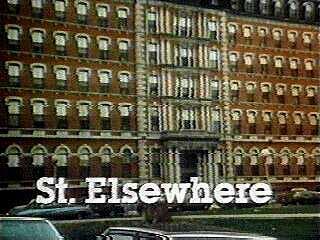
This week, the matriarch of a powerful Massachusetts political family comes to St. Eligius.

Episode 4.14 “Family Ties”

(Dir by Allan Arkush, originally aired on January 22nd, 1986)

After Elliot makes a clerical error that leads to one of his patients getting a mohawk, he’s more than happy to be assigned to check on a sick gorilla. Elliot not only diagnoses the gorilla as suffering from a brain tumor (luckily, it’s not malignant) but also gets a date with the animal’s keeper, Dr. Valerie Harding (Diana Canova).

When Fiscus freaks out about getting older, he tries to push up his wedding date with Mona and pressures her to abandon her career to start a family immediately.  After Fiscus interrupts an operation to argue with her, Mona dumps him.   (“I told you he was a bubblehead,” Dr. Craig says.) When Fiscus learns that his sperm has been used in an IVF procedure, he becomes obsessed with tracking down the woman who might be having his child. He then runs into Morrison’s ex-girlfriend, Clancy (Helen Hunt), and is soon flirting with her.

Why is Clancy back at the hospital? Morrison slipped on a wet floor and injured his knee. He has to have surgery. Clancy comes up with Morrison’s little-seen son, Pete. Pete, for his part, wanders over to Ken Valere (George Deloy), who, along with his wife (Deborah May), has been having second thoughts about whether to use a surrogate. Meeting Pete inspires the Valeres to adopt. So I guess that plotline is finally over, and I won’t have to ignore it anymore.

The majority of this episode is taken up with the arrival of Augusta Endicott (Dorothy McGuire), the matriarch of one of Massachusetts’s most powerful political families. She’s also the widow of a notorious anti-Semite, one who kept Auschlander from getting appointed to a state board in the 1960s.

From the minute Augusta and her family show up at the hospital, it’s obvious that they’re meant to be stand-ins for the Kennedys, even though Endicott is not an Irish name. (One gets the feeling the Endicotts are meant to be WASPy Episcopalians.) I always find it curious when an obvious Kennedy stand-in turns up on a television show. Does that mean St. Elsewhere takes place in a universe where the Kennedys don’t exist? The parallels are so obvious that it seems strange no one would point them out in-universe. This show is set in Boston. It seems as if someone would say, “Hey, Augusta Endicott sure has a lot in common with Rose Kennedy.”

Augusta is in the hospital for a checkup. She’s having heart problems, but she tells Dr. Craig that she would prefer to let nature take its course rather than spend the rest of her life having surgeries. Augusta also arranges for Auschlander to finally be appointed to the state medical board.

I’m getting the feeling that the Endicott family is going to be around for at least a few episodes. I can’t say I’m particularly enthused about the idea, but I get it. This is a show about Boston. You’ve got to have Kennedys.

Silverado (1985, directed by Lawrence Kasdan)


In the old west, a cowboy named Emmet (Scott Glenn) teams up with a reformed outlaw named Paden (Kevin Kline) and they bust Emmet’s wild younger brother, Jake (Kevin Costner), out of jail.  After Mal (Danny Glover) helps the three of them escape from a posse, they all end up going to the town of Silverado, where all four of them have business.  Emmett and Jake want to protect their sister from the corrupt son (Ray Baker) of a cattle baron who was previously killed by Emmett.  Mal wants to save his sister Rae (Lynn Whitfield) from an evil gambler (Jeff Goldblum).  Paden discovers that Cobb (Brian Dennehy), his former partner-in-crime, is now the sheriff of Silverado and working for the cattle barons.  When Paden tries to protect the new settlers (including Rosanne Arquette), it leads to a confrontation with his former partner.

In the 80s, when he wasn’t directing films like The Big Chill and The Accidental Tourist, Lawrence Kasdan specialized in paying homage to the films of Hollywood’s golden age.  He started his directorial career with Body Heat, a modern film noir.  He worked on the screenplays of both Empire Strikes Back and Raiders of the Lost Ark.  With Silverado, Kasdan tried to resurrect the western.

Silverado is a traditional western with a few modern touches, like casting Jeff Goldblum as a gambler and John Cleese as the sheriff who wants to execute Kevin Costner.  Silverado also has more humor than a typical western, largely thanks to Kevin Kline.  Silverado starts out as a comedy before turning serious and grim once the four heroes finally reach Silverado.

Kasdan’s love of the genre is obvious in every frame of Silverado but, in trying to tell multiple stories at once, the movie spreads itself too thin.  I like that Kasdan tried to shake things up by casting actors who most people wouldn’t expect to see in a western but both Kevin Kline and Brian Dennehy seem miscast in their roles and their final confrontation never becomes the epic moment that it needs to be.  Scott Glenn and Kevin Costner are far more believable in their roles.  Danny Glover is also believable but his character is underused.

Silverado was obviously a labor of love for Kasdan and it shows that, if nothing else, Kasdan understood the appeal of the genre and the beauty of the wide open frontier.  The movie has its flaws but fans of westerns will appreciate his effort.

Lisa Reviews An Oscar Nominee: The Big Chill (dir by Lawrence Kasdan)


Big_chill_ver1

There are certain films that truly are “You just had to be there” films.  These are the movies that were apparently loved by contemporary audiences but, when viewed today, it’s difficult to see just what exactly everyone was getting so excited about.  Sometimes, this is because the film itself was so influential and has been copied by so many other films that the original has had its power diluted.  And then, sometimes, it’s just a case that the film was never that good to begin with.

I’m guessing that The Big Chill must be one of those “you just had to be there” type of films.  First released in 1983, The Big Chill was nominated for best picture.  If you look the film up over at the imdb, you’ll find lots of comments from people who absolutely adore this film.  However, when I watched the film as a part of TCM’s 31 Days of Oscar, I have to admit that my reaction can be best summed in one word.

Meh.

Now, don’t get me wrong.  I’m not saying that The Big Chill was a bad film.  To be honest, it was neither memorably bad nor remarkably good.  Instead, it just was.  Overall, the performances were good, the direction was shallow, and the screenplay was occasionally good and occasionally shallow but mostly, it was the epitome of serviceable.

At the start of The Big Chill, Alex is dead.  With the exception of a scene where his corpse is being prepared for burial, Alex never actually appears on screen.  (Originally, Kevin Costner was cast to play the role in a flashback but director Lawrence Kasdan cut the scene.)  What little we learn about Alex, we learn from listening to the other characters in the film talk about him.  For instance, Alex was apparently brilliant but troubled.  He attended the University of Michigan in the 1960s and was close to 7 other politically radical students.  While everyone else was busy selling out their ideals, Alex stayed true to his and, as a result, he ended up spending his life depressed and poor.  Alex ultimately ended up committing suicide, an act that leads to his 7 friends reuniting for his funeral.

Opening with Alex’s funeral and taking place over one long weekend, The Big Chill follows Alex’s friends as they try to figure out why Alex committed suicide and debate whether or not they’ve sold out their college ideals.  They also spend a lot of time listening to the music of the youth, getting high, watching a football game, and washing dishes.

(Interestingly enough, they spend the weekend in the exact same house where Alex committed suicide.  Which, to be honest, I would think would be kind of creepy.)

There’s Harold (Kevin Kline) and Sarah (Glenn Close), who are the unofficial grown ups of the group.  It was at their vacation home that Alex committed suicide and, over the course of the film, we find out that Alex and Sarah had a brief affair.  Harold owns a company that makes running shoes and, to at least one friend’s horror, is now good friends with the local police.  Sarah, meanwhile, splits her time between crying in the shower and smiling beatifically at her friends.

(Incidentally, throughout the film, Kevin Kline speaks in one of the least convincing southern accents that I’ve ever heard…)

Meg (Mary Kay Place) is a former public defender who, after deciding that all of her poverty-stricken clients really were scum, has now become a real estate attorney.  Meg wants a baby and is hoping that one of the men at the funeral might be willing to impregnate her.  Meg is a chain smoker so good luck, unborn child.  Before Alex killed himself, she had an argument with him.  (“That’s probably why he killed himself,” someone suggests.)

I liked Karen (JoBeth Williams) because she’s prettier than Meg and less condescending than Sarah.  She’s unhappily married to an advertising executive named Richard (Dan Galloway).  As they drive to the cemetery, Richard tells Karen that he can’t believe her famous friends all turned out to be so boring.  Karen is unhappy in her marriage and, after Richard returns home and leaves her in South Carolina for the weekend, decides that she wants a divorce.

That’s good news for Sam (Tom Berenger), an actor who is best known for playing private detective J.T. Lancer on television.  Sam is upset that nobody takes him or his career seriously.  Meg was hoping that Sam would be the father of her baby but, instead, Sam is more interested in Karen.

And then there’s Nick (William Hurt), who is a former radio psychologist-turned-drug dealer.  Nick was wounded in Vietnam and is impotent as a result.  In case you somehow forget that fact, don’t worry.  Nick brings it up every few minutes.

Michael (Jeff Goldblum) was my favorite among the men because he’s at least willing to admit that he’s a self-centered jerk.  Michael is a former underground journalist who now works for People Magazine.  Nobody seems to like Michael and yet, he’s still invited to stay over the weekend.  Personally, I like to think that he does so just to get on everyone’s nerves.  Good for him.

And finally, there’s Chloe (Meg Tillis), who was Alex’s much younger girlfriend and who doesn’t seem to be impressed with any of Alex’s friends (with the exception, of course, of impotent old Nick).

I have to admit that I probably would have responded more to The Big Chill if it was actually about my generation, as opposed to being about my grandparents. Someday, someone my age will make a movie about a bunch of college friends reunited for a funeral and it will be filled with my music and my cultural references and I’ll think it’s brilliant.  And then, a 30 years later, some snotty little film reviewer will watch and probably say, “Meh.  Old people.”

Such is life.