Review: The Equalizer (dir. by Antoine Fuqua)


“When you pray for rain, you gotta deal with the mud too.” — Robert McCall

Antoine Fuqua’s The Equalizer is a film remake of the original 1980s TV series that starred Edward Woodward in the title role, and it feels like a throwback to the gritty, no-nonsense action thrillers of that era, but with a modern polish that only a director like Fuqua can deliver. From the opening frame, you know you’re in for something that’s equal parts stylish and brutal, a film that doesn’t waste time with unnecessary fluff and instead gets straight to the point: justice, served cold and calculated. Denzel Washington plays Robert McCall, a man who looks like your average big-box store employee by day but transforms into a methodical, almost surgical force of retribution by night. The premise is simple—McCall can’t stand to see good people get hurt, and when the Russian mob pushes him too far, he snaps into action—but the execution is anything but.

Where Woodward’s McCall was a more cerebral, world-weary ex-intelligence officer who relied on wit and strategy as much as physical force, Denzel’s version is a man of few words who lets his actions do the talking. Woodward brought a melancholic, almost philosophical edge to the role, giving the original series a more introspective, morally ambiguous tone. Denzel, though, brings a quiet intensity that’s all about controlled fury, shifting the film’s tone toward something more visceral and immediate. It’s less about the internal struggle and more about the sheer efficiency of justice being delivered, which makes Fuqua’s version feel like a high-octane action thriller rather than a brooding character study. This difference in approach is key to why the movie works so well as a modern reboot—it keeps the spirit of the original while amping up the energy to match today’s action standards.

This version of The Equalizer stands out in how it balances its quiet, character-driven moments with explosive bursts of violence. Fuqua has always had a knack for action, but here he takes his time building tension, letting scenes breathe in a way that makes the eventual payoff feel earned. There’s a sequence early on where McCall takes apart a room full of Russian gangsters, and it’s not just the choreography that impresses—it’s the precision. Every movement has purpose, every strike is efficient, and the whole thing unfolds with a kind of balletic brutality. Washington sells it all with that signature calm intensity of his, the kind of performance where you’re never quite sure if he’s about to offer you a cup of tea or put you in the ground. His McCall is a man of discipline, a guy who’s clearly spent a lifetime honing his skills, and it shows in the way he carries himself, whether he’s reading a book in a diner or turning a hardware store into an improvised armory.

The story itself isn’t reinventing the wheel. It’s a classic revenge tale with a heavy dose of vigilante justice, but the devil’s in the details. McCall isn’t some invincible super-soldier; he’s a guy who’s smart, resourceful, and, above all, patient. He doesn’t rush into things. He plans, he observes, and when he finally makes his move, it’s with the kind of cold efficiency that makes you wince and cheer at the same time. The film’s villain, Teddy Rensen, played by Marton Csokas, is a solid antagonist—a slick, ruthless mob fixer who’s used to getting his way. Csokas brings a quiet menace to the role, and his dynamic with Washington crackles with tension, especially in their final confrontation, which is as much a battle of wits as it is a physical showdown.

Fuqua’s direction is a masterclass in pacing and atmosphere. He knows how to make even the simplest scenes feel charged with meaning. Take, for example, the way he frames McCall in his apartment, surrounded by mementos of a past life we only get glimpses of. There’s a sense of history there, a depth to the character that’s never explicitly spelled out but is always felt. And then there’s the action, which is shot with a clarity that’s refreshing in an era where so many directors rely on shaky cam and rapid cuts to hide their lack of choreography. Fuqua lets you see everything, and it makes the violence hit harder because of it. The climactic battle in the hardware store is a perfect example—it’s a long, unbroken take (or at least feels like one) that puts you right in the middle of the chaos, and it’s thrilling precisely because you can follow every punch, every improvised weapon, every desperate move.

The supporting cast does a great job of fleshing out the world around McCall. Chloe Grace Moretz plays Teri, the young prostitute who becomes the catalyst for McCall’s crusade, and she brings a vulnerability to the role that makes her more than just a damsel in distress. She’s tough, but she’s also broken, and Moretz nails that balance. Then there’s Harold, McCall’s coworker and only real friend, played by Bill Pullman. Their scenes together provide some much-needed levity, but they also serve as a reminder that McCall isn’t just a machine—he’s a human being with connections, however tenuous, to the world around him.

One of the things I like most about The Equalizer is how it doesn’t glorify violence so much as it treats it as a necessary evil. McCall doesn’t enjoy what he does; he does it because he feels he has to. There’s a fascinating psychological undercurrent to his conversations with Teri about the nature of the people who hurt others, specifically this idea that the cruel and corrupt always find a way to rationalize their monstrous actions. The film really explores this twisted logic where abusers and criminals somehow convince themselves they are actually the good guys, completely blind to their own wickedness. It cuts to the heart of the movie’s theme: that real justice isn’t always pretty, and sometimes the only way to stop a relentless villain is to step into the darkness and meet them on their own brutal terms. It’s a morally complex idea, and the film doesn’t shy away from it. McCall isn’t a hero in the traditional sense. He’s a man with a very particular set of skills, and he uses them to tip the scales in a world that’s heavily weighted toward the cruel and the powerful.

Visually, the film is stunning. Fuqua and his cinematographer, Mauro Fiore, make Boston feel like a character in its own right, all grimy streets and neon-lit alleys. The color palette is dark and moody, with pops of color—like the red of a taillight or the blue of a neon sign—that stand out in a way that feels almost painterly. And the score by Harry Gregson-Williams is the perfect complement, all pulsing synths and deep, ominous basslines that ratchet up the tension without ever feeling overbearing. It’s the kind of soundtrack that you don’t notice until it’s gone, and then you realize how much it was adding to the experience.

If there’s a downside to The Equalizer, it’s that the plot can feel a bit thin at times. The story is straightforward, almost to a fault, and there are moments where you wish it would delve a little deeper into McCall’s backstory or the larger implications of his actions. But then again, that’s not really what the movie is going for. This isn’t a sprawling epic; it’s a tight, focused thriller that’s more concerned with mood and atmosphere than with intricate plotting. And in that regard, it succeeds admirably. The film is lean, mean, and never boring, with a runtime that flies by because it’s so damn entertaining.

Denzel Washington, of course, is the glue that holds it all together. At this point in his career, he could probably read the phone book and make it compelling, but The Equalizer gives him a role that’s tailor-made for his strengths. McCall is a man of few words, but every line Washington delivers carries weight. Whether he’s calmly negotiating with a gangster or unleashing hell on a group of armed thugs, he commands the screen with an effortless charisma that’s hard to look away from. It’s the kind of performance that reminds you why he’s one of the greatest actors of his generation.

In the end, The Equalizer is a movie that knows exactly what it is and doesn’t apologize for it. It’s a violent, stylish, and endlessly watchable action thriller with a lead performance that elevates it above the usual fare. It doesn’t pretend to be anything more than it is, and that’s part of its charm. In a world where so many films try to be everything to everyone, The Equalizer is content to be a well-made, pulse-pounding revenge story—and it’s all the better for it. If you’re a fan of action movies that don’t skimp on the brains or the brawn, this one’s a must-watch. Just don’t be surprised if you find yourself rooting for a guy who’s technically a vigilante. After all, in a world this unfair, sometimes you need an equalizer.

Retro Television Review: St. Elsewhere 4.2 “Fathers and Sons”


Welcome to Retro Television Reviews, a feature where we review some of our favorite and least favorite shows of the past! On Fridays, I will be reviewing St. Elsewhere, a medical show which ran on NBC from 1982 to 1988.  The show can be found on Daily Motion.
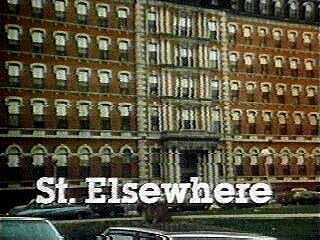
This week, Dr. Craig’s son returns home.

Episode 4.2 “Fathers and Sons”

(Dir by Mark Tinker, originally aired on September 25th, 1985)

In this episode, we discover what Dr. Westphall did after he left St. Eligius.  After checking Tommy into a special school for autistic children, Westphall went to Africa and volunteered his time at a clinic.  Now that he’s returned to Boston, he wants St. Eligius and its residents to follow his example.  In fact, he’s requiring it.  He wants to set up a free clinic.  He wants to set up a charity.  He tells the residents that they will now be required to volunteer in the community.  He’s planning on shaking things up.  Auschlander tells Westphall that not all of his plans are practical.  Westphall says that he doesn’t care.

Westphall also proceeds to move back into his old house and he retrieves Tommy from the school.  (Tommy responds by hitting Westphall.)  It’s actually pretty easy to see what’s happening here.  At the end of the previous season, Westphall was determined to move on with his life.  He was going to leave his depressing house.  He was going to admit that he couldn’t raise Tommy by himself.  However, now that he’s returned to Boston, Westphall is returning to his old life while expecting St. Eligius to change.  Westphall is channeling his personal frustrations into the hospital.  I don’t think this is going to go well.

Speaking of change, Luther is training to become a paramedic.  In this episode, he rides around in an ambulance with two bickering paramedics who are also a couple (played by Adam Arkin and Melanie Chartoff).  This storyline allowed the action to move beyond the confines at the hospital and, at times, it almost played like a parody of a more traditional medical show.  Luther becomes a stand-in for the viewer, watching as the domestic drama unfolds in  between medical emergencies.

The majority of the episode revolves around Dr. Craig, who is not happy that his son, Stephen (Scott Paulin), is visiting with his very pregnant wife, Yvonne (Suzanne Lederer).  When we last saw Stephen, he was a hotshot Ivy League medical student with a bright future ahead of him.  Then he got busted for drug possession and Dr. Craig stopped speaking about him.  In this episode, we learn that Stephen is now a student at Ohio State.  Stephen claims that he’s no longer on drugs but it’s obvious that Dr. Craig is never going to be able to forgive Stephen for letting him down.  That said, Dr. Craig does soften a bit when he talks to Yvonne and she lets him feel the baby kicking.

At the end of the episode, Stephen is driving down a street in Boston.  He’s just had dinner with his parents.  Yvonne is in the passenger’s seat.  A quick shot of Stephen’s eyes reveal that he’s high on something.  Yvonne screams as Stephen crashes the car.  Yikes!  That’s a frightening way to end things!

This was a good episode.  It appears that, with the start of season four, the showrunners finally figured out that Dr. Craig was the most interesting character on the show.  William Daniels and Bonnie Bartlett are both excellent in this episode.

I just hope the baby will be okay.

Retro Television Review: St. Elsewhere 4.1 “Remembrance Of Things Past”


Welcome to Retro Television Reviews, a feature where we review some of our favorite and least favorite shows of the past! On Fridays, I will be reviewing St. Elsewhere, a medical show which ran on NBC from 1982 to 1988.  The show can be found on Daily Motion.

This week, we begin season 4 of St. Elsewhere!

Episode 4.1 “Remembrance of Things Past”

(Dir by Bruce Paltrow, originally aired on September 18th, 1985)

This week, we start a new season of St. Elsewhere!

Dr. Cavenero is no longer listed in the opening credits.  She’s not even mentioned in this episode, leaving her absence as a mystery.  The last time we saw her during the third season, she was suffering from a cold so maybe she died.  From what I’ve read, the real reason that she’s gone is because Cynthia Sikes, the actress who played her, objected to a season three storyline that would have featured her coming out as a lesbian.

From the start of this epiosde, St. Eligius seems like a happier place.  A lot of that is because Dr. Westphall is gone.  (That said, he’s still listed in the opening credits so we know, from the start, that will return.)  Doctors Craig and Aushlander are a bit overworked having to cover Westphall’s duties but still, the residents seem to be a bit more hopeful than usual in this episode.  Westphall’s perpetual glumness is no longer there to drag everyone down.

Morrison and Chandler have a conflict over a Vietnamese patient.  Morrison wants to give the patient the best care possible.  Chandler is upset because his older brother died in Vietnam and he feels like the patient doesn’t appreciate the sacrifice that Americans made during the Vietnam War.  Morrison, of course, was an anti-war teenager.  (There’s a reason why Helen Hunt calls him “boomer.”)

The whole Morrison/Chandler storyline felt a bit too heavy-handed to be effective.  While I can believe that Chandler would have his own strongly-held opinions about the war, I have a hard time believing he would be as unprofessional as he was in this episode.  Still, all of this does lead to a great scene where Morrison goes to Craig for the type of advice that he would usually get from Westphall and Craig responds by telling Morrison to get over it and concentrate on his job.

Seriously, I’ve been waiting for three seasons for someone to tell Morrison that.

Alfre Woodward joins the cast as Dr. Roxanne Turner, an OB-GYN.  In this episode, she counsels an infertile couple.  Dr. Turner wasn’t in much of the episode (and Alfre Woodard is not included in the opening credits) but I get the feeling that both she and the couple she was counseling are going to be around for a while.

The episode’s main storyline featured an amnesiac known as Joe Doe No. 6 (Oliver Clark).  After John Doe escapes from the psychiatric ward and steals a suit, he’s mistaken for Dr. Jonas Wisner, who has beent sent to St. Eligius to evaluate its teaching program.  John Doe No. 6 has a great time pretending to be Dr. Wisner and the doctors enjoy spending time with him.  Unfortunately, the real Dr. Wisner (Joseph Ruskin) shows up and the fun ends.

Oh, how I loved watching John Doe No. 6 interact with the staff.  Not only did it allow me to see the show’s characters through someone else’s eyes but it was also just an enjoyable storyline.  It was a reminder that the hospital can be an entertaining place when Westpall isn’t wandering around the hallways.

However, towards the end of this episode, Westphall showed up at the hospital.  Craig and Auschlander were happy to see him.  Westphall asked if he could have his old job back.  Of course, he can!  Really?  Didn’t Westphall walk off the job?  But apparently, he can just wander back into the hospital while wearing his hobo cap and all is forgiven.

The episode ends with Chandler taking an impromptu trip to Washington D.C. and visiting the Vietnam War Memorial.  As I watched this, it occuured to me that the memorial was still fairly new when this episoe aired.  Once I realized that, I understood why the show included the Morrison/Chandler storyline.  It pays to know history.

Season 4 is off to a good start!  I just hope Dr. Westphall doesn’t drag everyone back down.


Retro Television Review: St. Elsewhere 3.24 “Cheers”


Welcome to Retro Television Reviews, a feature where we review some of our favorite and least favorite shows of the past! On Fridays, I will be reviewing St. Elsewhere, a medical show which ran on NBC from 1982 to 1988.  The show can be found on Daily Motion.

This week, season 3 comes to an end.

Episode 3.24 “Cheers”

(Dir by Bruce Paltrow, originally aired on March 27th, 1985)

It’s Easter at St. Eligius and, of course, everyone is a bit depressed.  While the patients in the Children’s Ward prepare for the annual Easter egg hunt (and are told about the magic Golden Egg), a man who dresses like Jesus is attacked by a bunch of vagrants and wheeled into the Emergency Room.  Meanwhile, Dr. Craig is shaken to learn that his mentor, Dr. David Domedion (Dean Jagger), is suffering from dementia and Dr. Auschlander worries about his wife as she undergoes heart surgery.

And yet somehow, Dr. Westphall still manages to be the most depressed person in the hospital.

I have to admit that, over the course of this season, I’ve grown a bit frustrated with Dr. Westphall and his nonstop depression.  At least one terrible thing has happened to every character on the show but they’ve all managed to continue on with their lives and their careers.  Dr. Westphall is selling his house and, as a result, he’s spent a year having an existential crisis.  Dr. Asuchlander is terminally ill and he still manages to smile occasionally.  I realize that I’m probably being too hard on Westphall but seriously …. cheer up, old man!  People love you!

This rather dark and depressing episode features an odd moment when Westphall, Crag, and Auschlander go to a neighborhood bar and talk about life.  Their conversation is serious but the bar is Cheers, which was the setting of a popular sitcom of the same name in the 80s.  (Dr. Frasier Crane first appeared on Cheers, though he’s sadly not present in this episode.)  While the doctors wrestle with their misery, the bar regulars make jokes.

Barmaid Carla (Rhea Pearlman) gives them a hard time when she discovers that they work at St. Eligius.  In fact, the entire bar seems to groan at the hospital’s name.

Bar regular Norm (George Wendt) is also Auschlander’s former accountant.  Norm apologizes for losing Auschlander a good deal of money.  Then Norm goes back to drinking.  Maybe don’t hire an alcoholic to be your accountant.

Postman Cliff (future PIXAR regular John Ratzenberger) tries to get free medical advice.  The doctors aren’t in the mood.

It’s an odd scene but there’s still a definite charm to it.  It’s as if the show’s writers were acknowledging how difficult it can be to take Westphall’s nonstop glumness and they were puncturing his self-absorption a little by having the cast of another show attempt to steal the spotlight from all of his problems.  This episode seems to be saying, “There’s a world outside of St. Eligius and it’s full of day drinkers.”

Still, the scene is ultimately about Dr. Westphall.  At the end of it, he announces that he’s done with being a doctor.  He’s going to retire.  He’s going to leave St. Eligius and presumably find a new group of people to depress.  Well, good for him.

The episode ends with Westphall leaving the hospital, perhaps for the last time.  As he leaves, he spots and picks up the Golden Easter Egg.

Hey, Westphall, that egg is for the kids!

Next week, we start a new season!


Retro Television Review: St. Elsewhere 3.23 “Bang The Eardrum Slowly”


Welcome to Retro Television Reviews, a feature where we review some of our favorite and least favorite shows of the past! On Fridays, I will be reviewing St. Elsewhere, a medical show which ran on NBC from 1982 to 1988.  The show can be found on Daily Motion.

This week, everyone’s thinking about death.

Episode 3.23 “Bang the Eardrum Slowly”

(Dir by David Anspaugh, originally aired on March 20th, 1985)

Every by the standards of St. Elsewhere, this was a depressing episode.

Auschlander buys his morning newspaper and discovers that his old friend Dr. Wyler was murdered by revolutionaries in Africa. The terminally ill Auschlander finds himself thinking about his own death and how he’ll be remembered. Will he also only rate a small mention in the local newspaper? Will anyone care or will they just shrug off his death and go on with their lives? The only thing that kept this storyline from being unbearably depressing was the knowledge that, in real life, Norman Lloyd would live to be 106.

Elliot has been entrusted with Mrs. Hufnagle’s ashes. He spends most of the episode carrying them around in a cigarette box and thinking about how someone’s entire life can be reduced to just a small amount of ashes. After an unpleasant meeting with Hufnagle’s estranged son (Boyd Bodwell), Elliot and Fiscus spread Hufnagle’s ashes at sea. Alone amongst the doctors at St. Eligius, Elliot feels bad that Hufnagle checked into the hospital and died due to her doctors and nurses getting tired of dealing with her. Elliot has a point. Hufnagle’s son really should be suing the Hell out of that place.

Westphall …. oh Hell, you already know that Westphall spent this episode depressed. Westphall is depressed in every episode. He’s perhaps the most glum character that I’ve ever come across. Even when something good happens, Westphall finds an excuse to get upset about it. This week, he’s depressed that he’s moving out of his house. He’s also depressed that his son Tommy would rather watch cartoons than talk to him. Seriously, Westphall can be difficult to deal with. I’ve been in a bit of melancholy mood myself and watching Westphall does not help.

Dr, Craig is not so much depressed as he’s annoyed by the news that his son, Stephen, is engaged. Craig has never forgiven Stephen for getting hooked on drugs and dropping out of medical school. Ellen says that, as Stephen’s parents, they have to be supportive and happy for him. Good luck convincing your husband of that, Ellen.

Finally, Luther is deafened by a boiler room explosion. His hearing eventually returns but Luther finds himself haunted by how close he came to dying. I would be haunted by the idea of getting seriously injured at a hospital that appears to be as much of a death trap as St. Eligius.

What a dark episode! This was a difficult one for me to get through, though that’s not necessarily a criticism. It’s just an acknowledgement of the fact that St. Elsewhere didn’t hesitate or offer false hope when it came to issues of mortality. Next week, season 3 comes to a close. Let’s hope for the best!

Retro Television Review: St. Elsewhere 3.22 “Tears of a Clown”


Welcome to Retro Television Reviews, a feature where we review some of our favorite and least favorite shows of the past! On Fridays, I will be reviewing St. Elsewhere, a medical show which ran on NBC from 1982 to 1988.  The show can be found on Daily Motion.

Send in the clowns….

Episode 3.22 “Tears of a Clown”

(Dir by Janet Greek, originally aired on March 13th, 1985)

Do you like clowns?

Then this episode is for you because there are clowns all over the hospital!  When Dr. Chandler tells circus clown Bonko (Gina Hecht) that she should quit the circus because she has MS, her fellow clowns all show up at the hospital to support her.  And yes, they wear their clown makeup!  Bonko’s partner, Corky (Dennis Dugan), understands that Bonko is a born performer.  As the episode ends, Bonko and Crky perform in an elevator and cheer up Andrea Fordham (Ann Hearn), Dr. Caldwell’s plastic surgery patient.  Having had her declaration of love rejected by Bobby, Andrea could definitely use the cheering up.

Dr. Morrison needs some cheering up to.  Working as a resident, a medical student, and a single father is a lot of pressure and his relationship with Clancy (played by Helen Hunt) isn’t bring him much relief.  Morrison is suffering from insomnia and headaches and popping pills.  He’s late to a timed exam and flunks.  I swear, Morrison can never get a break.  The only thing keeping him from being the most depressing character on the show is that Westphall somehow always seem to be even more afflicted with melancholy.

This episode features Westphall finally finding a condo that he can move into.  He’s accompanied by Dr. Craig and they are mistaken for a couple by the realtor.  Craig looks annoyed.  Westphall looks glum.  Westphall always looks glum!

Finally, Elliot discovers that Mrs. Hufnagle left him her entire meager estate.  It’s also now his responsibility to spread her ashes.

After last week’s dramatic and emotional episode, this week felt rather lowkey.  How you react to this episode will probably depend on how much tolerance you have for clowns.

It was an okay episode, even if it did ultimately feel like filler.  After last week’s emotion-packed installment, this episode served to remind us that life goes on, even after Hufnagle dies and Shirley Daniels pulls a gun on everyone.  That’s just the way things are in the city of Boston.

Retro Television Review: St. Elsewhere 3.21 “Murder, She Rote”


Welcome to Retro Television Reviews, a feature where we review some of our favorite and least favorite shows of the past! On Fridays, I will be reviewing St. Elsewhere, a medical show which ran on NBC from 1982 to 1988.  The show can be found on Daily Motion.

This week, we’ve got a great episode of St. Elsewhere.

Episode 3.21 “Murder, She Rote”

(Dir by Mark Tinker, originally aired on February 27th, 1985)

This week, Mrs. Hufnagle dies!

  • After spending the entire season getting on the nerves of the doctors and the nurses, Mrs. Hufnagle died in this episode.  She is found dead and apparently crushed in her bed.  (Hufnagle could never figure out how to properly lower and raise the front and back of it.  In this episode, it appears that she raised both at the same time.)  “Hufnagle in a half-shell,” Ehrlich says.  Meanwhile, the perpetually angry Nurse Lucy (Jennifer Savidge) blames herself for not responding when Hufnagle was desperately pushing her help button.  Gee, Lucy, you think?  Isn’t it your job to respond?
  • Now, I should note that this episode features both Westphall and Craig calling out the doctor for the treatment that Hufnagle received.  Both let it be known that doctors can’t just take care of the likable patients.  Everyone who enters the hospital deserves quality care.
  • What did Hufnagle die of?  That’s what Craig is determined to find out.  His first instinct is to blame Ehrlich.  Then he tried to blame Kochar (former serious regular Kavi Raz, making a guest appearance).  He tries to blame the nurses.  But, in the end, Craig examines his notes from Hufnagle’s heart surgery and he discovers that he’s the one who made a mistake.
  • In a wonderfully acted moment, Craig tells the residents that the mistake was his.  William Daniels does an excellent job of showing that Craig, for all of his arrogance, is not one to shirk responsibility.  When he explains how he made the mistake that led to Hufnagle’s death, it’s a brave moment for both the character and the actor.
  • That said, Craig is lucky Hufnagle didn’t have a family or he would definitely be getting sued.

While Hufnagle died, Shirley Daniels returned to the ER:

  • Given that Shirley has confessed to killing Peter White (even though she hasn’t gone to trial yet), clearing her to work at a hospital seems …. odd.  That said, a psychiatrist says that Shirley is not a threat to others and Auschlander seems to be oddly eager for her to get to work.
  • It doesn’t take long before Shirley pulls a gun on a patient.  She also points the gun at Fiscus and then Morrison.  She pulls the trigger and a little flag pops out that says, “Bang!”
  • It was a joke!  Oh, Shirely!
  • Shirley laughs and then leaves the hospital.

Elliot has a date:

  • Dr. Axelrod goes out on a date with Nurse Rosenthal’s odd daughter, Marcy (Jeannie Elias).
  • Marcy is impressed with Elliot’s goofy sense of humor.
  • Elliot takes her to the same Hawaiian restaurant that Ehrlich took the Craigs.
  • A sudden fire breaks out.  Elliot heroically saves the life of the restaurant’s owner.
  • Marcy explains that she liked Elliot because he seemed goofy and harmless.  Now that he’s a hero, she respects him too much to sleep with him.

This was a great episode!  William Daniels gave his best performance in the role of Dr. Craig so far.  Ellen Bry, in the role of Shirley Daniels, got one of the all-time great exits.  And the underused Stephen Furst got a storyline where he did something more than just get insulted.  I do feel sad for Mrs. Hufnagle, though.  She wasn’t that bad.

Retro Television Review: St. Elsewhere 3.20 “Amazing Face”


Welcome to Retro Television Reviews, a feature where we review some of our favorite and least favorite shows of the past! On Fridays, I will be reviewing St. Elsewhere, a medical show which ran on NBC from 1982 to 1988.  The show can be found on Daily Motion.

The drama continues in Boston.

Episode 3.20 “Amazing Face”

(Dir by Janet Greek, originally aired on February 20th, 1985)

This week, at St. Eligius:

  • Nurse Rosenthal thinks that she’s pregnant.  That sound you hear is me sighing.  Seriously, I liked Nurse Rosenthal during the first season but now I’m kind of sick of her and her sanctimonious attitude, her homewrecking affair with Richard, and her annoying children.  Obviously, the show’s writers really liked Nurse Rosenthal but I’m tired of her.  A pregnant Nurse Rosenthal?  I don’t think I could handle that.  Fortunately, it turns out that Nurse Rosenthal is actually starting menopause.
  • When is Rosenthal going to dump Richard?  We all know it’s going to happen.
  • Dr. Westphall has put his house on the market and boy, is he glum about it.  Westphall continues to be the most depressing human being on the planet.
  • Mrs. Hufnagle has heart surgery.  Before that, however, she steals some scrubs and wanders in on an operation.
  • Fiscus wants to hook back up with Cathy Martin.  When a macho patient makes a misogynistic comment about Cathy, Fiscus throws a punch and gets his ass kicked.  Luckily, Cathy has learned kung fu.
  • The bandages are removed and Andrea Fordham (Ann Hearn) sees her new face.  She now looks like an average teenager.  She tells Dr. Caldwell that she’s still not ready to face the world.
  • Shirley Daniels is a patient at St. Eligius.  She tells everyone who she meets that she killed Peter White and that she can’t wait to go to jail for it.  She promises Doctors Wade and Morrison that she’ll never shoot anyone else.  She also reveals that she’s the one who sent the baby ski mask to Peter’s widow.  She’s knitting a new ski mask for Morrison’s son.  Oh, Shirley!
  • The episode ends with Shirley going to the morgue and flashing back to the time she shot Peter in the testicles.
  • Considering all the hospitals in Boston, was it really a good idea for her to stay at the same one where she happened to kill a doctor, albeit one who deserved exactly what he got?

This episode felt like filler.  Ehrlich acted like a jackass.  Morrison acted like he had the weight of the world on his shoulders.  Dr. Craig was arrogant.  Dr. Westphall was depressed.  It wasn’t a bad episode but there wasn’t anything terribly memorable about it either.

It was just another day at St. Eligius.

Retro Television Review: St. Elsewhere 3.19 “Red White Black And Blue”


Welcome to Retro Television Reviews, a feature where we review some of our favorite and least favorite shows of the past! On Fridays, I will be reviewing St. Elsewhere, a medical show which ran on NBC from 1982 to 1988.  The show can be found on Daily Motion.

St. Elsewhere gets political!

Episode 3.19 “Red White Black and Blue”

(Dir by Eric Laneuville, originally aired on February 13th, 1985)

This week, on St. Elsewhere!

  • The First Lady is coming to Boston!  Though she’s going to be visiting Boston General, St. Eligius has been designated as a backup hospital.  While she’s in the area, the Emergency Room will be closed to everyone but her.  As well, some members of the hospital staff have been flagged as security risks — including Dr. Craig!
  • Dr. Craig is not happy about that but eventually, he’s cleared.  It turns out that his wife was the security risk because she once defended the Black Panther Party.
  • Betty White plays Captain Gloria Neal, a doctor who is on the First Lady’s security team.  She is an old friend of Dr. Westphall’s.  At first, it seems like she and Westphall might pursue a romance but it doesn’t happen.  I’m going to guess this is because Gloria realized that Dr. Westphall is the most depressing man on the planet.
  • When a severely injured man is rushed to St. Eligius, Neal refuses to open the Emergency Room.  So, Dr. Craig takes it upon himself to overrule her.  The man dies on the table.
  • Dr. Jacqueline Wade (Sagan Lewis) follows Captain Neal around, complaining about the president’s policies.  In fact, the entire hospital seems to be full of Democrats!  Wow, this President sure must have been unpopular.  Let’s see who it is …. hey, Ronald Reagan!  Three months before this episode aired, Reagan was reelected with 58% of the vote.  He carried 49 states, including Massachusetts.  Apparently, everyone who voted for Walter Mondale worked at the same hospital.
  • Mrs. Hufnagle is back at the hospital.  She is having heart problems.  Dr. Westphall glumly tells the doctors that they have been neglecting her because of her terrible personality.  However, not even Westphall can handle talking to her.  He passes the case over to Dr. Craig.
  • Fiscus has dinner with Shirley Daniels, who says that she hopes she goes to prison for shooting Dr. White.  The next day, Shirley is admitted to the hospital with appendicitis.
  • Victor Ehrlich wrong believes that a child has been abused by his mother.  He gets social services involved.  Later, Westphall sighs with regret and tells Victor that he did the wrong thing.  Westphall is being kind of a prick here.  Legally, if Ehrlich thinks that there’s been abuse, he’s required to report it.  Westphall seems to be upset that Ehrlich can’t read minds.
  • Finally, chronic homewrecker Nurse Rosenthal has to spend the day at the hospital so her lover, Richard, spends the day with her annoying children.  Well, I guess he certainly wasn’t going to spend it with his wife.  I will never understand why this show felt it was necessary to spend so much time with this particular family.  They were all annoying, every single one of them.

This episode opened with a homeless man using an American flag as a blanket and then went on to feature a man selling American flags getting attacked.  That’s about as subtle as things got.  It’s interesting that the show previously established Dr. Craig as being a Republican but apparently, with this episode, viewers were expected to believe that he was not a fan of Ronald Reagan’s.

In other words, this was not a great episode.  This felt like the medical equivalent of one of those Law & Order episodes where all of the salt of the Earth cops start talking about how they never miss Morning Joe.  

Finally, I feel bad for Mrs. Hufnagle,  Even annoying people deserve good medical treatment!

Retro Television Review: St. Elsewhere 3.18 “Any Portrait In A Storm”


Welcome to Retro Television Reviews, a feature where we review some of our favorite and least favorite shows of the past! On Fridays, I will be reviewing St. Elsewhere, a medical show which ran on NBC from 1982 to 1988.  The show can be found on Daily Motion.

This week, it’s a stormy episode!

Episode 3.18 “Any Portrait In A Storm”

(Dir by Leo Penn, originally aired on January 30th, 1985)

As a rain storm rages outside, the drama inside St. Eligius continues.

Dr. Auschlander cancels the grand unveiling of his portrait, saying that he doesn’t feel worthy of the attention and also admitting to Westphall that the whole thing not only makes him feel old but also reminds him that he’s dying.  Westphall’s response is to nod glumly because Westphall is the most depressed man on the planet.  Auschlander is dying of liver cancer and he still manages to usually be more cheerful than Westphall.  Even this episode ends with Auschlander in a good mood.  He finally looks at his portrait and discovers that he likes it.  Plus, Luther tells Auschlander how important he is to him and the other workers at the hospital.

While Auschlander feels his age and Westphall sadly stares at the ceiling, Dr. Ehrlich makes an effort to be more polite and fails completely.  Ms. Hufnagle argues about her hospital bill.  In an amusing moment, Warren spots Dean (Tim Van Patten) getting on an elevator and shouts, “Salami!”  Before St. Elsewhere, Byron Stewart (who played Warren) and Van Patten starred together on a show called The White Shadow.  Stewart played Warren, the same character that he plays on St. Elsewhere.  Van Patten played someone named Salami.  What makes the scene especially humorous is that Dean hesitates before saying, “You got the wrong guy,” as if he somehow remembers being a different character on another show.

Dean is at the hospital to tell his pregnant girlfriend that, despite the fact that she’s currently in labor, he’s leaving Boston for Florida so he can set up a drug deal.  Both Dean’s girlfriend, Maddy (Lycia Naff), and Peter White’s widow, Myra (Karen Landry), give birth in this episode.  Tragically, Maddy’s daughter dies.  Myra has a son, who survives and who she names Peter.  Afterwards, she receives an anonymous present — a little ski mask, identical in every way but size to the one that her late husband used to wear while he was terrorizing the hospital.

This was not a bad episode.  The rain served as a good (if perhaps too obvious) metaphor for the drama happening inside the hospital.  A good deal of this episode centered around Dr. Woodley trying to get Maddy to accept some help and get Dean out of her life.  The problem is that this is only Dr. Woodley’s third or fourth episode and, as a result, I still don’t feel like I know much about the character.  Having her suddenly take center stage for this episode felt a bit premature.  Still, Norman Lloyd’s performance as Dr. Auschlander and the scene were Dr. Craig realizes that he left his lights on when he got out of his car kept things watchable, occasionally humorous, and, in the end, rather poignant.  Sometimes, Dr. Asuchlander could be almost too good to be true but Norman Lloyd’s performance always sold every moment.  That was certainly the case here.