Retro Television Review: St. Elsewhere 4.16 “Family Affair”


Welcome to Retro Television Reviews, a feature where we review some of our favorite and least favorite shows of the past! On Fridays, I will be reviewing St. Elsewhere, a medical show which ran on NBC from 1982 to 1988.  The show can be found on Daily Motion.
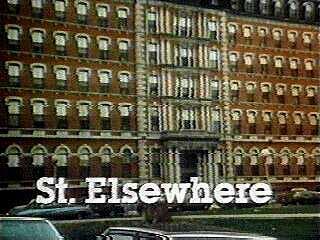
This week, Bobby Caldwell faces his future.

Episode 4.16 “Family Affair”

(Dir by Bruce Paltrow, originally aired on February 12th, 1986)

This episode deals with the fallout of the assassination of Sen. Gordon Endicott. As I watched it, I found it surprising that the doctors and the patients didn’t seem too shaken by the fact that a presidential contender had been shot in the chapel. One could argue that this was meant to show that violence in the United States had become so commonplace that people barely noticed it. I think it has more to do with bad writing. There is no real emotional impact to the Endicott family drama because the Endicotts themselves never come across as actual human beings. They’re thin stand-ins for the Kennedy family, and the show doesn’t seem to know what it wants to say about them. St. Elsewhere was an undeniably liberal show, and the Endicotts, with their sense of noblesse oblige, are clearly meant to evoke nostalgia for the Kennedy era. At the same time, the show can’t quite convince itself that the Kennedy era was all it was cracked up to be.

The Endicott story comes to an end here. Augusta survives her heart surgery. Her granddaughter goes into labor and gives birth to the first Endicott of the next generation. Augusta’s grandsons argue over who will lead the family. It falls flat. That’s especially true in 2026, when the Kennedys are no longer deified. Today the name Kennedy is just as likely to bring to mind vanity congressional campaigns as it is Camelot.

(For all the effort St. Elsewhere put into recreating the Kennedy family, no effort is made to recreate Mary Jo Kopechne.)

Far more compelling is the story of Bobby Caldwell, who struggles to carry on as a doctor despite his AIDS diagnosis. At first, only Westphall, Auschlander, and Morrison know. Morrison tells Fiscus, mostly to get Fiscus to stop giving Caldwell a hard time about his scar. Westphall tells Dr. Craig. Craig confronts Caldwell, says “Tough break,” and then asks him to leave the hospital. Craig also says he had no idea Caldwell was, in Craig’s words — not mine — “a fag.”  Caldwell says that he’s not but the implication is clear.  In Craig’s eyes, the virus is a punishment.

Caldwell’s illness makes Fiscus hesitant about sleeping with Clancy, at least until Fiscus’s own AIDS test comes back. Bobby’s ex, Joan Halloran (Nancy Stafford), gets tested and is relieved to discover she’s negative. When Joan complains that she’s never done anything to deserve getting sick, Morrison tells her that AIDS is a disease, not a metaphysical judgment. I’m glad someone finally pointed that out.

Caldwell resolves to kill himself in his apartment, but just as he’s about to take a lethal objection, someone knocks on his door. The young daughter of the woman who lives above him needs help with a leak in their bathroom. Caldwell realizes that having AIDS doesn’t mean he can’t help people.

In the end, Caldwell does leave St. Eligius. He tells Westphall that he’s moving to California to work at an AIDS hospice. He takes one last look around the hospital and then exits both St. Eligius and the show.

I have to admit I was really moved by the episode’s final image of Caldwell stepping outside. He hasn’t always been my favorite character. When he was first introduced in the second season, he seemed bland. During the third season, the show didn’t know what to do with him. He spent much of the fourth season treating everyone else terribly. But in this episode, Caldwell finally seemed like a real person. Mark Harmon’s performance, especially in those last moments, was outstanding.

Goodbye, Bobby Caldwell.

Retro Television Review: St. Elsewhere 4.15 “Family Feud”


Welcome to Retro Television Reviews, a feature where we review some of our favorite and least favorite shows of the past! On Fridays, I will be reviewing St. Elsewhere, a medical show which ran on NBC from 1982 to 1988.  The show can be found on Daily Motion.

This week, Bobby Caldwell returns.

Episode 4.15 “Family Feud”

(Dir by Mark Tinker, originally aired on January 29th, 1986)

After being gone for the last few episodes, Bobby Caldwell (Mark Harmon) returns to St. Eligius. As he explains it, he’s spent the last month or so with his family in Baltimore. He worked on his family’s farm and got in touch with what actually matters in life. Westphall is so happy to hear this that he immediately starts talking about the time he spent volunteering in Ethiopia.

Caldwell is ready to get his facial scar taken care of. He meets with an old colleague from medical school, Dr. Duncan Harper (Kip Gilman). Harper says that the operation should be simple and quick and then Caldwell will be ready to hit the bars again. As a precaution, Caldwell gives blood, just in case it’s needed during the surgery.

Later, a shaken Harper comes to St. Eligius and meets privately with Caldwell. Harper says that the lab did some standard tests on Caldwell’s blood and that it appears that Caldwell might have AIDS. Caldwell says there has to be some sort of mistake, but Harper shakes his head. Harper retested the blood himself. He asks if Caldwell has any lesions. Caldwell looks down at a spot on his hand and says, “I thought it was just an infection.”

Caldwell tells Westphall about his diagnosis. Westphall tells Caldwell not to give up hope, that a cure might be right around the corner. Caldwell replies that he’s probably got 15 months to live and he’s not going to stop working. After Caldwell leaves, Westphall meets with Auschlander and they both agree that they have no idea what to do.

Meanwhile, it’s Jack Morrison’s birthday! Clancy arranges for him to have a birthday party in the doctor’s lounge. She also continues to flirt with Fiscus. You might expect Morrison to be upset about that, but Morrison is too busy flirting with Mona, Fiscus’s ex! Yeah, we’ll see how that works out….

Finally, Augusta Endicott previously told Dr. Craig that she didn’t want to have a bypass, even if it meant that she would die otherwise. However, when the entire Endicott family comes to visit her, she changes her mind. (During the operation, Dr. Wade comments that Dr. Craig must really be looking forward to the next Endicott presidential campaign. Craig snorts and says that the Endicotts are a bunch of bleeding-heart liberals and he wouldn’t vote for them in a million years.  I love Dr. Craig.) Sen. Gordon Endicott (Charles Cioffi) goes to the chapel to pray and ends up getting shot by a lone gunman.

Gee, who saw that coming?

The Endicotts continue to bore me. They’re just not that interesting as either characters or as thinly-veiled stand-ins for the Kennedy family. On the other hand, Bobby Caldwell’s storyline was powerful and Mark Harmon gave an especially good performance. (I just wish the show had made it clear that AIDS wasn’t meant to be some sort of narrative punishment for Caldwell’s previous bad behavior.) It will be interesting to see how the hospital deals with Caldwell’s diagnosis. Will he actually be allowed to continue to do his job? We’ll find out next week.

Retro Television Review: St. Elsewhere 4.14 “Family Ties”


Welcome to Retro Television Reviews, a feature where we review some of our favorite and least favorite shows of the past! On Fridays, I will be reviewing St. Elsewhere, a medical show which ran on NBC from 1982 to 1988.  The show can be found on Daily Motion.

This week, the matriarch of a powerful Massachusetts political family comes to St. Eligius.

Episode 4.14 “Family Ties”

(Dir by Allan Arkush, originally aired on January 22nd, 1986)

After Elliot makes a clerical error that leads to one of his patients getting a mohawk, he’s more than happy to be assigned to check on a sick gorilla. Elliot not only diagnoses the gorilla as suffering from a brain tumor (luckily, it’s not malignant) but also gets a date with the animal’s keeper, Dr. Valerie Harding (Diana Canova).

When Fiscus freaks out about getting older, he tries to push up his wedding date with Mona and pressures her to abandon her career to start a family immediately.  After Fiscus interrupts an operation to argue with her, Mona dumps him.   (“I told you he was a bubblehead,” Dr. Craig says.) When Fiscus learns that his sperm has been used in an IVF procedure, he becomes obsessed with tracking down the woman who might be having his child. He then runs into Morrison’s ex-girlfriend, Clancy (Helen Hunt), and is soon flirting with her.

Why is Clancy back at the hospital? Morrison slipped on a wet floor and injured his knee. He has to have surgery. Clancy comes up with Morrison’s little-seen son, Pete. Pete, for his part, wanders over to Ken Valere (George Deloy), who, along with his wife (Deborah May), has been having second thoughts about whether to use a surrogate. Meeting Pete inspires the Valeres to adopt. So I guess that plotline is finally over, and I won’t have to ignore it anymore.

The majority of this episode is taken up with the arrival of Augusta Endicott (Dorothy McGuire), the matriarch of one of Massachusetts’s most powerful political families. She’s also the widow of a notorious anti-Semite, one who kept Auschlander from getting appointed to a state board in the 1960s.

From the minute Augusta and her family show up at the hospital, it’s obvious that they’re meant to be stand-ins for the Kennedys, even though Endicott is not an Irish name. (One gets the feeling the Endicotts are meant to be WASPy Episcopalians.) I always find it curious when an obvious Kennedy stand-in turns up on a television show. Does that mean St. Elsewhere takes place in a universe where the Kennedys don’t exist? The parallels are so obvious that it seems strange no one would point them out in-universe. This show is set in Boston. It seems as if someone would say, “Hey, Augusta Endicott sure has a lot in common with Rose Kennedy.”

Augusta is in the hospital for a checkup. She’s having heart problems, but she tells Dr. Craig that she would prefer to let nature take its course rather than spend the rest of her life having surgeries. Augusta also arranges for Auschlander to finally be appointed to the state medical board.

I’m getting the feeling that the Endicott family is going to be around for at least a few episodes. I can’t say I’m particularly enthused about the idea, but I get it. This is a show about Boston. You’ve got to have Kennedys.

The TSL’s Grindhouse: April Fool’s Day (dir by Fred Walton)


(Because of the nature of the 1986 pseudo-slasher film, April Fool’s Day, it’s impossible to really talk about the film without talking about the film’s ending.  As a result, this review will have spoilers.  The ending will be revealed.  The entire plot will be spoiled.  Do not read on if that’s going to be an issue for you.)

(Did you read the warning above?)

If not for the way that the film ends, April Fool’s Day would probably be a forgotten film.  It’s a slasher film that doesn’t feature much blood, sex, or any particularly flamboyant kills (though there’s a good reason for that).  Compared to most low-budget slasher films from the mid-80s, April Fool’s Day does have a surprisingly charismatic and likable cast but it’s rare that anyone watches a holiday-themed slasher film for the acting.  Up until the final ten minutes or so, April Fool’s Day is professionally done but somewhat generic…

But then you hit that ending and it totally changes the whole film.  It’s not a perfect ending.  In many ways, it’s probably one the most imperfect endings that I’ve ever seen.  It requires a massive suspension of disbelief.  It makes no logical sense. But dammit, I love it.  Almost despite itself, it’s a great ending and it confirms that April Fool’s Day is meant to be a satire and not a straight horror film.

For the first 80 minutes or so, April Fool’s Day plays out like the 100th variation on And Then There Were None.  Heiress Muffy St. John (Deborah Foreman, giving a wonderfully odd performance) invites a group of college friends to her island mansion.  They arrives on April Fool’s Day and they spend the first night dealing with Muffy’s strange sense of humor.  (Actually, Muffy and I both find the same things funny but I’ve been told that I have a strange sense of humor so, therefore, I assume that Muffy must have one too.)  Harvey, who prefers to be called Hal (Jay Baker), smokes an exploding cigar and discovers his bedroom has been decorated with newspaper articles about a car accident that he was involved in.  Jock Arch Cummings (Thomas F. Wilson) finds steroids hidden away in a medicine cabinet.  Nikki (Deborah Goodrich) comes across handcuffs in a dresser.  Nan (Leah Pinset), a serious-minded drama student, hears a baby crying in the distance and is reminded of her abortion, something that she believes that only Muffy knows about.

The next day, Muffy is now wandering around in a daze and her brother, Skip (Griffin O’Neal), has vanished.  Kit (Amy Steel, playing a similar role to her character in Friday the 13th Part Two) and Rob (Ken Olandt) think that they see Skip’s decaying body floating under the boathouse.  As the day progresses, Arch and Nan vanish and later turn up at the bottom of a well.  Harvey is found hanging from a rope.  Chaz (Clayton Rohner) is castrated and, while we’re not quite sure what exactly happens to Nikki, we do see that it involves a large puddle of blood.  Kit and Rob discover Muffy’s head in the basement and realize that they are being stalked by Muffy’s crazy twin, Buffy.

(Deborah Foreman is great in both of the roles.  As Muffy, she delivers all of her lines with just a hint of sarcasm and constantly seems to be silently laughing at a private joke that only she understands.  And when she’s Buffy — well, she’s totally batshit crazy.)

Being pursued by a knife-wielding Buffy, Kit runs through the mansion and finds herself in the drawing room.  And who is waiting for her but all of Buffy’s victims?  No, they’re not dead!  Instead, they’re alive and they’re all in a very good mood.  And Buffy is not Buffy.  She’s Muffy and she’s been Muffy all along.

That’s right, it’s all a huge elaborate joke!  Muffy does spend a few minutes explaining how the whole weekend was a dry run for her plan to turn her estate into a resort, one that will offer a weekend of fake horror.  But, ultimately, it all comes down to the entire movie being an elaborate joke.  I know, just from perusing some of the comments at the imdb, that there are some horror fans who hate the ending of April’s Fool’s Day.   But, really, that’s the only “honest” way that a film like April Fool’s Day could end.  If the movie was called Thanksgiving, I could understand being upset.  But this is an April Fool’s Day movie!  It has to be a joke.

Of course, if you think about it too much, the ending makes no sense.  Muffy specifically states the no one was in on the joke until the last minute.  Whenever one of her friends would wander off on their own, Muffy would grab them, explain the joke, and get them to play along.  When you consider the size of the island and where, at various points, the victims are in relation to the other characters, Muffy must be a very fast explainer, as well as being very persuasive.  (As well, Harvey brings a gun with him to island.  Muffy jokes about nearly getting shot by him but imagine if he had been successful?)  Even if you accept that all of the friends — even Arch and Harvey, who are both kinda dumbasses — would be able to play along without screwing things up, you have to wonder why Muffy thought it would be a good idea to use dark secrets from everyone’s past.

If you search far enough online, you can find all sorts of rumors about the film that April Fool’s Day was originally meant to be.  In the finished film, Skip is a bit of a cipher but, in the original script, he was a much more complex character.  While Muffy was busy playing her elaborate prank, Skip was planning on killing Muffy and claiming their parent’s inheritance for himself.  The crying baby, the drugs, the incriminating newspaper articles; all of them were originally meant to be the work of Skip.  While Skip’s subplot was dropped, the dark secrets of the past were not.  As a result, Muffy comes across as being a lot more cruel than was originally intended.

Originally, the film was also meant to end with Skip killing Muffy but the ending was apparently changed at the last-minute.  (Reports differ on whether or not the original ending was ever filmed.)  Instead, the film now ends with Muffy stumbling into her bedroom, playing with a jack-in-the-box, and then getting a knife drawn across her throat by Nan.  It’s just another elaborate practical joke and, once Muffy realizes that she’s not dying, Nan gives her a quick kiss and smiles enigmatically.

(A lot of imdb commenters — mostly males — have read a lot into that kiss, obsessing on a subtext that really isn’t there.  As opposed to being the homage to Blue Is The Warmest Colour that many commenters appear to believe it to be, it’s really just a friendly kiss, a way of saying, “I got you.”  Sorry, guys, that’s all there is to it.)

It’s an ending that would never be done today.  Today, all horror films have to end with the promise of a sequel.  Muffy might still get away with pulling an elaborate prank but Nan would definitely have killed her at the end of the film.  Her little smile would have said, “Wait for the sequel.”  And the modern version of that ending definitely would not be as effective.  In fact, it would be so expected that it would be damn near infuriating.  Instead, the ending of April Fool’s Day is good-natured and likable, which is appropriate because April Fool’s Day is a surprisingly good-natured and likable film.

After Nan’s final joke, April Fool’s Day ends with a song.  And here it is!  Enjoy and I hope everyone had a great April Fool’s Day!