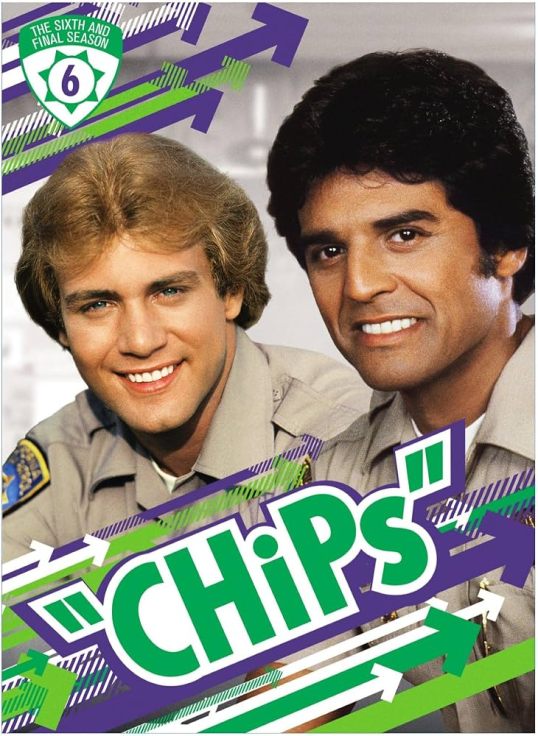
Late Night Retro Television Review: CHiPs 6.2 “Tight Fit”


Welcome to Late Night Retro Television Reviews, a feature where we review some of our favorite and least favorite shows of the past!  On Mondays, I will be reviewing CHiPs, which ran on NBC from 1977 to 1983.  The entire show is currently streaming on Prime!

This week, Ponch becomes the Barcelona Man.

Episode 6.2 “Tight Fit”

(Dir by John Florea, originally aired on October 17th, 1982)

After Ponch and his new partner Bobby thwart an attempt to steal a lockbox of diamonds from a photo shoot, Ponch is invited to become a jeans model.  In fact, he even gets to appear on a giant billboard and star in a commercial as the shirtless Barcelona Man.

Well, of course, he does.  A lot of things may have changed last week but one thing remains the same.  We all know what we’re watching.

These episodes featuring Ponch getting “discovered” are always a bit silly.  Ponch always acts like he’s modest and kind of embarrassed to be at the center of attention but it’s never convincing because it’s obvious that Erik Estrada is loving it.  All it takes is one look at that big grin to know that Estrada is more than happy to be the shirtless Barcelona Man.

Now, to make clear, Ponch and Bobby did solve some crimes.  They caught a jewel thief who crashed his car in an attempt to hide his crimes.  They also busted a fashion photographer (Michael Haynes) who was coercing his underage models to pose nude and attend wild sex parties.  One of the models was played by Kim Richards.  She gets a scene where she attempts to jump off a ledge.  Can you guess which member of the Highway Patrol saves her?  I’ll give you a hint.  It’s not Bobby!

Much like last week, this episode highlighted the total lack of chemistry between Erik Estrada and his new partner, Tom Reilly.  Reilly spent most of this episode looking somewhat dazed and confused.  Unlike Larry Wilcox, who always came across as if he arrested people in his spare time, Tom Reilly was a very unconvincing cop.  After two episodes, it appears that Reilly’s main contribution to the show is to make Estrada seem convincing by comparison.

Next week, the Ponch Show continues.

Retro Television Review: Crime Story 1.13 “Strange Bedfellows”


Welcome to Retro Television Reviews, a feature where we review some of our favorite and least favorite shows of the past!  On Mondays, I will be reviewing Crime Story, which ran on NBC from 1986 to 1988.  The entire show can be found on Tubi!

This week, Homan sings.

Episode 1.13 “Strange Bedfellows”

(Dir by Francis Delia, originally aired on December 26th, 1986)

Homan is in federal custody and he’s telling Breitel all that he knows about Luca and Bartoli.  He’s also making up a story about Torello taking a bribe.  Even though Homan’s Torello story is pretty shaky, Breitel is looking forward to taking down a crooked cop and launching his political career off of of the publicity.

Bartoli is not amused when he learns that he’s being indicted.  However, Luca is able to convince Manny Weisbord to provide him with a top-level defense attorney.  Manny also makes it clear that Luca no longer works for Phil.  Instead, Luca works with Phil.  Lucas has another reason to be happy.  When he runs into David Abrams at a bar, he gets some free legal advice.  Luca explains that Homan is lying about Torello.  Abrams tells Luca that, if they can prove that Homan is lying about Torello, it will be easier to convince a jury that Homan is lying about Luca and Bartoli as well.

Torello, meanwhile, responds to his upcoming indictment by going to Las Vegas and playing some golf.  He’s in a great mood until he sees that his indictment is one the front page of the newspaper.

Not much really happened in this episode of Crime Story.  That’s not really a complaint.  If anything, it was a bit of a nice change-of-pace.  We got to watch the characters just be themselves.  Luca, who rarely shows emotion, actually smiles when he hears that Torello is about to be indicted along with “his favorite people.”  Luca actually has a sense of humor and an appreciation for irony.  Who would have guessed?  Meanwhile, Torello continues to be just a bit too intense for his own good.  Even on vacation, he seems like he’s just one frustration away from snapping.

Will Torello snap next week?  We’ll find out!

Retro Television Review: Homicide: Life On The Street 5.19 “Deception”


Welcome to Retro Television Reviews, a feature where we review some of our favorite and least favorite shows of the past!  On Sundays, I will be reviewing Homicide: Life On The Street, which aired from 1993 to 1999, on NBC!  It  can be viewed on Peacock.

This week, the Luther Mahoney saga comes to an end.

Episode 5.19 “Deception”

(Dir by Peter Medak, originally aired on April 25th, 1997)

A Nigerian drug courier is found dead in a hotel room and, of course, that means that Kellerman, Lewis, and Stivers are going to get another chance to go after Luther Mahoney.  After covering up the death of the actual courier, the police send in an undercover officer who delivers a batch of “bad” drugs to Mahoney’s middleman, Antonio Brookdale (Christopher Mann).  When the drugs hit the street, it leads to a revolt amongst Mahoney’s customers.  No one is buying from Mahoney and that causes Mahoney to lose his temper.  Luther Mahoney can handle almost anything but he can’t handle losing money.

Mahoney demands that Antonio meet him at a public park.  What Mahoney doesn’t know is that the police — including Kellerman, Stivers, and Lewis — have got the park staked out.  When Mahoney, in a fit of rage, shoots both Brookdale and an innocent mother with her kids, the police rush to the scene.  A panicked Mahoney jumps in his vehicle and drives away, leaving his crew behind to get arrested.

Lewis tracks Mahoney down to his apartment, where Mahoney is desperately packing up his money.  The sight of Mahoney causes Lewis to lose control.  He starts hitting Mahoney, demanding to know why Mahoney had to kill so many people when he could have just been content to sell drugs.  Mahoney manages to grab Lewis’s gun.  Kellerman and Stivers burst into the apartment with their own guns drawn.  Seeing them, Mahoney lowers his gun and says, “What are you going to do?  Read me my rights?”

“You have the right to remain silent….” Kellerman says, before shooting and killing Mahoney.

OH MY GOD, KELLERMAN JUST EXECUTED LUTHER MAHONEY!

Technically, you could argue that, as Mahoney was still holding the gun, the shooting was justified.  Mahoney lowered the gun but he never dropped it.  Nor did Mahoney ever say that he was surrendering.  Instead, he laughed and mocked the cops.  If Mahoney had raised the gun quickly enough, he probably could have gotten at least one shot in before Stivers and Kellerman had time to take action.  Then again, Kellerman also never ordered Mahoney to drop the gun.  Instead, he just shot him.  After Mahoney falls, Kellerman asks Lewis and Stivers if either has a problem with what happened.  “Nope,” Lewis says.  Stivers, however, doesn’t look convinced that the shooting was justified.

It’s a shocking moment but it’s also a moment that feels somewhat inevitable.  Kellerman has spent this entire season with people accusing him of being crooked.  Even though he was never charged, even his fellow detectives assumed that he must have been doing something to get in trouble in the first place.  Meanwhile, Mahoney killed numerous people and smirked every time that he got away with it.  Kellerman snapped and probably committed a crime.

If that’s not bad enough, Munch is contacted by Punchy DeLeon (Lewis Black), a small-time mobster who has just spent ten years in prison on a murder charge.  Punchy tells Munch that he knows that a criminal associate of his, Jimmy Pugliese, was murdered and buried in section C of the parking lot at the Plimco race track.  With Munch and Brodie in attendance, the parking lot is dug up and …. nothing is found.  Munch does some further investigating and discovers that Pugliese had a girlfriend named Fallon (Deborah Hazlett).  When he drives out to see her, he discovers that Pugliese (Brian Hemmingsen) is still alive.  Pugliese orders to Much to get off his front porch.  Much leaves, not realizing that he’s been followed by Punchy.

Back at the office, Sgt. Howard tells Munch not to worry about it because there hasn’t been an actual homicide.  However, then Fallon shows up and says that Pugliese has disappeared.  Munch drives out to Plimco, where he finds Punch waiting for him in Lot C.  Punchy explains that he took the fall for a murder the Pugliese committed.  Because Pugliese didn’t keep his promise to take care of Punchy’s wife while Punchy was in prison, Punchy used Munch to track down Pugliese.  And now, Pugliese really is buried under the parking lot.  (It helped that the parking lot itself was already ripped up due to Munch searching for the body the first time.)  Munch tells Punchy that he’s going back to prison.  Punchy replies that he did ten years for a murder he didn’t commit and suggests that should allow him to commit one murder without punishment.  It doesn’t work that way, which is kind of sad because Punchy was a likable guy.

Finally, Bayliss and Pembleton decide to be partners again.  Good news!  But Bayliss is also buying groceries for the uncle who molested him.  What the Hell, Bayliss!?

Seriously, this episode got dark!

Well, dark or not, this was one of the better episodes of season 5.  This was Homicide at its most cynical.  Luther Mahoney is dead but someone else will inevitably take his place and now Kellerman really has committed a crime.  (For all the cheering the cops do as they listen to Mahoney incriminate himself on tape, it’s not going to be much comfort to children of the innocent woman that he shot in the park.)  For once, Munch actually does his job well and the end result is a man getting murdered and Punchy going back to prison.

One final note: I will miss the magnificently evil performance of Erik Dellums, who played Luther Mahoney with the right mix of arrogance, hubris, and ruthlessness.  A good villain is hard to find!

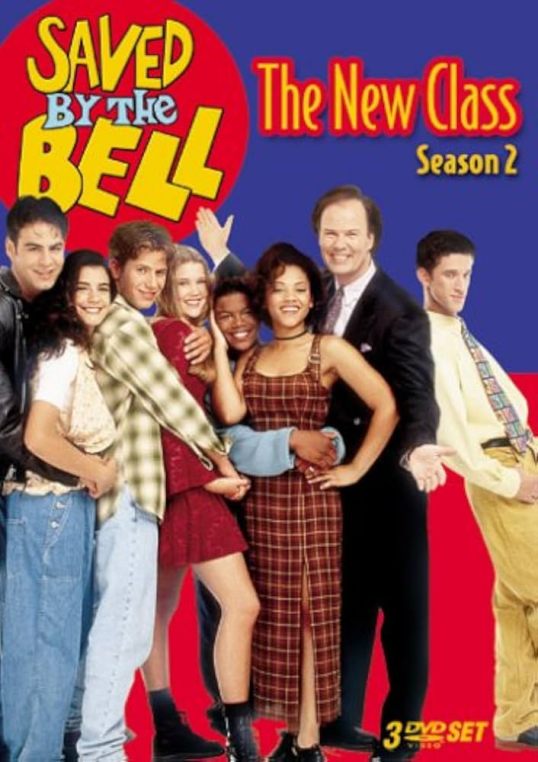
Late Night Retro Television Review: Saved By The Bell 2.12 “Running Zack”


Welcome to Late Night Retro Television Reviews, a feature where we review some of our favorite and least favorite shows of the past!  On Saturdays, I will be reviewing Saved By The Bell, which ran on NBC from 1989 to 1993.  The entire show is currently streaming on Tubi!

This episode, Zack does some research on his family tree.  Things are about to get supercringey.

Episode 2.12 “Running Zack”

(Dir by Don Barnhart, originally aired on November 24th, 1990)

Ms. Wentworth (Carol Lawrence), who is a slightly less sociopathic version of Ms. Bliss, has assigned everyone to do a report on their family tree.  She hands out grades based on what people discover about their family’s past.  I’m not sure if that’s really a good idea.  What if someone comes from a family that doesn’t have any dark secrets?  And really, if your family did have a dark secret, what business is it of Ms. Wentworth’s?

Lisa reveals that her family escaped slavery and then helped over slaves escape as well.  “My family calls the Underground Railroad the original Soul Train,” she says.

Jessie discovers that her family was made up of slave traders.  Jessie proceeds to have a breakdown, even though Lisa says that Jessie shouldn’t feel responsible for anything that her ancestors did.  To a lot of people, that probably sounds like common sense but it’s also the type of sentiment that now gets you cancelled on Bluesky.

Screech reveals that he’s Italian and his ancestors were all great lovers.  “What is mi grade?” Screech asks.  “A!” Ms. Wentworth says with a dramatic flourish.

We never learn about Slater’s family tree, despite the fact that, along with Lisa, he’s one of the few characters who is obviously not a generic white person.  However, we do learn about Zack’s family background.  Looking through the family records, he finds one picture of an Indian.  Zack promptly declares himself to be a Native American.  However, when Zack can’t even answer a few basic questions about his family’s background, Ms. Wentworth threatens to flunk him.  But if Zack flunks, how will he compete at the track meet!?  Bayside has never beat Valley …. in track, at least.

Ms. Wentworth sends Zack to meet Chief Henry (Dehl Berti, who, unlike Mark-Paul Gosselaar, actually was of Native American ancestry), an American Indian who apparently lives in a cluttered shack.  Chief Henry takes one look at the picture and is able to identify Zack’s ancestor by name.  He also gives Zack the name “Running Zack.”  He helps Zack to appreciate his Native heritage.  And then Chief Henry promptly dies offscreen.

Zack isn’t sure that he can run in the track meet.  He’s feeling pretty depressed about the death of the old man he met twice.  Chief Henry’s ghost appears to Zack and tells him to run because beating Valley is obviously the most important thing.  Zack agrees to go to the track meet and Henry vanishes.  Zack’s Native American ancestry is never mentioned again.

This episode is the equivalent of those old DNA test commercials where an extremely white person would say that their DNA test revealed that they were 2% Native American and that it had changed their entire life.  As I rewatched it for this review, I couldn’t help but think about Elizabeth Warren, whose claims of Native American ancestry were even flimsier than Zack’s.  I found myself thinking about the fact that there’s actually a name — Pretendian — for generic white people who try to be more interesting by falsely claiming Native heritage.  What’s funny is that Mark-Paul Gosselaar’s actual heritage — Dutch and Jewish on his father’s side, Indonesian on his mother’s side — is actually pretty interesting.  But, in this episode, it’s revealed that Zack is Nez Perce.  (Though the tribe isn’t named, Zack’s ancestor is described as being one of Chief Joseph’s main warriors.)

Gosselaar used to refer to this as being his favorite episode of Saved By The Bell.  In 2016, he changed his tune and said that the episode actually was insensitive to Native Americans.  Gosselaar’s correct about that.  Even after Ms. Wentworth tells Zack that his original presentation was disrespectful to the memory of his ancestor, she still calls him “kimosabe.”  At no point does Zack show any curiosity as to why he had never heard much about his Native ancestry to begin with.  And, needless to say, it’s never mentioned again.  Like, ever.  Seriously, I had a friend who, in 2007, discovered that she was 98% European and 2% North African and she hasn’t shut up about it in nearly 20 years.

The main problem with this episode is that Chief Henry conveniently dies off-screen, despite there not being any indication that he was in any way unhealthy.  We never learn what Henry died of.  Instead, he shows up long enough to teach Zack a lesson and then he dies so that the show doesn’t have to worry about bringing him back in the future.  Zack declares that he might not run the track meet.  Ms. Wentworth sobs.  Well, at least Ms. Wentworth actually knew Chief Henry.  Zack really seems like he’s just being performative about it.

Myself, I’m Irish on my father’s side and Italian/Spanish on my mother’s side.  I would have definitely gotten an A in Ms. Wentworth’s class.

Retro Television Review: Baywatch 2.13 “Now Sit Right Back And You’ll Hear A Tale”


Welcome to Retro Television Reviews, a feature where we review some of our favorite and least favorite shows of the past!  On Saturdays, I will be reviewing Baywatch, which ran on NBC and then in syndication from 1989 to 2001.  The entire show can be viewed on Tubi.

This week, Eddie suffers a serious injury.

A quick note, before we begin: this episode was actually the 16th episode to air during the second season but apparently, it was originally meant to be the 13th episode and, in reruns, it usually airs after the Reunion episode.  I’ve decided to go with the production order for the purpose of these reviews.  Of course, it really doesn’t matter because it’s not like Baywatch had any use for continuity to begin with.

Episode 2.13 “Now Sit Right Back and You’ll Hear a Tale”

(Dir by Douglas Schwartz, originally aired on February 24th, 1992)

After rescuing a jet skier who ran out of fuel in the middle of the ocean, Eddie and Shauni discover a previously unchartered island.  (Or, at least, that’s what we’re told.  The beach that Eddie and Shauni explore is obviously the same beach from last week’s Reunion episode.)  On the beach, they find Gilligan (Bob Denver) and Mary Ann (Dawn Wells), who have been stranded on the island ever since the 60s.  Eddie and Shauni take them back to civilization.

Captain Thorpe is so impressed with Gilligan and Mary Ann’s story that he decides that he’s going to start his own media company and produce a miniseries about their life on the Island.  He also thinks that it would be a good idea to go back to the island and rescue the other castaways.  (Gee, you think?)  He arranges for a three-hour expedition to the island.  Garner will serve as the skipper.  Eddie will be the first mate.  Harvey is coming along as a professor, for some reason.  Shauni wants to star in the miniseries so she decides to dress up like a movie star and come on the tour as well.

Uh-oh, there’s a storm!  Everyone ends up washed up on the island.  Eddie finds himself torn between Mary Ann and Shauni but then he realizes that Gilligan is the one who truly loves Mary Ann….

No, I’m not making this up.  Stop it, I swear I’m not.

Eventually, Eddie wakes up in Baywatch Headquarters.  It turns out that he slipped and hit his head earlier and the entire episode has been a dream.  (Shocker!)  It sound like Eddie probably has a severe concussion but no one seems to be too concerned about that.

Hasselhoff appears for a few minutes at the start and the end of the episode.  Apparently, he knew better than to board the boat.

Oh God, this episode.  Well, actually, this episode makes sense once you learn that Douglas Schwartz (who both directed this week and also served as executive producer of the show) was the nephew of Sherwood Schwartz, the producer of Gilligan’s Island.  It’s a silly episode but Baywatch is a silly show so that’s to be expected.  The episode’s main mistake is that it opens with Eddie watching an episode of Gilligan’s Island and then it shows us Eddie slipping and hitting his head.  As a result, we pretty much know the whole episode is a dream from the start and we spend the entire episode waiting for Eddie to wake up.  It’s kind of boring.

Next week …. oh, who knows?  I’m sure it’ll be something involving a lot of slow motion running on the beach.

Late Night Retro Television Review: Freddy’s Nightmares 2.21 “Prisoner of Love”


Welcome to Late Night Retro Television Reviews, a feature where we review some of our favorite and least favorite shows of the past! On Fridays, I will be reviewing Freddy’s Nightmares, a horror anthology show which ran in syndication from 1988 to 1990. The entire series can be found on Tubi!

Let’s go to prison!  Is Freddy coming?

Episode 2.21 “Prisoner of Love”

(Dir by Richard T. Schor, originally aired on March 4th, 1990)

A flakey Episcopalian named Father Jarvis (Vincent Baggetta) is appointed the new chaplain of Springwood Prison.  Jarvis has just returned from Haiti and has a rather liberal outlook towards prison reform.  When he falls in love with Death Row prisoner Violet (Maria Richwine), he gives her a Haitian drug that will make it appear as if she’s died.  He promises her that he will dig her up from the prison graveyard before she suffocates.  Unfortunately, Jarvis oversleeps and Violet suffocates in her coffin.

Still, another prisoner named Brenda (Tara Buckman) overheard Jarvis talking to Violet and she decides that she wants the same drug.  Jarvis gives it to her but it turns out that Jarvis is also being haunted by the ghost of Violet.  Violet says that she can’t move on until Brenda forgives her for killing Brenda’s boyfriend.  Brenda finds herself being held captive by the crazed Father Jarvis.

This episode was the second-to-late for Freddy’s Nightmares and, unfortunately, it’s not very good.  Between the histrionic acting and the predictable plot, this story really makes you wish that Freddy was doing something more than just introducing it.  As it was, this episode really reminded me of how limiting the show’s format was.  Whenever something scary happens, it’s always a given that it will turn out to be a dream.  It’s predictable and a little bit dull, unless it’s one of the rare episodes in which Freddy actually played a role in the story.

Next week, we will finish up Freddy’s Nightmares!

Retro Television Review: St. Elsewhere 4.4 “The Naked and the Dead”


Welcome to Retro Television Reviews, a feature where we review some of our favorite and least favorite shows of the past! On Fridays, I will be reviewing St. Elsewhere, a medical show which ran on NBC from 1982 to 1988.  The show can be found on Daily Motion.
Life is getting dark in Boston!

Episode 4.4 “The Naked and the Dead”

(Dir by Leo Penn, originally aired on October 30th, 1985)

This episode opens with Dr. Craig in an even worse mood than usual.  There’s two newspapers in Boston and they each have a totally different weather forecast.  One says that the day is going to be warm and sunny.  The other says to expect rain.  How is Dr. Craig supposed to know whether or not take an umbrella to the hospital!?  Ellen, meanwhile, is preparing for Stephen’s funeral, which is going to be held later in the day.

Yes, Dr. Craig does go to the hospital on the day of his son’s funeral.  He says that he has no choice because his patients need him but it’s obvious that the hospital is his way of avoiding the grief and guilt that he feels over the death of his son.  Ellen worries about whether or not Stephen will be buried in a comfortable suit.  Dr. Craig yells at a post-op patient for smoking and eating too much.  They’re both dealing with their sadness.

Dr. Westphall, meanwhile, deals with his nonstop depression by coming up with new (and impractical) community projects for the hospital.  In this episode, he leaves Tommy with a babysitter so that he can try to persuade the Board of Directors to fund his latest project, a clinic devoted to battling malnutrition.  The Board turns him down.  Westphall returns home a depressed.  That’s nothing new.  Westphall is always depressed.  That said, this was the first episode in which I really felt as if I understood Westphall’s depression.  Westphall feels guilty because, for all of his medical training, he still doesn’t understand his son’s autism.  So, instead of dealing with Tommy, Westphall throws himself into the hospital.  He’s really not that much different from Dr. Craig.

While that’s going on, Bobby hooks up with a physical therapist at the hospital.  Nurse Lucy (Jennifer Savidge) steals his scrubs and we get the sight of a half-naked Mark Harmon running through the hospital.  Meanwhile, an aspiring teenage photographer (Robert Romanus — DAMONE FROM FAST TIMES AT RIDGEMONT HIGH!) is beaten up when he sells some bad drugs to the other inhabitants of the group home where he lives.  The photographer is dead by the end of the episode.  It’s just that type of day.

This episode ends with Dr. Craig and his wife going to the funeral.  It’s raining, of course.

Wow, what a depressing episode!  Fortunately, the strong ensemble cast kept things bearable, even though there wasn’t much happiness to be found over the course of the hour.  Still, I worry about Dr. Craig.  He really does seem like he’s just a few days away from snapping.  Hopefully, he’ll express his grief at some point.  It’s not good to hold all that in.  We know there’s a bar near the hospital and Dr. Craig seems like he’s on the verge of becoming a regular.

Are things going to continue to get dark or is Boston going to see happier day?  We’ll find out next week!

Late Night Retro Television Review: Hunter 1.14 “The Snow Queen: Part Two”


Welcome to Late Night Retro Television Reviews, a feature where we review some of our favorite and least favorite shows of the past!  On Thursdays, I will be reviewing Hunter, which aired on NBC from 1984 to 1991.  The entire show is currently streaming on Tubi and several other services!

This week, the story of the snow queen comes to a close.

Episode 1.14 “The Snow Queen: Part Two”

(Dir by Richard Colla, originally aired on March 30th, 1985)

The second part of The Snow Queen saga opens with a stylish action sequence.  As Huey Lewis sings I Want A New Drug on the soundtrack, we watch as both Molinas (Dennis Franz) and Hunter approach, from opposite sides, the boat where Sally LaPone is hiding out with one of her friends.  Molinas is approaching the boat so that he can murder Sally for the mob bosses in New York.  Hunter, on the other hand, is approaching the boat to try to save Sally’s life.  The guards that surround the boat have no idea what’s going on and they end up getting into a gunfight with both Molinas and Hunter.  Molinas, being the sleaze that he is, pretends that he drew his gun to help Hunter as opposed to killing Sally.

Meanwhile, at a club, a smitten Vic Terranova (Dennis Farina) pushes McCall, who is working undercover, to take the stage.  Shots of McCall performing are mixed with shots of Molinas and Hunter shooting people and Sally once again escaping.

Molinas wants to kill Sally while McCall wants to use Sally’s testimony to take down Terranova and his drug-fueled empire.  Hunter wants to stop Molinas from killing anyone else and Sally just wants to be left alone.  The episode does a good job of switching from one character to the next, capturing the desperation of everyone involved.  One especially memorable sequence features Dennis Franz showing Sally’s pictures to a group of teenagers outside of a punk club.  Just from the reactions of Franz and the punks, one gets the feeling that the sequence wasn’t actually scripted.  There’s a gritty authenticity to the action in this episode and it makes for compelling viewing.

Of course, this is an episode of Hunter so everything does eventually lead to another shoot out.  Both Vic and Molinas go down in a hail of bullets and it’s actually kind of a shame.  Both Farina and Franz did such a good job in these two episodes that it’s unfortunate that their characters won’t be able to return in the future.  Franz, in particular, was brilliantly sleazy as the loathsome Molinas.  If only he hadn’t pulled that gun on Hunter, Molinas could have been one of those recurring villains that audiences would love to hate.

Still, all things come to an end and, since this is Hunter, they end in gunfire instead of arrests.  Sally survives but the final shot of the episode reveals that she’s been traumatized beyond belief by everything she’s seen and experienced.  McCall’s hope was that Sally would get immunity in return for testifying against Vic.  But, with Vic dead, Sally really doesn’t have any leverage that she could use to avoid jail.

Seriously, this was a dark episode!  But it was a compelling one and I’m glad that, for once, Hunter showed that not everyone just shrug off violence and move on.  Not everyone is Rick Hunter.

Retro Television Review: Alexander The Great (dir by Phil Karlson)


Welcome to Retro Television Reviews, a feature where we review some of our favorite and least favorite shows of the past!  This Thursdays, I will be reviewing Alexander The Great, which was filmed in 1963 but didn’t air on CBS until 1968.  The show can be found on YouTube!

This week, we take a look at William Shatner and Adam West in Alexander The Great, a pilot that never became a series.

Episode 1.1 “Alexander The Great”

(Dir by Phil Karlson, originally aired on January 26th, 1968)

Greek leader Alexander the Great (a very blonde William Shatner) is determined to defeat the forces of King Darius and conquer all of Persia.  But, before he can fight his latest battle, he has to rescue his kidnapped best friend Cleander (Adam West), calm the nerves of his mentor Antigonus (Joseph Cotten), and deal with two insubordinate generals (John Cassavetes and Simon Oakland).  Only then will Alexander be ready to defeat the fearsome, beheading-obsessed Persian general, Memmon (Cliff Osmond, wearing a truly horrifying wig and fake beard).

This hour-long episode features a lot of talking, a lot of scheming, and one good battle scene.  Unfortunately, that good battle scenes becomes a lot less impressive once you discover that it was lifted from the 1959 film, The Giant of Marathon.  As for the scheming, it’s not really a surprise when the generals plays by Cassavetes and Oakland reveal that they’re planning on assassinating Alexander during the battle.  Both characters are so obviously villainous that their very presence amongst the ranks will lead most viewers to doubt whether Alexander is truly the tactical genius that everyone seems to think he is.

For most viewers, the main appeal of Alexander the Great will be the chance to see William Shatner and Adam West playing best friends.  This pilot was made before Shatner was cast as Captain Kirk and West as Batman.  While West gives a relatively sober performance as Cleander, Shatner shows that he had all of his famous acting tics long before he boarded the Enterprise.  Shatner delivers every line as if he’s expecting to be handed an Emmy at any moment.  The halting cadence is present.  The overly dramatic punctuation is present.  The habit of telegraphing every line and emotion by moving his head is present.  This is the type of performance that feels more like William Shatner imitating himself than actually trying to play a character.  Today, we’re all used to William Shatner poking fun at his reputation so it’s always a bit jarring to watch something like Alexander the Great and see just how seriously Shatner used to take himself.

Alexander the Great ends with Alexander achieving victory over both Memmon and his own duplicitous generals.  He buries Antigonous, who was earlier murdered by the mutineers.  And then, with a big smile on his face, Alexander hopes on his horse and rides off with Cleander and his surviving generals.  Watching Shatner riding his horse, it becomes obvious that, had this pilot become a show, it would have been a western that just happened to take place in ancient Greece and which featured togas and mini-skirts instead of chaps and hats.

This pilot was shot in 1963 but it was rejected by the network and shelved.  In 1968, when West was Batman and Shatner was Kirk, the pilot was taken out of storage and aired as an episode of an anthology show.  Needless to say, it didn’t lead to a series.  Adam West later poked fun at the pilot in his autobiography, saying that it was the greatest waste of an hour ever made.  I think West was a bit too hard on the pilot.  It’s not terrible as much as it’s just bland.  No production featuring not only Shatner and West but also Joseph Cotten, Simon Oakland, and John Cassavetes has a right to be this mild.

One does wonder how, if the pilot had become a series, it would have deal with Alexander eventually drinking himself to death.  Imagine what Shatner and West could have done with that!

Late Night Retro Television Review: 1st & Ten 4.10 “Out of the Past”


Welcome to Late Night Retro Television Reviews, a feature where we review some of our favorite and least favorite shows of the past! On Wednesdays, I will be reviewing 1st and Ten, which aired in syndication from 1984 to 1991. The entire series is streaming on Tubi.

After last week’s trip to “the future,” this episode returns to 1988.

Episode 4.10 “Out of the Past”

(Dir by Stan Lathan, originally aired on December 7th, 1988)

As a show, 1st & Ten has a weird habit of introducing new characters and pretending as if they’ve always been around even if they’ve never been seen or even mentioned before.  In this episode, we meet Coleman King (Richard Lawson), the team’s veteran running back who fears that he’s on the verge of being dropped from the Bulls.  Coleman is also an old friend of TD Parker’s (O.J. Simpson).

TD is conflicted.  He knows that Coleman is past his prime.  The Bulls are on the verge of signing a new running back and, when they do, TD knows that he’s probably going to have to cut Colman from the team.  As a former player, TD knows how painful it is when your professional career is murdered and no one is held responsible for it.  Complicating matters is the clear attraction between TD and Coleman’s wife, Della (Vanessa Bell Callaway).

While TD tries to figure out how to protect both the team and Coleman, Ernie Denardo runs into his ex-girlfriend, Brenda (Shannon Wilcox), at a bar.  Brenda has some scary people after her because of her unpaid gambling debts.  She tells Denardo that she has money on the next Bulls game.  If the Bulls win by more than ten, her debt will be paid off and then she and Denardo can be together.

The next day, the Bulls are on the verge of winning by 9.  With only a few seconds left in the game, Denardo has the team kick a field goal so that they can win by 12.  Denardo returns to Brenda’s apartment and discovers that she’s gone.  It was all a scam, hatched by Brenda and her real boyfriend.

In tears, Denardo tells TD that he has to quit as coach of the Bulls.

TD argues that Denardo didn’t do anything wrong because he didn’t have money on the game.  TD points out that the field goal unit needed the practice and that the Bulls need as many points as possible to clinch home field advantage in the playoffs.  The episode ends with TD embracing the sobbing Denardo.  Awwww!  Is there nothing an OJ Simpson pep talk can’t fix?

After last week’s bizarre episode, this was a traditional 1st & Ten episode.  This episode served as a reminder of just how bland OJ Simpson was as an actor.  That said, Reid Shelton did a good job as the grief-stricken Denardo and the gambling subplot at least did have a few interesting twists.  By the standards of 1st & Ten, that makes this episode a success.