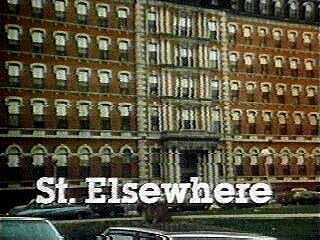
Welcome to Retro Television Reviews, a feature where we review some of our favorite and least favorite shows of the past! On Fridays, I will be reviewing St. Elsewhere, a medical show which ran on NBC from 1982 to 1988. The show can be found on Daily Motion.
This week, the matriarch of a powerful Massachusetts political family comes to St. Eligius.
Episode 4.14 “Family Ties”
(Dir by Allan Arkush, originally aired on January 22nd, 1986)
After Elliot makes a clerical error that leads to one of his patients getting a mohawk, he’s more than happy to be assigned to check on a sick gorilla. Elliot not only diagnoses the gorilla as suffering from a brain tumor (luckily, it’s not malignant) but also gets a date with the animal’s keeper, Dr. Valerie Harding (Diana Canova).
When Fiscus freaks out about getting older, he tries to push up his wedding date with Mona and pressures her to abandon her career to start a family immediately. After Fiscus interrupts an operation to argue with her, Mona dumps him. (“I told you he was a bubblehead,” Dr. Craig says.) When Fiscus learns that his sperm has been used in an IVF procedure, he becomes obsessed with tracking down the woman who might be having his child. He then runs into Morrison’s ex-girlfriend, Clancy (Helen Hunt), and is soon flirting with her.
Why is Clancy back at the hospital? Morrison slipped on a wet floor and injured his knee. He has to have surgery. Clancy comes up with Morrison’s little-seen son, Pete. Pete, for his part, wanders over to Ken Valere (George Deloy), who, along with his wife (Deborah May), has been having second thoughts about whether to use a surrogate. Meeting Pete inspires the Valeres to adopt. So I guess that plotline is finally over, and I won’t have to ignore it anymore.
The majority of this episode is taken up with the arrival of Augusta Endicott (Dorothy McGuire), the matriarch of one of Massachusetts’s most powerful political families. She’s also the widow of a notorious anti-Semite, one who kept Auschlander from getting appointed to a state board in the 1960s.
From the minute Augusta and her family show up at the hospital, it’s obvious that they’re meant to be stand-ins for the Kennedys, even though Endicott is not an Irish name. (One gets the feeling the Endicotts are meant to be WASPy Episcopalians.) I always find it curious when an obvious Kennedy stand-in turns up on a television show. Does that mean St. Elsewhere takes place in a universe where the Kennedys don’t exist? The parallels are so obvious that it seems strange no one would point them out in-universe. This show is set in Boston. It seems as if someone would say, “Hey, Augusta Endicott sure has a lot in common with Rose Kennedy.”
Augusta is in the hospital for a checkup. She’s having heart problems, but she tells Dr. Craig that she would prefer to let nature take its course rather than spend the rest of her life having surgeries. Augusta also arranges for Auschlander to finally be appointed to the state medical board.
I’m getting the feeling that the Endicott family is going to be around for at least a few episodes. I can’t say I’m particularly enthused about the idea, but I get it. This is a show about Boston. You’ve got to have Kennedys.
“If they pay me and if they do what I say, I’ll never bother them again.” — Young Man
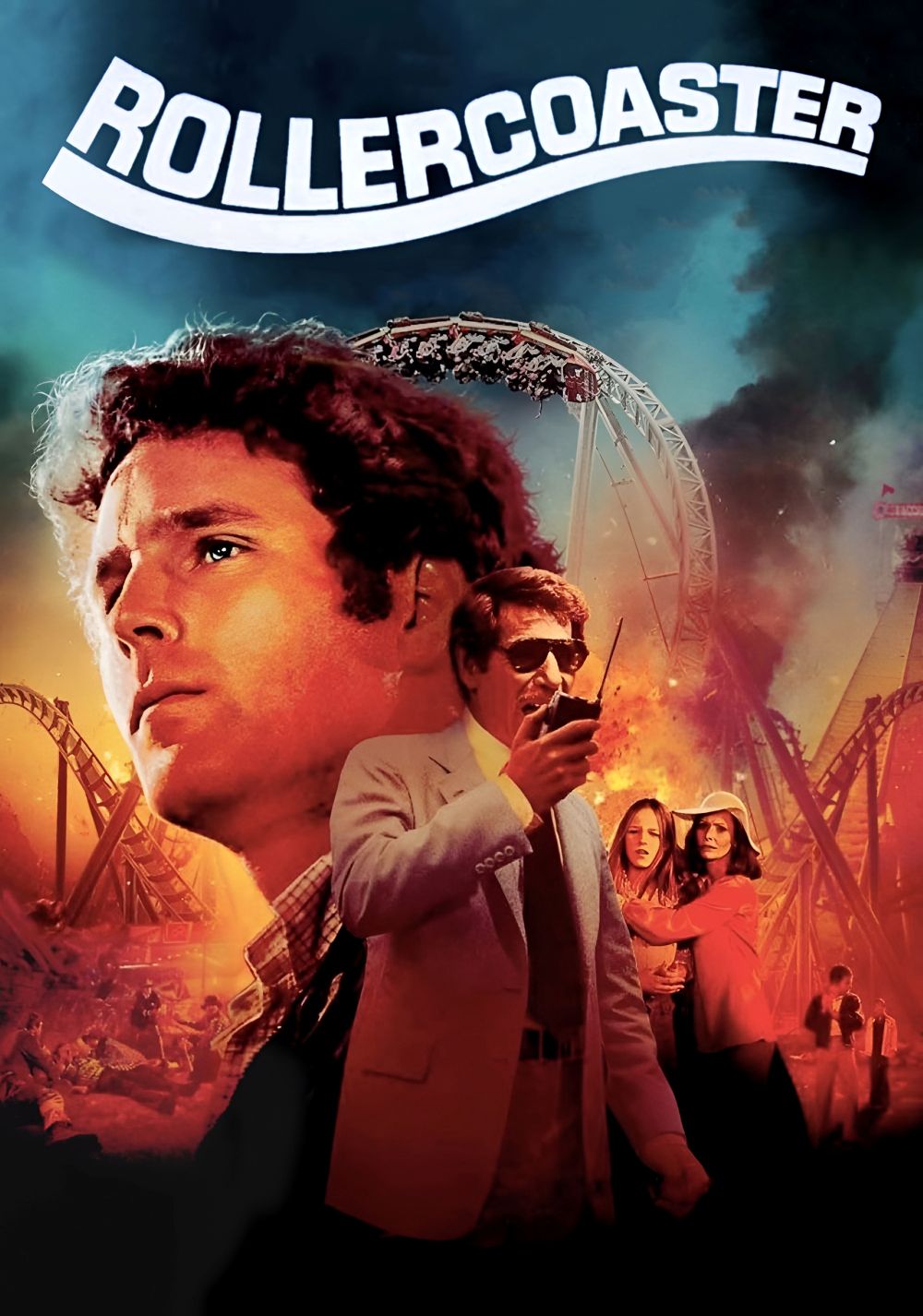
James Goldstone’s 1977 film Rollercoaster exists in a fascinating, albeit deeply flawed, space within the history of seventies disaster cinema. If you are a fan of retro 70s movies, specifically the whole Sensurround era where Hollywood was desperately trying to get people out of their living rooms and into theaters with seat-rumbling audio gimmicks, you have probably heard of this one. It has a genuinely neat, gritty vibe because it was actually shot on location at real amusement parks like Kings Island and Magic Mountain. You get this awesome, vintage, mid-century theme park atmosphere that you just cannot fake on a studio backlot. You can almost smell the cotton candy, the hot asphalt, and the stale beer. But once that initial wave of nostalgia wears off, you are left looking at what is actually on the screen, and honestly, Rollercoaster is not a great film. In fact, one could very easily say it is not even a good film. At its absolute best of times, it is a thoroughly average, middle-of-the-road thriller that feels more like a slightly elevated, padded-out television movie of the week than a major theatrical release.
The plot is about as standard as it gets for this era of disaster-adjacent cinema. A mysterious, young terrorist starts blowing up rollercoasters, not for any grand political manifesto, but simply to extort amusement park owners for millions of dollars. Enter our protagonist, Harry Calder, played by George Segal, who is a cynical safety inspector that just happens to survive the first derailment. Segal is basically just playing George Segal here—exasperated, a bit snarky, wearing a rumpled suit, and teaming up with an FBI agent played by Richard Widmark. The villain is played by a very young Timothy Bottoms, who is effectively creepy but given virtually zero backstory or motivation. He is just a blank-eyed psycho doing psycho things because the script needs an antagonist. The movie essentially just bounces from one park to another, with Segal walking around looking stressed while the FBI tries to figure out where the next bomb is hidden.
The pacing is arguably the film’s biggest sin. For a movie literally named Rollercoaster, it is shockingly lacking in momentum. Goldstone’s direction completely lacks the tight, pulse-pounding beats you would expect from a high-stakes thriller. There is so much filler here, so many scenes of Segal drinking coffee and staring at blueprints, and so much tedious FBI bureaucratic nonsense that it completely kills any tension. The romantic subplot feels entirely tacked on, and the climax fails to deliver the massive, explosive payoff you have been waiting for. If you judge Rollercoaster purely on its cinematic merits—the acting, the script, the direction—it is undeniably average, the kind of movie you leave on in the background while you fold laundry.
However, despite all of these glaring, undeniable flaws, Rollercoaster has a fascinating, almost prophetic legacy when you look back at the history of the thriller genre. It may not be remembered as a great movie, but it essentially built the exact template for an entire subgenre of cat-and-mouse thrillers that dominated the 90s. It practically invented the “specific-professional-against-a-psychopathic-mastermind” formula. Before Rollercoaster, thrillers were usually about spies, cops, or generic everymen. But this film introduced the idea of a highly specific, niche expert being forced into a one-on-one intellectual duel with a terrorist who targets them specifically because of their expertise. Think about how that exact template was endlessly copied and refined in the decades that followed. Look at In the Line of Fire, where Clint Eastwood plays a Secret Service agent hunted by a psycho played by John Malkovich. Or look at Blown Away, where Jeff Bridges is a bomb-defusing expert tormented by an Irish terrorist played by Tommy Lee Jones. Even The Bone Collector fits this mold perfectly, with Denzel Washington’s bedridden forensics expert being targeted by a serial killer who uses specific crime scenes just to test Washington’s intellect. All of these films drew direct DNA from Rollercoaster, using that exact same dynamic of a reluctant protagonist with a very particular set of skills being singled out by a psychopath who treats mass murder like a twisted, personalized game of chess. And if you want the absolute pinnacle of the “expert vs. bomb” trope, you have to look at Speed, which polished the cat-and-mouse dynamic perfected right here in Rollercoaster.
Because the original film was so hampered by 1970s filmmaking technology, it really makes you realize how easily this movie could be remade in this day and age. Back then, the actual destruction of the rides was limited by practical effects, clunky models, and standard camera angles that made the crashes feel somewhat static and safe. Today, technology in filmmaking has advanced to the point that the sheer scale, speed, and physical danger of the rides themselves really does become the focus of real danger. With modern CGI, drone cameras, and advanced practical rigging, you could put the audience right inside the front car of a 300-foot hyper-coaster as the tracks buckle and twist in slow motion. You could make the metal fatigue, the snapping cables, and the horrific physics of a derailment feel genuinely terrifying, turning the amusement park rides into massive, mechanical monsters rather than just static backdrop props for guys in suits to talk around.
Naturally, if Hollywood were to actually remake Rollercoaster today, you know exactly how it would look and who would star in it. It would undoubtedly star someone like Dwayne Johnson or Chris Pratt, a guy who can deliver a quip while looking concerned and holding a blueprint. They would inevitably give the safety inspector a tragic backstory, probably a dead wife or a kid they are estranged from, just to artificially raise the emotional stakes. And because it is a high-concept thriller that does not quite have the cultural weight of a massive comic book franchise, the remake would almost certainly be relegated to a streaming release. It would drop on a Friday on Netflix or Amazon Prime with a generic, algorithmically tested poster and a slick, forgettable title. It would be exactly the kind of mid-budget, mildly entertaining action flick you watch on a rainy Sunday afternoon before completely forgetting about it by Monday morning.
So, ultimately, how do you rate a movie like Rollercoaster? You just have to accept its extreme averageness and respect its ripple effect. It is clunky, the performances are uneven, and it is rarely as thrilling as its title promises. But it absolutely should not be written off entirely. It was the exact moment Hollywood realized that pitting highly specialized professionals against high-concept villains made for compelling, relatable drama. Without George Segal boredly walking around Magic Mountain, we probably do not get the overly dramatic, incredibly ridiculous, yet thoroughly entertaining 90s thriller boom, nor the slick, CGI-heavy streaming thrillers of today. Rollercoaster might just be a mediocre hill, but it is undeniably the hill that started the entire ride.
Welcome to Retro Television Reviews, a feature where we review some of our favorite and least favorite shows of the past! On Fridays, I will be reviewing St. Elsewhere, a medical show which ran on NBC from 1982 to 1988. The show can be found on Daily Motion.
Send in the clowns….
Episode 3.22 “Tears of a Clown”
(Dir by Janet Greek, originally aired on March 13th, 1985)
Do you like clowns?
Then this episode is for you because there are clowns all over the hospital! When Dr. Chandler tells circus clown Bonko (Gina Hecht) that she should quit the circus because she has MS, her fellow clowns all show up at the hospital to support her. And yes, they wear their clown makeup! Bonko’s partner, Corky (Dennis Dugan), understands that Bonko is a born performer. As the episode ends, Bonko and Crky perform in an elevator and cheer up Andrea Fordham (Ann Hearn), Dr. Caldwell’s plastic surgery patient. Having had her declaration of love rejected by Bobby, Andrea could definitely use the cheering up.
Dr. Morrison needs some cheering up to. Working as a resident, a medical student, and a single father is a lot of pressure and his relationship with Clancy (played by Helen Hunt) isn’t bring him much relief. Morrison is suffering from insomnia and headaches and popping pills. He’s late to a timed exam and flunks. I swear, Morrison can never get a break. The only thing keeping him from being the most depressing character on the show is that Westphall somehow always seem to be even more afflicted with melancholy.
This episode features Westphall finally finding a condo that he can move into. He’s accompanied by Dr. Craig and they are mistaken for a couple by the realtor. Craig looks annoyed. Westphall looks glum. Westphall always looks glum!
Finally, Elliot discovers that Mrs. Hufnagle left him her entire meager estate. It’s also now his responsibility to spread her ashes.
After last week’s dramatic and emotional episode, this week felt rather lowkey. How you react to this episode will probably depend on how much tolerance you have for clowns.
It was an okay episode, even if it did ultimately feel like filler. After last week’s emotion-packed installment, this episode served to remind us that life goes on, even after Hufnagle dies and Shirley Daniels pulls a gun on everyone. That’s just the way things are in the city of Boston.
Bill Paxton would have been 71 years old today. As a lover of both films and eccentric Texans, I still miss Bill Paxton.
Today’s scene that I love comes from Twister and it features Bill Paxton showing off some wonderful chemistry with Helen Hunt. One of the great things about Bill Paxton is that he was equally at home in both big blockbusters like Twister and Titanic and low-budget indies like Near Dark. He was an artist who also happened to be a star.
Welcome to Retro Television Reviews, a feature where we review some of our favorite and least favorite shows of the past! On Fridays, I will be reviewing St. Elsewhere, a medical show which ran on NBC from 1982 to 1988. The show can be found on Daily Motion.
This week, the heartbreak continues!
Episode 3.11 “Homecoming”
(Dir by David Anspaugh, originally aired on December 5th, 1984)
What a depressing episode!
Actually, it’s not totally depressing. Dr. Elliot Axelrod (Stephen Furst) survives his first night as the attending-on-duty and he even convinces cranky old Mrs. Hufnagle (Florence Halop) to go back to her room. He also handles things when a patient collapses in the hallway. One can be sure that Elliot will be given absolutely no praise for his good work because he never is. But at least, he was there and he proved himself to be more competent than anyone gives him credit for being.
Now, for the depressing stuff:
Nurse Rosenthal is continuing her affair with Richard Clarendon. This wasn’t depressing because of anything that happened in this episode. Instead, it’s just depressing that any time was devoted to these two boring characters.
After her apartment is broken into while she’s in the shower, Clancy (Helen Hunt) moves in with Jack. Jack and Clancy make for a cute couple but, watching this episode, it’s easy to see that their relationship is doomed. Clancy is young and enthusiastic. Jack is young but he moves like an old man and he’s already been through a lifetime’s worth of tragedy. Sadly, Clancy living with Jack does not last longer than one night. Clancy says that Jack acts like he’s offended by having her stuff in his apartment and she’s right. Jack is still mourning his wife and not ready to live with anyone.
Lois Wegener (Mimi Kennedy) comes home from being out of town and discovers that her husband, Andrew (John Schuck) is becoming progressively weaker from the experimental bone marrow treatment that he’s going through in an attempt to save the life of their daughter (Brandy Gold). Everyone at the hospital is impressed with Andrew’s courage but it’s obvious to me that this is not going to have a happy ending.
Kathy Martin is still in the psych ward. During this episode, she gives Fiscus the note that Shirley Daniels gave her after Shirley shot and killed Peter White.
And finally, it wouldn’t be a depressing episode without a Westphall storyline. Westphall’s daughter, Lizzie (Dana Short), comes home from college for the weekend and, without asking Westphall ahead of time, she brings along her new boyfriend, Rick (Casey Seimaszko). Lizzie assumes that Rick will be sleeping with her in her room. Westphall is not thrilled to hear about that. (It doesn’t help that Rick isn’t wearing a shirt when he and Westphall first meet.) Lizzie gets angry. Westphall points out that his dead wife would not have approved. Lizzie argues that she is now an adult and can do whatever she wants.
And you know what? I am totally on Westphall’s side here. It’s his house! Lizzie isn’t the one paying the bills. If Westphall doesn’t want Rick sleeping in her room (and, I might add, there are other rooms in the house where Rick could sleep), then Rick doesn’t sleep in her room. When I was younger, I probably would have been on Lizzie’s side but now that I’ve gotten older, I see Westphall’s point and Lizzie comes across as being a spoiled brat. I mean, if she wants to stay in the same room as Rick, they can get a motel room. How expensive could one be in 1984? This episode ends with Lizzie telling her father that she’s leaving. “Lizzie!” Westphall says but she’s already gone.
See what I mean? This was a depressing episode, even by St. Elsewhere standards. That said, it was also a good episode. Ed Flanders, David Morse, Helen Hunt, Stephen Furst, Mimi Kennedy, they all gave wonderfully empathetic performances. Your heart may hurt for them but you can’t wait to see what happens next. Sometimes, life is depressing but, like the characters on this show, you have to moving forward.
Welcome to Retro Television Reviews, a feature where we review some of our favorite and least favorite shows of the past! On Fridays, I will be reviewing St. Elsewhere, a medical show which ran on NBC from 1982 to 1988. The show can be found on Daily Motion.
This week, the hospital is a depressing place.
Episode 3.2 “Playing God: Part Two”
(Dir by Bruce Paltrow, originally aired on September 26th, 1984)
There was a lot going on in this episode.
Sister Domenica demanded that Sister Theresa be taken off of life support and she threatened to sue the hospital if it didn’t happen. This led to Dr. Westphall telling another long and depressing story about his dead wife. I don’t mean to be flippant about anyone’s tragedies but it’s hard not to notice that almost everything seems to lead to Westphall telling a depressing story. Westphall is one of the most saddest television characters that I’ve ever come across.
The nurses are closer to striking. A labor negotiator named Richard Clarendon (Herb Edelman) is brought in by the nurses and it’s hard not to notice that he looks a lot like Helen Rosenthal’s ex-husband. I think I can already guess where this is heading.
A sick child was brought in by a woman (Tammy Grimes) who claimed to be his fairy godmother. This gave Fiscus an excuse to get a consultation from Kathy Martin, who has abandoned the morgue for psychiatry and who is no longer dressing exclusively in black.
At home, Dr. Craig struggled with impotence. At the hospital, Dr. Ehrlich gave an awkward lecture about whether or not one can have sex after heart surgery.
The firefighters are still recovering from their burns.
Clancy got an abortion, despite Morrison’s objections.
And yet, all that drama was overshadowed by the fact that the Dr. Peter White — the drug-addicted rapist who nearly killed more than a few patients due to his own incompetence — is once again walking the halls of St. Eligius. White won his lawsuit. I’m not really sure that I understand what the basis of his lawsuit was. St. Eligius could only ask a select number of residents to return and, even if you overlook the fact that White was accused of rape, it’s not as if Dr. White was ever an especially competent doctor. It would seem that just his struggle with drug addiction would be enough to justify not asking him to return. And yet, somehow, Dr. Peter White is once again a resident at St. Eligius. (The ruling was probably handed down by a Carter judge.)
“You just can’t admit that you were wrong about me!” White snaps at Westphall.
Westphall replies that White is a terrible human being and not worthy of being a doctor and that he will not be allowed to work with any patients at the hospital. And, for once, I wanted to cheer Dr. Westphall. He may be depressing but he understands exactly who and what Peter White is.
Whatever the future may hold for the hospital, I have a feeling that it’s not going to be happy. Two episodes in and the third season has already settled into a pit of melancholy. That said, melancholy is perhaps the right mood for a medical show. When it comes to hospitals, there aren’t many happy endings.
Welcome to Retro Television Reviews, a feature where we review some of our favorite and least favorite shows of the past! On Fridays, I will be reviewing St. Elsewhere, a medical show which ran on NBC from 1982 to 1988. The show can be found on Daily Motion.
Today, we start the third season of St. Elsewhere with some new opening credits!
Episode 3.1 “Playing God, Part One”
(Dir by Bruce Paltrow, originally aired on September 19th, 1984)
The opening of the third season finds that St. Eligius is just as depressing as it’s ever been.
Fiscus leads a group of new residents, including Dr. Elliott Axelrod (played by new series regular Stephen Furst), through the hospital. Fiscus comes across as being an arrogant jackass. I guess that’s the appeal of being a second-year resident. You get to look down on all of the first-years.
Jack is still dating Clancy (young Helen Hunt). When Clancy tells Jack that she’s pregnant, he’s shocked when she says she’s planning on getting an abortion. Jack proposes to her. Clancy says she’s not ready to get married and she’s not ready to have a baby.
Dr. Craig is still yelling at Dr. Ehrlich. Dr. Ehrlich is still annoying the nurses.
Speaking of the nurses, they’re going on strike!
Three firefighters (one of whom is played by Erin Hudson) are injured while on the job and are rushed to St. Eligius with severe burns. Luckily, plastic surgeon Bobby Caldwell (Mark Harmon, without that terrible mustache he wore during season two) is on call.
Dr. Peter White is working in a shady clinic and is still suing for his right to be a resident.
A traffic accident leaves one nun in a coma and apparently brain-dead. Sister Doemnica (Michael Learned) wants to take her off life-support. Westphall (Ed Flanders), who seems even more depressed than usual, disagrees. It looks like there’s going to be some conflict about this. For once, I’m on Westphall’s side. I’m believer in hope.
Auschlander is still battling his cancer.
In other words, it’s another day at St. Eligius. The third season premiere did a good job of re-introducing viewers to the hospital. The snarkiness of Fiscus’s tour nicely balanced all of the more dramatic moments in the episode. If anything has me worried, it’s the possible return of the loathsome Peter White. How is the hospital going to deal with the return of a man who they all know is a rapist, even if he was somehow acquitted? I guess we’ll find out.
Welcome to Retro Television Reviews, a feature where we review some of our favorite and least favorite shows of the past! On Fridays, I will be reviewing St. Elsewhere, a medical show which ran on NBC from 1982 to 1988. The show can be found on Hulu and, for purchase, on Prime!
This week, season two comes to an end.
Episode 2.22 “Hello, Goodbye”
(Dir by Linda Day, originally aired on May 16th, 1984)
Due to St. Eligius being structurally unsound, the first floor is temporarily closed. The ER, which was the busiest part of the hospital, is no longer operative and Shirley Daniels is assigned to redirect any and all ambulances to Boston General. As Joan explains it, either the first or the third floor had to be closed so that a team of engineers could strengthen the building. The third floor is surgery, where all the money is made. And so, it’s the ER that closes. Joan, meanwhile, is designated as the scapegoat for all of the recent problems at St. Eligius. She loses her job with the mayor’s office.
Fresh from interviewing a nervous Dr. Elliott Axelrod (Stephen Furst) for a position as a resident, Dr. Auschlander collapses. Dr. Westphall fears that his old friend is going to die but finally, Auschlander wakes up and says that he’s not done fighting yet. Neither is St. Eligius.
Luther finds a stuffed Cheshire cat for a young heart patient. Dr. Craig finally starts to forgive his drug addict son, Stephen (Scott Paulin). And Dr. Morrison takes his son on a walking tour of Boston and meets a college student named Clancy (a young Helen Hunt). Even though Clancy label Morrison a “boomer,” she still spends the night with him. Morrison finally takes off his wedding ring and appears ready to try to move on with his life.
The second season ends on a melancholy note. Apparently, the show’s producers weren’t sure whether or not St. Elsewhere was going to be renewed for a third season and this episode was designed to work as both a season and a series finale. Very few of the regular characters appear and the episode is dominated by Westphall and Morrison, both of whom tend to be rather somber. In other words, this is a depressing episode but it’s not an episode without hope. Auschlander does wake up. Morrison does pursue a tentative relationship with Clancy. Even with the hospital temporarily shut down, life goes on. Unlike Wendy Armstrong, nobody gives up. It’s sad but at least there’s a chance that things could get better.
Both this episode and the second season overall were a roller coaster, deftly mixing drama and comedy and giving the show’s ensemble cast a chance to shine. Next week, we start season three!
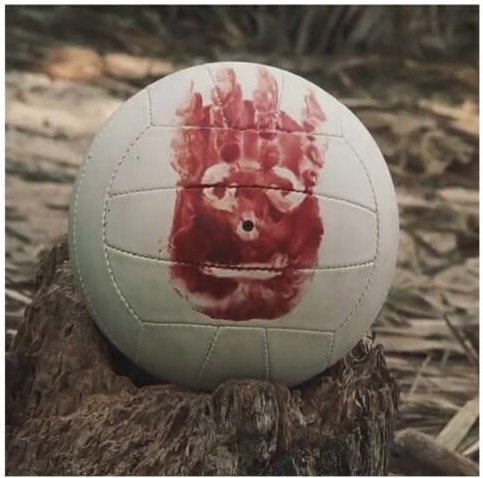
Seriously, I’m usually pretty well-behaved when I watch a movie but every time I see the 2000 film Cast Away, I find myself thinking, “Protect Wilson! You must protect Wilson!” And then, every time, I feel the sting of tears in my eyes as Wilson, with that red-face and that understanding attitude, goes floating away.
Wilson is a volleyball. When a FedEx executive named Chuck Noland (played by Tom Hanks) finds himself stranded on a desert island, Wilson becomes his only companion. A stain from Chuck’s bloody palm creates something that resembles a face on Wilson’s rubber surface and Chuck spends a lot of time talking to Wilson. It’s how Chuck maintains his sanity, even as he loses weight, sheds most of his clothes, and grows a beard.
Chuck learns how to make fire. He learns how to catch fish. He is able to survive due to the supplies that he gathers from the FedEx packages that were being carried on the plane that crashed into the island. But Chuck never stops dreaming of returning home to his girlfriend (Helen Hunt). Eventually, Chuck finds the courage to try to make the journey back to civilization. He brings Wilson with him but ultimately, this is something that Chuck is going to have to do on his own. Of course, Chuck has failed to consider that he’s been gone for years. He is presumed dead. On the Island, time seemed like it was frozen. For the rest of the world, life has continued.
CastAway is a film that a lot of people, especially online film commentators, tend to criticize. The complaint is usually that the film is essentially a commercial for FedEx, that it’s not believable that Tom Hanks could survive on that island for as long as he did, and that the film itself has a weak ending. I’ll concede that the film does make FedEx look like the nicest corporation on Earth. (FedEx’s CEO appears as himself, which should tell you something about how the company is presented.) And I will admit that the film’s time-advancing jump cut, which abruptly takes Hanks from being clean-shaven and husky to being thin and bearded, does leave a lot of unanswered questions. But I will always defend the film’s ending. The film ends on a note of ambiguity but how else could it have ended? Everyone thought Chuck Noland was dead. His girlfriend had every right to get on with her life and, in fact, it would have been psychologically unhealthy for her if she hadn’t. As for that final shot, it’s an acknowledgment that Chuck doesn’t know what lies ahead of him in the future. All he knows is that he life isn’t over yet. It’s a melancholy ending. It’s a frustrating ending. But it’s also the only way the film could have ended and therefore, it’s a perfect ending.
CastAway is a film that I will always defend and it’s also a film that really only could have worked with Tom Hanks in the lead role. He plays Chuck as being the ultimate everyman, an affable guy who was just trying to do his job and whose survival of the initial plane crash was largely due to luck. Hanks is one of those actors who is instantly sympathetic and CastAway uses his screen persona to good effect. You want him to survive because he’s Tom Hanks. He may be playing a character named Chuck Noland but ultimately, he’s Tom Hanks. He survived being trapped in space. Surely, he can survive being stranded on an island. The majority of the film is just Hanks talking to himself. This would have brought out the worst in so many actors but Tom Hanks makes it work. And yes, he’ll bring tears to your eyes as he watches Wilson float away. That’s the power of a good actor.
As for Wilson, I like to think that he washed up in Pensecola. Recently, I played a little volleyball on a beautiful Florida beach. Was that you, Wilson?
Today’s scene that I love comes from Twister and it features Bill Paxton showing off some wonderful chemistry with Helen Hunt. One of the great things about Bill Paxton is that he was equally at home in both big blockbusters like Twister and Titanic and low-budget indies like Near Dark. He was an artist who also happened to be a star. As a lover of both films and eccentric Texans, I will always miss Bill Paxton.