Late Night Retro Television Review: Pacific Blue 5.1 “Reckoning”


Welcome to Late Night Retro Television Reviews, a feature where we review some of our favorite and least favorite shows of the past! On Tuesdays, I will be reviewing Pacific Blue, a cop show that aired from 1996 to 2000 on the USA Network!  It’s currently streaming everywhere, though I’m watching it on Tubi.
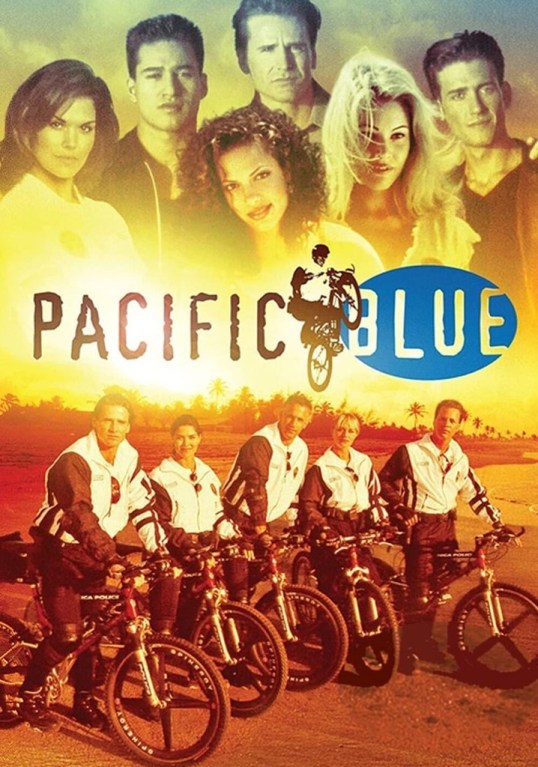
This week, we start the fifth and final season of Pacific Blue.

Episode 5.1 “Reckoning”

(Dir by Terence H. Winkless, originally aired on July 18th, 1999)

The fifth season begins with an episode that, even by the standards of Pacific Blue, is problematic and dumb.  Where to begin?

This episode picks up from where the fourth season ended.  John Patrone is dead.  Bruce Best (Kevin McClatchy), the father of a teenage girl who killed herself after being raped by Patrone, has been arrested for the crime.  Bobby has been arrested for tossing the rifle that Patrone used in the harbor.  Because Bobby discussed his plans with Granger, Jamie, and Monica, they’ve all been suspended from the force pending the results of an Internal Affairs investigation.

When Assistant District Attorney Tucker (Michelle Clunie) meets with Bobby and TC, Bobby does the usual smug act that all of the members of the bike patrol do whenever they’re in trouble.  Bobby starts making demands for a deal that will protect the other three rookies.  Tucker proceeds to charge Bobby with being an accessory to first degree murder.  Ha!  Take that, Bobby.

TC files a formal complaint against Susan Jessop of Internal Affairs, accusing her of sexual harassment and bias.  Jessop is taken off the case but Jessop’s boss, Captain Sharp (Gretchen German), turns out to be just as strange as Jessop.  (If I had to guess, I’d say that Holly Gaginer had some sort of scheduling conflict that kept her from returning as Jessop and the writers just crossed out Jessop’s name in the script and substitued Sharp’s.)  TC is suspended from his command.  Cory is named the new temporary commander of Pacific Blue.  Cory is also the union rep for the three rookies who are being investigated.  How can she both be in management and the union at the same time?

Chris gets mad at TC for getting suspended.  She wants to transfer to Homicide and now, being married to him could be a career liability.  They have a big argument on the pier.  Cory, who really should be too busy running the department to get involved in any of this, sits on her bicycle on watches.

When it’s time for Bruce and Bobby to be taken to the courthouse for their arraignment, a man fires a shot at Bruce.  Bruce falls to the ground.  Oh wait, that’s not Bruce.  That’s TC disguised at Bruce!  And luckily, he was wearing a bulletproof vest!  Patrone’s lawyer, Steve Plana (Eddie Garcia), is arrested for setting up the assassination attempt.

In the courtroom, veteran television producer Steven J. Cannell shows up as the no-nonsense judge.  Tucker starts to call witnesses.  Things aren’t looking good for Bobby and Bruce.  Suddenly, Father Crane (John Kirby) stands up in the back of the court and announces that Bobby and Bruce are innocent.  Father Crane first explains that he was the one who threw the rifle into the harbor.  He says he did it after Bobby came to him for advice.  Father Crane then goes on to say that he was the one who shot Patrone because that was the only way to stop Patrone’s reign of terror.  Bobby and Bruce have been covering for him!

Bobby and Bruce are released and exonerated.  Father Crane is convicted.  TC later visits Crane in jail and says that he knows Crane is lying about both killing Patrone and tossing the rifle in the harbor.  TC mentions that Crane is going to be transferred to a state prison where Patrone “had a lot of friends.”  What TC, who has been reinstated as commander of Pacific Blue, does not do is apparently tell anyone that Crane is obviously not guilty.  For his part, Crane says that it will be a chance for him to minister to those who really need it.  You know, Father Crane, you could have just applied to be a prison chaplain.  You didn’t have to confess to a murder you didn’t commit.

Bobby takes the recovered rifle and gives it back to Bruce.  Bobby admits that Crane lied about tossing the gun.  Bruce admits that he killed Patrone.  Bobby says that he still feels like Bruce did the right thing.  Bruce thanks Bobby for looking out for him.  Hey, guys, there’s an innocent man — A PRIEST! — going to prison for you idiots!  Is that somehow not an issue?

Chris tells TC that she knows Father Crane lied about being the murderer.  She also says that she doesn’t feel like TC deserves his command.  He let Bobby get away with destruction of evidence.  He’s letting Bruce get away with murder.  Finally, someone’s speaking some sense!  Not that it matters.  The episode ends with the conversation.  Knowing Pacific Blue, I doubt any of this will ever be brought up again.

This episode really annoyed me.  Father Crane is going to prison but I guess we’re not supposed to care because at least Bobby is off the hook.  Does anyone on Pacific Blue ever take responsibility for their mistakes?  This is the fourth episode to feature Jamie complaining about Internal Affairs harassing her because she lied on her application to become a police officer.  Gee, Jamie — MAYBE YOU SHOULDN’T HAVE LIED IN THE FIRST PLACE!  And now Bobby has basically decided that some murders are okay.  Where does it end with these people?

At least this is the last season.
Late Night Retro Television Review: Pacific Blue 4.22 “The Right Thing”


Welcome to Late Night Retro Television Reviews, a feature where we review some of our favorite and least favorite shows of the past! On Tuesdays, I will be reviewing Pacific Blue, a cop show that aired from 1996 to 2000 on the USA Network!  It’s currently streaming everywhere, though I’m watching it on Tubi.

This week, the fourth season comes to a close.

Episode 4.22 “The Right Thing”

(Dir by John B. Moranville, originally aired on April 25th, 1999)

Businessman John Patrone (Fred Saldone) has negotiated a peace treaty between two gangs, one black and one Latino.  Finally, there will be peace in Santa Monica!  However, at a rally to celebrate the treaty, a sniper shoots Patrone dead.  At first, I was amazed that the police didn’t have anyone on those rooftops to prevent something like this from happening.  Then I realized that security for the rally was being provided solely by Pacific Blue.  Of course, the bicycle cops would screw this up.

Despite the fact that John Patrone was a major figure in Santa Monica, we never see any Homicide detectives working the case.  Instead, it somehow falls to the bicycle cops to investigate.  What they discover is that, despite his altruistic image, Patrone was actually a monster who sold weapons and drugs to the gangs and who raped and impregnated the daughter of Bruce Best (Kevin McClatchey).  Bruce’s daughter killed herself and that’s why Bruce assassinated Patrone.

Bruce doesn’t make any effort to disguise the fact that he killed Patrone.  He admits it to Bobby, Granger, Jamie, and Monica.  However, the four rookie cops are convinced that Patrone deserved to die and that Bruce did “the right thing” by shooting him.  In a move that is totally out-of-character for him, Bobby decides to throw all of the evidence implicating Bruce into harbor.  Unfortunately, Bobby is being watched by Susan Jessup (Holly Gagnier) of Internal Affairs.  Susan goes to TC and offers to let Bobby off the hook in exchange for sex.  (As ludicrous a character as Susan may be, Holly Gagnier’s wonderfully unhinged performance was the highlight of the episode.)  TC replies that he will arrest Bobby and Bruce personally.  This episode ends with a cliffhanger as all four of our rookies pose for their mugshots.

Meanwhile, Chris and Cory deal with a teenager who wants to shoot himself out of a cannon.  It’s a bit odd that the bike patrol’s two most experienced cops aren’t working the Patrone murder but whatever.  I’ve given up on trying to follow Pacific Blue logic.

We’ll find out the fates of Bobby, Jamie, Granger, and Monica next week, when we start the final season of Pacific Blue.  I really can’t wait for all this to be over with!

Late Night Retro Television Review: CHiPs 3.15 “Christmas Watch”


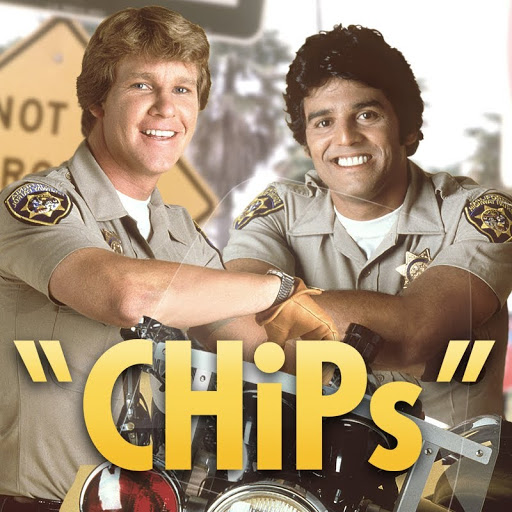
Welcome to Late Night Retro Television Reviews, a feature where we review some of our favorite and least favorite shows of the past!  On Mondays, I will be reviewing CHiPs, which ran on NBC from 1977 to 1983.  The entire show is currently streaming on Prime!

Merry Christmas!

Episode 3.15  “Christmas Watch”

(Dir by Phil Bondelli, originally aired on December 15th, 1979)

It’s Christmas in Los Angeles!  Bob (Don Reid) and Alice Piermont (Pamela Susan Shoop) are a married couple who drive around in a blue van and rob people.  They steal a 15 century bell from an orphanage!  How can the orphans have a merry Christmas without their bell!?

Don’t worry, Ponch is on the case!  Ponch will not only find their bell but he’ll date their teacher as well.  Of course, Ponch is feeling a little down because his family is in Chicago.  But then his mother (Anna Navarro) shows up and, in a rare nod to continuity from this show, his mother is played by the same actress who played her the last time that she came down to Los Angeles.  Ponch not only get to spend time with his mother but he also gets a boost when a businessman who was earlier cited for driving while intoxicated shows up at the station so that he can thank Ponch in person.  The lesson this Christmas?  Ponch can do no wrong.

The thieving couple is caught after the are involved in a accident and, instead of waiting for the police to arrive, they just slip a few thousand to the other driver and then try to escape.  No such luck.  They are captured and the kids get back their bell.  Merry Christmas to all, except for the couple going to jail.

This was a typical episode of CHiPs, in which the California sun continued to shine while everyone celebrated Christmas.  There were a few decent chases and some nice shots of the local scenery.  In the end, Ponch did everything right and got a date.  Merry Christmas!  It wasn’t a bad episode, especially if you’re a fan of Erik Estrada.  Larry Wilcox fans will probably be a little disappointed in how little there was for him to do.  It’s the holidays and CHiPs is all about Ponch.


Sudden Death (1977, directed by Eddie Romero)


Ed Neilson (Ken Metcalf) is a business executive who just wants to spend the weekend grilling with his family but then a bunch of gunmen show up and, in a surprisingly violent sequence that even shows children being shot in slow motion, massacre his entire family.

Ed barely survives and begs his old friend, a former CIA agent named Duke Smith (Robert Conrad), to find out who murdered his family.  Duke would rather hang out on the beach with his wife (Aline Samson) and daughter (Nancy Conrad) and he refuses to help Ed.  But then Ed gets blown up in his car and Duke and his former partner (Felton Perry) come out of retirement to get justice.  Duke’s investigation leads to a corrupt businessman (Thayer David), a murderous government official (John Ashley, who also produced), and a ruthless hitman (Don Stroud).

Filmed in The Philippines and directed by Eddie Romero, Sudden Death is a violent and brutal thriller with a twisty the plot that is nearly impossible to follow.  It seems like a lot of killing for no particular reason.  The thing that sets Sudden Death apart from other action films is its willingness to violently kill off anyone, regardless of age, gender, or relative innocence.  The 70s was a decade known for downbeat endings but, even by the standards of that decade, Sudden Death‘s ending is shockingly abrupt and bleak.  In the lead role, Robert Conrad shows off the ruthless intensity that made him the most feared of all of the coaches on Battle of the Network Stars.

Originally, the sidekick role was offered to Jim Kelly.  When Kelly dropped out, the role was given to the far more laid back Felton Perry.  I think if Kelly had stayed with the film, it would probably be a cult classic today.  Instead, it’s an obscurity that reminds us of how bleak even exploitation films were in the 70s.