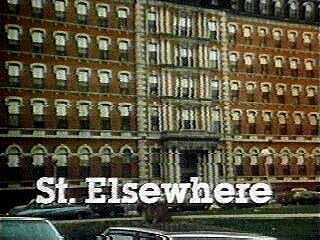
Retro Television Review: St. Elsewhere 3.16 “Saving Face”


Welcome to Retro Television Reviews, a feature where we review some of our favorite and least favorite shows of the past! On Fridays, I will be reviewing St. Elsewhere, a medical show which ran on NBC from 1982 to 1988.  The show can be found on Daily Motion.

This week, things continue to be awkward in Boston.

Episode 3.16 “Saving Face”

(Dir by Charles Braverman, originally aired on January 16th, 1985)

This episode of St. Elsewhere was even busier than usual.

  • Tough-as-nails Dr. Mary Woodley (Karen Austin) has been hired to oversee the ER.  Dr. Fiscus isn’t happy about it.  He’s going to have to work for a woman?  Agck!
  • Dr. Cavanero is also not happy.  Of course, the last time that St. Eligius hired a new female doctor, Cavanero told everyone at the hospital that she was a lesbian and, for some reason, this led to the doctor having to leave town.  (It was the 80s.)  Maybe, just maybe, there are reasons to have doubts about Cavanero’s professionalism.
  • Dr. Westphall shows Dr. Woodley around the hospital and, as usual, comes across as being the saddest man on the planet.
  • Dr. Westphall informs Jack that he will be allowed to continue on as a resident.  However, Westphall also rather glumly states that he will be watching Jack from now on.  Jack better not screw up or Westphall will “come down” on him.  Personally, I think Westphall is too depressed to really do much of anything.
  • Feeling guilty about Murray’s death, Elliott brings Mrs. Hufnagle a ham.  Mrs. Hufnagle has an allergic reaction and ends up back in the hospital.  “She thinks I tried to kill her!” Elliott says.
  • A teenager (Tim Van Patten) brings in his pregnant girlfriend, who has OD’d.  Dr. Woodley says she is required to call family services.  Myself, I started shouting, “I am da futah!” as soon as Tim “Stegman” Van Patten showed up on the screen.
  • Dr. Caldwell performs extensive plastic surgery on a disfigured young woman.  When Dr. Ehrlich says that the patient looks like she got hit with the “ugly stick,” Caldwell kicks Ehrlich off his team.
  • Nobody wants to work with Ehrlich!  Dr. Craig declines to invite Ehrlich to his 34 year anniversary party.  Cavanero agrees to take Ehrlich as her date.  “What are you doing here!?” Craig snaps as soon as he sees Ehrlich in his living room.
  • Dr. Craig’s younger brother, William (Lou Richards), also shows up.  He was invited at Ellen’s insistence, despite the fact that William and Mark haven’t spoken in over four years.  Mark feels that William has wasted his life and his potential.  But when William proves to be the life of the party, it becomes apparent that Mark is actually jealous of how likable his younger brother is.
  • In the kitchen, Mark and William have a long conversation.  William admits that he’s struggling to pay the bills.  Mark writes him a check.  For a few minutes, the brothers actually reconcile.
  • However, Mark later hears William joking about how much money surgeon’s make and he loses his temper.  In front of the entire party, he calls out William and reveals that he doesn’t have a dime to his name.
  • That night, after everyone else has left and William has gone to the guest room, Ellen tells Mark that he should apologize.  Mark agrees and says he’ll do it in the morning.
  • Later, during the night, Mark steps out of his bedroom and discovers that William has gone home.  He left behind the check, which he ripped in half.  Mark stares at the check and starts to cry.

This was another episode that did a good job balancing the serious and the humorous.  Dr. Ehrlich’s inability to say the right thing will never not be funny.  For that matter, the same can be said of Dr. Craig’s general irritation with everything.  And yet, seeing Dr. Craig break down and cry was truly heartbreaking.  Dr. Craig and Dr. Ehrlich share an inability to socialize and a habit of screwing up even the kindest of gestures.  Even when they try to do the right thing, they somehow always manage to screw it up.

I wanted to cry for all of them.

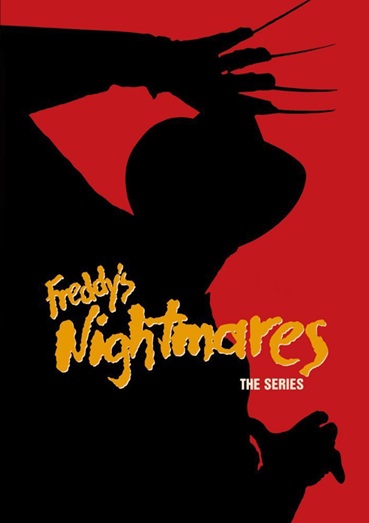
Late Night Retro Television Review: Freddy’s Nightmares 2.7 “Silence is Golden”


Welcome to Late Night Retro Television Reviews, a feature where we review some of our favorite and least favorite shows of the past! On Fridays, I will be reviewing Freddy’s Nightmares, a horror anthology show which ran in syndication from 1988 to 1990. The entire series can be found on Tubi!

Mimes are evil!

Episode 2.7 “Silence Is Golden”

(Dir by Charles Braverman, originally aired on November 19th, 1989)

“Here’s what on my mind tonight!” Freddy Krueger tells us as this episode starts.

Our first story is about radio DJ Rick Rake (Jeff Yagher), who has a mullet, a leather jacket, and a bad attitude.  “I say what I think and I think what I say,” Rick says.  When he’s visiting the park with his wife, Sheila (Sherry Hursey), a listener attempts to pick a fight with Rick.  Rick throws a punch and accidentally hits a mime (Abie Selznick).

Eh, who cares?  We all hate mimes, right?

Unfortunately, The mime carries a silent grudge and soon, Rick is haunted by visions of the mime everywhere.  When Sheila is sucked into the ground and buried alive, the police say it was a sinkhole but Rick knows that it was the mime.  Rick goes on the radio and announces that all mimes should be hunted down and killed.  Rick sees the mime in the studio and, going after him, ends up taking a literal rake to the throat.  Rick survives but he can no longer speak …. JUST LIKE A MIME!

In the second story, we discover that the mime is named Kip and he’s also a professional burglar.  He steals to keep his girlfriend (Kim Morgan Greene) happy but he’s haunted by nightmares involving mistakes and death.  When he learns that the last two people he robbed have turned up dead, Kip worries that he’s being set up.  And, of course, he is.

At the end of the episode, Freddy reminds us that he’s dead so he can never be a mime or a DJ.  Sorry, Freddy.  You kind of brought it on yourself, though.

The first story actually worked fairly well, just because mimes are creepy.  The second story was basically a noir with nightmares.  I think it might have worked a bit better if Kip had just been an ordinary guy as opposed to a mime.  The show never really explained if he was the same mime who killed Sheila and silenced Rick or was he just another mime in Springwood.

How many mimes are there in that town?  No wonder Freddy went crazy.

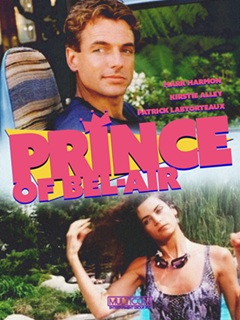
Prince of Bel-Air (1986, directed by Charles Braverman)


Robin Prince (Mark Harmon) is a laid-back former volleyball player who, at the age of 32, makes his living as a pool guy.  It’s an easy life and he enjoys it.  He sleeps with the wife (Deborah Harmon) of one of his clients and he hangs out with his richer friends.  Robin enjoys being a bachelor but that all changes when he agrees to give a job to Justin (Patrick Labyorteaux), the son of Stanley Auerbach (Robert Vaughn) and meets Justin’s cousin, an artist named Jamie Harrison (Kirstie Alley).  Justin goes from being bitter about having to work to idolizing Robin and his lifestyle.  Robin, meanwhile, falls for Jamie.

This film came out before Summer School, another movie that featured Mark Harmon as a laid-back guy who falls for Kirstie Alley, but it has a similar vibe.  Again, Mark Harmon is playing a likable guy who has never grown up and again, Kirstie Alley is playing a sophisticated woman who, at first, seems like she’s too serious for Harmon’s character.  Robin’s mentorship of Justin feels a lot like Hamon’s mentorship of his Summer School students.  (Dean Cameron even plays a supporting role in both Prince of Bel-Air and Summer School, though he’s far more memorable in Summer School.)  Prince of Bel-Air is more dramatic than Summer School.  In Prince of Bel-Air, Mark Harmon plays a character who secretly understands that there’s not much of a future in his lifestyle, even if he’s not initially willing to admit it.

Prince of Bel-Air is a likable movie.  Mark Harmon gives an amiable and relatable performance as someone who is finally trying to grow up and, as always, Robert Vaughn is a perfectly smug villain.  Kirstie Alley’s sultry performance is the highlight of the film.  In the 1980s, Alley has a smoky-eyed beauty that, when combined with her ribald sense of humor, made her irresistible.  It only takes a few minutes to understand why Robin would be willing to give up his previous life to be with her.  There’s nothing particularly deep about Prince of Bel-Air but it’s still an entertaining 100 minutes.

Retro Television Review: St. Elsewhere 2.12 “Hearing”


Welcome to Retro Television Reviews, a feature where we review some of our favorite and least favorite shows of the past! On Fridays, I will be reviewing St. Elsewhere, a medical show which ran on NBC from 1982 to 1988.  The show can be found on Hulu and, for purchase, on Prime!

This week, Peter White faces the judgment of the medical board.

Episode 2.12 “Hearing”

(Dir by Charles Braverman, originally aired on February 1st, 1984)

At his disciplinary hearing for giving a controlled substance to an undercover officer, Dr. White lies to protect Shirley Daniels.  Even though Shirley tossed him the keys to the drugs on that night, White says that he took the keys without Shirley noticing.  It’s a rare case of Dr. White actually trying to help someone else.  It gets Shirley off the hook but it leads to Dr. White receiving a two-year suspension from working in an ER or prescribing medicine.  Westphall and Auschlander both agree that Dr. White’s career is probably over but Westphall, who has been White’s biggest supporter since he returned from rehab, says that they’ll find a place for him in the hospital.

The new X-ray tech, Lee Tovan (Robert Daniels), cannot hear.  His supervisor (Raymond Singer) claims that Lee is too difficult to work with.  Westphall pledges to support Lee, no matter how much his supervisor complains.

Victor meets Roberta’s wealthy parents and, to everyone’s shock (especially his), he manages to charm them.  Victor also asks Dr. Craig if he can use his house for the wedding.  Dr. Craig misunderstands and thinks that Victor is asking him to be his best man.  Victor explains that he’s already asked his friend, “Dogger,” to be best man.  Craig rolls his eyes but agrees to let Victor use the house.

Finally, Dr. Auschlander asks Fiscus to help him get some marijuana to help with his chemo side effects.  Fiscus tries and fails to call his old college weed guy and then asks Luther if he knows anyone who deals drugs.  Luther rightly points out that Fiscus is stereotyping him but he still manages to get Auschlander a baggie of joints.  Auschlander gets high.  For a first time smoker, he gets REALLY high!  He also ultimately decides that marijuana is not for him.

This episode was a bit uneven.  I liked the irony of White saving Shirley, just to potentially lose his own career as a result.  (Saying that he stole the keys probably didn’t help his case.)  Victor’s wedding storyline has been kind of dragged out more than it needs to be but it’s still entertaining to watch Dr. Craig get frustrated with him.  Norman Lloyd was adorable playing stoned.  But the storyline about the deaf x-ray tech was sabotaged by some very bad acting and some very heavy-handed writing.  That was a shame.

Next week, Victor Ehrlich gets married!


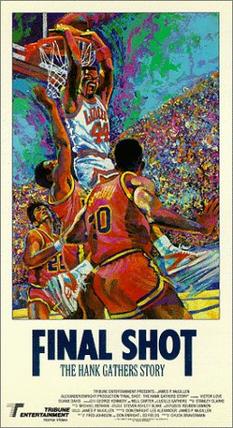
Final Shot: The Hank Gathers Story (1992, directed by Charles Braverman)


Hank Gathers is one of the most intriguing “what if?” stories of modern basketball.  Growing up in the Raymond Rosen Projects of Philadelphia, Hank stayed out of trouble by playing basketball.  An outstanding high school player, he went first to USC before transferring to Loyola Marymount.  Along with his friend Bo Kimble, he was a stand-out player at Loyola.  However, on March 4th, 1990, the 23 year-old Gathers collapsed during a game with Portland and died on the court, the victim of an abnormal heartbeat.  His last recorded words were, “I don’t want to lay down!”  Gathers set records in college.  Would he have done the same in the NBA?  Sadly, we’ll never know but he definitely had the talent and the ability to be one of the best.

Final Shot is a by-the-numbers biopic of Hank Gathers, focusing on his life in the projects and his friendship with Bo Kimble.  Victor Love plays Gathers while Kimble is played by Duane Davis and they both give good performances.  Their friendship feels real and when Hank helps Bo recover from a broken leg and when Bo worries about Hank’s recently diagnosed heart condition, the scenes are sincere in a way that lifts the film above the normal biopic clichés.  Nell Carter and George Kennedy both have good roles as well, Carter as Hank’s mother and Kennedy as Hank’s high school coach and mentor.  This is the type of role that Kennedy could have played in his sleep so I appreciated that he actually gave a believable performance.

Final Shot is a made-for-TV movie so it doesn’t dig too deeply into Gathers’s life outside of basketball, the way that college treat their athletes, or the systems that made playing basketball Hank’s only way of escaping the projects.  For what it is, though, it’s a fitting tribute.

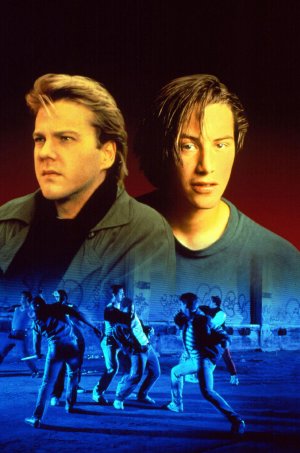
Back to School Part II #21: Brotherhood of Justice (dir by Charles Braverman)


Brotherhood_of_Justice_FilmPoster

For my next back to school review, I want to take a look at one of the best films that you’ve probably never heard of, the 1986 made-for-TV film Brotherhood Justice!

Brotherhood of Justice takes place at a California high school.  It’s a school that is pretty much ruled by the football team and the divide between the children of the upper and the working class is often violently apparent.  After several acts of violence, drug dealing, and vandalism, the school’s principal (Joe Spano) is left with a choice.  He can either hire full-time security guards and turn his school into an armed camp or he can meet with the most popular seniors and ask them to do their part to maintain order at the school.

He goes with the latter option.

At first, quarterback Derek (Keanu Reeves) is excited about doing his part to make the school a better place.  He and his friends quickly form the Brotherhood of Justice and make out a list of trouble makers.  At first, Derek and his friends are just roughing up drug dealers and demanding that all students show some school pride.  (In order to maintain their anonymity, they all wear masks to hide their faces.  However, no effort is made to disguise anyone’s voice, which means that this film takes place in a world where no one can recognize the voice of Keanu Reeves.)  However, things quickly escalate.  One member of the Brotherhood — Les (Billy Zane) — is especially enthusiastic and he has a thing for knives.

Meanwhile, Derek is having issues with his girlfriend, Christie (Lori Loughlin).  Christie, who is apparently incapable of recognizing her boyfriend’s voice whenever he’s wearing a mask, thinks that the Brotherhood is idiotic.  Christie also has a new job as a waitress and one of her co-workers is Victor (Kiefer Sutherland).  Victor obviously likes Christie and he also bravely stands up to the Brotherhood when they try to harass a student who is named Pasty.  (I kid you not.)

When Derek grows disillusioned with the Brotherhood, they decide that the situation with Christie must be distracting him.  So, they decide to blow up Victor’s car…

It’s all in the name of justice!

Obviously, one of the best things about Brotherhood of Justice is that it’s a chance to see Neo and Jack Bauer compete over Aunt Becky while Cal Hockley plays with a switch blade in the background.  (Oddly enough, Derek’s younger brother is played by Danny Nucci, who later appeared with Zane in Titanic.)  But there’s more to Brotherhood of Justice than just the curiosity value of the cast.

That plot hole about the voices aside, Brotherhood of Justice is actually a really good movie and one that everyone should watch.  If anything, it’s even more relevant today than it probably was when it was originally made.  It’s easy to be dismissive of the self-righteous and judgmental Brotherhood but actually, how different are they from the outrage brigade who show up everyday on twitter?  When the Brotherhood demands that everyone follow the rules and love their school, how different are they from those assholes who, today, claim that anyone who disagrees with the president or questions the moral authority of the government is somehow guilty of treason?  If the Brotherhood existed today, they would be cyberbullying and doxxing anyone who they felt had failed to say or think the right thing.

Let’s face it — we currently live in a fascist culture.  In its own modest but important way, Brotherhood of Justice is one of those films that can tell us why.

And you can watch it below!