After Nightcrawler (Alan Cumming) causes a national security crisis by teleporting into the White House, Colonel William Stryker (Brian Cox) is given the authority to invade Professor Xavier’s School and investigate its connection to the mutants. Stryker, who not only wants to investigate the mutants but also destroy them by manipulating the same technology that Xavier uses to find them, just happens to be an old enemy of Logan’s (Hugh Jackman). In fact, Stryker is responsible for Logan fusing the adamantium to his bones. That’s a hell of a coincidence.
A sequel to X-Men, X2 tells a bigger and more complex story than the first film. Professor Xavier’s students are spread out by the chaos. Rogue (Anna Paquin) sees prejudice firsthand when Bobby Drake (Shawn Ashmore) is betrayed by his own family. Pyro (Aaron Stanford) is tempted to reject the X-Men’s philosophy of coexistence. After being underused in the first film, both Scott (James Marsden) and Jean Grey (Famke Janssen) are key players here. Magneto (Ian McKellen) and Mystique (Rebecca Romijn-Stamos) return, this time temporarily allying with Professor X (Patrick Stewart) to stop Stryker. Logan has his own reasons to go after Stryker. Surprisingly, X2 is not only bigger than the first film but it’s also better. The actors are more convincing in their roles, the action is more exciting, and director Bryan Singer capably juggles all of the different parts without losing the plot. He even manages to ably set up the Dark Phoenix Saga. In the first film, the X-Men had it almost too easy when it came to battling opponents like Toad and Sabretooth. This film has not only Brian Cox’s William Stryker but also Kelly Hu’s Deathstrike.
Those of us who were shocked when X-Men turned out to be good were even more shocked when X2 turned out to be even better. For a little while, it seemed like there would never be a bad X-Men movie! Later, that’s the way a lot of us would also feel about the Marvel movies. Those were good days.
Welcome to Late Night Retro Television Reviews, a feature where we review some of our favorite and least favorite shows of the past! On Thursdays, I will be reviewing Hunter, which aired on NBC from 1984 to 1991. The entire show is currently streaming on Tubi and several other services!
This week’s episode is a difficult one.
Episode 2.6 “Rape and Revenge: Part 1”
(Dir by Gary Winter, originally aired on November 2nd, 1985)
I nearly didn’t watch this episode.
When I saw the title of this episode and then read the plot description on the IMDb, my first instinct was to try to find an excuse to get out of having to watch and review it. The plot description read: McCall is raped by a visiting diplomat and her colleague’s hands are tied when he claims diplomatic immunity. Nearly every episode of Hunter so far has featured McCall getting into some sort of trouble. She’s been kidnapped countless times. She’s been shot at least three times. She’s been in more than a few fights. In the past, that didn’t bother me because no one is going to mistake Hunter for a realistic show. But when I read what was going to happen to her in this week’s episode, I immediately imagined that the show would handle it in the worst and most insensitive way possible.
Still, I watched the episode because I’m a completist. And you know what? I was wrong.
This episode opens with Hunter and McCall investigating the discovery of a dead woman at the Curaguayan Consulate in Los Angeles. (Curaguaya is a fictional country in South America.) One of the consuls, Raoul Marino (Richard Yniguez), immediately starts hitting on McCall, despite the fact that she’s conducting a police investigation. Later, Raoul sends three different flower deliveries to McCall’s house. When Raoul then shows up at McCall’s house, she tells him to leave. He rapes her and then flees. McCall calls Hunter, who rushes over to her house and then takes her to the hospital.
Because he has diplomatic immunity, Raoul thinks that he can get away with rape. He also thinks that he can get away with shooting Hunter in the shoulder when the latter confronts him. And it turns out that Raoul is correct. With both McCall and Hunter temporarily out of action, he boards a plane to Curaguaya and returns home.
To the show’s credit, it handles McCall’s rape sensitively. Stepfanie Kramer gives a strong performance as McCall. The scenes at the hospital, where the still bruised McCall is examined by doctors and investigators, capture the fact that the trauma of being raped doesn’t just end with the act. My fear was that this episode would have McCall magically recover at the end of the hour. It didn’t. Instead, we watch as McCall goes through therapy and as she slowly reaches the point where she feels that she can return to work. But even when she does return, the pain and the trauma are still there. This episode doesn’t simplify rape or use it as just another melodramatic plot twist. For that, it deserves a lot of credit.
(My only real issue that, during a recovery montage, the scenes of McCall in therapy are mixed with scenes of Hunter recovering from being shot in the shoulder. I feel like McCall deserved to have that montage to herself.)
This is a two-part episode. The first hour ended with McCall realizing that Hunter had traveled down to San Pablo, Curaguay to get revenge on Raoul. (Hunter previously told McCall that he was taking a few days off to go fishing.) McCall then made a reservation on the next flight to San Pablo. The story concludes next week!
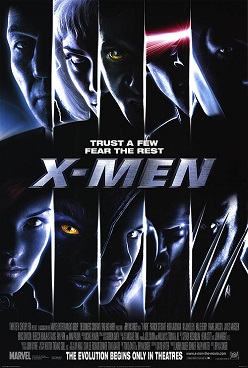
I saw X-Men on the first day that it opened in theaters. Actually, I saw it twice.
The first time I saw it was by myself. I had been planning on waiting to see it in the evening with my friends Johnny and Kyleigh, but I actually found myself with a few hours to spare, so I decided to go ahead and see it. I watched it in the later afternoon and, after that showing got out, I met up with Johnny and Kyleigh outside the theater and went straight back in.
It’s hard to describe what a big deal the X-Men movie was in 2000. This was before there was a new Marvel movie or show every three months. It was also at a time when comic book movies, following the failure of Batman and Robin, were no longer considered to be a sure thing. Johnny and I were lifelong Marvel fans and, having survived the trauma of The Phantom Menace, were very much looking forward to the X-Men movie. We knew that both Patrick Stewart and Ian McKellen were the perfect choices for Professor X and Magneto. Anna Paquin seemed like a good choice for Rogue. But would Hugh Jackman, an actor neither of us had heard of before, be able to bring Wolverine to life?
Even though we both rolled our eyes when we heard that Rogue’s name was apparently Marie, Johnny and I were shocked at how good X-Men was. Today, we take it for granted that comic books can be turned into movies, but in 2000, X-Men took us by surprise by being well-acted, well-directed, and surprisingly entertaining. Kyleigh was not a fan of comic books in general and she liked the movie considerably less than we did. (“Dr. Wheelchair” was her name for Charles Xavier.) But for Marvel fans, X-Men was the anti-Phantom Menace.
Looking back, the plot felt like it could have been lifted from the pages of the comic book. Sen. Robert Kelly (Bruce Davison) is leading a national political movement against the mutants. Magneto has created a machine that will induce mutations in human beings. (The movie opens with a flashback that establishes Magneto as a survivor of the Holocaust. Today, everyone knows his backstory, but in 2000, people were stunned that a comic book movie could also deal with reality.) Magneto and Professor X both try to recruit Rogue to their side, and Wolverine, as Rogue’s protector, reveals his claws and reluctantly becomes a member of the X-Men.
When X-Men was first released, Hugh Jackman was the big question mark, but he turned out to be the perfect choice for Wolverine, even if he did seem to be too tall for the role. Jackman was tough and surly and somehow, he looked credible with claws. He was everything that fans like me wanted out of Wolverine and, once he showed up, I knew it was going to be a good movie. Not surprisingly, Patrick Stewart and Ian McKellen were perfect for Xavier and Magneto, as was Anna Paquin as Rogue. Though they’re overshadowed by Stewart, McKellen, Jackman, and Paquin, the other members of the X-Men are played by James Marsden (Scott), Famke Janssen (Jean Grey), and Halle Berry (Storm). Ray Park plays Toad, Tyler Mane plays Sabretooth, and Rebecca Romijn-Stamos excited male viewers everywhere by playing the naked and blue Mystique.
A lot of time has passed since 2000. An entire Marvel Cinematic Universe was created that did not initially include the X-Men, though that has since changed. Bryan Singer is no longer on the A-list. But I still always look fondly on the day that I watched X-Men twice.
Welcome to Late Night Retro Television Reviews, a feature where we review some of our favorite and least favorite shows of the past! On Thursdays, I will be reviewing Hunter, which aired on NBC from 1984 to 1991. The entire show is currently streaming on Tubi and several other services!
This week, Hunter faces off against a scarred killer wearing a mask! Pretty scary, kids!
Episode 2.5 “Killer In A Halloween Mask”
(Dir by Sidney Hayers and Michael Peerce, originally aired on October 26th, 1985)
After getting the bill for yet another high-speed chase involving Hunter and McCall, Captain Wyler (the great Bruce Davison) decides that they need to take a week off from causing trouble. He assigns them to work as technical advisors for a cop show called Street Heat.
At first, everything seems fine. Hunter hits on the publicity woman. The star of the show, J.J. Hendrix (Stephen Shortridge), asks McCall out to dinner. But then, one night, a man in a cheap plastic mask breaks into Hendrix’s house, bashes in his skull in with a fireplace poker, and sprays acid on the star’s face! (I guess he wasn’t a fan of the last season of Welcome Back Kotter.)
A masked killer is targeting the cast and crew of Street Heat! Hunter and McCall suspect that it might be Dave Tolan (Gary Graham), the former star of the show whose career ended when he set himself on fire while freebasing. The horribly scarred Dave now works at a wax museum and has access to all sorts of chemicals and acids. Plus, Hendrix was dating Dave’s ex-girlfriend….
And, of course, Hunter and McCall are correct. We know that they’re correct because we see Dave plotting the murders at the start of the episode. I have to admit that I spent the entire episode waiting for some sort of twist. I thought Dave would have an accomplice or something similar. But nope, it’s just Dave. It all leads to a confrontation in the wax museum. During a struggle with Hunter, Dave gets impaled. Hunter doesn’t say, “Works for me,” but you can tell that he’s thinking it.
There weren’t any big surprises in this episode but I still enjoyed it. It aired on October 26th and it was obviously produced with Halloween in mind. The late Gary Graham gave an appropriately unhinged performance as Dave. The scenes on the set of Street Heat also served as a commentary on Hunter as a show. After watching Hendrix “shoot” a suspect in a scene that felt like it could have been lifted from any episode of Hunter, McCall and Hunter commented that Street Heat wasn’t very realistic.
Fans of washed-up politicians will be happy to see Jesse “The Body” Ventura in this episode. He shows up at the start of the show. He’s been arrested for attacking his dentist. Ventura complains about his toothache. Hunter knocks the tooth out of his mouth. Ventura thanks him. Whenever I see Jesse Ventura in an old TV show or movie, I always regret that Arnold Schwarzenegger was the only other future governor that he co-starred with. If Fred Dryer had later been elected governor of California, this episode would have been legendary.
Welcome to Late Night Retro Television Reviews, a feature where we review some of our favorite and least favorite shows of the past! On Thursdays, I will be reviewing Hunter, which aired on NBC from 1984 to 1991. The entire show is currently streaming on Tubi and several other services!
This week, Hunter and McCall investigate a rich girl for murder.
Episode 2.4 “Rich Girl”
(Dir by James Whitmore, Jr., originally aired on October 19th, 1985)
When an elderly millionaire named Ralph Flagg (Robert Rockwell) is shot and nearly killed, his much younger wife, Ginger (Lois Hamilton), is arrested for the crime. Even though she’s acquitted, McCall and Hunter continue to believe Ginger tried to kill her husband for his money. When Ginger plunges off a balcony, they start to have their doubts. What if the mastermind behind the violence is actually Ralph’s daughter, Cynthia (Dorian Lopinto)? Hunter goes undercover as a former basketball player turned golf hustler and gets close to both Cynthia and her loutish boyfriend, Bradley (John Calvin).
The plot doesn’t provide as many twists as one might hope. From the start, it’s made clear that Cynthia and Bradley are the murderers. Bradley may be the more openly evil of the two, but Cynthia is definitely the mastermind. When it starts to seem as if Bradley is going to turn on her, Cynthia shoots him and then claims it was self-defense. When it appears that Cynthia is going to get away with that murder as well, Hunter and McCall convince Ralph to change his will so Cynthia must confess to her crimes if she wants to inherit his fortune. Cynthia responds by going home, grinding a couple of pills into her ice cream, and then apparently committing suicide while a tear rolls down her cheek.
Agck!
That ending really took me by surprise. Cynthia went from being the episode’s villain to an almost tragic figure. That said, I’m not really a fan of Hunter and McCall hounding people into suicide. I would much rather they just make good arrests, but that’s not their style.
At least this episode didn’t end with Hunter saying, “Works for me.”
Welcome to Late Night Retro Television Reviews, a feature where we review some of our favorite and least favorite shows of the past! On Thursdays, I will be reviewing Hunter, which aired on NBC from 1984 to 1991. The entire show is currently streaming on Tubi and several other services!
This week, Hunter and McCall investigate a murder! Yes, another one.
Episode 2.3 “The Biggest Man In Town”
(Dir by Bob Bravler, originally aired on October 5th, 1985)
When Charles Lattimer (Gregory Itzin), a man with no criminal record, is found executed gangland-style, Hunter and McCall suspect that it was more than just random California violence. After they find out that Lattimer was last seen alive while having a tense lunch at an expensive French restaurant, they decide to go undercover in Lattimer’s home town, an exclusive resort full of rich people and women in bikinis.
Hunter, pretending to be an oceanographer, meets Lattimer’s girlfriend, librarian Amy Lauton (Nana Visitor). McCall, pretending to be an aspiring singer, meets the biggest man in town, insurance tycoon Raymond Bellamy (Stuart Whitman).
Now, we already know that Bellamy is the one who ordered Lattimer’s death. Bellamy is the man with whom Lattimer had his final lunch. Lattimer was blackmailing Bellamy over a case of insurance fraud. We also know that the execution was carried out by Sheriff Johnson (Don Stroud). We know all this because we saw it at the beginning of the episode. There’s no real mystery here.
Then again, this episode isn’t about mystery. It’s about Hunter and McCall getting away from Los Angeles for a while. It’s about McCall getting to sing three songs at the resort’s premier nightclub. It’s about Hunter getting distracted every time a woman in a bikini walks by. Mostly, it’s just about the chemistry between Hunter and McCall. It doesn’t matter how many people die, they’ve always got a quip to trade.
Actually, not that many people die in this episode. Lattimer dies. His father is murdered. But otherwise, this episode is almost peaceful by Hunter standards. For once. Hunter and McCall arrest the bad guys instead of killing them. Getting out of Los Angeles must have mellowed them.
This episode was entertaining but forgettable. The story was nothing special but the Hunter/McCall chemistry was enjoyable. Hunter and McCall are solving crimes and having fun! Good for them.
Welcome to Late Night Retro Television Reviews, a feature where we review some of our favorite and least favorite shows of the past! On Thursdays, I will be reviewing Hunter, which aired on NBC from 1984 to 1991. The entire show is currently streaming on Tubi and several other services!
This week, Hunter and McCall get involved in a gang war in Chinatown!
Episode 2.2 “Night of the Dragons”
(Dir by James Whitmore, Jr, originally aired on September 28th, 1985)
McCall’s desire to try out a Chinese restaurant leads to her and Hunter witnessing a shootout and an apparent murder in Chinatown. (It’s “apparent” because the body disappears in all the confusion.) A war is brewing between two gang lords, the Chinese Chang (James Hong) and the Vietnamese Mr. Nim (Arsenio “Sonny” Trinidad). However, when Hunter and McCall try to investigate, they’re told to let the “Asian Affairs Unit” handle things.
Hunter suspects that an old friend, Detective Raymond Lau (Clyde Kusatsu), has gone crooked and is now working for Chang. It turns out Hunter is half-right. Lau is giving information to Chang, but only because Chang has kidnapped his daughter and is holding her hostage. Chang, it turns out, likes to kidnap people. For instance, he kidnaps McCall. How often can McCall get kidnapped? It seems to happen fairly frequently.
This was another action-packed episode of Hunter. Every few minutes, someone is either shooting a gun or threatening to. Meanwhile, McCall just wanted to find a nice Chinese place to eat. It’s obvious that, with the second season, the show had found a formula that worked for it and was determined to stick to it. This episode benefited from strong guest performances from Hong, Trinidad, and especially Clyde Kusatsu.
That said, I do wish this episode had explored its themes a bit more deeply. It’s mentioned that Hunter served in Vietnam, but it’s mostly just a throwaway reference used to explain how Hunter knew that the bullets recovered from a crime scene had been fired by Mr. Nim’s gang. The rivalry between the Chinese Chang and the Vietnamese Nim also serves as a reminder of the Vietnam War, but again, the episode doesn’t really dig into it. At one point, Chang says that Lau is weak because he was born not in China but in America, and again, it’s hard not to feel that the episode missed an opportunity to dig deeper with both men.
(I’ll also mention that, at one point, McCall compares one of the Chinese gangsters to Godzilla. Godzilla, needless to say, is part of Japan’s culture and not China’s.)
This was a good episode of Hunter that felt like it had the potential to be so much more.
Welcome to Late Night Retro Television Reviews, a feature where we review some of our favorite and least favorite shows of the past! On Thursdays, I will be reviewing Hunter, which aired on NBC from 1984 to 1991. The entire show is currently streaming on Tubi and several other services!
This week, we begin the second season!
Episode 2.1 “Case X”
(Dir by David Soul, originally aired on September 21st, 1985)
Adult-film actresses are turning up dead all over Los Angeles. Hunter and McCall have the case, and it does not take them long to see the pattern. The killer is sleazy photographer Tony Cochran (Leo Rossi), and the women are being supplied to him by former adult star turned talent agent Andrea Burden (Rita Taggart). Knowing who the murderer is and having the evidence to arrest him are two different things. After Tony murders his brother (Sam Anderson) and frames him for the crimes, it looks as if Tony might walk.
So, of course, McCall goes undercover. She joins the fitness club where Andrea works out and looks for girls. She poses in lingerie for Tony. (Just as in the first season, McCall going undercover seems to largely mean McCall wearing less clothes than usual.) And when Tony kidnaps her, it is up to Hunter to rescue her and fill Tony with lead.
In other words, the second season of Hunter opens in a style familiar to anyone who watched the first. Hunter is still a shoot-first rebel. McCall is still his continually in-peril partner. The bad guy still underestimates this violent duo. While Hunter and McCall solve the crimes and kill the villains, Bernie Terwilliger keeps trying to write them up for every infraction imaginable. In this episode, Terwilliger counts seven violations of police policy on the part of Hunter and McCall. I counted a bit more but maybe Terwilliger was trying to be charitable.
The one real change between seasons is a new commanding officer. John Amos has been replaced by Bruce Davison. As Captain Wyler, Davison wears a three-piece suit, never has a hair out of place, and bristles when Hunter refuses to follow orders. That said, Wyler congratulates Hunter at the end of the episode and tells Terwilliger to back off the ethics investigation. For once, Hunter has a boss who is not actively trying to get him kicked off the force.
The episode itself is pretty predictable. As soon as Leo Rossi’s name appeared in the guest credits, it was easy to guess who the murderer would turn out to be. Hunter is not a show about complex mysteries or shocking twists. It is a show about the chemistry between Fred Dryer and Stepfanie Kramer, and about the promise that the bad guys will be punished. This episode delivered on both.
In 1692 and 1693, over 200 people were accused witchcraft in colonial Massachusetts. Thirty people were found guilty. 19 were executed, fourteen women and five men. One man died while being tortured in an effort to get a confession out of him. At least five more people died in their jail cells, awaiting their trial.
There’s a lot of debate about how the witch trials actually began but it’s generally agreed that the initial accusations were made by four girls in the village of Salem. The oldest was 17 while the youngest was just nine. (One of the girls, 12 year-old Abigail Williams, was related to the village’s pastor, Samuel Parris. Traditionally, she has been portrayed as being the ringleader of the accusers.) The girls claimed that the women of the village had caused them physical pain through witchcraft. Soon, other girls in nearby villages were making similar accusations. Some of the accused confessed to being witches to avoid execution. Others claimed to be innocent but also said they knew who the real witches were. And, of course, many refused to confess and were executed as a result.
Today, it’s easy to see that the Salem Witch Trials were an early “moral panic.” What is often forgotten is that, even at the time the trials were taking place, there were many prominent thinkers who condemned them as being a case of mass hysteria. In the years immediately following the trials, the majority of its victims were posthumously exonerated. The Reverend Samuel Parris wrote an official apology letter for his role in the trials. One of the legacies of the Salem Witch Trials was that the First Amendment of the United States Constitution made clear that “Congress shall make no law respecting an establishment of religion.”
Arthur Miller’s 1953 play, The Crucible, was set during the Salem Witch Trials and, for many people, it’s the defining work about the trials, despite the fact that Miller acknowledged to taking dramatic liberties with some of the characters and events. Miller, who had recently been questioned by the House Unamerican Activities Committee, meant for the play to be both a commentary on McCarthyism and a rebuke towards people like his former friend, Elia Kazan, who “named names” to protect themselves. Of course, one could argue that the main difference between the Salem Witch Trials and the Red Scare is that communists were real while the Salem witches were not. But, no matter. It’s one of Miller’s better plays. If Elia Kazan could justify his testimony by imagining himself as a punch-drunk boxer standing up to a corrupt union, I suppose Arthur Miller could pretend to be a man accused of witchcraft. The play was initially not as acclaimed as some of Miller’s other works but, over the years, it has come to be widely acknowledged as one of the classic works of American theater.
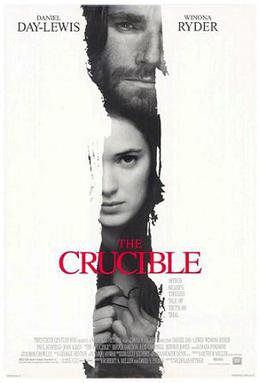
In the 90s, Miller wrote the screenplay for a film adaptation of the The Crucible. First released in 1996, this adaptation starred Daniel-Day Lewis as the wrongly accused John Proctor, Joan Allen as Proctor’s wife, Elizabeth, and Winona Ryder as Abigail Williams. For the purposes of Miller’s dramatization, Abigail was reimagined as being a teenage girl who had a brief affair with John Proctor and who was still obsessed with him. When the Reverend Parris (Bruce Davison) catches Abigail and some of her friends trying to cast a “love spell” on John, the girls try to avoid punishment by accusing Parris’s slave, Tituba (Charlayne Woodard), of being a witch. Tituba gives a false confession to avoid being hanged. The girls are soon accusing numerous other women, including Elizabeth Proctor, of witchcraft.
As a film, The Crucible is a fine adaptation of Miller’s play and it’s always a little bit surprising to me that the movie itself isn’t better-known. Daniel Day-Lewis, Winona Ryder, Joan Allen, and Bruce Davison all give excellent performances, as does Rob Campbell as a reverend who comes to doubt the accusations of witchcraft. The great Paul Scofield also does a good job as Danforth, the stern judge who attempts to be fair but ultimately is not willing to admit that the law itself is in error. The film recreates Salem is such detail that you feel as if you’re walking its streets. The film also recreates the horrible conditions that a colonial prisoner would have to deal with while imprisoned. Watching Daniel Day-Lewis go from being handsome and rugged to being an emaciated man with rotten teeth really drives home the story’s portrayal of casual, state-sanctioned cruelty. By the end of the movie, Day-Lewis is a testament to what authoritarians will do to someone who insists on thinking for himself.
The film is at its strongest when showing how a moral panic begins. The unstable Abigail is looking for revenge against John Proctor. The other girls, immature and trying to be avoid being punished, make their accusations without giving much thought to the consequences. Soon, the adults of Salem — all of whom have no excuse for not knowing better — are making accusations because it’s better to be an accuser than to be one of accused. The film presents a disturbing portrait of how quickly a community can turn on itself.
The film ends on a note of devastating sadness. Though the witch trials were eventually seen for being the farce that they were, it was too late for the twenty-five people who died as a result of the hysteria. (Today, with a clear mind, it’s easy to see that the Salem Witch Trials had more in common with Stalin’s show trials and China’s Cultural Revolution than anything else.) The Crucible is a powerful film adaptation that deserves to be better-known.
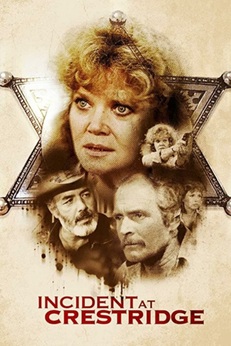
Robert (Sandy McPeak) and Sara Davis (Eileen Brennan) arrive in the town of Crestridge, Wyoming, just in time to not only witness a group of mobsters attacking the local massage parlor but also to see the local sheriff (Walt Field) refuse to do anything about it. While Robert works at the local hospital, Sara runs for sheriff and is elected despite only having recently arrived in town. The mayor (Pernell Roberts) is convinced Sara will be easy to manipulate but Sara is determined to expose not only his corruption but also the gangsters who secretly control the town. What Sara doesn’t realize is that the Mayor only allowed Sara to win the election because he felt that the old sheriff was getting too sloppy in his malfeasance. The same corrupt system that allowed Sara to become sheriff is also designed to take the position away.
Despite being made-for-TV, this isn’t a bad movie. Eileen Brennan is believably tough as the sheriff but she never becomes a one-dimensional crusader. Pernell Roberts is even more believable as a venal politician who has been in power for so long that he thinks he can get away with anything. The movie’s plot has a few surprises and the ending is downbeat but believable. I did have a hard time believing that someone could be elected sheriff within weeks of first arriving in a town but it made sense once I started to think of Incident at Crestridge as being a modern-day western. Just as how Johnny Mack Brown, Charles Starrett, and Allan Lane used to ride into towns that needed someone honest to protect the citizens, Eileen Brennan drives into Crestridge.
No offense to the legacy of Suzanne Somers but this film is much better than She’s The Sherriff.
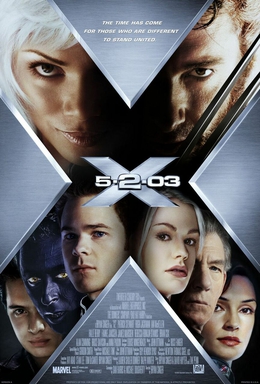 After Nightcrawler (Alan Cumming) causes a national security crisis by teleporting into the White House, Colonel William Stryker (Brian Cox) is given the authority to invade Professor Xavier’s School and investigate its connection to the mutants. Stryker, who not only wants to investigate the mutants but also destroy them by manipulating the same technology that Xavier uses to find them, just happens to be an old enemy of Logan’s (Hugh Jackman). In fact, Stryker is responsible for Logan fusing the adamantium to his bones. That’s a hell of a coincidence.