Review: A Fistful of Dollars (dir. by Sergio Leone)


“When a man with a .45 meets a man with a rifle, you said, the man with a pistol’s a dead man. Let’s see if that’s true.” — Joe

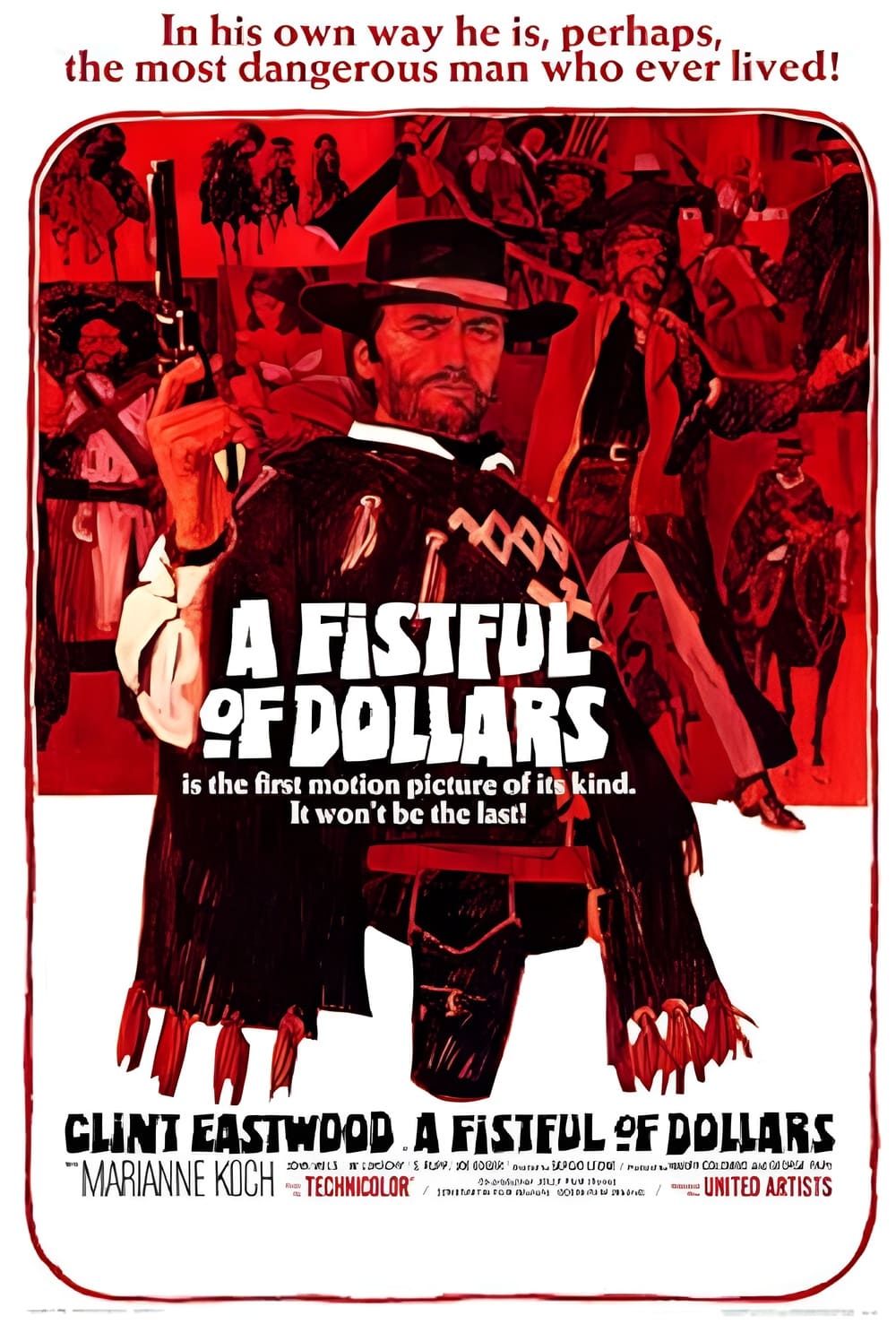
When examining the films that fundamentally reshaped a genre, 1964’s A Fistful of Dollars stands as an undeniable cornerstone. Directed by Sergio Leone, this movie didn’t just accidentally stumble into creating a new genre; it grabbed the classic American western by the collar, dragged it into the mud, and spat on its shiny boots. This was the first leg of Leone’s “Dollar’s Trilogy,” and honestly, looking back at it now, it’s kind of crazy to think about how much of an underdog this production was. It was made on a shoestring budget, shot in Spain with a bunch of Italian and Spanish actors speaking different languages and then dubbed over, and it featured a lead actor who was mostly known for playing a lovable cowboy on a little American TV show called Rawhide. Nobody expected A Fistful of Dollars to become a massive international hit, but it did, and it permanently altered the cinematic landscape.

The story itself feels incredibly familiar today, but that’s only because it has been copied and homaged about a million times since. Unapologetically lifting the plot from Akira Kurosawa’s Yojimbo, the film follows a gritty, chain-smoking drifter who rides into a dusty, miserable border town called San Miguel. But the fun part about this cinematic lineage is that Yojimbo wasn’t entirely original either. Kurosawa openly borrowed the core concept from Dashiell Hammett’s hardboiled detective novels, specifically Red Harvest and The Glass Key. Both of those books featured a lone, cynical protagonist who manipulates warring criminal factions fighting it out for control of a corrupt town. So Leone was essentially taking a Japanese interpretation of an American noir trope, stripping it down, and repackaging it as a western. Once our drifter arrives in San Miguel, he quickly realizes the town is torn apart by two rival gangs: the Baxters, a family of American gun-runners, and the Rojos, a ruthless group of Mexican smugglers. Instead of playing the traditional white-hat hero who immediately picks a side and saves the day, our guy does the exact opposite. He decides to play both sides against each other, hiring himself out to the highest bidder, switching loyalties at the drop of a hat, and essentially bleeding the town dry for his own profit. It is a brilliantly cynical setup that completely subverted what western audiences were used to seeing at the time.

And then there is Clint Eastwood. Now, pop culture famously knows him as the Man with No Name, but that is actually the result of a very clever piece of US marketing. In A Fistful of Dollars, his character absolutely has a name: Joe. The American distributors thought the mysterious, anonymous angle sounded cooler for the posters, and the moniker stuck so hard over the decades that most people forget he literally introduces himself as Joe to the locals early on in the movie. Regardless of what you call him, when Leone cast Eastwood, American studios were apparently confused, wondering why an Italian director would want a TV actor to lead a movie. But Leone saw something in Eastwood’s squint, a kind of rugged, lazy menace that was perfect for this new brand of anti-hero. Joe isn’t a knight in shining armor. He’s greedy, he’s manipulative, and he kills people without losing a wink of sleep. But he has an undeniable coolness to him that is just magnetic. The costume design plays a massive part here too. The weathered brown poncho, the stubble, the short cigar clamped in his jaw, and that iconic hat all combined to create a look that felt lived-in and dangerous. Compared to the impeccably groomed, brightly dressed cowboys of the 1950s, Eastwood looked like he actually smelled like sweat, horse hair, and gunpowder.

Of course, a conversation about A Fistful of Dollars is totally incomplete without talking about the villains, because Leone knew how to cast bad guys who were genuinely terrifying. Gian Maria Volonté plays Ramón Rojo, the main antagonist, and he is absolutely phenomenal. Ramón isn’t just a cartoonish thug; he is smart, cold-blooded, and utterly devoid of mercy. There is a famous scene where Ramón is demonstrating the accuracy of his rifle by shooting at the heart of a man he has just murdered at long range, and Volonté plays it with such a creepy, casual indifference that it makes your skin crawl. The Baxters are mostly just pathetic pawns, but the Rojos feel like a legitimate, organized threat, which makes the stakes feel incredibly real. You genuinely believe that if Joe slips up even once, these guys will brutally torture and kill him without a second thought.

Visually, A Fistful of Dollars is an absolute masterclass in atmosphere. Leone was working with a limited budget, but he used what he had to create a style that felt massive. He employed these extreme, lingering close-ups of people’s eyes, sweaty faces, and flies buzzing around, which gave the film an almost unbearable tension. Then he would suddenly cut to these massive, sweeping wide shots of the barren Spanish desert, making the characters look like tiny, insignificant specks in a cruel, uncaring world. The violence was also shockingly graphic for the time. People didn’t just clutch their chests and fall over gracefully like they did in older westerns. They bled, they grimaced in agony, and the gunfights felt loud, chaotic, and messy. Leone stripped away the romanticism of the Wild West and replaced it with a gritty, dirty reality that felt much more authentic, even if it was entirely a fabricated Italian fantasy of America.

You also absolutely have to talk about Ennio Morricone’s legendary musical score. It is basically a character in the film itself. Before A Fistful of Dollars, western soundtracks were mostly made up of traditional orchestral arrangements and folksy songs. Morricone threw that playbook out the window. He used electric guitars, twanging banjos, screaming trumpets, whip cracks, choral chants, and even a bizarre, wailing coyote sound that sounds like a human having a mental breakdown. The main theme is so incredibly catchy and weird that it burrows into your brain and stays there for days. The music didn’t just support the action on screen; it told the audience exactly how to feel, ramping up the tension during the standoffs and giving Eastwood’s character a larger-than-life aura. Without Morricone’s score, the Spaghetti Western genre simply would not exist as we know it.

The pacing of the movie is something that modern audiences might need a minute to adjust to, but it is completely intentional. Leone was in absolutely no rush to get from point A to point B. He wanted to linger on the tension, letting scenes breathe and stretch out to almost uncomfortable lengths. When Eastwood is staring down a group of thugs in the street, Leone holds the camera on their faces for what feels like an eternity. You can see the sweat dripping, you can see the fear building, and by the time the first shot is finally fired, the release of tension is almost physical. It is a slow burn that requires a bit of patience, but it makes the eventual bursts of violence so much more impactful and satisfying. It is the exact opposite of the fast-paced, action-packed blockbusters we get today, and that deliberate slowness is a huge part of its strange, hypnotic charm.

Despite all of Joe’s outward greed and manipulation, there is a subtle emotional core to the film that keeps you totally invested. It comes in the form of Marisol, a woman who is being held captive by Ramón Rojo and used as leverage against her husband. When Eastwood sees the absolute misery of this family, his cold exterior cracks just a little bit. He risks his entire scheme, and his own life, to sneak Marisol and her son out of town in the middle of the night, giving them money to start over. It is a beautifully quiet, understated scene that proves there is still a shred of humanity left underneath all that grit and cynicism. He doesn’t make a big speech about it or ask for thanks; he just does it because it is the right thing to do. It gives the character a moral center without turning him into a traditional good guy, which is a really difficult balancing act that the film pulls off perfectly.

The climax of the film is where everything comes together in a spectacular display of style and sheer badassery. After getting brutally beaten by the Rojos, Eastwood escapes and returns for revenge, utilizing a makeshift iron chest plate hidden under his poncho. Watching him walk slowly down the empty street, taking bullet after bullet to the chest without flinching, while the electric guitar wails in the background is just pure, unadulterated cinema magic. He outdraws Ramón in a final, agonizingly tense standoff, proving that his wits and his nerve are just as deadly as his revolver. It is the perfect payoff to the slow build-up of the entire movie, cementing Joe as an absolute icon of pop culture.

And this endless game of cinematic telephone didn’t stop with Leone. Just as A Fistful of Dollars was heavily “inspired by Yojimbo“—which itself transplanted the 1920s pulp noir concept into the 1860 Edo period—it went on to inspire a whole new wave of imitators looking to put their own spin on the formula. The most obvious example is the 1996 action flick Last Man Standing starring Bruce Willis, which takes the exact same plot of warring factions and a lone drifter playing them against each other, but moves the action to a Prohibition-era Texas border town. It is wild to trace that DNA from a 1920s pulp novel to the 1860 Edo period, to a 1960s Italian western, and all the way to a 1990s Bruce Willis shoot-em-up, proving just how durable and universally cool this basic storyline really is.

Looking at A Fistful of Dollars today, it is easy to see the cracks in its foundation. The dubbing is notoriously clunky, some of the supporting performances are a bit wooden, and the fact that it is a direct rip-off of a Japanese masterpiece is impossible to ignore. But honestly, none of that really matters in the grand scheme of things. Leone took a great story and injected it with so much style, so much attitude, and so much raw energy that it became its own completely distinct entity. As the first leg of Leone’s “Dollar’s Trilogy,” it laid the foundational blueprint that he would later perfect with For a Few Dollars More and absolutely master with The Good, the Bad and the Ugly. But there is something special about this first outing. It has a rougher, scrappier, and more experimental vibe that is incredibly fun to watch. It is the movie that killed the old western and birthed the new one, and for that alone, it deserves every bit of its legendary status.
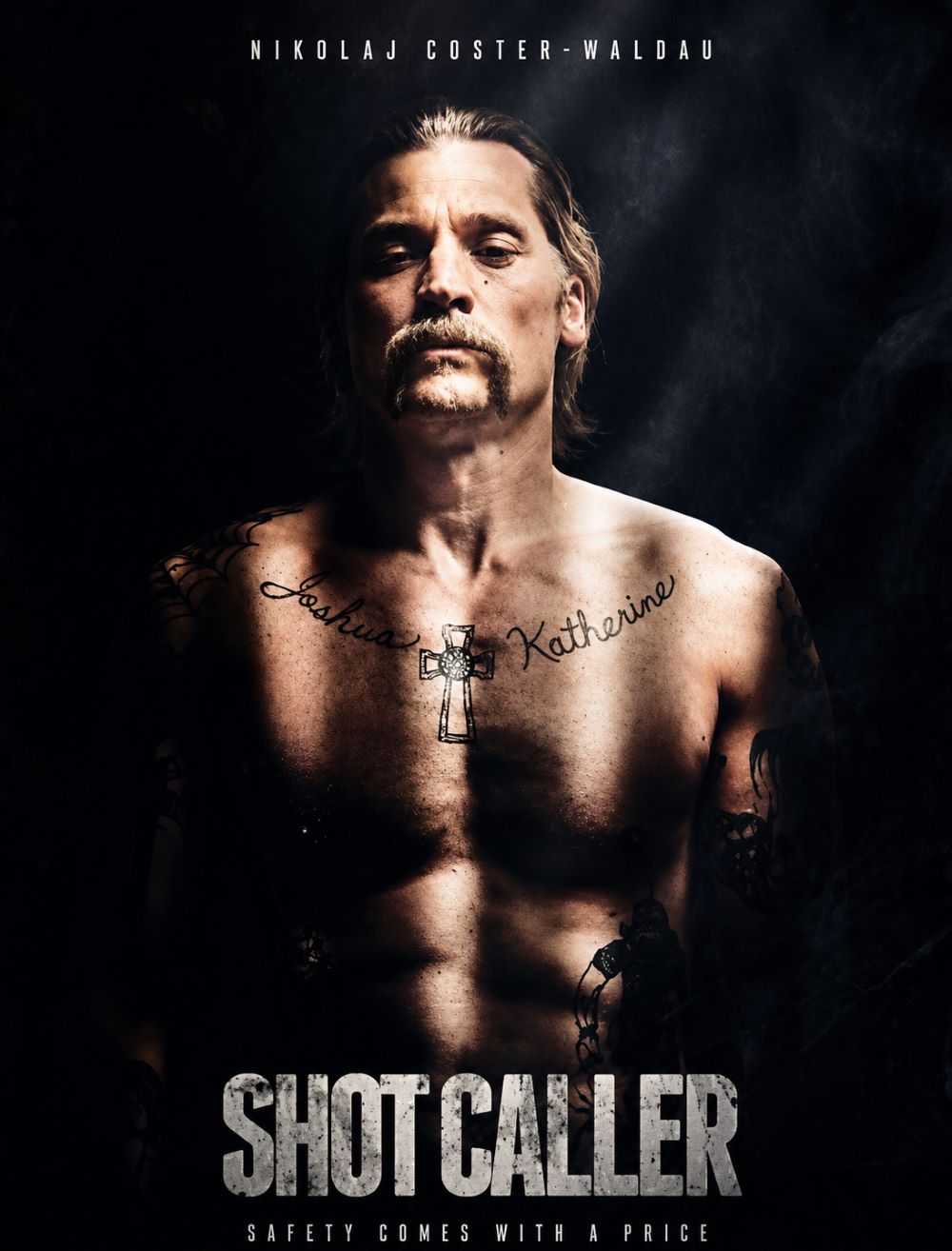
Review: Shot Caller (dir. by Ric Roman Waugh)


“The fact is, we all started out as someone’s little angel. And a place like this forces us to become warriors or victims. Nothing in between can exist here.” — “Bottles”

Shot Caller (released in 2017), directed by Ric Roman Waugh, is a gritty, morally complex crime drama that dives deep into the brutal world of prison gangs, redemption, and the blurred lines between justice and survival. Clocking in at just over two hours, it’s a tense, character-driven story that doesn’t shy away from the harsh realities of its setting, delivering a raw and unfiltered look at life behind bars and the psychological toll it exacts.

The film follows Jacob Harlon, played by Nikolaj Coster-Waldau, a successful businessman whose life spirals out of control after a DUI accident leaves his best friend dead. Sentenced to prison, Jacob is thrust into a violent, hierarchical world where survival means adapting to the rules of the Shot Callers—high-ranking gang members who control the prison’s underground economy. The film’s title itself is a nod to this brutal hierarchy, where every decision, every move, is dictated by those at the top. As Jacob navigates this treacherous landscape, he transforms from a naive new inmate into a hardened, strategic player, adopting the moniker “Money” for his financial acumen. His journey is as much about physical survival as it is about the psychological toll of losing his identity and grappling with the moral compromises he’s forced to make.

What makes Shot Caller stand out is its unflinching portrayal of prison life. Waugh, who also co-wrote the screenplay, doesn’t romanticize the violence or the characters. The film opens with a visceral, almost documentary-like sequence of Jacob’s first days in prison, where he’s immediately targeted by a white supremacist gang. The brutality is shocking, but it sets the tone for a story that refuses to sugarcoat the realities of incarceration. The prison scenes are claustrophobic, the tension palpable, and the stakes feel painfully real. Waugh’s direction ensures that every punch, every stab, every whispered threat carries weight. There’s no glorification here—just the cold, hard truth of a system that chews people up and spits them out. Even the brief but chilling appearance of Holt McCallany as The Beast, a high-ranking Aryan Brotherhood member, leaves a lasting impression. Though his screen time is limited, McCallany’s performance is unforgettable, exuding a quiet, menacing authority that underscores the danger lurking in every corner of the prison.

Nikolaj Coster-Waldau delivers a career-best performance as Jacob. Known to many as Jaime Lannister from Game of Thrones, Coster-Waldau sheds his noble, charismatic image to embody a man broken by guilt and reshaped by circumstance. His physical transformation is striking—he bulked up significantly for the role, but it’s his emotional range that truly impresses. Jacob’s arc is one of the most compelling aspects of the film. Early on, he’s a fish out of water, a man clinging to his old life and morals. But as the story progresses, we see the gradual erosion of his principles. The moment he finally snaps and fights back is a turning point, not just for his character but for the audience’s perception of him. By the time he’s released from prison, he’s almost unrecognizable—both physically and psychologically. Coster-Waldau makes you believe every step of this transformation, and it’s a testament to his skill as an actor that you’re rooting for Jacob even as he makes increasingly questionable decisions.

The supporting cast is equally strong. Omari Hardwick plays Shotgun, a high-ranking member of the black gang who becomes Jacob’s reluctant mentor. Hardwick brings a quiet intensity to the role, balancing threats with moments of unexpected humanity. Lake Bell plays Jacob’s wife, Kate, and her performance is heartbreaking in its restraint. Kate’s struggle to hold her family together while her husband is in prison is a grounded counterpoint to the chaos unfolding behind bars. Jon Bernthal, another standout, plays a prison guard with a morally ambiguous role in Jacob’s journey. Bernthal, as always, brings a raw, simmering energy to his scenes, making his character’s motivations feel authentic, even when they’re not entirely clear.

The film’s pacing is deliberate, almost methodical. Waugh takes his time building the world and the characters, and while this might frustrate viewers looking for constant action, it pays off in the long run. The first act is heavy on exposition, introducing the prison’s power structures and the various factions at play. But once Jacob starts to find his footing, the story picks up momentum. The middle act is where Shot Caller really shines, as Jacob’s alliances and rivalries become more complex. The film’s climax is a high-stakes heist that feels both inevitable and earned, a culmination of everything Jacob has learned—and lost—during his time inside.

One of the most interesting themes in Shot Caller is the idea of control. The title itself refers to those who call the shots, but the film constantly questions who really has power in this world. Jacob starts as a man who thinks he’s in control of his life, only to have that illusion shattered. In prison, he learns that control is a fragile, often violent thing, constantly shifting hands. Even after his release, he’s not truly free—he’s still bound by the rules of the criminal underworld he’s now a part of. The film suggests that in a system as broken as this one, no one is ever truly in control. It’s a bleak message, but one that feels authentic to the story being told.

The cinematography, by Dana Gonzales, is another highlight. The prison scenes are shot in a way that emphasizes the claustrophobia and tension of the environment. The color palette is muted, with lots of grays and blues, reflecting the cold, harsh reality of Jacob’s new world. The action sequences, when they do occur, are brutal and realistic, with a handheld camera style that puts you right in the middle of the chaos. There’s no glamour to the violence here—it’s messy, desperate, and often over in seconds.

If Shot Caller has a weakness, it’s that some of its themes and plot points might feel familiar to fans of the genre. The story of a man falling into the criminal underworld and struggling to escape isn’t exactly new. What saves the film from feeling derivative is its commitment to authenticity and its strong performances. Waugh’s script also avoids easy answers. Jacob isn’t a hero, and the film doesn’t pretend he is. He’s a flawed, complicated man making the best of a series of terrible situations. The ending, without spoiling too much, is bittersweet and ambiguous, leaving you to ponder just how much of Jacob’s old self is left—and whether he can ever truly escape the life he’s been drawn into.

Another aspect worth praising is the film’s soundtrack. The score, composed by Antonio Pinto, is understated but effective, using a mix of electronic and orchestral elements to underscore the tension and emotional beats of the story. The use of silence is also notable—there are moments where the absence of music makes the violence or the weight of a decision hit even harder.

Shot Caller is a film that lingers with you long after the credits roll. It’s not an easy watch, and it’s certainly not for the faint of heart. The violence is graphic, the language is harsh, and the themes are heavy. But for those willing to engage with it, the film offers a gripping, thought-provoking experience. It’s a story about survival, identity, and the cost of redemption. Ric Roman Waugh has crafted a prison drama that stands alongside classics like The Shawshank Redemption and American History X, even if it doesn’t quite reach their lofty heights. What it lacks in originality, it makes up for in execution, with stellar performances and a relentless commitment to its vision. In a world where crime dramas often glorify the outlaw life, Shot Caller is refreshingly honest. It doesn’t ask you to root for Jacob because he’s a good guy—it asks you to understand him, flaws and all. And by the end, you do. You understand the choices he makes, even if you don’t agree with them. That’s the mark of a great character study, and Shot Caller delivers on that front in spades. It’s a film that will leave you thinking, long after the final shot fades to black.

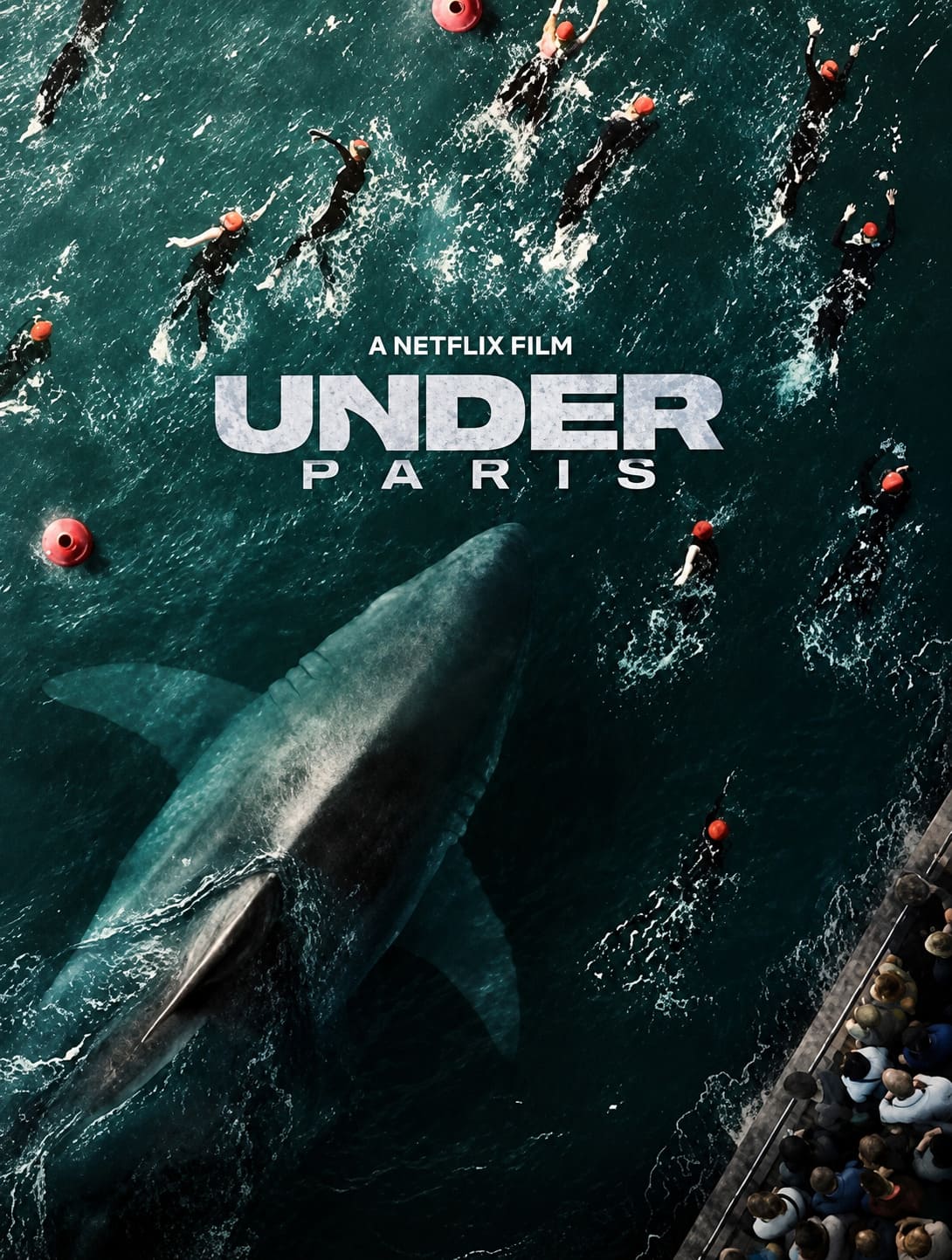
Review: Under Paris (dir. by Xavier Gens)


“It is not the strongest of the species that survives, nor the most intelligent, it is the one that is most adaptable to change.” — Sophia

Under Paris is one of those movies that grabs you by the throat and doesn’t let go—literally, in this case. Directed by Xavier Gens, the mind behind gritty, high-octane thrillers like Frontier(s) and The Divide, this creature feature dives headfirst into the claustrophobic nightmares lurking beneath the City of Light. And let me tell you, if you’ve ever romanticized the Parisian catacombs, this film will cure you of that real quick.

The story kicks off with a team of scientists exploring the unexplored tunnels under Paris, only to stumble upon something that definitely shouldn’t exist. What starts as a routine expedition turns into a fight for survival when they realize they’re not alone down there. The creatures in question are blind, feral, and terrifyingly fast, with a taste for human flesh. It’s The Descent meets Tremors, but with a distinctly French flair. The film wastes no time setting up its premise, throwing the audience into the dark, cramped corridors where every shadow could be a predator. The tension is palpable from the jump, and Gens doesn’t bother with slow-burn scares—this is a full-throttle horror ride.

What makes Under Paris stand out is its commitment to practicality. The creatures are brought to life with a mix of practical effects and CGI, and for the most part, it works. The designs are grotesque yet believable, with elongated limbs, jagged teeth, and a primal way of moving that makes them feel like something out of a nightmare. The practical effects, in particular, give the creatures a tangible weight that CGI alone often struggles to achieve. When they’re on screen, you believe they’re real, and that’s half the battle in a monster movie. The sound design deserves a shoutout too—the way the creatures communicate through clicks and hisses is unsettling in the best way, adding to the immersive dread.

The characters are, admittedly, a mixed bag. The cast is led by a group of scientists and urban explorers, each with their own quirks and backstories, but the film doesn’t spend much time fleshing them out. This is a survival horror flick, not a character study, so don’t expect deep emotional arcs. That said, the actors do a solid job with what they’re given. The standout is probably the team’s leader, whose growing desperation as the situation spirals out of control feels authentic. There’s also a refreshing lack of the usual horror-movie stupidity—most of the characters make decisions that, while not always smart, at least feel human. They panic, they argue, they try to rationalize the irrational, and it makes their plight all the more relatable.

The setting is a character in its own right. The labyrinthine tunnels under Paris are a horror fan’s dream—narrow, dimly lit, and filled with the kind of eerie silence that makes every distant noise sound like a death sentence. Gens and his cinematographer make the most of the claustrophobic environment, using tight camera angles and rapid cuts to keep the audience on edge. There’s a sequence early on where the team’s headlamps flicker, plunging them (and us) into total darkness, and it’s a masterclass in building tension without relying on jump scares. The film also does a great job of playing with sound, or the lack thereof. In the quiet moments, all you hear is the characters’ ragged breathing and the distant, unsettling skittering of something inhuman.

If Under Paris has a weakness, it’s that it doesn’t always know when to slow down. The pacing is breakneck, which works for the most part, but there are moments where a little breathing room would’ve helped. Some of the CGI, particularly in the wider shots, can look a bit rough, though it’s never bad enough to pull you out of the movie. And while the creatures are terrifying, their backstory is a bit thin. The film hints at a larger mythology—something about evolution and isolation—but it’s never fully explored. That’s not necessarily a dealbreaker, but it does leave you with a few unanswered questions.

All that said, Under Paris delivers exactly what it promises: a tense, visceral, and often downright terrifying descent into madness. It’s a film that understands the assignment—give the audience scares, gore, and a sense of dread that lingers long after the credits roll. Gens has a knack for blending horror with social commentary, and while Under Paris doesn’t dive as deep into the latter as some of his other work, it’s still there in the margins. The idea of something monstrous lurking beneath the surface of one of the world’s most romanticized cities is a potent one, and the film doesn’t shy away from the metaphorical implications.

In the end, Under Paris is a must-watch for horror fans, especially those who appreciate their scares with a side of action. It’s not a perfect movie, but it’s a damn effective one. It’s the kind of film you’ll want to watch with the lights off, the volume up, and maybe a friend or two to clutch onto when things get really intense. And trust me, they do. Xavier Gens has crafted a creature feature that’s as brutal as it is brilliant, and it’s a testament to his skill as a director that, even in the darkest, most chaotic moments, you’re never quite sure what’s going to happen next. Just don’t blame me if you start side-eying manhole covers after this one.

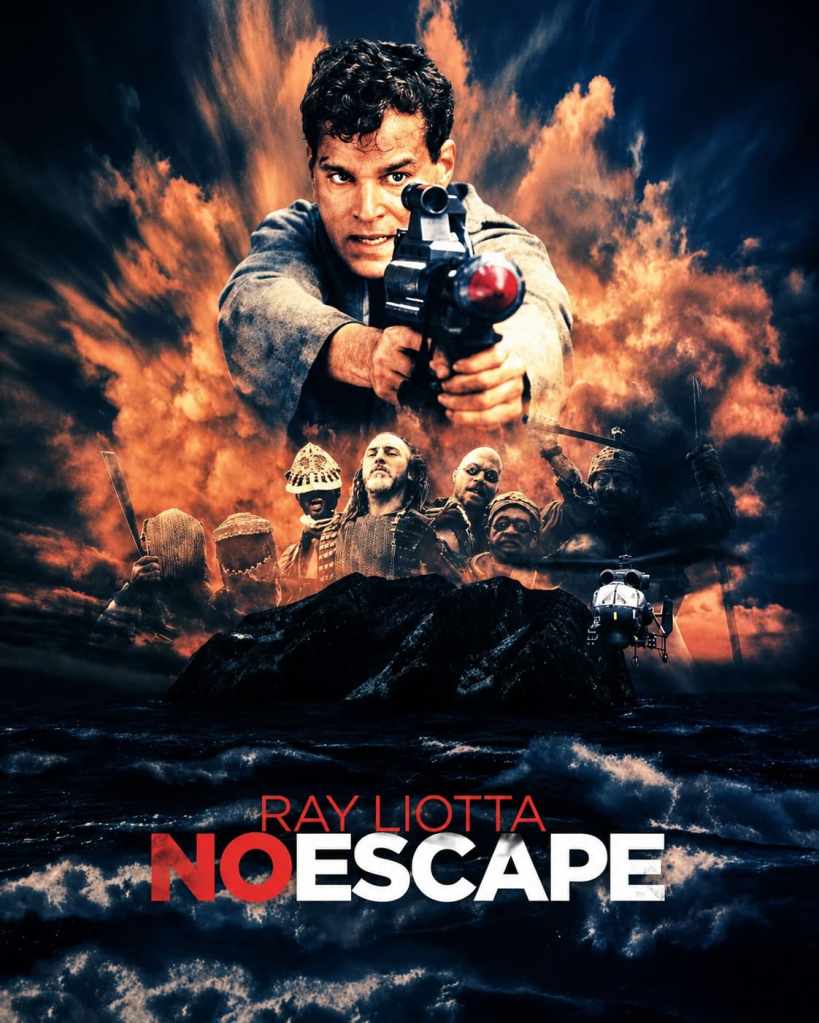
Guilty Pleasure No. 124: No Escape (dir. by Martin Campbell)


So, No Escape is a movie that, if you’re a fan of mid-90s action flicks, you’ve probably stumbled across on late-night cable at some point. Directed by Martin Campbell, a guy who would go on to resurrect James Bond with GoldenEye, this 1994 sci-fi romp is a strange, almost forgotten artifact from a time when every action movie seemed to be set in a grim, corporate-run future. It’s a movie that borrows so heavily from its predecessors that you could make a drinking game out of spotting the references, yet it does it all with such earnest, sweaty commitment that it’s hard to completely hate. It’s a film that, in a perfect world, should have been a genre classic, but its own bloat and inconsistent rhythm drag it down to the level of a solid, slightly-defective guilty pleasure.

The setup is pure B-movie gold. It’s the year 2022, which felt super futuristic back then, and the world has privatized its prison system. Ray Liotta stars as Captain Robbins, a man sentenced to life on the brutal island prison of Absolom after he kills his commanding officer. The premise of a super-max prison on a remote island, a “civilized” versus “savage” faction of inmates, and a hero who just wants to escape is a greatest-hits medley of Escape from New York, Mad Max 2: The Road Warrior, and Papillon. The film’s villain, Marek, played by a gloriously over-the-top Stuart Wilson, leads a tribe of leather-clad maniacs called the Outsiders, while Lance Henriksen’s Father leads the peaceful, agrarian community of Insiders. Our hero is thrust between them, forced to navigate tribal politics while plotting his getaway. It’s as familiar as an old pair of boots, but there’s a comfort in that familiarity, a sense that you know the beats and can just enjoy the ride.

And for a while, the ride is genuinely fun. Campbell, who clearly has an eye for widescreen spectacle, makes the lush Australian location look both beautiful and hostile. The production design is actually one of the film’s strongest assets; the Outsiders’ camp is a junkyard nightmare, while the Insiders’ village is a quaint, shanty-town paradise built from salvaged scrap. It gives the film a distinct, tactile feel that a lot of sterile sci-fi movies lack. Liotta is perfectly cast as the tough, morally ambiguous soldier. He brings a rough, cerebral quality to the role, making Robbins feel like a guy who’s seen too much and is just plain tired. Stuart Wilson, meanwhile, hams it up as the villain Marek, delivering a performance so broad and gleefully evil that he borders on self-parody, but in a way that’s weirdly compelling and provides some much-needed comic relief. The film feels like it’s building to something great, a tense and explosive showdown between these two drastically different tribes.

The problem is that No Escape simply does not know when to stop. This is a movie with a lean, mean premise that somehow stretches itself out to nearly two hours, and you feel every single minute of the back half. The pacing is wildly inconsistent, lurching between tense survivalist stuff, full-blown action set pieces, and stretches of world-building exposition that just sit there and deflate the momentum the film worked hard to build. There are entire sequences that feel like they exist purely to pad the runtime, and by the time the third act rolls around and Robbins is organizing his prison-break uprising, you’re less excited by the payoff and more just relieved that the movie is finally getting somewhere. A tighter edit, trimming maybe twenty to thirty minutes of the connective tissue, would’ve turned this into a genuinely great B-movie instead of a good one hamstrung by its own indulgence.

That’s really the frustrating thing about No Escape. Everything that makes prison-island and dystopian-exile movies fun is present and accounted for here: a charismatic antihero, a nasty villain, a societal allegory bubbling under the surface, brutal action, and a satisfying underdog uprising. Campbell clearly understood the assignment and delivered those elements competently, sometimes even excitingly. But competent execution of familiar beats can only carry a movie so far when the film refuses to trim the fat, and the sluggish, uneven pacing keeps dragging you out of scenes that should be gripping. It’s the kind of movie that probably could’ve stood shoulder to shoulder with its genre influences if someone in the editing room had been a little more ruthless.

As it stands, No Escape lands squarely in guilty-pleasure territory. It’s not a film you’d necessarily recommend to someone as an essential genre entry, but if you’re already the type who loves this stuff, the dystopian island prisons, the tribal factions, the gruff antihero clawing his way toward freedom, there’s a lot here to enjoy despite the flab. It wears its influences on its sleeve, executes them with more skill than it probably gets credit for, and then undercuts itself by overstaying its welcome. Somewhere in this movie is a tight, mean ninety-minute action flick that could’ve been a minor classic. Instead we got a longer, baggier version that’s still worth a watch on a lazy afternoon, just with the fast-forward button within easy reach for the slower stretches.

Previous Guilty Pleasures

  1. Half-Baked
  2. Save The Last Dance
  3. Every Rose Has Its Thorns
  4. The Jeremy Kyle Show
  5. Invasion USA
  6. The Golden Child
  7. Final Destination 2
  8. Paparazzi
  9. The Principal
  10. The Substitute
  11. Terror In The Family
  12. Pandorum
  13. Lambada
  14. Fear
  15. Cocktail
  16. Keep Off The Grass
  17. Girls, Girls, Girls
  18. Class
  19. Tart
  20. King Kong vs. Godzilla
  21. Hawk the Slayer
  22. Battle Beyond the Stars
  23. Meridian
  24. Walk of Shame
  25. From Justin To Kelly
  26. Project Greenlight
  27. Sex Decoy: Love Stings
  28. Swimfan
  29. On the Line
  30. Wolfen
  31. Hail Caesar!
  32. It’s So Cold In The D
  33. In the Mix
  34. Healed By Grace
  35. Valley of the Dolls
  36. The Legend of Billie Jean
  37. Death Wish
  38. Shipping Wars
  39. Ghost Whisperer
  40. Parking Wars
  41. The Dead Are After Me
  42. Harper’s Island
  43. The Resurrection of Gavin Stone
  44. Paranormal State
  45. Utopia
  46. Bar Rescue
  47. The Powers of Matthew Star
  48. Spiker
  49. Heavenly Bodies
  50. Maid in Manhattan
  51. Rage and Honor
  52. Saved By The Bell 3. 21 “No Hope With Dope”
  53. Happy Gilmore
  54. Solarbabies
  55. The Dawn of Correction
  56. Once You Understand
  57. The Voyeurs 
  58. Robot Jox
  59. Teen Wolf
  60. The Running Man
  61. Double Dragon
  62. Backtrack
  63. Julie and Jack
  64. Karate Warrior
  65. Invaders From Mars
  66. Cloverfield
  67. Aerobicide 
  68. Blood Harvest
  69. Shocking Dark
  70. Face The Truth
  71. Submerged
  72. The Canyons
  73. Days of Thunder
  74. Van Helsing
  75. The Night Comes for Us
  76. Code of Silence
  77. Captain Ron
  78. Armageddon
  79. Kate’s Secret
  80. Point Break
  81. The Replacements
  82. The Shadow
  83. Meteor
  84. Last Action Hero
  85. Attack of the Killer Tomatoes
  86. The Horror at 37,000 Feet
  87. The ‘Burbs
  88. Lifeforce
  89. Highschool of the Dead
  90. Ice Station Zebra
  91. No One Lives
  92. Brewster’s Millions
  93. Porky’s
  94. Revenge of the Nerds
  95. The Delta Force
  96. The Hidden
  97. Roller Boogie
  98. Raw Deal
  99. Death Merchant Series
  100. Ski Patrol
  101. The Executioner Series
  102. The Destroyer Series
  103. Private Teacher
  104. The Parker Series
  105. Ramba
  106. The Troubles of Janice
  107. Ironwood
  108. Interspecies Reviewers
  109. SST — Death Flight
  110. Undercover Brother
  111. Out for Justice
  112. Food Wars!
  113. Cherry
  114. Death Race
  115. The Beast Within
  116. Girl Series
  117. Gone in 60 Seconds
  118. Swordfish
  119. Marked For Death
  120. The Internship
  121. The Angry Red Planet
  122. 2012
  123. Old School

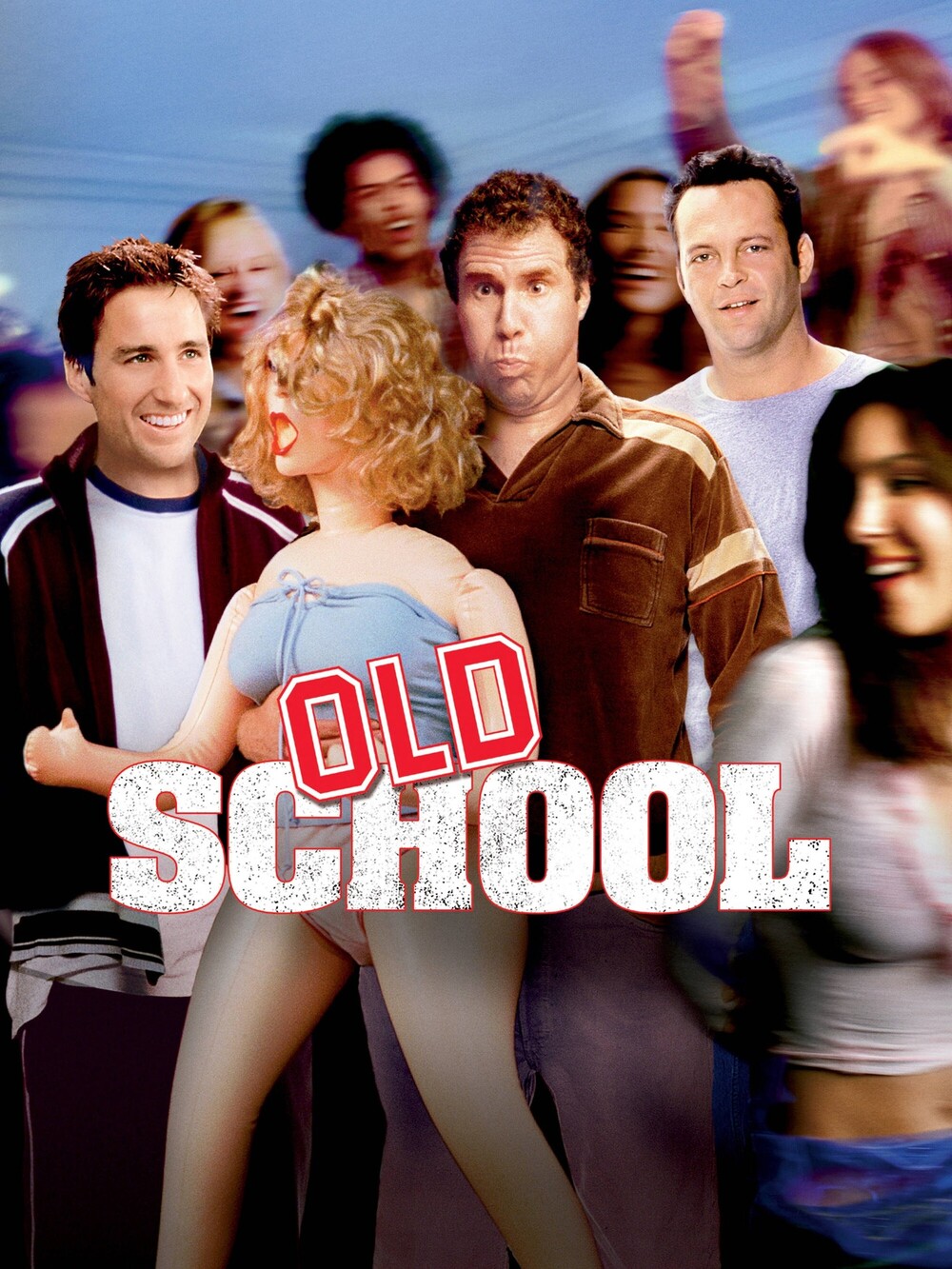
Guilty Pleasure No. 123: Old School (dir. by Todd Phillips)


Old School is one of those comedies that feels like it was made in a lab to be the perfect guilty pleasure, a film that knows exactly what it is and doesn’t apologize for a second of it. Directed by Todd Phillips in 2003, it’s a raucous, often ridiculous ode to arrested development, where three thirtysomething men decide the solution to their midlife crises is to start a fraternity and relive their college glory days. On paper, it sounds like the kind of premise that could either be hilariously relatable or painfully cringe-inducing. In execution, it somehow manages to be both, which is exactly why it works as well as it does.

The story centers around Mitch, Frank, and Beanie, played by Luke Wilson, Will Ferrell, and Vince Vaughn, respectively. Mitch is a mild-mannered attorney whose world implodes when he walks in on his girlfriend, Heidi (Juliette Lewis), mid-orgy in his own bathroom. Frank, a former legendary party animal known as “Frank the Tank,” is about to get married but can’t seem to let go of his wild past. Beanie, the most level-headed of the trio, is a family man who still feels the pull of his youth. When Mitch impulsively buys a house near a college campus, Beanie suggests they turn it into a fraternity, and thus, the most chaotic midlife crisis in cinematic history begins. The premise is thin, but the film doesn’t need much more than an excuse to string together a series of increasingly absurd set pieces.

What makes Old School so much fun is the chemistry between its three leads. Wilson plays the straight man to Ferrell and Vaughn’s antics, grounding the film with a relatable everyman quality. Vaughn, with his rapid-fire delivery and sharp wit, is the glue that holds the trio together, while Ferrell steals every scene he’s in as the unhinged, beer-chugging, streaking force of nature that is Frank the Tank. Ferrell’s performance is a masterclass in commitment to the bit, whether he’s chugging beers in his underwear, delivering a motivational speech about the importance of “earning” respect, or streaking through a neighborhood in one of the most iconic comedy scenes of the 2000s. His energy is infectious, and it’s hard not to laugh at the sheer audacity of his character, even when the humor leans into the absurd or the juvenile.

The supporting cast is packed with familiar faces who add texture to the film’s world. Jeremy Piven is delightfully slimy as Dean Pritchard, the smug, power-tripping dean of students who holds a grudge against the trio from their own college days. Ellen Pompeo, pre-Grey’s Anatomy, plays Nicole, Mitch’s high school crush, who re-enters his life at Frank’s wedding and becomes a romantic subplot that feels both sweet and slightly out of place in a movie this committed to chaos. Leah Remini, Juliette Lewis, and Elisha Cuthbert round out the cast, each bringing their own flavor to the proceedings. The film also features a slew of cameos, from Snoop Dogg as himself to James Carville, which adds to its anything-goes vibe.

Todd Phillips’ direction leans heavily into the film’s frat-house aesthetic, with a loose, improvisational feel that mirrors the energy of its characters. The movie doesn’t bother with subtlety or nuance; it’s a series of escalating gags and set pieces designed to elicit laughs, and for the most part, it succeeds. The humor is often crude, sometimes dumb, but always delivered with a sense of enthusiasm that’s hard to resist. The film’s pacing is brisk, jumping from one ridiculous scenario to the next without much time to breathe, which works in its favor. There’s no pretension here—Old School isn’t trying to be a smart comedy or a biting satire. It’s a beer-soaked, testosterone-fueled romp, and it owns that identity with pride.

One of the film’s most memorable sequences is the “Mitch-A-Palooza” party, a rager that cements the trio’s status as campus legends. The party is a microcosm of everything Old School does well: it’s loud, it’s messy, and it’s filled with the kind of over-the-top antics that make you laugh even as you shake your head in disbelief. The scene where Frank the Tank rallies the troops with a speech about the importance of “earning your letters” before chugging a beer in his underwear is a perfect example of the film’s brand of humor. It’s stupid, it’s juvenile, but it’s also undeniably funny, thanks in large part to Ferrell’s commitment to the bit.

That said, Old School isn’t without its flaws. The film’s humor often relies on shock value and crude jokes, which won’t land for everyone. Some of the gags feel dated, and the film’s treatment of women is, at times, simplistic. The female characters are often relegated to the roles of either love interests or obstacles, and the movie’s worldview is unapologetically male-centric. It’s a product of its time, and while that doesn’t excuse some of its more problematic elements, it does explain them. The film also suffers from a lack of depth in its storytelling. The plot is thin, and the character arcs are minimal, but that’s almost beside the point. Old School isn’t trying to be a deep or meaningful film—it’s trying to be a fun, raucous comedy, and on that front, it largely delivers.

What makes Old School such a great guilty pleasure is its sheer unapologetic joy in its own ridiculousness. The film doesn’t pretend to be anything other than what it is: a celebration of immaturity, friendship, and the kind of chaos that can only come from a group of grown men trying to relive their youth. There’s something oddly endearing about the way Mitch, Frank, and Beanie cling to their college days, as if they’re afraid of what comes next. It’s a theme that resonates with anyone who’s ever felt a pang of nostalgia for a time when life felt simpler, even if that time was also filled with questionable decisions and questionable haircuts.

The film’s soundtrack is another standout element, packed with a mix of classic rock, hip-hop, and pop hits that perfectly complement its vibe. From Whitesnake’s “Here I Go Again” to Metallica’s “Master of Puppets,” the music adds an extra layer of energy to the film’s already high-octane proceedings. The soundtrack isn’t just background noise—it’s a character in its own right, helping to set the tone for each scene and amplifying the film’s sense of fun.

In the years since its release, Old School has only grown in stature as a cult classic, a film that’s frequently quoted, referenced, and revisited by fans. Lines like “You’re my boy, Blue!” and “Frank the Tank” have entered the comedic lexicon, and the film’s influence can be seen in the wave of bro comedies that followed in its wake. It’s a testament to the film’s enduring appeal that it still feels fresh and funny, even as some of its jokes and sensibilities have aged less gracefully.

At its core, Old School is a movie about friendship and the lengths we’ll go to hold onto the past. Mitch, Frank, and Beanie may be thirtysomethings, but their hearts are still stuck in their college days, and their journey is as much about reconnecting with each other as it is about reliving their youth. The film’s message isn’t exactly profound—sometimes, you just need to let loose and have fun—but it’s delivered with such enthusiasm and charm that it’s hard not to get swept up in it. And if that message comes wrapped in a package of crude jokes, ridiculous antics, and a healthy dose of nostalgia, well, that’s just part of the charm.

Ultimately, Old School is the kind of movie that you don’t so much watch as you experience. It’s a film that demands to be seen with friends, preferably with a few beers in hand and a willingness to embrace the chaos. It’s not perfect, and it’s certainly not for everyone, but for those who are willing to go along for the ride, it’s a wildly entertaining, laugh-out-loud romp that never fails to deliver on its promise of fun. It’s a guilty pleasure, sure, but sometimes, the best kind of movies are the ones that don’t take themselves too seriously. Old School is a reminder that it’s okay to be a little immature, to embrace the chaos, and to never stop chasing the things that make you happy—even if those things involve starting a fraternity in your 30s.

Previous Guilty Pleasures

  1. Half-Baked
  2. Save The Last Dance
  3. Every Rose Has Its Thorns
  4. The Jeremy Kyle Show
  5. Invasion USA
  6. The Golden Child
  7. Final Destination 2
  8. Paparazzi
  9. The Principal
  10. The Substitute
  11. Terror In The Family
  12. Pandorum
  13. Lambada
  14. Fear
  15. Cocktail
  16. Keep Off The Grass
  17. Girls, Girls, Girls
  18. Class
  19. Tart
  20. King Kong vs. Godzilla
  21. Hawk the Slayer
  22. Battle Beyond the Stars
  23. Meridian
  24. Walk of Shame
  25. From Justin To Kelly
  26. Project Greenlight
  27. Sex Decoy: Love Stings
  28. Swimfan
  29. On the Line
  30. Wolfen
  31. Hail Caesar!
  32. It’s So Cold In The D
  33. In the Mix
  34. Healed By Grace
  35. Valley of the Dolls
  36. The Legend of Billie Jean
  37. Death Wish
  38. Shipping Wars
  39. Ghost Whisperer
  40. Parking Wars
  41. The Dead Are After Me
  42. Harper’s Island
  43. The Resurrection of Gavin Stone
  44. Paranormal State
  45. Utopia
  46. Bar Rescue
  47. The Powers of Matthew Star
  48. Spiker
  49. Heavenly Bodies
  50. Maid in Manhattan
  51. Rage and Honor
  52. Saved By The Bell 3. 21 “No Hope With Dope”
  53. Happy Gilmore
  54. Solarbabies
  55. The Dawn of Correction
  56. Once You Understand
  57. The Voyeurs 
  58. Robot Jox
  59. Teen Wolf
  60. The Running Man
  61. Double Dragon
  62. Backtrack
  63. Julie and Jack
  64. Karate Warrior
  65. Invaders From Mars
  66. Cloverfield
  67. Aerobicide 
  68. Blood Harvest
  69. Shocking Dark
  70. Face The Truth
  71. Submerged
  72. The Canyons
  73. Days of Thunder
  74. Van Helsing
  75. The Night Comes for Us
  76. Code of Silence
  77. Captain Ron
  78. Armageddon
  79. Kate’s Secret
  80. Point Break
  81. The Replacements
  82. The Shadow
  83. Meteor
  84. Last Action Hero
  85. Attack of the Killer Tomatoes
  86. The Horror at 37,000 Feet
  87. The ‘Burbs
  88. Lifeforce
  89. Highschool of the Dead
  90. Ice Station Zebra
  91. No One Lives
  92. Brewster’s Millions
  93. Porky’s
  94. Revenge of the Nerds
  95. The Delta Force
  96. The Hidden
  97. Roller Boogie
  98. Raw Deal
  99. Death Merchant Series
  100. Ski Patrol
  101. The Executioner Series
  102. The Destroyer Series
  103. Private Teacher
  104. The Parker Series
  105. Ramba
  106. The Troubles of Janice
  107. Ironwood
  108. Interspecies Reviewers
  109. SST — Death Flight
  110. Undercover Brother
  111. Out for Justice
  112. Food Wars!
  113. Cherry
  114. Death Race
  115. The Beast Within
  116. Girl Series
  117. Gone in 60 Seconds
  118. Swordfish
  119. Marked For Death
  120. The Internship
  121. The Angry Red Planet
  122. 2012

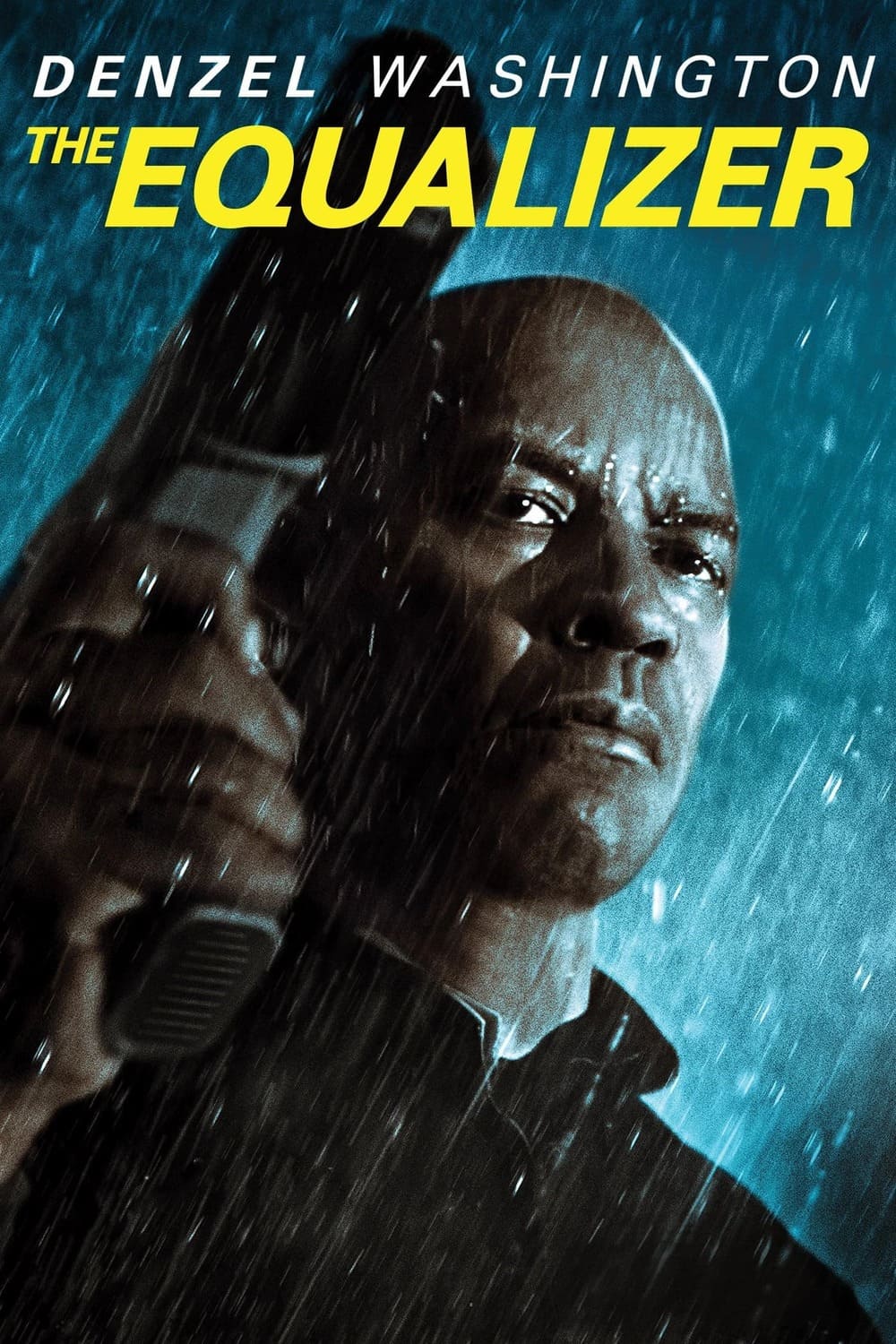
Review: The Equalizer (dir. by Antoine Fuqua)


“When you pray for rain, you gotta deal with the mud too.” — Robert McCall

Antoine Fuqua’s The Equalizer is a film remake of the original 1980s TV series that starred Edward Woodward in the title role, and it feels like a throwback to the gritty, no-nonsense action thrillers of that era, but with a modern polish that only a director like Fuqua can deliver. From the opening frame, you know you’re in for something that’s equal parts stylish and brutal, a film that doesn’t waste time with unnecessary fluff and instead gets straight to the point: justice, served cold and calculated. Denzel Washington plays Robert McCall, a man who looks like your average big-box store employee by day but transforms into a methodical, almost surgical force of retribution by night. The premise is simple—McCall can’t stand to see good people get hurt, and when the Russian mob pushes him too far, he snaps into action—but the execution is anything but.

Where Woodward’s McCall was a more cerebral, world-weary ex-intelligence officer who relied on wit and strategy as much as physical force, Denzel’s version is a man of few words who lets his actions do the talking. Woodward brought a melancholic, almost philosophical edge to the role, giving the original series a more introspective, morally ambiguous tone. Denzel, though, brings a quiet intensity that’s all about controlled fury, shifting the film’s tone toward something more visceral and immediate. It’s less about the internal struggle and more about the sheer efficiency of justice being delivered, which makes Fuqua’s version feel like a high-octane action thriller rather than a brooding character study. This difference in approach is key to why the movie works so well as a modern reboot—it keeps the spirit of the original while amping up the energy to match today’s action standards.

This version of The Equalizer stands out in how it balances its quiet, character-driven moments with explosive bursts of violence. Fuqua has always had a knack for action, but here he takes his time building tension, letting scenes breathe in a way that makes the eventual payoff feel earned. There’s a sequence early on where McCall takes apart a room full of Russian gangsters, and it’s not just the choreography that impresses—it’s the precision. Every movement has purpose, every strike is efficient, and the whole thing unfolds with a kind of balletic brutality. Washington sells it all with that signature calm intensity of his, the kind of performance where you’re never quite sure if he’s about to offer you a cup of tea or put you in the ground. His McCall is a man of discipline, a guy who’s clearly spent a lifetime honing his skills, and it shows in the way he carries himself, whether he’s reading a book in a diner or turning a hardware store into an improvised armory.

The story itself isn’t reinventing the wheel. It’s a classic revenge tale with a heavy dose of vigilante justice, but the devil’s in the details. McCall isn’t some invincible super-soldier; he’s a guy who’s smart, resourceful, and, above all, patient. He doesn’t rush into things. He plans, he observes, and when he finally makes his move, it’s with the kind of cold efficiency that makes you wince and cheer at the same time. The film’s villain, Teddy Rensen, played by Marton Csokas, is a solid antagonist—a slick, ruthless mob fixer who’s used to getting his way. Csokas brings a quiet menace to the role, and his dynamic with Washington crackles with tension, especially in their final confrontation, which is as much a battle of wits as it is a physical showdown.

Fuqua’s direction is a masterclass in pacing and atmosphere. He knows how to make even the simplest scenes feel charged with meaning. Take, for example, the way he frames McCall in his apartment, surrounded by mementos of a past life we only get glimpses of. There’s a sense of history there, a depth to the character that’s never explicitly spelled out but is always felt. And then there’s the action, which is shot with a clarity that’s refreshing in an era where so many directors rely on shaky cam and rapid cuts to hide their lack of choreography. Fuqua lets you see everything, and it makes the violence hit harder because of it. The climactic battle in the hardware store is a perfect example—it’s a long, unbroken take (or at least feels like one) that puts you right in the middle of the chaos, and it’s thrilling precisely because you can follow every punch, every improvised weapon, every desperate move.

The supporting cast does a great job of fleshing out the world around McCall. Chloe Grace Moretz plays Teri, the young prostitute who becomes the catalyst for McCall’s crusade, and she brings a vulnerability to the role that makes her more than just a damsel in distress. She’s tough, but she’s also broken, and Moretz nails that balance. Then there’s Harold, McCall’s coworker and only real friend, played by Bill Pullman. Their scenes together provide some much-needed levity, but they also serve as a reminder that McCall isn’t just a machine—he’s a human being with connections, however tenuous, to the world around him.

One of the things I like most about The Equalizer is how it doesn’t glorify violence so much as it treats it as a necessary evil. McCall doesn’t enjoy what he does; he does it because he feels he has to. There’s a fascinating psychological undercurrent to his conversations with Teri about the nature of the people who hurt others, specifically this idea that the cruel and corrupt always find a way to rationalize their monstrous actions. The film really explores this twisted logic where abusers and criminals somehow convince themselves they are actually the good guys, completely blind to their own wickedness. It cuts to the heart of the movie’s theme: that real justice isn’t always pretty, and sometimes the only way to stop a relentless villain is to step into the darkness and meet them on their own brutal terms. It’s a morally complex idea, and the film doesn’t shy away from it. McCall isn’t a hero in the traditional sense. He’s a man with a very particular set of skills, and he uses them to tip the scales in a world that’s heavily weighted toward the cruel and the powerful.

Visually, the film is stunning. Fuqua and his cinematographer, Mauro Fiore, make Boston feel like a character in its own right, all grimy streets and neon-lit alleys. The color palette is dark and moody, with pops of color—like the red of a taillight or the blue of a neon sign—that stand out in a way that feels almost painterly. And the score by Harry Gregson-Williams is the perfect complement, all pulsing synths and deep, ominous basslines that ratchet up the tension without ever feeling overbearing. It’s the kind of soundtrack that you don’t notice until it’s gone, and then you realize how much it was adding to the experience.

If there’s a downside to The Equalizer, it’s that the plot can feel a bit thin at times. The story is straightforward, almost to a fault, and there are moments where you wish it would delve a little deeper into McCall’s backstory or the larger implications of his actions. But then again, that’s not really what the movie is going for. This isn’t a sprawling epic; it’s a tight, focused thriller that’s more concerned with mood and atmosphere than with intricate plotting. And in that regard, it succeeds admirably. The film is lean, mean, and never boring, with a runtime that flies by because it’s so damn entertaining.

Denzel Washington, of course, is the glue that holds it all together. At this point in his career, he could probably read the phone book and make it compelling, but The Equalizer gives him a role that’s tailor-made for his strengths. McCall is a man of few words, but every line Washington delivers carries weight. Whether he’s calmly negotiating with a gangster or unleashing hell on a group of armed thugs, he commands the screen with an effortless charisma that’s hard to look away from. It’s the kind of performance that reminds you why he’s one of the greatest actors of his generation.

In the end, The Equalizer is a movie that knows exactly what it is and doesn’t apologize for it. It’s a violent, stylish, and endlessly watchable action thriller with a lead performance that elevates it above the usual fare. It doesn’t pretend to be anything more than it is, and that’s part of its charm. In a world where so many films try to be everything to everyone, The Equalizer is content to be a well-made, pulse-pounding revenge story—and it’s all the better for it. If you’re a fan of action movies that don’t skimp on the brains or the brawn, this one’s a must-watch. Just don’t be surprised if you find yourself rooting for a guy who’s technically a vigilante. After all, in a world this unfair, sometimes you need an equalizer.

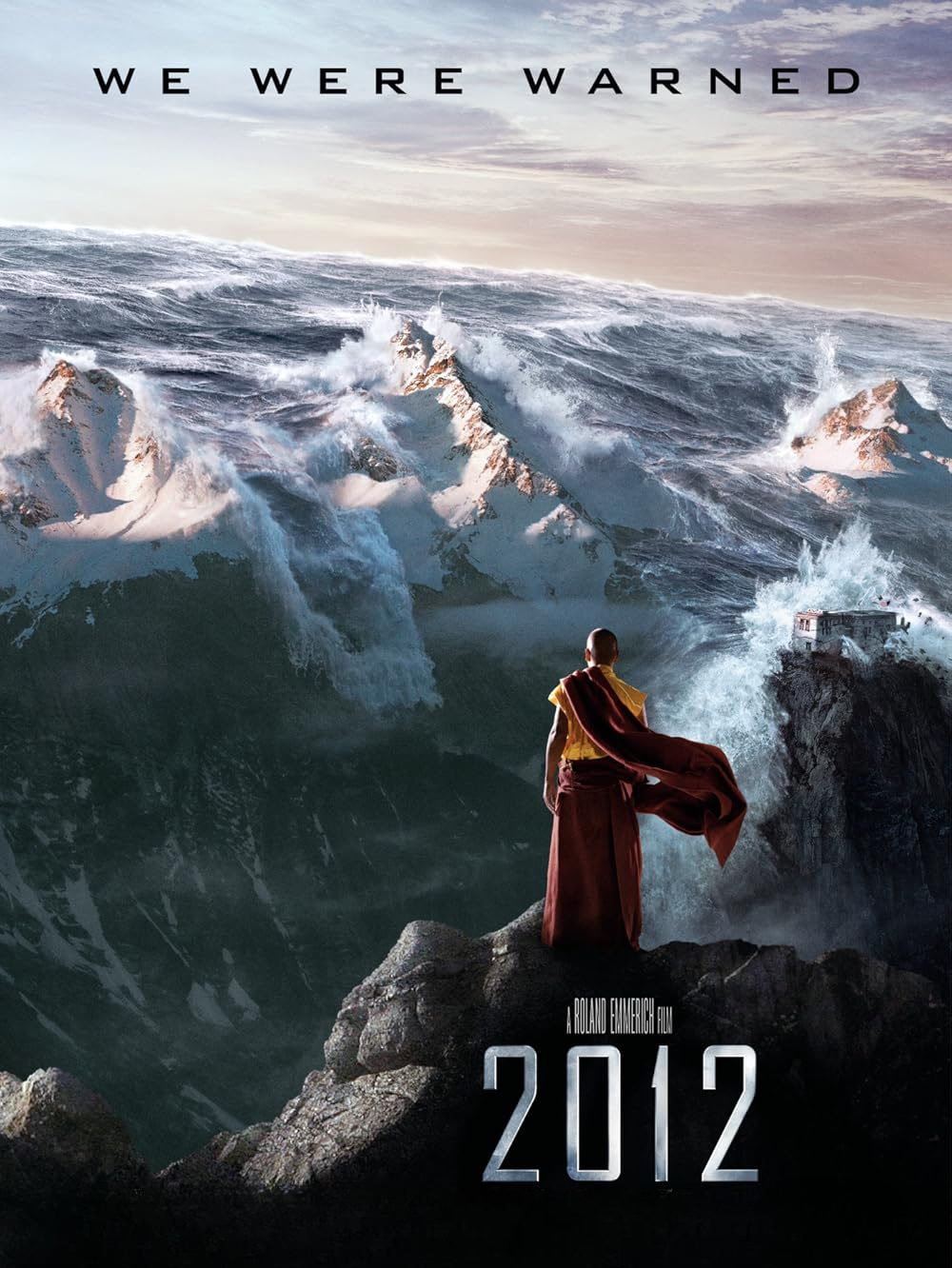
Guilty Pleasure No. 122: 2012 (dir. by Roland Emmerich)


Roland Emmerich has a reputation that precedes him, and it’s not exactly a glowing one. When his name pops up as the director of a new blockbuster, it’s easy to let out an audible groan. He’s not quite in the same league as Uwe Boll for sheer cinematic atrocities, but he gives Michael Bay a serious run for his money in the “most frustratingly inconsistent big-budget filmmaker” category. This is a guy who once showed real promise with cult sci-fi action flicks like Universal Soldier and Stargate, then hit his commercial and creative peak with the wildly entertaining Independence Day. But ever since that 1996 high point, Emmerich’s films have followed a disappointing trajectory, each one seemingly more bloated and less satisfying than the last. Godzilla was a mess. The Day After Tomorrow had its moments but collapsed under its own ridiculousness. So when 2012 rolled around in late 2009, expectations were, to put it mildly, low. Yet somehow, against all odds, Emmerich delivered his most purely enjoyable disaster flick since Independence Day—a film so gleefully, unapologetically over-the-top that it transcends its many, many flaws.

2012 takes the idea of apocalyptic cinema and cranks it up to eleven, then snaps the dial off and sets it on fire. The premise is simple: the Mayan calendar wasn’t just a quirky ancient artifact—it was a warning. The world, as we know it, is set to end in the year 2012, thanks to a series of cataclysmic events triggered by solar neutrinos heating up the Earth’s core. The film spends its first act methodically setting up this global doomsday through two very different perspectives. On one side, you’ve got Dr. Adrian Helmsley, played with quiet intensity by Chiwetel Ejiofor, a scientist who discovers the impending disaster and tries to warn world leaders. On the other, there’s Charlie Frost, a conspiracy theorist radio host played by Woody Harrelson with the kind of manic energy that suggests he might actually believe the world is ending—or at least that his next cup of coffee is. These early scenes are a mix of pseudo-science and doomsday preaching, but they serve their purpose: by the time the first real disaster strikes, you’re primed and ready for the chaos.

And oh, what chaos it is. 2012 isn’t just a disaster movie—it’s a full-blown disaster epic, a nearly three-hour spectacle of global annihilation that feels like Emmerich finally decided to stop holding back. This is a film where entire continents are reshaped, where cities crumble into the sea, and where billions of people meet their end in the most visually inventive ways possible. The destruction of Los Angeles is a particular standout, a sequence so relentless and well-executed that it’s hard not to watch with your jaw hanging open. John Cusack plays Jackson Curtis, a limousine driver and failed novelist who finds himself in the middle of the carnage while trying to pick up his kids from their mother’s new boyfriend’s mansion. As the ground literally splits open beneath him, Curtis has to outdrive an earthquake that’s turning the San Andreas Fault into a real-life game of Frogger. Buildings collapse, freeways pancake, and the entire city slides into the Pacific Ocean in a scene that’s as thrilling as it is absurd. It’s the kind of moment that defines 2012: completely ridiculous, yet undeniably impressive in its sheer audacity.

But Los Angeles is just the appetizer. From there, the film takes us on a world tour of destruction. Yellowstone National Park erupts in a supervolcano explosion that turns the American Midwest into a smoldering wasteland. Mega-tsunamis, some as tall as the Himalayas, crash over entire landmasses, swallowing cities whole. Air Force One gets caught in a pyroclastic flow. And through it all, Cusack’s everyman hero is trying to get his family to safety, which in this case means boarding one of the massive arks built by the world’s governments to preserve humanity—or at least the rich and well-connected. The arks, a last-ditch effort to save a sliver of civilization, become the film’s most fascinating and frustrating element. On one hand, they’re a clever narrative device, forcing the characters into a high-stakes race against time. On the other, they highlight the film’s most glaring ethical and logical inconsistencies. Why are only certain people allowed on board? How did they build these things in secret? And why does Danny Glover’s President Wilson, a man who seems perpetually one step behind the crisis, get to be the moral compass of the story? The answers, of course, are “because the plot demands it” and “who cares, look at that explosion!”

The cast of 2012 is what you’d charitably call an ensemble, though “B-list all-stars” might be more accurate. Cusack is fine as the reluctant hero, though he’s never fully convincing as a man who can outsmart the apocalypse. Amanda Peet plays his ex-wife, Kate, a woman so perpetually exasperated by her former husband that you wonder why she ever married him in the first place. Their kids, played by Liam James and Morgan Lily, are mostly there to scream and look terrified, which they do adequately. Chiwetel Ejiofor brings a much-needed dose of gravitas as the scientist trying to sound the alarm, though even he can’t sell some of the film’s more outlandish scientific explanations. Danny Glover’s President Wilson is… well, he’s Danny Glover as the President, which is about as convincing as it sounds. And then there’s Woody Harrelson, who steals every scene he’s in as Charlie Frost, the conspiracy theorist who may or may not be onto something. Harrelson’s performance is so delightfully unhinged that it almost makes you wish the film had focused more on his character and less on Cusack’s family drama.

And that’s the thing about 2012: the human elements are almost uniformly the weakest part of the film. The dialogue is often clunky, the character arcs are predictable, and the emotional beats frequently fall flat. But none of that matters because Emmerich and his team have crafted a film that’s so visually stunning, so relentlessly paced, and so committed to its own absurdity that you can’t help but get swept up in it. This is a movie that understands exactly what it is: a guilty pleasure, a spectacle, a chance to watch the world end in the most extravagant ways possible. It doesn’t ask you to think too hard or invest too deeply in its characters. It just asks you to sit back, grab some popcorn, and enjoy the ride. And on that front, 2012 delivers in spades.

What’s most impressive about 2012 is the sheer scale of its ambition. This isn’t a film content with destroying a single city or even a single country. Emmerich wants to tear down the entire planet, and he does so with a level of detail and creativity that’s hard not to admire. The visual effects are top-notch, and the film’s destruction sequences are some of the most memorable in the disaster genre. The mega-tsunami that crashes over the Himalayas is a particular highlight, a moment so awe-inspiring in its scope that it’s easy to forget you’re watching a movie that’s otherwise filled with groan-worthy dialogue and one-dimensional characters. And then there’s the final act, where the arks become the stage for a last-ditch effort to save humanity. The sequences aboard the ark are a mix of tension and spectacle, as the characters navigate the chaos of a world literally coming apart at the seams.

Of course, 2012 isn’t without its share of head-scratching moments. The science is, to put it kindly, questionable. The idea that solar neutrinos could heat up the Earth’s core to the point of global destruction is pure fantasy, and the film’s explanation for how the arks were built and funded is so flimsy it might as well not exist. The pacing, too, can be uneven. The first act drags a bit as it sets up the various plot threads, and the final act feels rushed, as if Emmerich realized he had to wrap things up before the runtime hit the three-hour mark. And then there’s the film’s tone, which can be wildly inconsistent. One moment, you’re watching billions of people die in horrific ways; the next, you’re supposed to laugh at a joke from one of the side characters. It’s a balancing act that doesn’t always work, but somehow, it doesn’t derail the film either.

At its core, 2012 is a throwback to the disaster movies of the 1970s, films like The Poseidon Adventure and The Towering Inferno that were more concerned with spectacle than substance. Those films were often criticized for their thin plots and wooden acting, but they endured because they delivered on the one thing that mattered: thrilling, large-scale destruction. 2012 is cut from the same cloth. It’s a film that knows its audience and knows exactly what they want. And what they want, it turns out, is to watch the world end in the most spectacular ways possible. In that sense, 2012 is a resounding success. It’s a bad movie, sure, but it’s a bad movie that’s an absolute blast to watch. It’s the kind of film you put on when you want to turn off your brain, crank up the volume, and lose yourself in the sheer, unadulterated joy of watching everything burn.

So, is 2012 a good film? By most traditional measures, no. The plot is silly, the characters are thin, and the dialogue is often laughable. But as a piece of pure, unfiltered disaster porn, it’s one of the best. Emmerich has always been a director who prioritizes spectacle over subtlety, and 2012 is the purest expression of that philosophy. It’s a film that doesn’t just meet expectations—it exceeds them, if only by virtue of its sheer, unrelenting ambition. And in a world where so many blockbusters feel like they’re playing it safe, there’s something refreshing about a movie that’s willing to go this big, this bold, and this unapologetically over-the-top. 2012 may not be high art, but it’s a hell of a lot of fun. And sometimes, that’s more than enough.

Previous Guilty Pleasures

  1. Half-Baked
  2. Save The Last Dance
  3. Every Rose Has Its Thorns
  4. The Jeremy Kyle Show
  5. Invasion USA
  6. The Golden Child
  7. Final Destination 2
  8. Paparazzi
  9. The Principal
  10. The Substitute
  11. Terror In The Family
  12. Pandorum
  13. Lambada
  14. Fear
  15. Cocktail
  16. Keep Off The Grass
  17. Girls, Girls, Girls
  18. Class
  19. Tart
  20. King Kong vs. Godzilla
  21. Hawk the Slayer
  22. Battle Beyond the Stars
  23. Meridian
  24. Walk of Shame
  25. From Justin To Kelly
  26. Project Greenlight
  27. Sex Decoy: Love Stings
  28. Swimfan
  29. On the Line
  30. Wolfen
  31. Hail Caesar!
  32. It’s So Cold In The D
  33. In the Mix
  34. Healed By Grace
  35. Valley of the Dolls
  36. The Legend of Billie Jean
  37. Death Wish
  38. Shipping Wars
  39. Ghost Whisperer
  40. Parking Wars
  41. The Dead Are After Me
  42. Harper’s Island
  43. The Resurrection of Gavin Stone
  44. Paranormal State
  45. Utopia
  46. Bar Rescue
  47. The Powers of Matthew Star
  48. Spiker
  49. Heavenly Bodies
  50. Maid in Manhattan
  51. Rage and Honor
  52. Saved By The Bell 3. 21 “No Hope With Dope”
  53. Happy Gilmore
  54. Solarbabies
  55. The Dawn of Correction
  56. Once You Understand
  57. The Voyeurs 
  58. Robot Jox
  59. Teen Wolf
  60. The Running Man
  61. Double Dragon
  62. Backtrack
  63. Julie and Jack
  64. Karate Warrior
  65. Invaders From Mars
  66. Cloverfield
  67. Aerobicide 
  68. Blood Harvest
  69. Shocking Dark
  70. Face The Truth
  71. Submerged
  72. The Canyons
  73. Days of Thunder
  74. Van Helsing
  75. The Night Comes for Us
  76. Code of Silence
  77. Captain Ron
  78. Armageddon
  79. Kate’s Secret
  80. Point Break
  81. The Replacements
  82. The Shadow
  83. Meteor
  84. Last Action Hero
  85. Attack of the Killer Tomatoes
  86. The Horror at 37,000 Feet
  87. The ‘Burbs
  88. Lifeforce
  89. Highschool of the Dead
  90. Ice Station Zebra
  91. No One Lives
  92. Brewster’s Millions
  93. Porky’s
  94. Revenge of the Nerds
  95. The Delta Force
  96. The Hidden
  97. Roller Boogie
  98. Raw Deal
  99. Death Merchant Series
  100. Ski Patrol
  101. The Executioner Series
  102. The Destroyer Series
  103. Private Teacher
  104. The Parker Series
  105. Ramba
  106. The Troubles of Janice
  107. Ironwood
  108. Interspecies Reviewers
  109. SST — Death Flight
  110. Undercover Brother
  111. Out for Justice
  112. Food Wars!
  113. Cherry
  114. Death Race
  115. The Beast Within
  116. Girl Series
  117. Gone in 60 Seconds
  118. Swordfish
  119. Marked For Death
  120. The Internship
  121. The Angry Red Planet

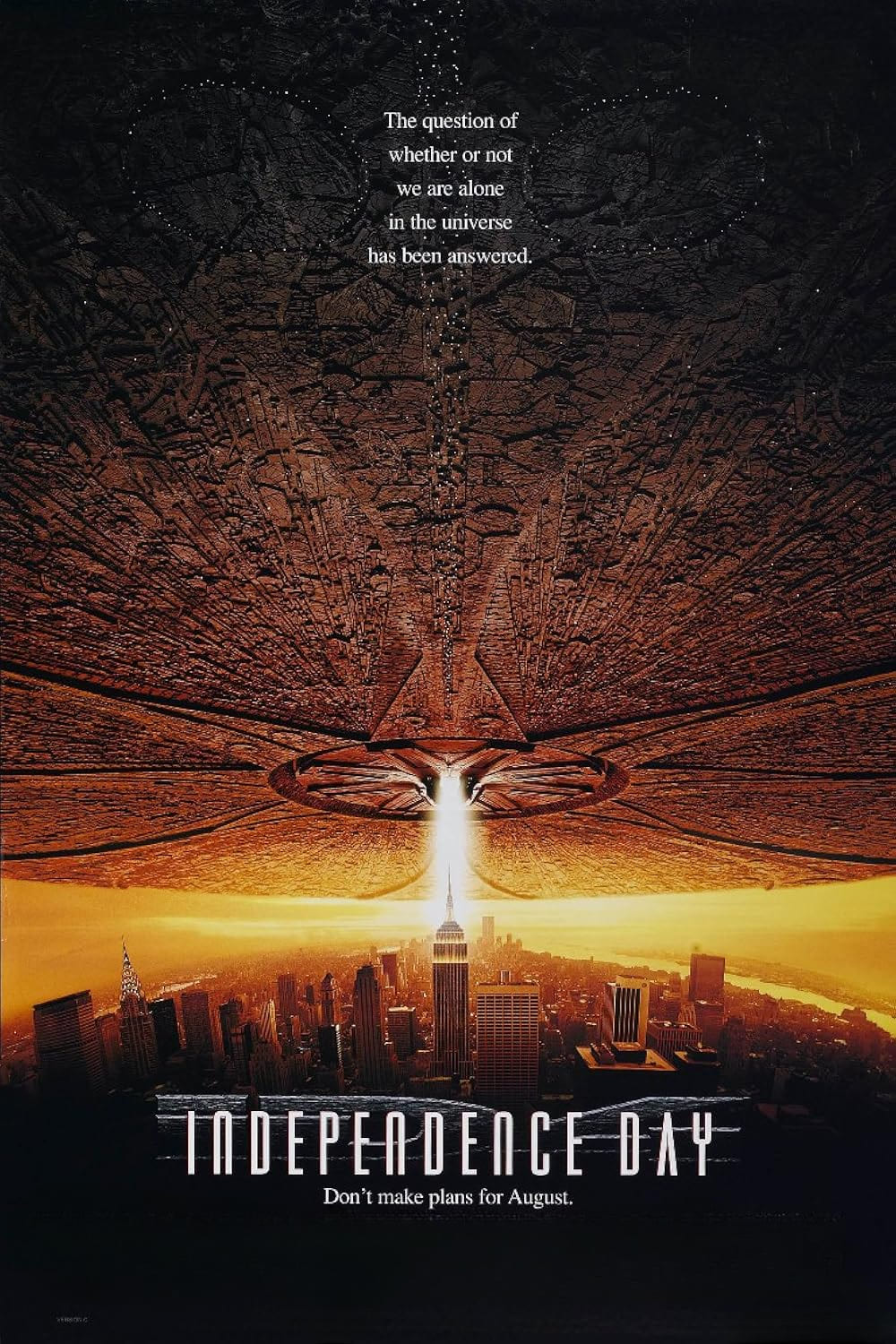
Review: Independence Day (dir. by Roland Emmerich)


“We will not go quietly into the night! We will not vanish without a fight! We’re going to live on! We’re going to survive! Today, we celebrate our Independence Day!” — President Whitmore

If you were around in the summer of 1996, you already know exactly where you were when you first saw the trailer for Independence Day. There was this massive shadow creeping over the moon, followed by that terrifying, booming sound effect, and then the White House just absolutely getting vaporized by a giant laser beam. It was a cultural moment. Director Roland Emmerich hadn’t really made his mark on Hollywood yet, but with this one movie, he essentially invented the modern summer blockbuster template of destroying famous global landmarks. Looking back at Independence Day almost three decades later, it is honestly wild how well this movie holds up, not as a piece of high art, but as a perfectly calibrated, ridiculously entertaining popcorn machine.

The premise is beautifully simple: massive alien spaceships suddenly appear over Earth’s major cities, they don’t come in peace, and humanity has to figure out how to fight back before we go the way of the dinosaurs. What makes the first act of the movie so effective is the slow build. Emmerich doesn’t just start with explosions; he lets the dread simmer. We see the massive ship hover over New York City, casting a shadow that blocks out the sun, and the sheer scale of the thing is awe-inspiring. Then, when the ships finally initiate their attack sequence, the payoff is spectacular. The practical effects combined with early CGI create these massive, rolling walls of fire that tear through iconic buildings. It is destructive poetry, and as a kid watching it, it was the most incredible thing I had ever seen. Even now, the destruction feels heavy and tactile in a way that modern, entirely computer-generated action sequences often don’t.

But a movie is only as good as its characters, and Independence Day has arguably one of the greatest ensemble casts of the 1990s. You have Will Smith playing Captain Steven Hiller, a fighter pilot who is desperately trying to get promoted while also dealing with his girlfriend, her son, and their dog. Smith is at the absolute peak of his early movie star charm here, delivering some of the most quotable one-liners in action movie history. Punching an alien in the face and yelling “Welcome to Earth!” is the kind of ridiculous machismo that only Smith could pull off without making you cringe. Then you have Jeff Goldblum as David Levinson, an MIT-educated cable repairman and environmentalist who figures out the alien signal is a countdown. Goldblum is basically doing his classic Goldblum thing—stuttering, eccentric, highly caffeinated—but it works perfectly because he serves as the perfect foil to Smith’s brute physicality.

The supporting cast is so deep that it feels like an Ocean’s Eleven of sci-fi tropes. Bill Pullman plays President Thomas J. Whitmore, and he gives the role an earnestness that elevates the material. He’s not an action hero; he’s a former fighter pilot who is clearly in over his head but steps up when his people need him most. You also have Judd Hirsch as Goldblum’s cranky, kvetching father, providing fantastic comic relief. Randy Quaid plays Russell Casse, a traumatized former pilot who was abducted by aliens years ago and is written off as a drunk by his small town, giving the movie an underdog storyline. And you can’t forget Brent Spiner as Dr. Okun, the wildly eccentric Area 51 scientist who gets way too excited about the alien biology. Every single one of these actors is fully committed to the bit, no matter how absurd the situation gets.

Now, if we are being completely honest, we have to talk about the plot, which is essentially held together with scotch tape and sheer willpower. The entire third act revolves around Goldblum and Smith flying a captured alien spacecraft up to the mothership to upload a computer virus using a 1996 Apple PowerBook. Yes, an Earth laptop somehow interfaces perfectly with an advanced extraterrestrial operating system, and yes, the aliens apparently don’t have McAfee, Norton or any kind of firewall to prevent a rudimentary human virus from crippling their entire defense grid. It is monumentally stupid if you think about it for even five seconds. But the secret to Independence Day is that it moves so fast and has so much momentum that you simply do not have time to care. The movie dares you to roll your eyes, but then it immediately distracts you with another massive explosion or a great quip from Will Smith, and you just go along for the ride.

The climax of the movie is a masterclass in cheesy, triumphant blockbuster filmmaking. Before the final aerial assault on the alien ships, President Whitmore gives a speech to the troops that has become completely ingrained in pop culture. “Today we celebrate our Independence Day!” he yells, and it is so incredibly corny, but I challenge you not to get at least a little bit pumped up when the music swells. The dogfight that follows is chaotic and thrilling, culminating in Randy Quaid’s character making the ultimate sacrifice by flying his jet directly into the alien weapon. It is exactly the kind of melodramatic, heroic moment that Emmerich excels at, and it hits the emotional beats it needs to hit, even if you saw it coming from a mile away.

You also have to appreciate how unapologetically intense the movie feels despite skating by with a PG-13 rating. People get vaporized, cities are leveled, and there is a genuine sense of apocalyptic dread that permeates the middle of the film. When the aliens first attack, Emmerich actually takes the time to show the aftermath, including cars blowing up in tunnels and people desperately trying to outrun the fireballs. Harvey Fierstein’s character dramatically dying while just sitting in his car, rolling up the window as if that’s going to stop a giant wall of alien fire, is a weirdly specific, dark comedy beat that you rarely see nowadays. The movie has real stakes, and you genuinely feel like humanity is on the brink of extinction.

It is crazy to think about the legacy of Independence Day and how it changed Hollywood. Before this, disaster movies were mostly relegated to B-movie status or Irwin Allen productions from the 1970s. Emmerich proved that you could blend disaster spectacle with sci-fi action and make an absolute fortune. This movie paved the way for Armageddon, Godzilla, The Day After Tomorrow, and essentially the entire concept of the modern cinematic destruction porn genre. They did eventually make a sequel, Independence Day: Resurgence, in 2016, but it completely missed the point of the original. It was too slick, too reliant on weightless CGI, and it lacked the ragtag, underdog charm that made the first one so special.

At the end of the day, Independence Day is just pure, unadulterated cinema comfort food. It does not demand anything from you as a viewer other than to sit back, suspend your disbelief, and enjoy the fireworks. It captures a very specific mid-90s vibe where movies could be big, dumb, loud, and incredibly fun without taking themselves too seriously. Roland Emmerich has directed a lot of movies since then where he has destroyed the world in various different ways, but he has never quite managed to capture the lightning in a bottle that he did here. Whenever the Fourth of July rolls around, or whenever you just need a reliable, edge-of-your-seat action movie to kill a couple of hours, Independence Day is always there, waiting to welcome you to Earth one more time.

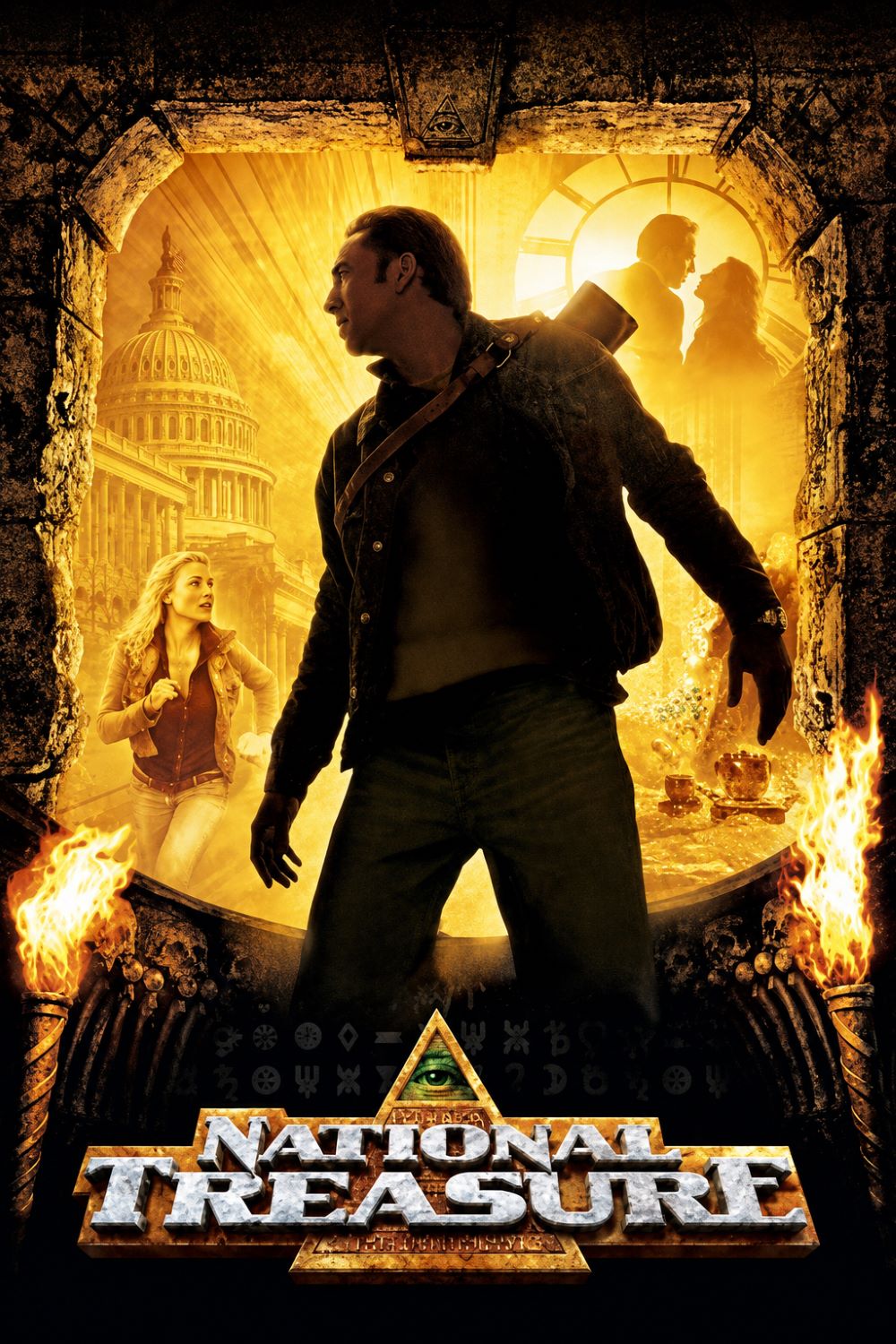
Review: National Treasure (dir. by John Turteltaub)


“If there’s something wrong, those who have the ability to take action have the responsibility to take action.” — Benjamin Gates

National Treasure directed by John Turteltaub is one of those movies that feels like a love letter to adventure, history, and a bit of old-fashioned treasure hunting. It’s the kind of film that doesn’t take itself too seriously but still manages to pull you in with its charm, puzzles, and non-stop action. At its heart, it’s a story about obsession, legacy, and the idea that history isn’t just something you read about in books—it’s something you can touch, chase, and maybe even uncover if you’re clever enough.

The movie kicks off with Benjamin Franklin Gates, played by Nicolas Cage in one of his most Nicolas Cage roles, as a historian and amateur treasure hunter convinced that a massive treasure hidden by the Freemasons and the Founding Fathers is real. The idea is wild: a secret stash of gold, artifacts, and historical riches hidden away to keep them out of the wrong hands. Most people, including his own father, think he’s nuts. But Ben’s got a lead, and when a rival treasure hunter, Ian Howe (played by Sean Bean), starts closing in on the same clues, the race is on. The stakes get higher when Ben realizes that if Howe finds the treasure first, it could mean disaster—not just for Ben’s reputation, but for history itself.

What makes National Treasure so much fun is how it blends history with a modern-day adventure. The film takes real historical figures and events—like the Declaration of Independence, the Liberty Bell, and the National Archives—and weaves them into a fictional but plausible treasure hunt. It’s the kind of movie that makes you want to dust off your old history textbooks or visit a museum the next day. The puzzles and clues are clever, even if they’re a little far-fetched. From invisible ink on the back of the Declaration to a series of riddles leading to the next location, the film keeps you guessing and engaged. And let’s be honest, who hasn’t daydreamed about finding a hidden message in a famous document or stumbling upon a secret that changes everything?

You really cannot talk about National Treasure without talking about Nicolas Cage. By 2004, Cage had already firmly established his reputation as an actor who brings a very specific, slightly unhinged energy to every role, and Benjamin Franklin Gates might be the perfect vessel for that energy. Ben is a nerd, but he is a nerd who somehow knows how to do parkour and execute complex heists. Cage plays him with this weird, endearing earnestness that anchors the movie. He delivers ridiculous lines about the Illuminati and secret tunnels with the gravity of a Shakespearean monologue, and it is hilarious, but it also makes you genuinely root for him. He never winks at the audience; he truly believes in the treasure, and that conviction pulls the whole thing together.

Of course, Cage cannot carry the entire movie on his own, and the supporting cast is surprisingly well-calibrated for this kind of ridiculous adventure. Justin Bartha plays Riley Poole, Ben’s tech-savvy sidekick who provides a running commentary of sarcastic quips. Bartha is essentially the audience surrogate, constantly pointing out how insane everything is, but he never gets annoying, which is a tough balancing act for a comic relief character in an action movie. Then there is Diane Kruger as Abigail Chase, an archivist at the National Archives who gets dragged into the chaos. Kruger does a great job of playing the exasperated straight woman to Cage’s eccentric history buff, and their chemistry is surprisingly charming, even if her character arc basically boils down to realizing that stealing national monuments is actually kind of fun.

On the villain side of things, we have Sean Bean as Ian Howe, and honestly, casting Sean Bean as a treasure-hunting bad guy is just a cheat code for making your movie better. Howe is a classic blockbuster villain—polished, ruthless, and driven entirely by greed—but Bean gives him just enough suave charm that he feels like a genuine threat rather than a cartoonish punching bag. Rounding out the main cast is Jon Voight as Ben’s estranged father, Patrick, and Christopher Plummer as his grandfather, John. Their inclusion adds a nice generational family drama to the story. The Gates family has been mocked for centuries for chasing this mythical treasure, and seeing Ben finally prove his father wrong adds a surprising amount of emotional weight to a movie that is otherwise about stealing the Declaration of Independence with a bunch of plastic ciphers.

John Turteltaub’s direction keeps the movie moving at a brisk pace. There’s never a dull moment, and the film balances its action sequences with quieter moments of discovery and problem-solving. The chase scenes, whether it’s through the streets of Washington D.C. or the tunnels beneath Philadelphia, are exciting without being over-the-top. The film also does a great job of making the historical elements feel tangible. When Ben and his team are examining a clue or piecing together a puzzle, you feel like you’re right there with them, trying to figure it out alongside them. It’s a testament to Turteltaub’s ability to make the implausible feel plausible, at least for the two hours you’re watching the movie.

Of course, National Treasure isn’t without its flaws. The plot does require a fair amount of suspension of disbelief. The idea that a treasure of this magnitude could stay hidden for centuries, or that Ben could outsmart everyone from the FBI to a team of professional thieves, is a stretch. And some of the historical liberties the film takes might make purists cringe. But that’s part of the fun. This isn’t a documentary—it’s a popcorn movie, and it embraces that wholeheartedly. The film also leans heavily on its twists and turns, some of which you might see coming a mile away. But even when you can predict what’s going to happen next, it’s still entertaining to watch it unfold.

What really stands out about National Treasure is its sense of wonder. It’s a movie that reminds you of the joy of discovery, whether it’s uncovering a hidden clue or simply learning something new about the world. The film’s climax, set in a secret underground chamber, is a perfect example of this. Without giving too much away, it’s a moment that feels both epic and intimate, a payoff for all the hard work and dedication Ben has put into his quest. And while the treasure itself might not be what you expect, the journey to find it is what makes the movie so satisfying.

In the end, National Treasure is a film that’s easy to enjoy. It’s got action, humor, history, and heart, all wrapped up in a package that’s as entertaining as it is lighthearted. It’s the kind of movie you can watch on a lazy Sunday afternoon and come away from feeling like you’ve been on an adventure yourself. Sure, it might not be high art, but it doesn’t need to be. Sometimes, a great story, a little bit of mystery, and a lot of fun are all you need. And National Treasure delivers on all three. If you’re a fan of adventure films, history buffs, or just love a good treasure hunt, this one’s for you. Just don’t be surprised if you find yourself Googling Freemason symbols or the history of the Declaration of Independence afterward.

Review: Sabotage (dir. by David Ayer)


“Ammo’s cheap, my life ain’t.” — Joe “Grinder” Phillips

Watching Sabotage, the 2014 David Ayer action-thriller, is a bit like finding a beautiful, high-performance sports car that’s been stripped for parts. It’s got a shiny exterior in Arnold Schwarzenegger, a director known for gritty cop dramas, and a promising cast, but under the hood, the engine is sputtering and the chassis is held together with duct tape and questionable intentions. The film is a strange, often unpleasant beast that seems unsure if it wants to be a complex whodunit, a grim torture-porn horror flick, or a simple action vehicle for its aging star. In trying to be all of them, it mostly succeeds at being a confusing, albeit fascinating, mess.

The film starts with a classic set-up that reeks of potential. Schwarzenegger plays John “Breacher” Wharton, the leader of an elite and ruthless DEA task force. During a cartel raid, the team decides to skim $10 million in cash from the seizure for themselves. Their plan backfires when they go to retrieve the hidden money and find it gone. This creates a perfect powder keg of suspicion and paranoia. While they’re all investigated, no one is charged, and they are put back into action. The plot kicks into high gear when members of the team start getting picked off one by one in increasingly gruesome and inventive ways. Now, Breacher has to find out who is hunting his team, while simultaneously being haunted by a dark secret from his past.

The mystery is clearly meant to be a bloody, modern interpretation of a classic “stranded and hunted” thriller formula. The problem is, the “whodunit” aspect falls flat because the story is just too messy to build any real suspense. The characters are an indistinguishable mass of nicknames like “Monster” (Sam Worthington), “Grinder” (Joe Manganiello), and “Sugar” (Terrence Howard), making it difficult to keep track of who is who, let alone care when they meet their grisly end. The film gives you little reason to invest in them, as they are an intentionally unlikable bunch of thugs who treat civilians with contempt, break the law without a second thought, and generally act like cartoon villains with badges. When a character is killed off, it’s often not a shocking, gut-wrenching twist, but more of a shrug: “Oh, that guy’s gone now.” The plot becomes less about solving a puzzle and more about waiting for the next spectacularly bloody demise.

And those demises are where David Ayer’s direction makes its most “memorable” impact. The violence in Sabotage is not your typical Schwarzenegger shoot-’em-up. It is unflinchingly brutal and hyper-realistic, leaning heavily into the kind of gruesome, elaborate set-pieces that feel borrowed from the horror genre. We’re not talking about clean, one-shot kills; we’re talking about brutal, drawn-out murders involving trains, industrial equipment, and a staggering amount of viscera. The camera lingers on open wounds, bodies nailed to ceilings, and the general gory aftermath of each death with a kind of morbid fascination. The film’s obsession with gore is relentless. It even opens with a scene of Breacher watching a video of his family being tortured, setting a grim, nasty tone that never quite lets up. It feels like Ayer is trying to show the brutal, unglamorous reality of violence, but it quickly crosses the line into exploitation, making the film a punishing watch for anyone not specifically seeking out that level of graphic brutality.

The cast is a mixed bag, and it’s one of the more interesting paradoxes of the film. Schwarzenegger, despite being the star, is a strange fit for this material. Critics noted that he seems to be trying to give a more “dark and complex performance,” mining reserves of darkness he rarely accesses. However, the movie around him doesn’t quite support that ambition. He’s still “Arnold,” and his innate charisma and larger-than-life persona often clash with the grim, nasty world Ayer has created. His presence is too big for the bleak mundanity the movie is striving for, creating a constant tension between the action hero audiences expect and the broken, haunted man the script demands. In stark contrast, it was the supporting female cast that often stole the show. Mireille Enos delivers a truly fearless and unhinged performance as Lizzy, the team’s drug-addicted female member, bringing a level of manic energy that is genuinely engaging. Olivia Williams, as the no-nonsense homicide detective Caroline Brentwood, is also a standout. She plays the “only sane person in the room” with an air of world-weary professionalism that feels like it belongs in a better movie. But even her character is dragged into the muck, with a strange and unnecessary romance that feels forced and out of place.

It’s almost impossible to discuss Sabotage without talking about the tone. The film is relentlessly cynical, presenting a world where the line between law enforcement and the cartels is practically non-existent. Ayer, who has explored the dark side of law enforcement in previous work, seems to be asking a bold question here: what happens when cops are worse than the criminals? The answer, according to the film, is a lot of violence and a total lack of moral compass. This cynical view is further dragged down by a barrage of cheap, sophomoric humor. The script is peppered with scatological jokes, crude sexual banter, and homophobic slurs that feel less like “gritty realism” and more like the writers are trying to be edgy just for the sake of it. This creates a bizarre, off-putting atmosphere where the dark, philosophical musings about corruption are undercut by a high-school-level obsession with bodily functions, making the whole experience feel awkward and juvenile.

In the end, Sabotage is a textbook example of a movie that is sabotaged by its own ambitions. It boasts a director with a distinctive style for crime stories, a legendary action star trying something different, and a cast full of talented actors. Yet, it’s ultimately sunk by a script that can’t balance its whodunit premise with its over-the-top gore, and a tone that can’t decide if it’s a serious crime drama or a nasty, nihilistic joke. It’s not boring, and you can’t say Ayer didn’t try something different with the action genre, but the result is an ugly, mean-spirited, and often just plain unpleasant film. For a fascinating look at what happens when a good idea goes horribly off the rails, Sabotage is a case study in wasted potential. But for a good movie? You’ll want to look elsewhere.