Review: Under Paris (dir. by Xavier Gens)


“It is not the strongest of the species that survives, nor the most intelligent, it is the one that is most adaptable to change.” — Sophia

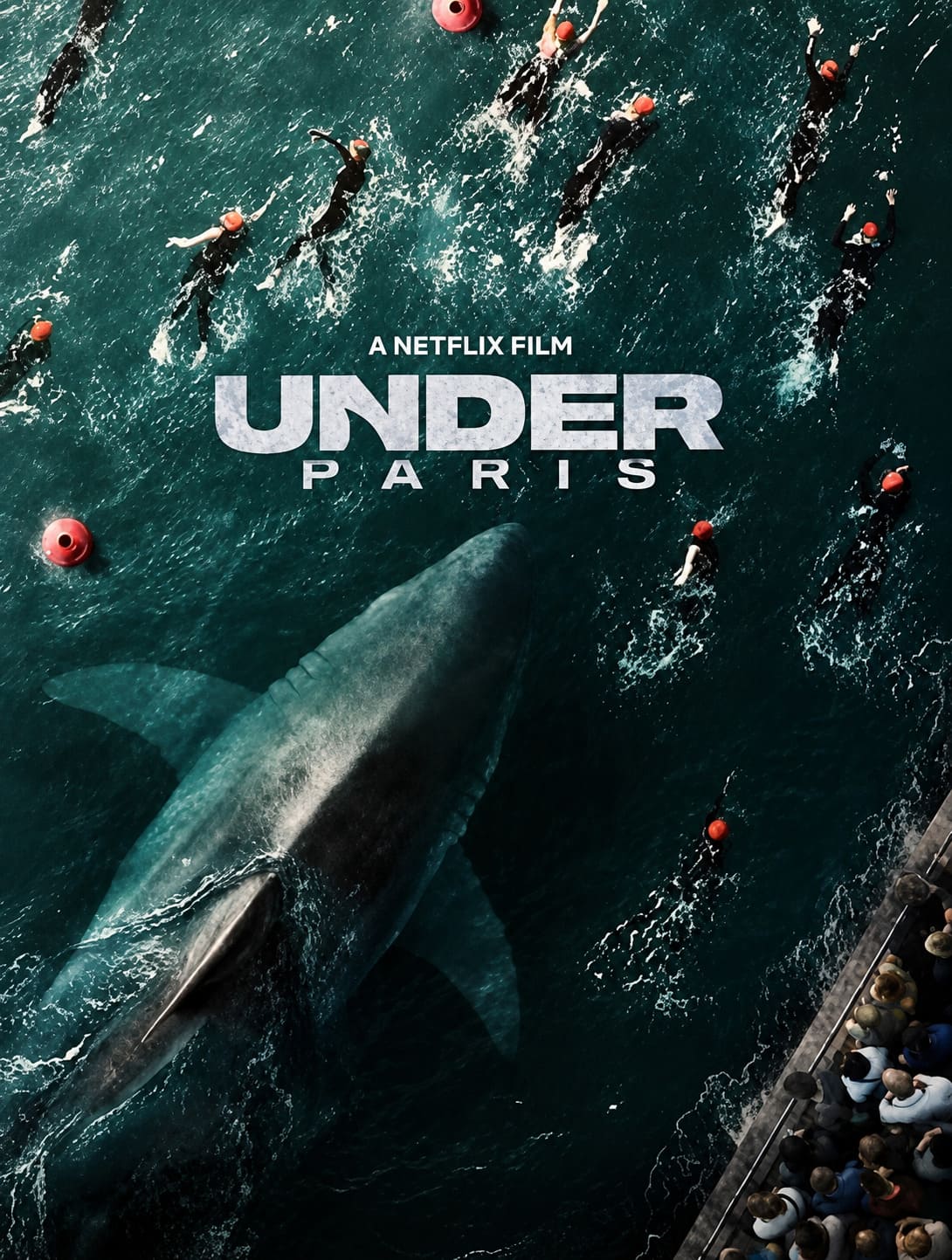
Under Paris is one of those movies that grabs you by the throat and doesn’t let go—literally, in this case. Directed by Xavier Gens, the mind behind gritty, high-octane thrillers like Frontier(s) and The Divide, this creature feature dives headfirst into the claustrophobic nightmares lurking beneath the City of Light. And let me tell you, if you’ve ever romanticized the Parisian catacombs, this film will cure you of that real quick.

The story kicks off with a team of scientists exploring the unexplored tunnels under Paris, only to stumble upon something that definitely shouldn’t exist. What starts as a routine expedition turns into a fight for survival when they realize they’re not alone down there. The creatures in question are blind, feral, and terrifyingly fast, with a taste for human flesh. It’s The Descent meets Tremors, but with a distinctly French flair. The film wastes no time setting up its premise, throwing the audience into the dark, cramped corridors where every shadow could be a predator. The tension is palpable from the jump, and Gens doesn’t bother with slow-burn scares—this is a full-throttle horror ride.

What makes Under Paris stand out is its commitment to practicality. The creatures are brought to life with a mix of practical effects and CGI, and for the most part, it works. The designs are grotesque yet believable, with elongated limbs, jagged teeth, and a primal way of moving that makes them feel like something out of a nightmare. The practical effects, in particular, give the creatures a tangible weight that CGI alone often struggles to achieve. When they’re on screen, you believe they’re real, and that’s half the battle in a monster movie. The sound design deserves a shoutout too—the way the creatures communicate through clicks and hisses is unsettling in the best way, adding to the immersive dread.

The characters are, admittedly, a mixed bag. The cast is led by a group of scientists and urban explorers, each with their own quirks and backstories, but the film doesn’t spend much time fleshing them out. This is a survival horror flick, not a character study, so don’t expect deep emotional arcs. That said, the actors do a solid job with what they’re given. The standout is probably the team’s leader, whose growing desperation as the situation spirals out of control feels authentic. There’s also a refreshing lack of the usual horror-movie stupidity—most of the characters make decisions that, while not always smart, at least feel human. They panic, they argue, they try to rationalize the irrational, and it makes their plight all the more relatable.

The setting is a character in its own right. The labyrinthine tunnels under Paris are a horror fan’s dream—narrow, dimly lit, and filled with the kind of eerie silence that makes every distant noise sound like a death sentence. Gens and his cinematographer make the most of the claustrophobic environment, using tight camera angles and rapid cuts to keep the audience on edge. There’s a sequence early on where the team’s headlamps flicker, plunging them (and us) into total darkness, and it’s a masterclass in building tension without relying on jump scares. The film also does a great job of playing with sound, or the lack thereof. In the quiet moments, all you hear is the characters’ ragged breathing and the distant, unsettling skittering of something inhuman.

If Under Paris has a weakness, it’s that it doesn’t always know when to slow down. The pacing is breakneck, which works for the most part, but there are moments where a little breathing room would’ve helped. Some of the CGI, particularly in the wider shots, can look a bit rough, though it’s never bad enough to pull you out of the movie. And while the creatures are terrifying, their backstory is a bit thin. The film hints at a larger mythology—something about evolution and isolation—but it’s never fully explored. That’s not necessarily a dealbreaker, but it does leave you with a few unanswered questions.

All that said, Under Paris delivers exactly what it promises: a tense, visceral, and often downright terrifying descent into madness. It’s a film that understands the assignment—give the audience scares, gore, and a sense of dread that lingers long after the credits roll. Gens has a knack for blending horror with social commentary, and while Under Paris doesn’t dive as deep into the latter as some of his other work, it’s still there in the margins. The idea of something monstrous lurking beneath the surface of one of the world’s most romanticized cities is a potent one, and the film doesn’t shy away from the metaphorical implications.

In the end, Under Paris is a must-watch for horror fans, especially those who appreciate their scares with a side of action. It’s not a perfect movie, but it’s a damn effective one. It’s the kind of film you’ll want to watch with the lights off, the volume up, and maybe a friend or two to clutch onto when things get really intense. And trust me, they do. Xavier Gens has crafted a creature feature that’s as brutal as it is brilliant, and it’s a testament to his skill as a director that, even in the darkest, most chaotic moments, you’re never quite sure what’s going to happen next. Just don’t blame me if you start side-eying manhole covers after this one.
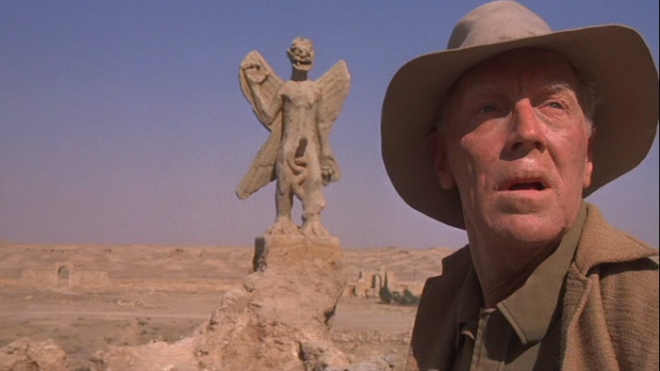
4 Shots From 4 Films: Kwaidan, Minority Report, La Horde, The Exorcist


A new feature that I thought was a nice way to introduce not just our readers, but also fellow site writers to some films we love, admire and think worthy of checking out.

It won’t be any sort of review or recap of what the film is about, but just a simple, single shot from the film itself that the individual writer considers an worthy and interesting glimpse of the film.

To start off “4 Shots From 4 Films” here’s the first 4 shots. Moving forward it will be just 4 screenshots and the title of the film they belong to.

4 SHOTS FROM 4 FILMS

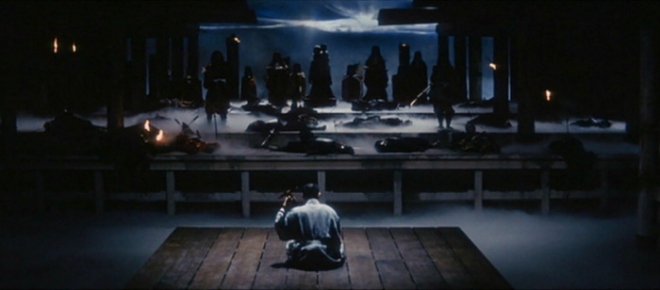
Kwaidan

Kwaidan (dir. by Masaki Kobayashi – 1964)

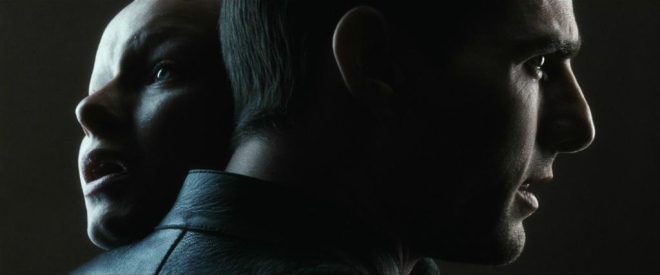
MinorityReport

Minority Report (dir. by Steven Spielberg – 2002)

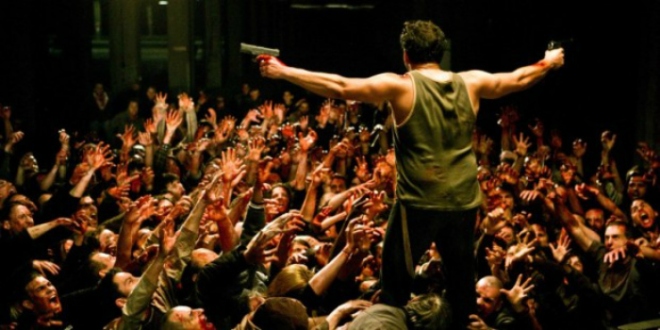
Horror Scenes I Love: La Horde


[spoilers]

I know, I know. Another zombie-related post. Well, if you’ve been visiting the site enough these past three years or so then you’d realize by now that this site loves it’s zombies. Well, not love in that way, but in the “what would I do if put in the middle of the zombie apocalypse” type deal. Call it the American trait of self-reliance and stubbornness in the face of overwhelming odds. Also, this love for the zombie apocalypse seem to stem for the fact that as a society we Americans seem to be very apocalypse-obsessed.

Well, enough of that and time to get on the latest horror-themed “Scenes I Love” entry. This time around it comes courtesy of the very awesome French zombie film La Horde from 2008. This particular scene arrives very close to the end of the film so it’s going to be spoiler-heavy. So, being warned now to either watch the clip and be spoiled by the fate of a certain character or watch the film first and relive just how awesome this scene is the second time around.

The scene is just something that we as fans of the zombie apocalypse hope to go out doing if the end is near. No crying in the corner pleading at something that has no emotions. No cowardly act killing oneself before the shambling (or in the case of this film they’re sprinting like Usain Bolt) gets to them. This is the scene that shouts to the Gods in their heavenly thrones to watch how a true warrior dies. Not with a cry and whimper but with a shout of defiance and scream of bloodlust and frenzy to rival those trying to kill you.

As the video’s title succinctly proclaims: “Going out like a BOSS!”

Review: La Horde (dir. by Benjamin Rocher and Yannick Dahan)


“When the dead come for you, there’s no place left to run.”

Most zombie films tend to be average at best, often falling into outright mediocrity. Because this subgenre is relatively easy to create, many aspiring filmmakers believe they can produce the next standout hit with just an HD camera, a modest budget, and a cast drawn from friends and family. Naturally, this formula has led most zombie movies to occupy the low end of the horror genre in terms of quality. However, every so often, a truly exceptional film emerges. Edgar Wright’s Shaun of the Dead became an instant classic by blending horror with comedy, and Zack Snyder’s remake of Romero’s Dawn of the Dead delivered intense, action-packed thrills.

The 2009 French horror film La Horde—directed by Benjamin Rocher and Yannick Dahan—leans toward Snyder’s style. It strips away societal commentary, opting instead for raw action and relentless gore. This might suggest a mindless movie, but La Horde proves to be as engaging and nihilistic as Snyder’s film, perhaps even more so by its conclusion.

The directors spare no time on exposition, diving straight into the plot. The story follows a group of French police officers—most likely narcotics agents—who plan to take revenge on a Nigerian crime lord responsible for killing one of their own. Their chosen battlefield is a dilapidated high-rise apartment complex in a crime-infested district of Paris. However, their operation quickly unravels when the ambush goes disastrously wrong. What begins as a gritty crime thriller transforms abruptly into an apocalyptic battle for survival, as the police and rival gang members are forced to join forces against a sudden zombie outbreak sweeping through Paris and possibly beyond.

Once the zombies arrive, the film shifts into high gear. The action and gore come fast and furious, skillfully choreographed and unflinching. Secondary characters are swiftly dispatched, leaving only the most capable to fight their way through a tenement overrun by fast, aggressive zombies akin to those in Snyder’s Dawn of the Dead or Boyle’s 28 Days Later. Though some purists might balk at sprinting zombies, they fit perfectly with the film’s frantic pace. Notably, the film does not attempt to explain the outbreak’s origin, leaving audiences as disoriented as the characters, glimpsing only fragmented news reports for context.

The remainder of the film is an intense descent through the building, with the survivors battling floor by floor in search of an exit and safety at a nearby military base. Choosing characters familiar with violence—cops, criminals, and a hardened local survivor—grounds their fierce will to survive in realism. Even the lone resident they encounter brings useful skills born from a violent past.

While La Horde does not offer complex character development, its finely tuned action scenes keep the audience fully engaged, masking the story’s simplicity. By the film’s end, viewers are likely to forgive any flaws, having been thoroughly entertained. A few characters, such as the composed officer Oussme (Jean-Pierre Martins) and the crime lord Markudi (Eriq Ebouaney), achieve extra depth, but most are archetypes serving the survival narrative. Still, this works well given the film’s focus on high-stakes survival.

Though La Horde never secured a major U.S. release, it gained attention on the international genre festival circuit starting in 2010. While it may primarily appeal to zombie and horror aficionados, it also offers plenty for action fans. Its brutal, relentless energy earns it a strong recommendation as an exhilarating experience from start to finish.