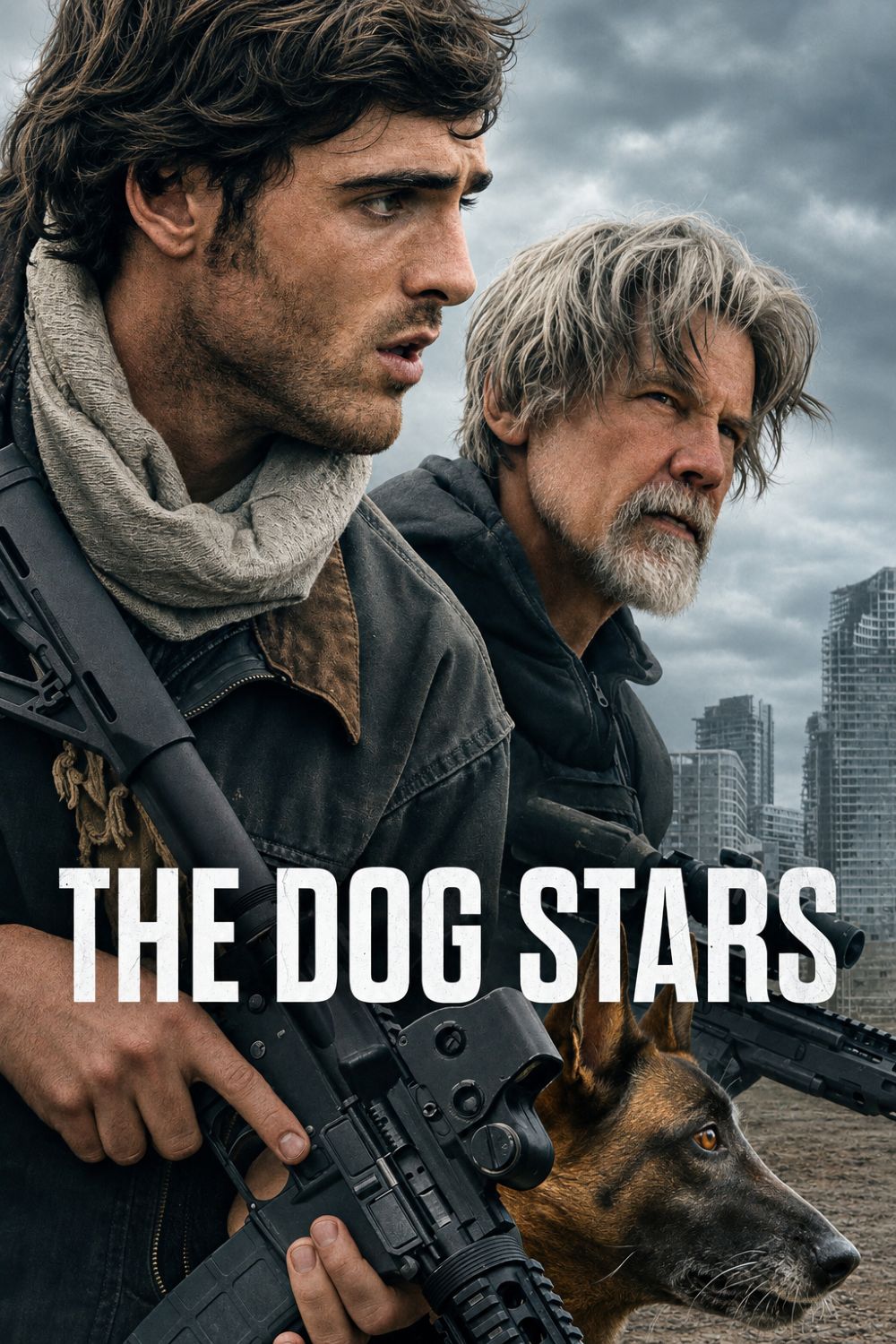
Film Review: The Dog Stars (dir. by Ridley Scott)


“This world fits you, Bangley. Wake up, defend, survive.” — Hig

Ridley Scott’s The Dog Stars has the scenery of an epic and the energy of someone still deciding whether to get out of bed. There is something potentially compelling about that mismatch: the world has ended, the survivors are exhausted, and being alive no longer means having much to live for. But Scott leans so heavily into melancholy that the film gradually becomes underwhelming. Even when violence interrupts the quiet, it rarely shakes the movie out of its mournful drift. What should feel like a journey through a frightening new world often plays more like a post-apocalyptic travelog, with beautiful views and occasional armed interruptions.

Adapted by screenwriter Mark L. Smith from Peter Heller’s 2012 novel The Dog Stars, the film follows Hig, played by Jacob Elordi, a pilot and mechanic living in Colorado after a pandemic has wiped out most of humanity. His wife is gone, and his remaining companions are his dog, Jasper, and Bangley, a heavily armed former military man played by Josh Brolin. Together, they occupy an abandoned airfield, where practical survival has replaced anything resembling a normal life. Hig eventually follows the possibility of a radio transmission toward other survivors, hoping there might be something beyond the routine of scavenging and keeping strangers at gunpoint.

That setup gives the film a useful emotional conflict. Bangley considers their arrangement a success because they have food, shelter, weapons, and a defensible position. Hig sees the same situation as a slower version of dying. Brolin’s hardened survivor and Elordi’s wounded optimist represent two different responses to catastrophe: shut everyone out, or risk getting hurt by reaching for someone. The problem is that the movie makes this contrast clear fairly early and then struggles to deepen it. Hig’s dissatisfaction supplies a reason to leave, but Scott’s languid treatment makes the journey feel less urgent than the decision behind it ought to be.

Elordi fits the film’s mood, giving Hig the presence of someone carrying grief through every ordinary task. His youth also makes the character’s emotional exhaustion potentially affecting: this is a man who should have decades ahead of him but cannot imagine what those years would contain. Still, the movie relies too much on the appeal of a handsome, sorrowful figure moving through picturesque emptiness. There is a difference between showing a character who feels hollow and allowing that hollowness to become the film’s dominant dramatic quality. Too often, Hig’s sadness is the atmosphere rather than something the story meaningfully tests.

Visually, Scott certainly understands the attraction of a world that has started growing over humanity’s leftovers. The landscapes are expansive, and the production uses Italian locations to stand in for Colorado, with the Dolomites taking the place of the Rockies. Yet the beauty creates its own problem. The more inviting the countryside becomes, the harder the film has to work to make its underlying danger feel immediate. Scott keeps reaching for the scale of an epic, but scale alone cannot make a succession of lonely vistas emotionally expansive. Sometimes the apocalypse looks less like a catastrophe than an unusually exclusive outdoor getaway.

There is also the unavoidable resemblance to HBO’s The Last of Us. The overgrowth, decaying infrastructure, wary survivors, and uneasy movement through abandoned spaces belong to a familiar visual vocabulary by now. The Dog Stars seems eager to exploit the appeal of that look without finding enough fresh perspective to make it distinctive. That is an aesthetic criticism, not a claim that Scott literally copied the series; Heller’s novel has its own history. But the film arrives in a crowded genre, and its lush decay too often prompts recognition rather than discovery. You know the scenery, and you can usually guess the emotional weather.

The violence should complicate that prettiness, and occasionally it does. Raiders and hostile survivors puncture Hig’s wandering with reminders that an empty world is not necessarily a peaceful one. But these bursts of brutality often feel like interruptions rather than pressure building naturally inside the story. Scott alternates reflective stretches with sudden threats, yet the two modes do not consistently strengthen each other. The action briefly wakes the movie up, then the prevailing sadness settles back into place. Instead of making the quieter passages more tense, the attacks can feel like scheduled reminders that this is still supposed to be a dangerous survival thriller.

The arrival of Margaret Qualley’s Cima, a widow living with her protective father, played by Guy Pearce, gives the film a more intimate direction. Hig’s search stops being purely geographical and becomes a question of whether he can permit himself another attachment. There is a genuinely appealing idea here: after civilization collapses, rebuilding might begin with something as small as admitting what you miss. A scene involving remembered pleasures and the rediscovery of recorded music points toward a warmer, more specific film. These moments work because they give loss a recognizable shape rather than treating sadness as a general condition.

Unfortunately, the tenderness never fully resolves the film’s unevenness. Its late detour involving Allison Janney pushes toward a much stranger, more extravagant register, making the surrounding restraint feel even more conspicuous. A movie can certainly contain romance, grief, savage violence, and grotesque eccentricity, but those elements need a stronger dramatic connection than they receive here. Harry Gregson-Williams’s acoustic guitar-laden score reinforces the reflective mood, though that gentleness also contributes to the sense that the film is cushioning experiences that should leave sharper marks. Scott wants contemplation and danger to coexist; too often, they simply take turns.

What makes The Dog Stars frustrating is not its refusal to turn the apocalypse into nonstop combat. Its interest in companionship, grief, and the possibility of hope is welcome. The disappointment is that Scott gives those ideas such a uniformly subdued treatment that they lose force. This should be a story about discovering reasons to live in a world organized around staying alive. Instead, it too often settles for attractive desolation, familiar threats, and sadness presented as depth. There are touching moments and striking landscapes along the way, but the journey promises a greater emotional destination than it finally reaches.
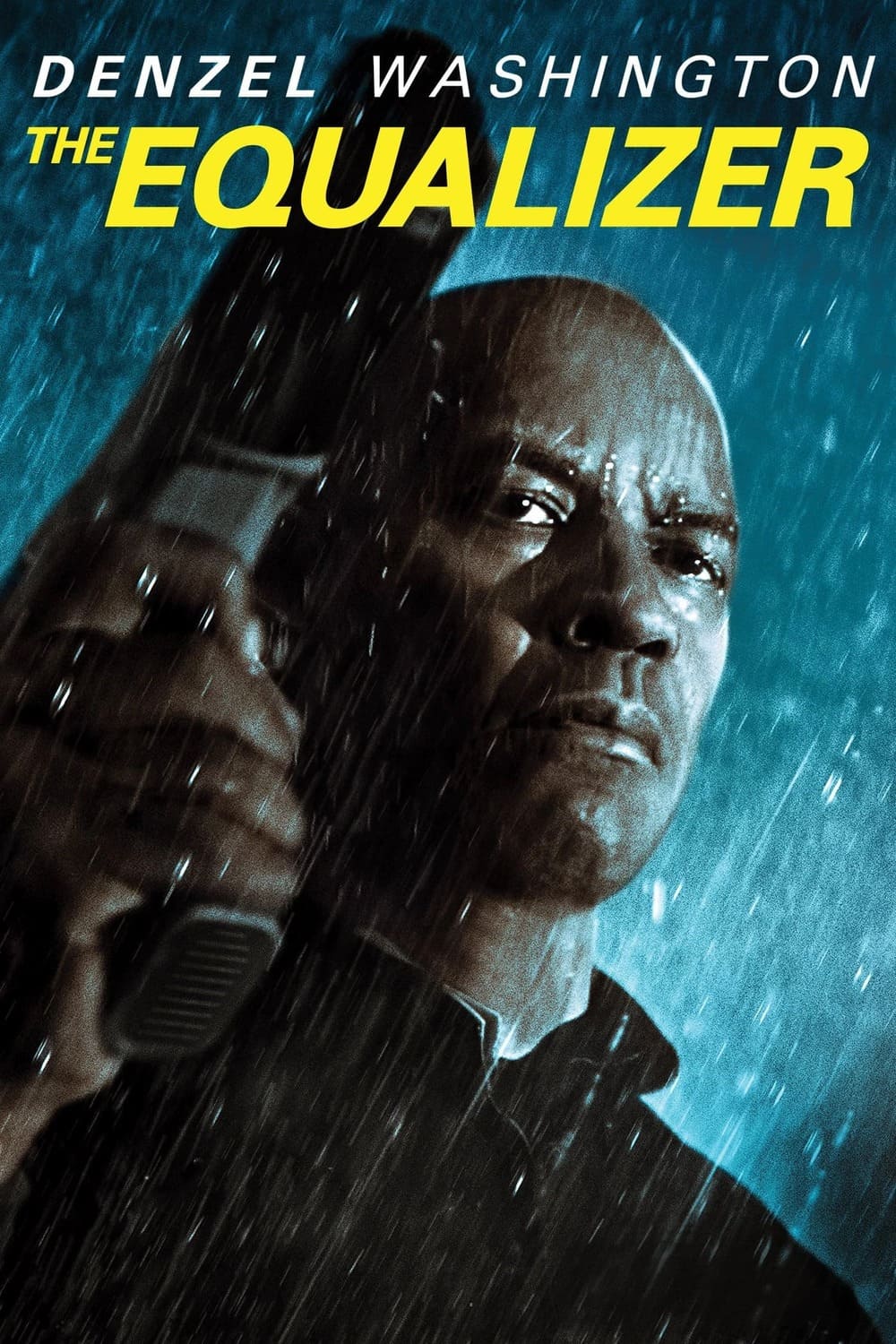
Review: The Equalizer (dir. by Antoine Fuqua)


“When you pray for rain, you gotta deal with the mud too.” — Robert McCall

Antoine Fuqua’s The Equalizer is a film remake of the original 1980s TV series that starred Edward Woodward in the title role, and it feels like a throwback to the gritty, no-nonsense action thrillers of that era, but with a modern polish that only a director like Fuqua can deliver. From the opening frame, you know you’re in for something that’s equal parts stylish and brutal, a film that doesn’t waste time with unnecessary fluff and instead gets straight to the point: justice, served cold and calculated. Denzel Washington plays Robert McCall, a man who looks like your average big-box store employee by day but transforms into a methodical, almost surgical force of retribution by night. The premise is simple—McCall can’t stand to see good people get hurt, and when the Russian mob pushes him too far, he snaps into action—but the execution is anything but.

Where Woodward’s McCall was a more cerebral, world-weary ex-intelligence officer who relied on wit and strategy as much as physical force, Denzel’s version is a man of few words who lets his actions do the talking. Woodward brought a melancholic, almost philosophical edge to the role, giving the original series a more introspective, morally ambiguous tone. Denzel, though, brings a quiet intensity that’s all about controlled fury, shifting the film’s tone toward something more visceral and immediate. It’s less about the internal struggle and more about the sheer efficiency of justice being delivered, which makes Fuqua’s version feel like a high-octane action thriller rather than a brooding character study. This difference in approach is key to why the movie works so well as a modern reboot—it keeps the spirit of the original while amping up the energy to match today’s action standards.

This version of The Equalizer stands out in how it balances its quiet, character-driven moments with explosive bursts of violence. Fuqua has always had a knack for action, but here he takes his time building tension, letting scenes breathe in a way that makes the eventual payoff feel earned. There’s a sequence early on where McCall takes apart a room full of Russian gangsters, and it’s not just the choreography that impresses—it’s the precision. Every movement has purpose, every strike is efficient, and the whole thing unfolds with a kind of balletic brutality. Washington sells it all with that signature calm intensity of his, the kind of performance where you’re never quite sure if he’s about to offer you a cup of tea or put you in the ground. His McCall is a man of discipline, a guy who’s clearly spent a lifetime honing his skills, and it shows in the way he carries himself, whether he’s reading a book in a diner or turning a hardware store into an improvised armory.

The story itself isn’t reinventing the wheel. It’s a classic revenge tale with a heavy dose of vigilante justice, but the devil’s in the details. McCall isn’t some invincible super-soldier; he’s a guy who’s smart, resourceful, and, above all, patient. He doesn’t rush into things. He plans, he observes, and when he finally makes his move, it’s with the kind of cold efficiency that makes you wince and cheer at the same time. The film’s villain, Teddy Rensen, played by Marton Csokas, is a solid antagonist—a slick, ruthless mob fixer who’s used to getting his way. Csokas brings a quiet menace to the role, and his dynamic with Washington crackles with tension, especially in their final confrontation, which is as much a battle of wits as it is a physical showdown.

Fuqua’s direction is a masterclass in pacing and atmosphere. He knows how to make even the simplest scenes feel charged with meaning. Take, for example, the way he frames McCall in his apartment, surrounded by mementos of a past life we only get glimpses of. There’s a sense of history there, a depth to the character that’s never explicitly spelled out but is always felt. And then there’s the action, which is shot with a clarity that’s refreshing in an era where so many directors rely on shaky cam and rapid cuts to hide their lack of choreography. Fuqua lets you see everything, and it makes the violence hit harder because of it. The climactic battle in the hardware store is a perfect example—it’s a long, unbroken take (or at least feels like one) that puts you right in the middle of the chaos, and it’s thrilling precisely because you can follow every punch, every improvised weapon, every desperate move.

The supporting cast does a great job of fleshing out the world around McCall. Chloe Grace Moretz plays Teri, the young prostitute who becomes the catalyst for McCall’s crusade, and she brings a vulnerability to the role that makes her more than just a damsel in distress. She’s tough, but she’s also broken, and Moretz nails that balance. Then there’s Harold, McCall’s coworker and only real friend, played by Bill Pullman. Their scenes together provide some much-needed levity, but they also serve as a reminder that McCall isn’t just a machine—he’s a human being with connections, however tenuous, to the world around him.

One of the things I like most about The Equalizer is how it doesn’t glorify violence so much as it treats it as a necessary evil. McCall doesn’t enjoy what he does; he does it because he feels he has to. There’s a fascinating psychological undercurrent to his conversations with Teri about the nature of the people who hurt others, specifically this idea that the cruel and corrupt always find a way to rationalize their monstrous actions. The film really explores this twisted logic where abusers and criminals somehow convince themselves they are actually the good guys, completely blind to their own wickedness. It cuts to the heart of the movie’s theme: that real justice isn’t always pretty, and sometimes the only way to stop a relentless villain is to step into the darkness and meet them on their own brutal terms. It’s a morally complex idea, and the film doesn’t shy away from it. McCall isn’t a hero in the traditional sense. He’s a man with a very particular set of skills, and he uses them to tip the scales in a world that’s heavily weighted toward the cruel and the powerful.

Visually, the film is stunning. Fuqua and his cinematographer, Mauro Fiore, make Boston feel like a character in its own right, all grimy streets and neon-lit alleys. The color palette is dark and moody, with pops of color—like the red of a taillight or the blue of a neon sign—that stand out in a way that feels almost painterly. And the score by Harry Gregson-Williams is the perfect complement, all pulsing synths and deep, ominous basslines that ratchet up the tension without ever feeling overbearing. It’s the kind of soundtrack that you don’t notice until it’s gone, and then you realize how much it was adding to the experience.

If there’s a downside to The Equalizer, it’s that the plot can feel a bit thin at times. The story is straightforward, almost to a fault, and there are moments where you wish it would delve a little deeper into McCall’s backstory or the larger implications of his actions. But then again, that’s not really what the movie is going for. This isn’t a sprawling epic; it’s a tight, focused thriller that’s more concerned with mood and atmosphere than with intricate plotting. And in that regard, it succeeds admirably. The film is lean, mean, and never boring, with a runtime that flies by because it’s so damn entertaining.

Denzel Washington, of course, is the glue that holds it all together. At this point in his career, he could probably read the phone book and make it compelling, but The Equalizer gives him a role that’s tailor-made for his strengths. McCall is a man of few words, but every line Washington delivers carries weight. Whether he’s calmly negotiating with a gangster or unleashing hell on a group of armed thugs, he commands the screen with an effortless charisma that’s hard to look away from. It’s the kind of performance that reminds you why he’s one of the greatest actors of his generation.

In the end, The Equalizer is a movie that knows exactly what it is and doesn’t apologize for it. It’s a violent, stylish, and endlessly watchable action thriller with a lead performance that elevates it above the usual fare. It doesn’t pretend to be anything more than it is, and that’s part of its charm. In a world where so many films try to be everything to everyone, The Equalizer is content to be a well-made, pulse-pounding revenge story—and it’s all the better for it. If you’re a fan of action movies that don’t skimp on the brains or the brawn, this one’s a must-watch. Just don’t be surprised if you find yourself rooting for a guy who’s technically a vigilante. After all, in a world this unfair, sometimes you need an equalizer.

A new fighter enters the Arena in Ridley Scott’s Gladiator II trailer!


I don’t know how or why we have a sequel to Ridley Scott’s Academy Award Winner Gladiator, but here it is in all its glory. It looks quite interesting, I have to say. In my opinion, Ridley’s films are a coin flip. This can go either way. And who knows? Maybe if we’re lucky, we’ll get a Kingdom of Heaven follow up. One can only hope.

Gladiator II looks like it’s expanding on the first film, at least in terms of the fighting arena. We have naval battles in the Colesseum now. Despite the fall of Commodus in the first film (Joaquin Phoenix), Rome still has issues. A young gladiator (Paul Mescal, All of Us Strangers) seems to have an issue with General Marcus Acacius, played by Wonder Woman 84 and The Last of Us’ Pedro Pascal. Ridley’s also reunited with American Gangster‘s Denzel Washington, as well as Gladiator‘s Connie Nielsen and Derek Jacobi. Also on hand are Joseph Quinn (A Quiet Place: Day One), Rory McCann (Jumanji: The Next Level), May Calamawy (Marvel’s Moon Knight) and Peter Mensah (300).

Harry Gregson-Williams (Man on Fire, Kingdom of Heaven) will be scoring the film, taking over for Hans Zimmer.

Gladiator II will be in theatres this November.

The Martian Arrives With An All-Star Cast


TheMartian

Ridley Scott, master filmmaker with a talent for visual storytelling, has had an uneven string of films the last decade or so. His last couple of films have either been underwhelming or divisive. One thing that hasn’t failed him has been the look of his films which continue to be great.

His last film, Exodus: Gods and Kings, wasn’t what one would call a great film. One could even say it wasn’t even a decent one. Hopefully, his latest will break his prolonged streak of misses and get him back on the hit column. This film is the adaptation of the Andy Weir best-selling novel, The Martian.

Ridley Scott has Drew Goddard’s screenplay adaptation to work with not to mention a star-studded cast led by Matt Damon and Jessica Chastain (the inclusion of the latter already makes this a must-see for one of the site’s writers). From the first released trailer we seem to be getting a film that brings back memories of Apollo 13 and Cast Away.

The Martian is set for a November 25, 2015 release date.