I’m watching Thursday Night Football tonight and they’re advertising the new movie where Nicolas Cage plays the legendary Raiders coach and television broadcaster, John Madden. It’s directed by David O. Russell, and Christian Bale portrays the iconic Oakland Raiders owner, Al Davis. Are y’all looking forward to this film? I personally am interested in just about anything starring Cage!
Welcome to Retro Television Reviews, a feature where we review some of our favorite and least favorite shows of the past! This Thursday, I will be reviewing The Best Of Times, which aired its only episode on ABC in 1981. The show can be found on YouTube!
Episode 1.1 “Pilot”
(Dir by Don Mischer, originally aired on July 31st, 1981)
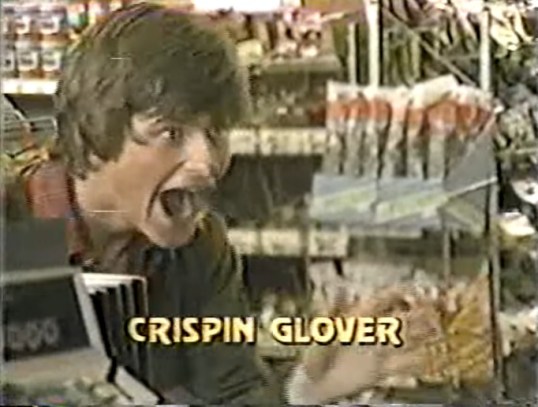
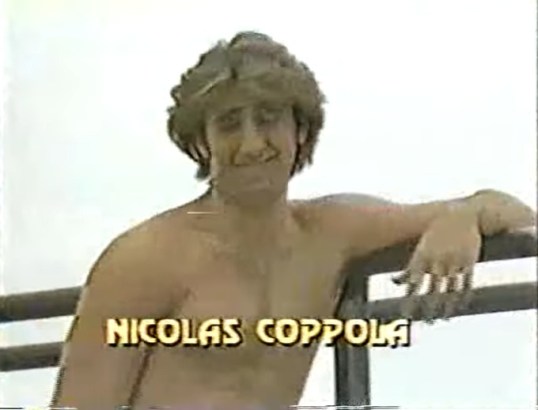
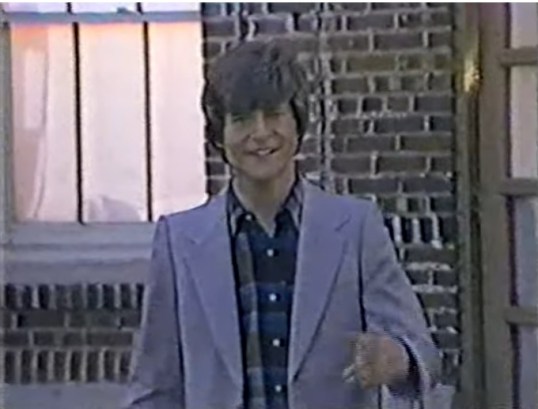
The Best of Times opens with a teenage Crispin Glover in his bedroom. Looking straight at the camera, he introduces himself as “Crispin.” His unseen mother starts to yell at him about cleaning his room. Crispin smiles nervously and then introduces us to the kids he hangs out with. There’s Jill Schoelen, Julie Piekarski, Kevin Cortes, Lisa Hope Ross, David Rambo, Janet Robin, and “my friend” Nicolas Coppola.
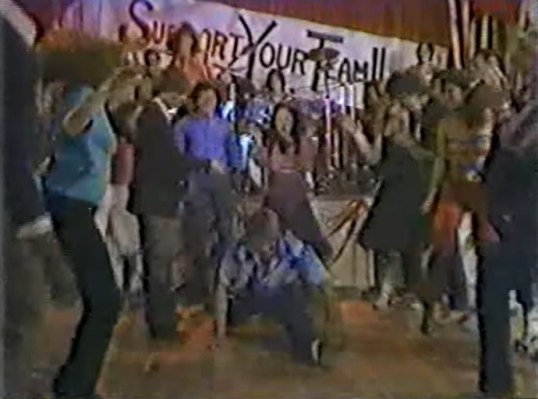
Nicolas Coppola, of course, would soon be better known as Nicolas Cage. Both Cage and Glover made their screen debuts in The Best of Times. While Glover spends his time talking directly to the camera and smiling awkwardly, Cage spends his time exercising at the beach and talking about sports. The big school dance is coming up, and all of Crispin’s friends are either trying to find dates or the perfect pair of jeans or else they’re trying to join a band. Nicolas Cage, however, isn’t worried about any of that. He’s confident and smooth.
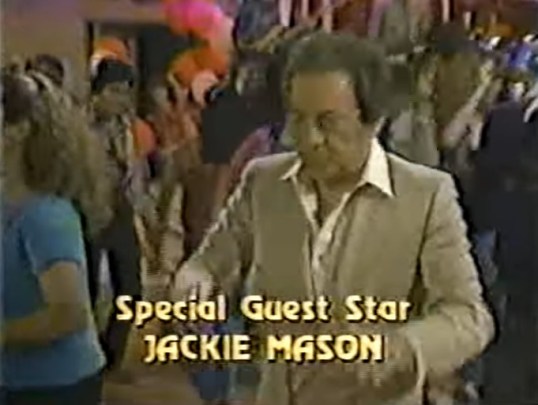
The plot of The Best of Times is not easy to summarize. The show was executive-produced by George Schlatter, the creator of Laugh-In, and it tries to imitate that classic show’s format, just with teenagers in the ’80s. There are quick blackout sketches. There’s a lot of corny one-liners. There’s a surprisingly large number of musical numbers. Crispin Glover puts on a pair of jeans, and all the girls in the cast start singing “Heartbreaker.” “Special guest star” Jackie Mason plays Mr. O’Reilly and rolls his eyes about the kids nowadays. Crispin looks at the camera and tries to explain why teenagers get a little crazy sometimes. “Try to remember,” he tells the parents watching, “when you were our age.”
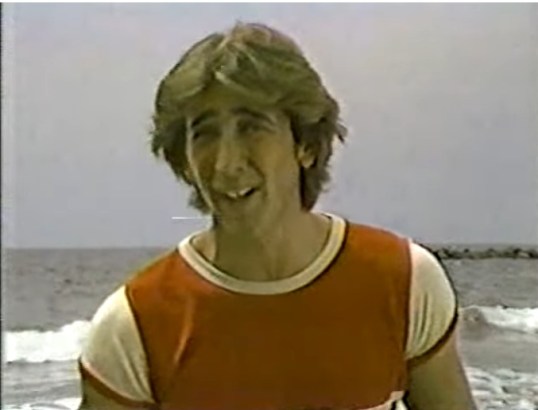
There’s one dramatic moment. Nicolas Cage stands on the beach and gives a dramatic monologue about how, if war breaks out in El Salvador, he’ll serve his country. His father served in Korea and still suffers from PTSD. Nic hopes that there isn’t a war, but if there is, he’ll be there.
The Best of Times is energetic and relentless, and it’s also rather corny and predictable. It may have been made by the guy behind Laugh-In, but it feels more like a lesser episode of MADtv. (“Tonight, Mad TV looks at teenagers!”) With the exception of Crispin Glover and Nicolas Cage, most of the members of the cast are interchangeable. This show features not one but two dorky guys who can’t get dates to the big dance. That might be realistic, but it still feels like overkill.
That said, it is a pilot starring a young Nicolas Cage. Compared with the actor he would become, Cage is fairly restrained here. He’s likable, but he’s also clearly an actor carefully following direction. The only time he really gets to let loose is at the school dance. His moves are killer.
The Best of Times was not turned into a regular series. Nicolas, Crispin, and Jill Schoelen went on to become beloved cult actors. As for the rest of the cast, David Rambo is now an award-winning playwright, and Janet Robin is an acclaimed composer and guitarist. I doubt any of them remember much about this pilot, but I’m glad they’ve gone on to live the best of times.
“If there’s something wrong, those who have the ability to take action have the responsibility to take action.” — Benjamin Gates
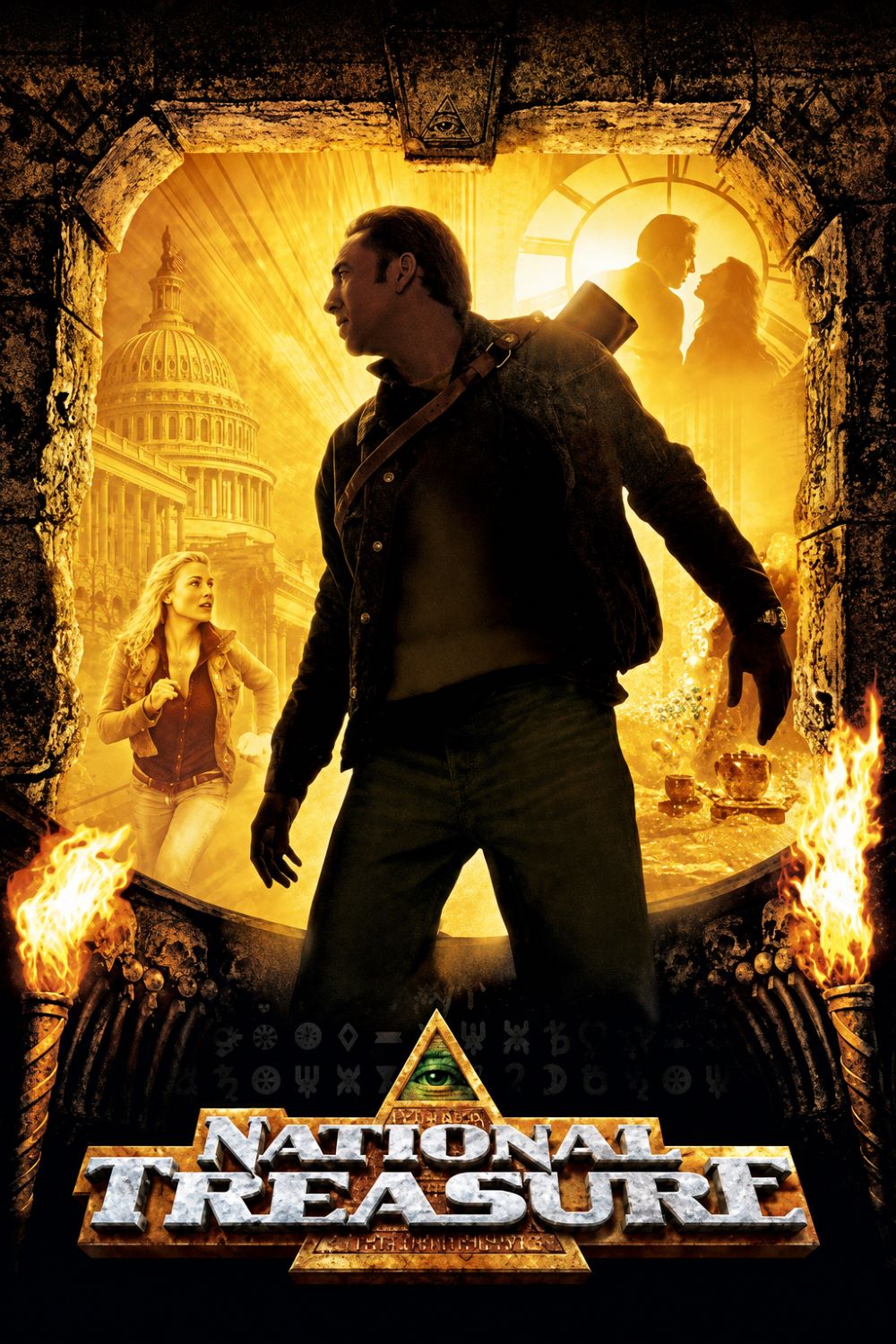
National Treasure directed by John Turteltaub is one of those movies that feels like a love letter to adventure, history, and a bit of old-fashioned treasure hunting. It’s the kind of film that doesn’t take itself too seriously but still manages to pull you in with its charm, puzzles, and non-stop action. At its heart, it’s a story about obsession, legacy, and the idea that history isn’t just something you read about in books—it’s something you can touch, chase, and maybe even uncover if you’re clever enough.
The movie kicks off with Benjamin Franklin Gates, played by Nicolas Cage in one of his most Nicolas Cage roles, as a historian and amateur treasure hunter convinced that a massive treasure hidden by the Freemasons and the Founding Fathers is real. The idea is wild: a secret stash of gold, artifacts, and historical riches hidden away to keep them out of the wrong hands. Most people, including his own father, think he’s nuts. But Ben’s got a lead, and when a rival treasure hunter, Ian Howe (played by Sean Bean), starts closing in on the same clues, the race is on. The stakes get higher when Ben realizes that if Howe finds the treasure first, it could mean disaster—not just for Ben’s reputation, but for history itself.
What makes National Treasure so much fun is how it blends history with a modern-day adventure. The film takes real historical figures and events—like the Declaration of Independence, the Liberty Bell, and the National Archives—and weaves them into a fictional but plausible treasure hunt. It’s the kind of movie that makes you want to dust off your old history textbooks or visit a museum the next day. The puzzles and clues are clever, even if they’re a little far-fetched. From invisible ink on the back of the Declaration to a series of riddles leading to the next location, the film keeps you guessing and engaged. And let’s be honest, who hasn’t daydreamed about finding a hidden message in a famous document or stumbling upon a secret that changes everything?
You really cannot talk about National Treasure without talking about Nicolas Cage. By 2004, Cage had already firmly established his reputation as an actor who brings a very specific, slightly unhinged energy to every role, and Benjamin Franklin Gates might be the perfect vessel for that energy. Ben is a nerd, but he is a nerd who somehow knows how to do parkour and execute complex heists. Cage plays him with this weird, endearing earnestness that anchors the movie. He delivers ridiculous lines about the Illuminati and secret tunnels with the gravity of a Shakespearean monologue, and it is hilarious, but it also makes you genuinely root for him. He never winks at the audience; he truly believes in the treasure, and that conviction pulls the whole thing together.
Of course, Cage cannot carry the entire movie on his own, and the supporting cast is surprisingly well-calibrated for this kind of ridiculous adventure. Justin Bartha plays Riley Poole, Ben’s tech-savvy sidekick who provides a running commentary of sarcastic quips. Bartha is essentially the audience surrogate, constantly pointing out how insane everything is, but he never gets annoying, which is a tough balancing act for a comic relief character in an action movie. Then there is Diane Kruger as Abigail Chase, an archivist at the National Archives who gets dragged into the chaos. Kruger does a great job of playing the exasperated straight woman to Cage’s eccentric history buff, and their chemistry is surprisingly charming, even if her character arc basically boils down to realizing that stealing national monuments is actually kind of fun.
On the villain side of things, we have Sean Bean as Ian Howe, and honestly, casting Sean Bean as a treasure-hunting bad guy is just a cheat code for making your movie better. Howe is a classic blockbuster villain—polished, ruthless, and driven entirely by greed—but Bean gives him just enough suave charm that he feels like a genuine threat rather than a cartoonish punching bag. Rounding out the main cast is Jon Voight as Ben’s estranged father, Patrick, and Christopher Plummer as his grandfather, John. Their inclusion adds a nice generational family drama to the story. The Gates family has been mocked for centuries for chasing this mythical treasure, and seeing Ben finally prove his father wrong adds a surprising amount of emotional weight to a movie that is otherwise about stealing the Declaration of Independence with a bunch of plastic ciphers.
John Turteltaub’s direction keeps the movie moving at a brisk pace. There’s never a dull moment, and the film balances its action sequences with quieter moments of discovery and problem-solving. The chase scenes, whether it’s through the streets of Washington D.C. or the tunnels beneath Philadelphia, are exciting without being over-the-top. The film also does a great job of making the historical elements feel tangible. When Ben and his team are examining a clue or piecing together a puzzle, you feel like you’re right there with them, trying to figure it out alongside them. It’s a testament to Turteltaub’s ability to make the implausible feel plausible, at least for the two hours you’re watching the movie.
Of course, National Treasure isn’t without its flaws. The plot does require a fair amount of suspension of disbelief. The idea that a treasure of this magnitude could stay hidden for centuries, or that Ben could outsmart everyone from the FBI to a team of professional thieves, is a stretch. And some of the historical liberties the film takes might make purists cringe. But that’s part of the fun. This isn’t a documentary—it’s a popcorn movie, and it embraces that wholeheartedly. The film also leans heavily on its twists and turns, some of which you might see coming a mile away. But even when you can predict what’s going to happen next, it’s still entertaining to watch it unfold.
What really stands out about National Treasure is its sense of wonder. It’s a movie that reminds you of the joy of discovery, whether it’s uncovering a hidden clue or simply learning something new about the world. The film’s climax, set in a secret underground chamber, is a perfect example of this. Without giving too much away, it’s a moment that feels both epic and intimate, a payoff for all the hard work and dedication Ben has put into his quest. And while the treasure itself might not be what you expect, the journey to find it is what makes the movie so satisfying.
In the end, National Treasure is a film that’s easy to enjoy. It’s got action, humor, history, and heart, all wrapped up in a package that’s as entertaining as it is lighthearted. It’s the kind of movie you can watch on a lazy Sunday afternoon and come away from feeling like you’ve been on an adventure yourself. Sure, it might not be high art, but it doesn’t need to be. Sometimes, a great story, a little bit of mystery, and a lot of fun are all you need. And National Treasure delivers on all three. If you’re a fan of adventure films, history buffs, or just love a good treasure hunt, this one’s for you. Just don’t be surprised if you find yourself Googling Freemason symbols or the history of the Declaration of Independence afterward.
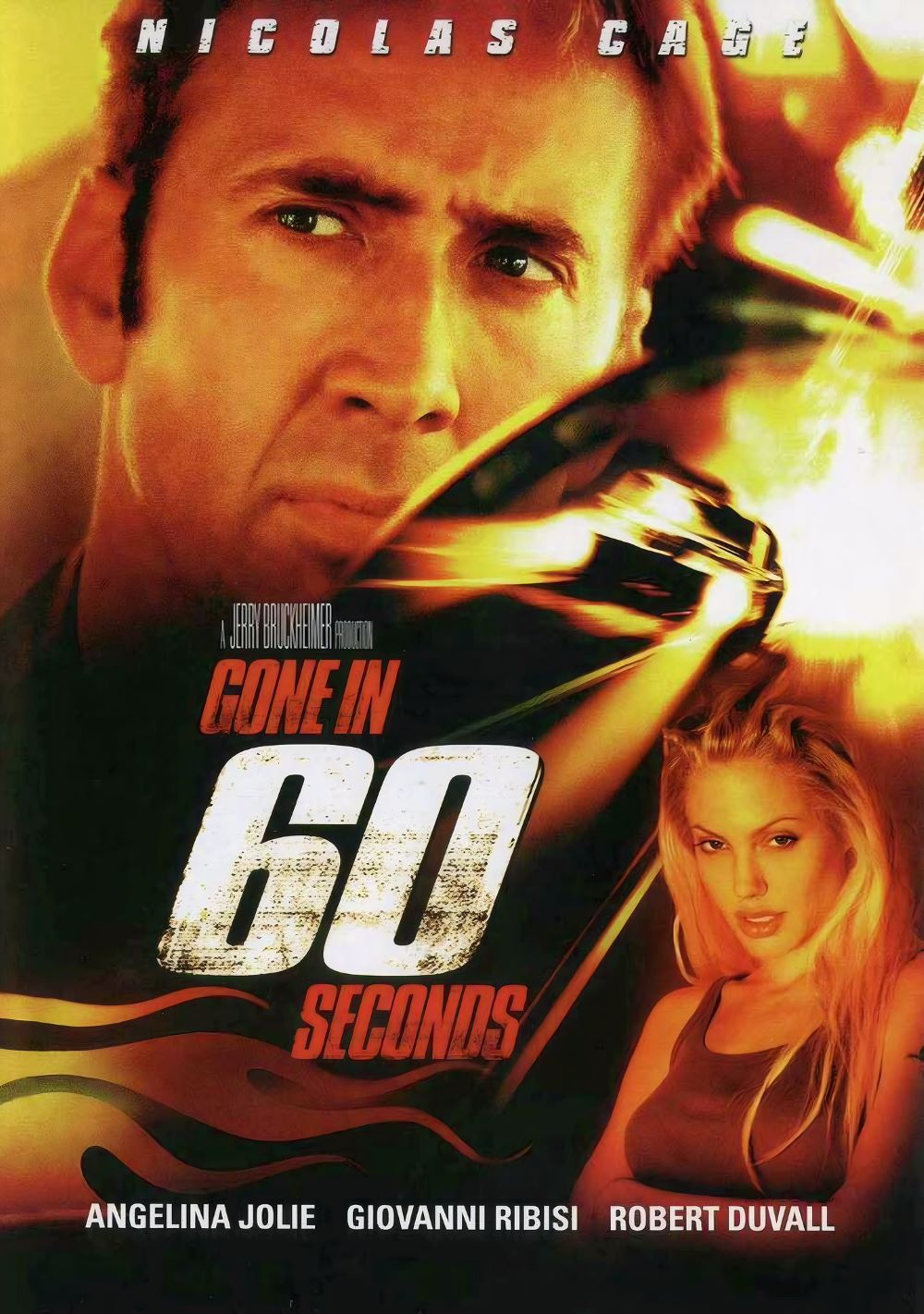
There is a specific, almost alchemical quality to the late 1990s and early 2000s era of Nicolas Cage as an action star. Before the internet turned every one of his performances into a meme and before his financial troubles led him down the rabbit hole of direct-to-video oddities, Cage was genuinely one of the most exciting and weirdly compelling action heroes on the planet. From The Rock in 1996 to Con Air in 1997 and Face/Off in 1997, he delivered a holy trinity of high-octane insanity that no other actor could have pulled off. By the time the calendar flipped to 2000, Cage was at the peak of his powers, and director Dominic Sena’s Gone in 60 Seconds arrived as both a victory lap and a slight exhale. It is not as unhinged as Face/Off nor as tightly wound as The Rock, but it is a perfect snapshot of its moment: a glossy, MTV-infused car heist flick that smells like gasoline, leather, and late-90s hubris. And while it has plenty of shortcomings, Gone in 60 Seconds has earned its place not in the pantheon of great action cinema, but in that more beloved hall of fame: the Guilty Pleasure.
The plot is as simple as a carburetor. Cage plays Randall “Memphis” Raines, a legendary car thief who has supposedly gone straight, now living a quiet life designing hybrid engines. But when his reckless younger brother Kip, played with sweaty desperation by Giovanni Ribisi, botches a job for a ruthless British gangster named Raymond Calitri (Christopher Eccleston at his sleaziest), Memphis is forced back into the life he left behind. The task is absurdly impossible: steal 50 specific luxury cars in a single weekend, or Calitri will kill Kip. That’s right, fifty cars. In three days. The film never really bothers to explain the logistics of storing or delivering that many vehicles, but that’s not the point. The point is the ride, the revving engines, and the way Cage stares at a 1967 Shelby GT500 named Eleanor like she’s the ghost of a lost lover. That car is the real star, and the film knows it.
Dominic Sena, who previously directed Cage in the underrated road thriller Kalifornia, brings a music video sensibility to the proceedings. Gone in 60 Seconds is drenched in late-90s visual tics: slow-motion shots of hubcaps spinning, golden sunsets glaring off polished chrome, and a soundtrack that alternates between nu-metal grooves and bluesy rock. The editing is fast but not confusing, and the heist sequences have a rhythmic, almost choreographed feel. You never believe for a second that Memphis and his crew—a motley collection of oddballs played by Robert Duvall, Vinnie Jones, and a very underutilized Angelina Jolie—can actually pull off fifty thefts without the entire LAPD catching on. But the film operates on movie logic. Cars are hotwired in seconds, police radio chatter is effortlessly avoided, and every chase defies the laws of physics. It is pure fantasy, and that is exactly why it works as a guilty pleasure.
Now, let’s talk about Cage. In 2000, he was still riding the high of that legendary late-90s run, and Gone in 60 Seconds fits neatly into his brand of action star as tortured romantic. Memphis Raines is not the coked-up lunatic Castor Troy or the shouty Stanley Goodspeed. He is weary, melancholic, and trying to be honorable in a dishonorable profession. Cage plays him with a hangdog sincerity that is surprisingly effective. When he talks to Eleanor, stroking her steering wheel and whispering about how she tests her drivers, he is utterly committed. There is no irony, no winking at the camera. That is the secret to Cage’s enduring appeal in this era: he treats absurd material with the same intensity he would bring to a Shakespeare soliloquy. The action sequences—especially the climactic chase where Eleanor leaps over a drawbridge—showcase Cage’s physicality and willingness to do real stunt work. He sells the danger and the desperation. You believe that this man would risk everything for a car, and that belief makes the film’s silliness palatable.
But let’s be honest about the shortcomings, because Gone in 60 Seconds has plenty. The middle act drags considerably. For a movie about stealing fifty cars, there is a surprising amount of standing around in warehouses and having conversations about “respecting the machine.” Angelina Jolie’s character, Sara, is Memphis’s ex-girlfriend and a fellow thief, but she is given almost nothing to do except look cool in leather and exchange tepid romantic banter with Cage. The chemistry between them is nonexistent. Christopher Eccleston’s Calitri is a one-note villain who likes opera and cruelty, and his final defeat is laughably abrupt. Delroy Lindo plays a dogged detective, but he is so incompetent that he never generates real tension. The film’s central gimmick—the ticking clock of fifty cars in three days—is inconsistently tracked, and by the final act, you have no idea how many cars are left or why it still matters. The dialogue is also gloriously corny. Lines like “Ride or die” and “Respect the car, man” are delivered with such straight faces that they circle back around to being endearing.
And yet, Gone in 60 Seconds earns its status as a guilty pleasure because it understands exactly what it is. This is not a sophisticated heist thriller like Heat or a gritty crime drama. It is a shiny, high-budget B-movie about a man and his car, and it leans into that identity without apology. The final twenty-minute chase sequence is genuinely thrilling, with real cars being destroyed and practical stunts that modern CGI could never replicate. Eleanor getting airborne, landing hard, and somehow still running is a moment of pure cinematic joy. The sound design—the roar of that V8 engine, the screech of tires on asphalt—is visceral and satisfying. And Cage’s performance, even when the script lets him down, holds the whole thing together. He is the anchor that keeps the film from floating away into utter nonsense.
Looking back from today’s perspective, Gone in 60 Seconds is a time capsule of a very specific moment. It captures the tail end of the late-90s obsession with extreme sports, tuner culture, and the idea that cars had souls. It also captures Nicolas Cage at a fascinating crossroads: still an A-list action star, still capable of opening a blockbuster, but already showing the signs of the wonderful weirdness that would later define his career. This film is not his best, not by a long shot, but it is one of his most rewatchable. You put it on when you want to turn your brain off, hear some great engine noises, and watch a sweaty, sincere Nic Cage talk to a Shelby like she is his long-lost sweetheart. That is the definition of a guilty pleasure. It is not good in the traditional sense, but it is fun. And sometimes, fun is enough.
Today, the Shattered Lens wishes a happy 77th birthday to director John Woo, the man who did the most to popularize the idea of the slo mo of doom!
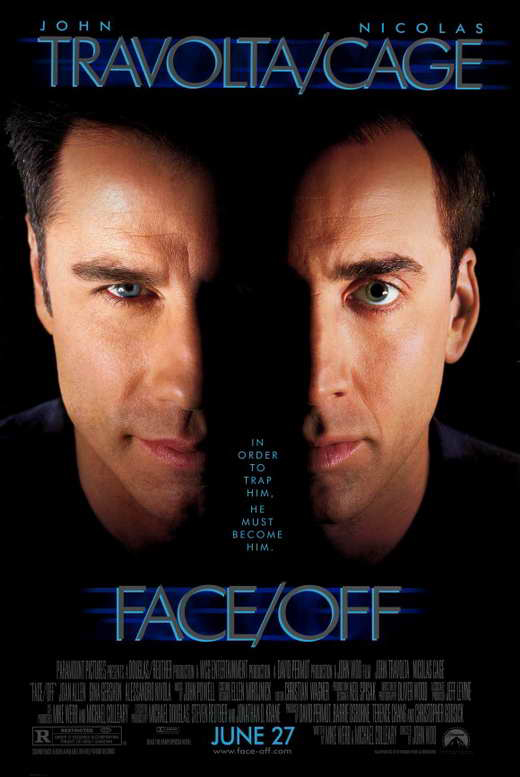
Today’s scene that I love comes from Woo’s 1997 film, Face/Off. In this scene, Nicolas Cage and John Travolta purse each other in speedboats. The action is wonderfully over-the-top. Throughout this film, Cage and Travolta both do what they do best in this scene and so does John Woo.
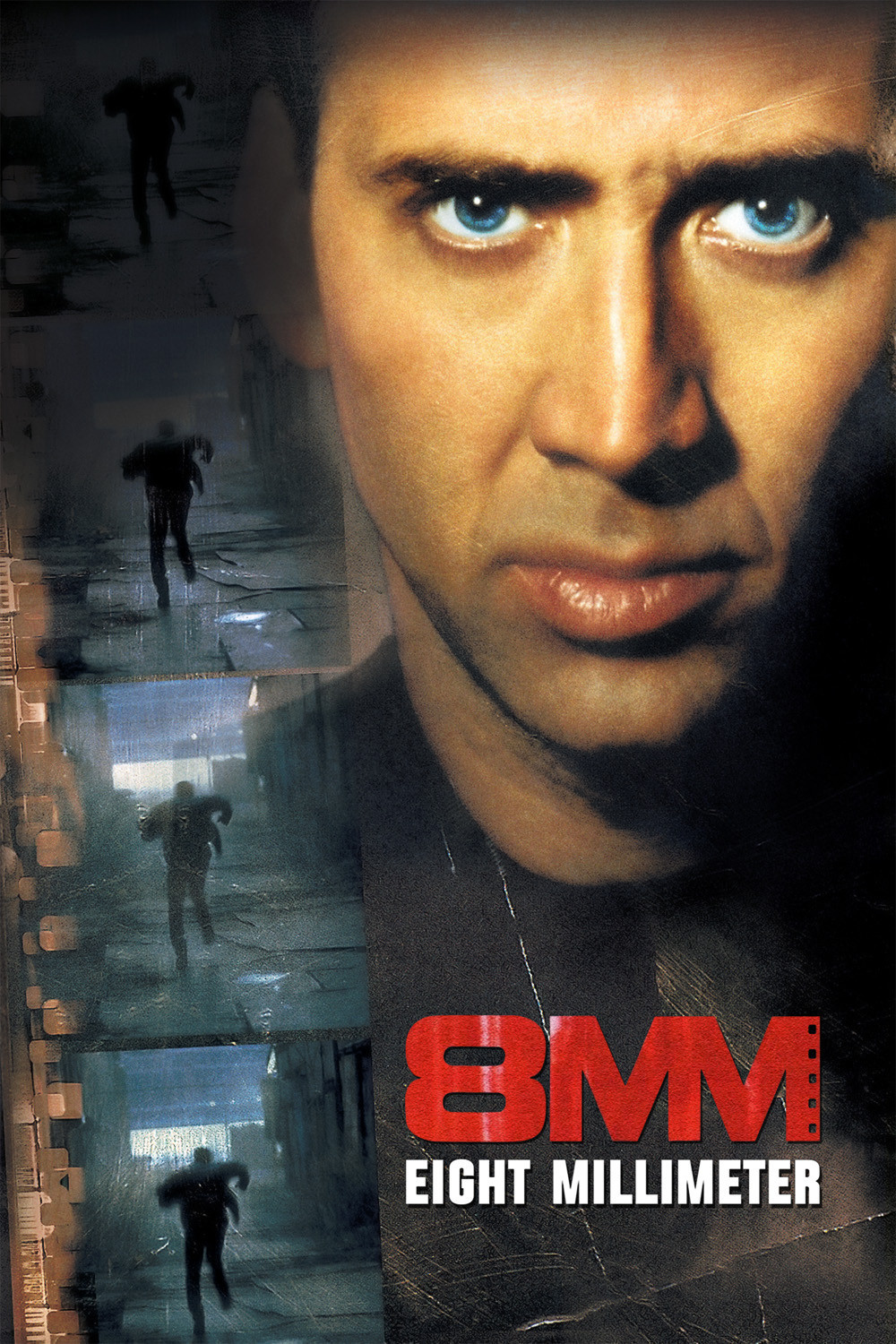
Joel Schumacher’s 8MM (1999) uncoils like a reel of forbidden footage you shouldn’t have found, pulling a buttoned-up private eye into the rancid shadows of underground smut peddlers and whispers of snuff films that may or may not exist. It’s a late-’90s thriller smack in the wake of Se7en and Kiss the Girls, starring Nicolas Cage as Tom Welles, a Harrisburg family man whose crisp suits and steady hands belie the unraveling ahead. Hired by a steel magnate’s widow to verify an 8mm tape depicting a girl’s torture-murder, Welles tumbles down a rabbit hole of L.A. peep shows and New York meatpacking sleaze, his moral compass spinning as the line between fantasy and atrocity blurs. Schumacher crafts a narrative engine that hums with procedural grit, doling out dread in measured doses while mirroring the protagonist’s corrosion, though it occasionally stumbles in its heavier-handed turns.
The setup hooks with surgical efficiency, painting Welles as everydad detective: he buries bodies for a living, kisses his infant daughter goodbye, and screens the tape in a vault-like study that feels like a confessional. Myra Carter’s Mrs. Christian trembles with decorous horror as the projector whirs to life, bathing the room in jaundiced flicker; the footage—grainy, handheld, a pleading teen bound for “Machine’s” blade—lands like a gut punch without lingering on gore. Lawyer Longdale (Anthony Heald, all patrician slime) waves it off as staged porn, but Welles digs anyway, tracing victim Mary Ann Mathews through missing-persons archives to her runaway dreams in Hollywood. Paired with Max California (Joaquin Phoenix), a Sunset Strip tape jockey with pawn-shop cynicism and a Zipperhead tee, they prowl fetish dens where vendors hawk needle-play loops and dismiss snuff as urban legend. Schumacher’s lens, via Robert Elswit, turns these dives into feverish grottos—neon strobes slicing steam, racks of VHS promising the forbidden—building unease through denial upon denial.
That mounting frustration propels the first hour’s finest stretches, a slow immersion where Welles’s calls home grow terse, his wife’s concern (Catherine Keener, quietly anchoring) a lifeline fraying in crosscuts. Max’s street-rat patter—”Snuff? Ain’t no such thing as snuff, man”—leavens the rot without undercutting it, Phoenix layering vulnerability beneath the snark that makes his arc genuinely affecting. Schumacher parcels revelations like a fuse burning short: a Florida trailer confirms Mary Ann’s vanishing, a porn mag scout nods toward “real death” commissions, and suddenly they’re in New York, knocking on Dino Velvet’s door. Peter Stormare vamps as the mulleted auteur of extremity, his studio a cathedral of spotlit chains where Machine (masked, hulking) performs for hidden lenses. The confrontation there explodes into sudden violence and betrayal, shattering assumptions about the tape’s origins and thrusting Welles into a desperate fight for survival, with devastating losses that harden his path forward.
This mid-film rupture peels back layers of the underworld’s machinery, revealing how far some will go to sate forbidden appetites—no vast conspiracy, just raw opportunism turning fantasy lethal. Chaos erupts in a brutal showdown that catapults Welles into lone-wolf payback, though the script’s mechanics creak here, tipping from investigation to vengeance saga with less finesse than its buildup promises. He tracks leads back to L.A., confronting scout Eddie Poole (James Gandolfini) in a derelict factory, beating out confessions amid rusted girders, then facing Machine—unmasked as unassuming accountant George Higgins (Chris Bauer), who shrugs, “I like it”—in a rain-slicked graveyard melee. Schumacher stages the violence as visceral toll, not catharsis: fists land with bone-crunching thuds, blood sprays real, and Welles emerges hollowed, sobbing in his wife’s arms over the unerasable stain. It’s raw consequence over triumph, indicting the watcher as much as the watched.
Cage shoulders the load masterfully, dialing back his manic energy for a portrait of competence curdling into obsession—hesitant stares post-tape, fists unclenching at home, exploding only when the dam breaks. It’s restrained Cage at his peak, the fury earned through incremental fracture, though some beats flirt with overemphasis. Phoenix shines brighter still, turning Max from sidekick gag into soulful foil; his death resonates because Joaquin sells the bravado as fragile armor. Stormare’s Dino struts operatic depravity, a Bond villain in wifebeater, while Gandolfini’s Poole simmers regretful everyman heft—pre-Sopranos groundwork for Tony’s shadows. Heald’s Longdale drips WASP entitlement, and bits like Norman Reedus’s twitchy dealer add lived-in texture. Schumacher elicits extremes without cartooning them, populating the underworld with deviants who feel plausibly human, not pulp cutouts.
Visually, 8MM thrums with Schumacher’s maximalist pulse tamed to noir grit: Elswit’s shadows swallow faces in peep booths’ crimson haze, the snuff reel’s jitter evokes cursed artifacts, and the loft showdown’s spotlights carve brutality like Bosch hellscapes. Mychael Danna’s score slithers—piano sparsity for Welles’s drift, synth throbs for dives—capped by Aphex Twin’s “Come to Daddy” warping a raid into glitch-rage frenzy. Production design nails the era’s analog underbelly: dog-eared tape boxes, industrial decay standing in for L.A. (shot cheap in Florida), all evoking a pre-digital void where evil hides on celluloid. The snuff aesthetic probes voyeurism smartly—we glimpse pleas and steel without exploitation, questioning our gaze alongside Welles’s, though the film’s flirtation with seediness risks tipping into the very prurience it critiques.
Andrew Kevin Walker’s script (fresh off Se7en) structures as moral diptych: procedural probe yields to vigilante spasm, bookended by domestic anchors that underscore the cost. No tidy psychologizing redeems the killers—Higgins kills because appetite wills it, Poole for “business,” others for greed—exposing evil’s flat banality over tortured backstories. The widow’s suicide post-truth, Mary Ann’s mom’s grateful note (“You cared enough to try”), and Welles’s scarred homecoming deny closure; vengeance hardens more than heals, bodies burned sans parade of justice. It’s a gut-punch thesis on film’s limits: some horrors defy capture, watching them unmakes the witness. Schumacher, slumming post-Batman gloss, revels in the ugly, though pacing drags early in porn prowls and the revenge rampage strains credulity.
Yet for all its stumbles—script contrivances like convenient turns, a third act veering punchy over precise—8MM endures as underrated descent, a thriller that stares unblinking into appetite’s void. Cage and Phoenix elevate genre tropes, Schumacher’s design makes depravity stick, and the core query lingers: does filming evil make it real, or us complicit? Flaws aside, it hums with the era’s dark electricity, a flawed reel worth unspooling for its unflinching grind.
Now that the awards for the best of 2025 have been handed out, it’s time to think about what might be nominated next year!
Below are my first set of Oscar predictions for 2026! What am I basing these predictions on? Nothing but instinct, wild guesses, and hopeful thinking. Take them with a grain of salt. If nothing else, we’ll look back on these a year from now and we’ll laugh. Or, we’ll be amazed at my cognitive abilities.
Today is Nicolas Cage’s 62nd birthday. Join me and celebrate by watching this incredible clip from my favorite film of 2021, PIG! It’s currently streaming on Netflix!
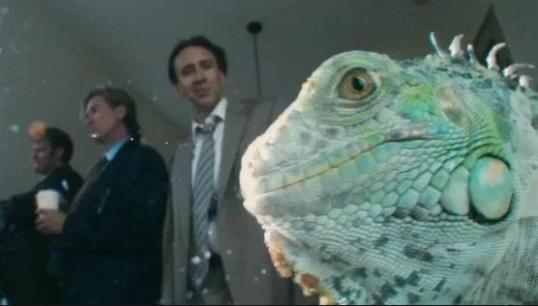
Ever since Werner Herzog’s Bad Lieutenant: Port of Call New Orleans was first released in 2009, people have debated the symbolism of the iguanas on the coffee table. Are they just a sign that Nicolas Cage’s bad lieutenant is totally high or do they have a deeper meaning? Myself, I’m not even going to try to guess. All I know is that the lieutenant eventually came to appreciate their presence.
2021’s Willy’s Wonderland takes place in an dilapidated restaurant.
Back in the day, Willy’s Wonderland was the ideal place to go if you were young and celebrating your birthday. The animatronic mascots would sing “Happy birthday” and maybe meet your parents. Willy Weasel, Arty Alligator, Cammy Chameleon, Ozzie Ostrich, Tito Turtle, Knighty Knight, Gus Gorilla, and Siren Sara promised fun and cheesy entertainment to anyone looking for a nice family meal!
Unfortunately, people stopped going to Willy’s once it was discovered that the owner was a serial killer. Jerry Robert Willis (Grant Cramer) and his seven friends were cannibals who regularly sacrificed families. Eventually, the police caught up to him but, even under new ownership, no one wanted to eat at Willy’s. There were rumors that Willis and his friends had transferred their souls into the animatronic figures but surely, that could not have been true!
Right?
Nicolas Cage plays a man with no name. When his car breaks down, the local mechanic agrees to fix the car if the man agrees to spend the night as the janitor at Willy’s. Apparently, it’s been a struggle to keep a night janitor at the place. People find the location to be creepy and, of course, the animatronic mascots keep killing anyone dumb enough to try to mop the floors. Cage’s man with no name silently agrees. Everything that Cage does, he does without a word. This is one of the rare films where Nicolas Cage, usually a champion talker, says absolutely nothing.
Now, I should mention that there actually is a plot to Willy’s Wonderland. Liv (Emily Tosta) and her friends are trying to burn the place down because, years ago, Liv’s parents were murdered by the mascots. Unfortunately, Liv and her friends aren’t that smart and they end up trapped in Willy’s Wonderland. The majority of them quickly fall victim to the mascots. The deaths are appropriately gruesome, though tinged with the dark humor that would come from essentially being killed by a knock-off version of Chuck E. Cheese.
But really, the plot isn’t important. This film is entirely about Nicolas Cage, playing a man with no name. Cage takes the janitorial job and, over the course of the night, he battles the mascots. At the same time, he also makes it a point to continue to do his job. Besieged or not, he agreed to clean the place up. He takes his breaks and plays pinball exactly as scheduled, even if that means abandoning Liv and her friends. Normally, you might think that this would be bad behavior on the part of Cage’s character. Abandoning someone in the middle of a battle is not usually encouraged. But Liv and her friends are very annoying. Cage is ultimately the hero by default. Yes, he’s fighting and killing the mascots but he’s really only doing it because they’re getting in his way while he’s trying to do his job. The fact that he helps out Liv is largely coincidental.
Willy’s Wonderland proves that Cage doesn’t need a lot of lines to be the center of a film. Even without speaking, he’s such a wonderfully eccentric presence that you can’t help but watch him and cheer him on. Admittedly, Willy’s Wonderland is never that scary, though the “Happy Birthday” song is definitely creepy. The mascots are a bit too cartoonish to be truly frightening. But, if the film doesn’t really work as a horror film, it does work as an adrenaline-fueled Cage match. And that’s nearly as good.