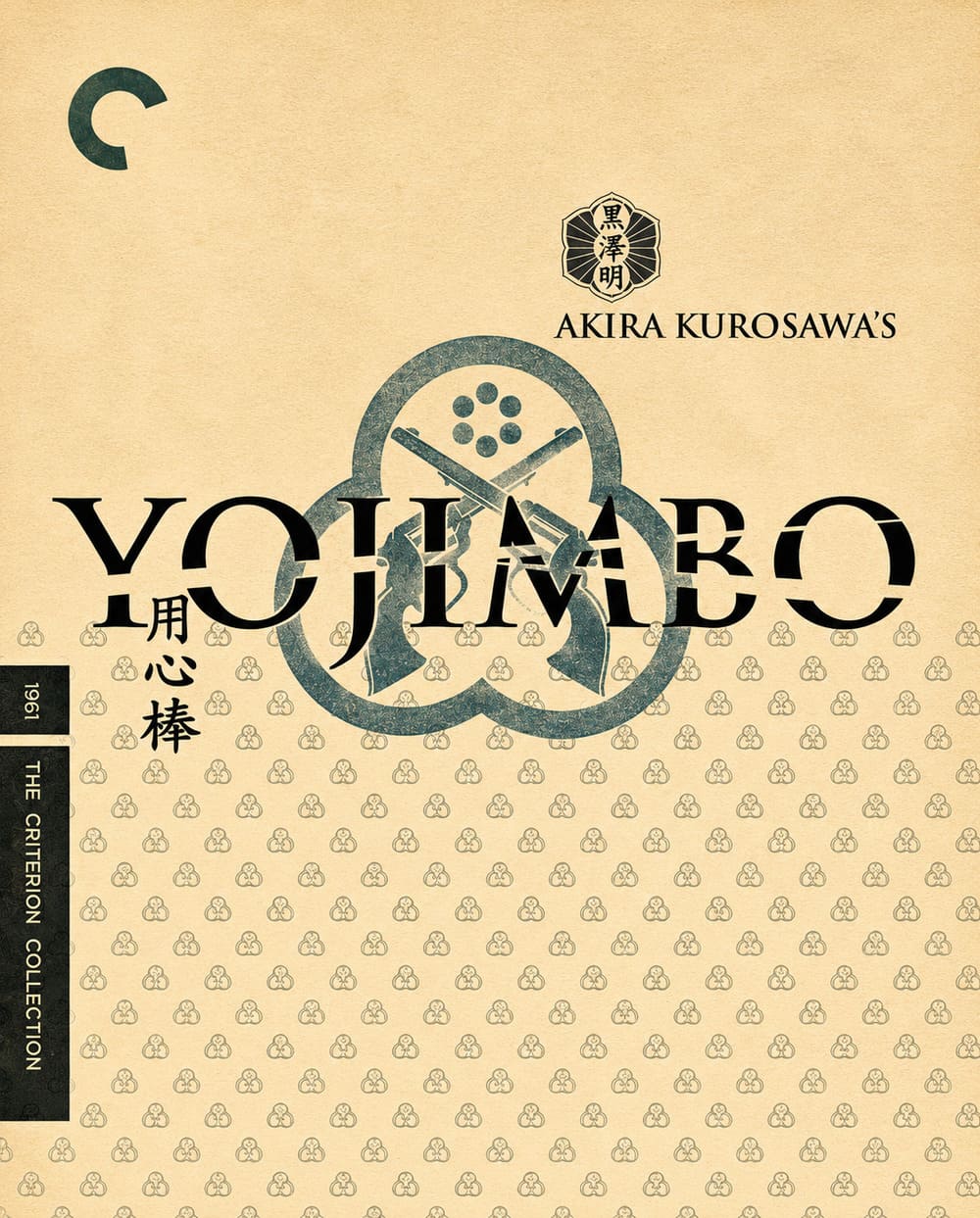
Film Review: Yojimbo (dir. by Akira Kurosawa)


“I’ll get paid for killing, and this town is full of people who deserve to die.” — Sanjuro

The title Yojimbo means “bodyguard,” which is a funny label for a man who spends most of the movie protecting nobody. Kurosawa’s hero is a hired sword who sells his services to two sides at once, and the job he’s really doing is far more mischievous than guarding anyone. That gap between the title and the behavior sets the tone for one of the slyest, most influential movies ever made about a man with a sword.

The setup is clean and nasty. A masterless samurai wanders into a wind-blown town divided between two gangs, one led by a silk merchant and the other by a sake brewer. Everyone else is hiding indoors, and the only man with a thriving business is the coffin-maker. The samurai gives his name as Sanjuro after glancing out a window at a mulberry field, which tells you right away that it’s invented. He sizes up the situation and decides to turn it to his advantage. He takes work from one boss, then the other, and starts feeding each side exactly the wrong information at the right moment.

What makes this more than a simple revenge or rescue plot is how patient the film lets him be. Sanjuro doesn’t charge into the fray. He plants a rumor, lets a negotiation fall apart, watches a rival’s men stumble into an ambush, and only then steps in to collect. The plot is basically a long con, and Kurosawa understands that the pleasure lies in watching a clever person work. You aren’t waiting for the hero to win so much as waiting to see which domino he’ll nudge next, and the answer is usually more outrageous than you expected.

Toshiro Mifune is the engine that makes all of this work. He takes the stiff, dignified image of the samurai and turns it into something rumpled and feline. He scratches his neck, shrugs his shoulders, and rolls his arms inside a dirty kimono as if the whole world were a mild inconvenience. It’s a physical performance built from tiny, lazy gestures, and those gestures tell you everything about the man: he’s tired, he’s bored, and he’s far more dangerous than he looks. The slouch is a kind of disguise, and the film keeps reminding you that it’s one.

Then, when it’s time to fight, Mifune snaps into focus with frightening speed. The swordplay is short and sharp, and the sound design gives every cut a heavy thud. Because the fights end almost before you register them, the violence feels casual, and the casualness is exactly what makes it a little shocking. There’s no long, ceremonial duel to prepare you. A man is standing there, then he isn’t. The comedy and the brutality keep feeding each other, and the film never lets either cancel the other out, which is a tricky balance that few movies manage.

Kurosawa’s visual style does as much work as the performance does. He loves long lenses and deep, crowded frames, so you often see several layers of action at once: Sanjuro watching from a tower with his feet up, thugs scheming in the middle distance, a stray dog trotting by with a severed hand in its mouth. The main street becomes a stage, dusty and exposed, and the camera arranges the extras like pieces on a board. It feels sealed off from everything else, which makes the gangs’ obsession with one another seem both ridiculous and doomed. It’s a great example of how composition alone can land a joke without a single line of dialogue.

That sense of a closed world also explains why the film is so good at comedy of escalation. Each side believes it’s one clever move away from winning, and every move feeds the other side’s paranoia. The gang bosses are not stupid in any simple way; they’re just ordinary men caught in a feud that has grown bigger than any of them, and Sanjuro’s gift is recognizing that. He doesn’t create the hatred in the town. He simply gives it a shove and then settles back to watch it roll.

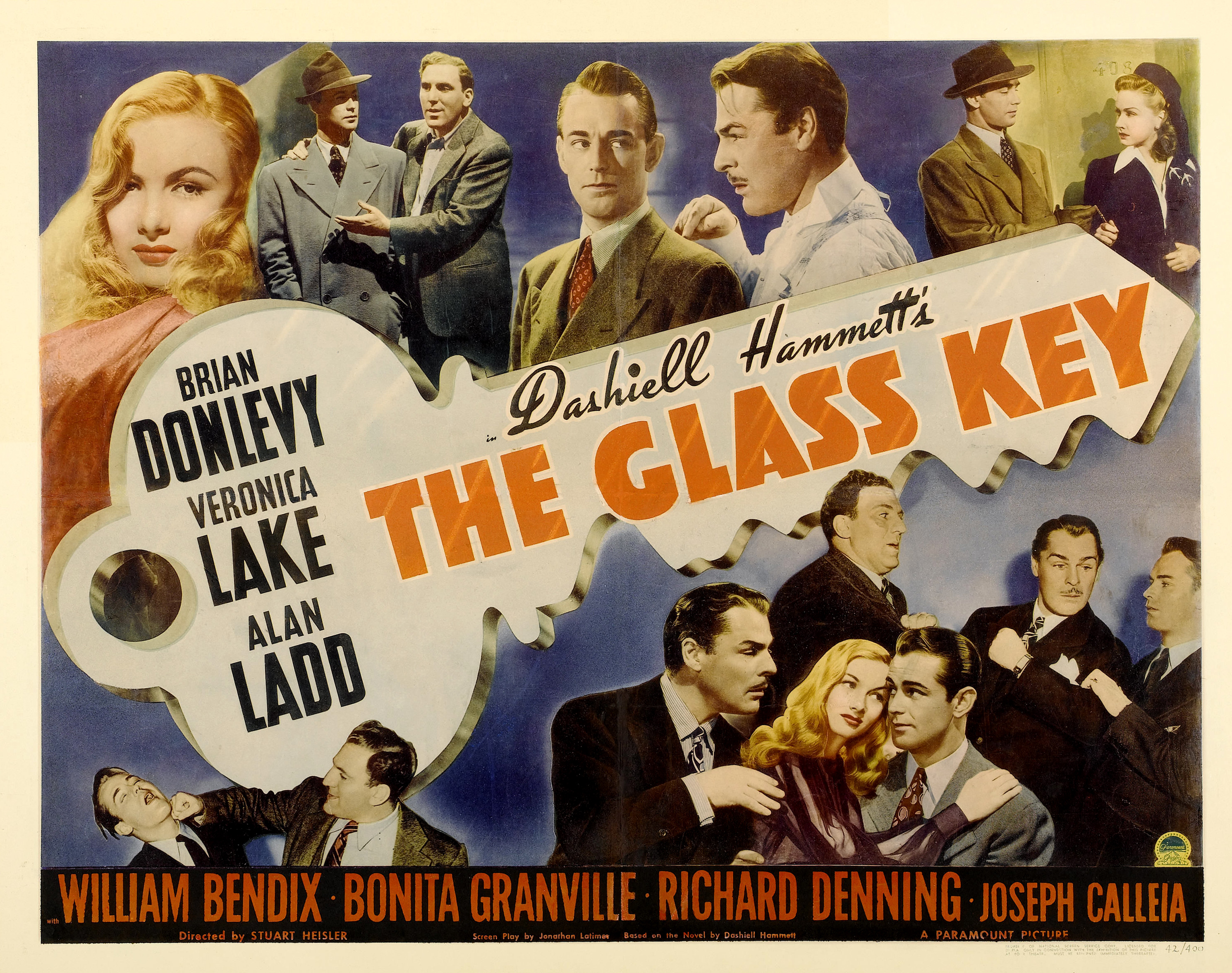
The film’s pedigree adds an extra layer of fun. Kurosawa has pointed to The Glass Key, a noir adapted from Dashiell Hammett, as a source, and plenty of critics see the plot as even closer to Hammett’s novel Red Harvest. Whatever the exact debt, the notion of a cynical outsider cleaning up a rotten town by turning the crooks on each other fits American hardboiled fiction like a glove, and Kurosawa dropped it into the Edo period without a hiccup. It’s also a good reminder that cinematic borrowing moves in circles. Japan borrowed from American crime writing, and then Italy and Hollywood borrowed straight back.

This is where the film’s central achievement comes into focus: the antihero. Sanjuro is no noble knight. He’s a mercenary and a manipulator who takes money from everyone and lies to nearly everybody, and he doesn’t pretend otherwise. Set him beside the classic Hollywood gunfighter, like the title character in Shane, who rides in to protect decent people with a clear conscience, and he looks like another species altogether. Heroes like that arrive with a purpose. Sanjuro arrives with an appetite, and the audience is invited to find that refreshing.

Yet Kurosawa slips a conscience in sideways, and this is the detail that keeps the character from becoming a mere trickster. Sanjuro helps free a family from the gangs, pays for their escape, then barks at them to leave and never look back. He can’t stand cruelty, but he won’t admit it, and he covers the impulse with gruffness and irritation. That crack in the cynical armor is what makes him so appealing. He’s a bad man who does a good thing and then acts annoyed about it, and the embarrassment he feels about his own decency is, oddly, what makes us trust him.

You can see how portable that character turned out to be. The shape is simple enough to fit on a napkin: a wandering loner arrives in a town with two warring factions and plays them against each other. The film’s own follow-up, Sanjuro, arrived in 1962 and brought Mifune’s character back, so Kurosawa clearly knew he had something audiences wanted. After that, the template spread far beyond Japan, and it kept finding new settings. It turns out that nearly every culture has a town it would like to see burned to the ground by a stranger with good aim.

The most famous descendant is Sergio Leone’s A Fistful of Dollars, from 1964, which moves the story to a border town in the American West and puts Clint Eastwood in the lead as the Man With No Name. It follows the bones of Yojimbo so closely, down to the rival families, the coffin-maker, and the rescued mother and child, that the lack of authorization became a scandal and led to legal trouble. Even so, Leone made it feel like his own film. He slowed everything down, stretched the silences, and turned faces into landscapes with operatic close-ups, while Ennio Morricone’s whip-cracking score gave the whole thing a swagger of its own.

The difference in temperament is worth noticing. Eastwood’s stranger is stoic and almost mythic, a figure who barely speaks. Mifune’s Sanjuro is chatty, twitchy, and openly amused by the mess around him. Eastwood’s squint doesn’t owe much to Mifune’s shrug, but the attitude underneath is the same: a stranger in a bad town who’s smarter than everyone around him. If Kurosawa made the antihero a comedian, Leone made him a legend, and both versions have proved remarkably durable.

Walter Hill’s Last Man Standing, from 1996, takes another run at the story, setting it in a Texas town during Prohibition with rival bootleg gangs and Bruce Willis in the lead. Hill credited Kurosawa openly, and the film is a competent, moody gangster picture with a dusty, washed-out palette. What it lacks is Mifune’s mischief. Willis plays the character as a cold killer, which makes him less fun to watch and a lot less surprising. When the hero has no sense of humor about his own scheme, the audience loses its invitation to enjoy it.

Still, putting the three films together offers a neat lesson in how much of a story can survive a change of costume. Swords become six-shooters, which become Tommy guns, and the structure holds without trouble. That durability says something about how well Kurosawa built the thing. A good premise can move from era to era because it isn’t really about the weapons or the clothing; it’s about a cynical outsider, a divided community, and the uncomfortable truth that violence can be profitable for the person smart enough to manage it.

Beyond the direct remakes, Yojimbo belongs to a larger family of Kurosawa films, along with Seven Samurai, that helped shape how filmmakers around the world imagined the lone hero and the hired gun. You can trace echoes through the Spaghetti Westerns and the hardboiled action pictures that followed. Fans sometimes connect Kurosawa’s wider body of work to Star Wars as well, though that’s more a feeling of lineage than a clean borrowing from this particular movie. The more dependable throughline is the drifter who rides into town, plays both sides, and leaves with his hands only slightly cleaner than when he arrived.

The supporting cast keeps all this lively. Tatsuya Nakadai steals scenes as a pistol-carrying younger brother in a scarf, smirking like he’s the only person who has read the script, and he makes a great foil for Mifune. His weapon of choice is itself a statement: the old world of swords is about to be outpaced by something newer and more efficient. The finale pits sword against gun, and the film knows exactly how silly and thrilling that matchup is. Kurosawa also refuses to let the humor soften the bleakness. By the end, the town has all but destroyed itself, and nothing the hero has done feels especially heroic, just necessary.

Which is why, in the end, the most telling winner of the whole affair is the coffin-maker. Gangs rise and fall, swords flash, and the so-called bodyguard strolls away without a backward glance, but the one man who profits from every round of bloodshed is the guy selling the boxes. That’s the film’s cruelest joke, and it’s aimed at every tough-guy fantasy that came after it. Yojimbo is funny, savage and gorgeously shot, and more than six decades on, it still makes the genre’s heroes look a little foolish by comparison.

Kurosawa-Mifune Collaborations
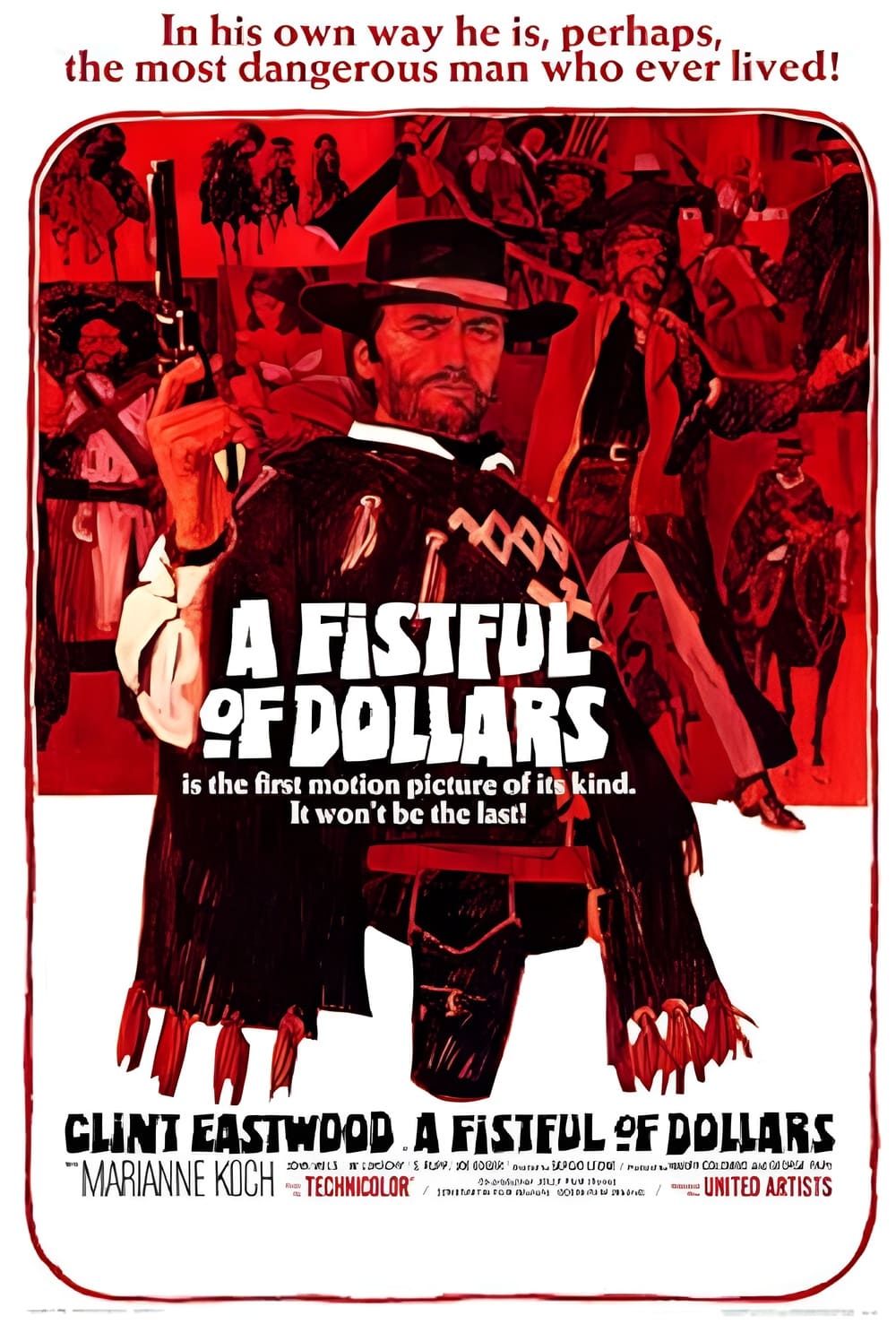
Review: A Fistful of Dollars (dir. by Sergio Leone)


“When a man with a .45 meets a man with a rifle, you said, the man with a pistol’s a dead man. Let’s see if that’s true.” — Joe

When examining the films that fundamentally reshaped a genre, 1964’s A Fistful of Dollars stands as an undeniable cornerstone. Directed by Sergio Leone, this movie didn’t just accidentally stumble into creating a new genre; it grabbed the classic American western by the collar, dragged it into the mud, and spat on its shiny boots. This was the first leg of Leone’s “Dollar’s Trilogy,” and honestly, looking back at it now, it’s kind of crazy to think about how much of an underdog this production was. It was made on a shoestring budget, shot in Spain with a bunch of Italian and Spanish actors speaking different languages and then dubbed over, and it featured a lead actor who was mostly known for playing a lovable cowboy on a little American TV show called Rawhide. Nobody expected A Fistful of Dollars to become a massive international hit, but it did, and it permanently altered the cinematic landscape.

The story itself feels incredibly familiar today, but that’s only because it has been copied and homaged about a million times since. Unapologetically lifting the plot from Akira Kurosawa’s Yojimbo, the film follows a gritty, chain-smoking drifter who rides into a dusty, miserable border town called San Miguel. But the fun part about this cinematic lineage is that Yojimbo wasn’t entirely original either. Kurosawa openly borrowed the core concept from Dashiell Hammett’s hardboiled detective novels, specifically Red Harvest and The Glass Key. Both of those books featured a lone, cynical protagonist who manipulates warring criminal factions fighting it out for control of a corrupt town. So Leone was essentially taking a Japanese interpretation of an American noir trope, stripping it down, and repackaging it as a western. Once our drifter arrives in San Miguel, he quickly realizes the town is torn apart by two rival gangs: the Baxters, a family of American gun-runners, and the Rojos, a ruthless group of Mexican smugglers. Instead of playing the traditional white-hat hero who immediately picks a side and saves the day, our guy does the exact opposite. He decides to play both sides against each other, hiring himself out to the highest bidder, switching loyalties at the drop of a hat, and essentially bleeding the town dry for his own profit. It is a brilliantly cynical setup that completely subverted what western audiences were used to seeing at the time.

And then there is Clint Eastwood. Now, pop culture famously knows him as the Man with No Name, but that is actually the result of a very clever piece of US marketing. In A Fistful of Dollars, his character absolutely has a name: Joe. The American distributors thought the mysterious, anonymous angle sounded cooler for the posters, and the moniker stuck so hard over the decades that most people forget he literally introduces himself as Joe to the locals early on in the movie. Regardless of what you call him, when Leone cast Eastwood, American studios were apparently confused, wondering why an Italian director would want a TV actor to lead a movie. But Leone saw something in Eastwood’s squint, a kind of rugged, lazy menace that was perfect for this new brand of anti-hero. Joe isn’t a knight in shining armor. He’s greedy, he’s manipulative, and he kills people without losing a wink of sleep. But he has an undeniable coolness to him that is just magnetic. The costume design plays a massive part here too. The weathered brown poncho, the stubble, the short cigar clamped in his jaw, and that iconic hat all combined to create a look that felt lived-in and dangerous. Compared to the impeccably groomed, brightly dressed cowboys of the 1950s, Eastwood looked like he actually smelled like sweat, horse hair, and gunpowder.

Of course, a conversation about A Fistful of Dollars is totally incomplete without talking about the villains, because Leone knew how to cast bad guys who were genuinely terrifying. Gian Maria Volonté plays Ramón Rojo, the main antagonist, and he is absolutely phenomenal. Ramón isn’t just a cartoonish thug; he is smart, cold-blooded, and utterly devoid of mercy. There is a famous scene where Ramón is demonstrating the accuracy of his rifle by shooting at the heart of a man he has just murdered at long range, and Volonté plays it with such a creepy, casual indifference that it makes your skin crawl. The Baxters are mostly just pathetic pawns, but the Rojos feel like a legitimate, organized threat, which makes the stakes feel incredibly real. You genuinely believe that if Joe slips up even once, these guys will brutally torture and kill him without a second thought.

Visually, A Fistful of Dollars is an absolute masterclass in atmosphere. Leone was working with a limited budget, but he used what he had to create a style that felt massive. He employed these extreme, lingering close-ups of people’s eyes, sweaty faces, and flies buzzing around, which gave the film an almost unbearable tension. Then he would suddenly cut to these massive, sweeping wide shots of the barren Spanish desert, making the characters look like tiny, insignificant specks in a cruel, uncaring world. The violence was also shockingly graphic for the time. People didn’t just clutch their chests and fall over gracefully like they did in older westerns. They bled, they grimaced in agony, and the gunfights felt loud, chaotic, and messy. Leone stripped away the romanticism of the Wild West and replaced it with a gritty, dirty reality that felt much more authentic, even if it was entirely a fabricated Italian fantasy of America.

You also absolutely have to talk about Ennio Morricone’s legendary musical score. It is basically a character in the film itself. Before A Fistful of Dollars, western soundtracks were mostly made up of traditional orchestral arrangements and folksy songs. Morricone threw that playbook out the window. He used electric guitars, twanging banjos, screaming trumpets, whip cracks, choral chants, and even a bizarre, wailing coyote sound that sounds like a human having a mental breakdown. The main theme is so incredibly catchy and weird that it burrows into your brain and stays there for days. The music didn’t just support the action on screen; it told the audience exactly how to feel, ramping up the tension during the standoffs and giving Eastwood’s character a larger-than-life aura. Without Morricone’s score, the Spaghetti Western genre simply would not exist as we know it.

The pacing of the movie is something that modern audiences might need a minute to adjust to, but it is completely intentional. Leone was in absolutely no rush to get from point A to point B. He wanted to linger on the tension, letting scenes breathe and stretch out to almost uncomfortable lengths. When Eastwood is staring down a group of thugs in the street, Leone holds the camera on their faces for what feels like an eternity. You can see the sweat dripping, you can see the fear building, and by the time the first shot is finally fired, the release of tension is almost physical. It is a slow burn that requires a bit of patience, but it makes the eventual bursts of violence so much more impactful and satisfying. It is the exact opposite of the fast-paced, action-packed blockbusters we get today, and that deliberate slowness is a huge part of its strange, hypnotic charm.

Despite all of Joe’s outward greed and manipulation, there is a subtle emotional core to the film that keeps you totally invested. It comes in the form of Marisol, a woman who is being held captive by Ramón Rojo and used as leverage against her husband. When Eastwood sees the absolute misery of this family, his cold exterior cracks just a little bit. He risks his entire scheme, and his own life, to sneak Marisol and her son out of town in the middle of the night, giving them money to start over. It is a beautifully quiet, understated scene that proves there is still a shred of humanity left underneath all that grit and cynicism. He doesn’t make a big speech about it or ask for thanks; he just does it because it is the right thing to do. It gives the character a moral center without turning him into a traditional good guy, which is a really difficult balancing act that the film pulls off perfectly.

The climax of the film is where everything comes together in a spectacular display of style and sheer badassery. After getting brutally beaten by the Rojos, Eastwood escapes and returns for revenge, utilizing a makeshift iron chest plate hidden under his poncho. Watching him walk slowly down the empty street, taking bullet after bullet to the chest without flinching, while the electric guitar wails in the background is just pure, unadulterated cinema magic. He outdraws Ramón in a final, agonizingly tense standoff, proving that his wits and his nerve are just as deadly as his revolver. It is the perfect payoff to the slow build-up of the entire movie, cementing Joe as an absolute icon of pop culture.

And this endless game of cinematic telephone didn’t stop with Leone. Just as A Fistful of Dollars was heavily “inspired by Yojimbo“—which itself transplanted the 1920s pulp noir concept into the 1860 Edo period—it went on to inspire a whole new wave of imitators looking to put their own spin on the formula. The most obvious example is the 1996 action flick Last Man Standing starring Bruce Willis, which takes the exact same plot of warring factions and a lone drifter playing them against each other, but moves the action to a Prohibition-era Texas border town. It is wild to trace that DNA from a 1920s pulp novel to the 1860 Edo period, to a 1960s Italian western, and all the way to a 1990s Bruce Willis shoot-em-up, proving just how durable and universally cool this basic storyline really is.

Looking at A Fistful of Dollars today, it is easy to see the cracks in its foundation. The dubbing is notoriously clunky, some of the supporting performances are a bit wooden, and the fact that it is a direct rip-off of a Japanese masterpiece is impossible to ignore. But honestly, none of that really matters in the grand scheme of things. Leone took a great story and injected it with so much style, so much attitude, and so much raw energy that it became its own completely distinct entity. As the first leg of Leone’s “Dollar’s Trilogy,” it laid the foundational blueprint that he would later perfect with For a Few Dollars More and absolutely master with The Good, the Bad and the Ugly. But there is something special about this first outing. It has a rougher, scrappier, and more experimental vibe that is incredibly fun to watch. It is the movie that killed the old western and birthed the new one, and for that alone, it deserves every bit of its legendary status.

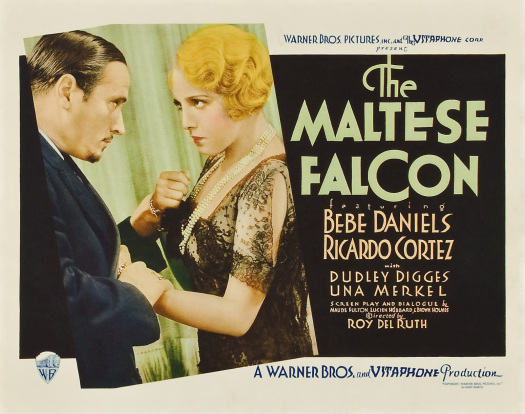
Pre Code Confidential #11: THE MALTESE FALCON (Warner Brothers 1931)


gary loggins's avatarcracked rear viewer

Everybody knows the 1941 Humphrey Bogart/John Huston classic THE MALTESE FALCON, but only true film fanatics watch the original 1931 version. Since I fall squarely into that category, I recently viewed the first adaptation of Dashiell Hammet’s seminal private eye yarn. The film, like it’s more famous remake, follows the novel’s plot closely, with the added spice that Pre-Code movies bring to the table.

Cortez is no Bogie, but he’ll do

The odds are six-two-and-even if you’re reading this post, you don’t need a plot recap. What I intend to do is go over some of the differences between the two versions. Let’s start with Sam Spade himself, the prototype hard-boiled detective. Suave, slick-haired Ricardo Cortez  interprets the role as a grinning horndog who’s never met a skirt he didn’t like. We meet Spade in the opening shot, clinching a dame in silhouette at the door to his office. Then the door…

View original post 575 more words

Strange Bedfellows: THE GLASS KEY (Paramount 1942)


gary loggins's avatarcracked rear viewer

glass1

Anyone who watches television, reads a newspaper, or surfs the Internet today knows the axiom “Politics is a dirty business” is dead on point. The mudslinging and brickbats are being tossed at record rates, and it just keeps escalating. Here at Cracked Rear Viewer, we’re just plain tired of all the nonsense. Ah, for the old days, when politics was much more genteel and civil, right? Wrong! Politics has always been a dirty business, proving another old adage, “There’s nothing new under the sun”. Case in point: the 1942 film THE GLASS KEY.

glass2

The story’s based on a novel by Dashiell Hammett, and was filmed once before in 1935 with George Raft, Edward Arnold, and Claire Dodd. In this version, Paramount chose to star their red-hot team of Alan Ladd and Veronica Lake, fresh off their hit THIS GUN FOR HIRE. Brian Donlevy takes the Arnold role as Paul Madvig, a…

View original post 909 more words