Review: Shot Caller (dir. by Ric Roman Waugh)


“The fact is, we all started out as someone’s little angel. And a place like this forces us to become warriors or victims. Nothing in between can exist here.” — “Bottles”

Shot Caller (released in 2017), directed by Ric Roman Waugh, is a gritty, morally complex crime drama that dives deep into the brutal world of prison gangs, redemption, and the blurred lines between justice and survival. Clocking in at just over two hours, it’s a tense, character-driven story that doesn’t shy away from the harsh realities of its setting, delivering a raw and unfiltered look at life behind bars and the psychological toll it exacts.

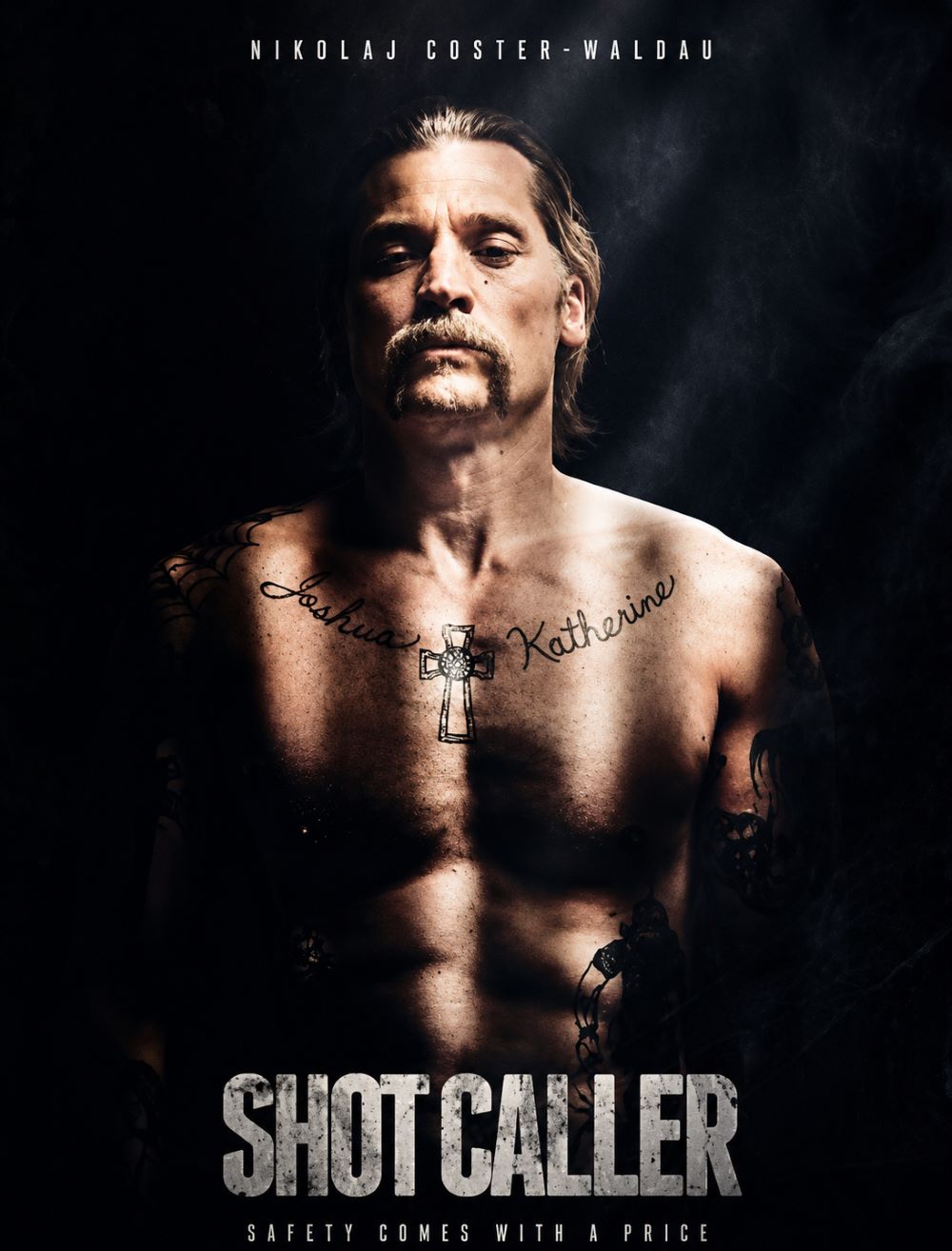
The film follows Jacob Harlon, played by Nikolaj Coster-Waldau, a successful businessman whose life spirals out of control after a DUI accident leaves his best friend dead. Sentenced to prison, Jacob is thrust into a violent, hierarchical world where survival means adapting to the rules of the Shot Callers—high-ranking gang members who control the prison’s underground economy. The film’s title itself is a nod to this brutal hierarchy, where every decision, every move, is dictated by those at the top. As Jacob navigates this treacherous landscape, he transforms from a naive new inmate into a hardened, strategic player, adopting the moniker “Money” for his financial acumen. His journey is as much about physical survival as it is about the psychological toll of losing his identity and grappling with the moral compromises he’s forced to make.

What makes Shot Caller stand out is its unflinching portrayal of prison life. Waugh, who also co-wrote the screenplay, doesn’t romanticize the violence or the characters. The film opens with a visceral, almost documentary-like sequence of Jacob’s first days in prison, where he’s immediately targeted by a white supremacist gang. The brutality is shocking, but it sets the tone for a story that refuses to sugarcoat the realities of incarceration. The prison scenes are claustrophobic, the tension palpable, and the stakes feel painfully real. Waugh’s direction ensures that every punch, every stab, every whispered threat carries weight. There’s no glorification here—just the cold, hard truth of a system that chews people up and spits them out. Even the brief but chilling appearance of Holt McCallany as The Beast, a high-ranking Aryan Brotherhood member, leaves a lasting impression. Though his screen time is limited, McCallany’s performance is unforgettable, exuding a quiet, menacing authority that underscores the danger lurking in every corner of the prison.

Nikolaj Coster-Waldau delivers a career-best performance as Jacob. Known to many as Jaime Lannister from Game of Thrones, Coster-Waldau sheds his noble, charismatic image to embody a man broken by guilt and reshaped by circumstance. His physical transformation is striking—he bulked up significantly for the role, but it’s his emotional range that truly impresses. Jacob’s arc is one of the most compelling aspects of the film. Early on, he’s a fish out of water, a man clinging to his old life and morals. But as the story progresses, we see the gradual erosion of his principles. The moment he finally snaps and fights back is a turning point, not just for his character but for the audience’s perception of him. By the time he’s released from prison, he’s almost unrecognizable—both physically and psychologically. Coster-Waldau makes you believe every step of this transformation, and it’s a testament to his skill as an actor that you’re rooting for Jacob even as he makes increasingly questionable decisions.

The supporting cast is equally strong. Omari Hardwick plays Shotgun, a high-ranking member of the black gang who becomes Jacob’s reluctant mentor. Hardwick brings a quiet intensity to the role, balancing threats with moments of unexpected humanity. Lake Bell plays Jacob’s wife, Kate, and her performance is heartbreaking in its restraint. Kate’s struggle to hold her family together while her husband is in prison is a grounded counterpoint to the chaos unfolding behind bars. Jon Bernthal, another standout, plays a prison guard with a morally ambiguous role in Jacob’s journey. Bernthal, as always, brings a raw, simmering energy to his scenes, making his character’s motivations feel authentic, even when they’re not entirely clear.

The film’s pacing is deliberate, almost methodical. Waugh takes his time building the world and the characters, and while this might frustrate viewers looking for constant action, it pays off in the long run. The first act is heavy on exposition, introducing the prison’s power structures and the various factions at play. But once Jacob starts to find his footing, the story picks up momentum. The middle act is where Shot Caller really shines, as Jacob’s alliances and rivalries become more complex. The film’s climax is a high-stakes heist that feels both inevitable and earned, a culmination of everything Jacob has learned—and lost—during his time inside.

One of the most interesting themes in Shot Caller is the idea of control. The title itself refers to those who call the shots, but the film constantly questions who really has power in this world. Jacob starts as a man who thinks he’s in control of his life, only to have that illusion shattered. In prison, he learns that control is a fragile, often violent thing, constantly shifting hands. Even after his release, he’s not truly free—he’s still bound by the rules of the criminal underworld he’s now a part of. The film suggests that in a system as broken as this one, no one is ever truly in control. It’s a bleak message, but one that feels authentic to the story being told.

The cinematography, by Dana Gonzales, is another highlight. The prison scenes are shot in a way that emphasizes the claustrophobia and tension of the environment. The color palette is muted, with lots of grays and blues, reflecting the cold, harsh reality of Jacob’s new world. The action sequences, when they do occur, are brutal and realistic, with a handheld camera style that puts you right in the middle of the chaos. There’s no glamour to the violence here—it’s messy, desperate, and often over in seconds.

If Shot Caller has a weakness, it’s that some of its themes and plot points might feel familiar to fans of the genre. The story of a man falling into the criminal underworld and struggling to escape isn’t exactly new. What saves the film from feeling derivative is its commitment to authenticity and its strong performances. Waugh’s script also avoids easy answers. Jacob isn’t a hero, and the film doesn’t pretend he is. He’s a flawed, complicated man making the best of a series of terrible situations. The ending, without spoiling too much, is bittersweet and ambiguous, leaving you to ponder just how much of Jacob’s old self is left—and whether he can ever truly escape the life he’s been drawn into.

Another aspect worth praising is the film’s soundtrack. The score, composed by Antonio Pinto, is understated but effective, using a mix of electronic and orchestral elements to underscore the tension and emotional beats of the story. The use of silence is also notable—there are moments where the absence of music makes the violence or the weight of a decision hit even harder.

Shot Caller is a film that lingers with you long after the credits roll. It’s not an easy watch, and it’s certainly not for the faint of heart. The violence is graphic, the language is harsh, and the themes are heavy. But for those willing to engage with it, the film offers a gripping, thought-provoking experience. It’s a story about survival, identity, and the cost of redemption. Ric Roman Waugh has crafted a prison drama that stands alongside classics like The Shawshank Redemption and American History X, even if it doesn’t quite reach their lofty heights. What it lacks in originality, it makes up for in execution, with stellar performances and a relentless commitment to its vision. In a world where crime dramas often glorify the outlaw life, Shot Caller is refreshingly honest. It doesn’t ask you to root for Jacob because he’s a good guy—it asks you to understand him, flaws and all. And by the end, you do. You understand the choices he makes, even if you don’t agree with them. That’s the mark of a great character study, and Shot Caller delivers on that front in spades. It’s a film that will leave you thinking, long after the final shot fades to black.
Late Night Retro Television Review: Pacific Blue 3.19 “Heat of the Moment”


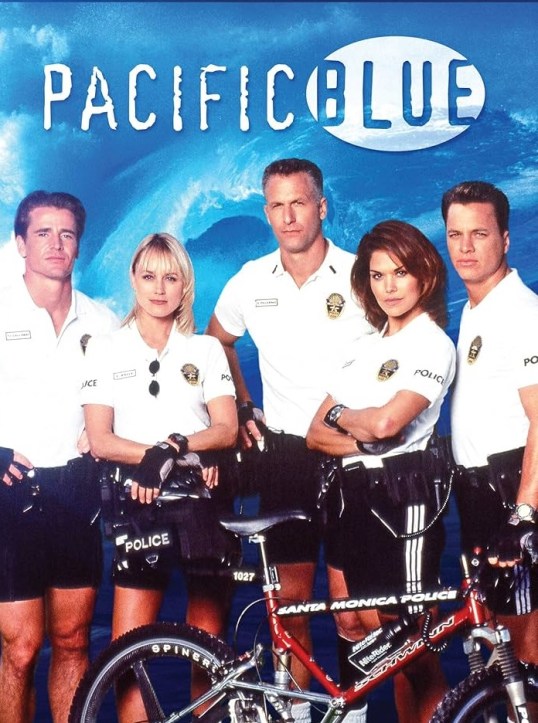
Welcome to Late Night Retro Television Reviews, a feature where we review some of our favorite and least favorite shows of the past! On Tuesdays, I will be reviewing Pacific Blue, a cop show that aired from 1996 to 2000 on the USA Network!  It’s currently streaming everywhere, though I’m watching it on Tubi.

This week, Chris has a crisis.

Episode 3.19 “Heat of the Moment”

(Dir by Terrence H. Winkless, originally aired on March 22nd, 1989)

Chris and TC respond to reports of a robbery occurring at a jewelry store.  One of the robbers, carrying a shotgun, makes a run for it.  TC goes after him.  The other robber is easily captured and handcuffed by Chris.  Chris calls for backup and then leaves the store to help TC, despite the owner of the store begging her to stay.  As soon as Chris leaves, it is revealed that a third robber was hiding in the backroom.  He proceeds to beat up the owner and then free his partner.  Meanwhile, the other robber manages to escape from Chris and TC.  When Chris returns to the store, she is shocked to learn about the third robber.

Chris is also shocked that anyone could think that she made the wrong decision.  She didn’t know there was another robber in the store.  As she explains it, TC was out there, chasing a guy with a shotgun.  She made the right decision!  Not everyone agrees and soon, Chris starts to wonder if maybe her relationship with TC clouded her judgment.

Uhmm …. yeah, Chris, that’s pretty much what happened.  I mean, Chris basically abandoned an innocent woman to two psychotic criminals just because she was worried about TC.  It would have taken Chris just a few seconds to check the backroom.  Add to that, the owner was obviously terrified and begged Chris not to leave.  Chris’s response was to be rude.  Even if there hadn’t been a third robber, Chris still left the owner alone with the second robber and didn’t bother to secure the crime scene.

This is another episode of Pacific Blue where the viewer is expected to not dwell on the fact that Chris is terrible at her job.  Chris being bad at her job has pretty much been her defining characteristic.  Even before she started sleeping with TC, Chris was regularly rude to crime victims and frequently violated the constitutional rights of the people she arrested.  She also spent a lot of time complaining nonstop about going from being a Navy pilot to being a bicycle cop.  By any standard, Chris should have been fired a long time ago.  She certainly should have been fired for not checking the backroom of that jewelry store.

But this is Pacific Blue.  And, on Pacific Blue, no one with a badge is ever held accountable for screwing up.  The bike patrol captures the main robber and his girlfriend.  Chris shoots and kills the other robbers.  And she decides that maybe she and TC should just be honest about their relationship.

“I know this week has been tough on you,” Chris tells TC.

Actually, you know who this week was hard on?  The poor jewelry store owner who got beaten up because Chris is terrible at her job!

Ugh.  Bicyclists just think the world revolves around them.


Film Review: Hotel Artemis (dir by Drew Pearce)


Oh, Hotel Artemis.

I had such high hopes for you.

Hotel Artemis, you may remember, was initially released way back in June and, at the time, it was advertised as being some sort of nonstop action thrill ride.  The commercials made it look totally over-the-top and exciting, which was I wanted to see it.  Of course, I didn’t see it because …. well, actually I don’t remember what was happening in June that kept me from going to the movies.  But there had to have been something going on because I not only missed seeing Hotel Artemis in the theaters but I also missed Ocean’s 8 and Hereditary as well.

Well, regardless of why I missed it the first time, I did finally get a chance to watch Hotel Artemis earlier this week and, unfortunately, it turned out to not be anything special.  It’s certainly not terrible.  It has its moments and the film looks great but, at the same time, it’s hard not to feel somewhat let down by the film.  Hotel Artemis has promise but much of its goes unrealized.

The film takes place in one of those vaguely defined futures where there’s a lot of rioting and a lot of militaristic cops.  In fact, the film opens with Los Angeles in the middle of one such disturbance.  The riot scenes attempt to go for a Purge-style intensity but, for the most part, they just kind of fall flat.  There’s a lot of scenes of people yelling and occasionally, a police transport rolls by but, for the most part, there’s no danger to the film’s riot.  It’s all just a bit too obviously choreographed.  You never get the feeling that things could just randomly explode.

The Hotel Artemis is a combination of a hotel and a hospital.  It’s run by Jean Thomas, who is better known as Nurse and who is played by Jodie Foster.  Jean was once a doctor but, haunted by the death of her son, she became an alcoholic and lost her license to practice medicine.  Severely agoraphobic, Jean has spent 22 years inside of the Hotel.  She only treats criminals and other people on the fringes of society.  Helping her is Everest (Dave Bautista), who helps to keep order in the often chaotic hotel.

All of Jean’s patients are given codenames, based on which room their occupying in the hotel.  There’s Acapulco (Charlie Day), who is wealthy and short-tempered and who is waiting for a helicopter to come pick him up.  And then there’s Nice (Sofia Boutella), an international assassin who gets to beat people while wearing this red gown that is absolutely to die for.  There’s also Wakiki (Sterling K. Brown), who is a bank robber who is worried that his partner, Honolulu (Brian Tyree Henry), is going to die from the wounds that he suffered during a robbery-gone-wrong.  Further complicating things is a gangster named The Wolf King (Jeff Goldblum) and Morgan (Jenny Slate), who needs Jean’s help but who also happens to be a cop.  Zachary Quinto is also in this film, playing the Wolf King’s son, because you really can’t make a pretentious genre film without giving a role to Zachary Quinto.

Anyway, there’s a pretty good action sequence towards the end of the film but it takes Hotel Artemis forever to get there.  Before that, you have to deal with a lot of talking but, unfortunately, none of the conversations are particularly interesting.  Hotel Artemis may clock in at 94 minutes but it feels considerably longer.  On the plus side, the cast is big and interesting but, on the negative side, nobody really seems to be that invested in their role.  It’s fun to watch Charlie Day play a bad guy but otherwise, the majority of the actors struggle with their thinly drawn (though certainly verbose) characters.  The majority of them struggle to convince us that they’re anything more than a group of talented actors slumming it in an action movie.  The fact that Jodie Foster received a good deal of praise for her performance in this film has everything to do with the fact that she’s Jodie Foster and little to do with anything that actually happens in the movie.

On a positive note, the movie looks great.  Visually, the Hotel Artemis is a fantastic creation that combines the decaying luxury of The Shining with the claustrophobic sterility of an underground bunker in a Romero zombie film.  (I’m thinking of the original Day of the Dead in particular.)  The Hotel itself is so fascinating that you can’t help but kinda resent that the film seems to be more interested in the boring people inside of the building than with the building itself.

Despite the superior production design, the film itself is slackly paced and never quite as a clever as it seems to think that it is.  Hotel Artemis is not a terrible film but it is a rather forgettable one.  It’s hard not to feel that it could and should have been a hundred times better than it actually was.

Film Review: Den of Thieves (dir by Christian Gudegast)


Den of Thieves is quite simply one of the most exhausting films that I’ve ever sat through.

It’s not just that the film itself is overly long, though that’s definitely an issue.  (Den of Thieves last 2 hours and 20 minutes.  For the sake of comparison, that’s 17 minutes longer than last year’s best picture winner, The Shape of Water.)  Instead, the real problem is that there’s really not a single unexpected moment to be found in Den of Thieves.  Every cliché imaginable shows up in Den of Thieves and, after a while, the film’s predictability becomes a bit much to take.

It’s a bank heist film.  We know that because it opens with a strangely portentous title card that informs us that more banks are robbed in Los Angeles than anywhere else in the country.  This is one of those heist films where a self-destructive police detective goes head-to-head with a ruthless yet sympathetic criminal mastermind.  If you’re thinking that this sounds a lot like Heat, you’re right.  In fact, imagine if they remade Heat without any of the stuff that made Heat more than just another crime film and you have a pretty good idea what you’re going to get with Den of Thieves.

The detective is named Big Nick O’Brien (Gerard Butler) and we know he’s a badass because he’s got a lot of tattoos and a beard and when he’s not busting criminals, he’s either getting drunk or getting served with divorce papers.  Nick’s an asshole but that’s okay because Nick … NICK GETS RESULTS, GODDAMMIT!  Nick has a crew that’s devoted to him.  Of course, a lot of them will be dead by the end of the movie.  That’s just the way things go when you’re living in a clichéd crime film.

Big Nick wants to take down Merrimen (Pablo Schreiber), who is a former marine turned bank robber.  We know that Merrimen is a badass because he’s got a beard and he’s got even more tattoos than Nick!  In fact, his entire crew is covered with tattoos!  You have to wonder how smart these criminals are, all getting body art that will make it very easy for the police to identify them.  But they’re a good crew.  In fact … THEY’RE THE BEST!  THEY GET RESULTS!  And only Nick can take them down because … ONLY THE MOTHERFUCKING BEST CAN TAKE DOWN THE MOTHERFUCKING BEST, GODDAMMIT!

Sorry, am I yelling a lot?  This is one of those films where everyone yells a lot.  Basically, this entire movie is drenched in testosterone.  This is one of those films where no one gets interrogated with getting knocked around beforehand and where every meeting is some sort of confrontation.  When the end credits rolled, I was shocked to learn that some of these people actually had names.  Just from listening to the dialogue, I assumed everyone in the film was named “Motherfucker.”

And again, it just all gets exhausting after a while.  Maybe if Den of Thieves had been a 90 minute action flick or had featured any of the self-aware humor of Baby Driver, it would have been entertainingly dumb.  But 140 minutes is a long time to spend with a bunch of thinly drawn stereotypes.

Now, there are two positive things that can be said about Den of Thieves.

First off, one of the thieves is played by O’Shea Jackson, Jr. and he’s got enough screen presence that he can overcome some clunky scenes.  (A scene where he’s interrogated by the police literally seems to go on forever.)

Secondly, the film itself looks great.  The film’s opening scenes do a good job of capturing Los Angeles’s unique mix of grit and glitz.  The opening shootout is pretty well-done and briefly suggests some promise on which the film ultimately doesn’t deliver.

Anyway, Den of Thieves came out this January and despite middling reviews, it did well enough at the box office to earn itself a sequel.  So, in 2020, look forward to more scenes of Gerard Butler … GETTING RESULTS!

Film Review: Guardians of the Galaxy Vol. 2 (dir by James Gunn)


(MINOR SPOILERS!  SPECIFICALLY, THE IDENTITY OF THIS FILM’S MAIN VILLAIN WILL BE REVEALED)

The Guardians of the Galaxy are back!

And this time, they’ve brought some new friends with them, friends with names like Kurt Russell, Sylvester Stallone, and … David Hasselhoff?

That’s right.  David Hasselhoff is now a part of the Marvel Cinematic Universe and somehow, it feels totally appropriate.  For all the words that have been written comparing Guardians of the Galaxy to the Star Wars franchise, it’s true ancestor is the 1978 Italian film, Starcrash.  (Perhaps not coincidentally, Starcrash was Hasselhoff’s film debut.)  Watch the trailer below and just try to tell me that you can’t imagine Chris Pratt and Zoe Saldana in the lead roles.

But enough about my obsession with Italian exploitation films.  I know the question that you want answered.  Is Guardians of the Galaxy Vol. 2 as good as the first one?

Well, it depends on how you look at it.  Guardians of the Galaxy Volume 2 is an absolute blast, a wonderfully entertaining film that mixes subversive comedy with sci-fi action.  Everyone from the first film — Chris Pratt, Zoe Saldana, Dave Bautista, Karen Gillan, Michael Rooker, and the voices of Bradley Cooper and Vin Diesel — is back and they’ve still got the same winning chemistry that made the first film so much fun.  Everyone is still committed to their roles, delivering even the strangest of dialogue with undeniable flair.  Nobody’s gotten bored with saving the universe yet.  The new additions to the cast are all well selected.  Kurt Russell totally disproves the assumption that MCU villains are never as interesting as their heroic opponents but, then again, it helps that he’s playing a character who has a memorable and odd backstory.  Once again, director James Gunn combines crowd-pleasing moments with his own sharp sense of humor.  If the pompous tone of Man of Steel and Batman v Superman made you sick, Guardians of the Galaxy Volume 2 is the perfect antidote.

Unfortunately, Volume 2 doesn’t provide the same thrill of discovery as the first film.  It’s easy to forget that, before the first film came out, a lot of people were predicting that Guardians of the Galaxy would be the first MCU film to flop at the box office.  The conventional wisdom was that, as opposed to a character like Captain America, no one, outside of a few comic book readers, knew who the Guardians of the Galaxy were.  Chris Pratt was just the goofy guy from Parks and Recreation.  A talking raccoon?  A walking tree?  It was all way too weird, the naysayers proclaimed, to appeal to a mainstream audience.

However, James Gunn proved them wrong.  Guardians of the Galaxy was not only the most successful MCU film to that date but it was also my pick for the best film of 2014.  I can still remember watching it for the first time and immediately falling in love with both the film’s skewered sensibility and Chris Pratt’s funny but soulful performance.  As opposed to a lot of films that were nominated for and won Oscars that year, Guardians of the Galaxy actually holds up after repeat viewings.

(Seriously, has anyone tried to rewatch Birdman lately?)

Going into the sequel, everyone now knows who the Guardians are and Chris Pratt is now a beloved film star.  Volume 2 has a lot to live up to and, for the most part, it succeeds.  It’s a tremendous amount of fun and, at the same time, it has a heart.  (The heart at the center of the Guardian of the Galaxy films is perhaps the biggest heart in the MCU.)

What is the film about?  Much like the first film, it’s about family.  After years of telling everyone that his father was David Hasselhoff, Peter Quill (Chris Pratt) finally meets his real father (Kurt Russell), a God-like figure named Ego.  Charismatic, cheerful, and just a little bit odd, Ego seems like the perfect father figure but he has some secrets of his own.  Russell gives a wonderful performance, making Ego one of the few MCU villains to be as interesting as the heroes.

While Peter is bonding with his dad, he is also being pursued by his adoptive father, the blue-skinned space pirate named Yondu (Michael Rooker).  Yondu has been rejected by both his adopted son and the rest of his adopted family.  The other space pirates are no longer loyal to him.  His former boss (Sylvester Stallone) wants nothing to do with him.  As silly as it all may sound, it’s also unexpectedly poignant, thanks to Michael Rooker’s performance.  Rooker has appeared in several of Gunn’s films.  He’s almost the Cary Grant to Gunn’s Alfred Hitchcock.  Rooker gives one of the best performances of his careeer in the role of Yondu.  It’s tempting to be dismissive of Yondu, with his blue-skin and his Alabama accent, but Rooker makes him one of the most compelling characters to ever be found in an MCU film.

Meanwhile, Rocket Raccoon (voiced again by Bradley Cooper) has become a surrogate father figure to Groot (voice by Vin Diesel), who is still just a baby tree.  (Groot, a living tree, was reduced to just a twig at the end of the first film.  Fortunately, Rocket planted the twig and, in another few movies, we’ll hopefully have a fully grown Groot.)  Yes, Baby Groot does get to dance, again.  At one point, one of the film’s villains forbids any of his henchmen from attacking Baby Groot because he’s just too adorable to destroy.  And he’s right!  After this movie, everyone will want a Baby Groot of their own.

Gamora (Zoe Saldana) has been reunited with her sister, Nebula (Karen Gilliam) and, once again, they spend most of the movie trying to kill each other.  I have three older sisters so I related to their relationship.

And finally, Drax (Dave Bautista) is still mourning his family.  Fortunately, he gets to spend some quality time with Ego’s odd assistant, an empath named Mantis (Pom Klementieff).  Drax and Mantis both have no idea how social interaction is supposed to work and their scenes together are definitely a highlight of the film.  Bautista and Klementieff share a really likable chemistry.  Bautista is one of those actors who can make you laugh just be giving the camera a quizzical look.  Drax may not be as a complicated as the other Guardians but that simplicity often makes him as interesting as his more complex compatriots.

The film’s not only about family.  It’s also a strike against elitism and a celebration for freedom.  Over the course of two films, the Guardians have battled against both an actual god and a fanatic who claimed to speak for God.  At a time when so many movie heroes are tools of authoritarianism, the Guardians of the Galaxy stand for freedom.  In many ways, Peter Quill is as much of a symbol for liberty as Captain America.  Captain America makes his point with a shield while Peter Quill makes his case by dancing.

As might be expected from an MCU film, Guardians of the Galaxy Volume 2 is full of thrilling visuals, exciting battles, and quotable one liners.  Even if it never reaches the heights of the first one, it’s a blast of a film and, as Arleigh told me it would, the finale brought tears to my mismatched eyes.  See it and have a good time.

Also, be sure to stick around through the entire end credits.  Along with a lot of clues about what might happen in the future of the MCU, there’s also one final Groot joke that made me laugh out loud.

Enjoy!


Guardians of the Galaxy Vol. 2 Teaser Trailer Arrives


guardians-of-the-galaxy-vol-2

“I am Groot.”

James Gunn finally unleashes the first full teaser trailer for his upcoming space opera superhero film out on May 2017. Guardians of the Galaxy Vol. 2 remains one of the 2017’s highly-anticipated films and looking back at how the first film there’s a great chance this band of galactic misfits’ next adventure could join the billion-dollar club. Not bad for a film that earned its popularity on the shoulders of a talking, psychotic raccoon and a talking tree (if I remember correctly, that tree made Lisa Marie cry).

This teaser trailer definitely focuses on the smallest member of the team in Baby Groot and from the reaction on the internet since the teaser trailer’s release it might have just broken the internet in some fashion. The humor from the first film looks to return as well with the cast staying the same and more in tuned with one another.

As all teaser trailer should do, this one doesn’t reveal much of the film’s plot. Just enough action and great visuals to whet the appetites of those already eagerly awaiting the film to arrive.

Consider appetites to be whetted.

Guardians of the Galaxy Vol. 2 is set for release on May 5, 2017 in 3D and IMAX everywhere in the galaxy.

A Sneak Peek At Guardians of the Galaxy Vol. 2


guardians-of-the-galaxy-vol-2

“There are two types of beings in the universe. Those who dance and those who do not.”

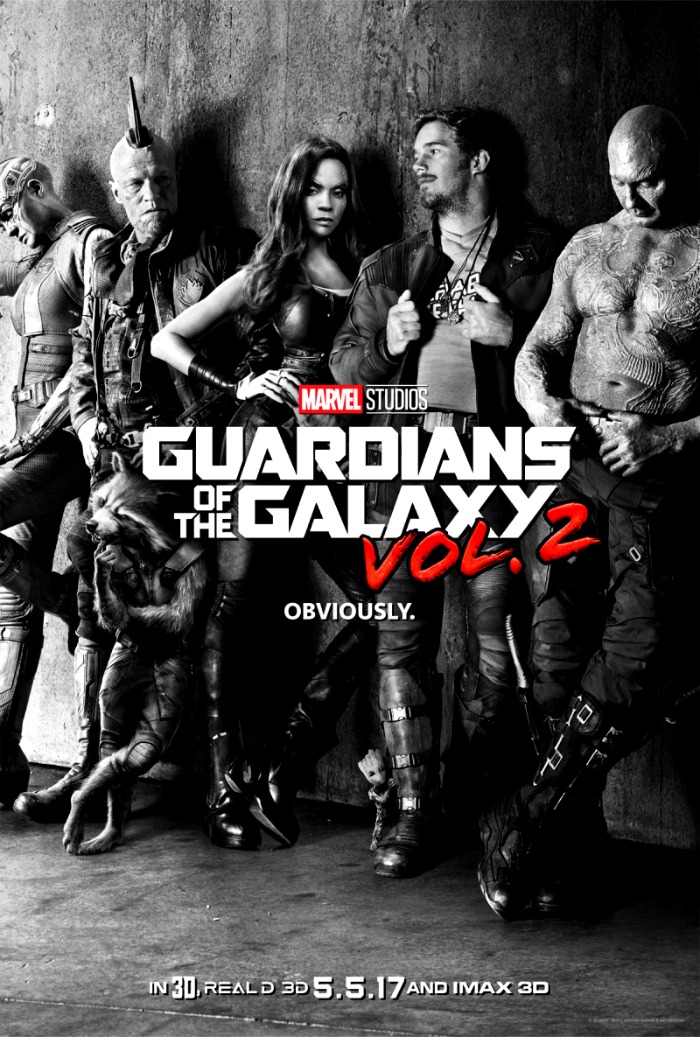
Another brief break from our regularly scheduled horror programming courtesy of Marvel Studios and James Gunn (and the rockin’ sweet poster of the whole Guardians looking like they’re about to drop the hottest 80’s rock album in history).

Guardians of the Galaxy was a surprise hit for Marvel Studios in 2014. It was an obscure Marvel Comics property that many thought would finally end the long streak of box-office success for Marvel Studios and it’s growing and ever-expanding Cinematic Universe. Instead, it was a huge hit with audiences and critics, alike.

This was the film that finally cemented the arrival of a juggernaut blockbuster studio. One that ended up tying Warner Bros. and DC Studios into so many knots in trying to keep up. If Marvel Studios could make a film that had a talking raccoon and tree who spoke only one phrase into a major hit then surely a film with Batman and Superman sharing the screen would be a mega-success.

Now, we have to wait until the start of the 2017 Summer film season to see what new cosmic adventures and hi-jinks Star-Lord and his Guardians of the Galaxy have been getting into.

Until then James Gunn has released this sneak peek (pretty much a teaser trailer) into Guardians of the Galaxy Vol. 2 (he did promise there will be an official trailer coming soon).

Guardians of the Galaxy Vol. 2 is set for a May 5, 2017 in theaters everywhere.